INTERNACIONAL
Qué es la “prueba del pájaro” y cómo gestos simples predicen la conexión emocional en la pareja, según la psicología


Una frase sencilla, como “vi un pájaro hoy”, puede funcionar como un sensor de la salud emocional de una pareja. En redes sociales, miles de personas graban la reacción de su pareja ante este comentario trivial, lo que popularizó el “experimento del pájaro”.
El fenómeno revela elementos clave sobre el modo en que interactúan las parejas en la vida cotidiana: la forma de responder a estos pequeños intentos de conexión puede indicar cuánta atención y disposición afectiva existe en la relación.
Tal como explica Harvard Health Publishing, los pequeños gestos diarios y la respuesta a ellos contribuyen de manera significativa a fortalecer la conexión y la satisfacción en la pareja.

La popularidad del tema crece en plataformas como TikTok e Instagram, donde los videos cuentan con millones de visualizaciones. Quienes participan buscan respuestas auténticas y observan si su compañero o compañera responde con interés, indiferencia o incluso con sarcasmo. Un simple “¿qué color tenía?”, frente a un distante “ajá” resulta, para muchos, un indicador revelador de la calidad del vínculo.
De acuerdo con DW, este método se inspira en una teoría psicológica desarrollada en la década de 1980 por los psicólogos John y Julie Gottman. Los investigadores, tras analizar el comportamiento de parejas recién casadas, identificaron patrones en la manera en que las personas atienden y responden a situaciones cotidianas.
Según el Gottman Institute, estos “microintentos de conexión” o “bids for connection” predicen la calidad de la relación a largo plazo.

Según los resultados de los estudios citados por los Gottman, las parejas que mantienen una vinculación afectiva sólida responden positivamente a estos microintentos de conexión en el 86% de los casos, mientras que en las parejas que se divorciaron esa cifra baja al 33%. Estas respuestas no dependen del peso de la anécdota, sino de la atención y la disposición de uno hacia el otro.
Julie Gottman, en una entrevista para The New York Times, ejemplificó este concepto con el sencillo acto de comentar la visión de un pájaro. La reacción ante este estímulo funciona como un “termómetro emocional”, según coinciden varios expertos en comportamiento de pareja.
La psicóloga Alexandra Solomon, entrevistada por PBS, destaca que las relaciones saludables se construyen sobre la suma de pequeños momentos de atención compartida. Cada gesto, por más banal que parezca, refuerza la confianza y profundiza la intimidad.

Esta perspectiva coincide con lo publicado por Harvard Health Publishing sobre cómo los detalles cotidianos fortalecen los vínculos afectivos.
La web oficial de los Gottman insiste en que lo relevante no es el comentario inicial, sino la respuesta que lo sigue. Reconocer, mirar y mostrarse presente ante el otro constituye la base de la conexión emocional en pareja.
En la práctica, las respuestas varían: algunos despliegan entusiasmo, otros simplemente cambian de tema, y en ocasiones surgen reacciones irónicas o bromistas. La presencia de celebridades, como el rapero Yung Gravy, intensifica la repercusión en línea de esta tendencia.

Sin embargo, Solomon advierte sobre los riesgos de grabar a la pareja sin su consentimiento y difundir la reacción en redes. “Vivimos dos vidas: la real y la digital”, señala, recordando la importancia de no banalizar la intimidad. Recomienda una conversación transparente como primer paso cuando existen dudas sobre la conexión con la pareja.
Como explica la psicóloga Joanne Davila a The Guardian, el interés por conocer la presencia emocional de quien comparte la vida es comprensible. No obstante, la falta de entusiasmo ante un comentario casual no siempre señala un problema; a veces indica simple cansancio o distracción.
Audra Nuru, experta en comunicación interpersonal citada por Cosmopolitan, recalca que el dato significativo surge del patrón global de respuestas. Un instante aislado no condena ni valida una relación, lo relevante es la frecuencia con que uno se siente visto y escuchado.

Las señales de alarma emergen cuando la respuesta deja de ser mera indiferencia y se transforma en sarcasmo o desprecio. De acuerdo con otros especialistas, este tipo de conductas podría reflejar conflictos más profundos en la relación.
Muchos videos muestran mujeres poniendo a prueba a hombres, lo que, según Solomon, refleja dinámicas de socialización desde la infancia.
En general, los padres conversan y tienen más contacto físico con las niñas, quienes aprenden que la comunicación sirve para compartir experiencias y crear vínculo. Los varones, por su parte, suelen desarrollar una comunicación funcional, orientada a la resolución de problemas.
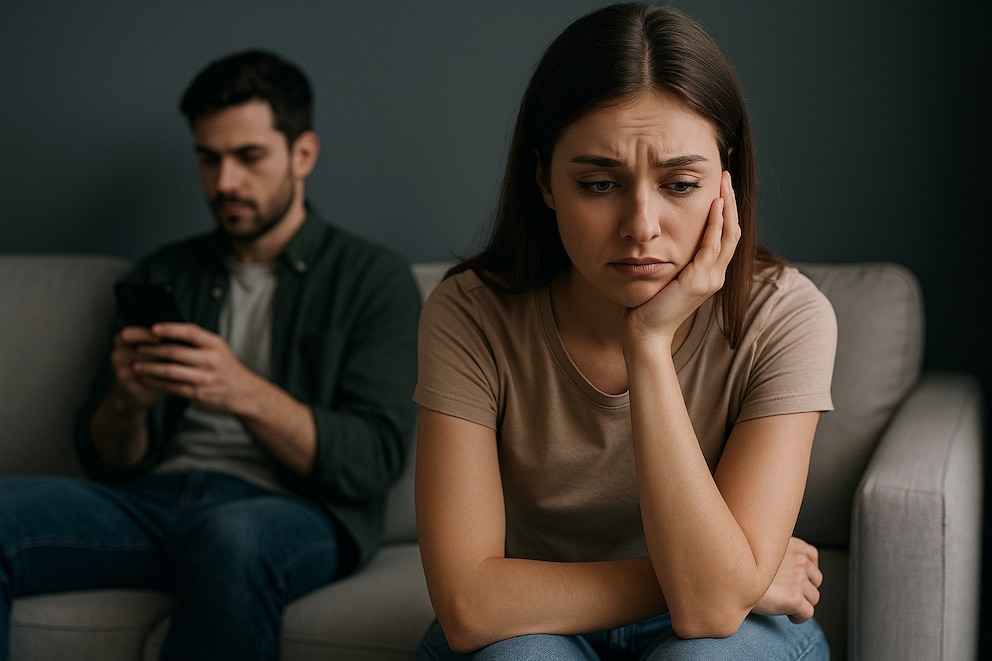
Ante este trasfondo, hombres y mujeres pueden dar distinto valor a este tipo de interacciones. Una respuesta distante a la “teoría del pájaro” podría no ser desinterés, sino confusión respecto a la finalidad de ese comentario.
La mayoría de los expertos coincide en que el experimento puede resultar útil como indicador de los patrones de comunicación en la pareja. Sin embargo, advierten que no debe funcionar como juicio definitivo sobre la relación.
Lo más relevante es si existe espacio para compartir cotidianidades, anécdotas o “tonterías”, como señala Vanessa Milagros, terapeuta entrevistada por USA Today. Su opinión sintetiza el espíritu de la teoría: “No se trata del pájaro; se trata de ser visto”.
pareja,felicidad,risa,hogar,jóvenes,bienestar,complicidad,sala,vida cotidiana,emociones positivas








INTERNACIONAL
SCOTUS slated to weigh future birthright citizenship protections for millions — here’s what’s at stake

NEWYou can now listen to Fox News articles!
The Supreme Court on Wednesday will weigh the legality of President Donald Trump’s executive order seeking to end birthright citizenship in the U.S. — a landmark court fight that could profoundly impact the lives of millions of Americans and lawful U.S. residents.
At issue in the case, Trump v. Barbara, is an executive order Trump signed on his first day back in office. The order in question seeks to end automatic citizenship — or «birthright citizenship» — for nearly all persons born in the U.S. to undocumented parents, or to parents with temporary non-immigrant visas in the U.S.
The stakes in the case are high, putting on a collision course more than a century of executive branch action, Supreme Court precedent, and the text of the Constitution itself — or, more specifically, the Citizenship Clause of the 14th Amendment.
FEDERAL JUDGE BLOCKS TRUMP’S BIRTHRIGHT CITIZENSHIP BAN FOR ALL INFANTS, TESTING LOWER COURT POWERS
President Donald Trump holds up an executive order after signing it during an indoor inauguration parade at Capital One Arena on Jan. 20, 2025 in Washington, D.C. (Anna Moneymaker/Getty Images)
Trump administration officials view the order, and the high court’s consideration of the case, as a key component of his hard-line immigration agenda — an issue that has become a defining feature of his second White House term.
Opponents argue the effort is unconstitutional and unprecedented, and could impact an estimated 150,000 children born in the U.S. annually to non-citizens.
A ruling in Trump’s favor would represent a seismic shift for immigration policy in the U.S., and would upend long-held notions of citizenship that Trump and his allies argue are misguided. It would also yield immediate, operational consequences for infants born in the U.S., putting the impetus on Congress and the Trump administration to immediately act to clarify their status.
Here’s what to expect ahead of today’s oral arguments:
What’s at stake?
Justices will weigh Trump’s executive order 14160, or «Protecting the Meaning and Value of American Citizenship.» The order directs all U.S. government agencies to refuse to issue citizenship documents to children born in the U.S. to illegal immigrants, or children born to parents who are in the U.S. legally but with temporary, non-immigrant visas.
The order would apply retroactively to all newborns born in the U.S. after Feb. 19, 2025.
Trump’s executive order prompted a flurry of lawsuits in the days after its signing. Critics argued that, among other things, the order violated the Citizenship Clause of the 14th Amendment, which grants citizenship to «all persons born … in the United States, and subject to the jurisdiction thereof, are citizens of the United States.»
Lawyers for the Trump administration, meanwhile, centered their case on the «subject to jurisdiction thereof» phrase, which they argue was intended at the time of its passage to narrowly «grant citizenship to newly freed slaves and their children» after the Civil War, and has been misinterpreted in the many years since.
U.S. Solicitor General D. Sauer urged the high court to take up the case last October, arguing that a pair of lower court rulings were overly broad and relied on the «mistaken view» that «birth on U.S. territory confers citizenship on anyone subject to the regulatory reach of U.S. law became pervasive, with destructive consequences.»
«Those decisions confer, without lawful justification, the privilege of American citizenship on hundreds of thousands of unqualified people,» he said.
TRUMP TO BEGIN ENFORCING BIRTHRIGHT CITIZENSHIP ORDER AS EARLY AS THIS MONTH, DOJ SAYS
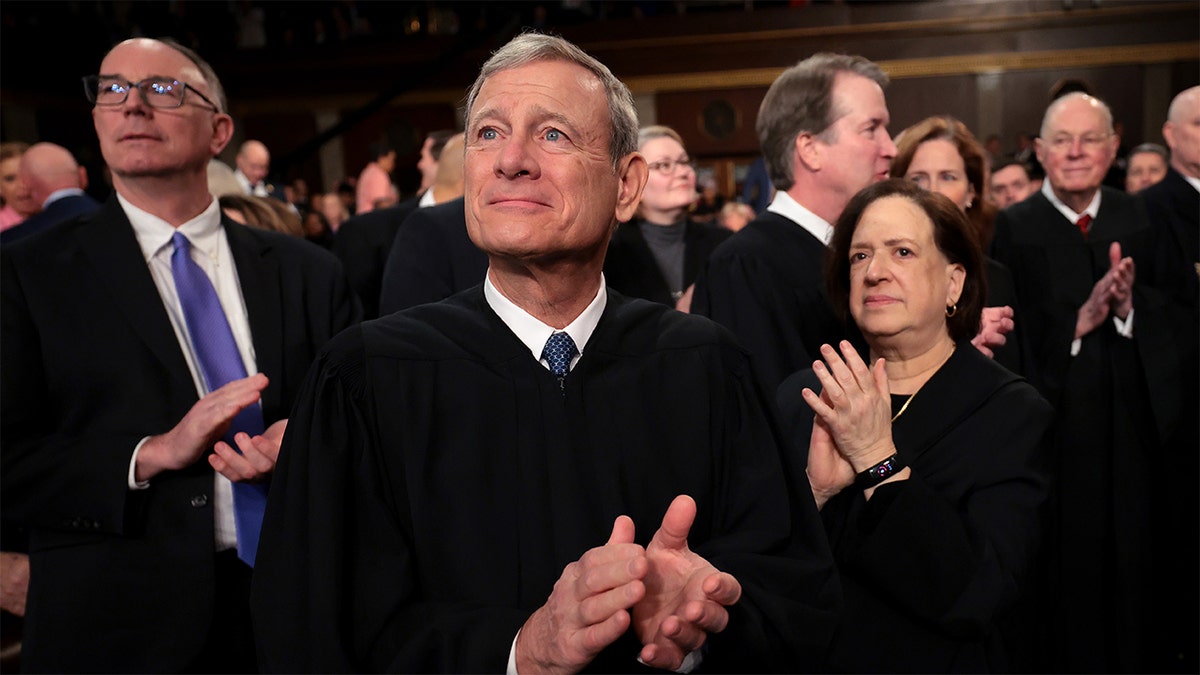
(Supreme Court Chief Justice John Roberts and other justices on the high court are seen during President Donald Trump’s 2026 State of the Union address. (Win McNamee/Getty Images))
He also argued that the lower court rulings overstepped, and «invalidated a policy of prime importance to the president and his administration in a manner that undermines our border security.»
Justices on the high court will have no shortage of strings to pull on in considering the executive order, or questioning lawyers during oral arguments.
What’s changed?
The Supreme Court will use Wednesday’s arguments to weigh — to varying degrees — the text of the 14th Amendment, legal precedent, and text of the 1952 Immigration and Nationality Act, among other issues cited by Sauer, the ACLU, and authors of the dozens of amicus briefs filed to the court since it agreed to review the case last fall.
Legal experts told Fox News Digital that they expect Sauer could be in for an uphill battle in convincing a five-justice majority to unwind more than 125 years of precedent and text at issue in the case.
Despite their consensus, however, the court’s conservative bloc will still face thorny issues in reconciling more than a century of court precedent with the narrower reading of the 14th Amendment embraced by the Trump administration.
Justices are likely to focus closely on precedent in the Supreme Court case, United States v. Wong Kim Ark — a 1898 ruling in which the Supreme Court ruled that the son of two Chinese immigrants born in the U.S. was indeed a U.S. citizen.
The case is widely considered to be the modern precedent for birthright citizenship, including related cases heard by the high court in the decades since.
Others cited the text of the 1952 Immigration and Nationality Act statute passed by Congress, which essentially mirrors the text of the 14th Amendment in conferring legal status to persons born in the U.S., as yet another argument that could tip the scales in the migrants’ favor.
«I can think of at least five reasons off the top of my head why the Supreme Court should say that the citizenship clause means today what it has always meant,» Amanda Frost, a professor at the University of Virginia School of Law who specializes in immigration and citizenship issues, told Fox News Digital.
SUPREME COURT SIGNALS IT MAY LIMIT KEY VOTING RIGHTS ACT RULE
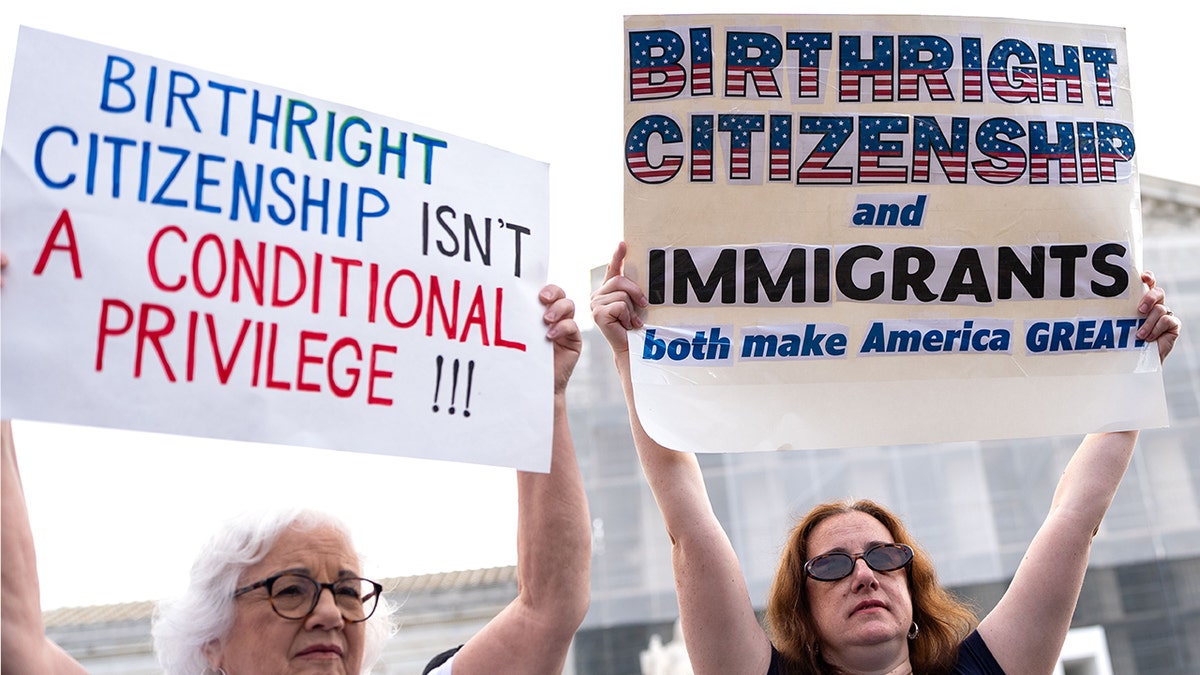
(Protesters gather outside the Supreme Court in Washington, D.C., in May 2025.)
«There is text. There is original public understanding, which certainly includes Wong Kim Ark, but also five or six Supreme Court cases after that,» Frost said.
«There is executive branch practice for the last century,» she added, «which is relevant as well when you’re interpreting the Constitution, and weighing [the question of], ‘What is the longstanding understanding of a constitutional provision by every other actor?’»
«I don’t see how they could easily count to five,» Akhil Amar, a professor at Yale Law School, told Fox News Digital in an interview, speaking of the majority votes needed.
«Even if I lose on one issue, I win on [many others],» Amar said, before ticking through a list of reasons why the Supreme Court, in his view, might swing in favor of the migrant class in question, and ACLU legal director Cecillia Wang, who is arguing the case Wednesday on behalf of the migrants.
Others agreed, albeit with a bit more reservation.
«I don’t think history supports the Trump administration’s view,» John Yoo, a law professor at the University of California Berkeley and former lawyer during the Bush administration, told Fox News Digital on the strength of the administration’s case.
JUDGES V TRUMP: HERE ARE THE KEY COURT BATTLES HALTING THE WHITE HOUSE AGENDA
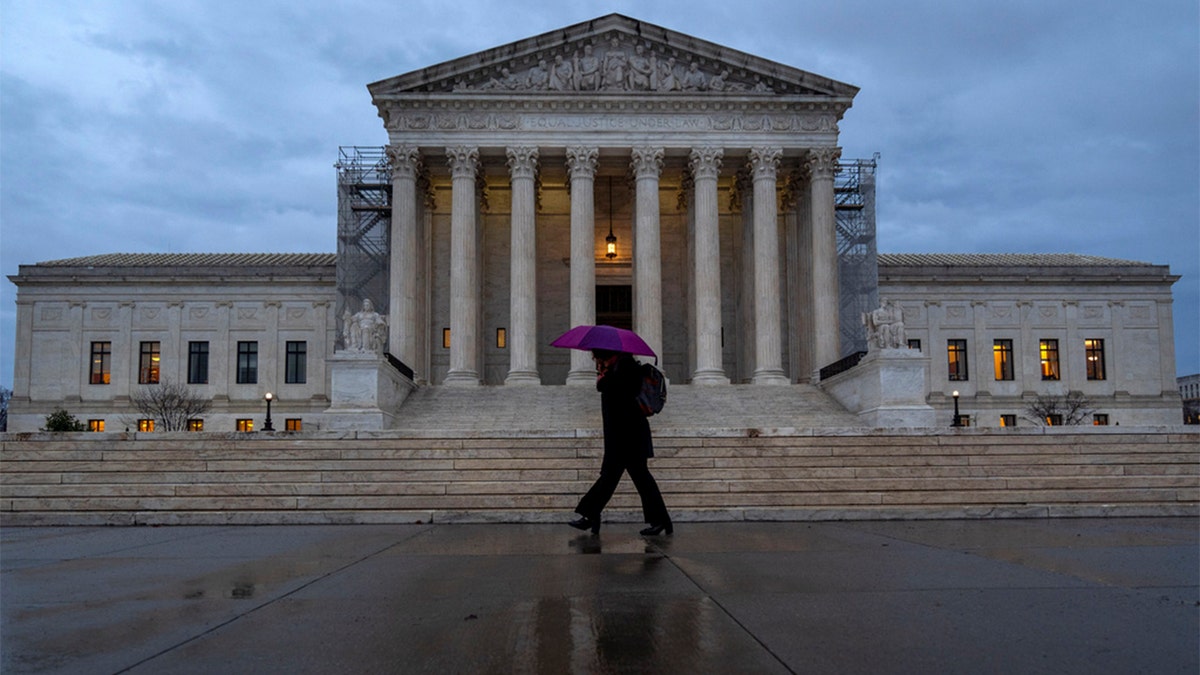
A woman under a purple umbrella walks past the Supreme Court. (AP Photo/Jacquelyn Martin)
Stateless newborns, enforcement issues
Another question will be one of enforcement. Trump’s executive order does not codify the legal status that should be conferred to children who are born in the U.S. to holders of temporary, long-term visas — including student visas and H1B visas, legal experts told Fox News Digital.
Frost, the University of Virginia Law professor, noted that Congress has not provided a pathway to legal status for the class of children who would be born in the U.S. and not granted citizenship. This means that the government would essentially need to act at lightning speed to confer some sort of status — be it temporary or longer-term — to newborns, should the justices side with Trump.
«The parents may have applied for a green card,» Frost said of newborns born to illegal immigrants, should the court allow Trump’s order to take force. «They might get the green card the next day.»
«It would not matter,» she said. «The child would not be a citizen.»
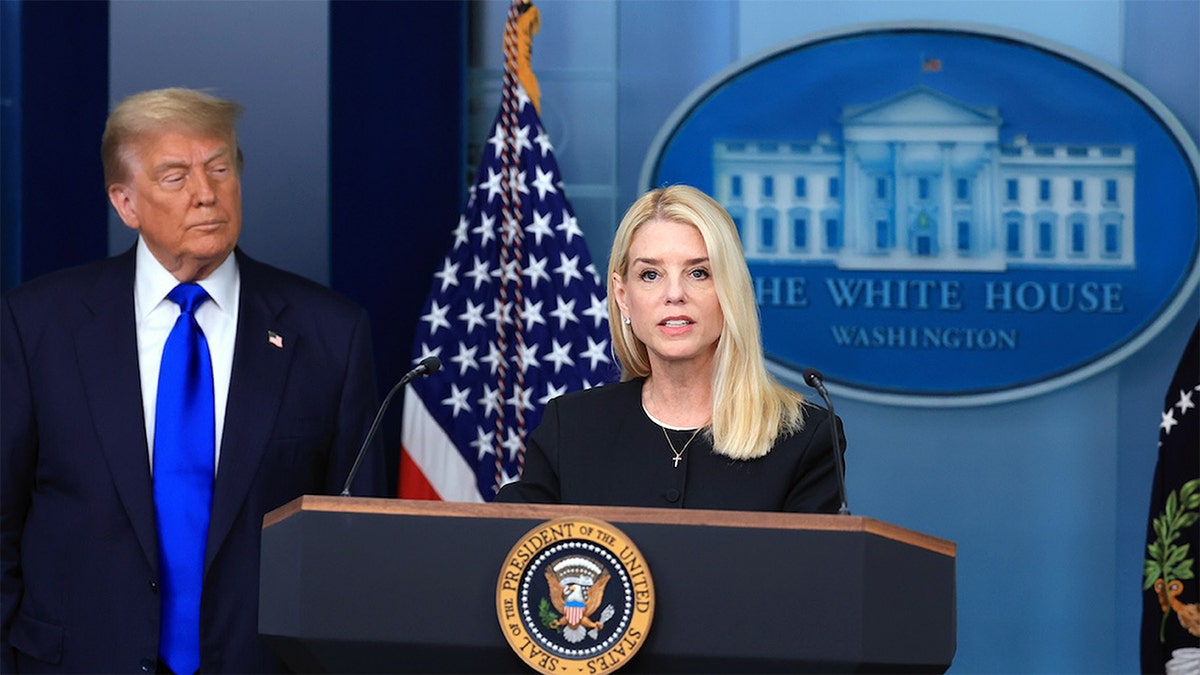
U.S. Attorney General Pam Bondi speaks alongside President Donald Trump at a White House press briefing in this 2025 photo. Bondi’s remarks have at times landed her in hot water and diverged from the administration’s own messaging. (Getty Images)
Yoo, Amar, and others cited similar concerns voiced by justices briefly during oral arguments in another birthright citizenship case, Trump v. CASA, last year. The administration asked the court to review the case not on the merits of the order, but as a means of challenging so-called «universal,» or nationwide injunctions issued by federal court judges.
Despite the focus on the lower court powers, some justices still used their time to question Sauer about the birthright citizenship order and its implementation.
Justice Brett Kavanaugh, for his part, pressed Sauer for details on what documentation newborns might need at birth should Trump’s executive order take force.
«On the day after it goes into effect — it’s just a very practical question of how it’s going to work,» Kavanaugh noted, before asking Sauer: «What do hospitals do with a newborn? What do states do with a newborn?» he asked, in order to determine their citizenship on a birth certificate.
«I don’t think they do anything different,» Sauer said in response. «What the executive order says in Section Two is that federal officials do not accept documents that have the wrong designation of citizenship from people who are subject to the executive order.»
«How are they going to know that?» Kavanaugh pressed, shaking his head.
The government’s position «makes no sense whatsoever,» Justice Sonia Sotomayor said at the time, before noting that it appeared to violate «four Supreme Court precedents,» and risked leaving some children stateless.
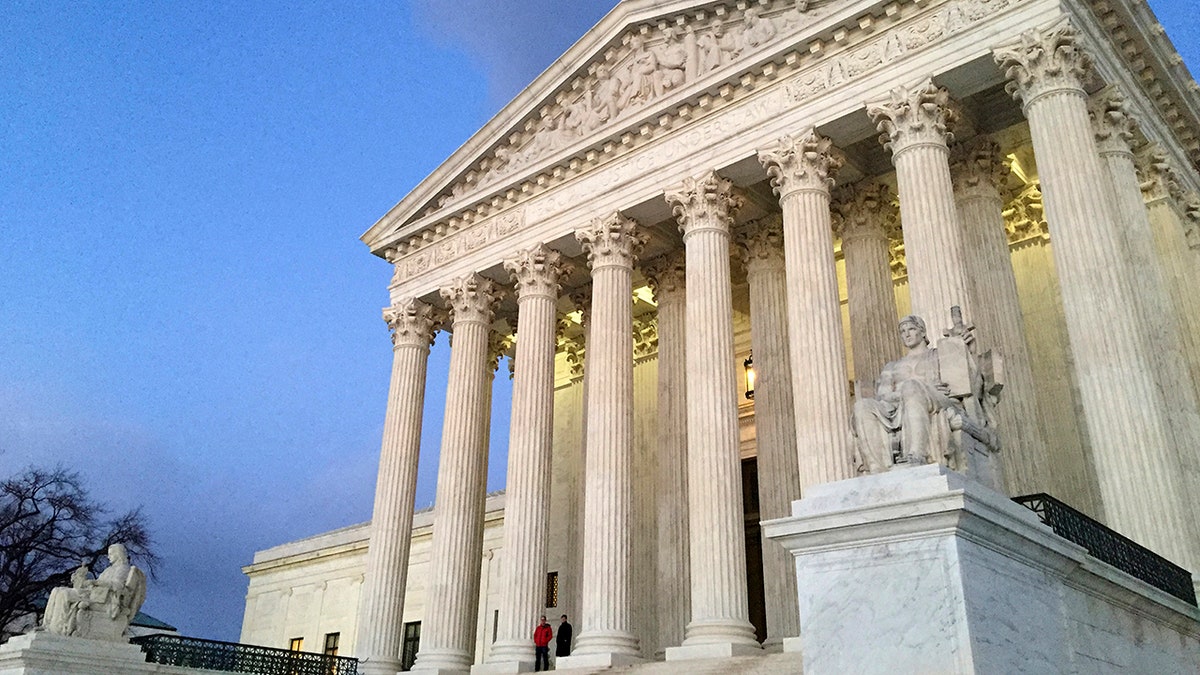
The Supreme Court building is seen in Washington, D.C. (AP/Jon Elswick)
Who to watch
While it’s difficult to speculate how justices on the high court might position themselves in considering a case, there are some conservative justices that have signaled early skepticism about the Trump administration’s arguments. Their votes could prove to be decisive, experts said.
«In terms of oral arguments, I think what you’re going to see is a lot of attention paid to how Chief Justice Roberts and Justice Kavanaugh view the issue in particular,» Yoo said. «I think it will be up to them» to determine the majority ruling, he said.
Roberts, in particular, often relies heavily on Supreme Court precedent, Yoo noted, and has been wary of overturning decisions made under previous courts — pointing to the «sort of anguished dissent» he authored in Roe v. Wade.
«I think that’s really the question: whether there’s going to be enough historical evidence to change Robert’s mind about how to treat precedent,» he said, noting the chief justice tends to view questions of institutional importance and consistency as top-of-mind.
When it comes to birthright citizenship, Yoo said, there is a much longer history and court precedent that is older and «more well-followed» than Roe ever was, he noted, which could swing the conservatives in the ACLU’s favor.
«We never know why the Supreme Court decides to hear a case,» Amar told Fox News Digital. «But I’m hoping that they heard the case because America deserves an answer.»
CLICK HERE TO DOWNLOAD THE FOX NEWS APP
A decision from the high court is expected by late June.
donald trump, supreme court, politics, federal courts, national security, immigration, congress
INTERNACIONAL
Ser hipocondríaco en la era de Internet: el libro que analiza desde una perspectiva tanto médica como literaria una condición considerada como real

La inquietud persistente en torno a la salud y el incesante escrutinio de los síntomas han cobrado un protagonismo renovado con la publicación de Hipocondría (Alpha Decay), el libro de Will Rees, cuya aparición coincide con un auge de la ansiedad médica amplificada por el acceso a información digital. El libro no solo propone una revisión personal, sino que recorre el trayecto histórico, filosófico y cultural de un trastorno tantas veces relegado a la incomprensión.
En los últimos años, la hipocondría ha sido reconocida por la investigación médica como una condición tan real como la depresión o el trastorno de estrés postraumático. Este diagnóstico implica que no se trata de un fallo de carácter (como hasta el momento se había hecho creer al paciente), sino de una afección legítima que afecta el modo en que las personas perciben y gestionan la incertidumbre respecto a su propio cuerpo.
De hecho, la Asociación Estadounidense de Psiquiatría ha determinado que tres cuartas partes de los identificados como hipocondríacos presentan un trastorno de síntomas somáticos, mientras que el resto padece trastorno de ansiedad por enfermedad. El auge de herramientas de ‘autodiagnóstico’ online ha introducido el término “cibercondría”, reflejando una nueva modalidad donde la búsqueda de información multiplica la ansiedad en lugar de apaciguarla.
Una experiencia en primera persona
Will Rees, tanto editor como académico británico, describe en primera persona su recorrido a través de la hipocondría, iniciándose en 2010 con un dolor de cabeza crónico. La negativa de Rees a paliar el síntoma recurriendo a analgésicos actúa como punto de partida de una introspección que adopta tintes kafkianos: antes que silenciar la alarma, decide “comprender el dolor”, abordando un periplo de observación minuciosa y creciente acumulación de síntomas percibidos. Olvidos cotidianos, tics, cambios en el gusto del café, e incluso una secuencia de hipo entre una y tres veces al día, configuran ese estado de vigilancia perpetua. Ante una búsqueda reveladora en internet (“¿puede el cáncer cerebral causar hipo?”), Rees se topa con una inquietante afirmación: sí, si la enfermedad está avanzada. A pesar de repetidas consultas médicas y de la falta de hallazgos patológicos, la duda persiste y se expande junto con nuevos indicios.

La comunidad médica ha establecido que la hipocondría no responde a una única definición ni a criterios infalibles, lo cual arroja una sombra de incertidumbre tanto sobre profesionales como pacientes. La mayor parte de los afectados se identifican con la sintomatología somática, mientras otros viven con una inquietud recurrente sin signos físicos manifiestos.
Entender qué es la hipocondría
El término incluso desapareció en 2013 del manual diagnóstico D.S.M.-5, lo que evidencia su carácter ambiguo y evanescente en la tradición clínica. La ‘cibercondría’, por su parte, ha extendido la posibilidad de autoexamen y diagnóstico erróneo a gran escala, con numerosos portales prometiendo identificar los “cinco signos para reconocer la cibercondría” o listados de advertencias que, lejos de tranquilizar, intensifican la preocupación.
El texto de Rees ahonda precisamente en este terreno movedizo: “La hipocondría es un diagnóstico que pone en cuestión cuán seguros podemos estar jamás de cualquier diagnóstico”, escribe el autor, desplazando el interés desde las etiquetas hacia la incertidumbre inherente a cualquier juicio médico. La obra se convierte, así, en una indagación sobre los límites del conocimiento y la imposibilidad de alcanzar una certidumbre absoluta respecto a la salud personal.
A lo largo del libro, Rees confronta la tradición literaria y filosófica en torno a la enfermedad, remitiéndose a autores como Virginia Woolf, Kafka, Immanuel Kant o Samuel Johnson, todos ellos sensibles al sufrimiento físico y a la dificultad de traducirlo al lenguaje.

Woolf, en su ensayo Sobre la enfermedad, subraya: “El inglés, capaz de expresar los pensamientos de Hamlet, carece de palabras para describir el escalofrío y el dolor de cabeza… Quien trata de explicar un dolor a un médico ve cómo el idioma se le agota.” La propia estructura del libro refleja esos desdoblamientos temporales y la superposición de relatos personales y ajenos, incluidas referencias puntuales a ensayos de otros autores y a episodios recientes del propio Rees en los que la sospecha de enfermedad nunca se resuelve del todo.
Cinco años para “entender” su enfermedad
El testimonio de Rees articula una experiencia que se extiende hasta su juventud, marcando casi una década de vaivén entre el alivio transitorio y la reaparición del temor. La lectura sobre síntomas y enfermedades, comparada por algunos médicos victorianos con la causa misma de la hipocondría, ahora encuentra eco en la economía digital de la salud, donde buscadores y plataformas especializadas han multiplicado las oportunidades para la inquietud. Rees llega a someterse a pruebas oftalmológicas, resonancias y variados estudios, recibiendo diagnósticos que a menudo solo refuerzan su inseguridad. Un episodio significativo se produce cuando, tras la publicación de un ensayo sobre el tema, un desconocido se le acerca para advertirle que debe realizarse otra revisión, reabriendo la espiral del cuestionamiento y la incertidumbre.
La cantante actúa por primera vez en Madrid con la gira de ‘LUX’ ante un público que clama por ella. / Grabación de pantalla de @rafacasah
La reflexión final de Rees (que, llegada la treintena, ha logrado dejar de pensar de forma compulsiva en su salud) no implica la consecución de una certeza, sino una suerte de aprendizaje en torno a la aceptación de la duda. En palabras del propio autor, escritas en su libro: “Mi libro cubre cinco años de mi vida, que comenzaron cuando creía tener un tumor cerebral y concluyeron, ya en la veintena, al convencerme de que tenía un linfoma. Estos dos momentos, estas dos crisis en que la cuestión de la salud se cernía sobre mi rutina diaria, enmarcan Hipocondría, que también analiza la historia de esta dolencia y a quienes intentaron comprenderla”.
INTERNACIONAL
Trump admin unlawfully terminated legal status of migrants who used Biden-era app, judge rules

NEWYou can now listen to Fox News articles!
A federal judge ruled on Tuesday that the Trump administration unlawfully terminated the legal status of thousands of migrants who had been allowed to temporarily live in the U.S. after using an app expanded by the Biden administration to schedule appointments with immigration officials.
U.S. District Judge Allison Burroughs in Boston ordered the administration to reverse its move last year to revoke the legal status of migrants who used the CBP One app.
The app was used under former President Joe Biden starting in 2023 to address the crisis at the border by allowing some migrants to make appointments to seek asylum, with many paroled into the country for up to two years, but President Donald Trump moved to shut down the app when he returned to the White House last year.
Burroughs found that the U.S. Department of Homeland Security acted unlawfully in April of last year when it sent mass emails to many of the roughly 900,000 people who entered the country using the app, informing them that it was «time for you to leave the United States.»
VENEZUELAN MIGRANTS, PROGRESSIVE GROUP SUE TRUMP AFTER NOEM NIXES BIDEN-ERA ‘PROTECTED STATUS’
U.S. District Judge Allison Burroughs ordered the Trump administration to reverse its move last year to revoke the legal status of migrants who used the CBP One app. (AP Photo/Mark Schiefelbein)
«The regulations do not give the agency unfettered discretion to terminate parole,» Burroughs wrote.
«When Defendants terminated the impacted noncitizens’ parole without observing the process mandated by statute and by their own regulations, they took action that was ‘not in accordance with law,’» the judge added.
The Venezuelan Association of Massachusetts, one of the plaintiffs in the case, celebrated the ruling, saying it «brings long-awaited relief after months of fear and uncertainty.»
Democracy Forward, another group that helped bring the legal challenge, also praised the judge’s decision.
FEDERAL JUDGE UPHOLDS TEMPORARY PROTECTED STATUS FOR HAITIAN IMMIGRANTS
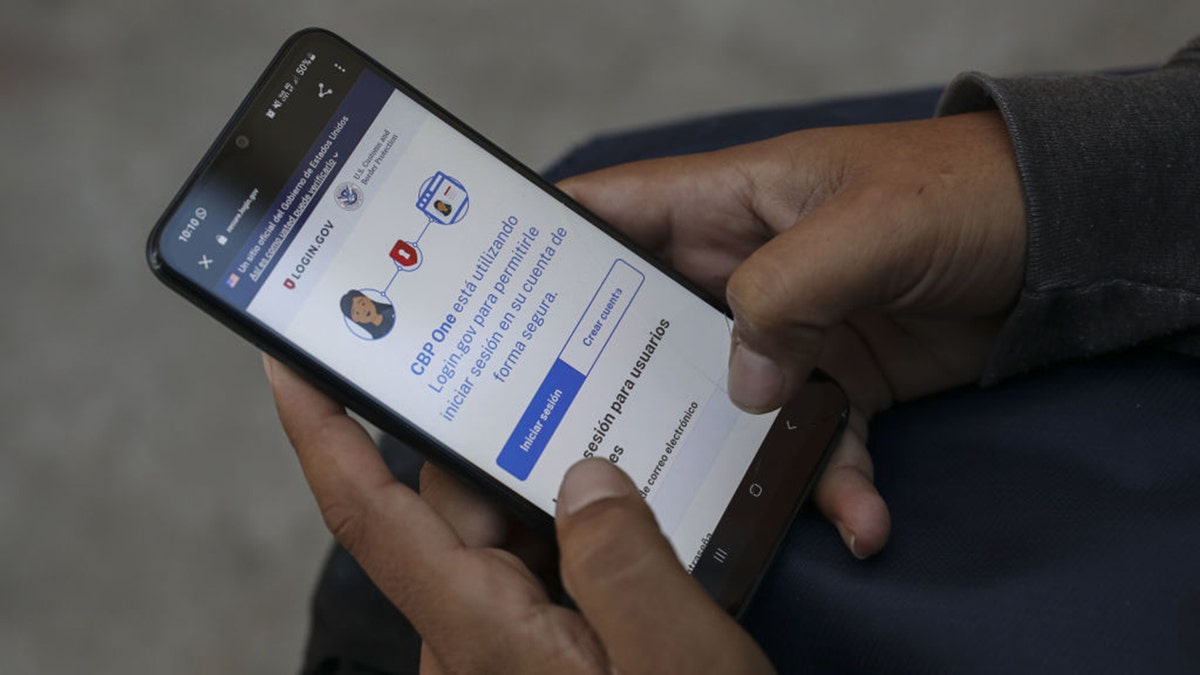
The app was used under former President Joe Biden to address the crisis at the border by allowing some migrants to make an appointment to seek asylum, with many paroled into the country for up to two years. (Sandy Huffaker/Bloomberg via Getty Images)
«Today’s ruling is a clear rejection of an administration that has tried to erase lawful status for hundreds of thousands of people with the click of a button,» the group’s president, Skye Perryman, said in a statement.
«Our clients followed the law: they waited, registered, were inspected, and were granted parole under the law. The Trump-Vance administration’s effort to tear that status away overnight was unlawful and cruel — and today, the court rejected that harmful and destabilizing policy,» the statement added.
A DHS spokesperson said the ruling was an example of «blatant judicial activism» that interfered with Trump’s authority to determine who remains in the country.
«Canceling these paroles is a promise kept to the American people to secure our borders and protect our national security,» the spokesperson said in a statement.
The judge found that DHS acted unlawfully in April of last year when it sent mass emails alerting many of the roughly 900,000 people who entered the country using the app that it was «time for you to leave the United States.» (AP Photo/Eric Gay, File)
CLICK HERE TO DOWNLOAD THE FOX NEWS APP
The ruling came after a class-action lawsuit filed in August by three individuals from Venezuela, Cuba and Haiti who argued the Trump administration’s effort to remove them from the country represented an abrupt, unlawful move to pull parole status and work authorization from migrants.
The Trump administration had argued that Biden overstepped parole authority by broadly awarding the status instead of granting it on a case-by-case basis.
Burroughs said when DHS sent out termination notices to migrants, it failed to comply with requirements to provide a record showing an official had determined that the purposes of parole had been served.
«Accordingly, the parole terminations exceeded the agency’s statutory authority and contradicted the procedures set forth in its own regulations,» the judge wrote.
Reuters contributed to this report.
immigration, illegal immigrants, donald trump, politics, joe biden, homeland security, judiciary

SCOTUS slated to weigh future birthright citizenship protections for millions — here’s what’s at stake

Caso $LIBRA: aparecieron tres documentos en el celular de Novelli vinculados a la estafa de CoinX

Lo que no se vio de la goleada de Argentina a Zambia: cambio de clima, el gesto del Dibu Martínez y el hit de “La 12″ en el gol de Messi

El dólar mayorista retrocede y el mercado anticipa más liquidez en pesos

El canciller de Israel agradeció a Milei por declarar organización terrorista a la Guardia Revolucionaria de Irán

La historia de Rodrigo De Paul y el repartidor de comida que hizo hablar a todos: el sánguche, el pedido de fotos y los dólares

Máximo Kirchner salió al cruce de Milei y Macri tras el fallo por YPF a favor de la Argentina

La secretaria del piloto denunció que el amigo de Adorni la hostiga y la justicia dispuso medidas

El Gobierno cambia su propuesta de reforma: endurece penas para delitos comunes, pero no para los casos de corrupción

Nuevas críticas de Marcela Pagano contra los Milei: “Karina es la que gobierna”, aseguró

 POLITICA3 días ago
Nuevas críticas de Marcela Pagano contra los Milei: “Karina es la que gobierna”, aseguró
- POLITICA1 día ago
Dos jubiladas que le habrían prestado dinero a Manuel Adorni negaron conocerlo
- CHIMENTOS3 días ago
El incómodo momento que Wanda Nara y Martín Migueles le habrían hecho pasar a los japoneses en el tren bala: la foto