INTERNACIONAL
Reporter’s Notebook: Congress targets college sports ‘Wild West’ as NIL compensation fight heats up

NEWYou can now listen to Fox News articles!
Some epic drama in the first two weeks of the college football season.
The defending national champion Ohio State Buckeyes shut down the then-No. 1-ranked Texas Longhorns at the goal line three times. Ohio State quickly curbed talk about the greatness of Texas quarterback Arch Manning. The Buckeyes are now the No. 1 team in the country. Especially after they shellacked Grambling State 70-0 in Week 2.
Florida State whipped Alabama. And we haven’t even talked about Bill Belichick’s coaching debut at North Carolina.
So settle in for quite a season between now and mid-January.
But there could be new rules off the playing field. Congress may attempt to referee what collegiate athletes can earn from their own name, likeness and image, better known as NILs.
LEGENDARY SPORTS AGENT BREAKS DOWN TRUMP’S ‘SAVING COLLEGE SPORTS’ EXECUTIVE ORDER
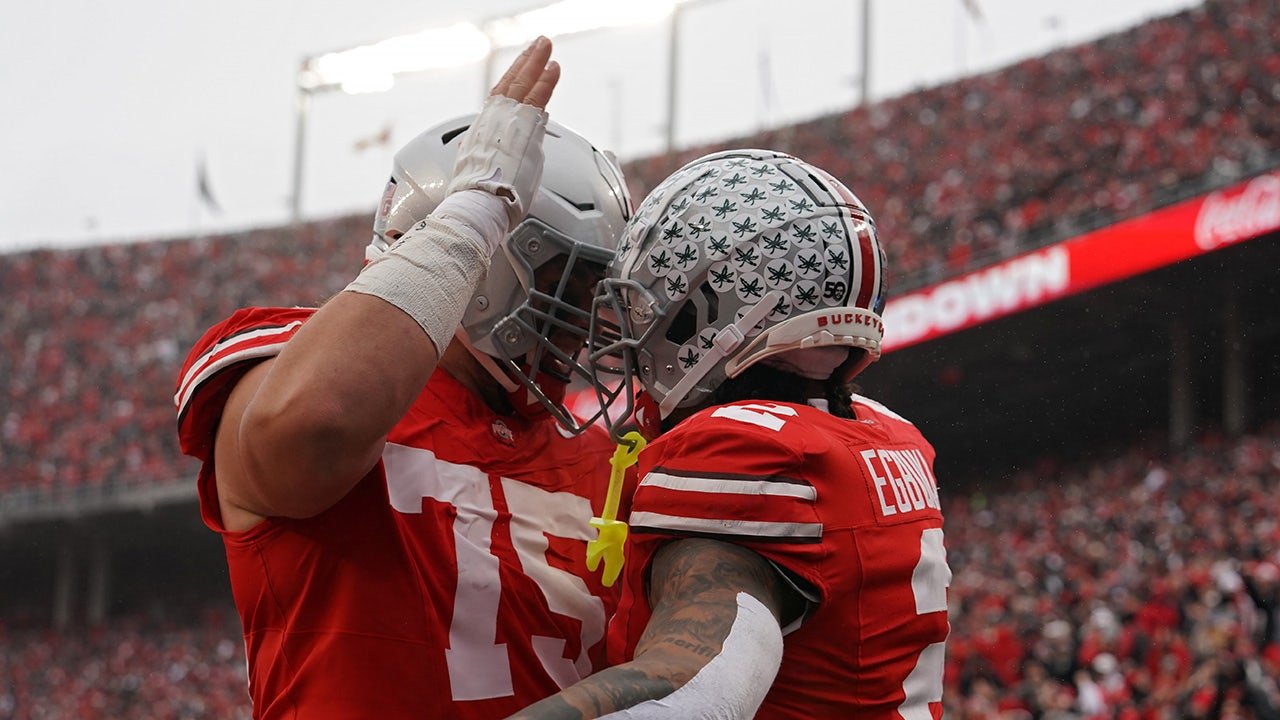
Carson Hinzman #75 and Emeka Egbuka #2 of the Ohio State Buckeyes celebrate after scoring a touchdown in the second quarter against the Indiana Hoosiers at Ohio Stadium on Nov. 23, 2024 in Columbus, Ohio. (Jason Mowry/Getty Images)
«Without clear rules and an enforcement mechanism, the NIL landscape has become akin to the Wild West,» said Rep. Russell Fry, R-S.C.
There are competing bills in the House and Senate to address compensation for student-athletes. The House bill, prepped over the summer by the Energy and Commerce Committee, sets a national standard for NILs and allows schools to directly pay athletes. That would supersede a bevy of differing rules which change from state to state.
«We’ve already seen states competing with one another to get a leg up. And that patchwork is threatening the values and the balance that makes college sports so special,» said Rep. Debbie Dingell, D-Mich.
TRUMP SIGNS EXECUTIVE ORDER TO REGULATE THE BUSINESS OF COLLEGE SPORTS
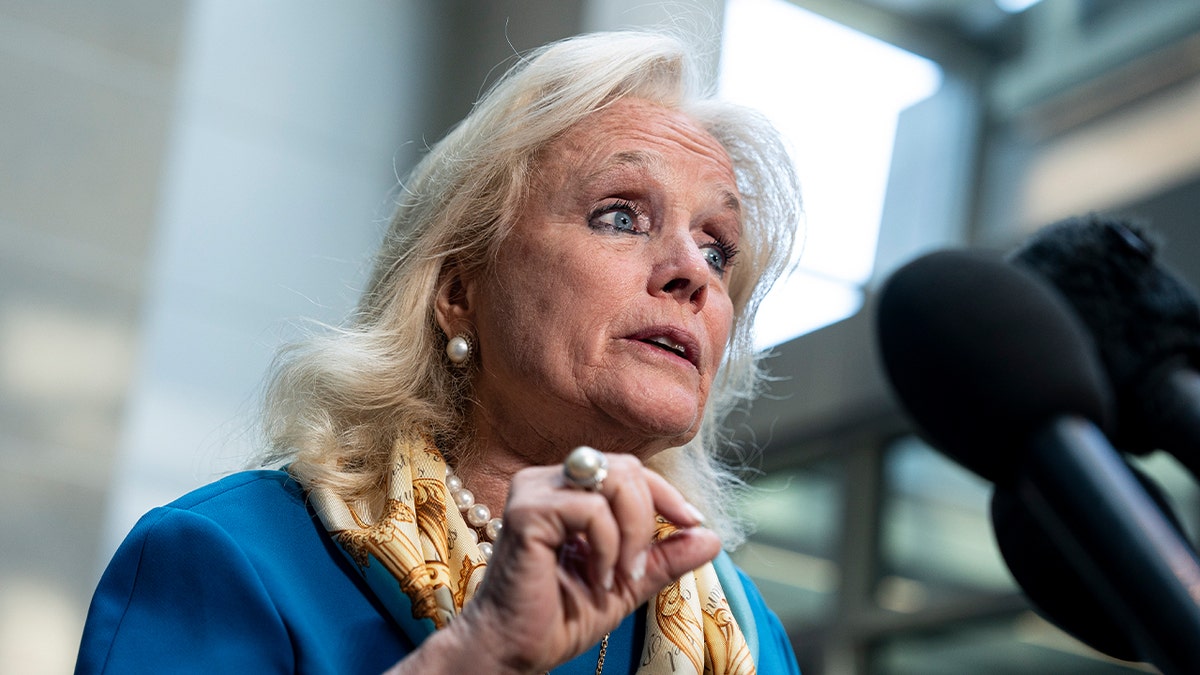
Rep. Debbie Dingell speaks to reporters on June 11, 2024, in Washington, D.C. (Getty Images)
She has reservations about the current House bill.
The House legislation comes on the heels of a multibillion-dollar agreement approved by a federal judge earlier this summer. That agreement lets schools pay student-athletes up to $20.5 million per year.
That’s just a sliver of what most major schools in big conferences reel in annually. But the schools will likely fork out most of the money to football and basketball. Those sports generate the most revenue in college athletics.
But the score is far from settled.
«Whether or not we should allow student-athletes to be considered employees under the law, the ramifications of that would be pretty profound,» said Sen. Todd Young, R-Ind.
SWEEPING BIPARTISAN BILL WOULD NATIONALIZE STANDARDS FOR STUDENT-ATHLETE PAY
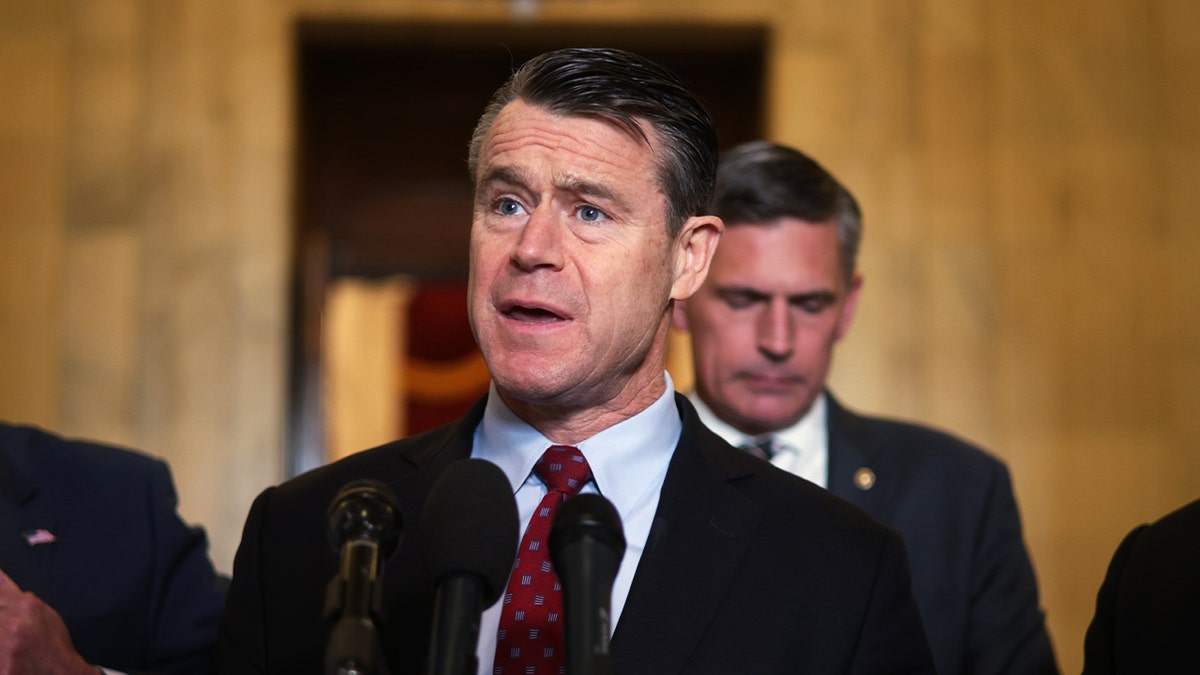
Sen. Todd Young speaks at the Russell Senate Office Building on Nov. 1, 2023 on Capitol Hill in Washington, D.C. (Alex Wong)
He noted that a Senate bill to regulate pay in college sports is on «the proverbial one-yard line.»
Most House Democrats oppose the plan. They believe it inhibits the rights of college athletes – as workers.
«This bill bans student-athletes from First Amendment rights to form unions, also guaranteed by the National Labor Relations Act,» said Rep. Darren Soto, D-Fla. «They have basic rights. Like the right to organize.»
Sen. Maria Cantwell, D-Wash., is the top Democrat on the Senate Commerce Committee. She said the House Energy and Commerce Committee bill rolls back money for minor sports, women’s programs and only benefits major conferences like the Big 10 and SEC. She claims the bill will trigger «a conflict» between sports that earn money at schools and those that don’t.
Most Democrats argue that lawmakers should focus instead on problems in higher education, not the athletic field. Especially as some schools now face a threat from the federal government and the Trump administration.
TOM BRADY IMPLORES PARENTS TO ‘TEACH YOUR KID THE RIGHT VALUES’ AMID RISE OF NIL IN COLLEGE SPORTS
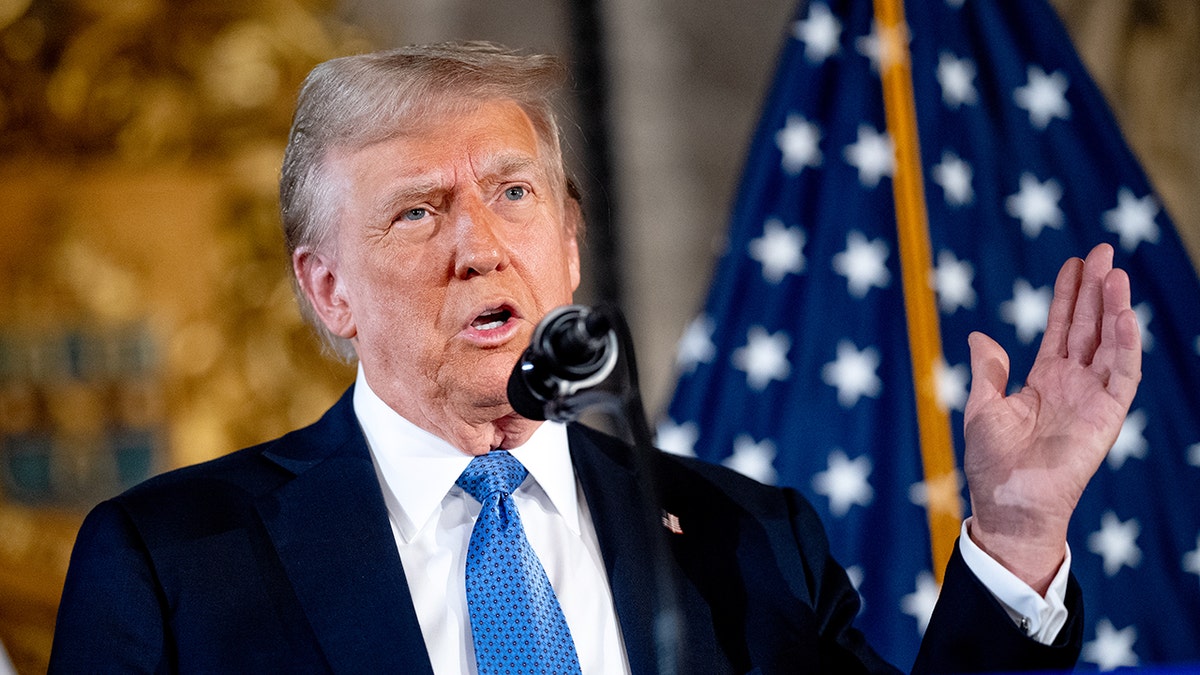
Then-President-elect Donald Trump speaks at a news conference at Trump’s Mar-a-Lago resort on Dec. 16, 2024 in Palm Beach, Florida. (Andrew Harnik/Getty Images)
«You have to have a college to have college sports,» said Rep. Frank Pallone, D-N.J., the top Democrat on the Energy and Commerce Committee. «And the way we’re going with this administration, I don’t even know if there’s going to be any colleges or universities worth fighting for.»
Pallone added that the committee’s focus was misguided amid questions about education and healthcare.
«Yet Republicans are ignoring them. And instead would rather talk about college sports,» said Pallone.
Republicans on the Energy and Commerce panel supported the package, but Democratic support was limited. In addition, players associations for Major League Baseball, the NFL, NBA, NHL and Major League Soccer all oppose the legislation. They believe the bill inhibits college athletes from negotiating a fair wage.
The «pay» and «NIL» issues have vexed top collegiate athletic officials for years. The NCAA and many schools have long pushed for congressional intervention.
«We feel like there’s a better destination and a stabilization coming forward. But we need the help of Congress and national legislation,» said ACC commissioner Jim Phillips on Fox News earlier this year.
Former Alabama football coach Nick Saban echoed Phillips during an interview with colleague Bret Baier.
«Now we just have state legislation, and every state is different,» said Saban. «We need some kind of federal standard and guidelines that allow people to enforce their own rules.»
NICK SABAN PRAISES TRUMP’S EXECUTIVE ORDER CRACKING DOWN ON PAY-TO-PLAY IN COLLEGE SPORTS
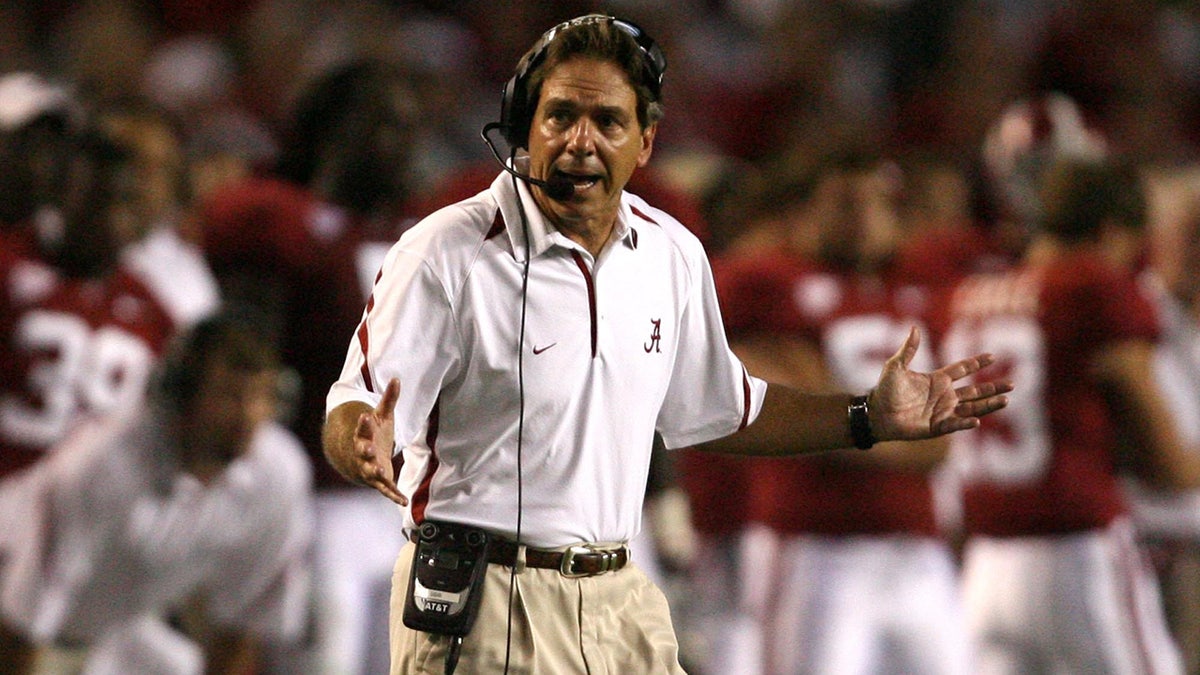
Alabama coach Nick Saban reacts in the fourth quarter at Bryant-Denny Stadium on Sept. 11, 2010. (Robert Sutton/The Tuscaloosa News)
Pallone may have questioned the priorities of his committee focusing on paying student-athletes, but other lawmakers question why the NCAA itself couldn’t settle the pay-for-play fight.
«I think if they had had stronger management, if they made some decisions early on, we wouldn’t be in this position,» said Rep. Richard Hudson, R-N.C. «It’s unfortunate that Congress has to step in at all.»
However, the North Carolina Republican added he was «deeply concerned about the future of college sports if we don’t act.»
That’s why Rep. Yvette Clarke, D-N.Y., wants Congress involved – even if she opposes the current House plan.
«We simply cannot turn to the same entities that created the broken and inequitable system of the past to serve as the stewards of a new system,» said Clarke.
Attorneys general from Florida, Ohio, New York, Tennessee and the District of Columbia are worried about antitrust provisions in the House plan. The Big West Conference believes the legislation is skewed toward major conferences.
CLICK HERE TO GET THE FOX NEWS APP
So this fight may spill into overtime on Capitol Hill.
Congress could vote sometime on legislation refining NILs. Or lawmakers may again punt – as they’ve done for several years now.
But this is a lower priority for Congress. Lawmakers must avoid a government shutdown by Oct. 1, and they may need to wrestle with another government funding round later this fall.
The college football season just started, but the real challenge is whether Congress will address this issue before the National Championship Game on Jan. 19, 2026.
politics,congress,house of representatives politics,senate elections,ncaa fb,ncaa bk











INTERNACIONAL
La embajada de Estados Unidos denuncia trato cruel contra ancianos y enfermos en Nicaragua

La Embajada de Estados Unidos en Nicaragua denunció este sábado la “crueldad del régimen” que presiden Daniel Ortega y Rosario Murillo contra los disidentes del Gobierno, destacando la situación de personas de edad avanzada y con problemas de salud que permanecen detenidas. Según reportó la Agencia EFE, la representación diplomática expresó en sus redes sociales que “la crueldad del régimen hacia quienes se atreven a alzar la voz es irrazonable”.
En el mensaje, la embajada estadounidense en Managua criticó que la administración de Ortega y Murillo mantenga bajo arresto a opositores ancianos y enfermos. Puso como ejemplo el caso de Brooklyn Rivera Brayan, exdiputado indígena miskito de 73 años, quien se encuentra privado de libertad desde el 29 de septiembre de 2023. Rivera, líder del partido indígena Yapti Tasba Masraka Nanih Aslatakanka (Yatama, en lengua miskita, que significa ‘Hijos de la Madre Tierra’), fue arrestado poco antes de las elecciones regionales celebradas en marzo de 2024, detalló la Agencia EFE.
Posteriormente a la detención de Rivera, el Consejo Supremo Electoral (CSE) de Nicaragua, bajo control oficialista, canceló la personalidad jurídica de Yatama. El CSE argumentó que esa organización ejecutó acciones que menoscaban la independencia, la soberanía y la autodeterminación del país. Se la acusó además de incitar a la injerencia extranjera, cargos calificados como traición a la patria por la legislación local.

LA NACION / ZUMA PRESS)
La embajada estadounidense sostuvo que “estas personas —ancianos y enfermos— fueron encarceladas por el simple hecho de discrepar con el régimen y permanecen injustamente detenidas en condiciones inhumanas, privadas de derechos fundamentales y de atención médica”. La delegación enfatizó que la privación de derechos básicos y la falta de acceso a atención sanitaria agravan la situación de los detenidos.
De acuerdo con cifras del Mecanismo para el Reconocimiento de Personas Presas Políticas, avaladas por la Comisión Interamericana de Derechos Humanos (CIDH), en Nicaragua existen actualmente 46 personas detenidas por motivaciones políticas, quince de las cuales son adultos mayores. Entre estos figuran, además de Rivera, los excomandantes de la revolución sandinista Bayardo Arce y Henry Ruiz, así como el antiguo asesor de Ortega y general en retiro Álvaro Baltodano Cantarero. También se encuentran bajo arresto los dirigentes indígenas Steadman Fagoth Müller y Nancy Elizabeth Henríquez, junto a militares retirados como Carlos Brenes, Víctor Boitano y Eddie Moisés González Valdivia, según la información difundida por la Agencia EFE.
Las elecciones se realizaron con sus principales adversarios políticos en prisión, quienes luego fueron expulsados del país y despojados de su nacionalidad y derechos políticos bajo acusaciones de “golpismo” y traición a la patria, explicó la Agencia EFE.

La embajada estadounidense subrayó que la represión contra la disidencia política se manifiesta especialmente en el trato a presos de edad avanzada, que sufren condiciones de reclusión especialmente severas. El organismo diplomático llamó la atención sobre la falta de garantías para el ejercicio de los derechos fundamentales y reiteró su preocupación por el deterioro de la situación de los derechos humanos en Nicaragua.
El comunicado de la representación estadounidense se produce en un contexto de persistente denuncia internacional por la situación de los presos políticos y las restricciones a la participación política en Nicaragua. Organismos como la CIDH y entidades de la sociedad civil han solicitado la liberación de los detenidos y el cese de las represalias contra quienes expresan opiniones críticas al Gobierno.
La Agencia EFE consignó que, junto a Rivera y los otros líderes detenidos, permanecen privadas de libertad personas identificadas por su oposición política, muchas de ellas con problemas de salud que requieren atención médica especializada. La embajada de Estados Unidos remarcó que la situación de los ancianos encarcelados constituye una muestra de la dureza de las políticas represivas del Ejecutivo nicaragüense y pidió el respeto a los derechos fundamentales de todos los ciudadanos.
INTERNACIONAL
Ver y escuchar cómo se interceptan misiles en el cielo de Tel Aviv: así funciona la Cúpula de Hierro, el sistema de defensa israelí



INTERNACIONAL
American flag raised, flies over US Embassy in Venezuela building for first time in 7 years
NEWYou can now listen to Fox News articles!
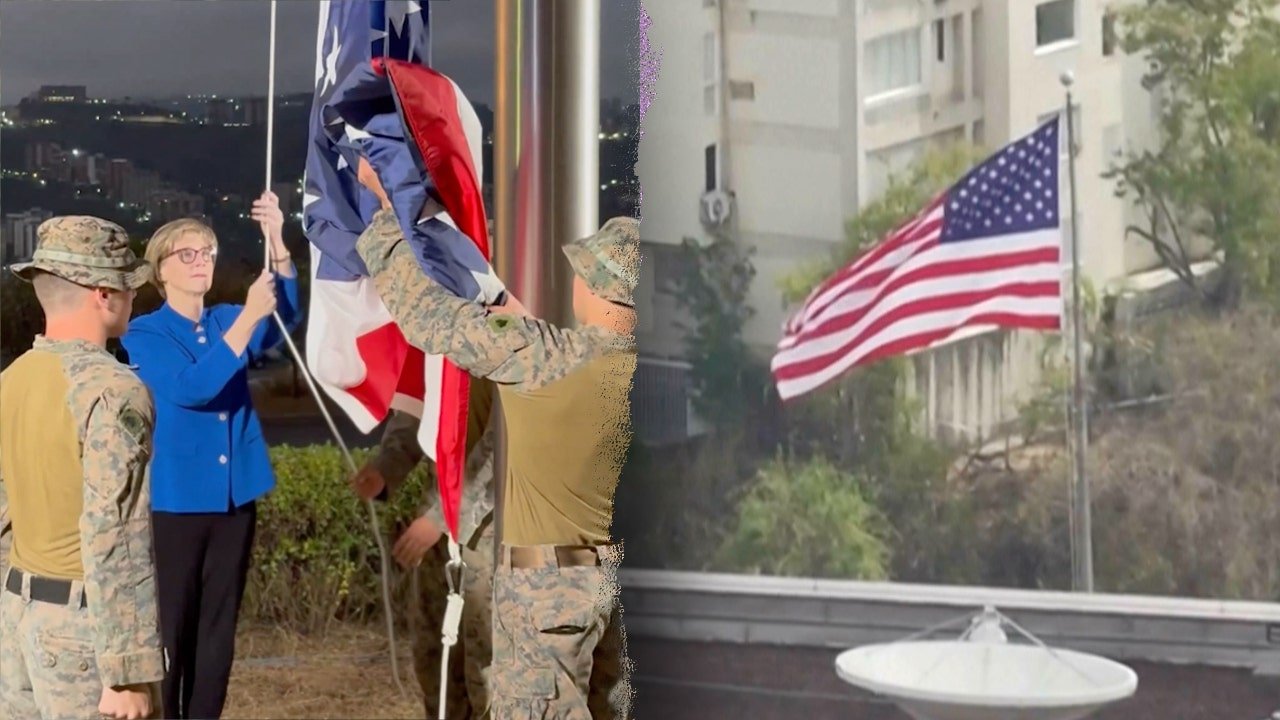
The American flag flew again over the U.S. Embassy in Venezuela on Saturday, marking the first time it has been raised in the South American country in seven years.
The embassy compound in Caracas is still undergoing renovations, and officials have not announced when the building will fully reopen, The Associated Press reported.
The flag’s return comes months after former Venezuelan President Nicolás Maduro was captured by U.S. forces in January.
FROM PALACE TO PRISON: VENEZUELAN STRONGMAN MADURO LOCKED IN TROUBLED BROOKLYN JAIL
An American flag flies again at the US Embassy in Caracas, Venezuela, Saturday, seven years after it was lowered when Washington and Caracas cut diplomatic relations in 2019. (AP Photo/Ariana Cubillos)
The U.S. Embassy highlighted the moment in a social media post, calling it the start of a new chapter in relations between Washington and Caracas.
«A new era for U.S.-Venezuela relations has begun,» the U.S. Embassy wrote on X.
Some residents expressed hope that the flag signals improved ties with the international community.
Caracas resident Alessandro Di Benedetto said the atmosphere among onlookers was optimistic, according to The Associated Press.
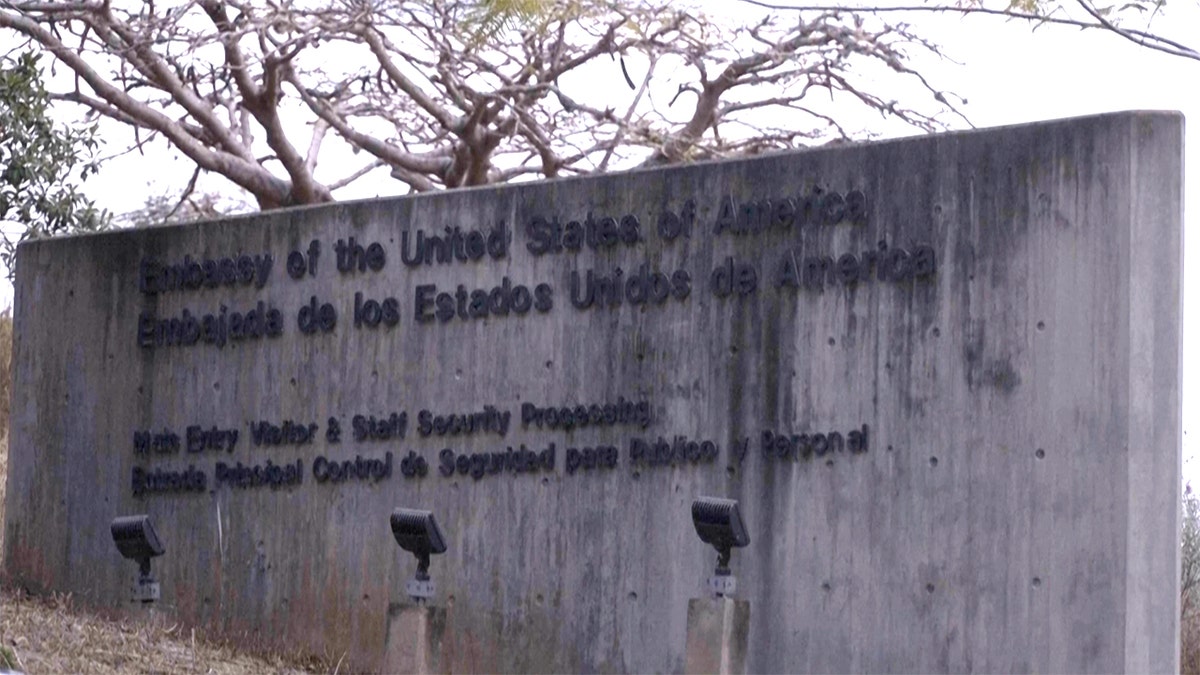
The entrance sign of the U.S. Embassy is seen in Caracas, Venezuela. (Associated Press)
TRUMP BACKS MADURO LOYALIST OVER VENEZUELA OPPOSITION LEADER IN POST-CAPTURE TRANSITION
«I found several people here surprised and happy because today they raised the U.S. flag at the embassy,» he said. «This is positive; this is another step.»
The embassy had been closed since March 12, 2019, when the U.S. and Venezuela cut diplomatic relations, according to the website for the U.S. Department of State.
Maduro was captured during a U.S. military operation in Caracas on Jan. 3 and flown to New York, where he is currently being held in a federal jail.
TRUMP TOUTS US HAS «TREMENDOUS» AMOUNT OF VENEZUELAN OIL, VOWS TO «TAKE CARE» OF CUBA AFTER IRAN FOCUS
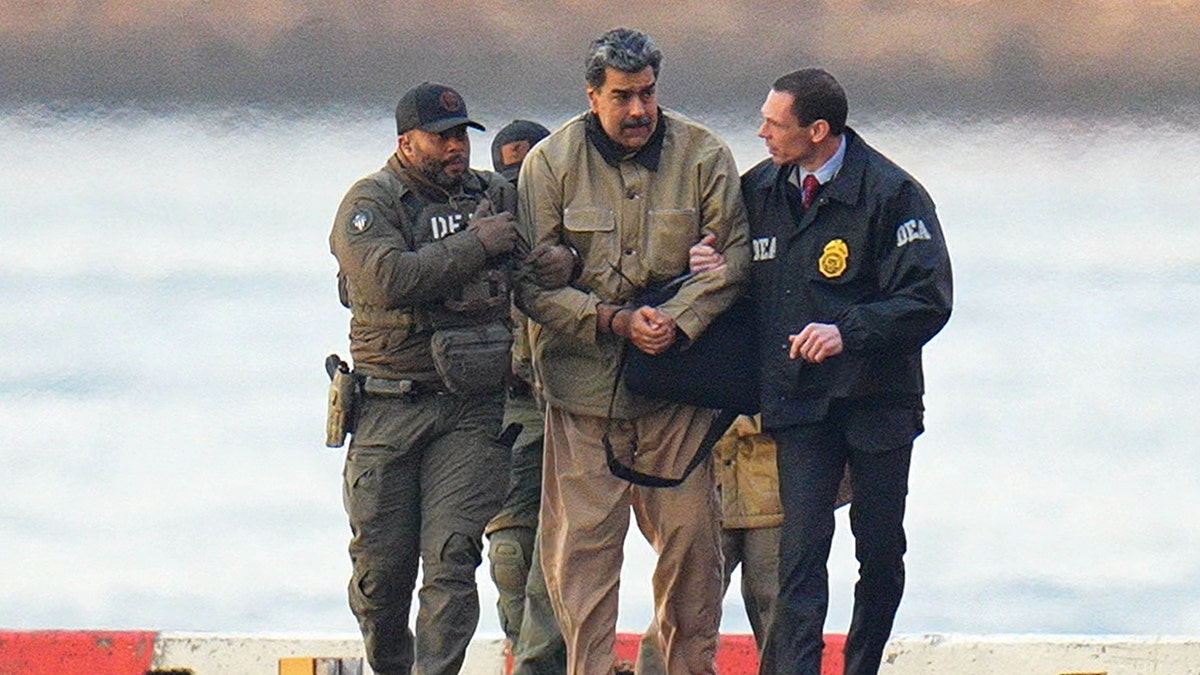
Nicolás Maduro is seen in handcuffs after landing at a Manhattan helipad, escorted by heavily armed federal agents as they make their way into an armored car en route to a Federal courthouse in Manhattan on Jan. 5, 2026 in New York City. (XNY/Star Max/GC Images via Getty Images)
He faces multiple charges, including narco-terrorism conspiracy, cocaine importation conspiracy, possession of machine guns and destructive devices, and conspiracy to possess those weapons.
Maduro’s wife, Cilia Flores, is also facing federal charges related to drug trafficking and weapons offenses.
CLICK HERE TO DOWNLOAD THE FOX NEWS APP
Both pleaded not guilty during a federal court appearance in New York on Jan. 5.
The Associated Press contributed to this report.
world,geopolitics,venezuelan political crisis,nicolas maduro,donald trump

El disco rígido cargado con información sensible que estuvo bajo llave y ahora pone en jaque la estrategia del Gobierno

Adorni cerró Argentina Week instando a los empresarios a que se sumen a la batalla cultural: “Defiéndanse”

La embajada de Estados Unidos denuncia trato cruel contra ancianos y enfermos en Nicaragua

La Provincia de Buenos Aires no adherirá a los cambios que impulsa el gobierno nacional en la VTV: la respuesta de Sturzenegger

Sin Messi ni De Paul, el Inter Miami empató ante Charlotte

A los 6 meses empezó a hablar, le dijeron que era superdotado y hoy es el símbolo de una lucha: la historia de Benjamín Equiza

El ex novio de Luana de Gran Hermano reveló información sensible sobre su relación: “El bolso tenía plata”

Sorpresa en Gran Hermano tras la expulsión de Carmiña: la reacción de la producción y las dudas sobre su reemplazo

Emanuel Noir, de Ke Personajes, anunció que dejará las redes sociales: “Una búsqueda mayor a la que creí, apareció”

Morena Rial salió de la cárcel y se conoció escalofriante dato que involucra a Jorge Rial: «Me pidió que me hiciera cargo»

 CHIMENTOS2 días ago
El ex novio de Luana de Gran Hermano reveló información sensible sobre su relación: “El bolso tenía plata”
- CHIMENTOS3 días ago
Sorpresa en Gran Hermano tras la expulsión de Carmiña: la reacción de la producción y las dudas sobre su reemplazo
- CHIMENTOS2 días ago
Emanuel Noir, de Ke Personajes, anunció que dejará las redes sociales: “Una búsqueda mayor a la que creí, apareció”