INTERNACIONAL
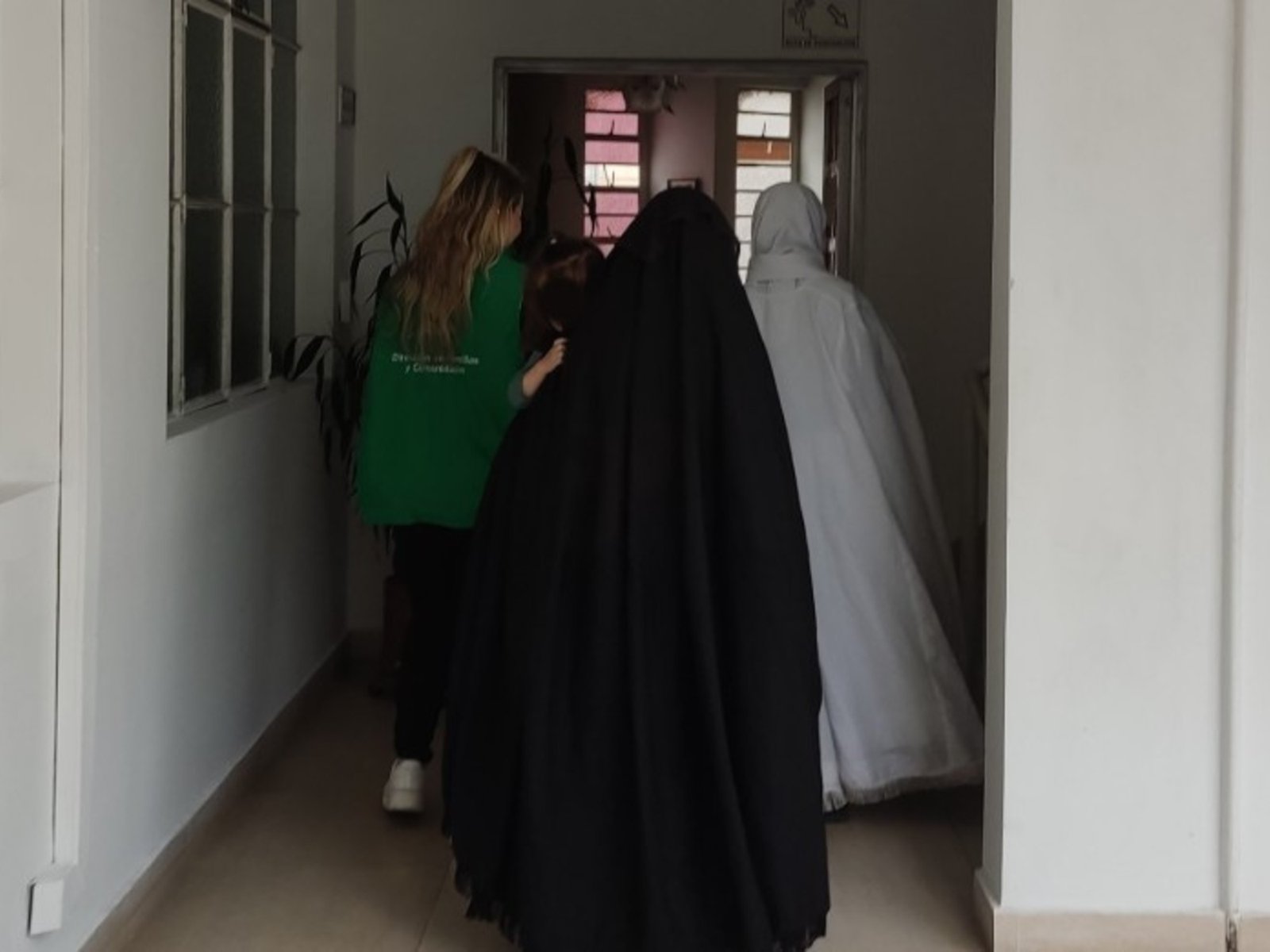
Rescatan a 17 niños de la secta ultraortodoxa judía Lev Tahor en Colombia


INTERNACIONAL
Otro revés para Trump: la economía de EE.UU. creció mucho más lento en los últimos meses de 2025
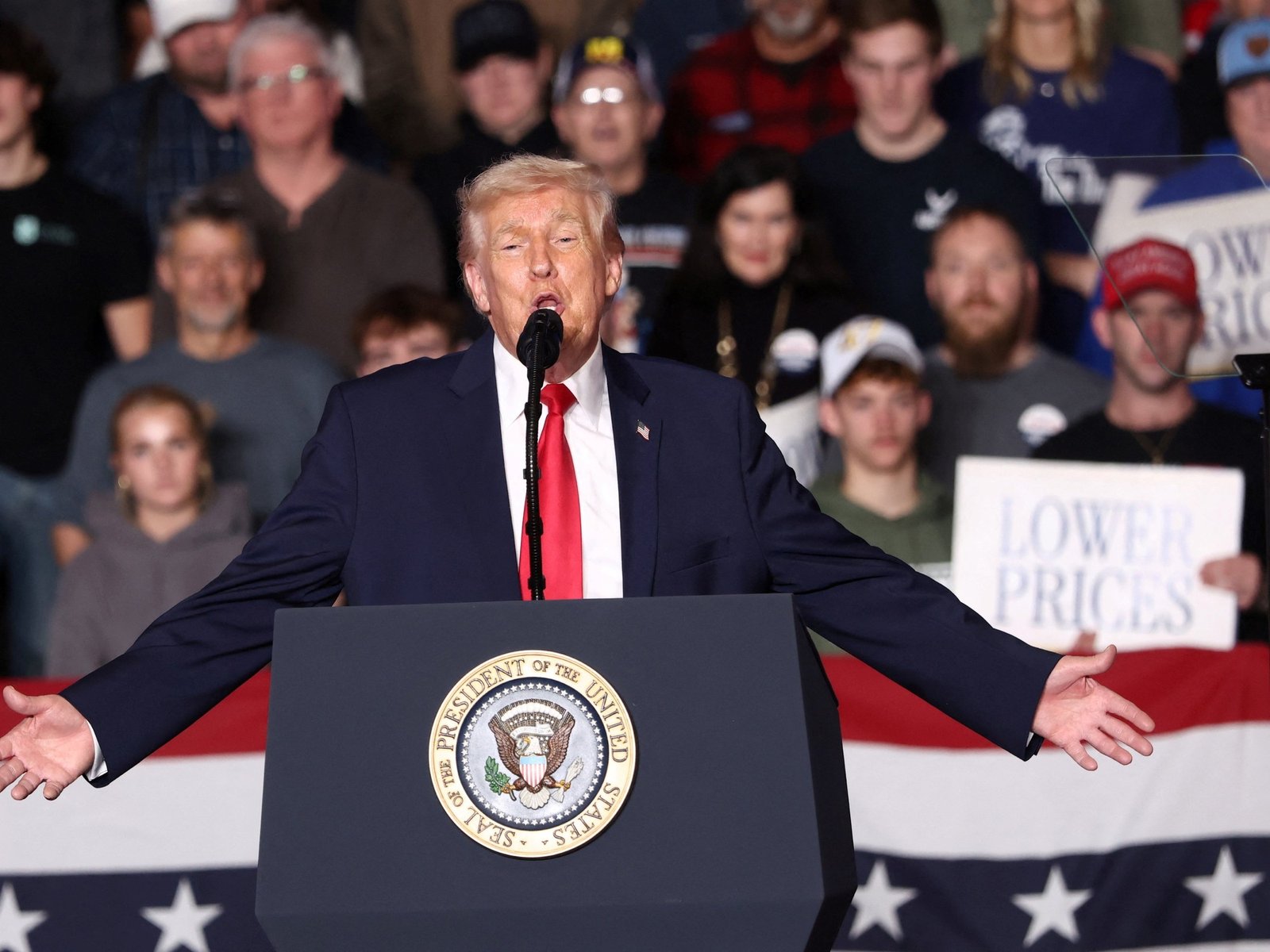
La economía de Estados Unidos creció a un ritmo mucho más lento en los últimos meses de 2025, anunció el Departamento de Comercio este viernes, que señaló que el histórico cierre del gobierno pesó sobre el crecimiento, mientras que el presidente Donald Trump salió a culpar a los demócratas por esa caída.
El anuncio complica al presidente Trump y al partido republicano de cara a las elecciones legislativas de noviembre de este año, ya que la economía es uno de los temas que más preocupa a los estadounidenses. Poco después, el presidente recibió otra mala noticia: la Corte falló en contra de su política de aranceles.
El producto interior bruto, que mide todos los bienes y servicios producidos en la economía, registró una tasa anualizada del 1,4% entre octubre y diciembre, según se informó oficialmente.
Las alarmas se encendieron porque supone una desaceleración notable respecto al 4,4% del tercer trimestre y, además, fue inferior a la tasa del 1,9% proyectada por los economistas en una encuesta de la empresa de datos FactSet y un 2,2% estimada por The Wall Street Journal.
Medida respecto al último cuarto de 2024, la economía creció un 2,2% en 2025. Es un crecimiento más lento que el 2,4% en 2024 y el más débil desde 2022. Los economistas encuestados por el Journal el mes pasado indicaban un crecimiento esperado del 2,3% para 2025.
El Departamento de Comercio dijo que el crecimiento más lento del cuarto trimestre «reflejó descensos en el gasto público y las exportaciones, así como una desaceleración del gasto de los consumidores«.
Aun así, la economía estadounidense terminó el año con crecimiento a pesar de los aranceles que ha aplicado el presidente Trump a la mayoría de sus socios comerciales, el crecimiento inusualmente débil del empleo y el aumento de la deuda de los hogares.
El Departamento de Comercio afirmó que el efecto completo del cierre del gobierno, que se extendió desde el 1 de octubre hasta el 12 de noviembre porque los legisladores no lograban aprobar el presupuesto, «no puede cuantificarse».
Pero una medida —la reducción de los servicios prestados por los trabajadores del gobierno federal— recortó aproximadamente 1 punto porcentual del crecimiento del PIB ajustado por inflación en el último trimestre.
Atento a la repercusión de la noticia, y una media hora antes de que se publicara el informe del PIB, el presidente Trump culpó este viernes en sus redes sociales a los demócratas por el cierre y de perjudicar la economía. También volvió a atacar al presidente de la Reserva Federal, Jerome Powell, por no bajar más las tasas de interés.
«El cierre demócrata le costó a Estados Unidos al menos dos puntos del PIB», escribió el mandatario republicano en su plataforma Truth Social, y dijo que Powell era “el peor”.
Sin embargo, incluso excluyendo el efecto del cierre federal, el crecimiento se desaceleró en el cuarto trimestre. El gasto de consumidores y empresas aumentó a una tasa anual del 2,4%, sólida pero aún la más débil desde el primer trimestre de 2025. Y en el año, esta medida subió un 2,5%, frente al 2,9% de 2024.
El informe del viernes pone fin a un año en el que el PIB se recuperó de una ligera contracción en el primer trimestre a niveles de crecimiento más fuertes en el segundo y tercer trimestre.
Las empresas que anticiparon los aranceles de la administración Trump provocaron un aumento de las importaciones a principios de 2025, lo que afectó al PIB porque las importaciones extranjeras restan del cálculo del crecimiento económico. Pero el gasto sólido de los consumidores y la fuerte inversión en inteligencia artificial ayudaron a que la economía siguiera creciendo en trimestres posteriores.
Se espera que la economía estadounidense crezca un 2,2% en 2026, según la encuesta más reciente del Wall Street Journal a economistas, gracias a las continuas inversiones en IA, así como a las rebajas de impuestos e incentivos derivados del megaproyecto de ley fiscal y gasto del verano pasado.
La marcha de la economía sigue siendo uno de los puntos más complicados para Trump en un año electoral. Un promedio de encuestas de RealClearPolling señala que casi un 59% de los estadounidenses desaprueba su gestión económica y un 61% lo culpa por la inflación.
Algunas de las elecciones más recientes, incluidas la de la ciudad de Nueva York y los estados de Virginia y New Jersey, resultaron en fuertes golpes para el oficialismo republicano que resultó vencido por distintos candidatos que esgrimieron la bandera de la lucha contra los precios altos y la “afordabilidad”.
NEWYou can now listen to Fox News articles!
Congressional Republicans are pushing back against Democratic claims that their marquee voter ID legislation would wreak havoc on elections in the country.
Congressional Democrats have panned the Safeguarding American Voter Eligibility (SAVE) America Act as a tool of voter suppression — saying it’s a bill that allows the Department of Homeland Security (DHS) to monitor Americans’ voter information and create barriers for married women to vote, among several other claims.
Along with requiring photo ID to vote, the bill would require proof of citizenship to register to vote in federal elections, mandate states to actively verify and remove noncitizens from voter rolls, expand information sharing with federal agencies, including DHS, to verify citizenship, and create new criminal penalties for registering noncitizens to vote.
GOP WARNS DEMOCRATS USING DHS SHUTDOWN TO STALL SENATE VOTER ID PUSH
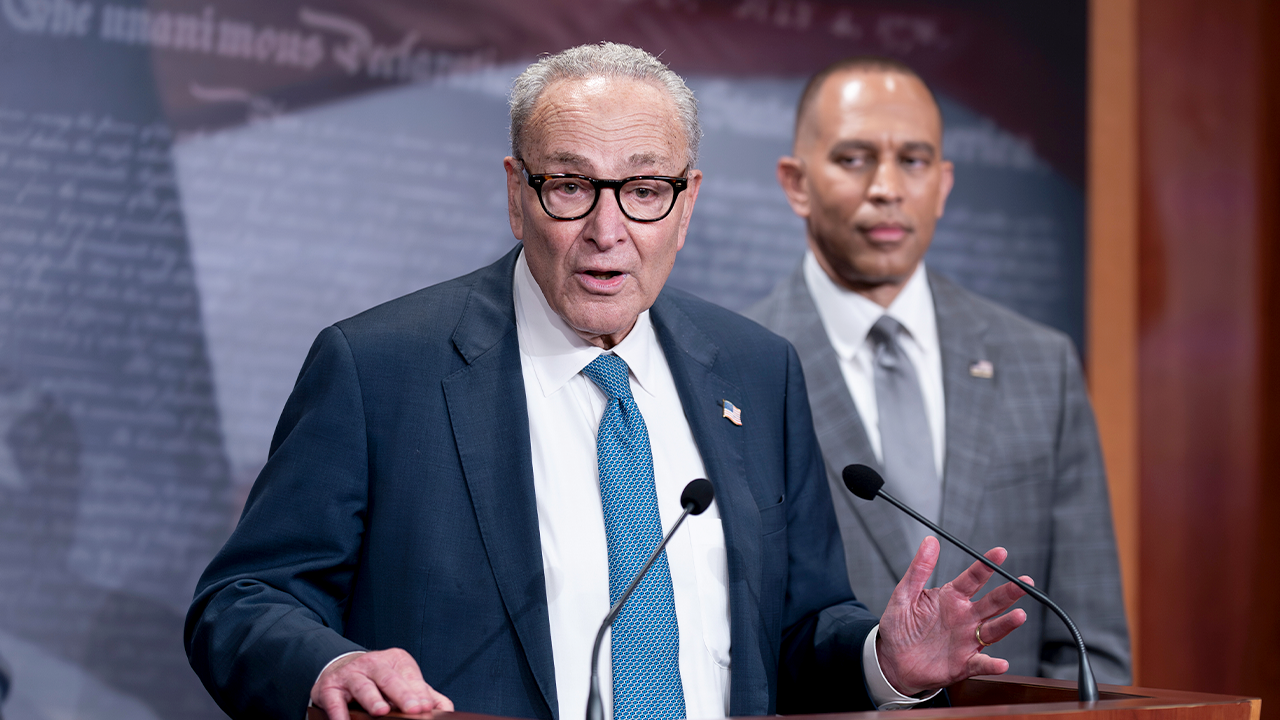
Senate Minority Leader Chuck Schumer, D-N.Y., and House Minority Leader Hakeem Jeffries, D-N.Y., right, have panned the SAVE America Act as «Jim Crow 2.0» and warned it would be a mechanism of widespread voter suppression. (J. Scott Applewhite/AP Photo)
Trump has time and again pushed voter ID, calling the election reforms in the bill a «CAN’T MISS FOR RE-ELECTION IN THE MIDTERMS, AND BEYOND.»
Some of the bill’s strongest proponents fact-checked those claims in interviews with Fox News Digital.
«If you look at what it actually says, rather than what Democrats aggressively and, I believe, disingenuously are arguing right now — they’re overlooking the requirements of the SAVE America Act — those requirements are actually really generous,» Sen. Mike Lee, R-Utah, told Fox News Digital. «They’re really flexible.»
Here’s a closer look at some of the most common claims Democrats have made about the SAVE America Act — and how Republican supporters of the bill are responding.
Claim: ‘Federalizing voter suppression’
Senate Minority Leader Chuck Schumer, D-N.Y., routinely has bashed the SAVE America Act as «Jim Crow 2.0» — the segregationist laws of the Deep South largely done away with by the Civil Rights Act.
«It has nothing to do with protecting our elections and everything to do with federalizing voter suppression,» Schumer said earlier in February on the Senate floor.
But Republicans argued that Democrats were being «hypocritical» in their voter suppression charge, particularly when it comes to voter ID.
TOM EMMER BLASTS DEMOCRATS’ DOUBLE STANDARD ON SAVE ACT: ‘THEY REQUIRE PHOTO IDS’ AT THEIR OWN DNC
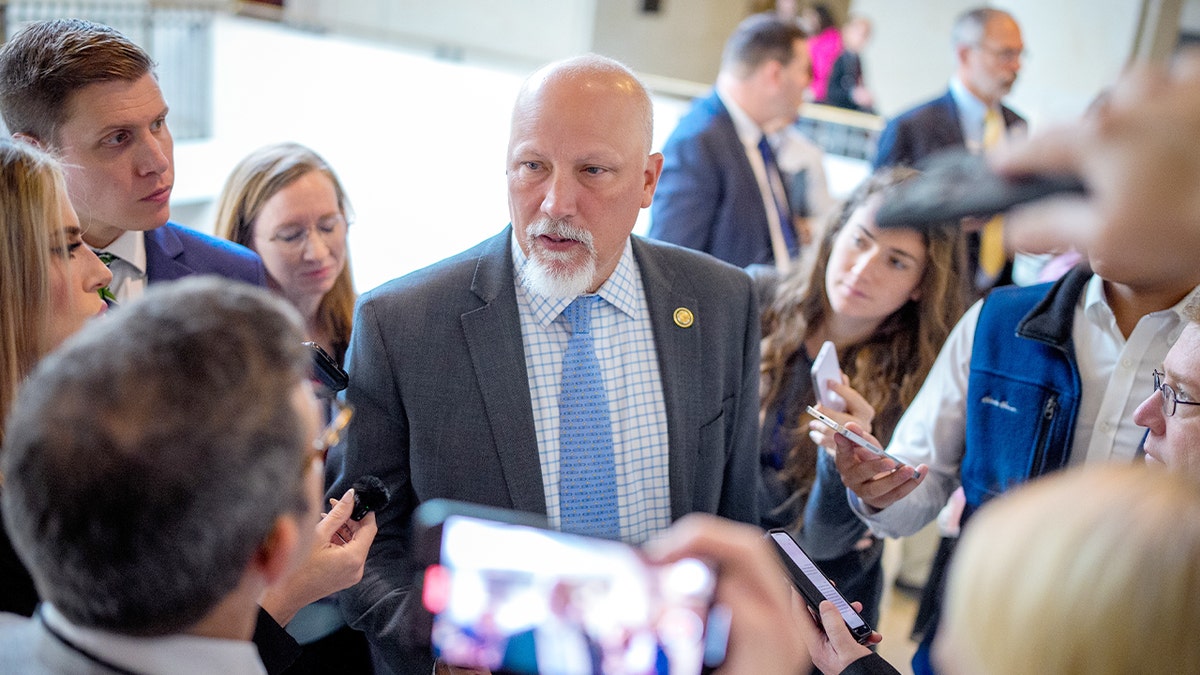
Rep. Chip Roy, R-Texas, speaks to reporters after a news conference on Capitol Hill on Oct. 20, 2025, in Washington, D.C. (Andrew Harnik/Getty)
Sen. Rick Scott, R-Fla., whose home state is one of 36 that either requests or requires a form of photo identification before voting, argued that voter ID laws across the country had no effect on turnout.
«This idea that they’re saying that it’s going to suppress any vote — it’s never done that anywhere,» Scott told Fox News Digital. «They said that when Georgia passed it, and they had record turnout. So it’s not true at all. I mean, how many people do you know who don’t have an ID?»
Claim: DHS will have access to legal voters’ data
House Minority Leader Hakeem Jeffries, D-N.Y., argued during a press conference that this iteration of the SAVE Act — with its new name — is «worse» than the version that passed the House in April because it gave DHS access to Americans’ voter data.
He appeared to be referring to a provision that would allow DHS to begin potential deportation proceedings against a noncitizen found on a state’s voter rolls.
«This version, as I understand it, would actually give DHS the power to get voting records from states across the country,» Jeffries said earlier in February. «Why would these extremists think that’s a good idea? That we as Democrats are going to accept at this moment in time? We’d want DHS and ICE, who have been brutally, viciously and violently targeting everyday Americans, to have more data about the American people? It’s outrageous.»
Rep. Chip Roy, R-Texas, who led both the SAVE Act and SAVE America Act in the House, argued Democrats were «really reaching» for criticism.
«This actually allows and empowers states to be able to — as many of them want to do — check their voter rolls against the citizenship database that they’re currently prohibited from doing under a judicial interpretation of federal law,» Roy said.
«So, long-winded way of saying, no — the SAVE system exists, we have citizenship data, and we’re simply going to allow the checking of voter rolls against citizenship data.»
THUNE GUARANTEES VOTER ID BILL TO HIT THE SENATE DESPITE SCHUMER, DEM OPPOSITION: ‘WE WILL HAVE A VOTE’
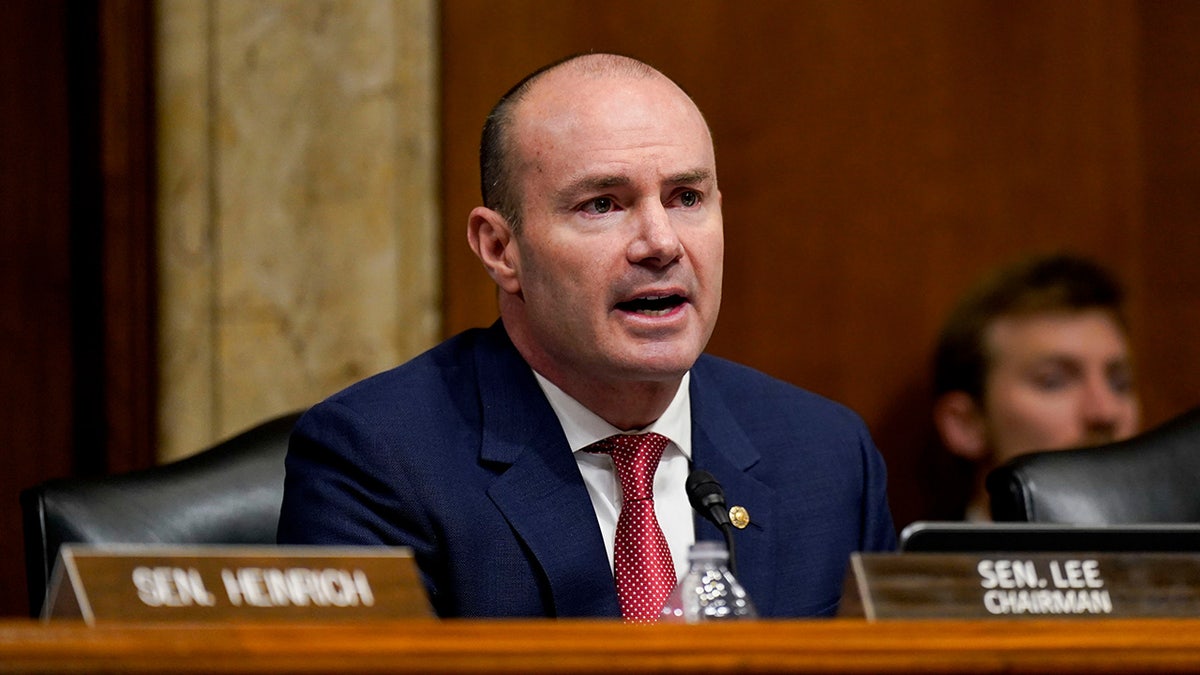
Senator Mike Lee, a Republican from Utah and chairman of the Senate Energy and Natural Resources Committee, during a confirmation hearing in Washington, DC, US, on Thursday, Jan. 16, 2025. (Al Drago/Bloomberg via Getty Images)
Claim: Suppresses married women’s right to vote
Another oft-repeated argument by Democrats is that the legislation would make it harder for American women to vote — specifically married women whose last names are now different from those on their birth certificates.
That’s because the bill would require proof of citizenship, like a birth certificate or a Real ID, to register to vote.
«Republicans aren’t truly afraid of noncitizens voting, which we all know is already illegal, already grounds for deportation,» House Minority Whip Katherine Clark, D-Mass., said earlier this month. «They’re afraid of women voting.»
Rep. Emilia Sykes, D-Ohio, said during the same press conference, «If your current name does not exactly fit and match the name on your birth certificate or citizenship papers, you could be blocked from registering to vote, even if you are a lifelong naturalized or American-born citizen.»
But Roy again said this was untrue.
CLICK HERE TO DOWNLOAD THE FOX NEWS APP
«This is absolute nonsense, and we specifically allow for a provision to make sure that no one can possibly be left behind,» he said.
«If a woman tried to register to vote with different names on her birth certificate and driver’s license,» Roy said. «We literally put in the statute that all you have to do is sign an affidavit under penalty of perjury that, ‘I am that person. This is my birth certificate … and this is my driver’s license that is reflecting my married name.’»
politics,senate,house of representatives politics,elections
INTERNACIONAL
As war losses near 2 million, Russia accused of trafficking foreign recruits from Africa, Asia
NEWYou can now listen to Fox News articles!
As the war in Ukraine enters its fifth year, the central challenge facing both Moscow and Kyiv is no longer territory alone. It is manpower.
Both Russia and Ukraine face a growing manpower crisis. Western estimates put Ukrainian military casualties at roughly 500,000 to 600,000 since 2022, including more than 100,000 killed, while Russia is believed to have suffered about 1.2 million casualties. Combined battlefield casualties on both sides may now be approaching two million, according to recent analyses.
Now, in an exclusive statement to Fox News Digital, the Ukrainian human rights organization Truth Hounds said Russia is increasingly turning to vulnerable foreign nationals, including recruits from Africa and Asia, through coercive and deceptive recruitment practices that in some cases may amount to human trafficking.
PUTIN VOWS VICTORY IN UKRAINE IN NEW YEAR’S ADDRESS AMID TRUMP-BACKED PEACE TALKS
Portraits of Ukrainian soldiers are seen at the Memorial for the Fallen at Independence Square on the third anniversary of Russia’s invasion in Kyiv, Ukraine, on Feb. 24, 2025. (Bo Amstrup/NTB/AFP via Getty Images)
«The patterns of recruitment in different countries and regions are quite similar,» Truth Hounds said. «Two main categories for foreign fighters could be defined. First, persons who were already in Russia, such as students and migrant workers. Second, those who were recruited in their countries of origin.»
According to the organization, many recruits were promised civilian jobs with substantially higher salaries than in their home countries but were later compelled to sign military contracts written in Russian without translation.
«In many of these cases — both when recruitment happens outside and inside Russia — there are plenty of facts indicating potential human trafficking,» the group said.
Truth Hounds said it documented cases in which individuals detained inside Russia were beaten, tortured or otherwise coerced into signing military contracts.
UKRAINE, US NEAR 20-POINT PEACE DEAL AS PUTIN SPURNS ZELENSKYY CHRISTMAS CEASEFIRE OFFER

Nationals of African countries sit in a dedicated section where foreign fighters captured while serving with Russian forces in Ukraine are held at a detention center for Russian prisoners of war in western Ukraine on Nov. 26, 2025. Since Russia invaded Ukraine in 2022, many reports have emerged of African nationals fighting alongside Moscow’s forces, with some accusing the Russian military of using deceptive tactics to recruit them. In November 2025, Kyiv said it had identified 1,426 fighters from 36 African countries serving in the Russian army. (Genya Savilov / AFP via Getty Images)
«Under such circumstances, it is difficult to characterize their enlistment in the Russian army as voluntary. Rather, these cases involve coercion into military service and exploitation — patterns that are consistent across documented cases globally, when it comes to Russian recruitment practices,» the organization said.
The group cited figures from Ukraine’s Coordination Headquarters for the Treatment of Prisoners of War indicating that more than 18,000 foreigners had joined the Russian army as of late last year, with the number continuing to grow. Truth Hounds said its interviews with foreign prisoners of war, including several from African states, revealed similar recruitment patterns.
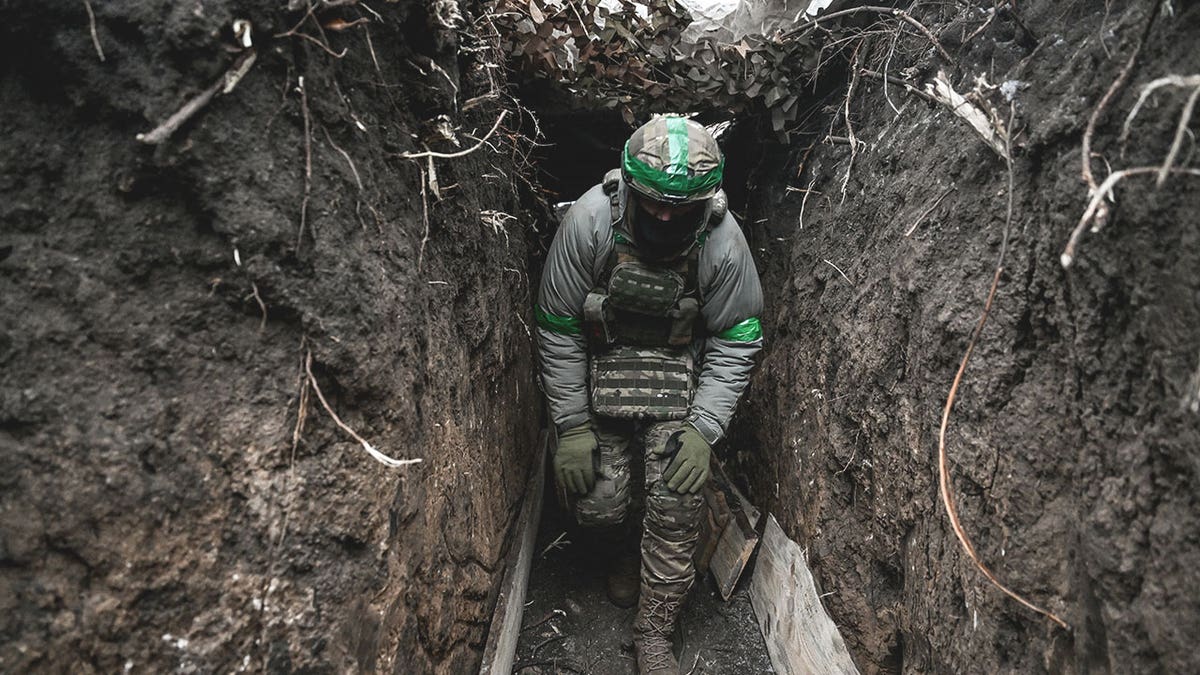
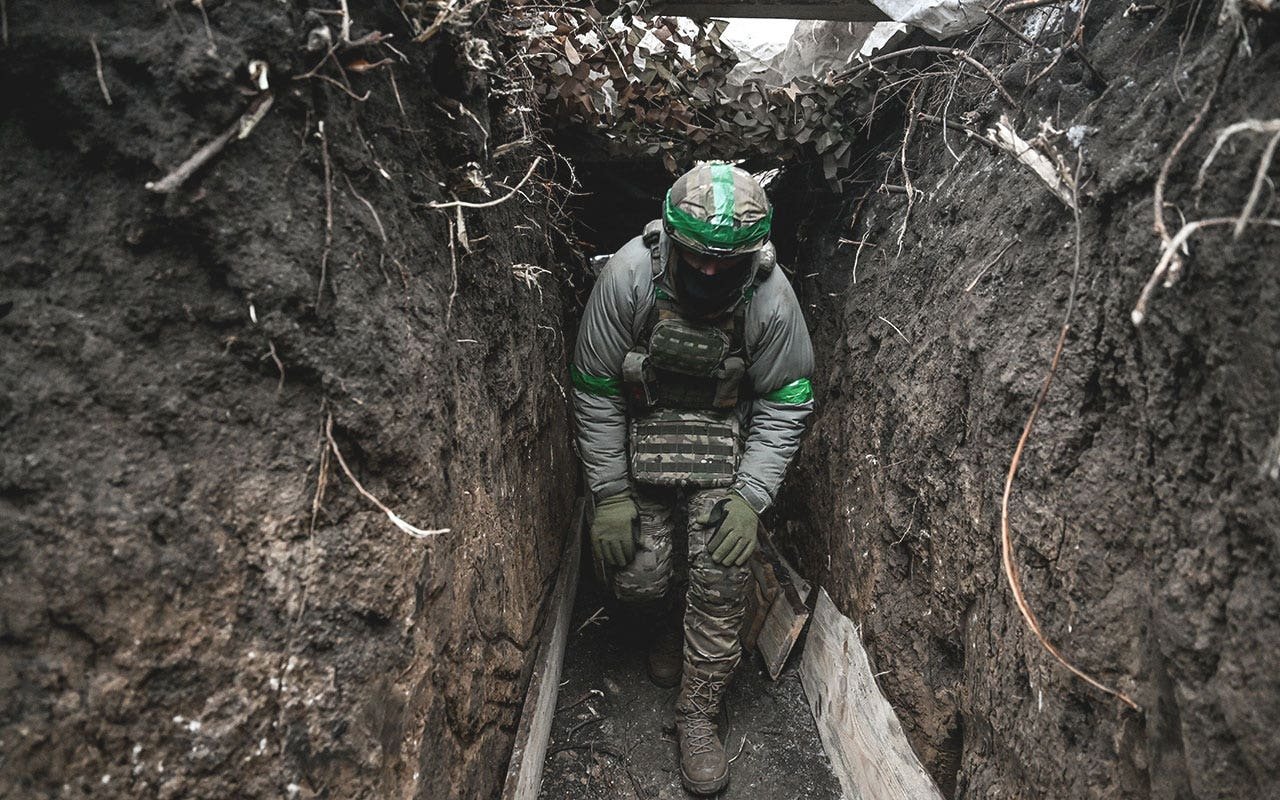
A soldier from a Ukrainian 2S22 Bohdana 155 mm self-propelled howitzer crew of the Striletskyi special forces police battalion of the National Police in the Zaporizhzhia region walks along a trench at a position in the Pokrovsky direction in the Donetsk region, Ukraine, on Jan. 23, 2026. (Dmytro Smolienko/Ukrinform/Nur Photo via Getty Images)
According to a report published by INPACT in February 2026, nearly 1,500 Africans were enlisted between 2023 and mid-2025, 316 of whom died because of a few kilometers of snow in Ukraine, a loss rate of 22%. Many others are missing or cannot be reached by their families.
At the same time, the organization cautioned that not all foreign recruits were forced to serve, noting that some joined with a full understanding of the purpose of their travel to Russia and the terms of the contract, though the proportion remains unclear.
UKRAINE–RUSSIA AT A CROSSROADS: HOW THE WAR EVOLVED IN 2025 AND WHAT COMES NEXT
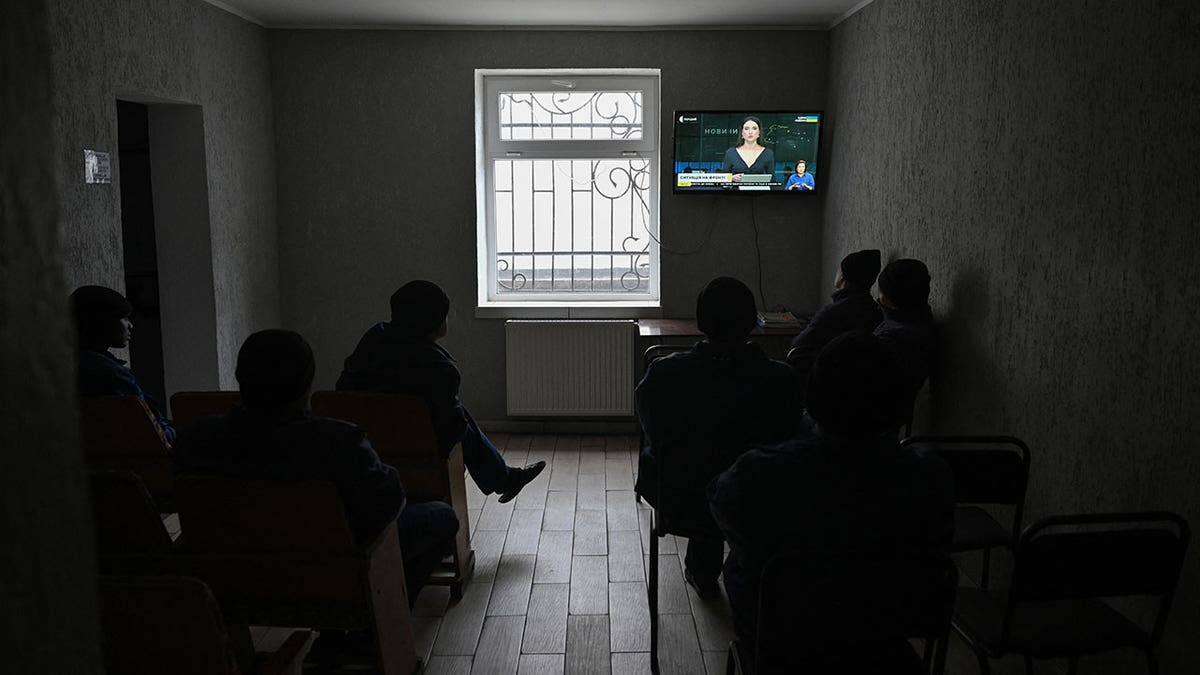
Nationals of African countries watch TV in a dedicated section where foreign fighters captured while serving with Russian forces in Ukraine are held at a detention center for Russian prisoners of war in western Ukraine on Nov. 26, 2025. Since Russia invaded Ukraine in 2022, many reports have emerged of African nationals fighting alongside Moscow’s forces, with some accusing the Russian military of using deceptive tactics to recruit them. In November 2025, Kyiv said it had identified 1,426 fighters from 36 African countries serving in the Russian army. (Photo by Genya Savilov / AFP via Getty Images)
The allegations come as African leaders have begun publicly raising the issue. Kenya’s foreign minister said Nairobi would confront Russian authorities over the recruitment of Kenyan nationals, while South African President Cyril Ramaphosa raised concerns with Russian President Vladimir Putin following distress calls from South African citizens believed to be caught in the conflict, according to Reuters.
Truth Hounds said the legal status of foreign fighters presents a complex overlap between international humanitarian law and international human rights law. Individuals who sign contracts with Russia’s Ministry of Defense are treated as members of the armed forces and are entitled to prisoner-of-war protections, though some cases may also meet the criteria for human trafficking, creating additional legal questions.
«The main question remains how to effectively stop Russia from recruiting such individuals and hold it accountable for the ruined lives of those who have already ended up there,» the organization said.
CLICK HERE TO DOWNLOAD THE FOX NEWS APP

Cadets of a military academy cover the coffin with flags during the funeral of Dmitry Menshikov, a mercenary for the private Russian military company Wagner Group, killed during the military conflict in Ukraine, in the Alley of Heroes at a cemetery in Saint Petersburg, Russia, on Dec. 24, 2022. (Igor Russak/Reuters)
Moscow has previously said foreign nationals may voluntarily enlist in its armed forces. It has not publicly acknowledged coercive recruitment practices.
As the war grinds on, the battle for manpower is stretching beyond Europe’s borders, pulling in vulnerable populations from Africa and Asia and raising new diplomatic and legal challenges for governments far from the front lines.
russia,world,africa,ukraine,world politics

Reforma laboral: qué día podría ser la sesión en el Senado

Walter Erviti se involucra en política: “Queremos convencer a Gebel para que sea candidato a Presidente”

Qué dice el artículo de la reforma laboral que obliga a los abogados a pagar gastos del juicio con su propio patrimonio

La sorpresiva declaración de Neymar que reavivó los rumores sobre su retiro

Adorni convoca a la mesa política y al Gabinete para definir las prioridades legislativas tras la reforma laboral

Otro revés para Trump: la economía de EE.UU. creció mucho más lento en los últimos meses de 2025

Reforma laboral bomba: menos indemnización, más horas y despidos más fáciles — el cambio que puede sacudir el empleo en Argentina

Cristian Ritondo: “Vamos a apoyar la ley de modernización laboral, pero no el régimen de licencias por enfermedad”

El dólar no sólo cae en la Argentina: qué pasa con otras monedas emergentes y cuáles son las causas

Ayuda Escolar Anual: a cuánto asciende, donde se tramita y quien puede cobrarla

 POLITICA3 días ago
Reforma laboral bomba: menos indemnización, más horas y despidos más fáciles — el cambio que puede sacudir el empleo en Argentina
- ECONOMIA2 días ago
Ayuda Escolar Anual: a cuánto asciende, donde se tramita y quien puede cobrarla
- POLITICA3 días ago
El Gobierno endurece las medidas de seguridad y control en la marcha prevista contra la reforma laboral en el Congreso