Connect with us

INTERNACIONAL

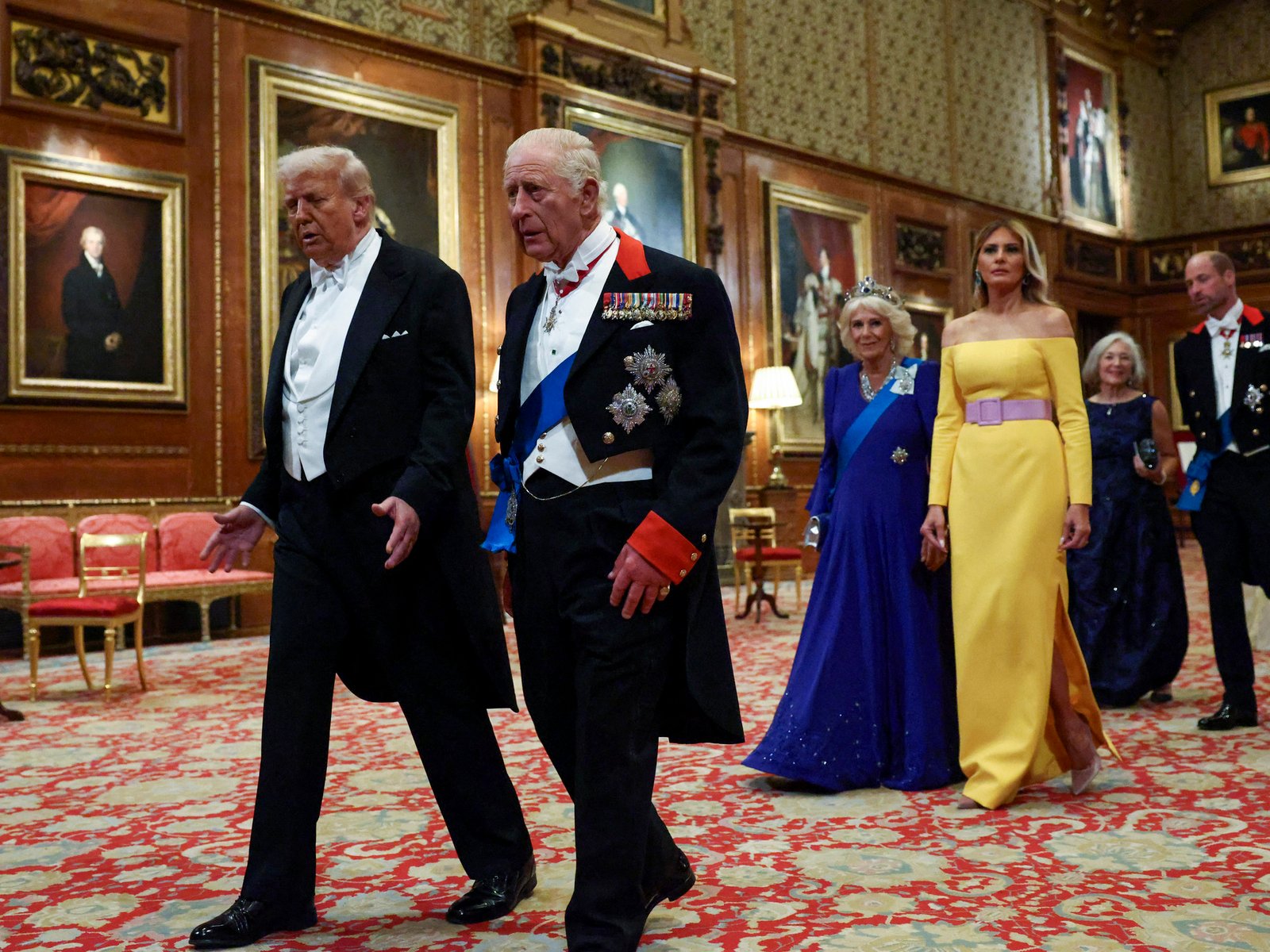
Rey al rescate: Carlos III viaja a EE.UU. y busca salvar la relación especial tras los insultos de Trump a Starmer

Published

on


Después de muchos dimes y diretes, insultos al primer ministro sir Keir Starmer y reprobaciones de Donald Trump, la Casa Real británica ha decidido aplicar su pomposa diplomacia. El rey Carlos y la reina Camila visitarán finalmente Estados Unidos por tres días, a pesar de las tensiones con Trump por Irán. El presidente norteamericano está furioso con el gobierno británico por su no participación en la guerra en Irán.

El primer ministro británico sir Keir Starmer no irá. Luego de que Trump ninguneara sus habilidades al considerar la guerra contra Irán como ”ilegal” y se enfureciera diciendo públicamente que “no estaba hablando con Winston Churchill”, Starmer no lo considera apropiado. Lo reemplazará la canciller Yvette Cooper, quien dijo que Gran Bretaña no violaría sus intereses nacionales en una guerra, tras la experiencia en Irak.

Advertisement

A pesar de los llamamientos de algunos políticos británicos para posponer la visita debido a las tensiones en Oriente Medio, se entiende que la Casa Blanca, el Palacio de Buckingham y el gobierno británico están decididos a que se llevará a cabo del 27 al 29 de abril.

Por los 250 años de la independencia

Existe un fuerte consenso sobre la necesidad de que el rey visite Estados Unidos “para rendir homenaje al pueblo estadounidense, antes de las celebraciones del 250 aniversario de la independencia estadounidense el 4 de julio”.

Advertisement

«Esta será una visita sustancial del rey al pueblo estadounidense», declaró una fuente privada sobre los preparativos.

Posponerla hasta otoño no se considera una opción tras seis meses de planificación meticulosa, durante los cuales, según se informa, se enviaron asesores a Estados Unidos para «medir la situación».

Poderío militar a cambio de pompa

Advertisement

El rey será recibido con una demostración de poderío militar estadounidense a su llegada a EE.UU. para una visita de tres días, en un momento de baja tensión en la relación especial transatlántica entre ambos países, dinamitada por este conflicto.

El viaje, cuya planificación ha durado seis meses e incluyó un reconocimiento del terreno en Estados Unidos por parte de un equipo de los asesores más cercanos de Carlos y otros funcionarios, se llevará a cabo el próximo mes, a pesar de las tensiones entre el presidente y el primer ministro por la guerra en Irán.

Calendario alterado

Advertisement

El calendario ha sido alterado como una forma de expresar disconformidad. El rey pasará solo un día en Washington, donde participará en diversos compromisos, como un discurso ante el Congreso y un banquete nocturno.

Pasará otro día en Nueva York y hará una tercera parada en una zona rural aún por confirmar. Se espera que el monarca haga una cuarta parada en un país con vínculos con Gran Bretaña, posiblemente Bermudas.

Después del Trooping the Colour y la extraordinaria mini pompa «Disneyworld» con que fue recibido en Windsor en su segunda visita de Estado el año pasado, el equipo del presidente Trump ha llegado a la conclusión de que no pueden igualar la pompa y la ceremonia británicas. Esos «royals» que él adora, tanto como los dorados.

Advertisement

Intentarán impresionar a los reyes con una demostración del poderío militar estadounidense a su llegada a Washington. De eso se trata la actual diferencia entre ambos países: Gran Bretaña no tiene presupuesto militar como antes ni los mismos intereses geopolíticos que la administración Trump, ni tolera sus intromisiones en sus políticas.

Está más cerca de Europa. El 56 por ciento de los británicos quieren regresar a ser parte de la Unión Europea pos-Brexit en estas condiciones de inseguridad y populismo.

En las últimas semanas, Trump ha descrito repetidamente a Starmer como la antítesis de «un Winston Churchill». Se ha enfadado por la negativa de Starmer a permitir que Estados Unidos utilice bases en el Reino Unido para sus ataques ofensivos iniciales contra Irán y también ha criticado el acuerdo sobre Chagos.

Advertisement

Se entiende que la visita del rey es apolítica y que no se esperan grandes anuncios políticos durante el viaje.

Esto se debe en parte a que fuentes estadounidenses consideran que el gobierno británico no ha hecho lo suficiente para honrar las alianzas anteriores. Un acuerdo tecnológico de 31,000 millones de libras esterlinas, anunciado durante la visita de Estado de Trump al Reino Unido el año pasado, fue posteriormente suspendido por la Casa Blanca, que atribuyó la decisión a la falta de avances por parte de Gran Bretaña en la reducción de las barreras comerciales.

El presidente Trump ya había expresado su admiración por la familia real.

Advertisement

Preparativos difíciles

Miembros de la Casa Real visitaron Washington a principios de este año para realizar preparativos, incluyendo una visita al Congreso.

El equipo incluía a Theo Rycroft, secretario privado adjunto del rey y uno de sus asesores más cercanos, quien supervisó personalmente el reconocimiento del terreno en Estados Unidos en preparación para la visita de Carlos. Rycroft, uno de los diplomáticos británicos de mayor rango, está casado con Flora Astor, hermana de Samantha Cameron, la esposa del ex primer ministro.

Advertisement

Una fuente indicó que el asesor había estado analizando minuciosamente los detalles de las actividades del rey a su llegada a Estados Unidos, desde el horario de las cenas. Por la parte estadounidense, Monica Crowley, embajadora y jefa de protocolo de Estados Unidos, ha estado al frente de los preparativos.

Como es costumbre, el rey pronunciará un discurso ante el Congreso, que se compartirá con Starmer con antelación para su aprobación.

Se espera que destaque los lazos de amistad entre el Reino Unido y Estados Unidos. Como jefe de Estado y jefe de las fuerzas armadas británicas, probablemente haga referencia a la forma en que ambas fuerzas armadas han combatido juntas en conflictos desde la Revolución Americana.

Advertisement

La tradición dicta que el palacio anuncie las visitas de Estado, pero el martes la Casa Blanca pareció adelantarse cuando Trump confirmó en el Despacho Oval que el rey “vendría” y estaría en Estados Unidos “muy pronto”.

El Palacio de Buckingham reiteró que la visita aún no se había anunciado públicamente.

La visita del rey y la reina se inspirará en el viaje que su madre realizó a Estados Unidos en 1976 para celebrar el bicentenario del país. Aunque la visita del rey, de tres días, es mucho más corta que la de su madre, que fue de seis días; un reflejo de los difíciles tiempos diplomáticos.

Advertisement

Fuentes del palacio afirman que el programa más corto siempre estuvo planeado, en parte para tener en cuenta la avanzada edad del rey y su reciente lucha contra el cáncer. Sin embargo, se dice que está deseoso de incluir tantos compromisos como sea posible.

A pesar de los recientes ataques contra el Reino Unido, el afecto del presidente por la familia real británica se ha mantenido inquebrantable hasta ahora.

Advertisement
Advertisement

INTERNACIONAL

La historia oculta de Santiago Abascal: cómo el hijo de un dirigente del PP reinventó la derecha en España

Published

on


El fenómeno Santiago Abascal desafió la lógica bipartidista en España y empujó a la derecha a un nuevo territorio discursivo. En el análisis de Tomás Trapé para Infobae a la Tarde, la figura de Abascal emerge como el motor de una transformación política que hoy sacude tanto al Partido Popular como al PSOE.

Advertisement

Durante el programa conducido por Manu Jove, Maia Jastreblansky, Paula Guardia Bourdin y Tomás Trapé, el panel analizó el trayecto personal y político de Abascal, así como el modo en que Vox desplazó los límites del discurso tradicional, instalando nuevos ejes de discusión que trascienden la clásica división entre izquierda y derecha.

Tomás Trapé explicó que la llegada de Vox y Santiago Abascal al escenario español marcó un punto de inflexión en el sistema bipartidista: “Si alguna vez, no hace tanto, el sistema político español parecía un tablero estable, un bipartidismo entre el PSOE y el PP, hubo una irrupción que rompió esa lógica”. El periodista trazó un paralelismo con el surgimiento de Podemos, recordando que ambos partidos “representan un afuera de esos dos partidos tradicionales, de izquierda y derecha, que son los partidos herederos posfranquismo en España”.

Trapé resaltó que la palabra “casta”, antes asociada a la izquierda española, fue apropiada por la derecha argentina y su líder Javier Milei: “Hoy esa palabra cruzó el océano, mutó y forma parte de la economía del lenguaje de la derecha argentina, de La Libertad Avanza, de Javier Milei”. Señaló que la economía del lenguaje y la crítica al establishment político se volvió un punto en común entre los nuevos movimientos disruptivos.

Advertisement
El salto de Abascal al fundar Vox rompió el bipartidismo en España, desplazando los límites tradicionales del debate político nacional (REUTERS/Ana Beltran)

Al analizar los orígenes de Abascal, Trapé remarcó que “no es tanto un outsider, sino más bien un insider que se radicalizó”. Explicó que Abascal nació en el País Vasco en 1976, proviene de una familia vinculada a la política y que sufrió la violencia de ETA. “Su padre fue dirigente del Partido Popular 35 años y él se inicia en el Partido Popular. No es una persona que no venga de la política, sino todo lo contrario, que tiene un gran recorrido en la política”, detalló el periodista.

El recorrido de Abascal dentro del Partido Popular y su posterior salida en 2013 para fundar Vox respondieron a la percepción de que “el PP se volvió blando frente al separatismo, a la inmigración, a la izquierda cultural”. Trapé describió cómo Vox pasó de ser una fuerza marginal a ganar peso electoral: “Fue durante muchos años marginal hasta que, y esto es importante, en el 2019 irrumpe en Andalucía. De la nada. Aparece en una elección en un territorio más asociado al PSOE y hace una gran elección donde saca 400 mil votos”.

Esa irrupción, según Trapé, desplazó el eje de la política española: “El eje no es más izquierda-derecha, no es más arriba y abajo, sino que es adentro y afuera. Podemos y Vox representan un afuera de esos dos partidos tradicionales”. Subrayó que el ascenso de Vox tiene puntos de contacto con fenómenos internacionales, como el de Donald Trump en Estados Unidos o Giorgia Meloni en Italia.

Advertisement

Trapé también abordó el impacto emocional y cultural en la narrativa de Abascal: “Los atentados de ETA, la violencia en el País Vasco, en definitiva, la unidad española forma parte constitutiva de la narrativa, incluso de la educación emocional de Abascal. No es simplemente una discusión de taberna o de universidad, sino que es algo que evidentemente lleva en la sangre”.

Santiago Abascal emerge como líder
Santiago Abascal emerge como líder de Vox tras un pasado de militancia en el Partido Popular y marcado por la violencia de ETA (EFE/Rodrigo Jiménez)

Para Trapé, el programa de Vox no se centra en una revolución económica, sino en una restauración cultural: “Abascal no propone una revolución económica, ni da vuelta al Estado, ni destruirlo, ni reformarlo como Milei. No es anarcocapitalista, sino que propone más que nada una restauración cultural. Hay una cierta nostalgia a esa España clásica”. Destacó que la propuesta de Vox gira en torno a poner orden ante el separatismo, la inmigración y la agenda progresista.

En ese sentido, en el programa hicieron alusión a un video en el que Abascal enunció: “Queremos dar esperanza a esos millones de españoles que sienten y piensan como nosotros, para decirles que hay alguien que se va a atrever a decir en la tribuna del Congreso lo que ellos se dicen en la intimidad del WhatsApp”.

El líder de Vox también se refirió a la agenda progresista: “El marxismo cultural ha tratado de enfrentar a la gente por la raza, por el sexo, por la religión, y trata de imponer una especie de religión de sustitución, que es la agenda woke… probablemente el mayor ataque a la libertad en Occidente desde la caída del comunismo”.

Advertisement

Trapé apuntó que Vox logró instalar su mirada en el debate público: “No podríamos decir que Santiago Abascal vaya a ser de seguro el próximo presidente español. Lo que sí podemos decir es que Vox cambió el debate. Vox influyó en la agenda de debate y eso es un triunfo. De repente se está hablando lo que Vox quiere que se hable en España, incluso por izquierda, incluso por derecha”.

El periodista cerró su análisis destacando que, aunque Vox no haya llegado aún al gobierno, ya ha logrado un “triunfo cultural” al influir en la forma en la que se discuten los grandes temas en la política española.

Advertisement

Infobae te acompaña cada día en YouTube con entrevistas, análisis y la información más destacada, en un formato cercano y dinámico.

• De 7 a 9: Infobae al Amanecer: Nacho Giron, Luciana Rubinska y Belén Escobar.

• De 9 a 12: Infobae a las Nueve: Gonzalo Sánchez, Tatiana Schapiro, Ramón Indart y Cecilia Boufflet.

Advertisement

• De 12 a 15: Infobae al Mediodia: Maru Duffard, Andrei Serbin Pont, Jimena Grandinetti, Fede Mayol y Facundo Kablan.

• De 15 a 18: Infobae a la Tarde: Manu Jove, Maia Jastreblansky y Paula Guardia Bourdin; rotan en la semana Marcos Shaw, Lara López Calvo y Tomás Trapé

• De 18 a 21: Infobae al Regreso: Gonzalo Aziz, Diego Iglesias, Malena de los Ríos y Matías Barbería; rotan en la semana Gustavo Lazzari, Martín Tetaz y Mica Mendelevich

Advertisement

Seguinos en nuestro canal de YouTube @infobae.

Advertisement
Continue Reading

INTERNACIONAL

Trump rates Macron ‘an 8’ as France and US split over Middle East strategy

Published

on


NEWYou can now listen to Fox News articles!

French President Emmanuel Macron on Thursday called for an immediate de-escalation in the Middle East, urging a halt to U.S.–Israeli strikes on critical infrastructure as fighting intensifies across the region.

Advertisement

«France calls for the immediate implementation of a moratorium on strikes targeting civilian infrastructure, whether related to water or to energy,» Macron wrote on X, reinforcing France’s push for diplomacy even as the United States and Israel emphasize military pressure against Iran and its proxies. «Freedom and security of navigation must be restored.» 

President Donald Trump recently struck a mixed tone on France’s role, saying he had spoken with Macron and was cautiously optimistic Paris ultimately would help secure the Strait of Hormuz, a critical global shipping route for oil and energy supplies.

MULTIPLE ALLIES DECLINE US CALLS FOR STRAIT OF HORMUZ SUPPORT AMID RISING MIDDLE EAST TENSIONS

Advertisement

President Donald Trump struck a mixed tone on France’s role Thursday.  (Win McNamee/Getty Images)

On «a scale of 0 to 10,» Trump said Macron had been «an eight.» 

«Not perfect, but it’s France,» he said at a press briefing in the White House Monday.

Advertisement

Trump went on to say he believes Macron «is going to help» regarding securing the Strait of Hormuz, but added, «I don’t do a hard sell on them because my attitude is we don’t need anybody. We’re the strongest nation in the world.»

«I’m almost doing it … because I want to find out how they react,» Trump said, suggesting the U.S. is also testing its allies. 

In a future crisis, he warned, «I’ve been saying for years that if we ever did need them, they won’t be there. Not all of them, but they won’t be there.»

Advertisement

The divide reflects a broader question shaping the conflict: whether diplomacy can contain Iran’s regional network, or whether force is required to dismantle it.

WORLD LEADERS SPLIT OVER MILITARY ACTION AS US-ISRAEL STRIKE IRAN IN COORDINATED OPERATION

Satellite view showing the Strait of Hormuz connecting the Persian Gulf to the Gulf of Oman

A satellite image shows the Strait of Hormuz, a key maritime passage connecting the Persian Gulf to the Gulf of Oman, vital for global energy supply. (Amanda Macias/Fox News Digital)

That tension is playing out most clearly over the Strait of Hormuz, a narrow waterway between Iran and Oman that serves as one of the world’s most critical energy choke points, with roughly one-fifth of global oil supplies passing through it each day. 

Advertisement

In recent weeks, Iran has disrupted traffic through the strait with drone, missile and naval threats, raising fears of a broader economic shock as commercial shipping slows and global energy markets face increasing uncertainty.

Macron said France «will never take part in operations to open or free» the critical waterway «in the current context,» emphasizing that France is «not a party to the conflict.» 

Paris instead has proposed escorting commercial vessels only after hostilities subside, in coordination with regional actors.

Advertisement

At the same time, European allies — including France — signaled they are not entirely stepping back from efforts to secure the strategic waterway.

Leaders of the United Kingdom, France, Germany, Italy, the Netherlands and Japan expressed in a joint statement released Thursday a «readiness to contribute to appropriate efforts» to ensure safe passage through the Strait of Hormuz, while calling on Iran to «cease immediately its threats» against commercial shipping.

A European diplomat told Fox News that the United Kingdom is leading a diplomatic effort to build support among European and Gulf partners for a coordinated response, with discussions underway on how such a mission could be structured.

Advertisement

NATO HEAVYWEIGHTS BALK AT HORMUZ MISSION AS TRUMP WARNS ALLIANCE AT RISK

IDF striking Hezbollah targets in Beirut.

A fireball rises from the site of an Israeli airstrike that targeted an area in Beirut’s southern suburbs overnight March 10 to March 11, 2026.  (Fadel itani / AFP via Getty Images)

However, European officials remain divided over timing, with concerns that launching such an effort during active hostilities could introduce new high-value targets into the conflict, according to the diplomat.

France pushes diplomacy across Iran-linked fronts

Lebanon has emerged as a second front in the war after Hezbollah, the Iran-backed militant group, began attacking Israel following U.S. and Israeli strikes on Iran in late February. 

Advertisement

The group launched rockets and drones from southern Lebanon, prompting Israeli retaliatory strikes and escalating the conflict into a broader regional confrontation tied directly to Tehran, Iran, and its proxy network.

While distancing itself from direct military involvement, France is intensifying its diplomatic push in Lebanon, urging direct negotiations between Israel and Beirut following signals from Lebanese President Joseph Aoun that he is open to talks.

French officials view this as a «window of opportunity» to stabilize the border and prevent further escalation, arguing that both sides share an interest in preventing Lebanon from becoming a launchpad for attacks against Israel.

Advertisement

But Israeli officials have sharply pushed back, arguing that diplomacy cannot succeed while Hezbollah remains armed and active. 

The Israel Defense Forces said Thursday that since Hezbollah joined the fighting following strikes on Iranian regime, the group has launched hundreds of rockets, missiles and drones toward Israel.

Israeli Foreign Minister Gideon Sa’ar said Israel has come under sustained attack from Lebanese territory in recent weeks. 

Advertisement

«Since March 2nd, Israel has been attacked from Lebanese territory more than 2,000 times with missiles and drones,» he wrote on X Tuesday. 

Sa’ar warned that the crisis extends beyond the region, calling disruptions to maritime routes «naval terrorism that harms the global economy.»

While expressing openness to normalization with Lebanon, Sa’ar made clear that Hezbollah remains the central obstacle. 

Advertisement

«The obstacle to this is Hezbollah,» he said, adding that Beirut must take «meaningful action» against the group’s weapons, funding and leadership.

Analysts say that gap — between France’s diplomatic push and Israel’s security demands — reflects a deeper structural problem that has persisted for years.

France has «potential influence that they never use … essentially the stick,» David Schenker, a former U.S. assistant secretary of state for Near Eastern Affairs who oversaw Lebanon policy during the first Trump administration and now directs the Program on Arab Politics at the Washington Institute for Near East Policy, told Fox News Digital. 

Advertisement

He argued that Paris has failed to use its leverage to pressure Hezbollah or its backers.

While Schenker said direct negotiations between the Lebanese government and Israel could be useful, he questioned whether they would change realities on the ground.  

«I don’t see how a ceasefire in and of itself changes the status quo,» he said.

Advertisement

TRUMP PRESSES NATO PARTNERS ON SUPPORT AS HEGSETH BLASTS HESITATION

Hezbollah

Hezbollah launches long-range missiles from Lebanon into northern Israel within 48 hours of strikes on Iran, escalating the widening conflict amid Operation Epic Fury. (Hadi Mizban/AP)

Lebanese leaders repeatedly have pledged to assert a state monopoly over weapons, but «they haven’t really done much,» Schenker said, adding there is «zero confidence» they would move forward given Hezbollah’s opposition.

Even the Lebanese army has signaled its limits, prioritizing «national unity and the safety of the army above disarmament,» he said.

Advertisement

On the ground, the situation continues to deteriorate rapidly.

Violence in Lebanon has surged dramatically since the war in Iran began.

«There has been a 400% increase in violence events in Lebanon,» said Bassel Doueik, a researcher at the Armed Conflict Location & Event Data (ACLED), adding that Israeli strikes and Hezbollah clashes have displaced at least 1 million people.

Advertisement

Doueik said Israel appears to be seeking to create a buffer zone south of the Litani River in Lebanon, warning the escalation could lead to «another occupation of southern Lebanon similar to 1982.»

At the same time, Hezbollah — long backed by Iran — continues to operate as a powerful armed force inside Lebanon, complicating efforts to reach any durable political settlement.

France has played a leading diplomatic role in Lebanon for years, including backing the United Nations Interim Force in Lebanon (UNIFIL). But the mission has faced growing challenges, including restrictions on movement and attacks on its personnel, raising criticism about its effectiveness.

Advertisement

Critics argue that repeated diplomatic initiatives have failed to curb Hezbollah’s military buildup, leaving Israel increasingly skeptical of new proposals.

CLICK HERE TO DOWNLOAD THE FOX NEWS APP
macron trump

French President Emmanuel Macron meets with President-Elect Donald Trump at the Elysee Palace on December 7, 2024 in Paris, France. Donald Trump was among the wave of foreign dignitaries descending on Paris this weekend to attend a reopening ceremony at Notre-Dame Cathedral, more than five years after it was damaged in a major fire.  (Oleg Nikishin/Getty Images)

«The French are specializing in carrots,» Schenker said, arguing that Paris has been reluctant to use pressure despite its influence in Lebanon.

Advertisement

But he added that the transatlantic divide is not entirely one-sided. 

«This is a war that was launched by Israel and the United States, and they disagreed with it,» he said, noting that protecting global energy flows through the Strait of Hormuz should be «an international responsibility.»

Advertisement


war with iran,lebanon,france,donald trump,iran

Advertisement
Continue Reading

INTERNACIONAL

Beijing leverages UN troops, funding to expand global influence, House report warns

Published

on


NEWYou can now listen to Fox News articles!

FIRST ON FOX: Beijing’s growing influence inside the United Nations is raising alarms after a new report from the House Select Committee on China warns the Chinese Communist Party is allegedly leveraging money, personnel and peacekeeping deployments to advance its strategic interests.

Advertisement

The report, obtained by Fox News Digital ahead of its release, outlines what lawmakers describe as a «systematic campaign» by China to reshape the U.N. from within — using expanded financial contributions, placement of Chinese nationals in key roles, and state-linked organizations to steer outcomes in Beijing’s favor.

One of the report’s most concrete findings centers on China’s use of U.N. peacekeeping operations.

Chinese troops increasingly are deployed to regions tied to Beijing’s economic and strategic priorities, the report claims, particularly in Africa, as part of a «sophisticated strategy» to convert influence into hard power.

Advertisement

US SEEKS UN AUTHORIZATION FOR GAZA INTERNATIONAL FORCE LASTING THROUGH 2027 UNDER TRUMP PLAN

A new report from the House Select Committee on China is raising alarms about Beijing’s growing influence inside the United Nations.  (Li Gang/Xinhua via Getty Images)

Lawmakers point to South Sudan as a key example, where a significant share of oil production is exported to China and Chinese state-backed firms maintain major investments.

Advertisement

The report highlights a concentration of Chinese peacekeepers in the U.N. mission in South Sudan and argues these deployments allow China to «secure its national interests» while operating under the legitimacy of the U.N.

The committee does not allege China is violating U.N. rules. Instead, the report finds Beijing is «exploiting» its participation in the U.N. system to shape outcomes in its favor.

The bipartisan committee is led by Chairman John Moolenaar, R-Mich., and Ranking Member Raja Krishnamoorthi, D-Ill., and has spent months investigating China’s influence across international institutions. Moolenaar previously has warned China is working to «reshape the international system to serve its interests.»

Advertisement

The findings are based on a review of Chinese government documents, U.N. data, academic research and open-source reporting, according to the committee.

TRUMP ADMIN WARNED TO TAKE FRONT SEAT AS UN CHIEF RACE SHIFTS LEFT, BOOSTING ANTI-US CONTENDERS

Beyond troop deployments, the report details how China’s financial contributions to the U.N. have surged throughout the past two decades, increasing from roughly 2% to more than 20% of the U.N. budget. That growing share gives Beijing more influence in budget negotiations and agency priorities, particularly as the U.N. faces periodic funding shortfalls.

Advertisement

The report states China uses its financial weight to «redefine UN norms to advance its own national interests» and influence budget discussions and mandates.

In one example cited, delays in Chinese funding during a budget dispute were linked to disruptions that slowed human rights investigations, illustrating how financial pressure can affect U.N. operations.

The report also raises concerns about China placing nationals in senior U.N. roles, arguing Beijing «captures key bodies» by securing influential positions that allow it to shape decision-making from within.

Advertisement

U.N. hiring rules allow member states to nominate candidates and compete for senior roles across agencies, creating openings for countries like China to expand their presence through standard selection processes.

Another focus is the role of so-called «GONGOs» — government-organized nongovernmental organizations — which the report says are used to «inject» political influence into U.N. processes while presenting as independent civil society groups.

The findings come as U.S. officials increasingly focus on countering China’s influence in international institutions.

Advertisement

The committee calls for greater transparency, stronger U.S. leadership, and coordination with allies to counter what it describes as China’s expanding influence inside the U.N. system.

China's permanent representative to the United Nations Fu Cong speaks during the United Nations Security Council meeting on the situation in the Middle East at the UN headquarters on February 28, 2026 in New York City.

House committee accuses China of using funding and troops to steer U.N. outcomes.  (Wang Fan/China News Service/VCG via Getty Images)

The report also lands amid broader questions about the U.S. role at the United Nations under President Donald Trump.

CLICK HERE TO DOWNLOAD THE FOX NEWS APP

Advertisement

«What is the purpose of the United Nations?» Trump asked during an address to the U.N. General Assembly in September 2025. 

He argued that the organization is prone to writing «very strongly worded letters» that never lead to action, famously stating that «empty words don’t solve war.»

The U.S. remains the UN’s biggest financial backer — paying roughly 22% of its budget — while also owing billions in unpaid contributions. 

Advertisement

The dynamic has effectively turned Washington into both the U.N.’s top funder and one of its biggest debtors, a position that shapes everything from budget fights to influence battles with China.

Fox News Digital reached out to the United Nations and China’s mission to the U.N. for comment.

Chinese officials previously have defended their role at the United Nations, describing China as a supporter of multilateralism and international cooperation.

Advertisement

united nations,china,house of representatives politics

Continue Reading

Tendencias