INTERNACIONAL
Rubio lays out three-phase plan for Venezuela after Maduro: ‘Not just winging it’

NEWYou can now listen to Fox News articles!
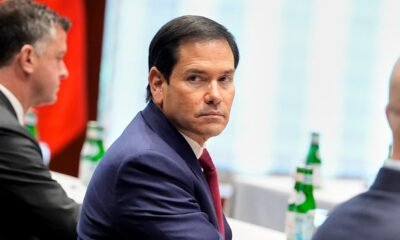
Secretary Marco Rubio insisted the U.S. has a plan for post-transition governing in Venezuela, pushing back on criticism from Democrats who say the Trump administration moved faster to capture leader Nicolás Maduro than to outline what would follow.
In remarks to reporters on Capitol Hill after briefing Congress Wednesday, Rubio said the plan consists of three phases: stabilization, recovery and transition.
Democrats who attended classified briefings in the House and Senate said they left unconvinced the administration had a detailed roadmap for what comes next.
«I heard no detailed plan,» said Sen. Tim Kaine, D-Va.
The dispute reflects a debate over whether the Trump administration has a coherent strategy for governing Venezuela after the removal of Maduro and whether U.S. policy is being driven primarily by military and economic leverage without a defined political end state.
SEN TIM KAINE: TRUMP’S VENEZUELA STRIKE TRAMPLED CONGRESS’ WAR POWERS. CONGRESS MUST STOP IT
«This is not just winging it,» Rubio said, rejecting claims the administration lacked a strategy beyond the initial operation. «It’s already happening.
«I was in the Senate. When the other party is in power, that’s always what they say.»
The first phase, Rubio said, focuses on stabilizing the country and preventing chaos, a goal he said would be enforced largely through U.S. control of Venezuela’s oil exports.
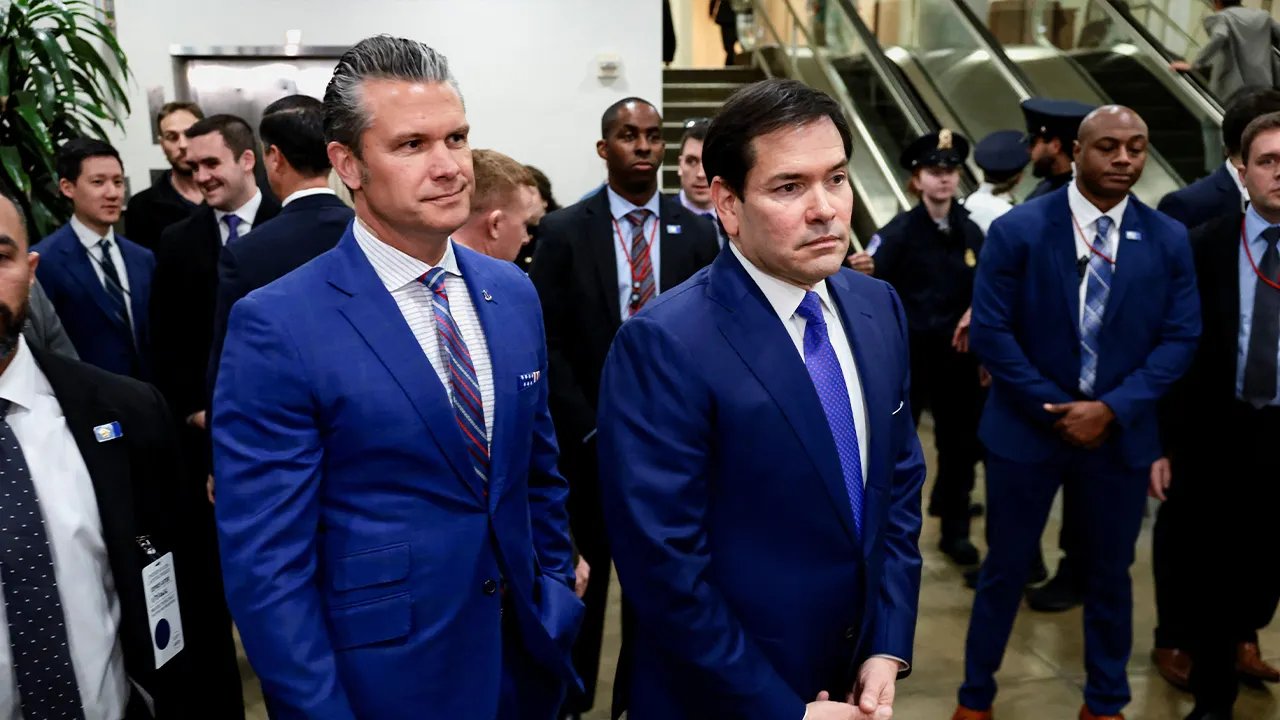
Secretary Marco Rubio insisted the U.S. has a plan for post-transition governing in Venezuela, pushing back on criticism from Democrats who say the Trump administration moved faster to capture leader Nicolás Maduro than to outline what would follow. (Evelyn Hockstein/Reuters)
«As you’ve seen today, we are in the midst right now and, in fact, about to execute on a deal to take all the oil they have that’s stuck in Venezuela. They can’t move it because of our sanctions,» Rubio said. «That money will then be handled in such a way that we will control how it is disbursed in a way that benefits the Venezuelan people, not corruption, not the regime.»
Rubio said the administration expects to sell between 30 million and 50 million barrels of Venezuelan oil as part of that effort.
The second phase, which Rubio described as «recovery,» would include ensuring American and other Western companies have fair access to Venezuela’s oil markets, while also releasing political prisoners, granting amnesty, allowing exiled opposition figures to return and beginning to rebuild civil society.
The third phase — the transition — was less clearly defined.
«In the end, it will be up to the Venezuelan people to transform their country,» Rubio said.
Rubio did not outline a timeline for elections or describe how a future Venezuelan government would be selected.
THE BRIEFING: HOW CAPITOL HILL REACTED TO NEWS OF NICOLÁS MADURO’S CAPTURE
One lawmaker who attended the House’s briefing told Fox News Digital there was «very clear recognition» by Trump officials that current remaining figures in the Venezuelan government «are all in finger-pointing mode.»
«You’ve got individuals who are now jockeying for power. They’re trying to coalesce people … and we’re having to navigate that,» the House lawmaker said.
But most Republicans who attended the briefings largely defended the administration’s approach, though some acknowledged uncertainty about what comes next.
«No, we don’t know what comes next,» said Sen. John Kennedy, R-La. «We have a plan. It’s like Mike Tyson said, ‘Everybody has a plan until you get punched in the face.’»
Other Republicans said Rubio’s presentation showed extensive preparation.
«If people could hear everything that we just heard, I think they’d have renewed confidence in both the planning leading up to it and the planning going forward,» said Sen. Kevin Cramer, R-N.D.
Rep. Warren Davidson, R-Ohio, said, «I thought it was a good briefing, timely. It was good that we hit that quickly and (got a) very thorough explanation.
«I think what was uniting was that everyone supports our military and, you know, you can’t deny how effectively it was done.»
Questions over the transition were heightened after President Donald Trump publicly questioned whether opposition leader María Corina Machado has sufficient support inside Venezuela to govern, even as she remains a favored figure among Western governments.
The administration also raised eyebrows when it appeared to signal openness to the ascendance of Delcy Rodríguez, Maduro’s vice president, rather than immediately backing Machado and opposition figure Edmundo González.
VENEZUELA’S NEW INTERIM LEADER DELCY RODRÍGUEZ ‘HATES THE WEST,’ EX OFFICIAL WARNS
White House press secretary Karoline Leavitt said the administration believes it has decisive influence over how Rodríguez rules the country, even if she is affiliated with Maduro’s communist regime.
«We obviously have maximum leverage over the interim authorities in Venezuela right now,» Leavitt said Wednesday.
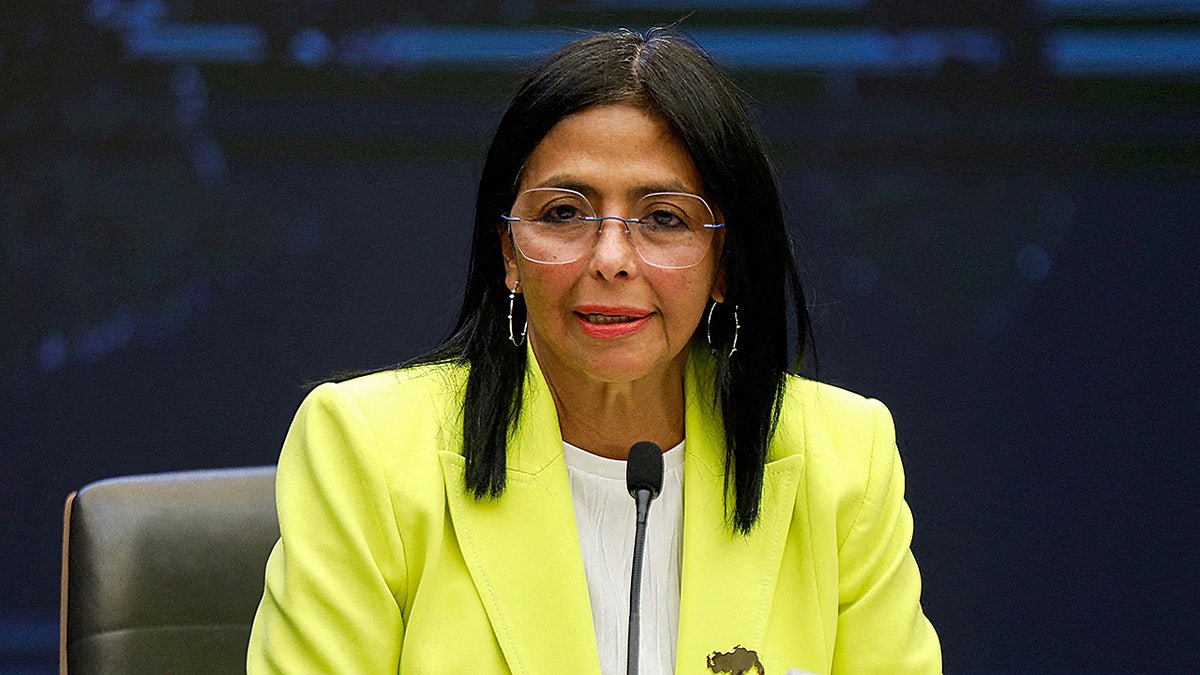
The administration also raised eyebrows when it appeared to signal openness to the ascendance of Delcy Rodríguez, Maduro’s vice president. (Leonardo Fernandez Viloria/Reuters)
Multiple lawmakers who attended the briefings told Fox News Digital the administration did not share a timeline for new elections.
«There’s no playbook for this,» Rep. Carlos Gimenez, R-Fla., said. «There’s a goal I have in mind, and I’m pretty sure the administration shares that goal — to get to a free and democratic Venezuela.»
Some Republicans acknowledged the transition would take time and ultimately would involve elections.
«We are four days in. It’s going to take time,» said Sen. Tim Sheehy, R-Mont. «Eventually, we want to see Machado and the opposition movement, hopefully, be elected again.»
Democrats said the briefings left them with unanswered questions about the administration’s objectives and endgame.
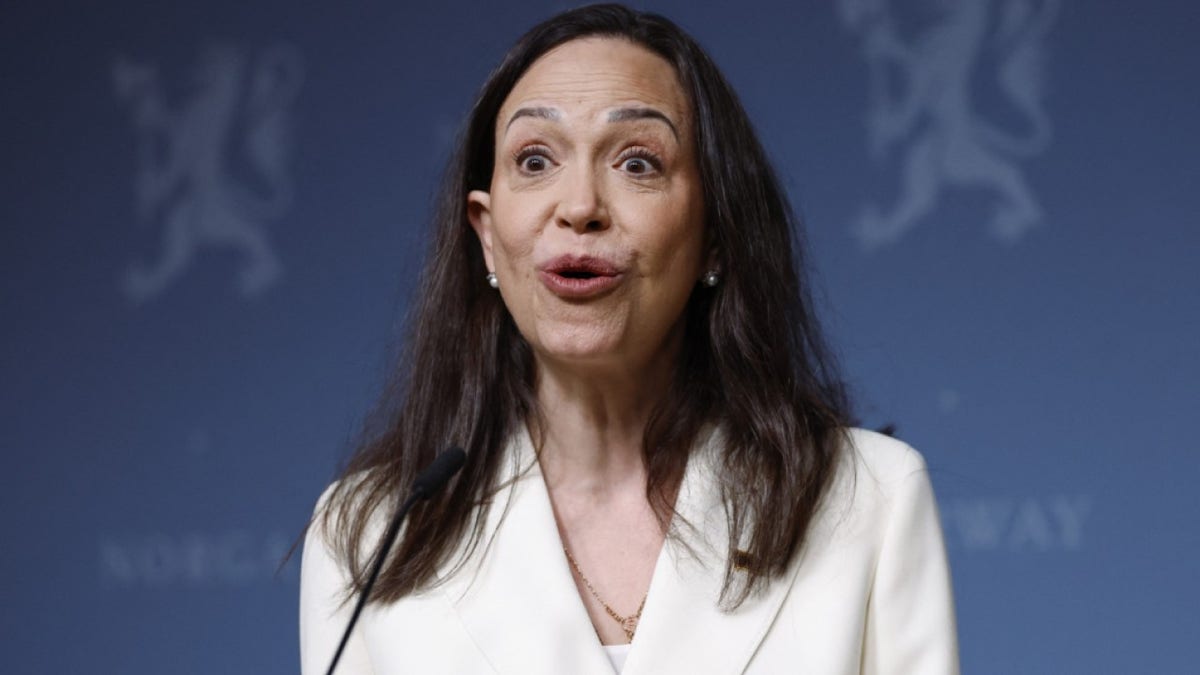
Questions about the transition were heightened after President Donald Trump publicly questioned whether opposition leader María Corina Machado has sufficient support inside Venezuela to govern. (Todd Andersen/AFP via Getty Images)
«I emerged having more questions than they had answered,» said Sen. Richard Blumenthal, D-Conn. «The main question is, what is our objective and what is our exit strategy?»
Blumenthal also questioned the continued military posture in the region.
«We continue to have about one-fifth of our naval strength in that area,» he said. «If this is a law enforcement function, why are we continuing to have all of this military strength in the area when we’ve already apprehended the target?»
Rep. Seth Moulton, D-Mass., told Fox News Digital, «They were not forthright, and we know that they’ve been lying about this whole operation the whole time. But the problem with lying is you don’t really know exactly when they’re lying.»
He said the House briefing «only decreased my confidence in this administration for their ability to either tell the truth or know what the hell they’re doing.»
Other Democrats warned the administration’s approach risks repeating past U.S. mistakes abroad.
«This is an insane plan,» said Sen. Chris Murphy, D-Conn. «They’re talking about stealing the Venezuelan oil at gunpoint for an undefined period of time as leverage to micromanage the country.»
Murphy said the strategy amounted to using economic force to drive regime change without a clear end state.
CLICK HERE TO DOWNLOAD THE FOX NEWS APP
«An embargo is an act of force,» he said. «They are going to take the oil for as long as is necessary in order to try to facilitate regime change in Venezuela.
«That sounds like a recipe for disaster,» Murphy added. «It is just slightly different than the mistakes we made in Iraq and Afghanistan.»
marco rubio,venezuelan political crisis,latin america










En solo ocho años se hicieron multimillonarias unas 350 personas
Las rebajas de impuestos de Trump incrementaron la venta de aviones privados y las ganancias corporativas
La pandemia fue un factor multiplicador
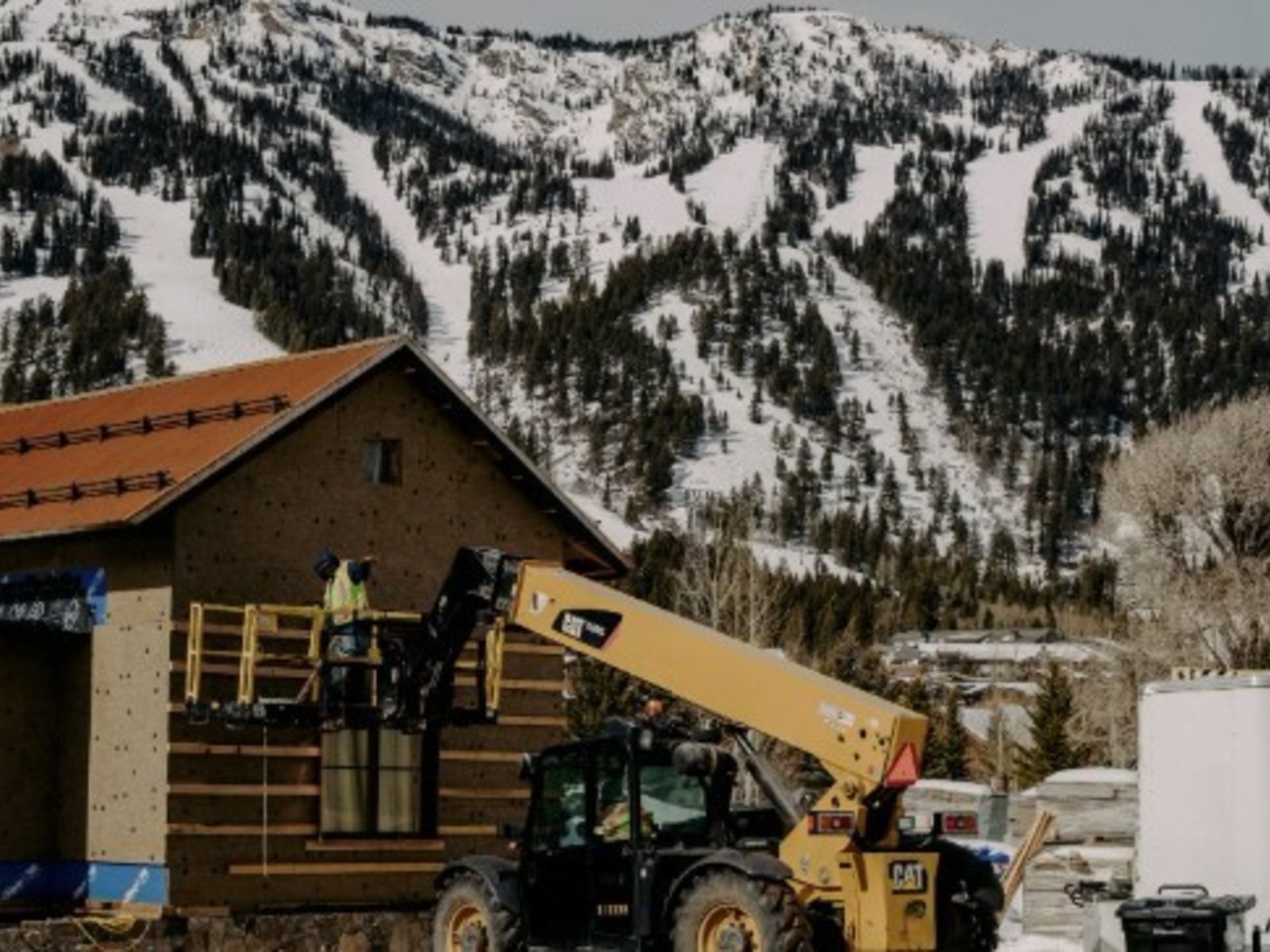
Enorme riqueza en el condado de Teton
En el condado de Teton el contrato social se está deteriorando
INTERNACIONAL
Israel strikes slain Iranian Supreme Leader Ayatollah Ali Khamenei’s underground military bunker

NEWYou can now listen to Fox News articles!
The Israel Defense Forces (IDF) on Friday announced that it had dismantled former Iranian Supreme Leader Ayatollah Ali Khamenei’s underground bunker in Tehran.
«The underground compound was created by the regime as a base for advancing military activities and its extremist ideologies against the State of Israel and the Western world,» the IDF said. «It spanned multiple streets in the heart of Tehran and contained numerous entrances and meeting rooms for senior members of the Iranian terrorist regime.»
Israel later released an illustrated video which showed a number of entry points throughout Tehran with tunnels leading to the underground bunker.
The Israel Defense Forces struck former Iranian Supreme Leader Ayatollah Ali Khamenei’s bunker in Tehran. (IDF)
The fortified compound was directly under where Khamenei and other regime leaders were situated on Saturday morning when almost 50 of them were killed in under 50 seconds during the launch of Operation Epic Fury, a senior Israeli official told Fox News.
IRAN POSTPONES TEHRAN FAREWELL CEREMONY FOR KHAMENEI WHERE LARGE CROWDS WERE EXPECTED TO GATHER
The official said that Khamenei spent millions of dollars and a number of years building the bunker, which he did not use on the morning of the strike. Sources familiar with the intelligence say that Khamenei believed no one had the guts to strike him.
The senior Israeli official told Fox News that Khamenei’s confidence was partially thanks to an Israeli-American deception plan that included messaging, signals and public statements by President Donald Trump that suggested nothing immediate was coming. Top IDF commanders even went home on Friday night, hours before the strike, in an attempt to deceive Iranian leadership.
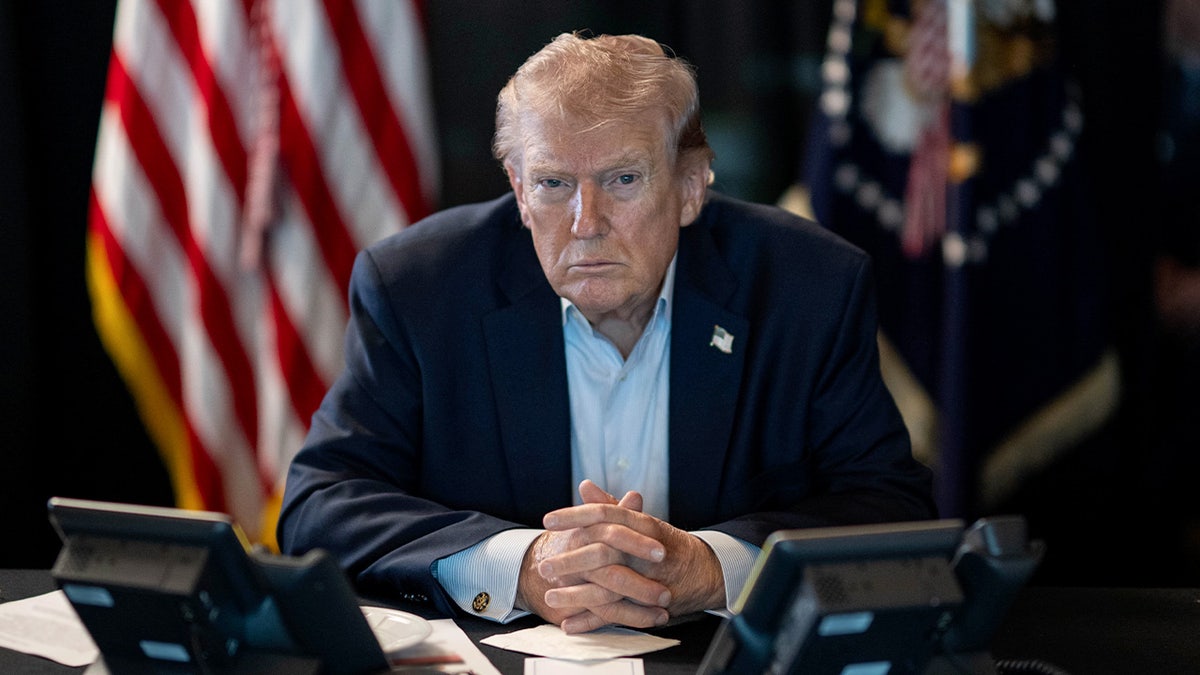
President Donald Trump confirmed the U.S. launched strikes on Iran on Saturday, Feb. 28, 2026. (The White House via X Account/Anadolu via Getty Images)
CLICK HERE TO DOWNLOAD THE FOX NEWS APP
Khamenei was killed on the first day of Operation Epic Fury after ruling the Islamic Republic for more than 30 years. During that time, he oversaw harsh internal crackdowns, including the most recent one in January, which targeted Iranian protesters, as well as international confrontations.
Fox News’ Trey Yingst and Fox News Digital’s Efrat Lachter and Ruth Marks Eglash contributed to this report.
Related Article

war with iran,iran,world,israel,middle east
INTERNACIONAL
Biden says ‘I’m a h— of a lot smarter than most of you’ to crowd at Jesse Jackson’s funeral
NEWYou can now listen to Fox News articles!
Former President Joe Biden told mourners at Rev. Jesse Jackson’s memorial service Friday that he is «a h— of a lot smarter than most of you,» a pointed remark that stood out during his tribute to the late civil rights leader.
Biden made the comment while recounting how he was mocked as a child for his stutter and how speech impediments are often mistaken for a lack of intelligence.
«If I told you I had a cleft palate or clubfoot, none of you would have laughed,» Biden said. «But it’s OK to laugh at stuttering. … It’s the one place where people think you’re stupid.
«Oh, really? I’m a h— of a lot smarter than most of you,» he added, before quickly pivoting back to his broader point. «But all kidding aside, it makes you feel really small.»
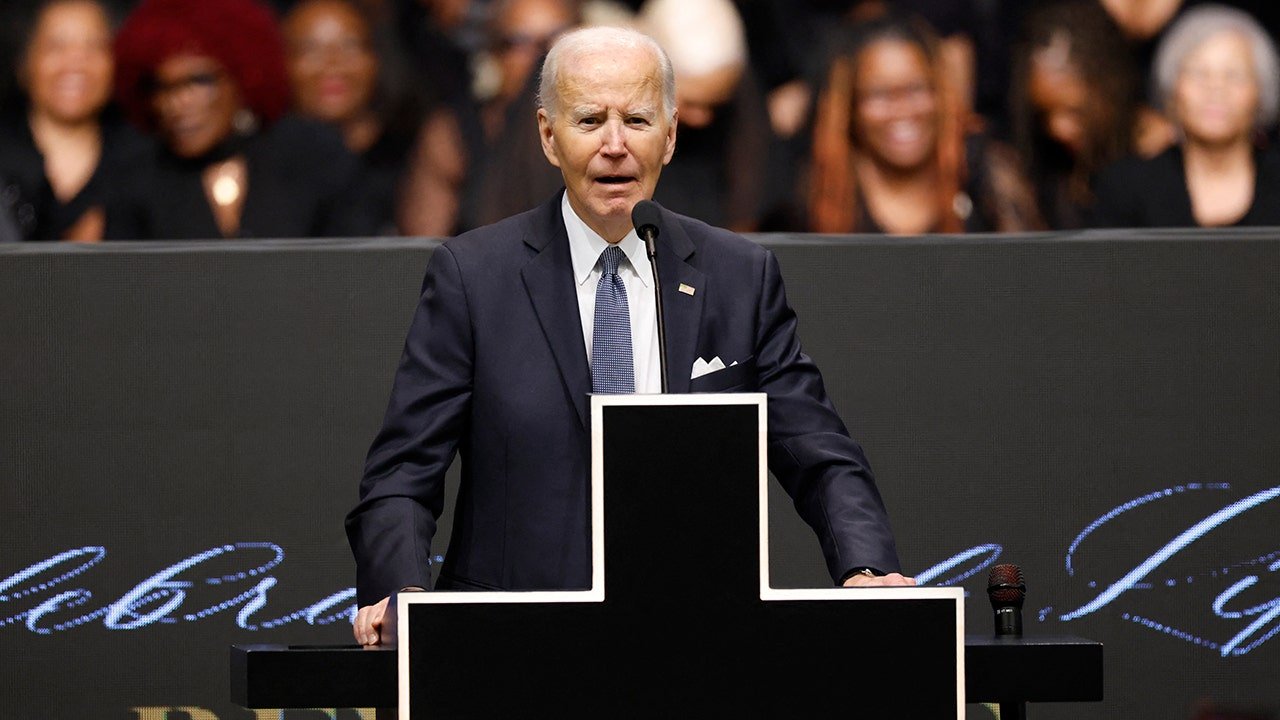
Former President Joe Biden speaks at a public memorial service to celebrate the life of civil rights activist Jesse Jackson in Chicago March 6, 2026 (Kamil Krzaczynski/AFP via Getty Images)
Biden made the remark during a memorial service in Chicago that brought together prominent Democratic leaders and civil rights figures to honor Jackson’s decades-long political influence.
Former presidents Barack Obama and Bill Clinton attended the service along with former Secretary of State Hillary Clinton, former Vice President Kamala Harris and Rev. Al Sharpton.
The event was held at the 10,000-seat House of Hope arena, where hundreds gathered to celebrate Jackson’s life and legacy.
VANCE, HARRIS, OBAMA ISSUE TRIBUTES TO REV JESSE JACKSON
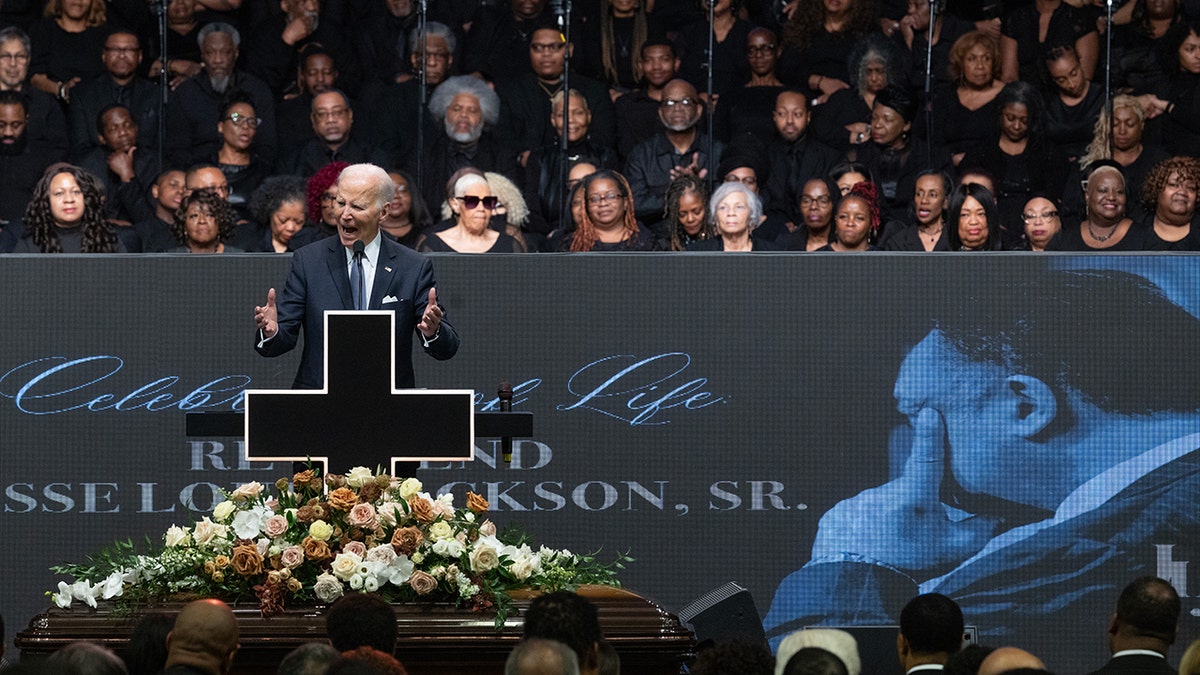
Former President Joe Biden speaks at a celebration of life service for civil rights leader Jesse Jackson Sr. at the House of Hope arena March 6, 2026, in Chicago. Jackson died Feb. 17 after a lengthy battle with progressive supranuclear palsy. (Scott Olson/Getty Images)
Jackson, who died at age 84, rose to prominence as a close associate of Martin Luther King Jr. during the Civil Rights Movement. He later founded the Rainbow PUSH Coalition and mounted two Democratic presidential campaigns in 1984 and 1988 that expanded Black voter participation and reshaped the party’s electoral coalition.
Throughout the service, speakers praised Jackson’s ability to build political alliances and elevate issues affecting marginalized communities.
Biden, who has frequently spoken about working to overcome his childhood stutter, framed his remarks around resilience and the lasting impact of being ridiculed as a young person.
TRUMP LAUDS ‘PIECE OF WORK’ JESSE JACKSON IN ‘SOLD-OUT’ BLACK HISTORY MONTH EVENT
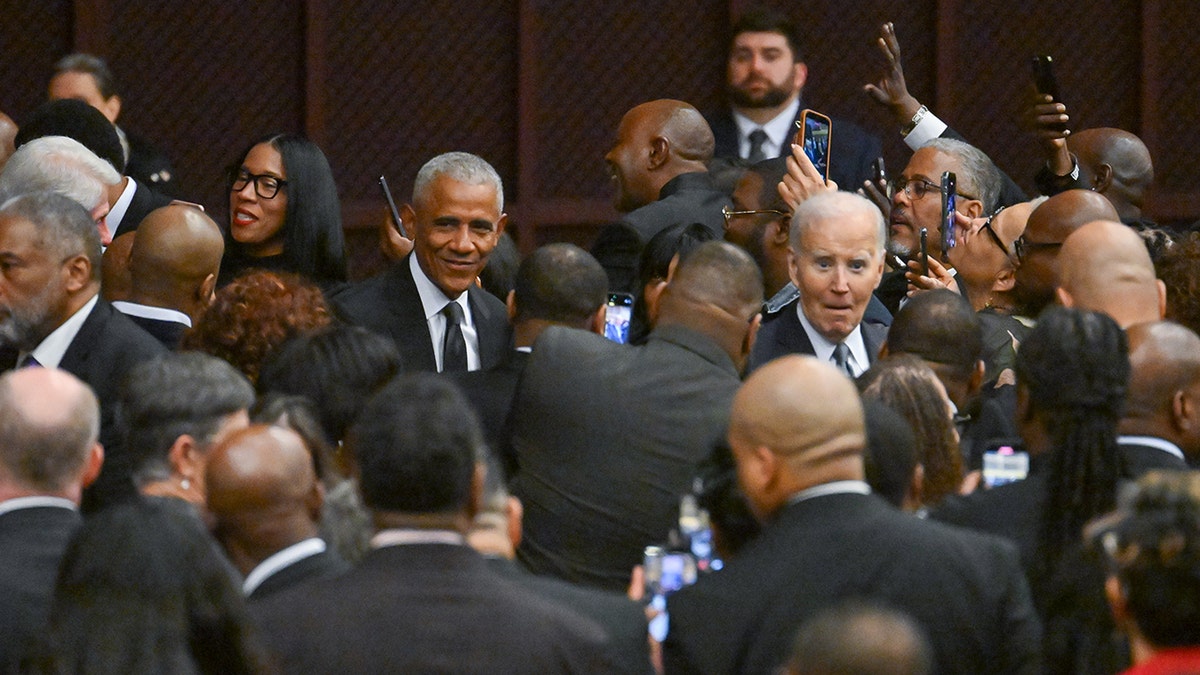
Barack Obama and Joe Biden at Reverend Jesse L. Jackson’s Peoples Celebration of Life and Homegoing Services at the House of Hope arena March 6, 2026, in Chicago. (Earl Gibson III/Deadline via Getty Images)
Later on in his remarks, Biden asserted that «the continent of Africa is going to be the largest continent in the world» to the assembled mourners.
«I remember telling Jesse that I knew I knew a guy, in South Africa,» former President Biden recalled. «I was going to go see name is Nelson Mandela. And, I’m Jesse saying, how are you going? You guys actually see him, by the way? You know, the continent of Africa is going to be the largest continent in the world in terms of population of the year 2050, the largest in the entire world. Watch, man. Watch.»
His «smarter than most of you» line was quickly added to a growing list of out-of-context gaffes for the former president, and social media users weighed in online.
Under one repost of the viral moment from user Libs of TikTok, one commenter wrote, «That’s a strange line to deliver at a memorial service.»
Another quipped, «Never ending comedy from this guy. So happy he’s back in public.»
CLICK HERE TO DOWNLOAD THE FOX NEWS APP
Outside of Biden’s remarks, the memorial largely focused on Jackson’s legacy as a civil rights leader who helped shape the modern Democratic Party and broaden political participation in the United States.
Fox News Digital’s Greg Norman-Diamond, Bradford Betz, and Patrick McGovern contributed to this reporting.
Related Article
joe biden,biden brink,kamala harris,barack obama,hillary clinton

Javier Milei llegó a Miami para participar de la cumbre de mandatarios de América Latina organizada por Trump

Quebró Garbarino: qué pasará con los electrodomésticos que le quedaron sin vender

Atlético Tucumán vs. Racing: formaciones, hora y dónde ver por tv

Los signos del horóscopo con mayor intensidad y que enfrentarán verdades fuertes en marzo, según Jimena La Torre: «Aries, Tauro, Géminis, Cáncer y Leo»

Vacantes judiciales, reformas pendientes y tensiones con los tribunales: los desafíos que enfrenta Mahiques en Justicia

Cinco conclusiones sobre el boom de multimillonarios en Estados Unidos

El hijo adoptivo de José María Muscari tomó una tajante decisión de vida a los 18 años

Petri y Villarruel se cruzaron por un gesto en el Congreso: de “golpista” a “te conozco por el trencito de la alegría”

¡Interna total! Pablo Layus explotó y blanqueó quiénes son los que arruinan Intrusos: «Te matan»

Ángel de Brito contó la oscura verdad de Jorge Rial para no ir a LAM: “Es un…”

 CHIMENTOS2 días ago
El hijo adoptivo de José María Muscari tomó una tajante decisión de vida a los 18 años
- CHIMENTOS3 días ago
¡Interna total! Pablo Layus explotó y blanqueó quiénes son los que arruinan Intrusos: «Te matan»
- CHIMENTOS2 días ago
El desafortunado comentario de Yanina Zilli contra Daniela de Lucía, tras la muerte de su padre: “Jugamos con lo personal”