INTERNACIONAL
Russian oil tanker, the Grinch, intercepted as US, allies escalate sanctions crackdown


NEWYou can now listen to Fox News articles!
The French navy intercepted a Russian oil tanker in the Mediterranean suspected of operating as part of Moscow’s shadow fleet, a network of falsely-flagged vessels used to export oil and avoid Western sanctions, according to reports.
President Emmanuel Macron said Thursday that French forces had boarded and searched the tanker, which is subject to international sanctions.
The ship was reportedly sailing from Murmansk, in northern Russia, under the Comoros flag.
Writing on X, Macron said the operation took place on the high seas in the Mediterranean with the support of several allied countries.
‘GHOST SHIPS’ FERRYING ILLICIT OIL HAVE SAILED INTO TRUMP’S CROSSHAIRS
The French president added that the vessel had been diverted for further checks.
The tanker, identified as the Grinch, was intercepted between the southern coast of Spain and the northern coast of Morocco in the western Mediterranean, French maritime police said.
The Associated Press reported the interception.
France and the U.K. gathered and shared intelligence on the vessel, according to French military officials who spoke to The Associated Press on condition of anonymity.
TRUMP ADMINISTRATION FILES SEIZURE WARRANTS TARGETING SHIPS TIED TO VENEZUELAN OIL TRADE: REPORT
An international operation stopped a Russian shadow fleet tanker called the Grinch in the Mediterranean. (Etat Major des Armees/AP)
The interception is the latest in a growing number of Russian-linked vessels stopped by U.S. and European authorities in recent months as Western powers intensify efforts to disrupt Russia’s oil exports.
As previously reported by Fox News Digital, in early January, U.S. forces seized another sanctioned tanker in the Atlantic Ocean.
U.S. European Command (EUCOM) announced the seizure of the Russian-flagged Marinera oil tanker in the North Atlantic Sea.
France’s Mediterranean Maritime Prefecture said the team that boarded the Grinch Thursday had inspected the vessel and decided documents raised doubts about the regularity of the vessel’s flag.
US MILITARY SEIZES ANOTHER FUGITIVE OIL TANKER LINKED TO VENEZUELA
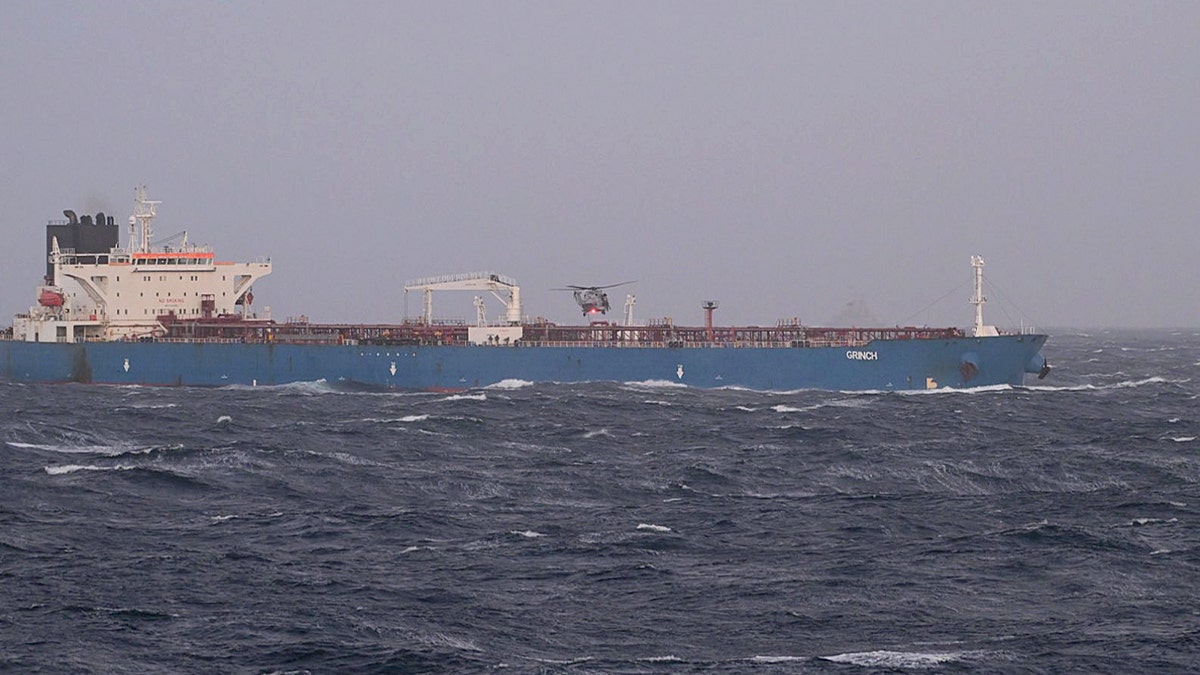
The Russian oil tanker intercepted between Spain and Morocco. (Etat Major des Armees )
The tanker is being escorted by the French navy to an anchorage for additional verification.
The European Union has imposed 19 rounds of sanctions on Russia since its full-scale invasion of Ukraine in 2022.
Despite those measures, Russia has continued to export millions of barrels of oil, mainly to China and India and often at discounted prices.
What has become known as a «shadow fleet» consists of hundreds of old and poorly regulated tankers that change names, ownership structures and flags to avoid detection and sanctions.
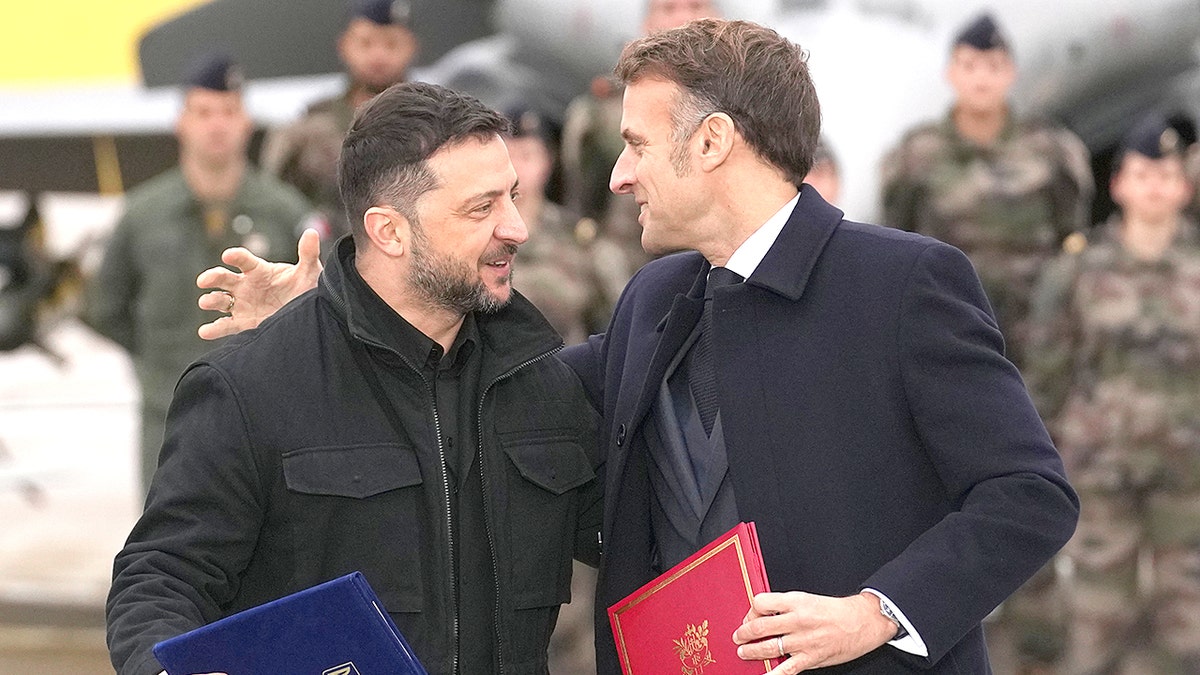
French President Emmanuel Macron, right, and Ukrainian President Volodymyr Zelenskyy hug after signing an agreement Nov. 17, 2025, at the Villacoublay air base near Paris. (Christophe Ena/AP Photo, Pool)
Maritime data firm Lloyd’s List Intelligence estimates the global shadow fleet at about 1,400 tankers, many of which are subject to U.S., British or European sanctions, Reuters reported.
Ukrainian President Volodymyr Zelenskyy criticized European countries for not doing more to stop the transport of Russian oil using sanctioned vessels and which he says helps fund the war in Ukraine.
CLICK HERE TO DOWNLOAD THE FOX NEWS APP
«Why can [U.S. President Donald Trump] stop tankers of the ‘shadow fleet’ and seize their oil, while Europe can’t?» Zelensky asked at the World Economic Forum in Davos, Switzerland, Thursday.
«Russian oil is transported right along the European coast. This oil funds the war against Ukraine. This oil helps destabilize Europe.»
france,russia,sanctions,navy,ukraine











NEWYou can now listen to Fox News articles!
Justice Ketanji Brown Jackson drew fire from an unlikely colleague on Tuesday over her lone dissent in the Supreme Court’s 8-1 decision finding Colorado’s ban on so-called «conversion therapy» for minors violated free speech rights.
Fellow liberal Justice Elena Kagan criticized Jackson for failing to acknowledge case law that governs when speech can be regulated in the medical field, marking a rare public break between two justices typically aligned in cases centered on high-profile cultural issues.
«Justice Jackson’s dissenting opinion claims that this is a small, or even nonexistent, category,» Kagan wrote in a footnote of a concurring opinion, which Justice Sonia Sotomayor joined. «But even her own opinion, when listing laws supposedly put at risk today, offers quite a few examples.»
Kagan, an Obama appointee, said Jackson’s view «rests on reimagining—and in that way collapsing—the well-settled distinction between viewpoint-based and other content-based speech restrictions.»
SUPREME COURT SKEPTICAL OF «CONVERSION THERAPY» LAW BANNING TREATMENT OF MINORS WITH GENDER IDENTITY ISSUES
Supreme Court nominee Ketanji Brown Jackson testifies during her Senate Judiciary Committee confirmation hearing on Capitol Hill in Washington, Wednesday, March 23, 2022. (AP Photo/Alex Brandon)
The 8-1 decision on Tuesday arose from a lawsuit brought by Kaley Chiles, a licensed Christian therapist, who argued her conversations with youth clients were a form of protected speech. The Colorado government had said the conversations amounted to professional conduct that the state was allowed to regulate.
Jackson’s fiery 35-page dissent, which she read from the bench when the high court announced the opinion, was longer than the majority opinion and Kagan’s concurrence combined.
«Professional medical speech does not intersect with the marketplace of ideas: ‘In the context of medical practice we insist upon competence, not debate,’» Jackson, a Biden appointee wrote, later adding, «Treatment standards exist in America.»
Jackson issued an ominous warning about national implications of the case, as about two dozen other states have laws similar to Colorado’s and will now need to take into account the high court’s ruling.
SUPREME COURT BLOCKS COLORADO’S SO-CALLED ‘CONVERSION THERAPY’ BAN ON FIRST AMENDMENT GROUNDS
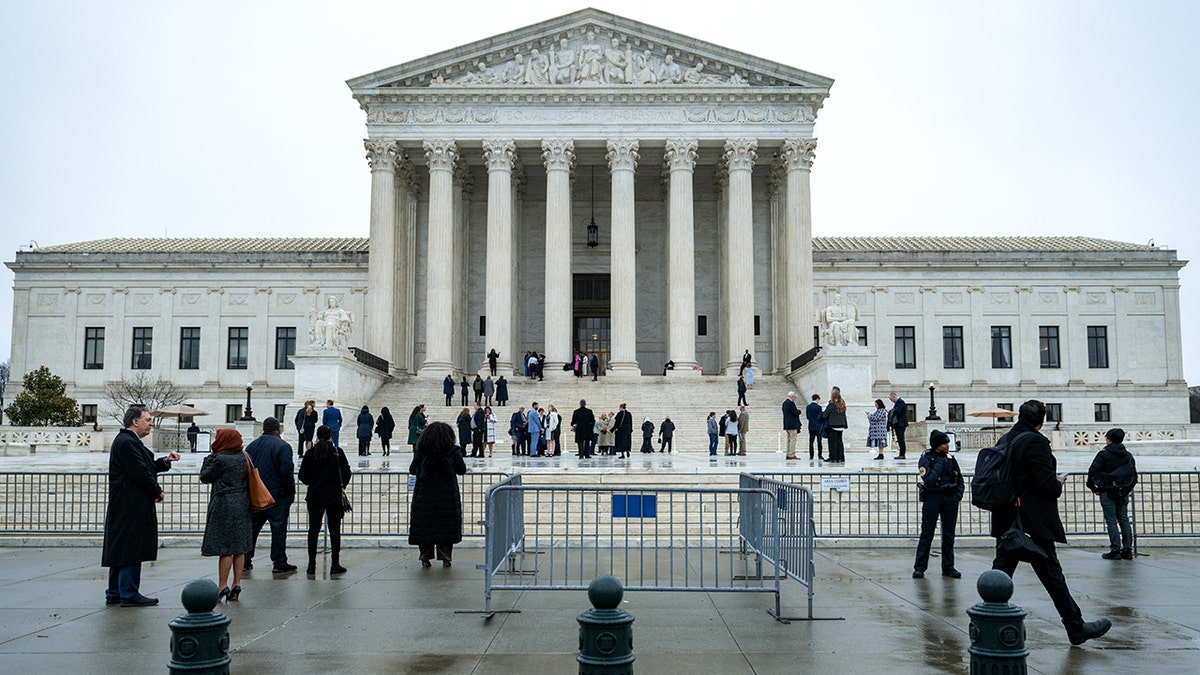
The Supreme Court is seen on Friday, Feb. 20, 2026. (Annabelle Gordon/Bloomberg via Getty Images)
«Ultimately, because the majority plays with fire in this case, I fear that the people of this country will get burned,» Jackson said. «Before now, licensed medical professionals had to adhere to standards when treating patients: They could neither do nor say whatever they want.»
One conservative lawyer on social media observed that Kagan seemed «exasperated» by Jackson, who has become known as a verbose justice inclined to tack on lengthy solo dissents to the majority’s opinions in prominent cases. Manhattan Institute’s Ilya Shapiro agreed.
«That should be a separate descriptor of an opinion: concurring, dissenting, expressing exasperation with Justice Jackson,» Shapiro wrote on X.
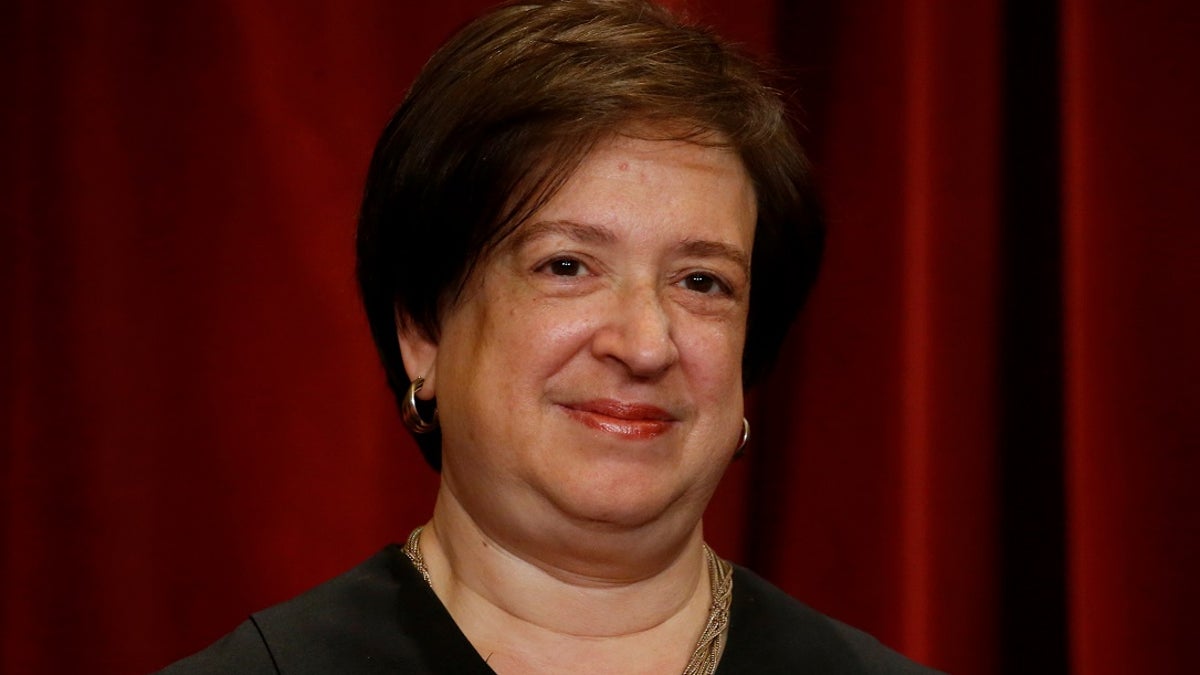
Justice Elena Kagan (Reuters/Jonathan Ernst)
Kagan joined the eight justices in finding that the Colorado government erred in regulating Chiles’ practice because the state used a 2019 law that only banned therapists from counseling minors if the therapy entailed advising them on how to resist becoming transgender or gay. That amounted to restricting one viewpoint, in violation of the First Amendment, the majority said.
Kagan said that if the law were «content-based» rather than «viewpoint-based,» it would present less of a free speech problem.
«Because the State has suppressed one side of a debate, while aiding the other, the constitutional issue is straightforward,» Kagan said. «It would, however, be less so if the law under review was content-based but viewpoint neutral.»
Jackson argued that Chiles was «not speaking in the ether; she is providing therapy to minors as a licensed healthcare professional.»
CLICK HERE TO GET THE FOX NEWS APP
The Supreme Court’s ruling was narrow, as Justice Neil Gorsuch explained in the majority opinion, as it directed the lower court to reexamine the Colorado law and ensure it did not interfere with Chiles’ speech rights.
«The First Amendment stands as a shield against any effort to enforce orthodoxy in thought or speech in this country,» Gorsuch wrote. «It reflects instead a judgment that every American possesses an inalienable right to think and speak freely, and a faith in the free marketplace of ideas as the best means for discovering truth. However well-intentioned, any law that suppresses speech based on viewpoint represents an ‘egregious’ assault on both of those commitments.»
supreme court, colorado, federal judges, first amendment

(AP Foto/Vahid Salemi, Archivo)
La coalición internacional que trabaja por la libertad de Narges Mohammadi alertó este martes de que la Premio Nobel de la Paz iraní se encuentra en peligro inminente de muerte en la prisión de Zanjan, en el noroeste del país, después de que las autoridades le negaran atención hospitalaria tras un episodio ocurrido el 24 de marzo en el que fue hallada inconsciente durante más de una hora con síntomas compatibles con un infarto. El régimen no respondió públicamente a las denuncias.
La red de apoyo, que integran la Fundación Narges, Reporteros Sin Fronteras, PEN America y Front Line Defenders, publicó el comunicado desde París tras la visita que el equipo legal realizó el 29 de marzo a la prisión. Encontraron a Mohammadi pálida, debilitada y con una pérdida de peso significativa. Fue conducida a la sala de visitas por una enfermera del centro.
Según la coalición, las compañeras de celda relataron que el 24 de marzo Mohammadi fue hallada inconsciente con los ojos en blanco. La enfermería del centro le prestó atención básica, pero las autoridades se negaron a trasladarla a un hospital o permitirle consultar con un especialista cardiólogo. No es la primera vez que sufre un episodio de este tipo: según sus partidarios y fuentes recogidas por AP, la activista padeció varios infartos durante encarcelamientos anteriores y fue sometida a una cirugía de urgencia en 2022.
El cuadro clínico descrito por su equipo legal incluye fuertes dolores de cabeza, náuseas, visión doble, fluctuaciones graves de la presión arterial y hematomas visibles. Estos últimos son consecuencia, según la coalición, de su violenta detención el 12 de diciembre de 2025 en Mashhad, cuando agentes del régimen la arrestaron durante el funeral de un abogado. Su defensor iraní, Mostafa Nili, denunció en febrero que los golpes en la cabeza durante el arresto y los interrogatorios le provocaron mareos y problemas de visión que persisten.

NTB/Fredrik Varfjell vía REUTERS /Foto de archivo
La situación se agravó en febrero cuando Mohammadi fue trasladada sin previo aviso —en contravención de la ley de procedimiento penal iraní, según su defensa— desde un centro del Ministerio de Inteligencia en Mashhad hasta la prisión general de Zanjan. Allí está recluida junto a internos condenados por delitos violentos y bajo una vigilancia reforzada que ha dificultado el contacto con el exterior. Los bombardeos del conflicto entre Estados Unidos e Israel contra Irán afectan las comunicaciones en la región y añaden una amenaza directa sobre los reclusos.
“Alojar a Mohammadi con delincuentes violentos a pesar de su grave enfermedad cardiaca y sus recientes traumatismos, sumado a las condiciones de guerra y las explosiones que amenazan la vida de los prisioneros, agrava esta amenaza”, subrayó el comité directivo de la coalición. La red exigió a Teherán un permiso médico de salida inmediato y el acceso garantizado a atención especializada, asesoría legal y contacto con su familia.
Mohammadi, de 53 años, ha sido arrestada en trece ocasiones y condenada en diez por cargos que van desde conspiración contra la seguridad nacional hasta propaganda contra el Estado. El Comité Nobel Noruego le concedió el galardón en 2023 por su lucha contra la opresión de las mujeres y la defensa de las libertades fundamentales en Irán. Sus dos hijos, a quienes no ve desde 2015, y su marido, Taghi Rahmani, viven exiliados en París.
Cumple actualmente condenas acumuladas de hasta 18 años. El 7 de febrero de 2026, un tribunal revolucionario de Mashhad la sentenció a seis años adicionales por conspiración y a dieciocho meses más por propaganda. Mientras el conflicto remodela Oriente Próximo, su caso revela cómo el régimen iraní convierte la cárcel en un instrumento de represión lenta contra quienes se atreven a documentar sus abusos desde dentro.

La oposición a Kicillof refuerza su intento de modificar la forma de votar en la provincia

Las acciones argentinas subieron con fuerza detrás del extraordinario rebote de Wall Street

Fue una famosa feminista millennial. Sus memorias sobre el poliamor son desgarradoras

Kicillof denunció ante la Corte Suprema el recorte de fondos de Nación: es la octava presentación

Morena Rial irá a juicio denunciada por la familia Facundo Ambrosioni, el padre de su hijo: «Puede llegar a 12 años»

A qué hora juegan Irak vs. Bolivia y cómo ver hoy EN VIVO el Repechaje al Mundial 2026

Máximo Kirchner salió al cruce de Milei y Macri tras el fallo por YPF a favor de la Argentina

La secretaria del piloto denunció que el amigo de Adorni la hostiga y la justicia dispuso medidas

El Gobierno cambia su propuesta de reforma: endurece penas para delitos comunes, pero no para los casos de corrupción

Nuevas críticas de Marcela Pagano contra los Milei: “Karina es la que gobierna”, aseguró

 POLITICA3 días ago
Máximo Kirchner salió al cruce de Milei y Macri tras el fallo por YPF a favor de la Argentina
- POLITICA3 días ago
El Gobierno cambia su propuesta de reforma: endurece penas para delitos comunes, pero no para los casos de corrupción
- POLITICA2 días ago
Nuevas críticas de Marcela Pagano contra los Milei: “Karina es la que gobierna”, aseguró