INTERNACIONAL
SCOOP: House Freedom Caucus lays out GOP battle plan ahead of Republicans’ huddle with Trump

NEWYou can now listen to Fox News articles!
FIRST ON FOX: House Freedom Caucus leaders are drawing battle lines as lawmakers return to Capitol Hill for the second half of the 119th Congress.
The conservative group’s board of directors is sending a seven-page letter to Speaker Mike Johnson, R-La., outlining proposed policy goals on a vast array of topics from American elections, to immigration, to federal spending, taking on «rogue» judges, and housing affordability.
It comes ahead of a policy forum that Johnson is hosting on Tuesday to lay out the House GOP’s agenda for 2026. Republicans are expected to huddle from 9:30am to 6pm at the Trump Kennedy Center where they’ll hear from committee leaders and President Donald Trump.
Trump’s remarks are expected to rally Republicans around passing their legislative goals for the year, but several people told Fox News Digital they also anticipate him focusing heavily on the U.S. government’s recent operation in Venezuela.
CONGRESS ROLLS OUT $174B SPENDING BILL AS JAN 30 SHUTDOWN FEARS GROW
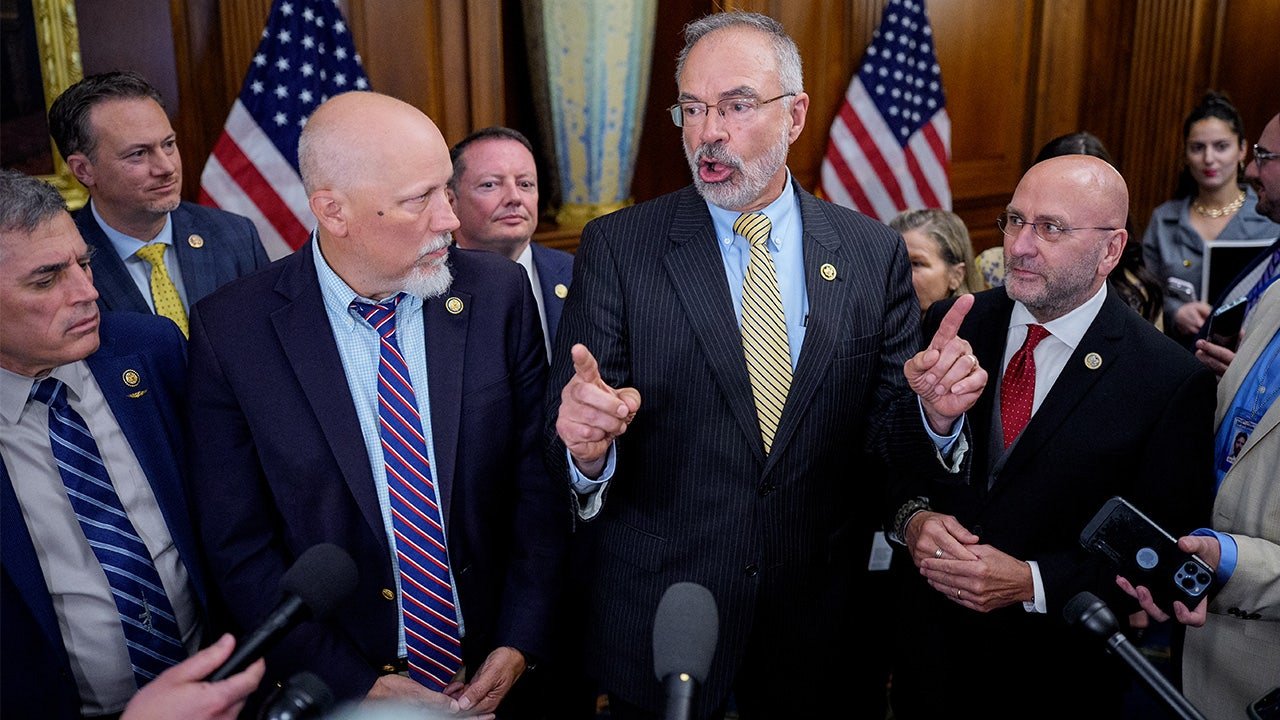
The House Freedom Caucus speaks about the ongoing negotiations on the «One, Big, Beautiful Bill» at the U.S. Capitol Building on May 21, 2025 in Washington, D.C. (Andrew Harnik/Getty Images)
The first policy goal listed by the Freedom Caucus is forcing the Senate to take up the Safeguard American Voter Eligibility (SAVE) Act, which passed the House early last year.
They’re also calling on Congress to pass legislation limiting early voting and reforming the census to only count American citizens.
On fiscal year (FY) 2026 appropriations, conservatives are calling on the House to «reduce or – at bare minimum – keep flat total federal discretionary spending levels» according to the document first obtained by Fox News Digital.
The recently-released $174 billion spending bill that the House is expected to vote on this week would reduce current funding levels for the agencies it covers if passed.
Congress has yet to release information on six of its 12 remaining spending bills, however, while lawmakers face a Jan. 30 deadline to avert a government shutdown.
The Freedom Caucus is also urging Congress to crack down on the recent fraud scandal taking over Minnesota’s social programs by eliminating «all programs exposed as rampant with fraud and place punitive measures on states such as Minnesota that have allowed rampant fraud.»
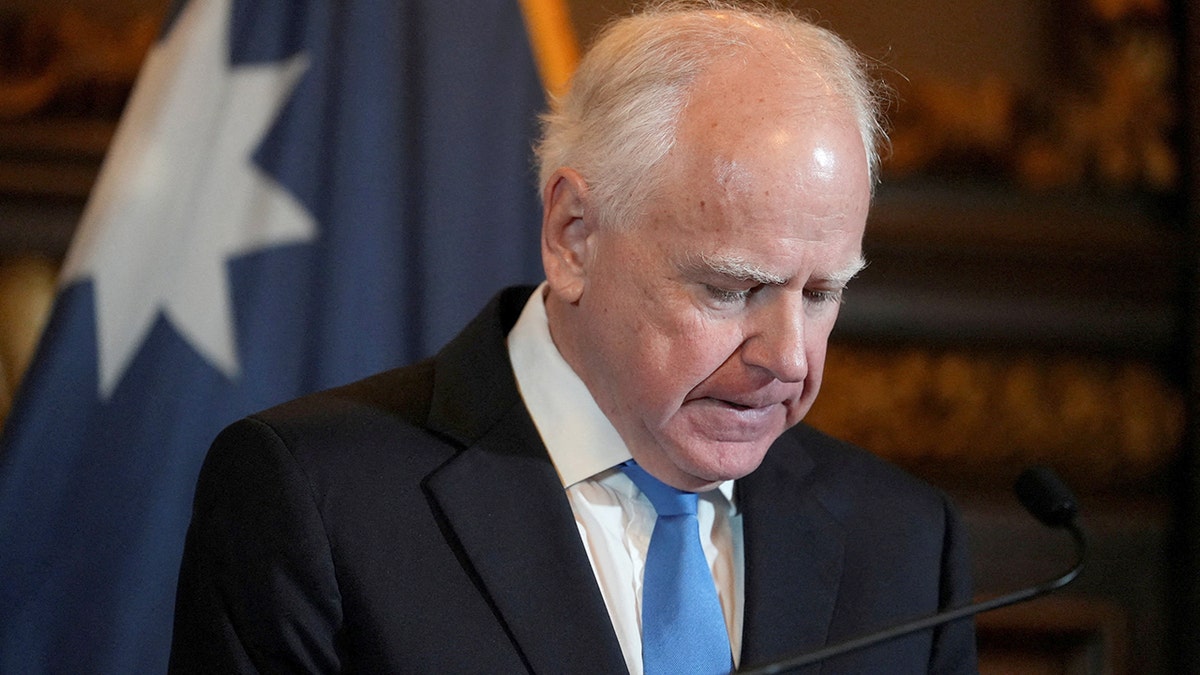
Minnesota Governor Tim Walz speaks to reporters after he announced that he would not seek reelection, at the Minnesota State Capitol in St. Paul, Minnesota, U.S. January 5, 2026. (Tim Evans/Reuters)
«Federal prosecutors have estimated that widespread fraud in Minnesota tied to Somali day care centers, COVID-era meal programs, housing, and special needs assistance programs alone could exceed $9 billion,» the document said. «These revelations are startling, but just a drop in the bucket for a federal government that’s estimated to lose between $233 and $521 billion annually to fraud, according to government watchdog agencies.»
The document called for the denaturalization and deportation of «anyone who has committed fraud against the American taxpayer,» specifically naming Minnesota’s Somali community, though doing so would likely require court intervention.
Conservatives’ policy roadmap also called on Congress to «freeze all immigration to the U.S., except for (very) temporary tourist visas» for a temporary amount of time in order to revamp the U.S. immigration system as a whole.
In a section called «Stop Rogue, Activist Judges,» the House Freedom Caucus urged the House to move forward on impeaching U.S. Federal Judge James Boasberg «such as Judge Deborah Boardman, for reducing the sentence of a man who plotted and took steps to kill a Supreme Court Justice due to her indefensible views about transgenderism.»
An earlier push by conservatives to impeach Boasberg failed to gain traction among the wider House GOP conference, though the chamber passed «The No Rogue Rulings Act» to limit the ability of district judges like Boasberg to issue nationwide injunctions.
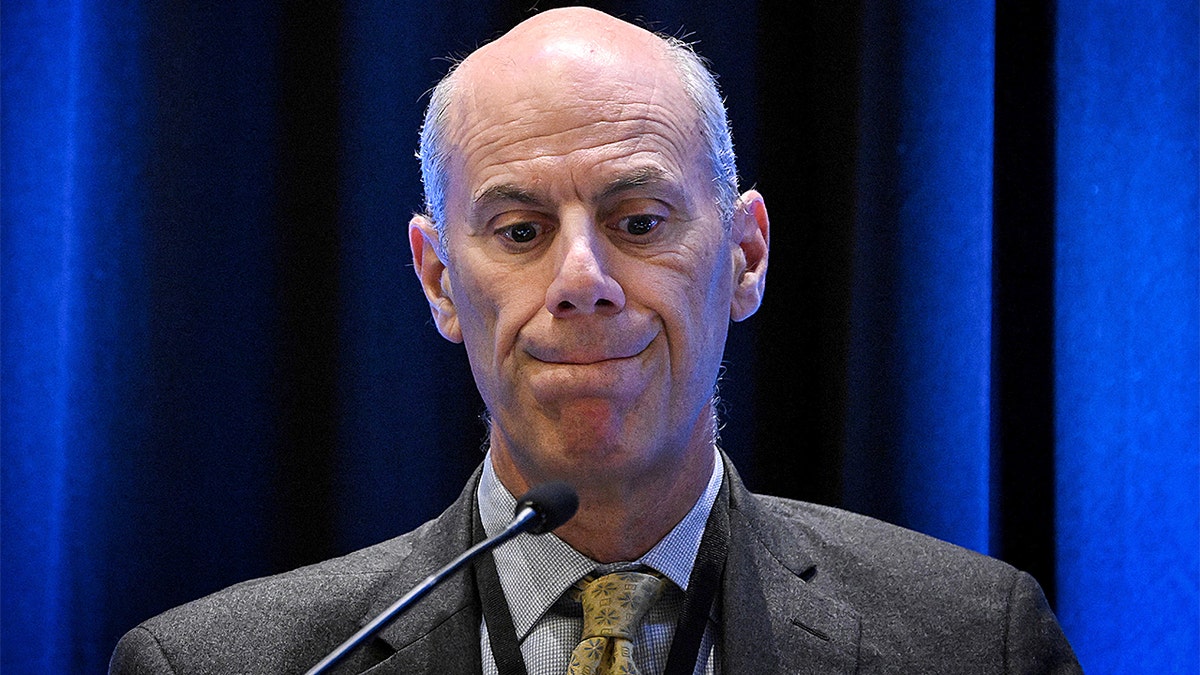
James Boasberg, chief judge of the US District Court for the District of Columbia, attends a panel discussion at the annual American Board Association (ABA) Spring Antitrust Meeting at the Marriott Marquis in Washington, D.C., on April 2, 2025. (DREW ANGERER/AFP via Getty Images)
The policy roadmap also called to radically shift America’s global priorities by completely removing the U.S. from the United Nations and halting all funding to the international body.
HOUSE GOP TENSIONS ERUPT AFTER MODERATE REPUBLICANS’ OBAMACARE ‘BETRAYAL’
«The UN is openly hostile to the United States, yet we remain its biggest source of funding. President Trump has significantly reduced wasteful spending on dangerous UN entities like UNRWA, and now Congress should go even further by enacting legislation such as H.R. 1498, the DEFUND Act, to completely withdraw the United States from the United Nations (UN) and end all funding and participation,» the passage read.
Another section calls for banning stock trading for members of Congress, which Johnson said he would be in favor of last year.
The push to ban stock trading has gained rare bipartisan support among both Republicans and Democrats, but no such bill has yet seen a House floor vote.
Banning Sharia Law in the U.S. is also listed as one of the group’s policy goals, an effort that’s been led by Texas-based Freedom Caucus members like Reps. Chip Roy, R-Texas, and Keith Self, R-Texas, so far this Congress.
CLICK HERE TO DOWNLOAD THE FOX NEWS APP
While it was founded as a group that was frequently adversarial to Republican leaders for not being conservative enough, the House Freedom Caucus has gradually gained influence within the House GOP during the 119th Congress.
Its chairman, Rep. Andy Harris, R-Md., has frequently stood alongside Johnson in his push for conservative legislative goals.
Johnson notably spoke at the group’s 10th anniversary celebration late last year. Harris and Roy also made a public show of unity alongside House GOP leaders during the recent government shutdown.
Republicans are going into this year, however, grappling with a razor-thin House majority and what’s expected to be a tough November election cycle.
politics,house of representatives politics,mike johnson,donald trump













El humano es el único animal que sabe que va a morir. La muerte es una experiencia universal, pero su comprensión y su vivencia están profundamente condicionadas por factores culturales, históricos y personales. En las últimas décadas, el concepto de bien morir ha cobrado relevancia en el campo de la medicina, la bioética, la filosofía y las ciencias sociales. Este enfoque propone humanizar el final de la vida, promoviendo la dignidad, el alivio del sufrimiento y la autonomía del paciente. A diferencia de la visión tradicional centrada exclusivamente en la prolongación de la vida, el bien morir invita a reflexionar sobre la calidad del proceso de morir.
“Quiero que me prolonguen la vida, no la muerte”, me dijo un paciente. La medicina no debe buscar solamente evitar la muerte, sino evitar el sufrimiento innecesario. Esta perspectiva implica reconocer que el cuidado y el acompañamiento son tan importantes como la intervención terapéutica.
La idea de morir bien no es reciente. En la Edad Media, los tratados conocidos como “ars moriendi” ofrecían orientaciones espirituales para afrontar la muerte con serenidad y sentido. El historiador Philippe Ariès sostiene que las sociedades tradicionales vivían la muerte como un acontecimiento familiar y comunitario, en el que el moribundo ocupaba un lugar central. Podía despedirse, reconciliarse, repartir sus bienes, transmitir enseñanzas y preparar su espíritu.

Sin embargo, con el avance de la modernidad, la muerte fue progresivamente desplazada hacia el ámbito hospitalario. Según Ariès, este proceso condujo a una “muerte prohibida”, caracterizada por el silencio social, la negación y la pérdida de rituales. Una muerte con sondas, máscaras y sedantes. El bien morir, en la actualidad, busca recuperar la dimensión humana y relacional de este proceso sin renunciar a los avances médicos.
No existe una definición única de bien morir, pero diversos autores coinciden en algunos elementos fundamentales. En primer lugar, la dignidad. Desde la perspectiva filosófica de Emmanuel Kant, la dignidad es un valor intrínseco de la persona que no puede ser instrumentalizado. En el final de la vida, esto implica respetar la identidad, los valores y los deseos de cada individuo.
En segundo lugar, el alivio del sufrimiento. Cicely Saunders, fundadora del movimiento moderno de cuidados paliativos, introdujo el concepto de “dolor total”, que integra las dimensiones físicas, emocionales, sociales y espirituales del sufrimiento. Esta visión transformó la práctica médica, ya que mostró que tratar únicamente el dolor físico no es suficiente.

En tercer lugar, la autonomía. Beauchamp y Childress, en sus principios de bioética, destacan que el respeto por la autonomía exige que la persona pueda tomar decisiones informadas sobre su tratamiento, expresar sus voluntades anticipadas y rechazar intervenciones desproporcionadas.
Finalmente, el acompañamiento. Elisabeth Kübler-Ross mostró que uno de los mayores temores de las personas que se acercan a la muerte no es el morir en sí, sino hacerlo en soledad.
Durante gran parte del siglo XX, la medicina estuvo orientada hacia la curación y el control de la enfermedad. La muerte era vista como un fracaso terapéutico, lo que llevó en muchos casos a la obstinación terapéutica, es decir, la prolongación de la vida biológica mediante intervenciones que no mejoran la calidad de vida. Los cuidados paliativos surgieron como una respuesta a esta problemática. Saunders afirmaba que no siempre es posible curar, pero siempre es posible cuidar. Este cambio de paradigma implica acompañar al paciente, controlar síntomas, brindar apoyo emocional y espiritual y respetar las decisiones individuales. La Organización Mundial de la Salud ha destacado la importancia de integrar los cuidados paliativos en todos los niveles de atención sanitaria, reconociendo que estos mejoran la calidad de vida y reducen el sufrimiento.
Uno de los obstáculos para el bien morir en la sociedad contemporánea es el miedo a la muerte. El sociólogo Zygmunt Bauman señaló que la modernidad líquida busca eliminar la muerte del horizonte cultural. La obsesión por la juventud, el rendimiento y la productividad contribuye a negar la fragilidad. Y supone que con operaciones plásticas, botox y supuestos y rentables tratamientos rejuvenecedores podemos retrasar el tiempo. Las canas y las arrugas son delatoras a eliminar.

El filósofo Martin Heidegger propuso que el ser humano es un ser para la muerte. Reconocer la finitud no es un signo de pesimismo, sino una condición para la autenticidad. La conciencia de la muerte permite priorizar lo esencial, asumir responsabilidades y vivir de manera más plena. A pesar de ello, muchas personas evitan hablar sobre el final de la vida, tanto pacientes como familiares, lo que dificulta la planificación anticipada y genera conflictos en momentos críticos.
El bien morir también es un proceso relacional. Norbert Elias denunció que la sociedad moderna tiende a aislar a los moribundos, generando una experiencia de soledad que aumenta el sufrimiento. El acompañamiento familiar y social permite expresar afecto, resolver conflictos, compartir recuerdos y transmitir legado. Diversos estudios en psicología clínica muestran que la despedida facilita el duelo posterior y fortalece los vínculos. El cuidado, por lo tanto, no solo beneficia al paciente, sino también a quienes lo rodean. En este sentido, el final de la vida puede convertirse en un momento de profunda humanidad.
Morir es también un proceso psicológico. Las personas atraviesan emociones complejas como negación, ira, tristeza, miedo y aceptación. Aunque el modelo de Kübler-Ross ha sido revisado, continúa siendo una referencia para comprender la diversidad de reacciones. La psicología contemporánea destaca que cada individuo construye su propio camino. Algunos buscan información y control, mientras que otros prefieren confiar en sus familiares o en los profesionales de la salud. La atención psicológica ayuda a reducir la ansiedad, fortalecer la resiliencia, facilitar la comunicación y elaborar el duelo anticipado.
La dimensión espiritual adquiere un papel central en el final de la vida. Viktor Frankl sostenía que el ser humano puede encontrar sentido incluso en el sufrimiento. Para muchas personas, la proximidad de la muerte despierta preguntas existenciales sobre el significado de la vida, el legado y la trascendencia. La espiritualidad no se limita a la religión; incluye valores, vínculos y proyectos. Frankl afirmaba que el sentido puede encontrarse en el amor, la creación y la actitud frente al sufrimiento. Numerosos estudios muestran que el apoyo espiritual, se sea o no religioso, reduce la angustia y mejora el bienestar.

El bien morir también está vinculado a debates bioéticos contemporáneos. La limitación del esfuerzo terapéutico, las directivas anticipadas, la sedación paliativa y los derechos del paciente son temas centrales. La bioética busca equilibrar principios como la beneficencia, la autonomía y la justicia. Existe un consenso creciente en que prolongar el sufrimiento sin beneficio es contrario a la ética médica. Autores como Daniel Callahan han subrayado la necesidad de reconocer los límites de la medicina y priorizar el cuidado.
Diversas corrientes filosóficas han vinculado la reflexión sobre la muerte con la calidad de la vida. Los estoicos, como Séneca, consideraban que pensar en la muerte permite vivir con mayor libertad. Aceptar la finitud ayuda a priorizar relaciones, reducir conflictos y valorar el presente. En este sentido, el bien morir comienza mucho antes del final. Implica vivir con conciencia, cultivar vínculos y expresar afecto. No se trata solo de prepararse para el momento de la muerte, sino de construir una vida coherente.
El envejecimiento poblacional plantea nuevos desafíos para las sociedades contemporáneas. Es necesario ampliar el acceso a cuidados paliativos, formar profesionales, promover la educación sobre la muerte y humanizar los sistemas de salud. La Comisión Lancet sobre cuidados paliativos ha advertido que millones de personas mueren cada año sin acceso al alivio del dolor, lo que constituye una forma de inequidad global.
El bien morir puede comprenderse como un derecho humano que integra dignidad, alivio del sufrimiento, autonomía, acompañamiento y sentido. No implica acelerar la muerte, sino humanizar el proceso. Cicely Saunders expresó esta idea al afirmar que cada persona importa hasta el último momento de su vida. Hablar de la muerte no disminuye la vida, sino que la profundiza.

Un cuento mío al estilo sufí expresa la importancia de la aceptación de la muerte:
Un discípulo fue a ver al sabio derviche Samir y le preguntó:—Maestro, ¿cómo puedo prepararme para la muerte?
Samir se quedó mirando al joven largo rato, sin decir palabra. Luego se levantó, entró en su casa y salió con una escoba. Sin explicación, comenzó a barrer con entusiasmo el camino frente a su puerta.
—¿Eso es una enseñanza sobre la muerte? —preguntó el discípulo, confundido.
—Claro —dijo Nasrudín, sin dejar de barrer—. ¿Qué haces cuando esperas un invitado importante?
—Limpio mi casa, pongo todo en orden, me preparo para recibirlo con dignidad.
—Exacto —dijo el sabio derviche, dejando caer la escoba—. Y sin embargo, tú vives como si la muerte fuera un ladrón, no un invitado. La temes, pero no te preparas. ¿No sería mejor vivir como si ya estuvieras a punto de ofrecerle té?
El discípulo bajó la cabeza.
Samir sonrió y añadió:—Además, si no viene hoy, ¡qué suerte! La casa quedó limpia para ti.
Prepararse para morir bien es, en última instancia, aprender a vivir con autenticidad, responsabilidad y amor hacia los demás.
INTERNACIONAL
Russian missile strike kills 10 in Ukraine as Trump says ‘hatred’ between countries complicating peace deal

NEWYou can now listen to Fox News articles!
A Russian ballistic missile strike on a residential building in Kharkiv, Ukraine, killed at least 10 people, including two children, and wounded 16 others Saturday, officials said.
The strike was part of a broader overnight assault in which Russia launched 29 missiles and 480 drones targeting Ukrainian energy infrastructure, with damage reported in Kyiv and at seven other locations across the country, according to President Volodymyr Zelenskyy.
Zelenskyy called for an international response following the attack.
«There must be a response from partners to these savage strikes against life. I thank everyone who will not remain silent. Russia has not abandoned its attempts to destroy Ukraine’s residential and critical infrastructure, and therefore support must continue,» he said in a post on X.
The ruins of an apartment building burn following a Russian missile attack in Kharkiv, Ukraine, on Saturday. (Andrii Marienko/AP Photo)
«We count on active work with the European Union to guarantee greater protection for our people,» he added. «I am grateful to everyone who helps strengthen our protection.»
Preliminary Ukrainian data showed air defense systems downed 19 missiles and 453 drones, while nine missiles and 26 strike drones hit 22 locations.
Russia’s Defense Ministry said the strikes targeted Ukrainian military factories, energy facilities and air bases.
TRUMP SAYS ‘HATRED’ BETWEEN PUTIN, ZELENSKYY BLOCKING UKRAINE PEACE DEAL

Ukrainian firefighters work at the scene of an apartment building following a Russian missile attack in Kharkiv, Ukraine, Saturday. (Andrii Marienko/AP Photo)
Speaking Saturday at the Shield of the Americas Summit in Doral, Florida, President Donald Trump said the «hatred» between Russia and Ukraine was complicating efforts to reach a peace deal.
«It’s so great that, you know, Ukraine, Russia, you’d think there would be a little bit of camaraderie, [but] there’s not. And the hatred is so great. It’s very hard for them to get there. It’s very, very hard to get there. So we’ll see what happens,» Trump said. «But we’ve been close a lot of times and one or the other would back out.»
«But we’re losing, you know, they’re losing, you know, doesn’t really affect us very much because we’ve got an ocean separating. I’m doing it as a favor to Europe, and I’m doing it as a favor to life because they’re losing 25,000 souls,» Trump added. «Think of that every month. 25,000. Last month, 31,000. Both sides, 31,000 people died, mostly soldiers.»
CLICK HERE TO DOWNLOAD THE FOX NEWS APP

Firefighters tackle a fire in an multi-story apartment building following a Russian missile attack in Kharkiv, Ukraine, Saturday. (Andrii Marienko/AP Photo)
Last month, Zelenskyy told Fox News that Russia is trying «to play with the president of the United States» and stalling U.S.-brokered efforts to end the war.
Fox News Digital’s Greg Norman-Diamond and The Associated Press contributed to this report.
Related Article

volodymyr zelenskyy,ukraine,russia,wars,military,world
INTERNACIONAL
GOP senators say Trump’s strikes ‘significantly degraded’ Iran but emphasize attacks not ‘forever wars’

NEWYou can now listen to Fox News articles!
PALM BEACH, Fla. — One week into the U.S. and Israeli attacks on Iran, two Republican senators on the Senate Armed Services Committee say the military operation has «degraded» Tehran’s ability to strike back.
But in exclusive interviews with Fox News Digital, senators Rick Scott of Florida and Ted Budd of North Carolina emphasized the fighting will not lead to U.S. involvement in «forever wars» in the volatile Middle East.
«Our military is doing a great job,» Scott said. Pointing to Iran, he added, «They want to destroy America. We’ve got to stop them.»
Budd highlighted that «we have significantly degraded Iran’s ability to shoot back at us. … Their capacities are degraded. We’ve had great success.»
Budd and Scott spoke while attending an economic conference in Florida hosted by the Club for Growth, an influential and politically potent conservative group that pushes for fiscal responsibility.
President Donald Trump, who called for Iran’s «unconditional surrender,» said Saturday that Tehran will be «hit very hard» and warned the U.S. is considering «areas and groups» not previously considered as targets.
Over the past week, Operation Epic Fury has widened in scope as Iran has retaliated against a growing number of nations in the region. This week, the Republican-controlled House and Senate, in separate votes nearly entirely along party lines, rejected moves by Democrats to restrict the president’s ability to steer the fighting.
WHAT COULD COME NEXT IN THE ATTACKS ON IRAN
The president said Thursday in an interview with Axios he should be involved in choosing Iran’s next leader. Iranian Supreme Leader Ayatollah Ali Khamenei was killed in the initial strikes against Iran a week ago.
And there are concerns among many on the right that the strikes against Iran could lead to prolonged American military involvement in the region, which Trump has repeatedly campaigned against during his three runs for the presidency.
It’s been one week since the U.S. and Israeli launched military strikes against Iran. (Contributor/Getty Images)
«Trump doesn’t want to be in forever wars. Every time I’ve talked to him, he doesn’t want that,» Scott said. «But I think what we do want to make sure we don’t have another Ayatollah that wants to … chant ‘Death to America’ and ‘death to our allies’ and try to destroy us.»
Budd added that «we’re not up for forever wars. We want to get in, get this thing done, get out and have peace for our country and the rest of the region.»
The latest Fox News national poll indicated that American voters are divided on the U.S. and Israeli strikes on Iran even as a majority sees the country as a security risk.
Sixty-one percent of those questioned viewed Iran as a danger to the U.S., according to the survey conducted Feb. 28-March 2. But that concern did not translate into majority support for the current U.S. military action, as 50% approved and 50% disapproved.
Support for the attacks was lower in national polling from other news organizations.
But the Fox News poll and the other surveys indicated widespread support among Republicans.
«Trump’s doing the right thing. He’s saving American lives by making sure that Iran does not have a nuclear weapon or ballistic missile. So, he’s doing the right thing,» Scott emphasized.
Budd added, «I’m very excited [about] what President Trump’s done. … The goal is American prosperity and American safety, and that’s what President Trump wants.»
Oil prices have shot up since the start of the fighting, instantly resulting in higher costs for gasoline across America. That’s a major concern for Republicans as they aim to keep control of the House and Senate majorities in this year’s midterm elections.

A driver refuels a vehicle at a Wawa gas station in Media, Pa., March 2, 2026. Oil and gas prices have shot up in the past week amid the strikes against Iran. (Matthew Hatcher/Bloomberg/Getty Images)
«Hopefully it’s all going to be short term. Hopefully … the demolition of the Iranian military will happen quickly and actually will get lower oil prices,» Scott said.
CLICK HERE TO DOWNLOAD THE FOX NEWS APP
Budd acknowledged «we are going to have some short-term disruptions.»
But the senator was optimistic that «very soon we’ll have gas prices much cheaper than ever before. We were already on that pathway. President Trump is all about stability. He’s all about the price of oil.»
donald trump,war with iran,iran,ted budd,republicans,middle east foreign policy,defense

El bien morir, un desafío para humanizar el final de la vida

Quién es el nuevo titular de la IGJ: su pelea con la AFA por los relojes y la polémica con el kirchnerismo

Baja de tasas municipales: la ofensiva de La Libertad Avanza para reducir la presión fiscal en 116 partidos bonaerenses

Existe un RTS que merece el mismo destino que Age of Empires. Los fans sueñan con que Microsoft se lo dé con un remaster digno

Argentina puede surfear la tensión global pero hay que ser selectivo: cómo invertir

Sofía Pachano relató el impacto que tuvo en Aníbal la llegada de su hijo: “Le salvó la vida”

El hijo adoptivo de José María Muscari tomó una tajante decisión de vida a los 18 años

¡Interna total! Pablo Layus explotó y blanqueó quiénes son los que arruinan Intrusos: «Te matan»

Javier Milei habló de la crisis con la vicepresidenta: “No quiero la renuncia de Victoria Villarruel”

El desafortunado comentario de Yanina Zilli contra Daniela de Lucía, tras la muerte de su padre: “Jugamos con lo personal”

 POLITICA2 días ago
Javier Milei habló de la crisis con la vicepresidenta: “No quiero la renuncia de Victoria Villarruel”
- CHIMENTOS3 días ago
El desafortunado comentario de Yanina Zilli contra Daniela de Lucía, tras la muerte de su padre: “Jugamos con lo personal”
- CHIMENTOS2 días ago
Ian Lucas se hartó de las mentiras de Evangelina Anderson y confirmó que fueron novios: “Ella me da vergüenza”