INTERNACIONAL
Senate advances $901B defense bill as Congress races into year-end legislative sprint

NEWYou can now listen to Fox News articles!
The Senate advanced the annual defense policy bill on an overwhelmingly bipartisan vote on Monday, teeing up final passage later in the week.
The National Defense Authorization Act (NDAA) of 2026 is one of the must-pass legislative packages that Congress deals with on an annual basis, and it unlocked billions of dollars in funding for the Pentagon and several other defense-related items.
Lawmakers pushed the colossal authorization package through a key procedural hurdle on a 76-20 vote. Senators will get their chance to tweak the package with several amendment votes in the coming days.
SENATE ADVANCES 2026 DEFENSE BILL AFTER WEEKS OF DELAY AS SHUTDOWN DRAGS ON
The Senate took a key step toward advancing the annual National Defense Authorization Act, which would unlock roughly $901 billion for the Pentagon and defense-related policies. (Celal Gunes/Anadolu via Getty Images)
The roughly $901 billion package, which is about $8 billion over what President Donald Trump requested earlier this year, typically acts as a bookend for Congress, capping off the year as one of the few must-pass items on the docket. And, given that there is no government funding deadline to contend with, the NDAA is getting primetime treatment in the Senate.
Still, there are myriad items that lawmakers hope to tackle before leaving until the new year, including a fix to expiring Obamacare subsidies, confirming nearly 100 of Trump’s nominees, and a potential five-bill funding package that, if passed, would go a long way toward warding off the specter of another government shutdown come Jan. 30.
Scattered throughout the colossal package’s roughly 3,000 pages are several provisions dealing with decades-old war authorities, strikes on alleged drug boats in the Caribbean, Ukraine, lifting sanctions, and Washington, D.C.’s, airspace.
This year’s NDAA would scrap the 1991 and 2002 authorizations of use of military force (AUMFs) for the Gulf War and Iraq War, respectively. Lawmakers have found rare bipartisan middle ground in their desire to nix the AUMFs, which have been used by previous administrations to engage in conflicts in the Middle East for decades.
CONGRESS MOVES TO BLOCK PENTAGON FROM CUTTING US TROOPS IN EUROPE AND SOUTH KOREA
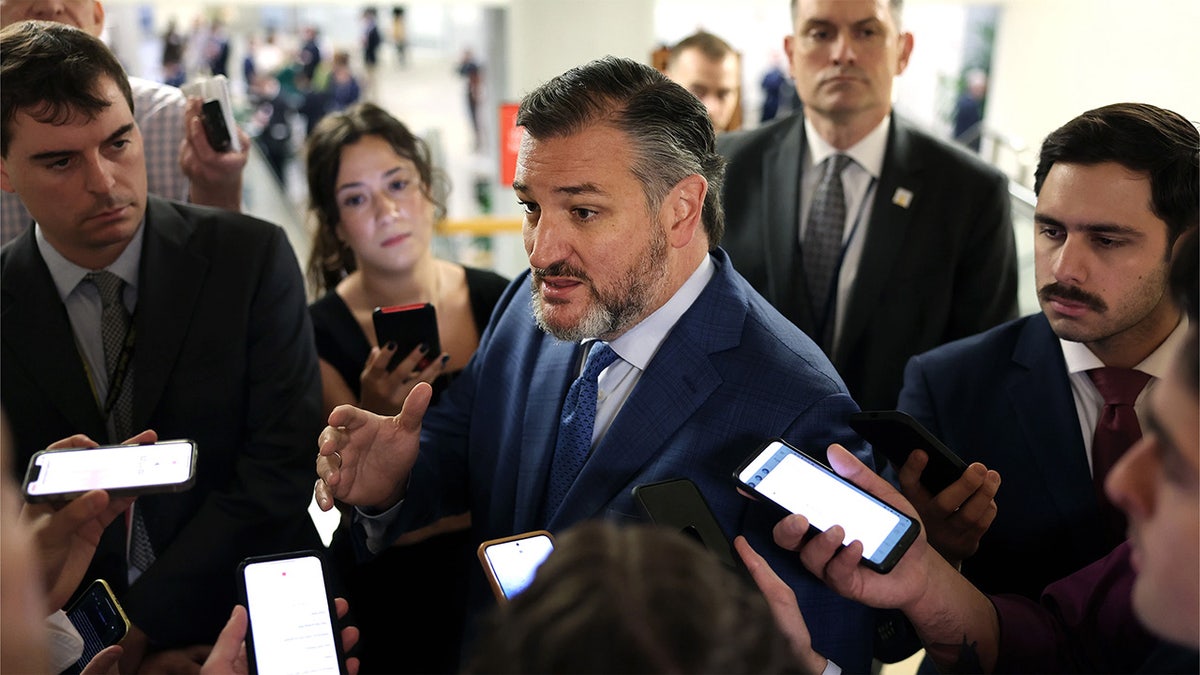
Sen. Ted Cruz, R-Texas, speaks to reporters on his way to a Senate weekly policy luncheon at the U.S. Capitol in Washington, Dec. 6, 2022. (Kevin Dietsch/Getty Images)
Then there is a policy that includes several requirements to fulfill the Pentagon’s travel budget, one of which would force the agency to hand over all unedited footage from the Trump administration’s strikes against alleged drug boats.
It’s a pointed provision that underscores the bipartisan concern from Congress over the administration’s handling of the strikes, particularly in the wake of a double-tap strike on Sept. 2 that has seen several lawmakers demand more transparency and access to the footage.
There is also a provision that has stirred up controversy among Senate Republicans and Democrats alike that would roll back some safety standards in the Washington, D.C., airspace. It comes on the heels of the collision between a Black Hawk helicopter and passenger jet near Ronald Reagan Washington National Airport earlier this year.
CONGRESS RACES AGAINST 3-WEEK DEADLINE TO TACKLE MASSIVE YEAR-END LEGISLATIVE AGENDA
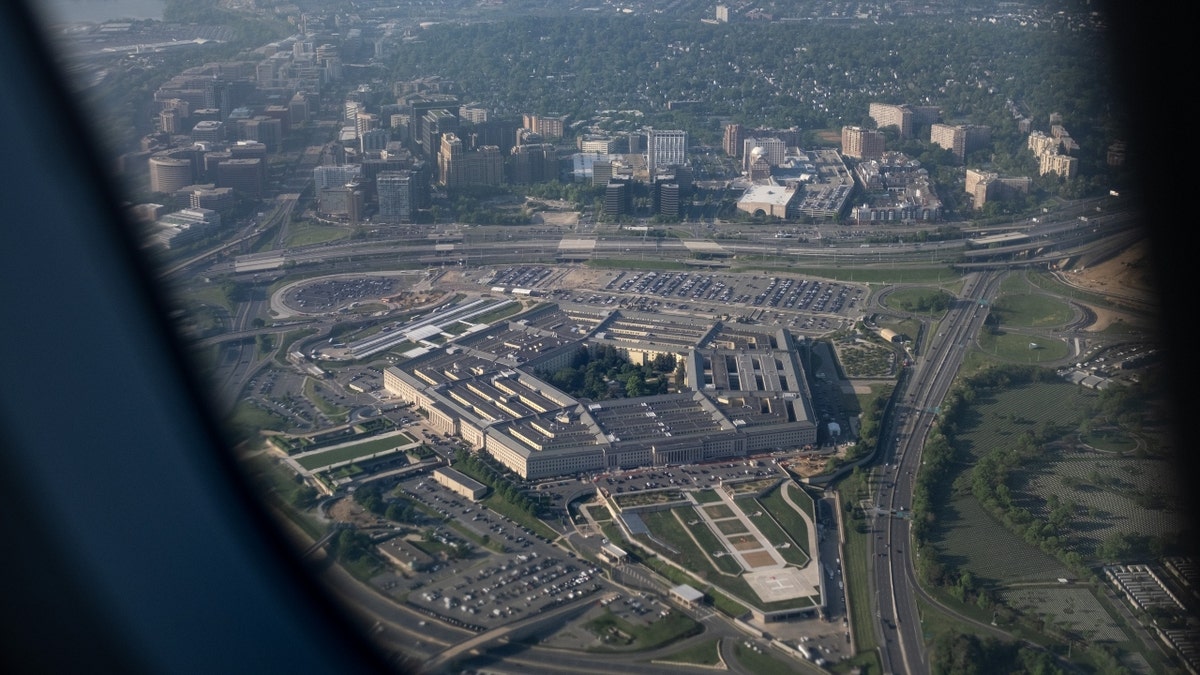
The Pentagon building in Arlington, Va., April 21, 2023. (Tom Brenner/Bloomberg via Getty Images)
Senate Commerce, Science and Transportation Committee Chair Ted Cruz, R-Texas, and Sen. Maria Cantwell, D-Wash., the top ranking Democrat on the panel, are pushing to have the provision stripped with their own amendment, which would codify the safety tweaks made after the midair collision.
Cruz said alongside family members of the victims of the crash, which killed 67, that the provision didn’t go through the ordinary clearances.»
«Normally, when you’re adding a provision to the NDAA that impacts aviation, you would request clearance from the chairman and ranking member of the Senate Commerce Committee,» Cruz said. «No clearance was requested. We discovered this provision when the final version of the bill dropped out of the House and it was passed.»
There are also several provisions that deal with Ukraine, including an extension of the Ukraine Security Assistance Initiative, which would authorize $400 million each year to buy weapons from U.S. defense companies.
CLICK HERE TO DOWNLOAD THE FOX NEWS APP
There’s a provision that would prevent the U.S. from quietly cutting off intelligence support to the country by requiring at least 48-hours notice detailing why, how long it would last and the impact on Ukraine.
There’s also a provision that would beef up reporting requirements for all foreign aid flowing to Ukraine from the U.S. and other allies supporting the country in its conflict with Russia.
senate,pentagon,donald trump,ukraine,wars,politics







INTERNACIONAL
GOP lawmakers would strip citizenship from terrorists after attacks tied to naturalized citizens
NEWYou can now listen to Fox News articles!
Rep. Riley Moore, R-W.Va., announced plans Thursday to introduce legislation allowing the U.S. to denaturalize and deport naturalized citizens who commit or support terrorism after a recent string of attacks involving immigrants who obtained citizenship.
On Thursday, Moore called out the «horrific pattern» of naturalized citizens committing acts of terror against the American people, saying it «must end.»
Moore announced he will be introducing a bill in Congress to denaturalize and deport any naturalized citizen who commits an act of terror, plots to unleash terror, joins a terrorist group or otherwise aids and abets terrorism.
Almost immediately, Rep. Brandon Gill, R-Texas, and Rep. Randy Fine, R-Fla., vowed to support the bill.
OLD DOMINION UNIVERSITY ROTC CADETS DISARM ISIS SUPPORTER SHOUTING ‘ALLAHU AKBAR’ DURING SHOOTING: OFFICIALS
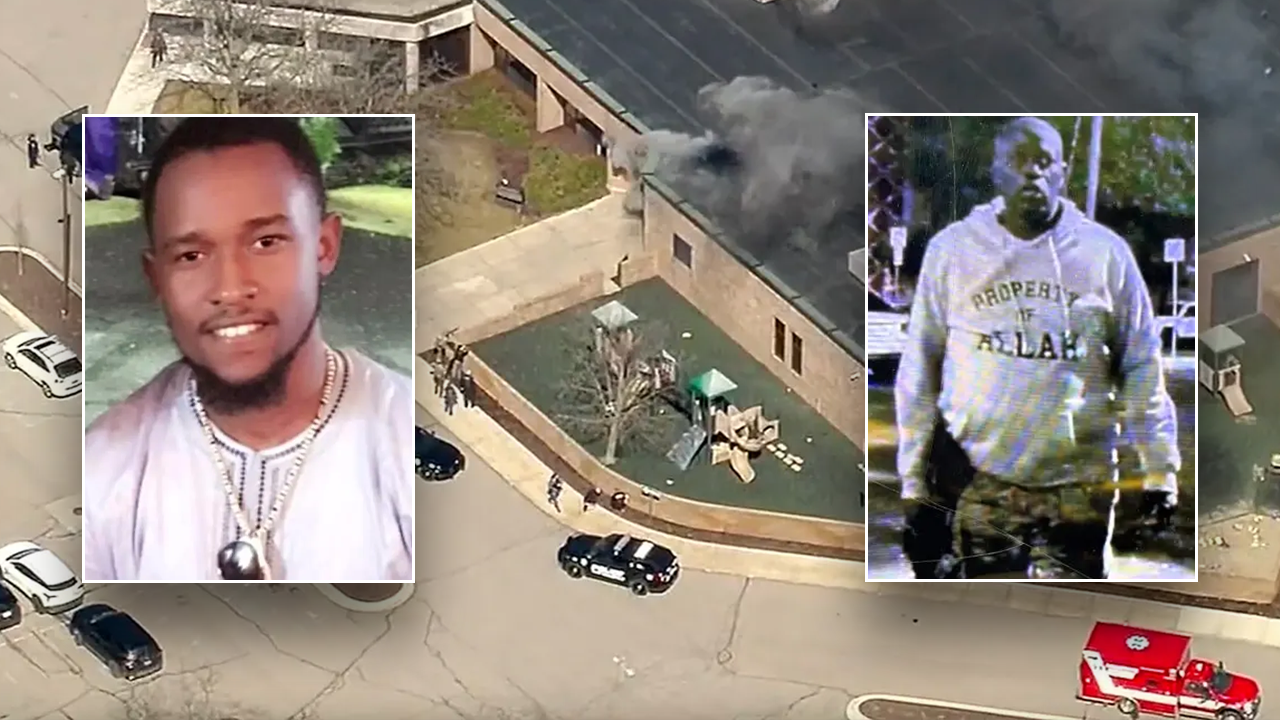
Mohamed Bailor Jalloh, at left, who was identified as the shooter at ODU Thursday, March 12, 2026. Ndiaga Diagne, 53, at right, a naturalized U.S. citizen born in Senegal, was identified as the suspect in Sunday’s shooting outside Buford’s Backyard Beer Garden in Austin. The background photo shows the aftermath of an attack on Temple Israel, a synagogue in Michigan, Thursday, March 12, 2026. (Obtained by WTVR; Obtained by Fox News; WJBK)
This week, Ayman Mohamad Ghazali, a naturalized U.S. citizen originally from Lebanon, allegedly attempted to ram his vehicle into a Michigan synagogue filled with children and teachers. The same day at Old Dominion University in Norfolk, Virginia, Mohamed Bailor Jalloh, a naturalized citizen from Sierra Leone, opened fire on a class of Reserve Officer Training Corps (ROTC) students, killing Lt. Col. Brandon Shah.
Days before, Emir Balat and Ibrahim Kayumi, the children of naturalized citizens from Turkey and Afghanistan, allegedly attempted to bomb an anti-Islam demonstration outside the mayor’s mansion in New York City. At the start of the month, Senegalese-born naturalized citizen Ndiaga Diagne killed three people and injured over a dozen in a shooting in Austin.
After this week’s attacks, Sen. Eric Schmitt, R-Mo., renewed his call to pass another bill known as the Stop Citizenship Abuse and Misrepresentation (SCAM) Act.
Schmitt is the Senate sponsor of the bill, which, if passed, would expand and clarify grounds for denaturalization if an individual participates in fraud against a government program, joins a terrorist organization or is convicted of an aggravated felony or espionage.
The bill was introduced in the House in January by Majority Whip Tom Emmer, R-Minn., amid widespread outrage over the rampant Medicaid and children’s services fraud scandal, which heavily involved the Somali immigrant community.
TRUMP WARNS OF IRANIAN ‘SLEEPER CELLS’ AS CANADA IS ACCUSED OF HARBORING REGIME OPERATIVES
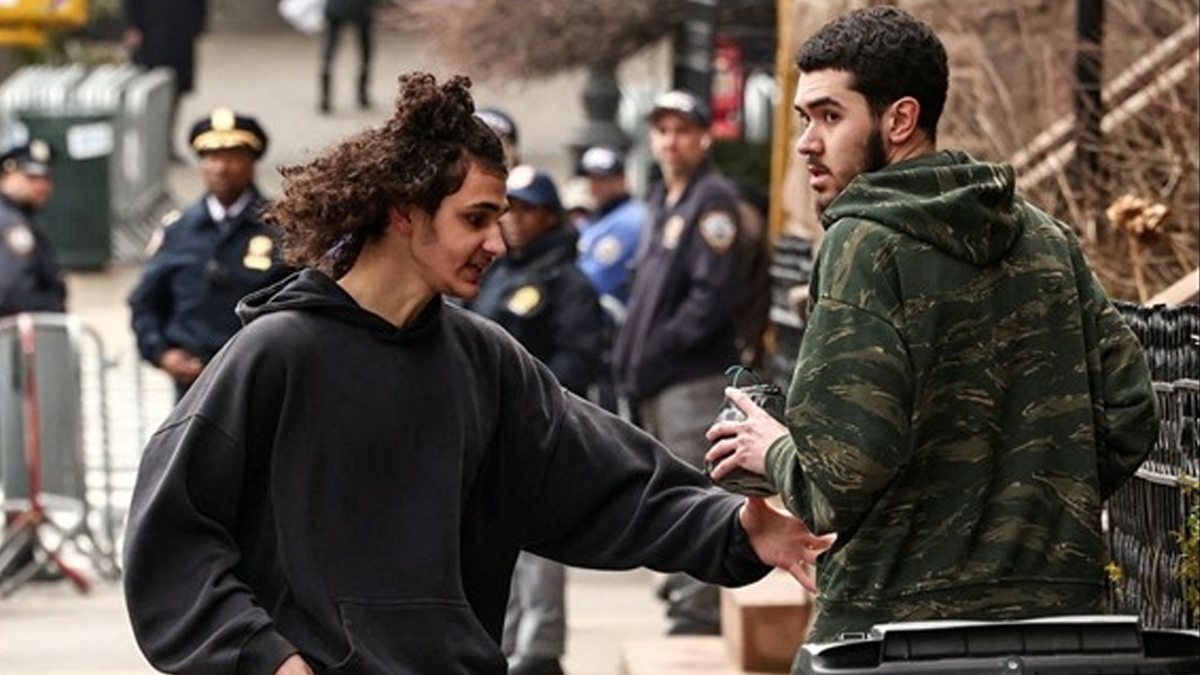
Ibrahim Kayumi, right, pictured handing an object to Emir Balat, left. Both men were arrested March 7 after allegedly attempting to bomb a protest in New York City and pledging allegiance to the ISIS terror group. (Justice Department Office of Public Affairs)
On Thursday, Schmitt posted on X that «after the SAVE America Act, we must pass the SCAM Act so we can denaturalize & deport those who are here to hurt Americans. We must denaturalize those who shouldn’t be here.»
Under current laws, the U.S. government may strip citizenship from a naturalized individual only in very limited circumstances, such as when it was obtained through fraud. There is also a very high standard of proof on the government to show that fraud occurred during the process of obtaining citizenship.
The SCAM Act, however, would expand the government’s ability to denaturalize, allowing it to revoke citizenship from a person who engages in terrorism, commits fraud, commits espionage or commits felonies within 10 years of becoming a citizen.
WE’RE IN DANGER OF MORE TERROR ATTACKS — AND THIS IS THE MOST INDEFENSIBLE PART OF IT ALL: SEN TED CRUZ
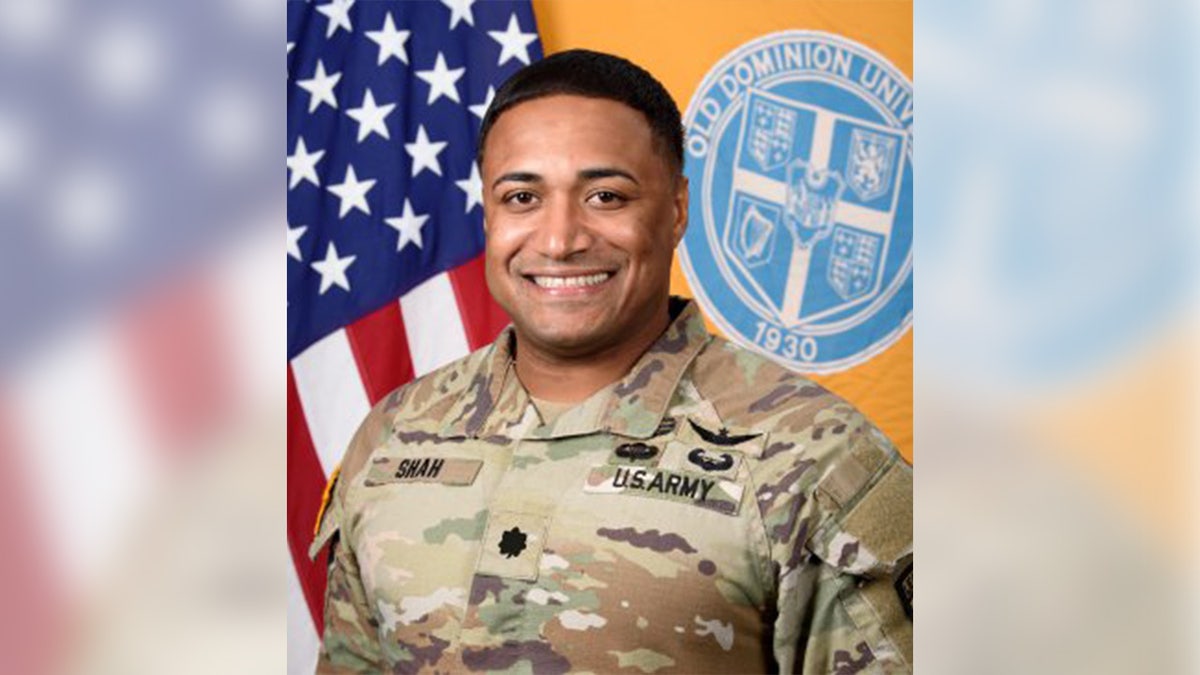
Lt. Col. Brandon Shah was identified as the instructor killed in Thursday’s deadly shooting at Old Dominion University. (Old Dominion University)
In another post, Schmitt emphasized «we need to give the Trump admin the SCAM Act. Under current law, it is practically impossible to denaturalize these terrorists.»
CLICK HERE TO DOWNLOAD THE FOX NEWS APP
He said the SCAM Act «will allow the Trump admin to denaturalize and deport those who should never have been granted citizenship in the first place.»
immigration,republicans,terror,terrorism,anti semitism,house of representatives politics,senate
INTERNACIONAL
En un rincón azotado por los cárteles, los mexicanos están abiertos a la intervención de EE.UU.

INTERNACIONAL
Iran moves hundreds of millions in crypto during nationwide internet blackout, report reveals

NEWYou can now listen to Fox News articles!
EXCLUSIVE: Cryptocurrency infrastructure linked to Iran’s Islamic Revolutionary Guard Corps (IRGC) continued operating during the country’s nationwide internet blackout after the Feb. 28 U.S.–Israeli strikes, a cyber intelligence report reviewed by Fox News Digital claims. It allowed hundreds of millions of dollars in crypto to move out of the country.
Omri Raiter, founder and CEO of RAKIA, a cyber intelligence firm that develops data analysis platforms used by governments and security agencies, told Fox News Digital his team began monitoring Iranian cryptocurrency activity in real time after the attacks and quickly detected a surge of funds leaving Iranian-linked crypto accounts.
«We’ve seen a surge of funds since the first hours of the war,» Raiter said. «It started with tens of millions in the first hours, and it grew to hundreds of millions and more. Money was just flowing out from Iranian crypto accounts.»
Wallets linked to the IRGC received more than $3 billion in cryptocurrency in 2025, according to the internal report based on blockchain intelligence data cited by RAKIA. The report also cites publicly available data from blockchain analysis firm Chainalysis, which estimated Iran’s cryptocurrency ecosystem reached $7.78 billion in activity in 2025.
IRAN PROXIES WAGE WAR ON ISRAEL, THREATEN US INTERESTS AS IRAQ SLAMMED FOR NOT DISARMING THEM
Strikes on the Iranian leadership, the IRGC and Iranian naval vessels and oil infrastructure have roiled the markets. ( Sasan/Middle East Images / AFP via Getty Images)
Raiter said the data suggests Iran has developed a significant crypto-based financial infrastructure capable of operating even during heavy sanctions and communications shutdowns.
«The IRGC has been financing proxy operations through the very same crypto corridors that sanctions were designed to shut down,» Raiter said.
The U.S. Department of the Treasury sanctioned cryptocurrency exchanges tied to Iranian actors Jan. 30, marking one of the first times the U.S. targeted entire digital asset platforms rather than individual wallets for sanctions evasion linked to the Islamic Revolutionary Guard Corps.
Treasury Secretary Scott Bessent said the move was part of a broader effort to disrupt financial networks connected to Tehran, Iran.
«The Treasury will continue to pursue Iranian networks and corrupt elites who enrich themselves at the expense of the people,» Bessent said in a Treasury press release in January. «This also applies to attempts by the regime to use digital assets to circumvent sanctions.»
The recent surge appears to reflect two parallel trends: funds moving to support Iran’s regional proxy networks and money being moved by individuals connected to the regime seeking to protect their personal wealth, according to RAKIA’s analysis.
«The proxy war funding and the personal capital flight are two sides of the same coin,» Raiter said. «They move through the same pipelines.»
IRAN WAR, 11 DAYS IN: US CONTROLS SKIES, OIL SURGES AND THE REGION BRACES FOR WHAT’S NEXT
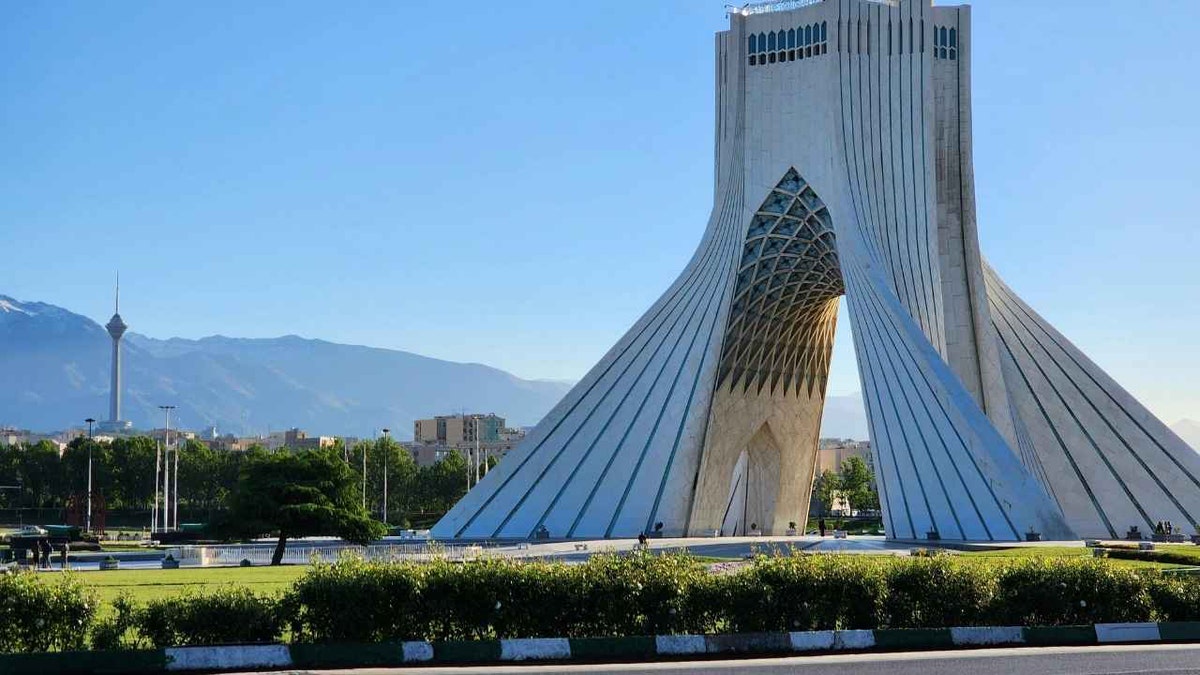
Tehran’s skyline, including the Azadi Tower, became the backdrop to a crisis shaped as much by cyber disruption as by missiles in the sky. (Kurt «CyberGuy» Knutsson)
Raiter said the firm identified cryptocurrency flows connected to networks previously associated with Iran-backed groups.
«Some of the accounts we saw are connected to areas where money historically flows to proxy wars,» he told Fox News Digital, citing activity linked to Lebanon and Yemen.
«Some of it could be people inside the IRGC trying to move their own money,» Raiter said. «But when you see the scale and the timing, it looks coordinated.»
The report produced by RAKIA claims the activity continued even after Iran imposed a sweeping internet shutdown across the country. National connectivity dropped to roughly 1% of normal levels during the blackout, according to internet monitoring group NetBlocks.
FROM MISSILES TO MINERALS: THE STRATEGIC MEANING BEHIND THE IRAN STRIKE
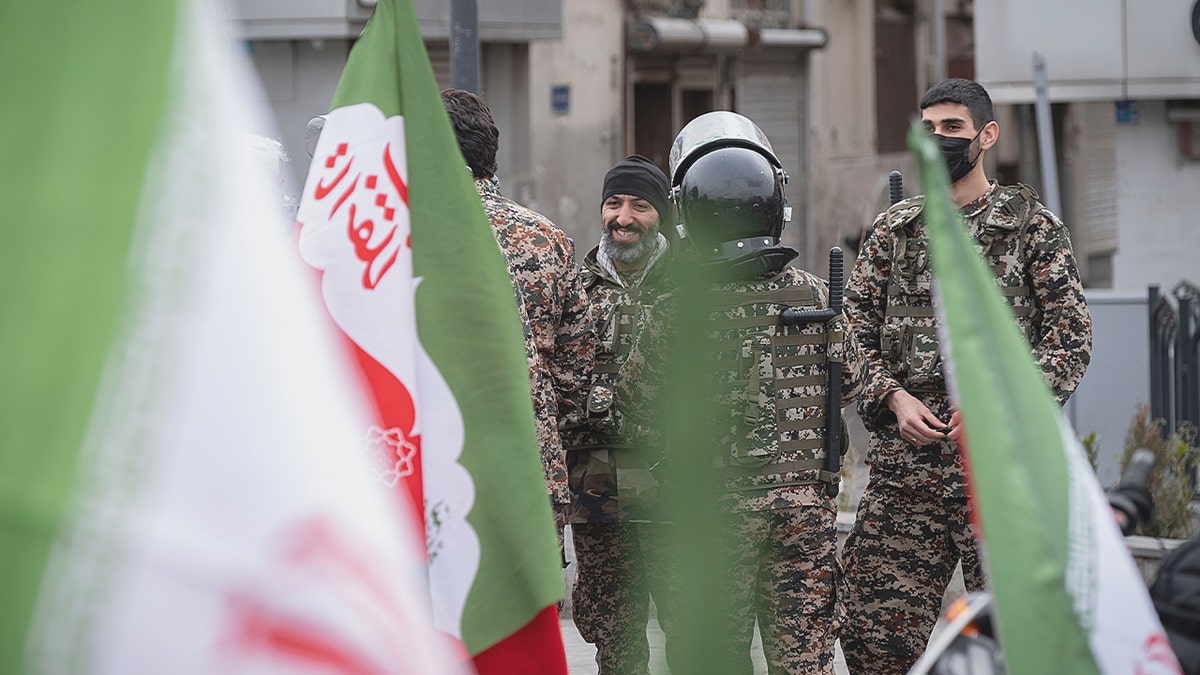
Military members of the Islamic Revolutionary Guard Corps in western Tehran, Iran (Morteza Nikoubazl/NurPhoto via Getty Images)
Despite that shutdown, RAKIA researchers said they detected more than 1,100 active cryptocurrency nodes operating inside Iran.
«When the internet is at one percent and you still see over a thousand active crypto nodes, you’re not looking at retail users,» Tom Malca, RAKIA’s head of cyber and AI research, said in the report. «Those nodes require dedicated bandwidth, stable power and deliberate exemption from the shutdown.»
RAKIA researchers said the activity suggests specialized infrastructure continued operating even as millions of Iranian civilians were cut off from the internet.
Most of the nodes were concentrated in the Tehran–Qom corridor, according to the report, an area that includes major government and IRGC institutions. Smaller clusters were detected in Iranian cities, including Isfahan, Mashhad, Tabriz and Kermanshah, according to the analysis.
CLICK HERE TO DOWNLOAD THE FOX NEWS APP
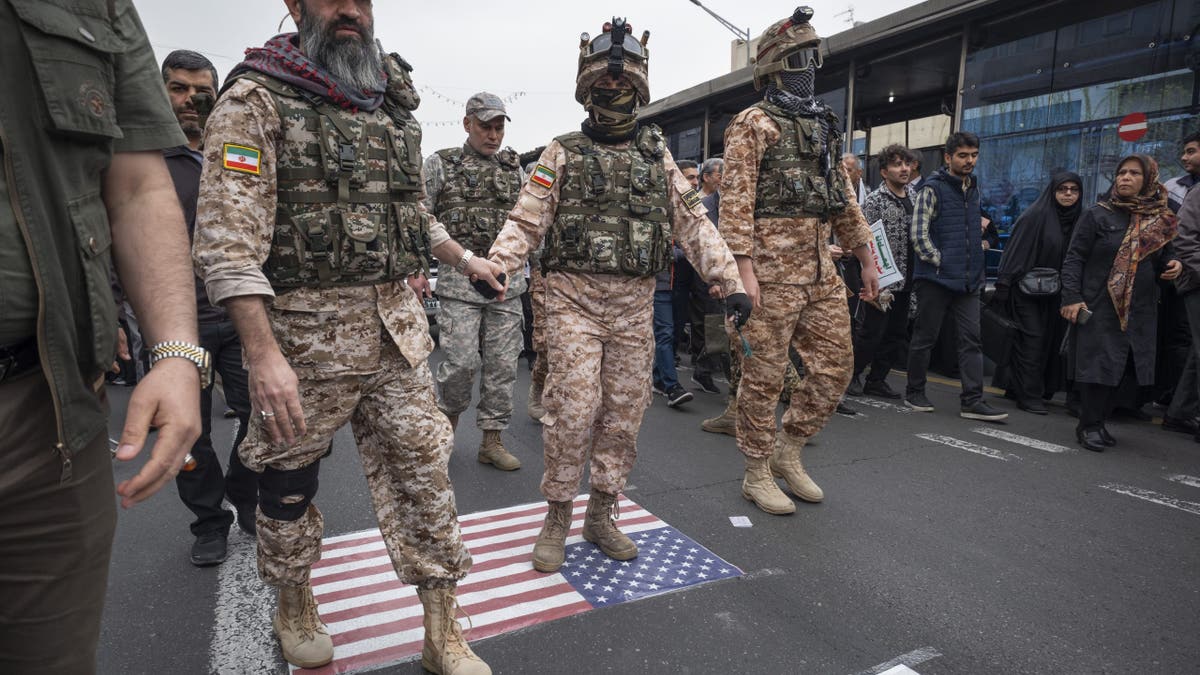
Islamic Revolutionary Guard Corps special forces walk on the U.S. flag during a rally commemorating International Quds Day, also known as Jerusalem Day, in Tehran, Iran, March 28, 2025. (Morteza Nikoubazl/NurPhoto via Getty Images)
RAKIA said its investigation relied on a combination of network monitoring and publicly available blockchain intelligence.
The Iranian mission to the United Nations in New York declined to comment on the report’s claims.
war with iran,terrorism,cybercrime

GOP lawmakers would strip citizenship from terrorists after attacks tied to naturalized citizens

Rolando Barbano habló de la chance de contraer matrimonio con Marina Calabró: “Yo me recasaría”

Surgen nuevos detalles a través de la clasificación por edades de Tomodachi Life: Una vida de ensueño – Nintenderos

Por la crisis en Medio Oriente, subirán las retenciones a las exportaciones argentinas de petróleo convencional

Canales para ver el Estudiantes vs. Lanús por el Torneo Apertura

La secuencia de más de 35 llamadas de Novelli con Milei, su hermana y Santiago Caputo por el lanzamiento de $LIBRA

Muni Seligmann respondió las críticas tras el accidente de su bebé y su viaje a Miami: “Hay que contarlo y naturalizarlo”

El ex novio de Luana de Gran Hermano reveló información sensible sobre su relación: “El bolso tenía plata”

Juan Carlos Schmid deja la conducción de Dragado y Balizamiento después de 33 años

Sorpresa en Gran Hermano tras la expulsión de Carmiña: la reacción de la producción y las dudas sobre su reemplazo

 CHIMENTOS3 días ago
Muni Seligmann respondió las críticas tras el accidente de su bebé y su viaje a Miami: “Hay que contarlo y naturalizarlo”
- CHIMENTOS1 día ago
El ex novio de Luana de Gran Hermano reveló información sensible sobre su relación: “El bolso tenía plata”
- CHIMENTOS1 día ago
Sorpresa en Gran Hermano tras la expulsión de Carmiña: la reacción de la producción y las dudas sobre su reemplazo