INTERNACIONAL
Shutdown seen from the pulpit: inching along on a wing and a prayer

NEWYou can now listen to Fox News articles!
Every time there’s a government shutdown, I turn to an unconventional barometer to understand the depth of the impasse.
I always observe the first few moments of the Senate session.
Logical, right?
GOVERNMENT SHUTDOWN KNOWLEDGE: GAMING OUT ITS POTENTIAL END
Any congressional reporter worth their salt would surely want to hear the musings of the Senate Majority and Minority Leaders on the floor to digest where things stand with the shutdown.
But I tune in to hear someone who has their palm on the pulse of the Senate. They might not rank as high as Senate Majority Leader John Thune, R-S.D., or Senate Minority Leader Chuck Schumer, D-N.Y. But they have a direct line to someone who outranks everyone.
I listen to the Senate’s opening prayer from Senate Chaplain Barry Black.
«On this third day of the government shutdown, inspire them to work for your glory in all they think, say and do,» prayed Black as he opened the Senate on October 3. «Equip our senators for their task.»
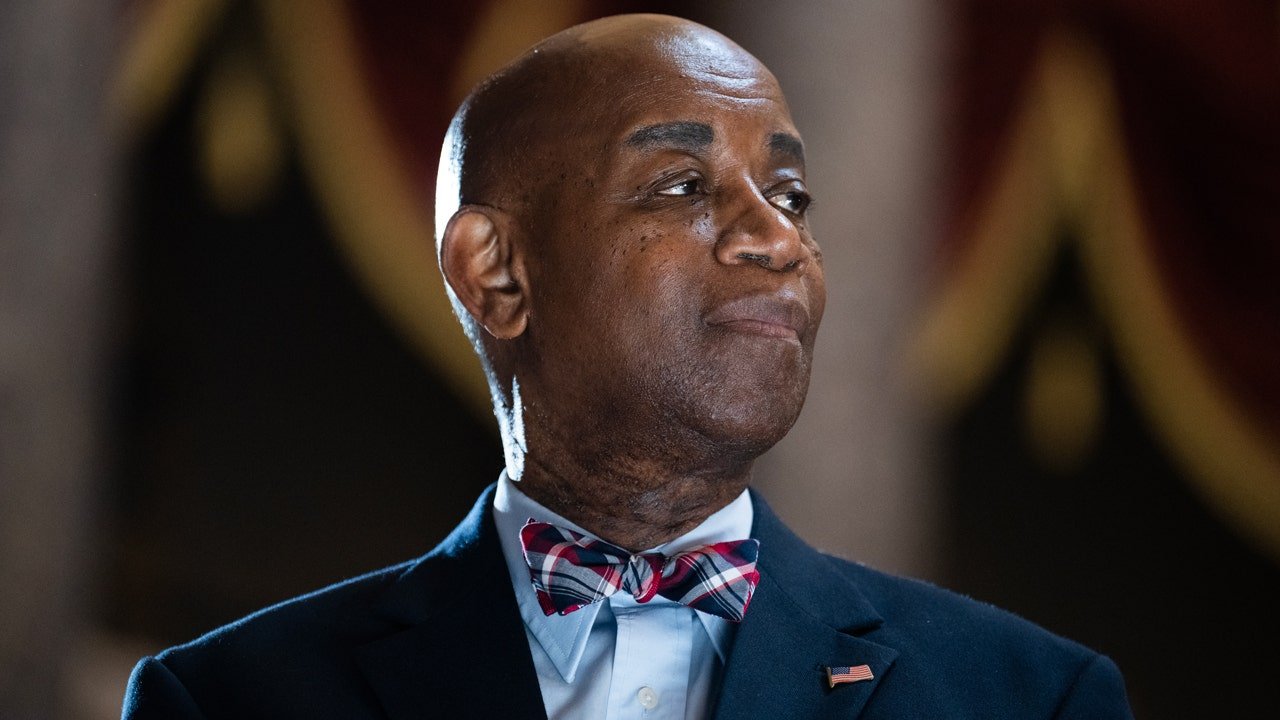
Senate Chaplain Barry Black’s prayers are an excellent finger on the pulse of progress made during government shutdowns. (Tom Williams/CQ-Roll Call, Inc via Getty Images)
Black is a parliamentary pastor offering ecumenical intercessions in search of a shutdown solution.
The shutdown impasse deepened since Black’s initial invocation more than three weeks ago. But after days of political posturing and inaction by the Congressional laity, Black unloaded on his Senate flock Monday.
«When our children and grandchildren want to know what we were doing in the 119th Congress during the famous shutdown, may we not have to give these answers: ‘I helped set a new record for keeping the government closed. I failed to appeal to the better angels of my nature. I forgot Matthew 7:12, which states, do to others whatever you would like them to do to you,’» prayed Black. «Lord, remind our lawmakers that no gold medals are given for breaking shutdown records. But a crown of righteousness is given to those who take care of the lost, last and least.»
Black’s sizzling sermons from the Senate pulpit are canon during times of crisis. He delivered similar prayers during the lengthy government shutdowns of 2013 and 2018-19.
A DIZZYING RIDE ON THE HILL: LAWMAKERS DEBATE IN CIRCLES AS SHUTDOWN ENTERS WEEK TWO
«Enough is enough,» prayed Black during the 2013 shutdown after death payments to the families of deceased U.S. soldiers ceased. «Cover our shame with the robe of your righteousness.»
After U.S. Capitol Police officers were injured following a high-speed chase and shooting at the Capitol – all while not being paid in the middle of that shutdown – Black chastised lawmakers in his prayer.
«Deliver us from the hypocrisy of attempting to sound reasonable while being unreasonable,» prayed Black.
Black says his prayers are to God. But his position in the Senate grants him special status. Not every pastor enjoys the benefit (or pressure) of a 100-senator audience. That’s to say nothing of those watching across the country on C-SPAN.
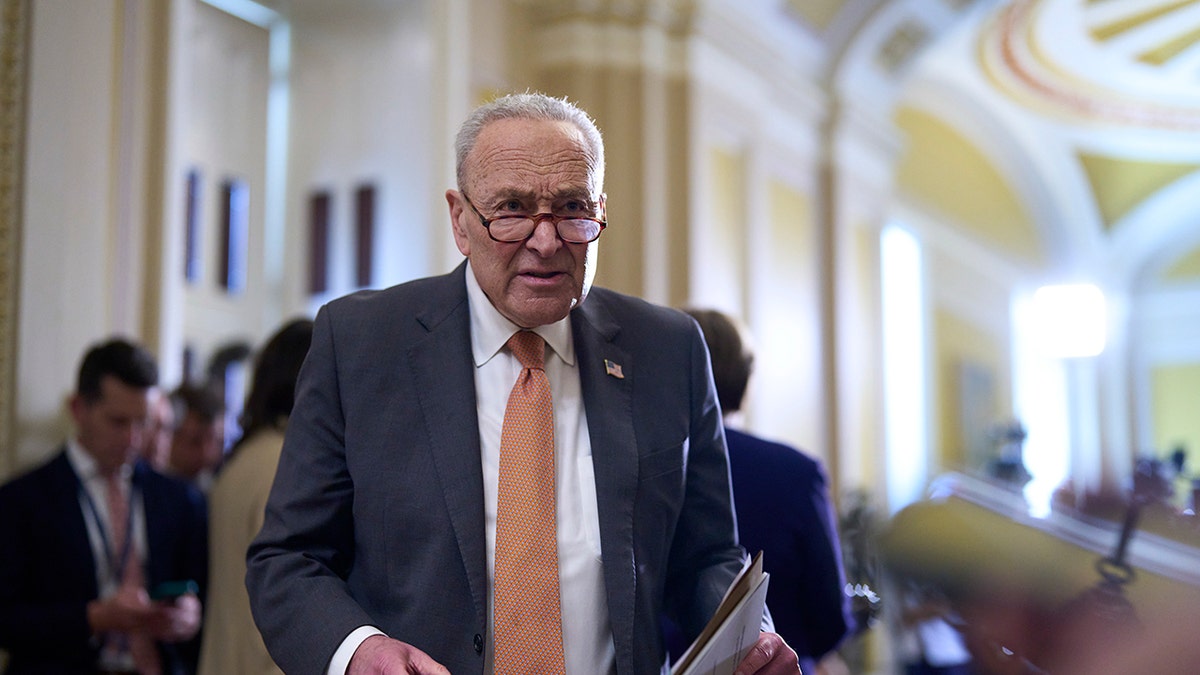
Senate Minority Leader Chuck Schumer, D-N.Y., cast aspersions on the president, calling him «a cold, heartless individual.» (J. Scott Applewhite/AP)
Black was direct in his Tuesday oration.
«Lord, use our legislators to help end this government shutdown, increase their faith, hope, and love, enabling them to transform cacophony into concord,» he prayed.
By day 29 of the government shutdown, it was unclear if Black’s petitions were getting through to lawmakers. Tensions rose in the Capitol as members lashed out at one another in fits of anger.
«Self-serving, nasty, vicious bull!» yelled Schumer, casting aspersions at the president, calling him «a cold, heartless individual.»
SCHUMER, DEMS CALL ‘BULL—-‘ ON TRUMP ADMINISTRATION OVER FOOD STAMP SHUTDOWN THREAT
Lawmakers sprinkled salty language into their rhetoric.
«We need five Democrat senators to pull their heads out of their asses,» implored House Foreign Affairs Committee Chairman Brian Mast, R-Fla.
«I’ve got the damn statute,» bellowed Rep. Rosa DeLauro, D-Conn., the top Democrat on the Appropriations Committee. She demanded the Trump Administration release a contingency fund to pay for SNAP benefits.
«The money is there. Go get it, godd—it,» fumed DeLauro.
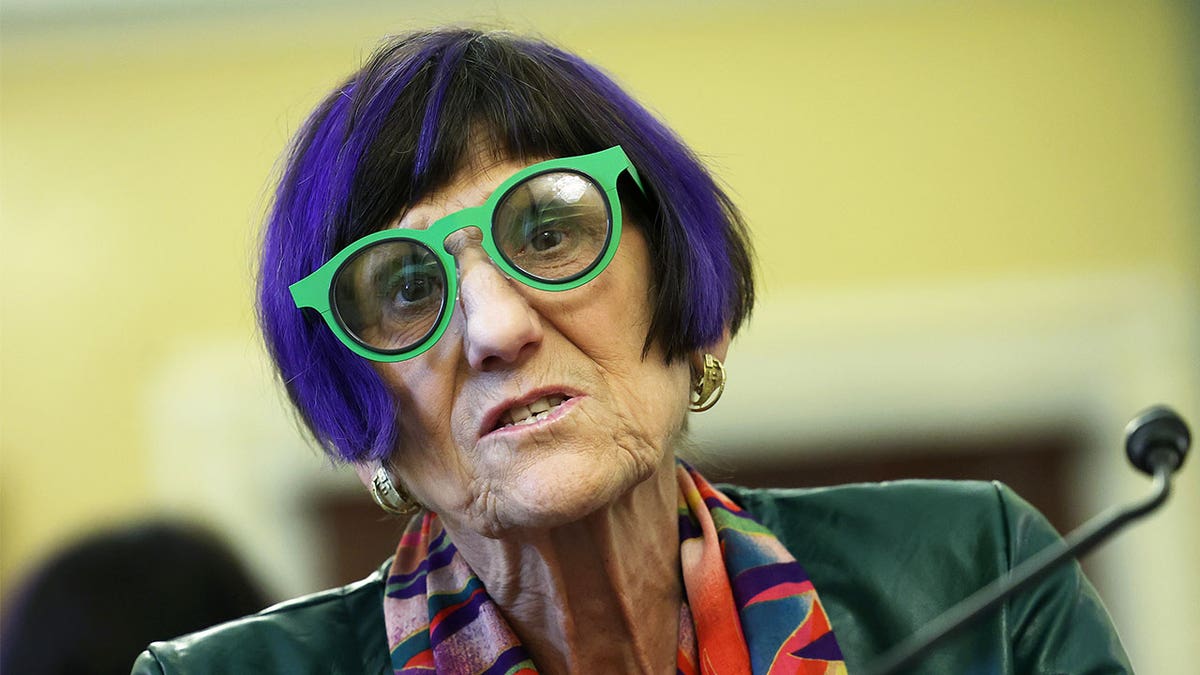
Rep. Rosa DeLauro, D-Conn., was one of multiple lawmakers to wax profane in their rhetoric. (Kevin Dietsch/Getty Images)
The usually genial Thune excoriated Democrats during a heated floor exchange on SNAP.
«This isn’t a political game! These are real people’s lives that we’re talking about!» thundered Thune. «And you all have just figured out that 29 days in there might be some consequences? That there’s people running out of money?»
That said – or yelled – Thune has long told Democrats he’s willing to engage them on their healthcare demands.
But with a caveat.
«You want to have discussion about healthcare? Open the government. Let’s do it,» said Thune.
REPORTER’S NOTEBOOK: WHITE HOUSE POUNCES AFTER TOP DEM SAYS GOVERNMENT SHUTDOWN GIVES PARTY ‘LEVERAGE’
At least one Democrat is willing to take that offer.
«I think what’s a very fair deal is open the government and let’s just vote on extending these premiums for a year or more,» said Rep. Josh Gottheimer, D-N.J., on Fox.
But Democrats insist they’re not caving.
«There are zero cracks on the Democratic side,» said House Minority Leader Hakeem Jeffries, D-N.Y.
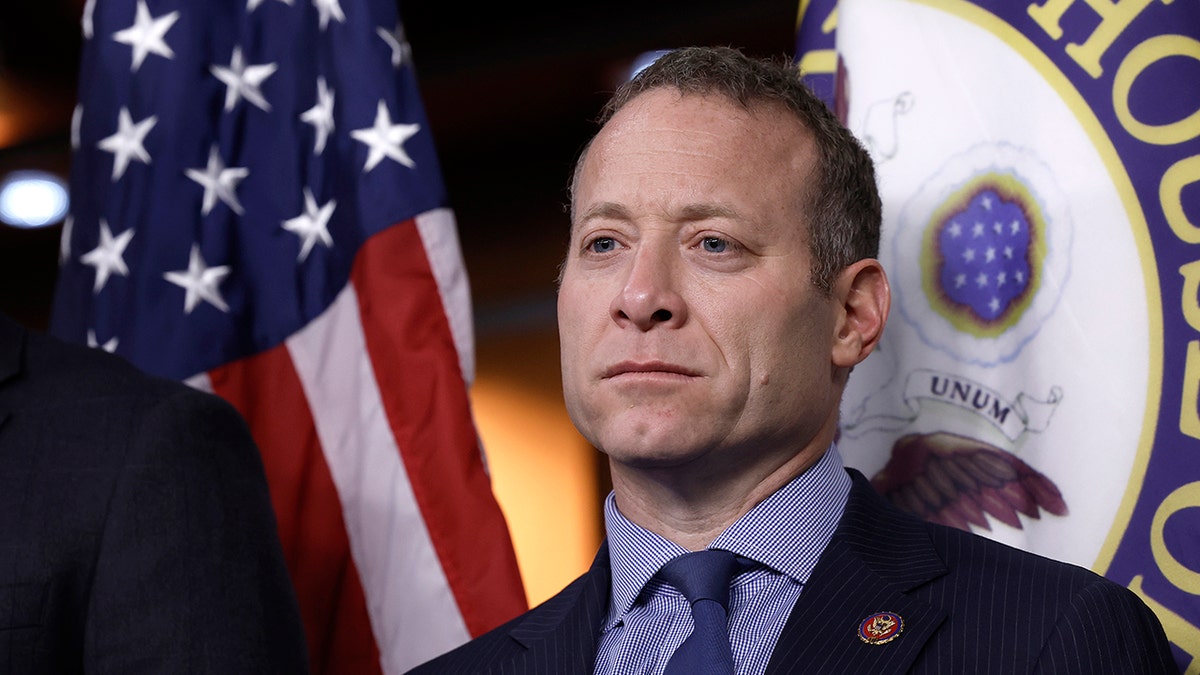
Rep. Josh Gottheimer, D-N.J., appears willing to take a deal to open the government. (Anna Moneymaker/Getty Images)
Jeffries blasted President Trump for refusing to negotiate to end the shutdown – as the President was in Asia.
«Donald Trump has spent more time talking to Hamas and the Chinese Communist Party than he has in talking to Democrats on Capitol Hill to end the Trump shutdown,» said the New York Democrat.
House Speaker Mike Johnson, R-La., is now exasperated with the Democratic brass.
«I’ve given up on the leadership,» said Johnson. «So we’re trying to appeal to a handful of moderates or centrists who care more about the American people.»
THUNE, GOP REJECT PUSHING ‘RIFLE-SHOT’ GOVERNMENT FUNDING BILLS DURING SHUTDOWN
Sen. Catherine Cortez Masto, D-Nev., is one of three senators associated with the Democrats who voted repeatedly to fund the government. There is chatter about what it will take to halt the shutdown. But the talks are informal.
«I think that there’s an opportunity for us to come together, to open up the government, to address the looming health care crisis,» Cortez Masto told Chase Williams of Fox Business. «There is the will among senators on both sides of the aisle to do something. But the leadership’s getting in the way. And the one person that needs to be at the table is not. That’s Donald Trump. Because Speaker Johnson and Leader Thune will not do one thing unless he says, and tells them what to do.»
Multiple lawmakers are forecasting what will compel lawmakers to re-open the government.
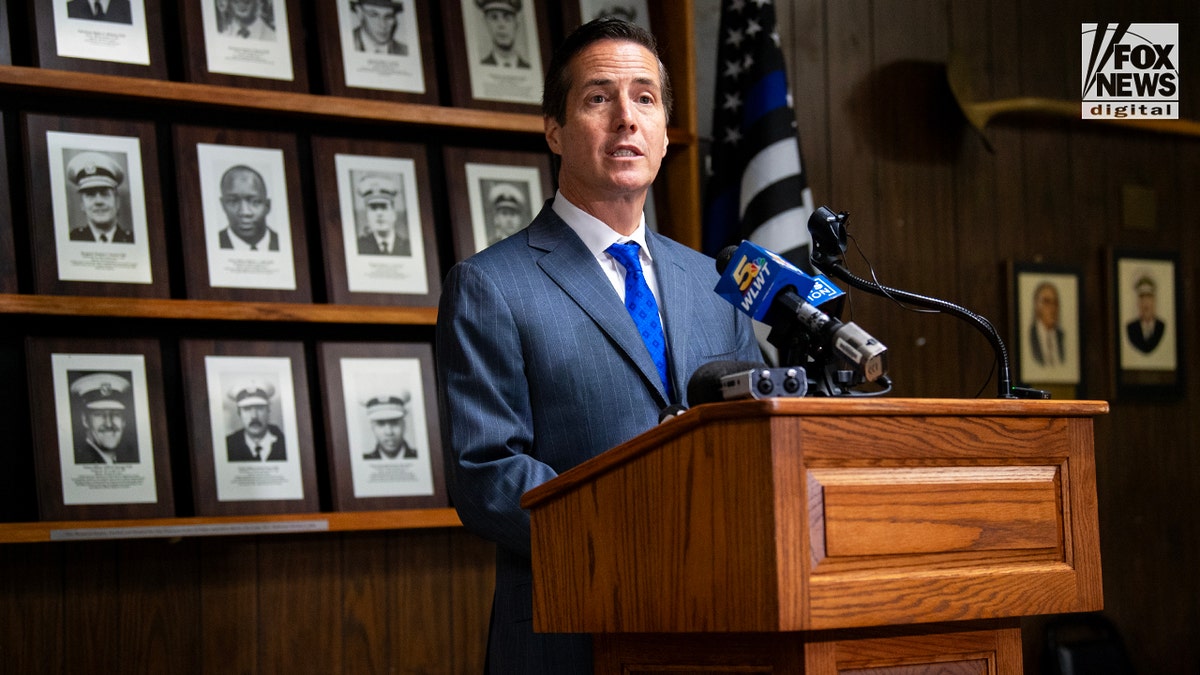
Sen. Bernie Moreno, R-Ohio, suggests Veterans Day as a likely «D-Day,» adding, «that’s when you’re going to break the system.» (Julia Bonavita/Fox News Digital)
«I think Veterans Day is probably D-Day,» said Sen. Bernie Moreno, R-Ohio. «And that’s when you’re going to break the system.»
«I think it’s going to happen next week,» predicted Sen. Lindsey Graham, R-S.C.
«Why?» asked yours truly.
«Just because the carnage is piling up and Democrats are getting hurt more than they’re being helped,» replied Graham.
CLICK HERE TO DOWNLOAD THE FOX NEWS APP
It’s unclear if that compels lawmakers to re-open the government. There’s now pressure in the air – and on the ground – to re-open the government. Multiple airlines and the Teamsters demanded that Congress pass the GOP’s bill to fund the government.
To Graham’s point, next week represents the shutdown’s most significant inflection point yet, which could potentially force lawmakers to come around. SNAP benefits running out. A second missed paycheck. Worry about the airlines. It’s an «opportunity.» But only that. Those «opportunities» will soon multiply.
Barry Black will likely continue his daily invocations to end the shutdown. And only the Almighty knows when the shutdown will end.
But until then, operations of the federal government are limping along.
On a wing. And a prayer.
congress,government shutdown,senate











INTERNACIONAL
Trump unveils $1.5T defense surge, deep domestic cuts — what’s on the budget chopping block

NEWYou can now listen to Fox News articles!
The White House on Friday proposed a sweeping fiscal year 2027 budget that would dramatically increase military spending to roughly $1.5 trillion while cutting billions from domestic programs, marking a sharp shift in federal priorities toward national security and border enforcement.
The proposal outlines roughly $1.5 trillion in total defense resources, a figure the administration says is needed to address growing threats from China, Russia and other adversaries.
The request includes about $1.1 trillion in base discretionary funding for the Department of War, along with an additional $350 billion in mandatory funding to support priorities such as munitions production and expansion of the defense industrial base.
TRUMP REWRITES NATIONAL SECURITY PLAYBOOK AS MASS MIGRATION OVERTAKES TERRORISM AS TOP US THREAT
If enacted, the plan would represent one of the largest increases in U.S. defense spending in decades, though the total includes a mix of discretionary funding and mandatory resources that are not typically combined in standard Pentagon budget comparisons.
The White House on Friday proposed a sweeping fiscal year 2027 budget that would dramatically increase military spending to roughly $1.5 trillion while cutting billions from domestic programs, marking a sharp shift in federal priorities toward national security and border enforcement. (AP photo)
Weapons production, ships and emerging technologies
The budget places heavy emphasis on rebuilding weapons stockpiles and strengthening domestic manufacturing capacity, areas that defense officials have identified as key vulnerabilities in recent years.
It calls for accelerated procurement of critical munitions and expanded investments in the defense industrial base, alongside increased funding for nuclear modernization.
Shipbuilding is another major focus, with $65.8 billion requested to procure 18 Navy battle force ships and 16 non-battle force vessels as part of a broader effort to expand maritime capacity.
The proposal also continues funding for the «Golden Dome» missile defense system, which aims to develop a layered homeland defense using space-based sensors and interceptors.
Emerging technologies play a central role in the plan.
The budget highlights investments in artificial intelligence, drones and counter-drone systems, and next-generation aircraft, including continued development of the F-47 — a sixth-generation fighter designed to operate alongside autonomous systems — with the program targeting a first flight as early as 2028.

The proposal also continues funding for the «Golden Dome» missile defense system, which aims to develop a layered homeland defense using space-based sensors and interceptors. (Chip Somodevilla/Getty Images)
Defense increases paired with domestic cuts
TRUMP NATIONAL SECURITY BLUEPRINT DECLARES ‘ERA OF MASS MIGRATION IS OVER,’ TARGETS CHINA’S RISE
The increase in defense spending is paired with a proposed 10% reduction in nondefense discretionary spending.
Budget tables show nondefense funding dropping to about $660 billion, while defense-related funding rises significantly, with base defense funding reaching roughly $1.15 trillion.
The fiscal year 2026 National Defense Authorization Act (NDAA) authorized approximately $890 billion to $901 billion in defense spending.
The administration also is proposing continued reductions in nondefense spending in future years, signaling a longer-term effort to rebalance federal spending toward national security priorities.
Several major agencies would see significant reductions under the plan, including: NASA, cut by about $5.6 billion, or 23%, State Department and international programs, down roughly $15.5 billion, or 30%, Environmental Protection Agency, cut by more than half, Department of Labor, reduced by about $3.5 billion and Department of Housing and Urban Development, down $10.7 billion.
The reductions are likely to face pushback from lawmakers, particularly over cuts to scientific research, housing programs and foreign aid.
«Donald Trump’s budget is rotten to the core, and Democrats will make sure it never passes,» Senate Majority Leader Chuck Schumer, D-N.Y., said in a statement. «Trump is already spending massive sums on never-ending wars abroad, and now he’s pushing for a record-breaking $1.5 trillion in defense spending while slashing programs that Americans and seniors care about and rely on.»

Several major agencies would see significant reductions under the plan, including NASA, cut by about $5.6 billion. (Austin DeSisto/NurPhoto via Getty Images)
Border security and law enforcement funding expands
The budget also increases funding tied to immigration enforcement and domestic security.
The Department of Homeland Security would continue to rely on more than $190 billion in multiyear funding provided through prior legislation to support border wall construction, detention capacity and enforcement operations, including tens of thousands of detention beds.
PENTAGON SEEKS AT LEAST $200B FROM CONGRESS FOR IRAN WAR
At the same time, the Department of Justice would receive $40.8 billion in discretionary funding, a 13% increase, with additional resources aimed at addressing violent crime, drug trafficking and cartel activity.
The proposal also includes continued support for military involvement in border operations, as well as expanded funding for the Coast Guard.
Foreign aid reduced as priorities shift
The budget proposes a roughly 30% reduction in funding for the State Department and international programs, including cuts to humanitarian aid, global health initiatives and contributions to international organizations.
At the same time, it creates a new $5 billion fund intended to support strategic partnerships and national security priorities, along with expanded financing for allied nations purchasing U.S. defense equipment.
The changes reflect a broader shift toward prioritizing security-focused spending over traditional foreign assistance programs.
Industrial policy tied to national security
Beyond military spending, the budget links national security more directly to economic and industrial policy.
It includes funding to expand domestic production of critical minerals and support supply chains, alongside investments in advanced computing, including artificial intelligence supercomputers at national laboratories.
Officials say those efforts are intended to reduce reliance on foreign suppliers and improve the United States’ ability to sustain long-term competition with adversaries.
Economic assumptions and next steps
The budget is based on projections that assume steady economic growth of about 3% annually and inflation stabilizing near 2%, estimates that could face scrutiny from outside analysts.
The proposal now moves to Congress, where it is expected to face significant debate over both the scale of defense spending and the extent of domestic cuts.
CLICK HERE TO DOWNLOAD THE FOX NEWS APP
Lawmakers also will likely scrutinize the administration’s use of mandatory funding and reconciliation to support defense increases, an approach that differs from traditional budget negotiations.
While presidential budgets are rarely enacted as written, the proposal provides a clear outline of the administration’s priorities heading into the next fiscal year, with a focus on military strength, border enforcement and a reduced role for many domestic programs.
homeland security, national security, border security, state department, spending
INTERNACIONAL
Tras 11 años en los tribunales, un heredero recupera una obra de Modigliani robada por los nazis

Durante más de una década, los herederos de un comerciante judío de antigüedades han intentado en los tribunales reclamar una valiosa pintura de Amedeo Modigliani: un retrato al óleo de un elegante comerciante de chocolate con sombrero y corbata, sentado y sosteniendo un bastón. Según la herencia, la pintura fue confiscada de la tienda del comerciante en París durante la ocupación nazi de Francia y vendida hace más de ocho décadas.
Pero el reclamo, inscripta en una demanda presentada en Nueva York en 2015, ha sido durante mucho tiempo disputada por la familia Nahmad, una prominente dinastía de marchantes que ejerce un enorme poder en el mercado internacional de arte. Una sociedad tenedora de los Nahmad, International Art Center, compró la obra en una subasta en 1996 y la ha mantenido desde entonces en almacenes en Suiza. La sociedad tenedora ha argumentado durante mucho tiempo en documentos judiciales que existen dudas sobre si la pintura que compraron es el mismoi Modigliani que una vez poseyó el comerciante de antigüedades Oscar Stettiner.
El viernes, el juez Joel M. Cohen del Tribunal Supremo de Nueva York dictaminó que se trata de la misma pintura y que la herencia de Stettiner “tiene derecho a la posesión de la pintura”, conocida como El hombre sentado con bastón (1918). “Oscar Stettiner poseía o como mínimo tenía un derecho superior de posesión sobre la pintura antes de su incautación ilegal”, escribió el juez, y “nunca la entregó voluntariamente”.
El juez Cohen escribió que ambos puntos estaban respaldados por una decisión de 1946 en un tribunal francés, ante el cual el propio Stettiner había presentado una reclamación después de la guerra. El tribunal francés ordenó que se devolviera la pintura a Stettiner, pero para entonces ya había sido vendida y el hombre que la compró dijo que la había revendido y que ya no estaba en su poder.
Al fallar en contra del marchante de arte y multimillonario David Nahmad y de la sociedad tenedora, el juez dijo que los acusados “no lograron plantear ninguna cuestión material de hecho, y no aportaron pruebas que identifiquen a ningún otro propietario aparte del Sr. Stettiner ni que él la entregara voluntariamente”. Stettiner, un comerciante judío de nacionalidad británica, murió en Francia en 1948, según documentos presentados ante el tribunal.

La decisión supone una victoria en una larga campaña del nieto del Stettiner, Philippe Maestracci, y de una empresa, Mondex, especializada en recuperar obras de arte saqueadas. Comenzaron a trabajar para recuperar la pintura, que en su momento se estimó en hasta 25 millones de dólares, años antes de presentar la demanda. “Nuestro cliente, el Sr. Maestracci, está abrumado de alegría y satisfecho de que, después de tantos años, la búsqueda emprendida por su abuelo finalmente se ha cumplido”, dijo James Palmer, fundador de Mondex. “Ahora esperamos que el Sr. Nahmad cumpla su promesa de devolver la pintura una vez que reciba la orden del tribunal, que hoy ya ha recibido”, dijo Palmer.
Aaron Richard Golub, abogado que representa a la familia Nahmad y la sociedad tenedora, dijo que no haría comentarios. Un abogado de los herederos Stettiner, Phillip Landrigan, criticó a los demandados, afirmando que habían prolongado el litigio “con la esperanza de que el heredero se viera obligado a desistir” e ignoraron “las pruebas contundentes presentadas por el heredero de Stettiner al tribunal”.
Inicialmente, gran parte de la disputa legal en el caso se centró en si la empresa Art Center estaba controlada por el Nahmad. Durante años, sus representantes evitaron hacer esa conexión directa, hasta que finalmente admitió que era suya. Pero dijo en entrevistas que había adquirido la pintura de buena fe y citó cómo había prestado el Modigliani a varios museos, incluido el Museo Judío de Nueva York en 2004. “Si tuvieras alguna duda sobre el arte saqueado, ¿realmente la prestarías a un museo judío?”, preguntó en una entrevista con The New York Times en 2016.
El juez dijo que, aunque la familia Stettiner fue engañada durante 50 años respecto a la ubicación de la pintura, esto no fue culpa de Nahmad, quien no tuvo relación con la obra hasta que la sociedad tenedora la adquirió a través de Christie’s en 1996. Culpó a la información sobre la procedencia incluida para la pintura en esa subasta, señalando que, “por diseño o por inadvertencia”, había resultado errónea y engañosa. Christie’s declinó hacer comentarios.
El juez Cohen señaló que, si bien consideró convincentes las pruebas que vinculaban la pintura con Stettiner, incluyendo registros que sugieren que prestó la obra para una exposición en Venecia en 1930, determinó que los argumentos presentados para refutar esta postura eran meramente especulativos. “Las pruebas demuestran una cadena de propiedad/derecho de posesión sencilla y persuasiva que va directamente de Stettiner a la incautación nazi y a una venta forzada”, concluyó el juez Cohen.
Fuente: The New York Times
Modigliani,pintura,arte,retrato,expresión,galería,artista,europeo,moderno,siglo XX

Sas Parsad se despertó en medio de la madrugada con intensos dolores estomacales que inmediatamente asoció a una intoxicación alimentaria, pero fue el inicio de un largo camino que recorrió hasta recibir el diagnóstico que le cambió la vida.
Su odisea empezó hace 15 años. Parsad vive en la ciudad costera de Eastbourne, en Inglaterra, y tiene ahora 45 años. Pero todavía no olvida esa noche en la que empezó todo, cuando tenía 30 años.
Al principio, ni siquiera pensó en ir al médico: “Pensé que había comido algo dudoso, y que pasaría después de dos o tres días”, recordó en una entrevista a Metro. Sin embargo, después de diez días con dolores, decidió sacar un turno.
“Fue un dolor de calambres bastante alto, pero luego también urgencia, de necesidad de ir (al baño), y un tipo de dolor agudo, más bajo, pesado”, explicó. El profesional creyó que se trataba de una infección por Salmonella, pero todavía estaba lejos de descubrir lo que en verdad tenía.
El dolor aparecía y desaparecía constantemente. Pasó muchas noches despierto con problemas gastrointestinales. Su trabajo y su vida social se vieron significativamente afectados: estar lejos de un baño no era una opción posible para él.
Cada vez que salía de su casa, procuraba tener un baño cerca. (Foto: ilustrativa Pexels)
“Estaba prácticamente confinado en casa y no podía trabajar. Iba y venía al baño 100 veces o más al día, adolorido y sangrando constantemente. Tenía miedo de comer, en caso de que lo empeorara. Estaba cansado y sin energía”, recordó.
Cuando salía de su casa, estaba pendiente de sus necesidades: “Era, ‘¿Dónde están los baños, están limpios y puedo acceder a ellos?’ Antes, nunca había deseado usar un baño público, pero la frase ‘cuando tienes que ir, tienes que ir’ adquirió un significado completamente nuevo para mí”.
Pasó un largo tiempo sin dar con el diagnóstico, probando diferentes dietas y hábitos sin éxito. En el transcurso de dos años perdió 15 kilos y desarrolló brotes de psoriasis alrededor de los ojos y en los codos. Su mamá, con quien vivía en ese momento, lo animó a volver al médico y solicitar más pruebas.
El diagnóstico que le cambió la vida
Se sometió a múltiples resonancias magnéticas, una colonoscopia y una endoscopia que le permitieron dar con el diagnóstico: Parsad tenía la enfermedad de Crohn. Se trata de una enfermedad inflamatoria intestinal que causa hinchazón e irritación de los tejidos en el tracto digestivo.
“Me golpearon con: ‘Es la enfermedad de Crohn’. Me dijeron que era crónico, grave y de por vida”, contó. “Me dijeron que tendría que extirpar parte de mi intestino dentro de tres a cinco años y me aconsejaron que tomara medicamentos con esteroides e inmunosupresores de inmediato”.

Le diagnósticaron la enfermedad de Crohn. (Foto: ilustrativa Pexels)
El diagnóstico fue devastador para Parsad: “Creo que me desmayé. Es muy vago en mi memoria, pero recuerdo que me pusieron en la cama y me dieron un vaso de agua”, recordó.
Después de unos días, Parsad decidió hacer todo lo que esté a su alcance para mejorar su calidad de vida y se dedicó a aprender más sobre las formas de controlar su enfermedad.
Empezó a implementar el ayuno intermitente y cambió muchos de sus hábitos: “Recorté todos los azúcares, basura refinada, cosas procesadas y me deshice de todos los ingredientes molestos y dañinos que se esconden en los alimentos envasados”.
Leé también: Tragedia en Brasil: el impactante video de una avioneta que cayó en picada y explotó contra un restaurante
Después de eso, empezó a notar beneficios casi inmediatos. “Los síntomas se desvanecieron, y mis niveles de energía estaban por las nubes. Me sentí mucho mejor… volví a encarrilar mi vida”, reveló en la entrevista.
Pero no sólo cambió su alimentación, también empezó a hacer ejercicio y priorizar el descanso: “Intento salir todos los días, tomo vitamina D, me mantengo hidratado, estoy estructurado con mi sueño, y me ha sorprendido lo mucho mejor que me hizo sentir”.
“Para mí, el vaso está medio lleno. Sí, tengo una condición crónica que puede ser desafiante a veces, pero en comparación con lo que algunas personas tienen que pasar, es una gota en el océano”, expresó a Metro.
“No tengo ninguna intención de someterme a ningún tipo de cirugía ni de tomar ningún medicamento mientras pueda evitarlo. Por ahora, toco madera, la tengo bajo control”, concluyó.
enfermedad, diagnóstico, Inglaterra

Con dos nuevas colocaciones, Economía buscará este mes más dólares “locales” para pagar los vencimientos de julio

Trump unveils $1.5T defense surge, deep domestic cuts — what’s on the budget chopping block

Hay una actitud que tienen las personas manipuladoras y casi nadie la detecta

Tras ser declarado “persona non grata” por el Gobierno, el Encargado de Negocios de Irán abandonó el país

Reencuentro Millonario: el cálido abrazo entre Demichelis y Mastantuono

Eduardo Bentancourt, el enfermero hallado muerto en Palermo con ampollas de propofol y fentanilo

El Gobierno reevalúa la estrategia de comunicación por el caso Adorni y mide el impacto en la imagen de Milei

Milei se pone al frente de la defensa de Adorni y lo suma a un acto por Malvinas en una nueva muestra de respaldo

Oriana Sabatini sorprendió al elegir a una famosa como madrina de Gia, su hija con Paulo Dybala

La Armada sorteará 30 lugares en el buque que escoltará la salida de la Fragata Libertad: cómo anotarse

 POLITICA2 días ago
Milei se pone al frente de la defensa de Adorni y lo suma a un acto por Malvinas en una nueva muestra de respaldo
- CHIMENTOS2 días ago
Oriana Sabatini sorprendió al elegir a una famosa como madrina de Gia, su hija con Paulo Dybala
- POLITICA2 días ago
La Armada sorteará 30 lugares en el buque que escoltará la salida de la Fragata Libertad: cómo anotarse