INTERNACIONAL
Supreme Court conservatives signal support for state transgender sports bans during oral arguments

NEWYou can now listen to Fox News articles!
The Supreme Court struggled for consensus Tuesday as it publicly debated state bans on transgender female students from competing in women’s and girls’ scholastic sports.
Both sides repeatedly invoked contrasting versions of «fairness» and «equal opportunity» before the justices during a more than three-hour oral argument session in the courtroom.
Idaho and West Virginia separately defended their laws that limit participation for transgender females who were designated male at birth in both public school and college athletics.
They are among almost 30 states who say their restrictions are a matter of ensuring a level playing field and student safety.
HOUSE GOP LEADER BLASTS TRANS ATHLETES IN GIRLS’ SPORTS AS ‘BIGGEST FORM OF BULLYING’
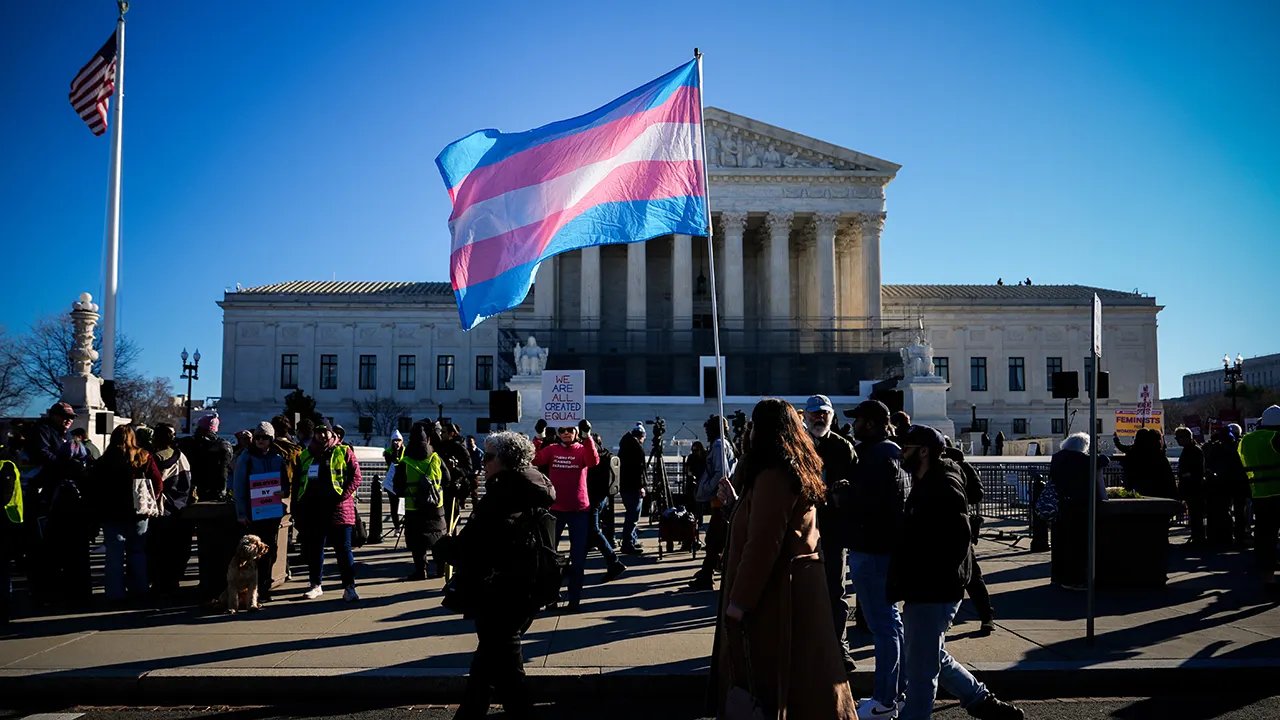
A protester carries a transgender pride flag outside the Supreme Court as it hears arguments over state laws barring transgender girls and women from playing on school athletic teams Tuesday, in Washington, D.C. (Julia Demaree Nikhinson/AP)
But lawyers for a high school sophomore and a college senior counter that those prohibitions are clearly discriminatory and that the issues should be about equality and dignity for every student, free from politics and misinformation.
The high court is examining whether the laws violate the Constitution’s equal protection clause and the landmark federal law Title IX that prohibits sex discrimination in education.
A majority of the court — at least five of the six conservatives — appeared ready to back the state restrictions in some form. Only Justice Neil Gorsuch seemed open to some of the arguments by the student plaintiffs.
In arguments, much of the discussion came down to whether the transgender student population was large enough to give them an opportunity to defend their rights as a protected class.
With an estimated 2.8 million people in the U.S. who identify as transgender, Justice Sonia Sotomayor said their rights should be respected, even if they represent a relatively small percentage of the population.
«The numbers don’t talk about the human beings,» Sotomayor said.
«I’m struggling to understand how you can say that this law doesn’t classify on the basis of transgender status,» said Justice Ketanji Brown Jackson. «The law expressly aims to ensure that transgender women can’t play on women’s sports teams. So, why is that not a classification on the basis of transgender status?»
TRANS ATHLETE AT CENTER OF SUPREME COURT CASE ACCUSED OF SEXUAL HARASSMENT, INTIMIDATION TACTICS AGAINST GIRLS
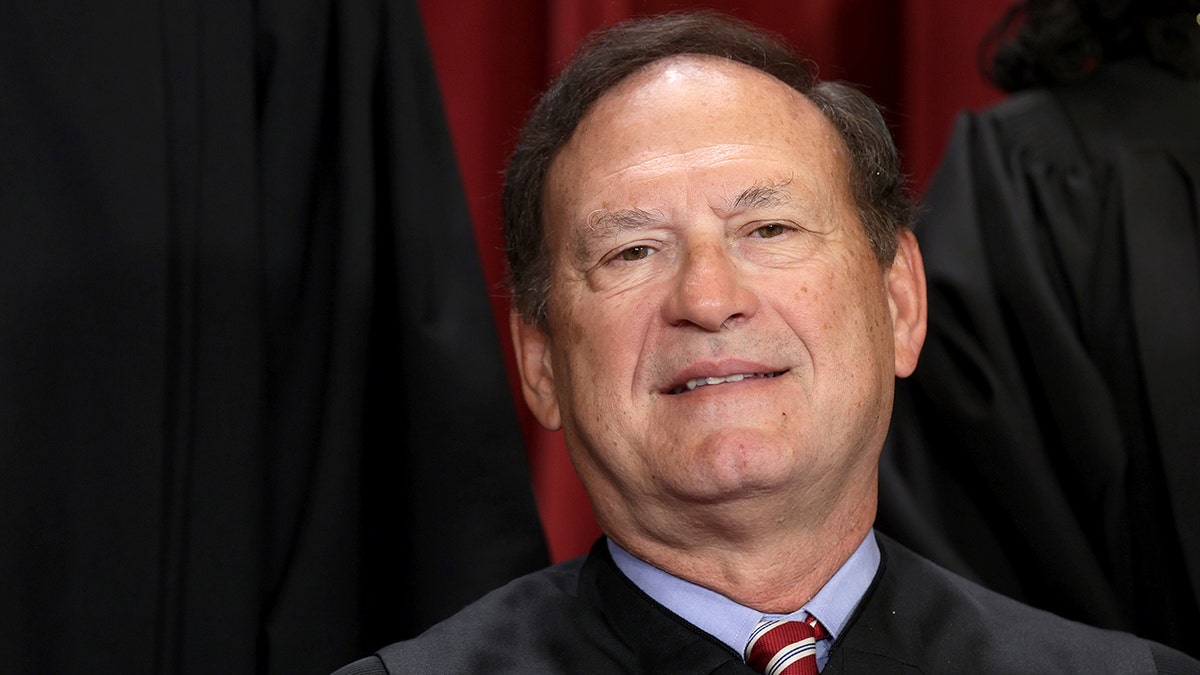
Supreme Court Associate Justice Samuel Alito said the reluctance of some female athletes to compete with and against transgender women is real. (Alex Wong/Getty Images)
But other members of the court suggested just the opposite.
«The question here is whether a sex-based classification is necessarily a transgender classification,» said Chief Justice John Roberts, skeptical of the position by lawyers for the student plaintiffs.
Roberts added that allowing exceptions for a relatively small subset of individuals could have larger implications.
«If we adopted that, that would have to apply across the board and not simply to the area of athletics,» he said.
The arguments also focused a great deal on the relative competitive advantages some transgender athletes would have competing in women’s sports.
Justice Samuel Alito said the reluctance of some female athletes to compete with and against transgender women is real.
«Looking to the broader issue that a lot of people are interested in, there are an awful lot of female athletes who are strongly opposed to participation by trans athletes in competitions with them,» said Alito. «What do you say about them? Are they bigots? Are they deluded in thinking they are subjected to unfair competition?»
«For the individual girl who does not make the team or doesn’t get on the stand for the medal or doesn’t make all-league, there’s a harm there,» said Justice Brett Kavanaugh, who for years coached his daughter’s basketball team. «And I think we can’t sweep that aside.»
He called the growing increase in female sports participation since Title IX was passed in 1972 «inspiring.»
Outside the courthouse, hundreds of activists groups on both sides rallied. Some carried signs like «protect women’s sports» and «trans rights are human rights.»
SUPREME COURT TO REVIEW STATE BANS ON TRANSGENDER ATHLETES’ PARTICIPATION IN SCHOOL SPORTS
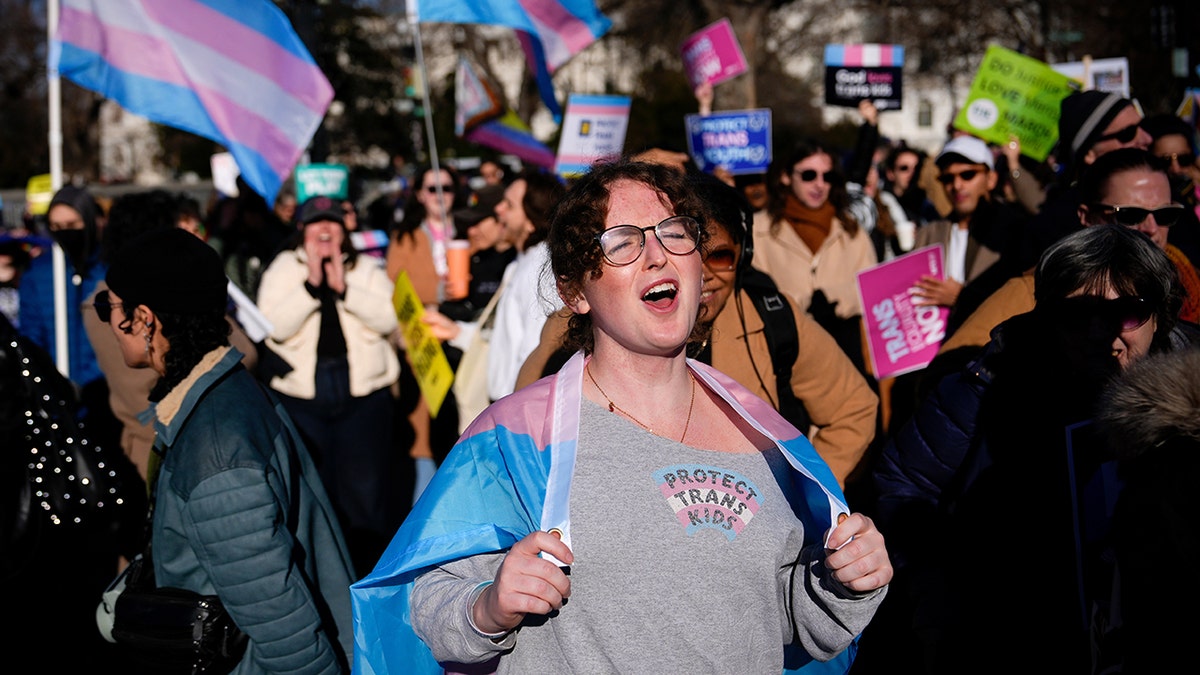
A protester with a transgender pride flag outside the Supreme Court as it hears arguments over state laws barring transgender athletes from playing on girls’ and women’s school athletic teams Tuesday, in Washington, D.C. (Julia Demaree Nikhinson/AP)
Inside, West Virginia plaintiff Becky Pepper-Jackson and her mother attended the oral arguments but did not speak.
This past year, Pepper-Jackson qualified for the West Virginia girls high school state track meet, finishing third in the discus throw and eighth in the shot put in the Class AAA division.
She has identified as female since third grade and has been taking puberty-blocking medication.
Although she is officially listed in court papers as B.P.J., her mother and ACLU lawyers have publicly identified her by Becky’s full name.
The Idaho plaintiff is Lindsay Hecox, a 24-year-old senior at Boise State University who wanted to compete on both NCAA-level and club sports teams for women.
Hecox now wants her high court case dismissed, fearing further harassment as she expects to graduate from college this spring. She says she will no longer play women’s sports in Idaho, but the justices will decide that question of mootness after argument.
Dozens of competing amicus, or supporting, legal briefs were filed by Republican- and Democratic-led states, Congress members, athletes, doctors, scientists and scholars.
The Trump administration was given argument time and said the federally-controlled Title IX does not apply to sex discrimination claims by transgender females.
Justice Department lawyer Hashim Mooppan suggested challenging a law on alleged sex-based discrimination requires a significant number of affected people to have it overturned.
«Why does it have to be that many people? Why? Why?» Justice Jackson asked, appearing exasperated.
Various hypotheticals were raised over how sex-based scholastic bans could apply beyond athletics, to science departments, chess clubs and remedial classes where brain chemistry and genetic differences have been debated.
«I think there are a lot of chess grandmasters who would tell you that women, for whatever reason, they’re not as good at this,» said Justice Elena Kagan.
President Donald Trump last February issued executive order 14201, «Keeping Men Out of Women’s Sports,» aimed at transgender athletes.
It is part of a broader federal effort to recognize what the White House says are «only two immutable sexes: male and female.»
WEST VIRGINIA AG ADDRESSES ALLEGATIONS AGAINST TRANS ATHLETE PLAINTIFF IN WOMEN’S SPORTS SCOTUS BATTLE
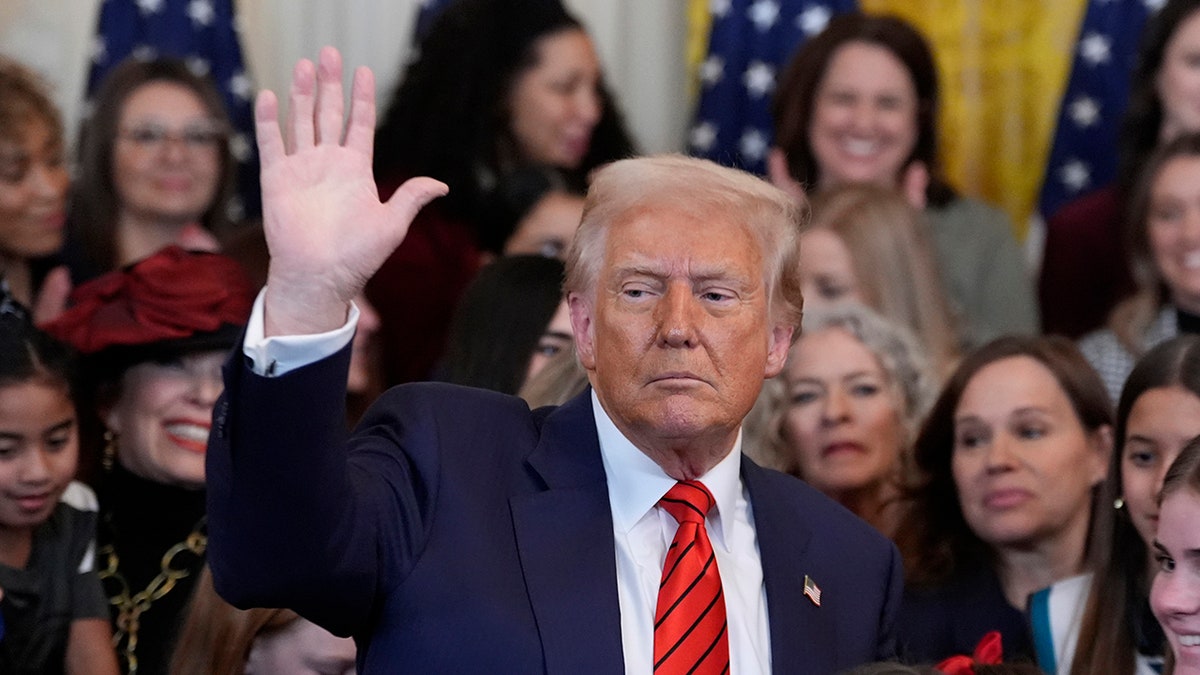
President Donald Trump waves after signing an executive order barring transgender female athletes from competing in women’s or girls’ sporting events, in the East Room of the White House Feb. 5, 2025, in Washington, D.C. (AP Photo/Alex Brandon)
What the court does here could affect other legal fights over LGBTQ+ rights, including transgender people having access to bathrooms or sex designation on documents like passports and driver’s licenses.
The justices have complete discretion to rule narrowly on the rights of athletic competitors or offer a more sweeping precedent on discrimination claims in the workplace, public spaces, military service, government benefits, housing, health care and education.
The Supreme Court in 2020 ruled workplace discrimination against transgender people amounts to sex discrimination.
But in June, the conservative court did not extend that protection to state bans on transgender minors seeking certain healthcare treatments.
The justices there said the issue was grounded on the basis of age and medical care, not sex or transgender status.
That legal articulation may now guide the high court in the current disputes, with questions from the bench Tuesday suggesting some justices may seek a cautious, limited approach to resolving this specific issue.
That could keep the courts out of the controversy for now.
CLICK HERE TO DOWNLOAD THE FOX NEWS APP
«Given that half the states are allowing it, allowing transgender girls and women to participate, about half are not,» Kavanaugh said. «Why would we, at this point, just the role of this court, jump in and try to constitutionalize a rule for the whole country while there’s still, as you say, uncertainty and debate.»
Such a ruling against the students would likely throw the issue back to the states, with the current mix of differing laws continuing to play out in the political process.
The high court cases are Little v. Hecox (24-38) from Idaho; and West Virginia v. B.P.J. (24-83). Decisions are expected by early summer.
politics,supreme court,supreme court oral arguments,federal judges,sports,ncaa,individual rights











INTERNACIONAL
Carrera contra reloj en territorio iraní: habrían rescatado a uno de los pilotos de un caza de EE.UU. derribado



INTERNACIONAL
Holocaust survivor, 86, priced out of NYC says Mamdani skipped scheduled housing meeting

NEWYou can now listen to Fox News articles!
As a toddler, Sami Steigmann survived Nazi medical experimentation. Now, at 86, he is struggling to find safe housing in New York City.
His situation comes as New York City residents face rising housing costs, despite campaign promises from city leaders to improve affordability
Steigmann, who has called New York City home since the 1980s, can no longer safely navigate his second-story apartment in Harlem. Earlier this year, he asked to have a one-on-one meeting with New York Mayor Zohran Mamdani, who ran on a platform centered on lowering housing costs. Although the meeting was scheduled, Steigmann says the 34-year-old mayor never kept the appointment.
«Promises made, not kept,» Steigmann told Fox News Digital. «His claim to fame was affordable housing. I’m not disappointed because I didn’t expect him to keep his word. It is what it is.»
DEMS WHO RAN ON AFFORDABILITY NOW FACE BACKLASH AS COSTS CLIMB
Sami Steigmann, 86, a Holocaust survivor, is struggling to find safe, affordable housing in New York City as costs continue to rise. (Angela Weiss/AFP/Getty Images)
«It would have been nice, but you know politicians,» he said with a smile.
He added that he was no longer interested in meeting with Mamdani.
Mamdani’s office did not respond to Fox News Digital’s request for comment.
For now, Steigmann said his focus is on finding a safe place to live as New York City’s costs continue to climb.
«New York is the most expensive city in the country, especially for independent living. Rent is about $6,000 a month for a one-bedroom apartment,» he said.
Steigmann, who lives on a fixed income of $1,649 per month, said he cannot afford an apartment that is both safe and accessible to public transportation.
The physical toll of his current living situation has only added to the challenge.
Born in 1939 in Romania, Steigmann was deported with his parents to a Nazi labor camp at about age 2. Too young to work, he was subjected to medical experimentation for at least three years before the camp was liberated.
«I was subjected to medical experiments, so I’m in pain every single second, but I learned to live with it. Now, because of my age, 86, I have difficulty walking and climbing stairs,» he said.
While relocating to a more affordable city may seem like an option, he said leaving New York is not a simple decision.
«I did not give it serious thought because here I have agencies that are helping me,» he said. «I don’t know what it would be like in other cities because I don’t have those connections there.»
FROM FREE BUSES TO CITY-OWNED GROCERY STORES, HERE ARE MAMDANI’S KEY ECONOMIC PROMISES
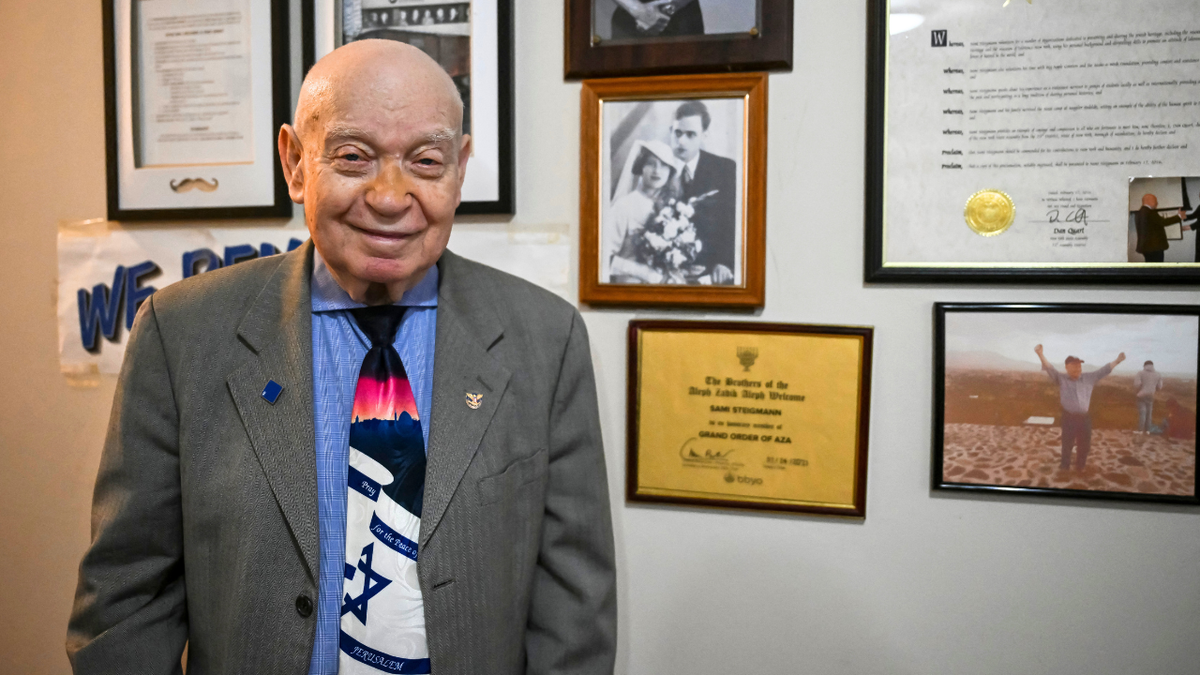
Steigmann faces a $2,200 monthly shortfall in rental costs. (Angela Weiss/AFP/Getty Images)
«I’m very safe here,» Steigmann said of his neighborhood, adding that his neighbors know him and watch his back.
He said a nursing home is a last resort he hopes to avoid.
«If I’m going to a nursing home, which I may have to go to if I cannot find something, basically, it’s the way to die because there is no life there.»
«It’s not for me. I’m still active. I don’t need assisted living in the sense that I can take a bath by myself. I can still do a lot of things,» he said.
Now, advocates are stepping in to help.
The Chicago Jewish Alliance recently launched «Project Ahava,» a fundraising initiative aimed at securing safe, stable housing for Steigmann as he struggles to remain independent in New York City.
Facing a roughly $2,200 monthly shortfall, the initiative aims to raise $132,000 to cover five years of housing. The group has so far raised about $18,000 for Steigmann.
«Sami has never asked for a dime, and he has given back to so many people. That’s just another reason why we wanted to give back to him and make sure that he has safe housing,» Susan Haggard, president of the Chicago Jewish Alliance, told Fox News Digital.
«And it’s important for him to stay in Manhattan where he is close to public transportation and still have that independence that is so important to him,» she added.
Maintaining that independence is key to his daily work and outreach.
CLICK HERE TO DOWNLOAD THE FOX NEWS APP

Holocaust survivor Sami Steigmann gives a salute while wearing his USS Intrepid volunteer uniform in New York City. (Courtesy of Sami Steigmann)
He spends his days volunteering aboard the aircraft carrier Intrepid, docked in New York City’s harbor, and speaking to school groups across the country about the Holocaust — a mission that has come to define his life.
«This is my life. Without it, there’s nothing for me, no reason to live,» he said.
new york city, zohran mamdani, housing, economy
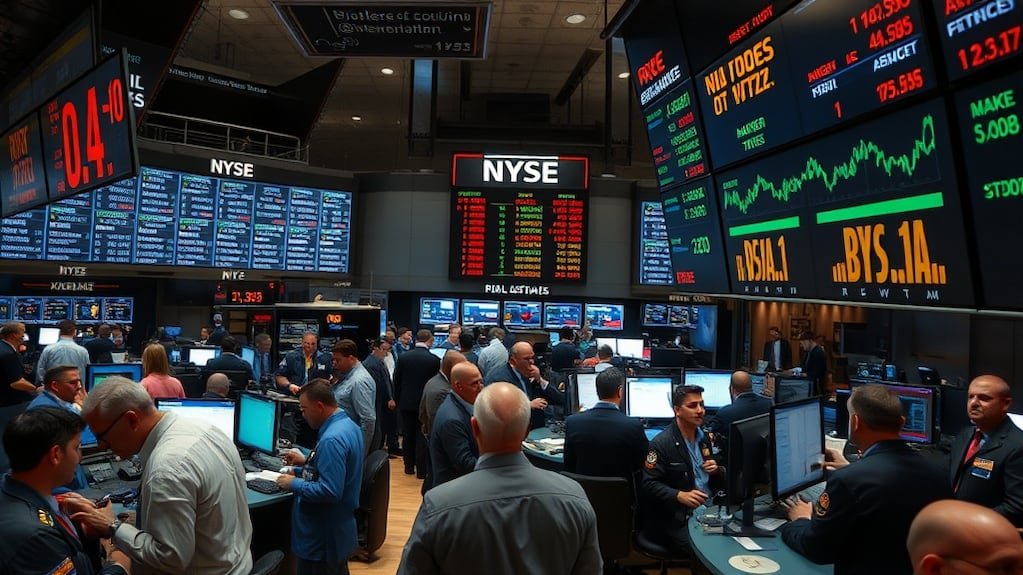
El precio del petróleo se disparó y las acciones se desplomaron el jueves después de que el presidente Donald Trump, en un discurso desde la Casa Blanca, dijo que la guerra contra Irán estaba “cerca de concluir”, pero no ofreció un calendario concreto y se comprometió a realizar más ataques.
En un discurso de 19 minutos pronunciado el miércoles por la noche, Trump dijo que las fuerzas estadounidenses golpearían a Irán “con extrema dureza en las próximas dos o tres semanas”. Los inversores que esperaban señales más claras de una desescalada del conflicto se sintieron decepcionados.
Leé también: Trump echó a la fiscal general de EE.UU. en medio de la polémica por la gestión del caso Epstein
La guerra, que ya ha entrado en su quinta semana, ha provocado una crisis energética que amenaza con elevar el costo de vida en los países ricos y privar a las regiones vulnerables de productos básicos como la electricidad y el combustible para cocinar.
Los precios del petróleo se disparan
- El precio del crudo Brent, la referencia mundial del petróleo, saltó a unos 108 dólares el barril para entrega en junio, un 7 por ciento más. El martes se situaba en 101,16 dólares.
- El crudo West Texas Intermediate, la referencia estadounidense, rondaba los 106 dólares el barril para entrega en mayo, un 6 por ciento más. El martes se situaba en 100,12 dólares.
- Los inversores y analistas han seguido enfocados en el estrecho de Ormuz desde que comenzaron los enfrentamientos hace más de un mes. La estrecha vía fluvial entre Irán y Omán es una ruta comercial vital para el petróleo y el gas natural, por la que normalmente fluye hasta una quinta parte del suministro mundial de petróleo.
Las acciones caen drásticamente
- Las bolsas de toda Asia, donde los países importan grandes cantidades de petróleo y gas, bajaron el jueves, invirtiendo la fuerte subida del día anterior. El Nikkei 225 de Japón descendió un 2,4 por ciento. Las acciones de Corea del Sur fueron las que peores resultados obtuvieron, con una caída del 4,5 por ciento.
- Las Futures del S&P 500 apuntaban a un descenso del 1,3 por ciento cuando se reanudaran las operaciones bursátiles en Estados Unidos el jueves. El S&P 500 subió 0,7 por ciento el miércoles.
- Los futuros del S&P 500 apuntaban a un descenso del 1,3 por ciento cuando se reanudaran las operaciones bursátiles en Estados Unidos el jueves. El S&P 500 subió 0,7 por ciento el miércoles.
- Las bolsas europeas bajaron el jueves. El Stoxx 600, un amplio índice europeo, y el DAX alemán cayeron más de 1 por ciento. El FTSE 100 británico cayó menos del 1 por ciento.
Los precios de la gasolina subieron
- Los precios de la gasolina en Estados Unidos volvieron a subir el jueves hasta una media nacional de 4,08 dólares el galón, según el club automovilístico AAA. El costo para los conductores ha subido un 37 por ciento desde que empezó la guerra.
- Los precios de la gasolina no se mueven al compás del crudo, sino que suelen ir unos días por detrás de las subidas o bajadas.
- Los precios del gasóleo han aumentado aún más rápidamente, llegando a 5,51 dólares el jueves, un 47 por ciento más desde el comienzo de la guerra.
Lo que dicen: una guerra prolongada podría obligar a un racionamiento ‘económicamente destructivo’
- Chris Wright, secretario de Energía de Estados Unidos, dijo en las redes sociales tras el discurso de Trump que el “trastorno a corto plazo de los mercados energéticos es temporal”.
- Los analistas de la industria energética han advertido que el impacto, especialmente en Asia, donde los países dependen en gran medida de las importaciones de petróleo y gas, podría durar mucho más que el fin de los combates. El tráfico marítimo que sale del golfo Pérsico a través del estrecho se ha interrumpido en la práctica desde que comenzó la guerra el 28 de febrero, y se han dañado infraestructuras energéticas cruciales. Restablecer un flujo constante de suministros llevará tiempo.
- La empresa de investigación Oxford Economics indicó en un informe publicado el miércoles que la guerra ya ha provocado un déficit del 10 por ciento entre la oferta y la demanda mundial de petróleo. Una guerra prolongada que corte aún más las fuentes de energía obligaría a los países a cambiar su forma de utilizar y producir energía, lo que daría lugar a un mayor uso del carbón y a trastornos en las cadenas de suministro de las economías emergentes.
- “Cuanto más dure la interrupción, más se desplazará el ajuste hacia el racionamiento, el resultado económicamente más destructivo”, decía el informe.
The New York Times, Donald Trump

Carrera contra reloj en territorio iraní: habrían rescatado a uno de los pilotos de un caza de EE.UU. derribado

Ni Barça ni Madrid: estas son las canteras más rentables del mundo

El Gobierno dispuso una recomensa de $20 millones por información sobre Apablaza, el exguerrillero chileno prófugo de la Justicia

Javier Milei envía millonarios fondos a gobernadores: busca apoyo en el Congreso

Anita Espasandín habló del polémico encuentro entre Benjamín Vicuña y Graciela Alfano en Punta del Este

La profunda reflexión del Cholo Simeone tras los cánticos racistas en el partido entre España y Egipto: “Es social y mundial”

Dos jubiladas que le habrían prestado dinero a Manuel Adorni negaron conocerlo

Quiénes son las dos acreedoras del préstamo con el que Adorni compró su departamento en Caballito

El Gobierno reevalúa la estrategia de comunicación por el caso Adorni y mide el impacto en la imagen de Milei

Milei se pone al frente de la defensa de Adorni y lo suma a un acto por Malvinas en una nueva muestra de respaldo

 POLITICA2 días ago
El Gobierno reevalúa la estrategia de comunicación por el caso Adorni y mide el impacto en la imagen de Milei
- POLITICA1 día ago
Milei se pone al frente de la defensa de Adorni y lo suma a un acto por Malvinas en una nueva muestra de respaldo
- CHIMENTOS24 horas ago
Oriana Sabatini sorprendió al elegir a una famosa como madrina de Gia, su hija con Paulo Dybala