INTERNACIONAL
Supreme Court kills Trump’s ‘Liberation Day’ tariffs — but 4 other laws could resurrect them

NEWYou can now listen to Fox News articles!
The Supreme Court rebuked President Trump’s use of the International Emergency Economic Powers Act to impose sweeping «Liberation Day» tariffs, ruling that the Constitution gives Congress — not the president — authority over tariffs.
But the decision may not be the final word. From the Trade Expansion Act to the Trade Act of 1974 and even Depression-era statutes, multiple legal avenues remain that could allow Trump to reassert aggressive trade powers.
In a 6-3 decision led by George W. Bush-appointed Chief Justice John Roberts, the court ruled that the «framers gave [tariff] power to Congress alone, notwithstanding the obvious foreign affairs implications of tariffs.»
George H.W. Bush-appointed Justice Clarence Thomas, Trump-appointed Justice Brett Kavanaugh and George W. Bush-appointed Justice Samuel Alito dissented.
SUPREME COURT PREPARES TO CONFRONT MONUMENTAL CASE OVER TRUMP EXECUTIVE POWER AND TARIFF AUTHORITY
A protester holds a sign as the U.S. Supreme Court hears arguments on President Trump’s tariffs on Wednesday, November 5, 2025. (Bill Clark/CQ-Roll Call, Inc via Getty Images)
On «Liberation Day» in 2025, Trump cited the International Emergency Economic Powers Act (IEEPA), drafted by former Rep. Jonathan Brewster-Bingham, D-N.Y., to declare an emergency situation in which foreign countries were «ripping off» the U.S.
With that avenue now closed by Roberts, Trump could try to use the same national security rationale to invoke the Trade Expansion Act of 1962, which in part allows the Commerce Department to impose tariffs on «article[s]… imported… in such quantities or under such circumstances as to threaten or impair the national security.»
Unlike the IEEPA, the JFK-era law has been tested in the courts, and Commerce Secretary Howard Lutnick has since built on his predecessor Wilbur Ross’ 2018 steel and aluminum tariffs imposed under the act, adding 407 more imports to the tariff list on the grounds that they are «derivative» of the two approved metals.
TRUMP’S OWN SCOTUS PICKS COULD WIND UP HURTING HIM ON TARIFFS

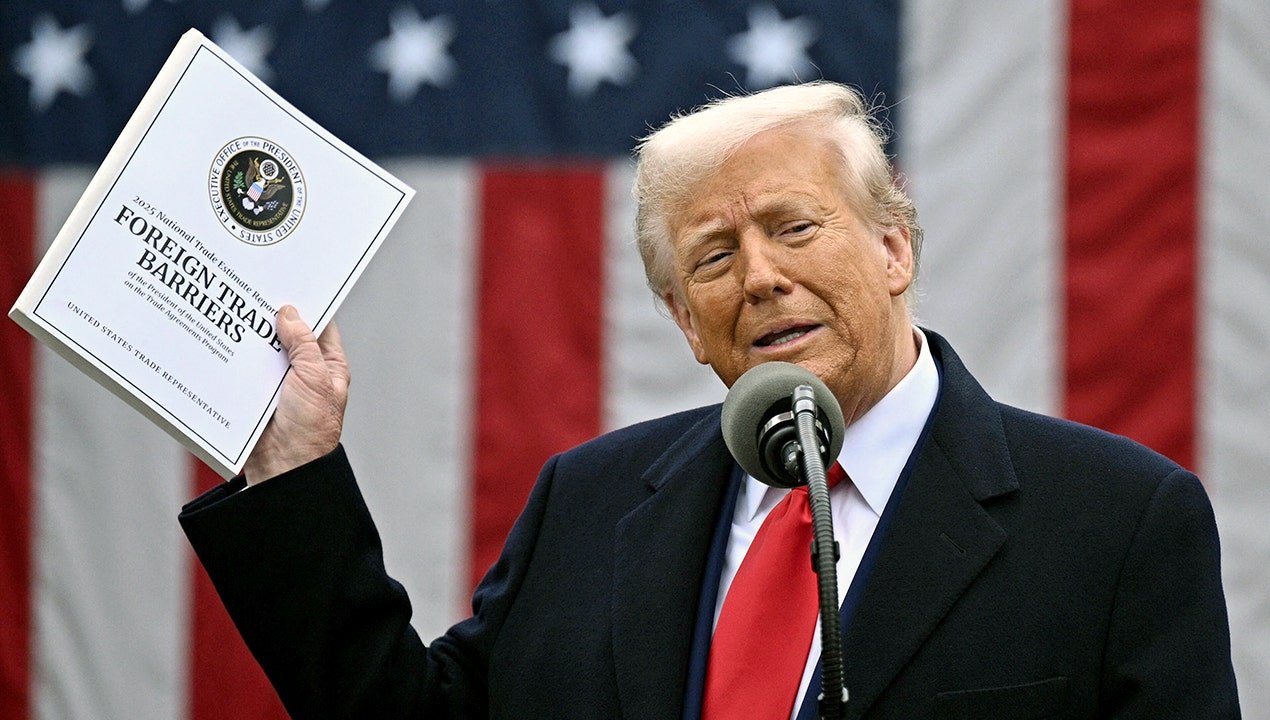
President Donald Trump shows off non-reciprocal tariff examples. (Mandel Ngan/Getty Images)
During his 2025 confirmation hearing, Lutnick voiced support for a «country by country, macro» approach to tariffs and agreed with the president that the U.S. is «treated horribly by the global trading environment.»
While tariffs imposed under Section 232 of the Trade Expansion Act are not immediate and require the Commerce Department to conduct a formal investigation, the law provides a court-tested avenue for the president.
In the wake of Friday’s ruling, Sen. Rand Paul, R-Ky., and others celebrated the court’s affirmation that Trump cannot use «emergency powers to enact taxes,» but Congress has previously approved another avenue to impose tariffs.
Then-Rep. Albert Ullman, D-Ore., crafted a bill signed by President Gerald Ford that expressly gave presidents broader authority to impose tariffs: the Trade Act of 1974.
A federal appeals court in September ruled against thousands of companies that challenged tariffs on China imposed under Section 301 of the Trade Act.
6 HOUSE REPUBLICANS DEFY TRUMP ON KEY AGENDA ITEM IN DEM-PUSHED VOTE
In this case, U.S. Trade Representative Jamieson Greer, a Trump appointee, could seek retaliatory tariffs against countries with unfair trade barriers, according to Global Policy Watch.
An investigation, including negotiations with the targeted countries, would then ensue, and Greer could ultimately be cleared to impose trade restrictions if the probe finds that the U.S. is being denied trade agreement benefits or that such a deal is unjustifiable.
However, in most cases, imposed tariffs sunset after four years, according to reports.
In Trump’s favor, it could be argued that the same reasoning Roberts used to strike down the IEEPA authority could backfire on tariff opponents because the 1974 law explicitly gives the executive branch trade-restriction authority.
Another section of the Ford-signed law could also be used to unilaterally impose tariffs.
Section 122, the «Balance of Payments» portion of the law, allows Trump to temporarily enforce tariffs or import quotas in certain situations.
A president may impose tariff duties of up to 15% for 150 days against all or certain countries if they are found to be «maintain[ing] unjustifiable or unreasonable restrictions on U.S. commerce,» according to the Retail Industry Leaders Association.
«This authority is intended to give the executive branch flexibility to respond quickly to trade practices that may harm U.S. economic interests or to correct significant balance-of-payments deficits,» the trade group said in a June report.
However, reports show Section 122 has not been tested in court as extensively, which could lead to lawsuits and legal uncertainty.
SUPREME COURT RULES ON TRUMP TARIFFS IN MAJOR TEST OF EXECUTIVE BRANCH POWERS
Another potential policy option for Trump is one that drew sharp criticism when President Herbert Hoover signed it against the advice of economists early in the Great Depression.
The Smoot-Hawley Tariff Act of 1930, named for Republican Sen. Reed Smoot of Utah and Rep. Willis Hawley of Oregon, imposed tariffs on tens of thousands of imports in hopes of protecting American producers facing dire economic conditions.
Hawley’s great-granddaughter, Carey Cezar of Baltimore, told NBC News in 2025 that she voted for Kamala Harris and opposed Trump’s tariffs after her ancestor’s name resurfaced in public discourse.
Other critics of Smoot-Hawley say it is a key reason the Depression was so dire and expansive.
However, the law still provides a mechanism for the Commerce Department to determine when a good is being «dumped» on U.S. consumers or whether a foreign country is unfairly subsidizing an export to the U.S., and to respond with tariffs.
Additionally, while Trump has imposed tariffs largely on a country-by-country basis, Smoot-Hawley requires that levies be applied on a product-by-product basis.
BESSENT WARNS OF ‘GIGANTIC LOSS’ IF SUPREME COURT STRIPS TRUMP’S EMERGENCY TARIFF POWERS
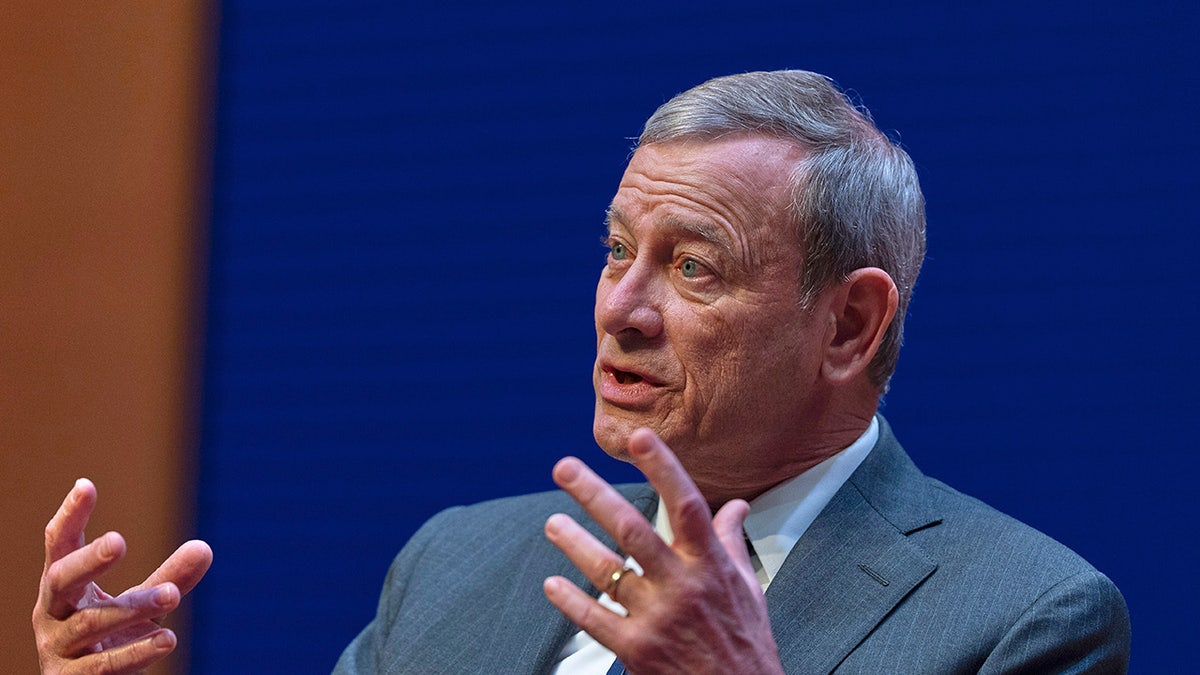
Chief Justice of the U.S. Supreme Court John Roberts speaks during a lecture to the Georgetown Law School graduating class of 2025, in Washington, May 12, 2025. (AP Photo/Manuel Balce Ceneta, File)
A fifth avenue that is largely unreachable by Trump is the Fordney-McCumber Tariff Act of 1922.
Sen. Porter McCumber, R-N.D., and Rep. Joseph Fordney, R-Mich., passed a bill allowing Republican President Warren Harding to impose much higher tariffs than were standard at the time, in hopes of protecting U.S. farmers from a sharp decline in revenue following World War I.
In one of the first contemporary rebukes of protectionism, Fordney-McCumber was criticized for permitting tariffs as high as 50% on countries, including allies, which opponents said had the unintended consequence of hurting America’s ability to service its war debts.
Fordney-McCumber was eventually superseded by Smoot-Hawley, and any remaining provisions are considered obsolete following the Reciprocal Trade Agreements Act, signed by President Franklin Roosevelt to undo some of Congress’ trade restrictions.
CLICK HERE TO DOWNLOAD THE FOX NEWS APP
The RTAA shifted tariff authority from Congress to the president, granting authority for bilateral negotiations aimed at lowering tariffs at the time.
That dynamic, often called «reciprocity,» is being used in the Trump era not to lower tariffs but to raise them.
donald trump,protectionism,supreme court,law,trade








INTERNACIONAL
Democrat darling Talarico called out for making sixth-grade public students write ‘Obama memoirs’
NEWYou can now listen to Fox News articles!
Democrat darling and Texas Senate candidate James Talarico is taking heat after it was discovered that, as a public school teacher in San Antonio, he made his sixth-grade students write «Obama memoirs» celebrating his election.
Corey DeAngelis, a school choice advocate and research fellow at the Heritage Foundation, called the assignment «disqualifying» for a Senate hopeful in Texas.
In a Facebook post by Talarico dated Nov. 13, 2012, he announced, «Today, we finished writing our Obama memoirs,» explaining that «students wrote a memoir of Election Night from the point of view of a member of the Obama family.»
One of the memoirs shared by Talarico showed one of his students writing as if they were former President Barack Obama’s child, saying, «I was crying when my father was giving his speech» and praising «those lovely words that came out of his mouth» during his election night speech.
DEMOCRAT RISING STAR CALLED OUT FOR ‘CREEPY’ COMMENT ABOUT TRANSGENDER CHILDREN
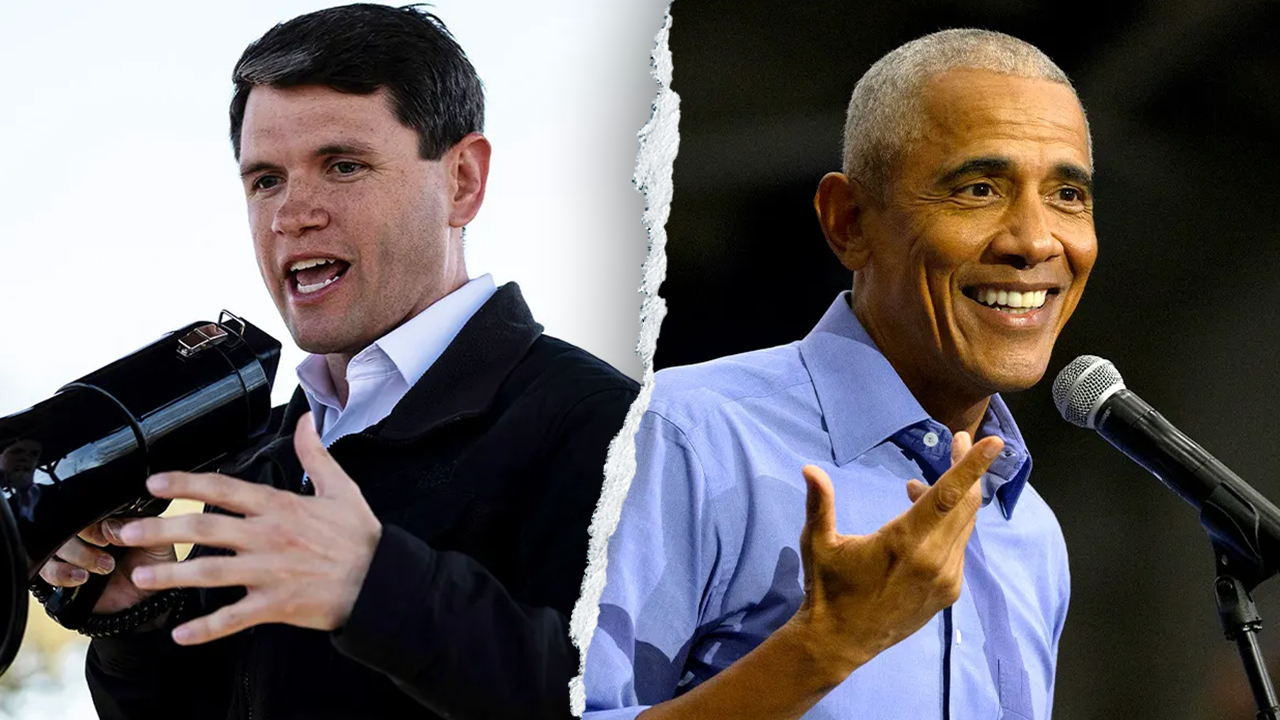
Texas Senate Democratic candidate James Talarico is taking heat for giving his sixth-grade students an «Obama memoir» assignment in 2012. (John Moore/Getty Images; Jeff Swensen/Getty Images)
The Democratic Party has high hopes that Talarico, a progressive state representative, can flip a critical Senate seat blue and become the first Democratic senator from Texas in decades. Since winning the party’s nomination, however, many have called out his history of progressive statements, including saying «God is nonbinary» and using the Bible to justify abortion.
In another Facebook post, dated Nov. 16, 2012, Talarico shared an image of a poster board full of Obama memoirs with a banner reading «Mr. Talarico’s Wall of Fame.» The display featured more than a dozen memoirs along with photos of Obama and his family, as well as presidential seals and Obama’s campaign emblem. Talarico commented, «Our Wall of Fame has been updated with our awesome Obama Family Memoirs!»
The Obama memoirs are not the only posts from Talarico’s teacher account drawing criticism. Some have also taken issue with a Sept. 14, 2011, post depicting a classroom «free thinker» display. Among the figures labeled as free thinkers were Obama, Bill Gates, Supreme Court Justice Sonia Sotomayor and Housing and Urban Development Secretary Julián Castro.
LEGALIZE PROSTITUTION EFFORT LEFT CANDIDATE ‘SHOCKED’ IN BLUE STATE WITH RAMPANT HUMAN TRAFFICKING
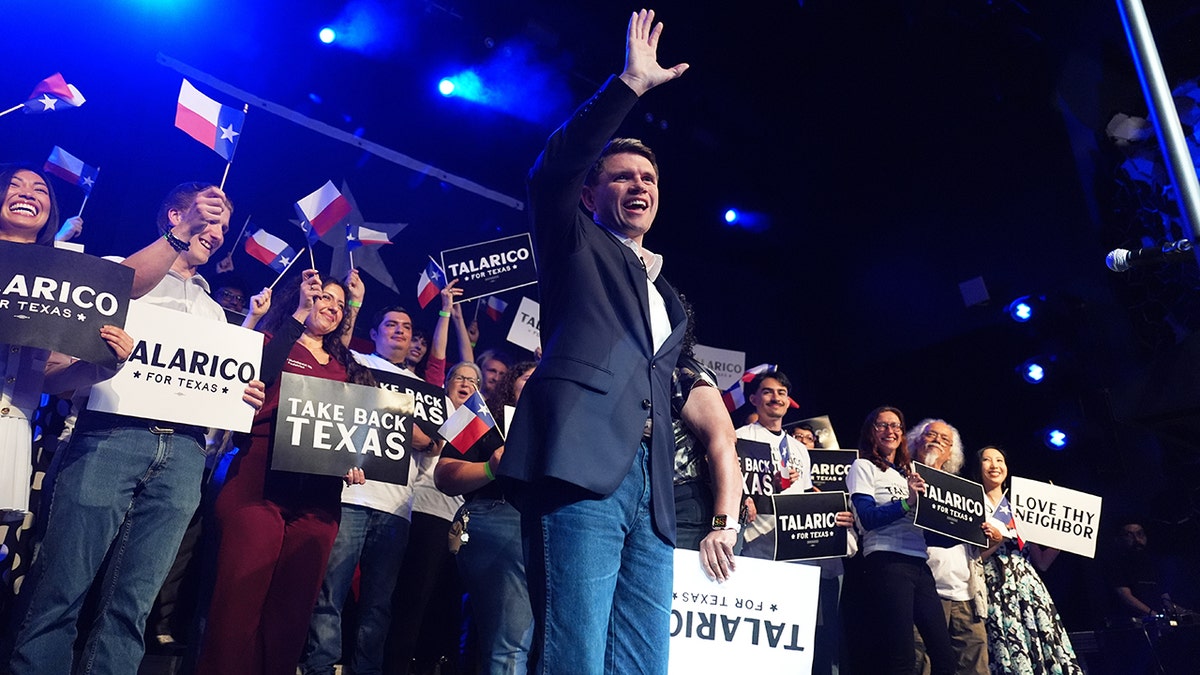
Texas Democratic Senate candidate and Texas state Rep. James Talarico, D-Austin, waves before speaking for the first time since winning the Democratic nomination in Austin, Wednesday, March 4, 2026. (Eric Gay/AP Photo)
Other figures included in the display ranged from Ludwig van Beethoven to Frida Kahlo to Jay-Z. Harry Potter author J.K. Rowling was also included. Not included, however, were any Republican or conservative leaders.
Some have also criticized Talarico for a Sept. 4, 2012, post in which he encourages students to watch the Democratic National Convention to see Castro, a former mayor of San Antonio, give the keynote speech.
DEMOCRAT RISING STAR CALLED OUT FOR ‘CREEPY’ COMMENT ABOUT TRANSGENDER CHILDREN
Conservative commentator Steve Guest slammed Talarico for this, writing on X, «What Talarico was doing as an ‘educator.’»
The National Republican Senatorial Committee also chimed in, writing, «James Talarico made his public school students write ‘Obama memoirs’ and encouraged them to watch the DNC What else was he telling Texas kids in his classroom?»
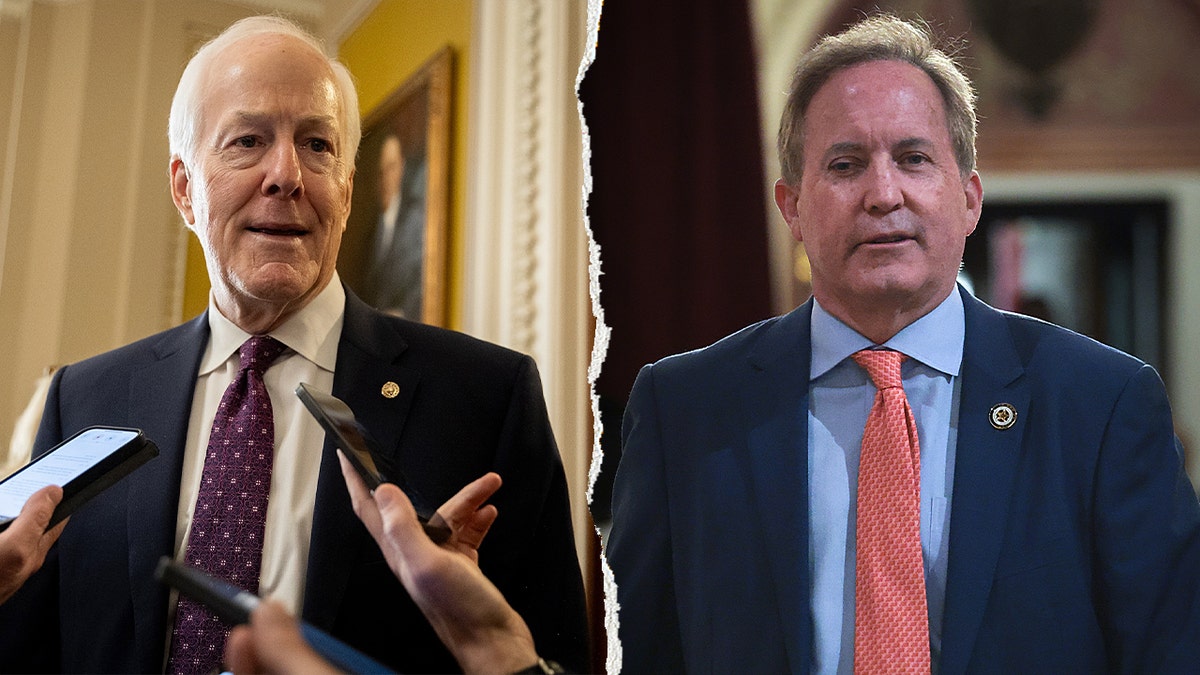
Texas Attorney General Ken Paxton and his bitter rival, Sen. John Cornyn, R-Texas, are heading to a runoff in Texas, further extending their bloody primary battle until late May. (Photo by Nathan Posner/Anadolu via Getty Images; Photo by Anna Moneymaker/Getty Images)
CLICK HERE TO DOWNLOAD THE FOX NEWS APP
A Talarico spokesman responded to conservative critics in a statement to Fox News Digital.
«John Cornyn, Ken Paxton, and the billionaires who prop them up are scared of James Talarico for good reason: our campaign is building a movement poised to change the politics of this state and take power back for working people,» press secretary JT Ennis said. «While they spend their time lobbing stale attacks to mislead Texans, we are uniting the people of Texas to win in November.»
Talarico will be facing off against either incumbent Sen. John Cornyn, R-Texas, or state Attorney General Ken Paxton this November. Cornyn and Paxton are currently locked in a bitter primary runoff that will come to a head this May.
democratic party,senate elections,elections,midterm elections,texas
INTERNACIONAL
Cuba excarceló a 14 presos políticos en medio de presiones internacionales y críticas por falta de transparencia
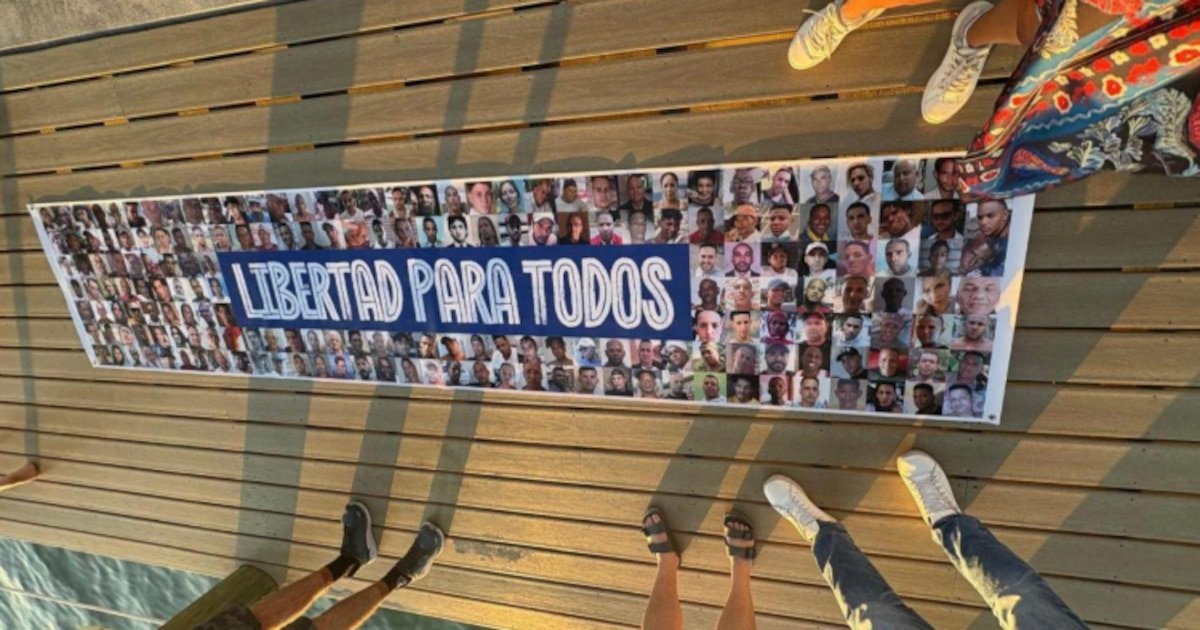
La ONG Prisoners Defenders elevó a 14 la cifra de presos por motivos políticos excarcelados en Cuba, tras el anuncio del régimen de la isla sobre el inicio de un proceso para liberar a 51 reclusos.
Estas primeras excarcelaciones se produjeron en coincidencia con la confirmación del diálogo entre autoridades cubanas y representantes de la administración estadounidense.
14 personas encarceladas por motivos políticos fueron excarceladas en Cuba tras el anuncio oficial de un proceso para liberar a 51 reclusos. Según Prisoners Defenders, los excarcelados no son opositores de alto perfil, sino ciudadanos que participaron en las protestas del 11 de julio de 2021.

Entre ellos figura Adael Jesús Leyva Díaz, de 29 años, quien cumplía una condena de 13 años por sedición. “Feliz, contento de estar con la familia”, expresó a EFE tras regresar a su hogar en el barrio habanero de Arroyo Naranjo, luego de salir del presidio de trabajos forzados Zona 0 del Combinado del Este.
Leyva Díaz explicó que debe buscar empleo para sostener a sus hijos y cuidar a su madre, y que la excarcelación no implica el fin de su condena, sino un beneficio condicionado al cumplimiento de requisitos.
Prisoners Defenders detalló que las excarcelaciones no constituyen indultos. Son permisos temporales bajo vigilancia y con el compromiso de mantener buena conducta hasta completar la pena.
El informe mensual de la organización reporta que Cuba cerró febrero con 1.214 personas encarceladas por motivos políticos, el mayor registro desde el inicio del monitoreo penitenciario de la organización.

Los beneficiados tienen entre 26 y 52 años, todos varones, y recibieron condenas de entre 9 y 14 años por delitos como atentado, desacato, desórdenes públicos, sabotaje y sedición.
Amnistía Internacional denunció el uso de los presos políticos “como fichas de cambio en un juego político” y exigió la liberación “inmediata e incondicional” de todas las personas encarceladas por motivos políticos en Cuba. Justicia 11J consideró que “la única solución compatible con los derechos humanos es la liberación plena e incondicional de todas las personas encarceladas por motivos políticos”.
Las excarcelaciones en Cuba han tenido precedentes tras gestiones diplomáticas, muchas veces con la mediación del Vaticano.
El canciller del régimen cubano, Bruno Rodríguez, mantuvo una reunión el 28 de febrero en el Vaticano con el papa León XIV y el cardenal Pietro Parolin, secretario de Estado.

Ocho días antes, el embajador estadounidense en Cuba, Mike Hammer, visitó Roma y dialogó con el secretario vaticano para las Relaciones con los Estados, Paul Richard Gallagher.

La última excarcelación masiva de presos en la isla ocurrió en enero de 2025, cuando 553 personas recuperaron la libertad en el marco de un acuerdo con la administración estadounidense del ex mandatario Joe Biden, facilitado por la mediación del Vaticano.
En ese entonces, la Casa Blanca retiró a Cuba de la lista de países patrocinadores del terrorismo. Tras la llegada de Donald Trump a la presidencia de Estados Unidos, el acercamiento diplomático se interrumpió y Washington reincorporó a Cuba en la lista negra.

El presidente de la ONG, Javier Larrondo, señaló a Infobae que “la represión sigue siendo una constante frente a cualquier expresión de descontento”.

“Estas cifras reflejan una realidad preocupante: la criminalización absoluta de la libertad de expresión y la persecución de quienes reclaman cambios políticos en Cuba a manos de un régimen criminal de lesa humanidad en sus últimos estertores, cuya única herramienta de control del poder es la represión más inhumana”, resaltó.
(Con información de EFE)
libertad,derechos humanos,protesta,banner,activismo,justicia,manifestación,rostros
INTERNACIONAL
La guerra en Medio Oriente redujo el tránsito por el Estrecho de Ormuz a 77 barcos en marzo
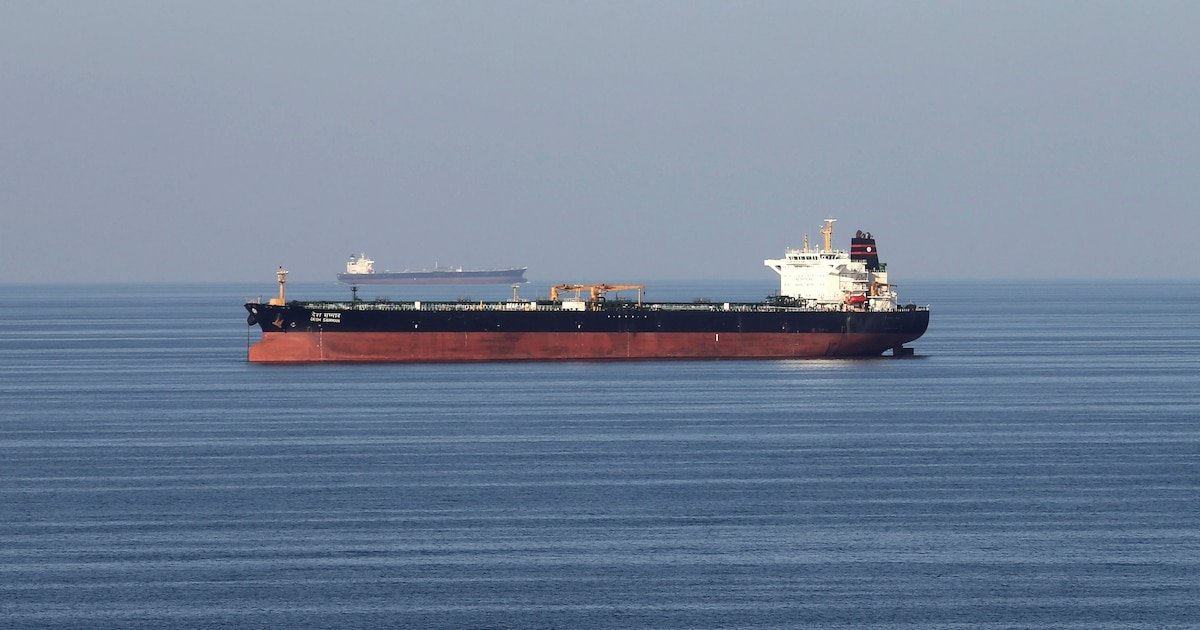
Sólo 77 barcos atravesaron el Estrecho de Ormuz en marzo, una cifra muy inferior a los 1.229 tránsitos registrados en el mismo período del año anterior, según datos de Lloyd’s List Intelligence.
La guerra en Medio Oriente provoca una fuerte caída en el paso de embarcaciones por una de las vías marítimas más relevantes para el transporte de energía a nivel mundial.
De acuerdo con Lloyd’s List Intelligence, la mayoría de los buques que lograron cruzar pertenecen a la denominada flota fantasma, integrada por barcos antiguos, con condiciones deficientes, sin seguro adecuado y propietarios poco identificables, generalmente asociados a Rusia e Irán.
La consultora marítima precisó que los buques vinculados al régimen iraní representan el 26% del tráfico en la zona, seguidos por embarcaciones de Grecia con el 13% y de China con el 12%.
“Más de la mitad de los buques cisterna y gaseros que transitan por la zona son flotas paralelas”, afirmó Bridget Diakun, analista senior de Lloyd’s List Intelligence. “Estos barcos están muy acostumbrados a las interrupciones”, añadió Diakun, y sostuvo que por ese motivo “es más probable que intenten la travesía”.

El Cuerpo de la Guardia Revolucionaria Islámica (CGRI) del país persa mantiene prácticamente cerrado el estrecho, que limita con Irán y por donde circula aproximadamente el 20% del suministro mundial de petróleo. Desde comienzos de mes, 20 buques comerciales —nueve de ellos petroleros— fueron atacados o sufrieron incidentes, de acuerdo con la Agencia Británica de Operaciones de Comercio Marítimo. La Organización Marítima Internacional confirmó 16 incidentes en la región, de los cuales ocho involucran a petroleros.
El nuevo líder supremo de Irán, Mojtaba Khamenei, manifestó el jueves: “Sin duda alguna, hay que recurrir al bloqueo del estrecho de Ormuz”. Esta decisión pretende afectar la economía global y ejercer presión sobre Estados Unidos. Según Diakun, “la principal conclusión es que… Irán sigue exportando”.
Por otra parte, la agencia de noticias AFP contabilizó cerca de 40 embarcaciones que cruzaron el Estrecho de Ormuz desde el inicio del conflicto, tomando en cuenta solo aquellos buques que mantuvieron encendidos sus transpondedores AIS, el sistema de identificación automática.
El jefe de asuntos humanitarios de las Naciones Unidas, Tom Fletcher, exigió el viernes que se autorice el tránsito seguro de ayuda humanitaria a través del estrecho, afectado por las interrupciones en el tráfico marítimo durante el conflicto.

“Se debe permitir el paso seguro de la ayuda humanitaria a través del estrecho de Ormuz”, afirmó Fletcher en un comunicado, y advirtió que “millones de personas corren peligro” si continúan las restricciones.
Un buque de propiedad turca logró atravesar la zona con autorización de las autoridades iraníes, informó el viernes el ministro de Transportes de Turquía, Abdulkadir Uraloglu. “Tenemos 15 buques de propiedad turca en el estrecho de Ormuz y pudimos permitir el paso de uno de ellos tras obtener el permiso de las autoridades iraníes”, declaró Uraloglu a periodistas el jueves por la noche, según declaraciones difundidas el viernes.
El estrecho de Ormuz constituye una ruta marítima central para el comercio global y permanece cerrado por decisión de Irán tras el ataque de Israel y Estados Unidos el 28 de febrero.
A su vez, la angustia de los marineros que esperan pasar por la zona en conflixto se apoderó de las redes sociales. “Todos los días en el barco veo lanzamientos de misiles y oigo explosiones, lo que me hace sentir en peligro”.
Así describió Wang Shang, marinero chino de 32 años, la situación en la que permanece varado en el Golfo Pérsico. Su embarcación se encuentra imposibilitada de cruzar el estrecho de Ormuz, bloqueado desde hace casi dos semanas después de los ataques de Estados Unidos e Israel contra Irán.
Wang Shang relató sus experiencias a través de vídeos publicados en Douyin, la versión china de TikTok. “Estoy preocupado porque ayer la sala de máquinas de un buque fue alcanzada por un dron iraní a solo dos millas náuticas de mi embarcación, aproximadamente a 3.600 metros, lo cual es muy cerca”, expresó Wang.
(Con información de AFP)
Crime,Government / Politics,Military Conflicts

Avanza la agricultura espacial: científicos logran cultivar garbanzos en suelo lunar simulado

El discurso del oficialismo, dañado por cuenta propia y con prueba económica en continuado

Democrat darling Talarico called out for making sixth-grade public students write ‘Obama memoirs’

Inflación esperada para marzo y abril: qué opinan los economistas

BOMBAZO – Guerra abierta: Feinmann y Rossi contraatacan tras la denuncia de Victoria Villarruel

Javier Milei y sus medidas, EN VIVO: tras reunirse con el líder de Vox en España, el Presidente habla hoy en el Madrid Economic Forum

Muni Seligmann respondió las críticas tras el accidente de su bebé y su viaje a Miami: “Hay que contarlo y naturalizarlo”

El ex novio de Luana de Gran Hermano reveló información sensible sobre su relación: “El bolso tenía plata”

Sorpresa en Gran Hermano tras la expulsión de Carmiña: la reacción de la producción y las dudas sobre su reemplazo

Emanuel Noir, de Ke Personajes, anunció que dejará las redes sociales: “Una búsqueda mayor a la que creí, apareció”

 CHIMENTOS2 días ago
El ex novio de Luana de Gran Hermano reveló información sensible sobre su relación: “El bolso tenía plata”
- CHIMENTOS2 días ago
Sorpresa en Gran Hermano tras la expulsión de Carmiña: la reacción de la producción y las dudas sobre su reemplazo
- CHIMENTOS2 días ago
Emanuel Noir, de Ke Personajes, anunció que dejará las redes sociales: “Una búsqueda mayor a la que creí, apareció”