INTERNACIONAL
Supreme Court skeptical of ‘conversion therapy’ law banning treatment of minors with gender identity issues

NEWYou can now listen to Fox News articles!
The Supreme Court on Tuesday appeared ready to strike down Colorado’s ban on mental health professionals providing so-called «conversion therapy» to minors with gender identity or sexual orientation issues, an important First Amendment case laced with sharp political and social undertones.
Licensed counselor Kaley Chiles says the legislation violates her free speech rights and infringes on her free exercise of religion and that of her clients by censoring and prohibiting certain private client-counselor conversations.
About two dozen states and Washington, DC have laws similar to Colorado’s.
The state says it acted to regulate professional conduct, «based on overwhelming evidence that efforts to change a child’s sexual orientation or gender identity are unsafe and ineffective.»
SUPREME COURT HEARS IF FAITH-BASED COUNSELING ON GENDER IDENTITY IS PROTECTED SPEECH
A general view of the the Supreme Court building on Friday, June 27, 2025. (AP Photo/J. Scott Applewhite, File)
During a brisk 90 minutes of oral arguments, the court’s 6-3 conservative majority appeared supportive of Chiles’ claims.
Several conservative members of the bench suggested the Colorado law created a double standard that Justice Samuel Alito said may amount to «viewpoint discrimination.»
«Let’s say that you have some medical experts that think gender-affirming care should be — is dangerous to children and some that say that this kind of conversion talk therapy is dangerous,» said Justice Amy Coney Barrett. «Can a state pick a side?»
But other justices appeared to agree with the state, which cited what it claims is the consensus of mental health professionals that verbal-based conversion therapy has shown to be ineffective.
«There are studies that say that this advice does harm the people emotionally and physically,» said Justice Sonia Sotomayor.
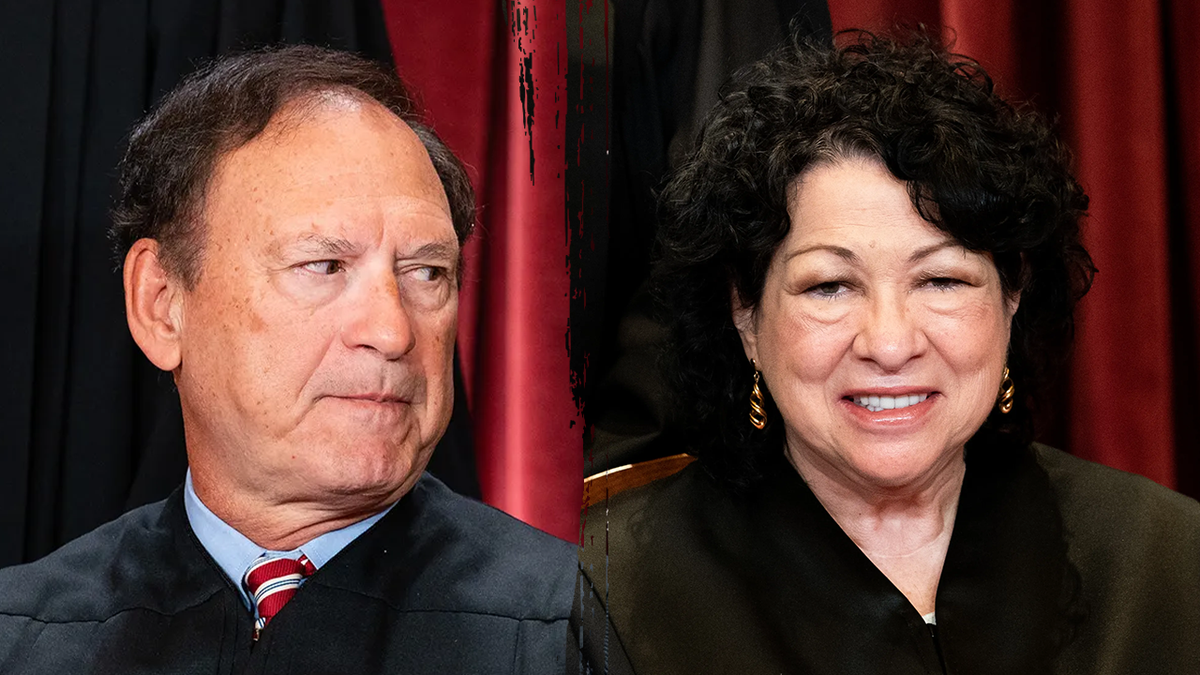
Justice Samuel Alito (left) suggested Colorado’s law may amount to «viewpoint discrimination. Justice Sonia Sotomayor (right) noted some studies have found that so-called «conversion therapy» for LGBTQ+ individuals may have harmful effects on people. (Getty Images)
Justice Brett Kavanaugh and Chief Justice John Roberts could be the key to deciding the case, over whether regulation of «talk therapy» can be treated the same as medical practices.
Roberts cited previous high court precedent that did not distinguish professional speech.
«Just because they’re engaged in conduct doesn’t mean that their words aren’t protected,» said Roberts.
Among the issues the nine justices confronted were whether the state law properly distinguishes speech versus conduct, and the professional speech limits of licensed mental health therapists.
Chiles’ lawyers describe her as «a practicing Christian [who] believes that people flourish when they live consistently with God’s design, including their biological sex.»
FORMER ATTORNEY GENERAL ERIC HOLDER CALLS ON DEMOCRATS TO FOCUS ON SUPREME COURT EXPANSION, TERM LIMITS
She said she uses «faith-informed» counseling to engage in talk therapy with young people who are «seeking to reduce or eliminate unwanted sexual attractions, change sexual behaviors, or grow in the experience of harmony with one’s physical body.»
But Chiles’s lawyers say she does not «seek to ‘cure’ clients of same-sex attractions or to ‘change’ clients’ sexual orientation.»
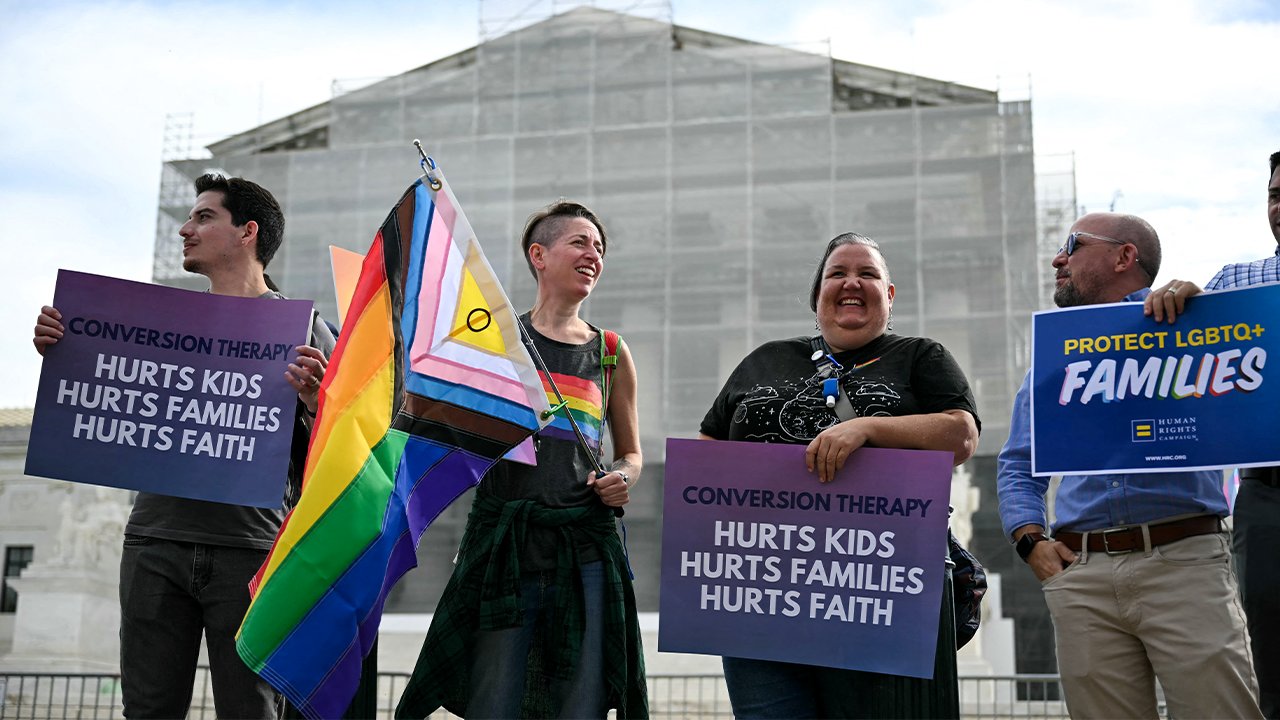
A small group of demonstrators gathered outside the court to support the Colorado law. The group representing Chiles canceled its rally over safety concerns.
Both Chiles’ lawyer and the Colorado solicitor general offered sharply different views in the courtroom on whether previous studies on conversion therapy showed its ineffectiveness.
Colorado says there is a «mountain of evidence» that it is, and that major medical associations have found it leads to depression, anxiety and suicidal thoughts.
But Chiles argues there are no studies indicating conversion therapy is harmful, and that other studies are fundamentally flawed.
«States should not manipulate private conversations between licensed professionals and clients,» James Campbell, Chiles’ attorney, told the bench.
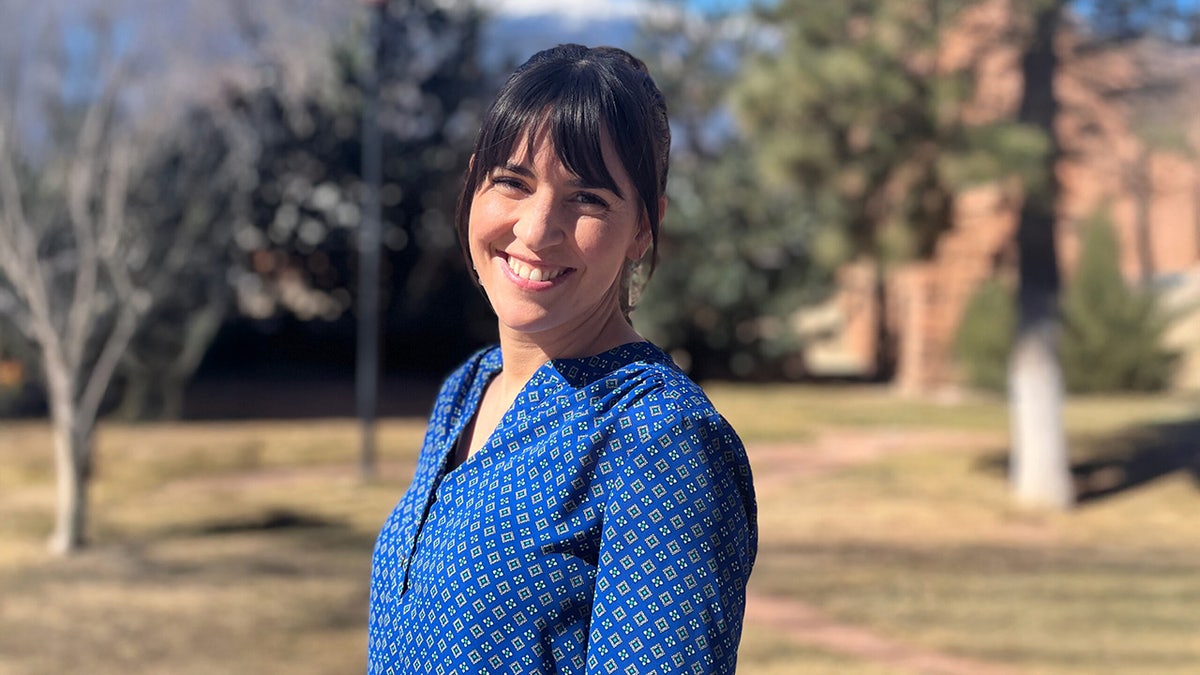
Kaley Chiles, plaintiff in Chiles v. Salazar (Alliance Defending Freedom press release) (Alliance Defending Freedom, press release)
A majority on the court appeared to agree.
Justice Elena Kagan posed a hypothetical where two different doctors treat someone who believes they are gay — one who tells the patient to change, the other to accept it.
«And one of those is permissible, and the other is not?» Kagan asked. «That seems like viewpoint discrimination in the way we would normally understand viewpoint discrimination.»
When Colorado Solicitor General Shannon Stevenson said the core issue was about preserving the best medical practice over what therapists can tell patients, rather than freedom of speech, Alito stepped in.
«There have been times when the medical consensus has been politicized, has been taken over by ideology,» said Alito. «Once, was there a time when many medical professionals thought that certain people should not be permitted to procreate because they had low IQ?» he asked.
The Trump administration’s Justice Department told the court the law creates a «muzzling» double standard — forbidding her from helping people accept their assigned sex at birth, while allowing other therapists to support young people who may want to accept their homosexuality or transition to another gender.
Some on the bench questioned whether talk therapy amounted to — or should be treated differently than — medical care.
«I’m still just struggling with whether a therapist who is acting in their professional capacity to help someone achieve their goals is really expressing the kind of message or expressing a message for First Amendment purposes,» said Justice Ketanji Brown Jackson.
TRUMP’S PRESIDENCY FACES CRUCIAL TESTS AS SUPREME COURT BEGINS PIVOTAL TERM
«It’s just a little puzzling to me that she would stand in a different position than a medical professional who has exactly the same goals, exactly the same interests, and would just be prescribing medication for that rather than her talking with the client. «
Stevenson argued there has been a long history of states regulating therapists.
«The harms from conversion therapy come from when you tell a young person you can change this innate thing about yourself,» said Stevenson. «And they try, and they try, and they fail, and then they have shame, and they’re miserable. And then it ruins their relationships with their family.»
The American Psychiatric Association 55 years ago ceased classifying homosexuality as a mental illness.
Chiles attended the oral arguments and afterward told Fox News, «I view my work as an outpouring of my faith. I want what is best for my clients, and often they seek me out because we have a shared faith.»
«Struggling kids benefit from access to voluntary counseling, conversations that help them as they seek wholeness and gaining peace with their bodies,» added Chiles. «They deserve better than Colorado’s one-size-fits-all approach.»
The Court in recent years has confronted a range of LGBTQ+-related appeals.
In June, the conservative majority upheld a Tennessee law that bans certain medical treatment for transgender teens.
A separate ruling allowed parents to exempt their children from school story time with LGBTQ-themed books that were at odds with their religious convictions.
The court later this term will consider state laws that prohibit transgender athletes from participating in girls’ and women’s sports teams.
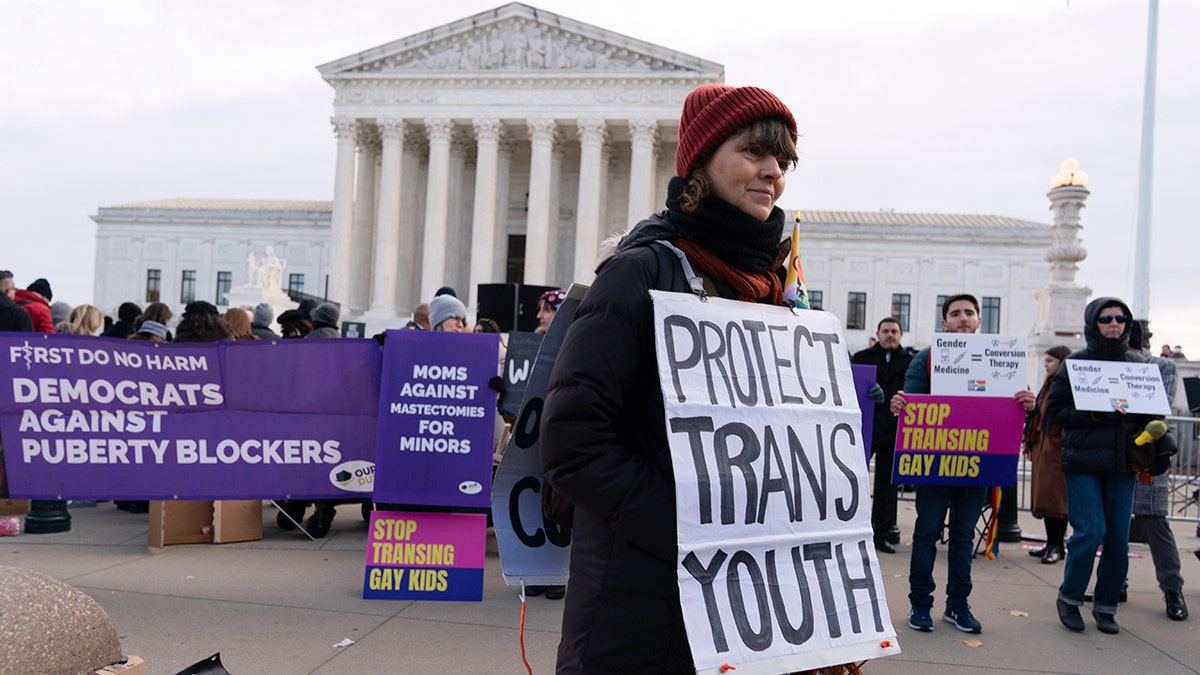
Protesters for and against gender-affirming care for transgender minors demonstrate outside the Supreme Court on Dec. 4, 2024, in Washington. (Jose Luis Magana/Associated Press file)
The Colorado case has become a political and social touchstone. 187 House and Senate Democrats, along with major medical and mental health officials are supporting the challenged law.
Groups backing Chiles include the Trump Justice Department, Association of Certified Biblical Counselors and the Family Research Council.
The debate has sparked political divisions at the national level.
A 2015 report by the Obama Health and Human Services Department concluded conversion therapy for young people should be stopped.
«There is limited research on conversion therapy efforts among children and adolescents,» said the federal Substance Abuse and Mental Health Services Administration (SAMHSA) said in its report. «However, none of the existing research supports the premise that mental or behavioral health interventions can alter gender identity or sexual orientation.»
CLICK HERE TO GET THE FOX NEWS APP
The DHS website now has a disclaimer saying the ten-year-old report is publicly available by court order, but adds, «Any information on this page promoting gender ideology is extremely inaccurate and disconnected from truth… This page does not reflect reality and, therefore, the Administration and this Department reject it.»
The current court case is Chiles v. Salazar (24-539). A ruling is expected by early summer 2026.
supreme court oral arguments,supreme court,health care healthy living,health care executive,colorado,first amendment







Panamá anunció que Venezuela aprobó la extradición del principal sospechoso del atentado contra el vuelo 901 de Alas Chiricanas, un paso que reactiva, fortalece y acelera un proceso judicial que llevaba más de tres décadas en espera.
La decisión permite que el requerido enfrente a la justicia panameña, luego de que las autoridades confirmaran que el procedimiento avanzó por los canales diplomáticos establecidos entre ambos países.
Este hecho marca un punto de inflexión en una investigación que ha sido compleja, prolongada y seguida de cerca por familiares de las víctimas y gobiernos involucrados.
El Ministerio de Relaciones Exteriores informó que la solicitud de extradición fue formalmente presentada por Panamá en enero de 2026 y posteriormente evaluada por las autoridades venezolanas, que finalmente dieron su aprobación.
El sospechoso, identificado como Ali Zaki Hage Jalil, había sido detenido previamente en Venezuela tras una alerta internacional emitida por Panamá. Su condición de nacional colombiano por nacimiento y venezolano por naturalización generó obstáculos jurídicos, debido a las limitaciones legales que existen en ese país para extraditar a sus ciudadanos, lo que hizo más delicado y prolongado el proceso.

El atentado contra el vuelo 901 de Alas Chiricanas ocurrió el 19 de julio de 1994, cuando una bomba explotó a bordo de la aeronave poco después de despegar desde el aeropuerto France Field, en la provincia de Colón.
La explosión provocó que el avión se desintegrara en pleno vuelo y cayera en una zona selvática, causando la muerte de 21 personas, entre ellas 3 tripulantes y 18 pasajeros. Entre las víctimas se encontraban ciudadanos panameños, estadounidenses y comerciantes de origen hebreo que se trasladaban desde la Zona Libre de Colón hacia la ciudad de Panamá.
Las investigaciones posteriores determinaron que el explosivo fue introducido en el avión dentro de un radio portátil, presuntamente manipulado mediante un mecanismo remoto.
El individuo que portaba el artefacto fue identificado como Ali Hawa Jamal, quien también falleció en la explosión y fue señalado como el autor material del atentado.
De acuerdo con las pesquisas, este hombre había viajado múltiples veces entre Colón y Panamá en los días previos al ataque, utilizando identidades falsas y sin dejar rastro claro de su historial personal, lo que complicó su identificación.

Con el paso de los años, la investigación fue reabierta en 2017 por la Fiscalía Superior de Descarga de Homicidio, tras recibir nueva información proporcionada por el Estado de Israel.
En ese momento el caso fue reclasificado bajo la figura de terrorismo y considerado un delito de lesa humanidad, lo que permitió su reactivación pese al tiempo transcurrido. Esta decisión permitió profundizar en nuevas líneas investigativas y establecer la posible participación de otros individuos vinculados al ataque.
Las autoridades panameñas, con el apoyo del FBI y organismos internacionales, lograron identificar la posible participación de un segundo sospechoso de origen libanés, nacido en Colombia, quien habría tenido vínculos directos con el grupo Hezbolá.
Según la información recopilada, este individuo habría mantenido comunicación con el autor material del atentado y podría haber estado involucrado en la planificación y ejecución logística del ataque.
Además, se estableció una posible conexión con el atentado ocurrido un día antes en Argentina contra la Asociación Mutual Israelita Argentina (AMIA), que dejó 85 muertos.
La Oficina del Director Nacional de Inteligencia de Estados Unidos concluyó que Hezbolá fue responsable del atentado contra el vuelo 901, lo que reforzó la hipótesis de que el ataque formaba parte de una operación internacional coordinada.
En ese contexto, el Departamento de Estado de Estados Unidos activó el programa Recompensas para la Justicia, ofreciendo hasta $5 millones por información que condujera al arresto o condena de los responsables. Esta medida buscó incentivar la colaboración internacional y acelerar el avance del caso.
A lo largo de los años, el proceso ha contado con la participación de múltiples instituciones, incluyendo la Dirección de Investigación Judicial, el Instituto de Medicina Legal y Ciencias Forenses, y unidades especializadas de la Policía Nacional.

Incluso se han realizado inspecciones recientes en el área donde ocurrió el siniestro, en Cerro San Rita, con el objetivo de reconstruir los hechos y recabar testimonios. Uno de los testigos recordó haber escuchado la explosión y ver los restos caer desde el cielo, una escena que evidencia la magnitud del impacto del atentado.
En medio de este contexto, familiares de las víctimas agrupados en el Comité Conciencia Viva han reiterado su respaldo a las gestiones del Gobierno panameño y han señalado que este avance representa un momento crucial en la búsqueda de justicia.
En un comunicado, destacaron que la extradición del sospechoso constituye un paso significativo para esclarecer los hechos y determinar responsabilidades, luego de más de 30 años de espera. Además, subrayaron que este proceso no solo honra la memoria de las víctimas, sino que también fortalece los principios de justicia y respeto a la vida.
Las familias agrupadas en el Comité Conciencia Viva señalaron que el avance en la extradición no solo representa un logro judicial, sino también un reconocimiento a una lucha sostenida por décadas para evitar que el caso quedara en la impunidad.
Indicaron que este paso devuelve credibilidad a las instituciones y abre la posibilidad de esclarecer responsabilidades tanto materiales como intelectuales. Asimismo, enfatizaron que el proceso debe mantenerse con transparencia y firmeza, hasta alcanzar una resolución completa que honre la memoria de las víctimas y establezca un precedente claro frente a actos de terrorismo.
El avance en la extradición abre ahora una nueva fase en el proceso judicial, enfocada en la coordinación para el traslado, la presentación de cargos y la eventual judicialización del caso en Panamá.
Las autoridades han reiterado su compromiso de continuar trabajando hasta lograr el esclarecimiento total de los hechos y la sanción de los responsables. Para las familias afectadas, este paso representa una oportunidad real de cerrar un capítulo marcado por la incertidumbre, el dolor y la exigencia constante de justicia.
mazo,juez,abogado,justicia,ley,tribunal,derecho,judicial,sala de justicia
INTERNACIONAL
Watchdog blasts BBC, CNN, NYT for applying ‘war crime’ label almost exclusively to US, Israel in Iran conflict
NEWYou can now listen to Fox News articles!
Mainstream media outlets reportedly used the phrase «war crime» nearly three dozen times in the first three weeks of the Iran conflict, but 88% of that usage was directed toward the U.S. or Israel, according to an analysis released by a U.S.-based, Mideast-focused media watchdog.
CAMERA, the Committee for Accuracy in Middle East Reporting and Analysis, and its research manager, David Litman, released a study Wednesday counting 32 uses of the term «war crime» from the BBC, CNN, NBC News, The New York Times and The Washington Post.
In his review, Litman asked readers to consider how the term «war crime» has been applied in reporting on the conflict, noting that simple internet searches return usages «almost exclusively» against the U.S. and Israel.
MEDIA UNDER FIRE: JOURNALISTS KEEP QUESTIONING IRAN WAR AS HEGSETH CALLS THEM ‘UNPATRIOTIC’ AND ‘ANTI-TRUMP’
«CAMERA found 32 total applications of the phrase ‘war crime’ during the first three weeks of the war (Feb. 28-Mar. 21). Of those, 28 (88 percent) were directed solely toward the actions of the United States and/or Israel,» Litman wrote on CAMERA’s website.
«Zero were directed solely toward the actions of the Islamic Republic of Iran. Four (12 percent) were unattributed or directed at both sides.»
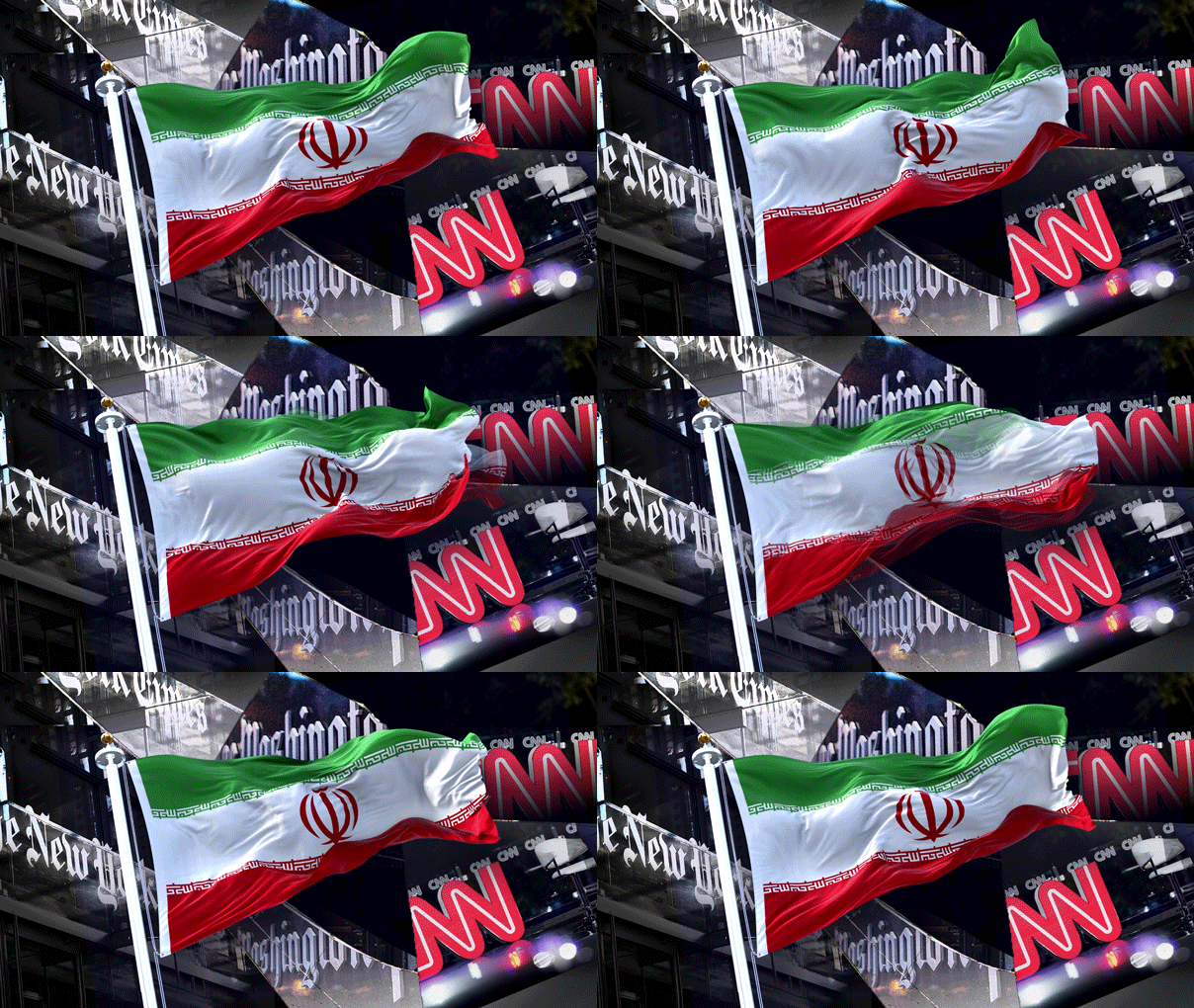
An illustration depicting the Iranian flag waving over shattered logos for The New York Times, Washington Post and CNN (Getty Images; iStock)
CAMERA found nearly all references stemmed from an airstrike early in the conflict that allegedly destroyed a school in Minab, Iran. The Pentagon is continuing to investigate the incident, according to CAMERA.
«Several of the other allegations refer to the sinking of an Iranian warship in the Indian Ocean in what can assuredly be classified as a lawful attack,» Litman wrote.
The analysis also contrasted that usage with events that have not been labeled «war crimes» in CAMERA’s findings.
The group cited cluster bombs fired by Iran, many of which hit populated areas in Israel and elsewhere.
«While cluster munitions are not universally banned, using them to target populated areas almost certainly constitutes a war crime,» the analysis found.
CAMERA also pointed to Iranian strikes that hit energy and other key installations in nations not officially engaged in the conflict, such as Kuwait and Bahrain.
PETE HEGSETH CRITICIZES ‘FAKE NEWS’ COVERAGE OF IRAN STRIKES, SAYS ONLY TRAGEDIES MAKE FRONT PAGE
The analysis found that, among the mainstream media sources examined, the term «war crime» was not applied to these strikes, and if Iran was cited in a war crimes discussion, it was paired with equal criticism of the West.
«This journalistic malpractice inverts reality,» Litman wrote.
George Mason law professor Adam Mossoff commented on the analysis, writing on X that «data analytics confirm huge bias in favor of pro-Islamic regime of Iran by BBC, CNN, NBC and NY Times.»
«These media orgs used ‘war crime’ 32 times in news reports in the first 3 weeks of the U.S./Israel-Iran war. Zero references solely to crimes by Islamic regime, and 88% media uses referred solely to U.S. or Israel.
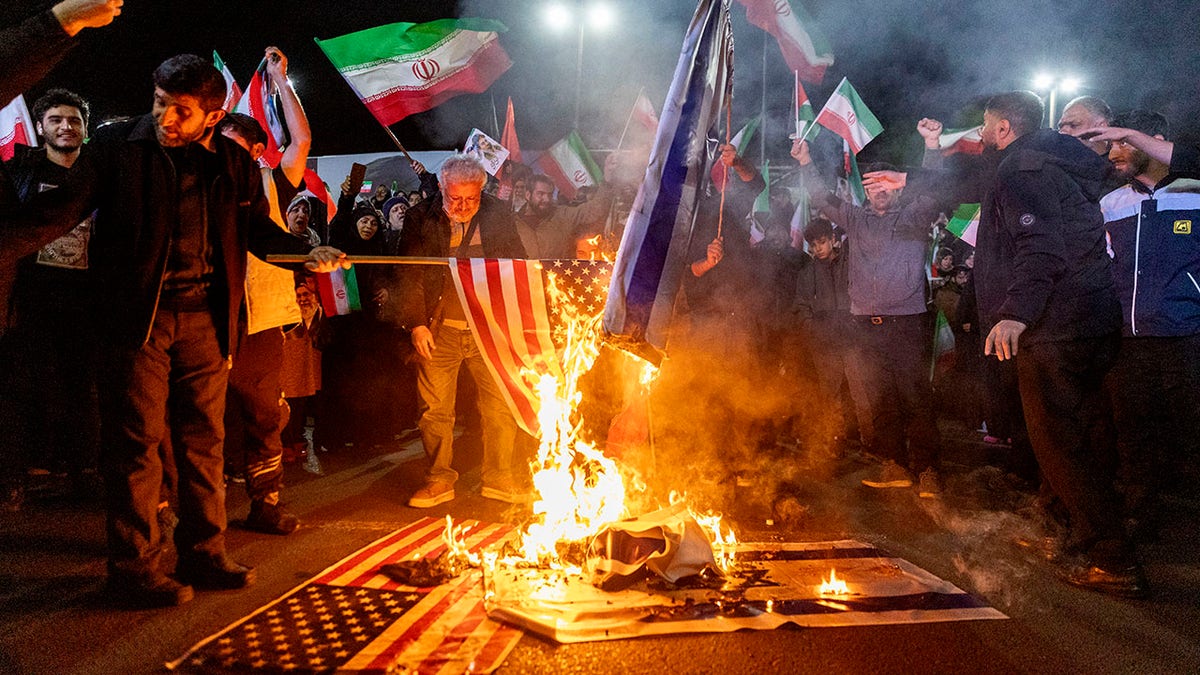
Iranians set fire to flags of the United States and Israel as they gather to commemorate those killed from the Dena naval vessel, at Enghelab Square March 17, 2026, in Tehran, Iran. (Getty Images)
«Islamic regime uses cluster bombs against Israeli civilians, shoots missiles and suicide drones at civilian targets in numerous Arab countries not involved in war, fires missiles at holy sites in Old Jerusalem, [but] zero identification of these war crimes as standalone crimes by major Western media organizations. This is shameful.»
Fox News Digital reached out to communications officials at CNN, the BBC, The Washington Post, The New York Times and NBC News for comment but did not hear back by deadline.
CLICK HERE TO DOWNLOAD THE FOX NEWS APP
CAMERA was founded in Washington in 1982 by social worker Winifred Meiselman in response to The Washington Post’s coverage of Israel’s incursion into Lebanon and allegations of anti-Israel bias.
Early advisors included Sen. Charles Grassley, R-Iowa; former Sen. Rudy Boschwitz, R-Minn.; and former Rep. Tom Lantos, D-Calif., according to its website.
middle east, media, war with iran, iran, israel
INTERNACIONAL
Qué sabemos realmente sobre la electricidad estática y por qué aún asombra a la física moderna
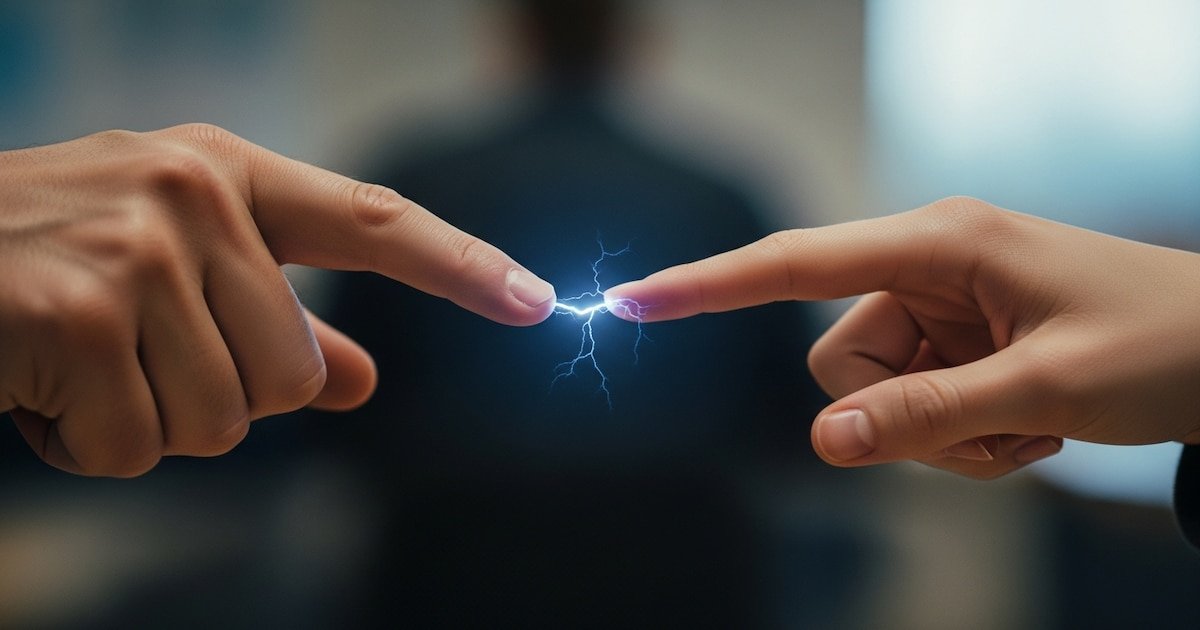
La electricidad estática se manifiesta en situaciones tan cotidianas como el cabello erizado al frotar un globo o el leve chasquido al tocar una manija después de caminar sobre una alfombra. Bajo esa apariencia cotidiana, la triboelectricidad —el intercambio de cargas opuestas entre materiales— representa un desafío persistente para la física experimental, que aún no ha logrado desentrañar plenamente su funcionamiento.
Este fenómeno ocurre cuando dos materiales entran en contacto y luego se separan, generando cargas opuestas en cada uno. Aunque la explicación completa de su mecánica sigue sin resolverse, la física ha reconocido la triboelectricidad como un proceso en el que abundan las incógnitas.
Mientras la mayoría de las personas vincula la electricidad estática a simples curiosidades domésticas, los científicos la identifican como un fenómeno en el que los mecanismos fundamentales permanecen en gran parte desconocidos.
Incertidumbre sobre el mecanismo de la triboelectricidad

Durante aproximadamente los últimos tres siglos, la física experimental ha intentado establecer qué ocurre exactamente cuando dos materiales se ponen en contacto y después se separan. Está confirmado que uno de ellos adquiere una carga positiva y el otro, una carga negativa. Sin embargo, los detalles sobre el proceso —el “cómo” y el “por qué”— siguen sin respuesta clara, a pesar de la ubicuidad cotidiana del fenómeno.
En el centro del interés científico reside la siguiente cuestión: ¿qué es lo que realmente se transfiere entre los materiales? Algunas de las principales hipótesis, formuladas por investigadores en física de materiales, sugieren la transferencia de electrones, iones e incluso fragmentos microscópicos de materia. Sin embargo, experimentos llevados a cabo bajo condiciones idénticas pueden mostrar resultados diferentes o contradictorios, lo que indica la posible existencia de factores desconocidos.
Los expertos han denominado este proceso triboelectricidad, término derivado del griego por “frotar” y “ámbar”. A pesar de contar con tecnología de última generación en laboratorios especializados, los físicos no han logrado ofrecer una explicación universal.
Avances recientes y factores que influyen en la carga eléctrica

Investigaciones recientes lideradas por equipos de física de materiales han comenzado a aportar claridad. Un descubrimiento relevante, demostrado por el físico del Instituto de Ciencia y Tecnología de Austria Scott Waitukaitis, mostró que dos objetos idénticos pueden cargarse de manera distinta dependiendo de cuántas veces han interactuado entre sí anteriormente. Este hallazgo respalda la hipótesis de una cierta memoria superficial en los materiales.
Otro descubrimiento proviene de investigaciones que identificaron cómo partículas invisibles pueden adherirse a las superficies de los materiales. Estas diminutas moléculas ricas en carbono, presentes en el aire, pueden modificar la dirección del intercambio de carga. Al eliminar estas moléculas mediante calor, se observó que el comportamiento eléctrico cambia significativamente, mostrando que los factores ambientales pueden ser determinantes.
Además, las investigaciones han comprobado que variables como la velocidad del contacto, el área de impacto o la ruptura de enlaces químicos juegan un papel fundamental. En ciertas colisiones, la creación de condiciones químicas propicias permite el intercambio de electrones. Aunque estas novedades no resuelven todas las incógnitas, han permitido enriquecer la comprensión de la triboelectricidad.
Un estudio publicado por el propio equipo de Waitukaitis reveló que, al modificar las condiciones superficiales y ambientales, como la presencia de moléculas contaminantes o la humedad, se pueden obtener resultados radicalmente diferentes en experimentos idénticos. Este hallazgo obligó a reconsiderar la idea de que el comportamiento eléctrico depende únicamente de la naturaleza intrínseca de los materiales.
Desafíos en la comprensión y aplicaciones tecnológicas

Lejos de simplificarse, el conocimiento sobre la electricidad estática ha demostrado que su comportamiento varía en función de numerosos factores y condiciones. La antigua noción de una “serie triboeléctrica” fija ha sido puesta en duda. Cada interacción resulta de una combinación compleja de variables.
El interés por descifrar completamente estos mecanismos tampoco es exclusivo del ámbito académico. Una comprensión profunda podría transformar tecnologías emergentes, como el desarrollo de nanogeneradores triboeléctricos, que convierten el movimiento en electricidad y permitirían alimentar sensores y dispositivos portátiles sin baterías convencionales. Además, este conocimiento es esencial para mitigar descargas peligrosas en entornos industriales o para explicar fenómenos eléctricos en otros planetas, como las tormentas de polvo en Marte.
Origen histórico y evolución científica del fenómeno
La historia de la electricidad estática se remonta a la Grecia antigua, cuando se advirtió que el ámbar frotado atraía objetos ligeros. A lo largo de los siglos, este fenómeno ha acompañado a la humanidad como una curiosidad recurrente. Por mucho tiempo, la electricidad estática fue considerada una rareza doméstica, hasta que los avances científicos la transformaron en objeto de estudio especializado.
Actualmente, la electricidad estática ocupa un lugar de permanente interés en la física experimental, donde cada avance abre nuevas preguntas y amplía el alcance de la investigación científica.
electricidad,estática,energía,conexión,manos,dedos,interacción,chispa,física,corriente

Venezuela aprueba extraditar a Panamá a sospechoso de atentado aéreo de 1994

Nicolás Paz anotó un golazo en el amistoso de la Selección Argentina ante Mauritania en La Bombonera

Sofía Aldrey, ex de Fede Bal, anunció que será mamá con el ex de una famosa periodista: «Conocer París con bebito»

Pesca ilegal: pese al mayor control, detectan buques extranjeros saqueando el mar patagónico

Diego Santilli se reunió con Cornejo en Mendoza y consolida apoyos para el paquete de leyes que impulsa el Gobierno

El vuelo de Adorni: las idas y vueltas del relato sobre el avión privado que lo llevó a Punta del Este

¡VERGÜENZA NACIONAL! Humillan a la Policía Federal mandándolos a un merendero antes de darles un aumento de sueldo digno

24 DE MARZO: La historia completa que el relato omitió sobre el golpe de 1976 y el Juicio a las Juntas

El Presidente y Karina Milei volvieron a respaldar a Manuel Adorni tras la polémica por sus vuelos

Manuel Adorni: “Mi patrimonio lo construí antes de entrar al Gobierno, no tengo nada que esconder”

 POLITICA2 días ago
¡VERGÜENZA NACIONAL! Humillan a la Policía Federal mandándolos a un merendero antes de darles un aumento de sueldo digno
- POLITICA2 días ago
El Presidente y Karina Milei volvieron a respaldar a Manuel Adorni tras la polémica por sus vuelos
- POLITICA2 días ago
Manuel Adorni: “Mi patrimonio lo construí antes de entrar al Gobierno, no tengo nada que esconder”