INTERNACIONAL
Supreme Court weighs religious liberty dispute over public funding for Catholic charter school


The Supreme Court offered clear divisions Wednesday in a religious liberty case involving public education and whether religious charter schools can receive taxpayer funding.
At issue is whether providing public money to a faith-based educational institution violates the First Amendment’s separation of church and state mandate.
In more than two hours of wide-ranging oral arguments, the high court appeared divided along ideological lines, with a majority prepared to allow St. Isidore of Seville Catholic Virtual School in Oklahoma City to become the first such religious charter school in the country.
LIBERAL SUPREME COURT JUSTICES GRILL RELIGIOUS INSTITUTION IN LANDMARK SCHOOL CHOICE CASE
At issue is whether providing public money to a faith-based educational institution violates the First Amendment’s separation of church and state. (iStock)
The appeal comes amid a renewed pitch in some Republican-led states to bring a greater religious presence to public education.
The conservative high court in recent years has, in select cases, allowed taxpayer funds to be spent on religious organizations to provide «non-sectarian services» like adoption or food banks.
In the courtroom public session, the justices debated what limits on curriculum supervision and control would be placed on the religious charter school, if its contract with the state was allowed to move forward.
«Our [prior] cases have made very clear,» said Justice Brett Kavanaugh. «You can’t treat religious people and religious institutions and religious speech as second class in the United States. And when you have a program that’s open to all comers except religion, no, we can’t do that. We can do everything else. That seems like rank discrimination against religion. And that’s the concern.»
BIDEN-APPOINTED FEDERAL JUDGE KEEPS BLOCKING TURMP ADMIN FROM NIXING FUNDING FOR LAWYERS FOR MIGRANT CHILDREN

Oklahoma has more than 30 public charter schools serving about 50,000 students. (iStock video/Getty Images)
«All the religious school is saying is don’t exclude us on account of our religion,» Kavanaugh added.
But others on the bench worried about government entanglement in approving some religious charter schools, and not others, potentially favoring one faith over another.
«What you’re saying is the free exercise clause trumps the essence of the establishment clause,» Justice Sonia Sotomayor told the attorney for the state’s charter school board. «The essence of the establishment clause was, ‘We’re not going to pay religious leaders to teach their religion.’»
The Constitution’s First Amendment says, «Congress shall make no law respecting an establishment of religion, or prohibiting the free exercise thereof.»
Justice Amy Coney Barrett was not on the bench and is recused in the case. She offered no public explanation of why.
If the court divides 4-4, the ruling below holds, with the charter school losing its appeal.
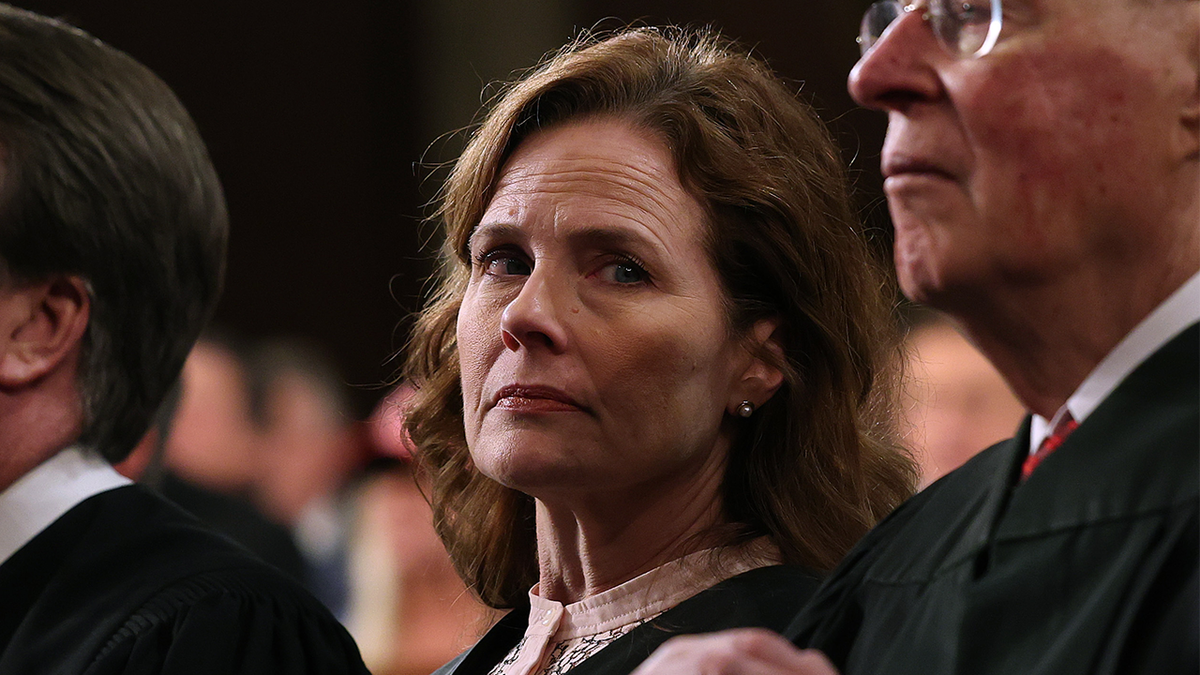
Justice Amy Coney Barrett was not on the bench and is recused in the case. (Getty Images)
The vote of Chief Justice John Roberts may be key. He asked tough questions of both sides.
At one point, Roberts noted of the current dispute: «This does strike me as a much more comprehensive involvement,» by the state than prior cases dealing with «fairly discrete» public money going to religious groups, such as tax breaks and private school tuition credits.
In an unusual split within the Oklahoma government, the state’s governor, head of public education, and the statewide charter school board are all backing St. Isidore.
But Attorney General Gentner Drummond sued to block the approval of the school’s state charter, calling it an «unlawful sponsorship» of a sectarian institution, and «a serious threat to the religious liberty of all four-million Oklahomans.»
He has the backing of some GOP state lawmakers and parents’ groups, who argue that funding parochial charter schools would drain resources from public education – especially in rural areas already struggling with limited funding.
When it signed a contract with the state charter school board in 2023, St. Isidore – formed as a nonprofit corporation by the Archdiocese of Oklahoma City and the Diocese of Tulsa – agreed it would be free and open to all students «as a traditional public school,» and would comply with local, state and federal education laws.
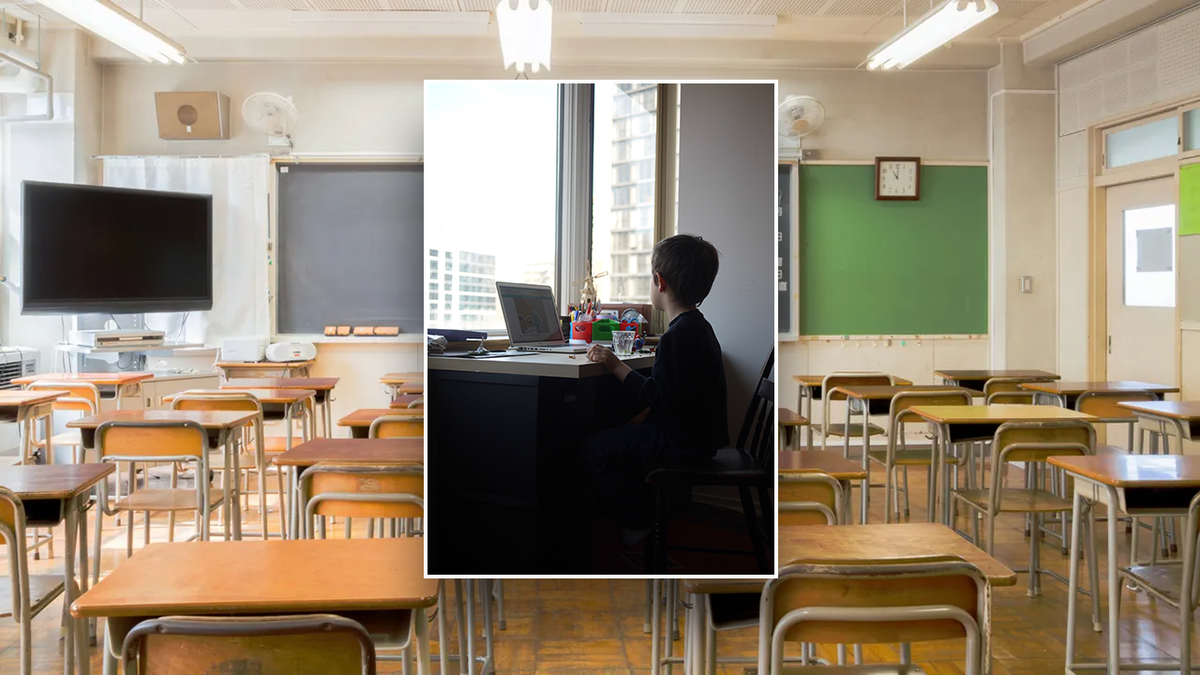
Teachers are voicing concerns over the current educational level of students in America. (Interim Archives/Getty Images/iStock)
But in its application to the charter board, it also indicated, «the School fully embraces the teachings» of the Catholic Church and participates «in the evangelizing mission of the church.»
Shortly after Oklahoma’s highest court ruled against it, the school said it remained «steadfast in our belief that St. Isidore would have and could still be a valuable asset to students, regardless of socioeconomic, race or faith backgrounds.»
The Trump administration is supporting the school.
Some Catholic sources note the namesake seventh-century archbishop and scholar is now known as the patron saint of the internet, given the title by Pope John Paul II in 1997.
Much of the high court oral arguments turned on whether St. Isidore – a K-12 online school – is public or private in nature.
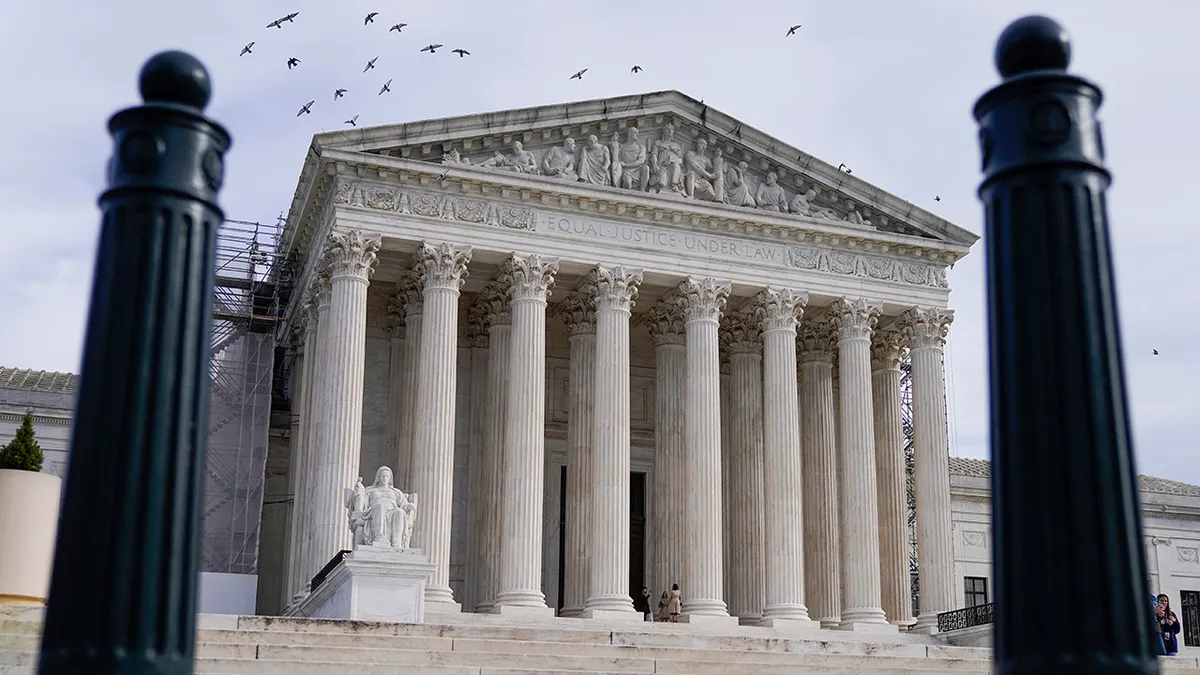
The U.S. Supreme Court, Nov. 15, 2023, in Washington, D.C. (AP Photo/Mariam Zuhaib, File)
The distinction is important, since charter schools in Oklahoma are considered public, free and openly accessible to all. That is true in the 46 states – plus the District of Columbia – where charter schools operate.
The Supreme Court has previously said states may require public schools be secular, but also cannot prevent private religious institutions from public benefits and contracts.
The issue now is whether those precedents apply to charter schools.
Justice Ketanji Brown Jackson said charter schools are «a creation and creature of the state.»
Justice Elena Kagan said contracts signed by schools like St. Isidore have basic requirements to meet state classroom standards, with state oversight.
«I’ve just got to think that there are religions that are going to have no problems dealing with all the various curricular requirements and religions that are going to have very severe problems dealing with all the curricular requirement,» she said.
«I’m suggesting to you is this notion that the state can do this while still maintaining all its various curricular requirements. I mean, either that sort of fantasy land, given the state of religious belief and religious practice in this world or if it’s not, it’s only because what’s going to result is treating, shall we call them majoritarian, religions very differently from minority religions,» said Kagan.
But Justice Clarence Thomas noted: «The argument that St. Isidore and the board are making is that it’s a private entity that is participating in a state [charter] program. It was not created by the state program.»
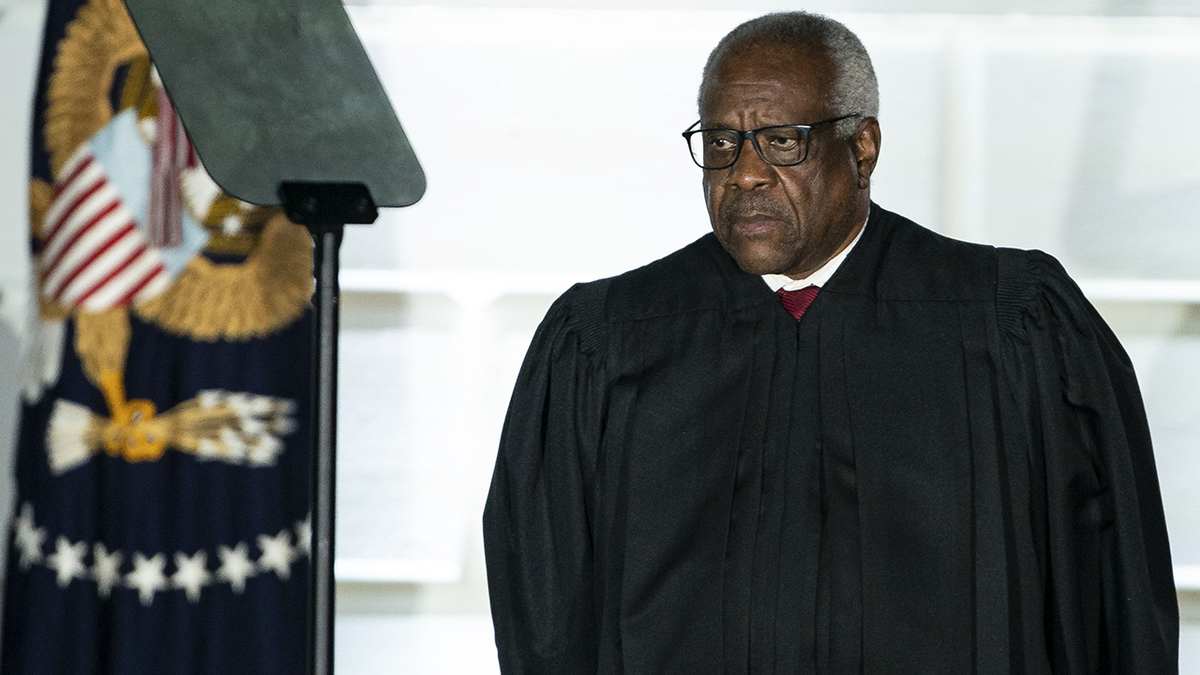
Justice Clarence Thomas (Jonathan Newton/The Washington Post via Getty Images)
Justice Samuel Alito was more pointed, telling Gregory Garre, lawyer for the state, «This whole position that you’re defending seems to be motivated by hostility toward particular religions.»
Department of Education figures show about 4m illion schoolchildren – or 8% of the total – are enrolled in an estimated 7,800 charter schools, which operate with greater independence and autonomy than traditional public schools. Oklahoma has more than 30 public charter schools serving about 50,000 students.
Last June, Oklahoma’s top education official separately mandated the Bible be incorporated into lesson plans for grades 5-12, and the Holy Scripture be placed in every classroom. And in Louisiana, there is a requirement that the Ten Commandments be posted on public school property. Both policies are facing legal challenges.
CLICK HERE TO GET THE FOX NEWS APP
Six members of the current Supreme Court attended Catholic schools in their youth, and many of their own children attend or attended private schools, including religious-based institutions of learning.
The consolidated cases are Oklahoma Statewide Charter School Board v. Drummond (AG OK) (24-394) and St. Isidore of Seville Catholic Virtual School v. Drummond (AG OK) (24-396).
A ruling is expected by early summer.
Supreme Court,Supreme Court Oral Arguments,Politics











INTERNACIONAL
Carrera contra reloj en territorio iraní: habrían rescatado a uno de los pilotos de un caza de EE.UU. derribado



INTERNACIONAL
Holocaust survivor, 86, priced out of NYC says Mamdani skipped scheduled housing meeting
NEWYou can now listen to Fox News articles!
As a toddler, Sami Steigmann survived Nazi medical experimentation. Now, at 86, he is struggling to find safe housing in New York City.
His situation comes as New York City residents face rising housing costs, despite campaign promises from city leaders to improve affordability
Steigmann, who has called New York City home since the 1980s, can no longer safely navigate his second-story apartment in Harlem. Earlier this year, he asked to have a one-on-one meeting with New York Mayor Zohran Mamdani, who ran on a platform centered on lowering housing costs. Although the meeting was scheduled, Steigmann says the 34-year-old mayor never kept the appointment.
«Promises made, not kept,» Steigmann told Fox News Digital. «His claim to fame was affordable housing. I’m not disappointed because I didn’t expect him to keep his word. It is what it is.»
DEMS WHO RAN ON AFFORDABILITY NOW FACE BACKLASH AS COSTS CLIMB
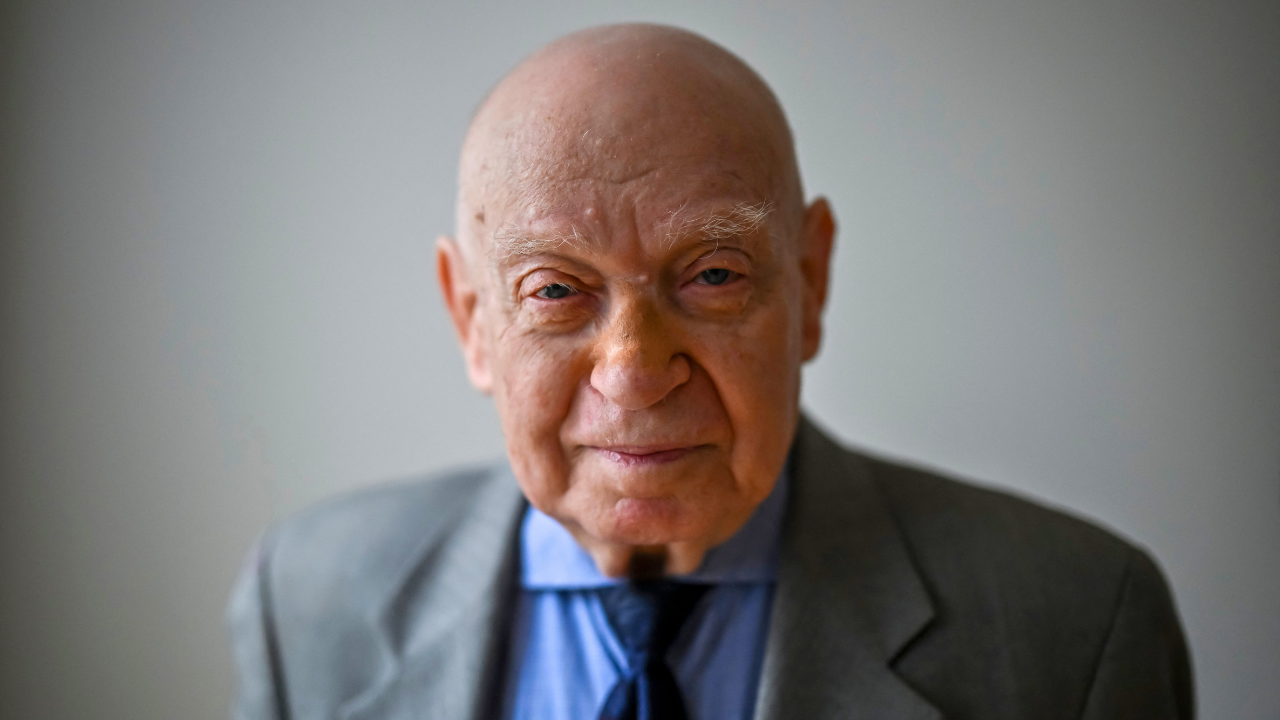
Sami Steigmann, 86, a Holocaust survivor, is struggling to find safe, affordable housing in New York City as costs continue to rise. (Angela Weiss/AFP/Getty Images)
«It would have been nice, but you know politicians,» he said with a smile.
He added that he was no longer interested in meeting with Mamdani.
Mamdani’s office did not respond to Fox News Digital’s request for comment.
For now, Steigmann said his focus is on finding a safe place to live as New York City’s costs continue to climb.
«New York is the most expensive city in the country, especially for independent living. Rent is about $6,000 a month for a one-bedroom apartment,» he said.
Steigmann, who lives on a fixed income of $1,649 per month, said he cannot afford an apartment that is both safe and accessible to public transportation.
The physical toll of his current living situation has only added to the challenge.
Born in 1939 in Romania, Steigmann was deported with his parents to a Nazi labor camp at about age 2. Too young to work, he was subjected to medical experimentation for at least three years before the camp was liberated.
«I was subjected to medical experiments, so I’m in pain every single second, but I learned to live with it. Now, because of my age, 86, I have difficulty walking and climbing stairs,» he said.
While relocating to a more affordable city may seem like an option, he said leaving New York is not a simple decision.
«I did not give it serious thought because here I have agencies that are helping me,» he said. «I don’t know what it would be like in other cities because I don’t have those connections there.»
FROM FREE BUSES TO CITY-OWNED GROCERY STORES, HERE ARE MAMDANI’S KEY ECONOMIC PROMISES
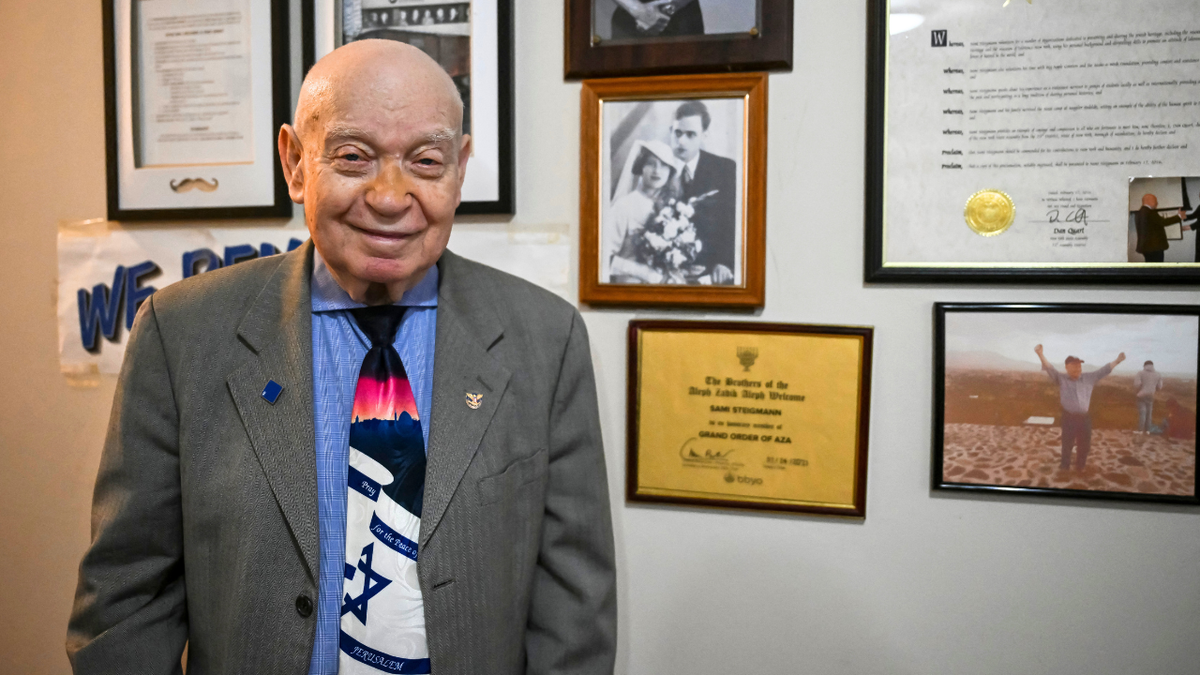
Steigmann faces a $2,200 monthly shortfall in rental costs. (Angela Weiss/AFP/Getty Images)
«I’m very safe here,» Steigmann said of his neighborhood, adding that his neighbors know him and watch his back.
He said a nursing home is a last resort he hopes to avoid.
«If I’m going to a nursing home, which I may have to go to if I cannot find something, basically, it’s the way to die because there is no life there.»
«It’s not for me. I’m still active. I don’t need assisted living in the sense that I can take a bath by myself. I can still do a lot of things,» he said.
Now, advocates are stepping in to help.
The Chicago Jewish Alliance recently launched «Project Ahava,» a fundraising initiative aimed at securing safe, stable housing for Steigmann as he struggles to remain independent in New York City.
Facing a roughly $2,200 monthly shortfall, the initiative aims to raise $132,000 to cover five years of housing. The group has so far raised about $18,000 for Steigmann.
«Sami has never asked for a dime, and he has given back to so many people. That’s just another reason why we wanted to give back to him and make sure that he has safe housing,» Susan Haggard, president of the Chicago Jewish Alliance, told Fox News Digital.
«And it’s important for him to stay in Manhattan where he is close to public transportation and still have that independence that is so important to him,» she added.
Maintaining that independence is key to his daily work and outreach.
CLICK HERE TO DOWNLOAD THE FOX NEWS APP

Holocaust survivor Sami Steigmann gives a salute while wearing his USS Intrepid volunteer uniform in New York City. (Courtesy of Sami Steigmann)
He spends his days volunteering aboard the aircraft carrier Intrepid, docked in New York City’s harbor, and speaking to school groups across the country about the Holocaust — a mission that has come to define his life.
«This is my life. Without it, there’s nothing for me, no reason to live,» he said.
new york city, zohran mamdani, housing, economy
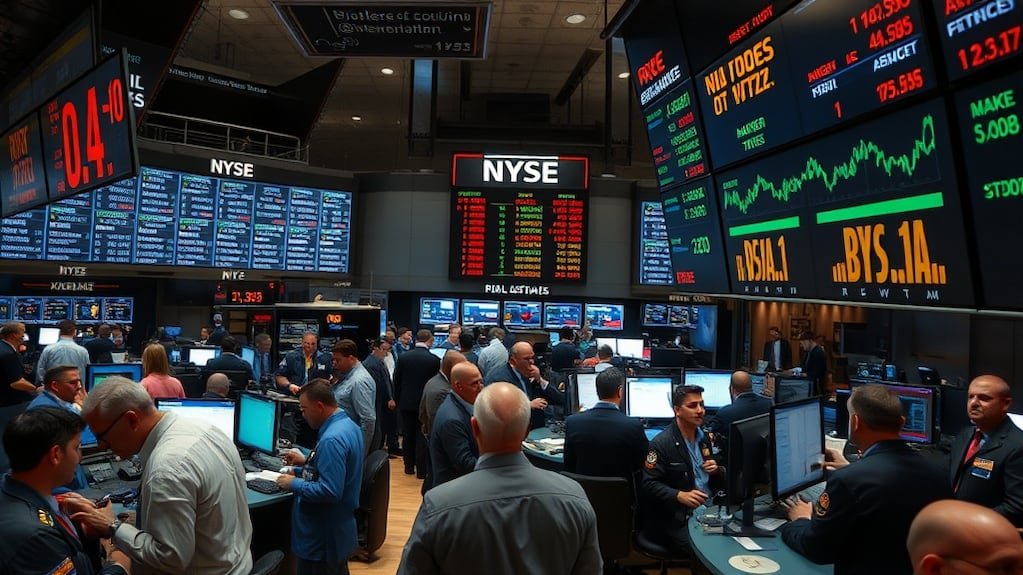
El precio del petróleo se disparó y las acciones se desplomaron el jueves después de que el presidente Donald Trump, en un discurso desde la Casa Blanca, dijo que la guerra contra Irán estaba “cerca de concluir”, pero no ofreció un calendario concreto y se comprometió a realizar más ataques.
En un discurso de 19 minutos pronunciado el miércoles por la noche, Trump dijo que las fuerzas estadounidenses golpearían a Irán “con extrema dureza en las próximas dos o tres semanas”. Los inversores que esperaban señales más claras de una desescalada del conflicto se sintieron decepcionados.
Leé también: Trump echó a la fiscal general de EE.UU. en medio de la polémica por la gestión del caso Epstein
La guerra, que ya ha entrado en su quinta semana, ha provocado una crisis energética que amenaza con elevar el costo de vida en los países ricos y privar a las regiones vulnerables de productos básicos como la electricidad y el combustible para cocinar.
Los precios del petróleo se disparan
- El precio del crudo Brent, la referencia mundial del petróleo, saltó a unos 108 dólares el barril para entrega en junio, un 7 por ciento más. El martes se situaba en 101,16 dólares.
- El crudo West Texas Intermediate, la referencia estadounidense, rondaba los 106 dólares el barril para entrega en mayo, un 6 por ciento más. El martes se situaba en 100,12 dólares.
- Los inversores y analistas han seguido enfocados en el estrecho de Ormuz desde que comenzaron los enfrentamientos hace más de un mes. La estrecha vía fluvial entre Irán y Omán es una ruta comercial vital para el petróleo y el gas natural, por la que normalmente fluye hasta una quinta parte del suministro mundial de petróleo.
Las acciones caen drásticamente
- Las bolsas de toda Asia, donde los países importan grandes cantidades de petróleo y gas, bajaron el jueves, invirtiendo la fuerte subida del día anterior. El Nikkei 225 de Japón descendió un 2,4 por ciento. Las acciones de Corea del Sur fueron las que peores resultados obtuvieron, con una caída del 4,5 por ciento.
- Las Futures del S&P 500 apuntaban a un descenso del 1,3 por ciento cuando se reanudaran las operaciones bursátiles en Estados Unidos el jueves. El S&P 500 subió 0,7 por ciento el miércoles.
- Los futuros del S&P 500 apuntaban a un descenso del 1,3 por ciento cuando se reanudaran las operaciones bursátiles en Estados Unidos el jueves. El S&P 500 subió 0,7 por ciento el miércoles.
- Las bolsas europeas bajaron el jueves. El Stoxx 600, un amplio índice europeo, y el DAX alemán cayeron más de 1 por ciento. El FTSE 100 británico cayó menos del 1 por ciento.
Los precios de la gasolina subieron
- Los precios de la gasolina en Estados Unidos volvieron a subir el jueves hasta una media nacional de 4,08 dólares el galón, según el club automovilístico AAA. El costo para los conductores ha subido un 37 por ciento desde que empezó la guerra.
- Los precios de la gasolina no se mueven al compás del crudo, sino que suelen ir unos días por detrás de las subidas o bajadas.
- Los precios del gasóleo han aumentado aún más rápidamente, llegando a 5,51 dólares el jueves, un 47 por ciento más desde el comienzo de la guerra.
Lo que dicen: una guerra prolongada podría obligar a un racionamiento ‘económicamente destructivo’
- Chris Wright, secretario de Energía de Estados Unidos, dijo en las redes sociales tras el discurso de Trump que el “trastorno a corto plazo de los mercados energéticos es temporal”.
- Los analistas de la industria energética han advertido que el impacto, especialmente en Asia, donde los países dependen en gran medida de las importaciones de petróleo y gas, podría durar mucho más que el fin de los combates. El tráfico marítimo que sale del golfo Pérsico a través del estrecho se ha interrumpido en la práctica desde que comenzó la guerra el 28 de febrero, y se han dañado infraestructuras energéticas cruciales. Restablecer un flujo constante de suministros llevará tiempo.
- La empresa de investigación Oxford Economics indicó en un informe publicado el miércoles que la guerra ya ha provocado un déficit del 10 por ciento entre la oferta y la demanda mundial de petróleo. Una guerra prolongada que corte aún más las fuentes de energía obligaría a los países a cambiar su forma de utilizar y producir energía, lo que daría lugar a un mayor uso del carbón y a trastornos en las cadenas de suministro de las economías emergentes.
- “Cuanto más dure la interrupción, más se desplazará el ajuste hacia el racionamiento, el resultado económicamente más destructivo”, decía el informe.
The New York Times, Donald Trump

Carrera contra reloj en territorio iraní: habrían rescatado a uno de los pilotos de un caza de EE.UU. derribado

Ni Barça ni Madrid: estas son las canteras más rentables del mundo

El Gobierno dispuso una recomensa de $20 millones por información sobre Apablaza, el exguerrillero chileno prófugo de la Justicia

Javier Milei envía millonarios fondos a gobernadores: busca apoyo en el Congreso

Anita Espasandín habló del polémico encuentro entre Benjamín Vicuña y Graciela Alfano en Punta del Este

La profunda reflexión del Cholo Simeone tras los cánticos racistas en el partido entre España y Egipto: “Es social y mundial”

Dos jubiladas que le habrían prestado dinero a Manuel Adorni negaron conocerlo

Quiénes son las dos acreedoras del préstamo con el que Adorni compró su departamento en Caballito

El Gobierno reevalúa la estrategia de comunicación por el caso Adorni y mide el impacto en la imagen de Milei

Milei se pone al frente de la defensa de Adorni y lo suma a un acto por Malvinas en una nueva muestra de respaldo

 POLITICA2 días ago
El Gobierno reevalúa la estrategia de comunicación por el caso Adorni y mide el impacto en la imagen de Milei
- POLITICA1 día ago
Milei se pone al frente de la defensa de Adorni y lo suma a un acto por Malvinas en una nueva muestra de respaldo
- CHIMENTOS24 horas ago
Oriana Sabatini sorprendió al elegir a una famosa como madrina de Gia, su hija con Paulo Dybala