INTERNACIONAL
Survivors still being found from Burma earthquake, but hopes begin to fade as deaths exceed 2,700

- A 7.7 magnitude earthquake rocked Burma on Friday, killing more than 2,700 people, compounding a humanitarian crisis caused by a civil war.
- The death toll is expected to rise, but the earthquake hit a wide swath of the country, leaving many areas without power, telephone or cell connections and damaging roads and bridges, leaving the full extent of the devastation hard to assess.
- The World Health Organization said more than 10,000 buildings are known to have collapsed or been severely damaged in Burma. The earthquake also hit neighboring Thailand, causing a high-rise building under construction to collapse and burying many workers.
Rescue workers saved a 63-year-old woman from the rubble of a building in Burma’s capital on Tuesday, but hope was fading of finding many more survivors of the violent earthquake that killed more than 2,700 people, compounding a humanitarian crisis caused by a civil war.
The fire department in Naypyitaw said the woman was successfully pulled from the rubble 91 hours after being buried when the building collapsed in the 7.7 magnitude earthquake that hit midday Friday. Experts say the likelihood of finding survivors drops dramatically after 72 hours.
Death toll numbers forecast to increase
The head of Burma’s military government, Senior Gen. Min Aung Hlaing, told a forum in Naypyitaw, that 2,719 people have now been found dead, with 4,521 others injured and 441 missing, Myanmar’s Western News online portal reported.
BURMA-THAILAND EARTHQUAKE: PATRICK SCHWARZENEGGER, ‘WHITE LOTUS’ CAST SEND PRAYERS AS DEATH TOLL PASSES 1,000
Those figures are widely expected to rise, but the earthquake hit a wide swath of the country, leaving many areas without power, telephone or cell connections and damaging roads and bridges, leaving the full extent of the devastation hard to assess.
Most of the reports so far have come from Mandalay, Burma’s second-largest city, which was near the epicenter of the earthquake, and Naypyitaw.
«The needs are massive, and they are rising by the hour,» said Julia Rees, UNICEF’s deputy representative for Burma.
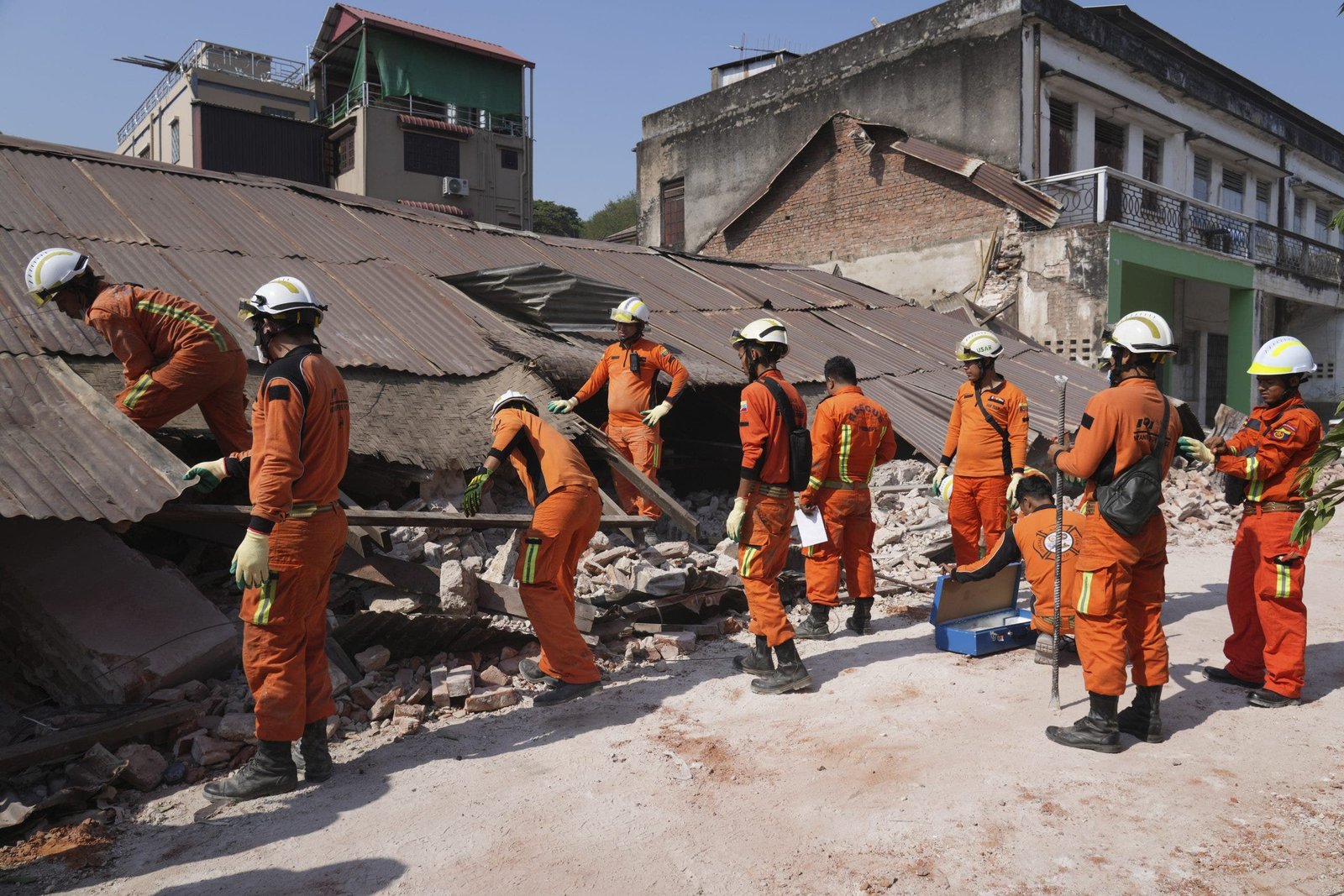
Burma’s rescuers work through rubble of a collapsed building following Friday’s earthquake in Naypyitaw, Burma, on April 1, 2025. (AP Photo)
«The window for lifesaving response is closing. Across the affected areas, families are facing acute shortages of clean water, food, and medical supplies.»
Burma’s fire department said that 403 people have been rescued in Mandalay and 259 bodies have been found so far. In one incident alone, 50 Buddhist monks who were taking a religious exam in a monastery were killed when the building collapsed and 150 more are thought to be buried in the rubble.
Structural damage is extensive
The World Health Organization said that more than 10,000 buildings overall are known to have collapsed or been severely damaged in central and northwest Burma.
The earthquake also rocked neighboring Thailand, causing a high-rise building under construction to collapse and burying many workers.
Two bodies were pulled from the rubble on Monday and another was recovered Tuesday, but dozens were still missing. Overall, there were 21 people killed and 34 injured in Bangkok, primarily at the construction site.
In Burma, search and rescue efforts across the affected area paused briefly at midday on Tuesday as people stood for a minute in silent tribute to the dead.
MASSIVE 7.7 MAGNITUDE EARTHQUAKE ROCKS THAILAND, BURMA, COLLAPSING BUILDINGS AND KILLING MORE THAN 1,000
Relief efforts moving at a sluggish pace
Foreign aid workers have been arriving slowly to help in the rescue efforts, but progress was still slow with a lack of heavy machinery in many places.
In one site in Naypyitaw on Tuesday, workers formed a human chain, passing chunks of brick and concrete out hand-by-hand from the ruins of a collapsed building.
The Burma military government’s official Global New Light of Burma reported Tuesday that a team of Chinese rescuers saved four people the day before from the ruins of the Sky Villa, a large apartment complex that collapsed during the quake. They included a 5-year-old and a pregnant woman who had been trapped for more than 60 hours.
The same publication also reported two teenagers were able to crawl out of the rubble of the same building to where rescue crews were working, using their cellphone flashlights to help guide them. The rescue workers were then able to use details from what they told them to locate their grandmother and sibling.
International rescue teams from several countries are on the scene, including from Russia, China, India, the United Arab Emirates and several Southeast Asian countries. The U.S. Embassy said an American team had been sent but hadn’t yet arrived.
Aid pledges pouring in as officials warn of disease outbreak risk
Meantime, multiple countries have pledged millions in aid to assist Burma and humanitarian aid organizations with the monumental task ahead.
Even before the earthquake, more than 3 million people had been displaced from their homes by Burma’s brutal civil war, and nearly 20 million were in need, according to the U.N.
Many were already lacking in basic medical care and standard vaccinations, and the destruction of water and sanitation infrastructure by the earthquake raises the risk of disease outbreaks, warned the U.N.’s Office for the Coordination of Humanitarian Affairs.
«The displacement of thousands into overcrowded shelters, coupled with the destruction of water and sanitation infrastructure, has significantly heightened the risk of communicable disease outbreaks,» OCHA said in its latest report.
«Vulnerability to respiratory infections, skin diseases, vector-borne illnesses such as dengue fever, and vaccine-preventable diseases like measles is escalating,» it added.
The onset of monsoon season also a worry
Shelter is also a major problem, especially with the monsoon season looming.
Since the earthquake, many people have been sleeping outside, either because homes were destroyed or out of fear of aftershocks.
Civil war complicates disaster relief
Burma’s military seized power in 2021 from the democratically elected government of Aung San Suu Kyi, sparking what has turned into significant armed resistance and a brutal civil war.
Government forces have lost control of much of Burma, and many places were dangerous or impossible for aid groups to reach even before the quake.
Military attacks and those from some anti-military groups have not stopped in the aftermath of the earthquake, though the shadow opposition National Unity Government has called a unilateral ceasefire for its forces.
BURMESE GOVERNMENT DENIES CLAIMS IT KILLED 76 VILLAGERS
The NUG, established by elected lawmakers who were ousted in 2021, called for the international community to ensure humanitarian aid is delivered directly to the earthquake victims, urging «vigilance against any attempts by the military junta to divert or obstruct humanitarian assistance.»
«We are in a race against time to save lives,» the NUG said in a statement.
«Any obstruction to these efforts will have devastating consequences, not only due to the impact of the earthquake but also because of the junta’s continued brutality, which actively hinders the delivery of lifesaving assistance.»
It wasn’t immediately clear whether the military has been impeding humanitarian aid. In the past, it initially refused to allow in foreign rescue teams or many emergency supplies after Cyclone Nargis in 2008, which resulted in well more than 100,000 deaths. Even once it did allow foreign assistance, it was with severe restrictions.
CLICK HERE TO GET THE FOX NEWS APP
In this case, however, Min Aung Hlaing, pointedly said on the day of the earthquake that the country would accept outside help.
Tom Andrews, a monitor on rights in Burma commissioned by the U.N.-backed Human Rights Council, said on X that to facilitate aid, military attacks must stop.
«The focus in Burma must be on saving lives, not taking them,» he said.

INTERNACIONAL
El ataque de EE.UU. a Irán revela las divisiones y choques entre los gobiernos de Europa
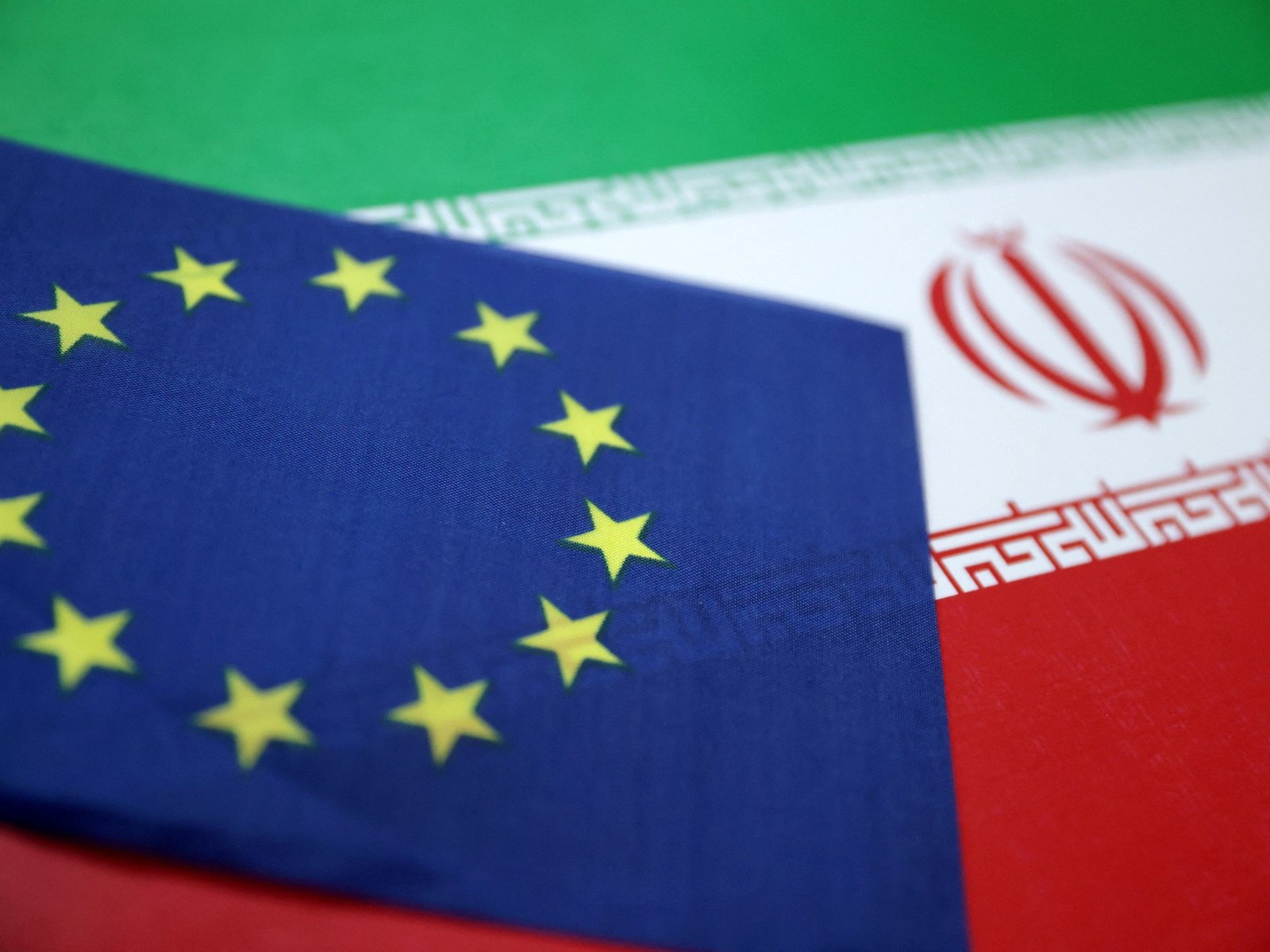
Los europeos tuvieron meses para preparar una posición común frente al ataque de Estados Unidos e Israel contra Irán, pero la historia y la ideología de sus gobiernos marca la reacción, que terminó por resultar una cacofonía.
El presidente del Consejo Europeo, el ex primer ministro socialista portugués António Costa, emitió un comunicado. Por su cargo, habla en nombre de los 27 gobiernos de la Unión Europea. Así que debe encontrar el mínimo común denominador en el que entren los 27. Como las posturas son tan distantes, Costa terminó por no decir nada.
Su comunicado del sábado aseguraba que la Unión Europea “reafirma su compromiso con la estabilidad y la seguridad regional” y que “asegurar la seguridad nuclear y prevenir acciones que lleven a una escalada de tensiones y a minar el régimen global de no proliferación es de importancia crítica”.
Costa recordó que Europa tiene sanciones en vigor contra “el régimen asesino” iraní (esa retórica se adoptó a nivel europeo tras la represión sangrienta de los últimos meses) y que siempre ha buscado que el programa nuclear iraní y el programa de misiles balísticos se solucionaran mediante negociaciones. Costa también pidió a todas las partes que se comporten usando la menor fuerza posible, que protejan a los civiles y que “respeten completamente el derecho internacional”.
El problema de Costa es que hablar en nombre de los 27 en esta crisis es por ahora imposible. El francés Emmanuel Macron se situó en un punto ambivalente, que se parece algo a la respuesta europea. Dijo que “el inicio de la guerra entre Estados Unidos, Israel e Irán tiene graves consecuencias para la paz y la seguridad internacional”, que “la escalada en curso es peligrosa para todos” y que “debe cesar”.
Macron también se dirigió al régimen iraní para recordarle la necesidad de “negociar de buena fe el fin del programa nuclear y balístico” y que “las masacres perpetradas por el régimen islámico lo descalifican”.
Muchos gobiernos europeos podrían alinearse detrás de esa declaración de Macron, pero no todos. Unos, como el español Pedro Sánchez, porque creen que el ataque es, por principios legales, una violación del derecho internacional, más allá de lo criminal que sea el régimen iraní. Otros porque aplauden los bombardeos porque aplauden cualquier cosa que haga Donald Trump y Benjamin Netanyahu, como el húngaro Viktor Orban.
Sánchez dijo que España “rechaza la acción militar unilateral de Estados Unidos e Israel, que supone una escalada y contribuye a un orden internacional más incierto y hostil. Rechaza igualmente las acciones del régimen iraní y de la Guardia Revolucionaria”. Pero también añade: “No podemos permitirnos otra guerra prolongada y devastadora en Oriente medio. Exigimos la desescalada inmediata y el pleno respeto del derecho internacional. Es hora de retomar el diálogo y alcanzar una solución política duradera para la región.
Alemania va por otro camino. Sin hacer referencia alguna al respeto al derecho internacional como Sánchez ni exigir que la guerra cese como Macron, Merz publicó un comunicado que justifica el ataque con el argumento de la represión del régimen iraní y alegando que Estados Unidos había intentado negociar de buena fe.
El problema de la declaración de apoyo de Merz es que sirve idealmente a quienes critican la ambigüedad selectiva de los europeos a la hora de defender las normas del derecho internacional y el respeto a la Carta de Naciones Unidas, y así dañan su credibilidad a nivel mundial. Algo que a las instituciones europeas se supone que les preocupa.
Europa defiende un orden global de normas, no de fuerza. El bloque levantó la bandera de la moral y del derecho cuando Rusia atacó a Ucrania. Y a la luz de esas normas internacionales, con toda la razón del mundo. Pero muchos de sus gobiernos no lo hacen ahora, y así dañan su argumento a favor de la defensa de Ucrania. Un diplomático francés decía a Clarín este domingo: “Los crímenes de otros no justifican actos de agresión unilaterales, aunque los cometan nuestros amigos tradicionales. Los principios que defendemos deben ser consistentes, o dejan de ser principios y pasan a ser intereses”.
Este domingo a última hora hubo una reunión (por videoconferencia) de cancilleres europeos. De esa reunión debería salir otro comunicado que, por no molestar a nadie, no dirá nada sustancial. El antiguo canciller europeo, el hispano-argentino Josep Borrell, decía el sábado: «Ningún demócrata va a llorar sobre la muerte del régimen iraní, pero eso no justifica este ataque ilegal».
NEWYou can now listen to Fox News articles!
American counterterrorism agencies are quietly monitoring suspected sleeper cells on U.S. soil in the wake of joint U.S.–Israel strikes on Iran, stepping up surveillance amid heightened fears of possible retaliation from Iran-linked operatives or sympathizers.
Federal and local law enforcement have also boosted on-the-ground security in major U.S. cities as part of a precautionary posture, even though no specific, credible threats have been publicly identified.
The move comes on the heels of a Saturday morning operation, dubbed Operation Epic Fury, that resulted in the death of Iran’s Supreme Leader Ayatollah Ali Khamenei and several senior Iranian officials in a coordinated U.S.–Israeli military campaign.
Security experts warn that the fallout could extend beyond the Middle East.
«If ever there’s going to be a Hezbollah cell or a Hamas cell act in the United States in a violent way, it’s now,» Chris Swecker, a former assistant FBI director, told Fox News.
«Both organizations are Iranian-backed all the way. Both organizations have had a presence in the United States since the 1980s,» he added.
Swecker said U.S. authorities have long been aware of domestic networks and sympathizers.
«We know that they have cells here. We also know that there are lone sympathizers, many of whom have come out in these protest groups,» he added.
TOMAHAWKS SPEARHEADED US STRIKE ON IRAN — WHY PRESIDENTS REACH FOR THIS MISSILE FIRST
Demonstrators march during a protest in New York City on Saturday, Feb. 28, 2026. (Angelina Katsanis/Bloomberg via Getty Images)
He also warned that border security vulnerabilities may have compounded the risk.
«We just come off four years of open borders, and I have said before that that was an open door for terrorists to terrorist cells and terror sympathizers to infiltrate. Many were already here, but it’s impossible that they would not infiltrate into these particular groups and sort of act as catalysts, as enablers.»
Against that backdrop, the FBI is moving to reinforce its domestic security posture.
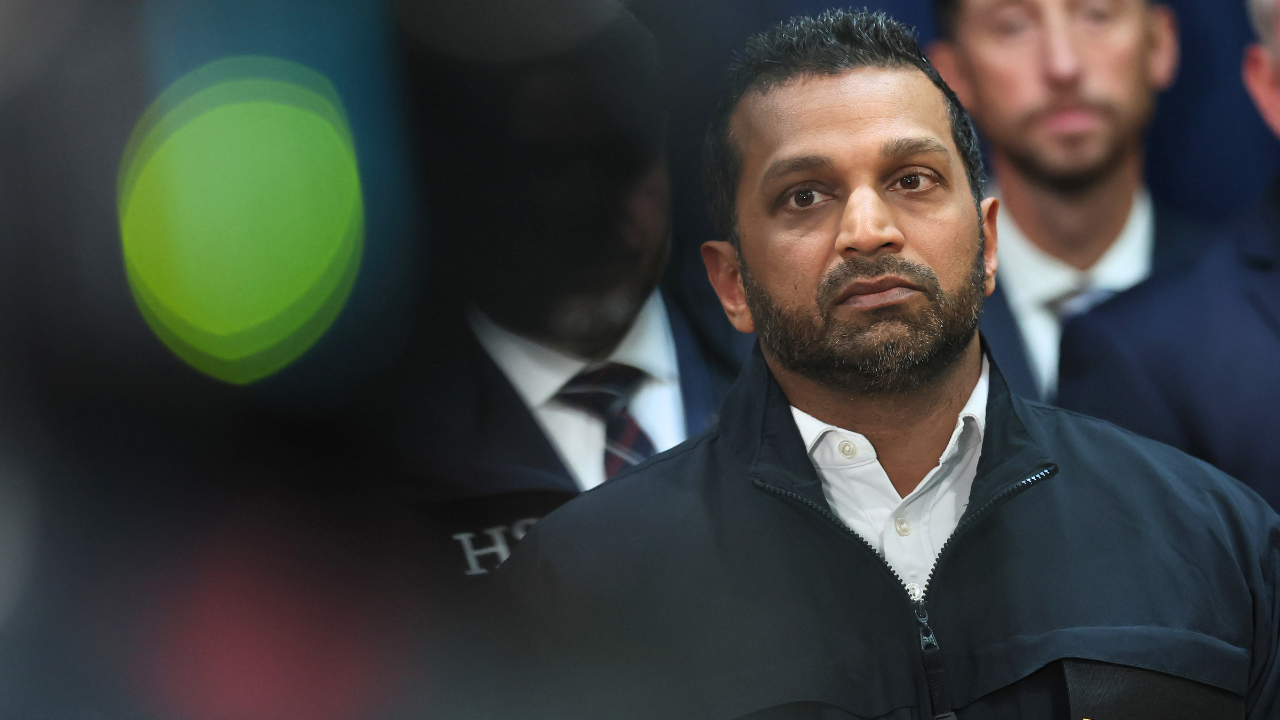
FBI Director Kash Patel said Saturday that counterterrorism and intelligence teams are now on high alert amid ongoing U.S. actions involving Iran.
«Last night, I instructed our Counterterrorism and intelligence teams to be on high alert and mobilize all assisting security assets needed,» Patel wrote on X.
Patel added that while the U.S. military is handling force protection overseas, the FBI «remains at the forefront of deterring attacks here at home» and will continue working around the clock to protect Americans.
FBI RAISES COUNTERTERROR TEAMS TO HIGH ALERT AMID IRAN TENSIONS
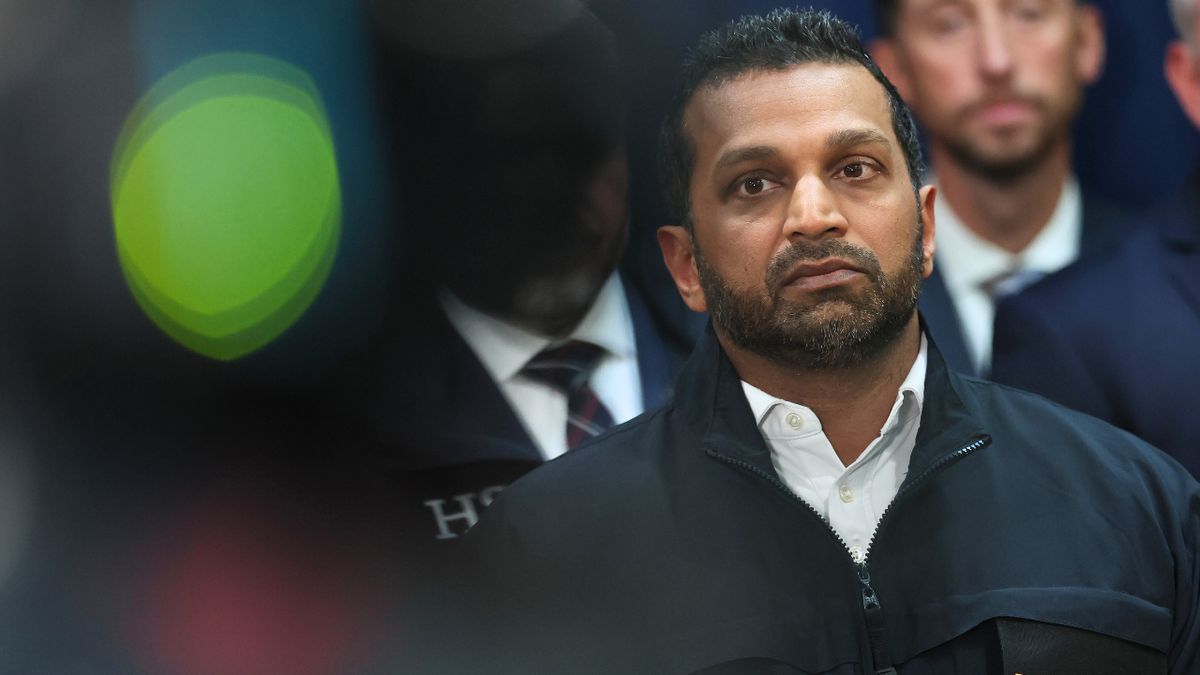
FBI Director Kash Patel stands silently during a press conference on Oct. 23, 2025, in New York City. (Michael M. Santiago/Getty Images)
Jason Pack, a retired FBI supervisory special agent and Fox News contributor, said heightened monitoring is routine when U.S. military operations intersect with adversaries that have historically responded through indirect or unconventional means.
«The intelligence and counterterrorism communities work on this kind of scenario continuously, long before any conflict begins,» Pack said. «When the United States commits to a joint military campaign with Israel, the domestic threat environment doesn’t simply remain static. It could shift, potentially significantly.»
He noted that adversarial actors — including Hezbollah, Hamas’s external networks and Iranian Revolutionary Guard Corps proxies — have historically demonstrated both intent and, in some cases, the capability to retaliate against U.S. military actions.
CLICK HERE TO DOWNLOAD THE FOX NEWS APP
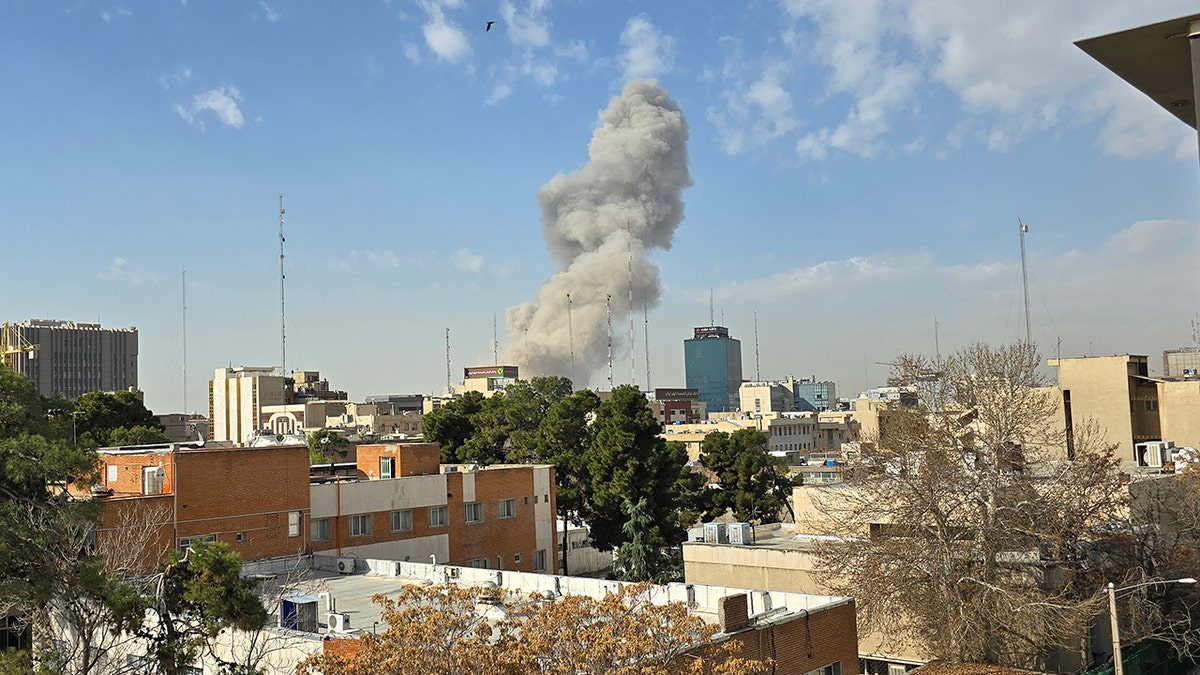
A plume of smoke rises after an explosion on Feb. 28, 2026, in Tehran, Iran. (Majid Saeedi/Getty Images)
Meanwhile, Homeland Security Secretary Kristi Noem said she is «in direct coordination with our federal intelligence and law enforcement partners as we continue to closely monitor and thwart any potential threats to the homeland.»
The heightened alert comes as parts of the Department of Homeland Security face a partial shutdown, raising additional questions about resources and operational strain at a time when federal agencies are on elevated watch.
While no specific plots have been identified, officials acknowledge the threat environment could shift quickly as tensions overseas evolve and whether that escalation reaches American soil remains to be seen.
Fox News Digital’s Michael Dorgan and Kelley Kramer contributed to this report.
war with iran,iran,middle east,middle east foreign policy,fbi

NEWYou can now listen to Fox News articles!
As the White House confirmed on Sunday, the Islamic Republic of Iran’s leadership has contacted the U.S. asking for talks. The list of potential successors to replace Ayatollah Ali Khamenei, who was killed on Saturday by an Israeli airstrike, includes his son and former advisers.
Since the establishment in 1979 of the Islamic Republic, led by the fiery anti-American Ayatollah Ruhollah Khomeini, this will be only the second time that a new supreme leader has been selected.
The potential successors to Khamenei include a list of hard-line anti-Western extremists who, like Khamenei, are set on the destruction of Israel and the continued export of the Islamic revolution.
Ali Larijani warned Trump that US interference would ‘destroy America’s interests’ after president’s protest comments. (Str/Xinhua via Getty Images)
Ali Larijani
One possible successor is regime loyalist Ali Larijani, the secretary of the Supreme National Security Council, who reportedly implemented Khamenei’s plan to massacre over 30,000 Iranians who protested against his regime in January.
On Saturday, he threatened a response in a statement on X on Saturday, writing, «We will make the Zionist criminals and the vile Americans regret it,» adding, «The brave soldiers and the great nation of Iran will deliver an unforgettable lesson to the hell-bound oppressors of the international order.»
In January, the U.S. Department of the Treasury’s Office of Foreign Assets Control (OFAC) sanctioned Larijani as one of «the architects of the Iranian regime’s brutal crackdown on peaceful demonstrators.» The statement added, «Larijani was one of the first Iranian leaders to call for violence in response to the legitimate demands of the Iranian people.»
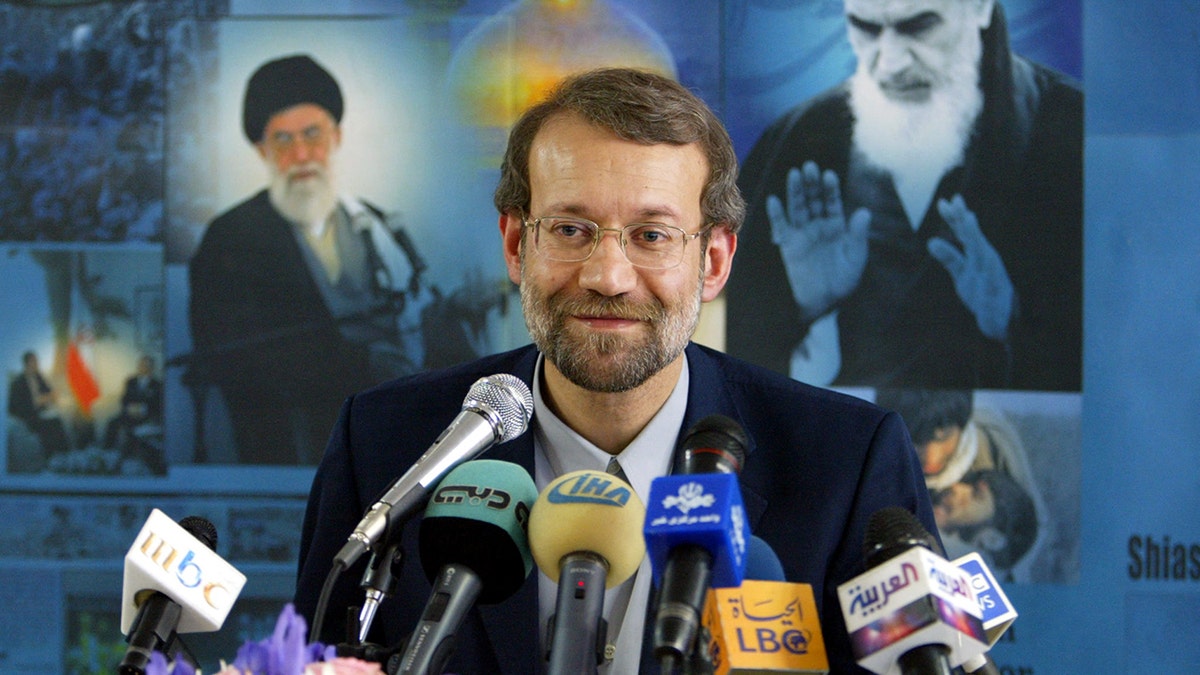
Ali Larijani, addresses a press conference in Tehran, Iran. (Henghameh Fahimi/AFP via Getty Images)
Larijani was the president of the Islamic Republic’s parliament and, like Khamenei, has engaged in Holocaust denial. Larijani was also a commander for the Islamic Revolutionary Guard Corps (IRGC), a U.S. and EU-designated terrorist organization.
TOMAHAWKS SPEARHEADED US STRIKE ON IRAN — WHY PRESIDENTS REACH FOR THIS MISSILE FIRST
Beni Sabti, an Iran expert at the Institute of National Security Studies in Israel, questioned reports claiming that Larijani is favorite to be the next supreme leader. He told Fox News Digital, «Larijani is not a cleric, but he can help some of the candidates who are clerics behind the curtains, such as his brother, Mohammad-Javad Larijani, who was head of the judiciary.»
Mohammad-Javad Larijani

The secretary general of the High Council for Human Rights of the Islamic Republic of Iran, Mohammad-Javad Larijani, attends a meeting with foreign ambassadors in Iran, on June 24, 2019, in the capital Tehran. (Atta Kenare/AFP via Getty Images)
Mohammad-Javad Larijani has called for the destruction of Israel and denied the Holocaust. He was previously secretary general of Iran’s high council for human rights.
As a close adviser to the late supreme leader, he has defended stoning for adultery, declaring it protects «family values» as part of Islamic law.
Mojataba Khamenei
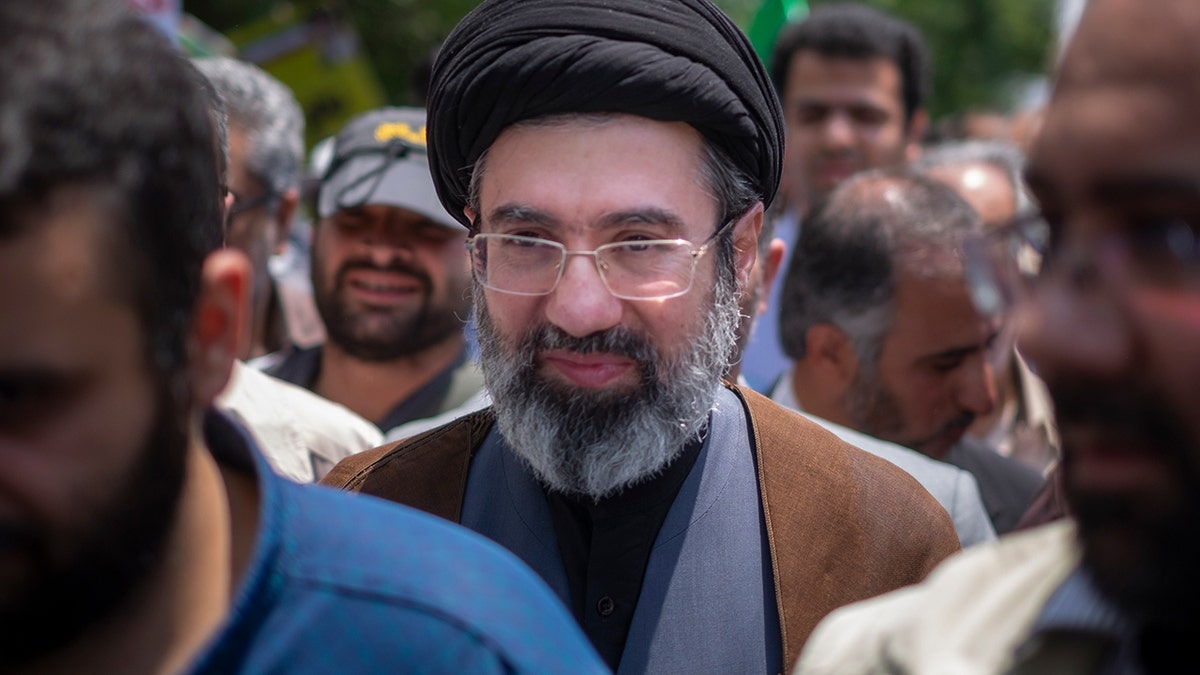
File photo shows Mojtaba Khamenei, son of Iran’s late Supreme Leader Ayatollah Ali Khamenei, attending a demonstration to mark Jerusalem day in Tehran. (Morteza Nikoubazl/NurPhoto via Getty Images)
Another replacement for Khamenei might be his second son, Mojtaba, who works closely with IRGC. The first Trump administration sanctioned him in 2019.
According to the Treasury Department sanction designation, «The Supreme Leader has delegated a part of his leadership responsibilities to Mojataba Khamenei, who worked closely with the commander of the Islamic Revolutionary Guard Corps-Qods Force (IRGC-QF) and also the Basij Resistance Force (Basij) to advance his father’s destabilizing regional ambitions and oppressive domestic objectives.»
JEB BUSH COMMENDS FORMER RIVAL TRUMP’S IRAN OP: ‘THIS IS THEIR TIME TO TAKE THEIR COUNTRY BACK’
Iran International reported that the IRGC seeks a rapid-fire replacement for Khamenei. The Islamic system in Iran prescribes an elected body of 88 senior clerics—the Assembly of Experts—to select the next leader.
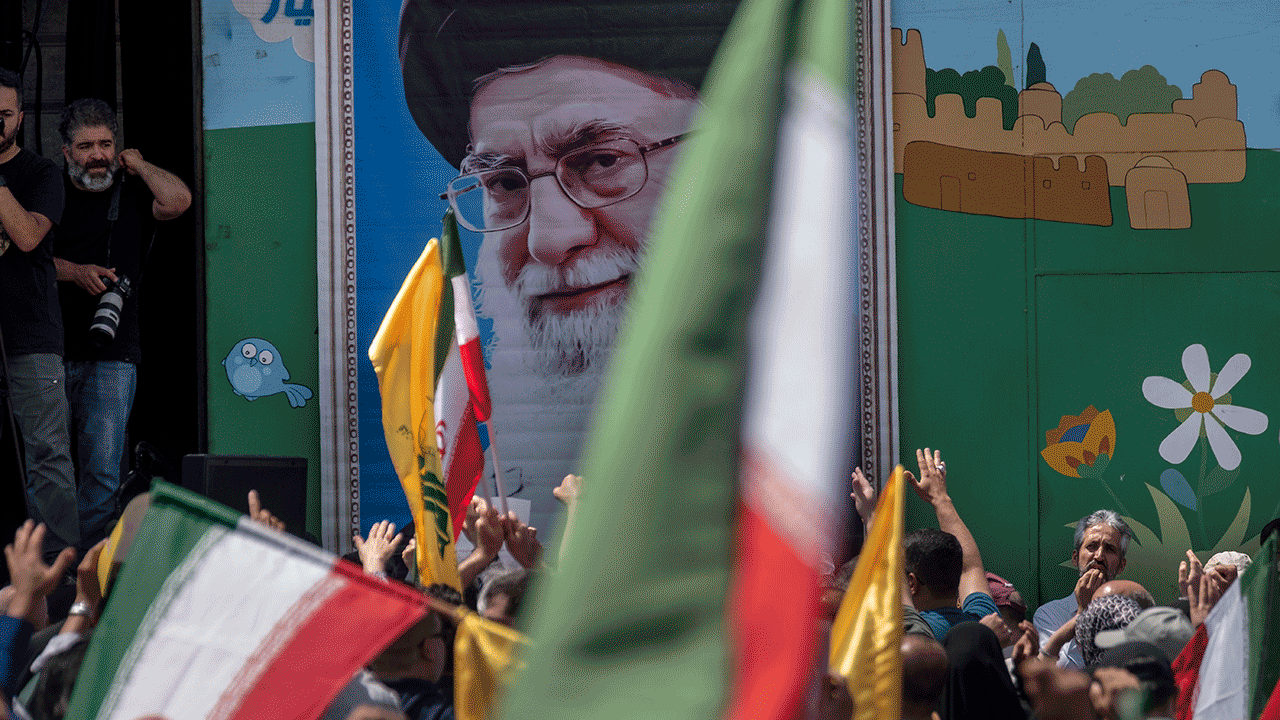
Iranian worshippers hold up their hands as signs of unity with Iran’s Supreme Leader, Ayatollah Ali Khamenei, during an anti-Israeli rally to condemn Israel’s attacks on Iran, in downtown Tehran, Iran, on June 20, 2025. (Morteza Nikoubazl/NurPhoto via Getty Images)
Alireza Arafi
The cleric and jurist Alireza Arafi, 67, who is part of a three-person temporary leadership council to run Iran might also be the successor to Khamenei.
According to the U.S.group United Against a Nuclear Iran, Arafi promised «death» to protesters who knock over the turbans of Iranian Islamic clerics. «Those who attack the turbans of the clergy should know that the turban will become their shroud,» Arafi said.
OBAMA OFFICIAL WHO BACKED IRAN DEAL SPARKS ONLINE OUTRAGE WITH REACTION TO TRUMP’S STRIKE: ‘SIT THIS ONE OUT’
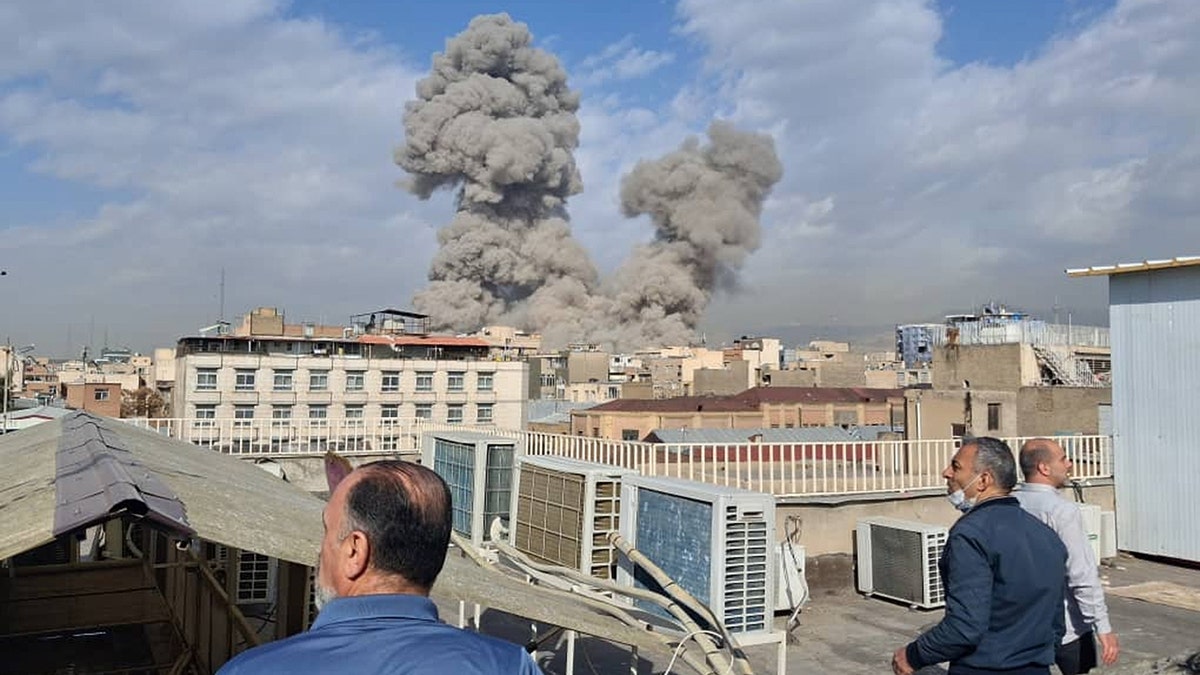
People watch as smoke rises on the skyline after an explosion in Tehran, Iran, Saturday, Feb. 28, 2026.(AP Photo) (AP Photo)
Ayatollah Mohammad-Mehdi Mirbagheri
The extremist Ayatollah Mohammad-Mehdi Mirbagheri is also a contender to replace Khamenei. Mirbagheri argues for fighting and overcoming «infidels.»
Mirbagheri has quoted Iran’s first Supreme Leader, Ruhollah Khomeini, declaring that a «new culture based on Islam in the world» would mean «hardship, martyrdom and hunger» and that Iranian people had «voluntarily chosen» to embrace this activity, according to Iran International. Mirbagheri’s theological credentials position him as a natural replacement for Khamenei.
Other names
Another clerical successor to Khamenei being discussed is Hassan Khomeini, the grandson of Ayatollah Ruhollah Khomeini. He is the custodian of the Khomeini mausoleum and, at 53 is young by the Islamic Republic’s standards for leadership.
United Against a Nuclear Iran ranked Ayatollah Seyyed Hashem Hosseini Bushehri, who was born in 1956 in Bardkhun, Bushehr, a second tier candidate to replace Khamenei.
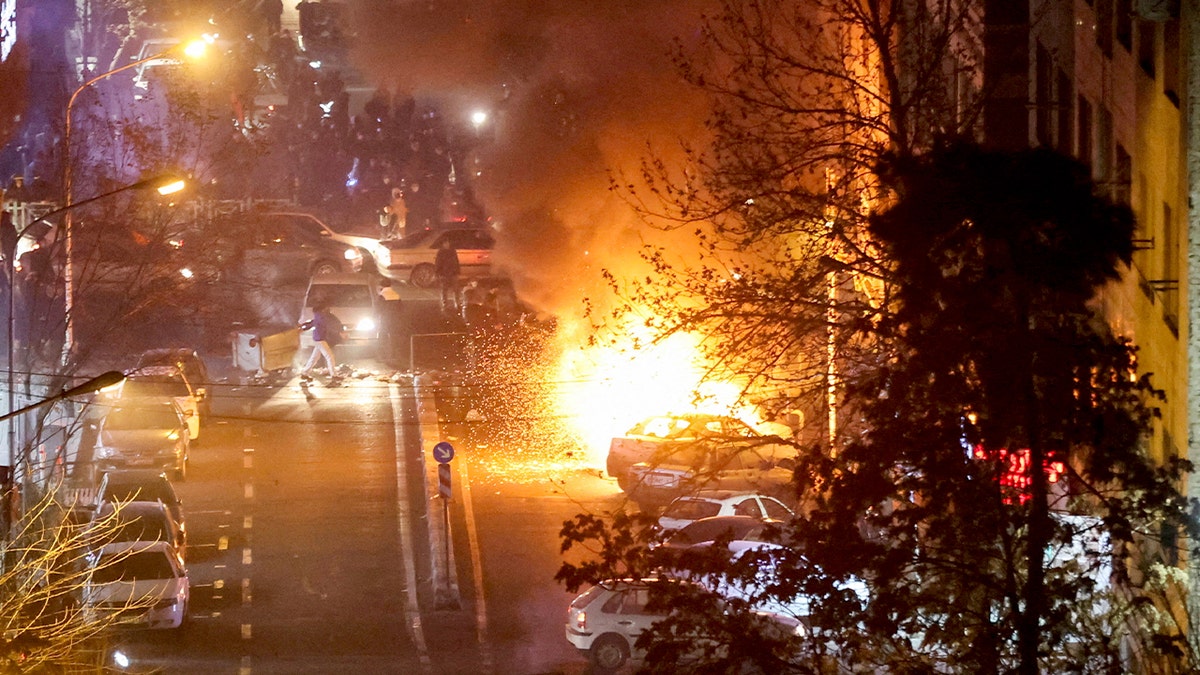
Cars burn in a street during a protest over the collapse of the currency’s value in Tehran, Iran, Jan. 8, 2026. (Stringer/WANA (West Asia News Agency) via REUTERS)
IRAN’S TERROR PROXIES FROM IRAQ-TO-LEBANON SAY READY TO RESPOND TO US-ISRAEL ATTACKS
«Bushehr, is a powerful figure in Iran’s religious and academic spheres. He embarked on his theological education in Bushehr before moving to Qom to further his studies.
According to UANI, In 2024, Bushehri urged Iranian women to «address issues such as the status of women’s rights in Western societies and the flaws that exist in this area in the West,» which would prevent the «enemy [the West]» to «not even have a chance to challenges us [Iran].»
Iran analyst, Sabti, who was born in Tehran, said, «I don’t think that Israel and the U.S. should allow them to choose the next leader.» He compared the successor system to Hamas when Israel eliminates a Hamas terrorist leader, and he is swiftly replaced with a new leader.
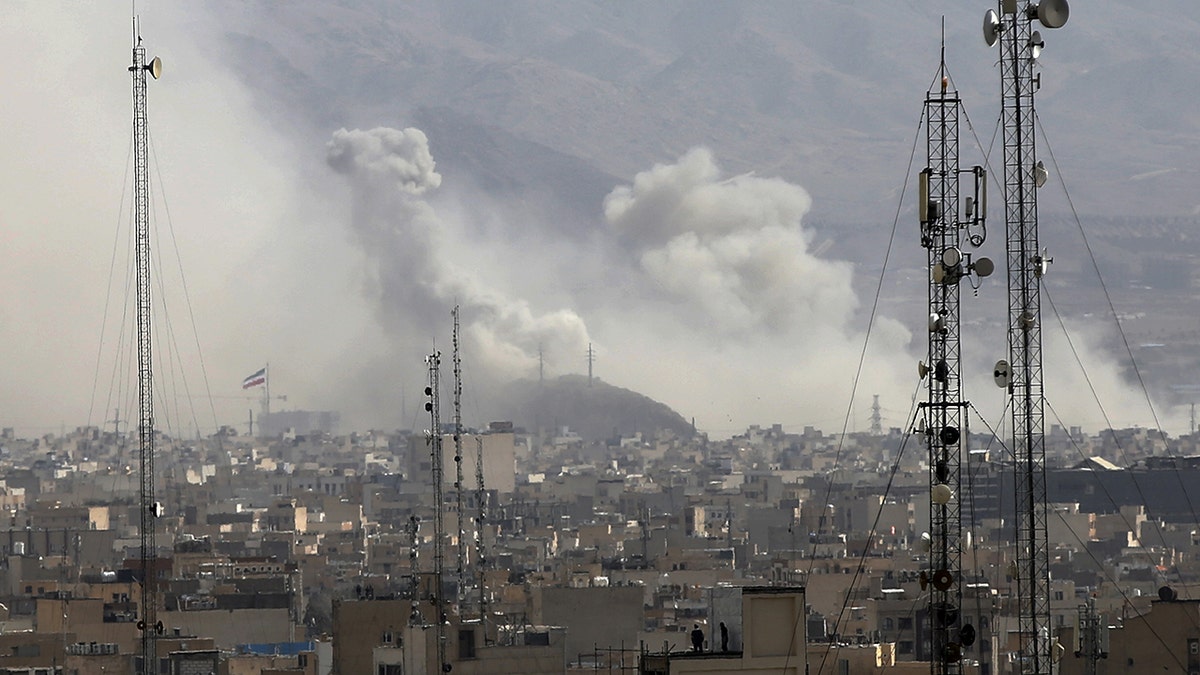
TEHRAN, IRAN – FEBRUARY 28: Smoke rises over the city center after an Israeli army launches 2nd wave of airstrikes on Iran on Feb. 28, 2026. (Fatemeh Bahrami/Anadolu via Getty Images)
«There is a need to «prevent the next leader from being chosen,» he said. «Maybe we can eliminate the next one even before he is chosen.»
He said it is important to «break the system» to prevent the continuation of terrorism. «It is bad for Arab countries and Israel if the regime remains the same» in Iran.
CLICK HERE TO DOWNLOAD THE FOX NEWS APP
Sabti said the regime can continue to build its illicit nuclear weapons program, ballistic missiles and sponsor terrorism, adding it is better to dissolve the regime and «bring in a new system.
He concluded that regime change requires «talking to the people,» and, «maybe it is time for them to come out and make the good revolution.»
Related Article
war with iran,ali khamenei,terrorism,middle east,conflicts

Mica Viciconte expuso a Luana de Gran Hermano: fueron excompañeras de Combate y lanzó una revelación inesperada

Kicillof prepara su discurso para la Legislatura y deja abiertas las réplicas a Milei hasta último momento

Trapitos, salud y espacio público: las reformas que impulsará La Libertad Avanza en CABA tras el discurso de Milei en el Congreso

La economía que viene: qué falta para destrabar los USD 1.000 millones del desembolso del FMI

Canales para ver el Newell´s vs. Rosario Central por el Torneo Apertura

Un intendente en Santa Fe fue denunciado por su esposa por malos tratos e intimidación

Ginette Reynal dio una rotunda marcha atrás con una decisión que tomó hace dos meses: “No aguanto más”

Catherine Fulop contó el difícil momento que atraviesa su madre en Venezuela: “Está postrada”

Alarma por la salud de Divina Gloria tras salir de Gran Hermano: “La internaron directamente en terapia intensiva”

¡Titi revolucionó Gran Hermano! Cuáles son las 5 cosas que ya extraña: «Accesorios, pilates, bondiola, auriculares y bailar»

 CHIMENTOS3 días ago
Ginette Reynal dio una rotunda marcha atrás con una decisión que tomó hace dos meses: “No aguanto más”
- CHIMENTOS3 días ago
Alarma por la salud de Divina Gloria tras salir de Gran Hermano: “La internaron directamente en terapia intensiva”
- CHIMENTOS2 días ago
¡Titi revolucionó Gran Hermano! Cuáles son las 5 cosas que ya extraña: «Accesorios, pilates, bondiola, auriculares y bailar»