INTERNACIONAL
Tensión con Estados Unidos: un Castro podría ser el sucesor de Díaz-Canel en Cuba




INTERNACIONAL
US moves airborne troops, Marines as Iran rejects ceasefire, raising ground war potential
NEWYou can now listen to Fox News articles!
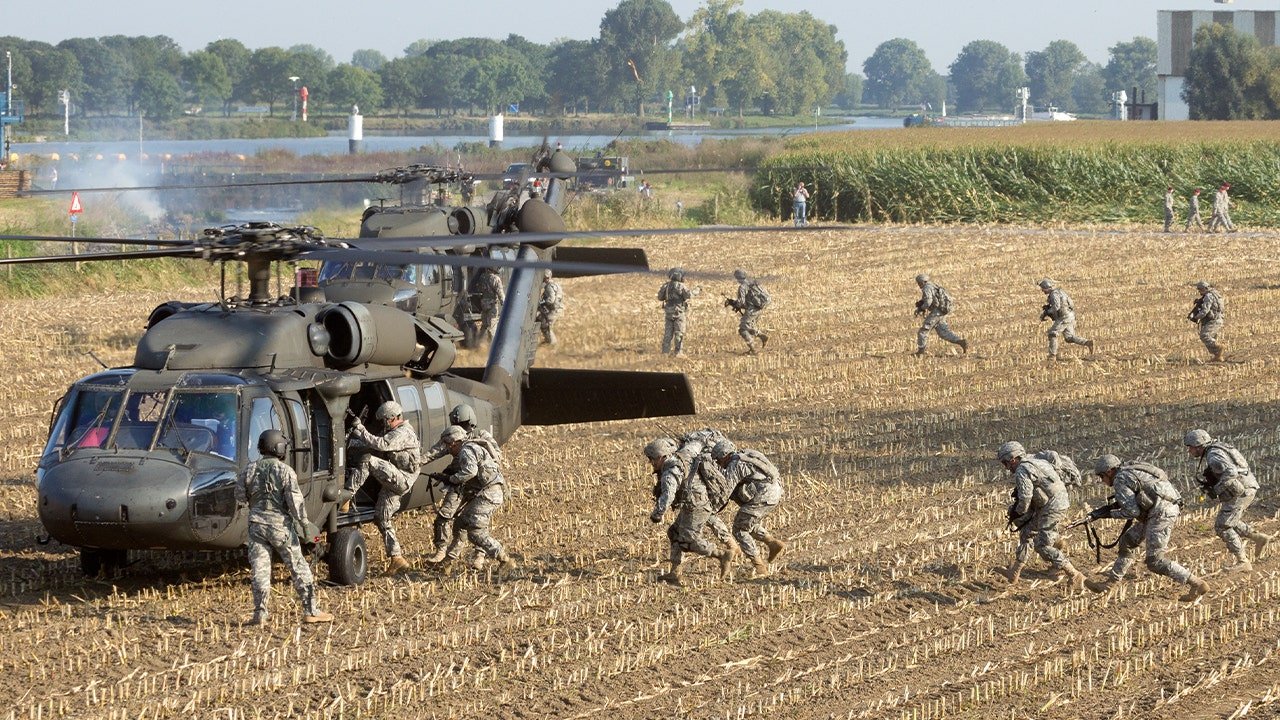
The U.S. is positioning ground-capable forces in the Middle East as Iran rejected a ceasefire proposal Wednesday, a shift that gives Washington new — though limited and high-risk — options for potential operations inside Iran.
Military experts say the deployments are not a precursor to a large-scale invasion, but instead position the U.S. for targeted, short-duration missions — options that have taken on new relevance as diplomatic off-ramps narrow.
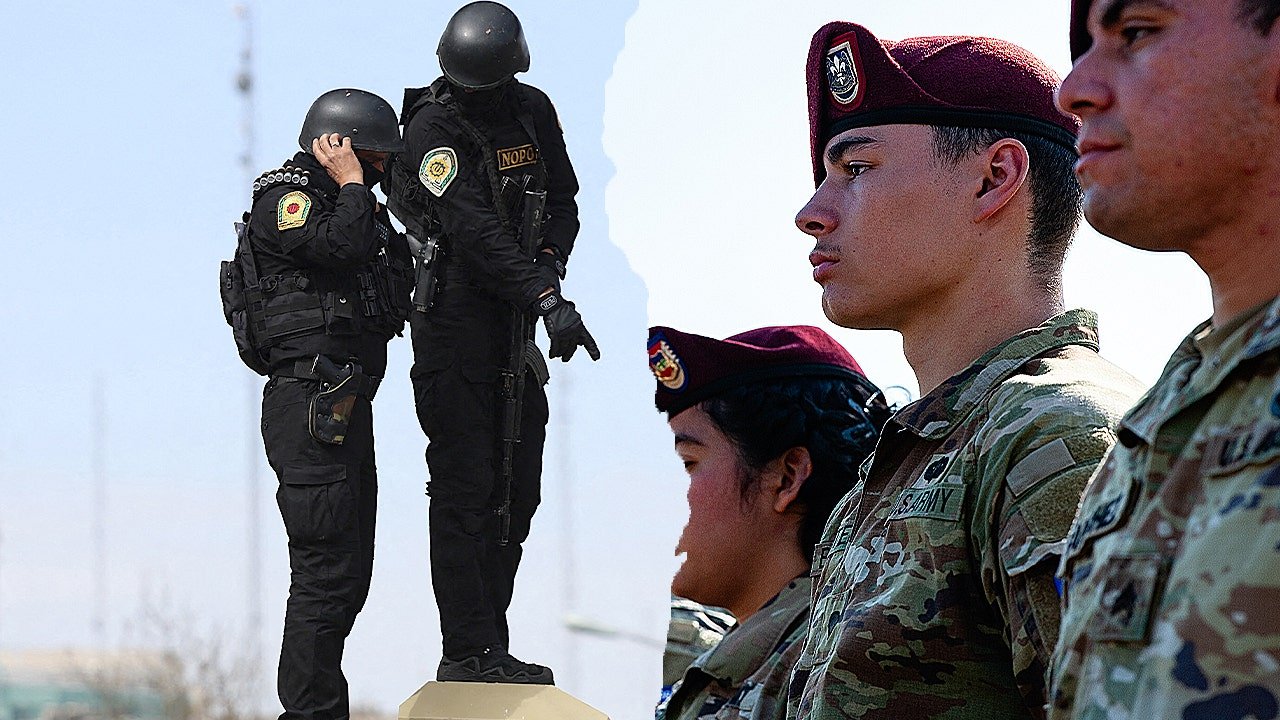
In recent days, the Pentagon has moved ground-capable forces into the region, including around 1,000 paratroopers, with the Army’s 82nd Airborne Division — among them the 1st Brigade Combat Team, a core component of the military’s Immediate Response Force rapid-response unit designed to deploy on short notice to crises anywhere in the world — along with roughly 5,000 Marines and sailors assigned to the 31st Marine Expeditionary Unit and its Amphibious Ready Group, led by the amphibious assault ship Tripoli.
Marine expeditionary units and airborne forces often are among the first U.S. units deployed in a conflict, designed to rapidly establish an initial presence and respond to emerging crises.
IRAN’S REMAINING WEAPONS: HOW TEHRAN CAN STILL DISRUPT THE STRAIT OF HORMUZ
The U.S. is positioning ground-capable forces in the Middle East after Iran rejected a ceasefire proposal, a shift that gives Washington new—though limited and high-risk—options for potential operations inside Iran. (Vanderwolf Images via Getty)
The White House has emphasized the deployments are meant to preserve flexibility as the conflict evolves — a posture that now carries greater weight after Iran rejected a U.S.-backed ceasefire proposal.
«The president likes to maintain options at his disposal,» press secretary Karoline Leavitt said Wednesday at a White House press briefing. «It’s the Pentagon’s job to provide those options to the commander in chief.»
Lawmakers on the Armed Services Committees emerged from a classified briefing on Iran Wednesday expressing frustration over a lack of clarity from the administration.
«We want to know more about what’s going on, what the options are, and why they’re being considered,» House Armed Services Chairman Rep. Mike Rogers, R-Ala., told reporters. «We’re just not getting enough answers.»
«Let me put it this way, I can see why he might have said that,» Sen. Roger Wicker, R-Mo., chairman of the Senate Armed Services Committee, said in agreement.
Military experts said the types of forces being deployed point to a more limited set of options on the ground.
«It is not for the type of ground invasion that we saw in Iraq,» James Robbins, Institute of World Politics dean and former special assistant to Defense Secretary Donald Rumsfeld, told Fox News Digital. «There simply aren’t enough troops.»
The U.S. already maintains roughly 40,000 troops to 50,000 troops across the Middle East, with recent deployments adding several thousand more forces, including Marines and airborne units.
The Pentagon did not respond to a request for comment.
What limited ground options could look like
If U.S. forces were used inside Iran, experts say operations likely would focus on specific, high-value objectives rather than holding territory.
One likely focus would be along Iran’s southern coast near the Strait of Hormuz — a critical global shipping lane that would become a central pressure point in any limited U.S. ground option.
Iranian forces have positioned missiles, drones and naval assets throughout the region, creating a persistent threat environment for any operation.
«The most logical step is to try to secure the straits by taking some key positions inside Iran,» Ehud Eilam, a former official with Israel’s Ministry of Defense, told Fox News Digital.
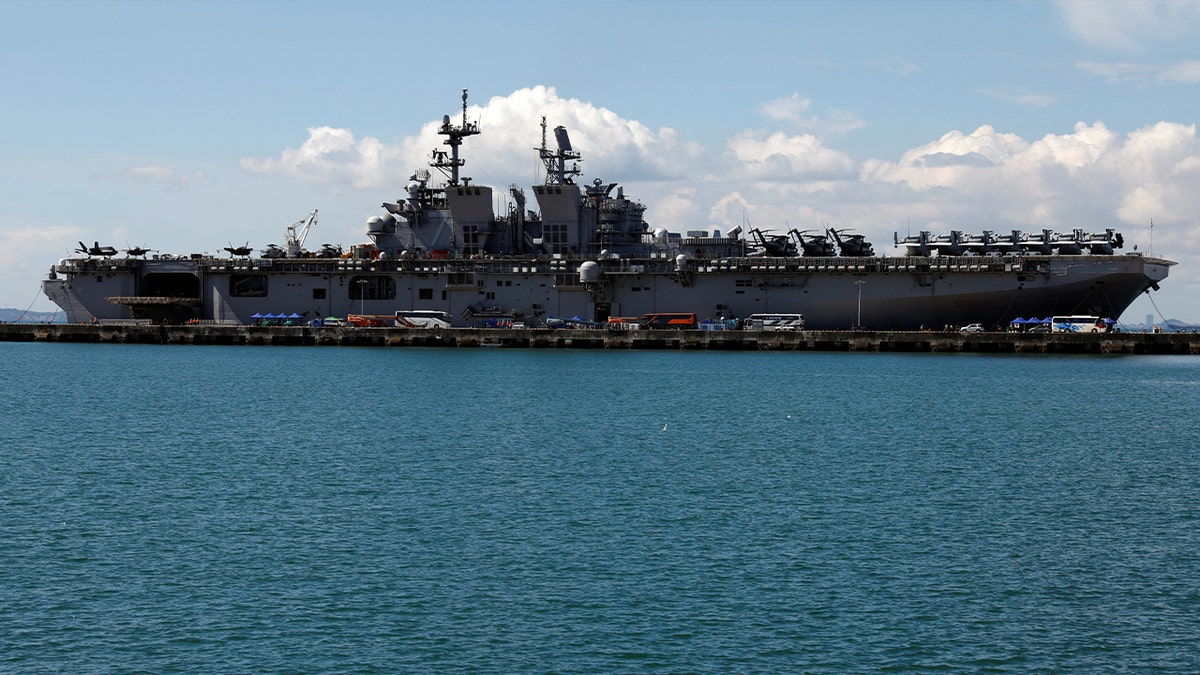
USS Tripoli is headed to the Middle East. (Edgar Su/Reuters)
«For the Marines, it would probably be somewhere along the Iranian side of the Persian Gulf, around the straits or nearby to establish a base of operations,» Robbins said.
Trump has said the U.S. Navy could escort commercial tankers through the waterway if necessary, as Iranian threats have disrupted traffic in one of the world’s most critical energy choke points. But no plans have been enacted to do so, according to officials.
But even limited objectives would be difficult to secure or sustain under constant threat.
«It’s a large gulf and there’s lots of places you could drop a mine or shoot a cruise missile from or shoot a drone from,» said Adm. Kevin Donegan, former commander of the U.S. Navy’s Fifth Fleet.
Beyond coastal positions, U.S. forces could be used for short-duration missions targeting specific military assets — such as missile launch sites, radar systems or other infrastructure that cannot be fully neutralized from the air.
AFTER THE STRIKES, HOW WOULD THE US SECURE IRAN’S ENRICHED URANIUM?
Eilam said special operations forces could also be used for targeted missions inside Iran, including striking military infrastructure or capturing key personnel.
«They may come and capture a certain objective, destroy some Iranian radar, or some Iranian facility, take some generals into captivity,» Eilam said.
Such operations would be aimed at degrading Iran’s capabilities and supporting broader air and naval operations, rather than holding territory.
Some experts noted that small special operations teams can operate inside Iran without public visibility, making it difficult to assess the full scope of current activity.
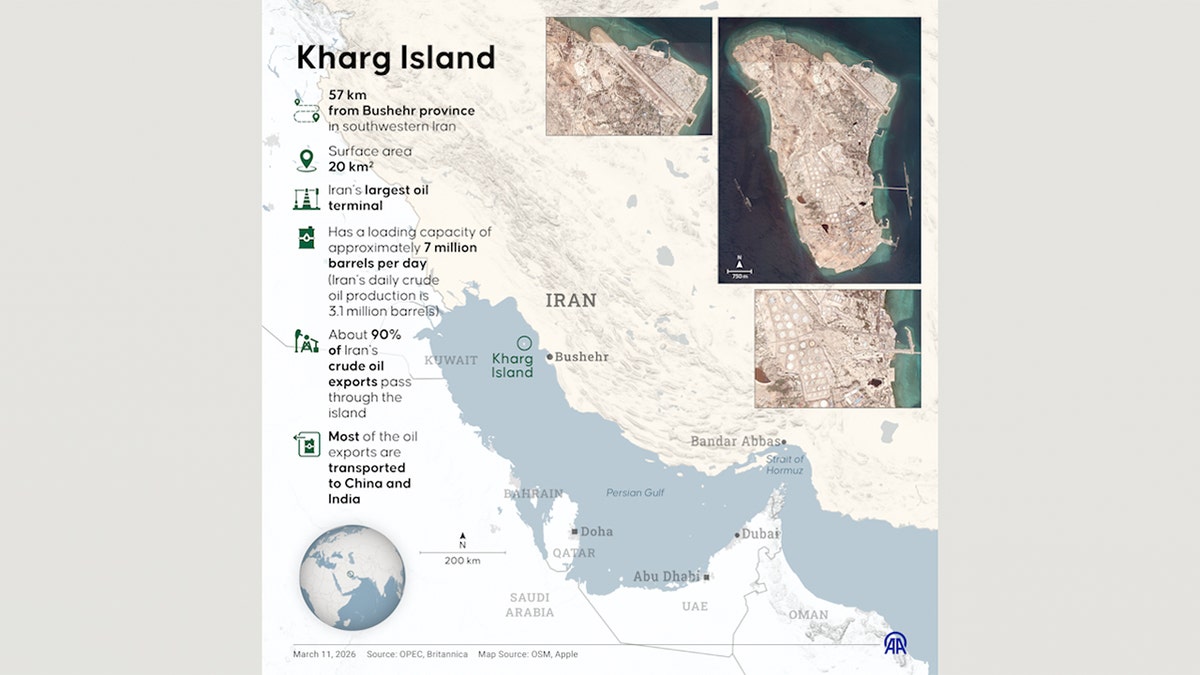
(Photo by Elif Acar/Anadolu via Getty Images)
Securing nuclear infrastructure
One potential objective for ground forces would be securing Iran’s nuclear infrastructure.
Nuclear experts have insisted that the material could not be destroyed by airstrikes alone — a presence on the ground would be essential.
Robbins said U.S. troops could be used to secure nuclear material or facilities — but not under active fire.
«That would have to be more under a permissive environment,» Robbins said. «It could not really well be done under fire.»
Iran is believed to have roughly 970 pounds of uranium enriched to near weapons-grade levels, though international inspectors say they can no longer verify the size or location of that stockpile.
In past conflicts, U.S. forces have been tasked with securing weapons sites or sensitive materials even in unstable or contested environments, particularly during and after the 2003 invasion of Iraq, when specialized units conducted extensive searches of hundreds of facilities.
Any such operation in Iran would be complex. Key nuclear facilities are hardened, dispersed, and in some cases buried deep underground, making them difficult to access or secure quickly.
What the US is unlikely to do — and why
Experts cautioned that some of the more aggressive scenarios being discussed — such as seizing Iran’s key oil export hub at Kharg Island — are unlikely to be pursued.
While such a move could, in theory, choke off a major source of revenue for Iran, they said similar effects could be achieved through less exposed means.
«You could achieve that desired outcome just by constraining the flow that comes out of Kharg after it gets outside the Gulf,» Donegan said.
Robbins also questioned the strategic value of seizing the island.
«To what end would be the question,» he said. «I don’t see an endgame to seizing Kharg.»
Experts warned that occupying territory like Kharg would expose U.S. forces as fixed targets while creating major logistical challenges, requiring continuous resupply under the threat of Iranian missile and drone attacks.
«Occupying territory creates a vulnerability, because you now become a target,» Donegan said.
Instead, they said U.S. forces are better suited for limited operations ashore that do not require holding ground.
«Doing something ashore to eliminate things, because you have to be on the ground to do it, and leaving — that’s also a capability,» Donegan said.
The buildup also has included increased activity from U.S. military transport aircraft, including C-17 and C-130 airlifters used to move troops and heavy equipment into the region, part of the logistical groundwork that would be required for any potential ground operations.
Iran prepares defenses at Kharg and across the region
Behind the scenes, Iranians likely are preparing for all contingencies in a ground war. Iranian officials dismissed Trump’s talk of «productive» negotiations as «psychological warfare» and negotiations weren’t happening.
Iranian Lt. Col. Ebrahim Zolfaghari, a military spokesperson, mocked the U.S. attempts at a ceasefire deal Wednesday in a video statement, asking, «Have your internal conflicts reached the point where you are negotiating with yourselves?»
Any U.S. ground operation targeting Kharg Island would face an environment Iran already has prepared and militarized.
The island is not just an oil hub but a coastal military hub. Recent U.S. strikes hit more than 90 Iranian military targets on the island, including missile storage bunkers and naval mine facilities.
Iran has been moving additional forces and air defenses, as well as laying traps, at Kharg for weeks in preparation for a potential U.S. operation to seize the island, sources familiar with the intelligence told CNN.
CLICK HERE TO DOWNLOAD THE FOX NEWS APP
Beyond the island itself, Iranian forces have increased military readiness across the region.
Reporting shows the repositioning of missile units, expanded air defense activity, and increased naval patrols in the Strait of Hormuz — part of a broader effort to disperse assets and reduce vulnerability to strikes.
war with iran, conflicts defense, middle east foreign policy
INTERNACIONAL
US troops brace for ‘hit-and-run’ guerilla attacks as 82nd Airborne deploys to Iran, military analyst warns
US deploying 1,500 troops from 82nd Airborne
Chief national security correspondent Jennifer Griffin reports the latest on the conflict with Iran as about 1,500 additional troops and key staff are deployed to the Middle East.
NEWYou can now listen to Fox News articles!
Iran could significantly increase U.S. casualties if its elite military and proxy forces shift to guerrilla-style hit-and-run attacks in the region, a leading military analyst has warned.
Michael Eisenstadt of the Washington Institute for Near East Policy spoke as the Pentagon moved elements of the Army’s 82nd Airborne Division into the Middle East amid a new escalation in the conflict, according to reports.
«Iran has large infantry units in its military that are equivalent to the brigade combat team of the 82nd Airborne,» Eisenstadt, a former U.S. Army Reserve officer, told Fox News Digital.
«The 82nd Force is too small to cause significant harm to Iran, but it is large enough to be vulnerable to Iranian strikes, and this would enable Iran to significantly increase U.S. casualties,» he said.
HEGSETH WARNS ‘MORE CASUALTIES’ EXPECTED IN OPERATION EPIC FURY AGAINST IRAN
The 82nd Airborne Division deployment to the Middle East is intended to pressure Iran into accepting U.S. ceasefire terms, military analyst Michael Eisenstadt says. (Sarah Blake Morgan/AP Photo)
Eisenstadt, who has worked as a U.S. government military analyst, claimed that, even if major conventional operations begin to wind down in the Middle East region, the danger may only evolve rather than disappear.
«We could see an end to major combat operations, with activity shifting to guerrilla-style hit-and-run attacks in the Gulf and other gray-zone activities by Iran,» he said.
«Think of the aftermath of the 1991 Gulf War with Iraq, in which we had to contain the Iraqis for a decade after a very successful war.»
US COULD TAKE IRAN’S MAIN OIL EXPORT HUB ‘AT A TIME OF OUR CHOOSING,’ JACK KEANE SAYS
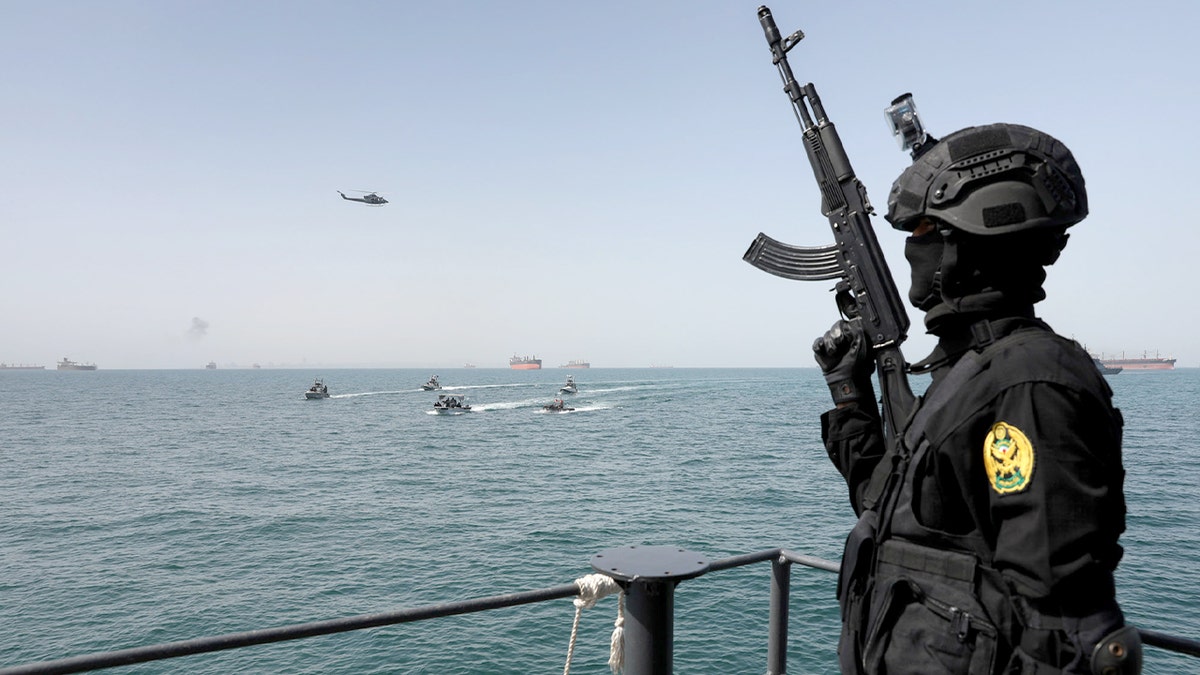
Naval units from Iran and Russia simulate the rescue of a hijacked vessel during joint drills, Feb. 19, at the Port of Bandar Abbas in Hormozgan, Iran. (Iranian Army/Handout/Anadolu via Getty Images)
Fox News chief national security correspondent Jennifer Griffin reported Wednesday that the U.S. has ordered the deployment of an additional 82nd Airborne forces to the region.
The contingent is expected to include Maj. Gen. Brandon R. Tegtmeier, the division commander, elements of his headquarters staff, and infantry battalions from the division’s Immediate Response Force.
Officials also indicated that the total number of troops ultimately sent could still change.
Eisenstadt said this new deployment is intended to increase pressure on Tehran as the U.S. pushes for new ceasefire terms, set in place by President Donald Trump.
WINNING THE BATTLES, LOSING THE WAR? AMERICA MUST DEFINE THE ENDGAME IN IRAN
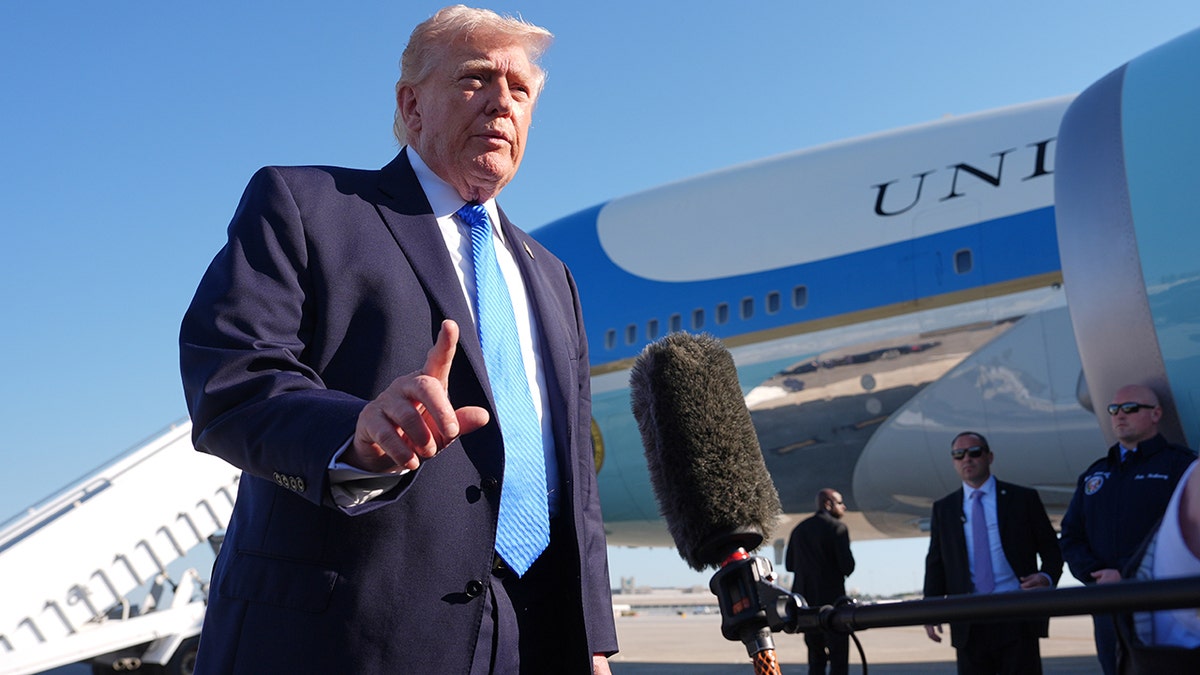
President Donald Trump speaks with the media before boarding Air Force One, Monday, at Palm Beach International Airport in West Palm Beach, Fla. (Mark Schiefelbein/AP Photo)
«This deployment is intended to create leverage over Iran and pressure it to accept U.S. terms for a ceasefire agreement. It would also create military options if Iran rejects those terms,» he said.
In that scenario, he said, the 82nd could potentially operate alongside Marine expeditionary units in operations to seize and hold terrain, including Kharg Island, located roughly 20 miles off Iran’s Gulf coast.
U.S. forces struck military targets there March 13, destroying more than 90 Iranian military sites while deliberately sparing key oil infrastructure, according to multiple reports.
IRAN’S REMAINING WEAPONS: HOW TEHRAN CAN STILL DISRUPT THE STRAIT OF HORMUZ
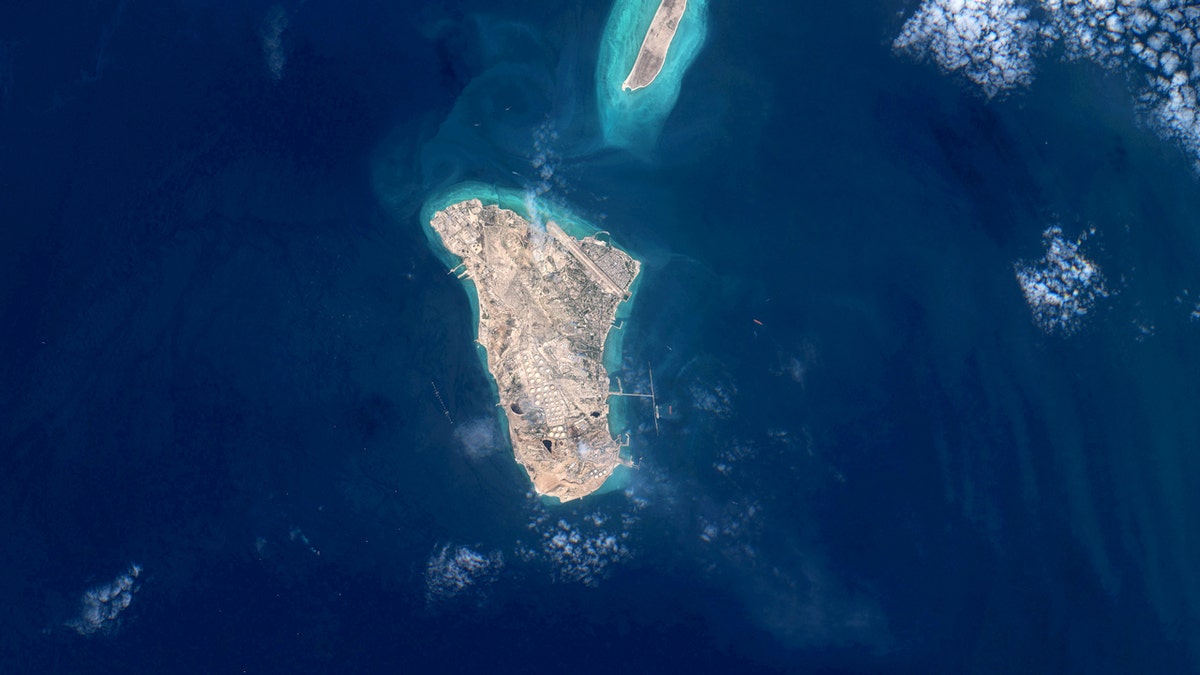
Satellite view of Kharg Island, located in the Persian Gulf off the coast of Iran. (Gallo Images/Orbital Horizon/Copernicus Sentinel Data 2024)
«The brigade combat team of the 82nd could work with the 11th and 31st MEUs, or independently, to seize and hold terrain — such as Kharg Island,» Eisenstadt said.
«This would provide leverage over Iran by denying it the ability to export oil and helping end the war on terms favorable to the U.S.»
«There are risks involved though, because Iranian units on the mainland could bombard Kharg Island and inflict casualties on U.S. troops there also,» Eisenstadt said.
JACK KEANE WARNS CEASEFIRE WITH IRAN WOULD ‘PLAY RIGHT INTO THEIR HANDS’ AS TRUMP SIGNALS DEAL PROGRESS
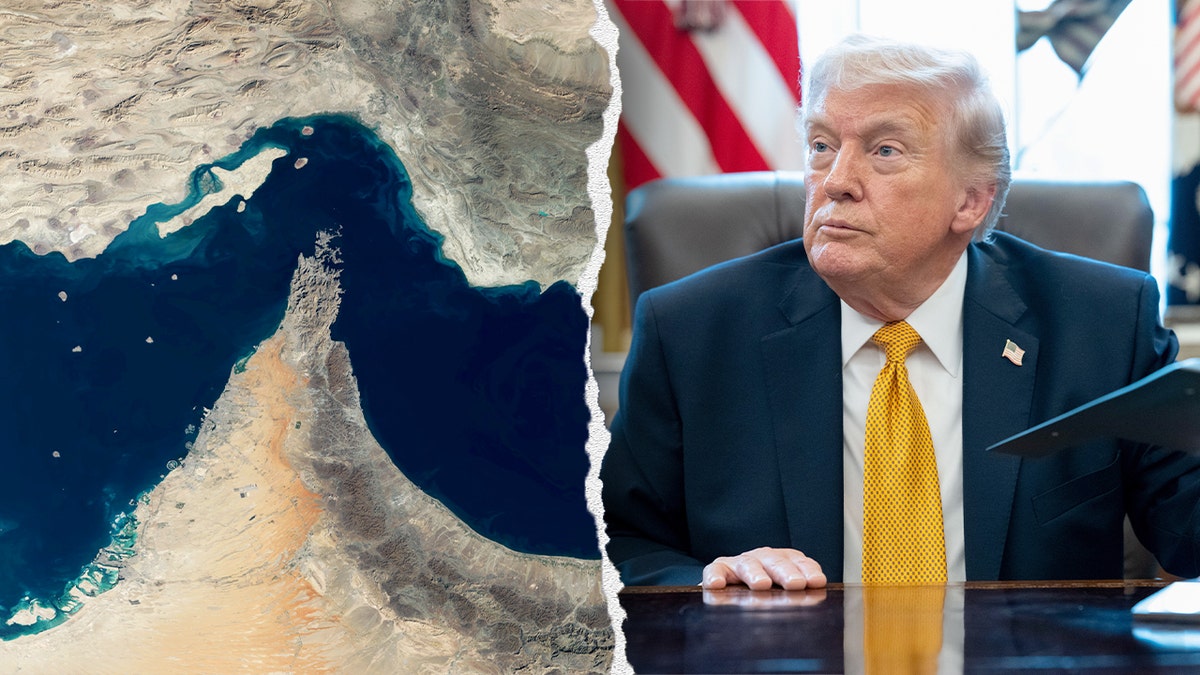
President Donald Trump warned on Saturday that the U.S. could strike Iranian power plants if the Strait of Hormuz is not reopened. (Aaron Schwartz/UPI/Bloomberg via Getty Images; Gallo Images/Orbital Horizon/Copernicus Sentinel Data 2025 via Getty Images)
The latest military buildup comes as the conflict that began with Operation Epic Fury on Feb. 28, has also centered on the Strait of Hormuz, with Iran restricting access.
«The 82nd deployment is intended to increase psychological pressure on Iran and support efforts to reopen the Strait of Hormuz so it can once again be used by all countries,» Eisenstadt explained.
The 82nd Airborne is one of the U.S. military’s premier rapid-response units, trained to parachute into hostile or contested territory to secure key ground and airfields.
CLICK HERE TO DOWNLOAD THE FOX NEWS APP
Portions of the division have also spent recent days at the Joint Readiness Training Center, sharpening infiltration, surveillance, combat and resupply skills, Axios reported.
«Iranian military officials have welcomed news of the dispatch of these units to the Gulf because it potentially creates options for them to impose costs on the U.S.,» Eisenstadt said.
war with iran, wars, iran, us marines, military, pentagon, world
NEWYou can now listen to Fox News articles!
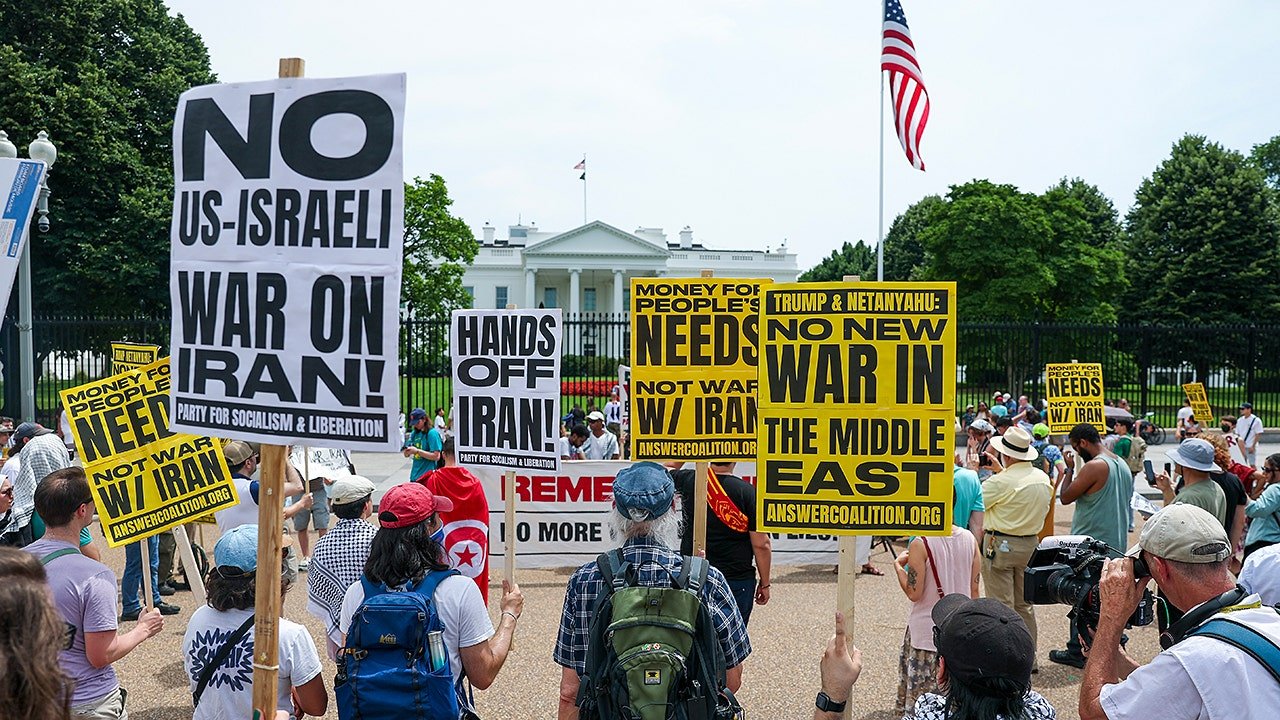
Voters are split on what role the United States should play in the world, while attitudes on the military action in Iran reflect sharp partisanship, according to a new Fox News national survey.
Forty-two percent support the current U.S. military action against Iran, and 58% oppose it, including nearly 4 in 10 who are strongly opposed.
The partisan divide is stark: 77% of Republicans support the effort compared to 12% of Democrats and 28% of independents. Within the GOP, support ranges from 90% among MAGA supporters to 52% of non-MAGA Republicans.
FOX NEWS POLL: VOTERS EXPECT AI TO TRANSFORM OUR LIVES — BUT TODAY IS NOT THAT DAY
The gender divide is less pronounced, with support at 38% among women and 45% among men.
Support is tempered by doubts about the long-term outcome, as more voters believe it will make the United States less safe rather than safer (44% vs. 33%). Another quarter think it won’t make much difference.
On the broader question of what U.S. foreign policy should be, half (50%) say the U.S. should be more engaged and take the lead in world events, while 48% prefer a less engaged, more reactive approach. Republicans favor engagement (72%), while Democrats prefer a less-engaged posture (64%). MAGA supporters are the most pro-engagement (80%), followed by voters who have served in the U.S. military (70%).
FOX NEWS POLL: SOCIALISM GAINING GROUND AMONG VOTERS
Voters largely agree that the most important U.S. objectives in Iran should be reducing its ability to support terrorism in the region (70%), ending Iran’s nuclear weapons program (69%), and protecting the flow of oil from the region (66%). A slim majority says the same about bringing about regime change (53%).
Some 64% of voters disapprove of how President Trump is handling Iran, up from 57% disapproval in January. On foreign policy, 62% disapprove, up from 60% last month.
Trump’s overall job rating stands at 41% approve and 59% disapprove. For comparison, former President Barack Obama’s job rating at this same point in his second term was 40% approve vs. 53% disapprove (March 2014).
The president’s 59% disapproval rating is the highest for either term. Nearly half, 47%, strongly disapprove. Last month, his rating was 43% approve vs. 57% disapprove. A year ago, his marks were underwater by only 2 points: 49% vs. 51%.
Approval of Trump among Republicans has slipped to a second-term low of 84%, down from 92% last March. At the same time, an all-time high 16% of Republicans disapprove. This shift can be attributed, at least in part, to declining support among non-MAGA Republicans, as approval dropped 11 points in the last year among this group (70% in March 2025 to 59% today). Virtually all MAGA Republicans continue to approve of Trump, with 98% approving a year ago and 97% now.
Among Democrats, 95% disapprove — marking the fourth time this term disapproval of Trump reached a record high. Among independents, 25% approve, 75% disapprove.
Evaluations of the U.S. military’s performance in the Iranian conflict are more positive than negative: 58% rate it as excellent or good, but a substantial 41% say only fair or poor.
When asked how things are going in Iran, 47% of voters say the effort is going well, while a larger 52% disagrees. Only one in five say things are going «very» well (19%).
Most Democrats say things are going badly in Iran (79%) and rate the military negatively (63% only fair or poor), while most Republicans say things are going well (81%) and rate U.S. forces positively (86% excellent or good).
«Historically, foreign policy attitudes have been notoriously context dependent,» says Republican Daron Shaw, who conducts Fox News polls with Democrat Chris Anderson. «Today, it seems many partisans rate the Iranian conflict based on their broader perceptions of Trump. Facts on the ground are interpreted to conform to partisan predispositions.»
As the conflict enters its fourth week, few expect the swift conclusion Trump predicted. Only 13% believe it will be over in a matter of weeks, while 37% expect it to last months, and 15% anticipate a full year. Some 35% think the end is more than a year away.
Republicans are more likely to expect a quick resolution, while Democrats think it will be a long haul.
On specific goals of the operation, half or more voters gave the U.S. positive marks for disrupting Iran’s leadership structure (55% excellent/good), reducing its ability to develop nuclear weapons (53%), and limiting U.S. troop casualties (50%). At the same time, majorities are more negative on setting clear goals for the operation (54% only fair/poor), limiting civilian casualties (55%), and gaining support from key countries (61%).
Veterans are more supportive than voters overall. They back the current action in Iran (61%), say it is going well (67%), and more of them think it will make the country safer (45%) than less safe (31%). Veterans are also more likely to approve of the president’s job performance overall (55%) and on Iran (53%).
Poll-pourri
How do voters view the White House’s current approach to world affairs? By a 20-point margin, more say it is focused on issues outside of U.S. security than on U.S. national security.
Concern about Iran obtaining nuclear weapons stands at 66%, back to where it was in April 2025, after rising to 78% following the U.S. strikes on Iran in June 2025.
For comparison, more voters are worried about attacks in the U.S. by non-Islamic (70%) and Islamic terrorists (73%). Even larger numbers are concerned about political divisions within the country (80%), gas prices (80%), and healthcare (81%). And of course, inflation remains the biggest worry, with 86% expressing concern about high prices.
CLICK HERE FOR CROSSTABS AND TOPLINE
Conducted March 20-23, 2026, under the direction of Beacon Research (D) and Shaw & Company Research (R), this Fox News survey includes interviews with a sample of 1,001 registered voters randomly selected from a national voter file. Respondents spoke with live interviewers on landlines (104) and cellphones (641) or completed the survey online after receiving a text (256). Results based on the full sample have a margin of sampling error of ±3 percentage points. Sampling error for results among subgroups is higher. In addition to sampling error, question wording and order can influence results. Weights are generally applied to age, race, education, and area variables to ensure the demographics are representative of the registered voter population. Sources for developing weight targets include the most recent American Community Survey, Fox News Voter Analysis, and voter file data.
Fox News’ Victoria Balara contributed to this report.
politics, fox news poll, republicans, democratic party, war with iran, iran, defense, national security, donald trump

US moves airborne troops, Marines as Iran rejects ceasefire, raising ground war potential

Tras el cruce con el Gobierno, Paolo Rocca presentó un proyecto de USD 2.400 millones al RIGI para invertir en Vaca Muerta

Italia y una cornisa para sufrir inevitablemente: a qué récord se expone

El gobierno porteño anunció exenciones para emprendimientos que desarrollen IA en el microcentro

La Corte Suprema toma la iniciativa para designar buenos jueces

El modo más novedoso de Black Ops 7 llega gratis a Warzone para todo el mundo con la Temporada 3

»¡VAN A FUNDIR A MEDIO PAÍS!»: El lapidario diagnóstico de Roberto Cachanosky sobre el plan de Milei

ALERTA FINANCIERA: 4 de cada 10 argentinos ya no pueden pagar sus deudas. ¡Caputo debe actuar ya!

El mensaje de Milei sobre la “traición” que llamó la atención en el Gobierno y también en la oposición

24 DE MARZO: La historia completa que el relato omitió sobre el golpe de 1976 y el Juicio a las Juntas

 POLITICA2 días ago
El mensaje de Milei sobre la “traición” que llamó la atención en el Gobierno y también en la oposición
- POLITICA1 día ago
24 DE MARZO: La historia completa que el relato omitió sobre el golpe de 1976 y el Juicio a las Juntas
- ECONOMIA2 días ago
A cuánto llegará el dólar en abril de 2026, según los principales analistas de mercado