INTERNACIONAL
Texas map fight escalates as Jeffries vows ‘all options’ to stop GOP plan

NEWYou can now listen to Fox News articles!
The top House Democrat says that «all options should be on the table» in the Texas redistricting battle.
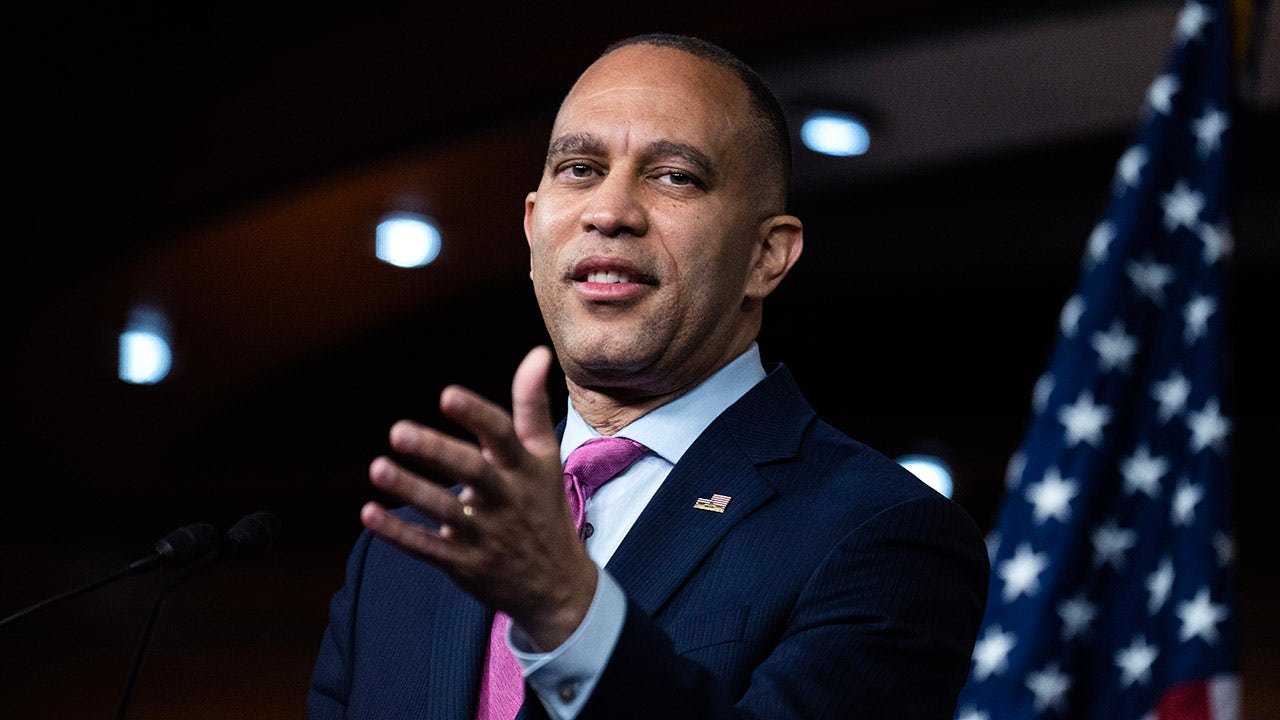
«We will fight them politically. We will fight them governmentally. We will fight them in court. We will fight them in terms of winning the hearts and minds of the people of Texas and beyond. The Texas Democrats are going to show up and stand up and speak up for what’s right for the people of Texas, and that’s showing courage and conviction and character in doing that,» House Minority Leader Rep. Hakeem Jeffries of New York said on Thursday at a news conference in Texas with Democratic state lawmakers.
The news conference came a day after Texas GOP state lawmakers unveiled the first draft of their proposed new congressional redistricting map, as part of their push to flip five Democrat-held seats in the reliably red state.
«We’ll see what happens over the next few days, over the next few weeks. But the one thing I know is clear that Texas Democrats are fighting for the people,» he added.
The Republican push in Texas is part of a broader effort by the GOP across the country to keep control of the House, and cushion losses elsewhere in the country, as the party in power traditionally faces political headwinds and loses seats in midterm elections.
TEXAS GOV SAYS DEMS WHO ‘FLED’ STATE OVER ELECTIONS BILL WILL BE ARRESTED UPON RETURN
President Donald Trump, accompanied by White House press secretary Karoline Leavitt, speaks to reporters as he departs the White House, on July 15, 2025. (AP)
Democrats control just 12 of the state’s 38 congressional districts, with a blue-leaning seat vacant after the death in March of Rep. Sylvester Turner.
The GOP plan relocates Democratic voters from competitive seats into nearby GOP-leaning districts, and moves Republican voters into neighboring districts the Democrats currently control.
Gov. Greg Abbott and Lt. Gov. Dan Patrick, both conservative Republicans and Trump allies, said they needed to redistrict because of constitutional concerns raised by the Justice Department over a handful of minority-dominated districts.
COURT SIDETRACKS REDISTRICTING FIGHT IN KEY BATTLEGROUND STATE
But the move is potentially risky, as it makes some once-reliably red districts more competitive.
Redistricting typically takes place at the start of each decade, based on the latest U.S. Census data. Mid-decade redistricting is uncommon—but not without precedent.
Democrats are slamming Trump and Texas Republicans for what they describe as a power grab, and vowing to take legal action to prevent any shift in the current congressional maps.
And Democrats in blue-dominated states are now trying to fight fire with fire.
«Two can play this game,» California Gov. Gavin Newsom wrote on social media recently.
The next day, after a meeting, Democrats in California’s congressional delegation said they were on board with an ambitious plan to try and gain at least five seats through redistricting. Democrats currently control 43 of the Golden State’s 52 congressional districts.
TEXAS DEMOCRATS PREPARING STATE EXODUS TO BLOCK GOP REDISTRICTING DESPITE $500 DAILY FINES

Democratic Gov. Gavin Newsom of California is considering launching a redistricting push in his blue state to counter Republican efforts underway in red-state Texas. (Paul Steinhauser – Fox News )
Jeffries, after his two-day stop in Texas, heads to California for meetings with state Democrats.
But it won’t be easy to enact the change, because in California, congressional maps are drawn by an independent commission that is not supposed to let partisanship influence their work.
Newsom has suggested that the state’s Democratic-controlled legislature move forward with a mid-decade redrawing of the maps, arguing that it might not be forbidden by the 17-year-old ballot initiative that created the independent commission.
The governor also proposed quickly holding a special election to repeal the commission ahead of the 2026 midterm elections.
Both plans are considered long shots, as they would face plenty of legislative, legal and financial hurdles.
Democrats in other heavily populated blue states, including New York, Illinois, and New Jersey, are also considering making changes to their maps, but have redistricting limits enshrined in their state constitutions.
CLICK HERE TO GET THE FOX NEWS APP
Meanwhile, Ohio is required by law to redistrict this year, and a redrawing of the maps in the red-leaning state could provide the GOP with up to three more congressional seats.
And Republicans are also mulling mid-decade redistricting that might give the GOP a couple of more House seats in red states such as Florida, Missouri, and Indiana.
donald trump,texas,elections,midterm elections,republicans elections,democrats elections









INTERNACIONAL
Reino Unido inició misiones aéreas defensivas en apoyo de los Emiratos Árabes y derribó drones iraníes en varias zonas de Medio Oriente

Aviones de combate del Reino Unido iniciaron misiones aéreas defensivas en apoyo de Emiratos Árabes Unidos y derribaron drones en distintas zonas de Medio Oriente en medio de la guerra regional, informó el lunes el Ministerio de Defensa británico.
El ministro de Defensa, John Healey, confirmó ante el Parlamento la participación de cazas británicos en operaciones de defensa aérea. “El Reino Unido está realizando misiones aéreas defensivas en apoyo de los Emiratos Árabes Unidos”, declaró el funcionario.
Healey indicó que aviones Typhoon interceptaron y destruyeron dos drones durante las operaciones. “Los tifones derribaron con éxito dos drones, uno sobre Jordania y el segundo en dirección a Bahréin”, afirmó.
El anuncio coincidió con la llegada de más bombarderos estadounidenses B-52 a la base aérea británica de Fairford, en el suroeste de Inglaterra. Periodistas de AFP observaron el lunes el aterrizaje de nuevos aparatos, después de que el primero llegara el viernes.
La base de Fairford constituye uno de los puntos clave que el Reino Unido puso a disposición de Estados Unidos para operaciones vinculadas al conflicto. La otra instalación es la base de Diego García, situada en el océano Índico.

Según explicó Healey, el gobierno británico autorizó el uso de ambas instalaciones para misiones concretas de carácter defensivo. El ministro señaló que estas operaciones tienen como objetivo neutralizar misiles iraníes en su punto de lanzamiento.
Mientras Londres refuerza su actividad militar en la región, el Ministerio de Relaciones Exteriores anunció medidas de seguridad para su personal diplomático en los Emiratos Árabes Unidos. La cancillería comunicó que retirará temporalmente a los familiares del personal de la embajada.
El organismo explicó que la decisión responde a una medida preventiva en medio de la escalada regional. A pesar de esa medida, el gobierno británico informó que sus representaciones diplomáticas en el país continuarán funcionando con normalidad.
Las dos embajadas británicas en Emiratos, ubicadas en Abu Dhabi y Dubái, mantendrán sus operaciones. Las autoridades no anunciaron la suspensión de servicios consulares.
El conflicto también generó problemas de transporte para ciudadanos británicos en la región. Se estima que miles de personas del Reino Unido permanecen en Emiratos Árabes Unidos debido a la interrupción de vuelos comerciales provocada por la guerra.

El ministro Healey informó al Parlamento que más de 170.000 personas registraron su presencia en Medio Oriente ante el gobierno británico. El registro forma parte del sistema de asistencia a ciudadanos en zonas de crisis. El funcionario indicó además que tres vuelos chárter despegaron hasta ahora para evacuar personas desde la región.
El Reino Unido también envió medios militares adicionales al Mediterráneo oriental. Helicópteros Wildcat y Merlin llegaron a Chipre como parte de las medidas de refuerzo adoptadas por Londres.
Healey anunció además el despliegue de un buque de guerra con capacidad de defensa aérea. El HMS Dragon zarpará hacia el Mediterráneo oriental “en los próximos días”, afirmó el ministro. La decisión surgió tras críticas del gobierno chipriota, que cuestionó la velocidad de la respuesta británica para reforzar la defensa de la isla.
En paralelo, el gobierno británico negó que exista una decisión para desplegar un portaaviones en la región. Downing Street rechazó versiones sobre el envío del HMS Prince of Wales al escenario del conflicto.

Un portavoz del primer ministro Keir Starmer señaló que el buque permanece en estado de alerta. “El HMS Prince of Wales siempre ha estado en máxima alerta”, declaró.
El funcionario explicó que el Ministerio de Defensa tomó medidas para aumentar la preparación del portaaviones. “El Ministerio de Defensa está aumentando la preparación del portaaviones, reduciendo el tiempo que tardaría en zarpar para cualquier despliegue, pero no se ha tomado ninguna decisión sobre su despliegue”, afirmó.
(Con información de AFP)
International Relations,UHAF,Type 45,Royal Navy,HMS Dragon,Anti-Air Guided Missile Destroyer,Surface Fleet,Upper Harbour Ammunition Facility,DDG,Equipment,D35,HMNB Portsmouth,Destroyer,Ships,Defence,ammunition,Defense,Diplomacy / Foreign Policy,Europe
INTERNACIONAL
FBI subpoenas 2020 Arizona voting docs as federal push into election administration widens
NEWYou can now listen to Fox News articles!
An Arizona state lawmaker revealed Monday that federal authorities subpoenaed him for records related to the 2020 election, marking the second publicly confirmed jurisdiction the Department of Justice is investigating over the matter.
Arizona Senate President Warren Petersen, a Republican, said in a social media post he received the subpoena for material related to the state Senate’s 2020 audit last week and complied with it.
«Late last week I received and complied with a federal grand jury subpoena for records relating to the Arizona State Senate’s 2020 audit of Maricopa County,» Petersen wrote. «The FBI has the records. Any other report is fake news.»
The request represents an expansion of a federal probe tied to 2020 after the DOJ initially targeted Fulton County, Georgia. The development also comes as President Donald Trump has grown increasingly outspoken about election security in the lead-up to the 2026 midterms, renewing his attention on disputes stemming from the last presidential race.
FBI AGENTS SEARCH ELECTION HUB IN FULTON COUNTY, GEORGIA
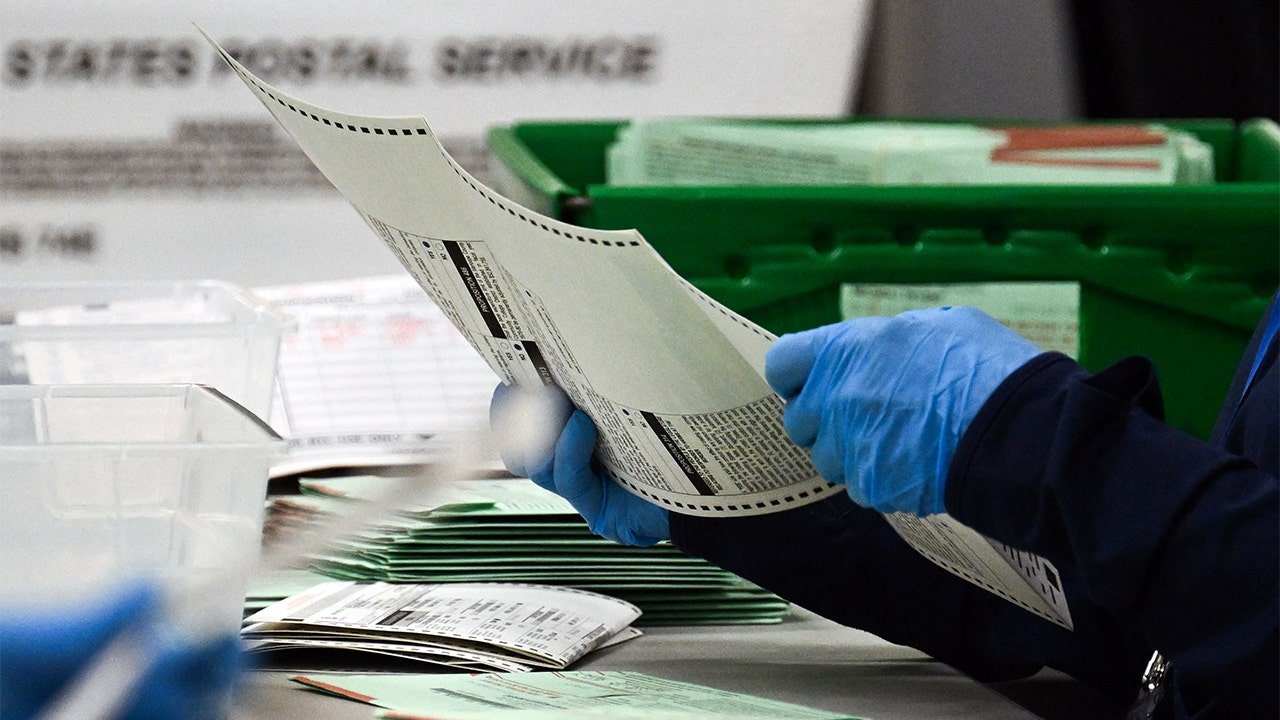
An election worker removes a ballot from an envelope to count and inspect the pages inside the Maricopa County Tabulation and Election Center (MCTEC) on Election Day, Nov. 5, 2024 in Phoenix, Arizona. (PATRICK T. FALLON/AFP via Getty Images)
Petersen made the revelation after President Donald Trump shared a Just the News report about the subpoena on Truth Social, writing, «Great!!! FBI secretly seizes election records from Arizona’s largest county as voting probe expands.»
Multiple U.S. officials confirmed the election probe to Fox News, saying the DOJ is looking at a large tranche of Arizona data from 2020 and 2024.
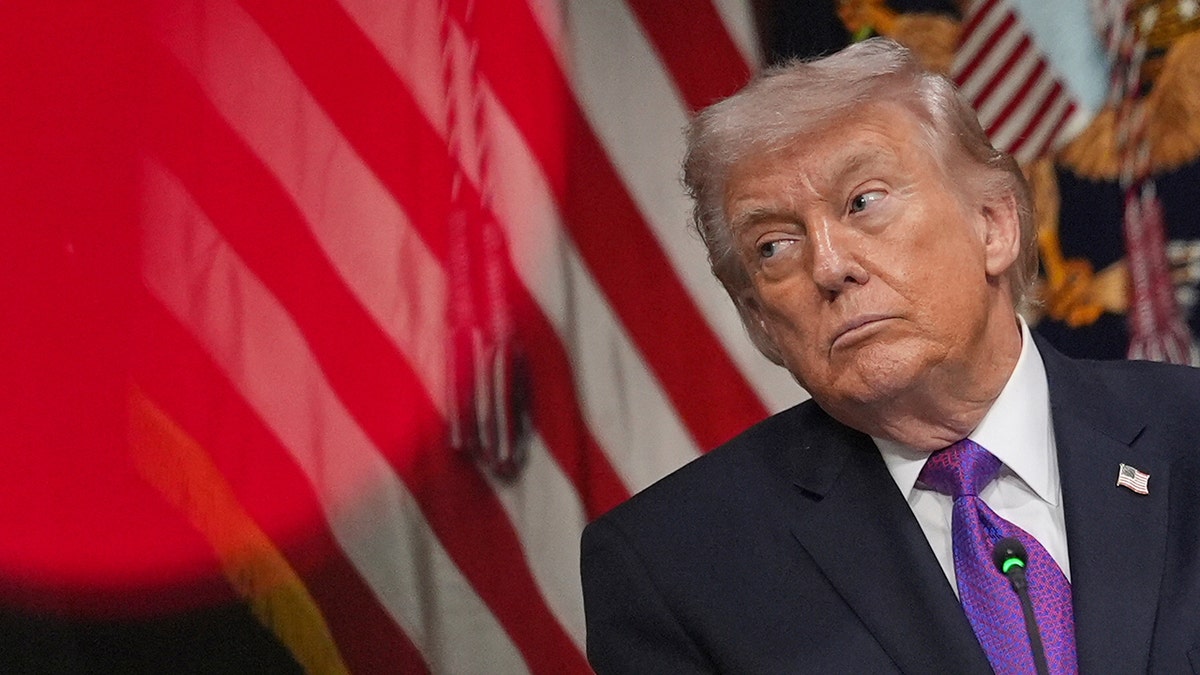
President Donald Trump listens during an event about the Ratepayer Protection Pledge, in the Indian Treaty Room of the Eisenhower Executive Office Building on the White House complex, Wednesday, March 4, 2026, in Washington. (Jacquelyn Martin/AP Photo)
The White House directed Fox News Digital to the FBI on Monday when asked for comment. The FBI declined to comment.
Arizona Attorney General Kris Mayes, an elected Democrat, said the new investigation was based on claims that courts and state investigators have proven wrong.
«What the Trump administration appears to be pursuing now is not a legitimate law enforcement inquiry,» Mayes said in a statement. «It is the weaponization of federal law enforcement in service of crackpots and lies.»
JUDGE DISMISSES 2020 ELECTION INTERFERENCE CASE AGAINST TRUMP
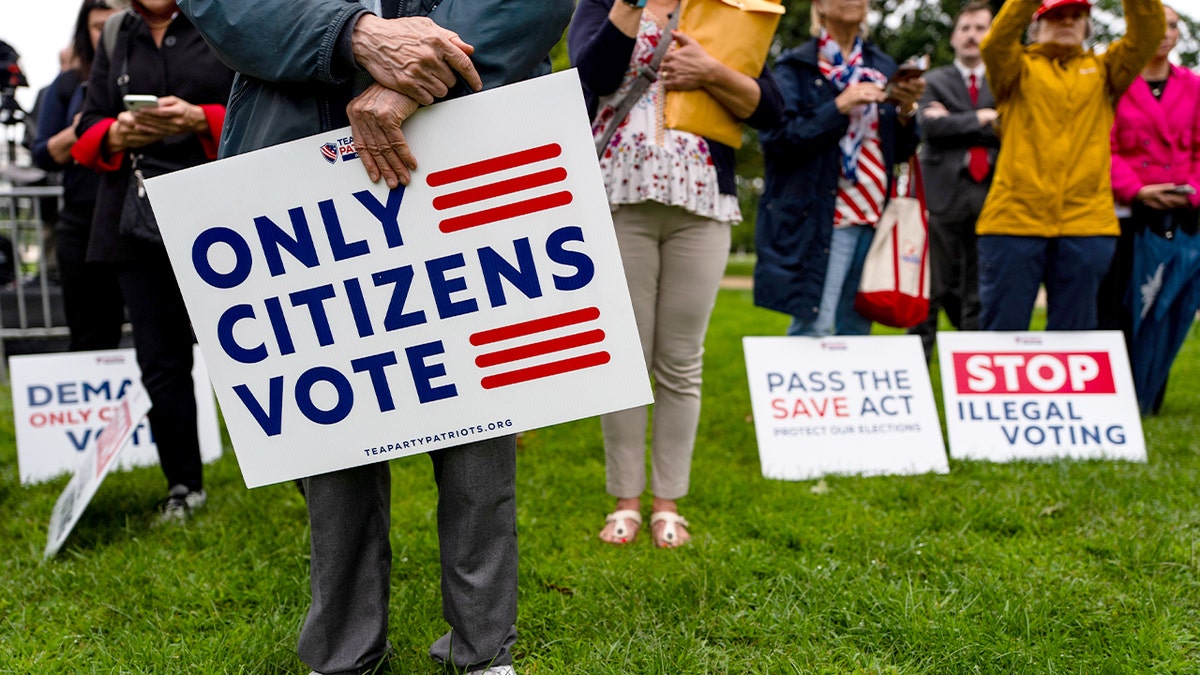
Attendees listen as Rep. Chip Roy (R-TX) speaks at an «Only Citizens Vote» bus tour rally advocating passage of the SAVE Act at Upper Senate Park outside the U.S. Capitol in Washington, DC, on Sept. 10, 2025. (Kent Nishimura/Getty Images)
The subpoena comes as the president increasingly focuses on election security ahead of the 2026 midterms, telling Congress in a social media post on Sunday that he will not sign any legislation into law until it passes the SAVE America Act.
The bill’s primary purpose is to require voters nationwide to show physical identification to prove citizenship to vote in federal elections. The version of the bill Trump is pushing would also ban mail-in ballots except for the military and in other extenuating circumstances.
CLICK HERE TO GET THE FOX NEWS APP
Maricopa, Arizona’s most populous county, was a hotbed for accusations of voter fraud in 2020. Fulton County, Georgia, faced similar accusations, with the DOJ launching a separate investigation into the 2020 election earlier this year.
Trump lost Arizona in 2020 by about 0.3 percentage points. The president refused to concede, and his legal team brought a series of lawsuits alleging vote-counting irregularities, but none were successful.
Fox News’ David Spunt and Jake Gibson contributed to this report.
fbi,arizona,elections,donald trump,politics
INTERNACIONAL
En una llamada de una hora, Vladimir Putin le planteó a Donald Trump propuestas para un rápido arreglo político de la guerra con Irán


Pasos a seguir para completar el primer evento temporal de Pokémon Pokopia – Nintenderos

¡Se pudrió todo! La furia de Tomás Rebord contra Guille Aquino tras decir que embarazó a su esposa: “Lo voy a…”

Video: el pogo de Mauricio Macri en el casamiento de su sobrino con Emily Lucius

Mahiques avanza con las designaciones y tomó una decisión clave con la AFA: cómo serán los procesos

¿Se recalienta el dólar?: la City mide el impacto que puede tener la guerra y la suba del petróleo

Lluvia de ofertas a la estrella del Newcastle antes de recibir al Barça

Javier Milei habló de la crisis con la vicepresidenta: “No quiero la renuncia de Victoria Villarruel”

La cruda confesión de Amalia Granata por el trastorno que sufre su hijo Roque: “Le hicimos estudios y salió que tiene TDAH, dislexia y disgrafia”

Wanda Nara involucrada en la separación de su hijo Valentino: su ex nuera contó toda la verdad

El Gobierno promulgó la reforma laboral: desde cuándo rige y las claves

 CHIMENTOS2 días ago
La cruda confesión de Amalia Granata por el trastorno que sufre su hijo Roque: “Le hicimos estudios y salió que tiene TDAH, dislexia y disgrafia”
- POLITICA3 días ago
Trump anunciará la creación del Escudo de las Américas, una alianza regional que integrará Milei para enfrentar al narcoterrorismo y a China
- ECONOMIA1 día ago
El mercado le está corriendo el arco a Caputo y el riesgo país no baja: en la City palpitan medidas