INTERNACIONAL
Thatcher centennial celebration examines how Reagan partnership guides modern US-UK relations

Trump speaks with Putin one day before meeting with Zelenskyy
Fox News senior White House correspondent Peter Doocy reports on President Donald Trump’s phone call with Russian President Vladimir Putin one day before Trump’s meeting with Ukrainian President Volodymyr Zelenskyy and more on ‘Special Report.’
NEWYou can now listen to Fox News articles!
The term «special relationship» has been used to describe the U.S.-U.K. partnership since WWII in the face of Nazi, Germany, but many have argued it was solidified during the Cold War under the close alliance of President Ronald Reagan and Prime Minister Margret Thatcher.
This week former and current diplomats, government officials and foreign policy advisers convened in London to celebrate what would have been Thatcher’s centennial birthday, and to reflect on her partnership and friendship with the late U.S. president.
The Reagan-Thatcher alliance set a precedent that has transcended political parties and national leaders, even during periods when the U.S. and U.K. faced undeniable differences.
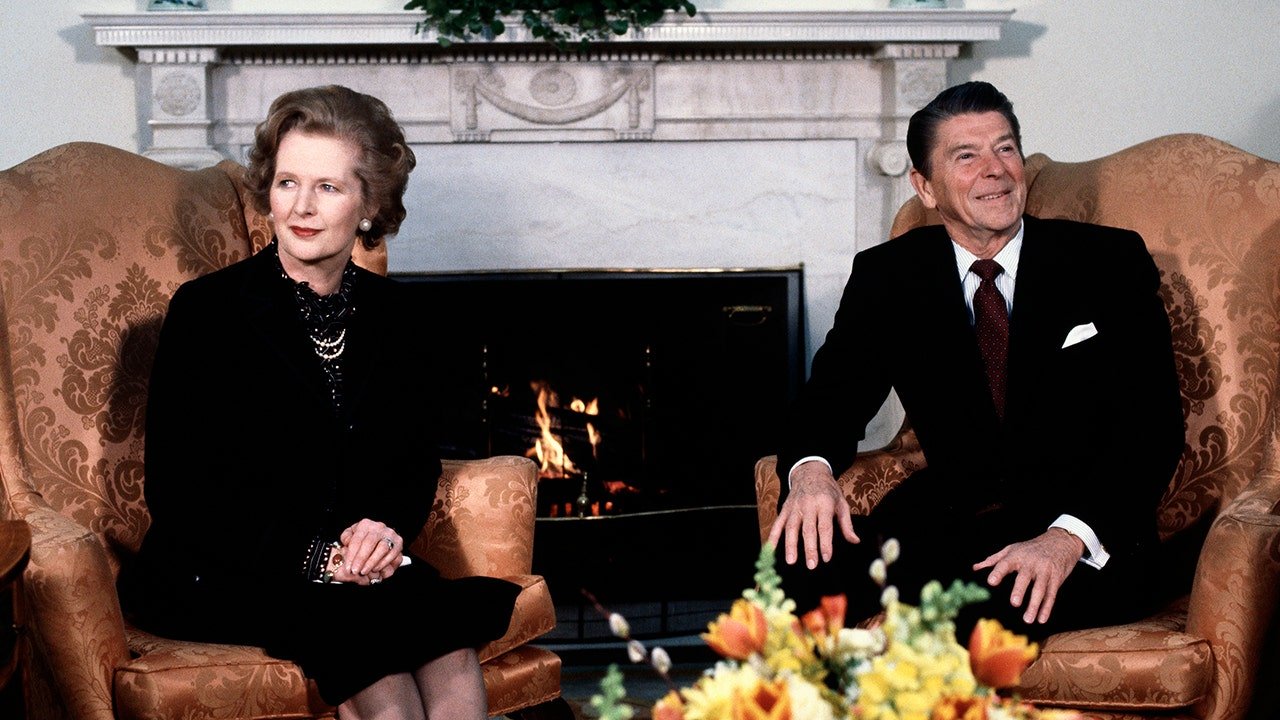
Experts convene to discuss how the relationship between British Prime Minsiter Margaret Thatcher and President Ronald Reagan solidified the U.K.-U.S. relationship on Oct. 17, 2025 in London. (Bettmann via Getty Images)
THATCHER AT 100: LESSONS IN CIVILITY, STRENGTH AND ENDURING ALLIANCES
«They were political soul mates, in a sense. This wasn’t a forced marriage,» Fred Ryan, Chairman of the Board of Trustees of the Ronald Reagan Presidential Foundation and Institute told Fox News Digital.
Ryan explained that their relationship was so successful, in part, because they had formed a relationship prior to either of them becoming heads of state, and they shared a mutual dedication to revitalizing their economies and countering communism.
«I think the personal relationship made it more than just transactional – it made it something that was a kind of a relationship of exceptional trust in terms of what it’s done today,» Ryan, who also served as Chief of Staff to Reagan starting in the late 1980s, said. «Going forward, I think it’s set a great example.»
Though the Reagan-Thatcher alliance is most known for pressing the Soviet Union, ardent anti-communist principles and ultimately ending the Cold War, experts this week in London argued that, perhaps more significantly, their partnership created a lasting obligation that future leaders would adhere to ensure the U.S.-U.K. partnership continued.
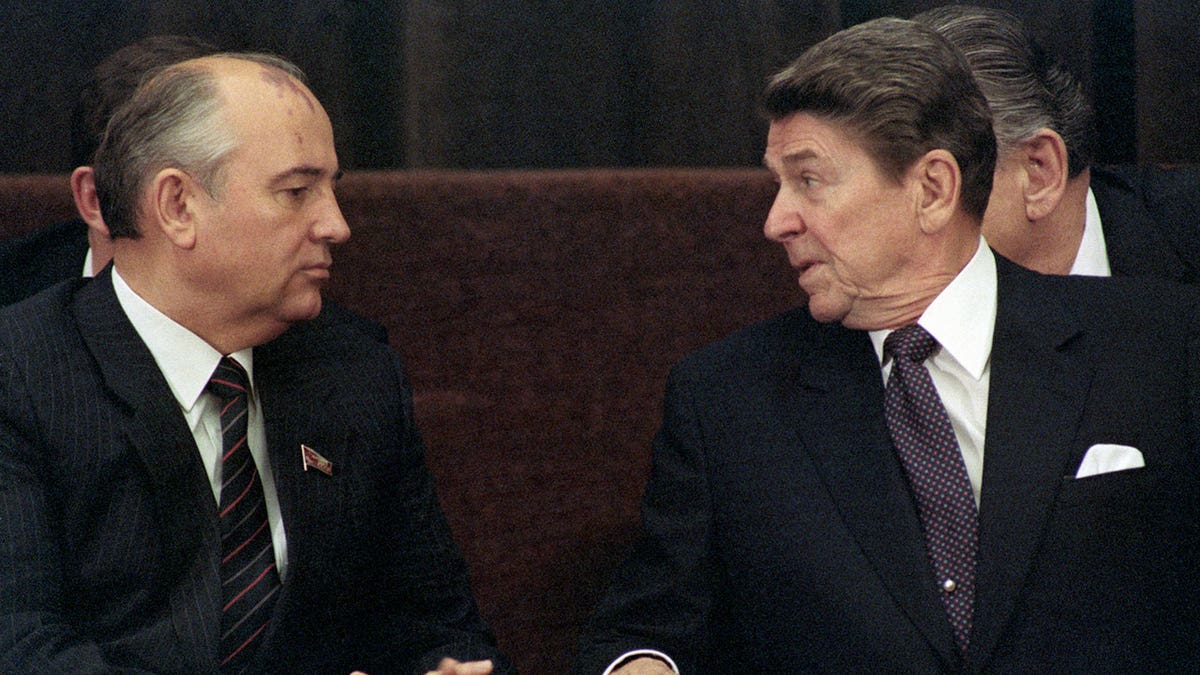
Soviet leader Mikhail Gorbachev and U.S. President Ronald Reagan at the closing ceremony for the Geneva Summit, Nov. 21, 1985, in Geneva, Switzerland. (Bettmann via Getty Images)
TRUMP MEETS WITH UK PRIME MINISTER STARMER ON HEELS OF EU TRADE DEAL
Though the U.S.-U.K. relationship has not always run completely smoothly, like when conservatives took issue with the removal of a bust of Winston Churchill in lieu of a bust of Martin Luther King Jr., first during the Obama administration, then under President Joe Biden – both moves which were reversed by President Donald Trump – concern over the «special relationship» mounted following his election earlier this year. Actions he took upon re-entering the White House, including steep tariffs and a critical tone of NATO, had some worried he was favoring American isolationism.
But British Prime Minister Keir Starmer and Trump have made significant efforts to keep the relationship positive.
Trump has frequently referred to his mother’s Scottish roots as one reason he is fond of the U.K. and Ryan argued that the U.S.-U.K. partnership is also rooted in not only its shared history, but «built into the DNA» of both nations, dating back to the British colonies prior to the American Revolution.
«[Both have] given extra weight to the special relationship, and it does appear to be something that they’re both working at,» Ryan said. «People have seen that Keir Starmer [and] Donald Trump have been able to build a good relationship. It’s an example for others to try to emulate.»
COULD TRUMP’S MEETING WITH PUTIN BE THE NEXT REAGAN-GORBACHEV MOMENT?
The U.S.-U.K. relationship is once again under the microscope, not only because of how different Trump and Starmer are politically, but because both nations face the greatest threat to the West since the Cold War, once again emanating from Moscow.
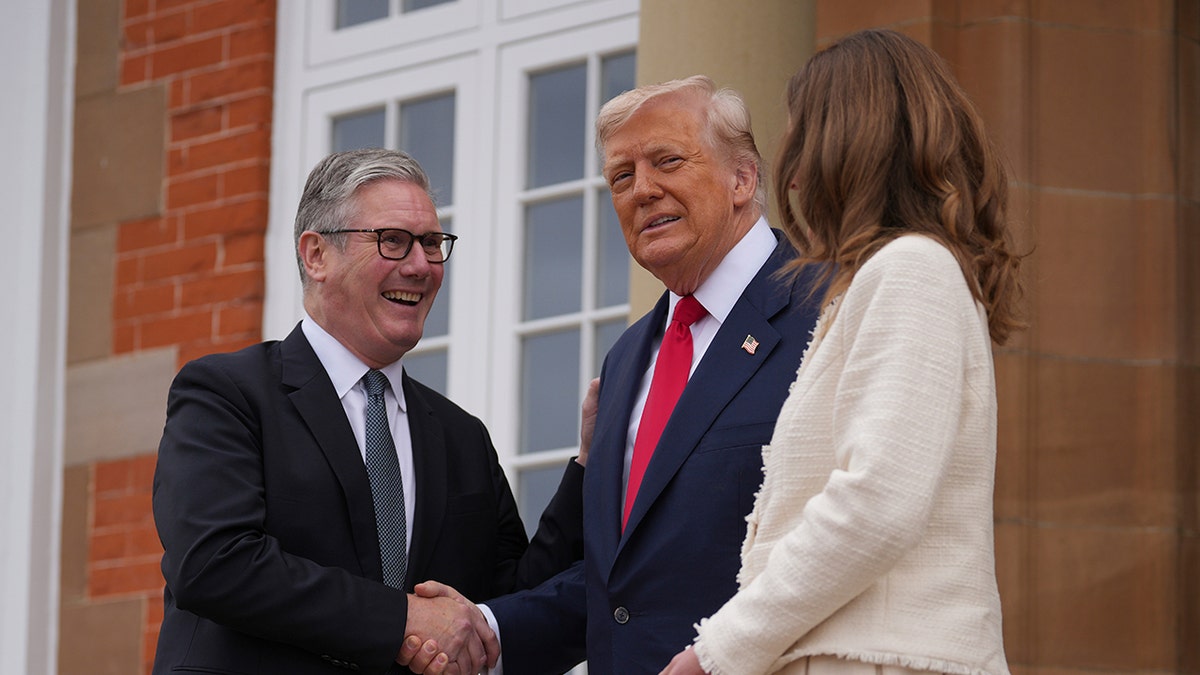
President Donald Trump meets with Britain’s Prime Minister Keir Starmer, left, and his wife Victoria Starmer at Trump Turnberry golf club on Monday, July 28, 2025, in Turnberry, Scotland. (Christopher Furlong/Pool Photo via AP)
Both Thatcher and Reagan were able to form a strong relationship with the former and final leader of the Soviet Union, Mikhail Gorbachev, though the post-Cold War peace lasted for less time than the protracted geopolitical tussle following Russian President Vladimir Putin’s 2022 invasion of Ukraine.
Trump has drawn raised eyebrows in his repeated attempts to diplomatically engage with Putin despite little to no action by the Kremlin chief to end his war ambitions.
Security experts have questioned whether Putin is playing Trump by issuing platitudes and agreeing to meet with Trump in a show that outwardly placates the president’s desire to end the war, though taking no concrete steps to actually do so.
Trump and Putin on Thursday again agreed to meet in person after first doing so in August in what were described as «extremely productive» talks.
CLICK HERE TO GET THE FOX NEWS APP
But what was accomplished from the meeting remains unclear as Russia increased its aerial bombardment on Ukraine rather than ceasing military operations following the talks.
Though Starmer applauded the first attempt by Trump to meet with Putin, he has not yet publicly commented on the second meeting announced Thursday, and Fox News Digital could not immediately reach Number 10 for comment.
Ryan noted there are many differences in the threat the U.S. and U.K. are facing this time around from Russia, but said, «I do think both sides realize the threat that Putin poses, and hopefully, through this close relationship that we’ve had, we can be united and allied in standing up to it.»
united kingdom,reagan,russia,vladimir putin,donald trump,world









INTERNACIONAL
Tourists in Mexican seaside city told to stay on resort as government warns of ‘clashes’

NEWYou can now listen to Fox News articles!
Tourists in the Mexican seaside city of Puerto Vallarta were told not to leave their resort on Sunday as a government official warned of «clashes» in the area following a federal operation.
Photos and video shared with Fox News Digital capture billowing, dark smoke clouding the skyline of the city, which is located on Mexico’s Pacific Coast in the state of Jalisco.
Tourists at a local resort told Fox News Digital that they were urged to stay put at the resort. They said no reason for exercising the caution was immediately given.
The U.S. State Department later issued a travel warning for multiple areas in Mexico on Sunday afternoon, urging U.S. citizens to shelter in place until further notice due to «ongoing security operations and related road blockages and criminal activity.»
US OFFICIALS WARN SNOWBIRDS OF ‘VIOLENT CRIME’ IN WINTER DESTINATION HOT SPOT
Smoke was seen rising into the skies of Puerto Vallarta in Mexico’s Jalisco state on Sunday, Feb. 22, 2026. (Obtained by Fox News Digital)
The travel warning was issued for parts of Jalisco state, including Puerto Vallarta, Chapala and Guadalajara; Tamaulipas state, including Reynosa and other municipalities; and areas of Michoacan state, Guerrero state and Nuevo Leon state.
Jalisco Gov. Pablo Lemus Navarro announced in a post on X that federal forces carried out an «operation» in the town of Tapalpa earlier Sunday, which led to «clashes» in the area.
«Also as a result of said operation, in various points of that region and in other parts of Jalisco, individuals have burned and blocked vehicles with the aim of hindering the actions of the authorities,» Navarro wrote in the post in Spanish.
In multiple posts, Navarro wrote that «the violent incidents have spread» and «blockades have shifted» as the government and law enforcement work to safeguard citizens.
ALLEGED SINALOA CARTEL FENTANYL PRODUCER CHARGED IN NEWLY UNSEALED FEDERAL INDICTMENT
Navarro added that the government has enacted a «Code Red» to keep the public safe.

Tourists said they were told not to leave their resort in Puerto Vallarta on Sunday. (Obtained by Fox News Digital)
«We reiterate the recommendation to avoid leaving your homes,» Navarro wrote in a second post. «The clashes are occurring in several federal entities.»
CLICK HERE TO DOWNLOAD THE FOX NEWS APP
While government officials did not immediately provide details about the federal operation, local news outlets report that the operation may have involved the Jalisco New Generation cartel and one of its notorious leaders, Nemesio «El Mencho» Oseguera Cervantes.
location mexico,puerto vallarta,mexican cartel violence,world
INTERNACIONAL
La historia de “El Mencho”: cómo el líder del CJNG se convirtió en uno de los narcotraficantes más buscados en el mundo

Nemesio Oseguera Cervantes, teniendo más de 50 año de edad, llegó a la cumbre de su carrera criminal. Identificado como líder del Cártel Jalisco Nueva Generación, Oseguera, conocido como El Mencho se convirtió en el hombre más buscado de México y Estados Unidos.
Es el segundo mexicano más buscado por Estados Unidos. El primero es Rafael Caro Quintero, El Narco de Narcos, por el asesinato de Enrique Kiki Camarena, ex agente de la DEA (Administración de Control de Drogas, por sus siglas en inglés) de EEUU. Pero inmediatamente después, en la lista de los más buscados, figura el rostro de Nemesio Oseguera, El Mencho, líder del CJNG.
La historia de Oseguera Cervantes es extraordinaria porque la gran mayoría de narcos mexicanos de su generación han sido apresados o han muerto violentamente.
Según la acusación del Departamento de Justicia de EEUU, El Mencho dirigió el CJNG ―o su versión embrionaria― al menos desde el año 2000 y logró expandirlo a la mayoría de los estados de México y a varias ciudades de los Estados Unidos. Sus primeros pasos en el narco los dio, sin embargo, bastante antes.

En Naranjo de Chila ―un pueblo al sureste de Michoacán― nació el 17 de julio de 1966 Nemesio Oseguera Cervantes, uno de los seis hermanos de una familia de productores de aguacate.
Dicen que lo bautizaron con el nombre de Rubén y él se hizo llamar Nemesio en honor a su padrino. También que su cuna es el municipio de Naranjo de Chila y otros que fue Uruapan o Aguililla. Tal vez fue este último porque allí, apenas siendo un niño que recién abandonaba la escuela en el quinto año de primaria, se contrató para cuidar los campos de aguacate, propiedad de los Valencia.
De esta familia, conocida primero como el Cártel del Aguacate (porque traficaba la marihuana escondida en los cargamentos de ese fruto), nació el Cártel del Milenio cuando saltaron a la siembra de marihuana y amapola. Tan poderosos eran en su tierra que uno de ellos, José, incluso llegó a alcalde en 1989, postulado por el PRD. Con ellos, apenas adolescente, El Mencho se hizo vigilante de los plantíos y traficante después.

Sin embargo, debió haber soñado con algo más que aguacates, porque en pocos años empacó y se mudó al norte de California, Estados Unidos.
A los 20 años, para 1986, ya había emigrado a Estados Unidos. Vivía en la bahía de San Francisco, en California, donde se involucró con una banda de tráfico de heroína y metanfetamina e intentó construir una red de clientes como dealer. El periodista estadounidense Josh Eells, en un reportaje publicado en la revista Rolling Stone y con base en información de autoridades de Estados Unidos, afirma que Abigael González Valencia, El Cuini, cuñado de Oseguera Cervantes, lo formó en el negocio de las drogas.
Fue detenido en 1986 cuando él y su hermano mayor, Abraham Oseguera, vendieron heroína a dos policías encubiertos; en 1992 fueron enviados a una prisión federal y luego deportados. Una foto de reserva del incidente muestra al Mencho, de 19 años, con una sudadera con capucha y con acné en la cara.
Dos meses después, nació su primer hija: Jessica Johanna Oseguera.

Al salir de prisión, en 1997, se enroló como policía municipal en Tomatlán, Jalisco. Allí se vinculó con los hermanos Nava Valencia del Cártel del Milenio, y con Nacho Coronel, del Cártel del Pacífico, como también llamaban a la organización criminal del Chapo Guzmán.
Con ellos, al dejar la policía, El Mencho se convirtió en una especie de consejero de seguridad y una pieza estratégica en el tráfico de drogas sintéticas a Estados Unidos gracias a su experiencia en aquel país, de acuerdo con Eells.
Desde la formación del CJNG en 2011, El Mencho pronto logró expandirse en casi todo México y tiene presencia internacional en Estados Unidos, Colombia y, sin confirmar, en Canadá, Argentina, Holanda, Ghana, Nigeria, Marruecos, Rusia, China, Corea del Sur, Alemania, Perú, Centroamérica, Bolivia, Malasia, Indonesia, Vietnam, Polonia, Australia, y Camboya, con lo que habría superado en 2018 al Cártel de Sinaloa en el tráfico de alucinógenos, de acuerdo con diversos reportes.

Oseguera Cervantes supuestamente se escondía en las montañas de Jalisco y, según la prensa local, padece insuficiencia renal, un mal que lo mantenía con diálisis y atado a una cama, por lo que la organización sería dirigida por sus lugartenientes.
En febrero de 2020, los gobiernos de México y de EEUU dieron un golpe al criminal cuando el hijo del Mencho, Rubén Oseguera González, El Menchito, fue extraditado, y su hija, Jessica Johanna Oseguera González, fue detenida mientras acudía a una de las audiencias de su hermano.
NEWYou can now listen to Fox News articles!
«I can’t believe they just left!»
«Why didn’t they just stay until they fixed it?»
«Why didn’t they make them stay?»
I must have fielded forty questions last week from colleagues, friends and acquaintances. Even reporters and editorial staff from other news organizations. And that’s to say nothing of a few Congressional aides.
Everyone had the same question. They were in disbelief that lawmakers just abandoned the Capitol a week ago Thursday and left the Department of Homeland Security without funding on Saturday at 12:00:01 am et.
COAST GUARD CAUGHT AS ‘COLLATERAL DAMAGE’ IN DEMOCRATS’ DHS SHUTDOWN AS CHINA, RUSSIA PRESS US WATERS
Senate Democrats blocked a short-term funding bill, stalling efforts to keep DHS and its agencies operating. (Photo by Heather Diehl/Getty Images)
The Senate tried twice to avert the partial government shutdown on Thursday. The Senate failed to break a filibuster on a placeholder, undetermined funding bill. And then Sen. Chris Murphy, D-Conn., objected to a request by Sen. Katie Britt, R-Ala., to approve a stopgap, two-week funding bill. Passage of the bill would require agreement of all 100 senators. But all it took was one objection. And Murphy, speaking for many Democrats on both sides of the Capitol, interceded to sidetrack Britt’s effort.
«I’m over it!» shouted an exasperated Britt on the Senate floor, as Congress pitched at least part of the federal government into its third shutdown since October 1.
Democrats are refusing to fund the Department of Homeland Security until there’s a specific agreement to reform U.S. Immigration and Customs Enforcement (ICE). And – few Democrats will say this out loud – but their base insists on Democrats shuttering DHS over ICE tactics after the killings of Renee Good and Alex Pretti in Minneapolis.
This is somewhat ironic. Republicans funded ICE through 2029 via last year’s One, Big, Beautiful Bill. So thanks to Democrats, TSA, the Coast Guard and FEMA – all under the DHS aegis – are without money right now. That means tens of thousands of employees are technically working without paychecks as they scan passengers at airports, patrol the seas and respond to natural disasters.
This brings us back to the basic question: Why didn’t they just stay until they figured it out?
As a reporter, I have covered dozens of shutdowns, partial shutdowns, near shutdowns, flirtations with shutdowns. That’s to say nothing of various permutations of interim spending bills – long and short – known as Continuing Resolutions or CRs. Those bills keep the funding flowing at the old spending level – until lawmakers all agree on something new. Sometimes one CR begets another CR. And even another one after that until everything’s resolved. The exercise can go on for months.
HOW ICE WENT FROM POST-9/11 COUNTERTERROR AGENCY TO CENTER OF THE IMMIGRATION FIGHT
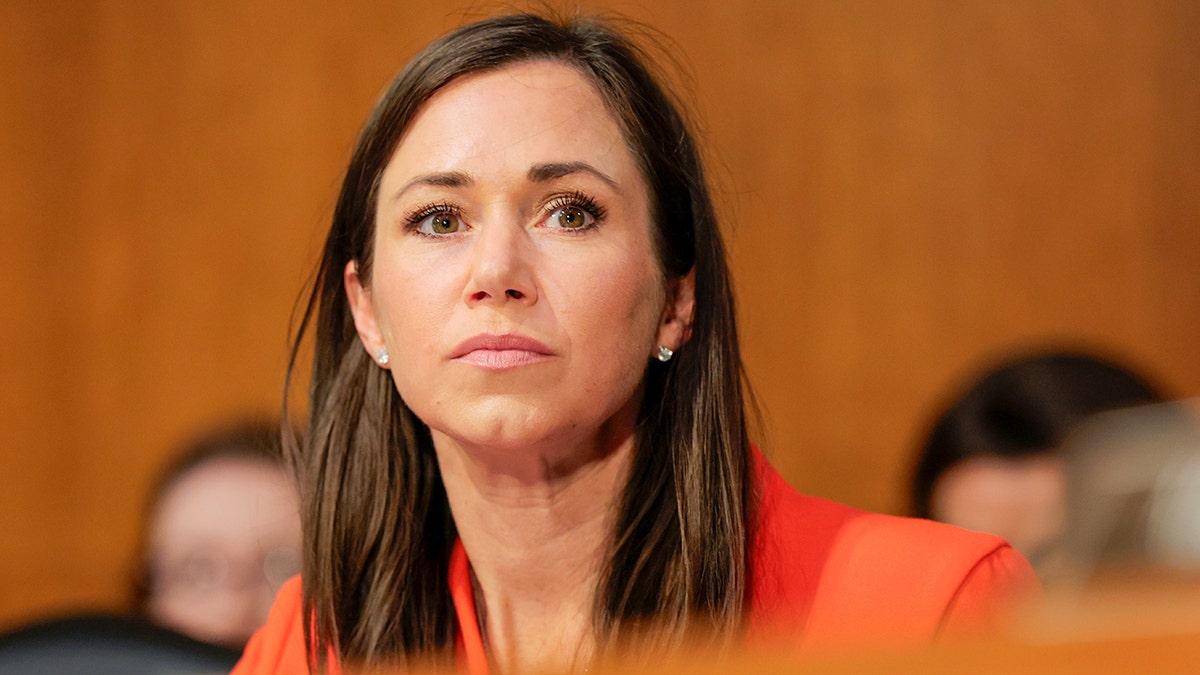
Sen. Katie Britt vented frustration on the Senate floor after her stopgap bill was blocked. (Photo by Anna Moneymaker/Getty Images)
But as it pertains to DHS, lawmakers weren’t going to solve the issues surrounding ICE right away. So both the House and Senate got out of Dodge last Thursday as the deadline loomed. Lawmakers were everywhere from the Middle East to Munich when the bell tolled midnight Saturday and DHS lumbered into a slow-speed funding crash.
Failure to fund the Department of Homeland Security may seem unreasonable from a policy standpoint – regardless of what you think of ICE. But it’s not unreasonable if you understand the politics and Congressional procedure to fund ICE.
Let’s say they were on the precipice of an agreement to fund DHS. That may involve some last-minute trading of paper between Senate and House leaders. Maybe a call or two from the President to reluctant Republicans. If lawmakers believed a deal was within range, it’s doubtful that leaders would have cut Members loose. They would have stayed if there was a viable path to nail something down last Friday, have the Senate expedite the process and vote on either Saturday or Sunday (albeit after the deadline) and then have the House vote on Monday. That’s all under the premise of a deal being close.
They were nowhere near that stage when lawmakers called it last Thursday. Democrats didn’t send over their offer for days after a brief shutdown of 78 percent of the government more than two weeks ago. Democrats then criticized Republicans and the White House for slowly volleying a counteroffer. Democrats then rejected the GOP plan – only sending back another plan late Monday.
Getting a deal which can pass both the House and Senate – and overcome a Senate filibuster – takes time. And there simply wasn’t a deal to be had yet.
This is where things get really interesting. With no agreement in sight, you simply don’t anchor lawmakers in Washington with nothing to do. There’s nothing to vote on. There are no committee meetings scheduled. All tethering lawmakers to DC does is stir up trouble.
There’s a line in the song «Trouble» in The Music Man by Meredith Willson: «The idle brain is the devil’s playground.» Who knows what kinds of mischief you would have, just making very cranky lawmakers hang around Washington for days – without anything to vote on. Keeping everyone here does not contribute to securing a deal. Yes, all 532 House and Senate Members (there are two House vacancies) must eventually be dialed-in to vote on a bill to fund DHS. But we aren’t there yet. A handful of Members in the House, Senate and people at the White House will be the ones to negotiate an agreement. Rank-and-file Members marooned in Washington with nothing to do but post outrageous things on social media and appear on cable TV is counterproductive.
Now, let’s look at the other scenario of being close to an agreement. House and Senate leaders may believe they are still a little short of votes. But if something is viable, leaders know they can nail down the votes with some arm-twisting, legislative and ego massaging and a few forceful phone calls. Yes, that process may require elbow grease. But in that instance, keeping everyone in Washington for a few extra days and blowing up a long-awaited Congressional recess actually helps the process.
DHS SHUTDOWN LEAVES LOCAL EMERGENCY RESPONDERS ON THEIR OWN AMID EXTREME WEATHER, EXPERT WARNS

TSA officers, Coast Guard members and FEMA staff are working without pay as the DHS funding lapse drags on. (Photo by Heather Diehl/Getty Images)
Why?
Think of the Stockholm Syndrome. You demand that everyone stay in Washington for an extra day or two and the «hostages» will start to come around to the viewpoints of their captors. Yes, everyone is frustrated and mad. But they feel the bill is something they can support and finally end this triumvirate of government shutdowns. In this case, the fustigation builds – but just a little. Everyone is happy to vote yes and rush off of Capitol Hill.
If they were close to nailing down an agreement on DHS funding, then Congressional leaders would have deployed a version of the Stockholm Syndrome to wrap up everything.
CLICK HERE TO DOWNLOAD THE FOX NEWS APP
But with no deal, leaders were more afraid of the mayhem they may trigger by keeping everyone in Washington. The devil would romp freely through the playground of idle brains.
So how will you know when there’s a deal?
When everyone’s present and accounted for.
government shutdown,budget senate,democrats senate,homeland security

La frase del día, de Stephen Hawking: “La vida sería trágica si no fuese divertida”

Tourists in Mexican seaside city told to stay on resort as government warns of ‘clashes’

En su semana más difícil, Federico Sturzenegger recibió el respaldo de los hermanos Milei ante las críticas internas y denuncias

El Gobierno afirma tener indicios sobre Nahuel Gallo en Venezuela y mantiene cautela por la amnistía chavista

Cómo los nuevos megaproyectos están cambiando a la Argentina productiva

Qué ver en Netflix, la miniserie de 7 episodios que es la más adictiva y original de la plataforma: «Murderville»

Escándalo en MasterChef: una famosa abandonó a los gritos y acusando que está todo arreglado

Del himno peronista de Kelly Olmos al exabrupto de Agustina Propato: las perlitas del debate por la reforma laboral

Villarruel cuestionó la apertura de importaciones: «Sin industria, se pasa a depender de China»

Según un especialista, el precio de la carne se mantendrá alto “entre dos y tres años”

 CHIMENTOS3 días ago
Escándalo en MasterChef: una famosa abandonó a los gritos y acusando que está todo arreglado
- POLITICA3 días ago
Del himno peronista de Kelly Olmos al exabrupto de Agustina Propato: las perlitas del debate por la reforma laboral
- ECONOMIA1 día ago
Villarruel cuestionó la apertura de importaciones: «Sin industria, se pasa a depender de China»