INTERNACIONAL
The Hitchhiker’s Guide to the ‘talking filibuster’ and the SAVE Act


Trump demands Congress pass the SAVE Act
Fox News chief congressional correspondent Chad Pergram reports on President Donald Trump calling on Congress to pass the SAVE America Act and the DHS funding battle on ‘Special Report.’
NEWYou can now listen to Fox News articles!
Passage of the SAVE Act is of paramount importance to President Trump and many congressional Republicans.
In his State of the Union speech, the president implored lawmakers «to approve the SAVE America Act to stop illegal aliens and other unpermitted persons from voting in our sacred American elections.»
The House approved the plan to require proof of citizenship to vote last month, 218-213. But, as is often the case, the hurdle is the Senate. Specifically the Senate filibuster.
So some Republicans are trying to save the SAVE Act.
TRUMP PUSHES CONGRESS TO PASS SAVE ACT DURING STATE OF THE UNION; NO MEDDLING WITH TARIFFS
The SAVE Act has become the Trump administration’s latest congressional cause célèbre. (Emma Woodhead/Fox News Digital)
It’s important to note that President Trump never called for the Senate to alter the filibuster in his State of the Union address. But in a post last week on Truth Social, President Trump declared that «The Republicans MUST DO, with PASSION, and at the expense of everything else, THE SAVE AMERICA ACT.»
Again, the president didn’t wade into questions about overcoming a filibuster. But «MUST DO» and «at the expense of everything else» is a pretty clear directive from the Commander in Chief.
That’s why there’s a big push by House Republicans and some GOP senators to alter the filibuster – or handle the filibuster differently in the Senate.
TRUMP VOWS BLOCK ON SIGNING NEW LAWS UNTIL SAVE AMERICA ACT PASSES SENATE
It’s rare for members of one body of Congress to tell the other how to execute their rules and procedures. But the strongest conservative advocates of the SAVE Act are now condemning Senate Republicans if they don’t do something drastic to change the filibuster to pass the SAVE Act.
Some Senate Republicans are ready to push for changes. Or, at the very least, advocate that Senate Republicans insist that Democrats conduct what they’re referring to as a «talking filibuster» and not hold up the legislation from the sidelines. It takes 60 votes to terminate a filibuster. The Senate does that by «invoking cloture.» The Senate first used the cloture provision to halt a filibuster on March 8, 1917. Prior to that vote, the only method to end a filibuster was exhaustion – meaning that senators finally just run out of gas and quit debating.
So let’s explore what a filibuster is and isn’t – and dive into what Republicans are talking about when they’re talking about a talking filibuster.
The Senate’s leading feature is unlimited debate. But ironically the «debate» which holds up most bills is not debate. It’s simply a group of 60 lawmakers signaling to their leaders offstage that they’ll stymie things. No one has to go to the floor to do anything. Opponents of a bill will require the majority tee up a cloture vote even if legislation has 60 yeas. Each cloture vote takes parts of three to four days to process. So that inherently slows down the process – and is a de facto filibuster.
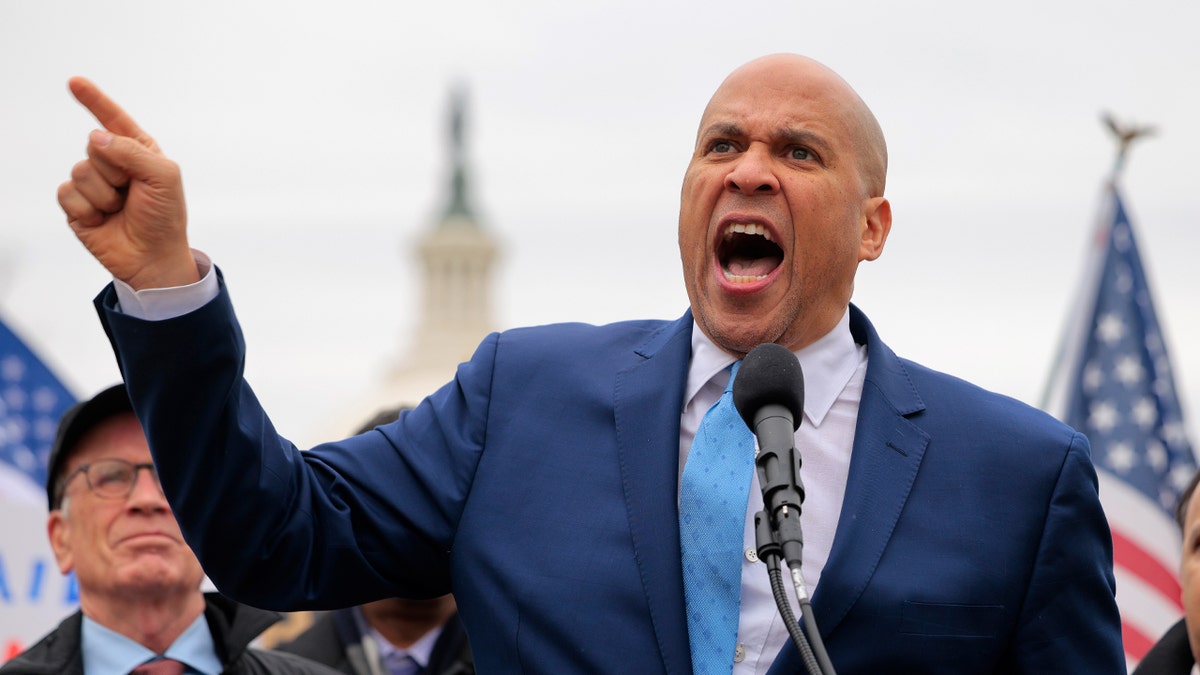
Sen. Cory Booker, D-N.J., gave a record-breaking, 25-hour speech last year – however, it wasn’t necessarily a «filibuster» in the truest sense of the word. (Chip Somodevilla/Getty Images)
But what about talking filibusters? Yes, senators sometimes take the floor and talk for a really long time. Hence, the «unlimited debate» provision in the Senate. Senators can generally speak as long as they want, unless there’s a time agreement, greenlit by all 100 members.
That’s why a «filibuster» is hard to define. You won’t find the word «filibuster» anywhere in the Senate’s rules. And since senators can just talk as long as they want, they might argue that suggesting they are «filibustering» is pejorative. They’re just exercising their Senate rights to speak on the floor.
However, a true filibuster is a delay. For instance, the record-breaking 25 hour and 8 minute speech last year by Sen. Cory Booker, D-N.J., against the Trump administration was technically not a filibuster. Booker began his oratory on the evening of March 31, ending on the night of April 1. Once Booker concluded, the Senate voted to confirm Matt Whittaker as NATO Ambassador. The Senate was supposed to vote on the Whitaker nomination on April 1 anyway. So all Booker’s speech did was delay that confirmation vote by a few hours. But not much.
FETTERMAN EXPECTS DHS SHUTDOWN AMID PARTISAN FUNDING FEUD, BREAKS WITH DEMOCRATS ON VOTER ID
In 2013, Sen. Ted Cruz, R-Texas, held the floor for more than 21 hours, in his quest to defund Obamacare. But despite Cruz’s verbosity (and a recitation of «Green Eggs and Ham» by Dr. Suess), the Senate was already locked in to take a procedural vote around 1 pm the next day. That automatically ended Cruz’s speech. Thus, that truly wasn’t a filibuster either.
So, this brings us to the «talking» filibuster which actually gums up the Senate gearboxes. A talking filibuster is what most Americans think of, thanks to the iconic scenes with Jimmy Stewart in the Frank Capra classic, «Mr. Smith Goes to Washington.»
Most senators «filibuster» by forcing the Senate to take two cloture votes – spread out by days – to handle even the simplest of matters. That elongates the process by close to a week. But if advocates of a given bill have the votes to break the filibuster via cloture, the gig is up.
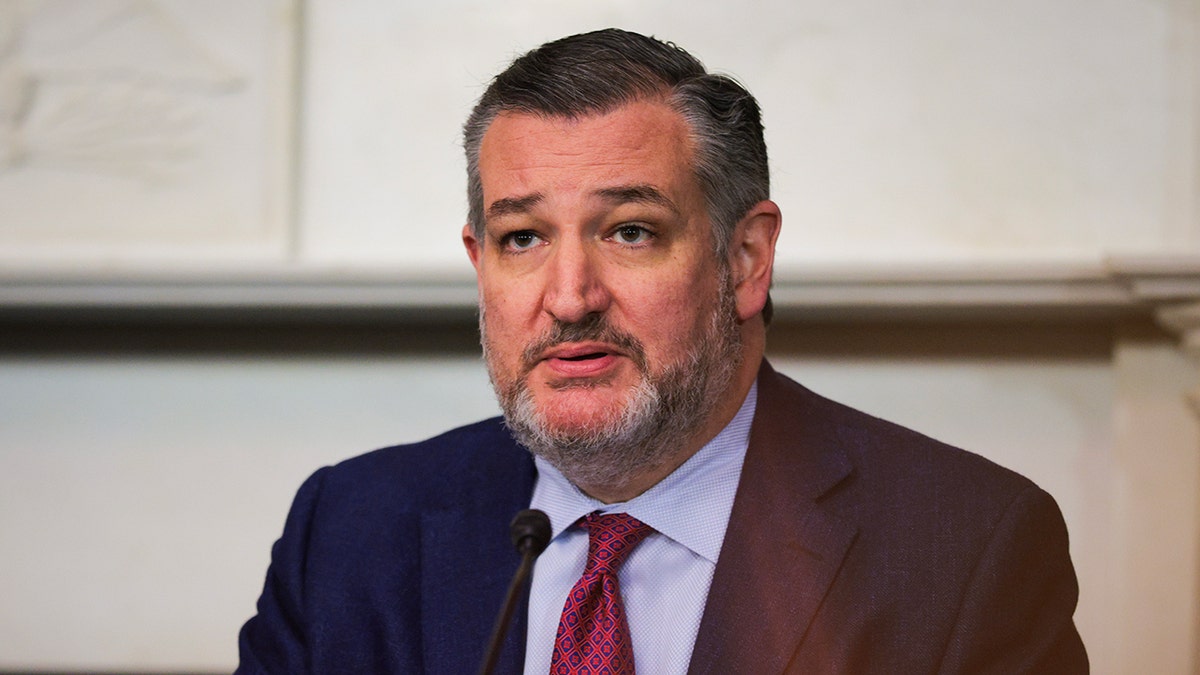
Sen. Ted Cruz, R-Texas, held the floor for more than 21 hours back in 2013. (Kayla Bartkowski/Getty Images)
But what happens if a senator – or a group of senators – delays things with long speeches? That can only last for so long. And it could potentially truncate the Senate’s need to take ANY cloture vote, needing 60 yeas.
Republicans who advocate for passage of the SAVE Act believe they can get around cloture – and thus the need for 60 votes – by making opponents of the SAVE Act talk. And talk. And talk.
And once they’re done talking, the Senate can vote – up or down – on the SAVE Act. Passage requires a simple majority.
Senate Rule XIX (19) states that «no senator shall speak more than twice upon any one question in debate on the same legislative day.»
TRUMP, THUNE CLASH ON VOTER ID ULTIMATUM AS GOP REMAINS DIVIDED ON PATH FORWARD
Easy enough, right? Two speeches per day. You speak twice on Monday, then you have to wait until Tuesday? Democrats would eventually run out of juice with 47 senators who caucus with their party.
But it’s not that simple. Note the part about two speeches per «question.»
Well, what’s a «question,» in Senate parlance? That could be the bill itself. It could be an amendment. It could be a motion. And just for the record, the Senate usually cycles through a «first degree» amendment and then a «second degree» amendment. So, if you’re scoring at home, that could be six (!) speeches per senator, per day, on any given «question.»
Questions?
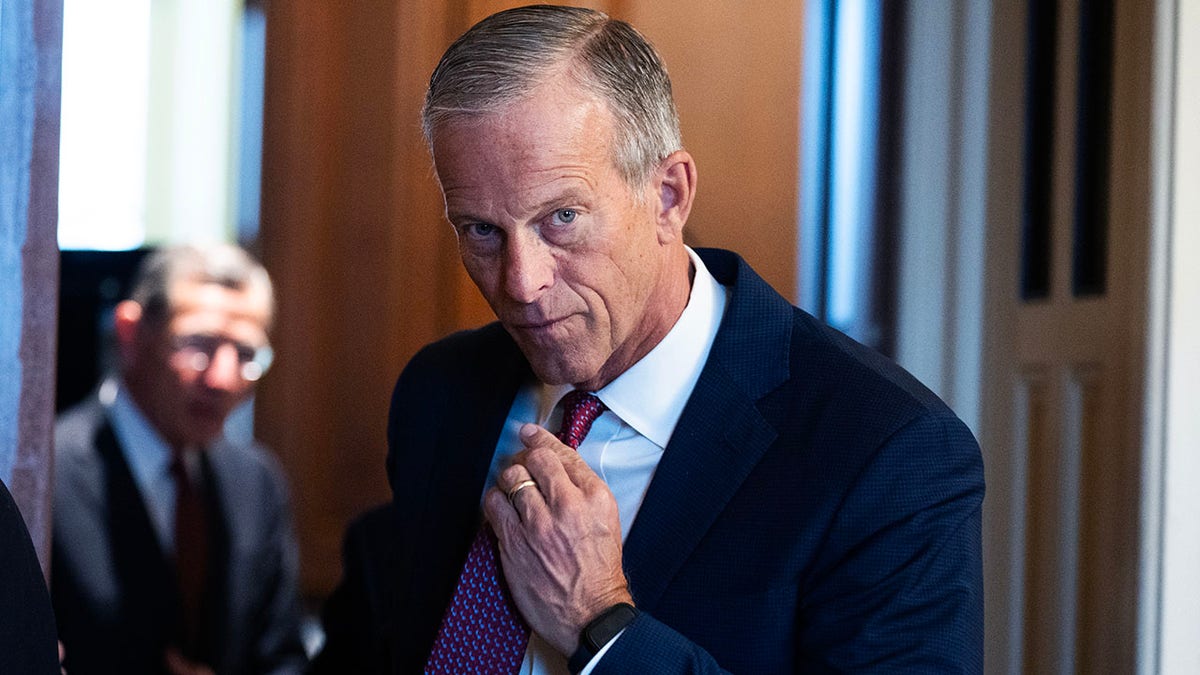
It may be up to Senate Majority Leader John Thune, R-S.D., whether the Senate «adjourns» or «recesses.» (Tom Williams/CQ-Roll Call, Inc via Getty Images)
But wait. There’s more.
Note that Rule XIX refers to a «legislative day.» A legislative day is not the same as a calendar day. One basic difference is if the Senate «adjourns» each night versus «recessing.» If the Senate «adjourns» its Monday session, then a new legislative day begins on Tuesday. However, the legislative day of «Monday» carries over to Tuesday if the Senate «recesses.»
It may be up to Senate Majority Leader John Thune, R-S.D., whether the Senate «adjourns» or «recesses.» The creation of a new «legislative day» inhibits the GOP effort.
Moreover, talking filibuster proponents could object to a request by Thune to adjourn. If the Senate votes to stay in session, that forces the legislative day of Monday to bleed over to Tuesday.
SCHUMER ONCE BLOCKED TRUMP’S MOVE TO FILL THE NATION’S OIL RESERVES, NOW HE WANTS THEM OPENED
Pro tip: watch to see if the adjournment vs. recess scenario unfolds. If a talking filibuster supporter tries to prevent the Senate from adjourning, that could signal whether the GOP has a shot at eventually passing the SAVE Act. If that test fails, the SAVE Act is likely dead in the water.
We haven’t even talked about a custom practiced by most Senate Majority Leaders to lock down the contours of a bill when they file cloture to end debate.
It’s a Senate custom to recognize the Senate Majority Leader first on the floor for debate. So Thune and his predecessors often «fill» what’s called the «amendment tree.» The amendment tree dictates how many amendments are in play at any one time. Think of the underlying bill as a «trunk.» A «branch» is for the first amendment. A «sprig» from that branch is the second amendment. Majority leaders often load up the amendment tree with «filler» amendments, not changing the subject of the bill. He then files cloture to break the filibuster.
That tactic curbs the universe of amendments. That blocks the other side from engineering controversial amendments to alter the bill. But if Thune doesn’t file cloture to end debate, then the Senate must consider amendment after amendment, repeatedly filling the tree and voting on those amendments. This scenario unfolds during a «talking» filibuster. Not when Thune is controlling the process by filing cloture and «filling the tree.»
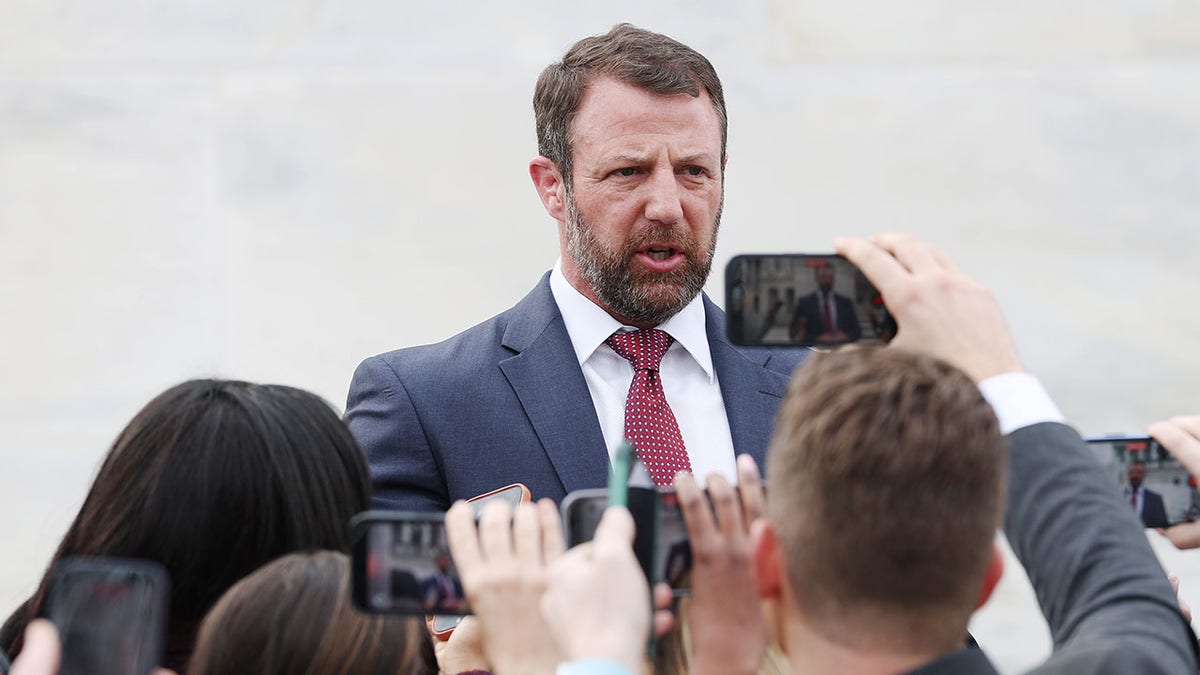
Forcing a talking filibuster may well preclude the confirmation of Sen. Markwayne Mullin, R-Okla., as Secretary of Homeland Security. ( Anna Moneymaker/Getty Images)
This is why Thune is skeptical of a talking filibuster to pass the SAVE Act.
«This process is more complicated and risky than people are assuming at the moment,» said Thune.
In fact, the biggest «benefit» to filing cloture may not even be overcoming a filibuster, but blocking amendments via management of the tree. Republicans are bracing for amendments Democrats may offer.
«If you don’t think Democrats have a laundry list of amendments, talking about who won the 2020 election, talking about the Epstein files – if you don’t think they have a quiver full of these amendments that they’re ready to get Republican votes on the record, then I’ve got a bridge to sell you,» said George Washington University political science professor Casey Burgat.
Plus, forcing a talking filibuster for days precludes the Senate from passing a DHS funding bill. That’s to say nothing of confirming Sen. Markwayne Mullin, R-Okla., as Homeland Security Secretary.
CLICK HERE TO DOWNLOAD THE FOX NEWS APP
That’s why there’s a reluctance by some Republicans to push the talking filibuster. And it could come at the expense of the SAVE Act – despite the president’s push.
congress,senate,voting











INTERNACIONAL
En una carta pública, el presidente de Irán dijo que Netanyahu manipula a Trump en la guerra y lanzó una advertencia a EE.UU.

Mientras se cruzan las versiones por un alto al fuego entre Washington y Teherán, este miércoles por la tarde el presidente iraní publicó una carta abierta en la que dijo dirigirse «al pueblo de los Estados Unidos». Masoud Pezeshkian cuestionó la «guerra de desinformación», deslizó que Donald Trump puede estar siendo manipulado por Benjamin Netanyahu y cerró con una fuerte advertencia: «A lo largo de su milenaria y orgullosa historia, Irán se sobrepuso a muchos agresores. Lo que queda de ellos sólo son nombres manchados en la historia».
Se trata de una misiva de cuatro carillas publicada en los perfiles oficiales de redes sociales de Pezeshkian, presidente de Irán, este miércoles por la noche, hora local. Llegó apenas horas después de que Donald Trump afirmara en Truth Social que «el nuevo presidente del régimen iraní acababa de pedirle un alto al fuego», lo cual sería considerado por Washington sólo después de que se liberara el estrecho de Ormuz.
En su carta, Pezeshkian no se pronuncia explícitamente sobre el posible cese al fuego, pero señala: «Hoy el mundo está en una encrucijada. Seguir por el camino de la confrontación es más caro y fútil que nunca. La elección entre confrontación y compromiso es real y consecuente; su resultado moldeará el futuro de las generaciones venideras».
Tampoco aclara si la carta fue escrita con aprobación del líder supremo, Mojtaba Khamenei, de mayor poder que el presidencial.
«Al pueblo de los Estados Unidos de América y a todos aquellos que, en medio de un caudal de distorsiones y relatos fabricados, continúan buscando la verdad y aspira a llevar una vida mejor. Irán –en su nombre, carácter e identidad– es una de las civilizaciones más antiguas en la historia. Pero además de sus ventajas históricas y geográficas a lo largo de los tiempos, Irán nunca ha elegido, en su historia moderna, el camino de la agresión, expansión, colonialismo o la dominación», comienza la carta del presidente iraní.
Y continúa: «Incluso ante la ocupación, invasión y de la presión sostenida de las potencias globales –y a pesar de tener superioridad militar sobre varios de sus vecinos–, Irán nunca inició una guerra. En cambio, resolvió y repelió valientemente a aquellos que lo atacaron (…) Por eso, retratar a Irán como una amenaza no es ni consistente con la realidad histórica ni la moderna; y esa percepción responde a la necesidad de justificar la presión, mantener superioridad militar y la industria bélica (…) En ese contexto, si no hay una amenaza, se la inventa».
To the people of the United States of America pic.twitter.com/3uAL4FZgY7
— Masoud Pezeshkian (@drpezeshkian) April 1, 2026
También señala a Estados Unidos por concentrar «sus más numerosas fuerzas y capacidades militares alrededor de Irán». «Lo que Irán ha sostenido es una respuesta mesurada en legítima defensa, lo cual no significa la iniciación de guerra o agresión alguna», amplía Pezeshkian en su carta abierta.
Además, dice -en referencia a las negociaciones por el programa nuclear, previas al estallido de la guerra- que «Irán buscó negociar, alcanzó un acuerdo y cumplió con sus compromisos».
«La decisión de salir de ese acuerdo, escalar el conflicto y lanzar dos ataques en medio de las negociaciones fueron dos decisiones destructivas del gobierno estadounidenses. Haber atacado infraestructura crucial de Irán –instalaciones energéticas e industriales– atentó directamente contra su pueblo», sigue.
Luego desliza acusaciones sobre el rol de Benjamin Netanyahu y su influencia sobre Trump: «¿Acaso los Estados Unidos no entraron en el conflicto arrastrados como un proxy de Israel, manipulados por su régimen? ¿Acaso no es evidente que Israel busca confrontar contra Irán hasta la vida del último soldado norteamericano y del último dolar de impuestos de cada estadounidense? ¿Es realmente ‘Primero EE.UU.’ la prioridad del gobierno norteamericano?».
«A lo largo de su historia y orgullosa historia, Irán se sobrepuso a numerosos agresores. Lo único que queda de ellos son nombres manchados en la historia, mientras que Irán persiste, resiliente, digno y orgulloso«, concluyó el presidente iraní.
Más temprano este miércoles, Trump publicó en su propia red social, Truth, un mensaje para anunciar que el régimen de Teherán había pedido un alto al fuego. «El nuevo presidente del régimen iraní, mucho menos radicalizado y mucho más inteligente que sus precesores, ¡acaba de pedir un alto al fuego a los EE. UU.! Lo consideraremos cuando el estrecho de Ormuz esté abierto, libre y despejado», comenzó el mandatario norteamericano.
De lo contrario, aseguró, Estados Unidos continuará «bombardeando Irán hasta la aniquilación o, como dicen algunos, hasta que regrese a la Edad de Piedra».
No tardó en llegar la respuesta desde Teherán: el portavoz del Ministerio de Relaciones Exteriores, Esmaeil Baqaei, dijo que «la afirmación de Trump es falsa e infundada».

NEWYou can now listen to Fox News articles!
As artificial intelligence continues to expand into homes and the workplace, voters are less concerned about it taking their jobs and more worried about its overall influence.
The latest Fox News Poll finds 66% of registered voters are concerned about artificial intelligence, up from 63% in December and 56% in 2023 (the first time the question was asked).
The increase in concern is across the board, with the biggest jumps happening among women, voters without a college degree, Democrats and liberal voters.
FOX NEWS POLL: SOUR VOTERS SAY WASHINGTON IS OUT OF TOUCH
Yet when it comes to how AI will affect the workforce, voters aren’t concerned about their own jobs even though most think it will eliminate more positions (59%) than it will create (7%) over the next 5 years.
FOX NEWS POLL: VOTERS OPPOSE ACTION IN IRAN BUT GIVE US MILITARY POSITIVE MARKS
Seven in 10 (69%) employed voters are unconcerned their job will be cut in the next five years, while three in 10 are worried (31%). This matches where sentiment was in November.
The lack of concern may reflect broader attitudes toward AI in the workplace: Seven in 10 say it is not important to their career that they learn how to use AI, including six in 10 employed voters.
Another three in 10 say it is important, and that jumps to roughly in 10 among workers, voters with graduate degrees, and those living in households with an annual income of $100,000 or higher. Those most likely to feel learning AI is a career priority are men under age 45 (48%).
But if they must tech up, a majority of voters feel comfortable adopting and using new technology (60% comfortable vs. 40% not comfortable).
The highest numbers saying they’re comfortable are voters under age 45, particularly younger men (81%) and younger Republicans (82%).
Artificial intelligence and the military…
As the Iran conflict enters its fifth week, nearly two-thirds of voters are uncomfortable with the military using autonomous weapons systems (AWS). About four in 10 feel comfortable.
The partisan divide on this issue is wide: 52% of Republicans are comfortable with AWS vs. 27% of Democrats. Fifty-eight percent of MAGA Republicans are comfortable vs. 40% of non-MAGA Republicans.
There is also a prominent gender gap with men (43%) more comfortable than women (31%).
Still, nearly all voters say that when the military is considering a strike that could kill people, a human should be required to make the final decision: 93% feel that way vs. 7% saying AI systems alone should have the final say.
This is a bipartisan belief, with at least nine in 10 Democrats, Republicans and independents agreeing a human needs to make the decision.
More than half of voters who have served in the military are uncomfortable with the use of AWS systems (54% not comfortable vs. 45% comfortable), and an overwhelming majority thinks a human should be making the choice between life and death (90%).
One more thing…
While concern about AI is up among voters, it’s far from the top worry with inflation (86% extremely/very concerned), healthcare (81%), gas prices (80%), political divisions (80%), unemployment (73%), attacks by Islamic (73%) and non-Islamic terrorists (70%), ability to pay bills (70%) and gun violence (69%) ranking higher.
Concern about Iran getting a nuclear bomb ties with concern over AI (66% extremely/very) while antisemitism (63%) and detentions by ICE (62%) rank lower.
CLICK HERE FOR CROSSTABS AND TOPLINE
Conducted March 20-23, 2026, under the direction of Beacon Research (D) and Shaw & Company Research (R), this Fox News survey includes interviews with a sample of 1,001 registered voters randomly selected from a national voter file. Respondents spoke with live interviewers on landlines (104) and cellphones (641) or completed the survey online after receiving a text (256). Results based on the full sample have a margin of sampling error of ±3 percentage points. Sampling error for results among subgroups is higher. In addition to sampling error, question wording and order can influence results. Weights are generally applied to age, race, education and area variables to ensure the demographics are representative of the registered voter population. Sources for developing weight targets include the most recent American Community Survey, Fox News Voter Analysis and voter file data.
artificial intelligence, politics, military tech, military, democratic party, republicans, fox news poll

NEWYou can now listen to Fox News articles!
Ukrainian President Volodymyr Zelenskyy on Wednesday touted new momentum toward ending the country’s war with Russia after a high-level call with President Donald Trump’s envoys, pointing to progress on a U.S.-backed security deal.
Zelenskyy announced in an X post that he and his officials had a «positive» conversation with Steve Witkoff and Jared Kushner, along with Sen. Lindsey Graham, R-S.C., and NATO Secretary General Mark Rutte with talks centered around forging a «dignified peace.»
«We agreed to strengthen security guarantees, and I have already instructed our team to promptly update the documents so that the security guarantees for Ukraine are strong, the prospects for post-war reconstruction are real, and everything is doable,» Zelenskyy wrote.
Ukrainian President Volodymyr Zelenskyy at a meeting Wednesday, April 1, 2026. (@ZelenskyyUa via X)
WITKOFF AND KUSHNER SCHEDULED TO MEET PUTIN IN MOSCOW
He emphasized Ukraine needs clear agreements so that its citizens understand exactly how international partners will respond to deter any renewed Russian aggression.
«We need strong, shared positions, and Ukraine’s contribution to this strength is unquestionable,» Zelenskyy wrote. «… I expect that the teams will work substantively in the coming days so that we can all feel progress. A trilateral format — a leaders’ format — all of this is necessary.»

Ukranian leaders at a meeting discussing the Ukraine-Russia war Wednesday, April 1, 2026. (@ZelenskyyUa via X)
TRUMP CONFIRMS HE INVITED PUTIN TO JOIN HIS BOARD OF PEACE: ‘HE’S BEEN INVITED’
In a subsequent video, Zelenskyy reported Russia launched a massive wave of more than 700 drones Wednesday, including «shaheds,» targeting Ukraine’s energy sites, food warehouses and residential buildings across multiple regions.
Although Ukrainian forces intercepted roughly 90% of the incoming drones, Zelenskyy condemned the bombardment as Russia’s direct response to Ukraine’s proposal for an Easter ceasefire.

Leaders meet to discuss the Ukraine-Russia war Wednesday, April 1, 2026. (@ZelenskyyUa via X)
CLICK HERE TO DOWNLOAD THE FOX NEWS APP
He noted that a halt in fighting during the holidays was intended to be a signal that diplomacy could be successful.
Beyond the U.S. and Europe, Zelenskyy said Defense Minister Rustem Umerov is working to secure long-term defense contracts with several Middle Eastern nations, including Saudi Arabia, the United Arab Emirates, Qatar, Jordan, Kuwait, Iraq, Bahrain and Turkey.
volodymyr zelenskyy, ukraine, russia, world politics, wars

Piden indagar a la exfiscal Fein por “encubrimiento agravado” en la muerte de Nisman

El polémico gesto de Donnarumma: rompió la ‘chuleta’ del portero de Bosnia en la tanda de penaltis

En una carta pública, el presidente de Irán dijo que Netanyahu manipula a Trump en la guerra y lanzó una advertencia a EE.UU.

Fox News Poll: Broad anxiety about AI doesn’t extend to jobs

Dirigentes peronistas y tres gobernadores participarán de la vigilia por Malvinas en Tierra del Fuego

Autos 0 km: cuál es la marca que en abril bajó los precios de uno de los modelos más vendidos

El Gobierno cambia su propuesta de reforma: endurece penas para delitos comunes, pero no para los casos de corrupción

Nuevas críticas de Marcela Pagano contra los Milei: “Karina es la que gobierna”, aseguró

Dos jubiladas que le habrían prestado dinero a Manuel Adorni negaron conocerlo

Quiénes son las dos acreedoras del préstamo con el que Adorni compró su departamento en Caballito

 POLITICA2 días ago
Dos jubiladas que le habrían prestado dinero a Manuel Adorni negaron conocerlo
- POLITICA2 días ago
Quiénes son las dos acreedoras del préstamo con el que Adorni compró su departamento en Caballito
- ECONOMIA2 días ago
Uno por uno: qué dicen los principales artículos de la Reforma Laboral que suspendió la Justicia por pedido de la CGT