INTERNACIONAL
The Tennessee ‘waltz’: Republicans and Democrats dance around meaning of special election results

NEWYou can now listen to Fox News articles!
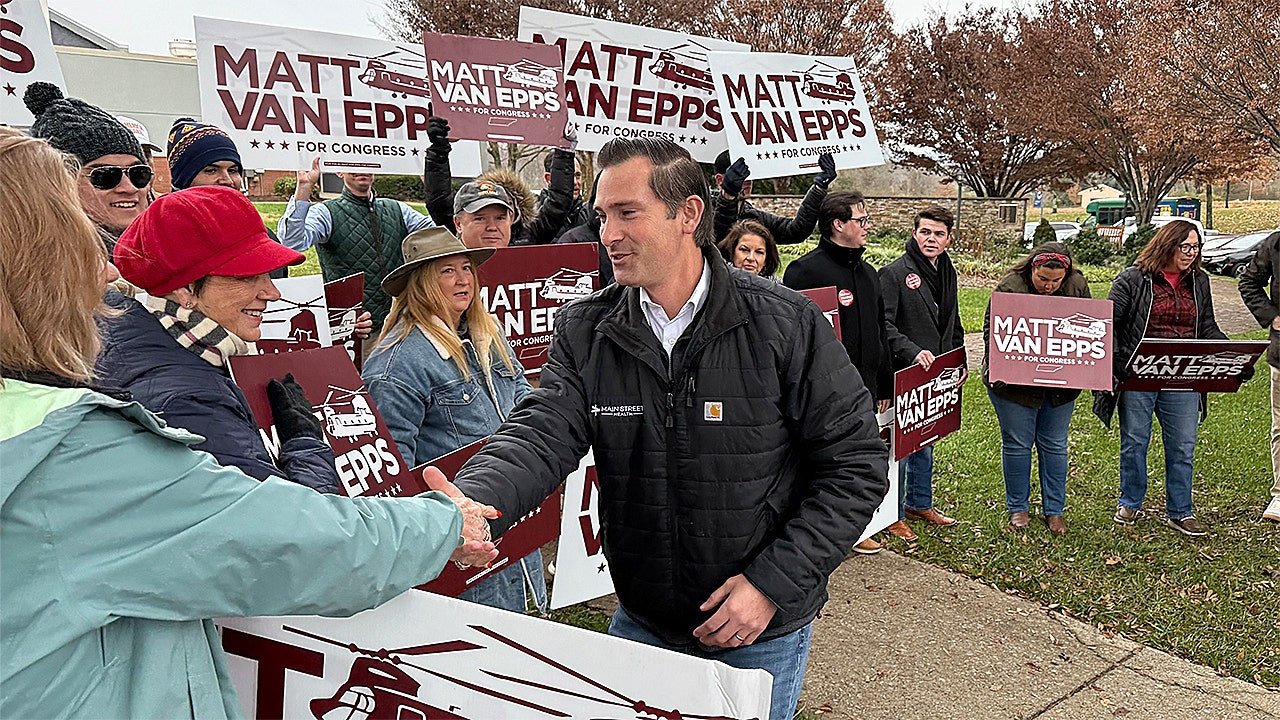
Democrats waltzed into Tennessee and tried to swipe the seat held by Former Rep. Mark Green, R-Tenn., this week.
Winning special elections for House seats is a delicate dance. But Rep.-elect Matt Van Epps, R-Tenn., defeated Democrat Aftyn Behn by nine points.
House Speaker Mike Johnson, R-La., noted that the Cook Political Report rates that district to favor the GOP by about 10 points.
TRUMP-BACKED REPUBLICAN TOUTS ‘GREAT TURNOUT FOR US’ IN MUST-WIN SPECIAL ELECTION FOR GOP
«It’s not an R-plus-25. The President won it by 22 points. It’s actually rated to be a slightly Republican district. So, winning it by nine points is almost exactly on the nose of what we might expect,» said Johnson.
In other words, Republicans won the special election by the precise margin expected. That’s even though Republicans fretted that a Democratic surge could serve as a weather vane as to how popular the party is, if there are dents in the Trump coalition and what the path looks like in the 2026 midterms.
«Democrats put millions of dollars in. They were really trying to set the scenario that there’s some sort of wave going on. There’s not. We just proved that there’s not,» said Johnson.
Representative-elect Republican Matt Van Epps delivers his victory speech at Millennium Hotel Maxwell House Nashville Dec. 2, 2025, in Nashville, Tenn. (Brett Carlsen/Getty Images)
Maybe. Maybe not. Special elections are special. A snapshot of where a given district stands at a point in time — often without the benefit of the regular electorate, which shows up in November every two years. That’s why House special elections are sometimes closer than what can be expected in the general. And the party out of power often dumps truckloads of cash into these contests to win.
If nothing else, it forces the other party to burn lots of money too. But trying to make a race seem important gins up the base and concocts an illusion that things aren’t going well for the other side. Maybe people believe that voters are fed up and are demanding a change.
A special election is kind of like checking the score of a football game partway through the second quarter. Maybe one team’s passing game is really clicking. That may dictate the outcome. But we haven’t yet seen the two fumbles in the second half. That’s to say nothing of the botched snap on the field goal and blocked punt.
A lot can happen.
MUSIC CITY MIRACLE: A LOOK AT AN UNUSUALLY CONTENTIOUS ELECTION IN THE VOLUNTEER STATE
Frankly, flipping seats in House special elections is arduous. The party out of power in the House or opposite of who occupies the White House often makes a race of it. That can signal a weakness in the party in power or even the president as you approach the next election. One of the best examples of this came in 2017. House Democrats came close to flipping four special elections in solid Republican seats ranging from Montana to Kansas to South Carolina to Georgia.
But Democrats didn’t capture any of those seats.
However, Democrats did make a few of them closer than you might think.
In fact, one of the best examples involved Rep. Ron Estes, R-Kan.
President Donald Trump tapped former Rep. Mike Pompeo, R-Kan., to serve as CIA director and, later, secretary of state. Estes ran to succeed Pompeo. Pompeo won his district with 61% of the vote in 2016. Estes held off a challenge from Democrat James Thompson, vanquishing his opponent by six points and scoring 52% of the vote.
Despite the defeat, Democrats and political observers noted the relative strength of Thompson in the special election. Many wondered if this was an omen about a 2018 Democratic wave.
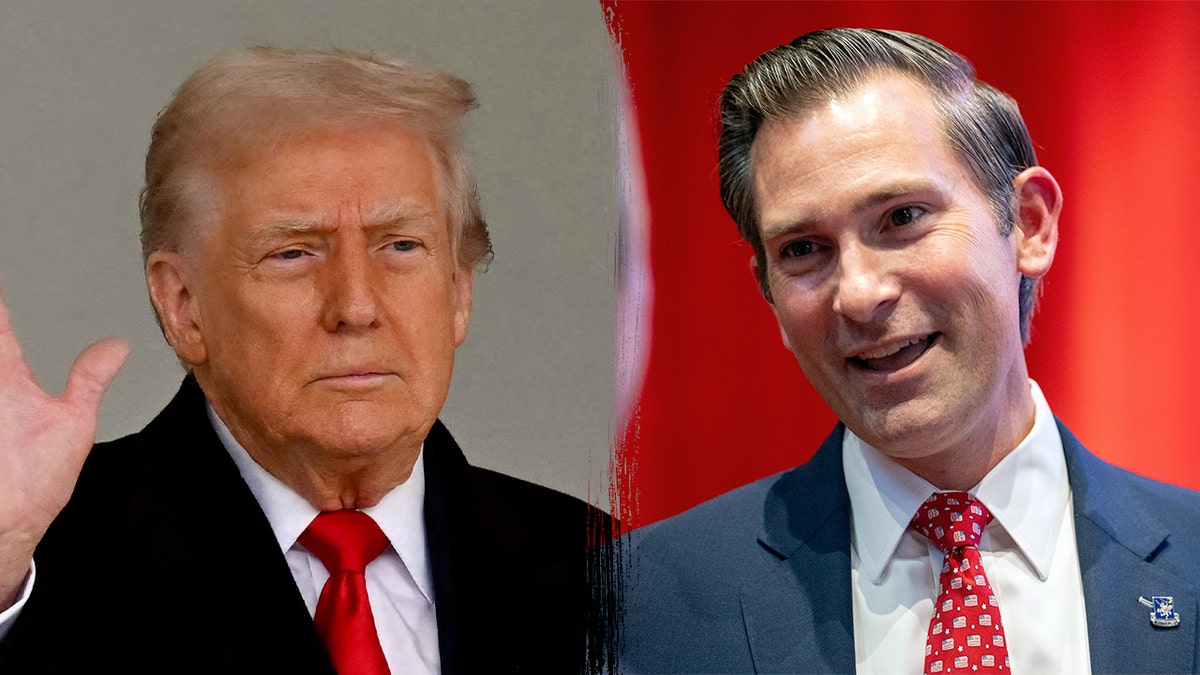
President Donald Trump and Matt Van Epps (Andrew Caballero-Reynolds/AFP via Getty Images; Nicole Hester/The Tennessean/USA Today Network via Imagn Images)
But the Kansas district is a Republican stronghold. Democrats gained control of the House in the 2018 midterms. However, Estes won re-election the next year by nearly 19 points.
And despite the clamor surrounding special elections, there have truly only been four major «flips» in House special elections in the past 18 years. And one of those in a Hawaii special election was an anomaly where the Republican won in a three-way contest while two Democrats siphoned votes from one another.
But back to Tennessee.
Could Democrats have scored more success with a moderate candidate? Behn was progressive. A centrist may have had a better shot at winning a district like this, especially when one considers the success of Virginia Gov.-elect Abigail Spanberger, D-Va., last month.
DEMOCRATS’ SURGE IN TENNESSEE THROWS NEW UNCERTAINTY ONTO GOP’S 2026 HOUSE MAP
Could a Van Epps win encourage other Republicans to quit? The House majority will be 220-214 once Johnson swears him in on Thursday. But some in the GOP are itching to leave. They may think there’s enough of a cushion, even though Rep. Marjorie Taylor Greene, R-Ga., departs in January.
Fox is told there are several House Republicans who want to head for the exits. Some are upset at the White House controlling the entire agenda and Johnson keeping the House at bay for weeks during the government shutdown. Another factor: President Trump’s approach to the war in Ukraine.
Moderate Republicans may look at the Tennessee result and insist on the party addressing healthcare in the coming weeks. That’s a looming factor considering that Democrats withheld their votes to fund the government over healthcare this fall. It’s also possible that moderate Republicans in California and New York might see the relative Democratic strength in this contest as a signpost that they face a tough re-election next year. As we said, Democrats flipped the House seven years ago after coming close in several special elections.

Republican nominee Matt Van Epps delivers a victory speech after winning a special congressional election in Tennessee’s 7th District, Dec. 2, 2025, in Nashville, Tenn. (Paul Steinhauser/Fox News)
Then there is redistricting and gerrymandering. The Van Epps win underscores the concept that drawing favorable lines for your party works.
But this redistricting took place several years ago. Tennessee Republicans drew former Rep. Jim Cooper, D-Tenn., a Blue Dog, and any other Democrat out of a Nashville-area district. The GOP trifurcated Nashville and the suburbs, diluting the Democratic vote among several GOP districts. That served as a safety valve to assure a GOP win Tuesday. It also explains the risks of the current wave of redistricting by both parties. Plus, it underscores how redrawing the lines can make some contests closer than they should be.
Both sides are now dancing around with interpretations of what unfolded Tuesday. Republicans say this is why they will hold the House next year. Democrats say they won – even though they lost. And that’s why they will capture the House in the midterms.
Call it the Tennessee «waltz.»
But special elections loom in Texas, New Jersey and Georgia.
CLICK HERE TO DOWNLOAD THE FOX NEWS APP
It’s doubtful that those seats are in play.
So don’t expect the Texas Two-Step, the Garden State Stomp or The Night The Lights Went Out In Georgia.
democrats,elections,republicans elections,tennessee,house of representatives politics,politics,midterm elections










INTERNACIONAL
Caídas después de los 50: cómo moverse más y adaptar la casa puede evitar sustos y lesiones
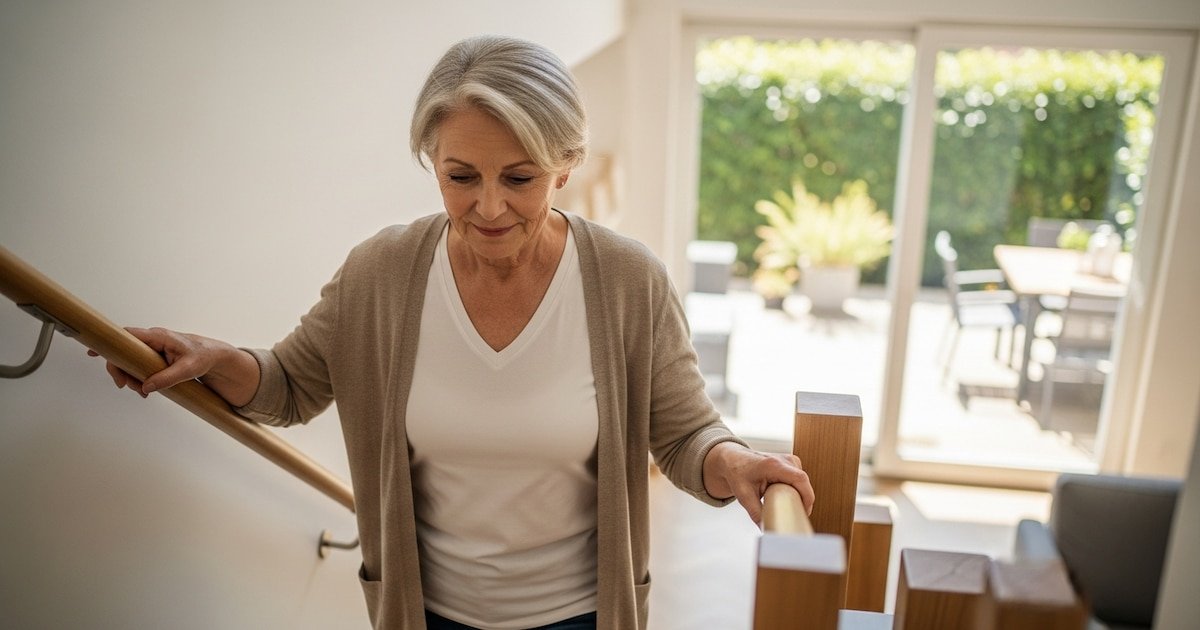
Las caídas pueden ser una preocupación real para quienes pasan los 50 años. Con el paso del tiempo, los músculos pierden fuerza, la vista ya no acompaña igual y el equilibrio se vuelve más inestable.
Todo esto conduce a que los tropiezos y resbalones sean más frecuentes de lo que muchos se imaginan.
Un equipo de expertos del Reino Unido quiere cambiar las reglas del juego con una guía para prevenir caídas en quienes superan los 50 años. Fue publicada en la revista de medicina The BMJ.

Su foco no está en hacer chequeos largos y complicados a todo el mundo, sino en identificar rápido quién corre más peligro y actuar ahí de manera directa. Esto significa que buscan evitar que la prevención sea poco precisa.
Sugirieron poner los esfuerzos donde más hacen falta. Si alguien tiene antecedentes de caídas, dificultad para caminar o se siente inseguro, puede acceder a ejercicios específicos y a una revisión del hogar para eliminar riesgos.
Cifras que duelen y enseñan

Las caídas de las personas mayores se volvieron un tema de salud pública. En un estudio publicado en la revista Nature Aging, se informó que en 2021 se registraron aproximadamente 45,6 millones de nuevas caídas en personas mayores de 65 años a nivel mundial. Esto representa un aumento del 182% respecto a 1990.
La incidencia global de caídas sigue una tendencia creciente, especialmente en las regiones con mayor envejecimiento poblacional y en mujeres, aunque los hombres presentan tasas de mortalidad más altas tras una caída.
Más allá de los números, las caídas duelen y cuestan: llevan a hospitalizaciones, operaciones, recuperación lenta y un golpe duro a la confianza de las personas.

El miedo a volver a caerse hace que muchas personas dejen de salir, eviten moverse y pierdan independencia.
Muchos mayores dejan rutinas que les daban placer y pierden contacto con su entorno, lo que afecta su bienestar emocional y físico.
Por eso, los expertos insisten en la necesidad de políticas públicas y acciones comunitarias que pongan la prevención en primer plano.
Claves para caminar seguros
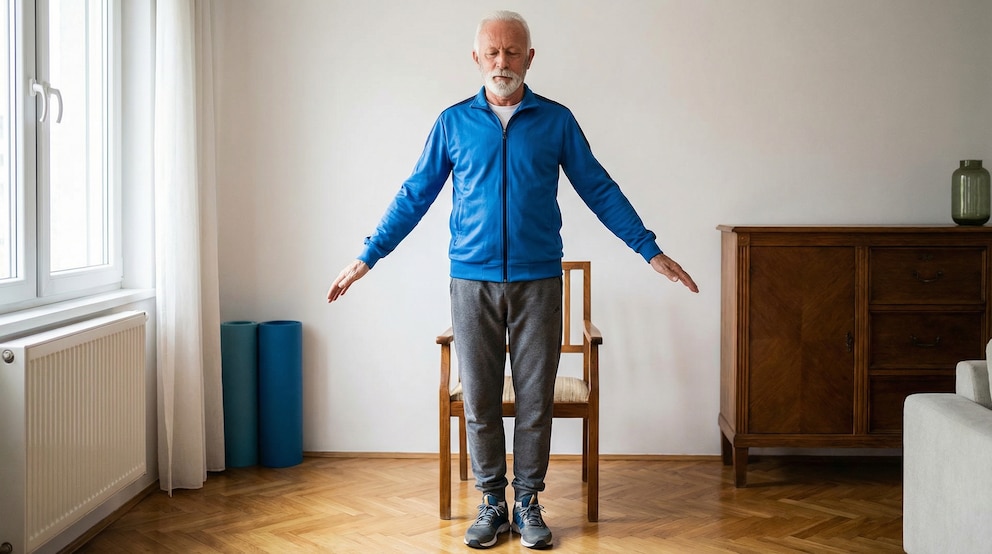
La nueva guía sobre prevención de caídas fue elaborada por especialistas del Instituto Nacional para la Salud y la Excelencia en la Atención de Londres y el Consejo del Condado de West Sussex.
También el Departamento de Gerontología de la Escuela de Ciencias del Curso de Vida y Población del King’s College de Londres y el Hospital Real de Hull del sistema de hospitales universitarios de Hull colaboraron.
Recomendaron que los profesionales de la salud deben saber identificar a quiénes corresponde hacerles la revisión completa: personas mayores de 65 años, mayores de 50 con factores de riesgo, quienes viven en residencias u hospitales, y quienes tuvieron caídas con señales de alarma como lesiones, pérdida de conciencia o dificultad para levantarse.

Varios factores aumentan el riesgo de caídas: la debilidad muscular, los problemas de equilibrio, la pérdida de visión y audición, el uso de medicamentos que afectan la presión arterial o el sistema nervioso, y enfermedades crónicas como la diabetes, la artritis o trastornos neurológicos.
También influyen el consumo de alcohol, los mareos, el deterioro de la memoria y la depresión, así como el uso de calzado inadecuado o problemas en los pies.
Los factores ambientales también juegan un papel clave: alfombras sueltas, pisos resbaladizos, escasa iluminación y muebles inestables pueden provocar lesiones en el hogar.
La incontinencia urinaria y la dificultad para levantarse después de una caída aumentan la vulnerabilidad.

La suma de esos factores puede alterar la seguridad en la vida diaria y hace fundamental una evaluación integral para prevenir caídas y sus consecuencias.
Cuando se hace la evaluación de riesgo, los profesionales indagan sobre esos factores, evalúan la fuerza de los músculos y analizan si ha tenido caídas previas.
Si la persona vive en su casa, en la guía se recomienda que un terapeuta ocupacional revise el hogar para detectar peligros como alfombras sueltas, mala iluminación o muebles en mal estado.
Si la persona solo tiene problemas en la forma de caminar o en el equilibrio, sin otros factores de riesgo, la guía aconseja saltear la evaluación larga y ofrecer directamente ejercicios adaptados para prevenir caídas.
Así, cada persona recibe la atención que necesita, sin perder tiempo en estudios innecesarios.

Cuando se encuentran en hospitales y residencias, moverse todos los días ayuda a mantener la movilidad y a reducir el riesgo de nuevas caídas. Incluso ejercicios suaves aportan grandes beneficios y evitan el deterioro físico.
En diálogo con Infobae, la médica Fabiana Giber, miembro de la comisión directiva de la Sociedad Argentina de Geriatría y Gerontología (SAGG), destacó la publicación de la guía.
“Se debería considerar que una persona que ya tuvo una caída está en mayor riesgo. Favorece la fragilidad. El riesgo es mayor con más edad”, señaló la médica.
“Es importante acceder a una buena alimentación proteica y al ejercicio físico, que sirve tanto para la prevención de la fragilidad como del deterioro cognitivo”, afirmó.
“Las caídas pueden tener consecuencias graves para las personas mayores y por eso no deben sentir vergüenza ni temor de consultar al profesional de la salud”, remarcó Giber, quien es autora de un manual sobre el tema.

“Cuando una persona mayor arrastra los pies al caminar, es fundamental que se consulte y se analice el motivo. Puede deberse a falta de fuerza, uso de calzado inadecuado, o a una patología ortopédica o neurológica, por lo que siempre requiere una evaluación cuidadosa”, aclaró.
En todos los casos, “lo primero es consultar al médico de atención primaria. No siempre hay médicos geriatras disponibles en todos los ámbitos. Por eso la derivación dependerá del entorno de atención y de la disponibilidad de profesionales en la zona”.
salud,tercera edad,equilibrio,caídas,prevención,mujer,escalera,hogar,jardín,bienestar
INTERNACIONAL
Pritzker calls on Trump officials to testify over ICE crackdown, White House blasts move as ‘political stunt’
NEWYou can now listen to Fox News articles!
FIRST ON FOX: Democratic Illinois Gov. JB Pritzker is calling on Trump administration officials and former Department of Homeland Security (DHS) leadership to testify before a commission he created targeting U.S. Immigration and Customs Enforcement (ICE) operations conducted in the state.
Pritzker sent a letter to White House deputy chief of staff for policy Stephen Miller, border czar Tom Homan, former DHS Secretary Kristi Noem, acting ICE director Todd Lyons, former DHS Deputy Assistant Secretary Tricia McLaughlin, and Customs and Border Patrol Commissioner Rodney Scott among others.
«I established the Illinois Accountability Commission to preserve the truth and document how Donald Trump and his accomplices violated the rights of Illinoisans and terrorized our communities during Operation Midway Blitz,» Pritzker told Fox News Digital in a statement.
«These officials should answer directly to the people of Illinois for the chaos and violence they unleashed,» Pritzker added. «Regardless of whether these officials are still in their roles or not, the people of Illinois demand accountability from them all.»
IGNORED ICE DETAINERS ‘PUT LIVES AT RISK,’ DHS SAYS, TARGETING NEWSOM, PRITZKER, HEALEY
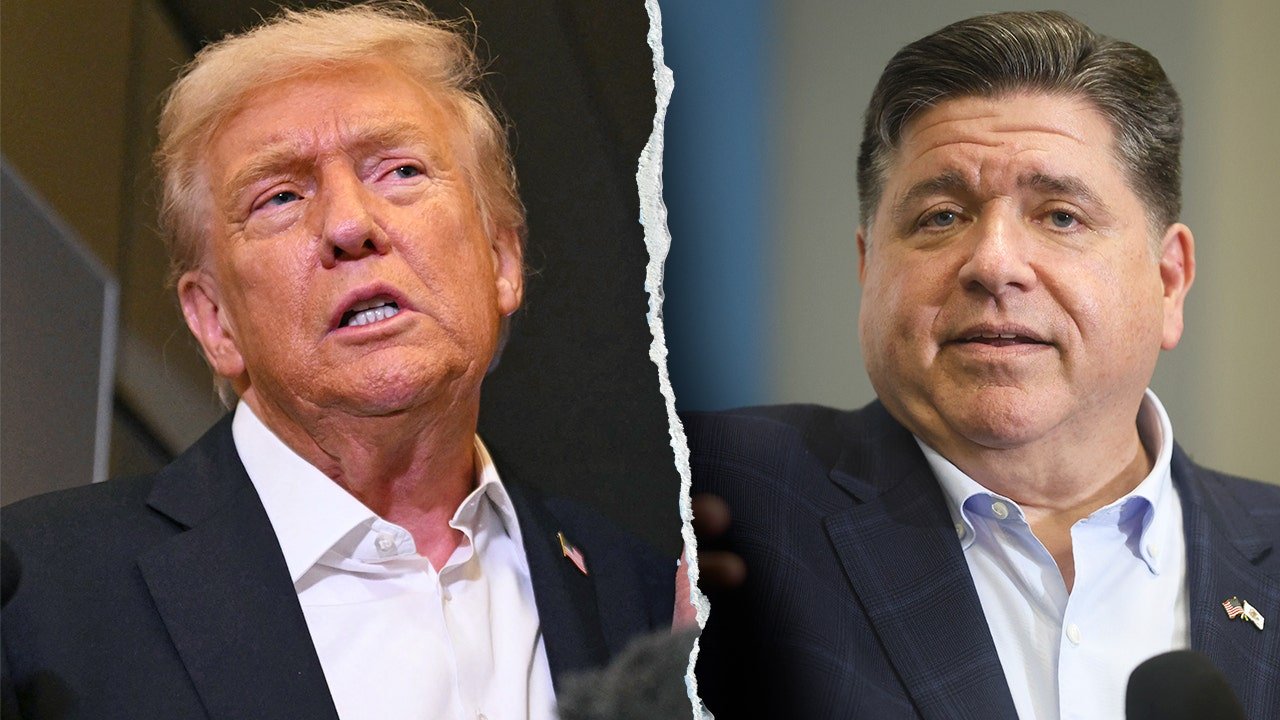
Composite image of President Donald Trump and Illinois Gov. J.B. Pritzker. Trump said aboard Air Force One he could invoke the Insurrection Act to tackle violent crime in Chicago and urged Pritzker to «beg for help,» escalating their political standoff. (Saul Loeb/AFP; Talia Sprague/Bloomberg)
The letter, obtained by Fox News Digital and signed by former Clinton-appointed Judge Rubén Castillo for U.S. District Court for the Northern District of Illinois and chairman of the Illinois Accountability Commission, calls on recipients to testify at public hearings on April 27 or April 28.
The White House blasted Pritzker, telling Fox News Digital that the commission is nothing more than a «political stunt» for the Illinois governor to try to boost his name for a potential presidential run.
«JB Pritzker is a total slob who would rather dream up political stunts for his doomed-to-fail Presidential campaign than actually help Illinois residents,» White House spokesperson Abigail Jackson told Fox News Digital.
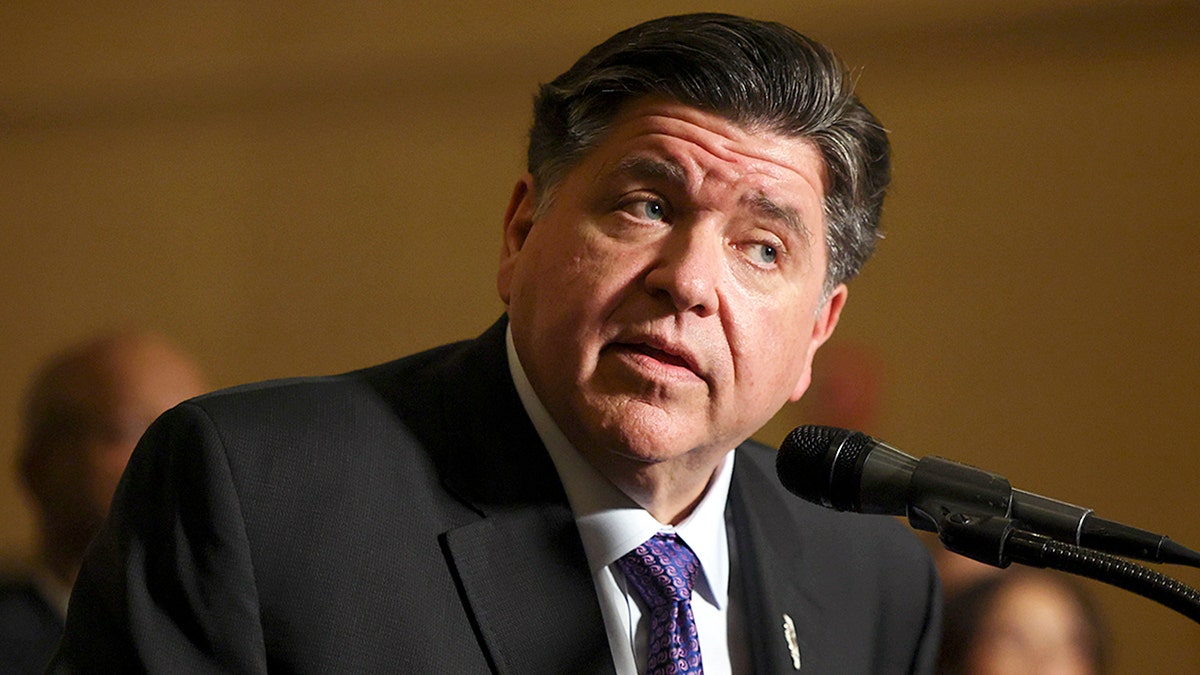
Illinois Gov. JB Pritzker answers questions at an event at Union Station in Chicago on Dec. 16, 2025. (Eileen T. Meslar/Chicago Tribune)
ICE CHIEF FIRES BACK AT ‘100% FALSE’ SANCTUARY CITY ‘HARASSMENT’ CLAIMS
«If this slob spent half as much time addressing crime and public safety concerns in Chicago as he did pandering to radical leftists, Chicagoans would be much safer,» Jackson added. «The Trump Administration, and our heroic ICE officers, will unapologetically remove dangerous criminal illegal aliens from American streets whether Pritzker likes it or not.»
The letter specifies events which the commission deems an inappropriate show of force from federal agents and says one of the goals of the commission is to «ensure meaningful accountability.»
«Reports from residents, legal advocates, journalists, and elected officials describe communities across Illinois as being subject to aggressive federal enforcement tactics during Operation Midway Blitz,» the letter reads. «These reports include the fatal shooting of Silverio Villegas-González in Franklin Park, the shooting of Marimar Martinez, the repeated deployment of tear gas in residential neighborhoods, the detention of U.S. citizens, and large-scale military-style raids in peaceful civilian communities.»
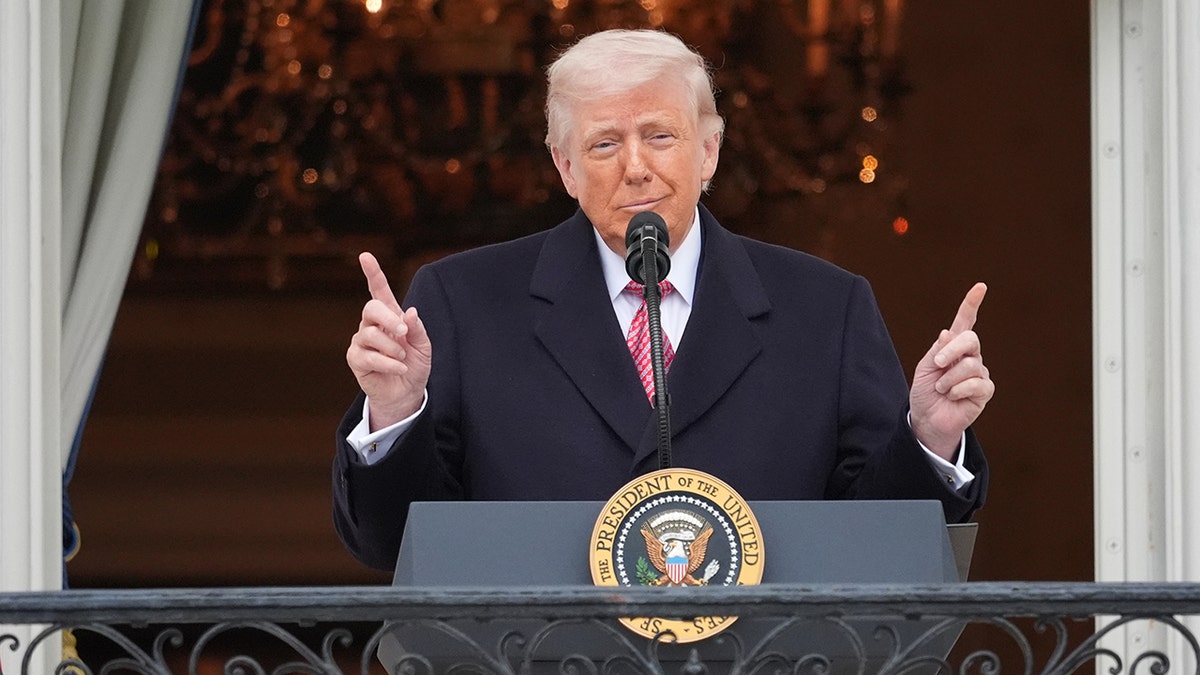
President Donald Trump speaks during an event with farmers on the South Lawn of the White House, Friday, March 27, 2026, in Washington. (Alex Brandon/AP)
ANGEL PARENTS SLAM ILLINOIS SANCTUARY LAWS AFTER ‘PREVENTABLE’ TRAGEDY IN STUDENT’S DEATH
DHS Deputy Assistant Secretary Lauren Bis responded to Fox News Digital’s inquiry slamming Pritzker for «[refusing] to do his job» and noted the recent killing of Sheridan Gorman, an 18-year-old college student who was murdered by an illegal migrant in Chicago last month.
«Governor Pritzker continues to refuse to do his job to protect his citizens from illegal alien crime and instead chooses to smear our law enforcement,» Bis said. «Where is his investigation into his own policies that allowed Sheridan Gorman’s killer to be released from jail to go on and commit her heinous murder?»
McLaughlin was also quick to punch back at what she described as the «wannabe Ministry of Truth.»
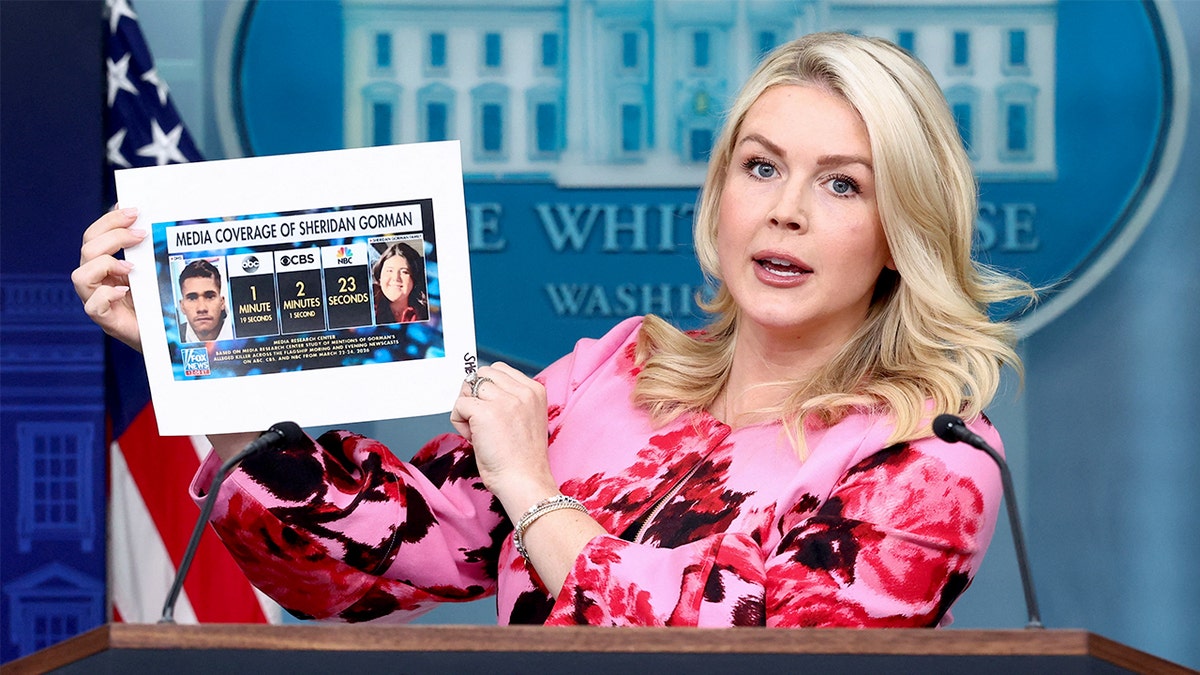
White House Press Secretary Karoline Leavitt displays a printed paper that reads «media coverage of Sheridan Gorman» as she speaks during a press briefing in the James S. Brady Press Briefing Room at the White House in Washington, D.C., March 30, 2026. (Kevin Lamarque/Reuters)
«I’ll appear before JB Pritzker’s wannabe Ministry of Truth the day he ends Illinois’ sanctuary policies — the very policies that protected Sheridan Gorman’s killer and those criminal illegal aliens responsible for the deaths of Katie Abraham, Chloe Polzin and too many other American victims,» McLaughlin told Fox News Digital.
In response to the lack of interest by current and former Trump administration officials to attend the hearings, a Pritzker spokesperson said former officials specifically «are too scared» to attend.
«It’s unfortunate that former Trump officials with more free time on their hands are too scared to face the American people and answer questions,» the spokesperson told Fox News Digital. «If they spent so much time touting the operation’s ‘achievements,’ then they should have no problem defending it.»
CLICK HERE TO DOWNLOAD THE FOX NEWS APP
Noem was removed as DHS secretary in March and tasked to lead Trump’s new special envoy for the «Shield of the Americas.» Her departure was reportedly the result of a controversial $220 million ad campaign and the deaths of two American citizens who were killed by DHS agents during ICE operations.
Former Oklahoma Sen. Markwayne Mullin was confirmed by the Senate following Noem’s departure and was sworn in as DHS secretary on March 24.
homeland security, kristi noem, illinois, jb pritzker, tom homan
INTERNACIONAL
El régimen de Irán amenazó con paralizar el tráfico marítimo a través del estrecho clave del Mar Rojo
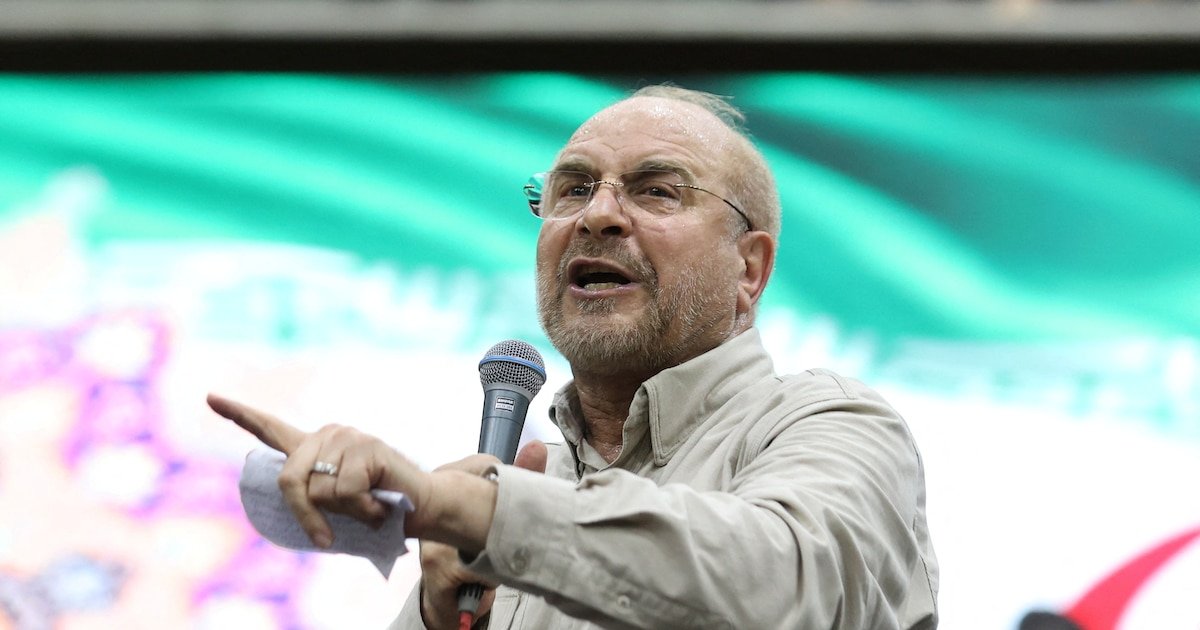
El presidente del Parlamento iraní, Mohammad Bagher Ghalibaf, amenazó con bloquear el tráfico marítimo comercial a través del estrecho de Bab al Mandeb, un paso estratégico en el mar Rojo. Hasta el momento, el régimen de la república islámica mantiene un cierre completo del estrecho de Ormuz, el punto crítico por el que normalmente transita una quinta parte del petróleo y el gas natural licuado del mundo.
En una publicación en X, Ghalibaf planteó: “¿Qué proporción del petróleo, GNL, trigo, arroz y fertilizantes globales transita por el estrecho de Bab al Mandeb?” y añadió: “¿Qué países y empresas representan los mayores volúmenes de tránsito por el estrecho?”.
El estrecho, clave para el comercio internacional, fue escenario de repetidos ataques contra embarcaciones por parte de los hutíes de Yemen, grupo rebelde aliado del régimen iraní. Las amenazas sobre Bab-el-Mandeb surgen en un contexto en el que Irán ya restrigió de manera significativa el tráfico marítimo en el estrecho de Ormuz, lo que generó disrupciones económicas globales.
Los mercados del petróleo y las materias primas están ansiosos por ver señales de que el tráfico se está reanudando. Varios petroleros y portacontenedores lograron escapar del bloqueo en las semanas previas, pero la actividad fue seguida rápidamente por días de parálisis total.

El presidente Donald Trump afirmó el que Estados Unidos podría “abrir” nuevamente el estrecho cercano a Irán y “tomar el petróleo” con “un poco más de tiempo”. Sin embago, a través de un mensaje en su plataforma Truth Social, Trump no detalló cómo el país pondría fin al control iraní sobre la vía marítima ni a qué petróleo se refería.
“Con un poco más de tiempo, podemos abrir fácilmente el estrecho de Ormuz, tomar el petróleo y hacer una fortuna. ¿Sería un manantial para el mundo?“, escribió el mandatario.
La distancia de casi 2.000 kilómetros entre Irán y el estrecho de Bab al-Mandeb no reduce la amenaza sobre esta vía estratégica. En la orilla oriental del paso opera el movimiento Ansar Allá —conocido como los hutíes—, que controla amplias zonas del norte y oeste de Yemen desde la toma de la capital, Saná, en 2014 y la expulsión del gobierno reconocido internacionalmente.
Los hutíes forman parte del llamado “eje de la resistencia”, la red regional de grupos armados respaldados por Teherán y opuestos a Israel y Estados Unidos. Entre estos actores también figuran Hezbollah en el Líbano y diversas milicias en Irak y Siria. De acuerdo con analistas citados por Euronews, atacar Bab al Mandeb resulta para Irán una opción menos costosa que defender Ormuz, ya que no requiere exponer directamente a sus propias fuerzas.

A su vez, el cierre del estrecho de Ormuz podría provocar una crisis económica más grave que la causada por la pandemia de covid-19 si la situación se prolonga más de dos meses, advirtió el economista jefe de la FAO, el peruano Máximo Torero.
“Si el estrecho de Ormuz permanece cerrado entre 30 y 60 días más, las consecuencias en la producción y los precios de los alimentos pueden ser más serias que la crisis que se vivió durante la pandemia del covid-19 si no tenemos cuidado”, señaló Torero en una entrevista con EFE en la sede de la Organización de las Naciones Unidas para la Agricultura y la Alimentación en Roma.
El conflicto en Medio Oriente y, en particular, el cierre de Ormuz ya inciden en los precios de los alimentos, ya que por ese punto circula el 25% del petróleo mundial, entre el 20 y 30% de los fertilizantes globales, el 20% del gas natural y el 45 % del sulfuro, insumos esenciales para la agricultura y la producción alimentaria.
El último índice de precios de alimentos de la FAO, publicado hoy, alcanzó un promedio de 128,5 puntos en marzo, un 2,4% más que en febrero y un 1% por encima del mismo mes de 2025.

En el primer mes de conflicto, los fertilizantes subieron un 50%, afectando principalmente a países en periodo de siembra que deben adquirir insumos a precios elevados, como Bangladesh, India y Sri Lanka en Asia, y Sudán y Kenia en África. Según la FAO, estos países se encuentran en situación de mayor emergencia por el aumento de los fertilizantes.
Los países del Golfo pedirán defenderse de la agresión iraní en el estrecho de Ormuz
El Consejo de Cooperación del Golfo (CCG) solicitó este jueves al Consejo de Seguridad de la ONU autorización para el uso de la fuerza con el objetivo de proteger el estrecho de Ormuz ante ataques de Irán. La petición se presenta en vísperas de una votación clave en la que los quince miembros del Consejo deberán decidir sobre una resolución impulsada por Bahréin y respaldada por los países árabes del Golfo y Estados Unidos.
La medida responde al cierre casi total de esta vía marítima estratégica por parte de Teherán, en represalia a los ataques estadounidenses e israelíes sobre territorio iraní, hechos que desencadenaron la actual ola de violencia en Medio Oriente.

El secretario general del Consejo de Cooperación del Golfo (CCG), Jasem Mohamed AlBudaiwi, denunció en Nueva York que Irán impuso severas restricciones al tránsito de buques comerciales y petroleros, llegando incluso a condicionar el paso de determinadas embarcaciones.
(Con información de EFE)
War,Military Conflicts

Cuánto dinero podés sacar del cajero automático según el banco y hasta qué monto

Tiene 102.084 reseñas y el 94% son positivas. Steam regala gratis por tiempo limitado uno de los juegos más relajantes de toda la plataforma

El daño prolongado del caso Adorni en el oficialismo y el quiebre del discurso libertario

Partidazo: Vélez Sarsfield lo ganaba 2-0, pero Gimnasia de Mendoza lo dio vuelta y venció 3-2 al Fortín por el Torneo Apertura

Caídas después de los 50: cómo moverse más y adaptar la casa puede evitar sustos y lesiones

Pritzker calls on Trump officials to testify over ICE crackdown, White House blasts move as ‘political stunt’

Dos jubiladas que le habrían prestado dinero a Manuel Adorni negaron conocerlo

El Gobierno reevalúa la estrategia de comunicación por el caso Adorni y mide el impacto en la imagen de Milei

Milei se pone al frente de la defensa de Adorni y lo suma a un acto por Malvinas en una nueva muestra de respaldo

Oriana Sabatini sorprendió al elegir a una famosa como madrina de Gia, su hija con Paulo Dybala

 POLITICA3 días ago
El Gobierno reevalúa la estrategia de comunicación por el caso Adorni y mide el impacto en la imagen de Milei
- POLITICA2 días ago
Milei se pone al frente de la defensa de Adorni y lo suma a un acto por Malvinas en una nueva muestra de respaldo
- CHIMENTOS2 días ago
Oriana Sabatini sorprendió al elegir a una famosa como madrina de Gia, su hija con Paulo Dybala