INTERNACIONAL
Trump admin labels Israel ‘model US ally’ ahead of major military aid talks


NEWYou can now listen to Fox News articles!
Last week, Secretary of War Pete Hegseth released the 2026 National Defense Strategy (NDS), a Pentagon blueprint that elevates Israel as a «model ally» and translates President Trump’s national security doctrine into concrete military policy.
«Israel has long demonstrated that it is both willing and able to defend itself with critical but limited support from the United States. Israel is a model ally, and we have an opportunity now to further empower it to defend itself and promote our shared interests, building on President Trump’s historic efforts to secure peace in the Middle East,» the NDS states.
The document is now influencing parallel debates over the future of U.S. security assistance to Israel and whether the next Memorandum of Understanding, or MOU, should continue delivering traditional U.S. military aid to Israel, amid dissenting voices that portray the alliance as a burden rather than a strategic asset.
DIRECT AID TO ISRAEL SHOULD BE PHASED OUT TO ‘REDUCE US LEVERAGE,’ INFLUENTIAL CONSERVATIVE GROUPS ARGUE
According to the strategy, Israel proved its ability and willingness to defend itself following the Oct. 7 attacks, demonstrating that it is not a passive partner but an operational force that supports U.S. interests in the region. The strategy emphasizes empowering capable allies rather than constraining them, building on President Trump’s earlier push for regional integration through the Abraham Accords.
Israeli F-15 fighter jets accompanied two U.S. B-52 bombers through Israel’s airspace on Sunday. (Israel Defense Forces)
Jonathan Ruhe, director of foreign policy at the Jewish Institute for National Security of America, said the strategy reflects a broader American shift toward partnerships that strengthen both U.S. security and domestic industry.
«U.S. defense assistance to Israel in the MOU is spent in dollars here in America to support our industry,» Ruhe told Fox News Digital. «And like in the national security strategy, it then enables Israel to go and do more to protect U.S. interests.»
He said a future agreement would likely extend beyond funding alone. «A new MOU would also likely be broader and include things that are more 50-50 partnership, like joint research and development, co-production, intelligence sharing and things like that to reflect the changing partnership going forward,» Ruhe said.
The strategy also highlights the importance of revitalizing the American defense industrial base, noting that allies purchasing U.S. systems help strengthen domestic production while enabling partners to shoulder greater responsibility for regional security.
Avner Golov, vice president of the Israeli think tank Mind Israel, said the document makes clear that Israel is viewed not merely as a recipient of aid, «Israel is in the fight. We are protecting ourselves by ourselves. We just need the tools to do that. And by doing so, we enhance not only America’s standing in the Middle East, but also worldwide and contribute to the American economy.»
That framing comes as Israel and the United States prepare for negotiations over the next 10-year MOU, which governs U.S. military assistance to Israel. The current agreement, signed in 2016, provides $3.3 billion annually in foreign military financing, along with $500 million a year for missile defense cooperation.
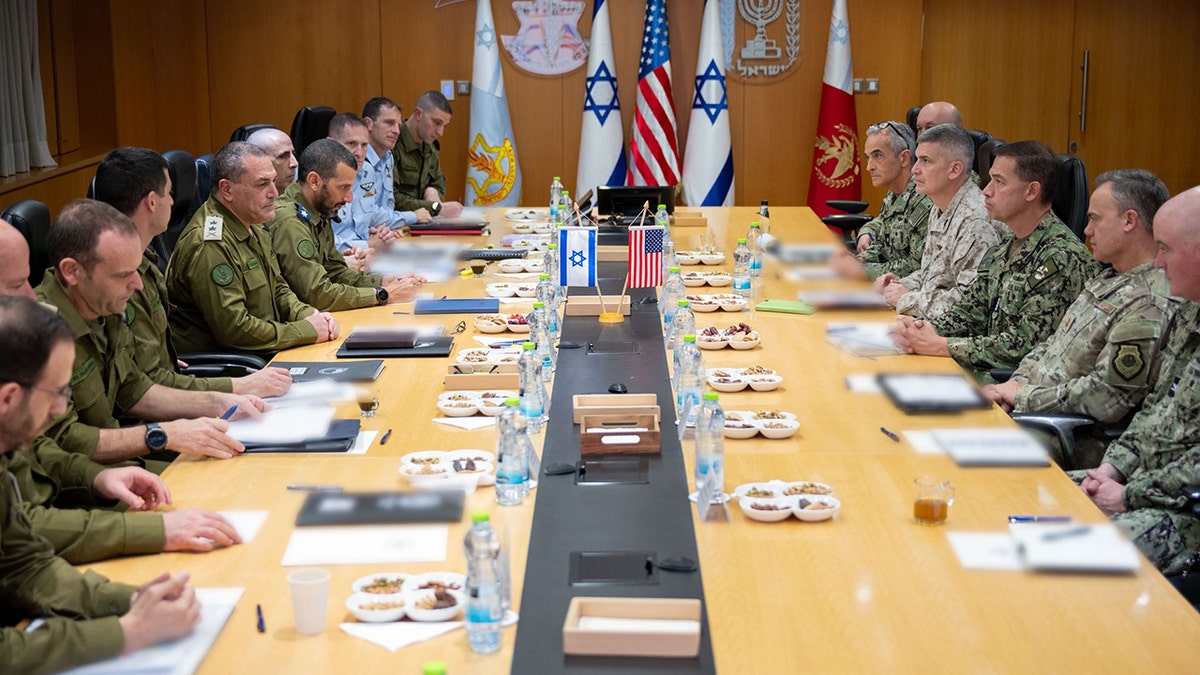
The Commander of the United States Central Command (CENTCOM), Adm. Brad Cooper, recently visited Israel as the official guest of the Chief of the General Staff, Lt. Gen. Eyal Zamir. Cooper and Zamir held an extended one-on-one meeting. This was followed by a meeting attended by additional commanders. The IDF says the meeting serves as another expression of the relationship between the commanders and constitutes an additional step in enhancing the close strategic relationship between the IDF and U.S. military and in strengthening defense cooperation between the two nations. (IDF Spokesman’s Unit.)
The debate follows tensions during the Biden administration, when the White House paused the delivery of certain U.S. weapons to Israel in May 2024, including a shipment of 2,000-pound bombs. At the time, Netanyahu warned that Israel «will stand alone» if Washington halted weapons deliveries, reflecting concern that limits or delays in U.S. military support could undermine Israel’s readiness and deterrence.
Experts have noted that U.S. leaders have not always approved every Israeli weapons request and that roughly 70% of Israel’s military imports come from the United States, underscoring the strategic calculus behind Prime Minister Netanyahu’s recent push for greater independent production.
Golov criticized that approach, arguing it risks prioritizing optics over readiness. «I believe that is a short-term vision,» Golov said. «In the long term, Israel must first be prepared for the next round of escalation. If we are not ready, we will face another war. If we are prepared, perhaps we can deter it.»
PENTAGON WARNS FUTURE WARS MAY HIT US SOIL AS ‘DIRECT MILITARY THREATS’ GROW
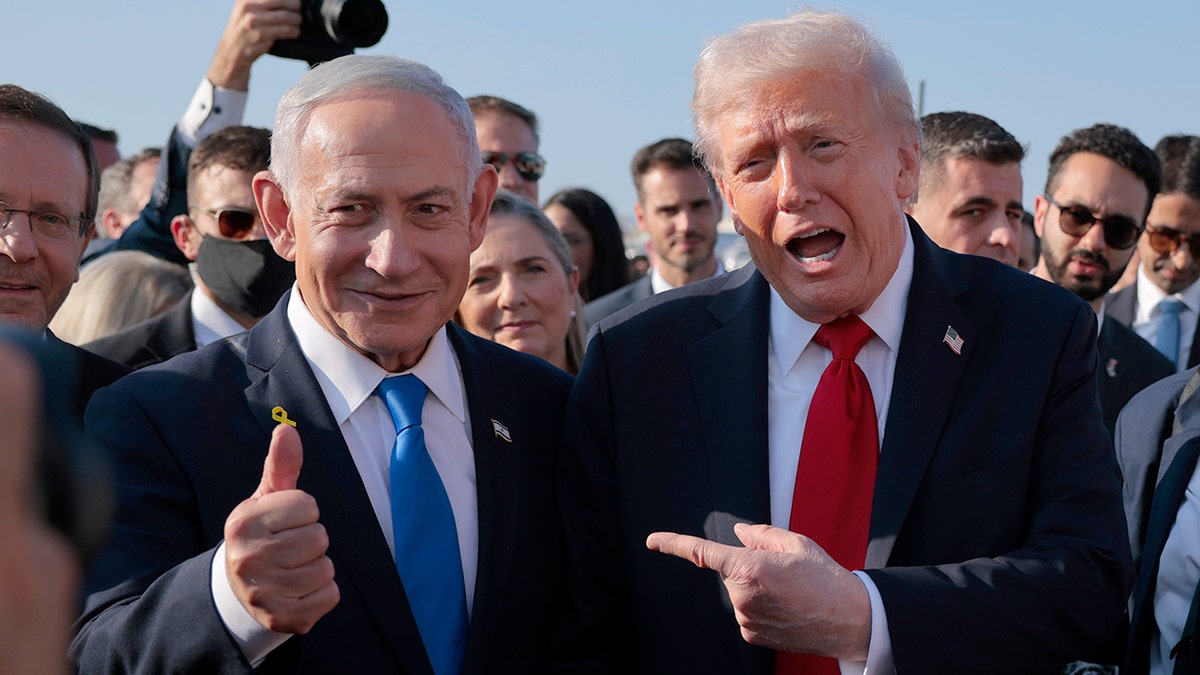
President Donald Trump speaks to Israeli Prime Minister Benjamin Netanyahu at Ben Gurion International Airport before boarding his plane to Sharm El-Sheikh, on Oct. 13, 2025 in Tel Aviv, Israel (Chip Somodevilla/Getty Images)
«Israel must remain the strongest army in the region, and that is also a fundamental American interest,» Golov said.
Ruhe said the debate reflects lessons learned from nearly two years of war. «You’ve got this sort of topsy-turvy world now where the Israelis are saying we don’t want to take any more U.S. money, and the Americans are saying, no, you’re going to take our money,» he said.
According to Ruhe, the conflict exposed vulnerabilities created by heavy dependence on U.S. supply chains and political delays.
«The war of the last two years showed that Israel can’t afford to be as dependent on the U.S. or continue to maintain the same defense partnership that it has because that creates a dependence,» he said. «Israel becomes vulnerable to U.S. shortages in weapons output or politically motivated embargoes and holdups that can impact Israel’s readiness.»
At the same time, Ruhe noted that Israel remains reliant on the United States for major platforms.
«Even Israel will say we’re utterly dependent on the U.S. for those big-ticket platforms,» he said, pointing to aircraft such as the F-15 and F-35 that Israel has already committed to purchasing.
For that reason, Ruhe argued that maintaining stable funding under the next MOU may be the most practical path forward.
«It’s actually much easier for Congress just to go ahead and approve that money,» he said, explaining that predictable funding reduces annual political battles on Capitol Hill.
TRUMP REWRITES NATIONAL SECURITY PLAYBOOK AS MASS MIGRATION OVERTAKES TERRORISM AS TOP US THREAT
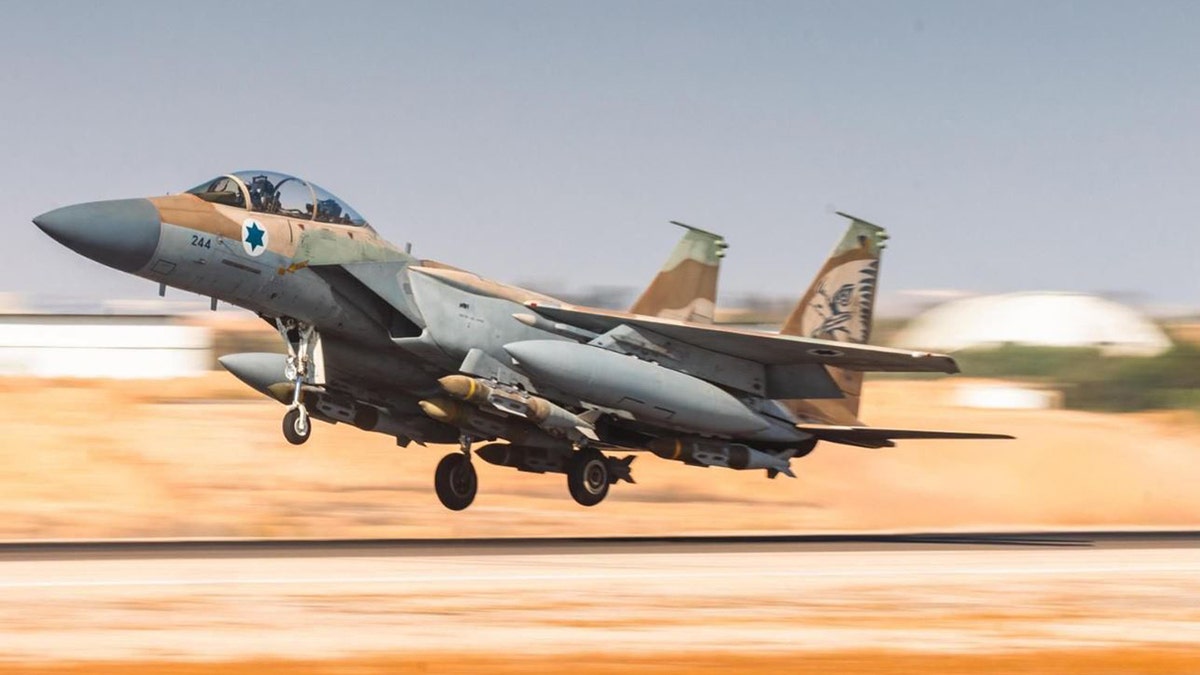
An Israeli fighter jet taking off to launched airstrikes against the Houthis in Yemen. (IDF)
Golov said Israel’s long-term objective should not be reducing ties with Washington, but deepening them. «I don’t want to reduce dependency,» he said. «I want to increase contribution to America.»
He described the emerging vision as a fundamental shift in how the alliance is structured. «We are moving from a 20th-century aid model to a 21st-century strategic merger,» Golov said. «Israel is the only partner that delivers a 400% return on investment without asking for a single American soldier.»
Golov said the proposed framework is built around three pillars: an industrial defense ecosystem, a joint technology ecosystem and a regional ecosystem connecting Israeli innovation, Gulf infrastructure and American power.
He emphasized that maintaining U.S. security assistance during the transition period is critical.
CLICK HERE TO DOWNLOAD THE FOX NEWS APP
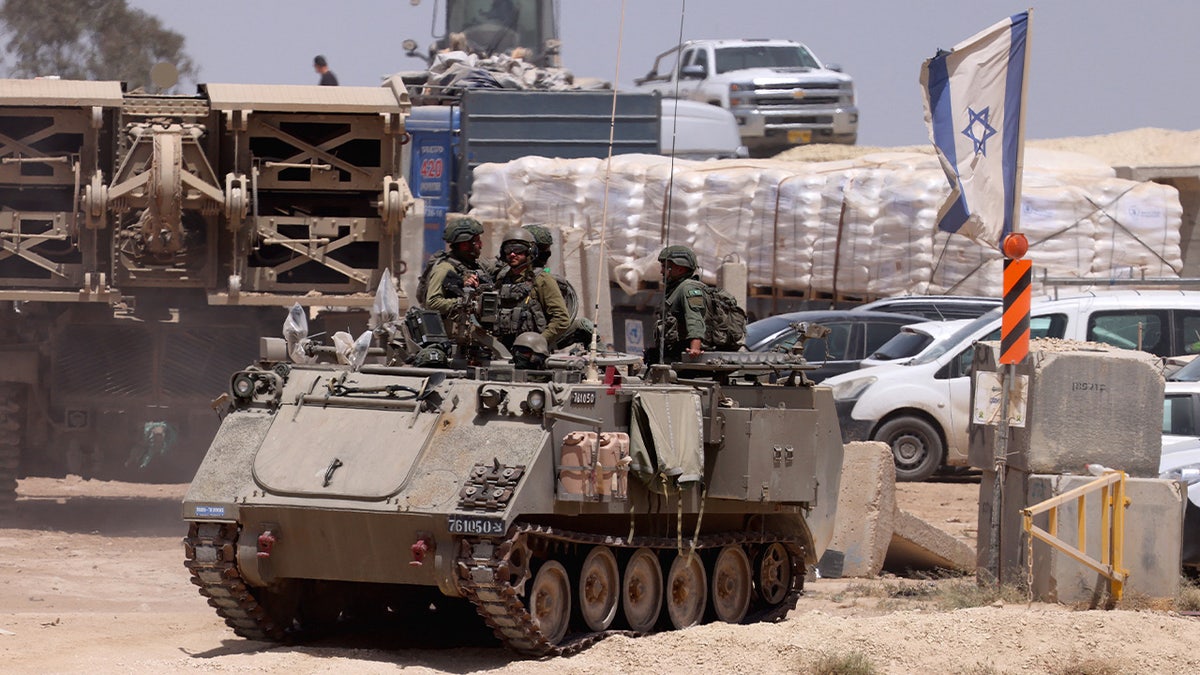
This picture taken from Israel’s southern border with the Gaza Strip shows Israeli military vehicles along the border with the Palestinian territory on April 24, 2024, amid the ongoing conflict between Israel and the militant group Hamas. ((Photo by JACK GUEZ/AFP via Getty Images))
«We need a final ten-year ‘bridge’ with the current security aid MOU,» Golov said. «A sudden cut would be a dangerous signal of American retreat to our enemies and may hinder IDF preparedness.»
«I don’t know who the next president of the United States will be,» he added. «This is where our enemies can read it in a very dangerous way.»
iran,israel,national security,treaties,middle east









NEWYou can now listen to Fox News articles!
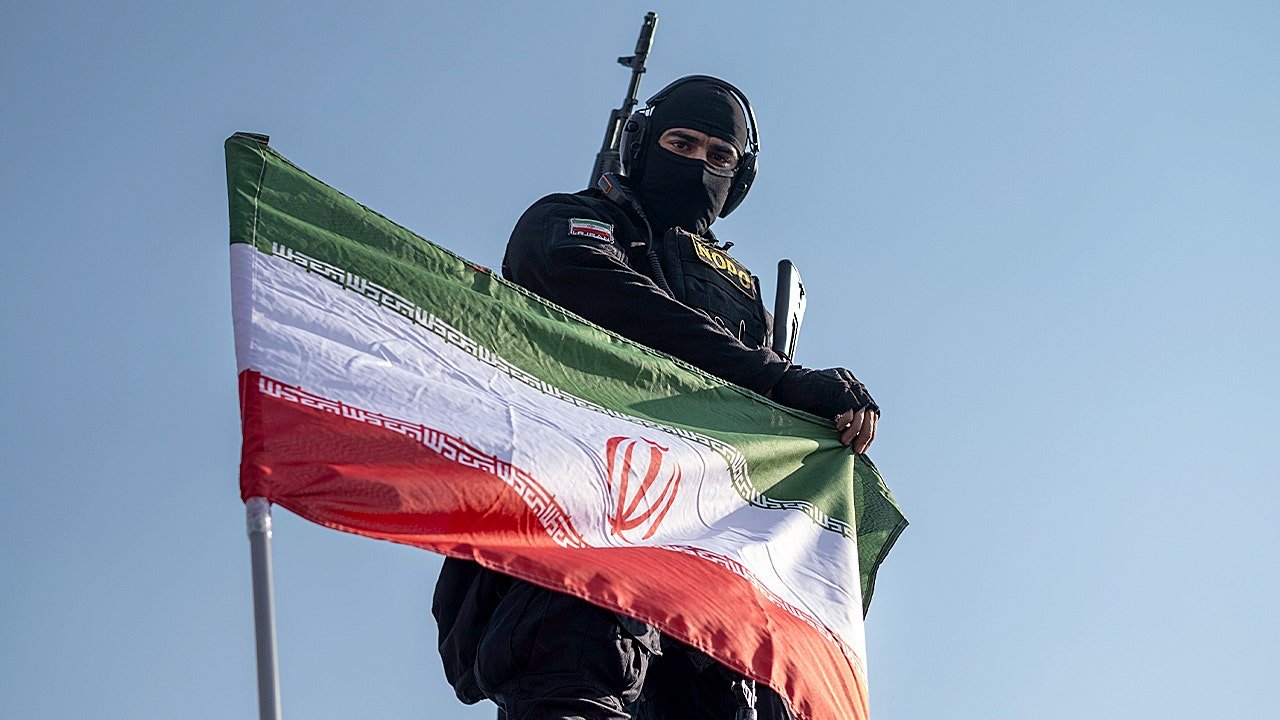
An elite counterterrorism unit has been deployed to protect Iran’s newly appointed Supreme Leader, Ayatollah Mojtaba Khamenei, following the assassination of his father, Ayatollah Ali Khamenei, Fox News Digital has learned.
The force, known as NOPO — Iran’s black-clad Counterterrorism Special Force — was assigned to safeguard the leader after a U.S.-Israel strike on a Tehran compound on Feb. 28 killed the elder Khamenei amid the start of Operation Epic Fury.
«With Khamenei gone, NOPO will likely now be protecting Mojtaba Khamenei,» Ali Safavi, an official with the Foreign Affairs Committee of the Paris-based National Council of Resistance of Iran, or NCRI said.
The NOPO force, formed in 1991, had the 28th Ruhollah (Khomeini’s first name) Division as its «nucleus», according to Safavi, and typically handles hostage rescue operations. «Its task was not to protect Khamenei,» he added.
IRAN’S NEW SUPREME LEADER IS ‘HIS FATHER ON STEROIDS,’ EXPERTS WARN OF HARDLINE RULE
Iran Supreme Leader Ayatollah Mojtaba Khamenei receives protection from elite NOPO force following his father’s assassination in U.S.-Israel attack on Tehran compound Feb. 28. ( Morteza Nikoubazl/NurPhoto via Getty Images)
The history of the unit also includes deployments against internal security threats, and it has often been called on to suppress protests.
Iran’s Assembly of Experts elected Mojtaba Khamenei on March 8, 2026, elevating him as the third Supreme Leader of the Islamic Republic.
His succession comes amid ongoing war with the U.S. and Israel, but so far, Mojtaba Khamenei has not been heard from since the start of the conflict.
According to The Times of Israel, Iranian state television reported that Mojtaba Khamenei was wounded in the war, with the reports yet unconfirmed.
«NOPO is the Farsi acronym for Nirouyeh Vijeh Pasdaran Velayat, which translates into the Special Force to Protect the Supreme Leader,» Safavi further explained before clarifying that «Velayat is not necessarily the supreme leader, but the entirety of the regime.»
IRAN POSTPONES TEHRAN FAREWELL CEREMONY FOR KHAMENEI WHERE LARGE CROWDS WERE EXPECTED TO GATHER
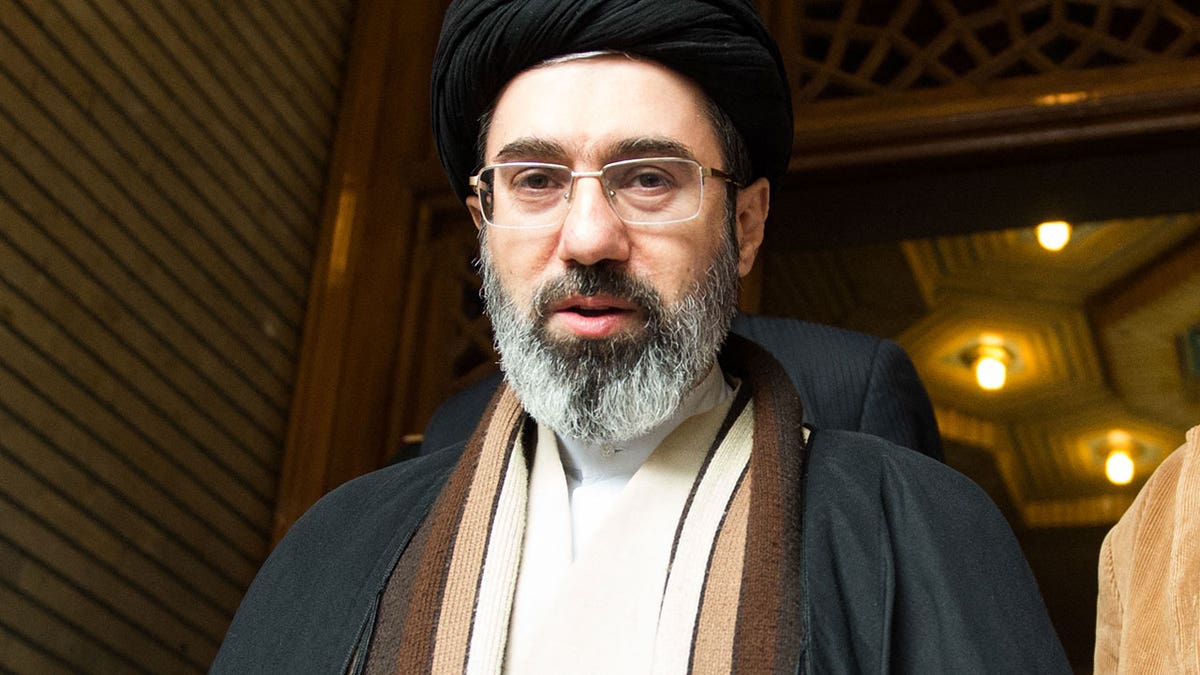
Mojtaba Khamenei, the son of the Iranian Supreme Leader Ayatollah Ali Khamenei, is seen in Tehran, Iran, on Dec. 14, 2016. (Reza B / Middle East Images / AFP via Getty Images)
Over time, NOPO has evolved into a highly specialized unit distinct from the broader Islamic Revolutionary Guard Corps (IRGC), the military branch established in 1979 to defend the Islamic Republic and its leadership from internal and external threats.
«The NOPO is composed of six brigades only. Four are stationed in Tehran, one in Mashhad and one in Isfahan,» Safavi said.
«They are far more lethal, ruthless and well-trained than the IRGC,» he claimed before describing how the brigade’s loyalty was to the Supreme Leader.
«This force was used for the protection of Khamenei,» Safavi continued. «They are very well-equipped. Khamenei did not trust any other security force for his protection.»
Safavi also said some members of the unit were likely killed in Ali Khamenei’s assassination but that the force remains fully operational.
«Some of the NOPO could have been killed when Khamenei was killed, but the fact is that they are now involved in the suppressive and security measures the regime has also undertaken in recent days to prevent any outbreak of protests,» Safavi said.
The elite force’s activities extend beyond personal protection in times of crisis, Safavi added.
KHAMENEI’S DEATH OPENS UNCERTAIN CHAPTER FOR IRAN’S ENTRENCHED THEOCRACY
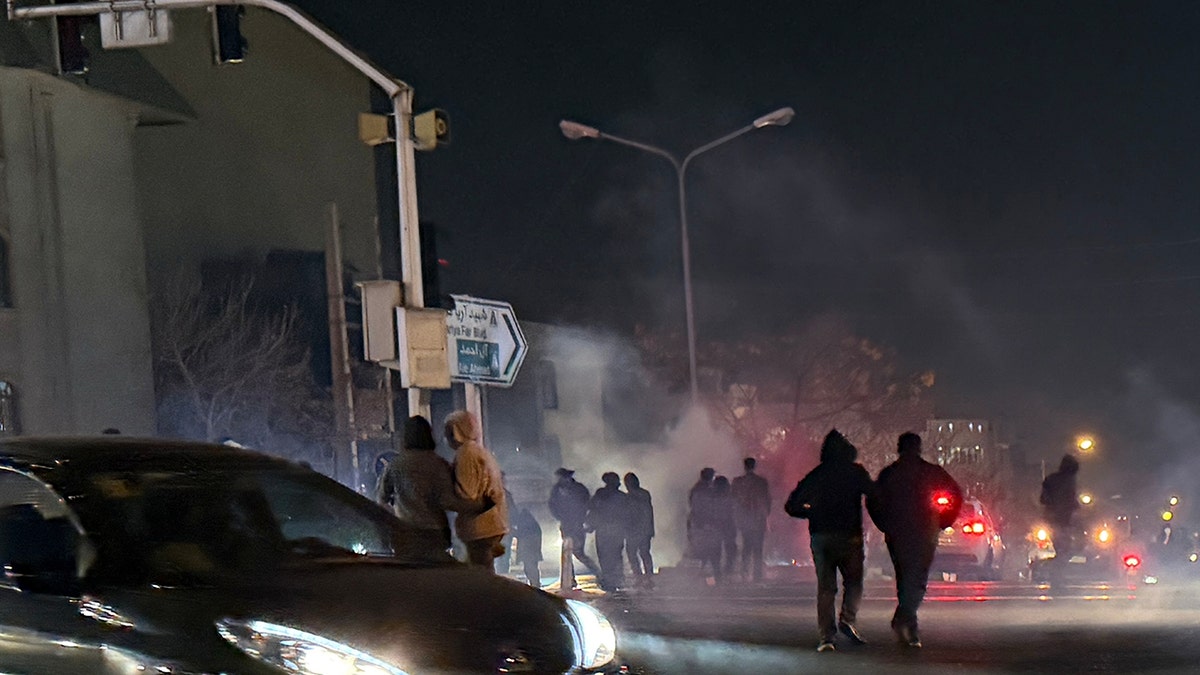
In this photo obtained by The Associated Press, tear gas is fired during an anti-government protest in Tehran, Iran, Thursday, Jan. 8, 2026. (UGC via AP)
«But in times of crisis, such as what happened during the January uprising, they were heavily involved in opening fire on the protesters,» he said.
This comes amid reports that hundreds of NOPO members have also been widely deployed around prisons in Iran that are holding political detainees.
«Hundreds of suppressive forces are widely deployed around the prison. In Ghezel Hesar Prison,» the NCRI said in a statement.
On Tuesday, March 3, 2026, following the bombing of a military center near Mahabad Prison, prisoners whose ward doors had been locked protested and set fire to their blankets, demanding their release under wartime conditions.
«Suppressive forces responded by firing tear gas into the ward,» the NCRI reported.
CLICK HERE TO DOWNLOAD THE FOX NEWS APP
Reports also indicated NOPO had taken control of Evin Prison in Tehran following the flight of regular prison officials amid intensified conflict.
In 2021, the U.S. Treasury Department imposed sanctions on NOPO for its part in committing «serious human rights abuses against persons in Iran or Iranian citizens or residents, or the family members of the foregoing.»
war with iran,mojtaba khamenei,iran,ali khamenei,sanctions,wars,counter terrorism
INTERNACIONAL
Minnesota Dem suggests studying ‘benefit of shoplifting’ in committee clash, then says it was sarcasm

NEWYou can now listen to Fox News articles!
A Minnesota Democrat whose retort to a Republican about potential «benefit[s] of shoplifting» during a hearing on worker misclassification defended the exchange as sarcasm gone awry.
During a Minnesota House Workforce and Labor Committee hearing this week, lawmakers reviewed information on how laws governing employee and independent contractor classifications affect insurance payments and other benefits, according to local reports.
State Rep. Dave Pinto, D-St. Paul, responded after a Republican lawmaker voiced concern that worker misclassification ultimately falls on the taxpayer.
«It is an intriguing line of questions,» Pinto said, appearing to suggest a study on the «benefit of shoplifting and retail theft.»
WATCH: WALZ, ELLISON, OMAR REFUSE TO ANSWER WHEN PRESSED ON FRAUD AFTER CONTENTIOUS FRAUD HEARING
A suspect is taken into custody outside a big-box store in California on an unspecified date. (Will Lester/Getty Images)
Pinto spoke of a recent presentation before another committee he sits on that sought to address solutions to organized retail theft.
«And it actually had not occurred to me to ask — it probably would have been good — to make sure that they would study sort of the benefit of shoplifting, of retail theft since because perhaps people are relying on that and sort of using that maybe it’s you know assisting them in some way,» he said.
Pinto went on to describe whether people involved in such activities are considered to be violating the law, and that there may be a policy question at the root of such a discussion.
In comments to Fox News Digital, Pinto defended the remarks, saying he was reacting sarcastically to Rep. Isaac Schultz, R-Mille Lacs, who had posed the original question.
«My comments, intended to be sarcastic, followed a line of questioning from Republican Rep. Isaac Schultz suggesting a study is needed on whether the illegal practice of worker misclassification harms consumers,» Pinto said.
«As a prosecutor, of course I take retail theft and shoplifting seriously. Any insinuation to the contrary is absurd — just like Rep. Schultz’s remarks were.»
NEARLY ALL SUSPECTS ARRESTED IN ST PAUL CHURCH STORMING; MLK’S NIECE SAYS HOSTILE TACTICS ‘NOT THE WAY’
Nonetheless, Pinto’s original comment was viewed thousands of times on social media and elicited responses from other lawmakers, amid ongoing scrutiny over social services fraud and other scandals in the Land of 10,000 Lakes.
State Rep. Krista Knudsen, R-Lake Shore, was rendered speechless in a video response to the matter, as she put her hands to her face.
«There are no benefits to shoplifting for the people that are being shoplifted from. I have no idea what else to say,» Knudsen said. «I’m shocked, actually. I don’t even know what to say. Who — I don’t know what to say — Who benefits from shoplifting? The criminals.»
State Rep. Kristin Robbins, a Republican from the Minneapolis area, appeared to cite her region’s nationally recognized scandals, saying she cannot believe the comment was made by Pinto.
«[W]e are trying to prevent fraud and prevent crime in Minnesota and this has been an issue that we’ve dealt with as a legislature for many years. We finally got the organized retail theft crime in statute last session,» she said.
«It’s been a long haul and that’s a tool that we need to crack down on this real problem throughout our communities around the state.»
Worker misclassification has been a focus of Democrat-Farmer-Labor lawmakers in the state legislature for some time, as an effort began in 2024 to ban employers from misclassifying employees.
ILLEGAL’S DRAGGING OF ICE AGENT SHOWS THE EXACT DANGER THE OFFICER WHO SHOT RENEE GOOD FEARED, EXPERT SAYS
That policy was reportedly spurred by a construction worker who testified before lawmakers that he racked up major medical bills after a work-related injury, but his employer later only offered him a small amount for expenses and «told him to forget about insurance and to change his name and address, saying the bills would eventually disappear if nobody paid them,» according to a post on the House of Representatives website.
The man later allegedly found out his employer was misclassifying employees in order to save on labor costs, according to the lawmakers’ page.
CLICK HERE TO DOWNLOAD THE FOX NEWS APP
State Rep. Emma Greenman, D-Minneapolis, authored HF4444 to ensure businesses don’t act in such a way in the future and/or misclassify employees as contractors or the like.
«Our job is to ensure that Minnesota workers have the protections that we in law provide,» she said at the time.
republicans,minneapolis st paul,minnesota,democrats,robbery theft
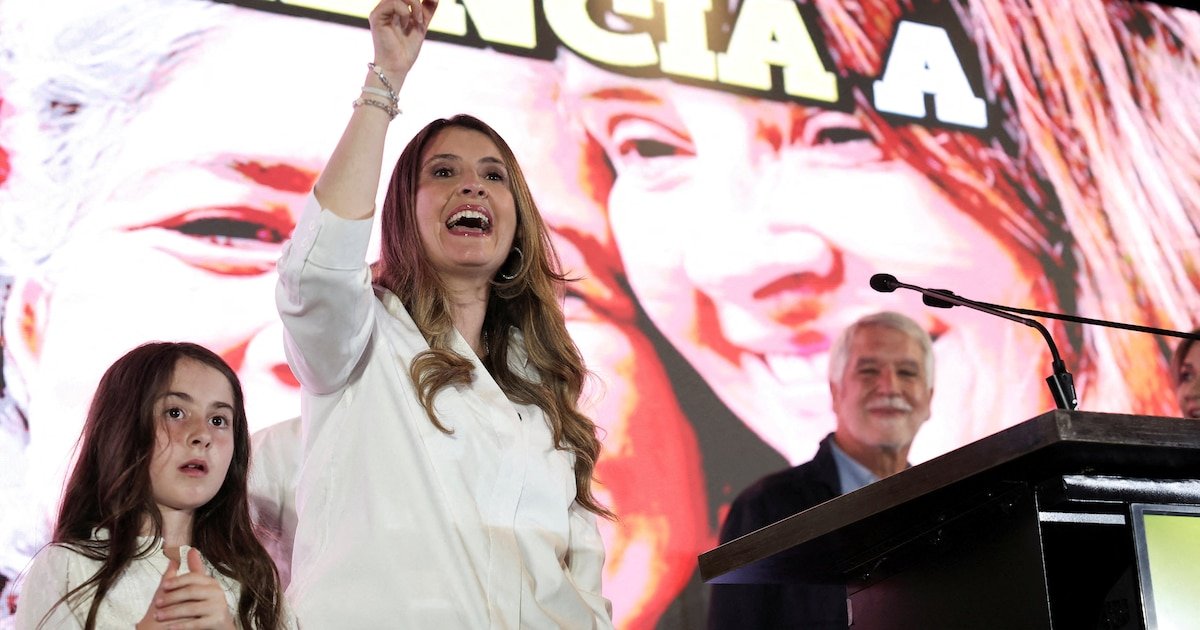
De todas partes del mundo me escriben sobre las elecciones en Colombia del fin de semana pasado. ¿Qué pasó? ¿Para dónde va Colombia? ¿Y a la derecha y al centro derecha cómo le fue? La respuesta: bien y mal.
Mal, porque los resultados mostraron que Colombia sigue en un inmenso riesgo de avanzar por el camino populista, pues esa izquierda se fortaleció en el Congreso y mostró que Iván Cepeda es un candidato muy fuerte y sin rival en ese espectro político, lo que no sucede ni con el centro ni con la derecha. Bien, porque la Gran Consulta del centro y la centro derecha se convirtió, por un lado, en la más votada de la historia, con 5.8 millones de votos, y mostró el camino para derrotar a la izquierda radical: unirse y atraer al centro es la consigna para la primera vuelta presidencial.
¿Entonces? Lo primero es que aquello que querían Gustavo Petro, Iván Cepeda y Abelardo de la Espriella, no tener competencia en mayo, en la primera vuelta presidencial, no se les dio. Paloma Valencia, con esos millones de votos de la consulta, se confirmó como una rival muy fuerte para los dos candidatos radicales, e incluso la posibilidad de que ella, como la candidata del centro y la derecha, llegue a la segunda vuelta es alta, si hace las cosas bien en estos meses de campaña.

¿Qué es hacer las cosas bien? Por un lado, hay que cultivar el centro, para mantener esos votos y, además, hacerlos crecer en las zonas donde se puede y con los sectores sociales, en especial los jóvenes urbanos, a los que no les llegamos y que Juan Daniel Oviedo logró encantar. No podemos esperar un segundo para comenzar a entender a ese joven urbano al que Oviedo le habló, para ampliarnos en esa base, y debemos enfocar los esfuerzos principalmente en Bogotá.
Paloma debe dejar el discurso tradicional del uribismo y empezar a leer mejor este momento del país. No quiere decir, de ninguna manera, que se olvide de los temas de seguridad y otros que hacen parte de su agenda, pero sí que entienda que el discurso anticomunista tradicional ya no mueve a nadie, o a los que mueve ya los movió. Ojalá Oviedo y Paloma entiendan lo que está en juego, y logren un buen entendimiento para que, por un lado, nos salvemos de las garras del populismo y, por el otro, se hagan las muchas reformas que necesita el país.
Iván Cepeda, sin duda, sigue muy pero muy fuerte. ¿Podrá arrancar más votos de los que ya tiene en el centro? Depende de Claudia López, quien ya dejó en claro que quiere llegar allá, de Sergio Fajardo y de todos los candidatos de la Gran Consulta. Pronto vamos a ver en las nuevas encuestas, que quedaron todas muy mal paradas, aunque unas peor que otras, qué tanto los resultados del domingo cambiaron el escenario político.

Obvio, hay que mirar esos datos con pinzas y tener en cuenta que no van a incluir las fórmulas a la Vicepresidencia de los candidatos, que también marcan algo de diferencia. ¿Qué pasa si en esas encuestas Paloma pasa a tener entre el 15 y el 20 por ciento? ¿O si tiene alrededor del 10?
Ya veremos cómo lo que sucedió en estas consultas cambió o no el panorama político y si generó una competencia más abierta y con mayores posibilidades para que el centro sea definitivo en la decisión presidencial. Por ahora, se abre una esperanza de que la polarización es evitable y que la centro derecha puede jugar un papel realista en las elecciones de mayo.
Otra cosa es lo que pasó con el voto para el Congreso, en el cual, sin duda, el Pacto Histórico mostró fuerza y disciplina; no nos digamos mentiras, ya es la primera fuerza política del país. Lo grave, es que, si sumamos los congresistas de otros partidos que se van a vender, pueden tener más de la mitad del congreso, y eso quiere decir que si gana Cepeda vamos a tener Constituyente, leyes que destruyan de manera definitiva el sistema de salud y unos impuestos que acaben con el sector privado.

El Centro Democrático subió, pero, la verdad, su lista al Senado dejó mucho que desear. No hubo una figura nueva que moviera ese grupo, distinta a Álvaro Uribe. Muchos llegaron en coche y, si bien pueden ser buenos senadores, nunca van a tener su propio escenario político. El 90 por ciento de los senadores electos por el centro democrático, no lo hubieran sido sin Uribe.
Es hora de crear un partido que no sea Uribe dependiente, y en estos dificilísimos cuatro años, convertir al CD en ese partido va a ser un reto gigante. Lo que queda claro es que si no se hace, el Centro Democrático desaparece y ante la fortaleza de la izquierda no hay contrapeso alguno. La responsabilidad histórica en ese sentido es enorme.
Comienza la recta final. El futuro de Colombia está en juego y Paloma se montó en la elección presidencial. Unidos en la segunda vuelta podemos evitar la catástrofe. Ese debe ser el objetivo de todos. ¿Seremos tan responsables? Ojalá la sensatez prevalezca sobre el ego.
South America / Central America,Elections / Voting

Sube la nafta pese al traslado gradual del alza del petróleo a surtidores: qué se espera para las próximas semanas

Con los mismos 11: La formación de Boca Juniors vs. San Lorenzo, por la fecha 10 del Torneo Apertura

Córdoba: Identificaron a 12 personas desaparecidas enterradas en el emblemático predio de La Perla

La Cámpora evalúa marchar a Comodoro Py cuando Cristina Kirchner declare por la causa Cuadernos

La respuesta de Wanda Nara tras ser acusada de fingir su encuentro con el exDT de Mauro Icardi

Lethal elite ‘black-clad’ kill squad guards Iran’s new Supreme Leader Mojtaba Khamenei

La cruda confesión de Amalia Granata por el trastorno que sufre su hijo Roque: “Le hicimos estudios y salió que tiene TDAH, dislexia y disgrafia”

El mercado le está corriendo el arco a Caputo y el riesgo país no baja: en la City palpitan medidas

Jenny Mavinga angustiada tras una quemadura en Gran Hermano 2026: “¡Ay, me quemó!

Trump anunciará la creación del Escudo de las Américas, una alianza regional que integrará Milei para enfrentar al narcoterrorismo y a China

 CHIMENTOS2 días ago
La cruda confesión de Amalia Granata por el trastorno que sufre su hijo Roque: “Le hicimos estudios y salió que tiene TDAH, dislexia y disgrafia”
- ECONOMIA2 días ago
El mercado le está corriendo el arco a Caputo y el riesgo país no baja: en la City palpitan medidas
- CHIMENTOS2 días ago
Jenny Mavinga angustiada tras una quemadura en Gran Hermano 2026: “¡Ay, me quemó!