INTERNACIONAL
Trump administration works to break China’s rare earth mineral stranglehold on Africa


NEWYou can now listen to Fox News articles!
The State Department has told Fox News Digital it is working to reduce the «national security» threat to the U.S. from China’s domination of the rare earth minerals market, with new signs that Africa can assist Washington in breaking Beijing’s stranglehold on this vital sector.
The 17 rare earth elements (REE) are metals «critical for both human and national security,» the Brookings Institution wrote in 2022, adding, «They are used in electronics (computers, televisions and smartphones), in renewable energy technology (wind turbines, solar panels and electric vehicle batteries), and in national defense (jet engines, missile guidance and defense systems, satellites, GPS equipment and more).»
China is reported by Brookings to be responsible for 60% of global extraction of rare earth minerals and 85% of processing capacity.
TRUMP CALLS XI’S RARE EARTH MOVE A ‘BAD MOMENT’ — WHY IT MATTERS FOR US NATIONAL SECURITY, CHINA TIES
Workers prepare the Rainbow Rare Earths Project site in Phalaborwa, South Africa, for production. (Rainbow Rare Earths)
But although Beijing has secured contracts in African countries such as the Democratic Republic of the Congo (DRC) to ship minerals, including cobalt, east to China, the continent has vast untapped resources. And the African Union’s Minerals Development Center stated recently that new huge specialist rare earth mines are due to come online by 2029 in Tanzania, Angola, Malawi and South Africa, and potentially yield almost 10% of the world’s supply.
This is leading the Trump administration to step forward with new attempts to expand the U.S. presence in Africa’s mining trade. Just this week, a State Department spokesperson told Fox News Digital, «The administration’s approach prioritizes partnerships with African nations to ensure their minerals flow west, not east to China.»
In Africa, China is on Washington’s threat radar, with the spokesperson continuing, «China’s dominance in global mineral supply chains — specifically in processing and refining — is a threat to both U.S. and African interests. Beijing’s state-directed strategies exploit Africa’s natural resources, consolidate control over upstream mining assets, perpetuate opaque governance structures, degrade local environments and create economic dependencies that undermine regional stability.»
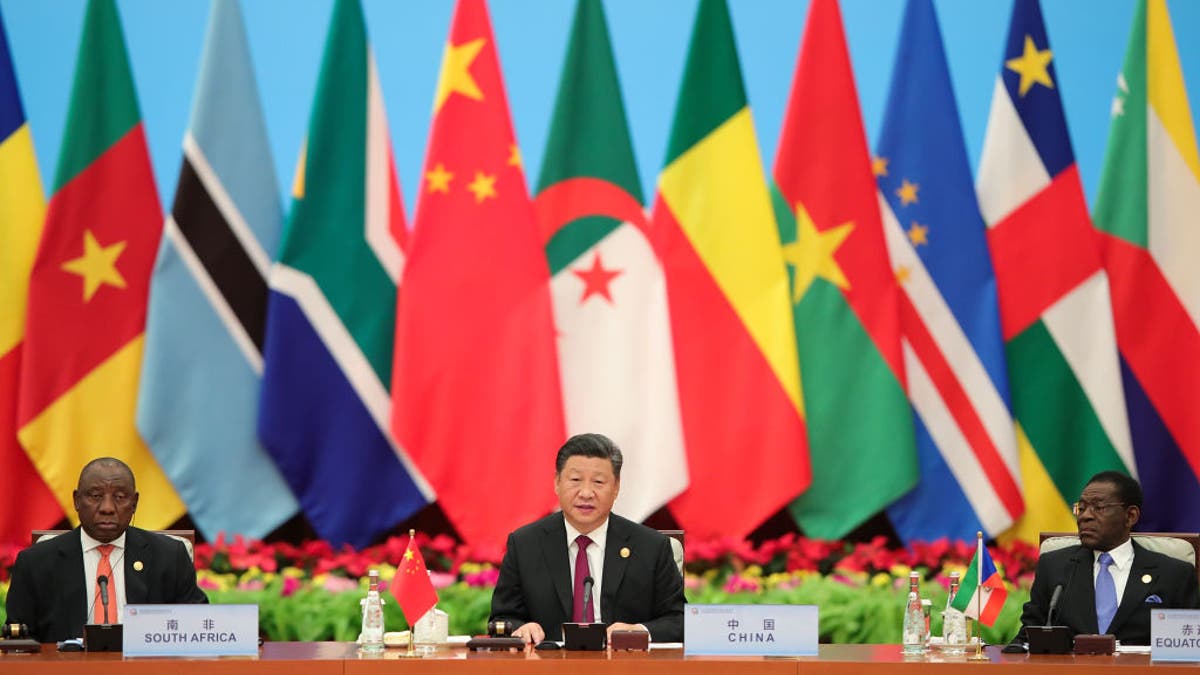
China’s President Xi Jinping speaks as South Africa’s President Cyril Ramaphosa, left, and Equatorial Guinea’s President Teodoro Obiang Nguema Mbasogo, right, listen, during the Forum On China-Africa Cooperation. Sept. 4, 2018. (Lintao Zhang/AFP via Getty Images)
Various sources say the U.S. currently imports some 70% of all the rare earth elements it needs from China.
Sen. Jim Risch, R-Idaho, chairman of the Senate Foreign Relations Committee, told Fox News Digital that Beijing poses a threat on this issue: «Relying on China for critical minerals needed for a modern economy is a top national security risk that President Biden left unaddressed for four years. Under President Trump’s leadership, we can secure new sources in Africa, strengthen our partnerships there, and ensure America’s defense is never dependent on our adversaries.»
CHINA’S RARE EARTH TECH OBSESSION ENSNARES US RESIDENT AS CCP LOOKS TO MAINTAIN STRANGLEHOLD
The administration is trying to move more into Africa, with the State Department spokesperson adding, «The United States is committed to making targeted investments in infrastructure to facilitate the export of minerals from Africa to global markets. A prime example is the Lobito Corridor, which provides an alternative to Chinese-controlled transportation routes for minerals from Africa’s Copperbelt to the Atlantic Ocean.»
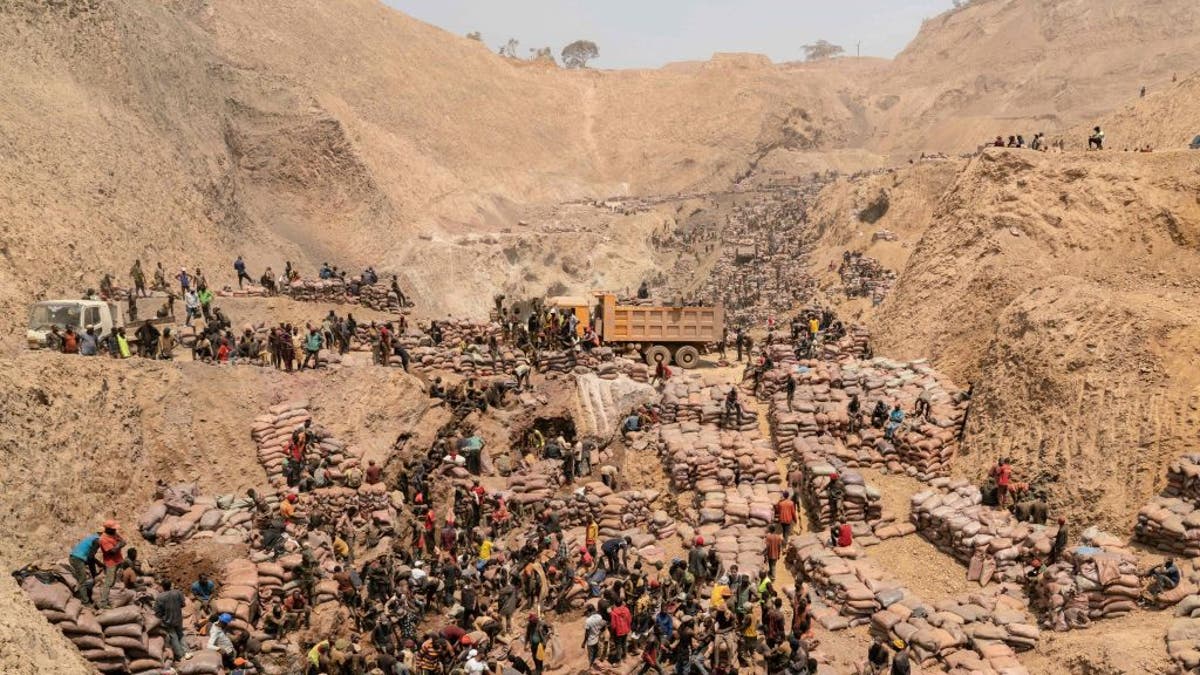
Miners working at a cobalt mine in the DRC on Oct. 12, 2022. (Junior Kannah/AFP via Getty Images)
The administration recently said they would continue to pledge a $550 million loan to the development of the Lobito Corridor, an 800-mile-long rail and infrastructure link to the mineral-rich regions of the DRC and Zambia with Angola’s Atlantic coast and easy shipping access to the U.S.
The State Department spokesperson went on to say that one of the main benefits of the peace deal to end a 30-year war signed between the DRC and Rwanda in the Oval Office in June is better access to minerals, adding, «The bilateral agreement between the U.S. and DRC is designed to open the door for new U.S. and U.S.-aligned investments in strategic mining projects across the DRC.»
It is a new dawn of opportunity for the U.S. in Africa, analysts including Dr. Gracelin Baskaran says. Baskaran, director of the Critical Minerals Security Program at Washington’s Center for Strategic and International Studies, told Fox News Digital, «Africa is the last great frontier of mineral discovery. It has long been undervalued in global mineral exploration, even though it delivers some of the highest returns per dollar invested.»

The Tanzania-Zambia Railway Authority (TAZARA) Memorial Park in Lusaka, Zambia, on Sept. 21, 2023. For over a decade, China poured more than $120 billion of government-backed loans through its Belt and Road Initiative to build hydropower plants, roads and rail lines across the continent as well as unparalleled influence. (Zinyange Auntony/Bloomberg via Getty Images)
IS TRUMP CONSIDERING BOLD AFRICA PLAY TO PUSH BACK ON CHINA, RUSSIA AND ISLAMIC TERRORISTS?
«The [African] continent’s share of worldwide exploration spending has steadily dropped — from 16% in 2004 to only 10.4% in 2024,» added Baskaran. «This decline is particularly striking, given that sub-Saharan Africa is the world’s most cost-efficient region for mineral exploration, with a mineral-value-to-exploration-spending ratio of 0.8 — well ahead of Australia (0.5), Canada (0.6) and Latin America (0.3).»
«Despite its immense geological promise and a landmass triple the size of Australia and Canada combined, those two countries captured 15.9% and 19.8% of global exploration spending in 2024 — far exceeding Africa’s total share.»
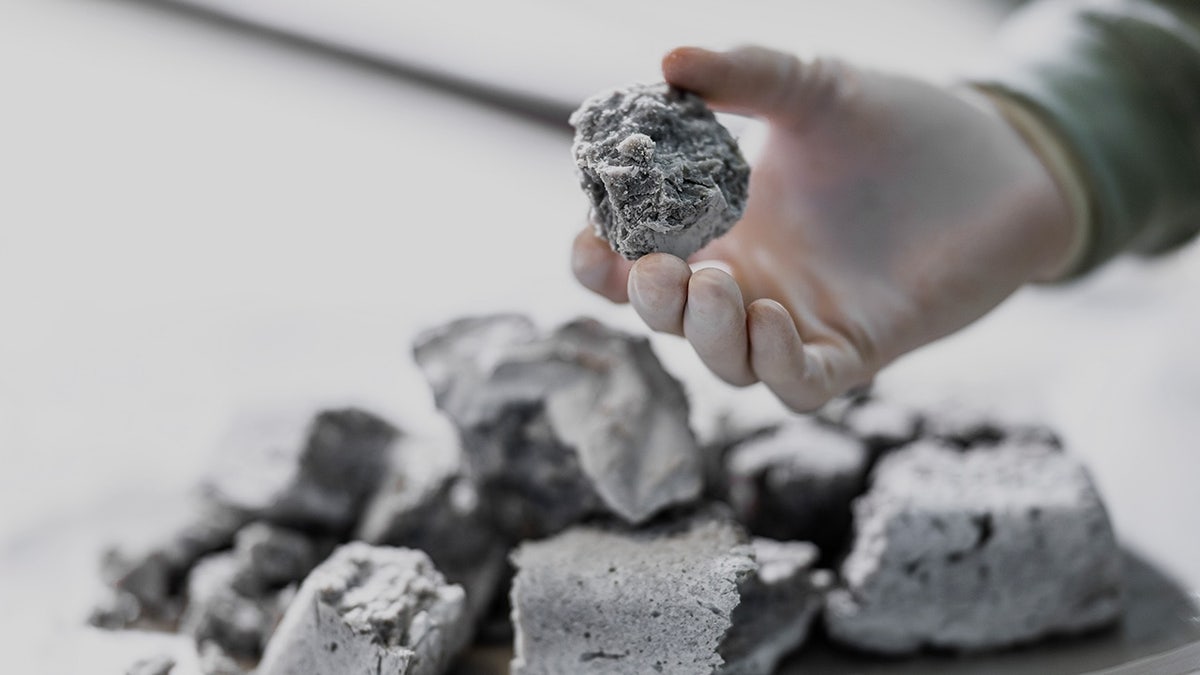
A sample of a raw rare earth mineral is examined at the Rainbow Rare Earths Project in Phalaborwa, South Africa, before testing to determine its mineral composition. (Rainbow Rare Earths)
Baskaran says the U.S. can exploit another area in Africa as well, «China rarely engages in mapping or exploration. The Chinese model generally acquires projects once they are under development and/or nearing production. This offers a real opportunity for the United States and its allies. Even countries with long mining legacies — Zambia and the DRC — have barely scratched the surface, with less than half their land mapped. With targeted investments in geological mapping and early-stage project development, the United States and its allies could establish a much stronger presence across the continent.»
CLICK HERE TO GET THE FOX NEWS APP
Where to drop U.S. miners’ boots on the ground? «In terms of heavy rare earth minerals in Africa, Namibia is a country that presents an alternative to China in terms of supply,» analyst C. Géraud Neema from the independent China-Global South Project (CGSP) told Fox News Digital, adding, «Namibia’s Lofdal project is a major one.»
africa,donald trump,south africa,china,conflicts












INTERNACIONAL
Tiroteo en Michigan: un hombre armado estrelló una camioneta contra una sinagoga y fue abatido por la policía


INTERNACIONAL
Schumer swings at Hegseth over king crab meals for the troops, but Biden-era receipts show similar tab

NEWYou can now listen to Fox News articles!
Senate Minority Leader Chuck Schumer, D-N.Y., is facing backlash for criticizing Secretary of War Pete Hegseth for the Pentagon’s spending on luxury items, including food for the miliary, despite similar expenses under former Biden administration Pentagon chief Lloyd Austin.
The top Senate Democrat said Hegseth’s spending in the final month of fiscal year 2025, $93.4 billion, which included millions of dollars on steak, seafood and furniture, could have instead been used to extend the Affordable Care Act.
Social media users panned Schumer online for the remarks, accusing him of cherry-picking a politically convenient area to care about spending, lambasting him for not supporting feeding high-quality meals to military members and citing similar defense spending during the Biden era.
«Hegseth spent $93 billion in one month – roughly the cost of extending the ACA tax credits for THREE YEARS,» Schumer wrote. «But instead of lowering American’s healthcare costs, Hegseth used millions of taxpayer dollars on fruit baskets, Herman Miller recliners, ice cream machines, Alaskan King Crabs, and a Steinway & Sons grand piano.
TRUMP SAYS HE BELIEVES HEGSETH ‘100%’ ON VENEZUELAN DRUG BOAT STRIKE DENIAL AMID ALLEGATIONS
Senate Minority Leader Chuck Schumer, D-N.Y., during a news conference at the U.S. Capitol in Washington, D.C., March 3, 2026. (Graeme Sloan/Bloomberg via Getty Images)
«A true grifter in every sense of the word.»
During the Biden administration, Austin’s spending nearly mirrored Hegseth’s. Food expenses across administrations went toward feeding members of the military, according to the nonprofit Open the Books, which conducted the spending analyses.
There is no record of Schumer scrutinizing Austin’s spending. Fox News Digital reached out to the senator’s office for comment on the matter.
Defense spending is historically modest compared to past decades, representing a small fraction of the United States’ gross domestic product at 3.7%. Its share of the GDP has decreased significantly since the 1950s, according to an analysis by the Federal Reserve Bank of St. Louis.
Schumer’s grievance also comes as he leads Senate Democrats’ resistance to funding the Department of Homeland Security, which has been shut down for about a month. Democrats have demanded changes to the department’s deportation policies, which are nonstarters for Republicans. Essential DHS components, like Immigration and Customs Enforcement, remain operational at this stage, but some agencies, like the Transportation Security Administration, are facing pains as workers go unpaid.
Critics slammed Schumer over the comment on social media.
Fox News analyst Guy Benson called Schumer «the leader of the ‘Learing Center’ fraud party,» in reference to a viral video about welfare fraud scandals in Minnesota, saying Schumer «finally [discovered] one spending line item he’s willing to cut.»
Rep. Pat Fallon, R-Texas, said Schumer «thinks it’s bad that U.S. troops get to eat steak & lobster during deployment» and that the Affordable Care Act is a «failed» plan that makes healthcare more expensive.
«Remember that Democrats would have you eating MREs,» another commenter posted, referring to military-issued «Meals Ready to Eat.»
«Chuck Schumer hates the troops,» Republican communicator Steve Guest wrote.
A commentary writer for the conservative Washington Examiner said, «You said nothing in 2024.»
Another social media user told Schumer he «should’ve done the 30 seconds of research to find Lloyd Austin’s September 2024 expenditures before posting. Missed your outrage back then.»
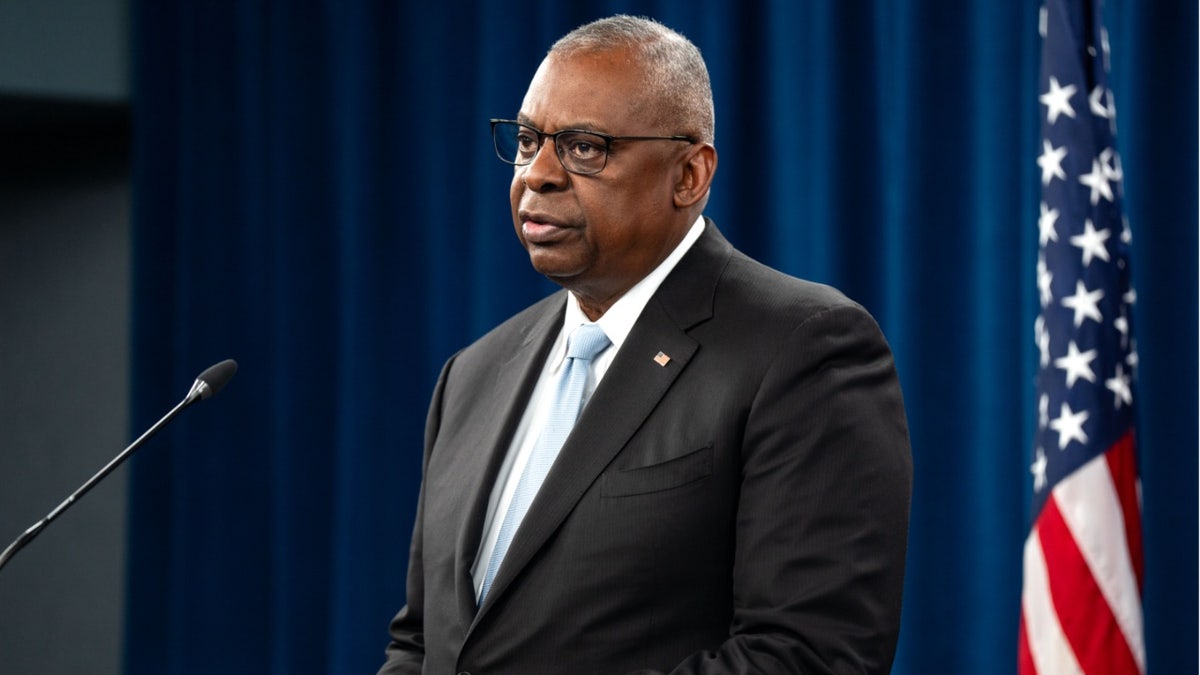
Defense Secretary Lloyd Austin speaks during a news conference at the Pentagon Oct. 30, 2024, in Arlington, Va. (Getty Images)
Hegseth’s spending in September 2025 was the highest the Pentagon has seen on grants and contracts since September 2008. Austin, however, held the record before that, spending $79.1 billion in September 2024.
The last month of the fiscal year has long been notorious for spending that appears lavish as agencies face pressure to «use it or lose it» so that they can justify keeping their budget for the next year. Contract and grant payment schedules also include September due dates, which can contribute to the spending uptick.
In 2024 under Austin, according to an audit by Open the Books, «the military spent $103.7 million on meat, fish and poultry in September, partially because it ordered raw lobster tail 147 times for $6.1 million. It also dropped $16.6 million on ribeye steak, $6.4 million on salmon and $407,000 on Alaskan king crab.»
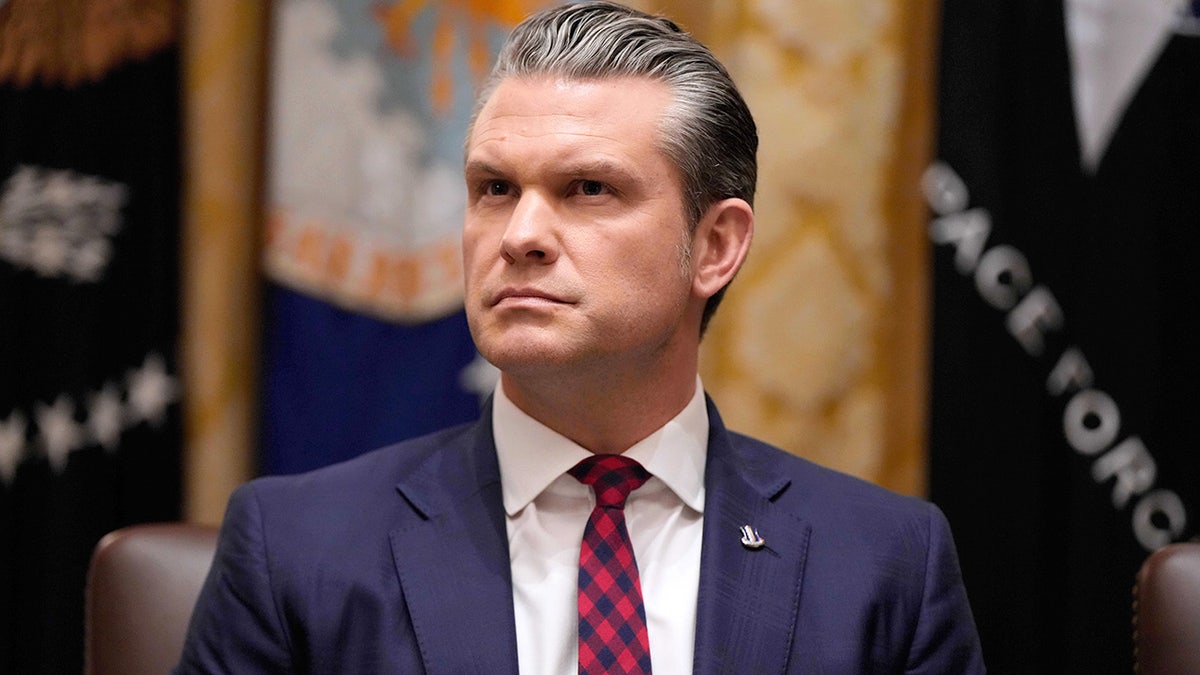
War Secretary Pete Hegseth’s expenses for September 2025 came under scrutiny in 2026. (Julia Demaree Nikhinson/AP)
CLICK HERE TO DOWNLOAD THE FOX NEWS APP
Similar to Austin, Hegseth spent $6.9 million on lobster tail, Open the Books found. Austin spent about $1.5 million more than Hegseth on ribeye steaks. Hegseth more than quadrupled Austin’s spending on Alaskan king crab, while Austin’s spending on salmon was roughly six times that of Hegseth’s. The food went toward feeding military personnel, the nonprofit noted.
The Biden and Trump administration’s Pentagon expenses saw parallels for other line items, too. Hegseth’s $5.3 million on Apple products is comparable to Austin’s $5.1 million. Both spent more than $1 million on musical instruments. Hegseth tripled Austin’s spending on footrests at about $111,000, according to the data.
Fox News Digital reached out to Biden’s office and the Pentagon.
congress,chuck schumer,pete hegseth,senate,politics
INTERNACIONAL
EN VIVO: Donald Trump afirmó que Estados Unidos está “destruyendo por completo” el régimen de Irán
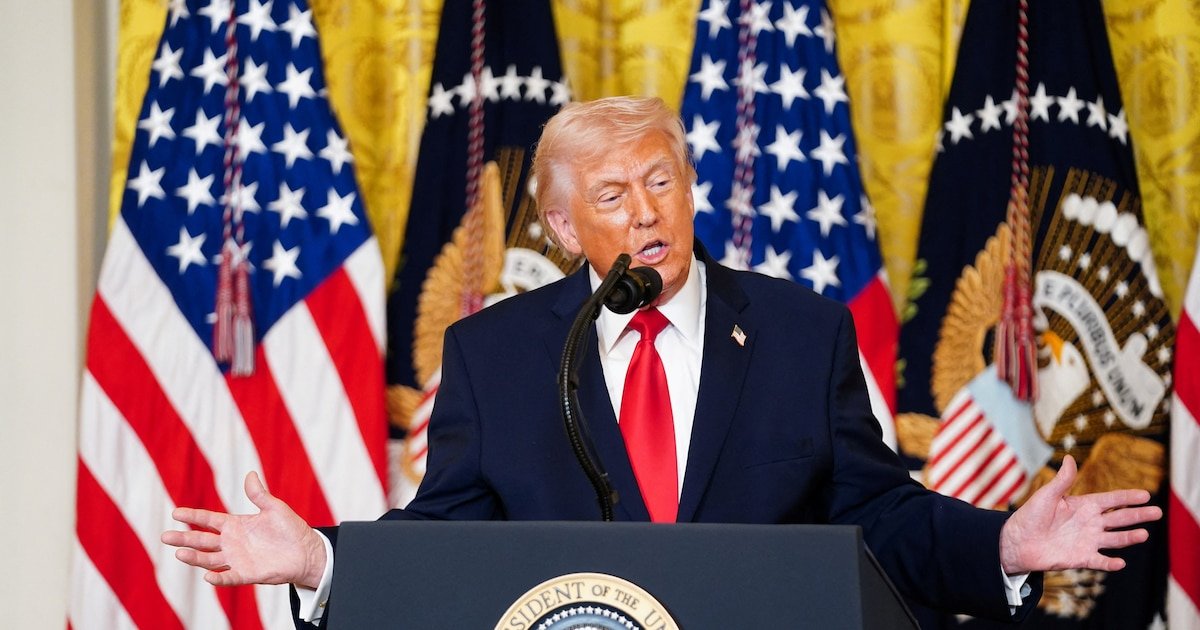
En las últimas 24 horas, la Fuerza Aérea de Israel bombardeó más de 200 objetivos en el oeste y el centro de Irán, con apoyo de la Dirección de Inteligencia israelí. Los blancos incluyeron lanzadores de misiles balísticos, sistemas de defensa aérea y plantas de producción de armas del régimen iraní.
Durante la madrugada, el presidente de Estados Unidos, Donald Trump, afirmó en redes sociales que las fuerzas estadounidenses tienen “una potencia de fuego sin igual, munición ilimitada y tiempo de sobra” y que están “destruyendo por completo el régimen terrorista de Irán”.
Desde el interior de Irán, el Cuerpo de la Guardia Revolucionaria Islámica (CGRI) amenazó a opositores locales y advirtió que podrían enfrentar “un golpe aún más fuerte que el del 8 de enero”, en alusión a la represión de las protestas registradas ese mes contra el entonces régimen de Ali Khamenei en Teherán y otras ciudades.
Además, el régimen de Teherán lanzó una nueva ola de misiles que fueron detectados por el Ejército de Israel y por países del Golfo como Arabia Saudita, Emiratos Árabes Unidos y Bahréin. Los impactos dejaron más de 60 heridos en la región. El servicio de ambulancias israelí Magen David Adom informó que 58 personas resultaron lesionadas tras un ataque con proyectiles contra Zarzir, una ciudad cercana a la frontera con Líbano.
A continuación, la cobertura minuto a minuto:
Israel anunció una nueva y “extensa” oleada de ataques aéreos en Teherán
La Fuerza Aérea israelí inició una nueva ola de ataques aéreos “extensos” en Teherán, según anunció el Ejército israelí.
Las Fuerzas de Defensa de Israel remarcaron que los ataques tienen como objetivo sitios de infraestructura del régimen iraní.
Las FDI atacaron el puente A-Zarriya sobre el río Litani, en Líbano
El Ejército israelí informó el bombardeo al puente A-Zarriya sobre el río Litani, en Líbano, utilizado como punto de cruce central por miembros de la organización terrorista Hezbollah.
Según el comunicado, el grupo apoyado por el régimen iraní empleaba esta infraestructura para desplazarse entre el norte y el sur del país, prepararse para enfrentamientos con las FDI y operar contra ciudadanos israelíes.
Las FDI señalaron que el ataque al puente se consideró necesario para evitar amenazas contra Israel y para frenar el daño continuado a ciudadanos libaneses. El ejército israelí precisó que recientemente Hezbollah había colocado lanzadores cerca del puente y lanzado misiles desde ese punto hacia territorio israelí.
El comunicado añade que las FDI continuarán actuando con firmeza contra la decisión del grupo terrorista de sumarse a la campaña y operar bajo el auspicio del régimen iraní, asegurando que no permitirán daños a los ciudadanos del Estado de Israel.
Dos personas murieron en un ataque con dron en Omán
Al menos dos personas murieron tras el impacto de un dron en el norte de Omán, según informó este viernes un medio estatal, mientras el régimen iraní mantiene su campaña de ataques en todo Medio Oriente.
“Dos drones se estrellaron en la gobernación de Sohar. Uno de ellos cayó en la zona industrial de Al Awahi, causando la muerte de dos trabajadores extranjeros y varios heridos. El segundo se estrelló en una zona abierta sin provocar víctimas”, reportó la agencia de noticias omaní citando una fuente de seguridad.
La Guardia Revolucionaria iraní amenazó con repetir la represión mortal de enero
El Cuerpo de la Guardia Revolucionaria Islámica de Irán (CGRI) advirtió este jueves que los opositores podrían enfrentarse a “un golpe aún más fuerte que el del 8 de enero”, en referencia a la violenta represión de las protestas registradas ese mes. El comunicado, que reconoce la dureza de la respuesta oficial, amenaza con medidas aún más severas en caso de que se repitan disturbios callejeros.
“Aquellos a quienes llamamos ‘elementos del Neo-ISIS’ deben saber que les espera un golpe aún más duro que el del 8 de enero”, señala el mensaje difundido por el CGRI.

La Guardia Revolucionaria de Irán (IRGC) amenazó este viernes a las tropas estadounidenses desplegadas en Medio Oriente y les instó a abandonar “inmediatamente” la región o, de lo contrario, aseguró que serán “enterradas bajo los escombros”. El cuerpo militar iraní también informó el lanzamiento de una nueva oleada de misiles dentro de la operación denominada “Promesa Sadeq 4”, dirigida contra objetivos israelíes y estadounidenses.
Donald Trump afirmó que Estados Unidos está “destruyendo por completo” el régimen de Irán
“La Armada iraní ha desaparecido, su Fuerza Aérea ya no existe, los misiles, drones y todo lo demás están siendo diezmados, y sus líderes han sido borrados de la faz de la tierra”, declaró el mandatario en un comunicado publicado en Truth Social


El presidente de Estados Unidos, Donald Trump, afirmó que su país está “destruyendo totalmente el régimen terrorista de Irán, militar, económica y de otras maneras”, según una publicación difundida este viernes en la red social Truth. El mandatario sostuvo que la ofensiva contra Teherán afecta a las capacidades militares iraníes y aseguró que Washington cuenta con recursos suficientes para continuar las operaciones.
Arabia Saudita, Emiratos Árabes Unidos y Bahréin fueron blancos de nuevos ataques en Medio Oriente
El Ministerio de Defensa de Arabia Saudita informó en la red social X que durante la noche del jueves y la madrugada del viernes se interceptaron varios misiles en su espacio aéreo: cuatro en las regiones oriental y central, otros seis en una provincia del este y siete que intentaban ingresar al país, sin precisar la ubicación exacta de los incidentes.
En Dubái, las autoridades comunicaron en redes sociales que los escombros de una “intercepción exitosa” provocaron un incidente menor en la fachada de un edificio del centro, sin que se reportaran heridos.
Por su parte, el Ministerio del Interior de Bahréin pidió a la población mantener la calma y dirigirse al refugio más cercano, tras la activación de las sirenas de emergencia, según un mensaje publicado en X.
Donald Trump afirmó que el nuevo líder supremo iraní Mojtaba Khamenei “probablemente está vivo, pero dañado”
El presidente estadounidense se refirió a la salud del recientemente designado líder del país persa, al cual calificó como una nación de “terror y odio”

El presidente de Estados Unidos, Donald Trump, afirmó que considera probable que el nuevo líder supremo de Irán, Mojtaba Khamenei, siga con vida, aunque sugirió que podría haber sufrido algún tipo de daño.
Japón exigió al régimen iraní garantizar “una navegación segura” en el estrecho de Ormuz

El Gobierno nipón reclamó este viernes a las autoridades iraníes que garanticen la seguridad de la navegación en el Estrecho de Ormuz, luego de que el nuevo líder supremo de Irán, Mojtaba Khamenei, declarara en su primer mensaje a la nación que ese paso estratégico “debe permanecer cerrado”.
El portavoz del Ejecutivo japonés, Minoru Kihara, expresó en su conferencia de prensa diaria la “profunda preocupación” de Tokio por las declaraciones de Khamenei y aseguró que Japón ha transmitido “directamente a la parte iraní la importancia de garantizar una navegación segura en el estrecho de Ormuz”.
Kihara subrayó que, para calmar la situación lo antes posible, Japón mantendrá una “estrecha colaboración a diversos niveles con los países pertinentes, incluidos los miembros del G7”, y agotará todos los esfuerzos diplomáticos necesarios.
El vocero añadió que las autoridades japonesas seguirán monitoreando la situación y recopilando información, así como actualizando las alertas pertinentes para garantizar la seguridad de los buques y sus tripulaciones.
Las FDI investigan el impacto de un misil balístico iraní en Zarzir
Las Fuerzas de Defensa de Israel (FDI) informaron que unidades del Comando del Frente Interior, tanto regulares como de reserva, están trabajando en el sitio del incidente en Zrazir en coordinación con los servicios de emergencia y rescate.
Las fuerzas evalúan la situación y colaboran en las tareas de despeje del área. Las circunstancias del impacto de un misil balístico iraní continúan bajo investigación.
Al menos 58 personas resultaron heridas de diversa consideración tras una nueva oleada de ataques aéreos iraníes lanzados la madrugada de este viernes contra el norte de Israel.
“Técnicos médicos de emergencias y sanitarios de Magen David Adom (la Estrella de David Roja) han brindado asistencia médica y evacuado a 58 pacientes a hospitales en el norte de Israel, incluidos uno en condición moderada y 57 en condición muy leve, por fragmentos de vidrio, con heridas leves”, informó la organización a través de sus redes sociales.
Domestic,Politics,Asia / Pacific,Government / Politics

Tiroteo en Michigan: un hombre armado estrelló una camioneta contra una sinagoga y fue abatido por la policía

Jorge Drexler abre su corazón en Taracá, el disco bisagra tras la muerte de su papá: “Dejé de ser hijo y necesité innovar”

Crecen las marcas extranjeras de autos y ya superan el 10% del mercado: cuáles son los modelos más vendidos

Claudio Tapia quiere que la Finalissima se juege en Buenos Aires: «Yo quiero que se juege en el Monumental»

El irónico posteo que publicó Victoria Villarruel contra Manuel Adorni por el viaje de su esposa

Schumer swings at Hegseth over king crab meals for the troops, but Biden-era receipts show similar tab

Jenny Mavinga angustiada tras una quemadura en Gran Hermano 2026: “¡Ay, me quemó!

Muni Seligmann respondió las críticas tras el accidente de su bebé y su viaje a Miami: “Hay que contarlo y naturalizarlo”

Juan Carlos Schmid deja la conducción de Dragado y Balizamiento después de 33 años

Hilario Navarro estira su extensa carrera: a los 45 años tiene nuevo club

 CHIMENTOS2 días ago
Muni Seligmann respondió las críticas tras el accidente de su bebé y su viaje a Miami: “Hay que contarlo y naturalizarlo”
- CHIMENTOS17 horas ago
El ex novio de Luana de Gran Hermano reveló información sensible sobre su relación: “El bolso tenía plata”
- POLITICA2 días ago
Manuel Adorni explicó por qué viajó con su esposa en el avión presidencial a la gira del Gobierno en Nueva York