INTERNACIONAL
Trump-backed candidate Asfura wins Honduras presidential election


NEWYou can now listen to Fox News articles!
Nasry Asfura has won the 2025 Honduras presidential election, delivering victory for the right-of-center National Party of Honduras (PNH) and shifting the political landscape of Central America.
The 40.3% to 39.5% result in favor of Asfura over Liberal Party candidate Salvador Nasralla arrived after the vote-counting process had been delayed for days by technical glitches and claims by other candidates of vote-rigging. Rixi Moncada, the candidate of the ruling LIBRE party, came in a distant third.
The results of the race were so tight and the ballot processing system was so chaotic, that about 15% of the tally sheets, which accounted for hundreds of thousands of ballots, had to be counted by hand to determine the winner.
Two electoral council members and one deputy approved the results despite disputes over the razor-thin difference in the vote. A third council member, Marlon Ocha, was not in a video declaring the winner.
TRUMP PLANS ‘FULL AND COMPLETE PARDON’ FOR FORMER HONDURAN PRESIDENT CONVICTED OF DRUG TRAFFICKING
Tito Asfura defeats Salvador Nasralla and Rixi Moncada after President Trump’s repeated endorsements (AP)
«Honduras: I am ready to govern. I will not let you down,» Asfura said on X after the results were confirmed.
The head of the Honduran Congress, though, rejected the results and described them as an «electoral coup.»
«This is completely outside the law,» Congress President Luis Redondo of the LIBRE party said on X. «It has no value.»
Secretary of State Marco Rubio congratulated Asfura on X, saying the U.S. «looks forward to working with his administration to advance prosperity and security in our hemisphere.»
Initially, preliminary results on Monday showed Asfura, 67, had won 41% of the ballot, inching him ahead of Nasralla, 72, who had around 39%.
THE RESULTS ARE IN: 2025’S BIGGEST WINNER AND LOSERS FROM THE OFF-YEAR ELECTIONS
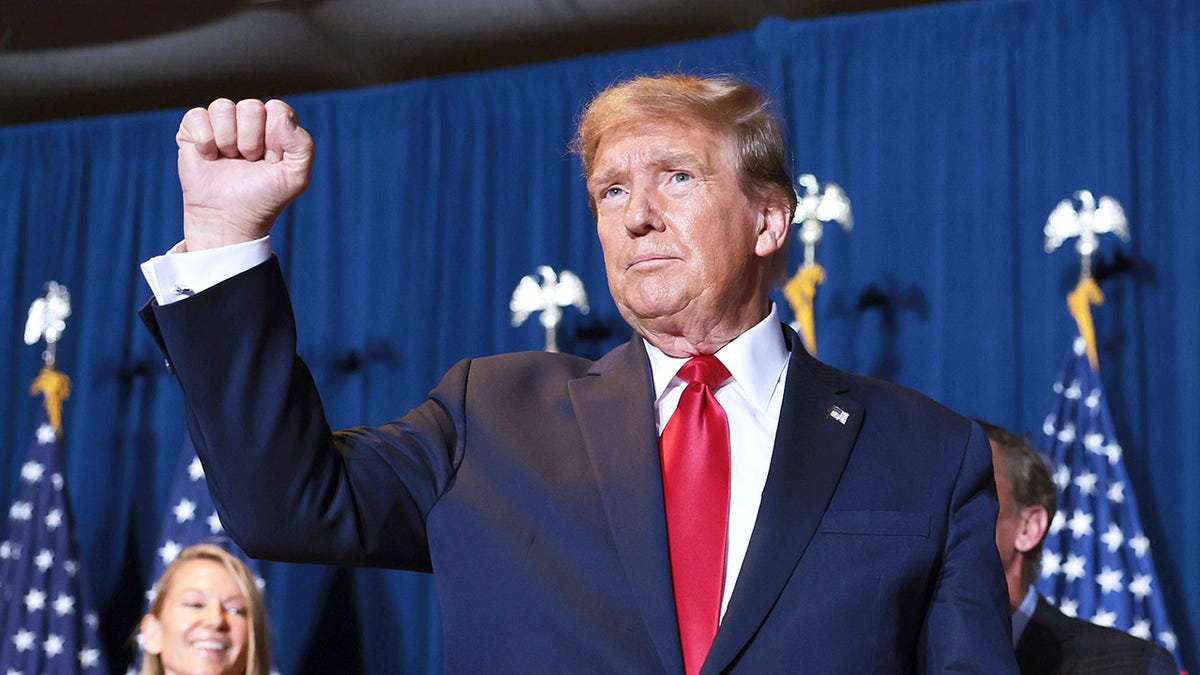
President Donald Trump gestures to supporters during an election night watch party at the State Fairgrounds Feb. 24, 2024. (Win McNamee/Getty Images)
On Tuesday, the website set up to share vote tallies with the public experienced technical problems and crashed, according to The Associated Press.
With the candidates only having 515 votes between them, a virtual tie and site crash saw President Trump share a post on Truth Social.
«Looks like Honduras is trying to change the results of their Presidential Election,» he wrote. «If they do, there will be hell to pay!»
By Thursday, Asfura had 40.05%, about 8,000 votes ahead of Nasralla, who had 39.75%, according to Reuters, with the latter then calling for an investigation.
«I publicly denounce that today, at 3:24 a.m., the screen went dark and an algorithm, similar to the one used in 2013, changed the data,» Nasralla wrote on social media, adding 1,081,000 votes for his party were transferred to Asfura, while 1,073,000 votes for Asfura’s National Party were attributed to him.
FORMER MISS VENEZUELA BLAMES ‘SOCIALISM AND OPEN BORDERS’ FOR HER COUNTRY’S DEVASTATING COLLAPSE
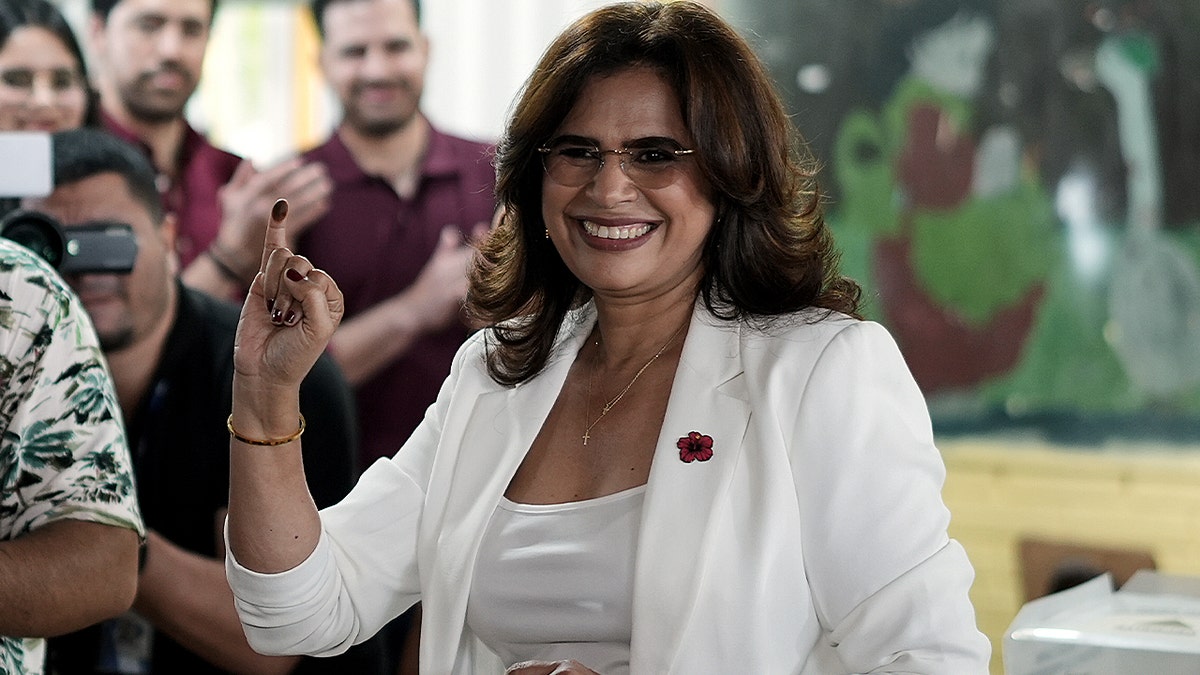
Rixi Moncada, LIBRE’s candidate, is a prominent lawyer, financier and former minister of national defense. (Associated Press )
Asfura, nicknamed «Tito,» is a former mayor of Tegucigalpa and had entered the race with a reputation for leadership and focus on infrastructure, public order and efficiency.
His win ended a polarized campaign season, with one of the defining moments of the contest being Asfura’s endorsement by Trump.
«If he [Asfura] doesn’t win, the United States will not be throwing good money after bad,» Trump wrote on his Truth Social platform Nov. 28.
Before the start of voting Nov. 29, Trump also said he would pardon former President Juan Orlando Hernandez, who once led the same party as Asfura. Hernandez is serving a 45-year sentence for helping drug traffickers.
VENEZUELAN NOBEL PEACE PRIZE WINNER MARÍA CORINA MACHADO DEDICATES AWARD TO TRUMP FOR ‘DECISIVE SUPPORT’
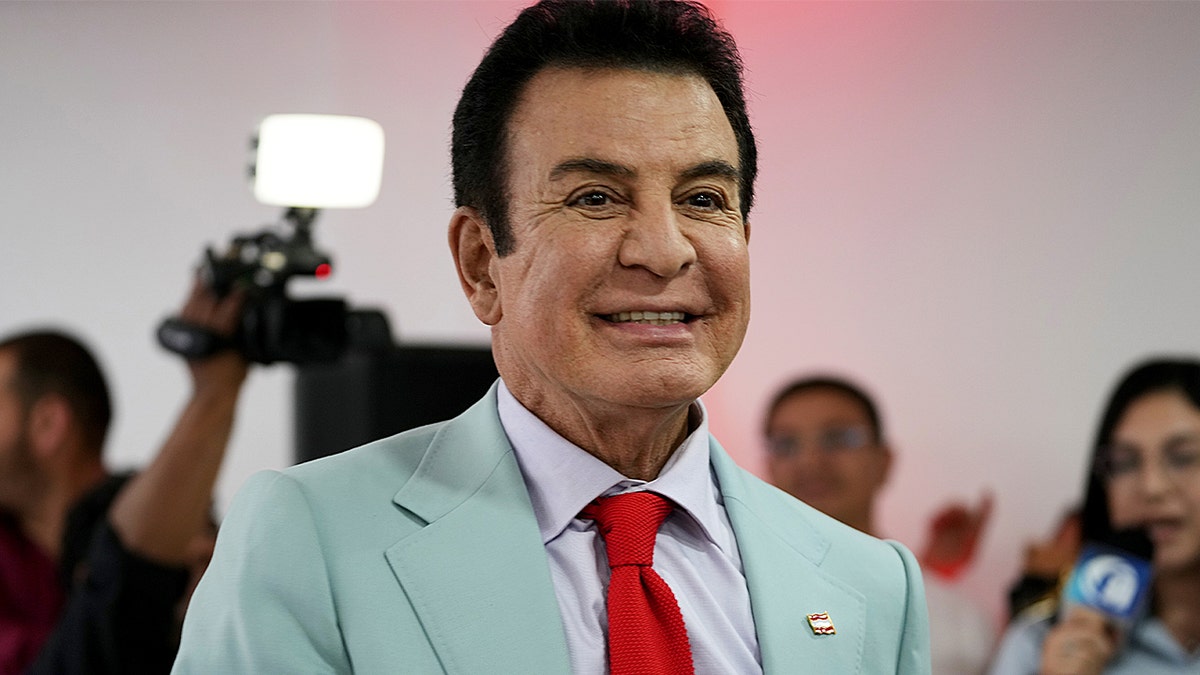
Nasralla is a high-profile television personality turned politician. (Associated Press )
In the end, the election saw the defeat of centrist former vice president of Honduras, Nasralla and left-wing Moncada, 60, who served under President Xiomara Castro.
Moncada, a prominent lawyer, financier and former minister of national defense, focused on institutional reform and social equity.
Nasralla, a high-profile television personality turned politician, mobilized a base but fell short of converting his popularity into a winning coalition.
He was focusing on cleaning up Honduran corruption. The Honduran presidential race was also impacted by accusations of fraud.
CLICK HERE TO DOWNLOAD THE FOX NEWS APP
In addition to electing a new president, Hondurans voted for a new Congress and hundreds of local positions.
Reuters contributed to this report.
central america,elections,donald trump,politics








INTERNACIONAL
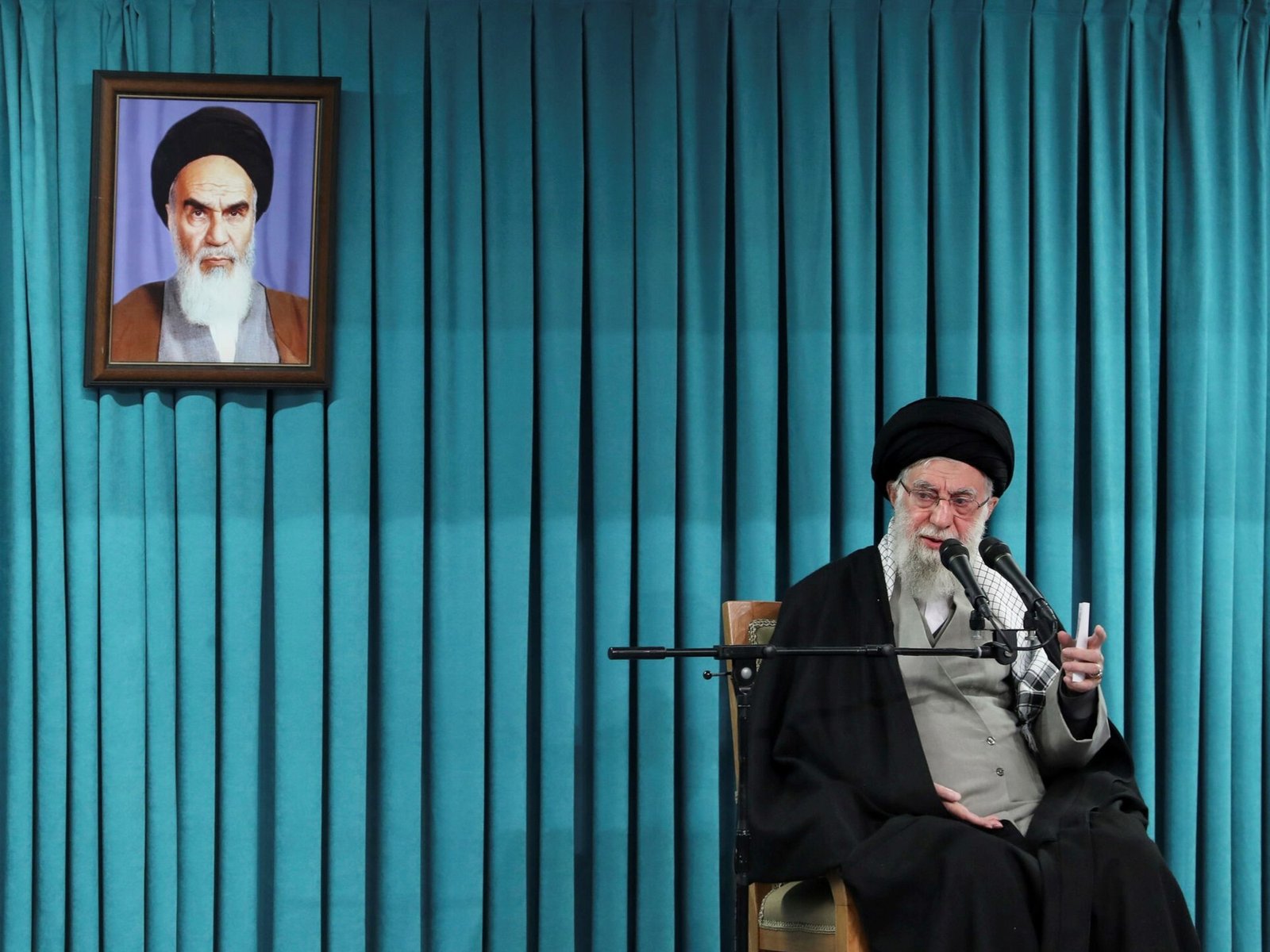
El golpe fulminante de EE.UU. e Israel para matar al líder supremo de Irán, Ali Khamenei


INTERNACIONAL
Jeb Bush commends former rival Trump’s Iran operation: ‘This is their time to take their country back’
NEWYou can now listen to Fox News articles!
FIRST ON FOX: A major public policy nonprofit co-led by former Florida Gov. Jeb Bush praised President Donald Trump for ordering Saturday’s military strikes against Iran.
United Against a Nuclear Iran (UANI) — was formed in 2008 by Ambassador Mark Wallace, who held a United Nations-centered post in Bush’s brother’s administration, and former George H.W. Bush diplomat Dennis Ross — to combat threats posed by the Islamic Republic.
The group has been on the front lines of highlighting Iran’s human rights abuses and attacks on Americans and advising policymakers and the business community about dangers posed by Tehran.
The organization counsels existing and would-be commercial partners of Iran regarding the legal, financial and reputational risks of that kind of commerce.
«UANI salutes the courage and professionalism of American and Israeli service members carrying out this historic mission against the Iranian regime,» Bush and Wallace told Fox News Digital Saturday.
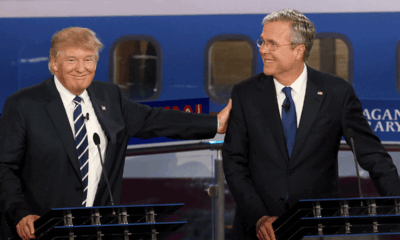
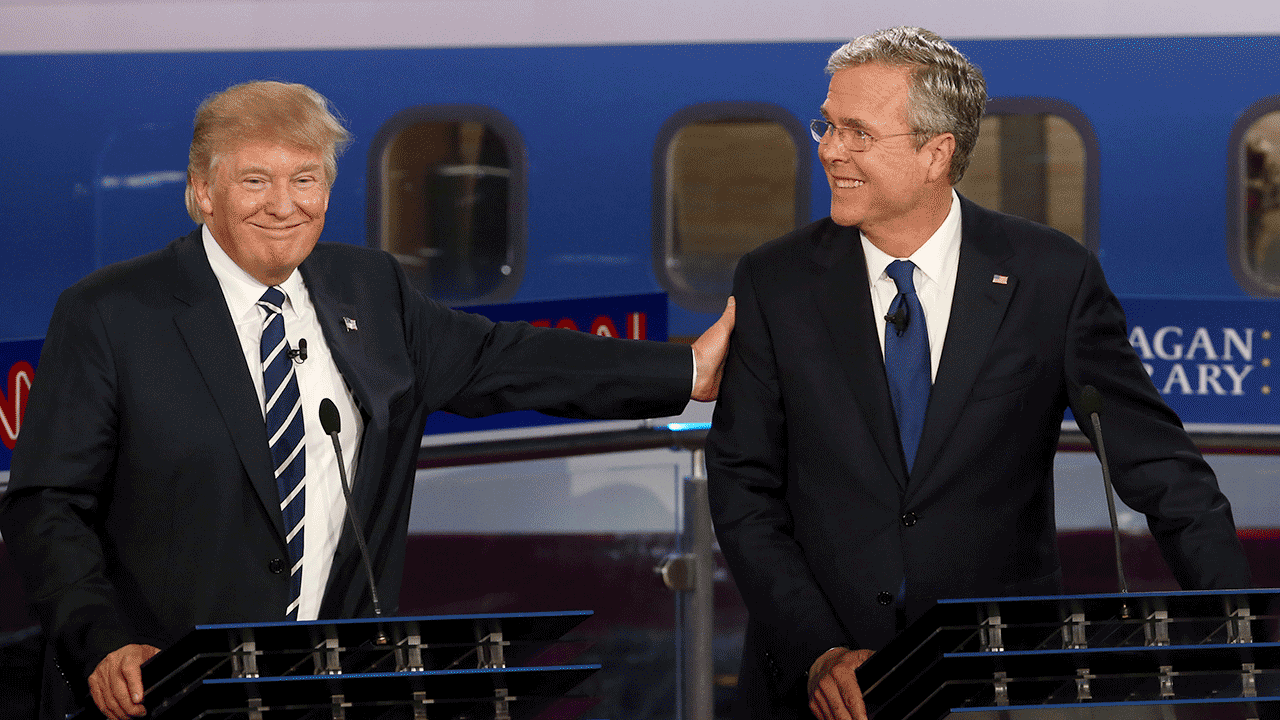
Republican presidential candidates Donald Trump, left, and Jeb Bush take part in a presidential debate at the Reagan Library Sept. 16, 2015, in Simi Valley, Calif. (Justin Sullivan/Getty Images)
«We applaud President Trump for his courageous decision to launch this military operation. For 47 years, the Iranian regime has unleashed terror, violence and misery — against its own people and across the region — while threatening the United States, Israel and our allies.»
Bush, who ran against Trump in a bruising 2016 primary, and Wallace noted that many presidents tried to bring Iran into the «peaceful community of nations» but were not able to finish the job.
«This president engaged extensively and in good faith to achieve a diplomatic solution,» they said after Trump indicated as recently as last week he wanted to negotiate terms.
«The regime chose escalation and continued its pursuit of nuclear weapons. The responsibility for this moment rests squarely with Ayatollah Khamenei.»
Khamenei, 86, was declared dead by Israeli sources by late afternoon.
Bush and Wallace added it was clear the joint American-Israeli operation was directed not at Iran, the country and citizenry, but at Khamenei’s «lethal capabilities.»
The Iranian people, they said, have long suffered under repression and that Trump’s message since the strikes began is one that should be embraced by all Americans: «We aim to see Iran free, prosperous, and at peace. This is their time to take their great country back.»
«The Butcher of Tehran is dead,» Bush and Wallace added in a separate public statement.
ICE NABS IRANIAN NATIONAL WITH RAPE, SODOMY CONVICTIONS AFTER VIRGINIA DEMOCRATS MOVE TO CURB COOPERATION
Bush added in a statement on X that «Operation Epic Fury marks a historic mission against the Iranian regime.»
«We salute the courage and professionalism of American and Israeli service members and commend for his courageous decision,» he added.
Bush’s relationship with Trump has appeared to warm since their bitter feuds of a decade ago.
During the 2016 sweeps, Trump nicknamed the Republican Party scion «Low Energy Jeb,» while Bush quipped that the mogul would not be able to «insult your way to the presidency» after the eventual victor mocked an ad that former first lady Barbara Bush filmed for her son.
While governor, Bush made improving public education a hallmark of his administration in Tallahassee. Bush implemented stricter proficiency standards in elementary education and signed what was dubbed the «A+ plan,» making Florida the first state to require clear letter grades on student performance.
CLICK HERE TO GET THE FOX NEWS APP
He recently praised the Trump administration’s overtures toward universal school choice and federal block grants as a «transformational opportunity.»
«The Trump administration has a chance to shift the power dynamic back to the states, where policymakers are uniquely equipped to understand and address the diverse needs of their students, schools, and communities,» he added in a column in Education Week.
Related Article
war with iran,iran,george w bush,donald trump,elections,terrorism
US base in Saudi Arabia under attack
Fox News chief national security correspondent Jennifer Griffin joins ‘America Reports’ to give the latest on the aftermath of the U.S.-Israel strikes on Iran.
NEWYou can now listen to Fox News articles!
Iran entered a new chapter Saturday after Supreme Leader Ayatollah Ali Khamenei was killed, abruptly ending more than three decades of authoritarian rule and setting in motion a leadership transition the regime has long prepared.
A senior Arab diplomat told The Times of Israel that while Khamenei’s demise is a «massive blow» to the Islamic Republic, Tehran anticipated the possibility and took steps to withstand such a scenario.
«Mere survival, at this point, would be considered a victory,» the diplomat said of the regime, according to the outlet, following U.S. and Israeli strikes across the country.
A recent report from the Council on Foreign Relations (CFR) outlined three broad trajectories for a post-Khamenei Iran: managed regime continuity, an overt or creeping military takeover, or systemic collapse.
Iranian Supreme Leader Ali Khamenei was killed in an Israeli strike on Saturday. (Office of the Supreme Leader of Iran via Getty Images)
CFR cautioned that even a leadership change at the top would not necessarily translate into meaningful political reform in the near term, given the regime’s deeply institutionalized power structure and its record of using force to maintain control.
The report notes that the real balance of power rests within a tight circle of clerical elites and the Islamic Revolutionary Guard Corps (IRGC).
It describes a likely «continuity» scenario as producing «Khamenei-ism without Khamenei,» in which a successor from within the regime preserves the ideological framework of the Islamic Republic while relying on established security institutions to preserve stability.
LEAKED DOCUMENTS EXPOSE KHAMENEI’S SECRET DEADLY BLUEPRINT FOR CRUSHING IRAN PROTESTS
«The Islamic Republic’s constitution includes a succession process. The Assembly of Experts, a clerical body, is constitutionally charged with selecting the next supreme leader,» Jason Brodsky, policy director of United Against Nuclear Iran (UANI), told Fox News Digital.
«In the interim, should there be a leadership vacancy, an interim leadership council is formed comprised of the president, chief justice, and a member of the Guardian Council selected by the Expediency Council,» he added. «The IRGC is a key stakeholder in this process, and will heavily influence its outcome.»
Over the past three decades, the Bayt-e Rahbari, or the Office of the Supreme Leader, expanded into what a February report by UANI described as a «sprawling parallel state» operating alongside Iran’s formal institutions.
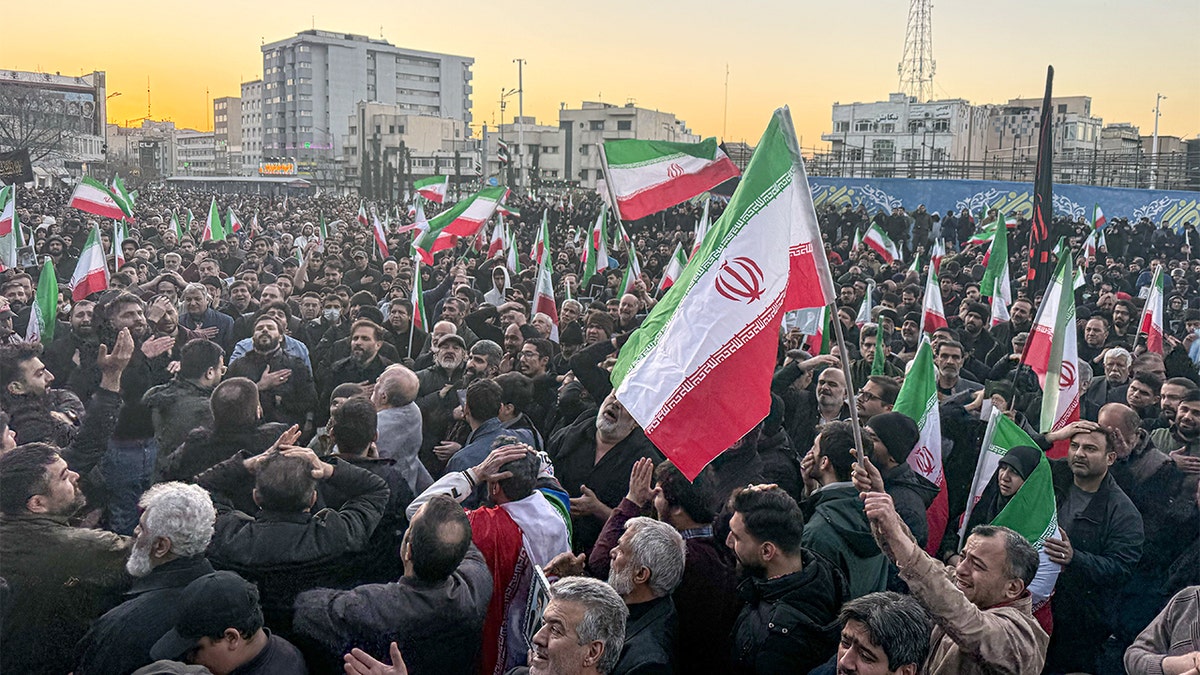
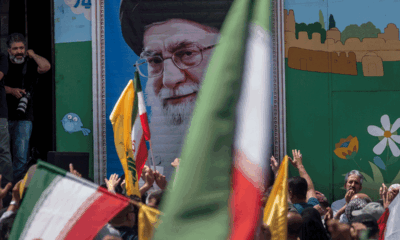
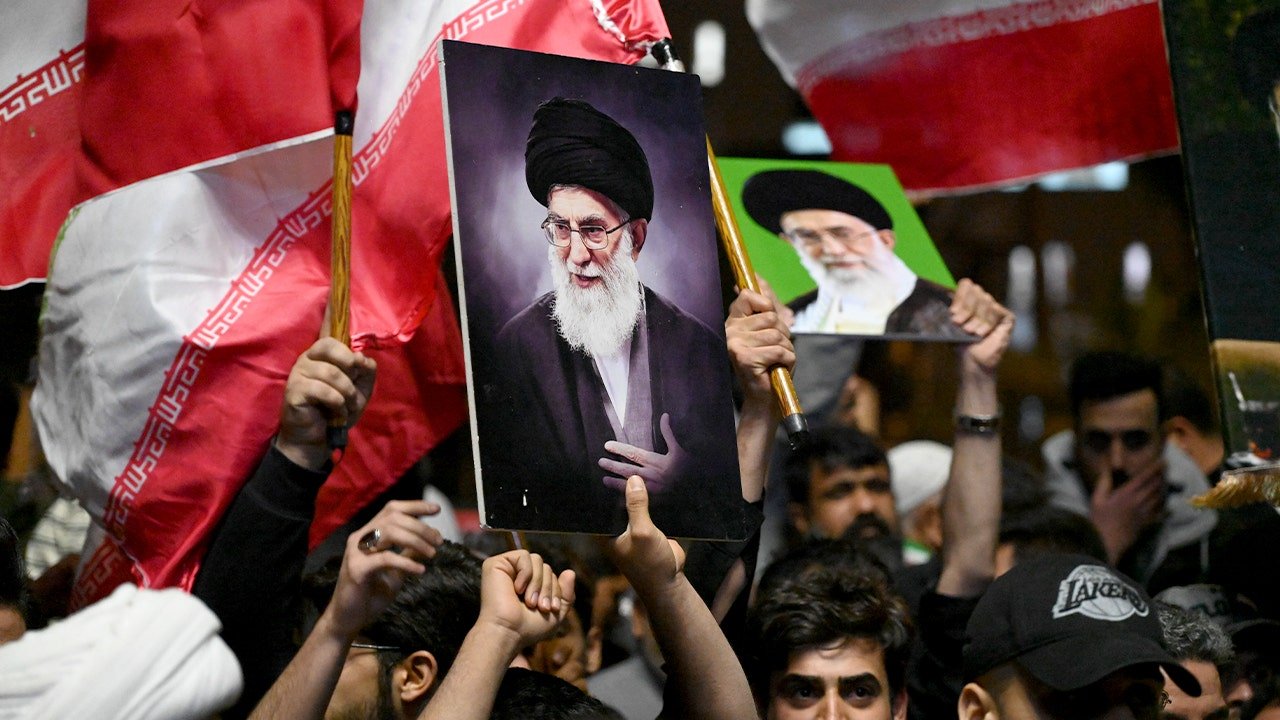
Large crowds gather at Enghelab Square in Tehran, Sunday, after Iranian state TV announced that Supreme Leader Ayatollah Ali Khamenei was killed in an Israeli strike. (Fatemeh Bahrami/Anadolu via Getty Images)
The analysis characterizes the Office as the regime’s «hidden nerve center,» extending control across the military, security establishment and major economic foundations in ways that make the system’s authority institutional rather than dependent on Khamenei’s physical presence.
CLICK HERE TO DOWNLOAD THE FOX NEWS APP
«The supreme leader today is no longer just one man; he is represented through an all-encompassing institution that consolidates power, manages succession, and guarantees continuity,» the non-partisan policy organization said. «The Islamic Republic’s most enduring strength lies in this hidden architecture of control, which will continue to shape the country’s future long after Khamenei himself departs from the scene.»
Related Article
war with iran,iran,middle east,world,geopolitics

Clima de negocios: los secretos del modelo verde que promete restaurar bosques y ser un generador de dólares para Argentina

El golpe fulminante de EE.UU. e Israel para matar al líder supremo de Irán, Ali Khamenei

Canales para ver el Talleres vs. San Lorenzo por el Torneo Apertura

Kicillof llega a la apertura de sesiones con la interna del PJ reactivada y buscando instalar un mensaje federal

¡Tensión en vivo! Aníbal Pachano y Nancy Pazos protagonizaron un cruce explosivo en la mesa de Mirtha Legrand

La primera imagen del Kratos de la serie de God of War desata una tormenta de críticas y su actor responde de forma peculiar

Jorge Macri prepara su discurso para abrir el año legislativo: el deseo de reelección y el espejo en Bukele

Catherine Fulop contó el difícil momento que atraviesa su madre en Venezuela: “Está postrada”

Crisis en la industria: otra multinacional se achica y cierra una planta en la Argentina

Alarma por la salud de Divina Gloria tras salir de Gran Hermano: “La internaron directamente en terapia intensiva”

 CHIMENTOS2 días ago
Alarma por la salud de Divina Gloria tras salir de Gran Hermano: “La internaron directamente en terapia intensiva”
- CHIMENTOS2 días ago
Ginette Reynal dio una rotunda marcha atrás con una decisión que tomó hace dos meses: “No aguanto más”
- CHIMENTOS2 días ago
¡Titi revolucionó Gran Hermano! Cuáles son las 5 cosas que ya extraña: «Accesorios, pilates, bondiola, auriculares y bailar»