INTERNACIONAL
Trump-backed military right to repair plan stripped from Congress’ final defense bill


NEWYou can now listen to Fox News articles!
The final legislation governing Pentagon spending dropped a bipartisan provision that would have guaranteed the military the right to repair its own equipment, prompting immediate criticism from its authors, Sens. Elizabeth Warren, D-MA, and Tim Sheehy, R-MT, who accused Congress of siding with defense contractors over service members.
Both chambers had passed versions of the reform, and the White House publicly supported the measure, which would have required contractors to provide the Pentagon with the technical data needed to perform repairs in-house — rather than flying out manufacturer technicians at added cost. The final National Defense Authorization Act (NDAA) omits that mandate, a move Warren and Sheehy say will leave troops facing the same barriers to fixing equipment whenever contractors assert proprietary rights.
«For decades, the Pentagon has relied on a broken acquisition system that is routinely defended by career bureaucrats and corporate interests. Military right to repair reforms are supported by the Trump White House, the Secretary of War, the Secretary of the Army, the Secretary of the Navy, entrepreneurs, small businesses, and our brave servicemembers,» Warren and Sheehy said after the text of the legislation was released. «The only ones against this common-sense reform are those taking advantage of a broken status quo at the expense of our warfighters and taxpayers.»
The Government Accountability Office (GAO) repeatedly has warned that the Pentagon’s lack of access to technical data is one of the biggest drivers of soaring sustainment costs, estimating that broader repair rights could save the department «billions» of dollars over the life cycles of major weapons systems.
Lawmakers voiced criticism after the National Defense Authorization Act left out provisions allowing soldiers to repair their own equipment. (Paul Bersebach/MediaNews Group/Orange County Register via Getty Images)
SEN ROGER WICKER: THE PENTAGON NEEDS MAJOR REFORM. NOW IS OUR CHANCE
GAO reviews of aircraft, ships and ground vehicles have found that when contractors retain exclusive control over repair information, the military is forced into long-term vendor support arrangements that are far more expensive than in-house maintenance. In several cases, GAO concluded that obtaining necessary data earlier in the acquisition process would have given the Pentagon more flexibility, reduced downtime, and lowered costs for everything from software fixes to depot-level repairs.
Sources familiar with the NDAA negotiations claimed that, behind closed doors, lobbyists had persuaded leaders on the House and Senate Armed Services Committee to drop the more aggressive right to repair language.
«This is a textbook case of the swamp prevailing at the expense of our warfighters and government efficiency,» one source said. «Does (War Secretary Pete) Hegseth realize that Boeing just knocked the legs out from our warriors?»
A spokesperson for the House Armed Services Committee said: «The Committee is committed to addressing the right to repair issue in a manner that ensures our warfighters have the data they need to effectuate repairs while preserving the intellectual property of private industry.»
«The FY26 NDAA requires the Department to audit its contracts to determine where they are missing data rights they need and determine whether any missing data rights is the result of a defective law or a defective contract. If the law is defective, the department needs to make recommendations to Congress on how to fix it.»
Watchdogs also questioned the weaker compromise.
«The provisions are nowhere near strong enough,» said Greg Williams of the Project on Government Oversight. «They help catalog the problem, but they don’t really do anything to solve it.» Williams added that the original proposals «acknowledged the cost and committed to paying fair, reasonable prices to vendors for that intellectual property,» countering industry arguments that the bill would have seized or devalued contractors’ data.
CONGRESS UNVEILS $900B DEFENSE BILL TARGETING CHINA WITH TECH BANS, INVESTMENT CRACKDOWN, US TROOP PAY RAISE
Industry groups defended their opposition.
«This debate is not about ensuring equipment and technology can be repaired in contested environments; commanders already have broad authority to keep mission-critical systems operational,» said Marta Hernandez, spokesperson for the Aerospace Industries Association. «Our concern with the Senate proposal is its sweeping mandate for government takeover of IP — without regard to necessity or cost. ‘One size fits all’ doesn’t work for our troops or for the industry that equips them.»
But military officials and watchdogs say that while commanders can authorize emergency fixes, that authority does not give units the technical data, software access, or parts needed to actually perform repairs. They argue that crews remain dependent on contractors even when they have the skills to fix the equipment themselves.
Instead of requiring contractors to provide repair data, the final NDAA directs the Pentagon to create a database cataloging what technical information it currently has and to «request options» from contractors when data is missing. Critics say the language has no enforcement mechanism and leaves manufacturers free to refuse, preserving the contractor-controlled repair model the reform sought to change.

GAO reviews of aircraft, ships and ground vehicles have found that when contractors retain exclusive control over repair information, the military is forced into long-term vendor support arrangements that are far more expensive than in-house maintenance. (Armin Weigel/picture alliance via Getty Images)
The Trump administration had backed the reform, with Statements of Administration Policy supporting both the House and Senate versions earlier in the fall. Service secretaries also endorsed the effort, and War Secretary Pete Hegseth issued new acquisition guidance in November instructing the military to plan for «organic depot-level maintenance and repair» in major systems.
US COULD LOSE NEXT MAJOR WAR DUE TO PENTAGON’S ‘BROKEN’ ACQUISITION SYSTEM
In May 2025, Army Secretary Daniel Driscoll publicly pledged that the Army would ensure right-to-repair provisions were included in future Army contracts — aligning the service with the broader congressional push for greater access to technical data. But advocates said a service-by-service approach wasn’t enough and pushed to codify and expand right to repair across all branches to prevent contractors from controlling critical maintenance information.
The F-35 program offers one of the clearest examples of how restricted repair rights drive up costs.
GAO has found that the Pentagon still lacks key technical data needed to perform many F-35 repairs organically, forcing the services to rely on Lockheed Martin and its subcontractors for everything from software maintenance to component overhauls. That dependence has helped push sustainment costs so high that the Pentagon warns it cannot afford to operate the planned fleet without major changes.
GAO reported that greater access to repair data could save the department billions over the jet’s projected life cycle, reduce turnaround times for broken parts, and allow military depots to take on work that is currently outsourced back to the contractor.
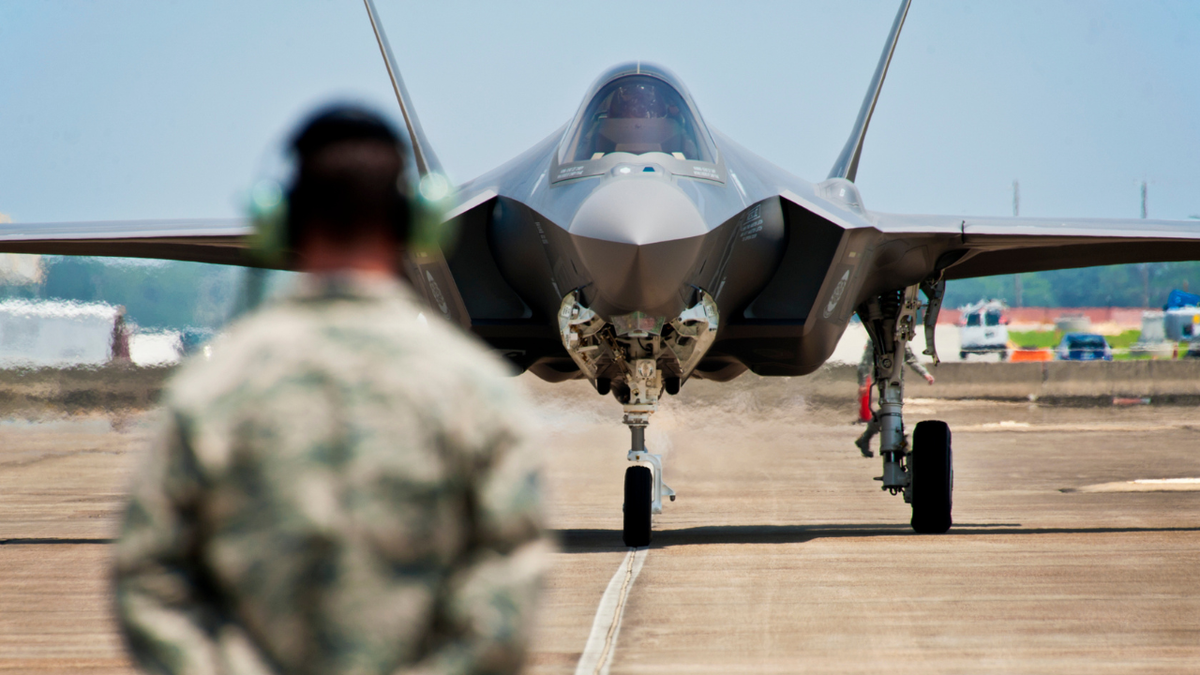
The F-35 program offers one of the clearest examples of how restricted repair rights drive up costs. (Samuel King Jr./U.S. Air Force)
The consequences of contractor restrictions are already visible across the force. A mechanic deployed for an exercise in Korea «was prohibited from conducting maintenance on a generator because the warranty would be voided,» leaving the unit with the choice of voiding the warranty or losing equipment needed for training, according to a comment filed on Regulations.gov.
Marines stationed in Japan were forced to «pack() up and ship() back (engines) to contractors in the (U.S.) for repairs,» leaving the engines offline for months, former Marine Corps logistics officer Elle Ekman wrote in The New York Times.
Even basic shipboard systems have been affected. Navy Secretary John Phelan told lawmakers that during a visit to the USS Gerald R. Ford, six of the ship’s eight ovens — responsible for preparing more than 15,000 meals a day — were broken. Sailors said they knew how to fix the ovens but were not allowed to and had to wait for contractors instead, according to a War Department readout. When shipboard elevators stopped working, the crew similarly had to call in the manufacturer.
CLICK HERE TO DOWNLOAD THE FOX NEWS APP
Advocates say these examples illustrate why Congress sought to codify military right to repair in the first place — and why they argue the issue is far from resolved. Warren and Sheehy have already vowed to push another legislative fix in 2026, while watchdog groups say they will press the Pentagon to use its existing authority to demand greater data access in new contracts.
pentagon,congress,us navy,us army,military tech












INTERNACIONAL
La Unión Europea sancionó a 16 funcionarios y tres entidades iraníes más por la represión de las protestas de enero

IRGC/WANA (Agencia de Noticias de Asia Occidental)/Handout via REUTERS
La Unión Europea amplió este lunes su lista de sancionados por la represión en Irán con 16 nuevos funcionarios y tres entidades, entre ellos comandantes de la Guardia Revolucionaria Islámica, miembros del poder judicial y el responsable del sistema penitenciario del país. El Consejo de la UE aprobó las medidas en Bruselas en respuesta a la participación directa de estos actores en la supresión violenta de las protestas de enero de 2026, que se saldaron con miles de muertos según diversas estimaciones internacionales.
Las nuevas designaciones elevan a 263 el número de personas y a 53 el de entidades sometidas a medidas restrictivas en el marco del régimen de sanciones que la UE mantiene sobre Irán por violaciones de derechos humanos, vigente desde 2011 y prorrogado hasta el 13 de abril de 2026.
Entre los recién incluidos figura el viceministro del Interior para Asuntos de Seguridad y Orden Público, así como varios comandantes de ramas locales del Cuerpo de la Guardia Revolucionaria Islámica (IRGC, por sus siglas en inglés). El Consejo también sancionó al Cuerpo Mohammad Rasulullah, encargado de coordinar las fuerzas del IRGC y de la milicia Basij en Teherán, y al Cuerpo de la Guardia Revolucionaria Imam Reza, rama provincial del IRGC en Jorasán Razaví, donde la represión fue, según el comunicado, “especialmente brutal”.
Las protestas comenzaron el 28 de diciembre de 2025, desencadenadas por el colapso del rial iraní y décadas de malestar político acumulado. Lo que empezó como una movilización de comerciantes en Teherán se extendió a más de un centenar de ciudades, convirtiéndose en el mayor levantamiento popular desde la revolución islámica de 1979. El régimen respondió con una violencia sin precedentes: las fuerzas de seguridad dispararon munición real contra los manifestantes, con las masacres más mortales los días 8 y 9 de enero, según documentó Amnistía Internacional.
Las cifras de víctimas permanecen en disputa. Las autoridades iraníes reconocieron oficialmente 3.117 muertos. La Relatora Especial de la ONU sobre Irán estimó que el número real podría superar los 5.000 fallecidos. La revista Time, citando documentos del Ministerio de Salud iraní, elevó esa cifra a hasta 30.000 personas solo en los días 8 y 9 de enero, dato que no pudo verificarse de forma independiente dado el bloqueo de internet impuesto por las autoridades desde ese mismo día.

Majid Asgaripour/WANA (Agencia de Noticias de Asia Occidental) vía REUTERS
La nueva lista incluye también a jueces y fiscales que participaron en procesos contra manifestantes, activistas, periodistas y opositores, algunos responsables de obtener confesiones bajo coacción y dictar condenas severas. Figura asimismo el director de la Organización de Prisiones, bajo cuya gestión se documentaron torturas, detenciones arbitrarias, aplicación de la pena de muerte a menores y violencia sexual contra reclusas.
En el ámbito tecnológico, el Consejo sancionó a Naji Research and Development Company (NRDC), empresa que desarrolló la aplicación Nazer, utilizada por las fuerzas del orden como herramienta de vigilancia ciudadana, y al jefe de la Policía Cibernética de Teherán, responsable de la censura en internet.
Esta ronda se produce en el marco de una escalada sostenida. El 19 de febrero, el Consejo formalizó la inclusión del IRGC en la lista de organizaciones terroristas de la UE. El 11 de marzo, una ronda previa designó a otras 19 personas y entidades, entre ellas el ministro del Interior Eskandar Momeni y el fiscal general Mohammad Movahedi Azad. Teherán calificó esas medidas de “ilegales” e “inmorales” y acusó a la UE de complicidad con lo que describió como una agresión exterior contra el país.
Con Irán sometido simultáneamente a una ofensiva militar exterior y a una crisis de legitimidad interna, la acumulación de designaciones europeas traza un mapa de responsabilidades que, tarde o temprano, alguien tendrá que responder.
Defense,Middle East

NEWYou can now listen to Fox News articles!
Cuba plunged into an unprecedented blackout after its entire electrical grid suddenly suffered a total collapse on Monday, briefly leaving roughly 10 million residents in total darkness.
«At 1:54 p.m. local time, there was a disconnection of the national electrical grid resulting in a complete power outage across Cuba which includes the Havana metropolitan area,» the U.S. Embassy in Cuba said.
The nationwide outage comes just two days after a large crowd of protesters, fed up with the island’s energy crisis, were caught on camera attacking a local Communist Party headquarters in Cuba, ransacking the building and attempting to set it on fire.
Efforts to restore electricity are currently underway across the island, with reports indicating that power is slowly returning to some areas.
RUSSIAN ‘DARK FLEET’ TANKER BELIEVED TO BE DELIVERING OIL TO CUBA, DETECTED OFF US COAST AMID TRUMP BAN
A woman with her son signals a car on a dark street during a blackout in Bauta municipality, Artemisa province, Cuba, on March 18, 2024. (Yamil Lage/AFP via Getty Images)
«The causes are being investigated and protocols for restoration are beginning to be activated,» the Ministry of Energy and Mines of Cuba said Monday afternoon, referring to the island’s disrupted National Electrical System of Cuba.
Cuba’s electrical grid has grown increasingly unstable over the years due to aging infrastructure, fuel shortages, and economic restrictions that have limited the country’s access to energy resources – including Washington’s long‑standing oil embargo and recent U.S. actions that disrupted Venezuelan fuel shipments, a key source of the nation’s energy.
Power outages have become a frequent occurrence across the country, disrupting water supply, refrigeration and communications.
«Officials in the US gov must be feeling very happy by the harm caused to every Cuban family,» Cuban Deputy Minister for Foreign Affairs Carlos F. de Cossio said in response to Monday’s blackout.
MILLIONS LOSE POWER ACROSS CUBA AS TRUMP SANCTIONS CONTINUE TO FUEL ONGOING ENERGY CRISIS

Neya Perez, 86, paints the nails of her neighbor Reyna Maria Rodriguez, 77, during a mass blackout across most of the country, in Havana, March 4, 2026. (Norlys Perez/Reuters)
Cuban President Miguel Díaz-Canel said Friday that no fuel has entered the country for the past three months. Since then, electricity generation has relied heavily on a «considerable contribution from renewable energy sources.»
The total collapse of the power grid came just as officials announced updates to their solar panel project in Villa Clara, describing it as a «national security necessity» amid ongoing restrictions on fossil fuel imports under the Trump administration.
«Amid a context of severe energy constraints and a recurring economic lockdown, #Cuba takes another firm step towards electric sovereignty,» the Villa Clara Electric Company said Monday morning.
«This connection comes at a critical time: Washington maintains severe restrictions on our country’s access to fossil fuels, funding and technology. Betting on renewables isn’t just environmental — it’s a national security necessity.»
As the island continues to face rolling power outages, residents have been urged to brace for significant disruption and unplug all nonessential equipment, «leaving only essential devices powered on until service stability is restored,» the Villa Clara Electric Company said.
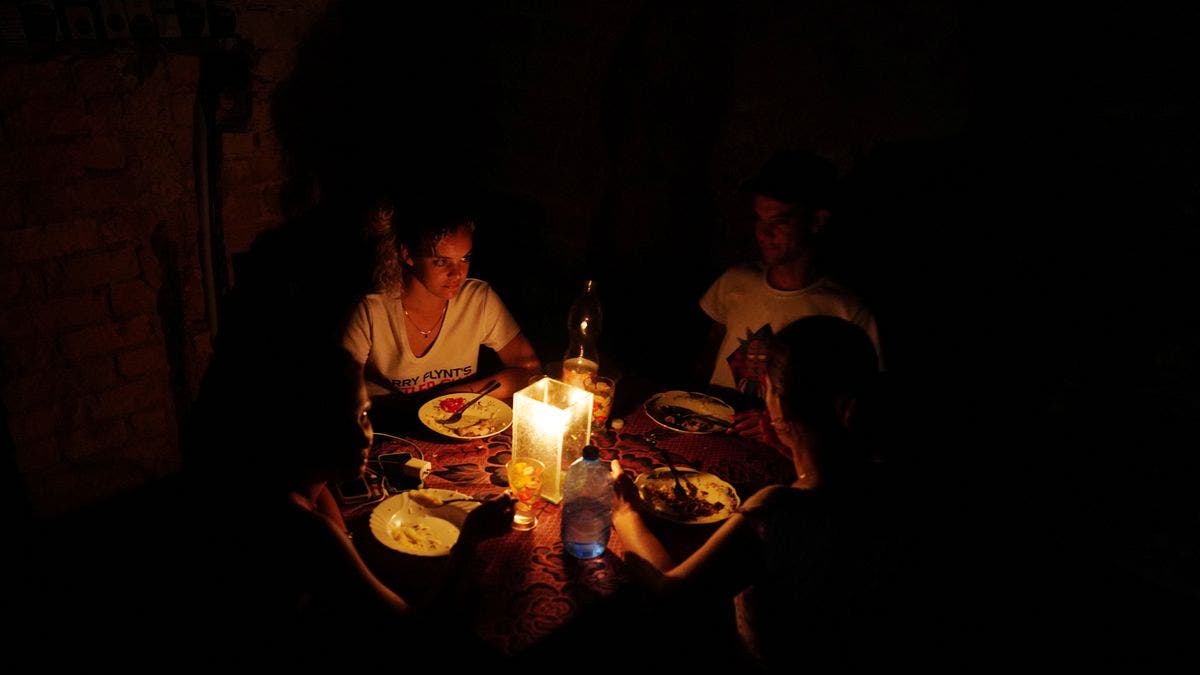
A family has dinner during a blackout in the aftermath of Hurricane Ian in Havana on Sept. 28, 2022. (Alexandre Meneghini/Reuters)
Last Saturday, in a rare display of public dissent driven by frustration over widespread blackouts, anti-government protesters in Cuba reportedly targeted a Communist Party office by hurling rocks, shouting «liberty» and igniting large fires at the scene.
CLICK HERE TO DOWNLOAD THE FOX NEWS APP
The rally, caught on video, began peacefully in the city of Morón late Friday but escalated into violence within hours, Reuters reported, citing local sources.
Fox News Digital reached out to the White House for comment.
Reuters contributed to this report.
cuba,energy,sanctions
INTERNACIONAL
Jasmine Crockett defends her security guard who was killed in police standoff, wanted for impersonating cop

NEWYou can now listen to Fox News articles!
The man who worked security for Rep. Jasmine Crockett, D-Texas, but was killed in a standoff with SWAT last week was accused of impersonating a police officer and other offenses, although the congresswoman is defending him, saying his criminal history does not include any violent offenses.
The suspect, who was identified as Diamon-Mazairre Robinson, 39, was shot and killed by Dallas Police SWAT officers on Wednesday. He had barricaded himself inside a vehicle in the garage of a children’s hospital after Dallas Police officers tracked him while investigating an active warrant.
Police deployed tear gas to force him out before the suspect exited the vehicle and pointed a gun at officers, leading officers to shoot him. The suspect did not fire his gun, and no officers were injured.
Dash camera footage of the incident at Children’s Medical Center Dallas was released on Monday.
JASMINE CROCKETT’S ALLEGED SECURITY GUARD KILLED IN STANDOFF WITH DALLAS SWAT TEAM: REPORTS
Dallas police responded to a SWAT standoff at Children’s Medical Center Dallas where officers shot and killed a man who worked as a security guard for Rep. Jasmine Crockett. (FOX ; Ron Jenkins/Getty Images)
He was wanted for impersonating a law enforcement officer and had claimed to be one while recruiting for his business that placed off-duty officers in security jobs.
Robinson was driving a replica undercover car with stolen U.S. government plates, often wore fake police uniforms pretending he was a federal agent and created a fraudulent business where he used fake identifying information to hire legitimate police officers for off-duty jobs. Dallas Police also said 11 firearms were recovered during their investigation, including the handgun he was holding during the shooting, which was reported stolen.
He was also not using his real name, going by the alias «Mike King.»
«The agencies that he reported to work for do not exist. So dignitaries, basically special dignitary police, that agency does not exist within the federal government. So that’s who he portrayed to be. There was no actual federal agency that he worked for that existed. He was very good at hiding his true identity … He had been living like this for many years,» Dallas Deputy Police Chief William Griffith said on Monday.

Dashcam footage of the standoff between SWAT and Diamon-Mazairre Robinson. (Dallas Police Department)
Robinson has a lengthy criminal history, with arrests going back as far as 2010. He has been charged with offenses such as theft and violating probation.
Crockett came to the defense of her former security guard, releasing a statement on Monday saying her office was unable to find any violent offenses in his «limited criminal history.»
«We are saddened and shocked by some of the concerning revelations. Our team followed all protocols outlined by the House to contract additional security. We were approved to use this vendor who also provided security services for additional entities in the local community and worked closely with law enforcement agencies including Capitol Police,» she said in the statement.
The congresswoman said, «the fact that an individual was able to somehow circumvent the vetting processes for something as sensitive as security for members of Congress highlights the loopholes and shortcomings in many of our systems.»

Dallas police officers gather near vehicles outside a hospital parking garage after a SWAT standoff. (FOX 4)
JASMINE CROCKETT CAMPAIGN REPORTEDLY KICKED ATLANTIC WRITER OUT OF RALLY FOR BEING A ‘TOP-NOTCH HATER’
«This is incredibly alarming, especially for those members who receive high volumes of credible and sophisticated death threats,» she said. «This situation reiterates the need for Capitol Police to provide security for members of Congress, especially under this administration’s new normal of inciting attacks on those who dare to speak out. We are fortunate that this is someone who used those loopholes without malice. Furthermore, after an initial review of the limited criminal history of Diamon Mazairre Robinson in Dallas County, we’ve been unable to locate any violent offenses.»
CLICK HERE TO DOWNLOAD THE FOX NEWS APP
The progressive lawmaker added that «there was never any reason to suspect that he wasn’t who he held himself out to be,» saying he never endangered her team, worked diligently, coordinated with local law enforcement and maintained positive relationships throughout the community.»
«What we’re now learning about his past doesn’t fit the person we came to know as Mike King,» she wrote. «His death evokes a range of emotions. Our hearts grieve the loss of someone we knew and the lost good that could have come from his redemption.»
texas,us,crime world,police and law enforcement,politics

El Gobierno registró otro mes de superávit financiero menos recaudación y recorte en el gasto

Bomba: En Brasil afirman que Cruzeiro quiere a Marcelo Gallardo en reemplazo de Tite

Audiencias por la Ley de Glaciares: con casi 70 mil inscriptos, Diputados cambió el sistema de participación

La Unión Europea sancionó a 16 funcionarios y tres entidades iraníes más por la represión de las protestas de enero

Cuba’s entire electrical grid collapses, leaving whole island without power

Sebastián Graviotto, el ex de Juana Repetto, contó su decisión tras volver a ser padre: “Me hice la vasectomía al mes”

La fuerte exigencia a Mauro Icardi para poder ver a sus hijas con Wanda Nara: “A Maurito se lo va a multar si no lleva a las menores al colegio”

BOMBAZO – Guerra abierta: Feinmann y Rossi contraatacan tras la denuncia de Victoria Villarruel

Video: así fue el feroz temporal que azotó Tucumán y causó inundaciones, rutas cortadas y suspensión de clases

Milei llegó a Madrid para participar de un foro ultraliberal organizado por expertos en criptomonedas

 CHIMENTOS2 días ago
La fuerte exigencia a Mauro Icardi para poder ver a sus hijas con Wanda Nara: “A Maurito se lo va a multar si no lleva a las menores al colegio”
- POLITICA3 días ago
BOMBAZO – Guerra abierta: Feinmann y Rossi contraatacan tras la denuncia de Victoria Villarruel
- CHIMENTOS1 día ago
El escalofriante dato de Ángel de Brito sobre Luciana de Gran Hermano tras su detención por viuda negra: “No fue el único ilícito, también había rodado otros hombres”