INTERNACIONAL
Trump faces multiple legal setbacks as federal courts question broad presidential powers


NEWYou can now listen to Fox News articles!
After the long holiday weekend, President Donald Trump will begin contending with significant legal disputes unfolding on multiple fronts. From the Federal Reserve to trade policy to deportations of illegal immigrants, here’s a look at the high-stakes legal showdowns shaping Trump’s week.
U.S. District Judge Jia Cobb, a Biden appointee, signaled on Friday she will seek to rule quickly on whether Trump acted unlawfully in moving to fire Federal Reserve Governor Lisa Cook over mortgage fraud allegations. She didn’t make a ruling during the two-hour hearing but told both sides to submit more filings by Sept 2. Only then will she decide whether to issue an order that temporarily protects Cook’s job while the case continues.
TRUMP SAYS HE’S ‘ALWAYS’ READY FOR LEGAL FIGHT AS OUSTED FED GOVERNOR PLANS LAWSUIT
Trump’s unprecedented attempt to oust Cook sets the stage for a high-stakes legal battle likely bound for the Supreme Court.
A side-by-side image of President Donald Trump and Federal Reserve Governor Lisa Cook. ( Andrew Harnik/Al Drago/Getty Images/Getty Images)
Trump fired Cook on Aug. 25, which prompted her to sue him in federal court three days later. Her lawsuit names as defendants Trump, the Board of Governors of the Federal Reserve System, and Federal Reserve Chairman Jerome Powell.
It is not clear if Cook has attempted to enter the Federal Reserve’s main headquarters in the Foggy Bottom neighborhood in D.C. since Trump’s letter terminating her. The Federal Reserve declined to say whether Cook has tried to work from her office, is working remotely, or retains access to the email and other resources she needs for her job.
Before Cook filed her suit, a Fed spokesperson acknowledged the potential legal feud and wrote in an Aug. 26 statement that the Fed will «abide by any court decision.»
COOK’S POTENTIAL EXIT HANDS TRUMP GREATER SWAY OVER FED BOARD SHAPING US MONETARY POLICY
In a different legal case, Judge Cobb issued a temporary order preventing the Trump administration from carrying out expedited deportations of illegal immigrants. The policy would have allowed some to be deported without first going before an immigration judge.
In an Aug. 29 opinion, Cobb ruled that the Trump administration’s plan to quickly deport illegal immigrants who had lived in the U.S. less than two years violated their right to due process.
«In defending this skimpy process, the government makes a truly startling argument: that those who entered the country illegally are entitled to no process under the Fifth Amendment,» Cobb wrote, adding that the government could accuse «not only noncitizens, but everyone.»
«The government could accuse you of entering unlawfully, relegate you to a bare-bones proceeding where it would ‘prove’ your unlawful entry, and then immediately remove you,» Cobb added.
FEDERAL JUDGE BLOCKS TRUMP’S EXPANDED DEPORTATION PLAN OVER DUE PROCESS CONCERNS
Meanwhile, on the trade front, a federal appeals court said on Friday that Trump overstepped his authority by using emergency powers to impose new tariffs on imported goods.
The court said that power lies squarely with Congress or within existing trade policy frameworks. Attorney General Pam Bondi said the Justice Department will appeal the ruling to the Supreme Court. Meanwhile, the court allowed the tariffs to remain in effect until mid-October.
TRUMP CALLS TARIFF WINDFALL ‘SO BEAUTIFUL TO SEE’ AS CASH SAILS IN
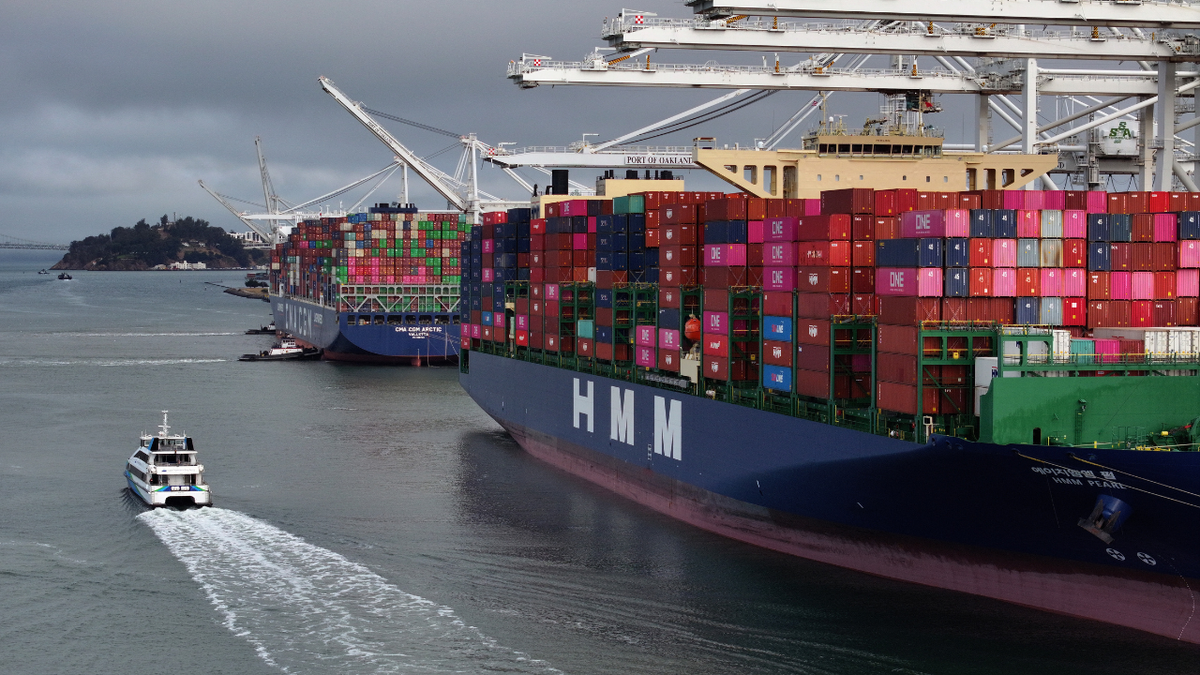
An aerial view of a ferry passes container ships docked at the Port of Oakland on August 1, 2025 in Oakland, California. (Justin Sullivan/Getty Images)
The setback chips away at Trump’s trade policy, long a centerpiece of his economic agenda, which leans heavily on tariffs to raise revenue and exert pressure on foreign trading partners. Trump has previously said that tariff revenue could offset the cost of his «One Big Beautiful Bill» and add hundreds of billions to the U.S. economy.
CLICK HERE TO GET THE FOX NEWS APP
Tariff revenues rose steadily from approximately $17.4 billion in April to $23.9 billion in May, before climbing to $28 billion in June and peaking at $29.6 billion in July. According to the Treasury Department’s latest «Customs and Certain Excise Taxes» data, released on Aug. 28, total tariff revenues have reached $183.1 billion for the fiscal year.
At the current pace, the U.S. could collect as much tariff revenue in just four to five months as it did over the entire previous year.
donald trump,white house,economy,federal reserve,supreme court,immigration











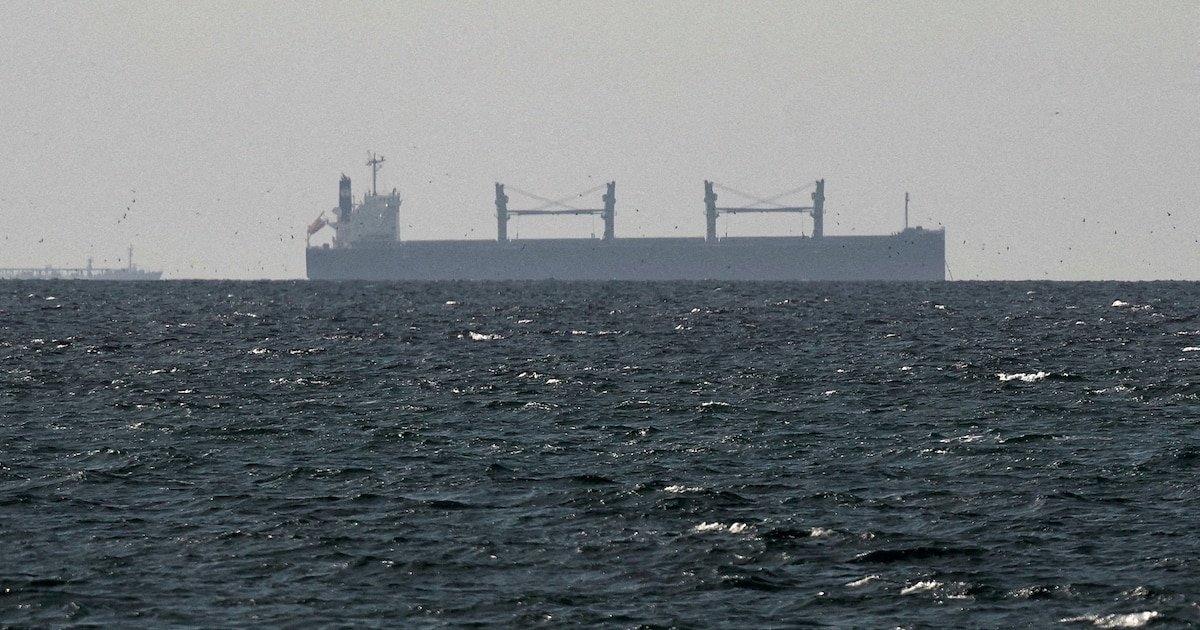
Las empresas navieras de Grecia, los Emiratos Árabes Unidos y China son las más afectadas por el cierre del estrecho de Ormuz, según datos de Bloomberg y de organizaciones de tráfico marítimo.
Alrededor de 670 buques de carga enviaron señales desde el oeste del estrecho de Ormuz durante el último día, de los cuales 120 pertenecían a empresas de los cercanos Emiratos Árabes Unidos, lo que representa alrededor del 18 % del total.
La guerra estalló el 28 de febrero cuando Estados Unidos e Israel lanzaron ataques contra Irán, lo que desencadenó ataques de represalia en toda la región, con las fuerzas de Teherán apuntando a esta crucial vía marítima.
Las cifras podrían subestimar los totales reales, ya que es posible que algunos buques hayan apagado sus transpondedores.
Grecia
Después de los Emiratos Árabes Unidos, el siguiente en la lista es Grecia: sus empresas cuentan con al menos 75 buques de carga que se encuentran en el estrecho desde el inicio de la guerra, alrededor del 12 % del total.
De esos buques, unos 30 son petroleros o gaseros, según un análisis de datos de Bloomberg, que recopila información de diversas organizaciones.
China

Los países asiáticos se han visto muy afectados por el cierre.
Las empresas chinas cuentan con 74 buques de carga en la zona, 25 de los cuales son petroleros y gaseros. El resto son buques de carga seca a granel, como los portacontenedores.
Japón
Las empresas japonesas tienen al menos 23 buques de petróleo y gas y 16 buques de carga seca en el estrecho.
Además, 25 buques de Hong Kong —13 de petróleo y gas, 12 de carga seca— también se encuentran en la región.
India

Las empresas con sede en la India cuentan con 24 buques de petróleo y gas en la zona.
Las empresas de Singapur y Corea del Sur también se han visto afectadas, con 29 y 22 buques de mercancías, respectivamente, atascados desde que comenzó la guerra.
Vietnam tiene tres grandes buques de transporte de gas en la zona.
Petróleo y gas

Alrededor de 50 superpetroleros (VLCC) parecen estar varados, junto con 11 supergaseros.
Corea del Sur cuenta con siete de los VLCC, las empresas de China y Japón cuentan con seis cada una, y Grecia con cinco.
Buques vinculados a Irán

De las 225 travesías realizadas por buques de carga desde el inicio de la guerra, más de 40 fueron de buques iraníes, según datos de la empresa de inteligencia marítima Kpler.
Otras 60 fueron de buques que no enarbolan pabellón ni son propiedad directa de Irán, pero que están sancionados por Estados Unidos en el marco de su programa sobre Irán.
Travesías griegas y chinas
Unas 35 travesías han sido realizadas por buques de propiedad griega, incluidas ocho de una sola empresa, Dynacom Tankers Management Ltd.
Al menos 20 buques afiliados a China y 13 vinculados a la India han realizado el trayecto.
Algunos buques parecen haber cruzado el estrecho a través de un sistema de verificación en el que Irán concede paso seguro a ciertos buques de países amigos.
Buques estadounidenses en el punto de mira
Cientos de buques parecen estar esperando a que pase la guerra, dados los altísimos costos de los seguros y el peligro para la vida y la carga.
De los buques en la zona que informaron de ataques o actividades sospechosas, alrededor de la mitad estaban vinculados a Europa o a Estados Unidos, según el Servicio de Operaciones de Comercio Marítimo del Reino Unido y la información sobre la propiedad disponible públicamente.
(Con información de AFP)
Middle East
NEWYou can now listen to Fox News articles!
Top congressional Democrats, party campaign arms and allied groups are suing President Donald Trump and his administration over a sweeping order he signed this week that would increase federal involvement in elections.
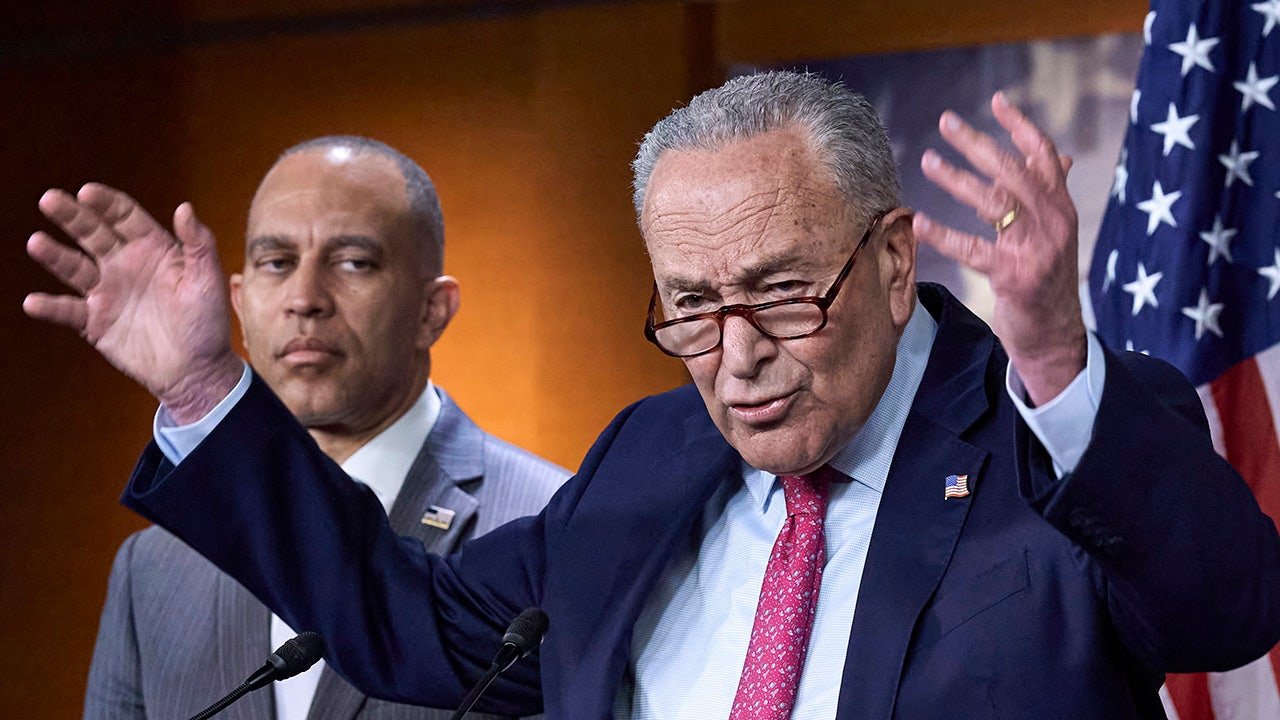
Senate Minority Leader Chuck Schumer, D-N.Y., and House Minority Leader Hakeem Jeffries, D-N.Y., along with the Democratic Senatorial Campaign Committee, the Democratic Congressional Campaign Committee, the Democratic Governors Association and the Democratic National Committee, filed the lawsuit Thursday.
The lawsuit, filed in U.S. District Court in Washington, D.C., seeks to block Trump’s executive order signed Tuesday targeting mail-in voting and voter eligibility, as Senate Republicans continue debating the Safeguarding American Voter Eligibility (SAVE) Act.
TRUMP SIGNS EXECUTIVE ORDER OVERHAULING MAIL-IN VOTING IN MAJOR ELECTION INTEGRITY PUSH
Senate Minority Leader Chuck Schumer, D-N.Y., and House Minority Leader Hakeem Jeffries, D-N.Y., left, hold a news conference on the GOP reconciliation bill at the Capitol in Washington, Wednesday, June 11, 2025. (J. Scott Applewhite/AP Photo)
«The American people are fed up with Republicans’ price-spiking, health care-gutting agenda and are ready to vote them out,» Schumer, Jeffries and the committee chairs said in a joint statement. «That’s why Donald Trump is desperately trying to rig our elections by making it harder to vote for seniors, Americans with disabilities, members of the military, rural communities and other working families who rely on vote-by-mail. This move is blatantly unconstitutional, and we will fight against it.»
«We are taking action to challenge Trump’s executive order to protect the right to vote and ensure every eligible American can make their voice heard at the ballot box,» they added.
Trump has warned Republicans that if they cannot pass the SAVE America Act — which is unlikely given unified Democratic opposition in the Senate — the GOP could face major losses in the upcoming midterm elections.
GOP TRIGGERS MARATHON SENATE FIGHT TO EXPOSE DEMS’ OPPOSITION TO TRUMP-BACKED VOTER ID BILL
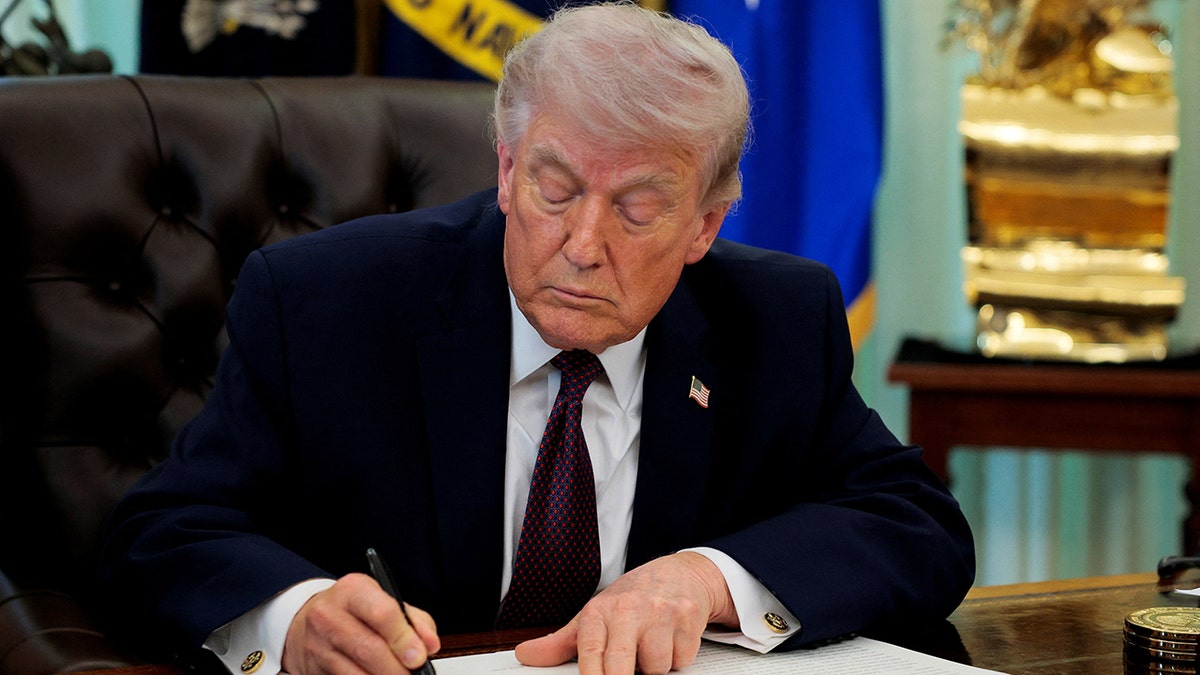
President Donald Trump signs an executive order on mail ballots in the Oval Office of the White House in Washington, D.C., March 31, 2026. (Evan Vucci/Reuters Photos)
The executive order, signed earlier this week, reflects Trump taking matters into his own hands amid the political reality in Congress.
The order would create federal «citizenship lists» of U.S. citizens using government databases, require those lists to be shared with states before elections, and give the U.S. Postal Service (USPS) authority over mail-in voting logistics. It would also require voters to be enrolled with USPS to receive mail ballots.
The order would allow USPS to refuse delivery of ballots from people not on its approved list and impose new federal design and processing rules for mail-in ballot envelopes.
SENATE GOP EYES BLAME GAME AS TRUMP-BACKED SAVE ACT HEADS FOR DEFEAT

Vote by mail ballots are inspected at the Los Angeles County Ballot Processing Center on Nov. 4, 2025, in California.. (Gina Ferazzi/Los Angeles Times via Getty Images)
Democrats argue the order is unconstitutional on several grounds, including that it overrides states’ authority over elections, violates the separation of powers, breaches privacy laws and risks disenfranchising millions of voters.
CLICK HERE TO DOWNLOAD THE FOX NEWS APP
They argue Trump has «no such authority» to impose sweeping changes on elections nationwide.
«If permitted, the President’s actions would fundamentally alter the constitutional balance between the states and the federal government by allowing the executive branch to wield federal power to pressure states into adopting federal preferences for the conduct of elections,» they wrote in the lawsuit.
The White House did not immediately respond to Fox News Digital’s request for comment.
politics, senate, house of representatives politics, chuck schumer, donald trump, elections
INTERNACIONAL
Trump estableció inicialmente cinco objetivos para la guerra contra Irán. Así están las cosas
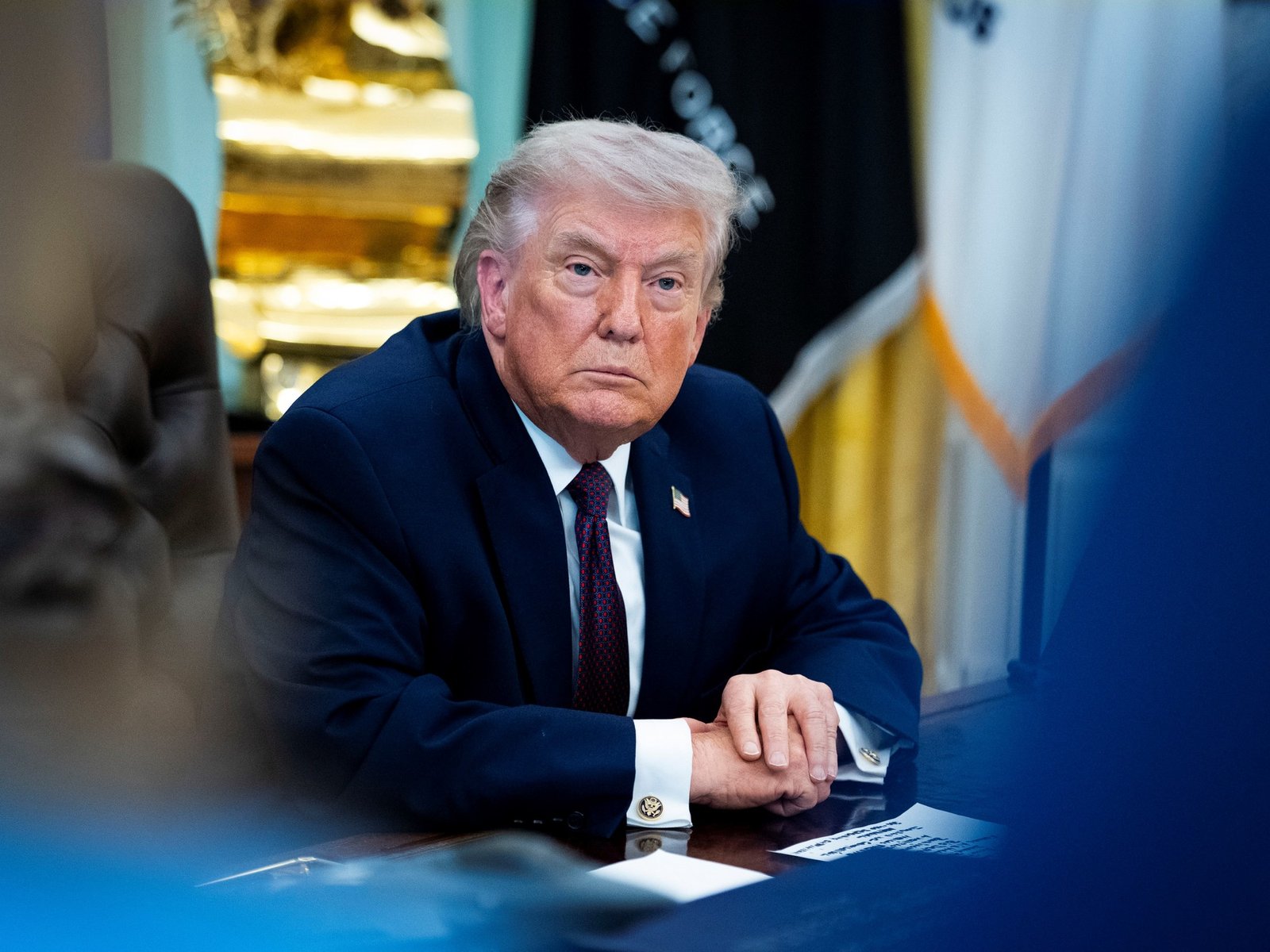
1. “Vamos a destruir sus misiles y arrasar su industria armamentística. Quedará totalmente aniquilada de nuevo.”
2. “Vamos a aniquilar su armada.”
3. “Nos aseguraremos de que los grupos terroristas afines a la región ya no puedan desestabilizar la región ni el mundo»
4. “Y nos aseguraremos de que Irán no obtenga un arma nuclear. Es un mensaje muy sencillo. Nunca tendrán un arma nuclear.”
5. “Finalmente, al gran y orgulloso pueblo de Irán, les digo esta noche que la hora de su libertad está cerca. «

Israel respaldó la orden de Argentina para que el encargado de negocios de Irán abandone el país en 48 horas

Con ansiedad y lágrimas de alivio, así fue el regreso de Agostina Páez a la Argentina
Hospitales tailandeses enfrentan presión por guerra en curso, según Tisco Por Investing.com

Pese al bono, el Gobierno no logró desactivar una protesta de las fuerzas de seguridad por los bajos salarios

Ni Fermín ni Güler: la explosión más impresionante se encuentra en Alemania

Javier Milei le dio un sentido abrazo a Manuel Adorni y volvió a mostrarle su apoyo en medio del avance de las causas judiciales

Dos jubiladas que le habrían prestado dinero a Manuel Adorni negaron conocerlo

Nuevas críticas de Marcela Pagano contra los Milei: “Karina es la que gobierna”, aseguró

Quiénes son las dos acreedoras del préstamo con el que Adorni compró su departamento en Caballito

El Gobierno reevalúa la estrategia de comunicación por el caso Adorni y mide el impacto en la imagen de Milei

 POLITICA2 días ago
Dos jubiladas que le habrían prestado dinero a Manuel Adorni negaron conocerlo
- POLITICA3 días ago
Quiénes son las dos acreedoras del préstamo con el que Adorni compró su departamento en Caballito
- POLITICA1 día ago
El Gobierno reevalúa la estrategia de comunicación por el caso Adorni y mide el impacto en la imagen de Milei