INTERNACIONAL
Trump ousting of Maduro draws parallels to US raid in Panama – but there are some major contrasts

NEWYou can now listen to Fox News articles!
Ousted Venezuelan strongman Nicolás Maduro appeared for the first time in federal court in the U.S. on Monday, where the presiding judge ticked through the charges filed against him: narco-terrorism conspiracy, cocaine importation conspiracy, and weapons charges.
Maduro, who pleaded not guilty, was defiant. «I’m still the president of my country,» he said, furiously scribbling on a legal pad for the duration of the arraignment. «I’m a prisoner of war,» he proclaimed later, as he was led out of the court and back to the Brooklyn detention center where he is being held.
Maduro’s remarks underpinned a key argument his legal team is expected to use in defending him – arguing that he was illegally captured by U.S. troops, and that he is immune from prosecution in the U.S. as the leader of a sovereign foreign nation.
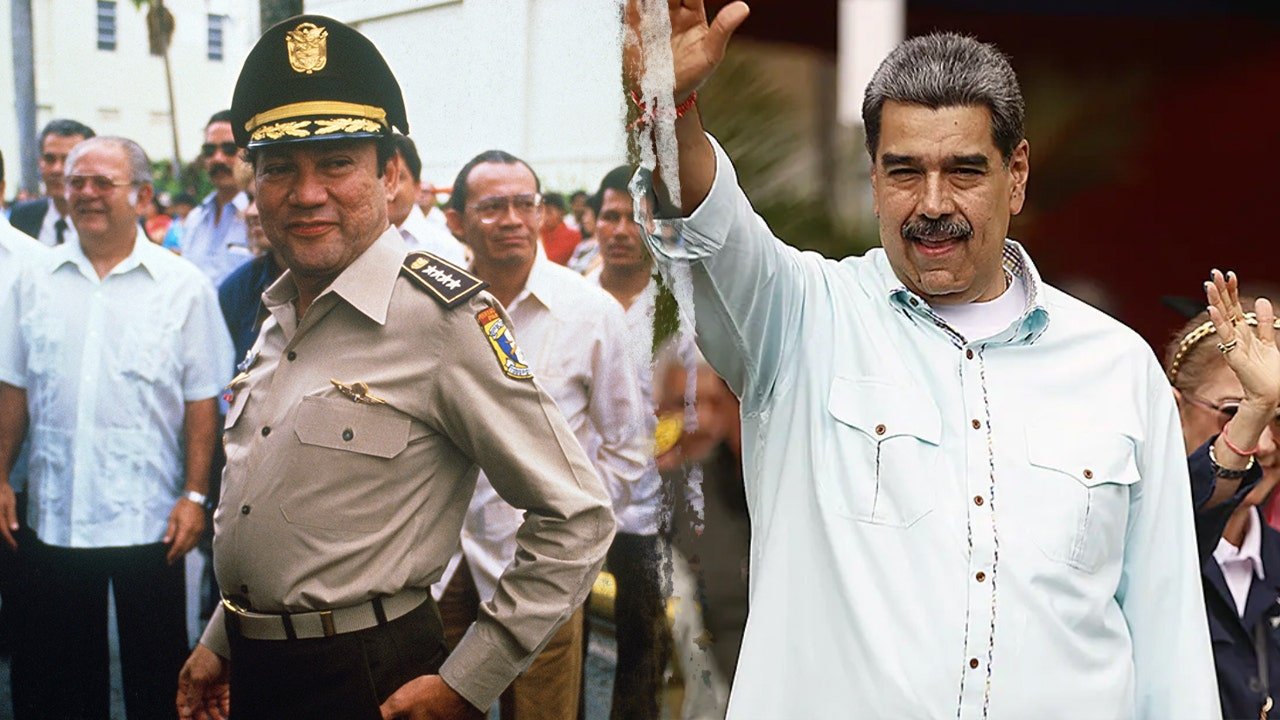
His lawyers won’t be the first to try to advance that argument in court. In fact, Maduro’s case bears some notable (if early) parallels to the U.S. invasion of another Latin American country, 36 years prior, in which 26,000 U.S. troops descended into Panama to arrest the country’s authoritarian leader, Manuel Noriega, and bring him to the U.S. to be tried on federal criminal charges in Miami. The U.S. arrest of Noriega, dubbed Operation «Just Cause,» could be used as a playbook of sorts for prosecutors as they present their case against Maduro and his wife in the Southern District in New York.
Here are some of the biggest similarities, and differences, between the two cases.
DEFIANT MADURO DECLARES HE IS A ‘PRISONER OF WAR’ IN FIRST US COURT APPEARANCE
Captured Venezuelan leader Nicolás Maduro and his wife, Cilia Flores, appear with their attorneys Barry Pollack and Mark Donnelly at their arraignment in a federal court in New York City on Monday, Jan. 5, 2026. (Jane Rosenberg)
SIMILARITIES
On Dec. 20, 1989, under then-President George H.W. Bush, U.S. forces launched a surprise invasion of Panama that resulted in Noriega’s arrest nearly two weeks later.
Like Maduro, Noriega’s lawyers centered their case on the argument that he was arrested illegally by U.S. troops in his home country, and that as a foreign leader, he could not be criminally charged in other countries.
But Maduro’s argument here could be stronger than the Panamanian strongman. That’s because Noriega was never formally elected to lead Panama – instead, he was in charge of the country’s military, and leveraged power via «shadow» or puppet presidents that he installed.
Maduro’s argument that he is a foreign sovereign is likely to be rebuffed by prosecutors, since the U.S. and other democratic countries do not recognize his «victory» in the 2024 presidential election as legitimate.
Still, Maduro’s actions could warrant a higher level of scrutiny, since he was at one time the recognized, legitimate leader of Venezuela. How, or to what degree, this will factor into Maduro’s case remains unclear.
MADURO MET CHINESE ENVOY HOURS BEFORE US CAPTURE FROM CARACAS AS BEIJING SLAMS OPERATION
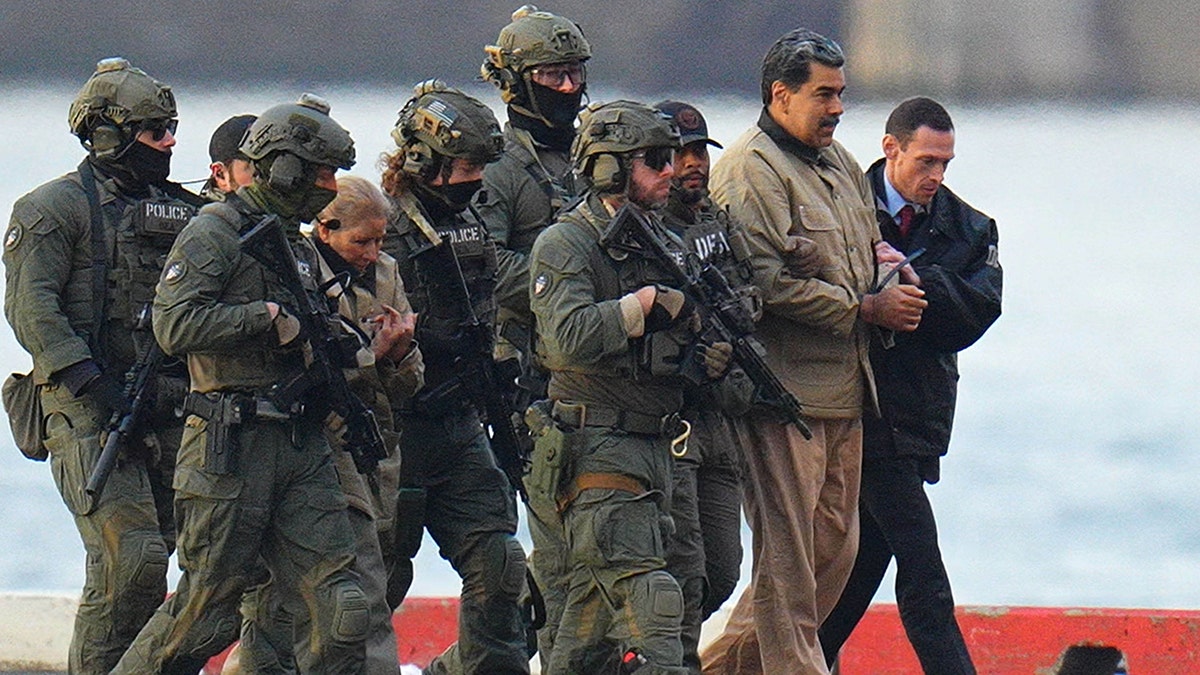
Nicolás Maduro and his wife, Cilia Flores, are seen in handcuffs as they make their way into an armored car en route to a U.S. courthouse in Manhattan on Jan. 5, 2026, in New York City. (XNY/Star Max/GC Images)
DRUG CHARGES
Like Maduro, Noriega was a Latin American strongman whose country held significant strategic assets for the U.S. and others in the region. Both arrests came as drug trafficking – and the flow of drugs into the U.S. – had taken on outsize importance, including in the late 1980s under then-President George H.W. Bush and now under the Trump administration, said Will Freeman, a fellow for Latin America studies at the Council on Foreign Relations (CFR).
Both Noriega and Maduro are accused of participating in large-scale drug smuggling operations in their respective countries, according to copies of both criminal indictments reviewed by Fox News Digital.
Noriega was charged with conspiring with drug traffickers to funnel cocaine into the U.S., among other things. Maduro is accused of heading up a corrupt and illegitimate government that the indictment against him says has «leveraged government power to protect and promote illegal activity,» including drug activity, for decades, according to the newly unsealed criminal indictment. It also alleges that he used his post to help run «state-sponsored gangs» such as Tren de Aragua (TdA).
«The defendants, together and with others, engaged in a relentless campaign of cocaine trafficking throughout the time period charged in this superseding indictment, resulting in the distribution of thousands of tons of cocaine to the United States,» federal prosecutors said in Maduro’s indictment.
One similarity underpinning the arrests of both Latin American leaders was a heightened domestic focus on cracking down on drug trafficking. In the run-up to Maduro’s arrest, and Noriega’s some three decades prior, drug trafficking «had become this very salient issue for the U.S. public,» Freeman told Fox News Digital in an interview.
«First, because of the crack cocaine epidemic,» under the H.W. Bush administration, «and now, with the fentanyl epidemic.»
«There was this focus, or need, to legitimately find out who in the region was in some sense an accomplice in both cases,» he added.
MADURO-BACKED TDA GANG’S EXPANSION INTO US CITIES EMERGES AS KEY FOCUS OF SWEEPING DOJ INDICTMENT
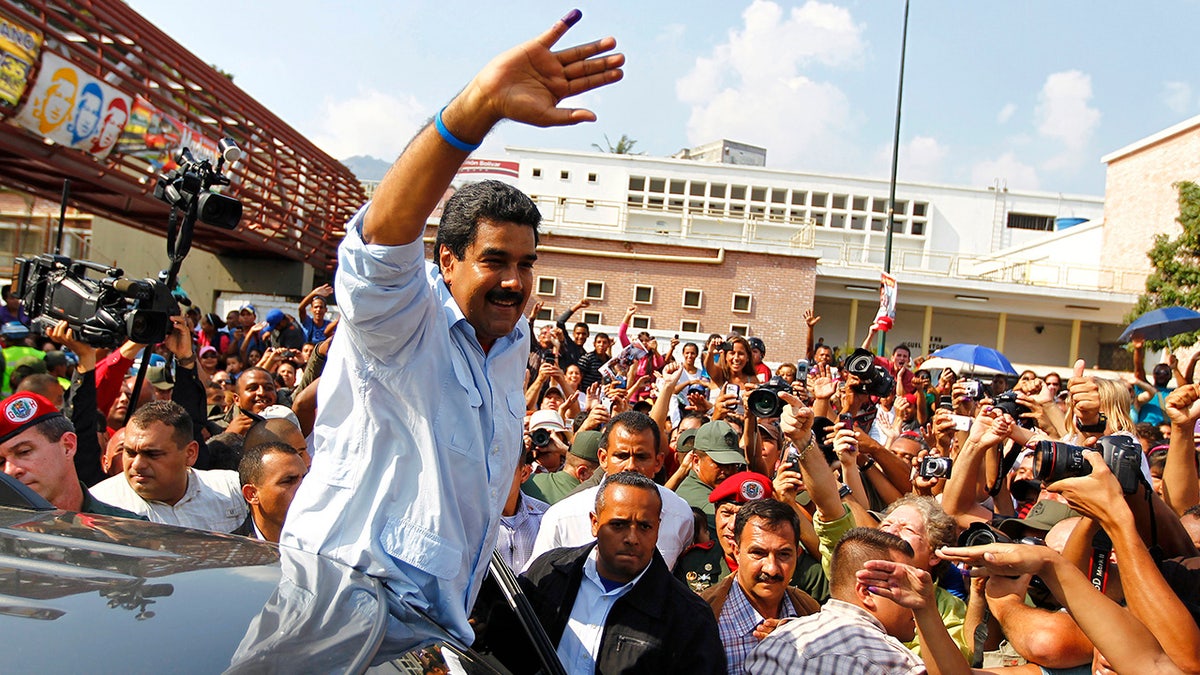
Acting Venezuelan President Nicolás Maduro waves to supporters as he leaves after voting for the successor to the late President Hugo Chavez, in Caracas on April 14, 2013. (Carlos Garcia Rawlins/Reuters)
STRATEGIC ASSETS
In Noriega’s case, it was the Panama Canal, the geographically strategic and economically vital waypoint that currently accounts for some 40% of U.S. container ship traffic, or some $270 billion in cargo annually.
Noriega at the time had signaled that the government «might do something to disrupt the canal, or let other actors do that,» said Freeman, the Latin American fellow for the Council on Foreign Relations,.
Venezuela, of course, is home to vast oilfields that are believed to be crucial to meeting the projected demand forecasts for the years ahead.
Venezuela has the largest amount of oil reserves compared to any other country in the world, experts noted – making it a strategically crucial location in the coming years, despite the significant investments needed in infrastructure before its fields can produce.
Perhaps the most important distinction between the two cases is the fact that in Panama, the «Just Cause» operation that resulted in Noriega’s arrest was carried out after the Panamanian general assembly had already formally declared war against the U.S., as Georgetown law professor Steve Vladeck noted in his Substack newsletter.
A U.S. Marine «had been shot and killed before President George H.W. Bush authorized the underlying operation,» Vladeck said, a point noted by Freeman, as well.
«The tougher nuts for prosecutors to crack will be Maduro’s arguments that he’s entitled to some kind of immunity,» Vladeck continued: «Whether because he was Venezuela’s ‘head of state’ or because, even if he wasn’t, his alleged crimes all arise from official acts conducted with governmental authority.»
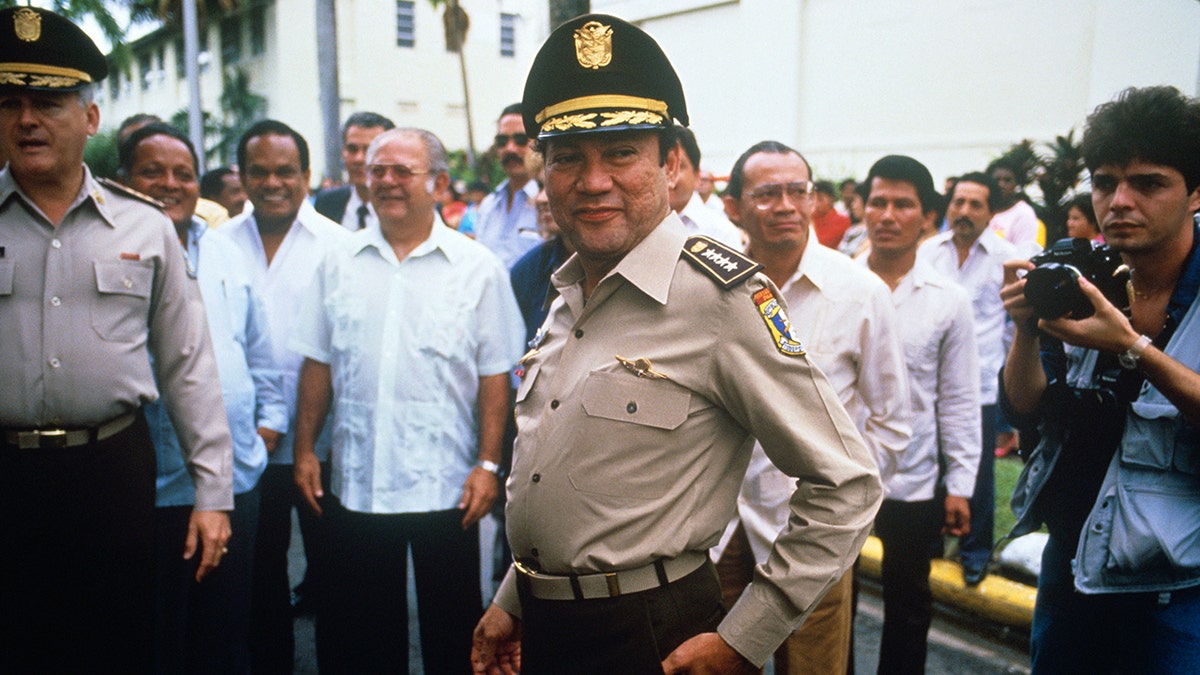
Panamanian dictator Manuel Noriega at a ceremony commemorating the death of the national hero, Omar Torrijo, in Panama City. (Bill Gentile/CORBIS/Corbis via Getty Images)
LEGAL JUSTIFICATION
Still, prosecutors could enjoy a wider degree of latitude in Maduro’s case, in yet another echo of Noriega’s trial. Noriega was convicted in the U.S. on eight of the 10 charges brought against him in his April 1992 criminal trial, and sentenced to serve 17 years in prison. He was extradited to France for money laundering convictions, and then again to Panama, in 2011, where he was sentenced to 60 years in prison. (Noriega died in 2017.)
Then-Assistant U.S. Attorney General Bill Barr had authored a memo in 1989 that argued that a president has the «inherent constitutional authority» to order the FBI take people into custody on foreign soil. It was published months before Noriega’s arrest, and was crucial for prosecutors in defending against some of the claims from his defense attorneys and arguing the legitimacy of their case.
The same memo could be referenced by prosecutors in Maduro’s case as well, should they face any hurdles in arguing his arrest was legitimate.
Another key issue that weighed in Noriega’s favor is the ability for the U.S. courts to even consider the legality of the invasion. In Noriega’s case, the federal courts «refused to consider the legality of the invasion itself,» Clark Neily, the senior vice president for legal studies at the CATO Institute, said in a post published on the site after Maduro’s capture.
«Federal courts held that the manner in which a defendant is brought before a US court – even by force, even from foreign soil – does not defeat criminal jurisdiction,» Neily said.
In Panama, a more «classic national security type [of observer] or a realist could say, ‘Okay, there’s a reason that stability and having influence in Panama is extremely important to us,’» Freeman said.
In Venezuela, the through-line between the country’s actions and the harm to U.S. interests is slightly less clear, he said, prompting some to question why the U.S. is getting so involved.
This has been the position taken by at least two Republicans, including Rep. Thomas Massie, R-Ky., and Rep. Marjorie Taylor Greene, R-Ga., two outspoken Trump critics.
Massie, who has broken with Trump on several notable recent occasions, appeared more skeptical of the criminal charges the U.S. used in justifying Maduro’s arrest, noting on social media that the 25-page indictment made «no mention of fentanyl or stolen oil» cited by President Donald Trump.
CLICK HERE TO DOWNLOAD THE FOX NEWS APP
Greene also criticized the operation, noting, «this is what many in MAGA thought they voted to end.»
venezuelan political crisis,donald trump,narco terror,politics,us,immigration,white house





INTERNACIONAL
Trump trounces Biden energy records in just months as admin celebrates 1 year of ‘historic gains’: data
NEWYou can now listen to Fox News articles!
FIRST ON FOX: The White House on Saturday marked the one-year anniversary of President Donald Trump’s National Energy Dominance Council by drawing a sharp contrast with the Biden-era, including Interior Secretary Doug Burgum citing higher production and lower gas prices as proof of «real savings» for Americans.
«Under the President’s leadership and through the Council’s relentless execution, we have delivered historic gains in energy production, affordability, and security,» Interior Secretary Doug Burgum, chair of the National Energy Dominance Council, told Fox News Digital.
«Gasoline prices have fallen to some of the lowest levels in years, permitting has been streamlined, and American energy exports are surging,» he added. «These achievements are not abstract, they mean real savings for families, farmers, and small businesses, and they are strengthening our position on the world stage.»
Trump signed an executive order creating the National Energy Dominance Council on Feb. 14, 2025, which was tasked with cutting red tape and coordinating agencies to boost U.S. energy production, speed up permitting approvals, expand exports and deliver a national «energy dominance» strategy.
TRUMP DIRECTS MILITARY TO STRIKE NEW DEALS WITH COAL-FIRED POWER PLANTS: ‘GOING TO BE BUYING A LOT OF COAL’
Energy Secretary Chris Wright, left, and Interior Secretary Doug Burgum, right. (Costas Baltas/Getty Images)
A year later, the administration pointed to a series of metrics showing the U.S. has accelerated past Biden-era data on production — while driving down energy costs that ripple through household budgets, from gas and heating to shipping and groceries.
U.S. crude oil production, for example, reached a record 13.6 million barrels per day in 2025, with the White House calling it the highest output of any country in the world. In comparison, the Biden administration took four years for production to climb from 11.3 million to 13.2 million barrels per day, a figure «Trump blew past in months,» according to the White House.
On the natural gas production front, the administration said the U.S. produced 110.1 billion cubic feet per day in November 2025, the highest level recorded since federal tracking began in 1973. All in, production is about 8% above the Biden-era average, and 4% above the previous record for U.S. natural gas production, according to the data.
TRUMP ADMIN TO REPEAL OBAMA-ERA GREENHOUSE GAS FINDING IN LARGE-SCALE DEREGULATION
While the U.S. has also widened its lead as the world’s top liquefied natural gas (LNG) exporter, with average LNG exports rising to 15 billion cubic feet per day in 2025, up from 11 under the Biden administration.
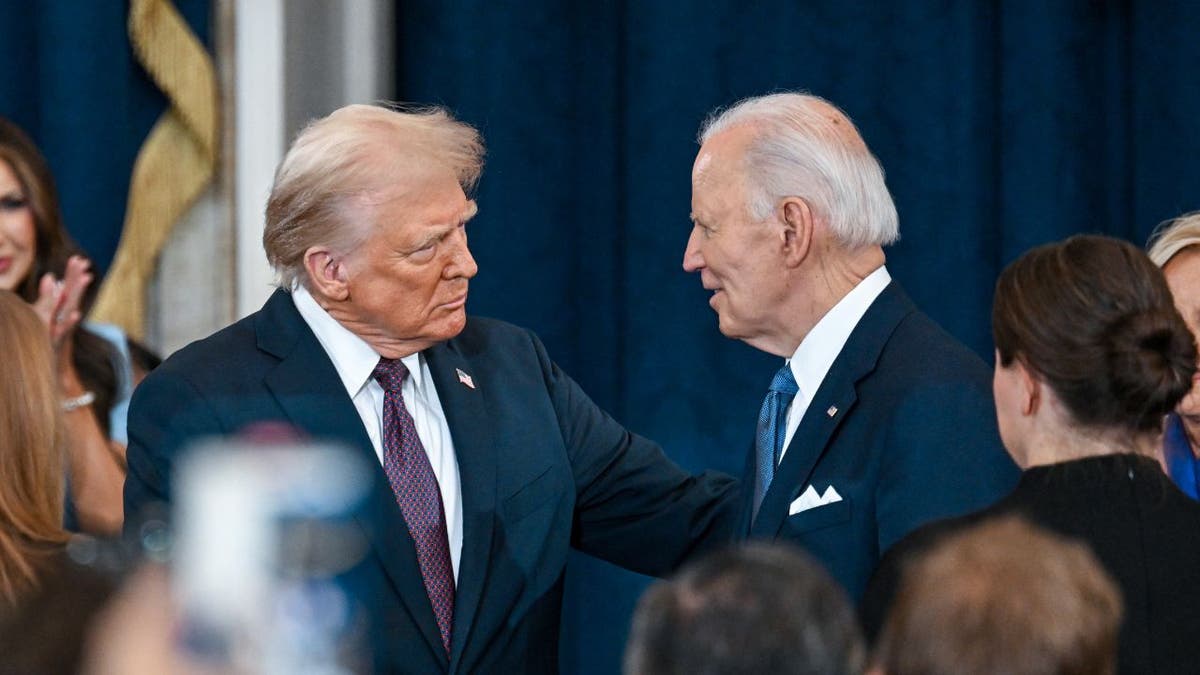
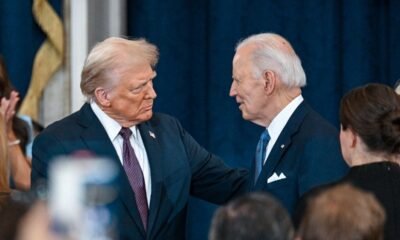
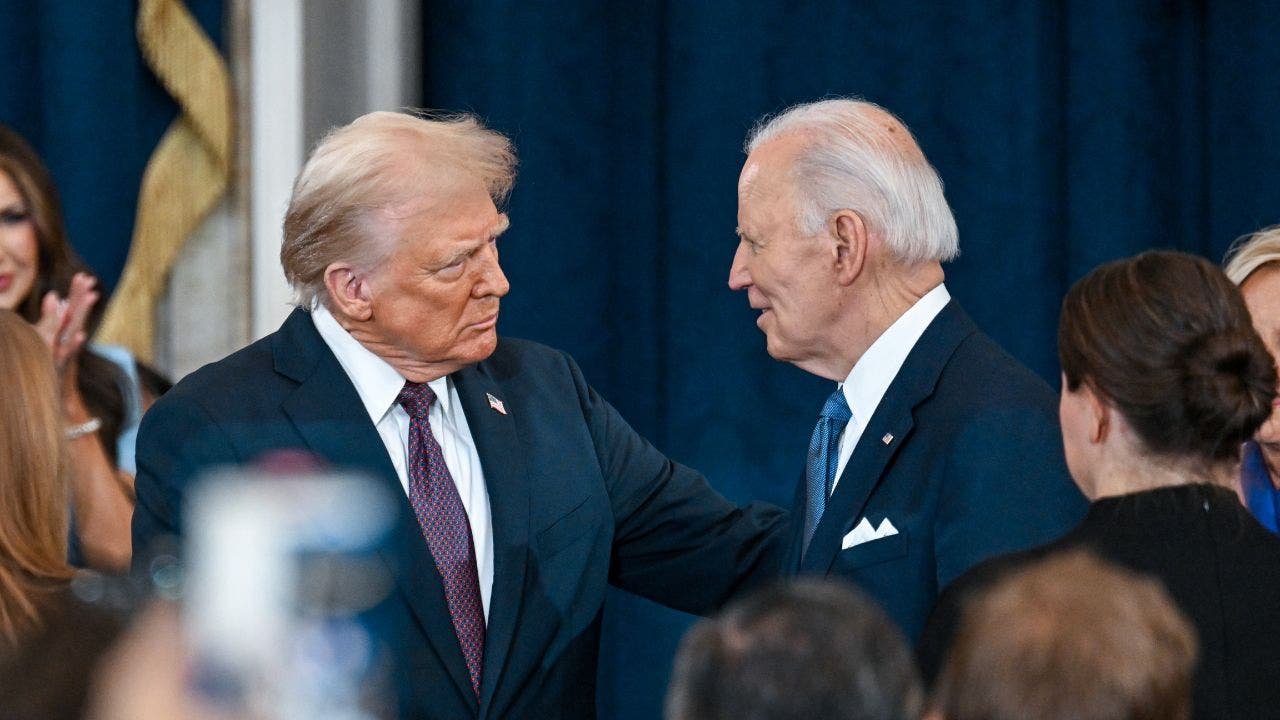
Then-President-elect Donald Trump shakes hands with then-President Joe Biden at Trump’s inauguration in the Capitol Rotunda Jan. 20, 2025, in Washington. (Kenny Holston-Pool/Getty Images)
«As we mark this anniversary, we reaffirm our commitment to advancing American Energy Dominance and ensuring that our nation’s energy abundance continues to power prosperity, security, and freedom for generations to come,» Burgum added in a comment to Fox News Digital.
TRUMP TO HOST ‘CLEAN BEAUTIFUL COAL’ EVENT, CALLS IT AMERICA’S MOST RELIABLE ENERGY
Lowering prices through an expanded energy grid was crucial to the executive order establishing the council itself, calling for «reliable and affordable energy production to drive down inflation, grow our economy, create good-paying jobs.»
Energy has emerged as a key piece of the administration’s puzzle of addressing affordability concerns stemming from the Biden era when inflation hit a 40-year-high, as cheaper energy typically ripples through the economy by cutting transportation and shipping costs and lowering the power bills factories pay to make everything from groceries to building materials.
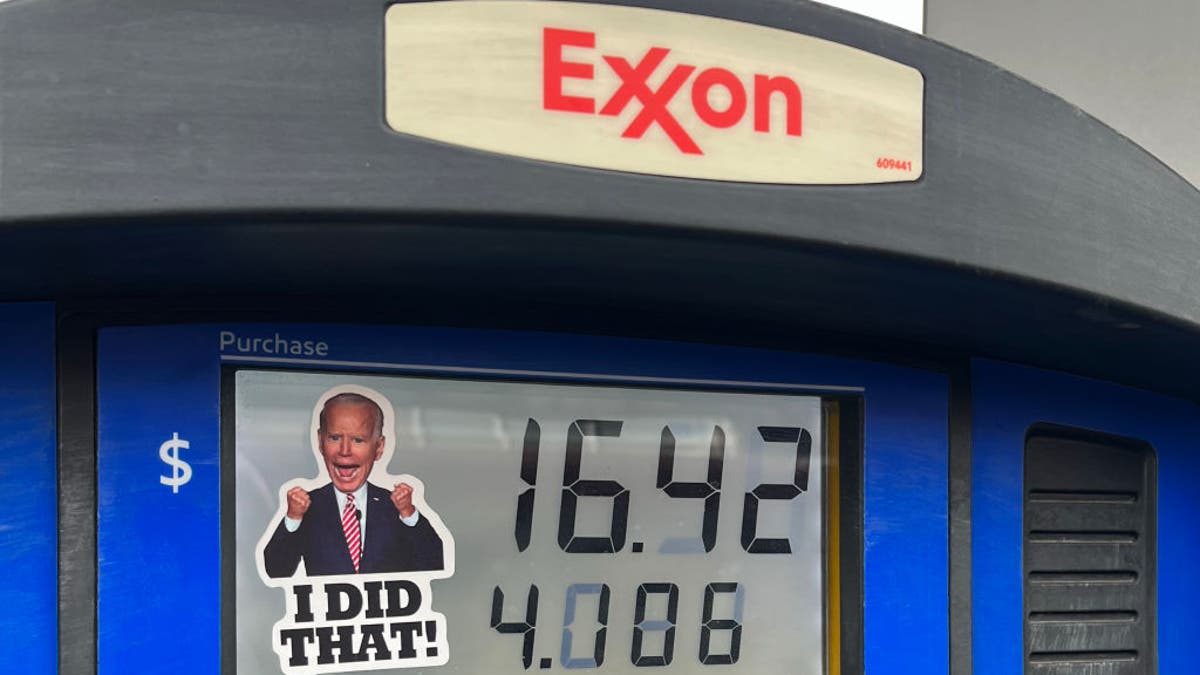
A sticker of President Joe Biden is placed on a gas pump at an Exxon Station on March 9, 2022, in Lakewood, Colorado. (RJ Sangosti/MediaNews Group/The Denver Post via Getty Images)
The White House cast cheaper gas as a kitchen-table win this year, touting pump prices are about $2.90 a gallon, which is 16% below the Biden-era average and a roughly 42% drop from the $5.02 peak in June 2022. The administration celebrated that affordable energy benefits Americans from working families and rural communities, to small businesses and farmers who typically frequently drive farther for gas or those on a budget.
Crude oil prices have fallen by roughly 18% in 2025, dropping to $65 a barrel from the $79 Biden-era average, according to the data.
Environmental groups have meanwhile slammed Trump’s «energy dominance» push as a fossil-fuel expansion that undercuts climate goals and could increase pollution and impacts on public lands and communities.
CLICK HERE TO GET THE FOX NEWS APP
«One year ago, President Donald J. Trump launched the National Energy Dominance Council to restore America’s Energy Dominance and make life more affordable for hardworking families. Today, the results speak for themselves,» Burgum said of the data.
energy in america,energy,donald trump,white house,politics
INTERNACIONAL
Estados Unidos reclama una Europa fuerte pero subordinada a la visión y liderazgo de Donald Trump

Marco Rubio no es JD Vance ni Donald Trump. Rubio no insulta al hablar y no desvaría. Rubio mantiene un decoro diplomático en público que ya es poco habitual en la Administración Trump. El discurso del jefe de la diplomacia estadounidense este sábado en la Conferencia de Seguridad de Múnich se esperaba con expectativas después de que el año pasado el vicepresidente JD Vance se dedicara a insultar a los dirigentes europeos y a defender a partidos políticos neofascistas.
Pero el guante de seda de Rubio esconde el mismo puño de acero. Su discurso, conciliador en las formas, fue prácticamente igual en el fondo e ideológicamente muy alejado del consenso europeo hasta el punto de que Rubio parece extrañar una suerte de imperialismo occidental que Europa dejó atrás con las guerras mundiales hace casi un siglo.
Rubio empezó conciliando: “No buscamos separarnos, sino revitalizar una vieja amistad y renovar la mayor civilización de la historia humana”. Pero Rubio choca de frente con los europeos. Para ellos, el viejo orden mundial que dan por muerto a su pesar, como hizo el viernes el alemán Friedrich Merz, es un orden mundial de reglas y multilateralismo, el orden mundial de los organismos de Naciones Unidas. Rubio habla de un orden “civilizatorio” compatible por igual con democracias y con dictaduras.
Rubio parece tratar a los europeos como a niños a los que debe devolver al camino de la rectitud. Su mensaje les dice que se equivocan luchando contra la crisis climática y les repite el argumento (falso en los datos) de las extremas derechas de que están permitiendo que se reemplace a la población europea blanca y cristiana por poblaciones árabes y negras de credo musulmán: “La migración masiva no es ni fue algo de escasas consecuencias, ya que está transformando y desestabilizando sociedades en todo Occidente”.
Sin migraciones (y los datos no justifican hablar de masivas porque en Europa no entra al año ni el equivalente al 0,5% de la población europea) Europa ya estaría perdiendo población. “En la búsqueda de un mundo sin fronteras, abrimos nuestras puertas a una ola de migración masiva sin precedentes (en realidad en Europa y en Estados Unidos hubo movimientos migratorios mucho mayores en el siglo XIX y principios del XX) que amenaza la cohesión de nuestras sociedades, la continuidad de nuestra cultura y el futuro de nuestros pueblos”.
La transición energética europea parece molestar especialmente en Washington, a pesar de que son los países que más rápido van en el cambio a las renovables (los escandinavos o España) los que más barata tienen la electricidad, tanto industrial como para las familias. Rubio dijo que “para apaciguar el culto al clima (como si fuera una realidad falsa la crisis climática), nos hemos impuesto políticas energéticas que empobrecen a nuestra gente”.
El discurso de Rubio es más sofisticado que los de Donald Trump y JD Vance, pero es en el fondo el mismo discurso. No es Churchill ni Barack Obama, pero el nivel de los últimos discursos estadounidenses era tal que Rubio parece un estadista. Lo dice de otras formas, pero dice lo mismo: Estados Unidos seguirá apoyando a las extremas derechas europeas y trabajando para debilitar a la Unión Europea, a la que considera origen de todos los males.
Rubio habla de Occidente, pero se refiere a Europa cuando dice que tras las guerras mundiales se fue hacia una “peligrosa ilusión” y hacia “un orden global basado en reglas que reemplazarían al interés nacional y que viviríamos en un mundo sin fronteras, donde todos se convertirían en ciudadanos del mundo. Esta fue una idea absurda”.
Es precisamente la idea en la base de la construcción política de la Unión Europea. Eliminar fronteras, compartir moneda y algunas Fuerzas Armadas, elementos esenciales de soberanía, y compartir ciudadanía para hacer imposible otra guerra europea.
La bronca siguió: “Subcontratamos cada vez más nuestra soberanía a instituciones internacionales, mientras muchas naciones invirtieron en enormes estados de bienestar a costa de su capacidad de defensa”.
El mensaje es: Europa debe ser nuestra aliada, pero según los términos que dicte el presidente Trump. Estados Unidos seguirá comprometido con la OTAN, pero según cómo dicte el presidente Trump. Los intereses e ideas de los europeos no tienen ninguna importancia en la nueva relación que propone Rubio en Múnich. El secretario de Estado fue cristalino al explicarlo: “Con el presidente Trump, Estados Unidos asumirá una vez más la tarea de renovación y restauración, y aunque estamos preparados, si es necesario, para hacerlo solos, es nuestra preferencia y es nuestra esperanza hacerlo con ustedes, nuestros amigos aquí en Europa”.
Por primera vez en un siglo, una Administración estadounidense no dice que le une a Europa la defensa de los valores liberales de la democracia y los derechos humanos, sino “una historia compartida, fue cristiana, cultura, herencia, idioma, ascendencia y los sacrificios que nuestros antepasados hicieron juntos por la civilización común de la que hemos heredado”.
Europa debe ser nuestra aliada, repite Rubio, pero deja claro que lo será al dictado de Donald Trump, no como una relación entre iguales.
Rubio cerró criticando a quienes criticaron por ilegal la intervención en Venezuela porque violaba la legalidad internacional: “Esta es la vía en la que el presidente Trump y Estados Unidos se han embarcado. Es la vía a la que pedimos que los europeos se unan”. Vasallos, no aliados.
INTERNACIONAL
Rubio blasts ‘world without borders’ fantasy, warns mass migration threatens Western civilization

NEWYou can now listen to Fox News articles!
U.S. Secretary of State Marco Rubio on Saturday blasted the idea of a «world without borders,» warning European leaders that unchecked mass migration is destabilizing Western civilization and eroding national sovereignty.
Speaking at the annual Munich Security Conference, Rubio criticized the post-Cold War belief that the world had reached the «end of history» — an era in which liberal democracy would spread, and national borders would fade — calling it a «dangerous delusion.»
«This was a foolish idea that ignored both human nature, and it ignored the lessons of over 5000 years of recorded human history, and it has cost us dearly,» Rubio said.
Rubio stressed that border security is not rooted in exclusion, but in responsibility.
TRUMP PLEDGES TO REASSERT MONROE DOCTRINE TO RESTORE AMERICAN POWER
U.S. Secretary of State Marco Rubio delivers a keynote speech at the 62nd Munich Security Conference on Feb. 14, 2026 in Munich, Germany. (Johannes Simon/Getty Images)
«We must also gain control of our national borders, controlling who and how many people enter our countries,» he said. «This is not an expression of xenophobia. It is not hate. It is a fundamental act of national sovereignty.»
Failing to do so, Rubio warned, is «not just an abdication of one of our most basic duties owed to our people — it is an urgent threat to the fabric of our societies and the survival of our civilization itself.»
The U.S. top diplomat added that lax enforcement threatens «the cohesion of our societies, the continuity of our culture, and the future of our people.»
Rubio’s remarks come amid mounting political tensions in both Europe and the U.S. over migration, asylum policy and border security.
RUBIO STEPS INTO MUNICH SPOTLIGHT AS TRUMP LEANS ON HIM TO CARRY VANCE’S POPULIST MESSAGE ABROAD
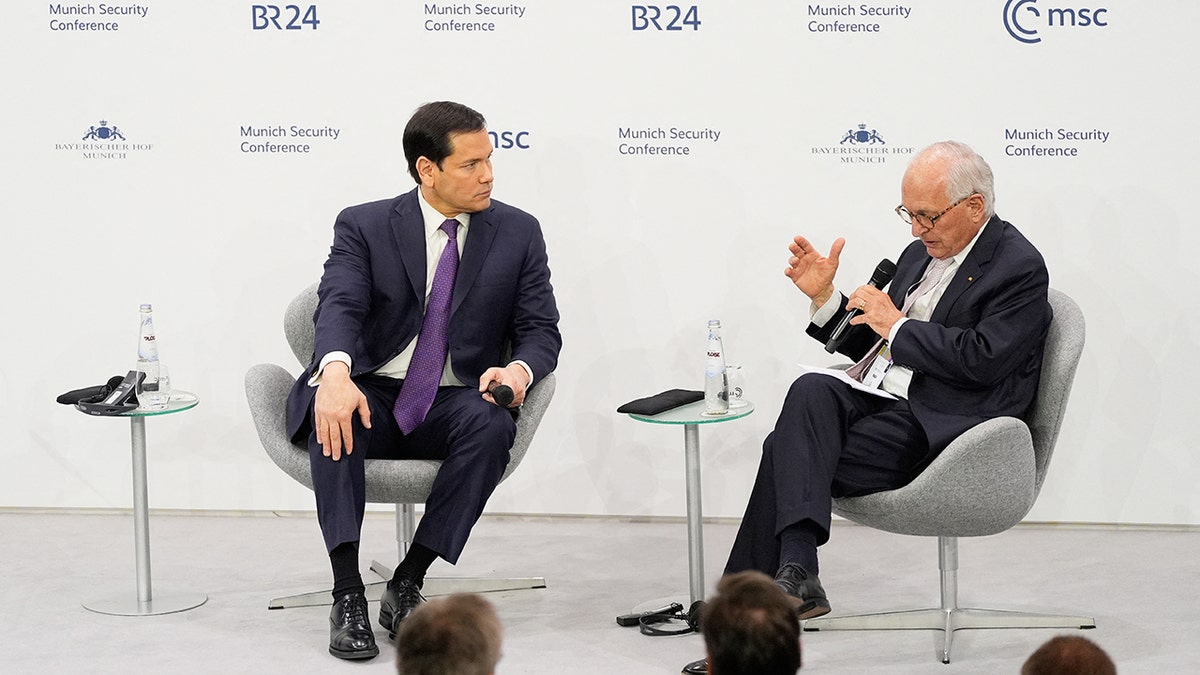
Secretary of State Marco Rubio listens to German diplomat and Munich Security Conference Chairman Wolfgang Ischinger at the Munich Security Conference on Feb. 14, 2026, in Munich, Germany. (Alex Brandon / POOL / AFP via Getty Images)
Outlining America’s direction under President Donald Trump, Rubio said the U.S. seeks to rebuild its alliance with Europe on stronger footing.
«We want allies who can defend themselves so that no adversary will ever be tempted to test our collective strength,» he said. «This is why we do not want our allies to be shackled by guilt and shame. We want allies who are proud of their culture and of their heritage, who understand that we are heirs to the same great and noble civilization, and who, together with us, are willing and able to defend it.»
«We in America have no interest in being polite and orderly caretakers of the West’s managed decline,» Rubio said. «We do not seek to separate, but to revitalize an old friendship and renew the greatest civilization in human history.»
RUBIO WARNS NATO ALLIES US IS ‘NOT SIMPLY FOCUSED ON EUROPE,’ DOESN’T HAVE UNLIMITED RESOURCES

U.S. Secretary of State Marco Rubio speaks, next to Munich Security Conference chairman Wolfgang Ischinger, in Munich, Germany, Feb. 14, 2026. (Alex Brandon/Pool via REUTERS)
The secretary said the U.S. seeks an alliance «ready to defend our people, to safeguard our interests, and to preserve the freedom of action that allows us to shape our own destiny, not one that exists to operate a global welfare state and atone for the purported sins of past generations.»
Rubio reminded attendees that America’s ties to Europe stretch back centuries, saying the U.S. will remain permanently linked to the continent.
CLICK HERE TO DOWNLOAD THE FOX NEWS APP
«What we have inherited together is something that is unique and distinctive and irreplaceable,» Rubio said. «Acting together in this way, we will not just help recover a sane foreign policy, it will restore to us a clear sense of ourselves. It will restore a place in the world, and in so doing, it will rebuke and deter the forces of civilizational erasure that today menace both America and Europe alike.»
Marco Rubio could not be immediately reached by Fox News Digital for comment.
world,marco rubio,world politics,europe,immigration

Mario Tennis Fever y este descuento en Disney Dreamlight Valley, lo más descargado en la eShop de Nintendo Switch 2 / Nintendo Switch ahora mismo (14/2/26) – Nintenderos

Causa por desvío de fondos: la Justicia sospecha que al menos US$50 millones de la AFA nunca llegaron a los clubes

Empresarios industriales presentan a Caputo iniciativas para reactivar el consumo interno

Dibu Martínez debió entrar en Aston Villa por la insólita expulsión de Bizot: sufrió tres goles en 27 minutos y quedaron eliminados de la FA Cup

La China Suárez y Mauro Icardi festejaron su segundo San Valentín juntos: “Te celebro todos los días”

La encuesta que revela la fortaleza de los hermanos Milei: qué lugar ocupan políticos y empresarios

A quién afecta la Reforma laboral: estos son los puntos clave del proyecto de Milei

El emotivo homenaje a Luis Brandoni que hizo romper en llanto al espectáculo argentino

Jornada financiera: el dólar cayó a un mínimo en casi tres meses y subieron las acciones argentinas en Wall Street

Reforma laboral: la modificación sobre accidentes o enfermedades ajenas al trabajo

 POLITICA2 días ago
A quién afecta la Reforma laboral: estos son los puntos clave del proyecto de Milei
- POLITICA2 días ago
Reforma laboral: la modificación sobre accidentes o enfermedades ajenas al trabajo
- ECONOMIA2 días ago
Cayeron 20% las ventas de automóviles en China y el régimen impone medidas para regular el mercado