INTERNACIONAL
Trump se reunió con Ahmad al-Sharaa, el nuevo líder de Siria, en medio de su gira por el Golfo Pérsico

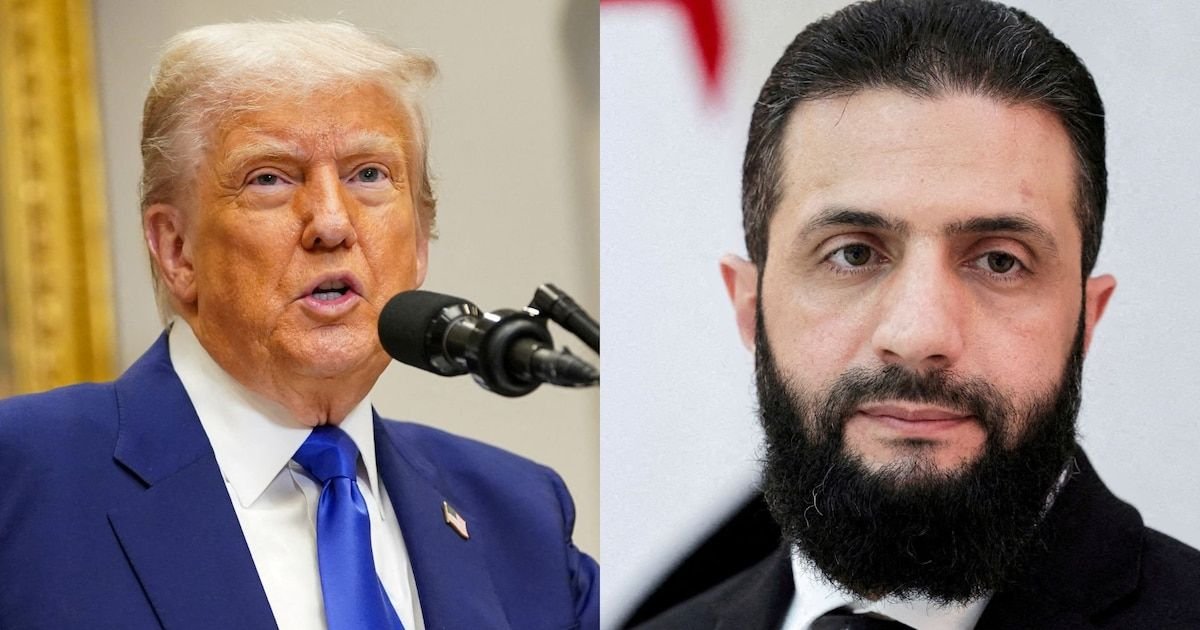
Donald Trump mantuvo este miércoles un encuentro histórico con el presidente de Siria, Ahmad al-Sharaa, en la que fue la primera reunión de alto nivel entre líderes de ambos países en 25 años.
El cara a cara tuvo lugar en Riad (Arabia Saudita), al margen de la cumbre entre Trump y los jefes de Estado del Consejo de Cooperación del Golfo, y supone un giro significativo en la política exterior de Washington hacia un país devastado por más de una década de guerra civil.
Trump, que había expresado su intención de dejar atrás las “guerras eternas” de Estados Unidos en Oriente Medio, anunció antes del encuentro que su administración levantará las sanciones económicas impuestas sobre Damasco desde hace décadas.
La decisión fue recibida con júbilo por miles de ciudadanos sirios que celebraron la noticia en las calles de la capital con fuegos artificiales, bocinazos y banderas.
“Eliminamos las sanciones para darle a Siria una oportunidad de paz bajo el liderazgo de al-Sharaa”, afirmó Trump.

Aunque el encuentro se realizó a puertas cerradas y sin acceso a periodistas, la Casa Blanca confirmó que el republicano “acordó saludar” al nuevo mandatario sirio durante su visita oficial a Arabia Saudí.
En la reunión, el presidente turco, Recep Tayyip Erdogan, participó vía videoconferencia, informó la agencia de noticias estatal Anadolu. En la conversación, Erdogan elogió la decisión de Trump de levantar las sanciones sirias como una de importancia histórica, dijo la agencia.
La figura de Ahmad al-Sharaa es fundamental para comprender el contexto de esta reunión. Al-Sharaa, que adoptó el nombre de guerra Abu Mohammed al-Golani, se unió a las filas de los insurgentes de Al Qaeda durante la invasión de Irak por parte de Estados Unidos en 2003. Posteriormente, se vinculó al Frente Nusra, una rama de Al Qaeda en Siria, antes de desvincularse de la organización y crear su propio grupo, Hayat Tahrir al-Sham (HTS).
El grupo de al-Sharaa ha sido responsable de importantes ofensivas contra las fuerzas del gobierno sirio y sus aliados. En 2019, HTS lideró una ofensiva sorpresa que permitió a los insurgentes tomar el control de Damasco, terminando con más de medio siglo de gobierno de la familia Assad. Sin embargo, a pesar de sus vínculos con Al Qaeda, al-Sharaa ha intentado distanciarse de la organización y ha renegado de su antigua afiliación.

El acercamiento de Trump a al-Sharaa es el resultado de un largo proceso de evaluación de la situación en Siria. Aunque las sanciones contra Siria se mantuvieron durante la administración de Trump, así como bajo el gobierno de su predecesor, Joe Biden, las tensiones en la región y los cambios políticos han llevado a los Estados Unidos a reconsiderar su postura. Trump ha expresado que confía en que al-Sharaa pueda ayudar a estabilizar el país, a pesar de sus antecedentes y las dudas que persisten sobre su relación con grupos extremistas.
Las sanciones impuestas a Siria, que datan de 2011, fueron parte de una estrategia para presionar al régimen de Bashar al-Assad. Estas sanciones se han mantenido a lo largo de los años, incluso después de la caída de Assad en diciembre de 2023, y han buscado afectar gravemente a la economía del país. Sin embargo, la administración de Trump ha dejado claro que las sanciones se levantarían si se establece un nuevo gobierno que sea capaz de garantizar la paz en la región.

“Hay un nuevo gobierno que, con suerte, logrará estabilizar el país y mantener la paz”, dijo Trump, sugiriendo que la situación en Siria podría cambiar si se produce una transición de poder en el país.
El presidente estadounidense, en un esfuerzo por promover la estabilidad en la región, expresó su disposición a levantar las sanciones, lo que podría abrir la puerta a una reconstrucción económica y a un proceso de paz más efectivo.
La gira de Trump por Oriente Medio no solo incluye reuniones con al-Sharaa en Arabia Saudí, sino que también lo llevará a Qatar, un aliado estratégico de Estados Unidos en la región.
Qatar, un pequeño, pero influyente estado del Golfo Pérsico, ha sido un jugador clave en la política internacional, especialmente en relación con su mediación en conflictos en Gaza y su papel en las negociaciones con los talibanes en Afganistán.
El emir de Qatar, Tamim bin Hamad Al Thani, ha liderado un país que se ha beneficiado enormemente de sus reservas de gas natural, lo que le ha proporcionado una gran riqueza y un aumento en su influencia global.

Qatar es conocido por su apoyo a diversas facciones islamistas, incluido el respaldo a los Hermanos Musulmanes y a grupos insurgentes en Siria, lo que ha generado tensiones con otros países del Golfo Pérsico, como Arabia Saudí y los Emiratos Árabes Unidos.
Qatar ha estado en el centro de varias controversias internacionales. Ha sido acusado de sobornar a figuras políticas y de estar involucrado en escándalos de corrupción, como el escándalo “Qatar-gate”, que implicó a legisladores europeos y miembros de la FIFA.
A pesar de estos señalamientos, Qatar sigue siendo un actor clave en la diplomacia global y mantiene relaciones cercanas con Estados Unidos, albergando la Base Aérea Al-Udeid, desde donde se coordina una gran parte de las operaciones del Comando Central de las fuerzas armadas estadounidenses.
Un tema polémico que ha surgido en el marco de la gira de Trump es la oferta de Qatar de regalarle un lujoso Boeing 747-8, que podría ser utilizado como el nuevo Air Force One, mientras Boeing construye una versión actualizada del avión presidencial. Esta oferta ha sido recibida con escepticismo por algunos críticos, quienes señalan que aceptar un regalo tan costoso de un gobierno extranjero podría socavar la percepción pública de la integridad de la presidencia de Estados Unidos.

Trump, por su parte, ha defendido la oferta como una propuesta fiscalmente inteligente para los contribuyentes estadounidenses, argumentando que el avión sería “gratis” y que representaría un ahorro significativo en costos.
“¿Por qué debería nuestro ejército, y por lo tanto nuestros contribuyentes, verse obligados a pagar cientos de millones de dólares cuando pueden obtenerlo GRATIS de un país que quiere recompensarnos por un trabajo bien hecho?”, escribió Trump en sus redes sociales.
(Con información de The Associated Press)
Diplomacy / Foreign Policy,Europe,MOSCOW











NEWYou can now listen to Fox News articles!
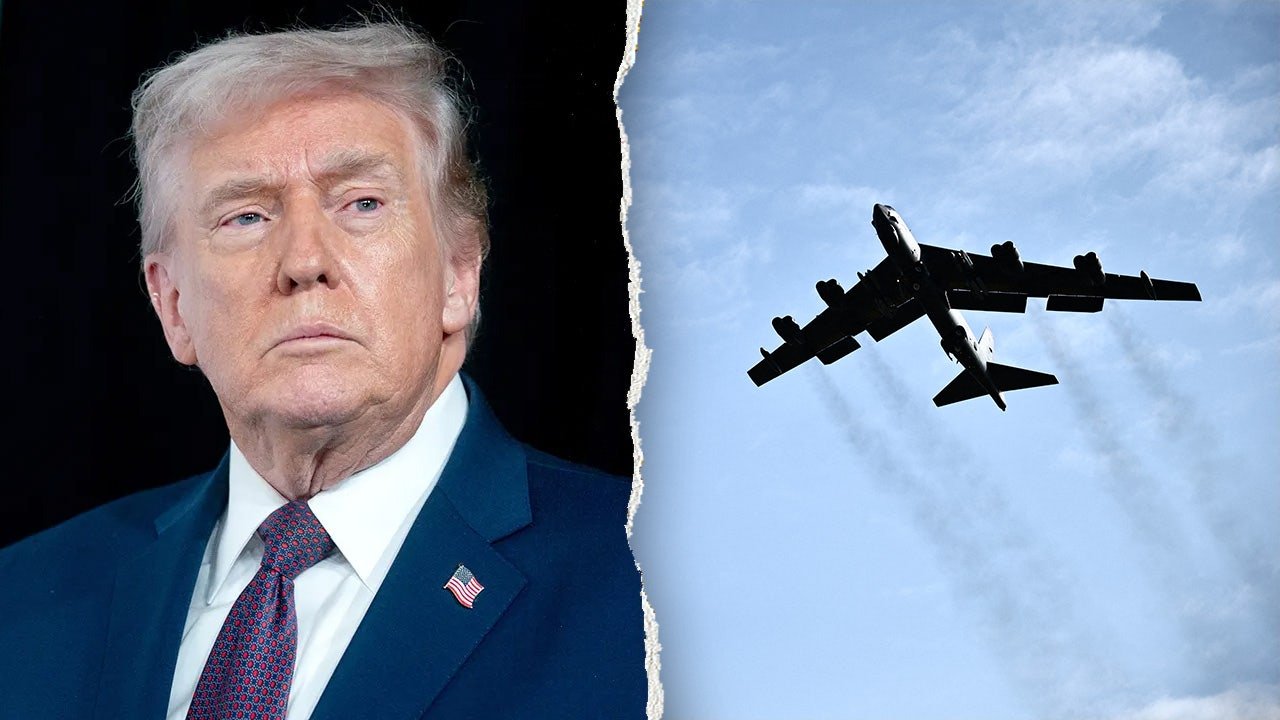
More key European allies are restricting U.S. military access as the Trump administration presses ahead with its war against Iran, with both France and Spain moving to block U.S.-linked aircraft from using their airspace or bases.
France has refused overflight for planes carrying U.S. military supplies to Israel, according to President Donald Trump, marking a rare disruption to routine military coordination between Washington and key European allies.
Their refusals carry operational weight because U.S. bases in Europe are «essential» for supporting Middle East operations, acting as critical staging and transit hubs for military aircraft.
MULTIPLE ALLIES DECLINE US CALLS FOR STRAIT OF HORMUZ SUPPORT AMID RISING MIDDLE EAST TENSIONS
The move marks the latest sign of growing friction between the United States and European allies as President Donald Trump ramps up pressure on NATO partners to support operations tied to the war with Iran.
President Donald Trump and Italian Prime Minister Giorgia Meloni shake hands as they pose for a photo. (Suzanne Plunkett/Pool/Reuters)
According to a Tuesday Reuters report, Italy denied permission for U.S. military aircraft to land at the Sigonella Air Base in Sicily before heading to the Middle East, saying Washington had not sought prior authorization from Rome.
An Italian government statement pushed back on reports of a rupture, saying: «With reference to media reports regarding the use of military bases, the government reiterates that Italy acts in full compliance with existing international agreements and with the policy guidelines set out by the government to parliament.»
«Relations with the United States, in particular, are solid and based on full and loyal cooperation,» the statement added.
A senior U.S. official reinforced Italy’s claim, telling Fox News Digital, «This is false. Italy is currently supportive in providing access, basing and overflight for U.S. forces.»

Spanish Prime Minister Pedro Sánchez. (Darko Bandic/The Associated Press )
Spain on Monday said it had closed its airspace to U.S. planes involved in strikes, going further than its earlier refusal to allow the use of jointly operated bases. Prime Minister Pedro Sánchez has been among the most vocal critics of the U.S. and Israeli campaign.
In remarks before parliament Tuesday, Spain’s defense minister said the government had «prohibited the use of the bases of Rota and Morón» and did not grant flight authorizations «to support operations in Iran.»
The minister stressed the decision was limited specifically to operations linked to Iran and did not signal a broader break with NATO or the United States.
John Hemmings, director of the National Security Centre at the Henry Jackson Society, a London-based foreign policy think tank, told Fox News Digital the decision reflects deeper tensions.
«If one looks at Spain’s refusal to allow U.S. overflight over its airspace or U.S. bases,» Hemmings said, «one could argue it’s a U.S.-Spanish issue. The prime minister, Pedro Sánchez, a socialist, has no love lost for the MAGA movement. But Italy’s refusal comes after Poland’s refusal to allow a U.S. Patriot anti-missile battery to be redeployed and looks like the U.S. wheels are wobbling — if not coming off.»
Trump on Tuesday escalated his criticism of allies in a series of posts on Truth Social, singling out France and the United Kingdom, although the United Kingdom has continued to allow U.S. aircraft to operate from its territory, including bomber and refueling missions tied to Middle East operations.
TRUMP RATES MACRON ‘AN 8’ AS FRANCE AND US SPLIT OVER MIDDLE EAST STRATEGY
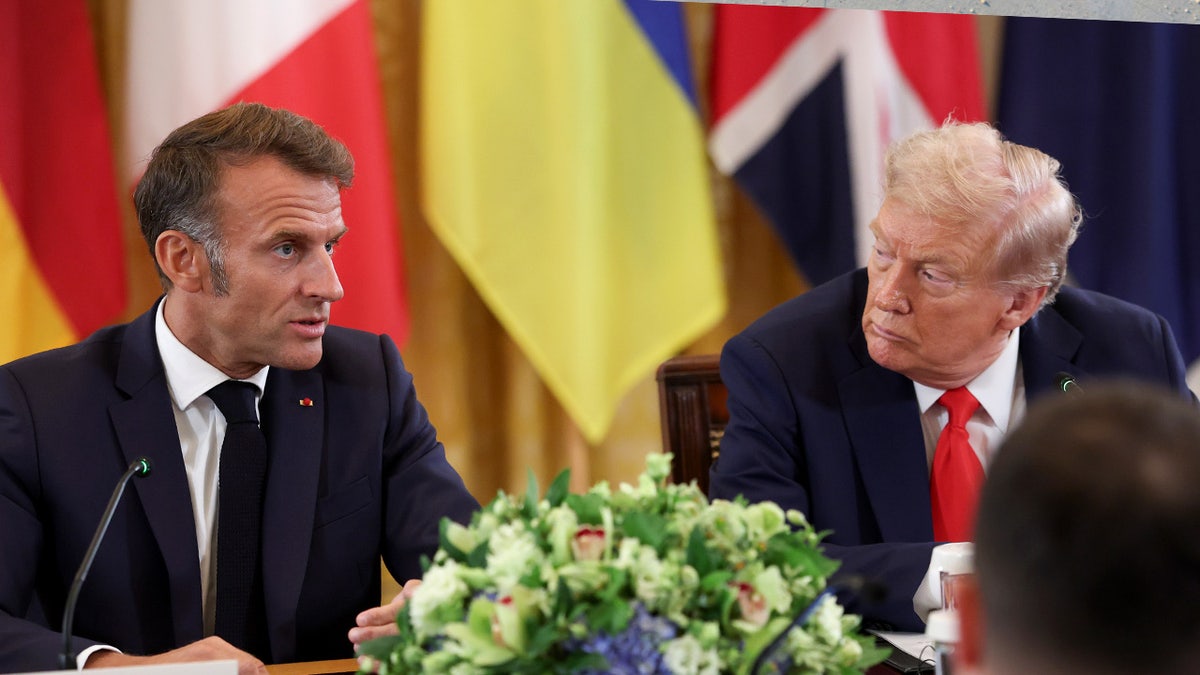
«France has been VERY UNHELPFUL with respect to the ‘Butcher of Iran,’ who has been successfully eliminated! The U.S.A. will REMEMBER!!!,» President Donald Trump wrote on social media. (Win McNamee/Getty Images)
«The Country of France wouldn’t let planes headed to Israel, loaded up with military supplies, fly over French territory,» Trump wrote.
«France has been VERY UNHELPFUL with respect to the ‘Butcher of Iran,’ who has been successfully eliminated! The U.S.A. will REMEMBER!!!,» he added.
A source in the French presidency, the Élysée Palace, told Fox News Digital, «We are surprised by this tweet. France has not changed its position since the first day, and we confirm this decision, which is consistent with the French position since the beginning of the conflict.»
The Israeli Ministry of Defense said Tuesday it is moving to reduce defense procurement from France to zero, replacing it with domestic production or purchases from other allied countries. The ministry also said it has suspended plans for further professional engagement with the French military, including canceling meetings with France’s defense leadership.
In another post on Tuesday, Trump criticized the U.K. while urging allies to take action in the Strait of Hormuz, a critical global oil route disrupted during the conflict.
«All of those countries that can’t get jet fuel because of the Strait of Hormuz, like the United Kingdom, which refused to get involved in the decapitation of Iran, I have a suggestion for you,» Trump wrote.
«Number 1, buy from the U.S., we have plenty, and Number 2, build up some delayed courage, go to the Strait, and just TAKE IT.»
«You’ll have to start learning how to fight for yourself, the U.S.A. won’t be there to help you anymore, just like you weren’t there for us. Iran has been, essentially, decimated. The hard part is done. Go get your own oil!»
TRUMP’S IRAN STRATEGY SHOWCASES ‘DOCTRINE OF UNPREDICTABILITY’ AMID STRIKE THREATS AND SUDDEN PAUSE
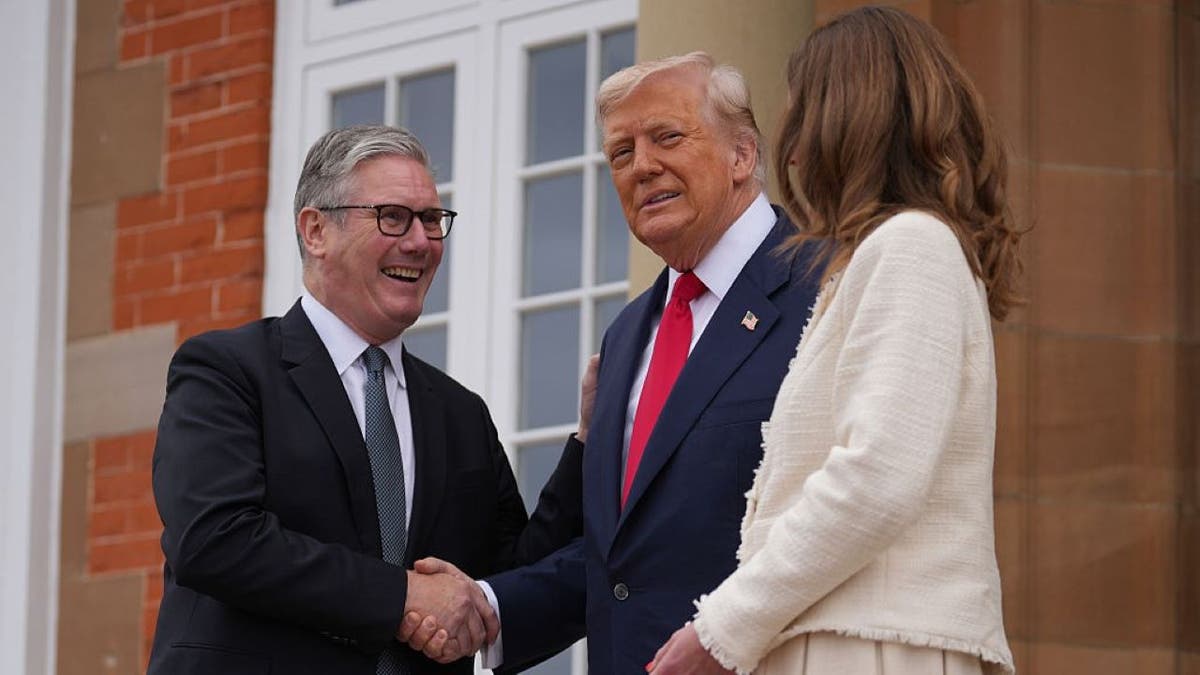
U.S. President Donald Trump meets with British Prime Minister Keir Starmer (L) and his wife Victoria Starmer at Trump Turnberry golf club on July 28, 2025, in Turnberry, Scotland. (Photo by Christopher Furlong/Getty Images)
War Secretary Pete Hegseth echoed that message during a press briefing Tuesday.
«There are countries around the world who ought to be prepared to step up on this critical waterway as well,» he said. «It’s not just the United States Navy. Last time I checked, there was supposed to be a big, bad Royal Navy that could be prepared to do things like that as well.»
NATO acknowledged the growing strain, pointing to remarks by Secretary-General Mark Rutte from a March 26 press conference.
«What I’ve been seeing is some frustration with him (Trump), about the Europeans needing to take time to react to his request, when it comes to this question of making sure that sea lanes are open,» Rutte said.
«There is a reason for that … the U.S. was not able to consult with allies because they wanted to keep the campaign secret,» he said. «But that also had the disadvantage that it takes time for the Europeans to get organized.»
Rutte added that more than 30 countries have since joined discussions on securing maritime routes, «exactly also to the request of President Trump.»
Hemmings warned the fallout could have broader strategic consequences.
«There is something deeper here, though, and that is that there is a growing transatlantic rift between right-leaning populists and left-leaning populists,» he said. «The fact is that the U.S. and many Western European countries are not only split over NATO spending and trade; they are split ideologically.»
CLICK HERE TO DOWNLOAD THE FOX NEWS APP
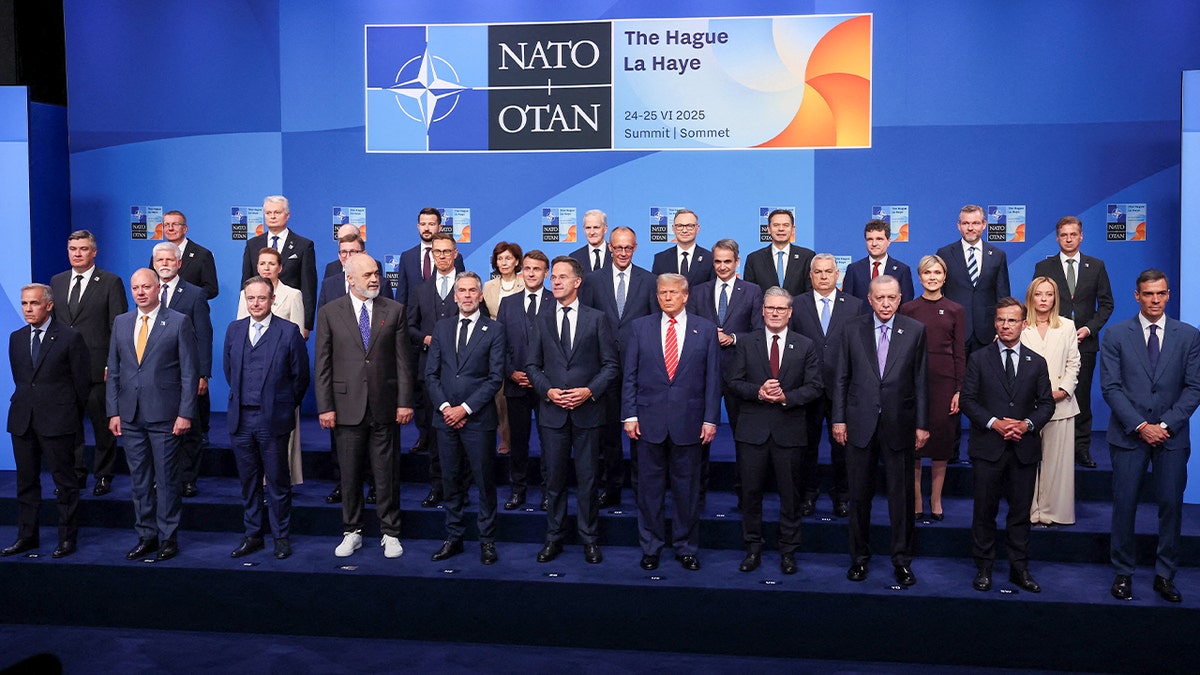
NATO leaders pose in this shot taken in June. (Claudia Greco/Reuters)
«This should worry planners at the Pentagon and at NATO headquarters in Brussels,» he said. «Despite recent changes in U.S. force structure in Europe, changes have been incremental and carefully broadcast. The U.S. and Europe still need each other badly for defense-industrial cooperation, for helping bring Ukraine to victory, and for deterring their mutual adversaries.»
Fox News Digital also reached out to Italy and the Pentagon but did not receive responses in time for publication.
war with iran, nato, europe, italy, spain, donald trump
INTERNACIONAL
El agua que desaparece: mapas satelitales revelan el retroceso de lagos y embalses en todo el mundo
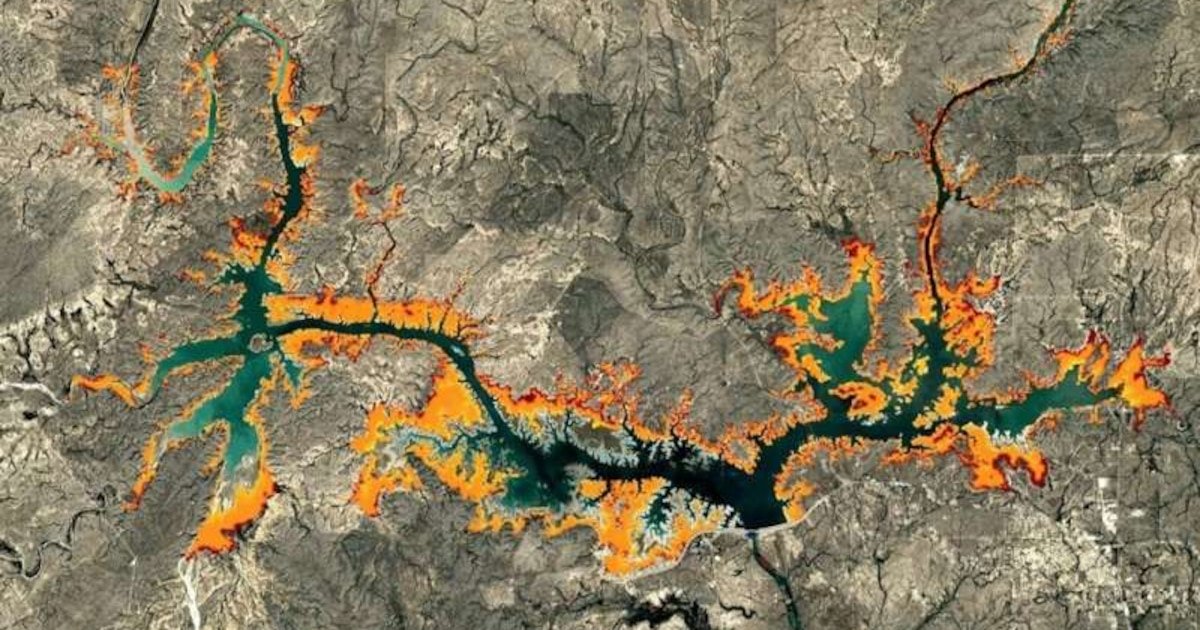
Las orillas del embalse Amistad, en la frontera entre Estados Unidos y México, han retrocedido varios metros en la última década. Lo que antes era una línea azul profunda hoy es un registro visible de cómo la disponibilidad de agua dulce cambia ante los ojos de quienes dependen de ella. Según la NASA, la historia de este lago no es una excepción, sino parte de una tendencia global que ahora puede medirse con precisión inédita.
La misión Landsat, gestionada por la NASA, ha permitido crear el primer conjunto de datos global que identifica el año exacto en que ocurrieron cambios permanentes en la superficie del agua en lagos, ríos y embalses. Entre 1984 y 2022, imágenes satelitales han revelado con una resolución sin precedentes donde el agua ha avanzado o retrocedido en cuerpos de agua de todo el planeta. El estudio, publicado en la revista Nature, liderado por el equipo de la Universidad de Southampton, puede detectar modificaciones en arroyos tan estrechos como 30 metros y lagos de apenas 900 metros cuadrados.
El reto no radica solo en observar el agua desde el espacio, sino en distinguir las alteraciones permanentes de aquellas que se producen por estaciones o eventos climáticos esporádicos. “El conjunto de datos está mostrando, para cada ubicación del planeta, las áreas donde el agua avanzó o retrocedió y el año de ese cambio”, explicó Gustavo Willy Nagel, investigador principal del estudio.

Tecnología satelital: algoritmos que decodifican el agua
Para lograr este resultado, los científicos emplearon dos algoritmos que analizan el color y la reflectancia del agua en las imágenes satelitales. El primero utiliza el índice mNDWI, que recurre a la banda de infrarrojo de onda corta para identificar la presencia de agua. El segundo, desarrollado por el propio equipo, se llama grNDWI y permite precisar el año en que ocurrieron los cambios irreversibles. Solo se consideraron permanentes aquellos cambios que no se revirtieron durante los 38 años de observación.
Estos avances ofrecen respuestas a una pregunta crucial para la gestión hídrica: ¿qué fuerza impulsó el descenso o incremento de un lago? “Saber cuándo un lago comenzó a retroceder ayuda a los gestores de recursos hídricos a investigar si la causa fue la sequía, el riego o alguna otra intervención”, agregó Nagel.
El embalse Amistad, compartido por Estados Unidos y México, es uno de los ejemplos donde la huella del cambio hídrico resulta evidente en las imágenes satelitales. Administrado por la International Boundary and Water Commission (IBWC), este lago artificial es clave para el control de inundaciones, la generación de electricidad y el abastecimiento de agua. Las nuevas bases de datos muestran que entre 2012 y 2016 el nivel de agua descendió de manera significativa, confirmando la tendencia a la reducción observada por las comunidades locales.

3D-LAKES: el mapa subacuático de los lagos del planeta
El desafío de conocer la capacidad de almacenamiento real de los embalses llevó a un equipo de Texas A&M University a fusionar datos de Landsat con mediciones de altimetría láser del satélite ICESat-2. El resultado es 3D-LAKES, un conjunto de mapas de batimetría que revela la topografía bajo la superficie en más de medio millón de lagos y embalses a nivel global.
“El conjunto de datos puede apoyar muchas aplicaciones, desde el monitoreo del almacenamiento de agua hasta la mejora de modelos hidrológicos”, afirmó Chi-Hsiang Huang, autor principal del estudio. La información obtenida permite calcular la relación entre el área y la elevación del agua, un dato clave para anticipar el riesgo de inundaciones o estimar el volumen disponible durante periodos secos.

Medir la forma y profundidad de los lagos era, hasta ahora, una tarea costosa y limitada a zonas específicas. El acceso libre a la base 3D-LAKES representa un salto para la gestión de recursos hídricos en regiones tan diversas como el Outback australiano o la Amazonía brasileña.
La combinación de mapas de transición de agua superficial con la batimetría global genera una herramienta inédita para científicos, responsables políticos y gestores del agua. Estas bases de datos permiten identificar eventos globales de alto impacto, como el retroceso del mar de Aral o la formación de lagos por deshielo en el Tíbet.
La información satelital no solo se limita a observar, sino que se convierte en un insumo para la toma de decisiones ante escenarios de sequía, crecimiento urbano o cambio climático.
“Con este nuevo conjunto de datos, es posible lograr una comprensión más completa de los impactos de los lagos y embalses en la climatología regional, la seguridad hídrica y los servicios ecosistémicos”, concluyó Huilin Gao, líder del equipo de Texas A&M University.
INTERNACIONAL
Illegal alien murder suspect avoided system as ICE pushes Dem governor to keep him locked up
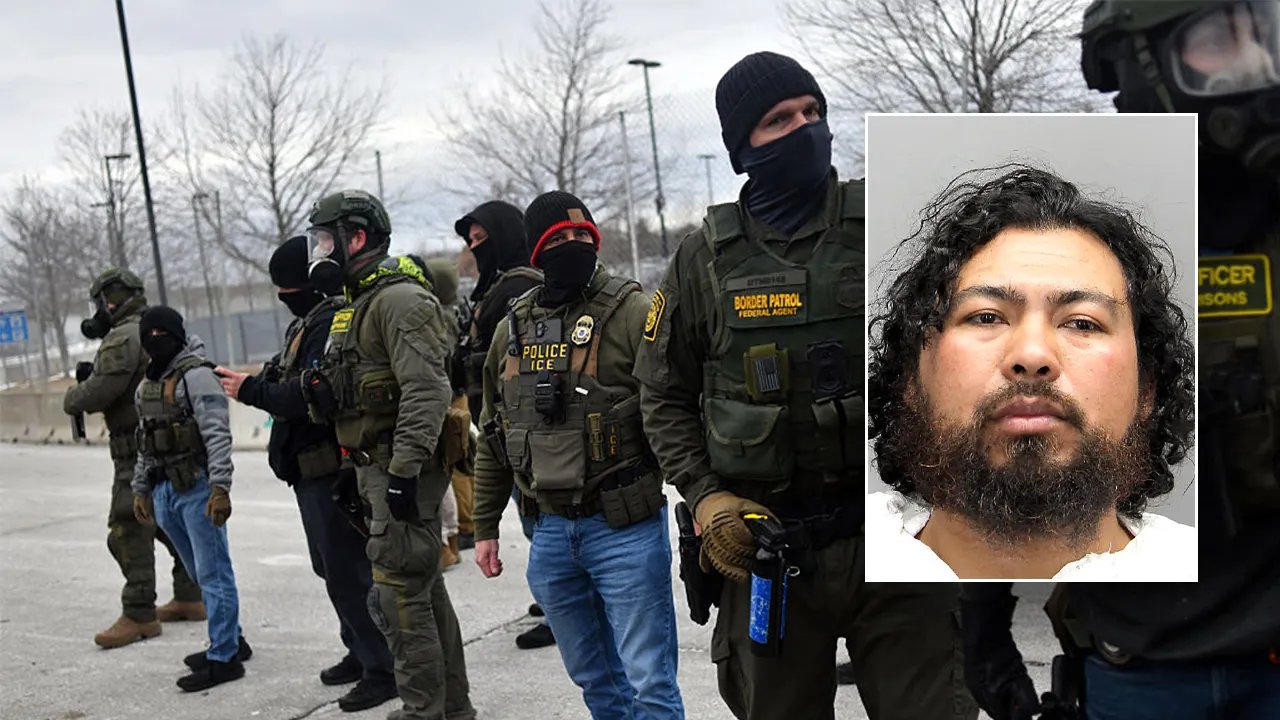
NEWYou can now listen to Fox News articles!
A Guatemalan national in the U.S. illegally — who authorities say entered as a «gotaway» and had never been encountered by federal immigration officials — has been charged in a fatal stabbing in Fairfax County, Virginia, Fox News has learned.
Fairfax County Police said Monday that Anibal Armando Chavarria Muy, 38, was arrested and charged with second-degree murder, adding that he is being held without bond.
U.S. Immigration and Customs Enforcement (ICE) sources confirmed to Fox News that Chavarria Muy has no alien registration number, indicating he had not previously been encountered by the Department of Homeland Security (DHS), and is believed to have entered the U.S. illegally at an unknown time and location.
ICE has lodged a detainer with Fairfax County authorities.
Officers responded to a reported stabbing just before 9 p.m. Sunday and, upon arrival, located a man inside a residence with multiple stab wounds to the upper body.
VIRGINIA PROSECUTOR’S RECORD ON VIOLENT OFFENDERS SCRUTINIZED AFTER ILLEGAL IMMIGRANT CHARGED IN MOM’S MURDER
Anibal Armando Chavarria Muy faces second-degree murder charges in Fairfax County, Va. (Fairfax County Police)
Officers immediately performed life-saving measures until Fairfax County Fire and Rescue Department personnel took over and transported the man to a nearby hospital, where he was later pronounced dead.
The suspect left the scene before officers arrived, police said, and detectives from the Fairfax County Police Department’s Major Crimes Bureau took over the investigation.
After an investigation, Chavarria Muy was identified as the suspect. Police said he and the victim were known to each other.
HOUSE PANEL SUMMONS SOROS-BACKED FAIRFAX PROSECUTOR OVER RELEASES TIED TO VIOLENT ILLEGAL IMMIGRANT CASES

ICE agents confirmed to Fox News that a migrant who entered the U.S. undetected is charged in a fatal Virginia stabbing. (Fairfax County Police Department)
Officers ultimately located Chavarria Muy in a vehicle and took him into custody without incident.
The DHS said ICE has requested that Fairfax County officials honor the detainer and not release Chavarria Muy from custody, citing past instances where local authorities have declined to comply with such requests.
Democrat Virginia Gov. Abigail Spanberger previously signed an executive order restricting cooperation between state and local law enforcement and federal immigration authorities, reversing a policy under former Republican Gov. Glenn Youngkin that had allowed such coordination.
DEM SENATOR WARNS DEPORTATION COULD LET VIRGINIA WOMAN’S ILLEGAL IMMIGRANT KILLER ‘ESCAPE ACCOUNTABILITY’

ICE agents confirmed to Fox News that a migrant who entered the U.S. undetected is charged in a fatal Virginia stabbing. (Getty Images)
«Anibal Armando Chavarria Muy, a criminal illegal alien from Guatemala, was charged with second degree murder after repeatedly stabbing a man to death in Fairfax County. ICE is calling on Virginia Governor Abigail Spanberger and Virginia’s sanctuary politicians to not release this murderer back into our communities,» DHS Acting Assistant Secretary Lauren Bis said. «This incident comes just one month after an innocent woman was murdered by another criminal illegal alien at a bus stop in Spanberger’s state.
«Open-border policies yet again have caused another preventable tragedy.»
The incident comes roughly one month after Stephanie Minter was stabbed to death at a bus stop in Fredericksburg, Virginia.
Authorities charged Abdul Jalloh, a 32-year-old Sierra Leone native, in Minter’s killing.
CLICK HERE TO DOWNLOAD THE FOX NEWS APP
Jalloh had been arrested more than 30 times prior to the attack, according to the DHS, with previous charges including rape, malicious wounding, assault, drug possession, identity theft and trespassing.
Authorities said prior charges had been dropped, allowing him to remain free.
Fox News Digital’s Leo Briceno contributed to this report.
virginia, migrant crime, police and law enforcement, homicide, illegal immigrants, abigail spanberger, homeland security

El gobierno argentino declarará “organización terrorista” a la Guardia Revolucionaria de Irán

Javier Milei defendió a Manuel Adorni con un retuit

More key US allies block military flights as Iran war rift widens with Trump

El golazo de Messi y la sutil asistencia a Julián Álvarez ante Zambia: así está la pelea de los 1.000 gritos con Cristiano Ronaldo

El agua que desaparece: mapas satelitales revelan el retroceso de lagos y embalses en todo el mundo

Yanina Latorre confirmó que Andrea del Boca hace trampa en Gran Hermano: “En el confesionario le…”

Máximo Kirchner salió al cruce de Milei y Macri tras el fallo por YPF a favor de la Argentina

La secretaria del piloto denunció que el amigo de Adorni la hostiga y la justicia dispuso medidas

El Gobierno cambia su propuesta de reforma: endurece penas para delitos comunes, pero no para los casos de corrupción

Nuevas críticas de Marcela Pagano contra los Milei: “Karina es la que gobierna”, aseguró

 POLITICA3 días ago
El Gobierno cambia su propuesta de reforma: endurece penas para delitos comunes, pero no para los casos de corrupción
- POLITICA2 días ago
Nuevas críticas de Marcela Pagano contra los Milei: “Karina es la que gobierna”, aseguró
- ECONOMIA3 días ago
Burford aseguró que el fallo por YPF es “muy decepcionante” y que analiza llevar el caso a la Corte Suprema de EEUU y al Ciadi