INTERNACIONAL
Trump suggests DOJ owes him money for past cases


NEWYou can now listen to Fox News articles!
President Donald Trump suggested on Tuesday that the Department of Justice (DOJ) owes him money for past prosecutions against him.
In the Oval Office, a reporter asked Trump if he was seeking compensation from the DOJ over past federal investigations into him and, if so, how much he was seeking.
«Well, I guess they probably owe me a lot of money for that,» Trump said in response. «No, I get no salary. I gave up my salary. It’s a good salary. Not as much as these guys make, but that’s OK. It’s a lot of money, and I don’t, as you know, I didn’t take it in the first four years. I didn’t take it these four years either.»
«But as far as all of the litigation, everything that’s been involved, yeah, they probably owe me a lot of money,» the president added. «But if I get money from our country, I’ll do something nice with it. Like, give it to charity or give it to the White House while we restore the White House, and we’re doing a great job with the White House, as you know, the ballroom is under construction.»
TRUMP ADMIN AGENCIES COORDINATING TO EXPOSE BIDEN ADMIN’S ‘PROLIFIC AND DANGEROUS’ WEAPONIZATION OF GOVERNMENT
President Donald Trump gestures as he hosts a Rose Garden Club lunch at the White House in Washington, D.C., Oct. 21, 2025. (Kevin Lamarque/Reuters)
The New York Times reported sources as saying Trump is seeking approximately $230 million in compensation from the Justice Department for investigations into him.
Trump told reporters Tuesday that he was «not looking for money,» but that they «would have to ask the lawyers about that.»
«We’ll see what happens,» Trump said. «We have numerous cases having to do with the fraud of the election, the 2020 election, and because of everything that we found out, I guess they owe me a lot of money. But I’m not looking for money. I’m looking for — really, I think it’s got to be, it’s got to be handled in a proper way… We don’t want it to happen again. We can never let what happened in the 2020 election happen again. We just can’t let that happen.»
He was later pressed again about the exact dollar amount in the request and said, «I don’t know what the number is. I don’t even talk to them about it.»
Trump then remarked that the decision would have to come across his desk, saying that it would be «awfully strange to make a decision where I’m paying myself.»
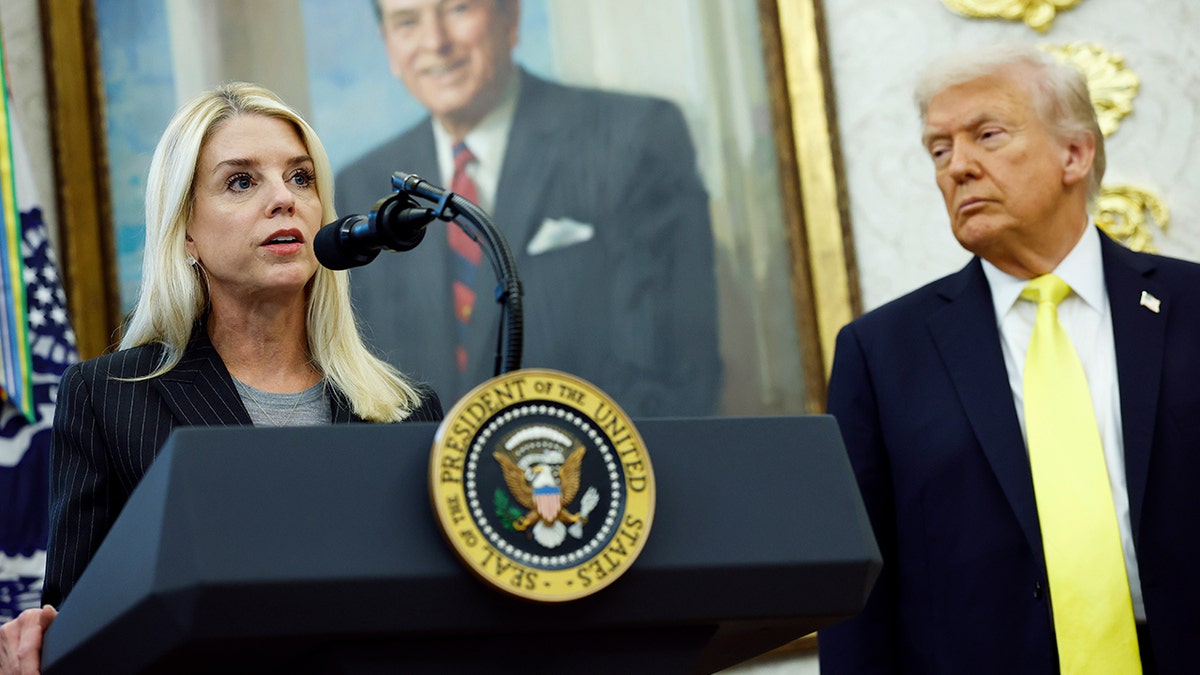
Attorney General Pam Bondi speaks as President Donald Trump looks on during a press conference in the Oval Office of the White House on Oct. 15, 2025. (Kevin Dietsch/Getty Images)
However, the Times noted that the DOJ’s rules state that settlement claims against the department that exceed $4 million «must be approved by the Deputy Attorney General, or Associate Attorney General, as appropriate.»
It is unclear where the claims or negotiations with the DOJ stand. However, The Associated Press noted that the ties between Trump and those authorized to make a decision on the settlement could present problems.
Deputy Attorney General Todd Blanche served as one of Trump’s attorneys in the Mar-a-Lago case. Additionally, Associate Attorney General Stanley Woodward represented Trump’s co-defendant, Walt Nauta, in the Mar-a-Lago case.
«In any circumstance, all officials at the Department of Justice follow the guidance of career ethics officials,» DOJ spokesperson Chad Gilmartin said in a statement to Fox News Digital.
TRUMP CELEBRATES WHITE HOUSE DEMOLITION AS NEW BALLROOM RISES: ‘MUSIC TO MY EARS’
The investigations include the FBI’s 2022 raid of Mar-a-Lago as part of the classified documents case and another probe looking into possible ties between Russia and Trump’s 2016 presidential campaign. According to the Times, the first claim was filed in late 2023 and was in relation to the Russia probe, while the second — which focused on the Mar-a-Lago raid — was filed in the summer of 2024.
The Times reported Tuesday that Trump had submitted complaints through an administrative claim process, noting that it is something that often precedes lawsuits.
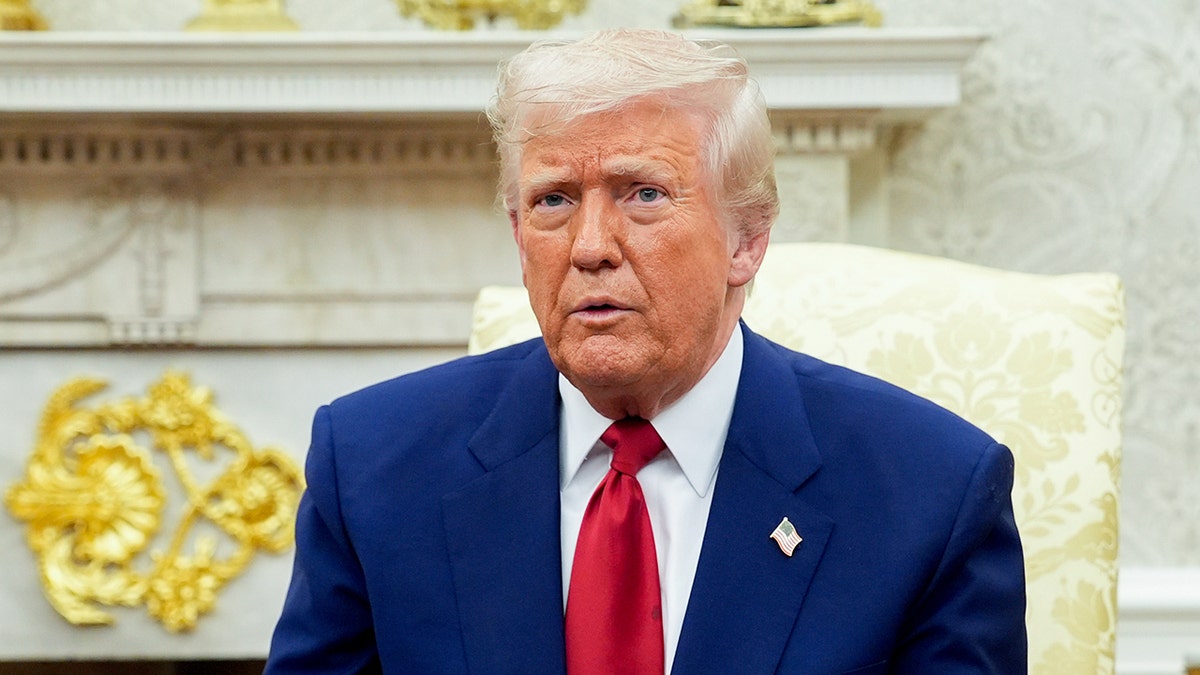
President Donald Trump during a bilateral meeting with Israeli Prime Minister Benjamin Netanyahu in the Oval Office of the White House on Monday, April 7, 2025. (Yuri Gripas/Abaca/Bloomberg via Getty Images)
Despite the president saying that he would donate the funds, some Democrats painted the report as an example of Trump trying to enrich himself.
Sen. Amy Klobuchar, D-Minn., said on Wednesday morning that the president was looking «to line his own pockets, or he says now to give to a charity of his choice.» The senator added to the accusation, saying Trump was «focusing on getting $230 million that he doesn’t deserve back into his pocket instead of helping the American people get healthcare.»
CLICK HERE TO DOWNLOAD THE FOX NEWS APP
Sen. Jeff Merkley, D-Ore., who was in the middle of an hours-long speech, slammed Trump for «suing the government, then instructing his Department of Justice to settle the suit, thereby translating money into the president’s pocket out of the government.»
Merkley then remarked that «there is no limit to the self-serving» and called for his colleagues, particularly Republicans, to speak out against the president.
Fox News Digital reached out to the White House for comment.
The Associated Press contributed to this report.
politics,donald trump,justice department,white house










INTERNACIONAL
La inteligencia de Israel cree que el nuevo líder supremo de Irán no controla al régimen: “Una entidad vacía”

El nuevo líder supremo de Irán, Mojtaba Khamenei, no ejerce control efectivo sobre el régimen y es considerado una figura sin poder real, según fuentes de seguridad nacional israelíes citadas este miércoles por Fox News Digital.
“El nuevo líder es una entidad vacía”, dijo Kobi Michael, analista de defensa del Instituto de Estudios de Seguridad Nacional, al medio estadounidense. “Mojtaba Khamenei no aparece en público, pero también tenemos información confiable de que no controla ni lidera el régimen ni lo que queda de él. El liderazgo iraní actual está roto, confundido y casi en mal funcionamiento”, agregó.
Mojtaba asumió el cargo tras la muerte de su padre, el ayatolá Ali Khamenei, en un ataque israelí el 28 de febrero. Según un audio filtrado al diario The Telegraph, correspondiente a una reunión del 12 de marzo, el hijo escapó por minutos al haber salido a caminar justo antes del impacto del misil. El jefe de protocolo de la oficina de Khamenei, Mazaher Hosseini, es supuestamente escuchado en la grabación informando a altos líderes que Mojtaba sufrió “una lesión menor en la pierna”.

Desde que fue designado líder supremo, Mojtaba no ha realizado ninguna aparición pública. Sus comunicados han sido leídos por terceros en la televisión estatal iraní, donde advirtió sobre represalias y llamó a las naciones del Golfo a cerrar las bases militares estadounidenses en la región. Otros reportes lo situaron en estado crítico o incluso en coma, aunque funcionarios iraníes insistieron en que se encuentra en buen estado de salud.
Este miércoles, Mojtaba prometió venganza tras la muerte del alto funcionario de seguridad Ali Larijani, eliminado en un ataque israelí en las afueras de Teherán. “Tales actos de terror solo reflejan la hostilidad de los enemigos y fortalecerán la determinación de la nación islámica. Sin duda, se hará justicia”, rezó el comunicado emitido en su nombre.
Las declaraciones sobre el estado del liderazgo iraní llegan en medio de una escalada en el conflicto. Irán intensificó sus ataques contra instalaciones energéticas del Golfo Pérsico en represalia por un ataque israelí contra South Pars, el mayor yacimiento de gas del mundo, compartido con Qatar.
Las ofensivas iraníes alcanzaron refinerías en Arabia Saudita, Kuwait y los Emiratos Árabes Unidos, y causaron daños severos en la planta de gas natural licuado de Ras Laffan, en Qatar, la mayor instalación de exportación de GNL del mundo. El precio del petróleo Brent trepó hasta los 118 dólares el barril, más de un 60% por encima de los valores previos al inicio del conflicto el 28 de febrero, mientras que el gas natural europeo duplicó su precio en el último mes.
Israel también ha eliminado en días recientes a otros altos mandos iraníes, incluido el jefe de la milicia Basij, Gholamreza Soleimani. El secretario de Defensa estadounidense, Pete Hegseth, advirtió que podrían seguir más bajas entre la cúpula del régimen.
Para Michael, la eliminación sistemática de figuras clave del régimen no es un hecho aislado sino parte de una estrategia deliberada. “Esto no es una nueva fase, sino un esfuerzo continuo, muy exitoso e impresionante, y un componente crucial de la estrategia destinada a debilitar el régimen iraní”, señaló el analista. “En un grado tal que no podrá reconstituirse ni volver a convertirse en una amenaza grave y desestabilizadora para el Medio Oriente en general”, agregó.
Michael apuntó que tanto Washington como Tel Aviv tienen un objetivo más ambicioso que el meramente militar. “Al debilitar el régimen y paralizar sus capacidades, Estados Unidos e Israel están facilitando las condiciones necesarias para que el pueblo iraní derribe al régimen. Esa es la victoria final a sus ojos”, sostuvo.
El conflicto, que ya lleva más de 1.300 muertos en Irán y al menos 13 militares estadounidenses caídos, entró en su tercera semana sin señales de distensión. El presidente Donald Trump afirmó que Israel no volverá a atacar South Pars, pero amenazó con destruir “la totalidad” del yacimiento si Irán continúa golpeando la infraestructura energética de Qatar.
Military Conflicts
NEWYou can now listen to Fox News articles!
A group of 12 Arab and Islamic countries on Thursday condemned Iran’s «heinous» attacks, denouncing missile and drone strikes on civilian infrastructure and warning Tehran against further escalation.
The foreign ministers of Qatar, Azerbaijan, Bahrain, Egypt, Jordan, Kuwait, Lebanon, Pakistan, Saudi Arabia, Syria, Turkey and the United Arab Emirates issued the joint statement after a consultative meeting in Riyadh.
The countries accused Iran of deliberately targeting residential areas, oil facilities, airports and diplomatic premises across the region.
The ministers reaffirmed what they called the right of affected countries to defend themselves under Article 51 of the United Nations Charter and urged Iran to immediately halt its attacks and abide by international law.
US ‘LOCKED AND LOADED’ TO DESTROY IRAN’S ‘CROWN JEWEL’ ‘IF WE WANT,’ TRUMP WARNS
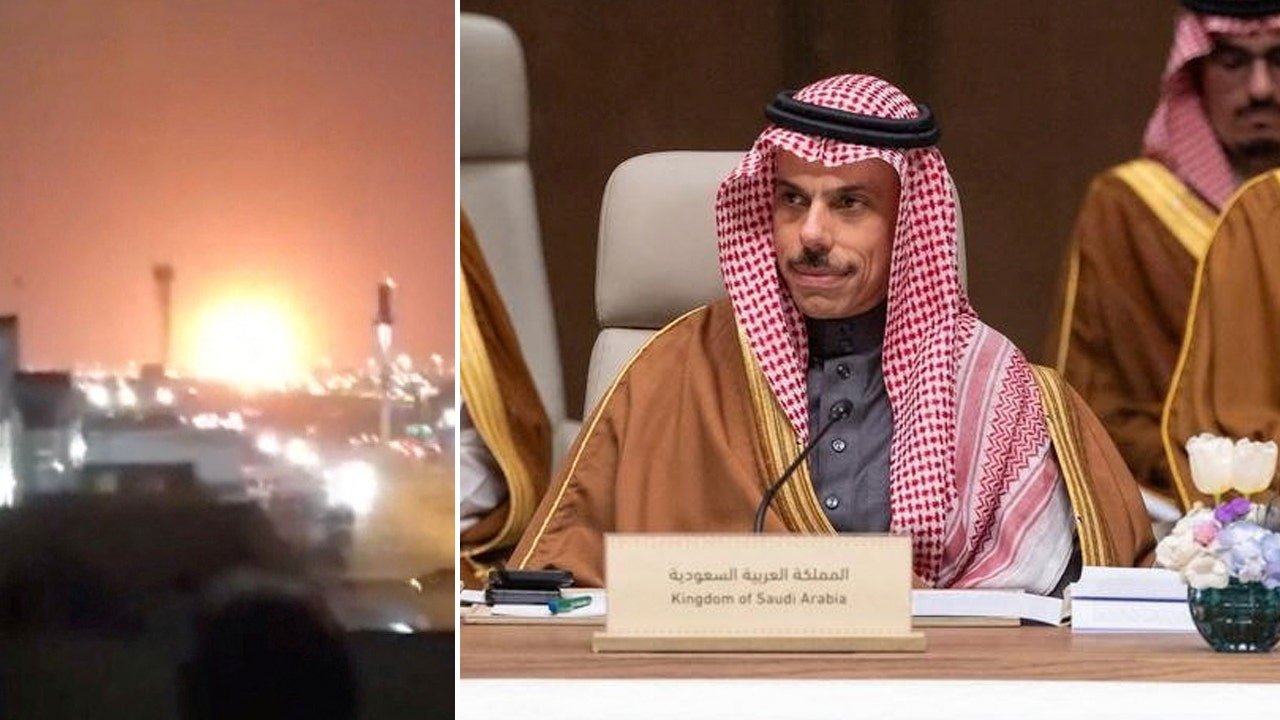
Foreign ministers from across the Arab and Islamic world convene in Riyadh, Saudi Arabia, on March 18, 2026, for a consultative meeting aimed at de-escalating military tensions in the Middle East. (Mustafa Hatipoglu/Anadolu via Getty Images)
They also called on Tehran to respect their territorial sovereignty, cease support for affiliated militias in Arab countries and avoid actions that could threaten maritime security, including in the Strait of Hormuz and Bab al-Mandab, a key global shipping route linking the Red Sea and the Gulf of Aden.
The statement further expressed support for Lebanon’s stability and sovereignty, while also condemning Israel’s actions in the country and its «expansionist policy in the region.»
«The Ministers reaffirm their commitment to continuing intensive consultation and coordination in this regard, to monitor developments and assess emerging issues in a way that ensure the formulation of common positions and the adoption of necessary legitimate measures and procedures to protect their security, stability, and sovereignty, and to halt the Iranian heinous attacks on their territories,» the joint statement reads.
IRANIAN FOREIGN MINISTER CLAIMS TRUMP LAUNCHED WAR ‘BECAUSE IT IS FUN’
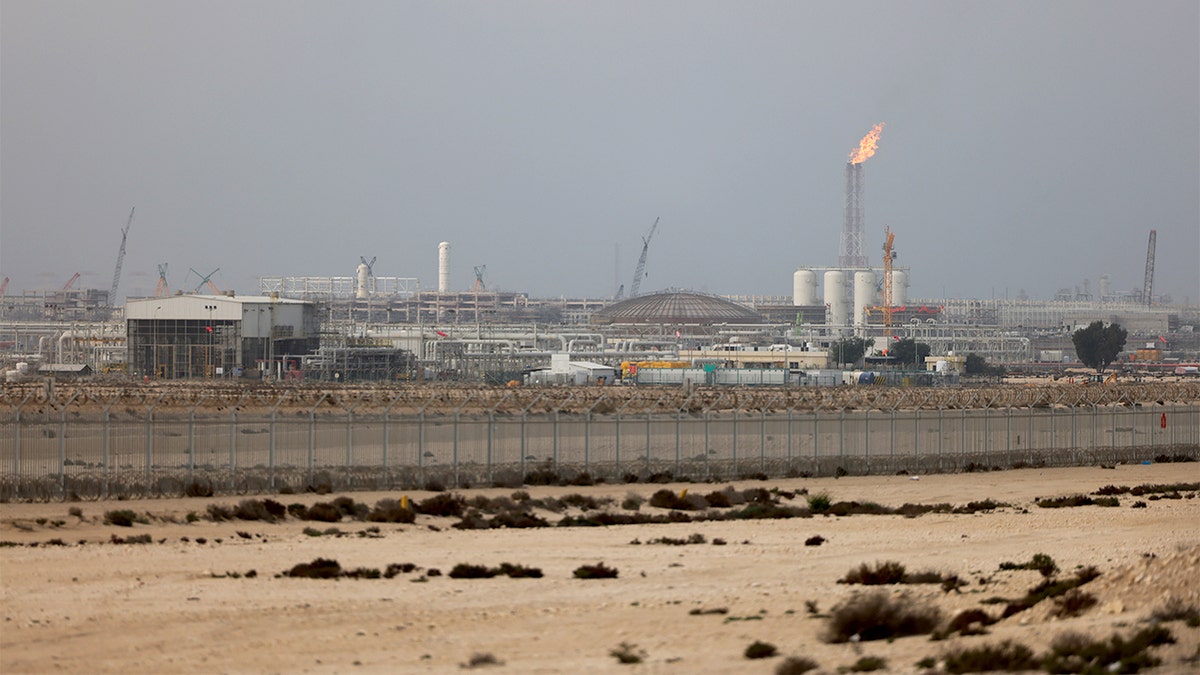
Qatar Energy facilities in Ras Laffan Industrial City on Mar. 3, 2026, after the company halted LNG production at Ras Laffan and Mesaieed sites following reported Iranian attacks. (Stringer/Getty)
It comes a day after Israel struck Iran’s South Pars gas field, prompting Iranian retaliatory attacks on energy infrastructure in Qatar and Saudi Arabia, including Doha’s Ras Laffan Industrial City, the world’s largest LNG production facility.
Oil prices surged Thursday morning following the strikes, with Brent crude rising to $114.08 a barrel and U.S. benchmark West Texas Intermediate crude climbing to $97.41.
RUSSIA SHIPS FUEL TO CUBA USING ‘SPOOFING’ TACTIC CHALLENGING TRUMP EMBARGO: REPORTS

Gas prices are displayed at a station in Brooklyn, New York City, on Mar. 18, 2026, as global fuel costs rise amid disruptions linked to the Iran conflict and shipping constraints in the Strait of Hormuz. (Andrew Lichtenstein/Corbis via Getty Images)
CLICK HERE TO DOWNLOAD THE FOX NEWS APP
President Donald Trump said on his Truth Social platform that Israel would halt further strikes on Iran’s South Pars gas field unless Tehran escalates, warning that the United States could respond with overwhelming force if Qatar’s LNG facilities are targeted again.
«The United States of America, with or without the help or consent of Israel, will massively blow up the entirety of the South Pars Gas Field at an amount of strength and power that Iran has never seen or witnessed before,» Trump wrote. «I do not want to authorize this level of violence and destruction because of the long term implications that it will have on the future of Iran, but if Qatar’s LNG is again attacked, I will not hesitate to do so.»
war with iran,middle east,world
INTERNACIONAL
Georgia gubernatorial hopeful vows to ‘ban DEI’ but his own company touted diversity and inclusion

NEWYou can now listen to Fox News articles!
FIRST ON FOX: Rick Jackson, who is seeking the Republican nomination in the Georgia gubernatorial race, appeared to support Diversity Equity and Inclusion (DEI) policies at Jackson Healthcare, according to unearthed audio of a former DEI executive at his company, but Jackson is now promising to put an end to the DEI push if he becomes the governor.
«We’ll ban DEI insanity and criminalize reverse discrimination,» Jackson said in a campaign ad last month.
Jackson’s calls to end DEI appear to run counter to praise he received from Matthew Harrison, who formerly served in multiple executive-level roles leading DEI initiatives at Jackson Healthcare between early 2018 and Aug. 2022, according to his LinkedIn profile and University of Georgia bio for an adjunct assistant professor role.
«I think it really reinforced for our associates that certainly, from a leadership perspective, our leaders get and see the importance of diversity, equity and inclusion in our workforce at Jackson Healthcare in I mean, and it really is emulated as a part of our values,» Harrison, who has a PhD in workplace diversity and who did his thesis on «Colorism,» said during a 2020 podcast interview.
WATCH: DEI STILL IN PLACE AS COLLEGE ‘FINDING WAYS’ AROUND BAN, OFFICIAL ADMITS: ‘PROUD OF THE FIGHT’
Rick Jackson is running for governor in Georgia, promising to eliminate DEI policies. (Rick Jackson for governor/YouTube screenshot)
Harrison described that the company’s leadership had taken steps to disseminate DEI principles through a «Conversations» series the company allegedly held at Jackson’s direction.
«We created what we call our ‘Conversations,’ a learning experience about race. That was something we launched in October of 2019, and that is something that really kind of started due to the history of our CEO and founder, Rick Jackson,» Harrison said.
«I think Rick felt that it was important enough, and we had a culture in place where we could establish that safe space and create those ground rules on the front end to where he felt comfortable with us doing that,» Harrison added.
Harrison further described the «Conversations» series in a 2022 interview.
«I think oftentimes we shy away a little bit at work, and we don’t have these discussions, and really, the workplace is the exact place where we should … So we created a ‘conversation on race’ series where people were brought together with their colleagues to talk about race, to talk about prejudice, to talk about microaggressions,» Harrison said.
Jackson’s campaign pushed back on the characterization that the «Conversations» series meant that Jackson’s company had implemented or supported DEI principles.
«The most pathetic attack yet from Burt Jones’ failing campaign,» Dave Abrams, a spokesperson from the Jackson campaign said, referring to Georgia’s current Lt. Governor and one of Jackson’s political opponents. «Jackson Healthcare had a black pastor speak to a voluntary group of employees. That doesn’t change the fact that Jackson Healthcare has always only hired the best.»
Jackson, 71, announced his dark-horse candidacy on Feb. 3, joining an already-crowded pool of Republican candidates. Not including Jackson, eight other Republicans have also announced their candidacy. He is the billionaire founder of Jackson Healthcare, a healthcare recruiter and staffing company that services facilities nationwide with over 1,500 employees, according to its website.
INVESTIGATION OF NIKE’S DEI PRACTICES COULD HAVE MAJOR NATIONWIDE IMPACT ON HIRING, SAYS ALAN DERSHOWITZ

The CEO of Jackson Healthcare is running for governor in Georgia, promising to end DEI. (Rick Jackson for governor/YouTube screenshot)
Since entering the race, Jackson has made ending DEI a fixture of his campaign alongside other policy stances like freezing property taxes, slashing income tax and continuing the Trump administration’s crackdown on illegal immigration.
«I’ll ban DEI and focus on merit,» Jackson said in an interview he highlighted on X, where he laid out his plans.
Despite the Jackson campaign’s pushback, a Fox News Digital review found several Facebook posts where Jackson Healthcare touted Harrison’s work at the company and his goal to implement DEI principles in the workplace.
«Senior Vice President of Talent & Development, Matthew Harrison, recently participated in a Tech Alpharetta panel about building diversity, equality and inclusion into business operations. Click the link below to download and watch. Skip to 21:41 to hear Matthew highlight some of Jackson Healthcare’s key DE&I approaches,» a 2021 Jackson Healthcare Facebook post said.
«Business RadioX talked with Matthew Harrison, our VP of Human Resources, and some of the leaders from our Associate Network Groups to hear about workplace diversity and how we’re creating an environment that welcomes everyone,» a 2019 Jackson Healthcare Facebook post said.
«Our president, Shane Jackson, joined academic and business leaders during this week’s 2022 Business School Diversity Conference, sharing insights on how to create cultures where people thrive,» a 2022 Jackson Healthcare Facebook post said, referring to Jackson’s son. «The conference, hosted by the University of Georgia Terry College of Business and sponsored by the Business School DEI Collaborative, covered a variety of topics aimed at helping professionals advance DEI programs within their organizations.»
In his time at Jackson Healthcare, Harrison recalls leadership, under Jackson’s instruction, taking strides to affirm the necessity of DEI — especially in the wake of several racially-charged incidents like the death of George Floyd that brought about chaos in major cities across the country.
He recalled an instance where Jackson had personally attended and led conversation talks about DEI.
BLACK REPUBLICAN CALLS FOR TOTAL, PERMANENT ABOLITION OF DEI: ‘I WANT TO EARN EVERY OPPORTUNITY ON MERIT’
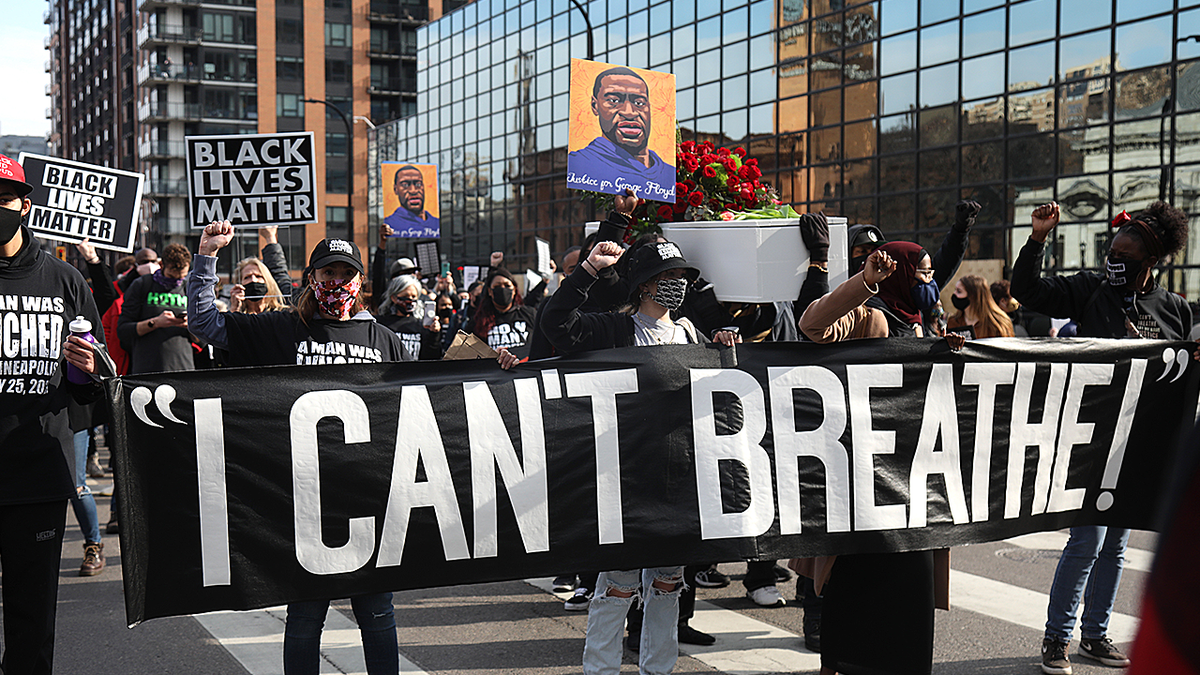
Demonstrators carry a banner during an ‘I Can’t Breathe’ Silent March For Justice in Minneapolis, Minnesota, U.S., on Sunday, March 7, 2021. (Emilie Richardson/Bloomberg via Getty Images)
«And I think more than anything, what it did illustrate with particularly, our president sitting through all six sessions and our CEO actually kicked off the session and came in the final session to again, talk about why he thought this was so important to our organization,» Harrison said.
CLICK HERE TO DOWNLOAD THE FOX NEWS APP
«And I think with them having the sessions, it really helped our associates even better understand what our president and CEO really mean by ‘others first,’ and that that is also inclusive of diversity and inclusion being something that’s really important to our organization,» he recalled.
Jackson’s campaign once again denied that DEI had ever been implemented as a policy at his company.
«Jackson Healthcare has never had DEI requirements,» Abrams said.
Fox News Digital reached out to Harrison and Jackson Healthcare for comment.
georgia,dei,elections

Mercados: la tensión global golpea a las bolsas y suben con fuerza las acciones de compañías petroleras

La reacción de Neymar al ver que no iba convocado con Brasil: ‘Ancelotti, ¿y yo?’

Acusan a Nicki Nicole de tomar partido en la polémica entre Tini Stoessel y Emilia Mernes: su descargo

Javier Milei salió a ratificar a Manuel Adorni con críticas al periodismo

A 50 años del golpe, la Iglesia ratificó el “nunca más a la dictadura” y advirtió: “Vivimos una tendencia creciente al autoritarismo”

Laboratorios extranjeros blindarán sus medicamentos por 20 años y los nacionales pierden un negocio

TRAICIÓN Y ÉXODO: La promesa rota de Monteoliva que desató una ola masiva de bajas en la Policía Federal

Adorni se disculpó por el viaje de su esposa: “Fue una pésima decisión, más allá de que no generó gasto para el Estado”

Horacio Rodríguez Larreta reapareció y lanzó “Metrópolis”, su nuevo espacio en la Ciudad de Buenos Aires

Insólito: un esquiador británico terminó la Copa del Mundo de Oslo bajo los efectos del alcohol

 POLITICA3 días ago
TRAICIÓN Y ÉXODO: La promesa rota de Monteoliva que desató una ola masiva de bajas en la Policía Federal
- POLITICA3 días ago
Adorni se disculpó por el viaje de su esposa: “Fue una pésima decisión, más allá de que no generó gasto para el Estado”
- POLITICA3 días ago
Horacio Rodríguez Larreta reapareció y lanzó “Metrópolis”, su nuevo espacio en la Ciudad de Buenos Aires