INTERNACIONAL
Trump threatens to bomb Iran unless they end nuclear weapons program and begin talks on new deal

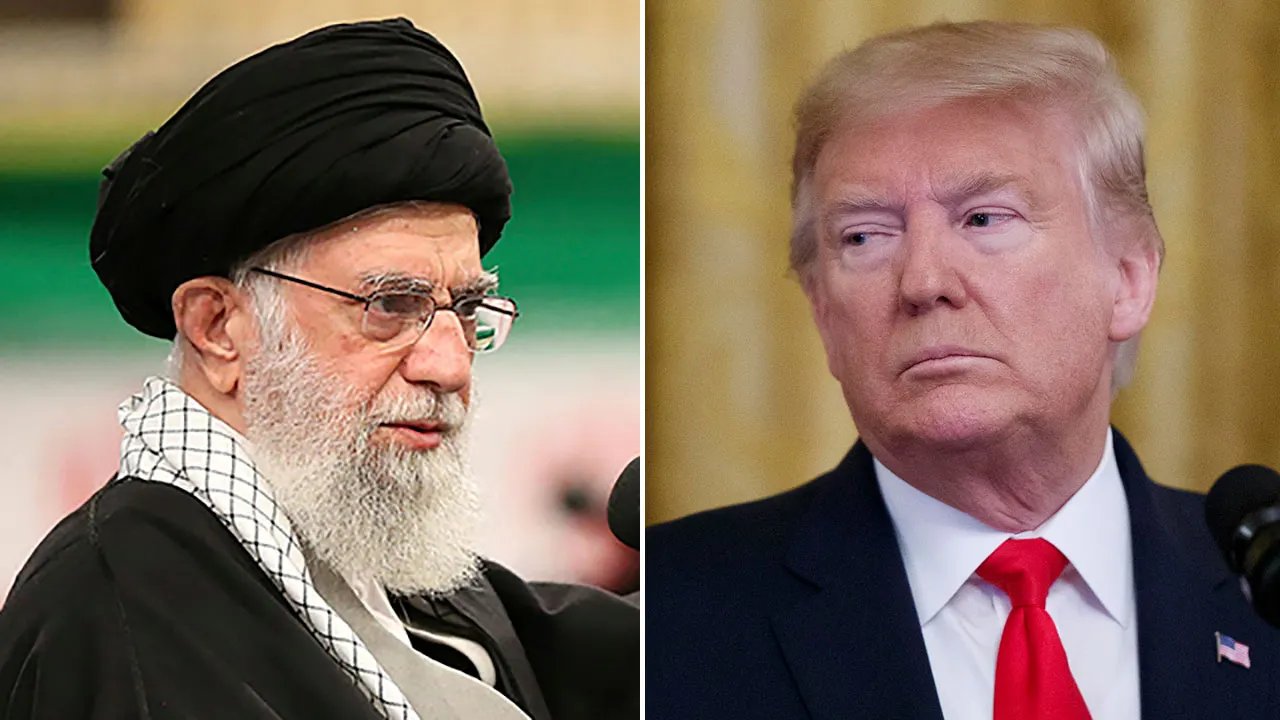
JERUSALEM—President Donald Trump’s overtures via a letter to the Islamic Republic of Iran’s supreme leader, Ali Khamenei, to jump-start talks on dismantling Tehran’s illicit nuclear weapons program, were met with rejection by the theocratic state on Sunday, following Trump’s latest threat to the regime.
Trump told NBC on Saturday that «If they don’t make a deal, there will be bombing,» he said. «But there’s a chance that if they don’t make a deal, that I will do secondary tariffs on them like I did four years ago.»
Trump added the U.S. and officials from the Islamic Republic are «talking.»
Iran’s President Masoud Pezeshkian said on Sunday «We don’t avoid talks; it’s the breach of promises that has caused issues for us so far,» according to the Associated Press. He added, «They must prove that they can build trust.» The White House did not immediately respond to Iran’s rejection of the talks, the AP reported.
Pezeshkian still noted that in Iran’s response to the letter that indirect negotiations with the Trump administration were still possible.
WALTZ TELLS IRAN TO GIVE UP NUCLEAR PROGRAM OR ‘THERE WILL BE CONSEQUENCES’
Supreme Leader Ali Khamenei addresses the media during elections in Tehran, Iran, on May 10, 2024. (Fatemeh Bahrami/Anadolu via Getty Images)
The apparent return of Iran’s regime to its standard playbook of opaque indirect talks between the U.S. and Tehran’s rulers raises questions about whether Trump would greenlight military strikes to eradicate Iran’s vast nuclear weapons program.
After Iran launched two massive missile and drone attacks on Israel last year, Trump could also aid the Jewish state in knocking out Iran’s nuclear weapons apparatus.
Indirect talks between the U.S. and the world’s worst state-sponsor of terrorism, according to Democratic and Republican administrations, have not compelled Iran to abandon its pursuit of nuclear weapons.
Jason Brodsky, the policy director of United Against Nuclear Iran (UANI), told Fox News Digital that the Iranians «do not want to provide President Trump with a casus belli to strike Iran’s nuclear program. There may be indirect and non-public responses through various intermediaries. I think some Iranian officials perceive a fissure among President Trump’s national security team on Iran. This explains Iran’s foreign minister’s comment in recent days that President Trump’s letter to the supreme leader poses challenges as well as opportunities.»
TRUMP VINDICATED AS EXPLOSIVE REPORT CONFIRMS IRAN SUPERVISES HOUTHI ‘POLITICAL AND MILITARY AFFAIRS’
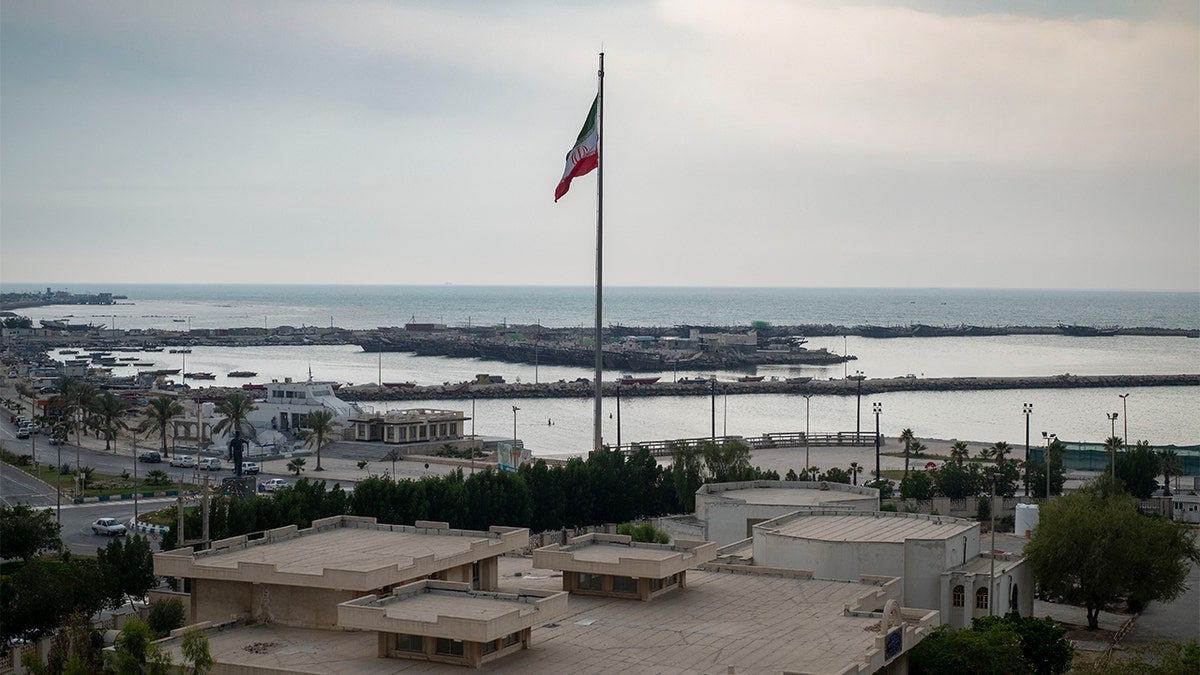
Iran’s first functioning nuclear power plant in Bushehr, Iran, on April 28, 2024. (Morteza Nikoubazl/NurPhoto via Getty Images)
Brodsky said, «These Iranian officials seek to bypass experienced hands like President Trump’s national security advisor and secretary of state, who have been demanding the dismantlement of Iran’s entire nuclear program in keeping with President Trump’s long-standing and rightful position on this issue, and cultivate individuals around President Trump who do not have experience with Iran or are considered non-traditional conservatives who would be more receptive to their entrees.»
Trump promised that «bad things» would happen to Iran if the regime does not come to the table for nuclear negotiations. «My big preference is that we work it out with Iran, but if we don’t work it out, bad things are gonna happen to Iran,» he said on Friday.
Iran is enriching uranium to 60%, just shy of the 90% weapons-grade. Experts say it could have a nuclear weapon within weeks if it were to take the final steps to building one. Fox News Digital reported in late March that Iran’s regime has enriched enough uranium to manufacture six nuclear weapons, according to a U.N. atomic agency report.
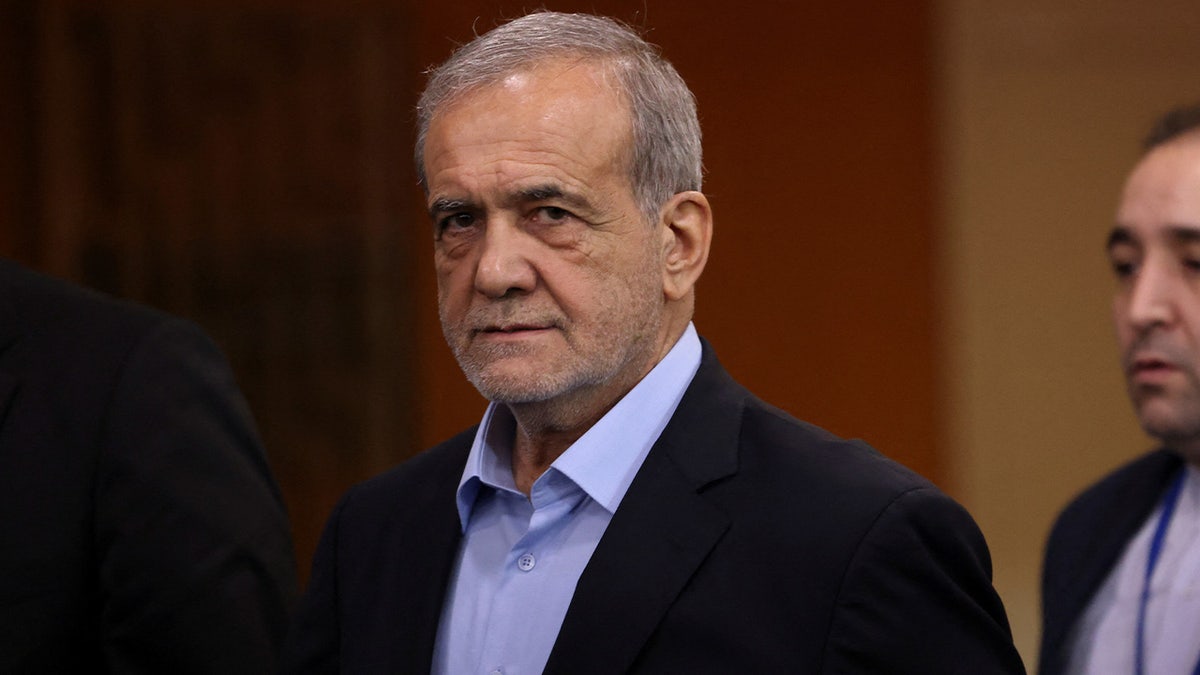
Iran’s President Masoud Pezeshkian at U.N. headquarters in New York, Sept. 24, 2024. (Reuters/Caitlin Ochs)
Alireza Nader, an Iranian-American expert on Iran, told Fox News Digital, «Khamenei may be signaling that he’s not interested in negotiations, but his regime desperately needs economic relief. Otherwise, another popular uprising against him could start. Khamenei doesn’t have the cards.»
There is widespread discontent among Iranians against the rule of 85-year-old Khamenei.
TRUMP REINSTATES ‘MAXIMUM PRESSURE’ CAMPAIGN AGAINST IRAN
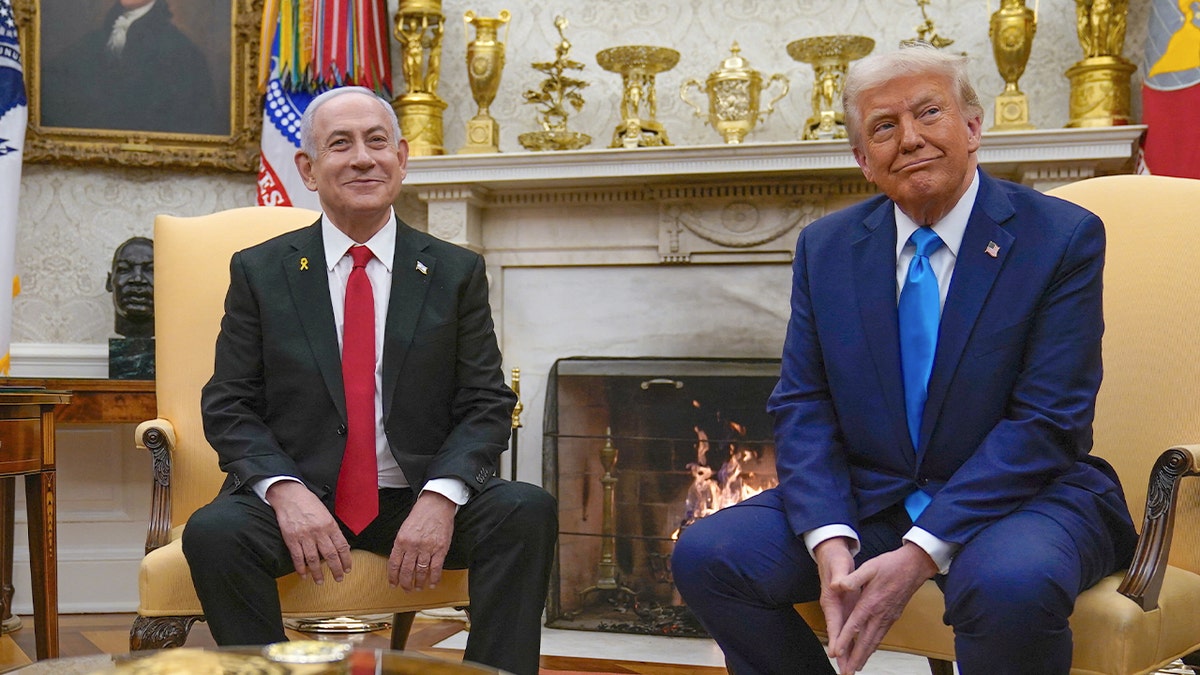
President Donald Trump and Israeli Prime Minister Benjamin Netanyahu meet at the White House, Feb. 4, 2025. (Reuters/Elizabeth Frantz)
Iran’s has upped the ante ever since Trump told FOX Business he sent a letter to Khamenei. Iran has disclosed video footage of its underground «missile city.»
Trump also told FOX Business, «I would rather negotiate a deal.»
He continued, «I’m not sure that everybody agrees with me, but we can make a deal that would be just as good as if you won militarily. But the time is happening now, the time is coming up.
«Something is going to happen one way or the other. I hope that Iran, and I’ve written them a letter, saying I hope you’re going to negotiate because if we have to go in militarily, it’s going to be a terrible thing for them.»
Brodsky said, «That means the Islamic Republic may dangle a JCPOA-like deal, with minor modifications from the previous 2015 agreement. Iranian media has been hyping such an arrangement.»
In 2018, Trump withdrew from the Obama-negotiated Joint Comprehensive Plan of Action deal because, he argued, that the agreement failed to ensure Iran would not build nuclear weapons and did not codify restrictions against Tehran’s missile program and sponsorship of Islamist terrorism.
IRAN’S LEADER WARNS US COULD RECEIVE ‘SEVERE SLAPS’ FOLLOWING TRUMP’S THREATS TO HOUTHIS
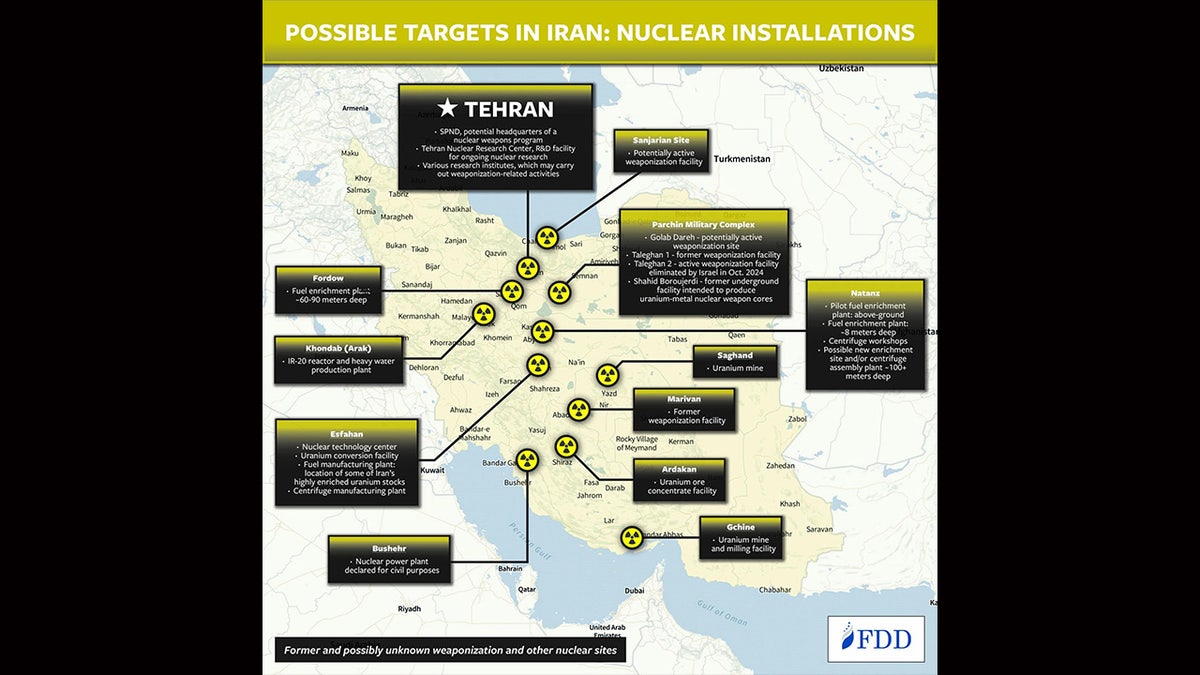
The Foundation for Defense of Democracies has analyzed where Iran’s nuclear infrastructure is located. (Image provided by the Foundation for Defense of Democracies (FDD) )
Brodsky said, «These Iranian officials believe they can lure the Trump administration into this arrangement and then President Trump will wave a magic wand and bring the entire Republican Party along with Democrats to support the deal and make it more politically durable than the 2015 JCPOA. This is all despite President Trump’s consistent and strong record in rejecting the JCPOA framework. It reflects desperation in Tehran and a desire to buy time with another failed diplomatic gambit. But it’s important to have eyes wide open here as to the games the Iranians will (and are already) playing.»
While Trump’s director of national intelligence, Tulsi Gabbard, testified on Tuesday before the Senate Intelligence Committee that the intelligence community «continues to assess that Iran is not building a nuclear weapon and Supreme Leader Khamanei has not authorized the nuclear weapons program he suspended in 2003,» she did note that Iran increased its enriched uranium stockpile.
In sharp contrast to U.S. intelligence since 2003, Fox News Digital has previously reported that European intelligence agencies believe Iran is working toward testing an atomic weapon, and sought illicit technology for its nuclear weapons program.
Counter-proliferation experts, like the prominent physicist and nuclear specialist David Albright, have told Fox News that European intelligence institutions use an updated definition of construction of weapons of mass destruction to assess Iran’s progress in contrast to America’s alleged obsolete definition.
CLICK HERE FOR THE FOX NEWS APP
Fox News Digital sent press queries to the U.S. State Department and the National Security Council.
Fox News Digital’s Morgan Phillips and the Associated Press and Reuters contributed to this report.

INTERNACIONAL
Trump proven right on Iran’s long-range missile capability as regime targets US-UK base, experts say
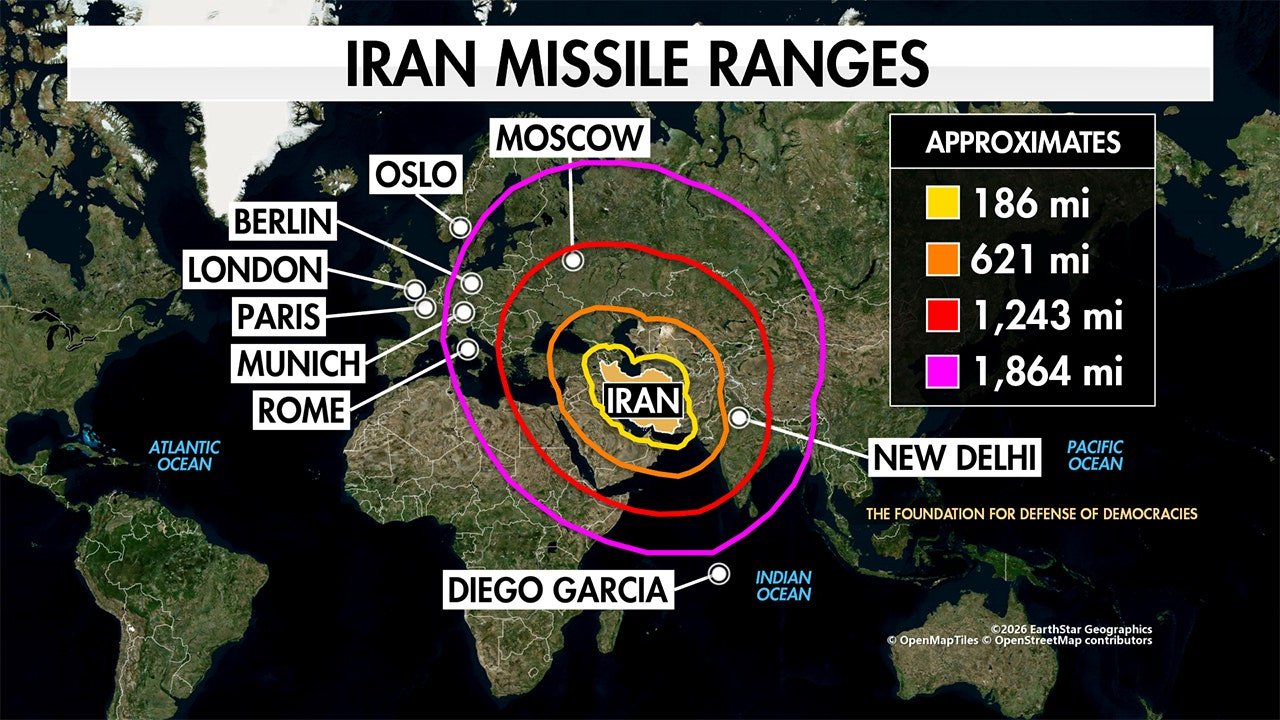
Iran fires missiles toward US-UK military base
Fox News senior correspondent Mike Tobin reports on Iran launching missiles toward a joint U.S.-U.K. military base, while Netanyahu advisor Caroline Glick provides analysis on ‘Fox News Live.’
NEWYou can now listen to Fox News articles!
The Islamic Republic of Iran significantly escalated its war effort against the U.S. with its launch of two intermediate-range ballistic missiles on Friday toward Diego Garcia, a key U.S.-U.K. military base in the Indian Ocean.
The targeting of Diego Garcia, roughly 2,500 miles from Iran, means Tehran’s missile capabilities appear to have exceeded previously acknowledged limits.
In the period leading up to Operation Epic Fury on Feb. 28, Iran’s Foreign Minister Abbas Araghchi claimed that «We intentionally kept the range of our missiles below 2,000 km so we don’t have that capability. And we don’t want to do that because we do not have hostility against the United States people and all Europeans.»
TRUMP VOWS TO HIT IRAN ‘VERY HARD’ AFTER OBLITERATING NEARLY ’90 PERCENT’ OF REGIME MISSILES
Map from the Foundation for Defense of Democracies showing Iran’s missile ranges. (The Foundation for Defense of Democracies)
On Saturday, Israel Defense Forces IDF Chief of Staff Lt. Gen. Eyal Zamir said «Just yesterday, Iran launched a two-stage intercontinental ballistic missile with a range of 4,000 kilometers [2,500 miles] toward an American target on the island of Diego Garcia. These missiles were not intended to hit Israel. Their range reaches the capitals of Europe — Berlin, Paris and Rome are all within direct threat range.»
IDF spokesman Nadav Shoshani blasted the alleged Iranian deception on X: «Just 3 days before the war, the Iranian regime said they don’t obtain long-range missiles. Today, their lies were exposed once again, when missiles were fired 4000km away from Iran. They hoped to lie their way into becoming a force that can terrorize the world. We didn’t buy it.»
Jason Brodsky, the policy director of United Against Nuclear Iran (UANI), told Fox News Digital, «The Trump administration, in citing Iran’s missile threat as a rationale for Operation Epic Fury, was therefore justified in its decision to undertake military action as Iran has consistently refused to negotiate over its missile program. It also shows how dangerous it is to solely rely on Iranian nuclear weapons fatwas and the supreme leader’s public rhetoric in formulating U.S. policy. As long as Iran retains the technical capability beyond public pronouncements, it is a threat.»
BEFORE-AND-AFTER SATELLITE IMAGERY OFFERS A RARE LOOK AT DAMAGE INSIDE IRAN
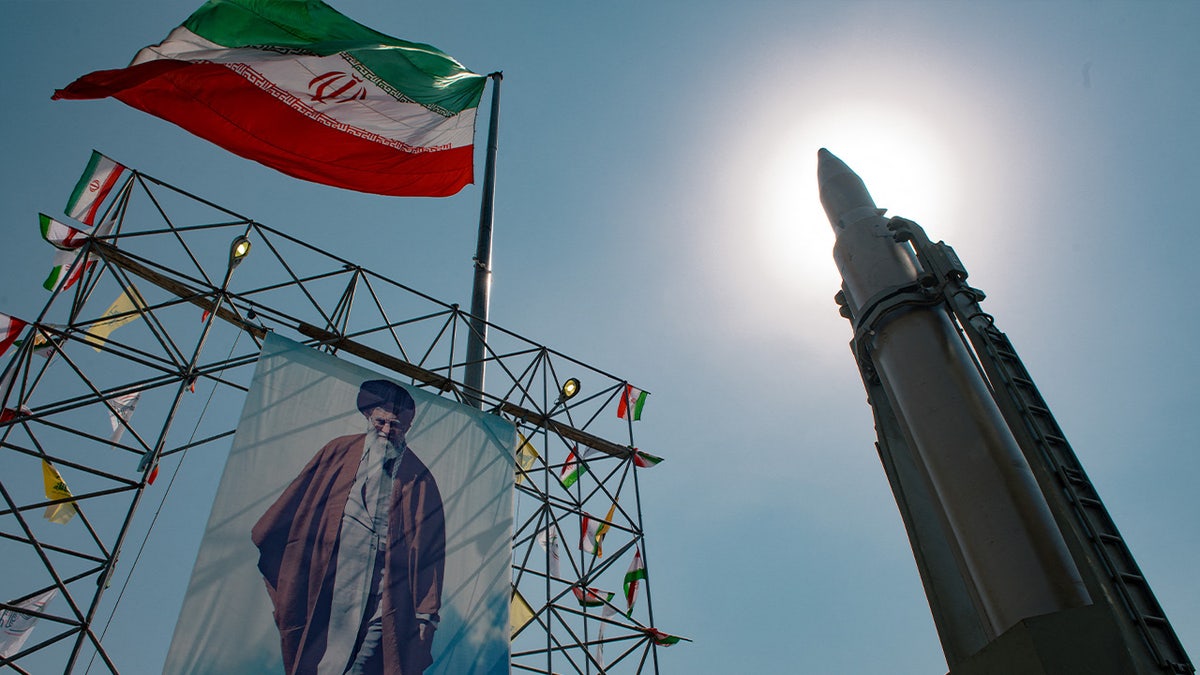
A big banner depicting Iran’s former Supreme Leader Ayatollah Ali Khamenei is placed next to a ballistic missile in Baharestan Square in Tehran, Iran, on September 26, 2024, on the sideline of an exhibition which marks the 44th anniversary of the start of Iran-Iraq war. (Photo by Hossein Beris /Middle East Images/AFP via Getty Images)
According to Brodsky, «I think it’s a message that the IRGC is in charge in Iran after Supreme Leader Ali Khamenei’s death. When Khamenei was alive, he limited the range of Iran’s missile program to 2000 km. Khamenei recounted in 2018 how he had rejected overtures from IRGC commanders seeking to increase the range to as much as 5000 km.»
He continued, «But now that he has died, those voices in the IRGC seeking to increase the range are likely driving the agenda. The launch of the missiles was likely meant as a signal of the IRGC’s capabilities to threaten U.S. allies beyond the Middle East. For example, this threatens Europe.»
The two long-range Iranian missiles did not hit the base, but the attempted attack marked a significant expansion of Iran’s reach beyond the Middle East and toward a major U.S. strategic hub. One missile reportedly failed in flight, while a U.S. warship launched an SM-3 interceptor at the other, officials said. It was not immediately clear whether the interception was successful. The remote base is a critical launch point for U.S. bombers, nuclear submarines and other strategic assets.
Ilan Berman, Vice President of the American Foreign Policy Council in Washington, D.C., told Fox News Digital, «The launch hammers home the president’s point about Iran being an imminent threat. It’s easy for casual observers to ignore, but the increasing maturity of Iran’s strategic programs, plural, has been exponentially expanding the threat that the Islamic Republic poses beyond the Middle East. That is what «Epic Fury» is seeking to address. The administration believes, absolutely correctly in my view, that these types of capabilities cannot be left in the hands of a radical, predatory regime.»
HEZBOLLAH, IRAN UNLEASH COORDINATED CLUSTER BOMB STRIKES ON ISRAEL IN MAJOR ESCALATION
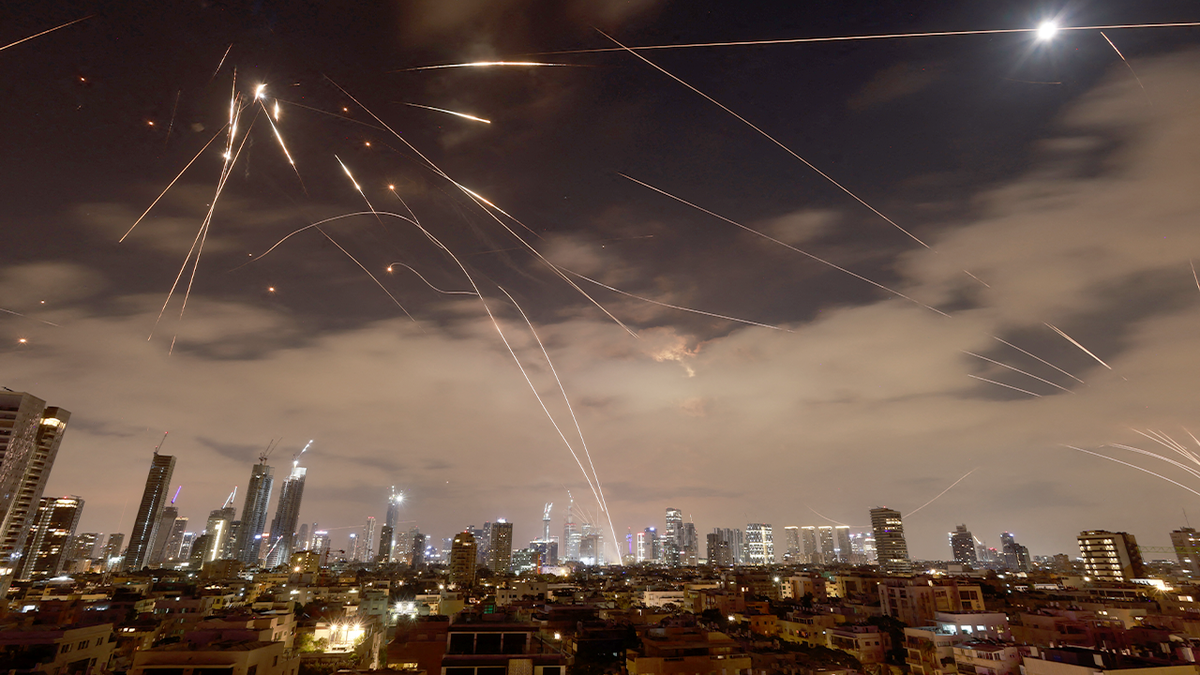
Israeli air defense systems are activated to intercept Iranian missiles over the Israeli city of Tel Aviv amid a fresh barrage of Iranian rockets on June 16, 2025. (Menahem Kahanna/AFP via Getty Images)
He continued that «Despite its public denials, it’s been clear that the Iranian regime has been working on expanding the range of its ballistic missile capabilities for years. The launch toward Diego Garcia confirms that it has made real progress toward that goal, and is already able to put targets in the same range as Central and Eastern Europe at risk. Moreover, it’s clear that the regime is seeking still greater capabilities – and that, if left intact, Iran’s ballistic missiles would attain intercontinental range soon.»
Berman, the author of «Iran’s Deadly Ambition: The Islamic Republic’s Quest for Global Power,» added, «The parallel development Iran has been carrying out on its space program is significant. The booster used to put payloads into orbit can be married onto a medium-range missile to create intercontinental range capabilities. Before the war, we were seeing a clear convergence of the regime’s strategic programs: its ballistic missile work, its space capabilities and its nuclear program.»
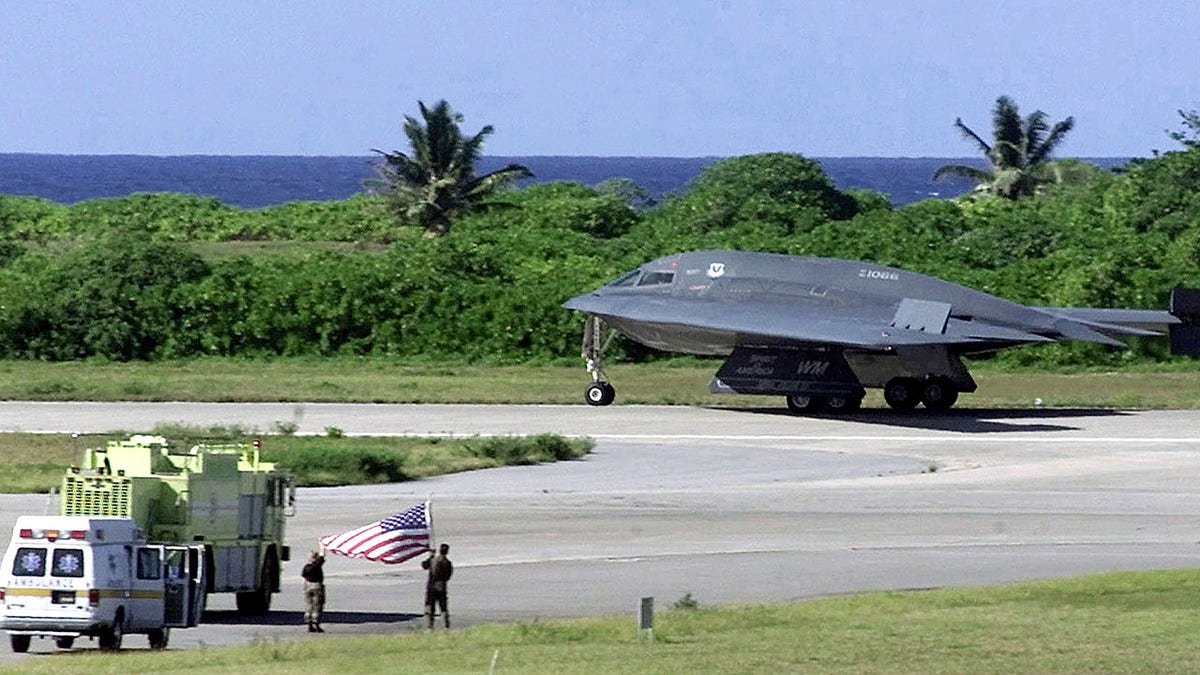
A U.S. B-2 Spirit bomber, part of the 509th Bomb Wing at Whiteman Air Force Base in Missouri, stops for refueling at the U.S. military base on Diego Garcia in October 2001, following an airstrike mission over Afghanistan in support of Operation Enduring Freedom. (U.S. Department of Defense/Senior Airman Rebeca M. Luquin)
He warned about the serious Iranian threat to continental Europe. «Europe is absolutely at risk, as the recent launch makes clear. I wouldn’t say that a failure to recognize this to date has been due to a grand deception by Tehran, though. It is more attributable to willful blindness on the part of European elites about the extent of the threat that the Iranian regime poses, as well as undue faith in diplomacy and arms control in containing it,» he said.
On Saturday, the United Kingdom condemned the attack. «Iran’s reckless attacks, lashing out across the region and holding hostage the Strait of Hormuz, are a threat to British interests and British allies,» the U.K. Ministry of Defense said in a statement. «RAF jets and other U.K. military assets are continuing to defend our people and personnel in the region.»
CLICK HERE TO DOWNLOAD THE FOX NEWS APP
«This government has given permission to the U.S. to use British bases for specific and limited defensive operations,» it added.
Fox News Digital’s Greg Norman and Jasmine Baehr contributed to this report.
war with iran,israel,donald trump,conflicts,terrorism,united kingdom

Guatemala se prepara para recibir una cifra histórica de turistas salvadoreños durante la Semana Santa de 2026, según las proyecciones del Instituto Guatemalteco de Turismo (Inguat). La temporada, que se celebrará del domingo 29 de marzo al domingo 5 de abril, será clave para la reactivación del sector turístico en el país centroamericano, gracias a una nutrida afluencia de visitantes provenientes de El Salvador, el principal país emisor de turistas hacia Guatemala.
El Inguat estima que, durante estos días, arribarán a Guatemala cerca de 150,000 turistas internacionales, de los cuales un 53.3 % serán salvadoreños; es decir, alrededor de 80,000 personas. Esta cifra refleja la relevancia de El Salvador como mercado prioritario para la industria turística guatemalteca, consolidando una tendencia que se ha fortalecido en los últimos años. De hecho, los datos de la Corporación Salvadoreña de Turismo (Corsatur) indican que los salvadoreños que viajaron a Guatemala representaron el 60% del total de salidas internacionales registradas en 2025, lo que evidencia la preferencia por el país vecino como destino vacacional.
La campaña “Semana Santa es pausa”, presentada recientemente por el Inguat, busca atraer a los turistas salvadoreños con una propuesta que combina cultura, tradición y paisajes. Según información oficial difundida por la Agencia de Promoción Turística de Centroamérica (CATA Centroamérica), el lanzamiento de la oferta turística se realizó en un encuentro con prensa y creadores de contenido salvadoreños, a quienes se les informó sobre las rutas, actividades y servicios preparados especialmente para la temporada. Las autoridades guatemaltecas han dispuesto un plan de atención que incluye centros de información en lugares estratégicos como Ciudad Cayalá, el Palacio de la Cultura, Antigua Guatemala, Panajachel, Petén, Quetzaltenango y Esquipulas, así como un sistema de asistencia para los visitantes.

Este movimiento turístico se traduce en un importante impacto económico para Guatemala. El Inguat proyecta que la afluencia de turistas internacionales durante la Semana Santa generará $100 millones para la economía nacional, dinamizando especialmente los sectores de alojamiento, gastronomía, transporte y comercio local. La relevancia de los visitantes salvadoreños queda subrayada por las cifras de cierre de 2025, cuando Guatemala recibió más de 1.5 millones de turistas provenientes de El Salvador, equivalentes al 45.7% del total de llegadas internacionales y un crecimiento del 11.4 % respecto a 2024.
La preferencia de los salvadoreños por Guatemala responde a factores como la cercanía geográfica, la conectividad terrestre y la diversidad de atractivos turísticos. CATA Centroamérica, en sus recientes publicaciones, destaca que el interés de los salvadoreños por descubrir nuevos destinos se ve reforzado por la facilidad de los desplazamientos y la variedad de experiencias que ofrece Guatemala durante la Semana Mayor, desde recorridos por sitios históricos hasta actividades en entornos naturales y festividades religiosas.
Por su parte, la Corporación Salvadoreña de Turismo reportó que, en 2025, más de 2.5 millones de salvadoreños realizaron viajes internacionales por motivos turísticos, 113.792 más que el año anterior. De ese total, seis de cada diez eligieron Guatemala como su destino, consolidando así la histórica relación turística entre ambos países. Las autoridades salvadoreñas también reconocen el valor de esta interacción, que favorece el intercambio cultural y fortalece los lazos económicos en la región.

La campaña “Semana Santa es pausa” no solo busca posicionar a Guatemala como un destino seguro y atractivo para los salvadoreños, sino que también promueve la integración centroamericana a través del turismo. CATA Centroamérica resalta en sus comunicaciones que El Salvador se mantiene como el principal mercado emisor de visitantes hacia Guatemala, lo que refleja el creciente interés por redescubrir la oferta turística regional.
Con un despliegue logístico que incluye puntos de información, rutas recomendadas y asistencia personalizada, Guatemala aspira a ofrecer una experiencia memorable a los turistas salvadoreños y a superar sus propias expectativas en términos de recepción y atención al visitante durante la Semana Santa de 2026.
INTERNACIONAL
La guerra de Donald Trump contra Irán inquieta a los indecisos de cara a elecciones legislativas en EE.UU.
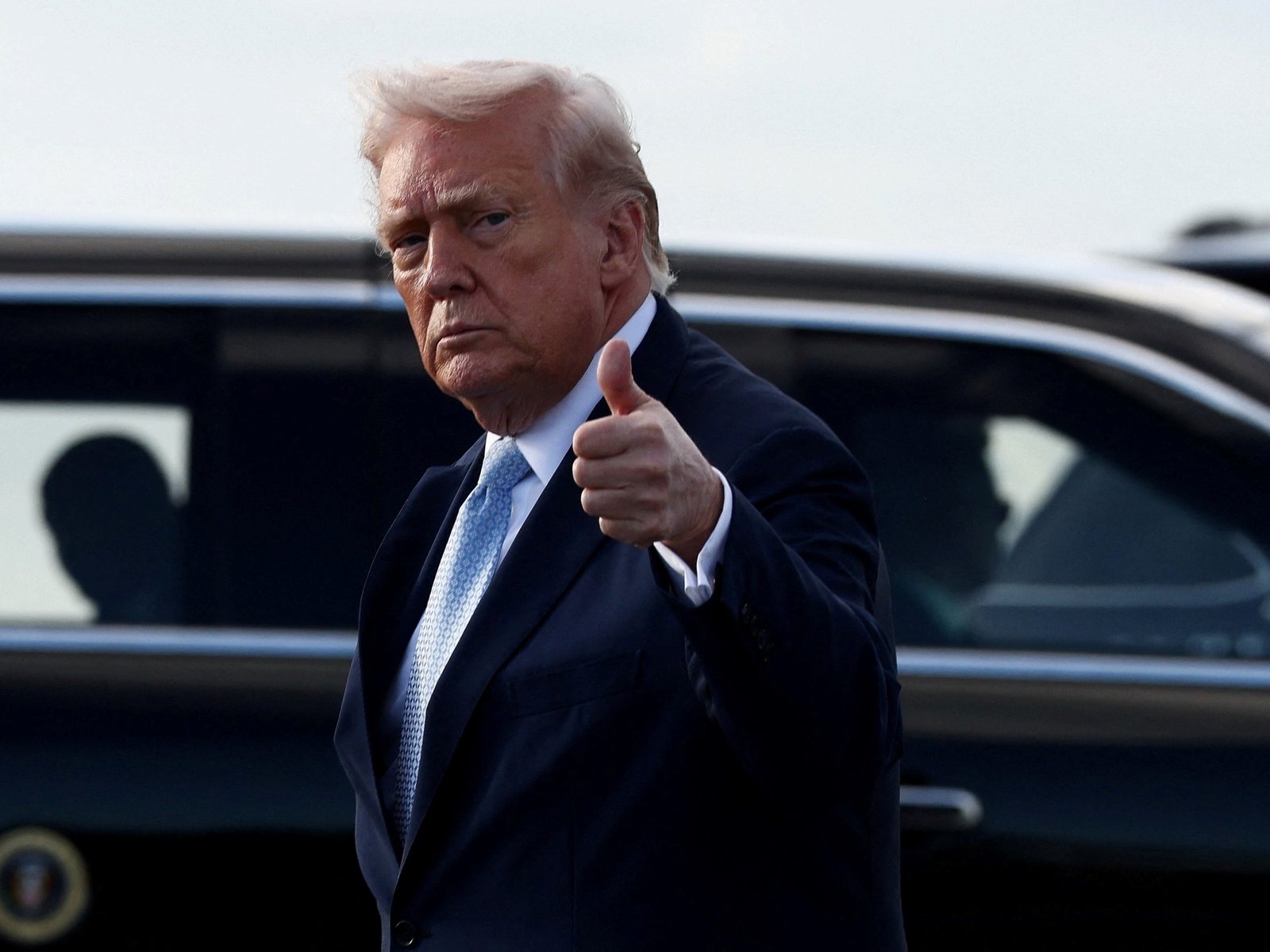
La guerra de Donald Trump contra Irán está influyendo en los votantes indecisos de Estados Unidos, un segmento clave que puede decidir si el mandatario republicano retiene o no el control del Congreso en las elecciones de medio término en noviembre.
Determinarán si Trump gobierna con un Congreso cooperativo o enfrenta una mayoría demócrata con poderes para bloquear proyectos de ley y lanzar investigaciones.
En un restaurante de Pensilvania, un estado bisagra donde los votantes no se inclinan totalmente por uno o por otro partido, había una mezcla de rabia y confusión por el nuevo conflicto.
«Trump solo nos está hundiendo en otra situación tipo Irak o Vietnam», dijo Jolene Lloyd, de 65 años, jubilada del servicio postal, al referirse a esas dos largas guerras que son vistas a menudo como un fracaso de Estados Unidos.
Lloyd nunca ha votado por Trump. Antes ha dividido su voto entre demócratas y republicanos, pero este año no, en noviembre, ella solo apoyará a los demócratas.
Los republicanos controlan de forma muy apretada el Congreso, donde todos los escaños de la Cámara y alrededor de un tercio del Senado están en juego. Incluso una pequeña pérdida de votos podría traerles problemas.
Con el costo de vida ya en la mente de muchos votantes, cualquier subida de precios por la guerra con Irán aparecerá en los ataques de campaña de los demócratas.
«Los precios de la gasolina obviamente se están yendo a las nubes… es un desastre total», dijo Lloyd mientras veía las noticias matutinas.
De acuerdo con una encuesta de la Universidad de Quinnipiac, los votantes independientes se oponen a la acción militar contra Irán en un 60%, contra un 31% a favor.
Esa división quedó patente cuando la AFP visitó Levittown, una zona obrera en las afueras de Filadelfia llena de concesionarios de autos y talleres mecánicos.
Sentado junto a Lloyd se encuentra el soldador Vince Lucisano, quien votó por Trump en 2024 y dice que ve a Irán como una amenaza para Estados Unidos.
«Estoy bien con esto, siempre que no haya tropas en el terreno. De ser así, me sentiré un poco más preocupado por el tema», dijo.
«Solo necesitamos manejarlo y básicamente poner a Irán en su lugar. Cuando se convierte en una guerra en toda regla, entonces empieza a dar un poco de miedo», añadió el hombre de 42 años.
Lucisano dijo que aún planea votar por los republicanos en noviembre a pesar de las dudas sobre el gasto de Trump en política exterior.
«El tipo que hizo campaña con ‘America First’ está tirando miles de millones al extranjero. Ahí no estamos poniendo a Estados Unidos primero amigo», comentó Lucisano.
La encuesta de la Universidad de Quinnipiac encontró que el 71% de los independientes cree que la administración Trump no ha dado una clara explicación de las razones para la intervención estadounidense en Irán.
Analistas dicen que los mensajes vagos pueden perjudicar a los republicanos de Trump en las elecciones de noviembre.
Christopher Borick, director del Instituto de Opinión Pública de Muhlenberg College en Pensilvania, señaló que el conflicto se suma a las preocupaciones existentes sobre el costo de vida y la inmigración.
«La administración pasa dificultades para presentar un caso convincente y claro a favor de las acciones militares en Irán y los efectos simultáneos en el costo de vida en Estados Unidos solo han agravado la frágil posición de los republicanos entre los independientes», explicó.
Bobby Marozzi, un empleado del restaurante, dijo que admira a Trump por actuar para que Irán no tenga armas nucleares, aún cuando no está seguro de cómo las acciones militares beneficiarán a los estadounidenses en el largo plazo.
«Si es pagando la gasolina cara y el supermercado caro durante los próximos cuatro años, está bien mientras el gobierno de Trump consiga que se haga algo», dijo el hombre de 37 años.
Marozzi explicó que puede sintonizar con una mentalidad al estilo «sin dolor no hay ganancia».
«Tenemos un dicho en el negocio de las comidas: ‘no puedes hacer una omelette sin romper algunos huevos’ ¿sabes?», dijo el empleado que no quiso hablar de su voto en las pasadas elecciones.
Jolene Lloyd, la jubilada que es cliente regular en el restaurante donde trabaja Marozzi, está mucho más lejos del compromiso con la guerra. «Tenemos que parar», asegura.

Nuevos créditos hipotecarios: cómo es la línea para clase media con tasa subsidiada

Trump proven right on Iran’s long-range missile capability as regime targets US-UK base, experts say

Milei se reunió con Viktor Orbán y dijo que la inmigración masiva es “un acto de irresponsabilidad”

El Gobierno apunta a una sindicalista por la filtración del video de Manuel Adorni en un vuelo privado

Activision no suele hacer esto, y le ha salido bien. El Call of Duty de hace 6 años multiplica sus jugadores y renace gracias a su precio mínimo histórico

El emotivo audio que Cherquis Bialo dejó grabado para el 24 de marzo: “Me imagino un coro en una cancha gritando ‘Son 30.000’”

Juicio por YPF: la Justicia de EEUU benefició a Argentina y suspendió todas las demandas hasta que se defina la cuestión de fondo

Senado: la oposición pidió explicaciones por $LIBRA y los vuelos de Adorni y Bullrich defendió al Gobierno

Kicillof desembarcó en CABA, lanzó su proyecto 2027 y empezará a ampliar su armado político en todo el país

¿DÓNDE ESTÁ ESMERALDA? El grito de una madre que sacude a la Argentina: «Me la arrebataron de la puerta»

 POLITICA2 días ago
Kicillof desembarcó en CABA, lanzó su proyecto 2027 y empezará a ampliar su armado político en todo el país
- POLITICA2 días ago
¿DÓNDE ESTÁ ESMERALDA? El grito de una madre que sacude a la Argentina: «Me la arrebataron de la puerta»
- POLITICA2 días ago
¿MACRI 2027? El «operativo retorno» que sacude al PRO y los nombres que suenan para la vicepresidencia