INTERNACIONAL
Trump wagers US economy in high-stakes tariff gamble at 100-day mark

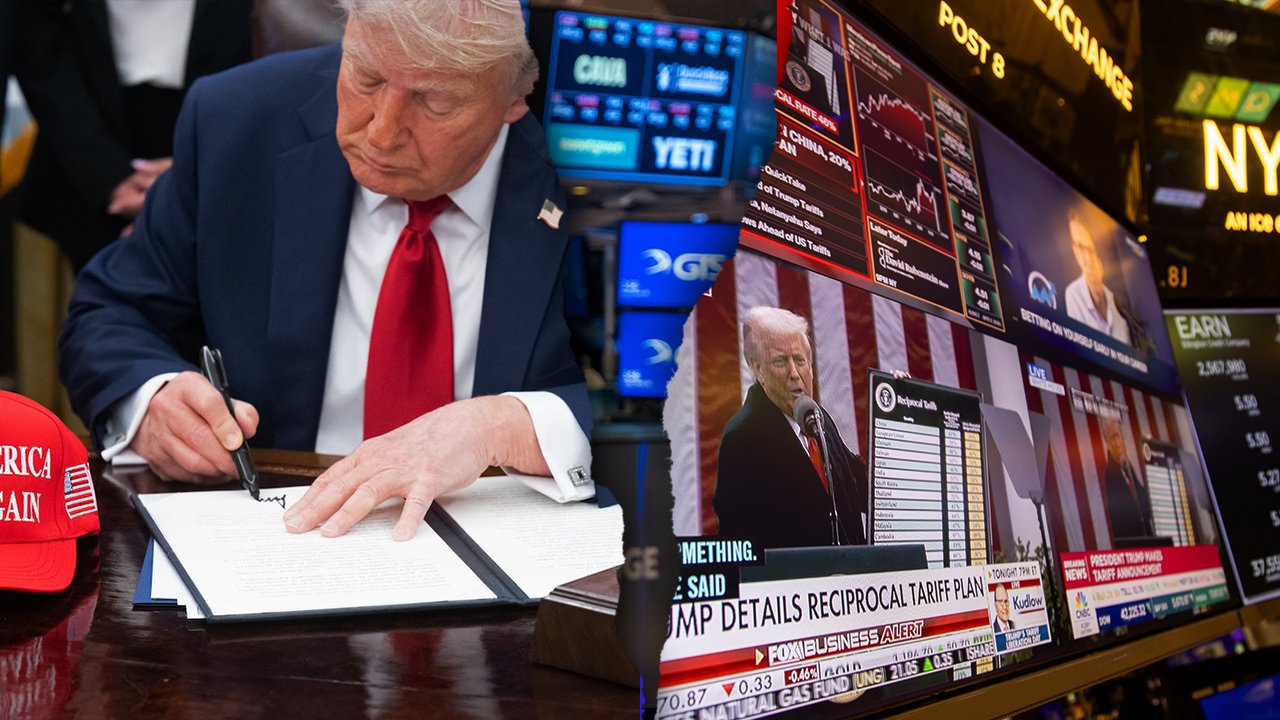
President Donald Trump campaigned for a second term on pledges to lower prices, create jobs and impose tough tariffs on imports, especially from China.
Dubbing himself the «Tariff Man» last fall, he told an audience at the Economic Club of Chicago, «To me, the most beautiful word in the dictionary is tariff.» However, in his first months in office, it is unclear whether Trump can, or should, implement the harsh reciprocal tariffs he announced in April against dozens of countries.
Now, 100 days into his second term, economists told Fox News Digital they see these proposed reciprocal tariffs as politically motivated, unnecessary and failing to secure the benefits from U.S. trading partners that Trump had been hoping for.
CHINA IS ‘CAVING’ TO TRUMP’S TRADE WAR STRATEGY, EXPERT SIGNALS
President Donald Trump holds a «Foreign Trade Barriers» document as he delivers remarks on tariffs in the Rose Garden at the White House in Washington, D.C., on April 2, 2025. (REUTERS/Carlos Barria/File Photo)
Instead, they warned, Trump’s tariffs could grind billions of dollars in trade to a halt between the world’s two largest economies, disrupt global supply chains and risk torpedoing the U.S. economy into a major slump or recession.
When Trump took office, chances of recession «were probably about 10%,» Justin Wolfers, an economist at the University of Michigan, told Fox News Digital in an interview. «Now, they’re up to around 55%.»
It is unclear whether Trump will continue to push through with these unpopular tariffs, which are slated to take force in early July. In the near-term, uncertainty and volatility remain.
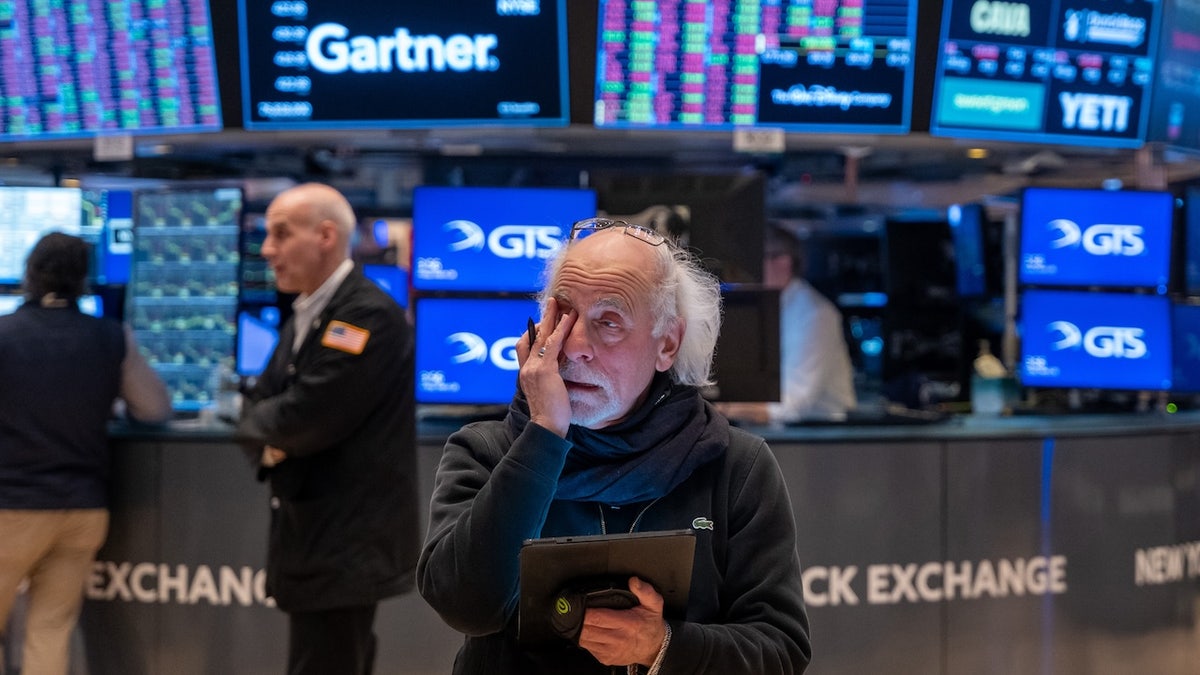
Traders work on the floor of the New York Stock Exchange in New York City on March 28, 2025 amid President Donald Trump’s escalating trade war. (Spencer Platt/Getty Images)
Short-term tariff impact
Trump announced tariffs on April 2, dubbed «Liberation Day.» The announcement included both a 10% universal baseline tariff and plans to enact larger tariffs on dozens of other countries, including China.
These new import taxes immediately sent stock markets into free-fall, triggering one of the largest single-day S&P 500 losses since World War II, and prompting deep and unyielding uncertainty over possible next moves.
«The only thing that’s happened that has pushed the odds of a recession up so high, so fast, is chaos coming from out of the White House,» Wolfers said.
Trump subsequently paused the reciprocal tariffs for 90 days to encourage the administration to make «deals» with countries on trade and encourage more investment in U.S. manufacturing. Even so, some prices have already risen in anticipation of higher costs under the new tariff regime.
Uncertainty has also played a role. Trump’s tariff announcement in April prompted a number of large container ships to abruptly halt their shipments to the U.S. earlier this month and turn back to their original ports. This means that more consumers will see a price hike for everyday products, likely at certain big-box retailer stores like Walmart or Target, as early as next month.
These price hikes are «not showing up tomorrow, but will show up over the next few months, as scarcities develop and American retailers have to find other sources – that might take a while,» David H. Feldman, an economist and professor at William & Mary College, said in an interview.
TRUMP’S ULTIMATUM TO FEDERAL WORKERS: RETURN TO OFFICE ‘OR BE TERMINATED’
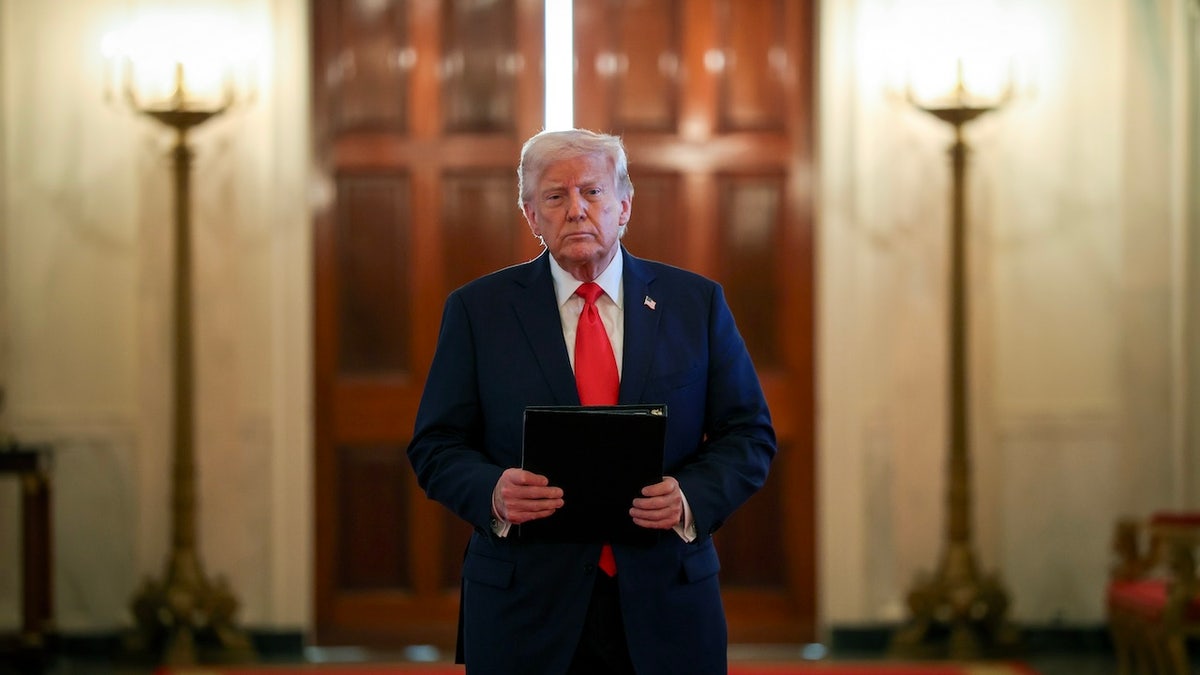
President Donald Trump arrives for a presentation ceremony in the East Room of the White House on April 15, 2025 in Washington, D.C. (Win McNamee/Getty Images)
While Trump says tariffs will target foreign competitors and reduce the trade deficit, the costs will fall mostly on working- and middle-class Americans who buy the bulk of imported goods.
Wolfers said Trump’s focus on the trade «deficit» is based on a common misconception.
«What that means is we sell China a small amount of stuff, and they sell us a large amount of stuff,» he explained. However, for every dollar bill that goes to China, the U.S. gets something for it that Americans want to buy, like T-shirts.
«We have a dollar deficit – but we have a stuff surplus.»
Potential for deescalation
There are few signs that Trump’s tariffs will deliver the gains he sought, such as onshoring U.S. production or securing better trade deals, particularly with Asian countries.
Instead, experts warn these countries are likely to circumvent U.S. markets and supply chains over time.
«If these tariffs stay in place, there will be hardly any trade between the U.S. and China,» by the second half of the year, Gary Clyde Hufbauer, a senior non-resident fellow at the Peterson Institute for International Economics, said in an interview.
Roughly $650 billion in annual trade between the two countries is at risk, along with knock-down effects on global commerce in the long term.
WORLD LEADERS REACT AS TRUMP RE-ENTERS THE WHITE HOUSE
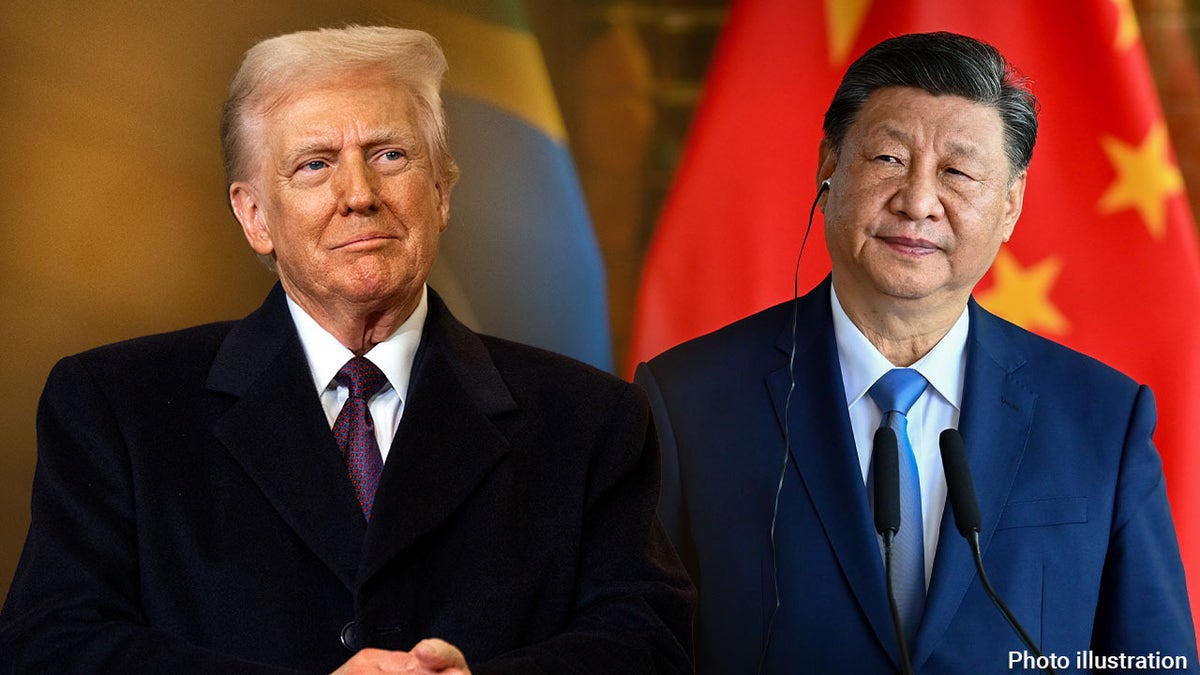
President Donald Trump, left, and Chinese leader Xi Jinping.
Trump’s tariffs also discard decades of international understanding that has depoliticized trade disputes, Feldman said.
The U.S. is «moving from a system that at least was based on mutually acceptable rules of behavior to a system that does not have that as its anchor,» Feldman, whose research focuses on global trade policy, told Fox News Digital. That shift allows the government to target foreign nations individually and offer selective tariff relief to firms and industries «if they do ‘our’ bidding,» he argued.
«America is now master of the shakedown.»
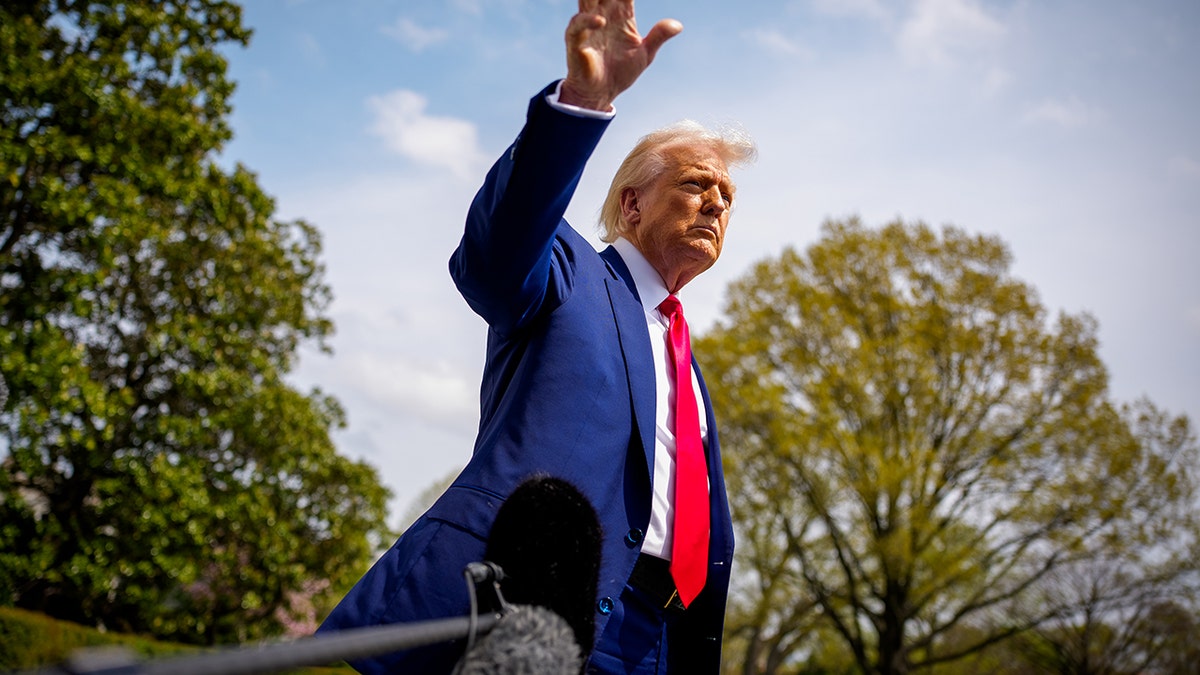
President Donald Trump gestures to members of the media before boarding Marine One on the South Lawn of the White House on April 3, 2025 in Washington, D.C. Trump spoke a day after announcing sweeping new tariffs targeting goods imported into the U.S. on countries including China, Japan and India. (Andrew Harnik/Getty Images)
Next steps
After market backlash, Trump appears to be warming to the idea of easing his proposed 145% reciprocal tariffs on China, which has vowed to impose its own retaliatory measures on U.S. goods.
Economists say he is more likely to do so if the economy sours, or he sees a major drop in poll numbers, if the past is precedent.
Still, any path to deescalation remains uncertain. Just last week, China denied Trump’s claim that the two countries were negotiating a tariff deal, after he asserted in an interview that he had reached «200 deals» on trade.
Economists believe Trump will at least partially scale back the tariffs before July but warn he is playing a high-stakes game of brinkmanship that could hit U.S. consumers and businesses hardest.
«What I worry about is that the immediate impact of uncertainty is on business investment in trade-exposed industries, leading to a recession,» Feldman said. «But it could get worse, if it transmits into a financial panic. And if everyone starts to say, ‘geez, I got to get into gold and cash, I can’t be in Treasury bills.’ If we move into a flight to cash, all bets are off.»
Should that happen, he said, «We could slide into 2008 all over again.»
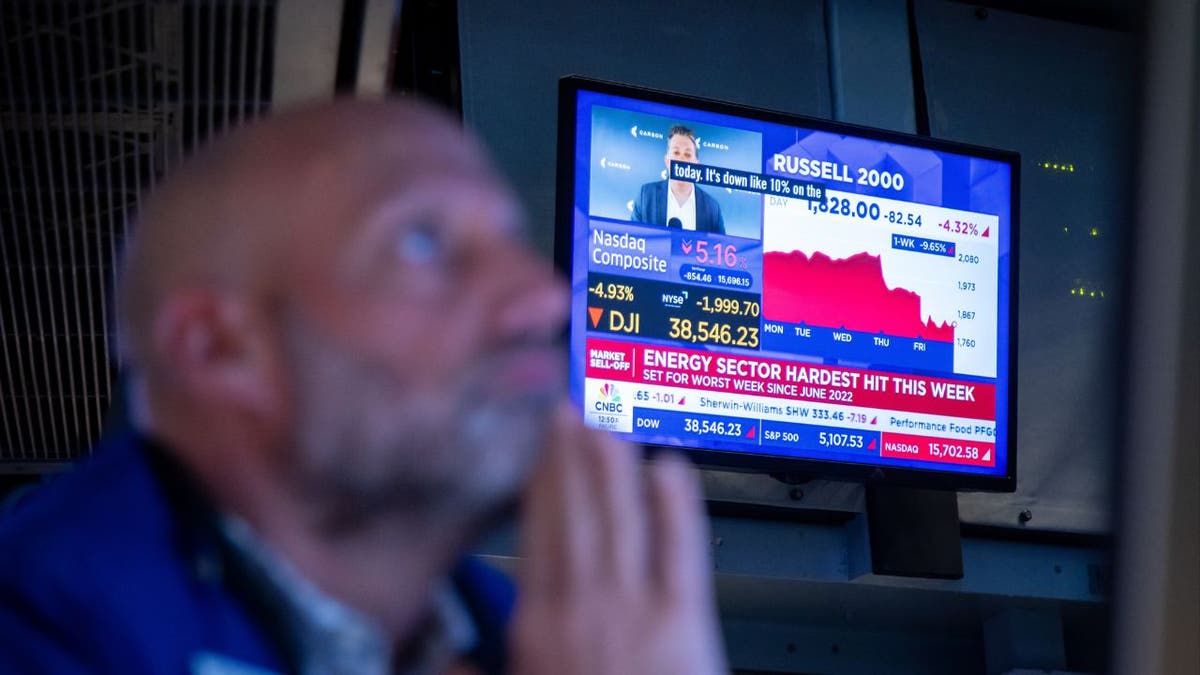
A television broadcasts market news on the floor of the New York Stock Exchange in New York on Friday, April 4, 2025. (Michael Nagle/Bloomberg via Getty Images)
Trump has refused to concede that his early days have been anything but a major success.
In a recent interview with Time magazine, he touted his first 100 days as «very successful,» saying «people [are] writing that it was the best first month, and best second month, and really the best third month» for a U.S. president.
He dismissed stock market volatility and rising inflation as temporary «market fluctuation,» calling it a «transition period» that would level out.
When asked if he would consider it a win if tariffs remained as high as 50% on imports a year from now, Trump said he would.
CLICK HERE TO GET THE FOX NEWS APP
«Total victory,» he said.
«Everybody is going to benefit.»
Trump’s First 100 Days,Donald Trump,Politics,Trade,Taxes









INTERNACIONAL
Did they get him? Khamenei’s fate remains unknown after Israel strike levels his compound
NEWYou can now listen to Fox News articles!
As the smoke was still clearing over Tehran, one question dominated the region and Washington alike: Did they get him?
In the immediate aftermath of the Israel-U.S. strikes, with the Israeli Air Force targeting senior Iranian leadership infrastructure, rumors swirled that Ayatollah Ali Khamenei, Iran’s 86-year-old supreme leader, had been killed.
Satellite images showed heavy damage to Ayatollah Ali Khamenei’s fortified compound, including buildings believed to house his residence and the so-called House of Leadership. Parts of the complex appeared reduced to rubble.
Regional reports indicated a high-level meeting of Khamenei’s top lieutenants may have been underway when the strike hit. Iranian semi-official media also reported missiles struck near the presidential palace and other leadership sites north of the capital.
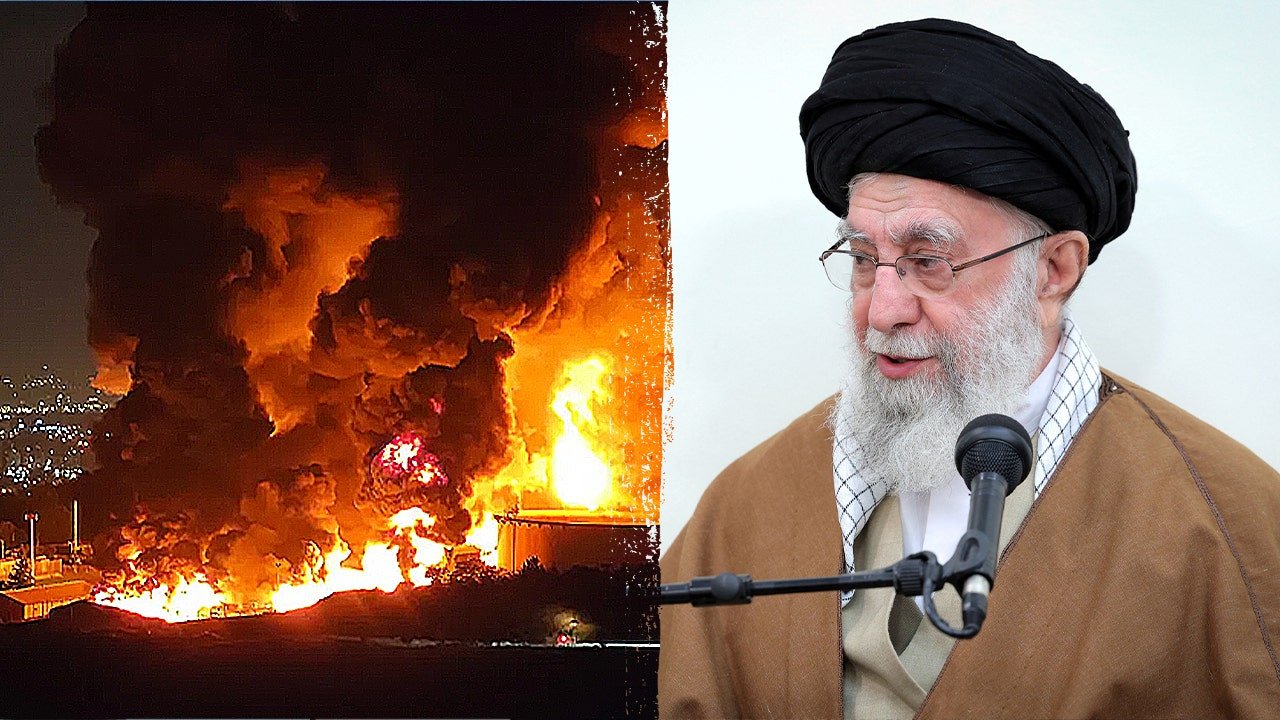
Iran’s Supreme Leader Khamenei makes first public appearance in weeks with fresh U.S. threats. (Office of the Iranian Supreme Leader Credit/ASSOCIATED PRESS)
Addressing the nation on Saturday, Prime Minister Benjamin Netanyahu said in Hebrew, «There are more and more signs indicating Khamenei is gone.»
Israeli officials told Fox News Digital they were still assessing the results and said it was too early to confirm the fate of the 86-year-old supreme leader. They did not rule out the possibility that he was killed.
Iranian officials, however, insisted the country’s leadership — including Khamenei and President Masoud Pezeshkian — remained safe, according to The Guardian, despite what they described as an assassination attempt. Meanwhile, a spokesperson for Iran’s Ministry of Foreign Affairs told the BBC that he was not in a position to confirm whether Ayatollah Ali Khamenei had been eliminated.
IRAN FIRES MISSILES AT US BASES ACROSS MIDDLE EAST AFTER AMERICAN STRIKES ON NUCLEAR, IRGC SITES
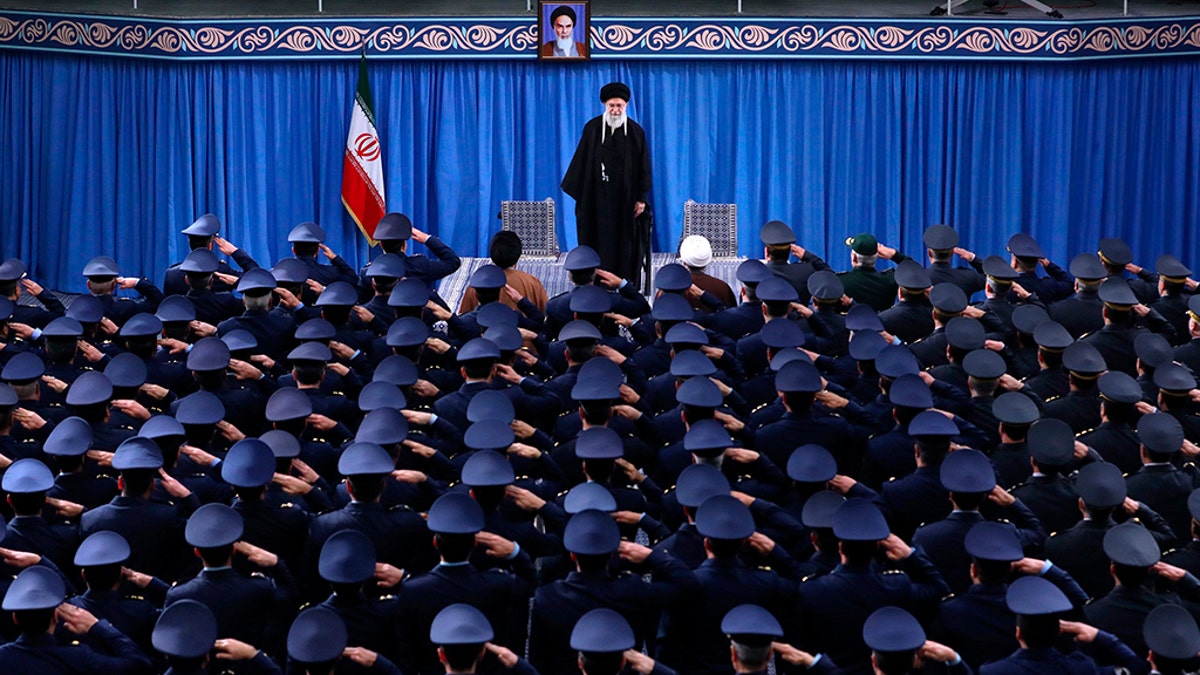
In this picture released by an official website of the office of the Iranian supreme leader, Supreme Leader Ayatollah Ali Khamenei stands as army air force staff salute at the start of their meeting in Tehran, Iran, Friday, Feb. 8, 2019. Khamenei is defending «Death to America» chants that are standard fare at anti-U.S. rallies across Iran but says the chanting is aimed at America’s leaders and not its people. (Office of the Iranian Supreme Leader via AP)
The long-serving cleric has survived decades of internal unrest, assassination plots and foreign pressure. He rarely appears in public without layers of security and is believed to operate through a tightly controlled network of loyalists embedded across Iran’s military, intelligence and political institutions.
In an exclusive Fox News Digital report earlier this week, researchers described how Khamenei runs what amounts to a parallel state within Iran’s formal government structure.
«The Bayt is the hidden nerve center of the regime in Iran… it operates as a state within a state,» Kasra Aarabi, director of Islamic Revolutionary Guard Corps (IRGC) research at United Against Nuclear Iran (UANI), told Fox News Digital.
IRAN COULD ‘ACTIVATE’ HEZBOLLAH IF US TARGETS REGIME, TRUMP’S INNER CIRCLE TO DECIDE: EXPERT
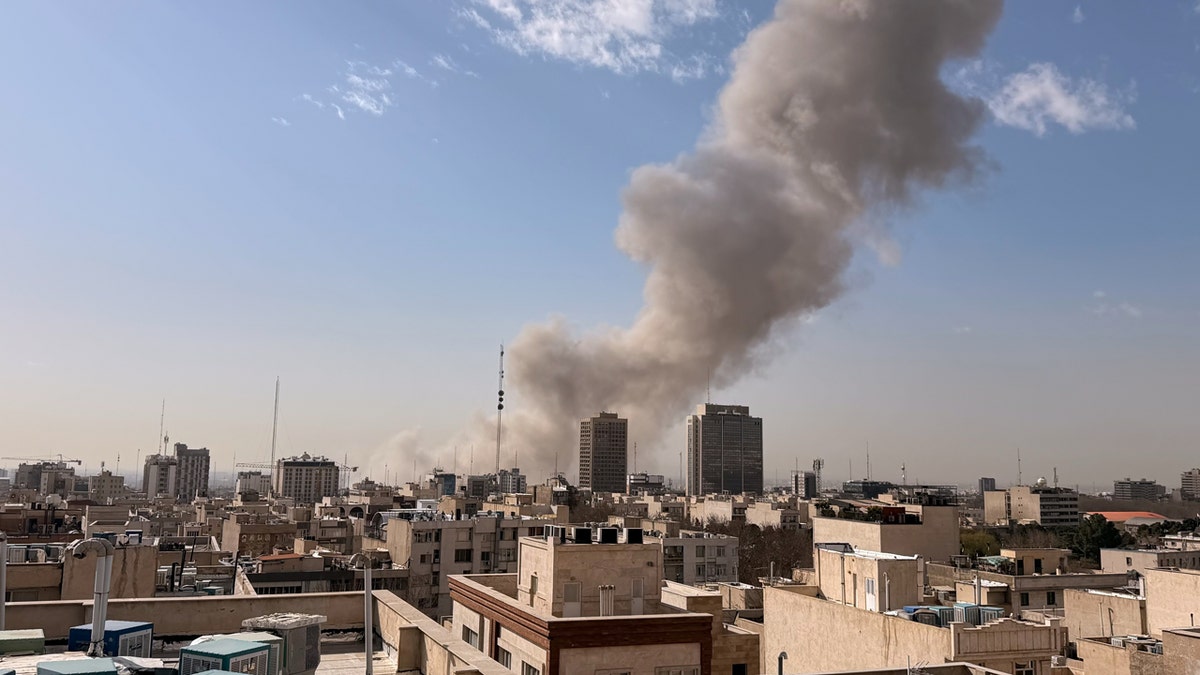
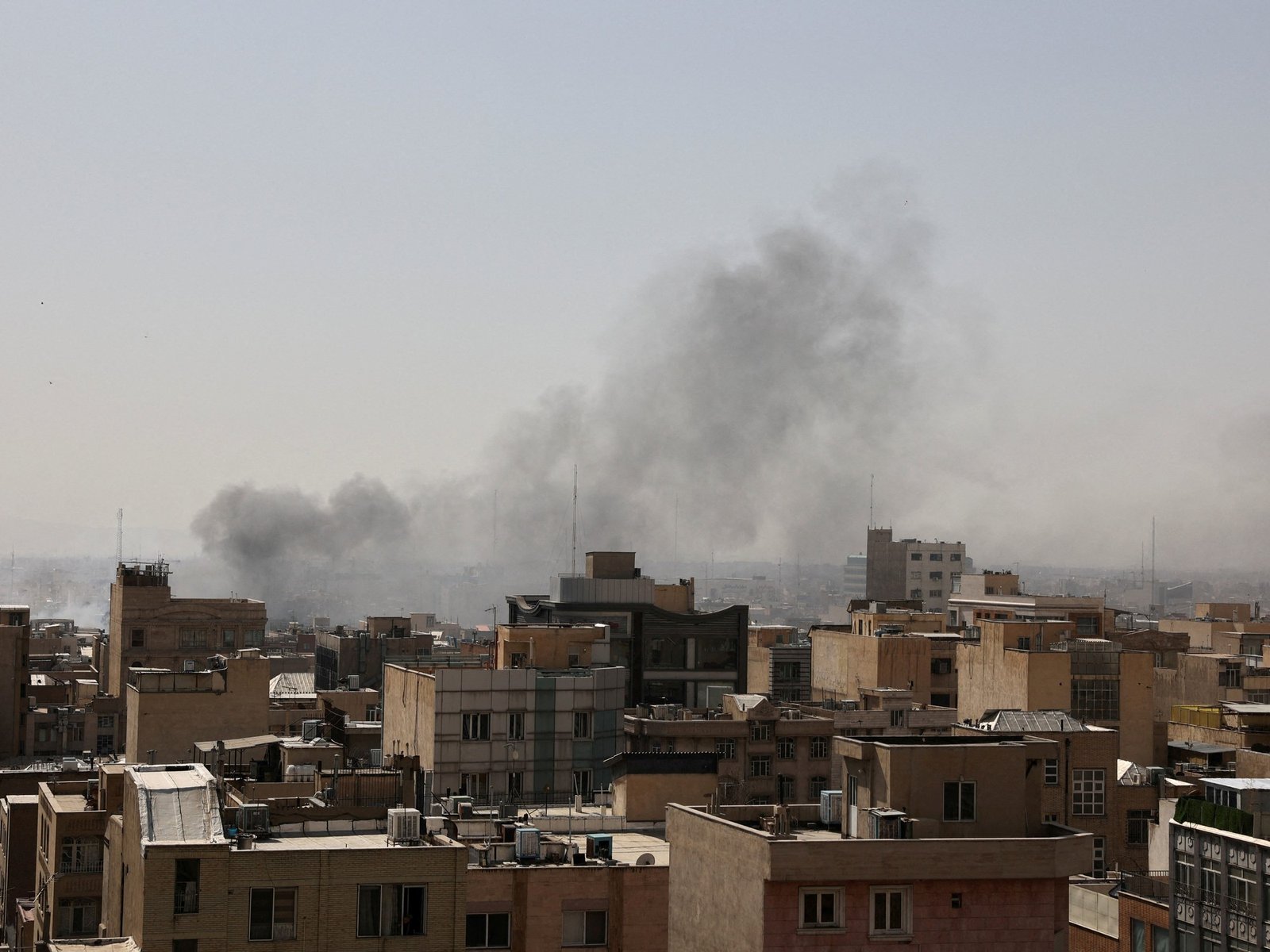
Smoke rises on the skyline after an explosion in Tehran, Iran, Saturday, Feb. 28, 2026. (AP Photo/Vahid Salemi)
Even if Khamenei himself were removed, Aarabi warned, the institutional machinery he built — involving roughly 4,000 core staff and a broader network of tens of thousands — could continue functioning.
«Even if he is eliminated, the Bayt as an institution enables the Supreme Leader to function,» Aarabi said. «Think of the Supreme Leader as an institution rather than just a single individual.»
That reality complicates the picture.
For decades, Khamenei has positioned himself not merely as a political leader but as the apex of a system designed to survive shocks — whether from protests at home or military pressure abroad.
The 86-year-old cleric has faced repeated waves of unrest, including mass protests in 2009, 2022 and again in early 2026. Each time, his regime cracked down forcefully, consolidating control rather than fracturing.
He has also weathered years of covert operations, cyber campaigns and targeted strikes against key Iranian figures across the region.
Still, the scale of the latest strike appears unprecedented.
If confirmed dead, Khamenei’s killing would mark the most significant decapitation of Iranian leadership since the 1979 revolution. It would also raise immediate questions about succession inside a system he carefully engineered to avoid sudden collapse.
CLICK HERE TO DOWNLOAD THE FOX NEWS APP
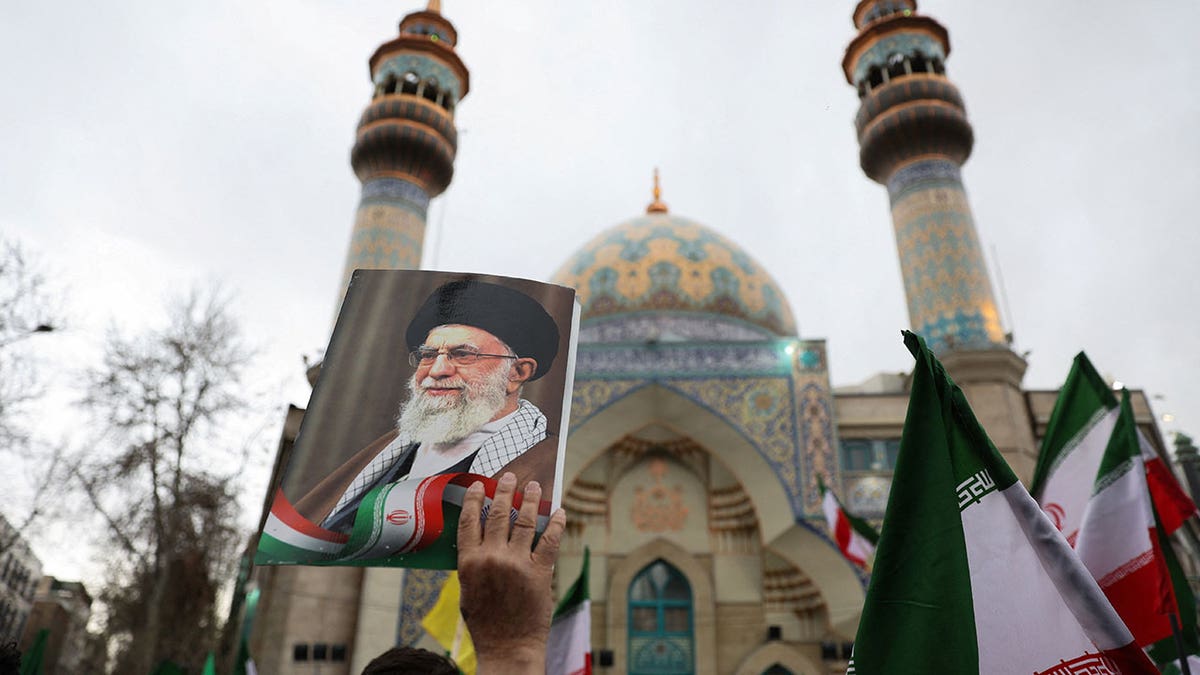
A person holds an image of Iran’s Supreme Leader Ayatollah Ali Khamenei as Iranian demonstrators protest against the U.S.-Israeli strikes, in Tehran, Iran, Feb. 28, 2026. (Majid Asgaripour/WANA (West Asia News Agency) via Reuters)
If he survived, it would reinforce his reputation for resilience — and underscore how difficult it is to eliminate the core of Iran’s power structure.
For now, officials say assessments are ongoing, and the question may be answered in the very near future.
Related Article

ali khamenei,war with iran,iran,israel,bombings
INTERNACIONAL
Irán afirma que cerró el estratégico estrecho de Ormuz, en un paso audaz que incendia aún más la región
NEWYou can now listen to Fox News articles!
Democratic Reps. Ilhan Omar and Rashida Tlaib, both progressive «Squad» members, lashed out at President Donald Trump on Saturday in response to his decision to strike Iran.
«Trump has launched an illegal regime change war,» Omar posted on X. «As someone who has survived the horrors of war, I know military strikes will not make us safer; they will inflame tensions and push the region further into chaos.»
Omar, who fled Somalia as a refugee as a young child, added, «When we abandon diplomacy, we choose destruction.»
Tlaib reacted on social media to a clip of Trump acknowledging that there may be American casualties in this attack.
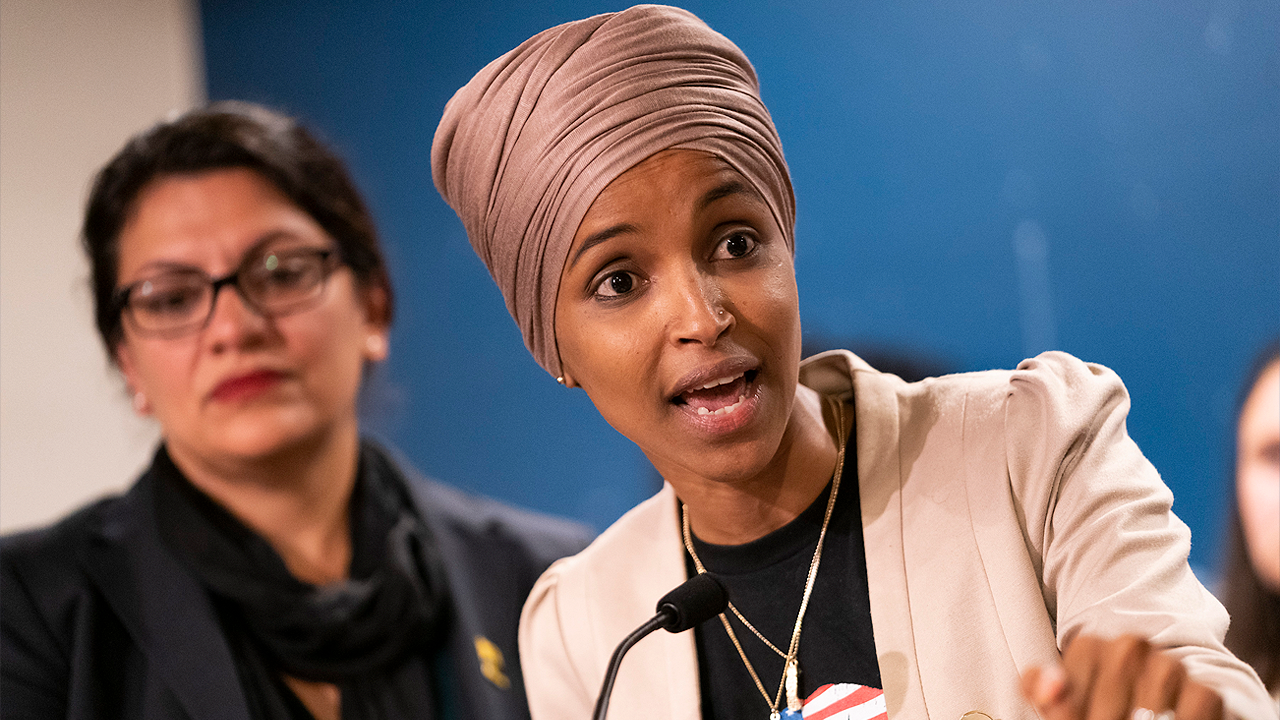
Rep. Ilhan Omar, with Rep. Rashida Tlaib at her side, speaks at a press conference. (Renee Jones Schneider/Star Tribune via Getty Images)
«He doesn’t care about our loved ones in the military,» Tlaib posted on X in a message that was reposted by Omar. «He doesn’t care about the fact that Americans don’t want this war.»
«He doesn’t care about the Iranian people. He is corrupted. Don’t fall for the lies.»
Democratic Rep. Alexandria Ocasio-Cortez of New York also slammed President Donald Trump for abandoning diplomacy in favor of launching an attack against Iran, predicting the outcome will be «catastrophic.»
«The American people are once again dragged into a war they did not want by a president who does not care about the long-term consequences of his actions. This war is unlawful. It is unnecessary. And it will be catastrophic,» Ocasio-Cortez said.
«Just this week, Iran and the United States were negotiating key measures that could have staved off war. The President walked away from these discussions and chose war instead. President Trump flippantly acknowledged the possibility of American casualties, stating ‘that often happens in war,’» she continued. «Mr. President: this was not an inevitability. This is a deliberate choice of aggression when diplomacy and security were within reach. Stop lying to the American people.
Democratic Rep. Greg Casar, another progressive House member associated with the informal «Squad» group, called Trump’s actions an «illegal war» in a post on X.
«Yet again, an American president is sending other people’s kids to risk their lives in a senseless regime change war,» Casar said.
The U.S. and Israel launched the joint attack just after 9 a.m. local time in what the Pentagon has dubbed «Operation Epic Fury.»
IF KHAMENEI FALLS, WHO TAKES IRAN? STRIKES WILL EXPOSE POWER VACUUM — AND THE IRGC’S GRIP
In video remarks posted to Truth Social, Trump addressed the Iranian people directly and told them to «seize control of [their] destiny.»
«The hour of your freedom is at hand. Stay sheltered. Don’t leave your home. It’s very dangerous outside. Bombs will be dropping everywhere. When we are finished, take over your government. It will be yours to take,» Trump said. «This will be, probably, your only chance for generations. For many years, you have asked for America’s help, but you never got it. No President was willing to do what I am willing to do tonight. Now you have a President who is giving you what you want.»
CLICK HERE TO DOWNLOAD THE FOX NEWS APP
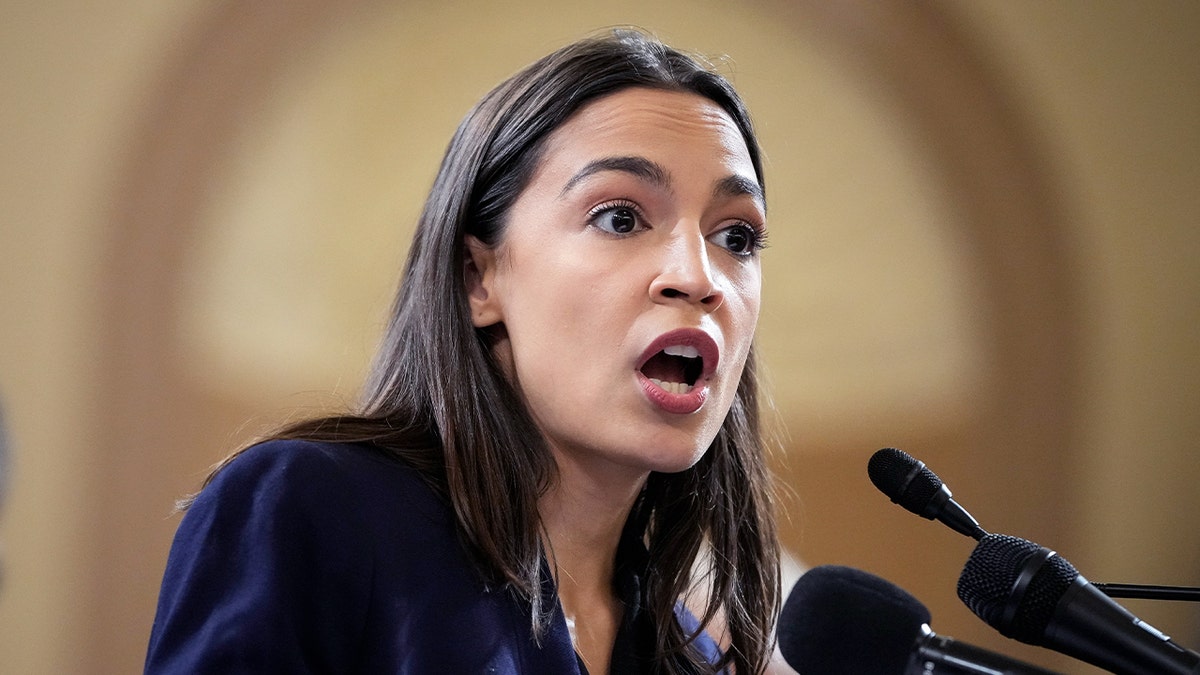
Rep. Alexandria Ocasio-Cortez, D-N.Y. (Photo by Drew Angerer/Getty Images)
While Trump focused some of his message on empowering the people of Iran, he stated that the intent of the operation is to «defend the American people by eliminating imminent threats from the Iranian regime,» which he described as «vicious» and «very hard, terrible people.»
Trump also said that while there may be American casualties as a result, the mission is «noble» as it is aimed at stopping a «wicked, radical dictatorship» from threatening American national security interests and destabilizing the Middle East.
Fox News Digital’s Michael Sinkewicz and Alex Nitzberg contributed to this report
Related Article

politics,iran,ilhan omar,rashida tlaib

Douglas Costa pasa de la élite al ‘barro’ de Italia

Did they get him? Khamenei’s fate remains unknown after Israel strike levels his compound

Javier Milei vuelve al prime time para la apertura de sesiones ordinarias, acechado por un antecedente de bajo rating

El Gobierno de Milei expresó su respaldo a la ofensiva de EE.UU. e Israel sobre Irán

Las predicciones más importantes en la vida de cada signo del horóscopo en marzo, según Jimena La Torre: «Será un cambio rotundo»

La crisis secreta de ChatGPT: el agujero de u$s 14.000 millones que divide a Wall Street

Jorge Macri prepara su discurso para abrir el año legislativo: el deseo de reelección y el espejo en Bukele

Crisis en la industria: otra multinacional se achica y cierra una planta en la Argentina

Catherine Fulop contó el difícil momento que atraviesa su madre en Venezuela: “Está postrada”

Alarma por la salud de Divina Gloria tras salir de Gran Hermano: “La internaron directamente en terapia intensiva”

 ECONOMIA3 días ago
Crisis en la industria: otra multinacional se achica y cierra una planta en la Argentina
- CHIMENTOS3 días ago
Catherine Fulop contó el difícil momento que atraviesa su madre en Venezuela: “Está postrada”
- CHIMENTOS2 días ago
Alarma por la salud de Divina Gloria tras salir de Gran Hermano: “La internaron directamente en terapia intensiva”