INTERNACIONAL
Trump warns Rand Paul he’s playing into ‘hands of the Democrats’ with ‘Big, Beautiful Bill’ opposition

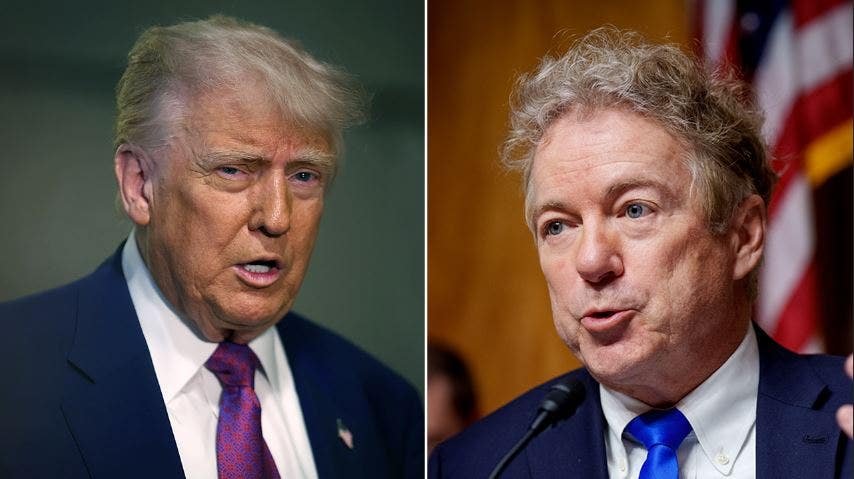
President Donald Trump on Saturday warned Sen. Rand Paul, R-Ky., he would be «playing right into the hands of the Democrats» if he votes against Trump’s «Big, Beautiful Bill.»
«If Senator Rand Paul votes against our Great, Big, Beautiful Bill, he is voting for, along with the Radical Left Democrats, a 68% Tax Increase and, perhaps even more importantly, a first time ever default on U.S. Debt,» Trump wrote on Truth Social Saturday afternoon.
«Rand will be playing right into the hands of the Democrats, and the GREAT people of Kentucky will never forgive him! The GROWTH we are experiencing, plus some cost cutting later on, will solve ALL problems. America will be greater than ever before!»
Paul told «Fox News Sunday» last weekend he supports the tax and spending cuts in the bill, which he still slammed as «wimpy and anemic, but I still would support the bill, even with wimpy and anemic cuts if they weren’t going to explode the debt. The problem is the math doesn’t add up. They’re going to explode the debt by, the House says, $4 trillion. The Senate’s actually been talking about exploding the debt $5 trillion.»
INSIDE THE LATE-NIGHT DRAMA THAT LED TO TRUMP’S TAX BILL PASSING BY 1 VOTE
President Donald Trump on Saturday warned Sen. Rand Paul, R-Ky., he would be «playing right into the hands of the Democrats» if he votes against the president’s «Big, Beautiful Bill.» (Tasos Katopodis/Getty Images; Andrew Harnik/Getty Images)
The bill narrowly passed the House May 22 and will soon be voted on in the Senate, where Republicans can only afford to lose three votes.
Others, like Sen. Ron Johnson, R-Wis., have also expressed concerns about the bill.
TRUMP SLAMS REPUBLICAN ‘GRANDSTANDERS’ OPPOSING BUDGET BILL, PREDICTS MASSIVE US TAX INCREASES IF IT FAILS
Last weekend, Trump told reporters he was open to changes in the bill.
«I want the Senate and the senators to make the changes they want,» he said. «It will go back to the House, and we’ll see if we can get them. In some cases, the changes may be something I’d agree with, to be honest.»
Along with tax cuts, the One Big Beautiful Bill Act also includes stricter requirements for accessing Medicaid, changes to the Supplemental Nutrition Assistance Program (SNAP) program and no taxes on overtime or tips.
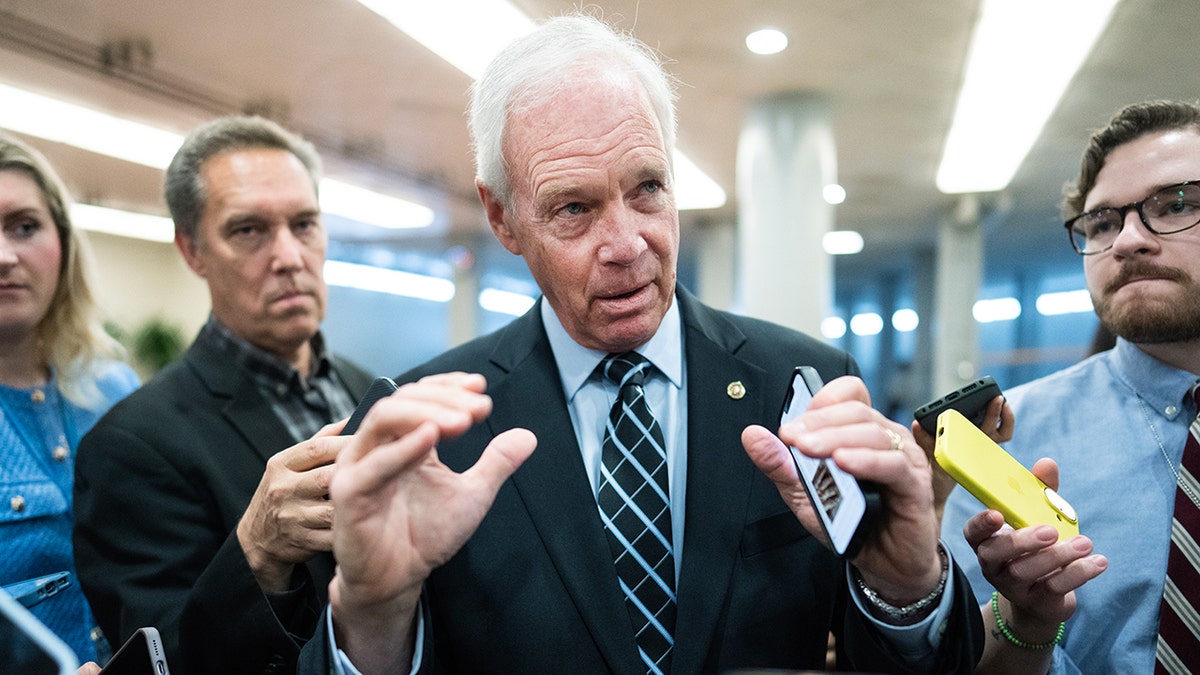
Sen. Ron Johnson, R-Wis., talks with reporters in the U.S. Capitol after the House passed the One Big Beautiful Bill Act May 22. (Tom Williams/CQ-Roll Call, Inc via Getty Images)
Democrats have slammed the Medicaid reform section of the bill, mentioning possible cuts as a driving issue ahead of competitive midterm elections in 2026.
The Congressional Budget Office (CBO), a nonpartisan analyst for the U.S. Congress, estimates that 8.6 million people in the United States will lose health insurance by 2034 through the One Big Beautiful Bill Act’s Medicaid reform.
«The Democrats have been focusing on this specific line of attack that 13.7 million Americans are going to lose their health care, and that’s just blatantly false,» Rep. Erin Houchin, R-Ind., told Fox News Digital in an exclusive interview this week.
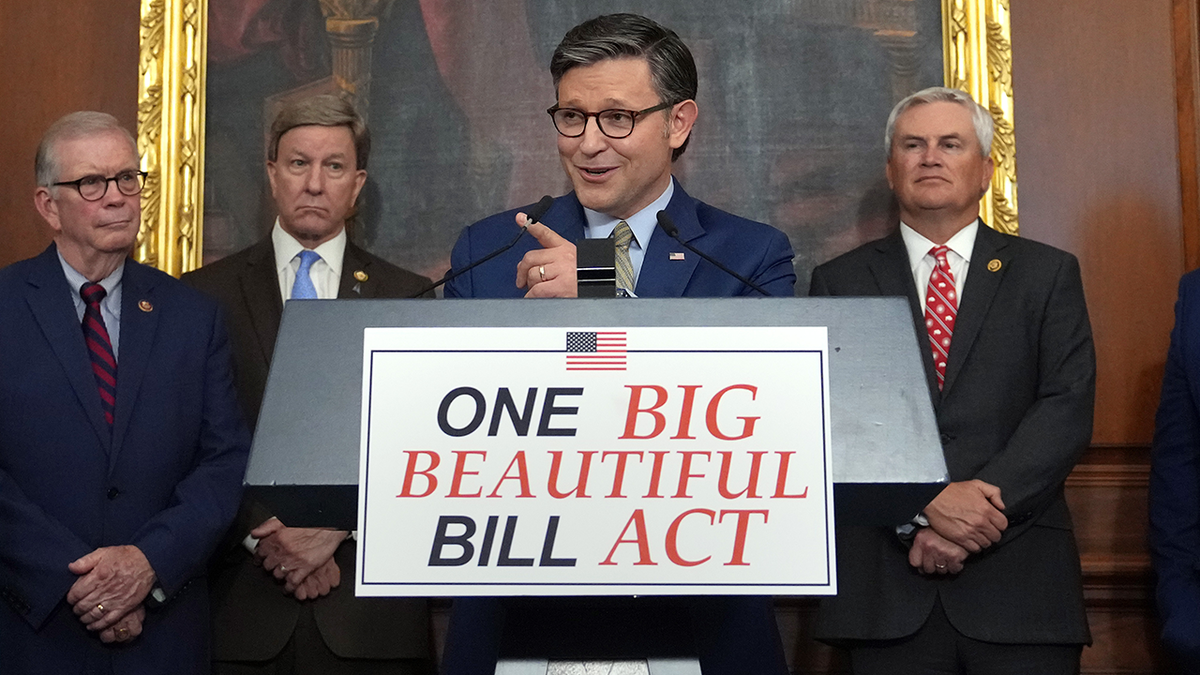
House Speaker Mike Johnson and House Republicans celebrated passing Trump’s «Big, Beautiful Bill» earlier this month. (Getty Images)
«Five million of those people are receiving a tax credit under the Affordable Care Act that was passed by the Democrats with a sunset date that was implemented by the Democrats. We’re simply allowing the sunset date to expire as the Democrats originally intended,» Houchin said.
CLICK HERE TO GET THE FOX NEWS APP
CBO estimates that 13.7 million Americans will lose coverage by 2034, which also includes the 5 million Americans who were already about to lose coverage. A number of Democrats have already deployed the figure in campaign messages rejecting Trump’s bill passing in the House.
«I don’t trust the CBO score, nor should the American people, because it’s been proven again and again to be wildly off,» added Houchin, who served on three major committees leading budget markup, including the House Rules, Budget and Energy and Commerce committees.
Fox News’ Deirdre Heavey contributed to this report.
Donald Trump,Senate,Politics,Rand Paul,Legislation













INTERNACIONAL
«Desearía nunca haberlo conocido»: la princesa Mette-Marit de Noruega repudió la amistad que tuvo con Jeffrey Epstein
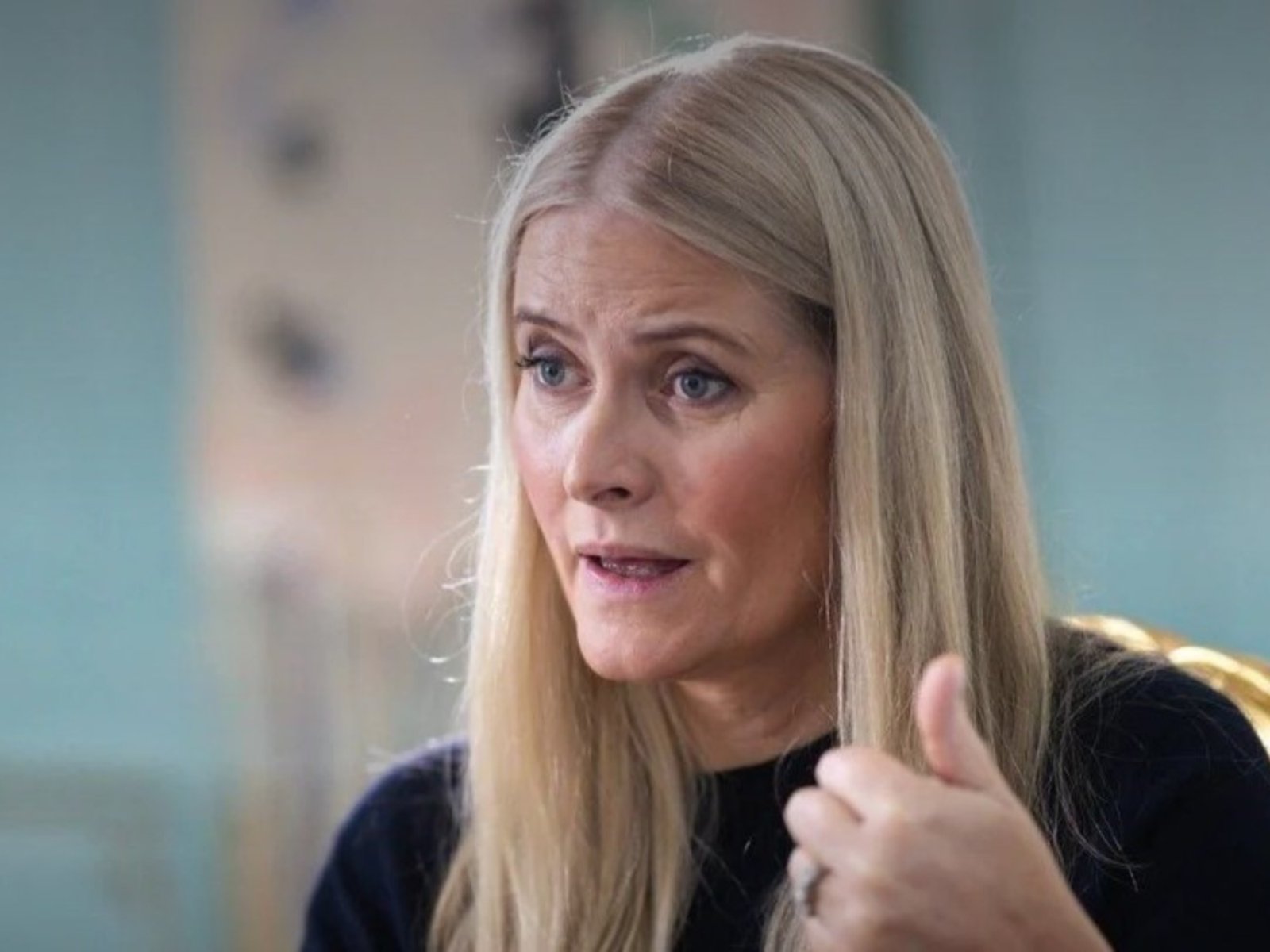
Luego de varios días de intrigas sobre su estado de salud y la visita a su hijo en la cárcel, la princesa noruega Mette-Marit reapareció el viernes en una entrevista que ofreció al principal noticiero de la TV de Oslo, acompañada por su esposo Haakon, el heredero del trono, y en la que se refirió a sus vínculos con el fallecido Jeffrey Epstein.
Si bien a principios de febrero, cuando se difundieron sus mails y chats con Epstein, había dicho en un comunicado del Palacio que tuvo «falta de criterio» por haber «tenido contacto» con el financista en un episodio que calificó de «vergonzoso», ahora la princesa dio la cara y habló abiertamente de su «relación de amistad» con el acusado de delitos sexuales.
Mette-Marit, de 52 años, exmodelo y madre de tres hijos, sostuvo en una entrevista que difundió el canal oficial NRK TV en su «nyheter» o noticiero central que había sido «manipulada y engañada» por Jeffrey Epstein. Y, reconoció que «por supuesto, hubiera preferido no haberlo conocido nunca».
La publicación desde enero por autoridades de los Estados Unidos de una infinidad de documentos el caso Epstein , un escándalo que salpica a ricos y famosos de todo el mundo, reveló para el interés de Noruega una correspondencia constante y de una confianza íntima, entre la princesa y el financista entre 2011 y 2014. Por entonces, Mette-Marit ya era princesa y madre de los próximos herederos. Se había casado en agosto de 2001 con Haakon, con quien tuvo a sus hijos Ingrid y Sverre.
Durante el reportaje filmado en un impecable living en tonos pastel del Palacio y que duró cerca de veinte minutos, la princesa consideró «sumamente importante admitir el hecho de no haber investigado más a fondo su pasado y asumir también haber sido tan manipulada y engañada» por Epstein, a quien había visitado en Palm Beach.
Mette-Marit también aclaró la naturaleza de su vínculo con Epstein. «Era una relación de amistad: para mí era, ante todo, un amigo». Y descartó cualquier otro tipo de vínculo sentimental.
La princesa también reconoció que después de un tiempo decidió ponerle fin a esa amistad por episodios incómodos que no dio a conocer. En ese momento, intervino el príncipe Haakon y se limitó a señalar que en uno de esos momentos la hicieron sentir «un poco insegura» a su esposa.
Según los mensajes divulgados por los medios noruegos, cuando ya llevaba diez años de casada con el príncipe noruego y Epstein ya había sido condenado por pagar servicios sexuales a una menor de edad, Mette-Marit le escribió a Epstein que lo había «buscado en Google» y que acompañó su mensaje con la leyenda «no me causó muy buena impresión» y un emoticón sonriente.
Cuando le mencionaron ese episodio en la entrevista, con los ojos llorosos, la princesa dijo que no lo recordaba con precisión y tampoco dio mayores detalles sobre otra comunicaciones, ni la visita que hizo con una amiga durante cuatro días a su casa de Florida.
«Entendí que era alguien malo, con quien la gente no debería tener contacto. Y vi de cerca cómo chantajeaba a otros», dijo la princesa a modo de corolario según el texto de la entrevista que publicó el sitio del canal NRK.
Entre las publicaciones más escandalosas entre el financista y la princesa, hay una de 2012 cuando Epstein le cuenta que iba a París «en busca de una esposa» y ella le respondió que la capital francesa es «buena para el adulterio» pero que «las escandinavas son mejores esposas».
La del viernes fue la única entrevista que Mette-Marit concedió tras las revelaciones de los archivos de Epstein y se dio en medio de una semana convulsionada por las noticias sobre la salud de la princesa y la visita que el domingo anterior realizó a la cárcel para ver a su hijo, Marius Borg Høiby.
El hijo que Mette-Marit tuvo antes de casarse con el príncipe Haakon fue procesado por la justicia noruega por 38 delitos, entre los que resaltan acusaciones de violación, violencia de género y tráfico de drogas. Si bien el joven niega las acusaciones, los avances del juicio en su contra lo mantienen detenido con prisión preventiva.
Mette-Marit sufre además una forma de fibrosis pulmonar crónica que la mantiene alejada de la agenda de actividades oficiales de la corona.
En los últimos días, el director de comunicaciones del Palacio, Guri Varpe, dijo al canal de noruego TV2, que en medio del cuadro crónico que afecta a la princesa heredera «recientemente ha habido un claro desarrollo negativo en su salud, y se han iniciado los preparativos para evaluar un trasplante de pulmón».
NEWYou can now listen to Fox News articles!
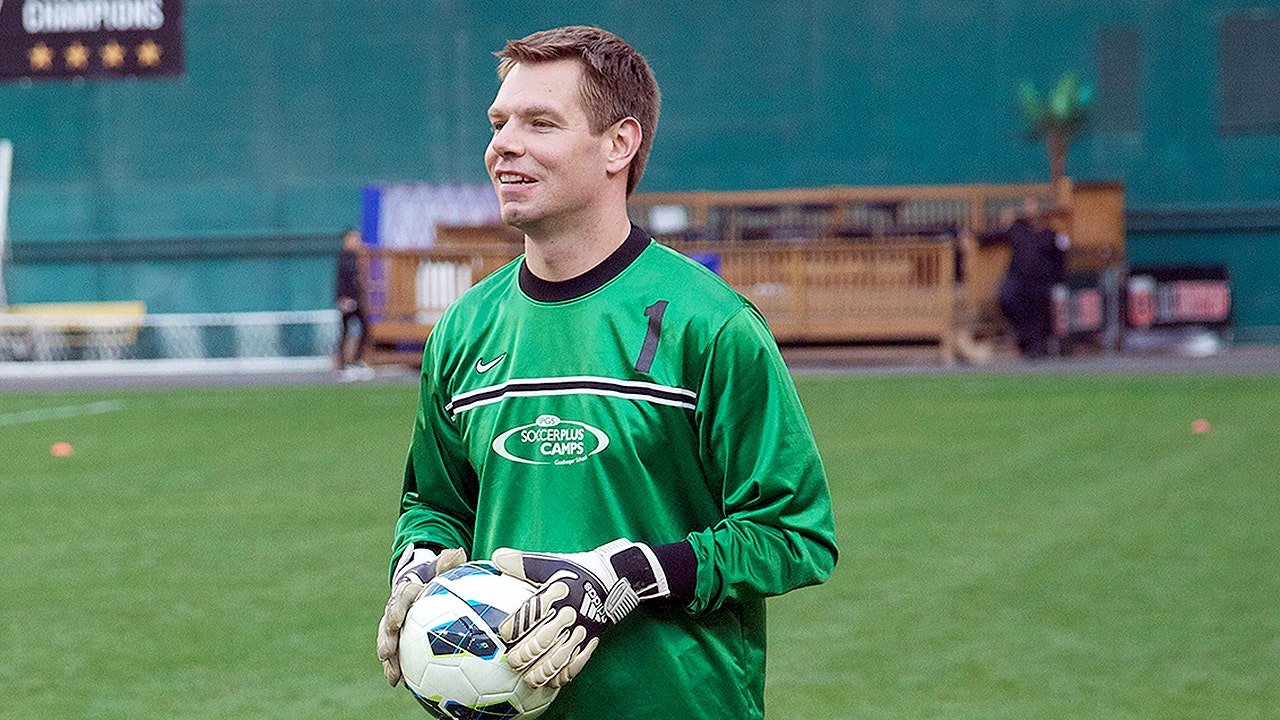
Rep. Eric Swalwell, D-Calif., invoked his collegiate soccer career while introducing a package of bills to prevent immigration enforcement behavior in and around World Cup sites this June.
More than a dozen American cities will be hosting World Cup soccer matches, including East Rutherford, N.J., San Francisco, Los Angeles, Miami and Washington – while three Democrats on the House Homeland Security Committee want to prevent what they call racial and linguistic profiling that would instill fear in fans.
«How can our country host the World Cup while deporting visiting fans from around the world?» Swalwell asked in a statement introducing his «Safe Passage to the World Cup Act.»
«As a former Division I soccer player, I know what an honor it is to host the world’s biggest sporting event.
SENATE DEMS REFUSING TO BUDGE ON DHS FUNDING MAY CAUSE HEADACHE FOR WORLD CUP TRAVELERS
Swalwell, an Iowa native, played goalkeeper in Division I soccer at Campbell University in Buies Creek, North Carolina.
The future liberal firebrand dreamed of being a professional soccer star himself but ended up breaking his thumbs, which eventually sidelined his prospective career.
After transferring to the University of Maryland in College Park, he interned in neighboring Washington, D.C. for Rep. Ellen Tauscher, a California Democrat.
«That was a turning point. I knew I didn’t want to play soccer anymore; I wanted to be in Washington,» Swalwell told Diablo Magazine in 2013 in a story now facsimiled on his official congressional website.
Eric Swalwell participates in the 2nd Annual Capital Classic soccer event. (Warren Rojas/Getty Images)
Swalwell’s bill would ban federal DHS funding from being used for civil immigration enforcement activities on public transit or at terminals from June 11 to July 19 in any city hosting a FIFA match or festival.
GERMAN SOCCER TEAM WERDER BREMEN CANCELS MINNESOTA TRIP OVER TRUMP IMMIGRATION ENFORCEMENT: REPORT
The bill does provide a carveout for «hot pursuit» of suspects presenting an «imminent risk to public safety.»
«Our priority should be to showcase our best—not have police commandeering buses, trains, and public spaces,» Swalwell said in a statement.
«This bill ensures ICE cannot turn everyday public transportation into a place of terror. It is shameful for DHS to trap people with political stunts.»
«We are better than this,» he said.
Swalwell sits on the House Homeland Security Committee’s Task Force on Enhancing Security for Special Events in the United States.
That panel’s top Democrat, Rep. Nellie Pou of New Jersey, represents the area around the New York Giants’ stadium, where matches will be held.
Pou crafted a companion bill called the Save the World Cup Act, which bans immigration enforcement near matches or festivals themselves and would enforce measures to ensure parking lots and fan midways are not encroached upon by ICE enforcement sweeps to «deter attendance and indiscriminately target communities.»
GOP WARNS DEMOCRATS’ DHS SHUTDOWN COULD JEOPARDIZE WORLD CUP SECURITY
«With fewer than 90 days until kickoff, the World Cup should bring the world together and not leave families wondering if ICE agents will be waiting outside stadiums,» Pou said in a statement, adding that she had asked ICE Director Todd Lyons whether he would assure her of no such enforcement — but that he had declined.
A third task force member — Rep. LaMonica McIver, D-N.J., — still faces charges over an alleged assault on a federal agent outside Delaney Hall in her hometown of Newark.
The case remains active as of January, according to the New Jersey Monitor, which reported that Biden-appointed Judge Jamel Semper allowed two of three counts to proceed as McIver appeals.
McIver’s companion bill would prohibit state grant programs for being used for civil immigration enforcement near World Cup game sites.
«Fans from around the world and across the country will travel to New Jersey to watch the World Cup, and keeping them safe means protecting them from DHS attempting to turn this global event into a dragnet for the Trump administration’s mass deportation agenda,» she said in a statement.
«We fought to secure millions of federal dollars so soccer fans can enjoy the biggest game in the world — they should not be intimidated by immigration enforcement. I’m introducing this bill to draw a clear line that makes sure state and local law enforcement can actually focus on keeping fans safe.»
A DHS spokesperson said the agency still plans to work with local and federal partners to secure the World Cup matches «in line with federal law and the U.S. Constitution as we do with every major sporting event, while showcasing American greatness to the entire world.»
CLICK HERE TO DOWNLOAD THE FOX NEWS APP
«International visitors who legally come to the United States for the World Cup have nothing to worry about,» DHS said. «What makes someone a target for immigration enforcement is whether or not they are illegally in the U.S.— full stop.»
The spokesperson called speculation in the legislative package «ill informed» and said that foreign visitors must still be «proactive» and have all their forms filed in Washington, and their personal documents in order, ahead of time to ensure a smooth travel experience.
homeland security,eric swalwell,deportation,the world cup,politics
INTERNACIONAL
La dictadura cubana anunció el segundo apagón general en la isla en menos de una semana

En medio de la grave crisis que atraviesa el pueblo cubano, este sábado se produjo un nuevo corte de electricidad en toda la isla, según informó el Ministerio de Energía del régimen castrista, en lo que supone el segundo apagón general en menos de una semana.
Se produjo una “desconexión total” del sistema eléctrico nacional, de acuerdo a lo reportado por el ministerio en una publicación en X alrededor de las 18:45 (22:45 GMT) hora local, añadiendo que se habían iniciado los trabajos para restablecer el suministro eléctrico.
Se trata del séptimo apagón general que sufre la población en el último año y medio.

El último fue hace apenas unos días. El martes pasado ocurrió lo mismo de este sábado, cuando toda la isla sufrió una “desconexión total” del sistema eléctrico. El corte afectó a todo el territorio durante aproximadamente 29 horas y media.
El miércoles régimen declaró restablecido el Sistema Electroenergético Nacional tras más de un día sin servicio, aunque gran parte de la isla permanecía bajo apagones programados y prolongados en medio de la crisis energética persistente.
En La Habana, los cortes diarios alcanzaron hasta 15 horas, mientras que en provincias del interior las interrupciones llegaron a superar las 48 horas consecutivas Los prolongados apagones han afectado la vida económica y social de la isla, que experimentó una contracción superior al 15 % de su economía desde 2020.
Además, los cortes de luz han sido el principal motivo de las protestas más significativas en el país.

Marco Rubio, secretario de Estado de Estados Unidos, calificó este viernes al régimen de Cuba como un “desastre” en su administración de la isla tras el anuncio del presidente estadounidense Donald Trump del inicio de contactos con La Habana para una salida a la crisis humanitaria que atraviesa.
“Cuba es un desastre, y se debe a su gobierno comunista“, afirmó el jefe de la diplomacia estadounidense ante la prensa al salir junto a Trump de la Casa Blanca rumbo a Florida.
En ese sentido, señaló que el rumbo que buscan las autoridades para el país “no funciona”. “Hoy no tengo ninguna novedad para ustedes al respecto, salvo que esto lleva ocurriendo desde hace seis o siete años: son un desastre”, reiteró.
Sin embargo, dejó en claro la mirada de Estados Unidos sobre la administración régimen: “La situación está peor que nunca”. Estados Unidos y Cuba mantienen un diálogo reciente tras la captura del ex dictador Nicolás Maduro en una operación estadounidense en Caracas, el pasado 3 de enero.
No obstante, este sábado la dictadura advirtió a Washington que no negociará su sistema político “con nadie”. “Puedo confirmar categóricamente que el sistema político de Cuba no es negociable, y por supuesto ni el presidente ni el cargo de ningún funcionario en Cuba están sujetos a negociación con Estados Unidos”, afirmó el viceministro de Relaciones Exteriores cubano, Carlos Fernández de Cossio, en una rueda de prensa recogida por la Agencia Cubana de Noticias (ACN).

Fernández de Cossio ha puntualizado que no descartan que las dos naciones puedan alcanzar “determinados acuerdos de interés mutuo” como ya ha ocurrido en “experiencias anteriores”, al tiempo que ha apuntado a la existencia de otros “asuntos de repercusión para los dos países que pueden incluirse de forma prioritaria en las negociaciones”. Por ejemplo, cuestiones relacionadas con la cooperación regional en materia de seguridad nacional y lucha contra el narcotráfico.
Horas más tarde, durante la cumbre de la Comunidad de Estados Latinoamericanos y Caribeños (CELAC), celebrada en Bogotá, el ministro de Relaciones Exteriores del régimen, Bruno Rodríguez, anunció la disposición de La Habana a entablar “undiálogo serio y responsable»con Estados Unidos, siempre bajo la condición de que cualquier acercamiento excluya la injerencia en los asuntos internos de la isla.
Estas declaraciones de la dictadura tienen lugar tras los dichos del presidente Trump, quien en la semana había afirmado que podría ser quien tenga “el honor” de “tomar Cuba”, refiriéndose a un posible acuerdo o a la adopción de medidas más drásticas si las autoridades cubanas no acceden a sus demandas.
El mandatario estadounidense describió a la isla como una “nación fallida” y “muy debilitada”, y manifestó su confianza en poder “hacer cualquier cosa que quiera” respecto a la situación cubana.
Domestic,Politics,South America / Central America,Government / Politics

La decisión de Javier Milei por la feroz interna y el “allanamiento” a los jugadores de la Selección

«Desearía nunca haberlo conocido»: la princesa Mette-Marit de Noruega repudió la amistad que tuvo con Jeffrey Epstein

Con un cambio: La formación de Boca Juniors vs. Instituto, por la fecha 12 del Torneo Apertura

El Gobierno renuncia al mercado internacional y apuesta a un repunte de la actividad en el segundo trimestre

En los últimos dos años, medio millón de trabajadores salieron del sistema laboral registrado

Santiago del Moro habló del futuro de Andrea del Boca en Gran Hermano y reveló cuándo podría volver

Juicio por YPF: la Justicia de EEUU benefició a Argentina y suspendió todas las demandas hasta que se defina la cuestión de fondo

Senado: la oposición pidió explicaciones por $LIBRA y los vuelos de Adorni y Bullrich defendió al Gobierno

Kicillof desembarcó en CABA, lanzó su proyecto 2027 y empezará a ampliar su armado político en todo el país

¿DÓNDE ESTÁ ESMERALDA? El grito de una madre que sacude a la Argentina: «Me la arrebataron de la puerta»

 POLITICA2 días ago
Kicillof desembarcó en CABA, lanzó su proyecto 2027 y empezará a ampliar su armado político en todo el país
- POLITICA3 días ago
¿DÓNDE ESTÁ ESMERALDA? El grito de una madre que sacude a la Argentina: «Me la arrebataron de la puerta»
- POLITICA2 días ago
¿MACRI 2027? El «operativo retorno» que sacude al PRO y los nombres que suenan para la vicepresidencia