INTERNACIONAL
Trump White House celebrates latest chapter of wins at 200-day mark

NEWYou can now listen to Fox News articles!
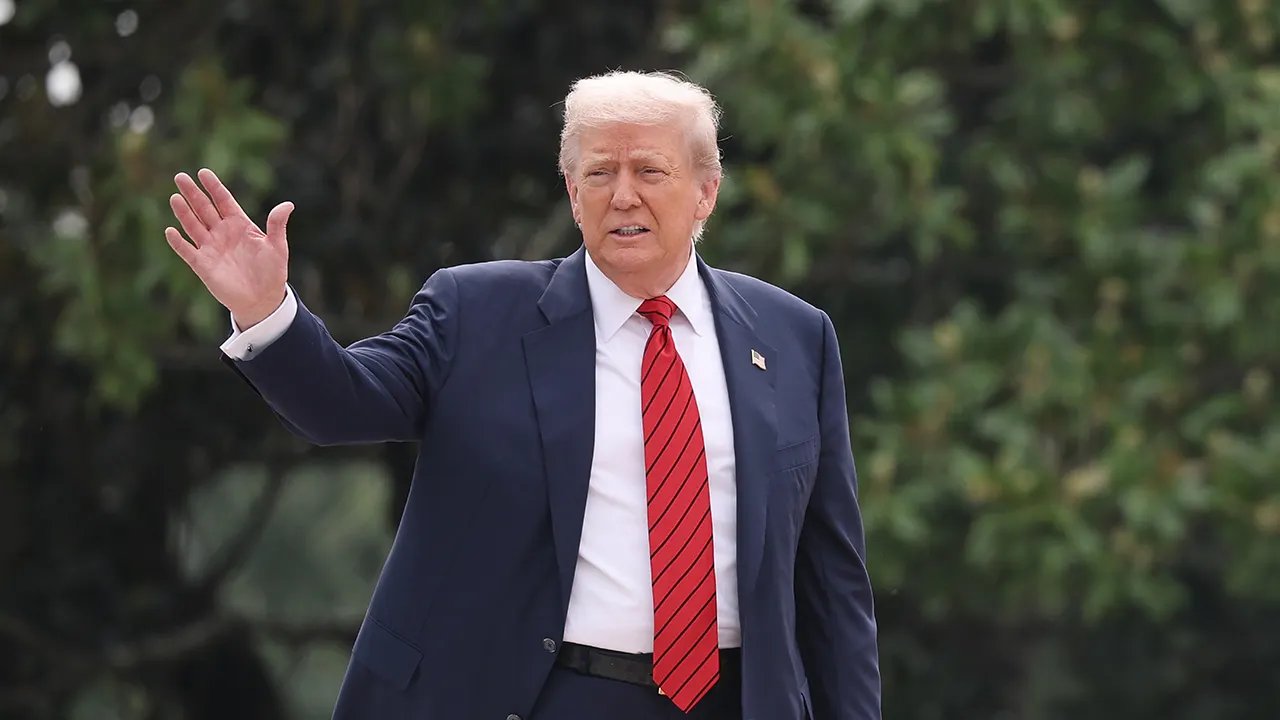
President Donald Trump notched his 200th day back in office Thursday, with the administration celebrating a lengthy list of wins across its latest chapter of actions and policies unfolding at a breakneck pace.
«In just 200 days, President Trump has turned America into the hottest country in the world,» White House spokeswoman Taylor Rogers told Fox News Digital. «Under Joe Biden’s failed leadership, families and businesses were struggling, and America was dead — but President Trump has quickly restored American greatness. The historic trade deals and peace deals he secured on behalf of the American people made President Trump’s second 100 days just as successful as the first.»
Trump hit his 100th day of his second administration in April, which included operating at warp speed as Trump signed dozens of executive orders, leveled harsh tariffs on foreign nations to bring parity to the U.S.’ trade deficit, negotiated with foreign nations to work to end wars, unveiled the Department of Government Effeciency to investigate the federal government for potential mismanagement and fraud, locked down the U.S. border with Mexico and continued an overhaul of the federal government so it falls in line with the admin’s «America First» policies.
The first 100 days of a new administration commonly has been viewed as a symbolic benchmark to measure a president’s early successes. A White House official told Fox Digital that Trump’s measure of success was not only seen in the first 100 days, but also in the timeframe between the 100th day and Aug. 7 — the 200th day.
The White House touted that the administration across the board has seen big wins involving immigration, the economy and trade, education, foreign policy, bilateral meetings, strides in the AI race, unleashing energy initiatives and releasing bombshell details on the Russia hoax from the Obama era in the past 100 days.
TRUMP HAS NOW BEEN IN OFFICE FOR SIX MONTHS, FOR THE SECOND TIME. HERE ARE THE HIGHLIGHTS
President Donald Trump smiles as he meets with President Nayib Bukele of El Salvador in the Oval Office of the White House on April 14, 2025, in Washington. (Win McNamee/Getty Images)
The president secured a massive win ahead of the Fourth of July when Republican lawmakers in Washington passed the One Big Beautiful Bill Act, which Trump touted as securing big tax cuts that will make the U.S. economy similar to a «rocket ship» as Americans begin feeling its effects.
House and Senate Republicans delivered the legislation to Trump’s desk in July after a hard-fought battle that included a handful of Republicans joining Democrats in their condemnation of the bill, mostly over its increase to the debt limit.
The bill includes key provisions to permanently establish individual and business tax breaks included in Trump’s 2017 Tax Cuts and Jobs Act, and incorporates new tax deductions to cut duties on tips and overtime pay. It also rescinds certain Biden-era green energy tax credits, allocates approximately $350 billion for defense and Trump’s mass deportation efforts and institutes Medicaid reforms.
«We have officially made the Trump tax cuts permanent,» Trump said during the July signing ceremony. «That’s the largest tax cut in the history of our country. . . . After this kicks in, our country is going to be a rocket ship economically. We’ve delivered no tax on tips, no tax on overtime, and no tax on Social Security for our great seniors. It makes the child tax credit permanent for 40 million American families. The Golden Age of America is upon us.»
On the economic front in the last 100 days: the U.S. economy grew at a 3.0% pace in the second quarter, which shattered forecasters’ predictions; Trump secured trade deals with nations such as South Korea, Japan, Indonesia, the Philippines and the European Union. While businesses such as drugmaker AstraZeneca, carmaker Rolls-Royce, and various tech companies pledging millions in investments in the U.S.
Trump celebrated ahead of his inauguration that the «golden age» of America would unfold under his leadership — which has been a common theme across his past 200 days. At the forefront of Trump’s «golden age» plan of action has not only involved leveling tariffs on foreign nations, but also unleashing artificial intelligence and energy initiatives.
«From this day forward, it’ll be a policy of the United States to do whatever it takes to lead the world in artificial intelligence,» Trump said in July, when he signed a trio of executive orders aimed at boosting the country’s artificial intelligence capabilities.
DETAILS OF TRUMP’S HIGHLY ANTICIPATED AI PLAN REVEALED BY WHITE HOUSE AHEAD OF MAJOR SPEECH
The Trump administration rolled ut its AI Action Plan in July after Trump ordered the federal government in January to develop a plan of action for artificial intelligence in order to «solidify our position as the global leader in AI and secure a brighter future for all Americans.» The AI Action Plan includes a three-pillar approach focused on American workers, free speech and protecting U.S.-built technologies.
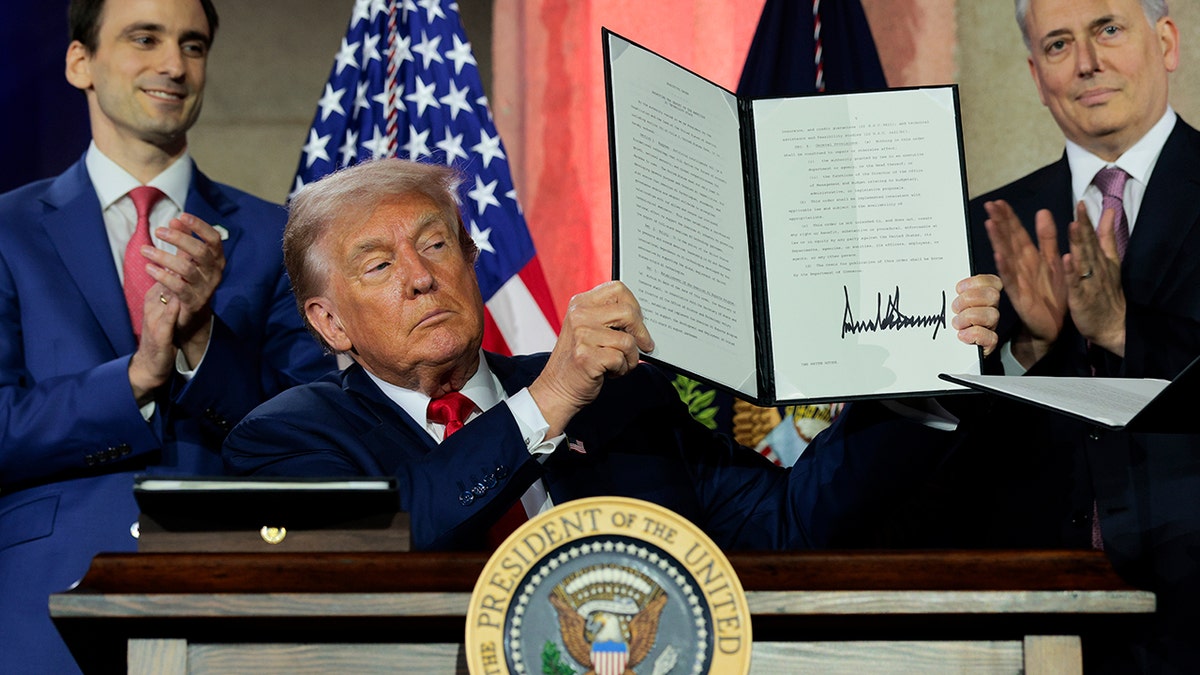
The Trump administration rolled ut its AI Action Plan in July after Trump ordered the federal government in January to develop a plan of action for artificial intelligence in order to «solidify our position as the global leader in AI and secure a brighter future for all Americans.» (Chip Somodevilla/Getty Images)
The Trump administration has notched massive wins in the artificial intelligence race in recent days, which pits the U.S. against China to develop the most high-tech artificial intelligence systems. Oracle and OpenAI, for exampled, announced in July that the companies will further develop the Stargate project, which is an effort to launch large data centers in the U.S. The two companies’ most recent announcement promises an additional 4.5 gigawatts of Stargate data center capacity, a move expected to create more than 100,000 jobs across operations, construction and indirect roles such as manufacturing and local services.
While the U.S. General Services Administration announced on Wednesday that OpenAI’s ChatGPT Enterprise is now available to all federal agencies to incorporate into their workflow at $1 per agency, the GSA told Fox Digital. The deal with OpenAI, the tech company behind ChatGPT, is part of GSA’s OneGov Strategy that aims to modernize «how the federal government purchases goods and services» under the Trump administration.
TRUMP RIDES MAJOR WAVE OF MOMENTUM GOING INTO JULY FOURTH AFTER IRAN, BBB, SUPREME COURT AND LAWSUIT VICTORIES
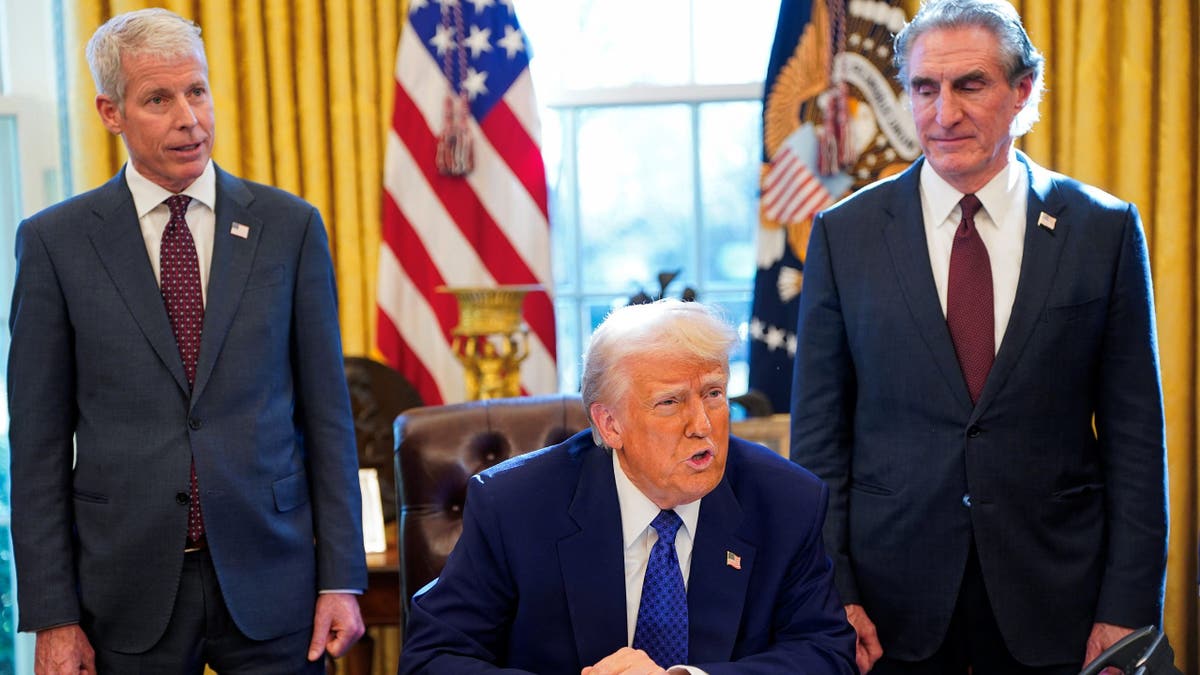
Chris Wright, Donald Trump, Doug Burgum (Reuters)
While the AI race hits new levels, Trump has also cut red tape surrounding the energy sector — which is vital to the growth of AI and the tech sector. Energy companies in the past 100 days have pledged billions to upgrade nuclear plants and modernize gas pipelines, while the administration celebrated the July opening of the newest coal plant in Wyoming in decades, as well as Trump signing a multidecade agreement to increase natural gas exports to Europe.
On the domestic political front, the Trump administration has also championed uncovering and releasing further details surrounding the Russian collusion hoax that plagued Trump’s 2016 presidential win and first presidency.
Director of National Intelligence Tulsi Gabbard released bombshell unclassified documents in July that reportedly show «overwhelming evidence» that then-President Barack Obama and his national security team allegedly laid the groundwork for what would be the yearslong Trump–Russia collusion probe after Trump’s election win against former Secretary of State Hillary Clinton in 2016.
FOX NEWS POLL: THE FIRST 100 DAYS OF PRESIDENT TRUMP’S SECOND TERM
«The implications of this are frankly nothing short of historic,» Gabbard told Fox News’ Maria Bartiromo in July.
«Over 100 documents that we released on Friday really detail and provide evidence of how this treasonous conspiracy was directed by President Obama just weeks before he was due to leave office after President Trump had already gotten elected,» she continued. «This is not a Democrat or Republican issue. This is an issue that is so serious it should concern every single American, because it has to do with the integrity of our democratic republic.»
Attorney General Pam Bondi directed the DOJ to act on the criminal referral Gabbard sent in July over the matter. Amid the DNI’s bombshell revelations, FBI Director Kash Patel reported late in July that the FBI had recovered a trove of sensitive documents related to the origins of the Trump–Russia probe buried in multiple «burn bags» left in the bureau. Burn bags are used to destroy documents designated as classified or higher, Fox Digital previously reported.
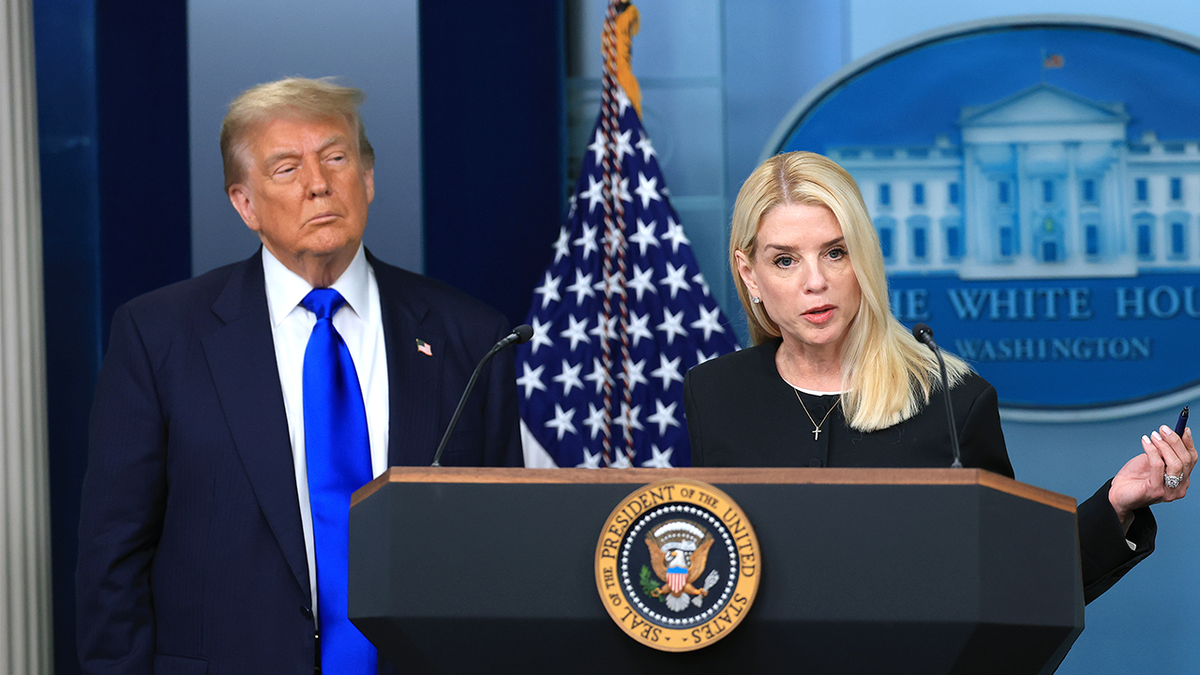
U.S. Attorney General Pam Bondi speaks alongside President Donald Trump on recent Supreme Court rulings in the briefing room at the White House on June 27, 2025, in Washington, DC. The Supreme Court ruled 6-3 that individual judges cannot grant nationwide injunctions to block executive orders, including the injunction on President Trump’s effort to eliminate birthright citizenship in the U.S. The justices did not rule on Trump’s order to end birthright citizenship but stopped his order from taking effect for 30 days. (Photo by Joe Raedle/Getty Images) (Getty Images)
CLICK HERE TO GET THE FOX NEWS APP
Trump is expected to continue the breakneck pace of presidential actions and policies as his administration continues ironing out trade deals, negotiating with Russia to end the war continuing to rage in Ukraine, as well as a ceasefire between Hamas and Israel, and prepares for another high-stake overseas trip to the UK in September, when the royal family is expected to roll out the red carpet for Trump’s unprecedented second state visit to the country.
Fox News Digital’s Brooke Singman, Ashley Oliver and Diana Stancy contributed to this report.
donald trump,white house,russia investigation,taxes








INTERNACIONAL
US assets in Middle East positioned for ‘highly kinetic’ war, ex-Pentagon official warns

NEWYou can now listen to Fox News articles!
The U.S. is in position for a «highly kinetic» campaign against Iran after launching one of its largest recent military buildups in the Middle East, a former senior Pentagon official has claimed.
Dana Stroul, now research director at The Washington Institute for Near East Policy, made the assessment Sunday as Washington and Tehran prepare for a second round of indirect nuclear talks in Oman.
«The US military is ready for a sustained, highly kinetic campaign should President Trump order it, and also prepared to defend allies and partners in the Middle East from Iran’s missiles,» Stroul told Fox News Digital.
«The US military can rapidly reposition assets from all over the world and deploy overwhelmingly lethal force in a short period of time to one theater,» she said before highlighting how there is «no ally or enemy capable of what we have seen from the US in this current buildup.»
PRESIDENT TRUMP’S IRAN BUILDUP MIRRORS 2003 IRAQ WAR SCALE AS TENSIONS ESCALATE
The world’s largest warship, U.S. aircraft carrier USS Gerald R. Ford, on its way out of the Oslofjord at Nesodden and Bygdoy, Norway, September 17, 2025. (NTB/Lise Aserud via Reuters)
Describing how the current posture differs from the June 2025 strikes on Iranian-linked nuclear targets, Stroul said the U.S. has expanded its offensive and defensive capabilities.
«Two US aircraft carriers and their accompanying vessels and air wings were stationed in the Middle East last summer during the 12-day war and the US operation Midnight Hammer,» she explained.
«The addition of the Ford is really important, it expands US offensive capabilities if we go to war with Iran,» she said.
While in June 2025, the US carried out limited but highly targeted strikes against Iranian nuclear infrastructure to degrade key facilities without triggering a regional war, now, Stroul said the force posture is broader and more sustained.
The US has also «increased the number of guided-missile destroyers, fighter aircraft, refuelers, and air defense systems» in the region, she explained.
TRUMP SAYS IRAN HAS 15 DAYS TO REACH A DEAL OR FACE ‘UNFORTUNATE’ OUTCOME
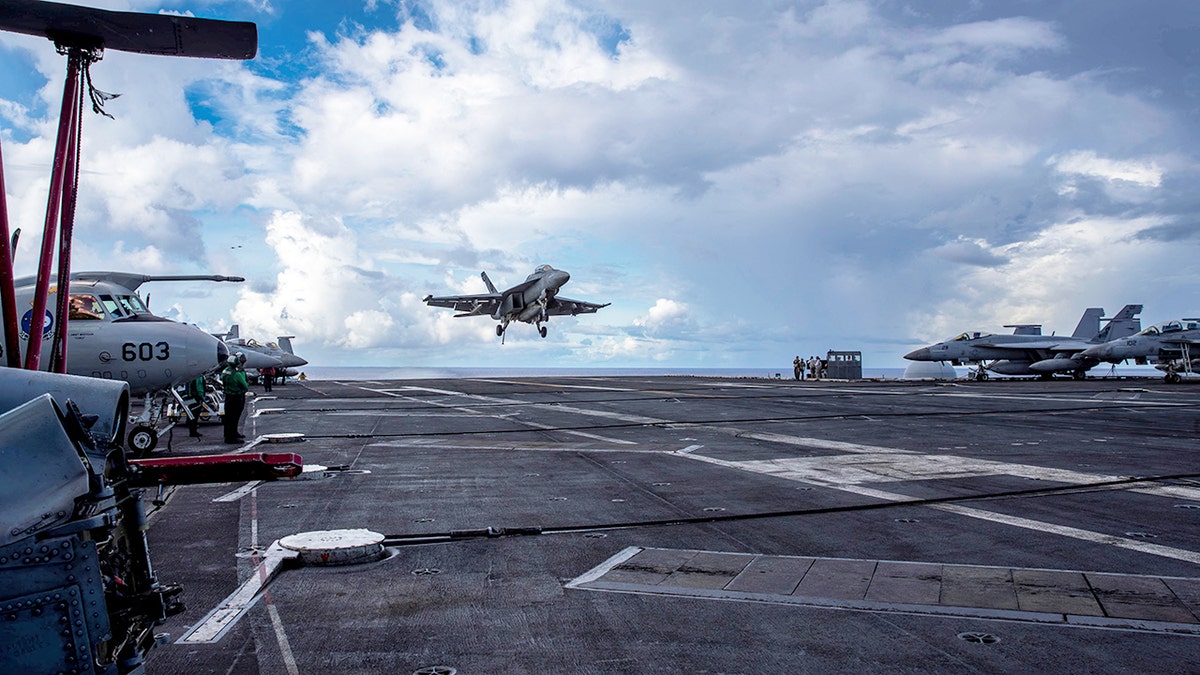
An F/A-18F Super Hornet, assigned to Strike Fighter Squadron (VFA) 41, prepares to make an arrested landing on the flight deck of the USS Abraham Lincoln in the Pacific Ocean on Aug. 10, 2024. (U.S. Navy/Mass Communication Specialist Seaman Apprentice Daniel Kimmelman/Reuters)
The deployment of aircraft carriers such as the USS Gerald R. Ford and USS Abraham Lincoln has assumed heightened strategic importance.
The USS Gerald R. Ford was recently tracked transiting the Strait of Gibraltar eastward, while the USS Abraham Lincoln is operating in the Arabian Sea.
«They will both be in the Middle East CENTCOM theater,» Stroul explained before clarifying that there could be «one in the eastern Mediterranean and the other in the Arabian Gulf.»
«There would probably be a combination of reasons for that based on availability, readiness, proximity to the Middle East.
«The Ford was heading home and directed to turn around,» she added.
While the specific destinations of the carriers have not been publicly disclosed for operational security reasons, their presence alone signals escalatory leverage and deterrence.
WITKOFF WARNS IRAN IS ‘A WEEK AWAY’ FROM ‘BOMB-MAKING MATERIAL’ AS TRUMP WEIGHS ACTION
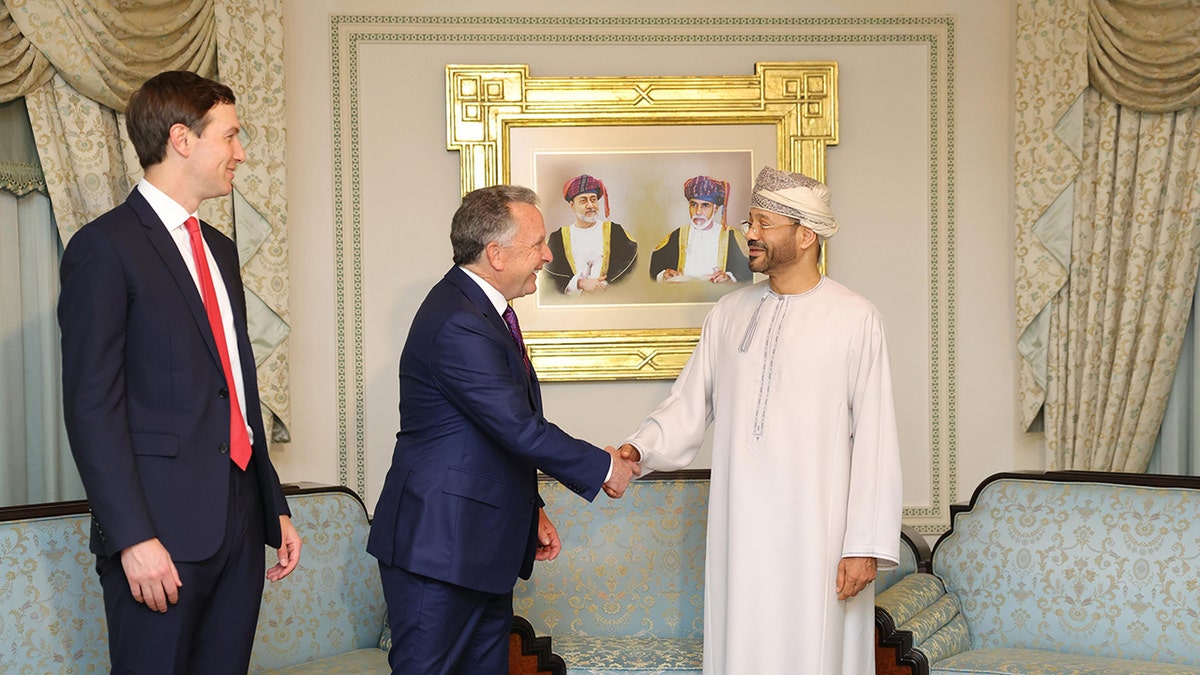
Omani Foreign Minister Sayyid Badr Hamad Al Busaidi, US President Donald Trump’s Special Representative for the Middle East, Steve Witkoff and U.S. negotiator Jared Kushner meet ahead of the US-Iran talks, in Muscat, the capital of Oman, on February 06, 2026. (f Oman, on FebruarOman Foreign Ministry/Anadolu via Getty Images)
The military buildup comes as indirect diplomatic talks between Washington and Tehran continue, with Oman once again serving as a mediator Feb. 26.
Stroul argued that Iran’s leadership is trying to balance brinkmanship with negotiation.
«Iran’s leaders are playing a weak hand by combining saber-rattling about their own capabilities, staging preparations and exercises to signal readiness,» she claimed.
«They are attempting to slow this down by pursuing negotiations. No one should be under any illusions about the reality of US dominance — Iran is completely outmatched in conventional terms,» Stroul said.
BUILT FOR WEEKS OF WAR: INSIDE THE FIREPOWER THE US HAS POSITIONED IN THE MIDDLE EAST
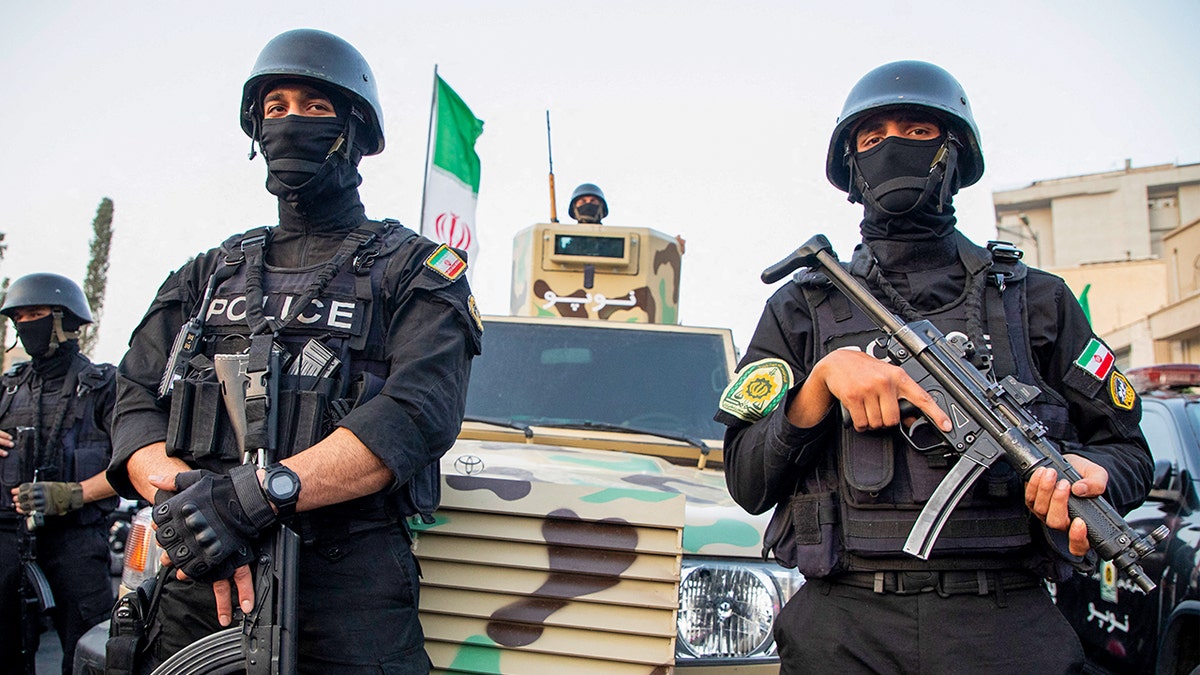
Armed NOPO special police units are on the scene as Iranians take to the streets in the downtown Enghelab (Revolution) Square in Tehran, Iran on June 24, 2025, to celebrate the ceasefire after a 12-day war with Israel. (NEGAR/Middle East Images/AFP via Getty Images)
«Israel dominated Iranian airspace in one day last year, targeted many of Iran’s security leaders, took out half of its missile arsenal, and the US significantly set back its nuclear program,» Stroul said.
Iran’s long-cultivated network of proxies across the region — including Hezbollah, Shiite militias in Iraq, and elements in Syria — has also been weakened after sustained Israeli military pressure.
«Iran’s long-cultivated network of proxies across the region is degraded after more than two years of Israeli operations, and they declined to enter the war and support Iran’s defense last summer,» Stroul explained.
CLICK HERE TO DOWNLOAD THE FOX NEWS APP
«No matter what Iran’s leaders say, Iran is not able to rebuild a decades-long project in a few months.»
«That said, the US military is in a position to execute whatever orders President Trump gives,» she said. «It is not a question of military readiness, but a political decision.»
iran,middle east,wars,donald trump,ali khamenei,pentagon defense,pentagon,us navy,military

La larga y sinuosa ruta de Christopher Beha desde un ateísmo bien fundamentado hasta una fe cristiana aún más cultivada comienza con una imagen poderosa: un ángel se le aparece. No es Clarence, el atolondrado amigo de Jimmy Stewart en ¡Qué bello es vivir!, sino una aparición exigente y persistente.
En su profunda reflexión sobre la fe y la filosofía, Why I Am Not an Atheist (Por qué no soy ateo), explica que el espíritu le dijo que confiara en Dios. “Esto no fue un sueño”, escribe sobre la primera visita, ocurrida a mediados de los años noventa, cuando tenía 15 años. “Estaba despierto —tan seguro de eso como de que ahora estoy despierto mientras escribo estas palabras— y una presencia aterradora se comunicaba conmigo”.
Las visitas continuaron durante años. Beha creció en una familia católica y amante de los libros en el Upper East Side de Nueva York, que lo envió a Princeton. Fue editor de Harper’s Magazine y es autor de cuatro libros anteriores, cuyos temas abarcan desde novelas sobre complicaciones emocionales hasta un repaso por los clásicos, mostrando así su versatilidad literaria.

Unos años después de que el imperioso querubín le indicara que debía acercarse a Dios, Beha comprendió que todo podía explicarse desde la ciencia. Había experimentado parálisis del sueño, un estado en el que permanecía despierto pero inmovilizado, acompañado de alucinaciones.
“Había sufrido un padecimiento físico bastante común y, en vez de buscar una causa racional, me refugié en la superstición”, escribe. “En realidad me había convencido de que Dios me enviaba un mensaje”.
Como alguien que también presenció algo inexplicable (una santa fallecida que abrió los ojos en una cripta en Italia), me resultaba más atractivo el Beha adolescente, colmado de asombro religioso. Pero al final del libro, regresa al ángel con una visión ampliada. Fue a la vez un milagro y algo real. “Sé lo que ‘causó’ esas visitas, desde un punto de vista material, pero también sé lo que provocaron después: un viaje de toda la vida en el que todavía sigo”.
Entre esos extremos se despliegan varios cientos de páginas que componen ese trayecto, casi todas centradas en los filósofos mayoritariamente ateos del canon occidental. No es una peregrinación tradicional, sino una odisea intelectual. Beha debate con los grandes maestros: Descartes, Kant, Locke, Mill, Hobbes, Camus, Nietzsche y muchos más, pero empieza cuestionando a los “nuevos ateos” como Sam Harris, Richard Dawkins, Christopher Hitchens y similares, a quienes considera ya superados.

Hace algunos años, el periodista Michael Kinsley describió el libro de Hitchens God Is Not Great con una frase memorable: “Hitchens es un ateo de aldea a la antigua, parado en la plaza tratando de discutir con los buenos ciudadanos que van camino a la iglesia”.
Beha no es de los que lanzan piedras ni busca peleas. Tiene una devoción casi obsesiva por las grandes mentes. Es el tipo de persona que habrías querido como compañero de habitación antes de la era de la inteligencia artificial. O tal vez no. Ha leído todo y hasta escribió una memoria al respecto, The Whole Five Feet, en la que narra el año que dedicó a leer los 51 volúmenes de los Harvard Classics. Solo mirar esa lista agota a la mayoría.
Él escaló esa montaña para que otros no tuvieran que hacerlo. Pero, a veces, en su nuevo libro se pierde en las nubes. Un ejemplo, al tratar a Immanuel Kant, el filósofo alemán: “Kant aquí invoca dos binarios que ya hemos discutido. El primero es el que existe entre la verdad a priori y a posteriori; el segundo, entre análisis y síntesis”.
Beha es sincero, honesto y resulta agradable en la página. Su historia personal resulta más interesante que la intelectual. Empezó a dudar de su fe a los 18 años, tras casi perder a su hermano gemelo en un accidente de auto. Sufrió depresión y un cáncer que puso su vida en riesgo, abusó del alcohol y las drogas. Fue ateo durante mucho tiempo.

El libro es una larga réplica a “Why I Am Not a Christian”, el célebre ensayo del polímata británico Bertrand Russell, quien calificaba la creencia en Dios como “una concepción indigna de hombres libres”. Russell fue una de las figuras que empujaron a Beha a años de escepticismo comprometido.
No le resultaba suficiente el agnosticismo tibio de los espiritualmente errantes, una condición que el comediante católico Stephen Colbert comparó alguna vez con ser “un ateo sin agallas”. Beha se entregó por completo.
El argumento de Russell es conciso, refuta cada una de las razones principales a favor de la fe. El de Beha no lo es. Descompone la visión atea en dos categorías y dedica la mayor parte del libro a detallarlas e incluso simpatizar con ellas. Una es el “materialismo científico”, que sostiene que solo existe el mundo material. La otra es el “idealismo romántico”, que él define como la creación de la propia realidad.
Durante sus largos años en el desierto de la incredulidad, Beha intentó encajar en alguna de esas narrativas, buscando “hacer significativa una vida sin Dios”.

Al final, el ateísmo le resultó insuficiente, igual que a algunos revolucionarios franceses que transformaron brevemente la catedral de Notre-Dame en el árido Templo de la Razón. La religión de la no-religión puede parecerse a la cerveza sin alcohol: ¿para qué?
Beha no pretende convencer a quienes ya han renunciado a Dios. Solo quiere explicar qué lo llevó a regresar a la fe de sus padres, “escuchando la voz susurrante en el alma”. No hay una conversión fulminante, ninguna luz cegadora. Más bien, su vida, a menudo miserable, mejora con la mujer adecuada, una confesión católica, la asistencia regular a misa. Y esa mujer —“ella era la razón por la que creía en Dios”— ni siquiera es creyente. Es episcopaliana no practicante.
Si Beha no logra necesariamente ganar su debate con Russell, al menos hay que reconocerle que cumple la exigencia de los seres conscientes: reflexionar a fondo sobre el misterio de lo que somos en un universo incognoscible.
“No creo que alguna vez vea las cosas con claridad; no en esta vida mortal”, concluye. “Lo mejor que podemos esperar es estar mirando en la dirección correcta, orientados del modo adecuado”.
Fuente: The New York Times

1.- Cartel de Sinaloa:
2.- Cartel Jalisco Nueva Generación:
3.- Cartel del Golfo:

4.- Cartel del Noroeste:
5.- La Nueva Familia Michoacana:

6.- Carteles Unidos:

En plena ausencia de Mauro Icardi, Wanda Nara apareció en el casamiento de su hermano

Con un ajustado apoyo y cambios en el texto original, el oficialismo define hoy el futuro de la reforma laboral en Diputados

Empresarios celebraron la media sanción de la reforma laboral en Diputados y pidieron un rápido avance en el Senado

Tras la derrota de River Plate ante Vélez y el triunfo de San Lorenzo, así quedaron las tablas del Torneo Apertura

US assets in Middle East positioned for ‘highly kinetic’ war, ex-Pentagon official warns

¿Cuál es el argumento para creer en Dios?

Escándalo en MasterChef: una famosa abandonó a los gritos y acusando que está todo arreglado

Del himno peronista de Kelly Olmos al exabrupto de Agustina Propato: las perlitas del debate por la reforma laboral

Villarruel cuestionó la apertura de importaciones: «Sin industria, se pasa a depender de China»

“Ahora es la hora de jugarse”: el mensaje de Patricia Bullrich a los empresarios tras aprobarse la reforma laboral

 ECONOMIA2 días ago
Villarruel cuestionó la apertura de importaciones: «Sin industria, se pasa a depender de China»
- POLITICA1 día ago
“Ahora es la hora de jugarse”: el mensaje de Patricia Bullrich a los empresarios tras aprobarse la reforma laboral
- ECONOMIA1 día ago
Según un especialista, el precio de la carne se mantendrá alto “entre dos y tres años”