INTERNACIONAL
Trump’s peace through strength in 2025: where wars stopped and rivals came to the table


NEWYou can now listen to Fox News articles!
Donald Trump entered 2025 pledging to end wars and reorient U.S. foreign policy around what he repeatedly described as «peace through strength.»
Throughout the year, Trump has cast his diplomacy as peace-focused, telling reporters, «We think we have a way of getting peace,» and publicly arguing that his record merited a Nobel Peace Prize. The U.S. State Department echoed that framing in its year-end summary of diplomatic efforts, highlighting initiatives it said aimed to «secure peace around the world.»
By the close of 2025, several conflicts saw impressive diplomatic progress, while others were still experiencing issues after years of hatred and violence.
‘IT TOOK 3,000 YEARS’: TRUMP HERALDS ‘GOLDEN AGE OF THE MIDDLE EAST’ IN SPEECHES TO ARAB LEADERS, ISRAEL
U.S. President Donald Trump holds the signed agreement of the first phase of the Gaza ceasefire between Israel and Hamas, in Sharm El-Sheikh, Egypt, Oct. 13, 2025. (Evelyn Hockstein/Reuters)
Gaza (Israel–Hamas)
The most consequential diplomatic development of the year came in early October, when the Trump administration helped broker a ceasefire framework between Israel and Hamas. The agreement halted large-scale fighting after months of intense combat and enabled the release of all remaining hostages from Hamas’ Oct. 7 attack on Israel, except for the body of Ron Gvili, which remains held captive by Hamas terrorists.
The administration later cited the ceasefire as a central element of its 2025 diplomatic record. While the truce largely held through the end of the year, core issues including Gaza’s long-term governance, demilitarization and enforcement mechanisms remained unresolved, as well as rebuilding the enclave after the massive destruction and displacement. U.S. officials continued working with regional partners on next steps as fighting paused, as Israel’s Netanyahu is expected to meet with President Trump next week for talks on Gaza and other issues.
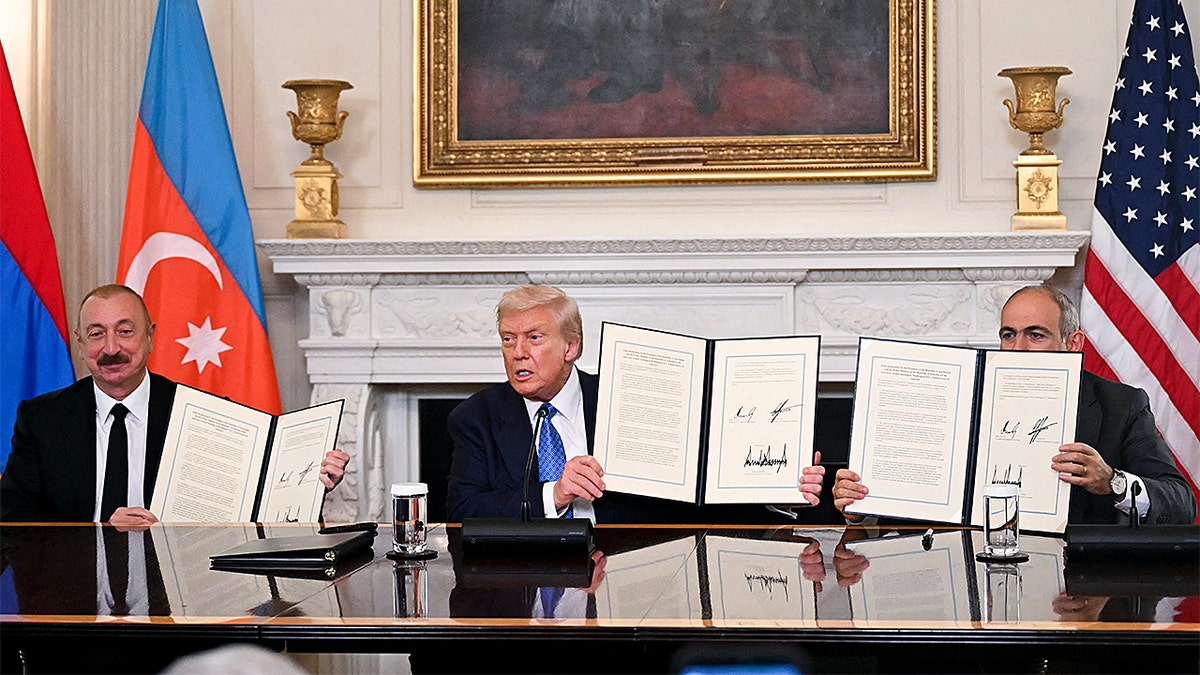
US President Donald Trump (C), Azerbaijani President Ilham Aliyev (L) and Armenian Prime Minister Nikol Pashinyan display the agreement they signed in the State Dining Room of the White House in Washington, D.C., on Aug. 8, 2025. (Photo by Andrew Caballero-Reynolds/AFP via Getty Images)
Armenia–Azerbaijan
In August, Trump hosted the leaders of Armenia and Azerbaijan at the White House for a U.S.-brokered peace declaration aimed at addressing decades of conflict tied to Nagorno-Karabakh. The agreement focused on transit routes, economic cooperation and regional connectivity and was promoted by the administration as a historic step.
While the historic declaration was signed, implementation and deeper reconciliation is still ongoing.
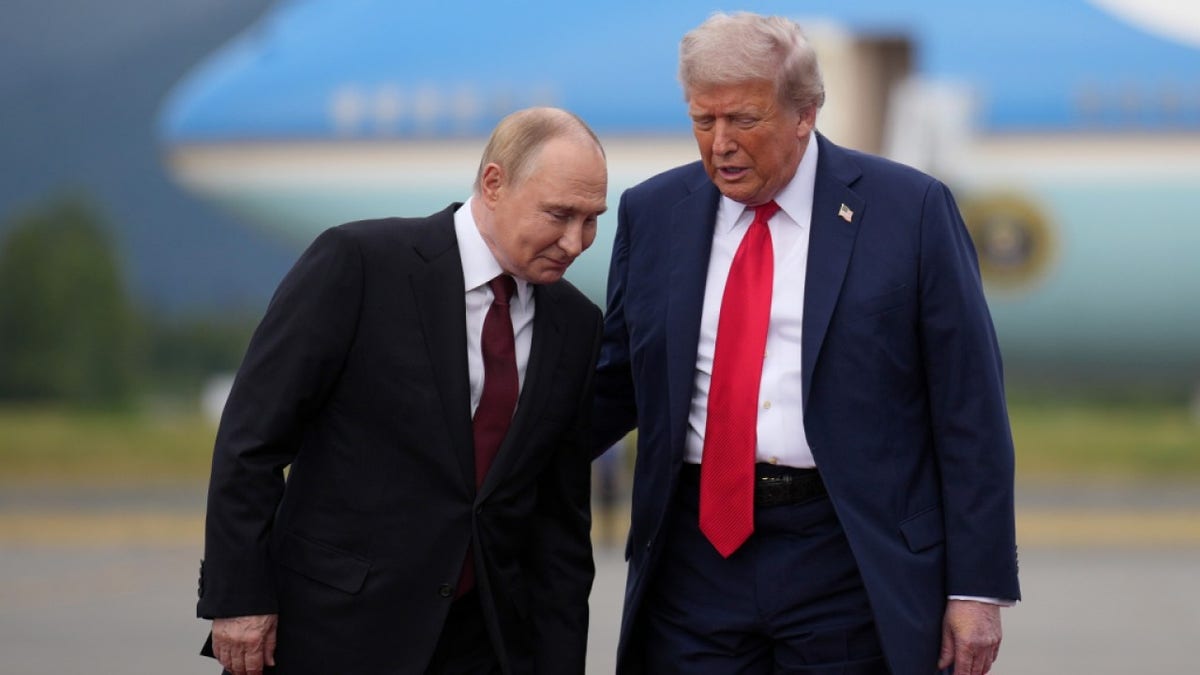
President Donald Trump (R) greets Russian President Vladimir Putin (L) as he arrives at Joint Base Elmendorf-Richardson on Aug. 15, 2025, in Anchorage, Alaska. (Andrew Harnik/Getty Images)
Ukraine–Russia war
Ukraine remained the most ambitious and elusive peace target of Trump’s 2025 agenda. The year opened with Trump insisting the war could be ended through direct U.S. engagement and leverage over both Kyiv and Moscow. Diplomacy intensified in August, when Trump hosted Russian President Vladimir Putin in Alaska, a summit framed by the White House as a test of whether personal diplomacy could unlock a settlement.
In parallel, Ukrainian President Volodymyr Zelenskyy was received at the White House, where Trump reiterated U.S. support for Ukraine while signaling that any peace would require difficult compromises. U.S. officials explored security guarantees and economic incentives, while avoiding public commitments on borders or NATO membership.
MOMENTUM BUILDS IN UKRAINE PEACE PUSH, BUT EXPERTS FEAR PUTIN WON’T BUDGE
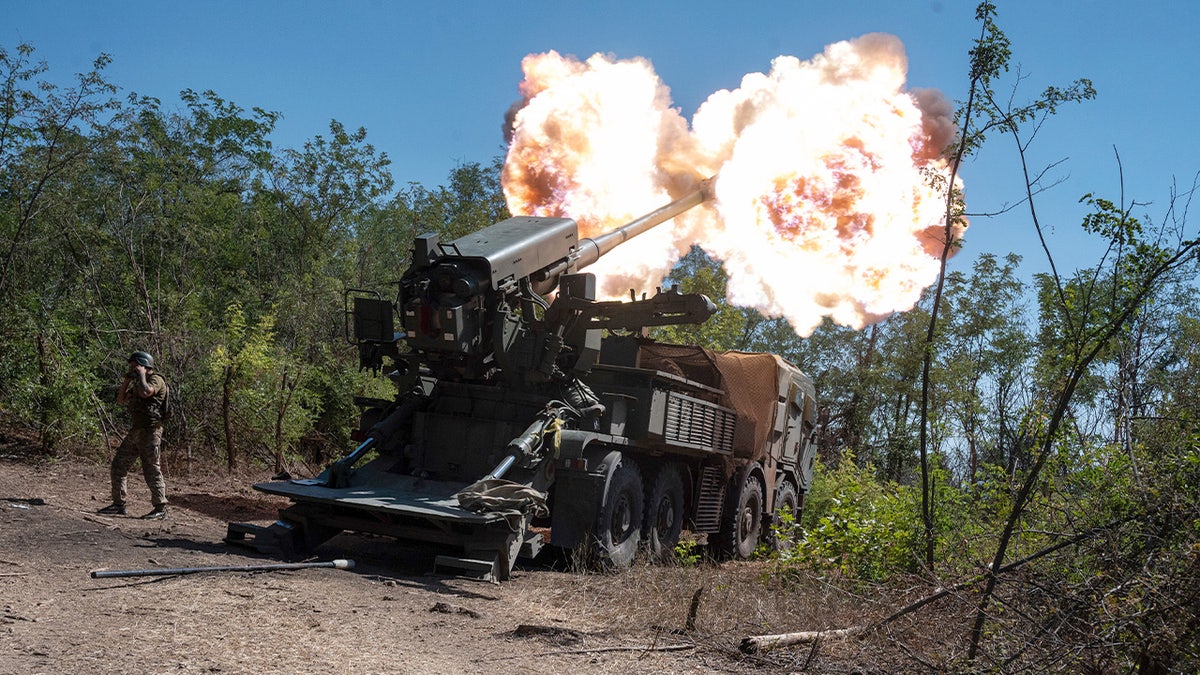
Ukrainian servicemen of the 44th artillery brigade fire a 2s22 Bohdana self-propelled howitzer towards Russian positions at the frontline in the Zaporizhzhia region, Ukraine, Wednesday, Aug. 20, 2025. (Danylo Antoniuk/AP Photo)
By December, talks accelerated. Ukraine entered new rounds of U.S.-led negotiations, and Trump told reporters the sides were «getting close to something.» On Christmas Zelenskyy said talks with U.S. officials had produced a 20-point plan and accompanying documents that include security guarantees involving Ukraine, the United States and European partners. He acknowledged the framework was not flawless but described it as a tangible step forward. Zelenskyy is reportedly readying a visit to meet with President Trump, possibly as soon as Sunday.
Bloomberg reported that Russia views the 20-point plan agreed to between Ukraine and the U.S. as only a starting point. According to a person close to the Kremlin, Moscow intends to seek key changes, including additional restrictions on Ukraine’s military, arguing that the proposal lacks provisions important to Russia and leaves many questions unanswered.
VENEZUELAN DISSIDENT MACHADO CREDITS TRUMP FOR ADVANCING FREEDOM MOVEMENT, DEDICATES NOBEL TO HIM
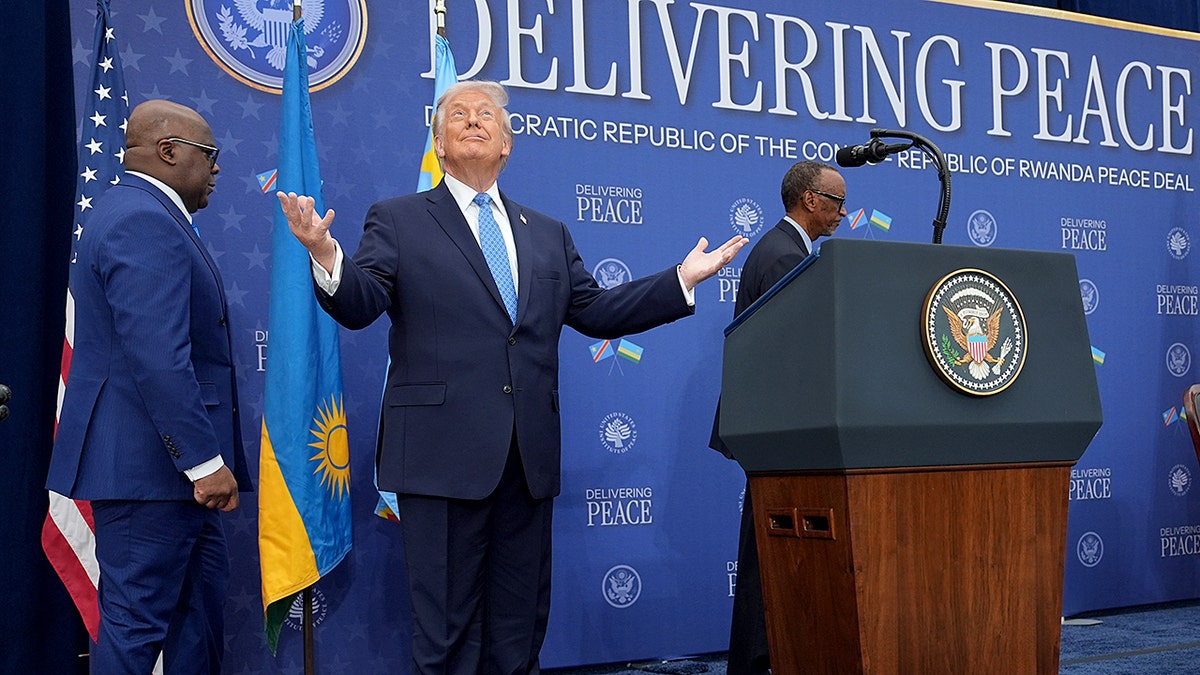
President Donald Trump arrives for a signing ceremony with Rwanda’s President Paul Kagame and Democratic Republic of Congo President Felix-Antoine Tshisekedi at the Donald J. Trump Institute of Peace, Thursday, Dec. 4, 2025, in Washington. (AP Photo/Evan Vucci)
Democratic Republic of Congo–Rwanda
In early December, Trump hosted the signing of the Washington Accords for Peace and Prosperity between the Democratic Republic of Congo and Rwanda. The agreement reaffirmed commitments to end decades of conflict and expand economic cooperation through a regional integration framework.
By the end of the year, Reuters and the Associated Press reported that armed groups remained active in eastern Congo, underscoring the fragility of the accord, though both sides seemed to be invested in a long-term peace.
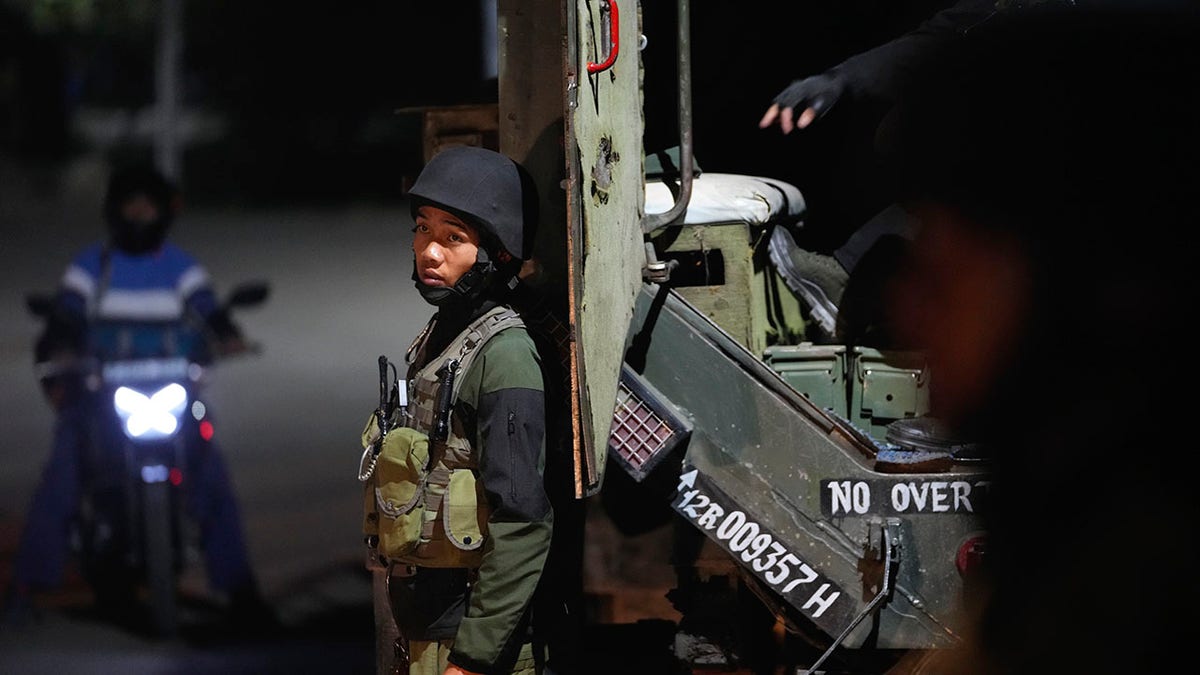
Indian army officers stand guard near Pahalgam in south Kashmir after assailants indiscriminately opened fire at tourists visiting Pahalgam, Indian-controlled Kashmir, Tuesday, April 22, 2025. (Dar Yasin/AP Photo)
India–Pakistan
After a terrorist attack in Kashmir and retaliatory strikes raised fears of escalation, U.S. officials engaged in emergency diplomacy. Trump announced a ceasefire between the two nuclear-armed rivals, with a potentially catastrophic escalation between the two nuclear powers avoided.
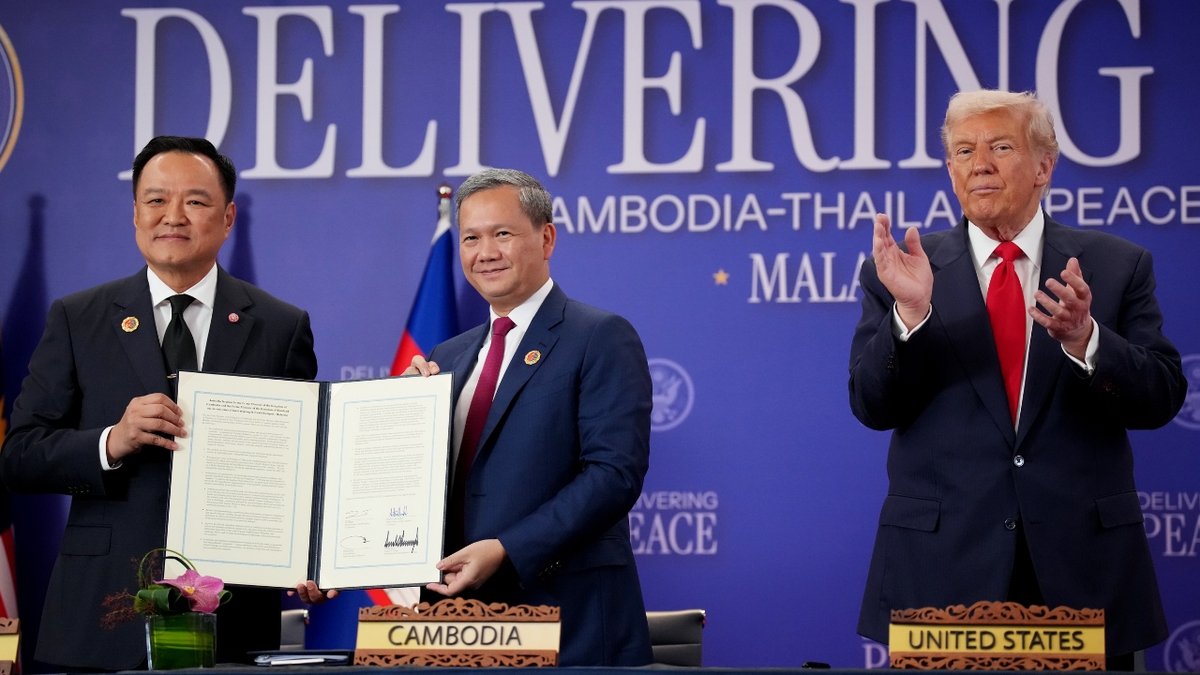
Thai Prime Minister Anutin Charnvirakul and Cambodian Prime Minister Hun Manet shake hands following the signing of a Cambodia-Thailand peace deal as U.S. President Donald Trump reacts at Kuala Lumpur Convention Centre on October 26, 2025, in Kuala Lumpur, Malaysia. (Andrew Harnik/Getty Images)
Cambodia–Thailand border dispute
On the sidelines of an ASEAN summit, Trump helped mediate a ceasefire between Cambodia and Thailand following months of border clashes.
Diplomatic efforts led by ASEAN and supported by external parties are ongoing, but fresh clashes and mutual recriminations between Thailand and Cambodia continue to challenge peace prospects and have led to large-scale displacement and civilian harm. Following the recent flare-ups, and with offers for mediation from Secretary of State Marco Rubio, a new ceasefire was agreed upon on Saturday to end weeks of fighting on the border.
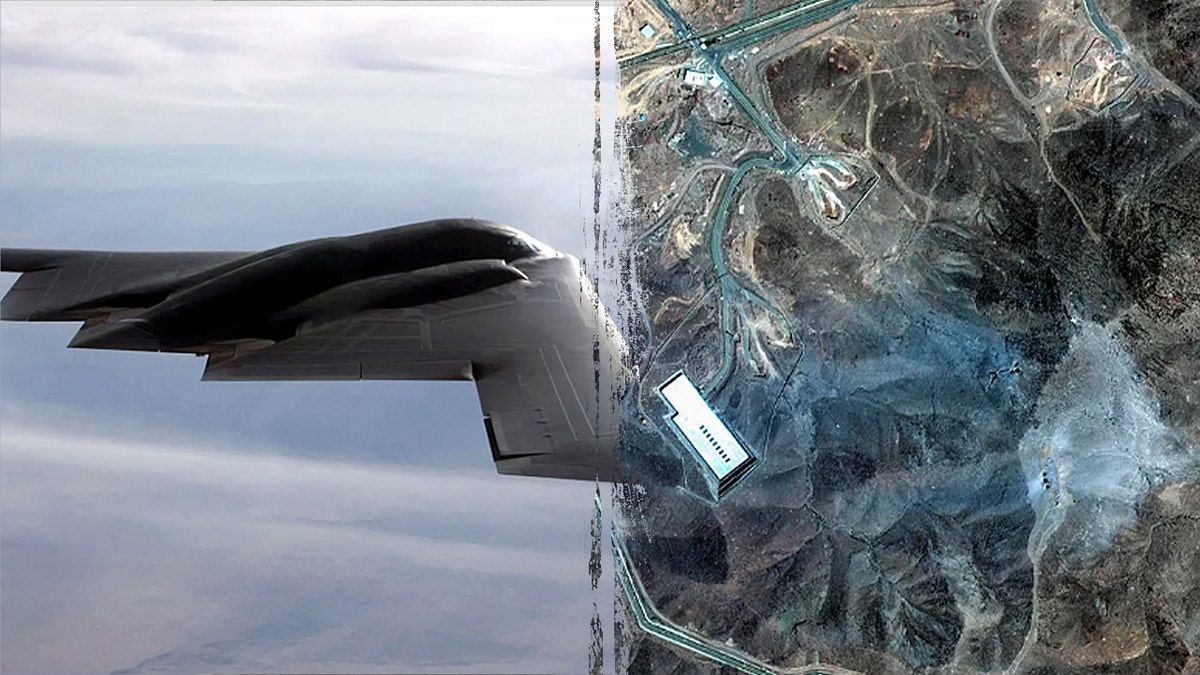
B-2s carried out strike on Iranian nuclear sites in June. (U.S. Air Force photo by Bobbie Garcia/Maxar Technologies via AP)
Iran–Israel confrontation
Following U.S. and Israeli strikes on Iranian nuclear facilities, the Trump administration focused on containing escalation and reinforcing deterrence. No diplomatic agreement followed, but the confrontation did not expand into a broader regional war by year’s end.
ISRAELI HOSTAGES FREED, IRAN HIT, CEASEFIRE HELD — 2025 SHATTERED IDEA THAT US WAS EXITING THE MIDDLE EAST
Recently Israel warned that Iran might use its ballistic missile drills as a cover for a surprise attack.
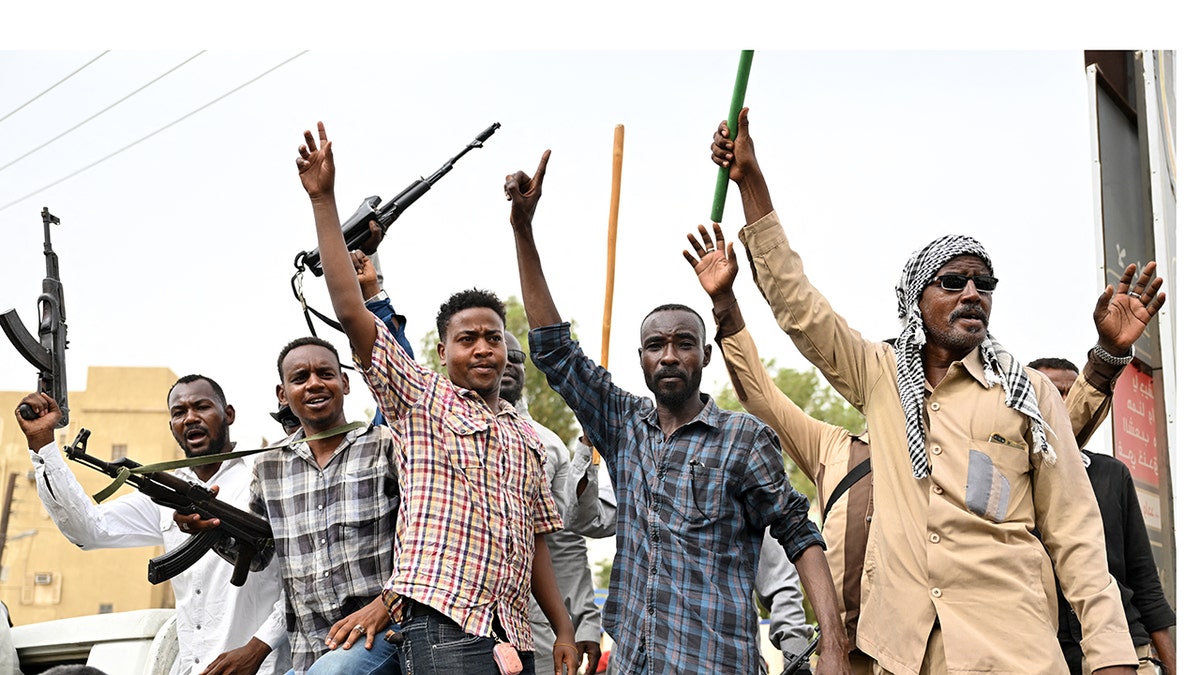
Armed men salute the governor of Sudan’s Red Sea State Mustafa Mahmud in Port Sudan in the war-torn country on July 24, 2024. Sudan has been gripped by war since April 2023, when fighting erupted between forces loyal to army chief Abdel Fattah al-Burhan and the RSF led by his former deputy Mohamed Hamdan Daglo. The conflict in the country of 48 million has killed tens of thousands, displaced millions and triggered one of the world’s worst humanitarian crises. (AFP via Getty Images)
Sudan
Sudan remained one of the world’s deadliest conflicts. U.S. diplomacy has focused primarily on efforts to halt fighting and expand humanitarian access rather than brokering a comprehensive peace.
In December, Saudi Arabia and the United States presented Sudanese army chief Abdel Fattah al-Burhan with a three-point proposal aimed at ending the war, facilitating aid delivery and transferring power to civilians, according to Sudan Tribune.

Venezuelan President Nicolas Maduro holds a ceremonial sword said to have belonged to independence hero Simon Bolivar, during a government-organized civic-military march in Caracas, Venezuela, Tuesday, Nov. 25, 2025. (Ariana Cubillos/AP Photo)
Venezuela
As the year closed, Venezuela emerged as the United States’ clearest point of direct confrontation. The administration framed its posture as an extension of its broader «peace through strength» doctrine, even as the risk of escalation lingered.
While the White House pursued de-escalation and negotiated arrangements elsewhere, its approach toward Nicolás Maduro relied almost entirely on pressure, not talks. Trump continued to cast Maduro as a criminal threat tied to drug trafficking, accusing him of rejecting the results of Venezuela’s last election and stealing the presidency.
CLICK HERE TO DOWNLOAD THE FOX NEWS APP
With no diplomatic channel open, the U.S. maintained sweeping sanctions and stepped up efforts against cartel networks linked to the regime. There was no peace process in sight, but some opposition figures and U.S. allies argued that sustained pressure could still force political change in 2026, and ultimately hasten the end of Maduro’s rule.
donald trump,europe,israel,hamas,africa,ukraine,russia,state department





INTERNACIONAL
La mirada de un ex marine: “Trump no tiene una estrategia, busca ser el virrey de Irán”

Una guerra de poco tiempo
Trump no es el primero ni el último líder del mundo que vaya a contradecirse de hacer una cosa y decir otra. Pero Estados Unidos, que nunca ha sido un país perfecto, siempre ha sido un país líder
Molestias en Estados Unidos por la guerra
¿Una Delcy iraní?
No hay Delcy Rodríguez en Irán. Irán no era y no es un régimen basado en el crimen organizado
¿Trump, el virrey?
La espera de los republicanos
Para realmente cambiar un régimen, para instalar un gobierno títere, para controlar los recursos de un país, todavía se requiere lo que se requería en la época medieval y esos son soldados
El poder del Estrecho de Ormuz
INTERNACIONAL
Rubio designates Afghanistan as ‘state sponsor of wrongful detention’: ‘Despicable tactics’

NEWYou can now listen to Fox News articles!
U.S. Secretary of State Marco Rubio designated Afghanistan as a «state sponsor of wrongful detention,» accusing the Taliban of «unjustly» detaining Americans and other foreign nationals.
In his announcement on Monday, Rubio said the Taliban continues to use «terrorist tactics» that he insisted «need to end.»
«I am designating Afghanistan as a State Sponsor of Wrongful Detention,» Rubio said in a statement. «The Taliban continues to use terrorist tactics, kidnapping individuals for ransom or to seek policy concessions. These despicable tactics need to end.»
The secretary also called on the terror group to free a pair of Americans who are «unjustly detained» in Afghanistan.
IRAN REGIME CITED AS TRUMP ADMIN SET TO DESIGNATE SUDAN’S MUSLIM BROTHERHOOD A TERROR GROUP
U.S. Secretary of State Marco Rubio designated Afghanistan as a «state sponsor of wrongful detention.» (Alex Wong/Getty Images)
«It is not safe for Americans to travel to Afghanistan because the Taliban continues to unjustly detain our fellow Americans and other foreign nationals,» he said. «The Taliban needs to release Dennis Coyle, Mahmoud Habibi, and all Americans unjustly detained in Afghanistan now and commit to cease the practice of hostage diplomacy forever.»
Coyle, 64, was detained more than a year ago without charges by the Taliban General Directorate of Intelligence, according to his family, noting that he still has not been charged. His family said he was legally working to support Afghan language communities as an academic researcher.
Habibi, a 38-year-old American citizen who was born in Afghanistan, was taken along with his driver from their vehicle in the capital of Kabul in August 2022 by the Taliban General Directorate of Intelligence, according to the State Department.
The FBI said Habibi was previously Afghanistan’s director of civil aviation and worked for the Kabul-based telecommunications company Asia Consultancy Group. The FBI said the Taliban detained 29 other employees of the company but has released most of them.
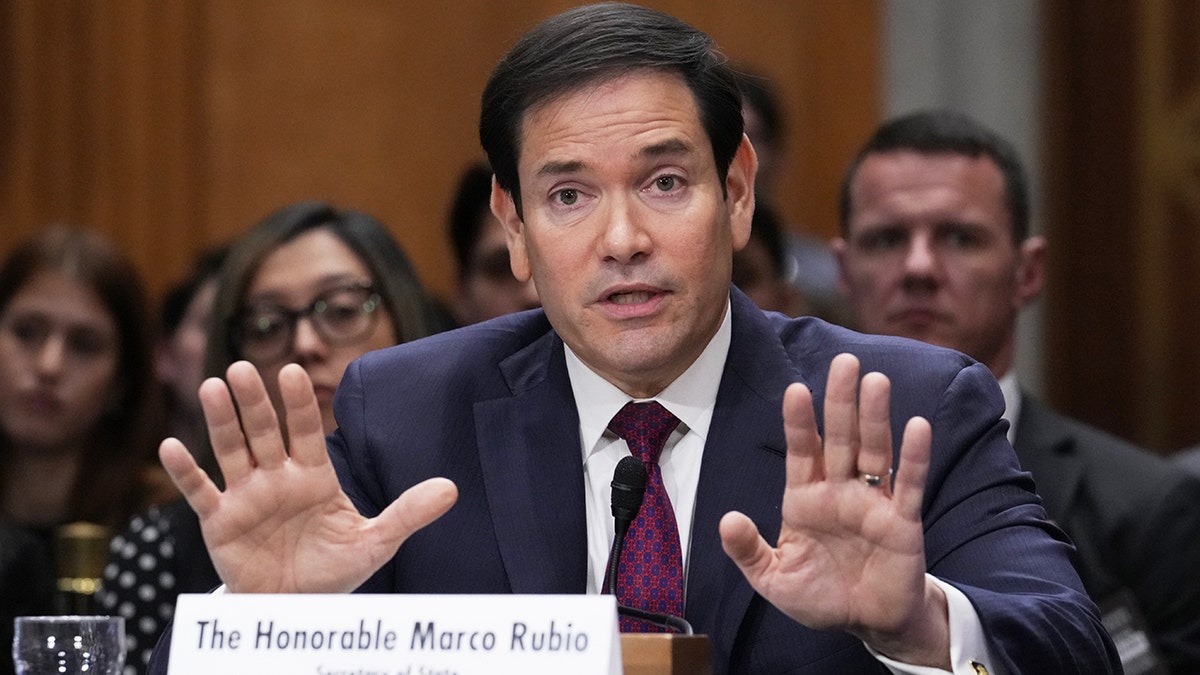
Secretary of State Marco Rubio said the Taliban continues to use «terrorist tactics» that he insisted «need to end.» (J. Scott Applewhite/AP Photo)
Habibi has not been heard from since his arrest, and the Taliban has not disclosed his whereabouts or condition, according to the State Department and FBI. The Taliban has previously denied it detained Habibi.
The U.S. is also calling for the return of the remains of Paul Overby, an author who was last seen close to Afghanistan’s border with Pakistan in 2014, according to Reuters, citing two sources familiar with the situation.
The State Department could restrict the use of U.S. passports for travel to Afghanistan if the Taliban does not meet the U.S. government’s demands, the sources told the outlet.
A passport restriction of this kind is currently only in place for North Korea.
The Taliban called the decision by Rubio to designate Afghanistan a «state sponsor of wrongful detention» regrettable, adding that it wanted to resolve the matter through dialogue.
STATE DEPARTMENT DEFENDS ‘PROACTIVE’ EVACUATION EFFORTS AGAINST DEMS’ CLAIMS OF DIPLOMATIC CHAOS
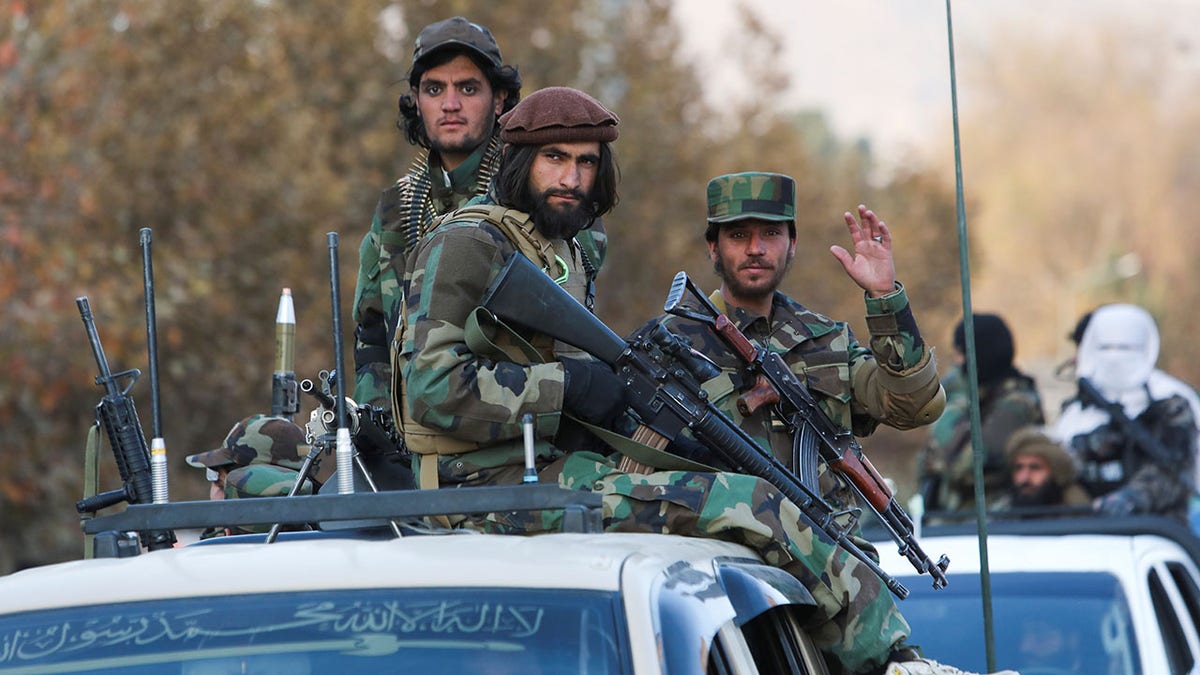
The Taliban called the decision to designate Afghanistan a «state sponsor of wrongful detention» regrettable. (Reuters/Ali Khara)
CLICK HERE TO DOWNLOAD THE FOX NEWS APP
The Taliban took control of Afghanistan in 2021 during the U.S. military’s chaotic withdrawal from the country that ended the 20-year war in the region.
Rubio gave the «state sponsor of wrongful detention» designation to Iran late last month, just one day before the U.S.-Israeli strikes on the country. He warned that the U.S. could restrict travel to Iran over its detention of U.S. citizens, but there have not been any restrictions yet.
«The Iranian regime must stop taking hostages and release all Americans unjustly detained in Iran, steps that could end this designation and associated actions,» Rubio said at the time.
Reuters contributed to this report.
afghanistan,world,terrorism,marco rubio,secretary of state,state department
INTERNACIONAL
Mamdani avoids ‘radical Islamic terror’ phrase after ISIS-inspired NYC attack, echoing Obama-era debate

NEWYou can now listen to Fox News articles!
New York Mayor Zohran Mamdani condemned an alleged ISIS-inspired bomb plot outside Gracie Mansion but did not use the phrase «radical Islamic terror,» reviving long-running criticism from the Obama era that some Democratic leaders avoid the term.
Two suspects were arrested after allegedly throwing improvised explosive devices near the mansion during a protest Saturday, with one reportedly telling authorities he was inspired by ISIS. Mamdani later described the attempted attack as «terrorism» but did not reference radical Islam in his initial public remarks.
Several Republican lawmakers and political rivals criticized Mamdani’s choice of words.
«There is absolutely no excuse for any public official to equivocate or be confused here,» New York State Sen. Steve Chan, R-Brooklyn, told Fox News Digital Tuesday.
DRAMATIC VIDEO SHOWS NYPD TACKLING MAN WHO THREW ‘IGNITED DEVICE’ NEAR NYC MAYOR’S HOME DURING PROTEST CLASH
New York State Sen. Steve Chan marches along the Avenue of the Americas during the Dominican Day Parade in Manhattan. (Luiz Rampelotto/NurPhoto)
«Anyone who throws a bomb is not a protester: they are a terrorist, plain and simple, and elected officials need to call it like it is,» Chan said, adding that he commends the NYPD for their brave and swift action at the scene.
Authorities said the two suspects, Emir Balat and Ibrahim Kayumi, both from the Philadelphia suburbs, allegedly threw improvised explosive devices containing a compound known as the «Mother of Satan» during the protest, with one reportedly admitting he was inspired by the Islamic State of Iraq and Syria (ISIS).
Greg Kelly, the son of former NYPD Commissioner Ray Kelly, who led New York through the aftermath of both 9/11 and the 1993 World Trade Center bombing, critiqued Mamdani for calling out the protest as led by an alleged «White supremacist» but whiffing on the ideology behind suspected ISIS-supporters’ actions.
«Imagine that: a bomb goes off in New York City, laid by ISIS-inspired terrorists. The mayor points at White supremacy as the problem; White supremacy if only we could get rid of those White supremacists,» Kelly said on his 77WABC radio program.
After the alleged attack, Mamdani held a press conference with NYPD Commissioner Jessica S. Tisch and called out the «vile protest» against Islam led by January 6 defendant Jake Lang that allegedly inspired the two boys to attack.
«New York City will never tolerate violence, whether from protests or counterprotests,» Mamdani said, condemning the arrested suspects for «coming here to commit an act of terrorism» in return.
New York Democratic scion Andrew Cuomo, the former three-term governor and mayoral candidate, lambasted Mamdani’s response as well.
HERO NYPD OFFICERS HONORED FOR FOILING ALLEGED ISIS-INSPIRED TERROR PLOT NEAR GRACIE MANSION
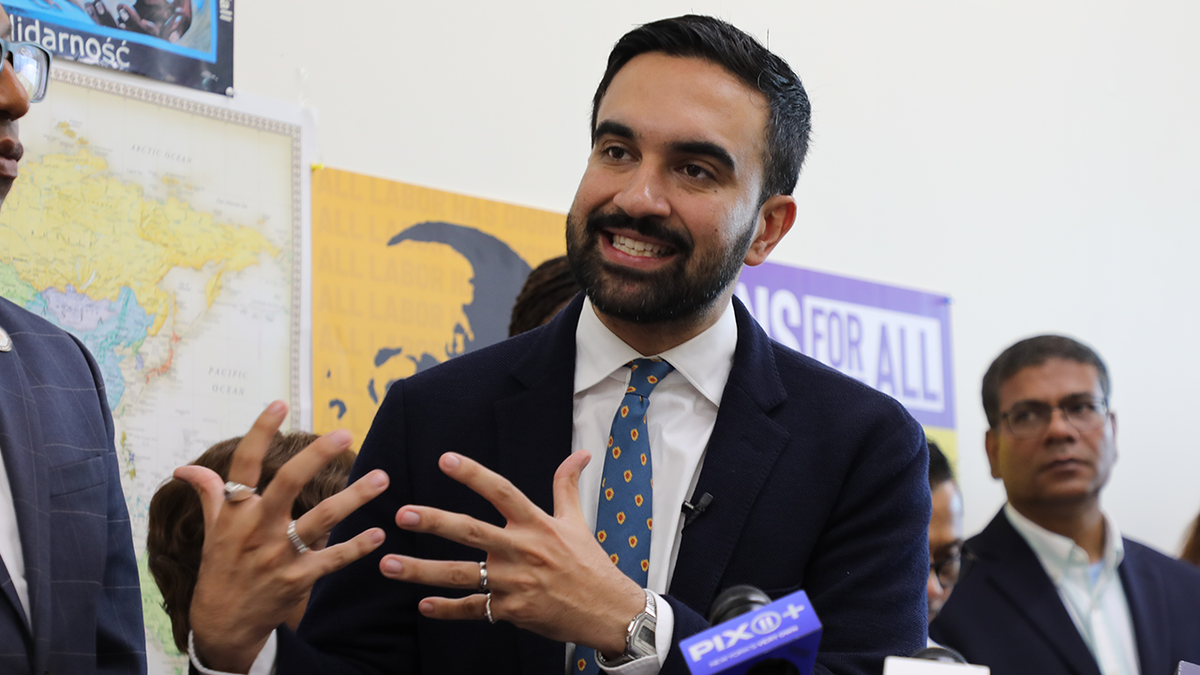
New York City Democratic mayoral candidate Zohran Mamdani (Deirdre Heavey/Fox News Digital)
«Had the bomb gone off … [it] literally would have done horrific damage. And the police, ironically, were closest to the bomb. Not Jake Lang,» he said.
«The mayor puts out a statement condemning Jake Lang. I agree. And in the second part of the statement, (he) condemns the terrorists. There is no moral equivalency: Jake Lang; bigot, hateful, of course. Yes, I agree — terrorists who bring a bomb to kill people? They are not equivalent, and this city has no tolerance for terrorism or attempted terrorists, and that statement has to be made loud and clear,» Cuomo said.
Hours later, Mamdani returned with a statement posted to social media that cited ISIS.
«Emir Balat and Ibrahim Kayumi have been charged with committing a heinous act of terrorism and proclaiming their allegiance to ISIS. They should be held fully accountable for their actions,» the statement said in part.
A few minutes later, former Mayor Eric Adams posted his own more thorough response to the situation, saying that «no one should be surprised.»
«After years of hateful rhetoric and incitement, attempts to justify attacks on Jews in Israel, praise for violence like the killing of a CEO, and chants about ‘globalizing the intifada’ and ‘Death to America,’ words have now escalated into violence on the streets of New York City, with explosives being thrown,» Adams said.
He identified a «serious radicalization problem» on both political fringes and said it is troubling to see an emphasis on young people being radicalized.
«If we don’t confront it, this will only get worse,» Adams said.
SUSPECT IN NYC TERROR PROBE PLANNED ATTACK ‘BIGGER THAN THE BOSTON MARATHON BOMBING,’ PROSECUTORS SAY
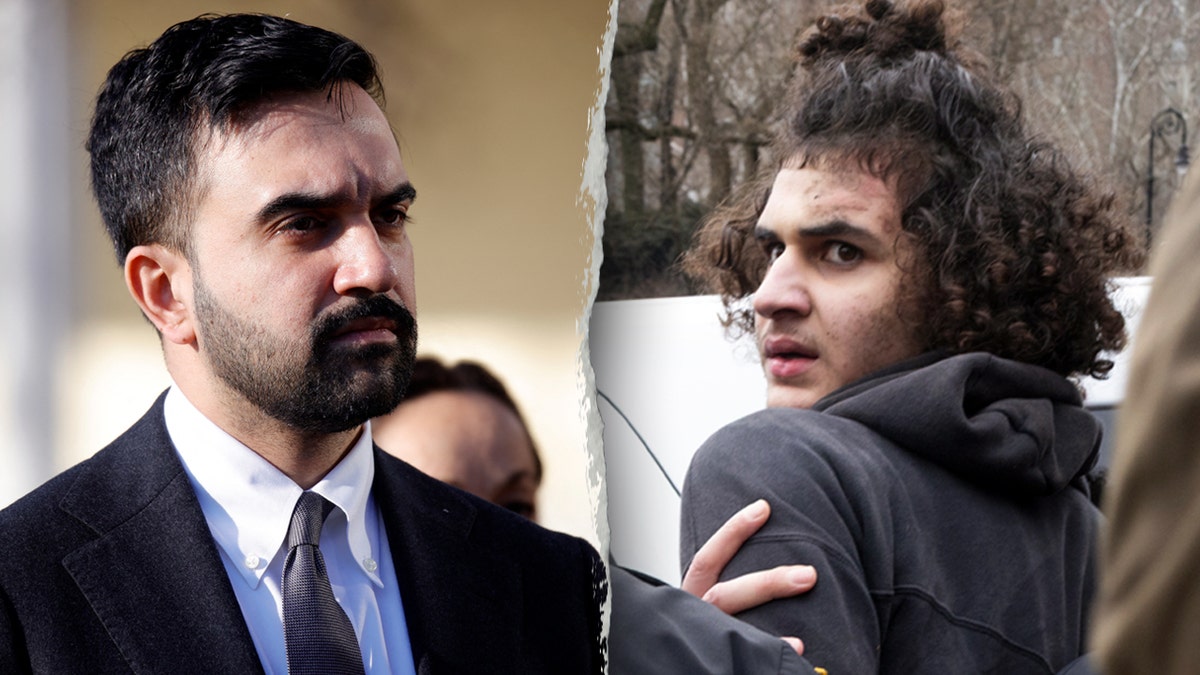
New York Mayor Zohran Mamdani, left, and one of the alleged Gracie Mansion terrorists, right. (Leonardo Munoz/Getty Images; Andrew Lictenstein/Getty Images)
One of the two alleged terrorists arrested was still a student at Neshaminy High School in Neshaminy, Pennsylvania.
Rep. Brian Fitzpatrick, R-Pa., the longtime Bucks County moderate, said in a statement that authorities in Middletown Township were investigating the situation near the boys’ homes.
«Authorities have indicated that there is no known threat to the surrounding community, and the situation remains under the control of law enforcement. The activity was not related to immigration enforcement,» Fitzpatrick said.
In a letter to parents, Neshaminy Superintendent Jason Bowman said the school is in contact with law enforcement and that there is no threat to other students at this time.
President Donald Trump made what he described as the left’s refusal to call out «radical Islamic terrorism» a centerpiece of his 2016 platform, when he regularly criticized former President Barack Obama for failing to fully identify such attacks.
CLICK HERE TO DOWNLOAD THE FOX NEWS APP
«Radical Islamic terrorism, and people don’t like saying that. And our president refuses to use the term. Every time another event happens, I say, ‘I wonder if he’ll say it this time,’» Trump said during a campaign rally in Fort Lauderdale, Florida. He went on to criticize his 2016 opponent, former first lady Hillary Clinton, along similar lines.
Fox News Digital reached out to Mamdani’s office for comment.
ericadams,isis,zohran mamdani,terrorism,bombings

Una ex Gran Hermano aseguró haber sido novia de Alberto Fernández y que la ayudó a gestionar licitaciones de Procrear

El Gobierno nombró a Gustavo Coria como director ejecutivo de la Comisión de Ex Combatientes de Malvinas

El CEO de JP Morgan elogió a Milei: «Tiene convicciones muy sólidas sobre cómo arreglar un país»

Fase 3 de la Libertadores: primer clasificado y así quedan los bombos para el sorteo

La mirada de un ex marine: “Trump no tiene una estrategia, busca ser el virrey de Irán”

La trastienda del saludo formal entre Mauricio Macri y Axel Kicillof en Expoagro

La cruda confesión de Amalia Granata por el trastorno que sufre su hijo Roque: “Le hicimos estudios y salió que tiene TDAH, dislexia y disgrafia”

El mercado le está corriendo el arco a Caputo y el riesgo país no baja: en la City palpitan medidas

Jenny Mavinga angustiada tras una quemadura en Gran Hermano 2026: “¡Ay, me quemó!

Trump anunciará la creación del Escudo de las Américas, una alianza regional que integrará Milei para enfrentar al narcoterrorismo y a China

 CHIMENTOS3 días ago
La cruda confesión de Amalia Granata por el trastorno que sufre su hijo Roque: “Le hicimos estudios y salió que tiene TDAH, dislexia y disgrafia”
- ECONOMIA2 días ago
El mercado le está corriendo el arco a Caputo y el riesgo país no baja: en la City palpitan medidas
- CHIMENTOS2 días ago
Jenny Mavinga angustiada tras una quemadura en Gran Hermano 2026: “¡Ay, me quemó!