INTERNACIONAL
Two federal judges may hold Trump in contempt as he defies courts in immigration crackdown

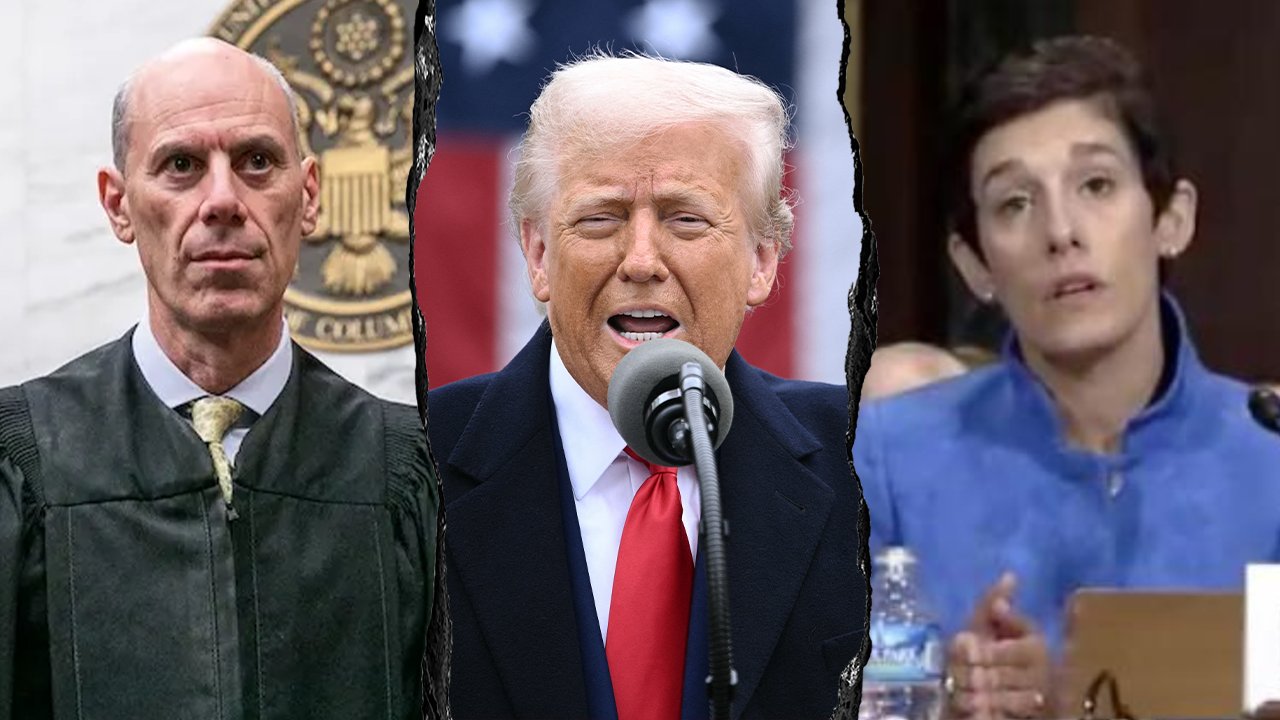
A second U.S. judge scolded the Trump administration on Tuesday night for failing to answer questions in an ongoing deportation case, raising the threat that some Trump officials could be held in contempt of court.
U.S. District Judge Paula Xinis of Maryland upbraided Trump officials for failing to comply with the court’s requests for information in a case involving the deportation of Kilmar Armando Abrego Garcia — accusing officials in a blistering eight-page order of submitting «vague, evasive and incomplete» responses that she said demonstrated «willful and bad faith refusal to comply with discovery obligations.»
She further described the Justice Department’s «false premise» objections as «a willful and bad faith refusal to comply with discovery obligations.»
Xinis is not the first federal judge to raise the possibility of holding the Trump administration in contempt for failing to abide by court orders. Just 15 miles away, at a courthouse in Washington, D.C., another judge had already threatened the same.
FEDERAL JUDGE JAMES BOASBERG FINDS PROBABLE CAUSE TO HOLD TRUMP IN CONTEMPT OVER DEPORTATION FLIGHTS
Demonstrators gather in a nationwide «Hands Off!» protest against President Donald Trump and Elon Musk in Boston on Apr. 5, 2025. (Joseph Prezioso/AFP via Getty)
At issue in both cases is President Donald Trump’s use of the Alien Enemies Act, a wartime immigration law the administration invoked last month to immediately deport certain individuals from the U.S. to El Salvador.
Hours after Trump’s March 14 proclamation that he would use the law to deport certain migrants — including alleged members of the gangs MS-13 and Tren de Aragua, or TdA — the U.S. sent more than 260 migrants to El Salvador to be detained in the country’s maximum-security prison.
The weeks since have been characterized by a wave of frantic court proceedings, appeals, and emergency Supreme Court orders, as judges across the country weigh the administration’s use of the wartime law.
WHO IS JAMES BOASBERG, THE US JUDGE AT THE CENTER OF TRUMP’S DEPORTATION EFFORTS?
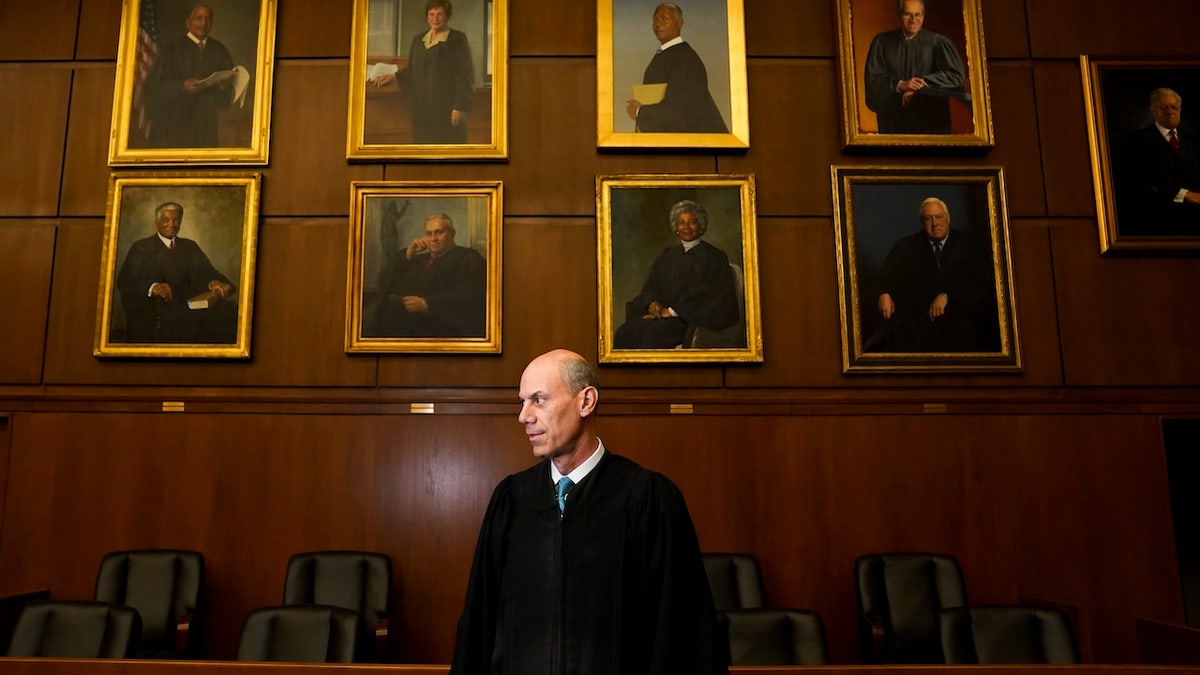
U.S. District Judge James E. Boasberg stands for a portrait at E. Barrett Prettyman Federal Courthouse in Washington, D.C. (Carolyn Van Houten/The Washington Post via Getty Images)
But Trump’s lawyers have appeared less than willing to share certain information with the courts. Their behavior has sparked fury from federal judges, who have accused them on more than one occasion of acting in bad faith and willfully defying their orders.
Xinis took umbrage Tuesday night at the administration’s refusal to respond to at least one interrogatory, saying their refusal is «based on the false premise that the United States can or has been ordered to facilitate Abrego Garcia’s release from custody» in El Salvador.
She also rebuked officials for their failure to comply with her earlier order to return Abrego Garcia, a Maryland man and alleged MS-13 member who was wrongfully deported last month to El Salvador. «For weeks, Defendants have sought refuge behind vague and unsubstantiated assertions of privilege, using them as a shield to obstruct discovery and evade compliance with this Court’s orders,» she said.
Her earlier ruling was upheld by the Supreme Court in an emergency order. The ruling said the government must «facilitate» his release — a definition that was subsequently clarified again by Xinis and by judges on the Fourth Circuit Court of Appeals.
«‘Facilitate’ is an active verb,» U.S. Judge J. Harvie Wilkinson III, a Reagan appointee, said in authoring the circuit court opinion.
«It requires that steps be taken as the Supreme Court has made perfectly clear,» he added.
TRUMP ADMIN DEFIES COURT OVER MARYLAND DEPORTATION, IGNITES LEGAL SHOWDOWN
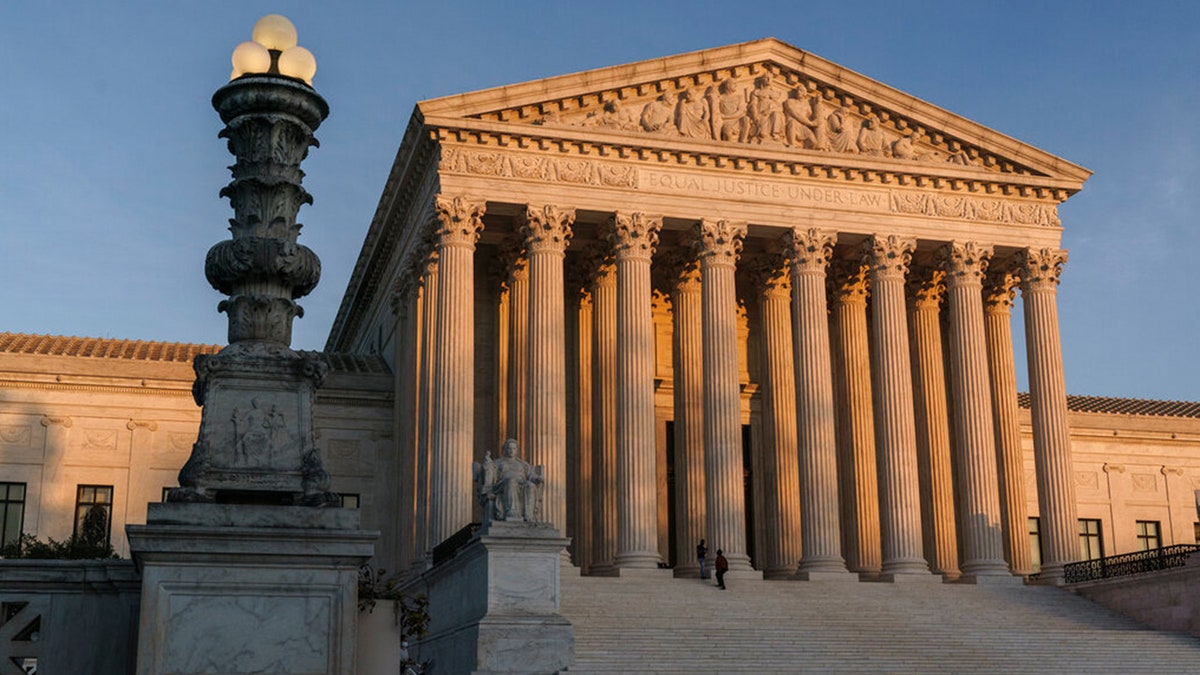
The Supreme Court building in Washington, D.C. (AP Photo/J. Scott Applewhite, File)
At a hearing last week, Xinis ordered an «intense» and expedited two-week discovery period to determine whether the Trump administration has acted in good faith to comply with her order to return Abrego Garcia. Should they fail to supply the required information, or indicate they acted in bad faith, she could have sufficient information to move to consider possible contempt proceedings.
Additionally, in a related case, U.S. District Judge James Boasberg said there was probable cause to find Trump administration officials in criminal contempt for defying his order to return deportation flights to El Salvador on March 15.
In a 48-page ruling, Boasberg accused the government of «willful disregard» for court directives, citing missed deadlines to submit flight details and identify officials who knew about his emergency order halting removals. Although a federal appeals court in D.C. has paused the contempt proceedings, Boasberg has requested further declarations and warned that officials may be required to testify under oath.
If they fail to comply, the judge could refer the case to the Justice Department for prosecution or appoint outside counsel if DOJ declines.
JUDGE BOASBERG POISED TO HOLD TRUMP ADMIN IN CONTEMPT, TAKES DOWN NAMES OF DHS OFFICIALS: ‘PRETTY SKETCHY’
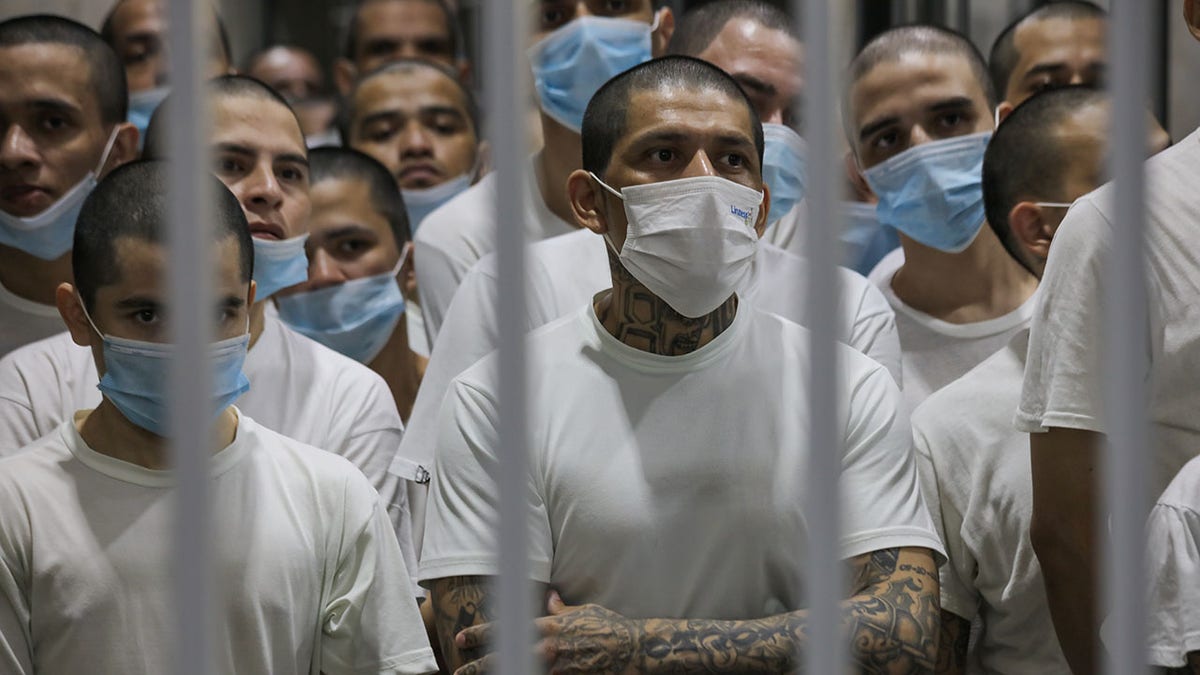
Gang members seen in a cell at the Terrorism Confinement Center, or CECOT, in Tecoluca, in San Vicente, El Salvador. Photo via Getty Images. (Alex Pena/Anadolu via Getty Images)
The appeals court that paused Boasberg’s contempt proceedings did so temporarily, requesting additional briefing from both the Justice Department and ACLU attorneys representing the plaintiffs.
What happens next remains uncertain. Trump officials have repeatedly railed against so-called «activist judges,» accusing courts of obstructing the administration’s immigration agenda. In an earlier emergency appeal, officials claimed Boasberg’s actions amounted to a «massive, unauthorized imposition on the Executive’s authority to remove dangerous aliens,» arguing those individuals «pose threats to the American people.»
Meanwhile, Judge Xinis’s order in Maryland comes amid a flurry of immigration-related legal battles nationwide, as Trump pushes forward with his border security priorities.
Earlier this month, the Supreme Court ruled 5–4 that the administration can continue using the Alien Enemies Act to deport migrants, provided they receive due process protections, including the right to challenge removals in court.
CLICK TO GET THE FOX NEWS APP
Separately, federal judges in New York and Texas temporarily blocked use of the Alien Enemies Act in specific cases, siding with plaintiffs who argued certain migrants could be removed without a chance to seek habeas relief.
The White House did not immediately respond to Fox News Digital’s request for comment on next steps in the Abrego Garcia case, or on the possibility that Xinis might move on possible contempt proceedings.
Tren de Aragua,Donald Trump,Federal Courts,Immigration,Trump’s First 100 Days









INTERNACIONAL
Iran’s ideological state: faith, fear and favors fuel its vast propaganda and patronage network
NEWYou can now listen to Fox News articles!
When Benny Sabti was a child growing up in Iran, he remembers receiving an unusual prize at school. «For being an excellent student, I received a Persian translation of Mein Kampf by Adolf Hitler,» Sabti told Fox News Digital. «They translated Hitler’s book into Persian and distributed it to students.»
The experience stayed with him. Looking back, Sabti, now an Iran expert at the Institute for National Security Studies (INSS) in Israel, says it reflected a broader effort by Iran’s ruling clerical establishment to shape how young Iranians viewed politics, religion and the world around them.
Schools, mosques, workplaces and media all became part of an ideological ecosystem designed to reinforce loyalty to the regime. But critics of Iran’s leadership say religion itself was often not the ultimate goal.
«Faith for them is their tool,» Banafsheh Zand, an Iranian-American journalist and editor of the Iran So Far Away Substack, told Fox News Digital. «It’s not the end all to be all. It’s a tool that they can hide behind so that they can carry out all their criminalities.»
Primary school girls in traditional headscarves sit in a classroom, Tehran, Iran, Oct. 1, 1997. (Kaveh Kazemi/Getty Images)
Religion and power
The Islamic Republic was founded on the doctrine of velayat-e faqih, or «guardianship of the Islamic jurist,» which places ultimate political and religious authority in the hands of the country’s supreme leader.
But Zand argues that in practice the system functions less as a purely religious project and more as a mechanism of political control. «It’s more like a mafia,» she said. «They use faith in order to keep people down.»
According to Zand, ideology is reinforced through a mix of financial incentives and intimidation. «They tried by incentive and money and buying people,» she said.
Programs tied to the Basij, a militia affiliated with the Islamic Revolutionary Guard Corps (IRGC), have often provided benefits such as jobs, housing and education to families aligned with the regime.
«If you are poor and you join the Basij, they give you benefits,» Zand said. «But you have to go along with whatever it is that they offer you.»
Ideology embedded in daily life
Sabti says the Islamic Republic built a vast network designed to reinforce ideology in everyday life. «In banks, offices, public spaces and even in the bazaars, regime representatives walk between shops telling people it is time to pray and checking who is not attending,» Sabti said.
Mosques themselves are closely integrated into the political system. Friday prayer leaders often deliver sermons aligned with government messaging.
«There are 16 propaganda bodies in Iran,» Sabti said, describing a network of state institutions responsible for spreading the regime’s interpretation of Islam and the ideals of the Islamic Revolution.
Some institutions also focus on exporting that ideology abroad. «There is a university dedicated to converting Sunnis to Shiism,» he said. «They bring people from Africa and South America to Iran, convert them to Shiism and send them back to export the Shiite Islamic revolution.»
OPERATION EPIC FURY: HOW AMERICA’S AIR POWER IS CRUSHING IRAN’S TERROR REGIME
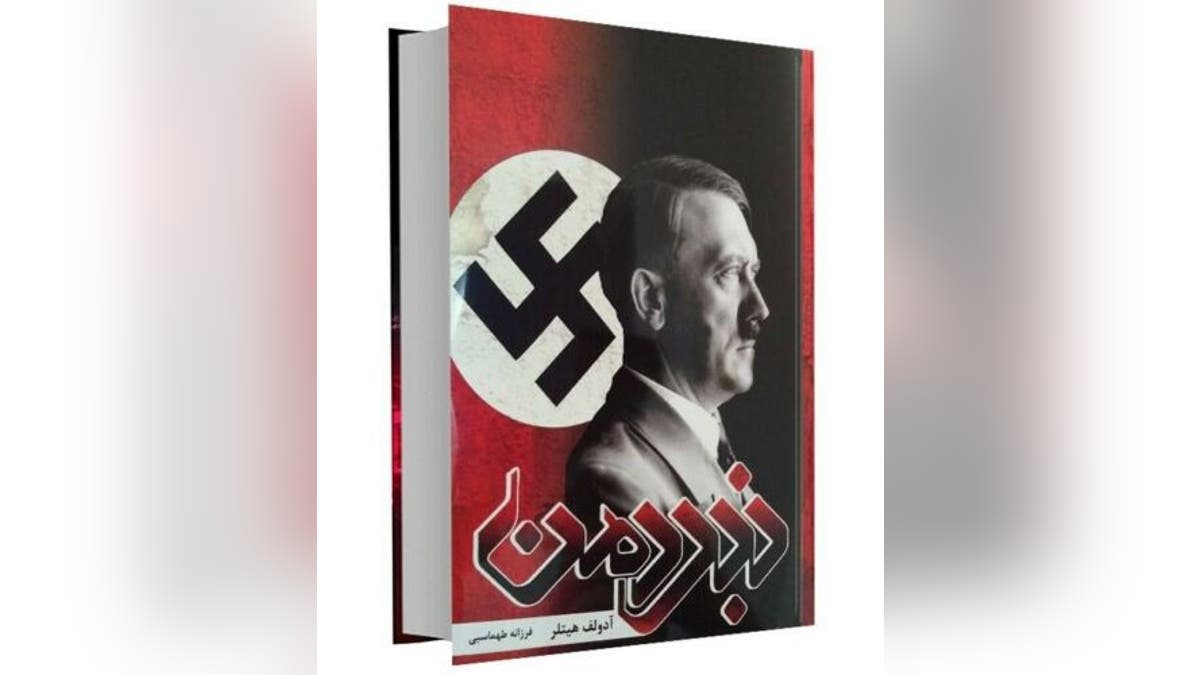
A Persian-language edition of Adolf Hitler’s Mein Kampf.
Indoctrination in schools
Schools play a central role in the regime’s ideological system.
«Schools are heavily indoctrinated,» Sabti said. «In civil studies books, Islam was promoted as superior to all other ideologies.»
Religious messaging appears across the curriculum. «You cannot separate any school subject from Islam,» Sabti said. «Not history, not geography. Everything is mixed with ideology. The only thing missing was adding it to mathematics.»
For Sabti, the Mein Kampf episode symbolized the ideological environment students were exposed to. The message, he said, reinforced hostility toward perceived enemies and embedded a political worldview from an early age.
Ideology and hypocrisy
Sabti says the credibility of the system is also undermined by the behavior of Iran’s own elites. «You can see it in the second generation,» he said. «Their children live abroad while the elites live in palaces in Iran and in other countries. It is hypocrisy.»
Zand says ideology has always been reinforced by intimidation. «They make examples out of people in the most vicious possible way,» she said. «It’s fear and manipulation.»
According to Zand, that atmosphere of fear shapes daily life for many Iranians. «Everybody is afraid of the police,» she said. «Everybody is afraid of their neighbors.»
WORLD LEADERS SPLIT OVER MILITARY ACTION AS US-ISRAEL STRIKE IRAN IN COORDINATED OPERATION
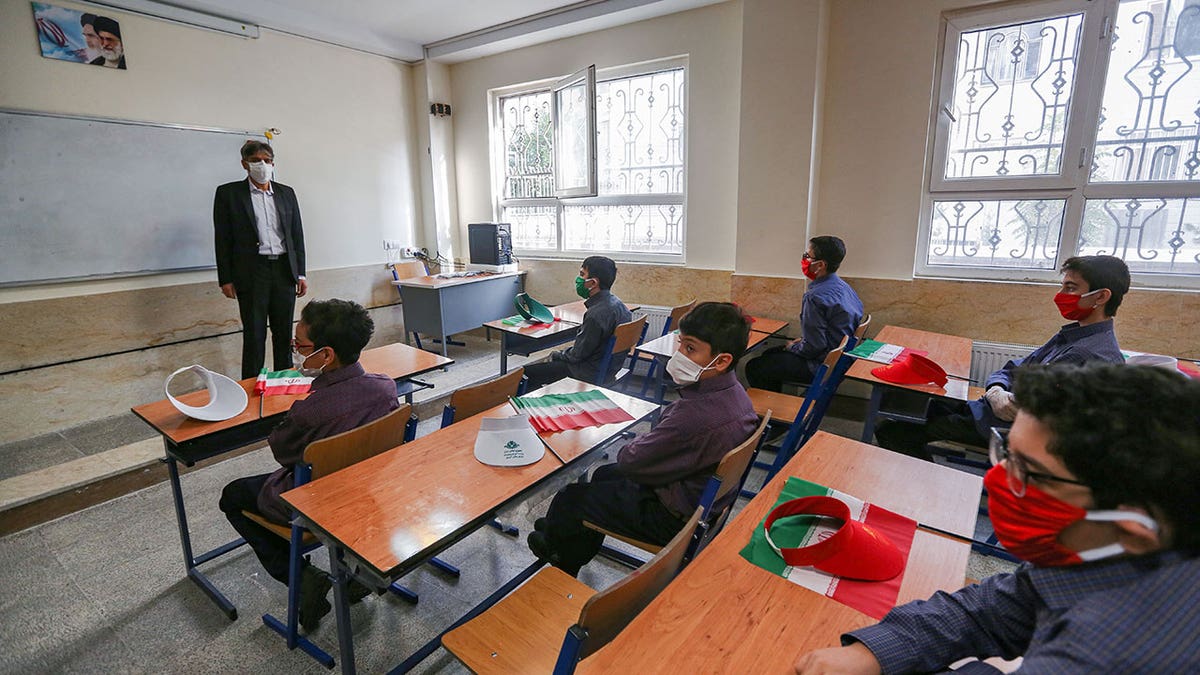
School children sit together in a classroom while mask-clad and distanced apart from each other, with Iranian national flags on the desk of each, on the first day of school’s re-opening, at Nojavanan school in the capital Tehran on Sept. 5, 2020. (Photo by Atta Kenare / AFP / Getty)
An ideology losing its grip
Despite the regime’s extensive ideological machinery, Sabti believes many Iranians never fully accepted the worldview the government tried to impose.
«Over the years, the indoctrination has stopped working,» he said. «Most of the public does not truly believe it.»
Still, the Islamic Republic remains in power. «The regime maintains control through money, weapons and propaganda,» Sabti said.
Zand agrees the system never fully reshaped Iranian society. Many people, she said, complied outwardly simply to avoid punishment.
CLICK HERE TO DOWNLOAD THE FOX NEWS APP
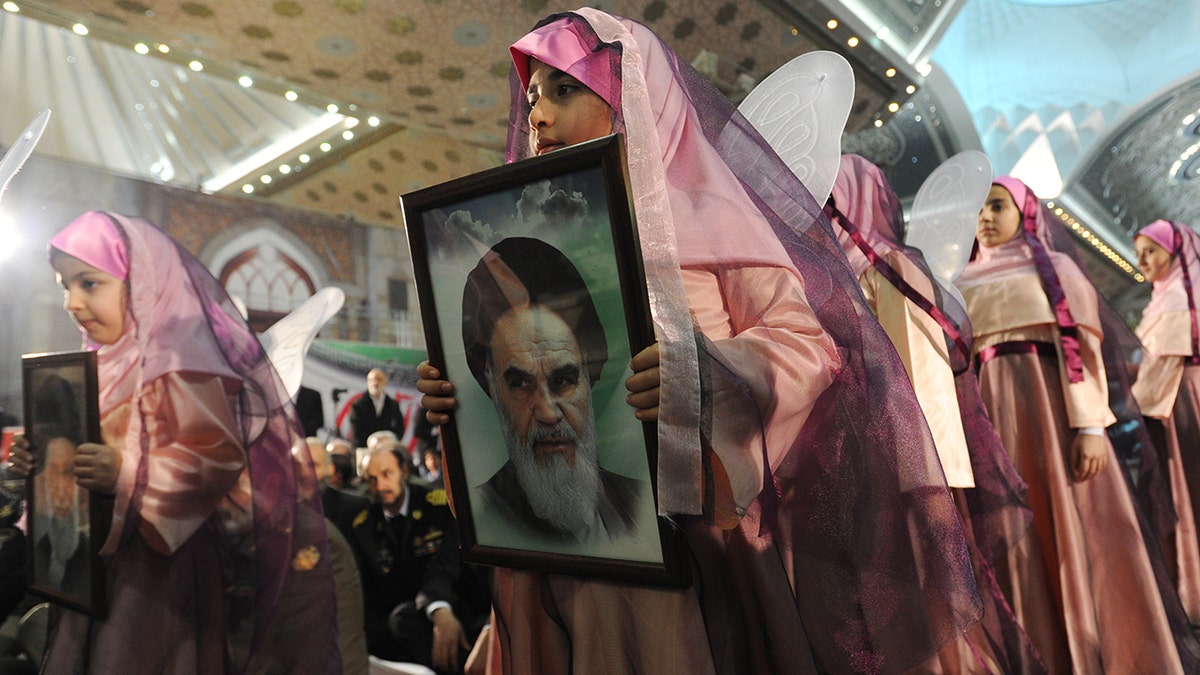
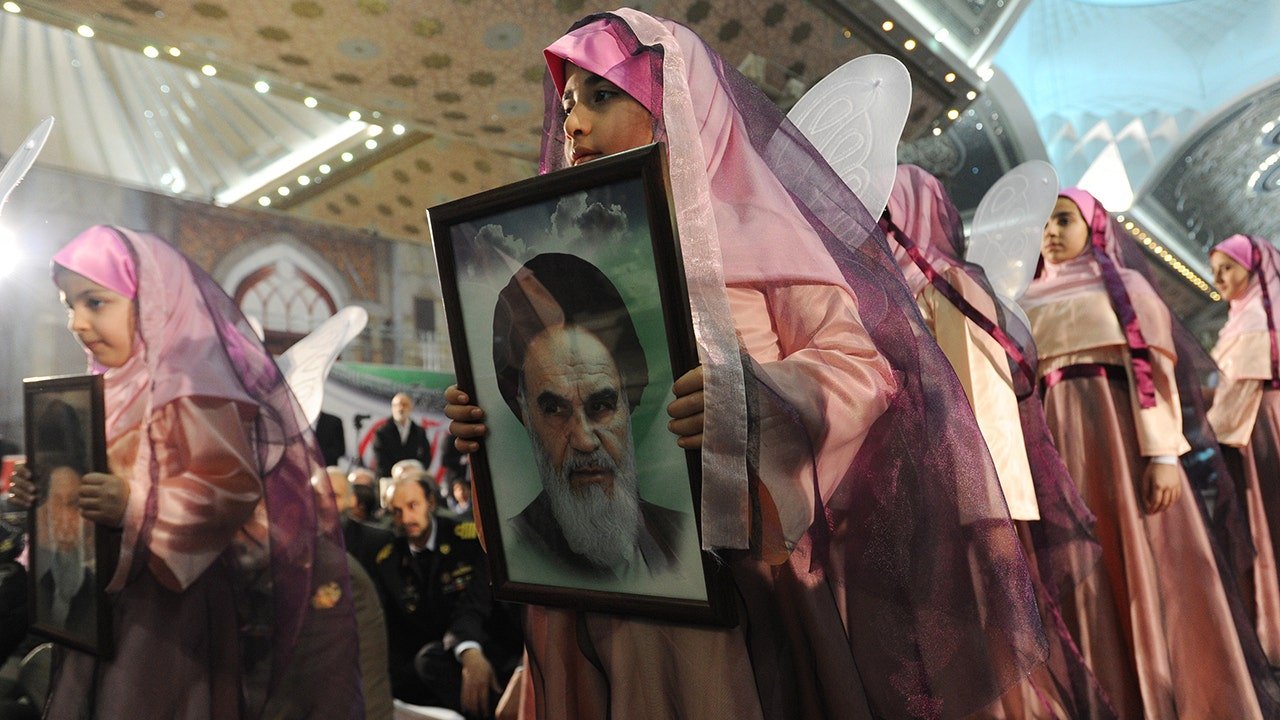
Iranian school girls wearing angel wings hold flags and portraits of Iran’s supreme leaders, past and present, as officials and security forces mark the 37th anniversary of the day in 1979 that the father of Iran’s Islamic revolution, Ayatollah Ruhollah Khomeini, returned from exile in France, at the shrine built to house his remains on Feb. 1, 2016 south of Tehran, Iran. (Scott Peterson/Getty Images)
«They won’t have a problem to transfer as long as they realize that the new Iran has no room for the violence and the horrifying characteristics of the Islamist regime,» Zand told Fox News Digital.
She said that beneath the surface, Iran’s cultural identity remained intact even after decades of pressure from the state.
Related Article
war with iran,terrorism,iran
INTERNACIONAL
Noem reveals Trump will have ‘big agreement’ to announce at major summit with world leaders
NEWYou can now listen to Fox News articles!
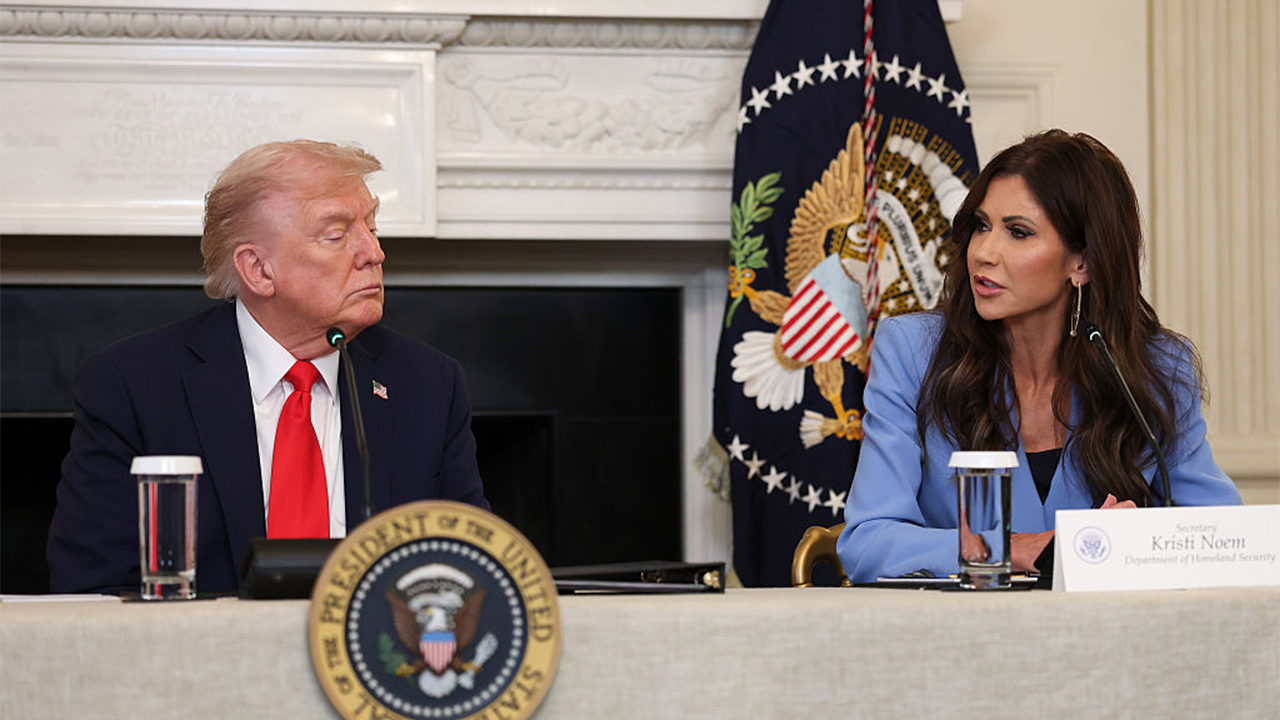
Kristi Noem will reportedly join President Donald Trump and 12 Latin American leaders at his resort in Florida for a «Shield of the Americas» summit Saturday after her ouster as the Secretary of Homeland Security and appointment by President Donald Trump to be special envoy for the new coalition of nations.
On Thursday, Trump announced Noem would be exiting her role as Homeland Security secretary and would be appointed a Special Envoy for the «Shield of the Americas,» a summit for which will be held at the president’s resort in Doral, Florida, on Saturday. The new coalition of 13 countries has been formed to advance strategies that will tackle mass illegal immigration, narco-terrorist gangs and cartels.
«After years of neglect, President Trump established the ‘Donroe Doctrine’ to restore American preeminence in the Western Hemisphere. His efforts have been a tremendous success – our southern border is secure, Latin American countries are working with us to defeat the cartels, and illegitimate dictator Nicolas Maduro is facing justice for his crimes in the Southern District of New York – ushering in historic economic cooperation with Venezuela,» said White House spokesperson Anna Kelly ahead of the summit.
«The President has successfully strengthened our relationships in our own backyard to make the entire region safer and more stable, and this weekend’s ‘Shield of the Americas’ Summit will encapsulate all of his work to Make America, and our partners, Strong Again,» she continued.
President Donald Trump greets Argentinian President Javier Milei at the White House in October. ( ANDREW CABALLERO-REYNOLDS/AFP via Getty Images)
Members of Trump’s Cabinet, including Secretary of State Marco Rubio, Secretary of War Pete Hegseth, Secretary of Commerce Howard Lutnick and United States Trade Representative Jamieson Greer, will also be at the Saturday summit.
The leaders from other nations who will be present are Argentina’s Javier Milei, El Salvador’s Nayib Bukele Ortez, Bolivia’s Rodrigo Paz Pereira, Costa Rica’s Rodrigo Chaves Robles, Panama’s José Raúl Mulino Quintero, and Trinidad and Tobago’s Kamla Persad-Bissessar, Chile’s Jose Antonio Kast, the Dominican Republic’s Luis Rodolfo Abinader Corona, Ecuador’s Daniel Roy Gilchrist Noboa Azín, Guyana’s Mohamed Irfaan Ali, Honduras’ Nasry «Tito» Asfura, and Paraguay’s Santiago Peña.
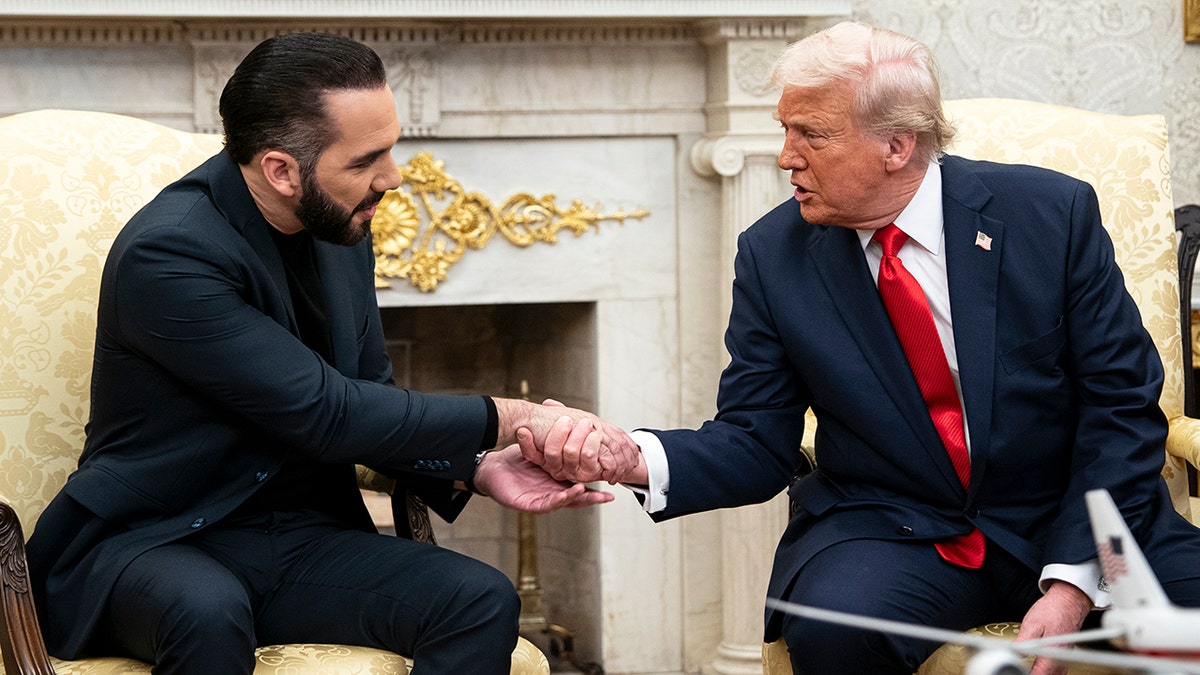
US President Donald Trump shakes hands with Nayib Bukele, El Salvador’s president, during a meeting in the Oval Office of the White House in Washington, DC, US, on Monday, April 14, 2025 (Al Drago for The Washington Post via Getty Images)
‘IT WAS TIME’: DESPITE RARE CRITICISM, SOME HILL REPUBLICANS WELCOME KRISTI NOEM’S OUSTER
Noem confirmed Friday, speaking from Nashville, that she will be at the summit, according to the Associated Press. Noem reportedly added that the president will announce «a big agreement» detailing «how we’re going to go after cartels and drug trafficking in the entire Western Hemisphere.»
On Friday, Hegseth led a strategic conference in Doral with representatives of 17 different Caribbean, Central American and South American countries throughout the Western Hemisphere. During the conference, they signed a joint security declaration, reaffirming their commitment to peace and sovereignty in the region. According to a source familiar with the plans for the summit, the president plans to celebrate this achievement with attendees.

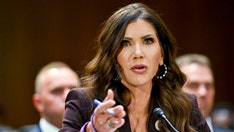
Department of Homeland Security Secretary Kristi Noem, testifies during a Senate Judiciary Committee oversight hearing on Capitol Hill in Washington, Tuesday, March 3, 2026. (AP Photo/Manuel Balce Ceneta) (AP Photo/Manuel Balce Ceneta)
«Secretary Noem helped usher in the most secure border in history, deported hundreds of thousands of criminal illegal aliens, and executed record-setting counter-drug operations against cartels. All of this great experience positions Noem well to ensure American preeminence in the entire Western Hemisphere in her new role as Special Envoy to the Shield of the Americas,» White House spokesperson Olivia Wales said. «This historic new security initiative, led by Secretary Noem, will advance cutting-edge strategies to defeat narco-terrorist cartels and stop illegal mass migration to make America and the entire Western Hemisphere safer.»
CLICK HERE TO GET THE FOX NEWS APP
On Thursday, Rubio said he looked forward to working with Noem as Special Envoy for The Shield of the Americas, and echoed the comments from the White House about her experience.
«Kristi has achieved incredible results as Secretary of Homeland Security and will be a tremendous asset in our effort to promote security and prosperity in the Western Hemisphere,» Rubio said on X after Trump named Noem to her new post.
Related Article
latin america,kristi noem,donald trump,foreign policy,national security,state department
INTERNACIONAL
El presidente de Irán desafía a Trump: aseguró que el régimen no se rendirá ante EEUU e Israel
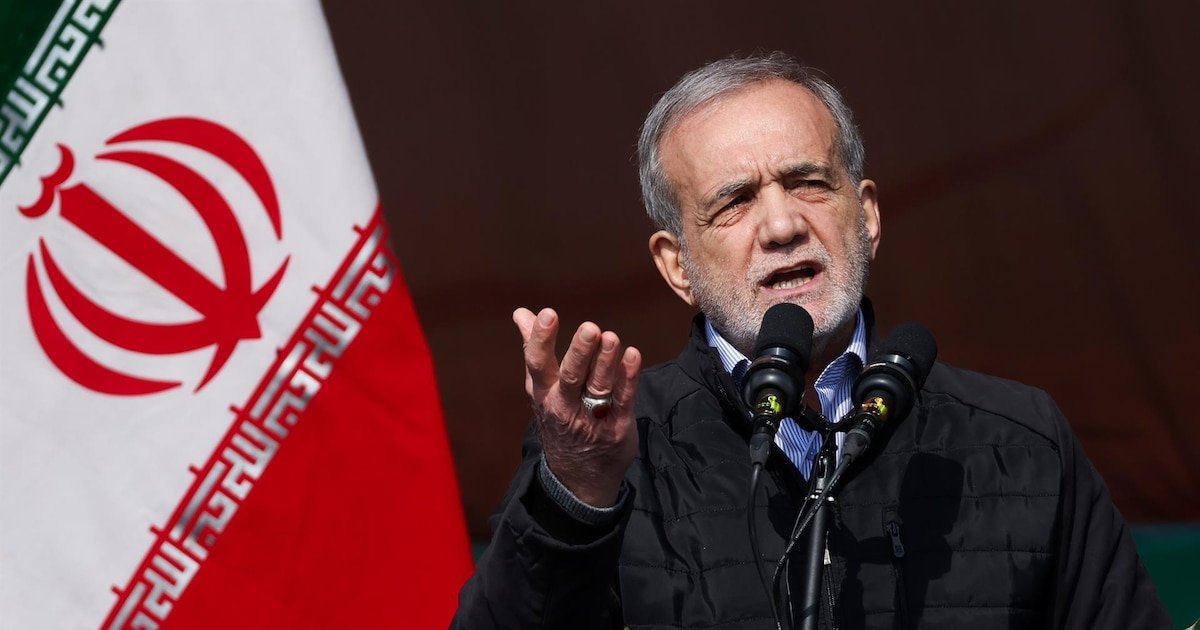
El presidente de Irán, Masoud Pezeshkian, afirmó el sábado que su país nunca se rendirá ante Israel y Estados Unidos, en el marco de la segunda semana de la guerra en Medio Oriente.
“Los enemigos de Irán deben llevarse a la tumba su deseo de rendición incondicional del pueblo iraní”, declaró Pezeshkian en un discurso transmitido por la televisión estatal.
El mandatario ofreció disculpas, tanto a título personal como en nombre de Irán, a los países vecinos que fueron objeto de ataques iraníes.
“El consejo de liderazgo interino acordó ayer que no se realizarán más ataques contra países vecinos ni se dispararán misiles a menos que un ataque contra Irán provenga de esos países”, anunció Pezeshkian.
El presidente estadounidense Donald Trump descartó el viernes cualquier conversación con Irán mientras no se produzca su “rendición incondicional”. “No habrá ningún acuerdo con Irán salvo la rendición incondicional!”, escribió en su plataforma Truth Social.
Pezeshkian, ha anunciado este sábado la suspensión de bombardeos contra objetivos en los países vecinos de la región y ha presentado sus disculpas por una estrategia que ha atribuido a una medida militar de fuerza mayor ante la muerte de la cúpula de seguridad en los ataques de la semana pasada de EEUU e Israel, pero ha matizado que su país se reserva el derecho a contraatacar si vuelve a ser objetivo de ataques desde estos lugares.
“El Consejo de Liderazgo en funciones aprobó ayer (por el viernes) que no se realizarán más ataques contra países vecinos ni se dispararán misiles a menos que un ataque contra Irán se origine en esos países”, ha anunciado Pezeshkian en un discurso televisado a la nación, en referencia al órgano ejecutivo provisional establecido tras la muerte del ayatolá Alí Khamenei en el ataque conjunto de la semana pasada de EEUU e Israel sobre Teherán.
El presidente iraní ha llegado incluso a pedir disculpas a los vecinos regionales e insistido en que su país no guarda ningún tipo de animadversión hacia ellos, en línea con la postura oficial del régimen iraní, que desde un primer momento ha esgrimido que sus bombardeos iban dirigidos contra posiciones militares, bien de EEUU o de los aliados regionales de Washington.
“Nuestras fuerzas armadas son intrépidas y han arriesgado sus vidas para defender la integridad territorial del país. En ausencia de los comandantes, tomaron las medidas necesarias para defender nuestra tierra con dignidad y fuerza”, ha argumentado.

Aunque Pezeshkian asegura que la decisión se tomó el viernes, países como Arabia Saudí han denunciado intercepciones de al menos cuatro drones y un misil procedentes de Irán, en el marco de las medidas de represalia puestas en marcha por Teherán en respuesta a la ofensiva lanzada el sábado de la semana pasada por Washington y Tel Aviv.
También el Gobierno de Emiratos Árabes Unidos ha confirmado esta madrugada la “contención con éxito” de un “un incidente menor provocado por la caída de escombros tras una interceptación”, sin heridos que lamentar.
El presidente iraní ha aprovechado para declarar que la rendición incondicional exigida el viernes por el presidente de Estados Unidos, Donald Trump, no va a suceder jamás.
“La rendición incondicional de Irán es un sueño que se llevará a la tumba”, ha avisado Pezeshkian antes de rematar su discurso con un llamamiento a una solución diplomática. “No tenemos intención de invadir países vecinos; como dijimos, son nuestros hermanos y nos esforzamos por unirnos a ellos para establecer la paz y la tranquilidad”, ha indicado.
(Con información de Europa Press)
Asia / Pacific,Religion / Belief,Military Conflicts

Iran’s ideological state: faith, fear and favors fuel its vast propaganda and patronage network

Se supo lo que ocultaron Ian Lucas y Evangelina Anderson de su relación: «En la intimidad de ellos»

Noem reveals Trump will have ‘big agreement’ to announce at major summit with world leaders

El nuevo ministro de Justicia confrontó directamente a la AFA: “Estoy a favor de las Sociedades Anónimas Deportivas”

Javier Milei y sus medidas, EN VIVO: el Presidente se volverá a ver hoy con Donald Trump en un almuerzo de trabajo en Florida

Semana financiera: la guerra en Medio Oriente marcó el pulso inestable de los mercados y afectó a la Argentina

El hijo adoptivo de José María Muscari tomó una tajante decisión de vida a los 18 años

¡Interna total! Pablo Layus explotó y blanqueó quiénes son los que arruinan Intrusos: «Te matan»

Ángel de Brito contó la oscura verdad de Jorge Rial para no ir a LAM: “Es un…”

Mapa de la guerra en Medio Oriente: dos bandos y 13 países involucrados en un conflicto que jaquea al mundo

 CHIMENTOS3 días ago
El hijo adoptivo de José María Muscari tomó una tajante decisión de vida a los 18 años
- CHIMENTOS3 días ago
¡Interna total! Pablo Layus explotó y blanqueó quiénes son los que arruinan Intrusos: «Te matan»
- POLITICA1 día ago
Javier Milei habló de la crisis con la vicepresidenta: “No quiero la renuncia de Victoria Villarruel”