INTERNACIONAL
UK faces backlash as teacher dismissed for telling student Britain is a Christian country

NEWYou can now listen to Fox News articles!
An elementary school teacher in London was dismissed and referred to authorities after telling a Muslim pupil that Britain was a «Christian country,» according to the lawyer supporting his legal challenge.
The case from earlier this year has added to the broader debate about free expression, multiculturalism and the use of safeguarding mechanisms in British schools — the system designed to ensure a safe environment in which children can learn.
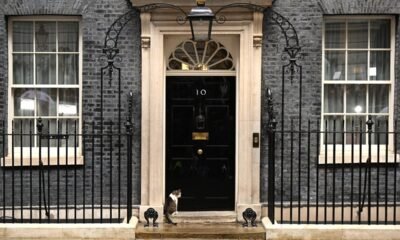
Lord Toby Young, director of the Free Speech Union, told Fox News Digital that the central accusation was triggered by the teacher’s statement that Britain remains a Christian country.» To claim that Britain is a Christian country and to point out that the king is the head of the Church of England isn’t a particularly politically contentious thing to say. It’s just stating a pretty straightforward fact.»
PASTOR WINS FIGHT TO KEEP PREACHING ON UK STREETS AFTER POLICE TOLD HIM HE COULDN’T DISCUSS OTHER RELIGIONS
King Charles III serves as head of the Church of England — a fact the dismissed teacher cited when telling a student that Britain is still a Christian country. (Richard Pohle – WPA Pool/Getty Images)
The complaint also involved the pupil washing his feet in a school sink — a pre-prayer ritual for Muslims. «The parent of a boy at the school complained because the teacher had told the boy not to wash his feet in one of the sinks in the school lavatories,» Young added.
He said the Free Speech Union is seeing a rise in referrals to safeguarding panels for mainstream views. «We’ve got over a dozen cases of people being referred to safeguarding panels because they are said to be a threat to children’s safety just because of the views they’ve expressed.»
UK GOVERNMENT ACCUSED OF CRACKING DOWN ON FREE SPEECH: ‘THINK BEFORE YOU POST’
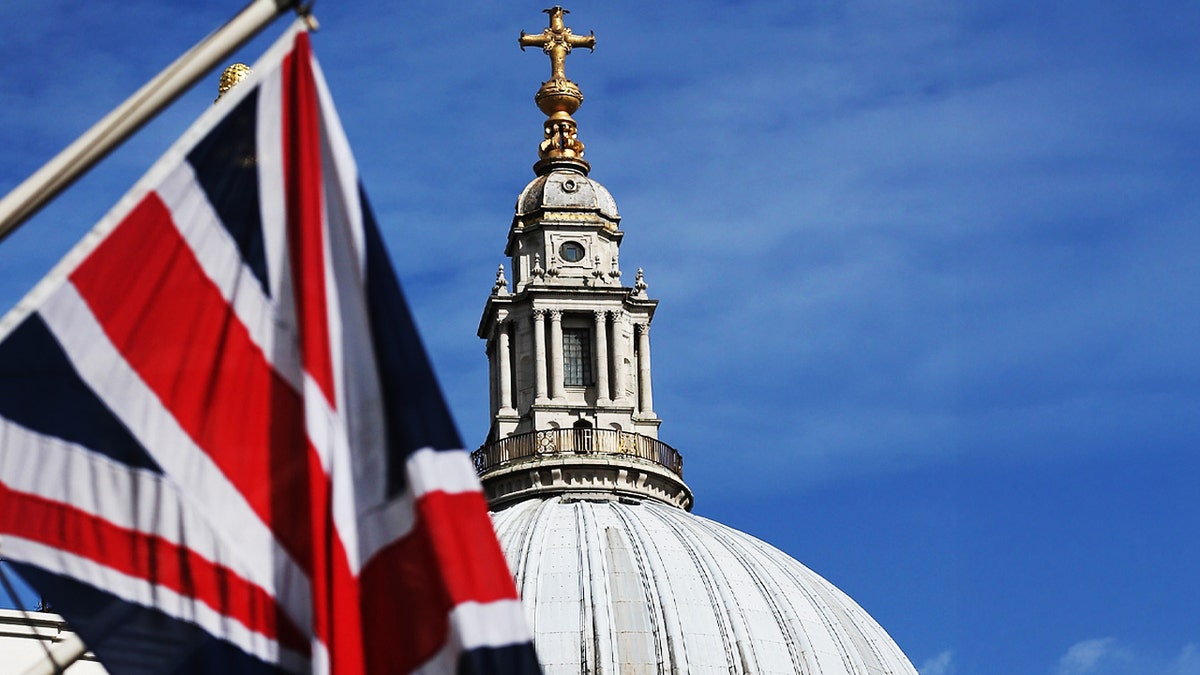
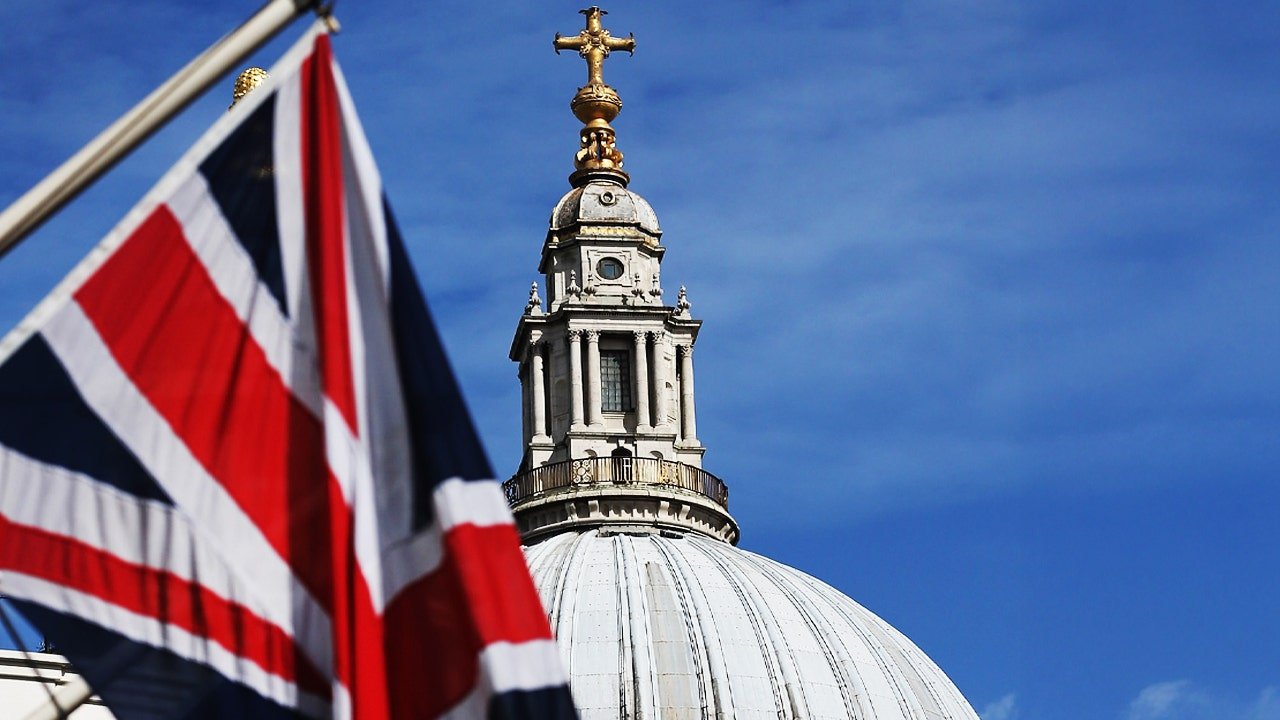
A Union flag flies in front of St Paul’s Cathedral in London, England. (Dan Kitwood/Getty Images)
After the school dismissed the teacher, the case was referred to the Teaching Regulation Authority (TRA). Young said the TRA held a full hearing and ultimately «dismissed the charges,» finding «no case to answer.» Had it gone the other way, he said, the teacher could have been barred from the profession for life. The Free Speech Union is now funding the teacher’s lawsuit for unfair dismissal.
Young also tied the case to a national debate over the U.K. government’s work on a nonstatutory definition of Islamophobia, something his organization opposes. He warned such a definition could be embedded into «speech codes,» with potential disciplinary consequences.
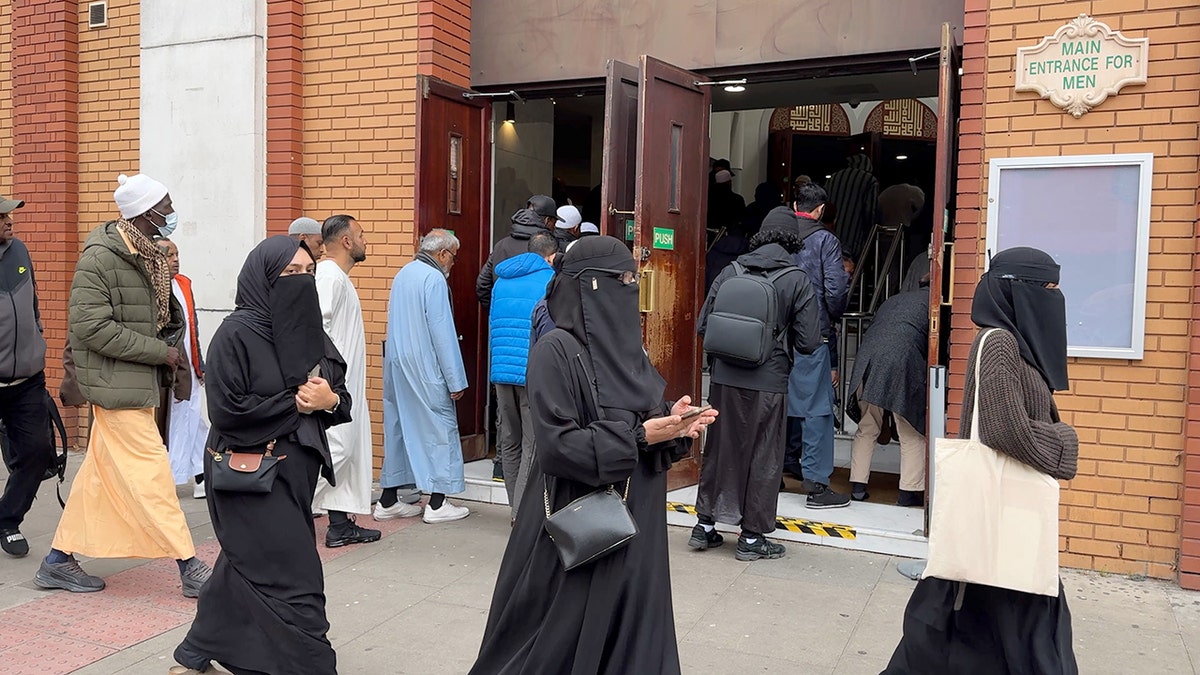
Worshipers arrive for prayers at the East London Mosque in London, England, as men and women make their way into the building. The mosque is one of the largest in the United Kingdom and serves as a central hub for the local Muslim community. Sept. 2025. (Fox News Digital)
CLICK HERE TO DOWNLOAD THE FOX NEWS APP
He said the governing party fears losing parliamentary seats to Muslim independent candidates — a dynamic he argues has created political incentives to grant «special protections» to Muslim constituencies.
united kingdom,christianity religion,islam,king charles iii









INTERNACIONAL
Teachers union president calls Trump a ‘dictator’ on unearthed call with Antifa-linked group

NEWYou can now listen to Fox News articles!
FIRST ON FOX: The president of the nation’s largest teachers union is facing backlash after calling President Donald Trump a «dictator» during a far-left activist conference call that promoted mass disruption and political organizing.
Becky Pringle, president of the National Education Association (NEA), appeared on a Zoom event last week hosted by the Sunrise Movement titled «Roadmap to Political Revolution,» a mass organizing call aimed at opposing Immigration and Customs Enforcement (ICE), targeting Trump and phone-banking for a progressive congressional candidate.
«I’m honored to now introduce President Becky Pringle, president of the National Education Association. Look, there’s no way we’re going to be able to stop fascism without organized labor,» Aru Shiney-Ajay, executive director of the Sunrise Movement and a former member of Students for Justice in Palestine, said as she introduced Pringle on the call, obtained by Fox News Digital.
During her remarks, Pringle told attendees that the NEA would leverage its 3 million members and thousands of local affiliates to «advocate,» «mobilize,» «litigate,» and «elect people» aligned with its political goals.
GOT A SCOOP ON CAMPUS? SEND US A TIP HERE
National Education Association President Becky Pringle speaks during «March for Our Lives.» (Joshua Roberts/Reuters)
«NEA is one of this administration’s top targets,» Pringle said on the call, going on to label Trump a «dictator.»
«Dictators always come for educators,» she said, adding that teachers help students «question and analyze» and «fight and make this world a better place.»
Pringle added, «Together, we will demand that this administration stop scapegoating immigrants just so they can implement cruel and callous policies and occupy our communities.»
Pringle claimed that ICE is attempting to bring «fear and trauma into our schools» by «traveling through neighborhoods, wandering past schools, and following school buses.»
«They’ve even assaulted and detained educators and students on school grounds. Educators are seeing this damage every day.»
The Sunrise Movement is a far-left organization that vows to «force the government to end the era of fossil fuel elites, invest in Black, brown and working class communities, and create millions of good union jobs,» according to its website.
CHICAGO TEACHERS UNION SPARKS BACKLASH WITH VIDEO HARASSING TARGET EMPLOYEES OVER ICE AS TEST SCORES PLUMMET
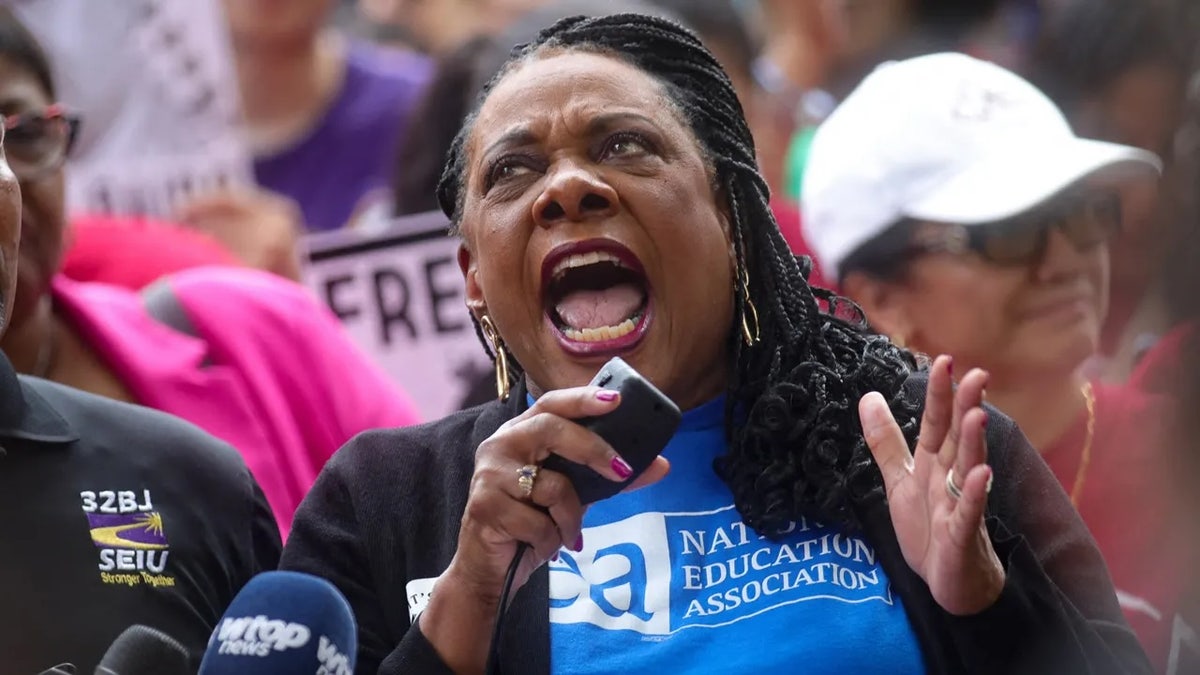
The president of the largest teachers union in the U.S. spoke at a virtual event scheduled for Wednesday titled «Roadmap to Political Revolution,» hosted by the Sunrise Movement. (Getty Images)
The core of the group’s mission is fighting for the Green New Deal. Sunrise Movement listed «four pillars» that are critical to the Green New Deal, including to «stop the climate crisis» and to «invest in racial and economic justice.»
Sunrise Movement’s far-left ties were enough to spark concern from the House Judiciary Committee Chairman in November, Fox News Digital first reported, particularly its links to Antifa, a movement the Trump administration has labeled a terrorist organization.
In a letter to Soros’ Open Society Foundations, the committee wrote, «Of particular concern, OSF has donated ‘at least $2 million’ to the Sunrise Movement, a group closely connected to Antifa. According to the Capital Research Center report, the Sunrise Movement ‘endorsed and solicited financial support for the Antifa-associated anarchist terrorists of the Stop Cop City / Defend the Atlanta Forest coalition’ which, in 2023, violently attacked law enforcement officers and utility workers constructing a training facility near Atlanta, Georgia for police officers and firefighters. During the siege, Antifa terrorists threw Molotov cocktails, bricks, and rocks at law enforcement officers, attempted to blind officers by shining lasers in their eyes, and set construction equipment and a police car on fire, among numerous other violent acts. Prosecutors later charged more than individuals with domestic terrorism due to the attacks.»
During the 2020 election season, the Sunrise Movement, whose website says it wants to «force the government to end the era of fossil fuel elites,» received nearly a third of its funding from the Soros-backed Democracy PAC and Sixteen-Thirty Fund, totaling $750,000.
«It is truly shocking that the head of the largest teachers union in the country, who is meant to represent the best interests of her members, would join in such a radical event — one that is openly calling to change the US political system, and to call for collective action and political activism,» North American Values Institute Director of Research Mika Hackner told Fox News Digital.
«Is it any wonder that we see activist teachers in the classroom when this is what is happening at the top?»
Fox News Digital reached out to the NEA and the Sunrise Movement for comment.
Fox News Digital has extensively reported in recent months on concerns from education experts about the far-left radical activism of teachers unions, including the NEA, as they continue to mobilize protests against Trump’s immigration policies.
Some, including Defending Education senior director of communications Erika Sanzi, have suggested that the NEA’s federal charter should be removed.
CLICK HERE TO DOWNLOAD THE FOX NEWS APP
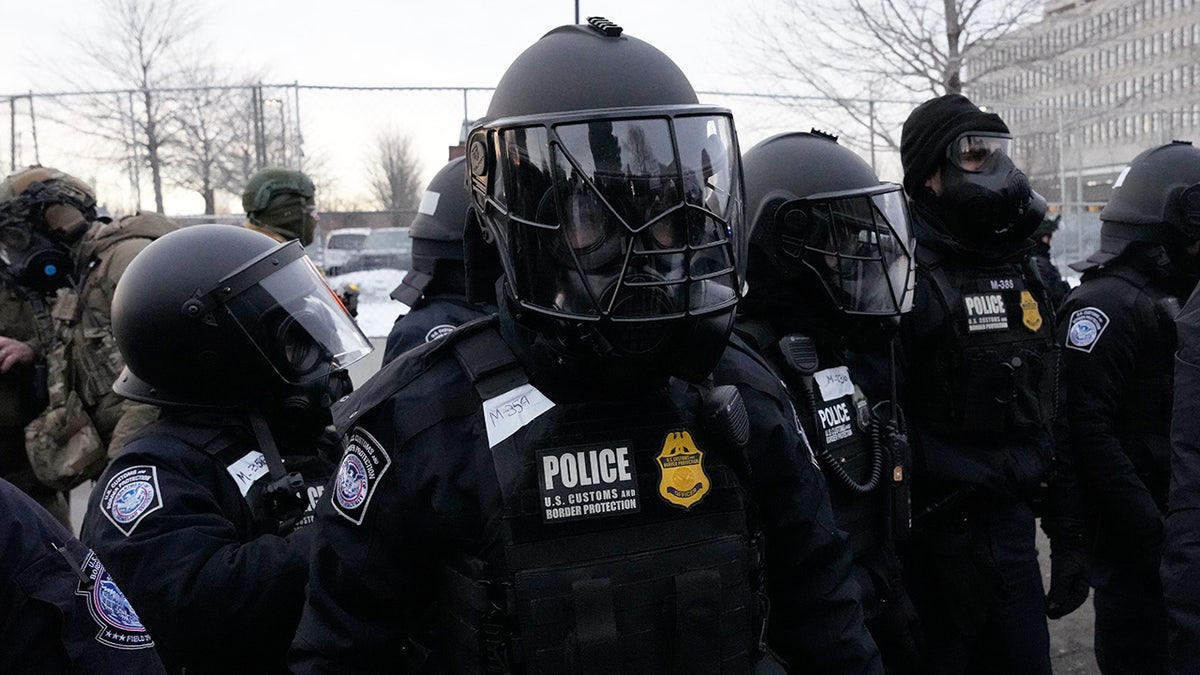
U.S. Customs and Border Protection police officers stand outside the Bishop Henry Whipple Federal Building during a protest on Saturday, Jan. 17, 2026, in Minneapolis. (AP Photo/Yuki Iwamura)
«Their federal charter was granted because they promised to ‘elevate the character and advance the interests of the profession of teaching; and to promote the cause of education in the United States,’» Sanzi told Fox News Digital in November. «Seeing as their leadership — and by extension, the organization itself — has morphed into a far-left insane asylum that is actively destroying the cause of education, that charter is no longer defensible.»
In January, a whistle-blower in the NEA told Fox News Digital the organization is not focused on the needs of students and teachers, but rather on promoting far left agenda items.
«It’s a cult,» the NEA employee said. «It’s 100% a cult and if you don’t have their mindset, you’re the enemy.»
Fox News Digital’s Peter Pinedo and Joshua Q. Nelson contributed to this report.
campus radicals,politics,labor unions,education
INTERNACIONAL
Italy rocked by anarchist-led riots as over 100 police injured, Meloni condemns violence

Anarchists violently clash with police in Turin, Italy
Fireworks, stones and firebombs were hurled at police as anarchists and other leftist groups attacked them after officers evicted squatters from a building in Turin. (Video: LAPRESSE, SKY ITALIA via Associated Press.)
NEWYou can now listen to Fox News articles!
Violent clashes broke out during a large protest in Turin, Italy, over the weekend as anarchist and leftists attacked police, prompting Prime Minister Giorgia Meloni to strongly condemn the unrest and vow a firm response.
Videos from the scene showed demonstrators dressed in black confronting police, with footage appearing to capture objects being thrown at officers and police lines forced backward. Images from Reuters showed riot police surrounded by red smoke during clashes linked to a march in support of the Askatasuna social center, which authorities recently evicted. Experts say the building had been occupied by far-left activists for decades.
clashes with demonstrators following a march in support of Askatasuna, a left-wing social centre that was evicted by authorities in Turin, Italy, Jan. 31, 2026. (LAPRESSE/Sky Italia via Associated Press)
Italian authorities said 108 security personnel were injured in the violence. Protesters hurled bottles, stones, homemade incendiary devices and smoke bombs, set fire to rubbish bins and a police armored vehicle, and used street furniture and uprooted lampposts as weapons, European media reported.
Commenting on the violence, U.S. and Europe analyst Matthew Tyrmand told Fox News Digital «It’s not that dissimilar to what you see in the U.S. at times,» he said. «Think about Seattle, or Cop City in Atlanta or Portland. It’s the same odd coalition of leftist groups, anarchists, pro-Palestinian groups and random individuals coming together.»
INSIDE THE CHAOS OF BLOODY BERKELEY AS PROTESTERS GO WILD DURING TURNING POINT USA EVENT
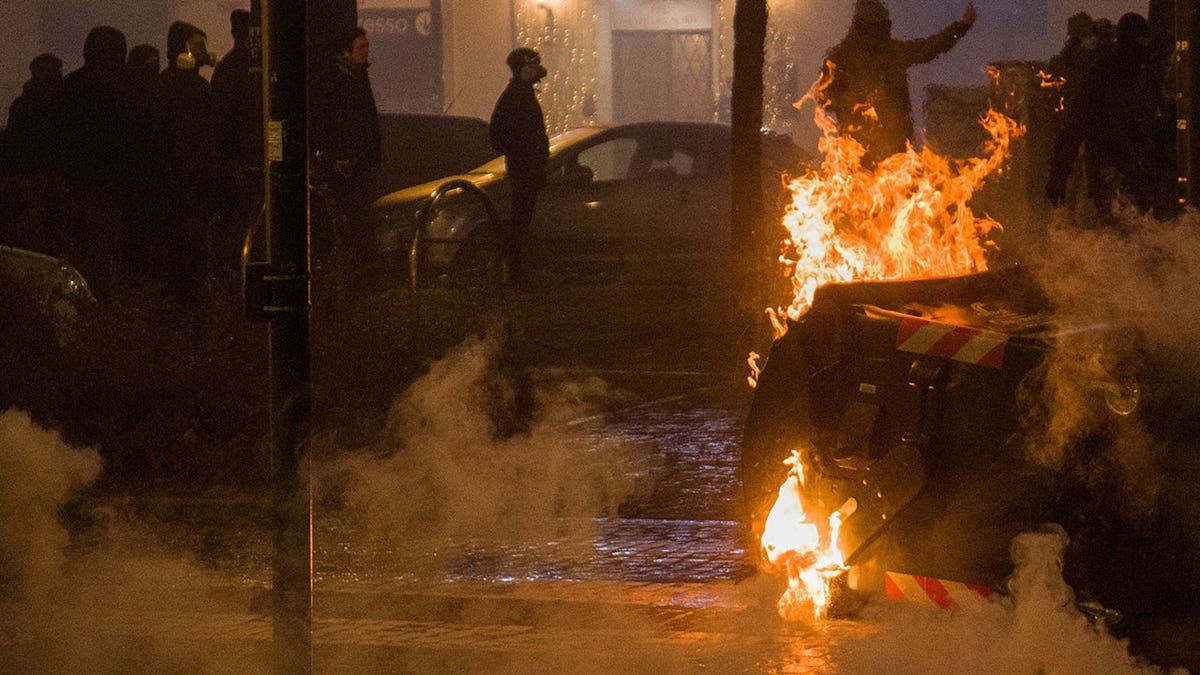
A demonstrator gestures behind a burning refuse container as demonstrators clash with police following a march in support of Askatasuna, a left-wing social centre that was evicted by authorities in Turin, Italy, Jan. 31, 2026. (Michele Lapini/Reuters)
Meloni responded forcefully, warning that violence against police and threats to public order would not be tolerated. In a post on X, the prime minister shared photos from a hospital visit with injured officers and described the confrontations in stark terms.
«This morning I went to the Le Molinette hospital in Turin to bring, on behalf of Italy, my solidarity to two of the officers who were injured in yesterday’s clashes,» Meloni wrote, adding: «Against them: hammers, Molotov cocktails, nail-filled paper bombs, stones launched with catapults, blunt objects of every kind, and jammers to prevent the police from communicating.»
Quoting one officer, Meloni added: «They were there to kill us.» She went on to say: «These are not protesters. These are organized criminals. This is attempted murder.»
Dr. Lorenzo Vidino, director of the Program on Extremism at George Washington University, told Fox News Digital that while the images were shocking, the violence itself was not unprecedented. «Torino in particular is a hotbed of anarchist and hardcore communist groups,» Vidino said. «But we’ve had this in many other places in Italy, and it happens throughout Europe.»
LAPD ARRESTS VIOLENT AGITATORS AFTER PROTESTS ERUPT OUTSIDE FEDERAL DETENTION CENTER IN LOS ANGELES
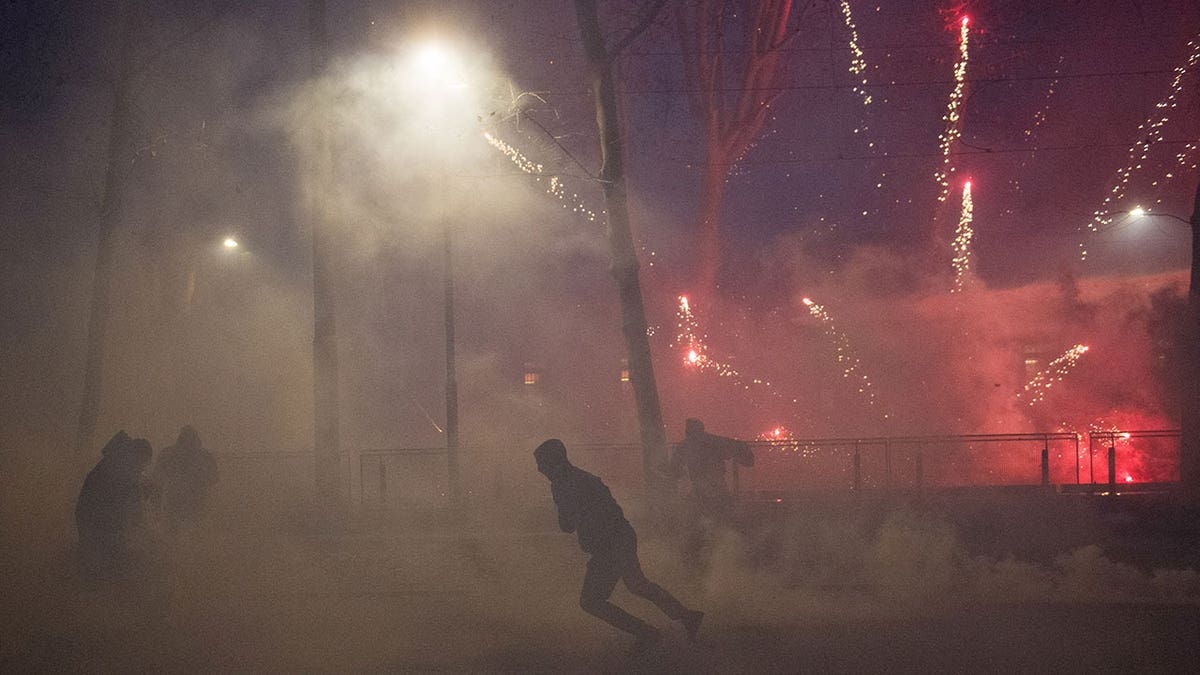
A demonstrator runs through smoke as fireworks explode during clashes with police following a march in support of Askatasuna, a left-wing social centre that was evicted by authorities in Turin, Italy, Jan. 31, 2026. (Michele Lapini/Reuters)
Vidino said the unrest followed what he called the recent «liberation» of Askatasuna, a building occupied for decades by far-left activists, which he described as a catalyst for a broader reaction.
«What you have here is a network of not just Italian but European anarchists and communists, with some pro-Palestinian groups,» he said. «It’s a fairly well-established coalition of groups, and they routinely engage in this sort of violence. Antifa is also part of this coalition. It’s one of the umbrella movements in what happened in Torino.»
Vidino also pointed to links between the groups involved and a previous attack on the offices of La Stampa, one of Italy’s most prominent newspapers, which he described as a turning point for authorities.
«Storming the offices of a major newspaper crossed a red line,» Vidino said.
ITALY’S MELONI REBUKES TRUMP REMARKS ON NATO’S ROLE IN AFGHANISTAN
On Monday, Meloni said she chaired a meeting at Palazzo Chigi to assess what she called «serious episodes of violence against the police forces» and to determine measures to guarantee public safety.
Tyrmand said the clashes reflect Italy’s long history of militant left-wing activism.
«Italy has a long history of hardcore leftist organizing,» he said. «They’re cut from the same cloth. Marxist movements are truly of their genesis.»
«When a right-wing leader like Meloni comes into power, they get especially ginned up,» he added. «Violence is their modus operandi. I expect it will be quelled because Meloni is a tough figure.»
CLICK HERE TO DOWNLOAD THE FOX NEWS APP
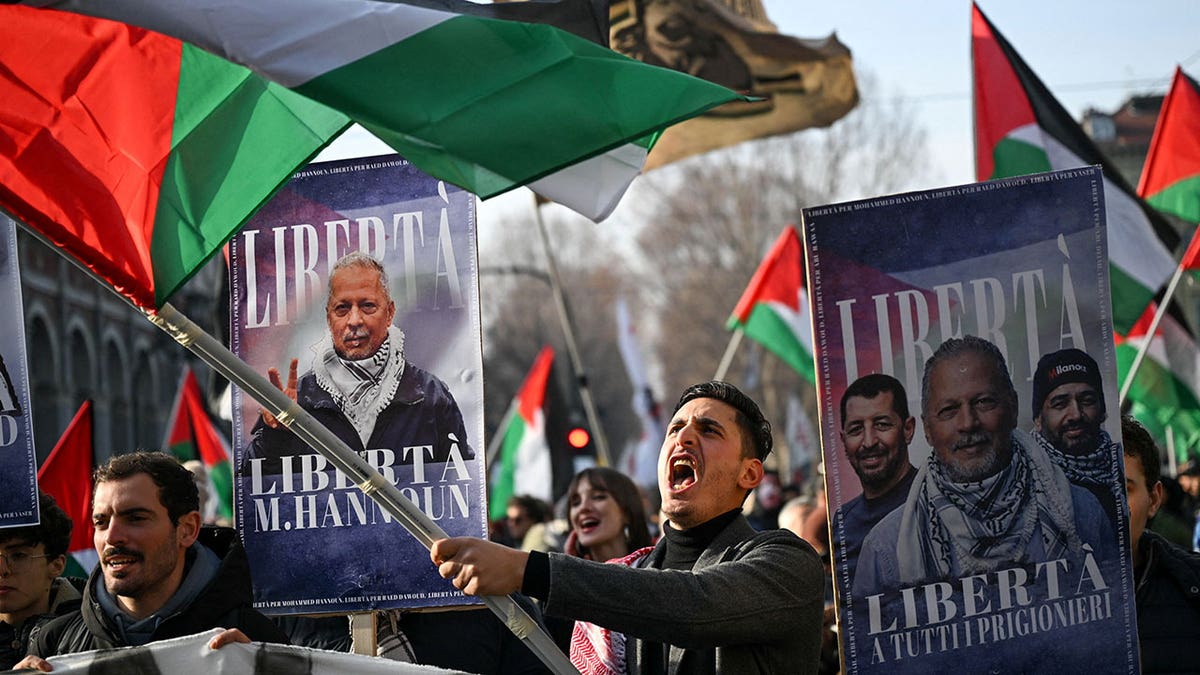
Demonstrators wave Palestinian flags and hold banners depicting Mohammad Hannoun, president of the Palestinian Association in Italy, who was arrested by Italian authorities over alleged funding of Hamas through charities, during a march in support of the Askatasuna social centre in Turin, Italy, Jan. 31, 2026. (Michele Lapini/Reuters)
He added that the tactics and alliances mirror those seen during U.S. street protests and encampments.
«It’s the same dynamics,» Vidino said. «A permanent presence of these networks that mobilize quickly around symbolic causes.»
italy,world protests,antifa
INTERNACIONAL
Argentina preside la mayor alianza internacional por la memoria del Holocausto: es la primera vez para un país del hemisferio sur

“El año que viene en Buenos Aires”, termina el menjaje que Marcelo Mindlin dijo a finales de 2025. Es un guiño. Porque “El año que viene en Jerusalén” ha sido un clásico final de oraciones y un saludo que tiene 2.000 años entre los judíos que anhelaban volver a su tierra y no podían. ¿Por qué el año que viene en Buenos Aires? Porque este año la Alianza Internacional para la Memoria del Holocausto (IHRA) será presidido por este país. Es la primera vez que tal responsabilidad la ejerce un país del hemisferio sur. Su lema será: “Expandiendo las fronteras de la recordación”.
Mindlin leyó su discurso en el último plenario de la organización, justamente en Jerusalén, a un paso de asumir la presidencia, que él ejerce por decisión del presidente Javier Milei. Mindlin es el titular del Museo del Holocausto en Buenos Aires y su vicepresidenta es la embajadora Fabiana Fabiana Loguzzo, representante Especial para la Lucha contra el Antisemitismo.
“La presidencia argentina de la Alianza Internacional para el Recuerdo del Holocausto (IHRA) representa un enorme desafío y una oportunidad histórica para acercar a América Latina con la Alianza, siendo la primera vez que la encabeza un país de habla hispana”, dice Mindlin a Infobae. “Es un orgullo para mí que el presidente Javier Milei me haya elegido para liderar esta presidencia. Asumo este rol con un fuerte compromiso y con el objetivo de mostrarle al mundo el trabajo realizado para convertir la memoria de la Shoá en una temática central de nuestro sistema educativo y en una auténtica política de Estado.”
La candidatura fue impulsada activamente por el gobierno de Javier Milei, quien anunció el interés del país en liderar el organismo durante un acto de conmemoración del levantamiento del gueto de Varsovia en abril de 2024.
”La Argentina es una amiga histórica del pueblo judío. Fuimos el primer país de la región en reconocer la existencia del Estado de Israel. Y tenemos hoy la comunidad judía más grande de Latinoamérica y la décima en el mundo.Y hemos sufrido junto a la comunidad judía los atentados cobardes del gobierno de Irán. No solo la comunidad judeo argentina, sino el pueblo argentino todo… a tres décadas se está empezando a esclarecer”, dijo en ese discurso. Y ofreció, entonces, que la Argentina presidiera la IHRA. Le fue bien.

Sin embargo, la idea de poner al país al frente de la IHRA empezó antes. Ariel Gelblung, Director del Centro Simon Wiesenthal para América Latina, cuenta ahora a Infobae que él ya formaba parte de esa institución y, como tal, ya en 2023 tanteó si a los otros países les interesaría tener esa conducción.
Gelblung observa que en la Argentina no hubo, en los últimos años, el rebrote antisemita que sí ocurrió en muchos otros países. Y dice que el país aprendió cómo combatir ese mal después de los atentados a la Embajada de Israel y a la AMIA de los años 90. “Cuando escucho cómo en otros países intentan frenar una suelta de antisemitismo, que acá no ocurrió, veo que son cosas que acá se hicieron después de dos atentados terroristas, treinta años atrás”.
También, dijo, habló con los candidatos presidenciales y los tres más importantes -Sergio Massa, Javier Milei, Patricia Bullrich- dijeron que apoyarían esa nominación.
Finalmente, otro factor ayudó a que la Argentina ganara la presidencia: por esos brotes antisemitas, la organización veía complicado hacer sus reuniones, por ejemplo, en Europa. “Organizar hoy en Europa algo que tenga que ver con la lucha contra el antisemitismo lo encontraban complejo. Austria tenía intenciones, Francia también, pero era difícil sesionar allí. En 2024 se hizo en el Reino Unido y los organizadores aclaraban: ‘Si van a subir cosas a las redes soicales no pongan la ubicación por si alguien viene a protestar a la puerta’. El antisemitismo real estaba tan presente que los países no querían exponerse y Argentina se estaba ofreciendo”.

Jonathan Karszenbaum, actual Director Ejecutivo del Museo del Holocausto en Buenos Aires, reflexiona en este sentido: “Cuando esperábamos solidaridad con Israel y el pueblo judío, lo que recibimos fue hostilidad basada en viejos prejuicios reciclados y en nuevas consignas estigmatizantes, que exceden por mucho los debates del conflicto en Medio Oriente. La memoria del Holocausto y el mandato de los sobrevivientes nos han comprometido a transformar la tragedia en aprendizajes para nuestra sociedad. Pero en un mundo de fake news, siendo el antisemitismo una de las ‘fakes’ milenarias que más dolor ha provocado, tenemos el desafío de buscar nuevas estrategias para combatirlo en sus mutaciones. En eso, el compromiso de los estados, de la sociedad civil y de los medios de comunicación que vuelven fundamentales para impedir la propagación del odio antijudio.”
Argentina, entonces, fue elegida. En Jerusalén, Mindlin hizo historia: “Desde el regreso de la democracia en nuestro país en 1983, todos los gobiernos —sin importar su orientación política— han mantenido un compromiso claro y creciente con la recordación del Holocausto, convirtiéndolo en una verdadera política de Estado a largo plazo, algo bastante único en nuestra región», dijo.
La Alianza Internacional para la Memoria del Holocausto (IHRA) es una institución dedicada a preservar, estudiar y transmitir la memoria de la Shoá. Desde su creación, el IRHA se propuso construir un espacio riguroso de investigación y reflexión que articule el trabajo académico con una fuerte vocación pedagógica y de divulgación, convencido de que el recuerdo del Holocausto no pertenece solo al pasado, sino que interpela de manera directa al presente y a los desafíos democráticos contemporáneos.

La importancia del IHRA radica en su aporte sostenido a la educación en derechos humanos y a la lucha contra el antisemitismo, el negacionismo y todas las formas de discriminación. Entre sus principales trabajos se destacan la investigación histórica, la elaboración de materiales educativos y guías para la enseñanza del Holocausto, la formación docente y la organización de seminarios, jornadas y actividades culturales. En ese marco, el IHRA promueve recomendaciones concretas para el trabajo pedagógico y comunicacional, como la necesidad de contextualizar históricamente la Shoá, evitar comparaciones simplificadoras o anacrónicas y privilegiar el uso de fuentes documentales y testimoniales verificables. A través de estas acciones, el instituto contribuye a sostener una memoria crítica y activa, entendida como una herramienta ética fundamental para la construcción de una sociedad más justa, plural y consciente de su historia.
Como parte de este trabajo, habrá varias actividades en Buenos Aires, con miembros internacionales. Dos conferencias públicas, programadas para el domingo 31 de mayo y el domingo 1 de noviembre y dos plenarias: la primera se hará del lunes 1 al jueves 4 de junio, y la segunda, del lunes 2 al jueves 5 de noviembre.
Hace unos meses, en declaraciones a la prensa, Mindlin señaló que lo ocurrido en Israel el 7 de octubre de 2023 intensificó o significativamente el peso del recuerdo del Holocausto. Según su visión, existe una falta de conocimiento histórico que impide a muchos comprender por qué la comunidad judía global reacciona con tanta vehemencia ante estos eventos.

Para Mindlin, este dolor no es algo ajeno, sino que está “grabado en la esencia” de los descendientes de las víctimas. El funcionario explicó que los actos de violencia extrema —como los asesinatos, violaciones y secuestros— no son hechos aislados, sino detonantes que reavivan un trauma histórico profundo.
Desde Buenos Aires, este año se organizará una serie de conferencias virtuales con especialistas y referentes de América latina.
Además, la Cancillería lidera un proyecto por el que se podría dar acceso público digitalizado a documentos que conserva ese ministerio.
Este año, en Buenos Aires. Ya está todo en marcha.

El BCRA mantuvo la racha compradora y ya acumula casi u$s1.200 millones en el año

Tensión con Caputo y el sistema de medición: las razones detrás de la salida de Marco Lavagna del INDEC

Liberaron a un argentino que estaba detenido en Venezuela

Teachers union president calls Trump a ‘dictator’ on unearthed call with Antifa-linked group

El gigante de Arabia Saudita que sumó a Karim Benzema como refuerzo

Italy rocked by anarchist-led riots as over 100 police injured, Meloni condemns violence

A qué hora puede llover hoy en CABA, según el Servicio Meteorológico Nacional

Julieta Díaz contó por qué no funcionó su noviazgo con Luciano Castro en medio de la separación con Griselda Siciliani

¡Explota La Peña de Morfi! Telefe busca reemplazo para Lizy Tagliani y Diego Leuco: el famoso cantante que podría quedarse con la conducción

Estados Unidos advirtió al régimen de Irán que “no tolerará” ejercicios militares “inseguros” cerca de sus fuerzas en Medio Oriente

 CHIMENTOS3 días ago
Julieta Díaz contó por qué no funcionó su noviazgo con Luciano Castro en medio de la separación con Griselda Siciliani
- CHIMENTOS14 horas ago
¡Explota La Peña de Morfi! Telefe busca reemplazo para Lizy Tagliani y Diego Leuco: el famoso cantante que podría quedarse con la conducción
- INTERNACIONAL3 días ago
Estados Unidos advirtió al régimen de Irán que “no tolerará” ejercicios militares “inseguros” cerca de sus fuerzas en Medio Oriente