INTERNACIONAL
UK flag clash as foreign banners fly, citizens push back against woke policies reshaping Britain


NEWYou can now listen to Fox News articles!
LONDON: A battle over British identity and the nation’s flag is just the latest issue to widen the political divide in the United Kingdom in 2025. As the Labour government continues to face growing criticism over a number of issues, from cracking down on free speech to its migration policies, many Britons are concerned about their country’s future.
The issue simmered over the summer amid concerns of a growing rift between the ruling elites and members of the public centered on the nation’s flag. The debate, while ongoing for several years, gained new life since anti-Israel protests erupted after Hamas’ mass terror attack against Israel on Oct. 7, 2023, when Britain saw a proliferation of Palestinian flags across the country.
Tensions were further heightened over the display of Palestinian flags on public buildings, with critics arguing it represents an abandonment of traditional British values, and that immigrant communities are dictating community values. Several councils in major cities bowed to public pressure. Those cities — all with sizable immigrant communities — including Sheffield, Preston, Bradford and others chose to raise the Palestinian flag last month to honor the United Nations International Day of Solidarity with the Palestinian People.
SHOCKING CASES REVEAL BRITAIN’S ORWELLIAN FREE SPEECH CRACKDOWN
Palestinian flags on display in Sparkhill, Birmingham, after the UK took the largely symbolic step of recognising a Palestinian state on Sunday. Picture date: Monday Sept. 22, 2025. (Jacob King/PA Images via Getty Images)
«There’s only one flag that should be flying on public buildings in the U.K., and I include the home nations of England, Scotland, Wales, and Northern Ireland, and that’s the Union flag. We need to start cohering around national stories and symbols, and the flag is the simplest, most visual, visceral way of doing that,» Colin Brazier, a commentator on British culture, told Fox News Digital.
Brazier is calling for a «strategy of national cohesion» with a ban on foreign flags on taxpayer-funded buildings. He said that Britain should follow America’s model of nation-building as the U.K. wrestles with «imported disintegration» and attempts to return to Britain’s core values.
Current GOV.UK guidance indicated councils should prioritize the Union flag.

The flag of the United Kingdom and the Flag of St George hang from lamposts in Birmingham. Operation Raise the Colours have been flying and painting Union and St George’s Cross flags as part of a U.K.-wide campaign. Sunday Sept. 14, 2025. (Jacob King/PA Images via Getty Images)
In August, a group of concerned citizens started ‘Operation Raise the Colours’ which called for people to put their flags up where they live and in their everyday lives to rally Britons. The online movement encouraged Britons to continue putting up England’s St. George’s Cross and Union Jack flags.
ENGLAND FLAG DISPLAYS POWERFUL SYMBOL IN IMMIGRATION FIGHT AS TRUMP-STYLE POPULISM SWEEPS THROUGH UK
Yet the sudden resurgence of British and English flags has been met with suspicion and criticism from the left, with many angered at the proliferation of the flags complaining they represent anti-migration and far-right sentiment.
Critics warn the U.K. is becoming increasingly divided — so much so that it is deemed controversial to fly the Union flag in public — and that parts of the country seem to care more about causes happening thousands of miles from its borders.
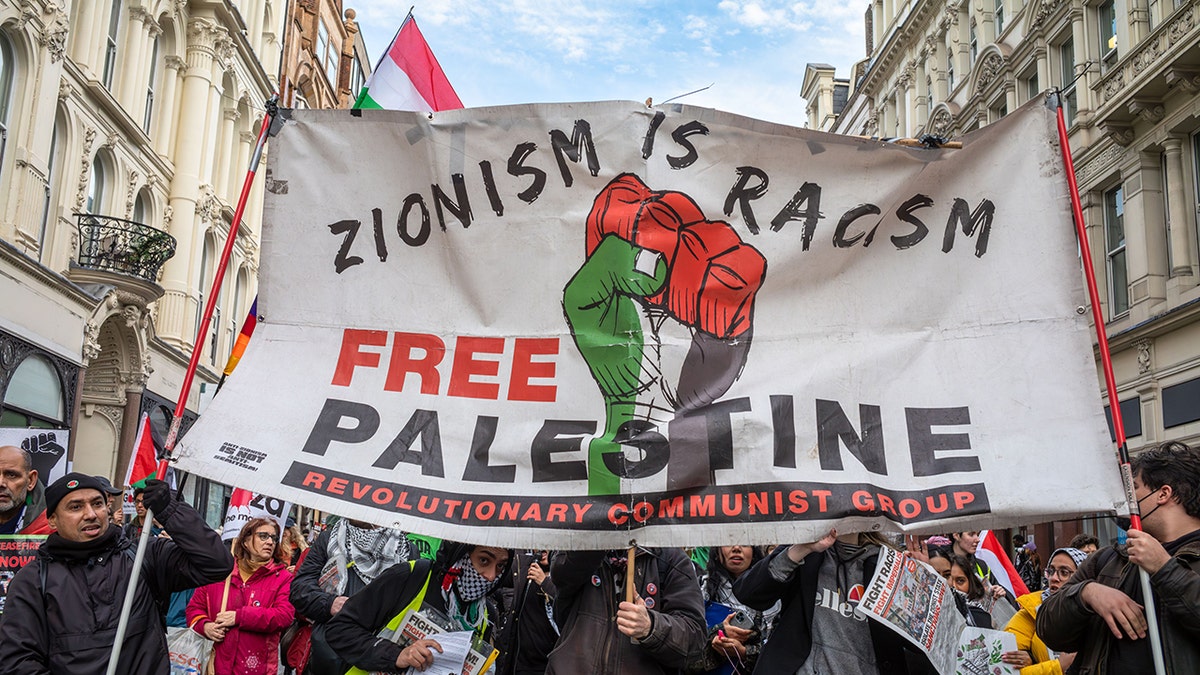
Anti-Israel protesters hold a banner at a protest against the Jewish state in London, UK in Dec, 2023. (Andy Soloman/UCG/Universal Images Group via Getty Images.)
UK FACES BACKLASH AS TEACHER DISMISSED FOR TELLING STUDENT BRITAIN IS A CHRISTIAN COUNTRY
The controversy over the flags continued after Prime Minister Keir Starmer recognized a Palestinian state in September. A few days later, Starmer delivered an impassioned speech to the Labour Party’s annual conference as his center-left party pushed back against critics who said it had abandoned patriotism.
Speaking to flag-waving supporters, Starmer tried to reprise his party’s patriotic roots, urging a cheering crowd, «Let’s fly all our flags, conference, because they are our flags, they belong to all of us and we will never surrender them… And with resolve, with respect, with the flag in our hands, we will renew this country.» He also made clear the flag was for all citizens ,noting, «Our flags — flying proudly, as we celebrate differences and oppose racism.»
Yet opposition politicians were quick to dismiss Starmer’s flag speech, with one Member of Parliament, Lee Anderson, Reform’s chief whip, saying: «You’re more likely to see a Labour member fly the flag of Palestine than a St. George’s flag. That tells you all you need to know,» the Daily Telegraph reported.

Delegates wave flags as Sir Keir Starmer, the British Prime Minister and leader of the Labour Party delivers his speech to several standing ovations at the 2025 Labour Party Conference on the 30th of Sept. 2025 in Liverpool, United Kingdom. (Andrew Aitchison / In pictures via Getty Images)
While many councils ignored Fox News Digital’s request for comment, Belfast City Council in Northern Ireland justified its decision by declaring the flag was hoisted, «In recognition of the International Day of Solidarity with the Palestinian People, to erect the national flag of Palestine above the City Hall on the next available day from midnight.»
This issue, however, is also viewed as a symbol of shifting power. Brazier lamented the government’s indifferent attitude toward immigration and says «importing 10 million people in 25 years has a ruinous impact.»
CLICK HERE TO DOWNLOAD THE FOX NEWS APP
According to a March 2025 report by the Muslim Council of Britain, the country’s Muslim population increased by 1.2 million between 2011 and 2021, with the total number of Muslims accounting for about 6% of the U.K. population.
A recent YouGov study found mixed views on the Union flag and England’s flag of St. George. 58% of 2024 Labour voters perceive the English flag as a racist symbol but just 19% of Conservative voters and 8% of Reform voters feel the same way. The poll said that a majority of ethnic minority adults (55%) believe those putting up St George’s flags do so «mostly as a way of expressing anti-migrant and/or anti-ethnic minority sentiment», with a plurality (41%) saying the same goes for the union flag.
It also found that «White adults too tend to believe anti-migrant/minority motivations are primarily behind the flag raisings, with 49% saying so for the English flag and 39% for the British one.»
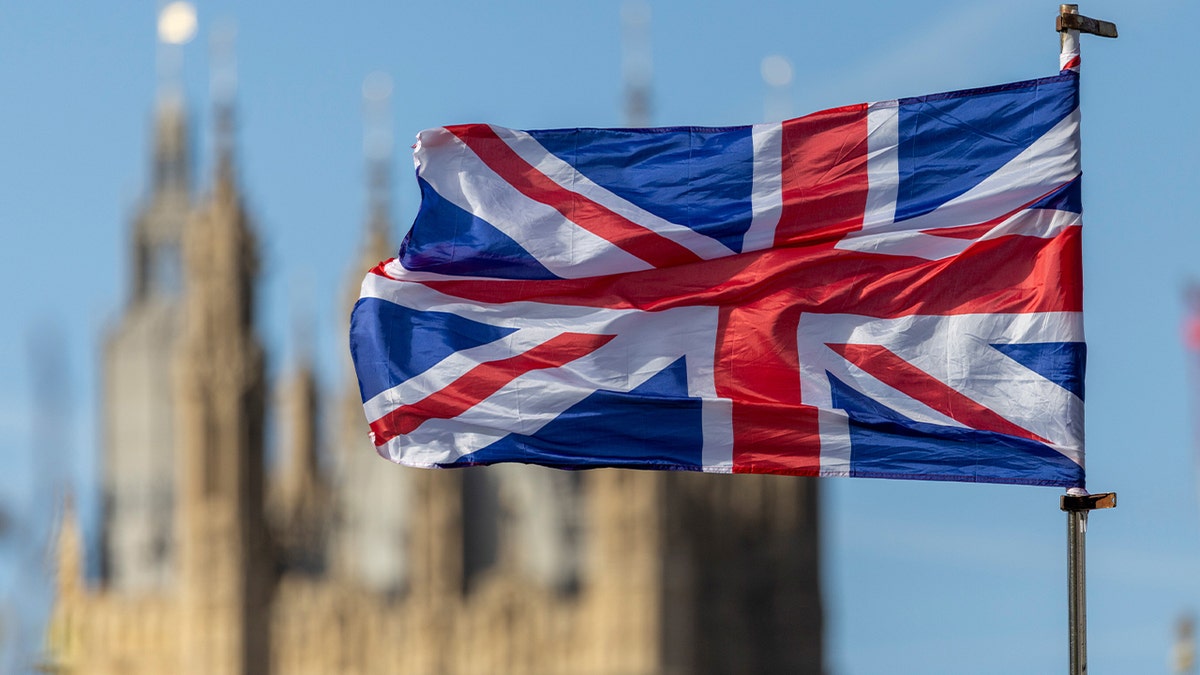
A British Union flag flies from a souvenir stall near the Houses of Parliament in London, UK, on Monday, Oct. 27, 2025. (Jason Alden/Bloomberg via Getty Images)
Another finding of the YouGov study found that those of Pakistani or Bangladeshi heritage were, «the most likely to see racist sentiment in the flag displays. This is particularly marked when it comes to the belief that the England flag has become a racist symbol with 68% of Pakistani/Bangladeshi adults believing this, compared to 54% of those of mixed ethnicity, 51% of those with Indian heritage and 43% of Black adults.»
Fox News Digital’s Jasmine Baehr contributed to this report.
united kingdom,immigration,europe,conflicts,world protests








INTERNACIONAL
Dos novios bajaron 43 kilos antes de su casamiento y la transformación dejó en shock a los invitados

Una pareja de novios se propuso bajar de peso antes del casamiento y su cambio físico dejó en shock a los invitados. En total, perdieron 43 kilos y las fotos del antes y el después son impactantes.
Riley e Isaac Anastasiu, de 30 y 27 años respectivamente, tomaron la decisión de adoptar hábitos saludables seis meses antes de la boda con el objetivo de verse y sentirse lo mejor posible en su día especial y se acompañaron mutuamente en el proceso.
Leé también: Encerró a su hija de 5 años para que no lo moleste mientras jugaba videojuegos y la nena murió de hambre
“Nos dimos cuenta de que no nos sentíamos lo mejor posible física o mentalmente, y nuestros hábitos no estaban alineados con cómo queríamos aparecer para este próximo capítulo”, explicó Riley en diálogo con People.
“Fue una decisión mutua arraigada en el trabajo en equipo y el estímulo. Y honestamente, las fotos de la boda duran para siempre. Queríamos mirar hacia atrás en ese día y sentirnos confiados, orgullosos y totalmente presentes, sin ningún arrepentimiento, solo amor por el momento y el uno por el otro”, agregó.
El antes y después de Riley e Isaac. (Fotos: gentileza People)
En mayo de 2025 la pareja decidió cambiar su destino. Ambos pesaban 99 kilos. Para el 21 de noviembre, día en el cual se juraron amor eterno, Riley pesaba 79 e Isaac 76. Es decir, entre los dos perdieron unos 43 kilos.
En sus redes sociales, compartieron el proceso y publicaron fotos de los notables cambios físicos que tuvieron. Los usuarios de la plataforma no podían creer la transformación.
Riley dijo que sus allegados se sorprendieron aún más con Isaac: “Algunos amigos y familiares estaban realmente sorprendidos porque no lo habían visto en un tiempo y no es muy activo en las redes sociales”, contó.
“Desde que comparto más de mi vida en línea, la gente ya estaba familiarizada con mi transformación, por lo que las reacciones a mí eran más esperadas. Pero en general, la respuesta fue increíblemente solidaria y llena de amor”, destacó. El antes y después de Riley. (Foto: gentileza People)
Según contó la novia, no hicieron ningún tratamiento especial ni se sometieron a dietas raras para conseguir bajar de peso. Sino que lo hicieron de forma natural, controlando las calorías y poniéndose en movimiento.
Ella caminaba entre 10.000 y 15.000 pasos al día, hizo pilates desde casa de vez en cuando, controló el azúcar, priorizó el sueño de calidad y optó por alimentos integrales.
Leé también: Video: una esquiadora fue atacada por un leopardo de las nieves
Isaac, por su parte, empezó a correr, y ahora incluso está entrenando para una maratón. Además, aplicó el ayuno intermitente, un déficit calórico y un enfoque en alimentos integrales y nutritivos.
El desafío los hizo sentirse bien con su aspecto físico pero, según cuentan, los cambios internos fueron aún mejores: “El día de nuestra boda, nos sentimos increíblemente orgullosos, confiados y totalmente presentes”, contó Riley. El antes y después de Isaac. (Foto: gentileza People)
“Los cambios físicos importaban, pero lo que significaba más era lo fuertes, disciplinados y conectados que nos sentíamos después de comprometernos con ese objetivo juntos. De pie allí, no estábamos pensando en nuestros cuerpos ni dudando de cómo nos veíamos en las fotos. Simplemente estábamos disfrutando del momento, absorbiéndolo todo y celebrando el trabajo que hacemos como equipo”, detalló.
“Se sintió como la manera perfecta de comenzar nuestro matrimonio sintiéndonos alineados, apoyados y confiados en nosotros mismos y el uno en el otro”, afirmó.
Antes de cerrar, incentivó a otras personas que deseen llevar una vida saludable a que “empiecen de a poco”. “Concéntrate en los hábitos que realmente puedes mantener”, enfatizó y agregó: “La consistencia importa mucho más que la perfección. Encuentra el movimiento que disfrutes, alimenta tu cuerpo con alimentos integrales, prioriza el sueño y ten paciencia contigo mismo”.
“Si lo estás haciendo con un compañero o un sistema de apoyo, apóyate en eso. Tener a alguien que te anime y te haga responsable hace una gran diferencia. Lo más importante es que tu objetivo sea sentirte más fuerte, más saludable y más seguro en lugar de perseguir un número en la escala. Cuando se basa en el respeto propio y la sostenibilidad, los resultados realmente duran”, concluyó.
casamiento, novios, cambio físico, Estados Unidos

NEWYou can now listen to Fox News articles!
The Senate is again on the verge of entering into another government shutdown as Democrats rage over the fatal shooting of Alex Pretti during an immigration enforcement operation in Minnesota.
But despite Senate Minority Leader Chuck Schumer, D-N.Y., and Senate Democrats’ demands to sideline the Department of Homeland Security (DHS) funding bill, the agency’s immigration enforcement apparatus is flush with cash thanks to Republicans’ efforts last year with President Donald Trump’s «one big, beautiful bill.»
Still, there are other vital government functions under the DHS umbrella that, should a partial government shutdown happen come Friday, would suffer.
THUNE STEAMROLLS DEMS’ DHS REVOLT AS FETTERMAN DEFECTS, SCHUMER UNDER PRESSURE
Senate Democrats are readying to rebel against DHS funding, but the action would do little to harm funding to Secretary Kristi Noem’s immigration operations. It would, however, affect several other functions under the agency’s purview. (Al Drago/Getty Images)
Homeland Security Assistant Secretary Tricia McLaughlin told Fox News in a statement that while Schumer and Senate Democrats «play games with Americans’ safety, they are blocking vital DHS funding that keeps our country secure and its people safe.»
The department, created in 2003 after the Sept. 11, 2001, terrorist attacks, has jurisdiction over a broad range of agencies, including the Federal Emergency Management Agency (FEMA), the Transportation Security Administration (TSA), the Cybersecurity and Infrastructure Security Agency (CISA), the U.S. Coast Guard, and the Secret Service.
That means those offices would likely be impacted by a partial government shutdown come next month.
«This funding supports national security and critical national emergency operations, including FEMA responses to a historic snowstorm that is affecting 250 million Americans,» McLaughlin said. «Washington may stall, but the safety of the American people will not wait.»
The current DHS funding bill, which is snarled in a political duel between Schumer and Senate Republicans, would provide $64 billion for the agency. Immigration and Customs Enforcement (ICE) would receive $10 billion of that.
The largest allocation would go to FEMA at $32 billion, then TSA at $11.6 billion, and CISA at $2.6 billion.
GOP SENATOR DEMANDS DHS IMMIGRATION CHIEFS TESTIFY AFTER FATAL SHOOTINGS IN MINNESOTA

Senate Minority Leader Chuck Schumer, D-N.Y., has coalesced behind a plan to strip the DHS funding bill from a broader spending package. (Tom Williams/CQ Roll Call, Inc. via Getty Images)
Even if the government shuts down, immigration operations would likely be untouched.
DHS received billions as part of Trump’s marquee legislation, a move to meet his and Republicans’ desire last year to turbocharge border security and immigration operations on the heels of former President Joe Biden’s term.
In total, the «big, beautiful bill,» added over $170 billion to DHS’ coffers.
Notably, ICE received a total of $75 billion, split into two pots: $45 billion for detention expansion and roughly $29 billion for immigration enforcement operations.
The detention funding is set to last through FY 2029, effectively giving the agency about $10 billion per year — their average base budget — without the need for congressional approval during that period.
Schumer and Senate Democrats contend that they want to continue negotiations on the DHS bill and strip it from a broader six-bill funding package, called a «minibus.» Doing so would almost certainly guarantee a government shutdown, given that any changes would have to go back to the House.
«If Leader Thune puts those five bills on the floor this week, we can pass them right away,» Schumer said. «If not, Republicans will again be responsible for another government shutdown.»
WHITE HOUSE NOT BUDGING ON DEMOCRATS’ DEMANDS AS DHS FUNDING MUTINY THREATENS GOVERNMENT SHUTDOWN
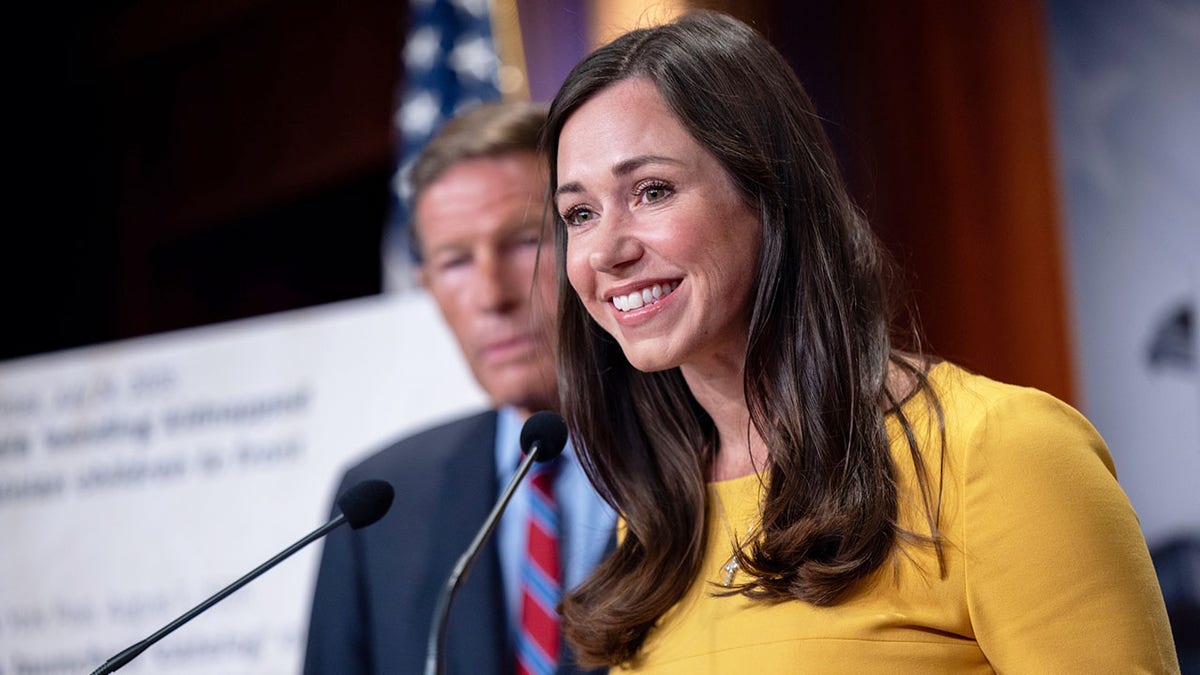
Sen. Katie Britt, R-Ala., played a vital role in ending the last shutdown, and as chair of the Senate Homeland Security Appropriations Committee, will again act as a key negotiator in averting another closure. (Nathan Posner/Anadolu via Getty Images)
Still, it would complicate matters for the remaining agencies under DHS’ purview, and create a déjà vu scenario akin to the last government shutdown, which barreled onward for 43 days.
The shutdown saw TSA agents go unpaid for weeks — spurring massive travel delays across the country as both they and air traffic controllers were forced to call out of work and take on second jobs to make ends meet, or otherwise work without pay.
Notably, air traffic controllers would be similarly affected this time around as well. Funding for the Department of Transportation is included in the larger minibus the Senate is expected to consider this week.
The threat of missed paychecks for the U.S. Coast Guard — along with other members of the Armed Forces, because the defense funding bill is included in the minibus as well — would also rear its ugly head and become a political quagmire for lawmakers once again.
CLICK HERE TO DOWNLOAD THE FOX NEWS APP
Cuts to FEMA could also impact its ability to help everyday Americans during natural disasters, with the agency’s Disaster Relief Fund (DRF) in danger of running dry without more congressionally approved funding. A program that helps Americans in flood-prone areas secure home insurance would similarly be imperiled.
Sen. Katie Britt, R-Ala., played a vital role in ending the last shutdown, and as chair of the Senate Homeland Security Appropriations Committee, will again act as a key negotiator in averting another closure.
She noted that DHS goes beyond just immigration operations, and reminded Senate Democrats of the cost of the last shutdown.
«We know from recent history that government shutdowns do not help anyone and are not in the best interest of the American people,» Britt said in a statement. «As we approach a government funding deadline, I remain committed to finding a pathway forward.»
politics,senate,government shutdown,chuck schumer,kristi noem,donald trump

NEWYou can now listen to Fox News articles!
The Israel Defense Forces conducted approximately 80 brigade-level counterterrorism operations over the past year in the West Bank — known to Israelis as Judea and Samaria — neutralizing hundreds of terrorists and seizing more than 1,300 weapons, according to data released by the military.
The IDF said overall Palestinian terrorist activity in the area declined sharply in 2025, with incidents down 78% compared to the previous year. Attacks involving firearms dropped by 86%, the data showed.
Security remains essential in Israel’s ancient heartland, home to more than 500,000 Jews and up to 3 million Palestinians, and is at the center of intense political and diplomatic debate. Many Israeli officials argue that Jerusalem must assert sovereignty over the territory.
TRUMP LAUNCHES PHASE 2 OF GAZA PEACE PLAN — BUT HAMAS DISARMAMENT REMAINS THE REAL TEST
A view showing the West Bank, also known as Judea and Samaria. Evangelical Christian leaders are pushing the Trump administration to recognize Israel’s right to the biblical heartland. (TPS-IL)
Under the 1993 Oslo Accords, brokered during the Clinton administration, the West Bank was divided into three areas: Area A, under full Palestinian control; Area B, under Palestinian civil authority and Israeli security control; and Area C, under full Israeli authority.
A 2020 plan by the Trump administration, known as «Peace to Prosperity,» envisioned Israeli annexation of parts of Judea and Samaria but was shelved in favor of the Abraham Accords, which normalized Israel’s relations with four Arab countries. In July 2024, the Knesset plenum overwhelmingly rejected the establishment of a Palestinian state, and in July 2025, approved a declaration calling on the government to apply sovereignty in Judea and Samaria as well as the Jordan Valley, something Vice President JD Vance described as a «very stupid political stunt,» when asked his thoughts on the vote.
On a visit to Israel, he said, «The West Bank is not going to be annexed by Israel… The policy of the Trump administration is that the West Bank will not be annexed by Israel. That will continue to be our policy. And if people want to take symbolic votes, they can do that, but we certainly weren’t happy about it.»
VANCE REBUKES ISRAEL ON ‘VERY STUPID’ VOTE TO ANNEX WEST BANK
Why Israel Says It Can’t Give Up Judea and Samaria

A Palestinian man throws a stone at an Israeli armed vehicle during a protest in the town of Beita, in the West Bank on July 26, 2024. ( Wahaj Bani Moufleh /Middle East Images/AFP via Getty Images)
Focusing on the national security significance of the area, Lt. Col. (Ret.) Jonathan Conricus, a former IDF international spokesperson and now a senior fellow at the Foundation for Defense of Democracies, told Fox News Digital that fundamental principles of warfare apply to the area.
«High ground, or elevated terrain, remains critical and extremely important in defending a country, its people and its sovereignty,» Conricus said. «I cannot identify any credible professional military assessment that would suggest it is wise for Israel to allow a hostile entity to dominate high terrain that controls, by line of sight and fire, most of modern Israel west of the 1949 armistice line, where 80% of Israel’s GDP and 70% of its population reside.»
WALTZ HAILS ‘NIGHT-AND-DAY’ MIDDLE EAST SHIFT AS TRUMP’S GAZA PLAN RESHAPES REGION
Conricus said that no Israeli government could relinquish military control over the area without endangering the most basic security of the State of Israel.
He emphasized that the area defines Israel’s eastern border and noted that, while Israel currently maintains strategic peace with Jordan, the kingdom remains unstable and vulnerable to both internal and external pressures.
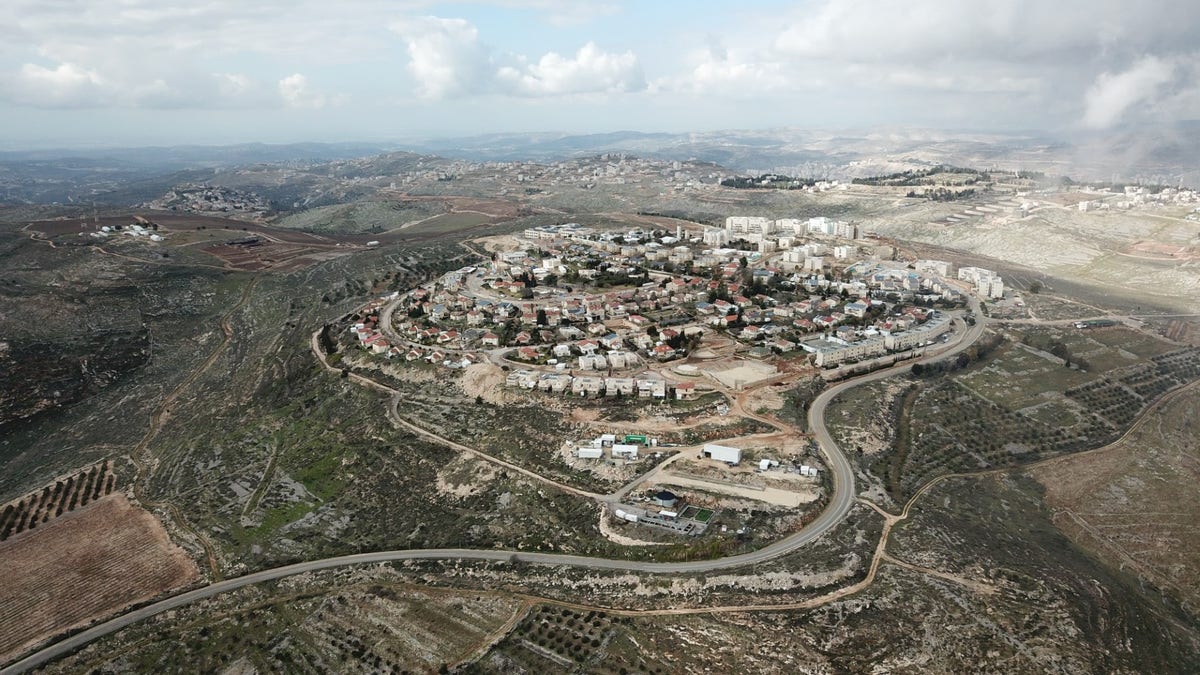
The Jewish settlement of Har Bracha is located in the biblical heartland of Samaria on the West Bank. (Eytan Schweber/TPS)
«It could be jihadist elements, the Muslim Brotherhood, Hamas or the Iranian regime,» he said. «Israel has to have an eastern border that is a natural barrier. The Jordan River is a natural barrier that limits the movement of troops, tanks and vehicles, and provides a border that is defensible,» he said.
ISRAEL FM ACCUSES PALESTINIAN AUTHORITY OF AIDING TERROR WITH ‘PAY-FOR-SLAY’ AFTER DEADLY ATTACK
Dan Diker, president of the Jerusalem Center for Security and Foreign Affairs, pointed to the concept of defensible borders that emerged after the 1967 Six-Day War.
«As a result, Israel gained a major defensive position and strategic depth it had never previously possessed,» Diker said, noting that Israel had been only nine miles wide at its narrowest point in the north.
After the Hamas-led Oct. 7, 2023, massacre, Diker said its strategic importance has increased amid concerns that a similar large-scale attack could occur there, given the widespread flow of weapons.
«Although we control between 60% and 75% of the region, Iran has been penetrating the Jordanian border,» he said, adding that Hamas incitement has energized jihadist networks.
Biblical, Historical and National Identity
Yishai Fleisher, international spokesman for Hebron — the cradle of Jewish civilization located in Judea — told Fox News Digital that the vast majority of events described in the Bible took place in Judea and Samaria.
Hebron, he said, is home to the Tomb of the Patriarchs and Matriarchs, while Jerusalem is where the two Jewish Temples stood and where King David reigned. In Bet El, the Biblical account of Jacob’s dream of the ladder took place.
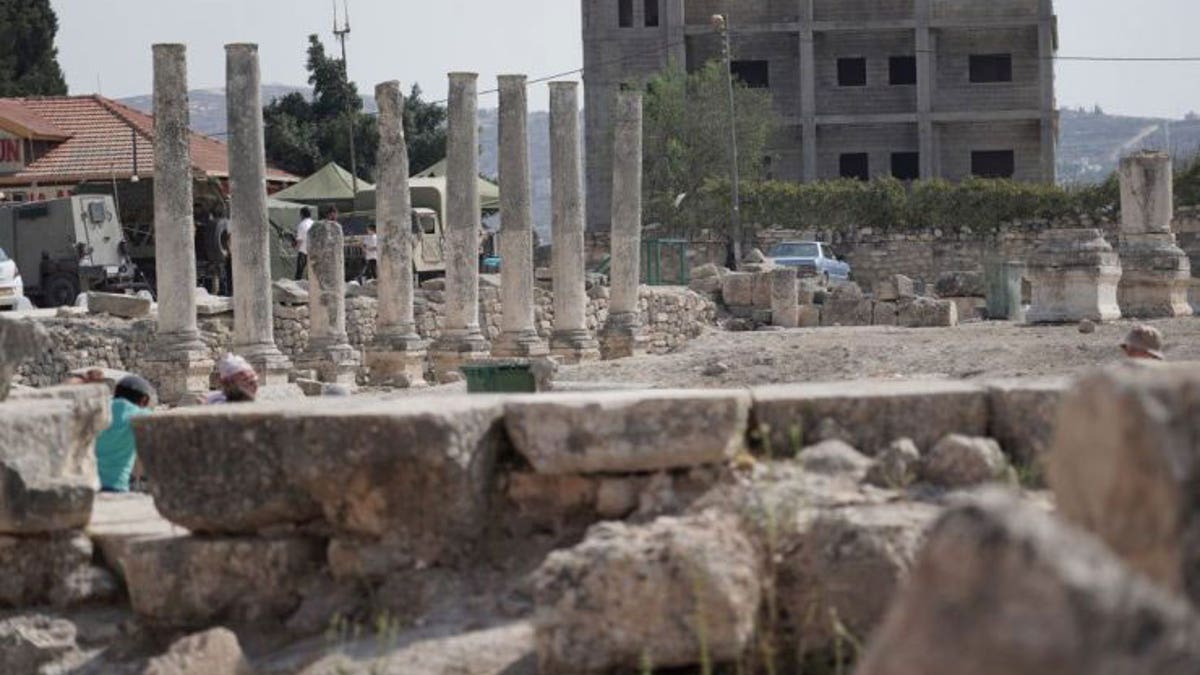
Visitors arrive at Sebastia National Park in Samaria. Sebastia was the Israelite kingdom during the reigns of Omri and Ahab. (Hillel Maeir/TPS-IL)
«The reason we have national aspirations in the Land of Israel is because of our history,» Fleisher said. He also cited an initiative to rename Route 60 — which runs through many Biblical cities — the «Biblical Highway.»
Who Are the Hilltop Youth — and Why Israel Sees Them as a Problem
Earlier this month, IDF troops were dispatched to the Shavei Shomron Junction following reports that dozens of masked Israeli suspects had vandalized property in the area. Several Palestinian vehicles were torched, and two Palestinians were injured. A day later, IDF troops were dispatched to the area of Jalud following reports that Israeli civilians had vandalized a local school. In a separate incident in the Bizzariya area, several Palestinian vehicles were set on fire and property was damaged.
In 2025, the IDF recorded an increase of approximately 27% in anti-Palestinian crimes.
Governor of Binyamin and Chairman of the Yesha Council Yisrael Ganz told Fox News Digital that Judea and Samaria has been in a state of war since Oct. 7. Over the past year, he said, citing Shin Bet data, there were more than 4,000 attempted attacks against Israelis.
UN AMBASSADOR WALTZ REVEALS TRUMP’S MIDDLE EAST PEACE PLAN IS ‘THE ONLY WAY FORWARD’
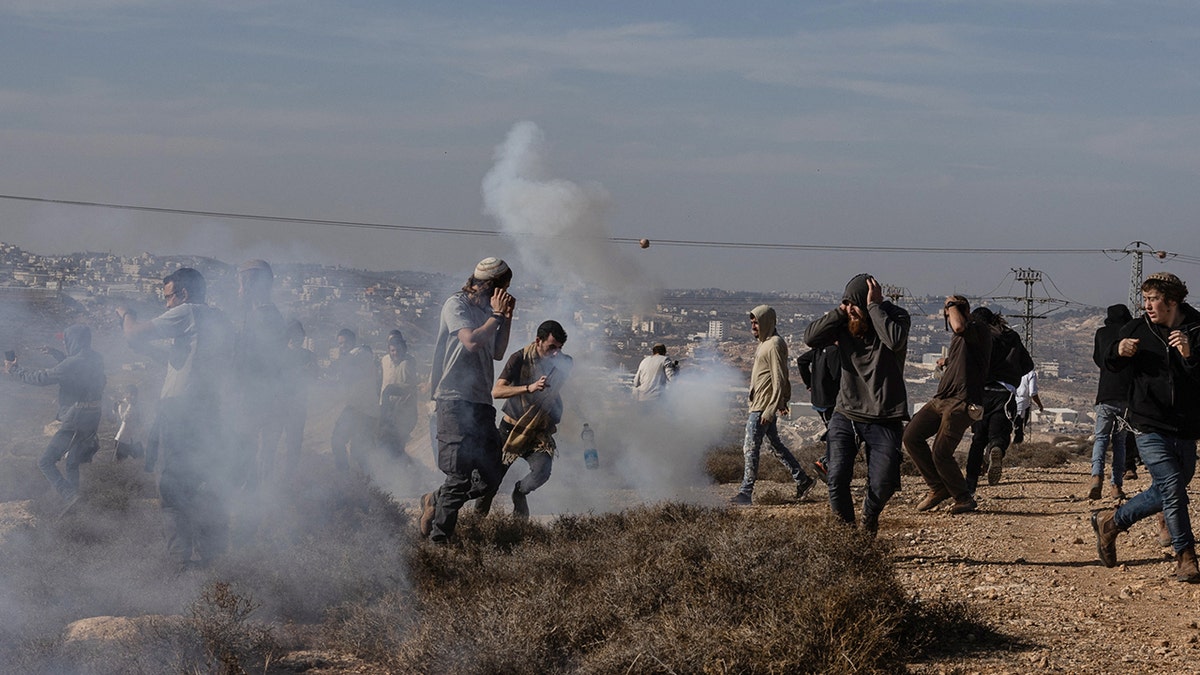
Hilltop Youth run for cover as they clash with Israeli security forces evacuating and demolishing an illegal outpost built near the Jewish settlement of Metzad east of the Palestinian city of Sa’ir in the West Bank, on Nov. 17, 2025. Israeli security forces evacuated and demolished an illegal settler outpost in the occupied West Bank on Nov. 17, with the authorities citing «severe incidents of violence.» (Menahem Kahana/AFP via Getty Images)
Ganz cited former Shin Bet head Yoram Cohen, who said only 1.5% of Shin Bet cases involve Jews, while roughly 80% focus on Arab terrorism.
«Yes, there are incidents of violence, but the number of Jews who attack Arabs is negligible,» Ganz said, condemning extremist youth as a small and unrepresentative minority.
Ganz argued that the absence of Israeli sovereignty creates a legal gray zone that enables extremism.
«When there is governance, security and economic opportunity, there is no room for anarchy or violence,» he said, envisioning Judea and Samaria as «the Israeli Tuscany.»
Is the Two-State Solution Still Viable — or Just Diplomatic Habit?
Former Israeli Ambassador to the United States Michael Oren told Fox News Digital that the two-state solution was never viable but rather a diplomatic reflex.
«The Palestinians hold the world record for a people who have been offered a two-state solution and have rejected it,» Oren said. «They rejected it in 1937, the British offer in 1947, the American-Israeli offer in 2001, and the subsequent offer in 2008.»
According to polls, Oren said, most Palestinians oppose a two-state solution and support the Oct. 7 attacks.
«Rather, the two-state solution is viewed as an interim stage toward a one-state solution,» he said, a phrase often used as a euphemism for the eventual destruction of Israel through demographic change.
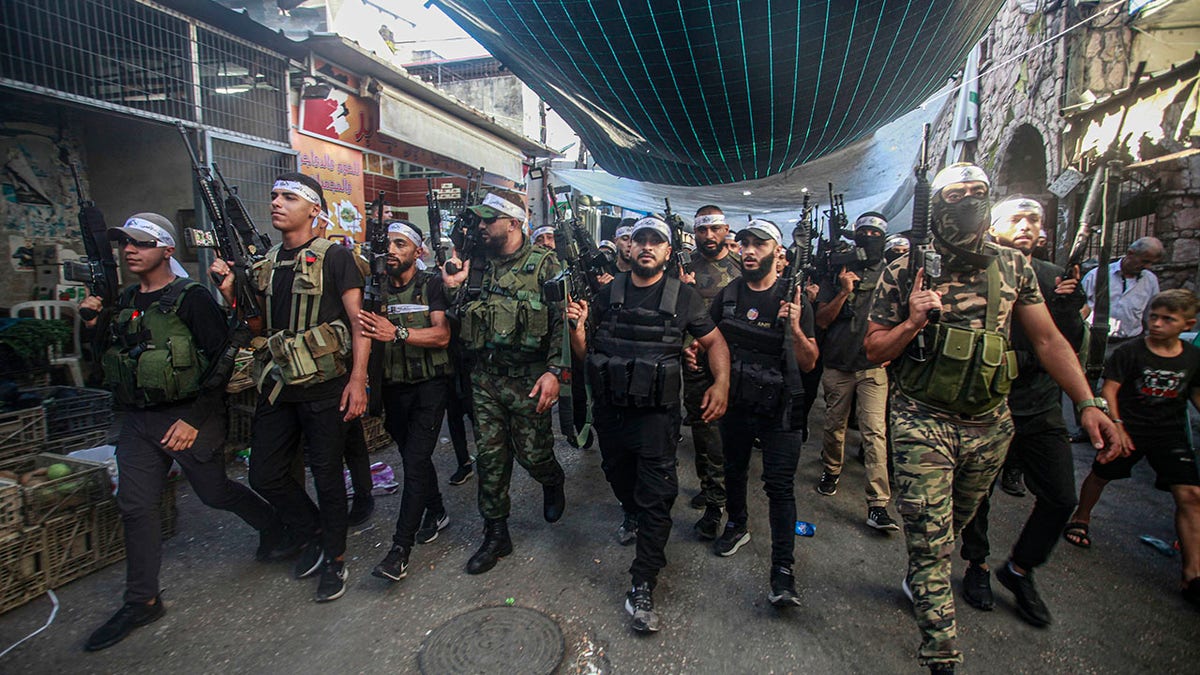
Palestinian terrorists from the Al-Aqsa Martyrs Brigades appear carrying their weapons during a military parade in the Balata refugee camp, east of Nablus, in the northern West Bank. ((Photo by Nasser Ishtayeh/SOPA Images/LightRocket via Getty Images))
While acknowledging Palestinian self-rule in Areas A and B, Oren said a fully sovereign Palestinian state is impossible.
«It could not have control over its borders, nor control over strategic affairs, such as entering a defense pact with Iran. It will never be a classic sovereign state, but it could be more than what they have today,» he said.
While a two-state solution once seemed inevitable, Dan Shapiro — who served as U.S. ambassador to Israel under President Barack Obama and as deputy assistant secretary of Defense for the Middle East under President Joe Biden — told Fox News Digital that it has not been viable for many years and may now be harder to envision than ever, particularly in the aftermath of Oct. 7.
ISRAEL CALLS UN PUSH FOR PALESTINE STATEHOOD A ‘CHARADE,’ WARNS OF ‘CONSEQUENCES’ FOR RECOGNITION MOVES
Still, Shapiro said, the framework remains a fixture of Middle East diplomacy due to the lack of viable alternatives for resolving the conflict between two peoples living in one land, each with legitimate claims to a homeland.
«President Trump includes a credible pathway to a Palestinian state in his 20-point plan to stabilize Gaza and remove Hamas from power. Presidents Biden and Trump have both viewed progress toward a Palestinian state as part of the formula to achieve Saudi normalization with Israel,» Shapiro said.
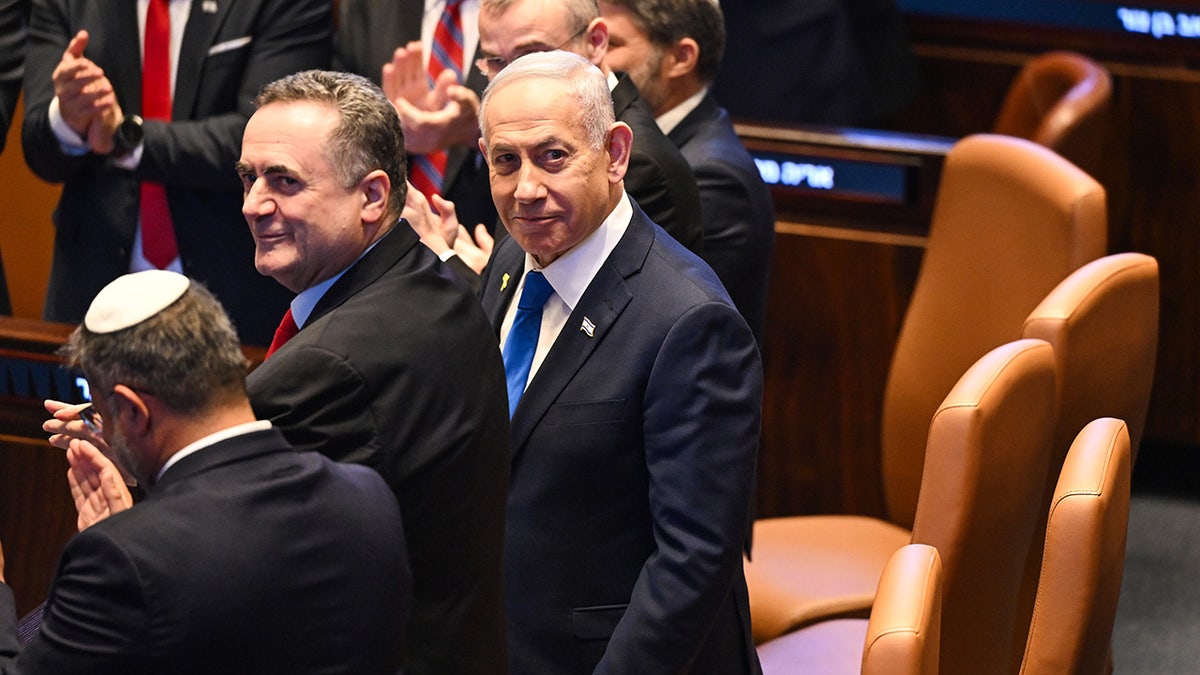
Israeli Prime Minister Benjamin Netanyahu seen as U.S. President Donald Trump prepares to deliver remarks to the Knesset on Oct. 13, 2025 in Jerusalem. President Trump is visiting the country hours after Hamas released the remaining Israeli hostages captured on Oct. 7, 2023, part of a U.S.-brokered ceasefire deal to end the war in Gaza. (Photo by Kenny Holston – Pool/Getty Images)
«None of this means it can happen soon, or perhaps at all. If it ever does, it will take longer and look different from earlier efforts. It is not a copy-and-paste of ideas from the Oslo era. But that credible pathway to a Palestinian state — one that would live peacefully alongside a secure Israel — difficult as it is, remains relevant,» he added.
Shapiro noted that even Israel’s current government — the most right-wing in the country’s history and one that includes multiple proponents of annexation — has stopped short of applying sovereignty across the West Bank, a sign, he said, that the political and diplomatic costs remain too high.
CLICK HERE TO DOWNLOAD THE FOX NEWS APP
«President Trump has announced that it will not happen because he promised Arab states — the same ones he does business with and relies on to help stabilize Gaza — that it will not happen, and Netanyahu will not oppose him on it,» Shapiro said.
Shapiro said that preserving the possibility of establishing a Palestinian state on some portion of the territory — even if it appears distant and would require major changes in Palestinian leadership and society — has remained relevant, even under Israeli governments that profess to oppose any two-state outcome.
israel,middle east,hamas,national security

La China Suárez se cambió la cara con un retoque impresionante en Turquía

El segundo día de acción en la Fórmula 1 tuvo varias ausencias, dos estrenos y una bandera roja en el Shakedown Week

Dos novios bajaron 43 kilos antes de su casamiento y la transformación dejó en shock a los invitados

“Es música para mis oídos”: Berni avaló la baja de la edad de imputabilidad y propuso que no haya un mínimo

ARBA identificó propiedades sin declarar en Pinamar y Cariló: una torre de 9 pisos figuraba como terreno baldío

Tragedia en Rumania: siete hinchas del Paok de Grecia perdieron la vida en un accidente vial

Carlos Pagni habló sobre las preocupaciones de Cristina Kirchner: “Tiene miedo porque sabe que se viene algo malo”

Mientras Quilmes arde, Mayra Mendoza viaja a Bogotá para defender a Cristina Kirchner

Juan Grabois contó que le pidieron plata para ir a un programa de C5N

El terrible accidente de Marcela Tauro en Intrusos que causó preocupación: “No puedo caminar ni…”

 POLITICA3 días ago
Mientras Quilmes arde, Mayra Mendoza viaja a Bogotá para defender a Cristina Kirchner
- POLITICA2 días ago
Juan Grabois contó que le pidieron plata para ir a un programa de C5N
- POLITICA3 días ago
La apuesta del Gobierno por la “Argentina Week” en Nueva York: los funcionarios y líderes de sectores estratégicos que asistirán