INTERNACIONAL
Ukrainian major urges US to send Tomahawks as clashes with Russian forces intensify

NEWYou can now listen to Fox News articles!
FIRST ON FOX: As intense fighting between Russian and Ukrainian troops continues on the eastern frontline in the Donetsk, Kharkiv and Zaporizhzhia regions, a senior Ukrainian commander involved in the fighting there has appealed to the Trump administration for Tomahawk missiles.
Maj. Oleh Shyriaiev, commander of the 225th Battalion in northern Ukraine, is holding the line and hoping for more U.S. support. «The main thing that we need is long-range missiles,» Shyriaiev exclusively told Fox News Digital from an undisclosed location in the northeastern Sumy region of Ukraine’s front lines.
«This war is the biggest war in the world since World War II,» Major Shyriaiev said. Ukraine’s fight, he stressed, is not just to free itself from Russian aggression.
TOP UKRAINIAN OFFICIALS IN ZELENSKYY GOVERNMENT SUBMIT RESIGNATIONS AMID $100 MILLION CORRUPTION SCANDAL
Major Oleh Shyriaiev received an award from Ukrainian President Volodymyr Zelenskyy. (Oleh Shyriaiev)
Moscow has sought to keep Ukraine in its sphere of influence since gaining independence from the Soviet Union in 1991. In fending off Russia’s invasion, Ukraine is looking to fulfill their 30-year hope of gaining complete independence from Moscow’s grip.
«For the last 300 years, our confrontation, that is, the confrontation between Ukraine and Russia, has been our chance to gain independence. And I am sure that we will win this war,» Shyriaiev said.
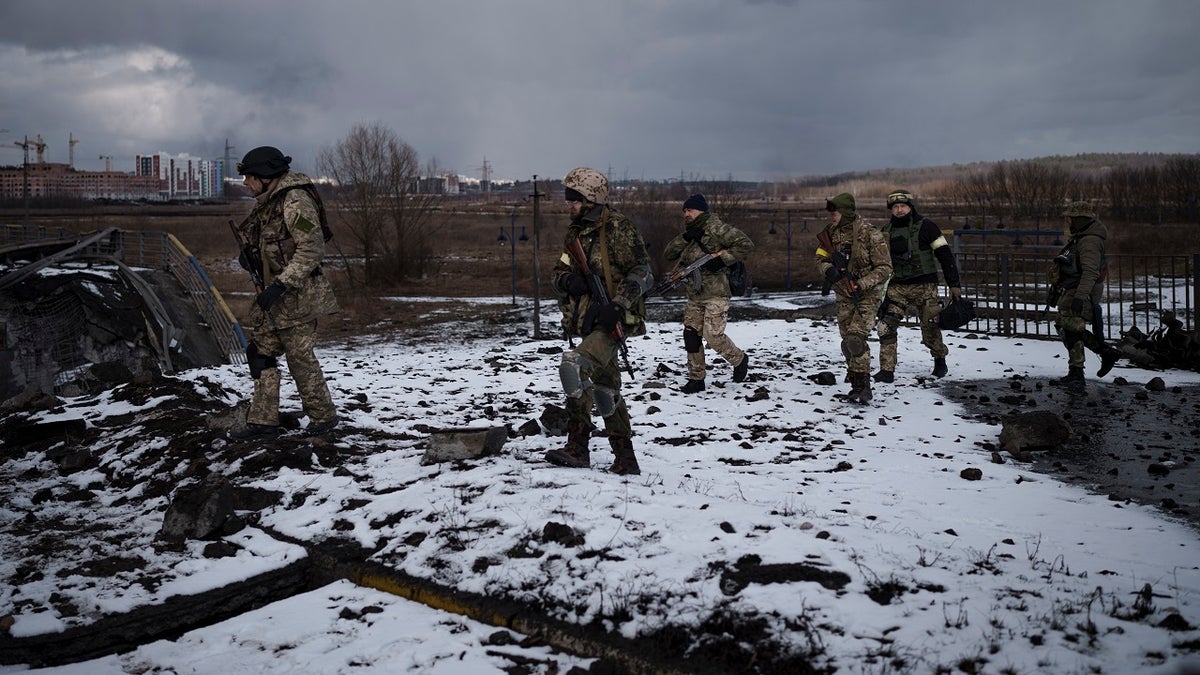
Ukrainian soldiers walk on a destroyed bridge in Irpin, on the outskirts of Kyiv, Ukraine, Tuesday, March 8, 2022. (Felipe Dana/ AP Photo)
U.S. long-range Tomahawk missiles would provide a useful option for Ukrainian forces to hold back Russian advances and get a better bargaining position to negotiate an end to the war.
«Bolstering Kyiv’s long-range strike capabilities can help the Ukrainians impose greater costs on Moscow and undermine Russian offensive operations. Ultimately, this will provide Ukraine and the United States greater leverage to achieve peace,» John Hardie, deputy director of the Foundation for the Defense of Democracies Russia Program, told Fox News Digital.
President Donald Trump at one point hinted he might send Ukraine long-range missiles.
ZELENSKYY: UKRAINE ‘CONFIDENTLY MOVING TOWARD’ EU MEMBERSHIP AFTER EUROPEAN COMMISSION PROGRESS REPORT
«If this war doesn’t get settled, I may send Tomahawks,» Trump said in October when Ukrainian President Volodymyr Zelenskyy visited the White House.
In a reversal of this sentiment, the president pulled back and told reporters aboard Air Force One on Nov. 2nd that the U.S. would not be sending Ukraine Tomahawk missiles for now.
Tomahawks have a range of about 1,550 miles, far enough to strike Russian territory. The long-range, subsonic cruise missiles are used to penetrate deep inside enemy territory and are launched from U. S. Navy surface ships and U.S. Navy submarines. Ukraine, for its war effort and lack of a navy, would need ground-based launchers.
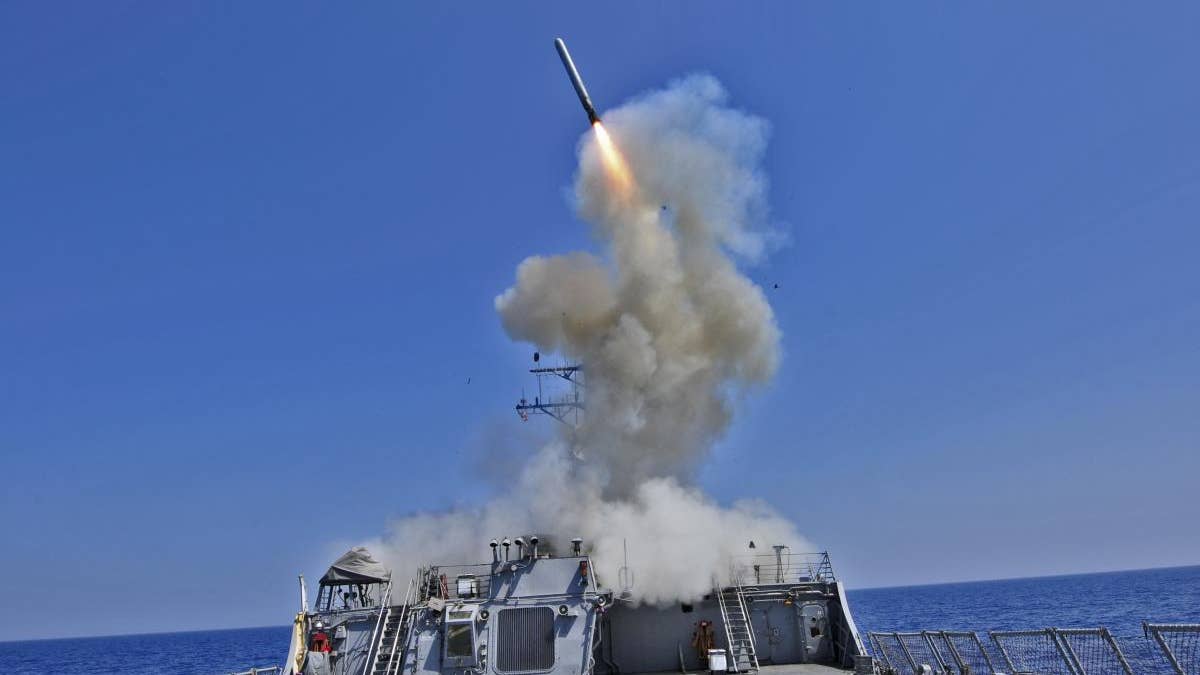
In a file photo provided by the U.S. Navy, the guided-missile destroyer USS Barry launches a Tomahawk cruise missile from their location in the Mediterranean Sea to support U.S. military forces assisting the international response to the unrest in Libya. (U.S. Navy, MC3 Jonathan Sunderman/AP )
So far in over three years of war, the U.S. during the Biden administration feared sending offensive weapons would be seen as an escalatory move by Putin. The Russian president even warned President Trump in a recent phone call against sending such weapons.
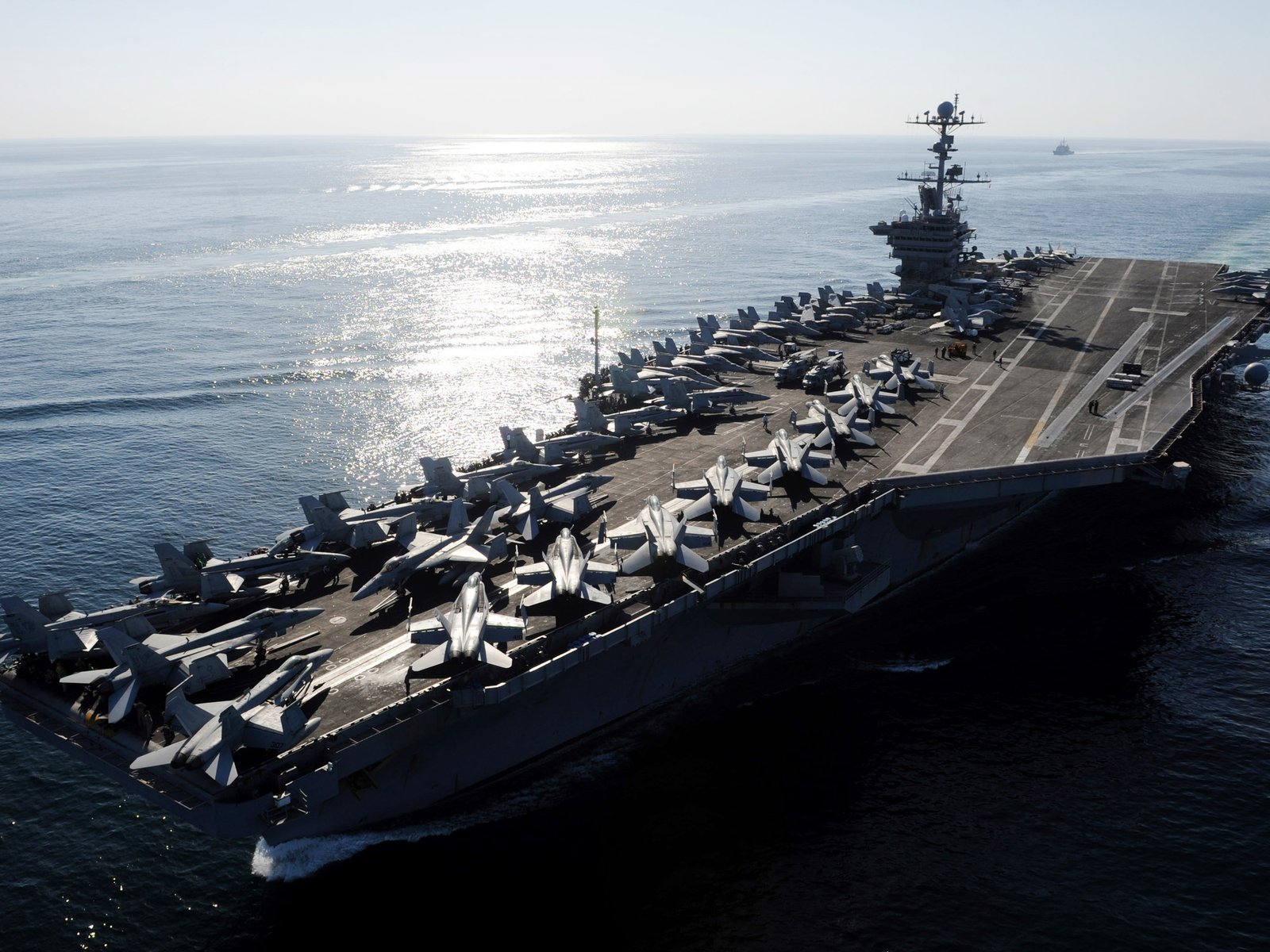
TRUMP WARNS RUSSIA: US HAS WORLD’S GREATEST NUCLEAR SUBMARINE ‘RIGHT OFF THEIR SHORES’
Even if the U.S. doesn’t provide Ukraine with Tomahawk missiles, Major Shyriaiev is resolute in the Ukrainian army’s ability to fend off the Russians.
«I am confident that our armed forces will continue to defend Ukraine’s sovereignty regardless of the type and number of weapons we receive. While I believe that Ukraine would greatly benefit from the distribution of Tomahawk missiles, given the proven precision capability of these weapons, we know there is a lot going on at the political level, and we will defend our nation with all the tools at our disposal,» Shyriaiev said.
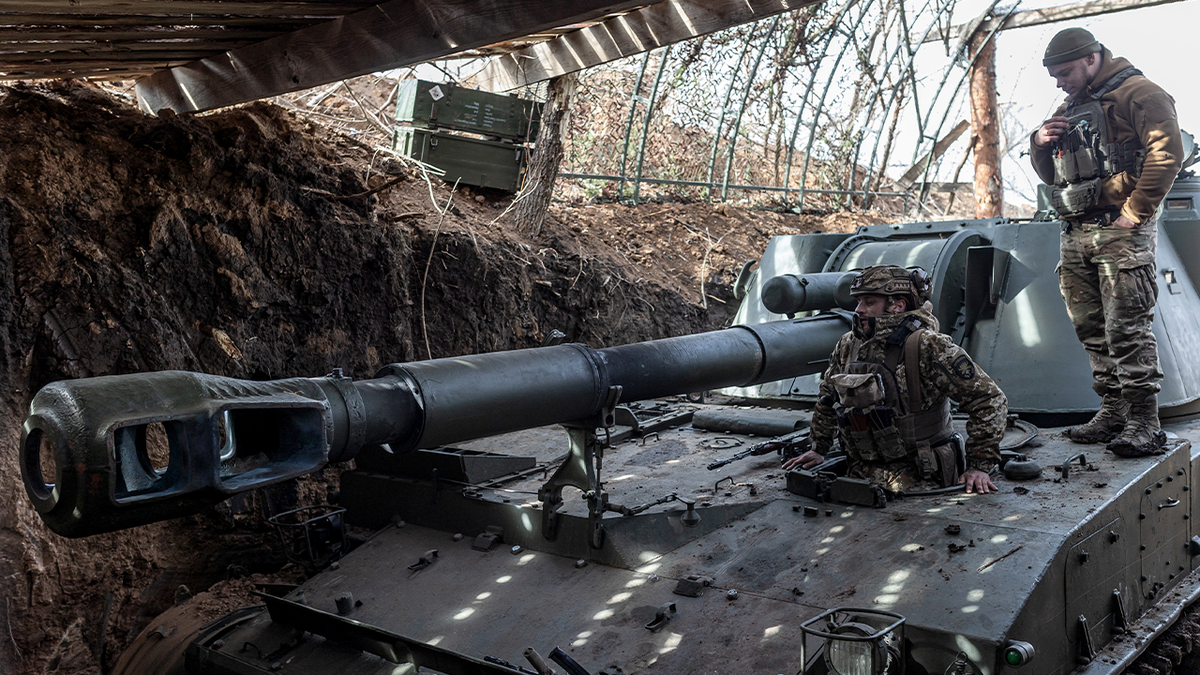
A Ukrainian soldier exits the cabin of the DS3 artillery as the Russia-Ukraine war continues, in the direction of Niu York, Ukraine, 5 March 2025. (Diego Herrera Carcedo/Anadolu via Getty Images.)
Shyriaiev is holed up in Sumy, a strategically important oblast that borders Russia, and has been the centerpiece of Ukrainian counteroffensives this fall.
While Russia continues to make steady but slow progress on the battlefield, Ukraine has stalled Russian advances in Sumy. Reclaiming territory held by Russia in Sumy will bolster Ukraine’s position in any negotiation to end the war, a key priority for President Trump.
Shyriaiev described Russia’s tactics across the front lines as meat assaults, possessing enough manpower to overwhelm Ukraine’s much smaller forces, equating the method of throwing Russian soldiers into a meat grinder, and it is achieving some successes.
CLICK HERE TO GET THE FOX NEWS APP
Even if Russia succeeds in taking Pokrovsk, the major stressed that Russia will suffer heavy losses along the way.
«Every larger town or smaller city will be a serious battle to take, and the Russians will be losing a large number of manpower here in Pokrovsk. So Pokrovsk is one of those places where they will lose a lot of troops and their combat capability will suffer seriously from that,» Shyriaiev said.
ukraine,russia,vladimir putin,volodymyr zelenskyy,conflicts








Escenarios
¿Podría la guerra de Trump tener un final feliz?
Objetivo
¿Qué demonios debería hacer Trump?
INTERNACIONAL
La inteligencia de Israel cree que el nuevo líder supremo de Irán no controla al régimen: “Una entidad vacía”

El nuevo líder supremo de Irán, Mojtaba Khamenei, no ejerce control efectivo sobre el régimen y es considerado una figura sin poder real, según fuentes de seguridad nacional israelíes citadas este miércoles por Fox News Digital.
“El nuevo líder es una entidad vacía”, dijo Kobi Michael, analista de defensa del Instituto de Estudios de Seguridad Nacional, al medio estadounidense. “Mojtaba Khamenei no aparece en público, pero también tenemos información confiable de que no controla ni lidera el régimen ni lo que queda de él. El liderazgo iraní actual está roto, confundido y casi en mal funcionamiento”, agregó.
Mojtaba asumió el cargo tras la muerte de su padre, el ayatolá Ali Khamenei, en un ataque israelí el 28 de febrero. Según un audio filtrado al diario The Telegraph, correspondiente a una reunión del 12 de marzo, el hijo escapó por minutos al haber salido a caminar justo antes del impacto del misil. El jefe de protocolo de la oficina de Khamenei, Mazaher Hosseini, es supuestamente escuchado en la grabación informando a altos líderes que Mojtaba sufrió “una lesión menor en la pierna”.

Desde que fue designado líder supremo, Mojtaba no ha realizado ninguna aparición pública. Sus comunicados han sido leídos por terceros en la televisión estatal iraní, donde advirtió sobre represalias y llamó a las naciones del Golfo a cerrar las bases militares estadounidenses en la región. Otros reportes lo situaron en estado crítico o incluso en coma, aunque funcionarios iraníes insistieron en que se encuentra en buen estado de salud.
Este miércoles, Mojtaba prometió venganza tras la muerte del alto funcionario de seguridad Ali Larijani, eliminado en un ataque israelí en las afueras de Teherán. “Tales actos de terror solo reflejan la hostilidad de los enemigos y fortalecerán la determinación de la nación islámica. Sin duda, se hará justicia”, rezó el comunicado emitido en su nombre.
Las declaraciones sobre el estado del liderazgo iraní llegan en medio de una escalada en el conflicto. Irán intensificó sus ataques contra instalaciones energéticas del Golfo Pérsico en represalia por un ataque israelí contra South Pars, el mayor yacimiento de gas del mundo, compartido con Qatar.
Las ofensivas iraníes alcanzaron refinerías en Arabia Saudita, Kuwait y los Emiratos Árabes Unidos, y causaron daños severos en la planta de gas natural licuado de Ras Laffan, en Qatar, la mayor instalación de exportación de GNL del mundo. El precio del petróleo Brent trepó hasta los 118 dólares el barril, más de un 60% por encima de los valores previos al inicio del conflicto el 28 de febrero, mientras que el gas natural europeo duplicó su precio en el último mes.
Israel también ha eliminado en días recientes a otros altos mandos iraníes, incluido el jefe de la milicia Basij, Gholamreza Soleimani. El secretario de Defensa estadounidense, Pete Hegseth, advirtió que podrían seguir más bajas entre la cúpula del régimen.
Para Michael, la eliminación sistemática de figuras clave del régimen no es un hecho aislado sino parte de una estrategia deliberada. “Esto no es una nueva fase, sino un esfuerzo continuo, muy exitoso e impresionante, y un componente crucial de la estrategia destinada a debilitar el régimen iraní”, señaló el analista. “En un grado tal que no podrá reconstituirse ni volver a convertirse en una amenaza grave y desestabilizadora para el Medio Oriente en general”, agregó.
Michael apuntó que tanto Washington como Tel Aviv tienen un objetivo más ambicioso que el meramente militar. “Al debilitar el régimen y paralizar sus capacidades, Estados Unidos e Israel están facilitando las condiciones necesarias para que el pueblo iraní derribe al régimen. Esa es la victoria final a sus ojos”, sostuvo.
El conflicto, que ya lleva más de 1.300 muertos en Irán y al menos 13 militares estadounidenses caídos, entró en su tercera semana sin señales de distensión. El presidente Donald Trump afirmó que Israel no volverá a atacar South Pars, pero amenazó con destruir “la totalidad” del yacimiento si Irán continúa golpeando la infraestructura energética de Qatar.
Military Conflicts
NEWYou can now listen to Fox News articles!
A group of 12 Arab and Islamic countries on Thursday condemned Iran’s «heinous» attacks, denouncing missile and drone strikes on civilian infrastructure and warning Tehran against further escalation.
The foreign ministers of Qatar, Azerbaijan, Bahrain, Egypt, Jordan, Kuwait, Lebanon, Pakistan, Saudi Arabia, Syria, Turkey and the United Arab Emirates issued the joint statement after a consultative meeting in Riyadh.
The countries accused Iran of deliberately targeting residential areas, oil facilities, airports and diplomatic premises across the region.
The ministers reaffirmed what they called the right of affected countries to defend themselves under Article 51 of the United Nations Charter and urged Iran to immediately halt its attacks and abide by international law.
US ‘LOCKED AND LOADED’ TO DESTROY IRAN’S ‘CROWN JEWEL’ ‘IF WE WANT,’ TRUMP WARNS
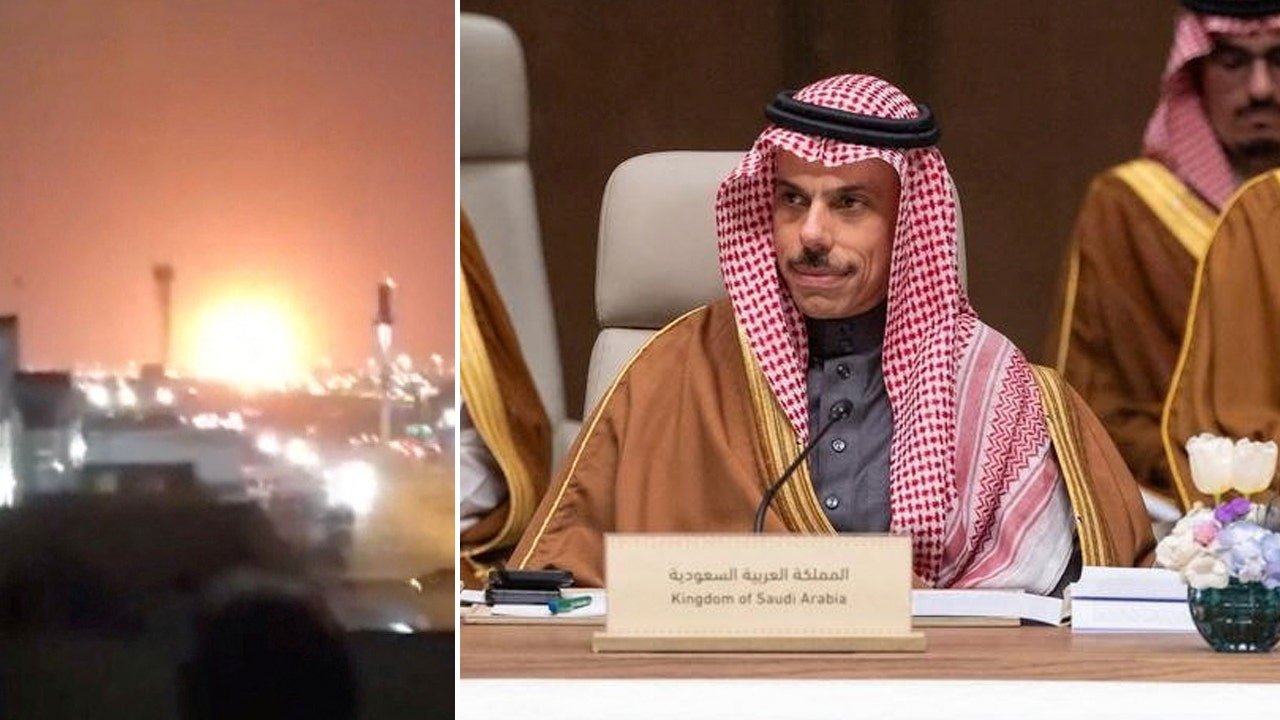
Foreign ministers from across the Arab and Islamic world convene in Riyadh, Saudi Arabia, on March 18, 2026, for a consultative meeting aimed at de-escalating military tensions in the Middle East. (Mustafa Hatipoglu/Anadolu via Getty Images)
They also called on Tehran to respect their territorial sovereignty, cease support for affiliated militias in Arab countries and avoid actions that could threaten maritime security, including in the Strait of Hormuz and Bab al-Mandab, a key global shipping route linking the Red Sea and the Gulf of Aden.
The statement further expressed support for Lebanon’s stability and sovereignty, while also condemning Israel’s actions in the country and its «expansionist policy in the region.»
«The Ministers reaffirm their commitment to continuing intensive consultation and coordination in this regard, to monitor developments and assess emerging issues in a way that ensure the formulation of common positions and the adoption of necessary legitimate measures and procedures to protect their security, stability, and sovereignty, and to halt the Iranian heinous attacks on their territories,» the joint statement reads.
IRANIAN FOREIGN MINISTER CLAIMS TRUMP LAUNCHED WAR ‘BECAUSE IT IS FUN’
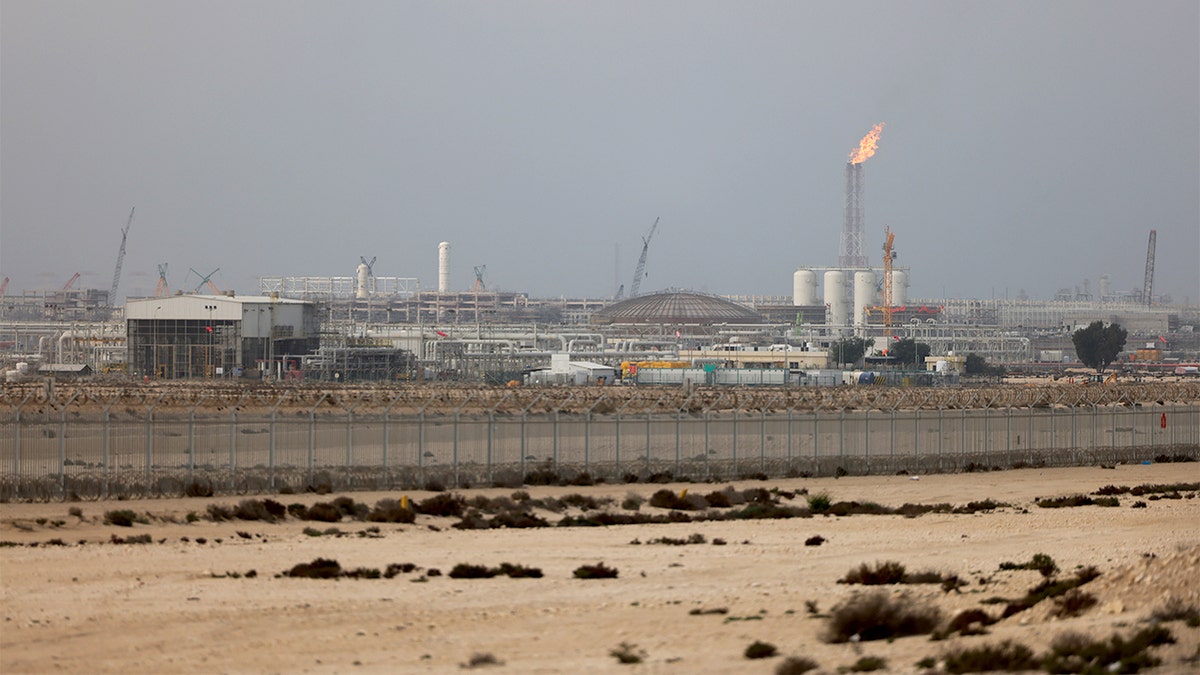
Qatar Energy facilities in Ras Laffan Industrial City on Mar. 3, 2026, after the company halted LNG production at Ras Laffan and Mesaieed sites following reported Iranian attacks. (Stringer/Getty)
It comes a day after Israel struck Iran’s South Pars gas field, prompting Iranian retaliatory attacks on energy infrastructure in Qatar and Saudi Arabia, including Doha’s Ras Laffan Industrial City, the world’s largest LNG production facility.
Oil prices surged Thursday morning following the strikes, with Brent crude rising to $114.08 a barrel and U.S. benchmark West Texas Intermediate crude climbing to $97.41.
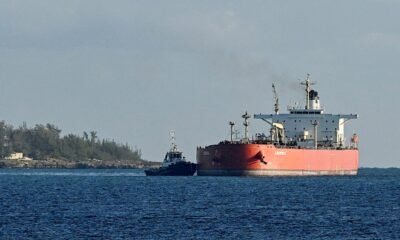
RUSSIA SHIPS FUEL TO CUBA USING ‘SPOOFING’ TACTIC CHALLENGING TRUMP EMBARGO: REPORTS

Gas prices are displayed at a station in Brooklyn, New York City, on Mar. 18, 2026, as global fuel costs rise amid disruptions linked to the Iran conflict and shipping constraints in the Strait of Hormuz. (Andrew Lichtenstein/Corbis via Getty Images)
CLICK HERE TO DOWNLOAD THE FOX NEWS APP
President Donald Trump said on his Truth Social platform that Israel would halt further strikes on Iran’s South Pars gas field unless Tehran escalates, warning that the United States could respond with overwhelming force if Qatar’s LNG facilities are targeted again.
«The United States of America, with or without the help or consent of Israel, will massively blow up the entirety of the South Pars Gas Field at an amount of strength and power that Iran has never seen or witnessed before,» Trump wrote. «I do not want to authorize this level of violence and destruction because of the long term implications that it will have on the future of Iran, but if Qatar’s LNG is again attacked, I will not hesitate to do so.»
war with iran,middle east,world

Cómo debería Trump salir del embrollo en el que se encuentra con Irán

La frase del día, Albert Einstein: “La vida es muy peligrosa. No por las personas que hacen el mal, sino por las que se sientan a ver lo que pasa”

Cuadernos de las Coimas: el chofer Oscar Centeno está en Comodoro Py para ser indagado en el juicio oral

La incómoda reacción del financista de los Kirchner ante las preguntas de una cronista: «¿Me la sacás de encima? Es insoportable»

Empieza el otoño y vuelven las lluvias: este es el pronóstico del clima para este fin de semana extralargo en el AMBA

Mercados: la tensión global golpea a las bolsas y suben con fuerza las acciones de compañías petroleras

TRAICIÓN Y ÉXODO: La promesa rota de Monteoliva que desató una ola masiva de bajas en la Policía Federal

Adorni se disculpó por el viaje de su esposa: “Fue una pésima decisión, más allá de que no generó gasto para el Estado”

Horacio Rodríguez Larreta reapareció y lanzó “Metrópolis”, su nuevo espacio en la Ciudad de Buenos Aires

Insólito: un esquiador británico terminó la Copa del Mundo de Oslo bajo los efectos del alcohol

 POLITICA3 días ago
TRAICIÓN Y ÉXODO: La promesa rota de Monteoliva que desató una ola masiva de bajas en la Policía Federal
- POLITICA3 días ago
Adorni se disculpó por el viaje de su esposa: “Fue una pésima decisión, más allá de que no generó gasto para el Estado”
- POLITICA3 días ago
Horacio Rodríguez Larreta reapareció y lanzó “Metrópolis”, su nuevo espacio en la Ciudad de Buenos Aires