INTERNACIONAL
Uruguay: la Iglesia se expresó tras detención del cura denunciado en Bolivia que llevaba 17 años escondido


El ex sacerdote uruguayo Juan José Sant’Anna fue detenido este viernes en su casa en Salto, un departamento limítrofe con Argentina. La policía llegó hasta ahí luego de una alerta de Interpol, que reaccionó ante una crónica periodística que lo ubicaba en ese escondite desde hace 17 años. La Iglesia Católica del país se refirió por primera vez al episodio este martes.
El arzobispo de Montevideo, el cardenal Daniel Sturla, dijo en una conferencia de prensa que no tenía una reflexión para hacer. “Si él es culpable, deberá responder por la situaciones que ha vivido. Lo que leí en la prensa es que será extraditado”, señaló el cardenal.
La Policía llegó este viernes hasta la casa de Sant’Anna. El ex cura estaba en el fondo de su casa, arreglando las plantas, cuando llegó un agente a preguntar por él. Le dijo que debía acompañarlo a la jefatura para tomarle declaración. La tranquilidad del barrio se vio sacudida por la presencia de los patrulleros. A Sant’Anna se lo llevaron esposado.

La detención se da un mes después de una investigación periodística del diario El País, que fue al encuentro del ex sacerdote. Llevaba 17 años viviendo en el mismo lugar sin que nadie vaya a buscarlo. Tenía una vida reservada. Estaba todo el día encerrado en su casa y, solo en algunas ocasiones, salía a caminar algunas cuadras cuando estaba por caer el sol. En estos 17 años ha recibido a tres periodistas que le han pedido explicaciones por sus acusaciones. Él ha admitido esas situaciones, aunque también ha intentado esquivar el tema.
Consultado sobre las investigaciones que realizó la iglesia uruguaya sobre este episodio, Sturla dijo que en el país no hubo ninguna denuncia respecto a Sant’Anna. Al menos, aclaró, que él tuviera conocimiento. “Fue un tema que ocurrió en Bolivia”, respondió.
“Él no fue sacerdote acá en Uruguay. Él integró una congregación religiosa que en determinado momento le dijo que no podía continuar adelante en la congregación. No tengo mayores elementos para aportar”, continuó Sturla.

“A mí –insistió el arzobispo de Montevideo– no me llegó ninguna situación, ninguna denuncia, ningún hecho. Y no sé si… Sé que le llegó a él la expulsión del estado clerical”, agregó.
Luego, el cardenal uruguayo contó que la Iglesia Católica uruguaya tiene un protocolo de actuación ante casos de abusos sexuales y señaló que ha hecho un “enorme trabajo para la prevención de abusos”. “Hay una comisión de prevención y un manual de prevención. Casi todas las personas que trabajan en la iglesia han hecho cursos sobre prevención de abusos. La iglesia se ha tomado en serio el tema”, agregó.
El equipo de comunicación de la Iglesia Católica informó al Canal 12 local que Sant’Anna cursó el seminario en una congregación salesiana cuando fue expulsado. En ese momento, se fue a Bolivia, país en el que sí se ordenó como sacerdote.
Los abusos por los que es acusado Sant’Anna ocurrieron en Tapacarí, una localidad pobre de apenas 23.000 habitantes cercana a Cochabamba. Allí dirigía el ala masculina del Internado Ángel Gelmi, que albergaba a 72 varones de entre 8 y 17 años.

En noviembre de 2007 se conocería una cara oculta del por entonces todavía sacerdote. En ese mes, el arzobispo de Cochabamba, Tito Solari, convocó a una conferencia de prensa en la que no respondió preguntas. Tenía una noticia dolorosa para comunicar. “Uno de nuestros sacerdotes ha cometido abusos deshonestos contra menores albergados en uno de nuestros internados”, dijo el obispo.
¿Cuáles eran los abusos de este cura? El sacerdote invitaba a niños y adolescentes de entre seis y 18 años de un internado rural a ver videos a su cuarto, los encerraba con llave y los sometía a prácticas sexuales, desde la masturbación hasta el sexo anal. Sant’Anna fue denunciado por delitos de violación, violación inconsistente y abuso deshonesto. La Justicia boliviana lo declaró rebelde e Interpol lo halló en la ciudad uruguaya. Pero el cura siempre siguió libre hasta este fin de semana.
religiosos,retrato










INTERNACIONAL
María Corina Machado: “No hay represión que pueda detener las demandas de los venezolanos”

Miles de trabajadores venezolanos marcharon el jueves pasado hacia el Palacio de Miraflores en Caracas, desafiando la represión de las fuerzas de seguridad y el anuncio oficial de un “aumento responsable” del salario mínimo. La movilización, protagonizada por empleados públicos, sindicalistas, estudiantes y diversos gremios, marcó un nuevo episodio de tensión social en Venezuela, donde el salario básico permanece congelado en 130 bolívares al mes, equivalentes a menos de 30 centavos de dólar, y la inflación interanual supera el 600%.
En diálogo con Infobae, la líder de la oposición venezolana y Premio Nobel de la Paz, María Corina Machado, afirmó que lo ocurrido días atrás expresa un proceso social irreversible: “Lo que vimos en las calles de Venezuela es una expresión que ya nadie puede detener. Durante años y años se fue construyendo un movimiento por la dignidad, por la justicia, por la libertad, por la familia, y ha sido un proceso de adentro de cada individuo hacia afuera, y desde las bases de la sociedad y las entrañas del país”.
Los cuerpos de seguridad del régimen chavista volvieron a responder a través de la represión dispersando a los manifestantes con el uso de gases lacrimógenos y detenciones. Sin embargo, Machado opinó que la represión provoca un efecto contrario al deseado por el oficialismo: “El régimen no entiende que esto cambió para siempre y que no hay manera que puedan, a estas alturas, detener este proceso que es irreversible”.

En ese sentido, agregó que la violenta respuesta de las fuerzas de seguridad “lo que logra es acelerar un proceso de transición que es indetenible”, y advirtió: “El mundo tiene que entender y asumir que los venezolanos no nos vamos a conformar con nada distinto a full democracia, justicia y libertad”.
“Si la señora Delcy Rodríguez pretende lavarse las manos de todos los crímenes que cometió Nicolás Maduro, la represión de estos días se le atribuye directamente a ella”, aseveró.
Consultada sobre la actitud de la sociedad frente a la represión, Machado afirmó que los venezolanos han aprendido “cómo lidiar y superar el miedo”: “Nos hemos protegido en los momentos en los cuales la represión estaba desatada, pero nunca hemos dejado de organizarnos, de actuar y de avanzar”. La opositora describió la movilización como una “represa que se abrió”, en referencia al carácter masivo y transversal de las protestas: “Cada joven, cada trabajador, cada anciano que hoy levanta las voces dentro y fuera de Venezuela, pero sobre todo dentro del país enfrentando estos ataques con dignidad, son los héroes, y son millones de héroes, que tienen nombre y apellido, y el mundo tiene que reconocerlos”.
Machado subrayó el impacto emocional y social de la represión, pero también el valor de los testimonios de quienes se animan a protestar: “Venezuela es como una represa contenida que se ha ido llenando de dolor, de humillación, de angustia, de pérdida, y por otra parte, de ilusiones, de aprendizajes, de organización, de victorias, de amor, y esa represa se abrió”.
“Estos tipos creen que a punta de represión van a poder repetir lo que hicieron durante años, y no terminan de entender que esto cambió, y cambió para siempre. Estas expresiones de la demanda ciudadana van a seguir reproduciéndose y creciéndose cada día que pasa. No hay represión que pueda detenerlas”, añadió.
La líder opositora, quien viene enviando constantes mensajes a las fuerzas de seguridad para detener la violencia contra la población, también hizo referencia a la actitud de algunos funcionarios de seguridad: “Debemos ver los videos y todos los registros que hay de los policías y funcionarios a los que se les vio en contra de la represión, e incluso algunos de ellos ayudaron a los heridos”.
Las exigencias de los manifestantes se centran en derechos laborales, libertad de protesta y garantías democráticas. Machado afirmó que los venezolanos han demostrado “una y mil veces que no nos vamos a detener antes de lograr lo que nos hemos propuesto: traer a nuestras familias de vuelta a casa, y eso solo es posible en un país libre, donde haya respeto a los derechos de cada ciudadano, donde todos seamos iguales ante la ley; donde exista libertad de expresión, libertad de asociación, libertad de protesta, y desde luego, donde podamos decidir nuestro futuro”.
Al respecto, la Premio Nobel de la Paz consideró que, tras más de dos décadas de sufrir innumerables violaciones a los derechos humanos bajo la dictadura chavista, “no hay una sociedad en el mundo mejor preparada, organizada y forjada para la democracia” que la sociedad venezolana. “Hemos aprendido el costo de perder la libertad y hemos dado todo, incluso la vida, para recuperarla”.

Por eso, la líder venezolana enfatizó el objetivo de lograr elecciones libres y transparentes: “Todos los venezolanos exigimos, reclamamos, demandamos y avanzamos para poder ejercer nuestro derecho a elegir libremente, de una vez por todas, a quienes deben representarnos para construir el país que nos merecemos”.
En relación con la situación de los presos políticos, María Corina Machado sostuvo: “Todos nuestros presos políticos son de todos los venezolanos. No son de un partido, de una organización, de un sindicato o de las Fuerzas Armadas. Todos son ciudadanos venezolanos, civiles y militares, y son inocentes. Continúan presos por ejercer su derecho y deber a vivir en libertad”.
Por su parte, denunció que la persecución sobre los militares responde al temor del régimen: “La forma cómo se han ensañado contra los militares es la demostración que le tienen terror a las Fuerzas Armadas, porque Delcy Rodríguez sabe que las Fuerzas Armadas no confían en ella y no la apoyan”.
bandera,importante américa,mujer,politicos,protestas oposicion venezolana,resultados elecciones presidenciales en venezuela 2024

NEWYou can now listen to Fox News articles!
Communist China is reportedly providing military assistance to the embattled Iranian regime, according to a leading U.S. military think tank and other reporting.
The Institute for the Study of War stated that China is providing military assistance to the Iranian regime’s missile program, basing its research on recent reporting.
According to the Institute, «China is helping Iran reconstitute the Iranian missile program amid US-Israeli efforts to degrade it.»
A TIMELINE OF TRUMP’S ESCALATING DEADLINES ON IRAN AND THE STRAIT OF HORMUZ
According to the Institute for the Study of War, «Western media reported that China has sent multiple shipments of missile fuel precursor to Iran since the start of the war.»
The institute said that, «China’s efforts to help Iran reconstitute could undermine the combined force efforts to degrade or destroy the supporting elements of the ballistic missile program.»
Gordon Chang, an expert on China, told Fox News Digital that «China is an enemy combatant and is endangering our troops.»
A Ghadr-H missile, center, a Sejjil missile and a portrait of the Iranian Supreme Leader Ayatollah Ali Khamenei are on display for the annual Defense Week, marking the 37th anniversary of the 1980s Iran-Iraq war, at Baharestan Sq. in Tehran, Iran, Sunday, Sept. 24, 2017. (AP)
The Daily Telegraph recently reported that, «Ships believed to be carrying Chinese chemicals for missile fuel have arrived in Iran, raising questions about Beijing’s support for the regime. Four sanctioned Iran-flagged vessels have docked at Iranian ports since the war broke out.»
The report also claimed that, «Sanctioned vessels carrying enough chemicals to produce hundreds of projectiles travel from Chinese to Iranian ports.»
Chang urged the U.S. to seize the Chinese vessels that are reportedly transporting sodium perchlorate, the chemical material required for Iran’s missile fuel systems. He added that «It is a question of America’s will to impose costs on China.»
TRUMP CALLS RESCUE OF DOWNED AIR FORCE PILOT AN ‘EASTER MIRACLE’
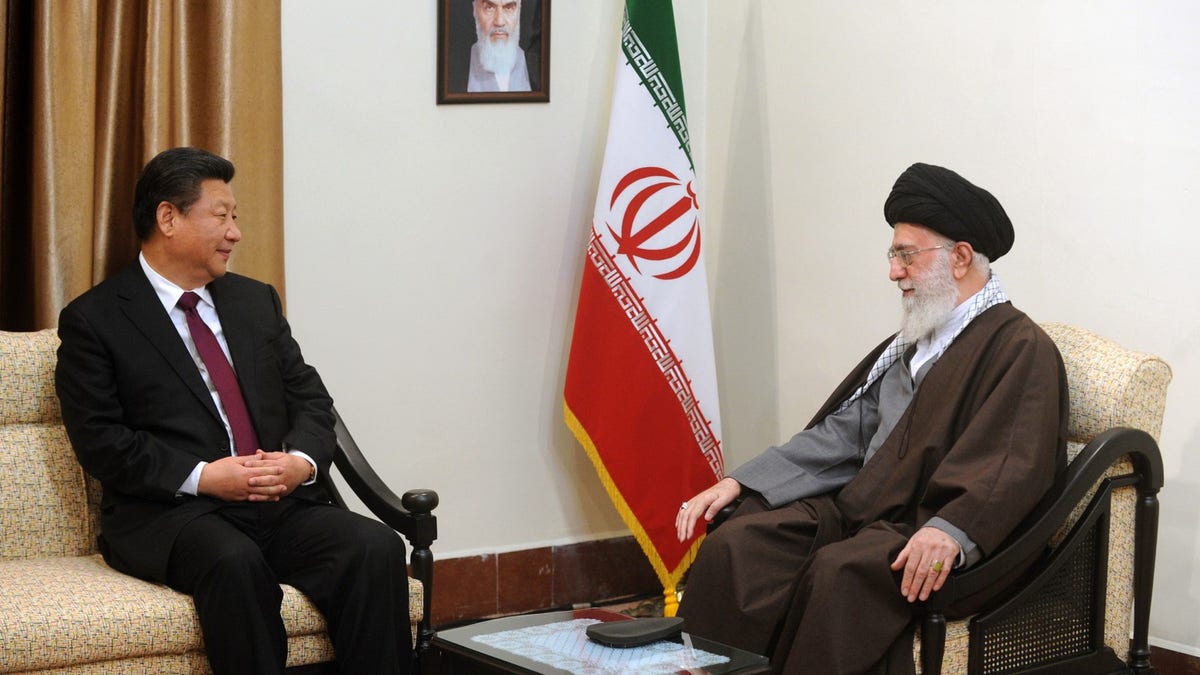
Chinese President Xi Jinping (L) meets with the late Supreme Leader of Iran Sayyed Ali Khamenei (R) in Tehran, Iran on January 23, 2016. (Pool / Supreme Leader Press Office/Anadolu Agency/Getty Images)
Chang concluded by noting that the «President of the U.S. has many points of leverage. If you look at the overall relationship between China and the U.S., the U.S. has more cards to play.» He cited the U.S.-China trade relationship because China is an export-driven country and depends on the vital American consumer market.
The Islamic Republic’s military forces have reportedly been feverishly working to rebuild their missile apparatus after punishing U.S. and Israeli airstrikes since the start of the war on Feb. 28.
According to the Institute for the Study of War, «Iran has been digging out underground missile bunkers and silos struck by the combined force, in some cases returning them to operation hours after strikes, according to recent U.S. intelligence assessments. Iran may be reestablishing access to their launchers hours after strikes, but these launchers are components of a larger system that has been degraded. Reported fear and lack of coordination across some Iranian forces mean that medium-range missile systems are still functioning sub-optimally.»
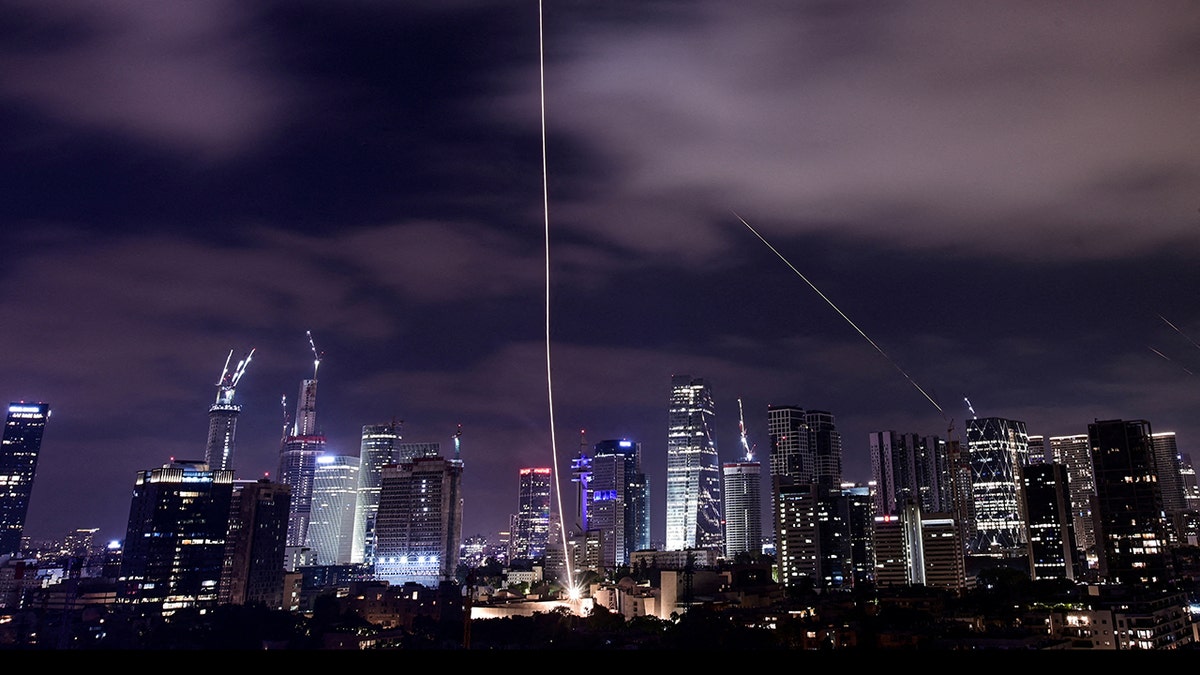
Missiles launched from Iran are intercepted as seen from Tel Aviv, Israel, June 15, 2025. (REUTERS/Tomer Neuberg)
Chinese companies have been sanctioned as part of busting U.S. restrictions on providing military aid to Iran’s regime. In 2023, the U.S. Treasury Department said it had «designated one individual and six entities in a sanctions’ evasion network that has facilitated Iran’s procurement of electronic components for its destabilizing military programs, including those used in unmanned aerial vehicles (UAVs). Particularly, this action targets the head of U.S.-designated Iran’s Pardazan System Namad Arman (PASNA), and the entity’s Iran-, Malaysia-, Hong Kong, and PRC-based front companies[People’s Republic of China] and suppliers that have enabled PASNA’s procurement of goods and technology.»
A State Department spokesperson told Fox News Digital that, «China portrays itself as a neutral actor in the conflict with Iran, but it has long ignored the Iranian regime’s nuclear ambitions and destabilizing activities while providing the regime an economic lifeline and other support. The United States has sanctioned China- and Hong Kong-based entities and individuals for supporting Iran’s ballistic missile and UAV proliferation activities. We will continue to act to ensure China does not contribute to the Iranian regime’s destabilizing activities.»
CLICK HERE TO DOWNLOAD THE FOX NEWS APP
Just last month, a report by the Atlantic Council noted «China has supplied Iran with drones, anti-ship cruise missiles, surface-to-air missiles, and the components thereof, to aid in its aerial and maritime defense capabilities. In other instances, China directly supplies Iran with Western or Chinese technology components that are found in Iranian drones used against US military installations and economic interests in the Gulf, as well as on Russia’s battlefield in Ukraine.»
Fox News Digital press queries to China’s Embassy in Washington, D.C., were not immediately returned.
war with iran, iran, israel, sanctions

NEWYou can now listen to Fox News articles!
One of President Donald Trump’s top Democratic foes running for the Senate is taking a page from his and conservatives’ playbook in their pitch to reform the filibuster.
Democratic Maine Gov. Janet Mills, who is running to unseat longtime Sen. Susan Collins, R-Maine, released her policy platform in recent days. Among several pitches to voters is a call to reform the filibuster.
Mills, if elected, said in the 19-page document that she would require «Senators to remain on the Senate floor and actually speak, rather than simply threatening a filibuster to delay action.»
The filibuster has become a flashpoint in the Senate, particularly for Republicans, given that its current 60-vote threshold requires legislation to be bipartisan in nature. And Mills’ position, which has been previously supported by Democrats, is one Trump and some in the GOP are pushing for to pass a massive election integrity bill.
GRAHAM EYES ‘DOWN PAYMENT’ ON TRUMP-BACKED SAVE ACT WITHOUT DEMOCRATIC SUPPORT
Democratic Maine Gov. Janet Mills, who is running to unseat longtime Sen. Susan Collins, R-Maine, released her policy platform in recent days. (Getty Images)
Her desire to change the filibuster echoes one made by Trump and conservatives, both in Congress and online, that have demanded Senate Majority Leader John Thune, R-S.D., launch a talking filibuster to pass the Safeguard American Voter Eligibility (SAVE) America Act.
«Washington is broken, and Maine people are paying the price,» Mills said in a statement introducing the platform. «Donald Trump and Washington Republicans are undermining our fundamental rights and driving up costs, all while Congress fails to solve the big problems facing Maine people. Enough is enough. Maine people deserve better than what D.C. is giving them.»
Mills and Trump have an adversarial relationship that reached a chaotic crescendo in 2025 when, during a meeting of governors at the White House, she declared, «We’ll see you in court,» over the president’s executive order to deny federal funding to states that allowed transgender athletes to participate in sports.
THUNE ACCUSES CRITICS OF ‘CREATING FALSE EXPECTATIONS’ AMID BACKLASH OVER STALLED SAVE AMERICA ACT
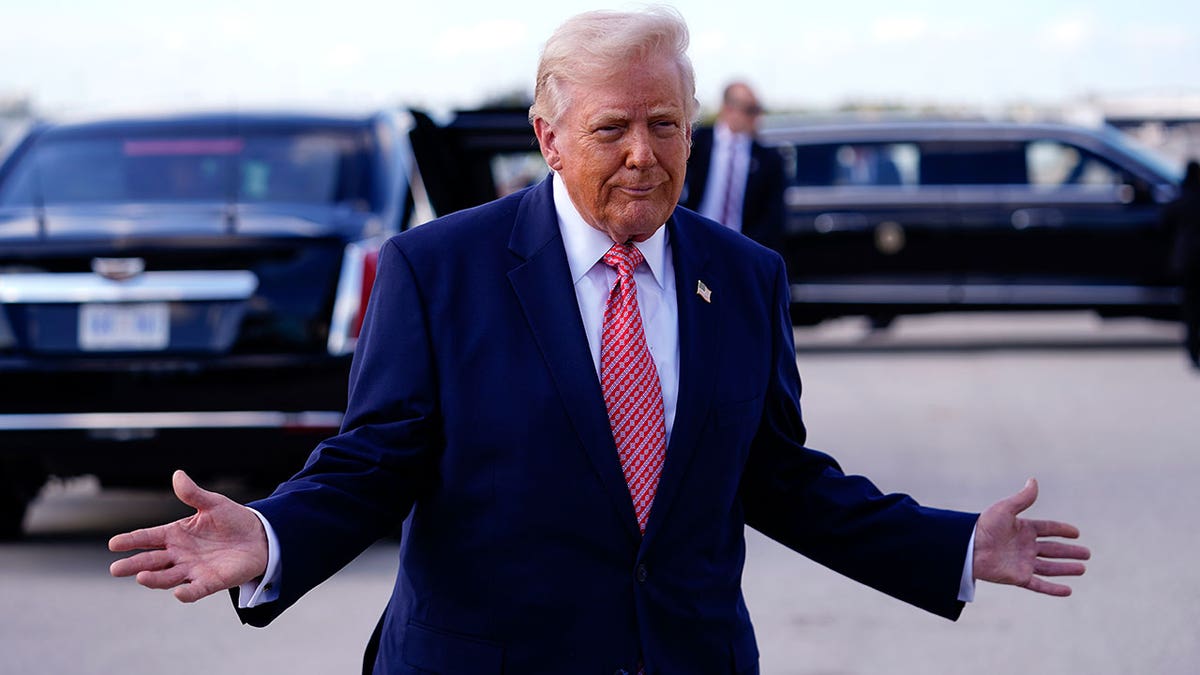
Maine Gov. Janet Mills and President Donald Trump have an adversarial relationship that reached a chaotic crescendo in 2025. (Nathan Howard/Getty Images)
The National Republican Senatorial Committee (NRSC), the Senate GOP’s main campaign arm, warned that Mills’ desired change to the filibuster was a dog whistle for Democrats’ plan to slow-walk Trump’s agenda.
«Janet Mills is saying the quiet part out loud: If she goes to Washington, she will use every tool at her disposal to push her radical anti-Trump agenda on Americans,» NRSC spokesperson Samantha Cantrell told Fox News Digital.
Trump has asked Republicans to go a step further and nuke the filibuster altogether — an unlikely scenario in the Senate, given the lack of support to do away with the guardrail in its current form.
MAINE SENATE CANDIDATE CITES COMBAT TRAUMA WHEN CONFRONTED ON ‘TERRIBLE’ POSTS ABOUT SEXUAL ASSAULT
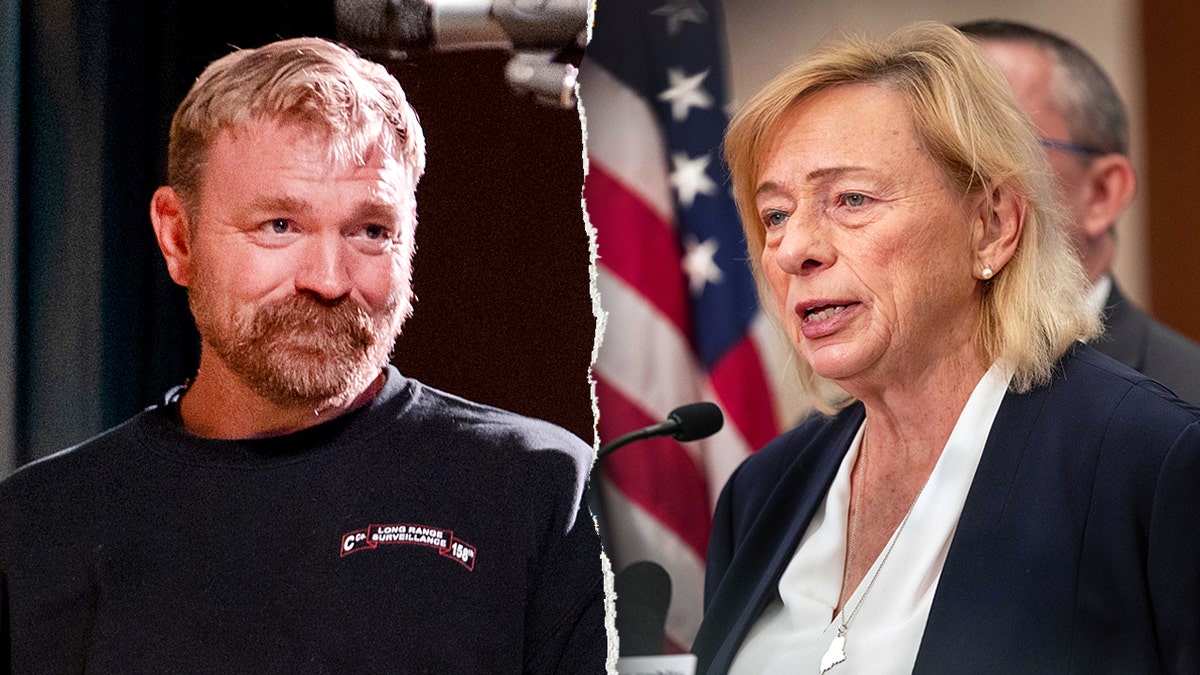
Senate candidate Graham Platner of Maine, left, and two-term Gov. Janet Mills are facing off in the state’s Democratic Senate primary. (Sophie Park/Getty Images; Scott Eisen/Getty Images)
A talking filibuster, as Mills suggested, would require senators to debate a bill rather than falling back on the typical 60-vote threshold.
The Senate is currently doing a version of the talking filibuster in the GOP’s bid to shine a light on Senate Democrats’ refusal to support the SAVE America Act. But it won’t lead to the legislation passing because the GOP isn’t unified to block Democratic amendments that could drastically alter the bill.
Senate Minority Leader Chuck Schumer, D-N.Y., who handpicked Mills to run in Maine against Collins, has dubbed the legislation «Jim Crow 2.0» and rallied his caucus behind defeating the measure.
CLICK HERE TO DOWNLOAD THE FOX NEWS APP
Before Mills has a chance to square off against Collins, she’ll first have to survive a tough primary battle against insurgent candidate Graham Platner, an oyster farmer who has the backing of Schumer’s left flank.
Fox News Digital reached out for comment from Mills, Platner and Collins, but did not hear back by publication.
politics, chuck schumer, john thune, republicans, senate elections, donald trump, midterm elections
El Gobierno asturiano ve en la empresa la única responsable de los 5 muertos en Cerredo Por EFE

Bastoni, la excepción que retrata la crisis de Italia

¡Con la peor de las ondas! Así fue el tenso encuentro de Paula Chaves y Zaira Nara en un desfile: No se saludaron ni se miraron, y Paula pidió cambiarse de lugar

María Corina Machado: “No hay represión que pueda detener las demandas de los venezolanos”

El juicio por el ARA San Juan: advertencias desoídas, fallas en el submarino y relatos desgarradores en la audiencia más conmovedora

Mauricio Macri levanta el perfil: visitará Chaco y Corrientes junto a dirigentes de la mesa chica del PRO

Mario Kart Tour avanza su siguiente temporada de primavera con ciudades europeas – Nintenderos

Melania Trump’s forceful Epstein denial draws bipartisan support from lawmakers

Un gobernador presentó un amparo contra la reforma de la Ley de Glaciares y pidió suspender su aplicación

Trump blasts Biden admin for releasing illegal immigrant now charged in fatal hammer attack on Florida mother

 SOCIEDAD1 día ago
Mario Kart Tour avanza su siguiente temporada de primavera con ciudades europeas – Nintenderos
- INTERNACIONAL1 día ago
Melania Trump’s forceful Epstein denial draws bipartisan support from lawmakers
- POLITICA1 día ago
Un gobernador presentó un amparo contra la reforma de la Ley de Glaciares y pidió suspender su aplicación