INTERNACIONAL
US military aircraft involved in ‘incident’ during training in Philippines, service members sent for treatment


NEWYou can now listen to Fox News articles!
A U.S. military aircraft slammed into a concrete barrier during a takeoff attempt from a Philippine roadway, according to a report, and officials confirmed American service members on board were injured.
The incident happened Tuesday in Central Luzon, Philippines, as the aircraft was conducting training, U.S. Indo-Pacific Command confirmed to Fox News Digital in a statement.
«Two service members were transported to a medical facility for medical attention,» the statement said. «One of the individuals has been discharged, while the other remains in medical care and is in stable condition. No civilians were injured.»
The command said that the incident is currently under investigation.
The U.S. military did not immediately provide comment to Fox News Digital about the reported incident involving a U.S. Air Force transport plane crashing into a concrete barrier during takeoff in the Philippines on Tuesday. (Nicolas Economou/NurPhoto via Getty Images, File)
The accident happened during contingency training on a bypass road in Laoac town, The Associated Press reported, citing a local police report.
The aircraft had successfully landed but veered off course during takeoff and struck a concrete barrier, Philippine officials told the outlet.

Two American soldiers are seen in front of a M142 High Mobility Artillery Rocket System (HIMARS) vehicle parked outside the World Trade Center during the 2024 Asian Defense and Security Exhibition (ADAS), in Pasay City, Metro Manila, the Philippines, on Sept. 25, 2024. (Daniel Ceng/Anadolu via Getty Images)
The Philippine officials reportedly said that the training exercise, which was fully coordinated with local civilian, police and military authorities, was designed to prepare forces for emergencies when traditional runways are unusable due to disasters such as typhoons or earthquakes.
SEVEN US SERVICE MEMBERS INJURED IN VENEZUELA RAID TO CAPTURE MADURO, OFFICIAL SAYS
U.S. forces frequently deploy aircraft in the Philippines to assist with humanitarian relief following natural disasters. The 1999 Visiting Forces Agreement allows U.S. troops to train alongside Filipino forces.
The incident comes amid heightened tensions in the region, particularly in the South China Sea, where China and the Philippines have clashed over disputed territory.

In this handout photo provided by the Philippine Coast Guard, a Chinese coast guard ship uses water canons on a Philippine Coast Guard ship near the Philippine-occupied Second Thomas Shoal, South China Sea as they blocked its path during a re-supply mission on Aug. 5, 2023. (Philippine Coast Guard via AP, File)
CLICK HERE TO DOWNLOAD THE FOX NEWS APP
The U.S. has reaffirmed that it would defend the Philippines under a mutual defense treaty if its forces were attacked.
The Associated Press contributed to this report.
Related Article

military,air force,asia world regions,world














NEWYou can now listen to Fox News articles!
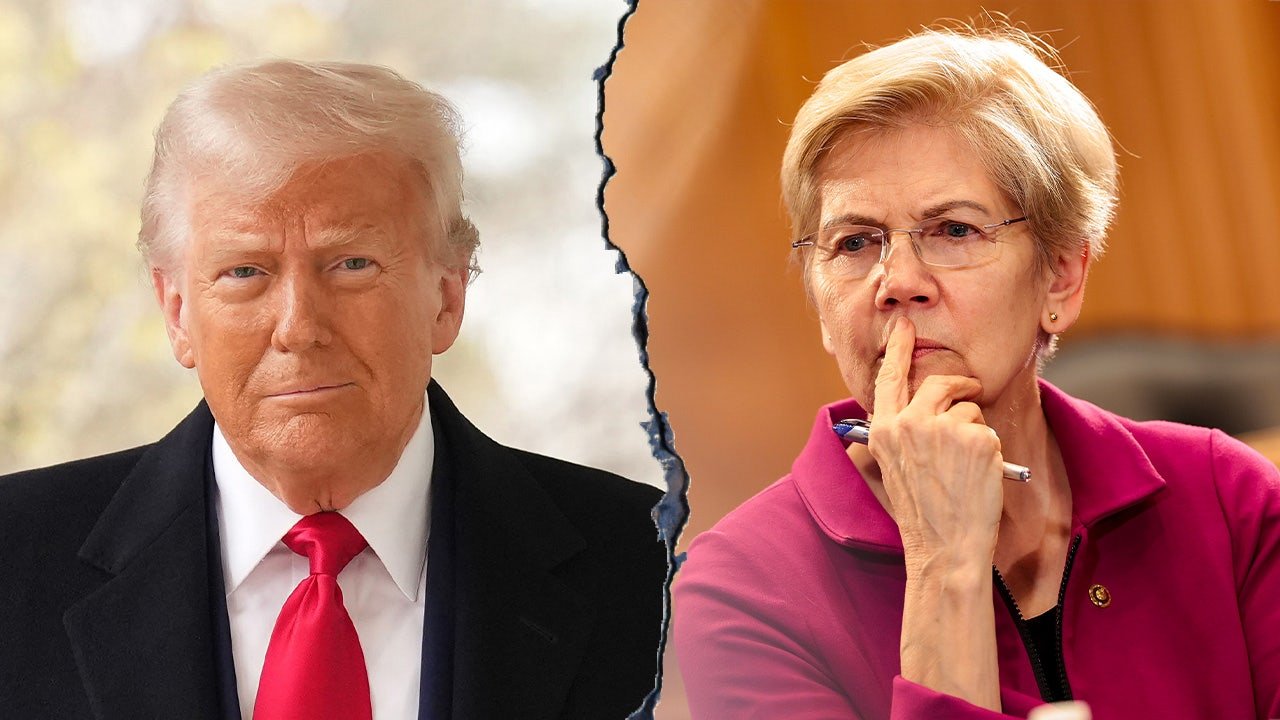
Polling data tracking voters’ real-time reactions to President Donald Trump’s State of the Union address, showed Independents and Republicans were highly motivated when the president urged members of Congress to pass restrictions on congressional stock trading, but Democrats appeared less enthused.
This moment in Trump’s address was one of the few moments during the speech when Democrats inside the House chamber, including Sen. Elizabeth Warren, D-Mass., offered standing applause.
«They stood up for that, I can’t believe it. I can’t believe it,» Trump quipped after calling for an end to congressional stock trading. «Think Nancy Pelosi would stand up if she was here? Doubt it. Pass the Stop Insider Trading Act without delay,» the president continued to a roaring applause. During one moment, a camera panned over to Warren, who could be seen standing and clapping.
Republicans and Independents showed a marked difference in positive feelings, as opposed to Democrats, after President Trump urged lawmakers to pass tougher restrictions on congressional stock trading. (Fox News)
The dial test administered by Lee Carter, the president of Maslansky & Partners, showed that after Trump said the Stop Insider Trading Act must be passed «without delay» that Democrats remained largely stagnant, but Republicans and Independents reacted far more positively.
As the crowd inside the House chamber Tuesday night continued to applaud following Trump’s remark that a law on congressional stock trading restrictions should be passed immediately, the Democrats’ dial returned to baseline. It had taken a turn downwards after Trump took a jab at Pelosi over the matter. She has long been the brunt of criticism over the success of her stock portfolio and the manner in which certain trades have lined up with matters in front of lawmakers.
The group of voters monitored during the president’s speech Tuesday night, included 29 Democrats, 41 Republicans and 30 Independents.
Warren and other Democrats could be seen giving a standing ovation to the president’s urgency around adding stricter restrictions to congressional stock trading. Warren was also reportedly seen standing after Trump insisted Iran cannot be allowed to obtain a nuclear weapon.
When asked to respond to Trump’s jab at her Tuesday night, Pelosi told Trump to «look at your own self.»
DEMOCRATS’ BIG MISFIRE AT STATE OF THE UNION HAS GOP STRATEGISTS SALIVATING: ‘HUGE MOMENT’
«The inference he wants to draw is there was something wrong with that, which there wasn’t, and if there was, people get prosecuted for it. For a long time now we’ve been trying to pass this law. It doesn’t have — now it has more support than it had before, and —» Pelosi said before being cut off by CNN’s Kasie Hunt, who pointed out Warren stood up to applaud Trump’s urging to pass the Stop Insider Trading Act.
«Well, we all did. I did too,» the former House speaker shot back. «He said, ‘Did Nancy stand up?’ Yeah, I did too. A lot of people stood up, a lot of Democrats stood up.»
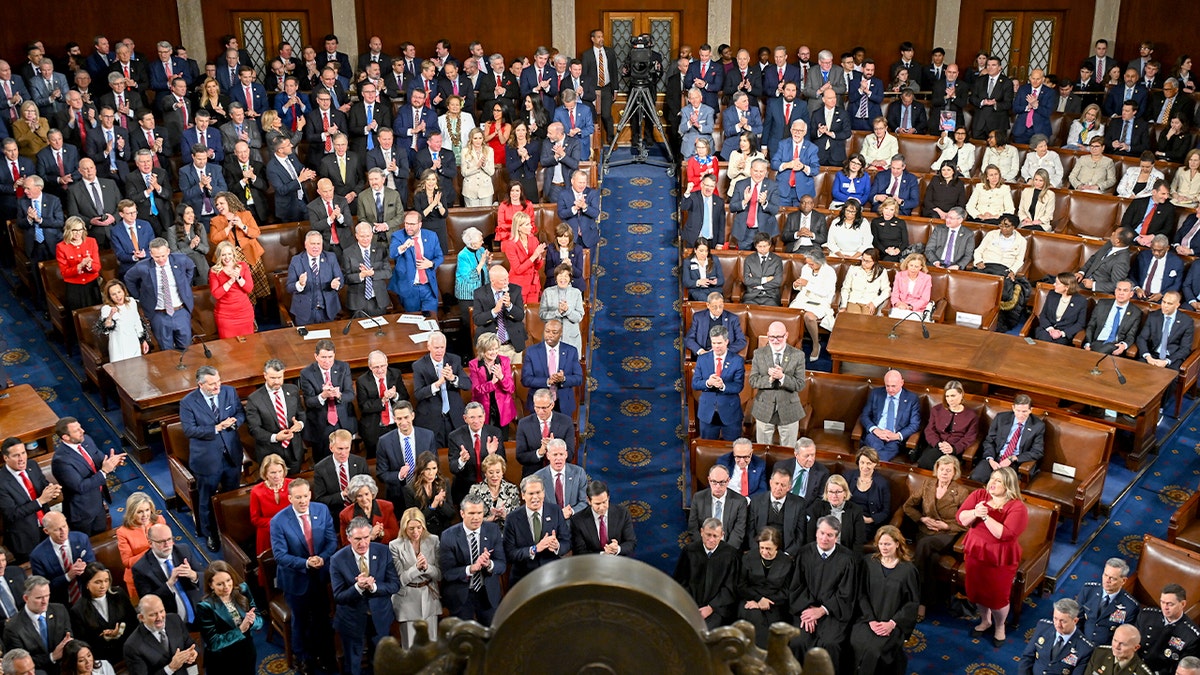
Lawmakers attend the State of the Union address in the House Chamber of the U.S. Capitol on Feb. 24, 2026, in Washington, D.C. (Graeme Sloan/Bloomberg via Getty Images)
The Stop Insider Trading Act would go beyond the current rules members of Congress must follow when trading on the stock market, ushered in by the 2012 STOCK Act. Since 2012, lawmakers have attempted to implement tighter federal restrictions to no avail.
While Trump’s urging to get the latest restrictions passed was one of the rare moments that Democrats appeared to applaud the president during his SOTU speech, left-wing nonprofit groups have simultaneously argued that the Stop Insider Trading Act does not actually go far enough to stop insider trading.
«Passing SITA would hide insider trading instead of stopping it, leading to the same concerns we see today,» said a statement earlier this month from Citizens for Responsibility and Ethics in Washington (CREW). «The only path forward that can rejuvenate the American people’s faith in Congress is serious reform though meaningful bipartisan cooperation.»
CLICK HERE TO DOWNLOAD THE FOX NEWS APP
CREW points to a bill it believes would do a better job at reining in insider trading among lawmakers called the Restore Trust in Congress Act, which «effectively bans members of Congress from buying, selling and owning stocks and their equivalents and ends the conflicts of interest that have plagued Congress for far too long.»
«Abandoning viable, bipartisan legislation in favor of partisanship and ineffectual half measures would be a political and ethical failure that would further erode Americans’ trust in government,» CREW insisted.
Fox News Digital’s Marc Tamasco contributed to this report.
Related Article
state of the union,congress,democrats,democrats senate,elizabeth warren,nancy pelosi
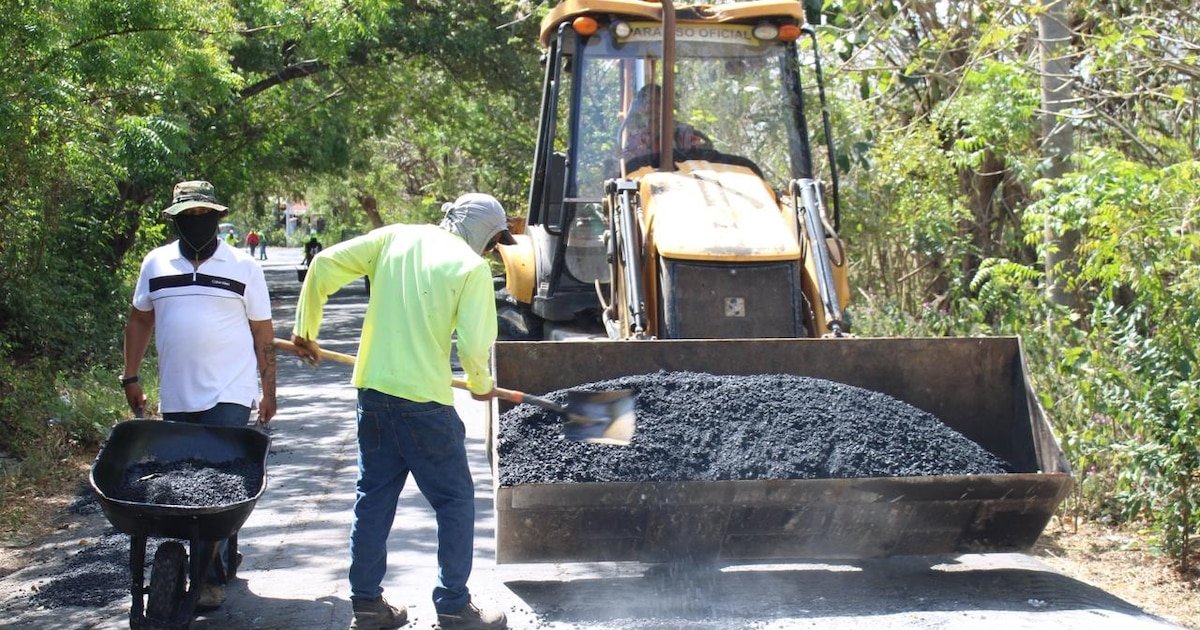
La Asamblea Nacional de Panamá volvió a aprobar en tercer debate el Proyecto de Ley 78, una iniciativa que busca incorporar neumáticos fuera de uso y otros materiales reciclados en la mezcla asfáltica para la construcción, rehabilitación y mantenimiento de la red vial del país, luego de que la norma fuera objetada parcialmente por el presidente José Raúl Mulino por razones de inconveniencia institucional.
La propuesta legislativa apunta a introducir una transformación en la infraestructura vial, combinando objetivos de economía circular, sostenibilidad ambiental y mejora de la durabilidad de las carreteras, en un contexto donde múltiples zonas del país, especialmente áreas rurales y apartadas de la capital, presentan deficiencias estructurales en sus vías o ausencia total de pavimentación.
De acuerdo con el texto del proyecto, la ley establece la utilización de productos reciclados de neumáticos fuera de uso (NFU) y material fresado o reciclado de pavimentos (RAP) en las mezclas asfálticas, con el fin de reducir la contaminación ambiental, disminuir costos y mejorar la calidad de la red vial nacional.
La norma integra el concepto de economía circular, permitiendo el aprovechamiento de residuos sólidos que actualmente representan un problema de gestión ambiental en el país.

Entre los aspectos centrales, la ley dispone que el Ministerio de Obras Públicas (MOP) determine las rutas y proyectos donde se aplicará la tecnología, además de fortalecer el departamento de ensayo de materiales, responsable de validar la calidad del producto reciclado y su desempeño técnico en el pavimento. También se establece que los materiales reciclados deben provenir del consumo local, prohibiendo su importación, con el objetivo de impulsar la industria nacional del reciclaje.
El proyecto fija además un porcentaje mínimo de aplicación de materiales reciclados en la red vial, incorporando neumáticos fuera de uso y pavimentos reciclados dentro del plan anual de trabajo del MOP, lo que representa un cambio estructural en la política de construcción de carreteras en Panamá y abre un mercado potencial para empresas dedicadas al reciclaje.
El Proyecto de Ley 78 establece parámetros técnicos mínimos para la incorporación de materiales reciclados en la mezcla asfáltica, fijando como referencia un porcentaje base de al menos 5% de neumáticos reciclados y 5% de material asfáltico recuperado (RAP).
La norma busca introducir gradualmente la mezcla modificada en la red vial nacional, priorizando proyectos de construcción, rehabilitación y mantenimiento, con el objetivo de mejorar la resistencia del pavimento, reducir costos y dar salida al creciente volumen de llantas fuera de uso en el país.

El proyecto fue aprobado inicialmente en septiembre, objetado parcialmente por el Ejecutivo y nuevamente avalado tras modificaciones. Tomada de la Asamblea Nacional
Sin embargo, pese a su aprobación inicial en septiembre, el Órgano Ejecutivo devolvió la norma sin sanción, formulando una objeción parcial basada en la existencia de vicios en la distribución de competencias institucionales. En particular, el Ejecutivo advirtió que el proyecto asignaba funciones al MOP que corresponden a otras entidades, como la Autoridad de Aseo Urbano y Domiciliario y el Ministerio de Comercio e Industrias, especialmente en materia de trazabilidad, certificación y control de residuos sólidos.
Entre las observaciones, se objetó el artículo que extendía la obligatoriedad del uso de materiales reciclados a obras privadas y contratistas independientes, planteando que la política debía circunscribirse inicialmente a proyectos estatales. Asimismo, se cuestionó la facultad del MOP para validar el producto reciclado sin considerar la participación de otras instituciones regulatorias, lo que generaba riesgos de duplicidad de funciones.
Tras el análisis legislativo de las objeciones, el proyecto fue modificado y nuevamente aprobado en segundo y tercer debate, incorporando ajustes para clarificar la distribución de competencias, reforzar la coordinación interinstitucional y garantizar que la implementación de la ley respete el marco regulatorio vigente en materia ambiental, sanitaria e industrial.

La normativa también introduce mecanismos de fiscalización, certificación técnica y reporte anual, obligando tanto al MOP como a las empresas recicladoras a presentar informes sobre el volumen de material reciclado utilizado, su origen y tratamiento previo, con el objetivo de asegurar transparencia y trazabilidad en el proceso.
Además, la ley prevé que los vertederos puedan aceptar neumáticos fuera de uso bajo condiciones reguladas, promoviendo su reutilización y evitando su disposición inadecuada, lo que representa una medida clave para enfrentar el problema de acumulación de llantas en el país y su impacto ambiental.
Con su nueva aprobación legislativa, el proyecto será remitido nuevamente al Ejecutivo para su sanción, lo que abre la fase final del proceso y determinará si Panamá adopta formalmente una política nacional de pavimentación con materiales reciclados, una tendencia que ya ha sido implementada en diversos países y que busca mejorar la resiliencia de las carreteras, reducir emisiones y optimizar recursos.
En el plano práctico, la ley podría tener efectos directos en la mejora de la conectividad rural, la reducción de costos de mantenimiento vial y la creación de nuevas oportunidades en la industria del reciclaje, aunque su éxito dependerá de la reglamentación, la capacidad técnica del Estado y la articulación entre instituciones responsables.

A nivel mundial, el uso de neumáticos reciclados en pavimentación se ha consolidado como una de las principales soluciones para la gestión de este residuo. Cada año se generan cerca de 1,000 millones de neumáticos fuera de uso en el mundo, lo que equivale a unas 17 millones de toneladas de desechos, convirtiéndose en un desafío ambiental significativo.
En este contexto, el asfalto con caucho reciclado representa el mayor mercado de reutilización del material, especialmente en Estados Unidos, donde se consumen alrededor de 12 millones de neumáticos anualmente en la producción de mezclas asfálticas.
Además, el mercado global del asfalto reciclado muestra una tendencia de crecimiento sostenido impulsada por políticas de infraestructura sostenible y economía circular, con una expansión estimada hasta 2030 debido a su capacidad para reducir emisiones, costos y consumo de agregados naturales.
Diversos países ya han implementado esta tecnología en sus redes viales. Estados Unidos fue pionero en su aplicación desde la década de 1960 en Arizona, mientras que naciones europeas utilizan mezclas con polvo de caucho para mejorar la resistencia del pavimento y reducir el ruido del tráfico.
En Asia, América Latina y Europa se ha extendido el uso del asfalto modificado con neumáticos por su mayor durabilidad y desempeño mecánico, lo que permite carreteras más silenciosas y con menor deterioro.
carretilla elevadora,exterior,hombre,planta de reciclaje de neumáticos,toro elevador,trabajadores

¿Un dólar aún más barato? La trastienda de los flujos que están desplomando el tipo de cambio

Newell’s confirmó la llegada de su nuevo DT tras el despido de Orsi-Gómez: debutará el domingo en el clásico ante Rosario Central

Senado: el Gobierno busca la ratificación del acuerdo Mercosur-Unión Europea y avanzar con la reforma de la ley de glaciares

Causa Cuadernos: en medio de los intentos de los acusados por anular el juicio, la fiscalía busca acelerar las audiencias

¡La pelea Margelita! Marcos Giles culpó a Angela Torres por la crisis: «Todo el tiempo me hablaba del ex y las cosas que hacían»

Qué cambia con la nueva ley de Glaciares que el Senado tratará este jueves

Jorge Macri prepara su discurso para abrir el año legislativo: el deseo de reelección y el espejo en Bukele

Daiana Fernández Molero defendió la reforma laboral: “Va a haber mayor creación de empleo porque va a ser más fácil contratar en blanco”

Uno por uno, todos los famosos que saludaron a Mirtha Legrand por sus 99 años

Crisis en la industria: otra multinacional se achica y cierra una planta en la Argentina

 POLITICA1 día ago
Jorge Macri prepara su discurso para abrir el año legislativo: el deseo de reelección y el espejo en Bukele
- POLITICA3 días ago
Daiana Fernández Molero defendió la reforma laboral: “Va a haber mayor creación de empleo porque va a ser más fácil contratar en blanco”
- CHIMENTOS2 días ago
Uno por uno, todos los famosos que saludaron a Mirtha Legrand por sus 99 años