INTERNACIONAL
US seeks UN authorization for Gaza international force lasting through 2027 under Trump plan

NEWYou can now listen to Fox News articles!
The United States has taken its Gaza plan to the U.N. Security Council and is now pushing for formal United Nations authorization of a sweeping, multi-year international force that would govern security in the Strip through at least 2027.
The move, which the administration says is necessary to implement President Donald Trump’s 20-point plan, represents one of Washington’s most significant decisions in years to place the United Nations at the center of a major Middle East security framework.
In a statement, the U.S. Mission to the U.N. said the draft was written with input from Qatar, Egypt, Saudi Arabia, Turkey and the United Arab Emirates. The Mission said the goal is to «bring to fruition President Trump’s historic 20 Point Comprehensive Plan,» which was supported by more than 20 countries at a summit in Sharm el-Sheikh on Oct. 13.
UN AMBASSADOR WALTZ REVEALS TRUMP’S MIDDLE EAST PEACE PLAN IS ‘THE ONLY WAY FORWARD’
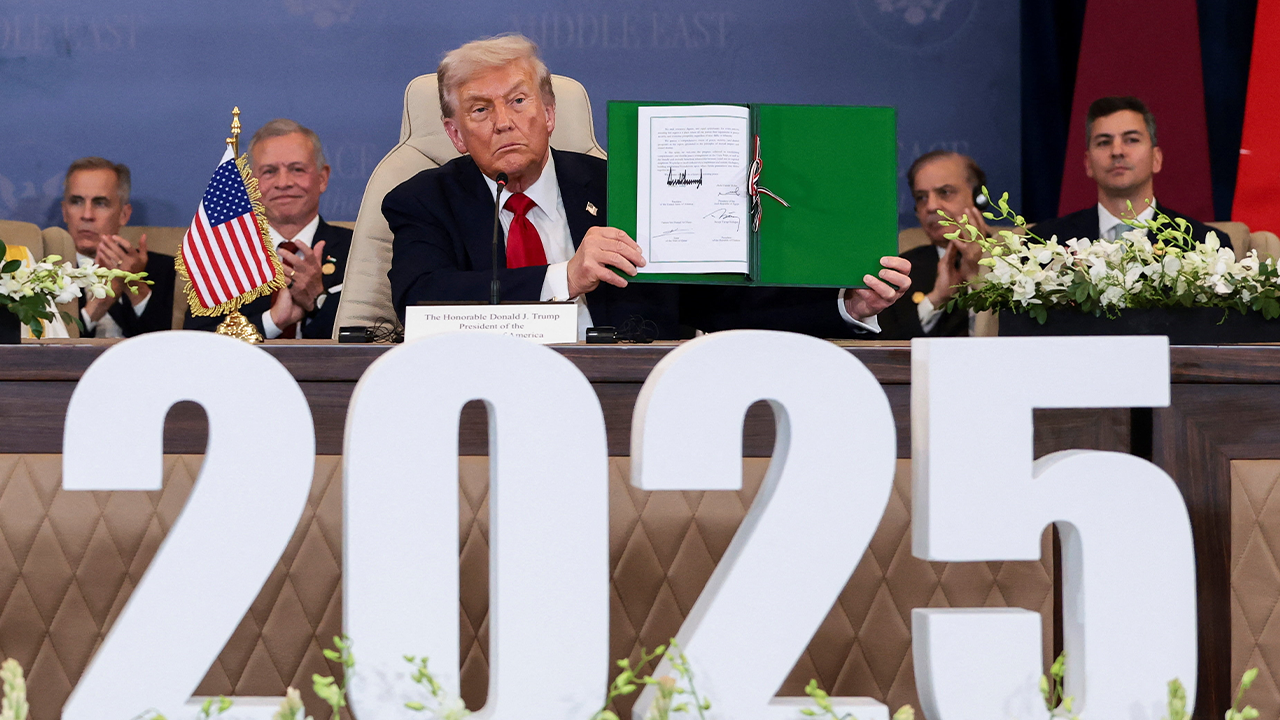
U.S. President Donald Trump poses with the signed agreement at a world leaders’ summit on ending the Gaza war, amid a U.S.-brokered prisoner-hostage swap and ceasefire deal between Israel and Hamas, in Sharm el-Sheikh, Egypt, Oct. 13, 2025. (Suzanne Plunkett/Reuters )
Negotiations with Security Council members began in the first week of November to «stand up the International Stabilization Force and begin a stable, secure, peaceful and prosperous future for Palestinians in Gaza, free of Hamas.» The Mission added that the ceasefire remains «fragile» and delays «have grave, tangible, and entirely avoidable consequences for Palestinians in Gaza.»
New details reported by Axios reveal the scope of the U.S. proposal. According to a draft labeled «sensitive but unclassified,» the resolution would establish an International Security Force in Gaza for at least two years, with a mandate extending through the end of 2027 and the possibility of extensions. A U.S. official told Axios the plan is to vote on the resolution within weeks and deploy the first troops by January, describing the force as «an enforcement force and not a peacekeeping force.»
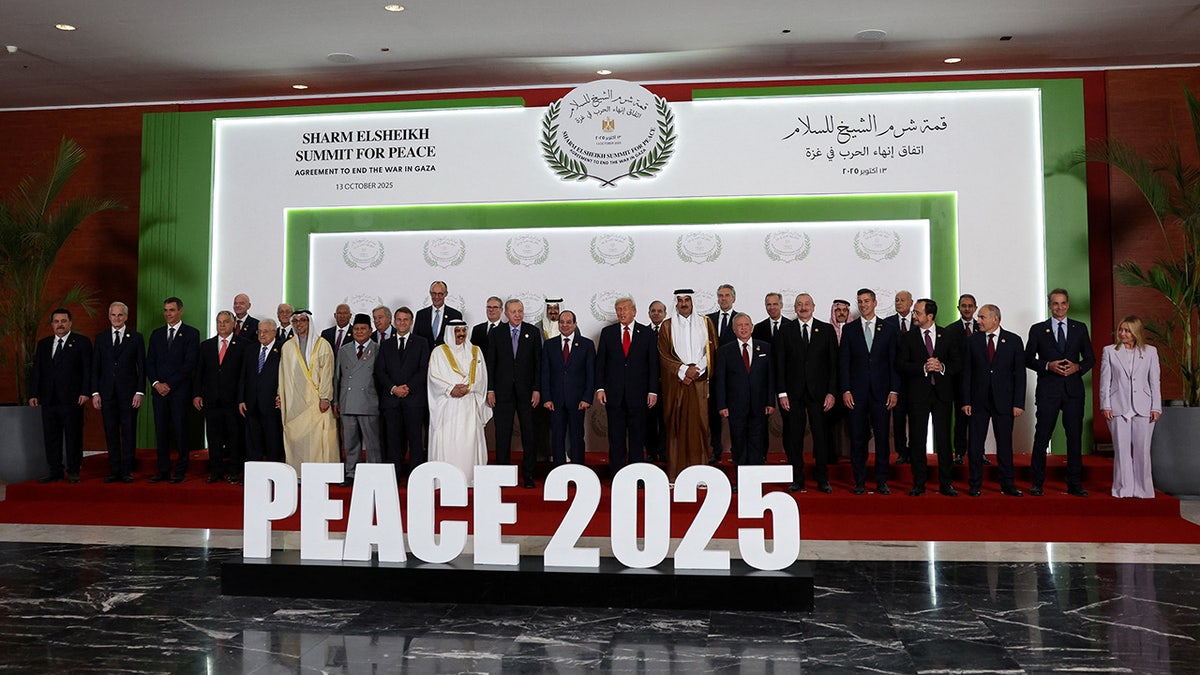
World leaders, including U.S. President Donald Trump and Egypt’s President Abdel Fattah al-Sisi, pose for a family photo, at a world leaders’ summit on ending the Gaza war, amid a U.S.-brokered prisoner-hostage swap and ceasefire deal between Israel and Hamas, in Sharm el-Sheikh, Egypt, Oct. 13, 2025. (Suzanne Plunkett/Reuters Pool)
US MILITARY TO OVERSEE NEXT PHASE OF PEACE DEAL FROM COORDINATION BASE IN ISRAEL
Robert Satloff, executive director of the Washington Institute for Near East Policy, told Fox News Digital the U.S. went to the U.N. because several states Washington hopes will contribute troops require a Security Council mandate.
«The decision to go to the United Nations was driven principally by the request of participating states, states that the United States hopes will participate in the stabilization force who need a U.N. mandate to help them politically, to dispatch forces eventually to Gaza. So that’s the real origin of this, to enable, to give a political umbrella to participating states to play a role in the stabilization force.»
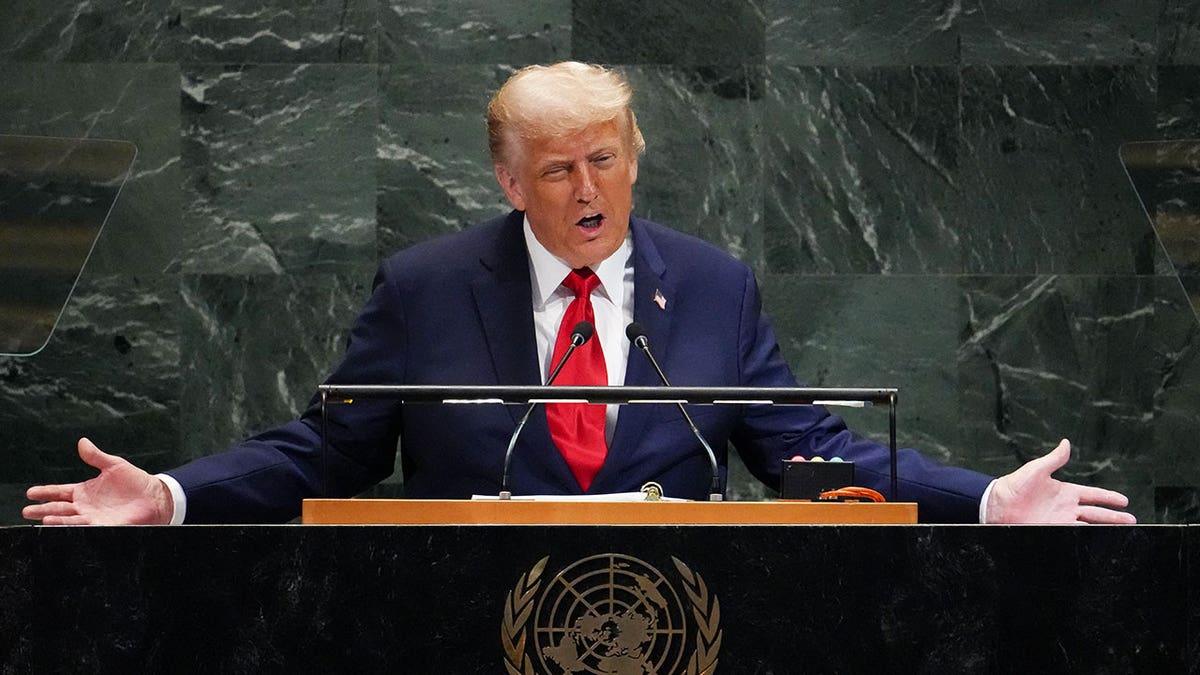
U.S. President Donald Trump delivers remarks to the United Nations General Assembly at the UN headquarters in New York City on Sept. 23, 2025. (Timothy A. Clary/AFP via Getty Images)
Satloff said that although Israel has voiced real concerns about U.N. involvement, it understands why Washington believes the mandate is essential. «There’s no doubt that involving the United Nations has its own complications, and I think that the Israelis have been pretty vocal about this. But they also appreciate that the United States believes it needs this sort of endorsement for the 20-point plan to move forward. The Israelis want to make sure that these complications don’t overwhelm the benefits of the plan. Which is a legitimate concern.»
He warned that the plan faces major challenges but urged against pessimism. «There are enormous obstacles to the implementation of the entire plan. The U.N. aspect of it is just one of them. We’re already seeing some fundamental disagreement over, say, the definition of disarmament, which could derail the whole effort. Now, I think one has to be hopeful. The opportunity here is huge. The desire to find solutions among the states that are committed to this is real and serious. So, while it’s totally legitimate to recognize the significant obstacles, I don’t think that we should get negative about the prospects here.»
EXPERTS URGE TRUMP TO BAN TERROR-LINKED UN AGENCY FROM HIS GAZA PEACE PLAN
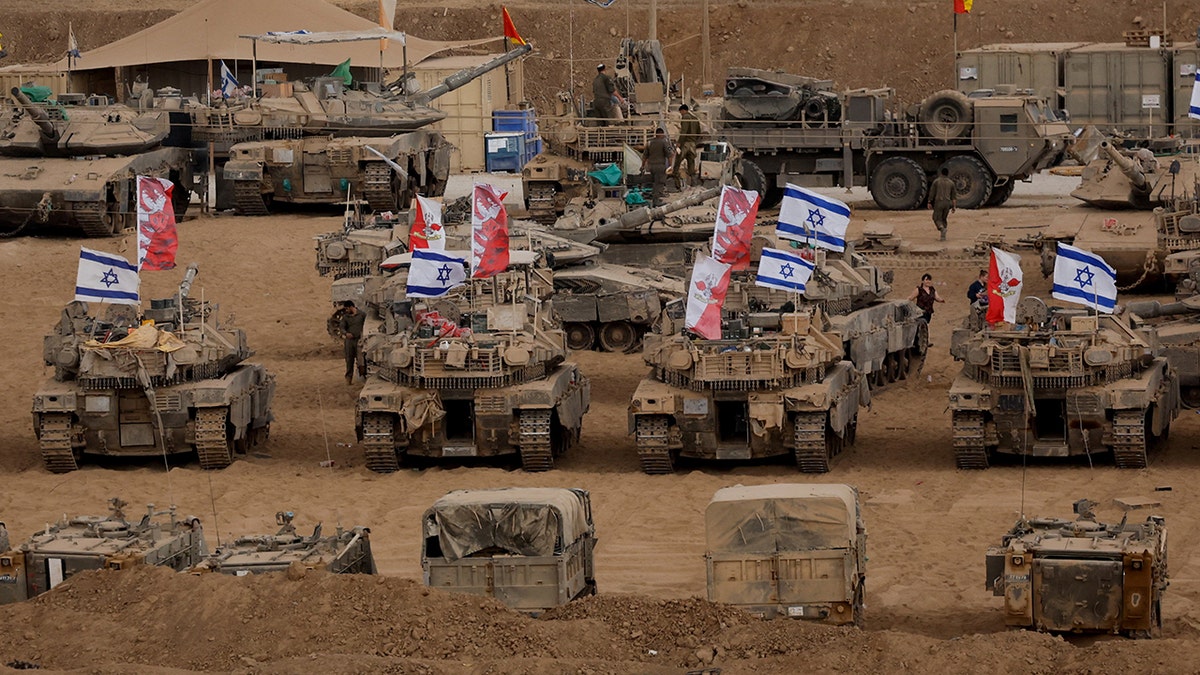
Military vehicles are gathered near the Israel-Gaza border, amid a ceasefire between Israel and Hamas, in southern Israel on Oct. 12, 2025. (Ammar Awad/Reuters)
Anne Bayefsky, Director of the Touro Institute on Human Rights and the Holocaust and President of Human Rights Voices, offered a starkly different view. Bayefsky told Fox News Digital: «Incredibly, the United States has subjected its plans for Gaza to U.N. authorization and oversight. Arab countries claimed U.N. involvement was ‘necessary’ for them to participate and support the Gaza international force. That was a lie and blatant power grab. The proof is in the text which could have been a one-liner noting, with approval, a non-U. N. initiative. Instead, the resolution is a long-list of orders doing enormous harm to Israeli national security, sovereignty and right of self-defense, hamstringing America’s range of action by a web of agencies and involvement antithetical to U.S. interests and peace.»
She said the move is «an about-face for American foreign policy on the United Nations and the Arab-Israeli conflict,» and argued that the United Nations «has repeatedly demonstrated its antisemitic bias, lack of good faith and support for Palestinian aggression.» Bayefsky added that the draft «fails to condemn Hamas» and «refuses to acknowledge and affirm Israel’s U.N. Charter right of self-defense before granting the treacherous U.N. unprecedented influence,» calling the omission «devastating to the prospects of real peace.»
CLICK HERE TO DOWNLOAD THE FOX NEWS APP
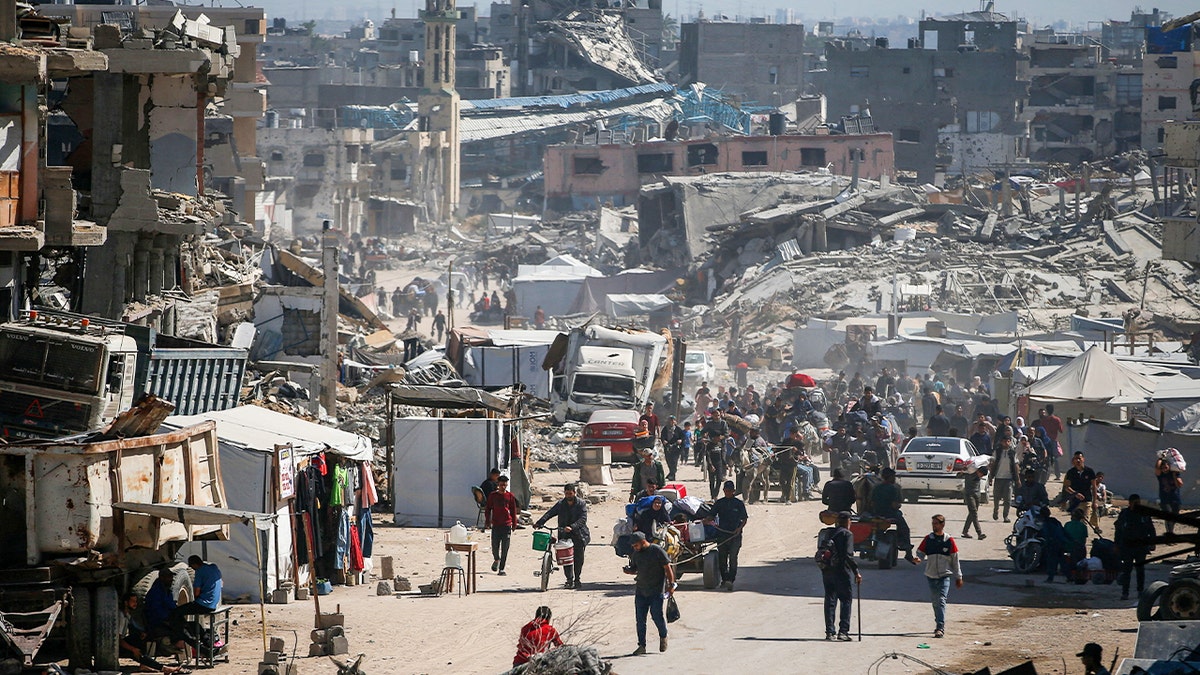
Palestinians make their way with belongings as they fled their homes, after Israeli air strikes, in the northern Gaza Strip on May 16, 2025. (REUTERS/Mahmoud Issa)
Russia, however, has countered with its own draft resolution that strikes a profoundly different tone. Moscow’s draft demands an immediate and unconditional ceasefire, the withdrawal of all foreign forces from Gaza, and the deployment of a U.N. peacekeeping mission under the Secretary-General’s authority and with the consent of the parties involved.
The draft also says it reaffirms the 1967 borders and East Jerusalem as the capital of a future Palestinian state and insists that Gaza’s reconstruction must take place under Palestinian leadership and sovereignty, not through externally managed institutions. Unlike the American proposal, it contains no provisions for demilitarization or interim foreign governance, instead centering on «humanitarian relief and international law.»
Fox News Digital was referred by the White House and State Department to the U.S. Mission to the U.N. for comment.
middle east,security council,world,donald trump,hamas







INTERNACIONAL
Zelensky exigió a Rusia detener los ataques sobre infraestructuras energéticas para avanzar hacia un alto el fuego
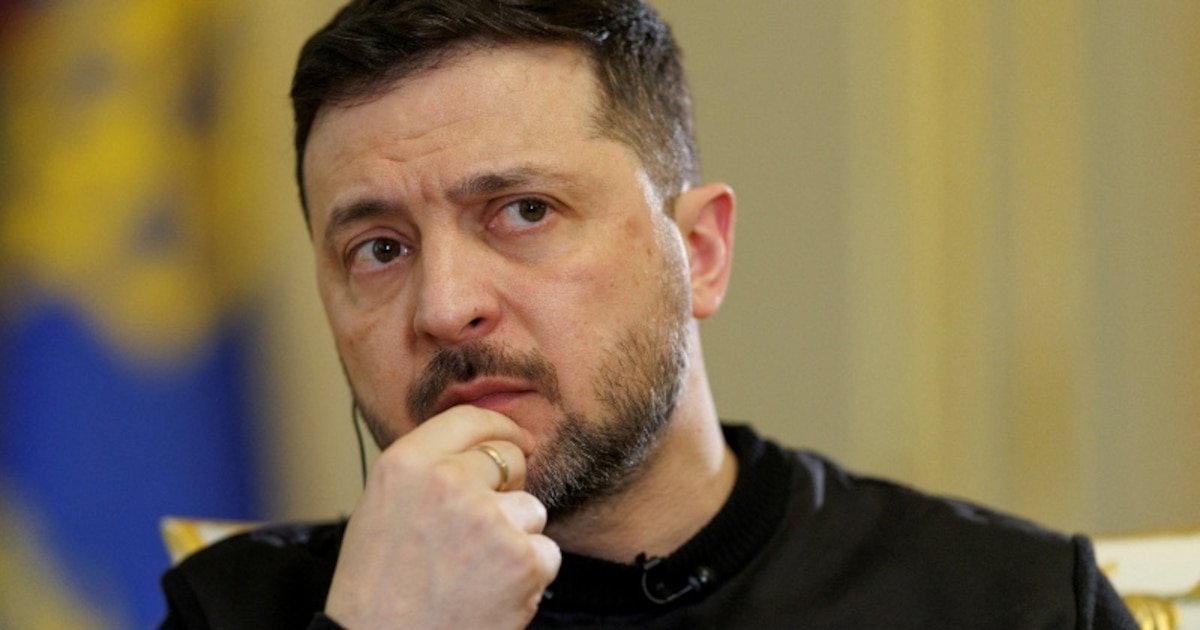
El presidente de Ucrania, Volodimir Zelensky, propuso este lunes a Rusia la posibilidad de una tregua únicamente si se detienen por completo los ataques dirigidos a la infraestructura energética ucraniana.
“Si Rusia está dispuesta a frenar los golpes sobre nuestra red eléctrica, nosotros también responderemos en la misma medida”, afirmó el mandatario en su mensaje diario.
Según Zelensky, la propuesta fue transmitida a Moscú a través de mediadores estadounidenses y constituye el único escenario en el que Kiev contempla un cese de hostilidades.
La iniciativa de alto el fuego surge tras una nueva ola de ataques rusos que devastaron varias regiones y dejaron víctimas civiles en Odesa, donde un bombardeo nocturno mató a tres personas, incluido un niño pequeño.
“Hemos ofrecido reiteradamente a Rusia una pausa, al menos durante la Pascua, un periodo especial para ambos pueblos. Pero para ellos, todos los días son iguales. Nada es sagrado”, lamentó el presidente de Ucrania.
El Kremlin respondió fríamente a la propuesta anterior, indicando que sólo consideraría una negociación para un acuerdo de paz total.

Zelensky también subrayó que las conversaciones con Estados Unidos continúan centradas en lograr garantías de seguridad duraderas para Ucrania.
“Trabajamos junto a los negociadores estadounidenses en mecanismos que aseguren la estabilidad futura. Ese es el factor clave para una paz real”, explicó, al tiempo que destacó la importancia de la cooperación internacional en el contexto actual.
Durante la última semana, Rusia intensificó sus ataques con drones y misiles sobre infraestructuras vitales en las provincias de Kharkiv, Chernigov, Sumi y Dnipró. El presidente detalló que, solo en la noche previa, fueron lanzados más de 140 drones, de los cuales cerca de 80 eran del tipo Shahed, de fabricación iraní.
Zelensky denunció que “en algunas zonas, los bombardeos continúan. Esto representa apenas una muestra del sufrimiento diario de nuestra población”. Añadió que, en los últimos siete días, el país sufrió el impacto de más de 2.800 drones de ataque, 1.350 bombas aéreas guiadas y más de 40 misiles.
El ataque más reciente en Odesa resultó particularmente grave para la población civil. Según Zelensky, “los drones rusos impactaron edificios residenciales, una guardería infantil y una subestación eléctrica. Miles de familias han quedado sin luz, y los equipos de reparación llevan horas trabajando sin descanso para restablecer el suministro”.

La cifra oficial de heridos ascendió a 16, entre ellos dos menores y una mujer embarazada.
El presidente ucraniano insistió en la necesidad de reforzar las defensas aéreas del país. “En este momento, todos los socios internacionales deben redoblar esfuerzos y aportar más sistemas para interceptar drones y misiles. Mejorar la protección de nuestros cielos no solo protege a Ucrania, sino que también es una inversión en la seguridad de Europa”, subrayó.
En paralelo, las autoridades rusas informaron sobre un ataque con drones lanzado desde Ucrania contra la ciudad portuaria de Novorossiysk, en la región de Krasnodar, que dejó ocho heridos, entre ellos dos niños. Las imágenes publicadas muestran daños visibles en la parte superior de un edificio residencial, con ventanas y balcones destruidos por la explosión.
A pesar del aumento de los ataques rusos y de la negativa de Moscú a aceptar la tregua propuesta, Zelensky reiteró que Ucrania mantiene abierta la vía diplomática, siempre que se respeten condiciones mínimas que garanticen la protección de la infraestructura civil.
“Nuestra disposición a negociar depende de la voluntad de Rusia para detener la destrucción de instalaciones energéticas y evitar más víctimas inocentes”, concluyó el presidente.
(Con información de Reuters y EFE)
Europe,Military Conflicts
INTERNACIONAL
Obama Center takes heat as critics cry foul over ID rules for free entry — while Dems blast voter ID laws
NEWYou can now listen to Fox News articles!
The Obama Presidential Center is facing a wave of backlash ahead of its opening, with critics blasting its admission policies and raising broader concerns about the project’s cost and management.
Conservative commentators on social media are taking aim at the center’s requirement that Illinois residents show valid identification to receive free admission on certain days, arguing it contrasts with Democratic opposition to voter ID laws.
«They’re making you show ID… to visit the Obama Library… in Chicago. You can’t make this stuff up!» one social media user wrote.
«The Obama Presidential Library is making people show an ID for proof of Illinois residency to get in for free,» another posted. «So residents have to prove who they are for this, but not to vote?»
VALERIE JARRETT REVEALS THAT PRESIDENT TRUMP ISN’T INVITED TO OBAMA PRESIDENTIAL CENTER OPENING CEREMONY
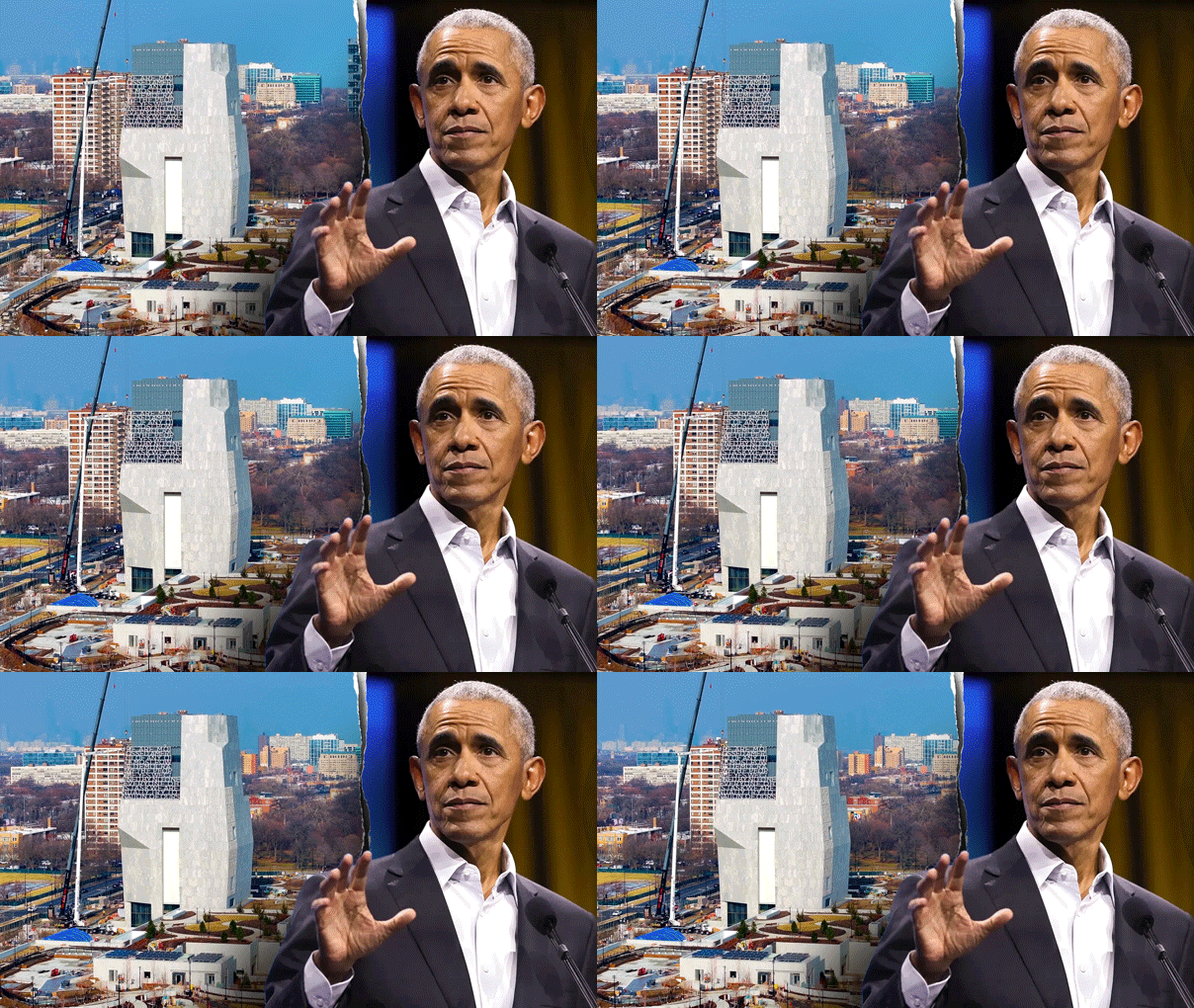
The text of former President Obama’s speech marking the 50th anniversary of «Bloody Sunday» in Selma, Alabama, is wrapped around the side of the upcoming presidential center in Chicago. (E. Jason Wambsgans/Chicago Tribune/Tribune News Service)
Others echoed the sentiment more bluntly, with one account writing: «It turns out Democrats support requiring ID… but only for free admission into Obama’s library.»
Obama’s website clearly states that Illinois residents «must be able to provide proof of residency. Be prepared to show proof of residency at the Museum with a valid photo ID, Illinois driver’s license, state ID, or city-issued ID.»
Critics have also pointed to reported restrictions tied to early ticket giveaways, including claims that some promotions are limited to U.S. citizens or lawful permanent residents.
The latest controversy builds on a string of prior criticisms surrounding the $850 million project.
OBAMA PRESIDENTIAL CENTER SLAMMED FOR PROMOTING ‘FAR-LEFT’ AGENDA ON PUBLIC LAND
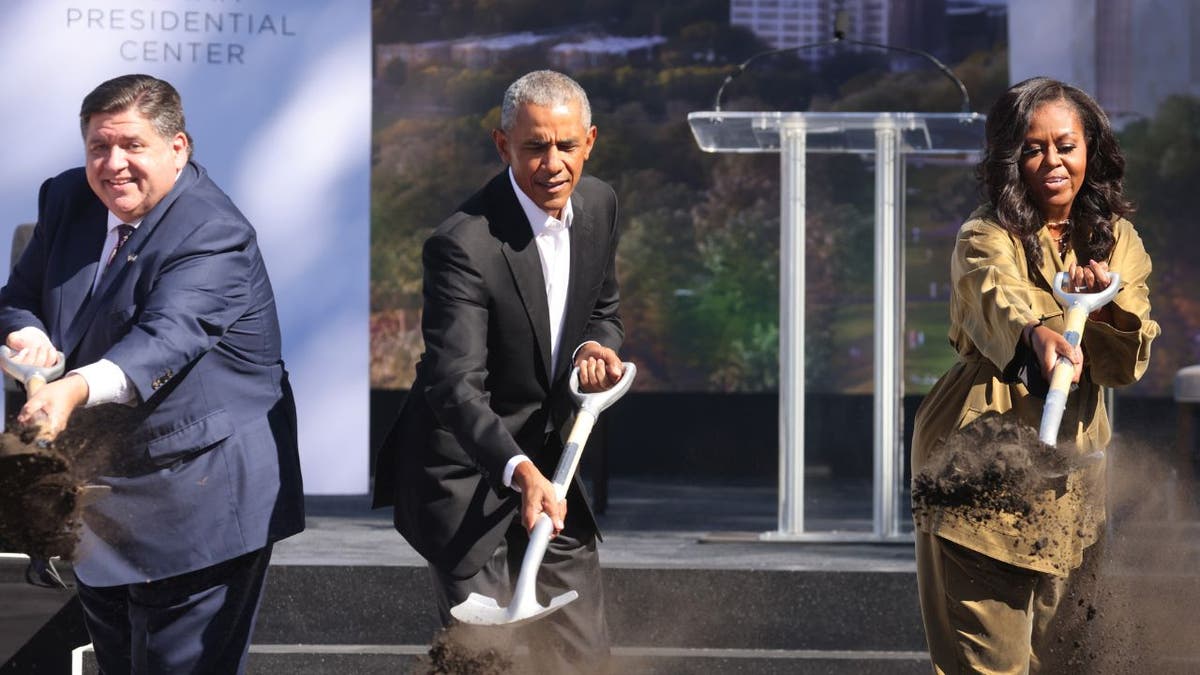
Illinois Governor J.B. Pritzker (L) joins former President Barack Obama and former first lady Michelle Obama in a ceremonial groundbreaking at the Obama Presidential Center in Jackson Park on September 28, 2021, in Chicago. (Scott Olson/Getty Images)
Earlier this year, the Obama Foundation drew backlash after seeking 75 to 100 unpaid volunteers, dubbed «ambassadors,» to help operate the center, even as top executives collect substantial salaries. Federal filings show CEO Valerie Jarrett has earned roughly $740,000 annually in recent years, while overall compensation at the foundation has climbed significantly.
The project has also faced mounting scrutiny over its financial impact on taxpayers.
Former President Barack Obama once described the center as a «gift» to Chicago, emphasizing it would be privately funded. While construction of the 19.3-acre campus is being financed through private donations, the surrounding infrastructure needed to support the site, including road redesigns, utility relocations and drainage systems, is being paid for with public funds.
Early estimates put those infrastructure costs at roughly $350 million, split between the city and state. But more recent figures show Illinois alone has committed approximately $229 million, while Chicago has allocated more than $200 million in related improvements — though officials have not provided a clear, consolidated total of taxpayer spending tied to the project.
GOT A TIP?

Exterior view of the Obama Presidential Center tower under construction in Chicago. (Fox 32 Chicago)
«No single agency appears to oversee the full scope» of the infrastructure work, and critics say the lack of transparency has made it difficult to determine the true public cost.
Illinois Republican Party Chair Kathy Salvi criticized the project, saying taxpayers are being left «on the hook for hundreds of millions of dollars» while accusing state leaders of mismanagement.
FOLLOW US ON X
The controversy is further fueled by the nature of the site itself. The center sits on nearly 20 acres of historic Jackson Park land transferred under a long-term agreement, with significant roadway changes, including the removal of a major thoroughfare, and utility overhauls required to accommodate the campus.
Foundation officials have defended the project, saying the center is funded by $850 million in private investment and will serve as an economic catalyst for Chicago’s South Side, generating jobs, community programs and public amenities.
GET BREAKING NEWS BY EMAIL
Despite the backlash, the center is pressing ahead with its long-awaited debut.
Tickets for the museum will go on sale April 21 for «Founding Members,» with general public sales beginning May 6. Visitors can reserve timed-entry tickets for dates between June 19 and November 30.
CLICK HERE FOR MORE US NEWS
Admission is set at $30 for adults and $23 for children ages 3 to 11, with discounted rates available for Illinois residents who provide proof of residency. Children 2 and under can enter for free, and Illinois residents will be eligible for free admission on Tuesdays.
All entries will be timed, with officials urging guests to arrive within 10 minutes of their scheduled slot. The museum will feature four levels of exhibits, including a replica Oval Office and the Sky Room.
CLICK HERE TO DOWNLOAD THE FOX NEWS APP
Much of the surrounding campus, including gardens, walking trails, a playground, a Chicago Public Library branch and dozens of newly commissioned artworks, will be free and open to the public.
Fox News Digital reached out to the Obama Foundation and the Barack Obama Presidential Library for comment.
Fox News Digital’s Michael Dorgan contributed to this report.
infrastructure across america, museums exhibits, chicago, barack obama, illinois
INTERNACIONAL
La nueva guerra contra las drogas: cómo Internet se convirtió en libro de recetas para el narcotráfico
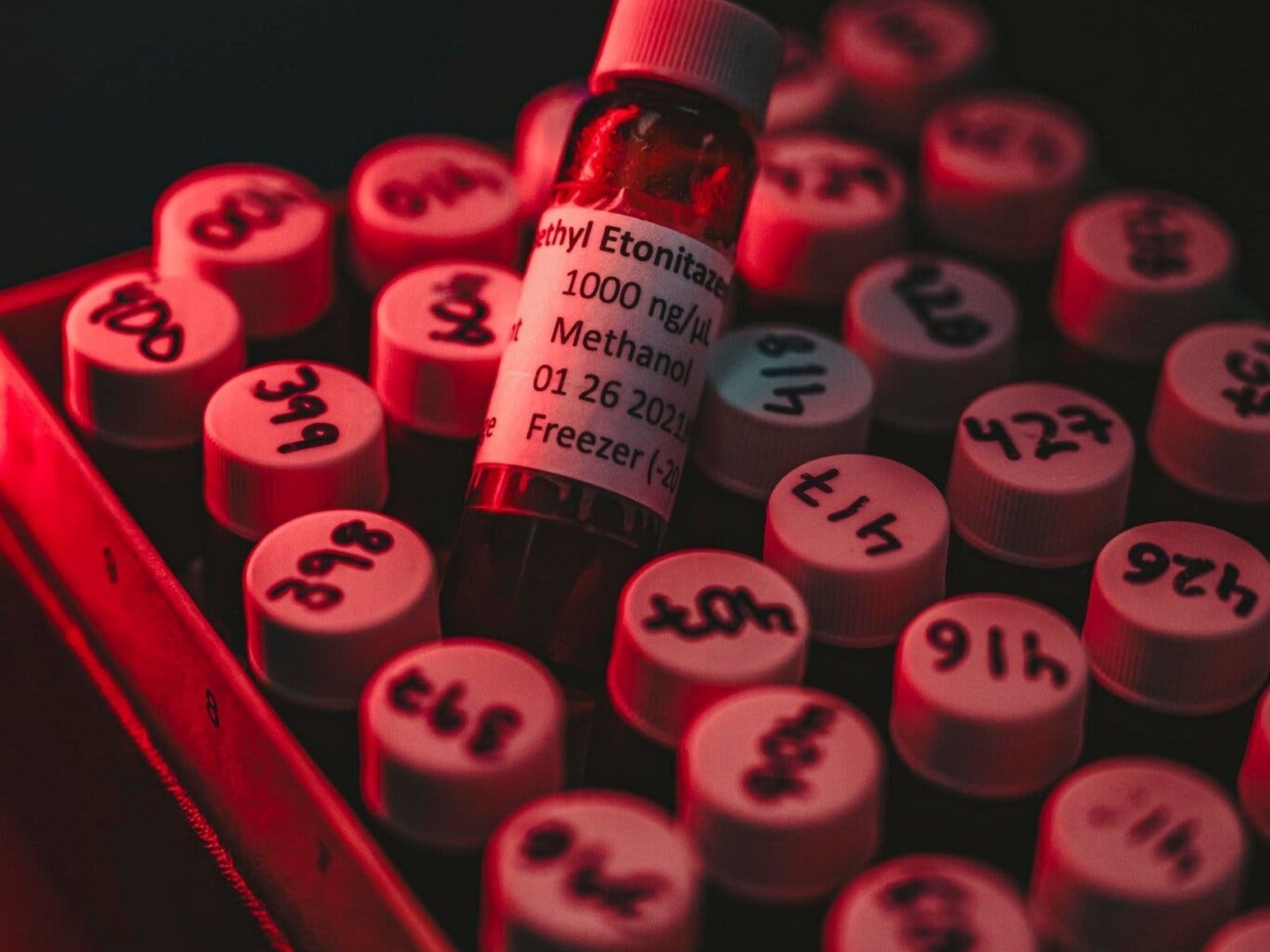
Una frontera sintética
El surgimiento de los nitazenos

«¿Por qué esperamos?”
El círculo se estrecha
Enfrentando el pasado

Zelensky exigió a Rusia detener los ataques sobre infraestructuras energéticas para avanzar hacia un alto el fuego

Capcom promete «varios proyectos especiales» para el 20º aniversario de Okami

Qué sueldo tiene que ganar una familia para pertenecer al 10% con mayores ingresos

Policías de Misiones exonerados se encadenaron a Casa de Gobierno y piden ser reincorporados a la fuerza

La fiscalía ordenó nuevas medidas de prueba para investigar a Adorni

Carla Markus, la sorpresa en la nueva era de la Selección Argentina: la historia detrás de su primer llamado

La nueva advertencia de Donald Trump a Irán: «El tiempo se acaba, quedan 48 horas antes del infierno»

Círculo rojo: intrigas en el gabinete, desgaste por el caso Adorni y movimientos inquietantes en el Poder Judicial

Créditos del Banco Nación: el Gobierno reveló que Pettovello echó a Massaccesi porque “mintió”

Caputo habló sobre los créditos del Banco Nación que tomaron sus funcionarios: “No hay nada ilegal ni inmoral”

 INTERNACIONAL2 días ago
La nueva advertencia de Donald Trump a Irán: «El tiempo se acaba, quedan 48 horas antes del infierno»
- POLITICA2 días ago
Círculo rojo: intrigas en el gabinete, desgaste por el caso Adorni y movimientos inquietantes en el Poder Judicial
- POLITICA2 días ago
Créditos del Banco Nación: el Gobierno reveló que Pettovello echó a Massaccesi porque “mintió”