INTERNACIONAL
Vance touts Trump’s tax bill, takes a shot at local Dem senator during Georgia trip


NEWYou can now listen to Fox News articles!
Vice President JD Vance touted the gospel of President Donald Trump’s «big beautiful bill» in Peachtree City, Georgia — and continued to take shots at those from the state who opposed the measure.
Vance’s visit to Georgia comes as he has visited several key districts around the country and has lauded the «big, beautiful bill» while Republicans seek to preserve their slim House majority and potentially pick up a few seats in the high-stakes 2026 midterm elections.
The domestic policy bill included key provisions to permanently establish individual and business tax breaks included in Trump’s 2017 Tax Cuts and Jobs Act, and incorporated new tax deductions to cut duties on tips and overtime pay.
VANCE WARNS OF ‘PENALTY’ FOR DEMS WHO OPPOSED THE ‘BIG, BEAUTIFUL BILL’ AHEAD OF 2026 MIDTERMS
Vice President JD Vance touted the gospel of President Donald Trump’s «big beautiful bill» in Peachtree City, Georgia — and continued to take shots at those from the state who opposed the measure.
«If you’re working hard every single day right here in the United States, or if you’re building a business right here in the United States, you ought to have a tax code that rewards you, instead of punishing you,» Vance said Thursday. «And that’s what happened when we passed the working families tax cut just a couple of months ago.»
All Democrats and five Republicans in both the House and the Senate voted against the massive measure — including Democratic Sen. Jon Ossoff of Georgia. However, Trump signed it into law July 4. As a result, Vance took aim at Ossoff during his visit.
«While Jon Ossoff pretends to be a moderate when he comes to Atlanta, he is a far-left liberal in Washington, D.C., and that’s the only place that it actually counts if you’re a United States senator,» Vance said. «So why don’t we ask Jon Ossoff, why did you vote to raise taxes? Why did you vote to keep illegal aliens on Medicaid? Why did you vote to bankrupt Medicare?»
In July, Vance visited Canton, Ohio, and said that anyone who opposed the «big, beautiful bill» should face consequences ahead of the 2026 midterm elections. Among those who voted against the measure in Ohio was Rep. Emilia Sykes, who represents the city.
«Anybody who voted against it, I think they ought to pay a penalty,» Vance said July 28. «Because they voted against all those great things for the people of Akron and the people of Northeastern Ohio.»
TRUMP SIGNS ‘BIG, BEAUTIFUL’ BILL IN SWEEPING VICTORY FOR SECOND TERM AGENDA, OVERCOMING DEMS AND GOP REBELS
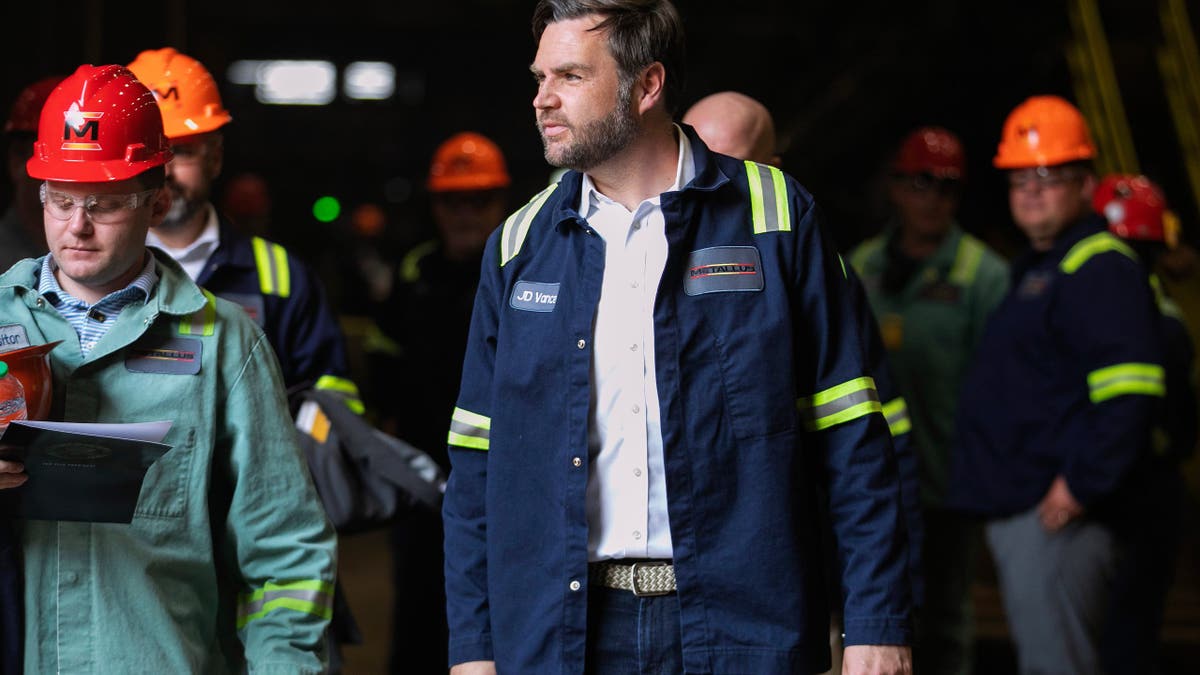
Vice President JD Vance tours the Metallus plant in Canton, Ohio, July 28, 2025.
Vance faces a similar situation in Georgia, where Ossoff has voiced criticism of the measure and is up for reelection in 2026. Critics of Trump’s tax and domestic policy measures have pointed to Medicaid and SNAP reforms included in the bill, which reports suggest would remove millions of beneficiaries from the programs.
Meanwhile, a spokesperson for Ossoff referred Fox News Digital to the senator’s comments at a press conference Thursday, where he cited a local news report claiming that the CEO of a Georgia hospital said it must cut millions from its budget due to Trump’s bill.
JD VANCE POISED TO CLINCH VICTORY FOR TRUMP’S LANDMARK BILL AS GOP FINALIZES STRATEGY

Sen.Jon Ossoff, D-Ga., speaks at a campaign event for President Joe Biden at Pullman Yards on March 9, 2024, in Atlanta, Georgia. (Photo by Megan Varner/Getty Images)
«I think it is embarrassing for the Vice President to be coming to Georgia to sell a policy that is already resulting in harm to hospitals in the state of Georgia, that’s projected to throw more than 100,000 people off of health care in the state of Georgia,» Ossoff said. «Just this week, Evans Memorial Hospital in Southeast Georgia said that because of the bill that the Vice President is here to defend, they’re going to have a $3.5 million financial hole next year. That hospital here in Georgia is now warning that they may have to cut the ICU.»
A Fox News poll released in July found a majority of voters oppose the «big, beautiful bill.» The poll, conducted between July 18 and July 21, found that 58% of all registered voters oppose the measure, while 39% approve of it.
No Democrats supported the «big, beautiful bill,» along with Republican Sens. Susan Collins of Maine, Thom Tillis of North Carolina and Rand Paul of Kentucky, and Republican Reps. Thomas Massie of Kentucky and Brian Fitzpatrick of Pennsylvania.
white house,jd vance,georgia,donald trump,congress





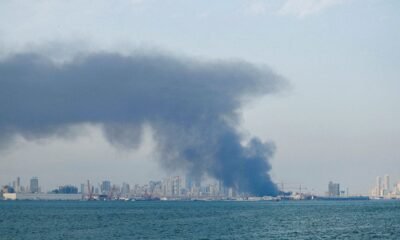







Ese es el titular y ese es el sentido de los ataques coordinados de Israel y Estados Unidos que este 28 de febrero se han producido contra Irán: no buscan objetivos concretos, como la finalización de la carrera nuclear, o la destrucción de los centros de ensamblaje de los misíles balísticos, sino la caída completa del régimen.
La operación ‘Furia épica’, y su homólogo israelí ‘Rugido del León’ no son una reedición de las operaciones bélicas de junio pasado: el ‘León Creciente’ y su par americano, el ‘Martillo de medianoche”. En aquella ocasión se buscaba amedentrar al régimen, herir sus estructuras bélicas y, sobretodo, atacar las instalaciones nucleares de Natanz, Isafhan y la impenetrable Fordow, después de la constatación del nivel de enriquecimiento crítico del uranio que había conseguido Irán. Fue una operación quirúrgica y, por ende, limitada. Pero esta vez, en palabras del propio Trump, la intención es integral: destruir la industria de mísiles iraní, aniquilar su potencial armado, aniquilar toda opción nuclear, destruir la capacidad de desestabilización de sus aliados terroristas y, en definitiva, eliminar completamente la amenaza que supone el régimen de los ayatolas. Es por ello que Trump ha acabado su vídeo de ocho minutos en Truth Social asegurando al pueblo iraní que “la hora de su libertad está a su alcance” y animándolo a tomar las riendas de su destino. Por si hubiera alguna duda, el primer objetivo del ataque ha sido matar al líder supremo Alí Khamenei, cuya situación al momento de escribir el articulo, aún es confusa.
Si esa es la premisa, la caída del régimen de los ayatolás que aterroriza a su población y desestabiliza a toda la región desde 1978, cabe preguntarse si realmente es un objetivo viable y a qué plazo. Sobretodo porque Irán no es Venezuela: tiene capacidad militar poderosa; su guardia revolucionaria y el resto de cuerpos militares y policiales son compactos y están muy bien entrenados; está situado en un zona de enorme valor geoestratégico, capaz de crear grandes sacudidas económicas; tiene objetivos americanos y al propio Israel al alcance de sus misiles, y sus proxies, pueden atacar a sus enemigos desde muchas posiciones. Con todo ello, no parece que pueda tratarse de una guerra corta (de momento, fuentes de seguridad israelí hablan de más de una semana de ataques), aunque la voluntad americana sea acortarla al máximo y centrarla en los ataques aéreos. Pero si el objetivo es la caída del régimen, ¿será suficiente la batalla aérea? Sin duda a nadie le interesa una guerra con infantería, y menos a Trump, que podría encharcar a Estados Unidos en un nuevo Afganistán. No hay que olvidar que Irán tiene 650.000 efectivos activos, una de las infanterías más grandes del mundo. Pero, si imaginar una guerra con infantería es un pésimo propósito, descartarla es imprudente.
Con todo, la superioridad militar de americanos e israelíes en mar y aire está fuera de toda duda y por tanto es imaginable que consigan colapsar el régimen destruyendo todos sus centros estratégicos, tanto militares, como políticos. Lo cual no significa que Irán no pueda ser letal en las próximas horas y días. El éxito militar de USA e Israel se da por seguro. El cuándo se produce y qué consecuencias políticas tiene, es más difuso.
En este sentido, ¿es el momento de atacar Irán? Sin ninguna duda. Primero, porque es el punto final de la guerra que empezó el 7 de octubre de 2023, con la masacre de Hamás en Israel, auspiciada por los ayatollahas. A partir de aquel punto de inflexión, Irán pasó, de ser el enemigo a vigilar, a ser el enemigo a abatir, no solo para Israel, sinó para otros países preocupados por la carrera nuclear y por el potencial que Irán había aconseguido a través de sus proxies: chiitas iraquíes, la Siria de los Asad, el Hezbollah en el Líbano, los huties del Yemen, y los grupos terroristas que actuaban en Gaza. Y ello sin contar con la penetración iraní en América Latina. No había opción para la negociación. Pero la guerra con Irán solo podía producirse si se ocurrían tres grandes sacudidas: si Israel ganaba su propia guerra en el Líbano contra Hezbollah y en Gaza contra Hamás; si caía el régimen sirio; y si llegaba Trump a la Casa Blanca. Todo pasó, y ahora està ocurriendo lo que entonces ya estaba predestinado.
Pero hay más motivos que han desencadenado la decisión final. Por un lado, la constatación de que China y Rusia no tienen ninguna intención de intervenir. Al contrario, necesitan una situación de estabilidad en la región. Por otro lado, la mayoría de países de la región quieren pasar del momento Irán al momento Acuerdos de Abraham, y al consecuente potencial económico que puede generar. Finalmente, la grave crisis económica del país sumada a la extraordinaria y heroica revuelta de los iraníes, cuya valentía han pagado con miles de muertos, han mostrado la extrema debilidad de un régimen enloquecido y delirante que se aguanta por el terror, con la mayoría de la población en su contra. Con un añadido final: la aparición de Reza Pahlavi, cuya popularidad lo convierte en posible referente para el proceso democrático. Estados Unidos no tiene una Delcy en Irán, pero con Pahlavi tiene un puente de transición.
Conclusiones finales, aunque precarias, dada la volatilidad de la situación: la guerra es total y tiene como objetivo el final del regiment de lo ayatollas; Estados Unidos e Israel han desencadenado una fuerza militar colosal, que Irán no puede vencer; la guerra puede durar más de lo que quisiera Trump, porque el régimen la vivirá como una “guerra existencial” e intentará morir matando; es el gran momento de la oposición al régimen, que siempre consideró necesaria la intervención para poder derrocarlo. Finalmente, lo más importante: si cae el régimen, además de liberar al pueblo persa, habrá ganado la causa de la mujer, la causa de los derechos humanos y la siempre eterna y frágil causa de la libertad.
X: @RaholaOficial
Web:
Instagram: pilar_rahola/
Business,Civil Conflict,Demonstrations,Riots,Corporate Events,Europe,Civil Unrest
NEWYou can now listen to Fox News articles!
President Donald Trump’s joint strikes on Iran are exposing a divide in both parties, as several Democrats come to the president’s defense while a handful of Republicans question his constitutional authority.
Trump announced U.S. and Israeli forces targeted Iranian leadership and military sites in the early hours of Saturday morning, catching millions of Americans — and the majority of lawmakers in Congress — by surprise.
A handful of House Democrats are justifying the operation, bucking most of their party, who are calling the operation a reckless and illegal action. On the other hand, at least three Republican lawmakers are signaling that the news gave them some pause as of Saturday morning.
Rep. Greg Landsman, D-Ohio, said that the strikes «are targeting military infrastructure —- with warnings to Iranian civilians to take shelter away from these military targets.»
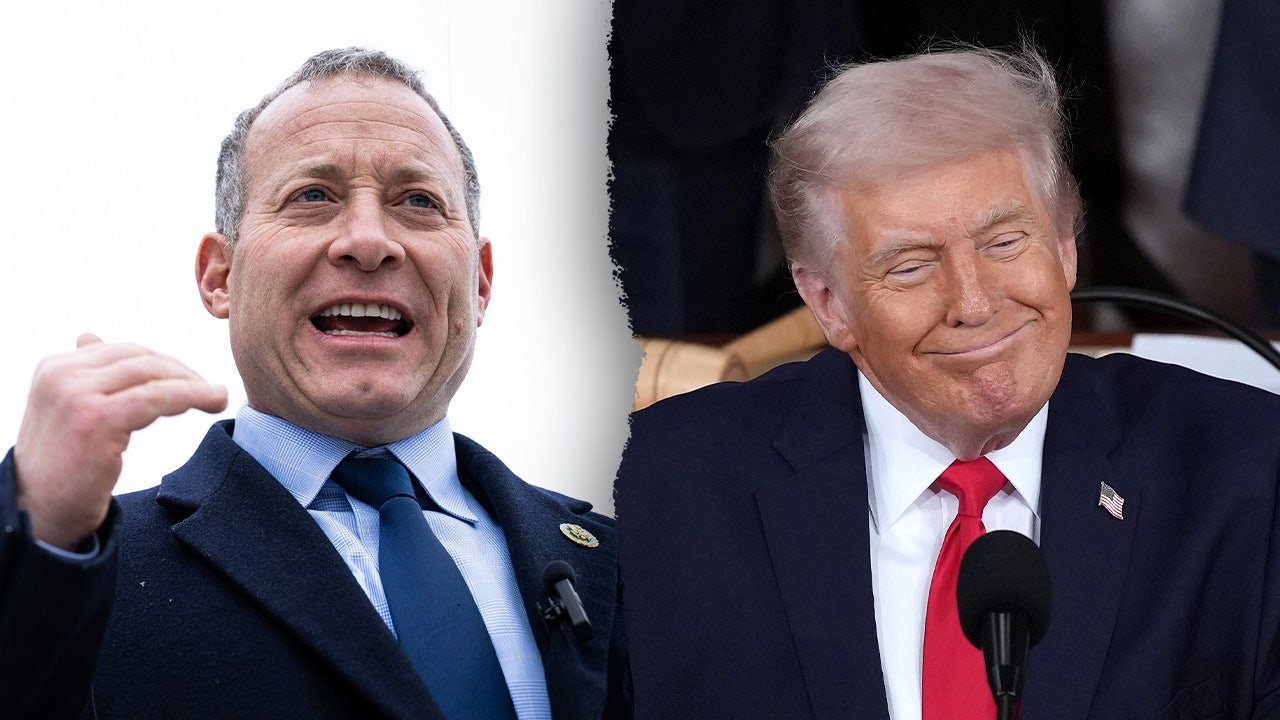
Democrats like Rep. Josh Gottheimer are breaking from their party to justify President Donald Trump’s joint operation with Israel. (Graeme Sloan/Bloomberg via Getty Images; Andrew Harnik/Getty Images)
«I want a lasting peace for everyone in the region — from the Iranian people to the Lebanese, Palestinians, Syrians, Iraqis, Jordanians, and Israelis. I hope these targeted strikes on the Iranian regime’s military assets ends the regime’s mayhem and bloodshed and makes way for this lasting peace in the region,» Landsman said.
«Thank you to our brave service members who are leading this effort, and I pray their work will finally free the people of Iran and those in the region from more violence or war.»
Reps. Tom Suozzi, D-N.Y., and Josh Gottheimer, D-N.J., similarly put the onus on Iran, as did Sens. Jacky Rosen, D-Nev., and John Fetterman, D-Pa.
ISRAEL LAUNCHES PREEMPTIVE STRIKE AGAINST IRAN, DEFENSE MINISTER SAYS
On the Republican side, Reps. Warren Davidson, R-Ohio, Thomas Massie, R-Ky., and Sen. Rand Paul, R-Ky., are concerned about how actions against Iran could run afoul of Congress’ own constitutional authority.
«We need a government small enough to fit within the Constitution. We need a government effective enough to solve problems and serve its own people. Or, we need a new Constitution,» Davidson posted on X.
When another user asked if he supported Trump’s actions against Iran, Davidson replied, «No. War requires congressional authorization.»
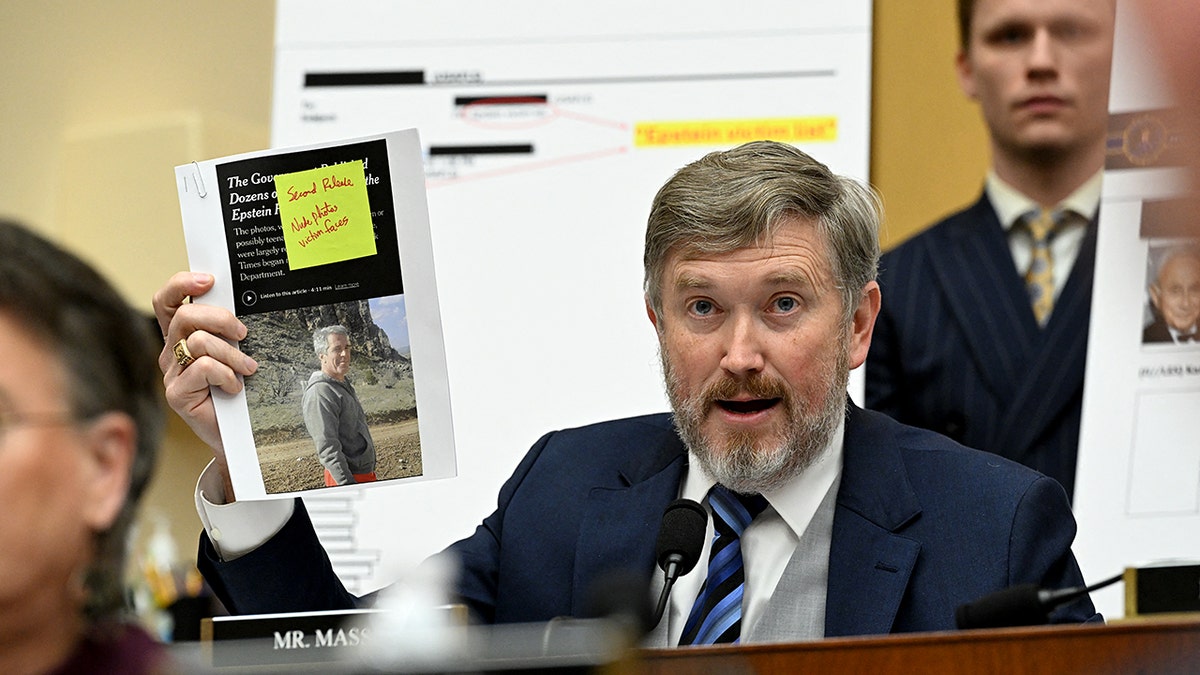
Rep. Thomas Massie, R-Ky., questions Attorney General Pam Bondi before a House Judiciary Committee hearing on Capitol Hill in Washington, Feb. 11, 2026. (Robert Schmidt/AFP via Getty)
ISRAEL TARGETS IRAN’S SUPREME LEADER IN SWEEPING STRIKES AS US JOINS ‘OPERATION EPIC FURY’
Massie, a longtime critic of foreign intervention, went so far as to introduce a resolution alongside Rep. Ro Khanna, D-Calif., to rein in Trump’s war powers. House Democrats are demanding a vote on that resolution as soon as next week.
Landsman told NOTUS that he would vote against such a measure if it came to the House floor.
Rep. Josh Gottheimer, D-N.J., while similarly praising the military’s moves, refused to tell Fox News Digital if he would support the resolution via a spokesperson.
«Today, the United States, with our key democratic ally Israel, took decisive action to defend our national security, fight terror, protect our allies, and stand with the Iranian people who have been massacred in the streets for demanding freedom from the murderous Iranian regime,» Gottheimer said in a statement.
«I applaud the extraordinary bravery and professionalism of our servicemembers and pray for their safety as Iran and its terrorist proxies retaliate against American bases and our partners in the region.»
He, like Suozzi and Rosen, called for a classified briefing on the operation’s details.
GULF STATES CONDEMN IRANIAN RETALIATORY STRIKES ON THEIR TERRITORIES FOLLOWING US-ISRAELI OPERATION
«I agree with the President’s objectives that Iran can never be allowed to obtain nuclear capabilities. The President must now clearly define the national security objective and articulate his plan to avoid another costly, prolonged war in the Middle East,» Suozzi said in his own statement.
Fetterman, meanwhile, has been among the Democrats most full-throated in his support.
«President Trump has been willing to do what’s right and necessary to produce real peace in the region. God bless the United States, our great military, and Israel,» he posted on X early Saturday morning, among the first lawmakers to sound off.
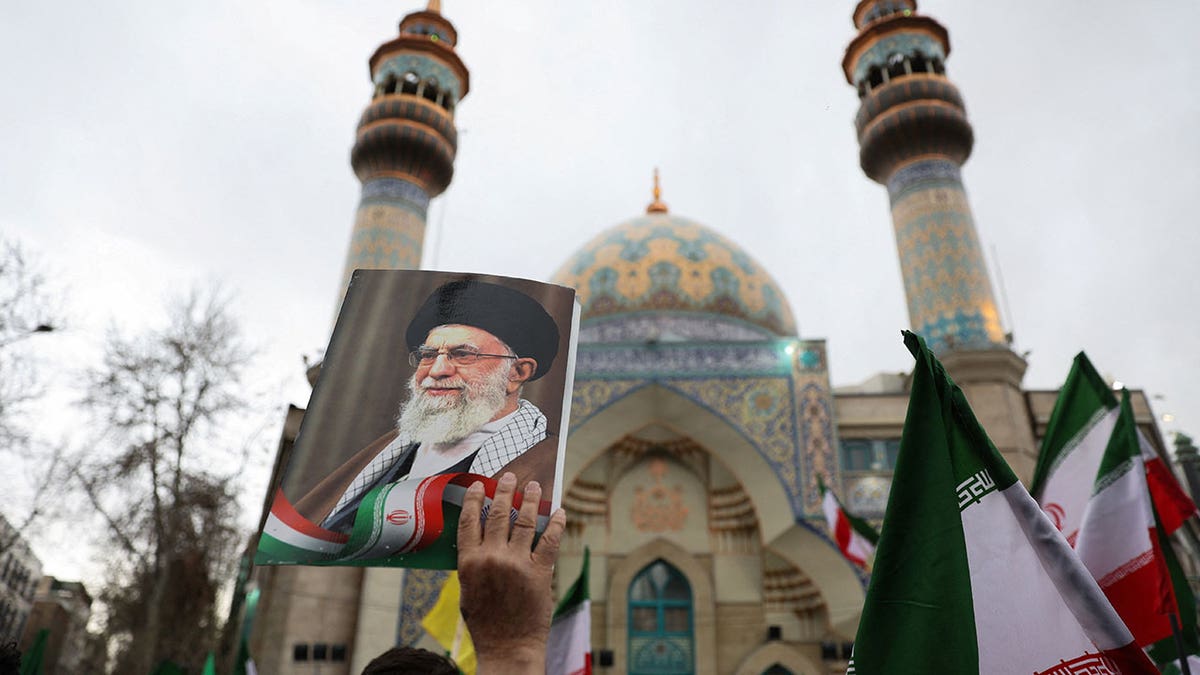
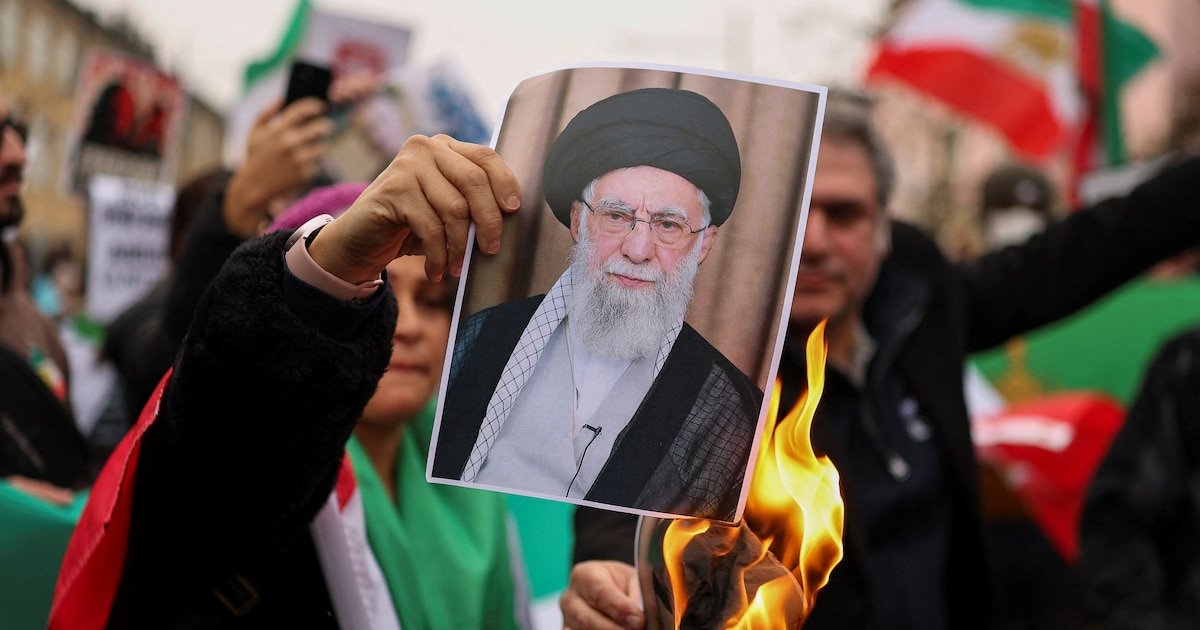
A person holds an image of Iran’s Supreme Leader Ayatollah Ali Khamenei as Iranian demonstrators protest against the U.S.-Israeli strikes, in Tehran, Iran, Feb. 28, 2026. (Majid Asgaripour/WANA (West Asia News Agency) via Reuters)
He said of the war powers vote, «I’m a hard no. My vote is Operation Epic Fury.»
It’s a stark contrast to the majority of Democratic lawmakers who have lambasted Trump for not getting authorization from Congress before the strikes.
CLICK HERE TO DOWNLOAD THE FOX NEWS APP
House Minority Leader Hakeem Jeffries, D-N.Y., accused Trump of moving to «abandon diplomacy and launch a massive military attack has left American troops vulnerable to Iran’s retaliatory actions.»
In the Senate, Minority Leader Chuck Schumer, D-N.Y., said, «Confronting Iran’s malign regional activities, nuclear ambitions, and harsh oppression of the Iranian people demands American strength, resolve, regional coordination, and strategic clarity. Unfortunately, President Trump’s fitful cycles of lashing out and risking wider conflict are not a viable strategy.»
Related Article

congress,war with iran,house of representatives politics,foreign policy senate,donald trump,politics
INTERNACIONAL
Did they get him? Khamenei’s fate remains unknown after Israel strike levels his compound
NEWYou can now listen to Fox News articles!
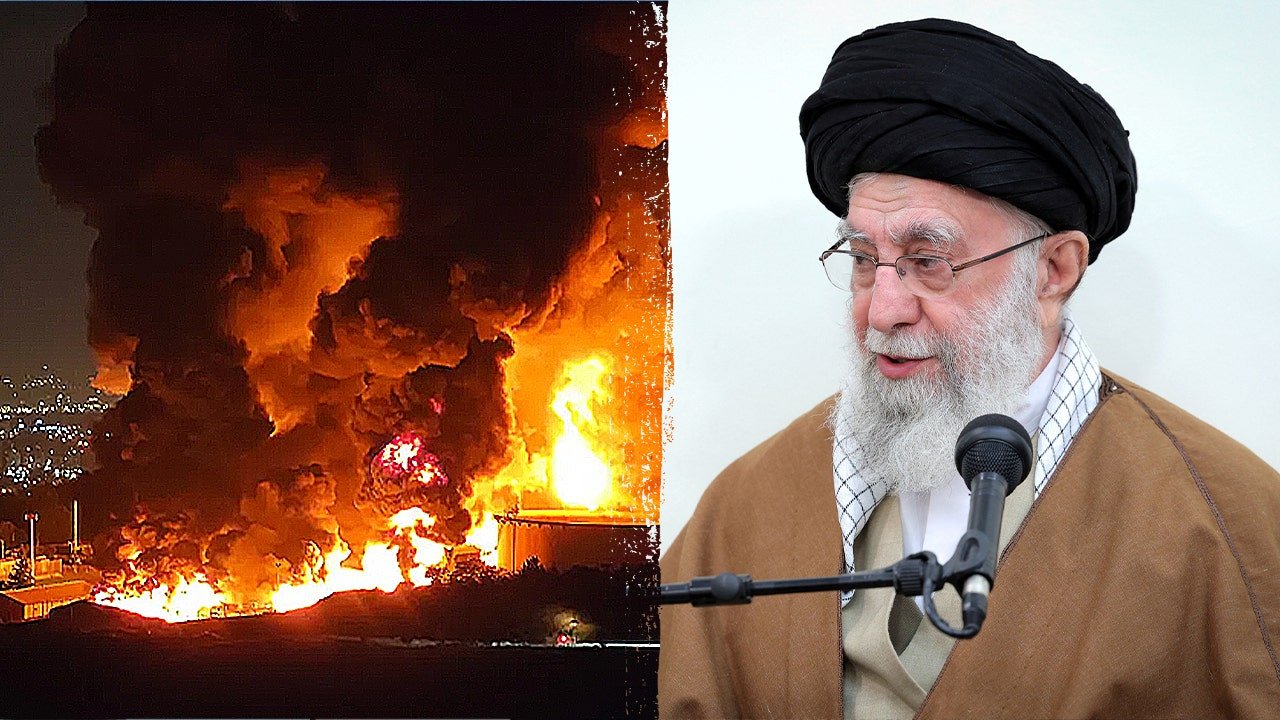
As the smoke was still clearing over Tehran, one question dominated the region and Washington alike: Did they get him?
In the immediate aftermath of the Israel-U.S. strikes, with the Israeli Air Force targeting senior Iranian leadership infrastructure, rumors swirled that Ayatollah Ali Khamenei, Iran’s 86-year-old supreme leader, had been killed.
Satellite images showed heavy damage to Ayatollah Ali Khamenei’s fortified compound, including buildings believed to house his residence and the so-called House of Leadership. Parts of the complex appeared reduced to rubble.
Regional reports indicated a high-level meeting of Khamenei’s top lieutenants may have been underway when the strike hit. Iranian semi-official media also reported missiles struck near the presidential palace and other leadership sites north of the capital.
Iran’s Supreme Leader Khamenei makes first public appearance in weeks with fresh U.S. threats. (Office of the Iranian Supreme Leader Credit/ASSOCIATED PRESS)
Addressing the nation on Saturday, Prime Minister Benjamin Netanyahu said in Hebrew, «There are more and more signs indicating Khamenei is gone.»
Israeli officials told Fox News Digital they were still assessing the results and said it was too early to confirm the fate of the 86-year-old supreme leader. They did not rule out the possibility that he was killed.
Iranian officials, however, insisted the country’s leadership — including Khamenei and President Masoud Pezeshkian — remained safe, according to The Guardian, despite what they described as an assassination attempt. Meanwhile, a spokesperson for Iran’s Ministry of Foreign Affairs told the BBC that he was not in a position to confirm whether Ayatollah Ali Khamenei had been eliminated.
IRAN FIRES MISSILES AT US BASES ACROSS MIDDLE EAST AFTER AMERICAN STRIKES ON NUCLEAR, IRGC SITES
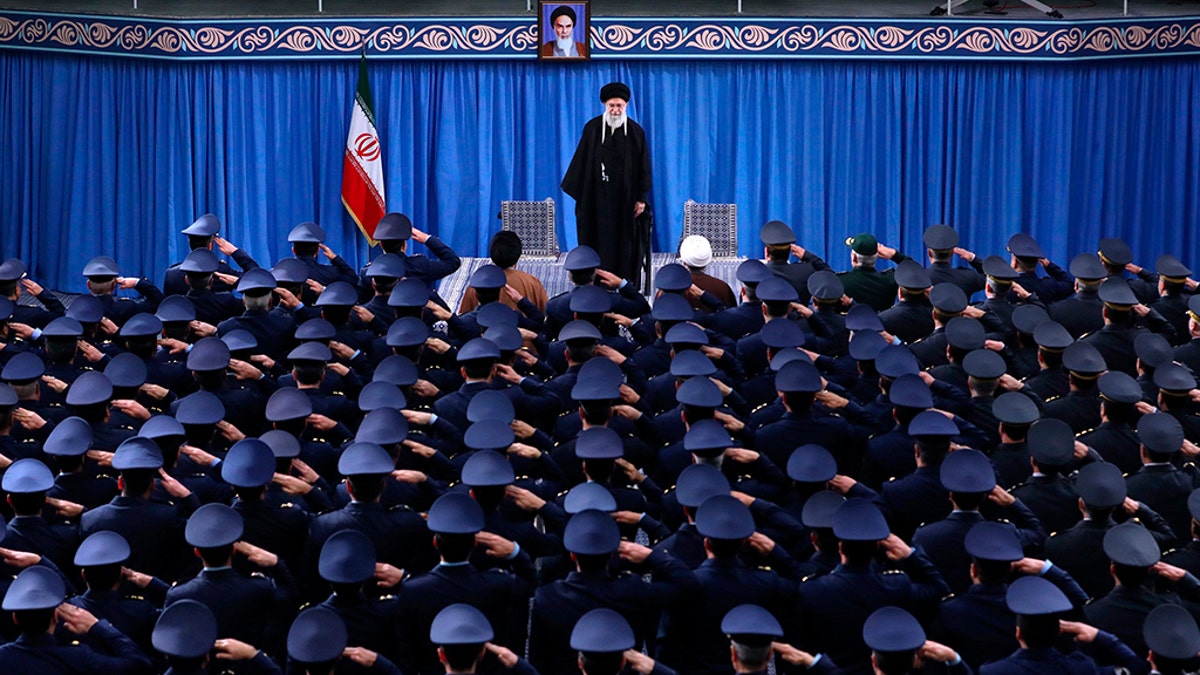
In this picture released by an official website of the office of the Iranian supreme leader, Supreme Leader Ayatollah Ali Khamenei stands as army air force staff salute at the start of their meeting in Tehran, Iran, Friday, Feb. 8, 2019. Khamenei is defending «Death to America» chants that are standard fare at anti-U.S. rallies across Iran but says the chanting is aimed at America’s leaders and not its people. (Office of the Iranian Supreme Leader via AP)
The long-serving cleric has survived decades of internal unrest, assassination plots and foreign pressure. He rarely appears in public without layers of security and is believed to operate through a tightly controlled network of loyalists embedded across Iran’s military, intelligence and political institutions.
In an exclusive Fox News Digital report earlier this week, researchers described how Khamenei runs what amounts to a parallel state within Iran’s formal government structure.
«The Bayt is the hidden nerve center of the regime in Iran… it operates as a state within a state,» Kasra Aarabi, director of Islamic Revolutionary Guard Corps (IRGC) research at United Against Nuclear Iran (UANI), told Fox News Digital.
IRAN COULD ‘ACTIVATE’ HEZBOLLAH IF US TARGETS REGIME, TRUMP’S INNER CIRCLE TO DECIDE: EXPERT
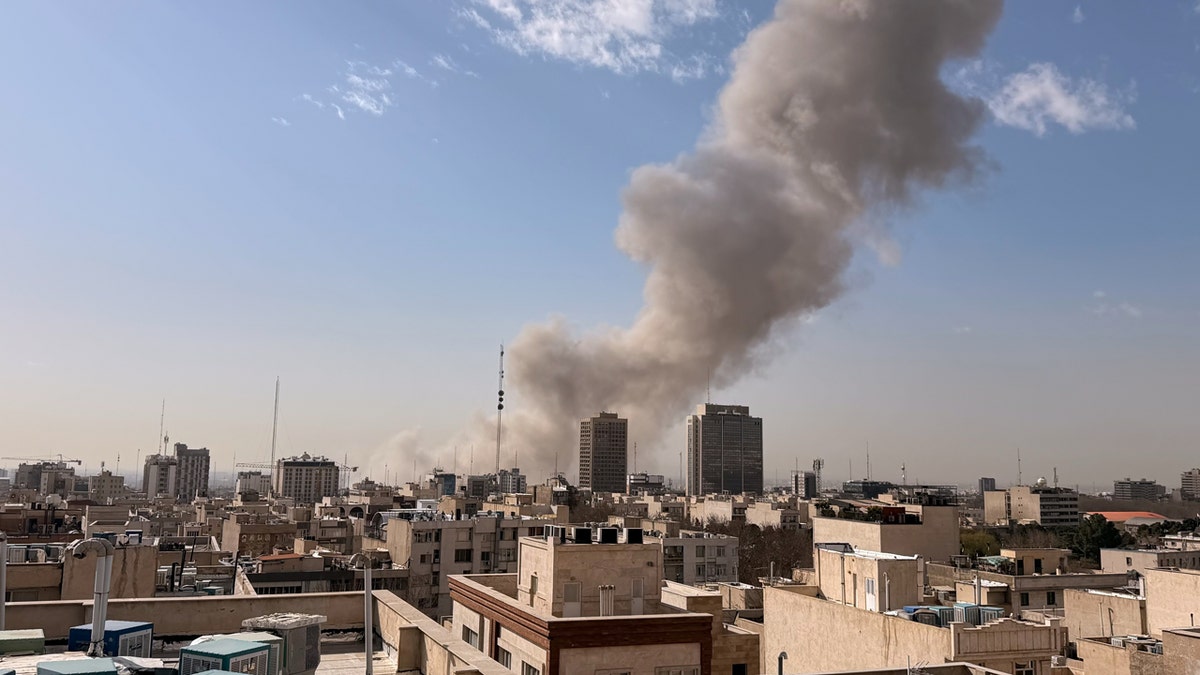
Smoke rises on the skyline after an explosion in Tehran, Iran, Saturday, Feb. 28, 2026. (AP Photo/Vahid Salemi)
Even if Khamenei himself were removed, Aarabi warned, the institutional machinery he built — involving roughly 4,000 core staff and a broader network of tens of thousands — could continue functioning.
«Even if he is eliminated, the Bayt as an institution enables the Supreme Leader to function,» Aarabi said. «Think of the Supreme Leader as an institution rather than just a single individual.»
That reality complicates the picture.
For decades, Khamenei has positioned himself not merely as a political leader but as the apex of a system designed to survive shocks — whether from protests at home or military pressure abroad.
The 86-year-old cleric has faced repeated waves of unrest, including mass protests in 2009, 2022 and again in early 2026. Each time, his regime cracked down forcefully, consolidating control rather than fracturing.
He has also weathered years of covert operations, cyber campaigns and targeted strikes against key Iranian figures across the region.
Still, the scale of the latest strike appears unprecedented.
If confirmed dead, Khamenei’s killing would mark the most significant decapitation of Iranian leadership since the 1979 revolution. It would also raise immediate questions about succession inside a system he carefully engineered to avoid sudden collapse.
CLICK HERE TO DOWNLOAD THE FOX NEWS APP
A person holds an image of Iran’s Supreme Leader Ayatollah Ali Khamenei as Iranian demonstrators protest against the U.S.-Israeli strikes, in Tehran, Iran, Feb. 28, 2026. (Majid Asgaripour/WANA (West Asia News Agency) via Reuters)
If he survived, it would reinforce his reputation for resilience — and underscore how difficult it is to eliminate the core of Iran’s power structure.
For now, officials say assessments are ongoing, and the question may be answered in the very near future.
Related Article

ali khamenei,war with iran,iran,israel,bombings

Cúneo Libarona prepara su renuncia como ministro de Justicia: los candidatos a sucederlo

“Reglas más claras y previsibles”: los empresarios del Grupo de los Seis celebraron la aprobación de la reforma laboral

Canales para ver el Boca vs. Gimnasia de Mendoza por el Torneo Apertura

Sin que casi nadie se dé cuente, Microsoft ha actualizado una tecnología que beneficiará a millones de jugadores de PC

Giro de timón: un gobernador vedado por Milei va a adherir al RIGI y anunciará un proyecto propio con alivios fiscales

Vuelven a subir los alquileres: de cuánto serán los ajustes en marzo y cómo están los precios

Jorge Macri prepara su discurso para abrir el año legislativo: el deseo de reelección y el espejo en Bukele

Crisis en la industria: otra multinacional se achica y cierra una planta en la Argentina

Catherine Fulop contó el difícil momento que atraviesa su madre en Venezuela: “Está postrada”

Alarma por la salud de Divina Gloria tras salir de Gran Hermano: “La internaron directamente en terapia intensiva”

 CHIMENTOS3 días ago
Catherine Fulop contó el difícil momento que atraviesa su madre en Venezuela: “Está postrada”
- CHIMENTOS2 días ago
Alarma por la salud de Divina Gloria tras salir de Gran Hermano: “La internaron directamente en terapia intensiva”
- CHIMENTOS1 día ago
¡Titi revolucionó Gran Hermano! Cuáles son las 5 cosas que ya extraña: «Accesorios, pilates, bondiola, auriculares y bailar»