INTERNACIONAL
Vance warns Iran will ‘find out’ Trump is ‘not one to mess around’ if ceasefire deal falls apart

NEWYou can now listen to Fox News articles!
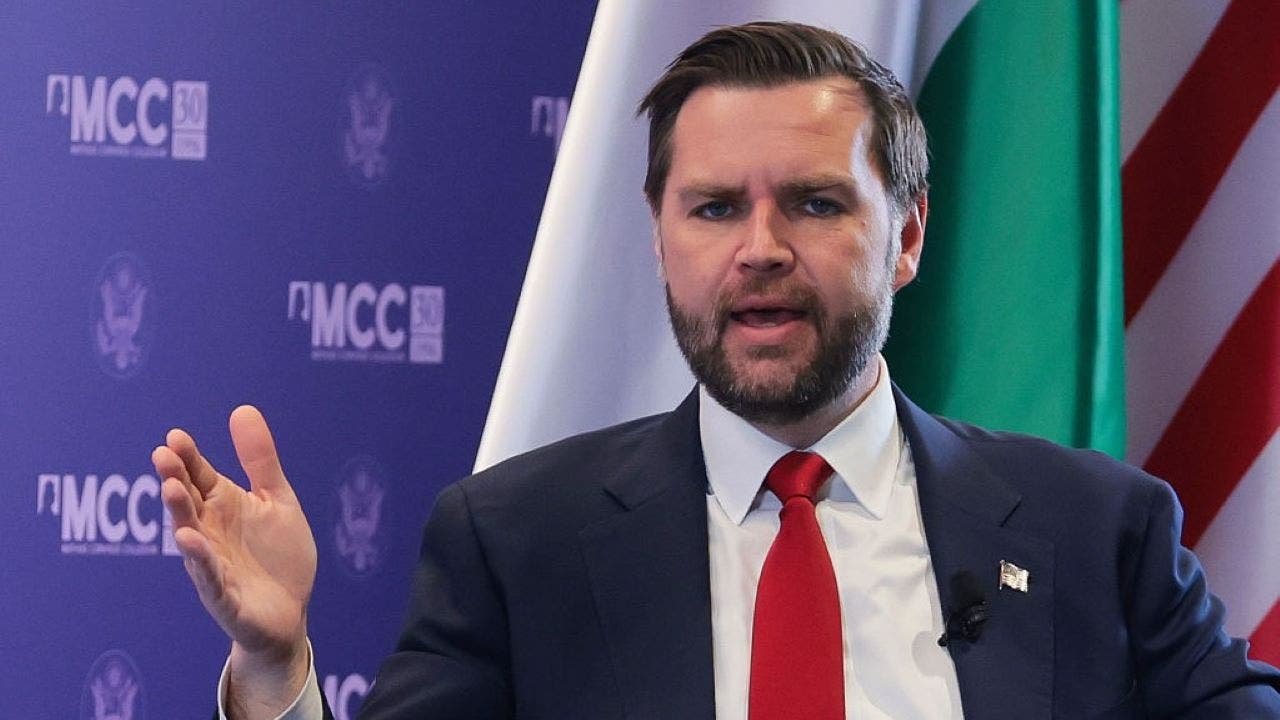
Vice President JD Vance says the current ceasefire with Iran is «fragile» but could hold if Tehran negotiates in good faith.
Vance made the comments during a conference in Hungary on Wednesday, saying President Donald Trump won’t hesitate to use drastic tools if Iran breaks the truce. Trump has agreed to a two-week ceasefire predicated on Iran reopening the Strait of Hormuz.
«This is why I say this is a fragile truce,» Vance said. «You have people who clearly want to come to the negotiating table and work with us to find a good deal and then you have people who are lying about even the fragile truce that we’ve already struck.»
«If the Iranians are willing in good faith to work with us, I think we can make an agreement,» Vance continued. «If they’re going to lie, if they’re going to cheat, if they’re going to try to prevent even the fragile truce that we’ve set up from taking place, that they’re not going to be happy.»
TRUMP TO ADDRESS NATION ABOUT IRAN AS HE SIGNALS WAR COULD END WITHIN WEEKS
U.S. Vice President JD Vance delivers remarks at Mathias Corvinus Collegium in Budapest, on April 8, 2026 in Budapest, Hungary. (Photo by Jonathan Ernst – Pool/Getty Images)
«What the president has also shown is that we still have clear military, diplomatic and, maybe most importantly, we have extraordinary economic leverage,» he added. «So the President has told us not to use those tools. He’s told us to come to the negotiating table. But if the Iranians don’t do the exact same thing, they’re going to find out that the president of the United States is not one to mess around. He’s impatient. He’s impatient to make progress.»
News of the truce came Tuesday night, barely an hour before Trump’s 8 p.m. ET deadline, at which he had threatened to begin targeting Iranian energy infrastructure.
The president said the postponement is subject to the Islamic Republic of Iran agreeing to «the COMPLETE, IMMEDIATE, and SAFE OPENING of the Strait of Hormuz.»
VANCE SAYS IRAN HAS ‘2 PATHWAYS’ AS 12-HOUR DEADLINE LOOMS, PRAYS US ON ‘GOD’S SIDE’ IN NIXING NUCLEAR THREAT
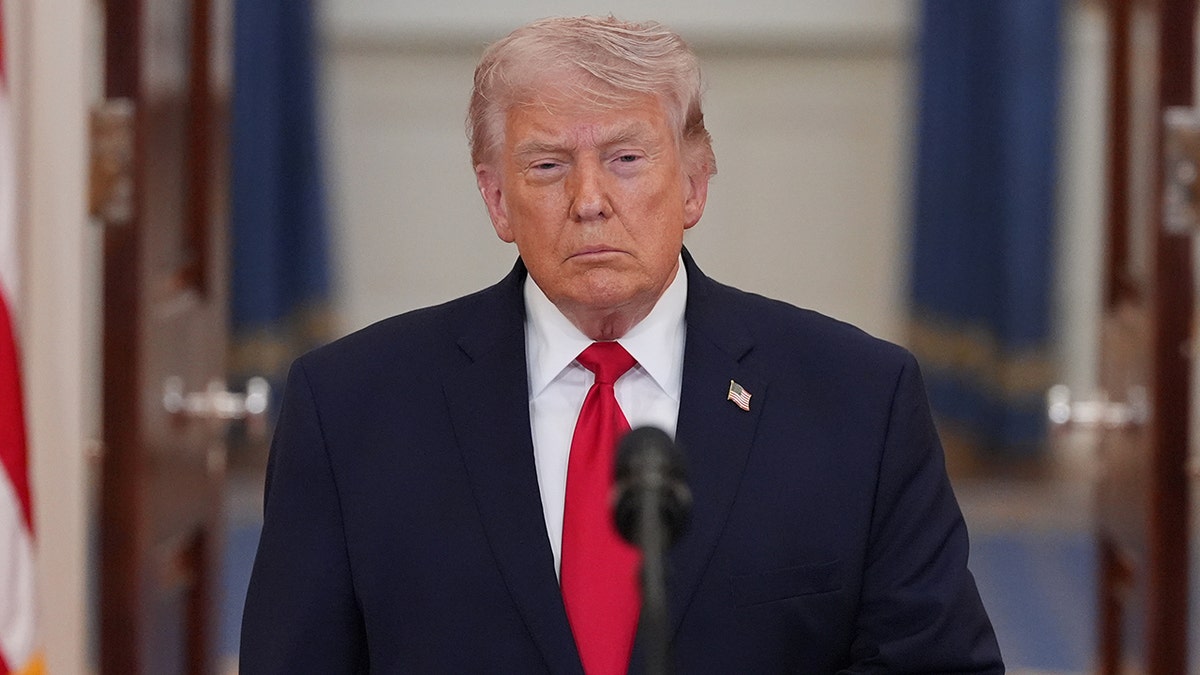
President Donald Trump speaks from the Cross Hall of the White House on April 1, 2026 in Washington, D.C. (Alex Brandon-Pool/Getty Images)
The administration also received a 10-point proposal from Iran for a wider peace deal, and officials «believe it is a workable basis on which to negotiate.»
The Supreme National Security Council of the Islamic Republic of Iran responded in a statement, thanking Pakistani mediators for their «tireless efforts» to end the war in the region, and agreeing to cease defensive operations if attacks against Iran are halted.
For a period of two weeks, Iran said safe passage through the Strait of Hormuz «will be possible via coordination with Iran’s Armed Forces» and with «due consideration of technical limitations.»
MARCO RUBIO WARNS IRAN WANTED TO BE THE ‘NEXT NORTH KOREA’ AS HE SEES ‘FINISH LINE’ IN CONFLICT
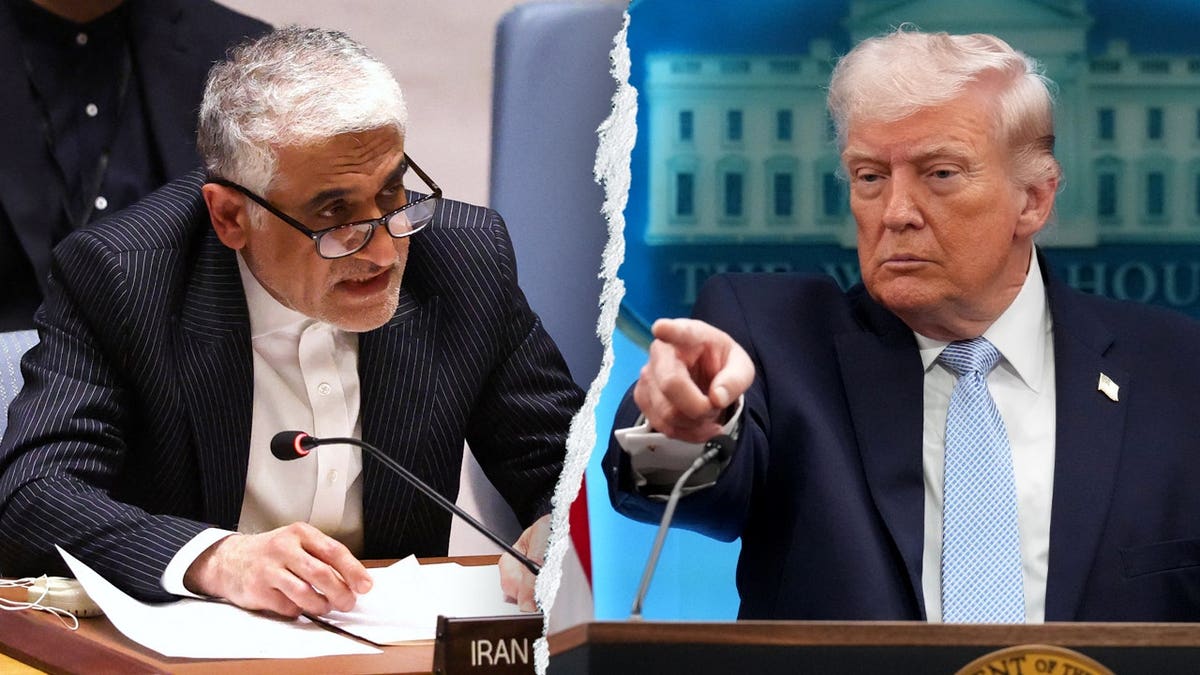
Amir-Saeid Iravani, Iran’s U.N. ambassador, left, and President Donald Trump. (Timothy Clary/AFP via Getty Images; Mark Schiefelbein/AP)
Pakistani Prime Minister Shehbaz Sharif wrote in a statement the ceasefire will apply «everywhere,» including Lebanon, effective immediately.
«I warmly welcome the sagacious gesture and extend deepest gratitude to the leadership of both the countries and invite their delegations to Islamabad on Friday, 10th April 2026, to further negotiate for a conclusive agreement to settle all disputes,» Sharif said. «Both parties have displayed remarkable wisdom and understanding and have remained constructively engaged in furthering the cause of peace and stability. We earnestly hope, that the ‘Islamabad Talks’ succeed in achieving sustainable peace and wish to share more good news in coming days!»
CLICK HERE TO DOWNLOAD THE FOX NEWS APP
Further talks between the U.S. and Iran are set to begin on Friday.
Fox News’ Alexandra Koch contributed to this report.
war with iran, jd vance, donald trump, iran, politics






INTERNACIONAL
Tregua entre Estados Unidos e Irán: Trump suspendió los ataques y se reabrirá el estrecho de Ormuz

Estados Unidos e Irán acordaron un alto el fuego de dos semanas en plena escalada bélica con Israel, mientras el presidente Donald Trump decidió frenar LOS ataques inminentes contra infraestructura iraní a pocas horas de que venciera su ultimátum.
La tregua contempla negociaciones en Pakistán y la reapertura del estrecho de Ormuz, aunque no se definió su entrada en vigor y continúan los enfrentamientos en la región.
Vista aérea de la isla de Kharg, en el estrecho de Ormuz (Foto: Reuters)
Qué incluye la tregua y por qué es clave el estrecho de Ormuz
El giro diplomático se produjo tras los contactos con el gobierno de Pakistán, encabezado por Shehbaz Sharif, que impulsó una pausa para avanzar en un acuerdo más amplio. Según Trump, Irán presentó un plan de paz de 10 puntos “viable”, que serviría de base para poner fin al conflicto iniciado en febrero.
Uno de los puntos centrales es la reapertura del estrecho de Ormuz, una vía clave para el comercio mundial de petróleo. El entendimiento prevé que Irán mantenga el control operativo y, junto con Omán, cobre tarifas a los buques que lo atraviesen, en un esquema que podría financiar la reconstrucción iraní.
Leé también: La guerra en Medio Oriente genera un impacto en el turismo similar al del comienzo de la pandemia
Teherán también exige el retiro de tropas estadounidenses, el levantamiento de sanciones y la liberación de activos bloqueados. Las negociaciones formales comenzarán en Islamabad, aunque no hay certezas sobre un acuerdo definitivo.
Ataques, dudas en Israel y una tregua que todavía no se cumple
Pese al anuncio, la situación en el terreno sigue siendo inestable. Se registraron nuevos ataques y alertas de misiles en Israel y varios países del Golfo, lo que expone la fragilidad del acuerdo.
Un funcionario estadounidense indicó que Washington detuvo sus operaciones ofensivas, pero mantiene acciones defensivas. Al mismo tiempo, Israel continuó con bombardeos sobre instalaciones iraníes, incluidas plantas petroquímicas y puentes utilizados —según afirmó— para logística militar. Un ataque israeló en Líbano generó graves daños. (Foto: REUTERS/Ali Hankir).
En paralelo, el programa nuclear iraní sigue siendo un punto crítico: las reservas de uranio enriquecido permanecen intactas, uno de los principales argumentos que derivaron en la guerra.
El conflicto ya dejó más de 1900 muertos en Irán y más de 1500 en Líbano, además de víctimas en Israel y otros países de la región, en un escenario donde la diplomacia avanza, pero la guerra todavía no se detiene.
Israel respalda la tregua con Irán pero aclara que no incluye al Líbano
Cuatro horas después del anuncio del presidente Donald Trump, la oficina del primer ministro Benjamin Netanyahu expresó su apoyo al alto el fuego entre Estados Unidos e Irán, aunque marcó diferencias clave respecto a su alcance.
En un comunicado difundido en inglés, el gobierno israelí sostuvo que “Israel apoya la decisión del presidente Trump de suspender los ataques contra Irán durante dos semanas, con la condición de que Irán abra inmediatamente el estrecho y detenga todos los ataques contra Estados Unidos, Israel y los países de la región”. La oficina del primer ministro Benjamin Netanyahu expresó su apoyo al alto el fuego, pero advirtió que el pacto no incluye al Líbano. (Foto: REUTERS/Jonathan Ernst).
El texto también remarcó que Israel respalda los esfuerzos de Washington para que Irán deje de representar “una amenaza nuclear, de misiles y terrorista”.
Sin embargo, el punto más sensible del comunicado fue la aclaración de que “el alto el fuego de dos semanas no incluye al Líbano”, en contradicción con versiones difundidas por mediadores paquistaníes.
La precisión refleja las tensiones abiertas en el frente con Hezbollah y deja en evidencia que la desescalada es parcial y con múltiples focos activos en la región.
Trump habla de una “victoria total” y evita precisar qué hará si fracasa la tregua
El presidente Donald Trump calificó el acuerdo de alto el fuego con Irán como una “victoria total y completa” para su país, en una breve entrevista telefónica con la AFP tras el anuncio de la tregua.
“Victoria total y completa. 100 %. Sin dudas”, afirmó el mandatario, aunque evitó dar definiciones sobre los próximos pasos en caso de que el acuerdo no prospere. Consultado sobre si retomaría sus amenazas de atacar infraestructura civil iraní, respondió: “Lo tendrán que ver”.
Trump también buscó transmitir control sobre uno de los puntos más sensibles del conflicto: el programa nuclear iraní. “Eso quedará perfectamente controlado o yo no habría llegado a un acuerdo”, sostuvo, sin brindar detalles concretos.
Además, deslizó que China podría haber influido para acercar a Irán a la mesa de negociaciones. “Escuché que sí”, dijo, en referencia al rol de Xi Jinping, con quien tiene previsto reunirse en Pekín en mayo.
Irán también dijo que había ganado: “El enemigo sufrió una derrota innegable, histórica y aplastante en su guerra cobarde, ilegal y criminal contra la nación iraní”, dijo en un comunicado el Consejo Supremo de Seguridad Nacional de Irán.
Estados Unidos, Irán, paz, Israel

NEWYou can now listen to Fox News articles!
North Korea fired multiple short-range ballistic missiles toward the sea Wednesday in its second launch event in two days, South Korea’s military said, hours after a senior North Korean official released crude insults against Seoul’s hopes for warmer relations.
South Korea’s joint chiefs of staff said several missiles lifted off from North Korea’s eastern coastal Wonsan area on Wednesday morning and flew about 240 kilometers (150 miles) each in a direction toward the North’s eastern waters. It said an additional North Korean ballistic missile fired later Wednesday traveled more than 700 kilometers (435 miles) off the North’s east coast.
South Korea’s military said it maintains a readiness to repel any provocations by North Korea under a solid military alliance with the United States. It earlier said it detected the launch of an unidentified projectile from North Korea’s capital region Tuesday.
South Korean media reported the projectile, also likely a ballistic missile, disappeared from South Korean military radars after displaying an abnormal development in the initial launch stage. This indicated the launch ended in failure, according to the reports.
‘CREDIBLE INTELLIGENCE’ REVEALS NORTH KOREA’S SUCCESSOR TO KIM JONG UN, SOUTH KOREA SAYS
People at Seoul Railway Station in Seoul, South Korea, on April 8, 2026, watch as the news shows file imagery of North Korea’s missile launch. The missile tests come as North Korea continues weapons development and strengthens ties with Russia and China. (AP Photo/Ahn Young-joon)
The back-to-back launches came after North Korea made it clear that it has no intention of improving ties with South Korea, whose liberal government has steadfastly expressed its hopes to restore long-dormant dialogue.
On Tuesday night, Jang Kum Chol, first vice minister at Pyongyang’s Foreign Ministry, said South Korea would always remain North Korea’s «most hostile enemy state.» He derided South Korea as «world-startling fools» engaged in wishful thinking over a recent statement by Kim Yo Jong, the influential sister of North Korean leader Kim Jong Un.
After South Korean President Lee Jae Myung expressed regret over alleged civilian drone flights into North Korea, Kim Yo Jong late Monday praised him for what she called honesty and courage, but reiterated a threat to retaliate if such flights recur. South Korean officials responded by describing Kim Yo Jong’s statement as meaningful progress in relations.
NORTH KOREAN DICTATOR SAYS GOVERNMENT WILL KEEP CEMENTING NATION’S ‘IRREVERSIBLE STATUS AS A NUCLEAR POWER’
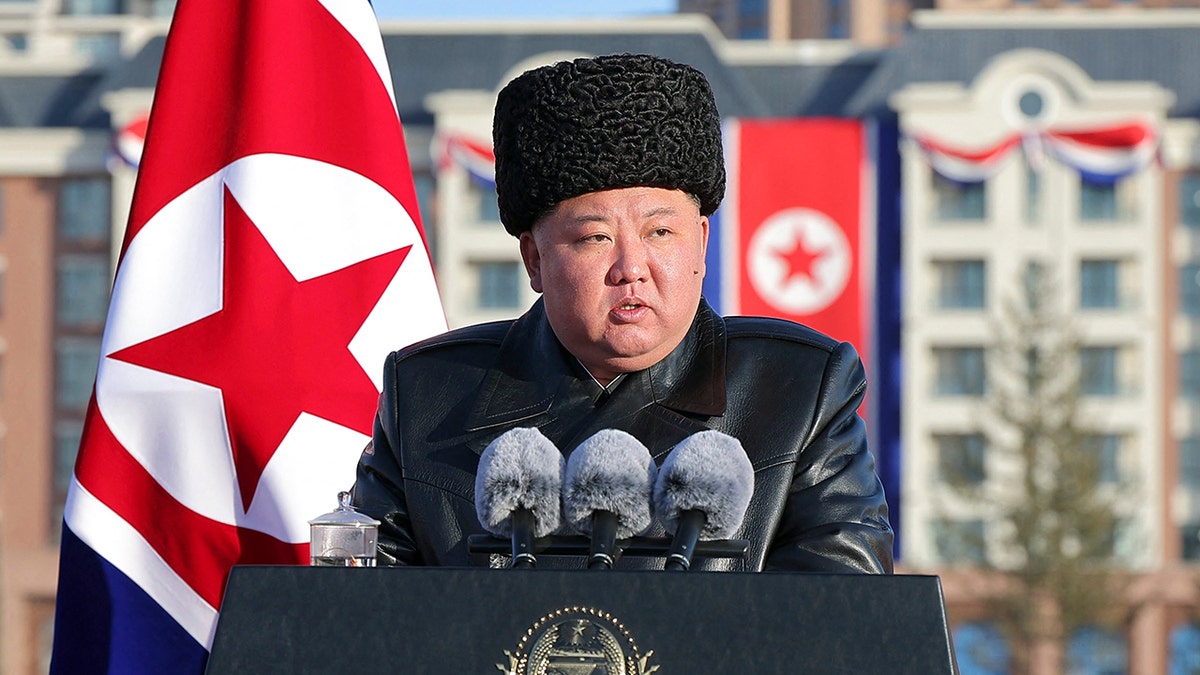
Kim Jong Un delivers a speech in Pyongyang, North Korea, on February 15, 2026. North Korea fired multiple short-range ballistic missiles into its eastern waters on Wednesday, April 8, 2026, after rejecting South Korea’s overtures for improved relations. (KCNA VIA KNS / AFP via Getty Images)
Jang said her statement was intended as a warning. He cited Kim Yo Jong as calling South Korea «the dogs affected by mange that blindly bark to the tune of neighboring dogs» as she criticized it for recently co-sponsoring a U.N. resolution on the North’s purported human rights violations.
North Korea has refused to return to talks with South Korea and the U.S. and pushed to expand its nuclear arsenal since Kim Jong Un’s diplomacy with U.S. President Donald Trump collapsed in 2019. North Korea has instead sought to strengthen ties with Russia, China and other countries embroiled in confrontations with the U.S. Last September, Kim Jong Un traveled to Beijing to attend a military parade alongside other foreign leaders and held his first summit with Chinese President Xi Jinping in six years.
North Korea’s state media said Wednesday that Chinese Foreign Minister Wang Yi will visit North Korea on Thursday for a two-day trip.
NORTH KOREA TESTS SOLID-FUEL MISSILE ENGINE AS KIM BOOSTS THREAT TO US MAINLAND
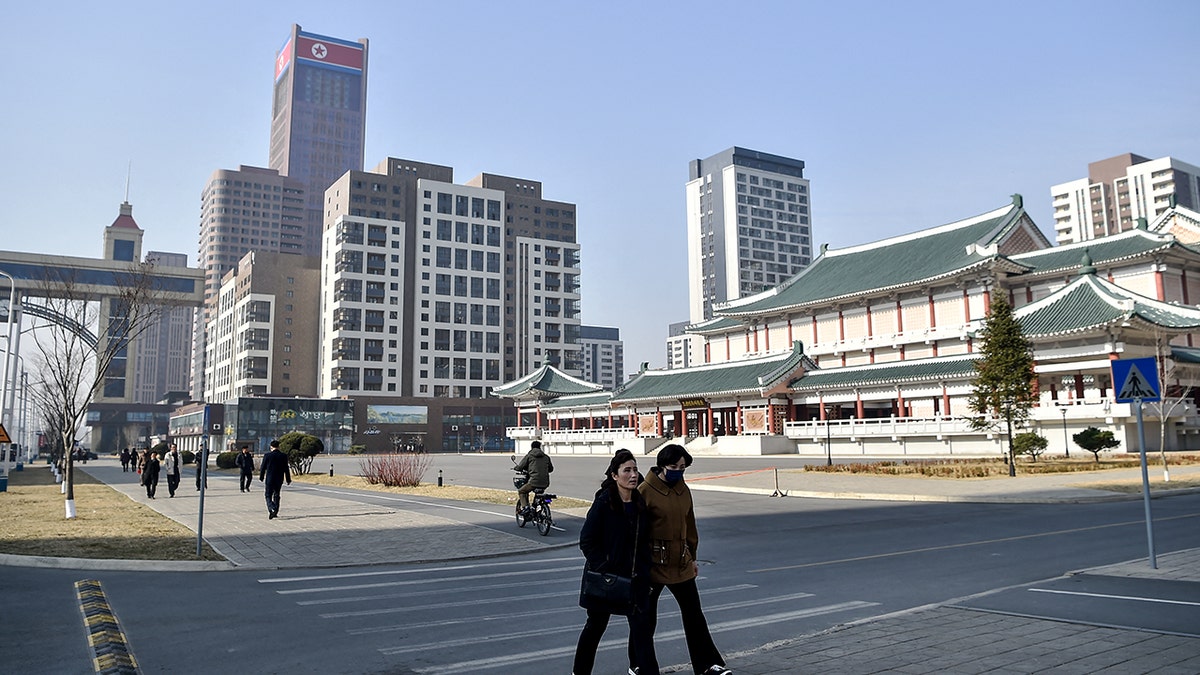
People walk down the street in Pyongyang on March 23, 2026. Pyongyang escalated tensions with back-to-back missile tests on April 8, 2026, while issuing harsh rhetoric against Seoul’s diplomatic efforts. (KIM Won Jin / AFP via Getty Images)
Earlier this week, North Korea said Kim Jong Un had observed a test of an upgraded solid-fuel engine for weapons and called it a significant development boosting his country’s strategic military arsenal.
Missiles with built-in solid propellants are easier to move and conceal their launches than liquid-fuel weapons, which in general must be fueled before liftoff and cannot last long.
CLICK HERE TO DOWNLOAD THE FOX NEWS APP
South Korea’s spy agency told lawmakers Monday the engine test was likely related to an effort to build a more powerful solid-fuel intercontinental ballistic missile that can carry multiple nuclear warheads, according to lawmakers who attended the meeting.
Experts say North Korea wants multi-warhead missiles to penetrate U.S. missile defenses, but they doubt Pyongyang has mastered the technology needed to acquire such a weapon.
north korea, south korea, kim jong un, asia world regions

“Todo cuanto sobre las mujeres han escrito los hombres debe tenerse por sospechoso, puesto que son juez y parte a la vez”. Lo escribió Simone de Beauvoir en El segundo sexo de 1949. Durante muchos años esta filósofa francesa reflexionó sobre lo que significa que ser mujer y llegó a la conclusión de que no es un destino biológico, sino una construcción social. El libro fue un éxito de ventas y aún hoy es una cita ineludible.
La cuarta parte del libro inicia con un apartado titulado “Infancia”. Allí escribe: “No se nace mujer: se llega a serlo”. Y sigue con una idea que línea a línea se torna más clara: “Ningún destino biológico, psíquico o económico define la figura que reviste en el seno de la sociedad la hembra humana; es el conjunto de la civilización el que elabora ese producto intermedio entre el macho y el castrado al que se califica de femenino”.

Unas cincuentas páginas antes usa la misma fórmula: “A decir verdad, no se nace genio: se llega a serlo; y la condición femenina ha hecho imposible ese devenir hasta el presente”. El punto central es la diferencia entre sexo y género. Distingue entre el cuerpo con el que nacés (biología) y la identidad que la sociedad te impone (cultura). Al nacer, un bebé tiene características biológicas (hembra), pero no tiene “feminidad”.
Luego “se llega a serlo”: a medida que la niña crece, la familia, la educación, las leyes y la religión le enseñan cómo debe comportarse, vestir, hablar y sentir para encajar en el molde de lo que esa sociedad considera “femenino”. Si históricamente el hombre ha sido definido como el “sujeto” (lo universal, la norma, el ser humano) y la mujer como “lo Otro”, ser mujer es aceptar un rol secundario, una posición de subordinación.

Como filósofa existencialista, Beauvoir creía que “la existencia precede a la esencia”. Esto significa que no hay una “esencia femenina” natural (como ser más cariñosa, sumisa o maternal por naturaleza). Si la feminidad es algo que se “aprende” o se “construye”, entonces también se puede deconstruir. La frase se volvió bandera y eslogan y se fue adoptando en las nuevas corrientes y fue un puntapié para el movimiento trans: no se nace mujer (¿ni varón?).
El segundo sexo es considerado la “piedra basal” del feminismo moderno. Cuando se publicó, el feminismo (luego se lo llamaría “feminismo de la primera ola”) estaba estancado tras haber conseguido el voto. El libro fue extremadamente polémico: el Vaticano lo incluyó en su lista de libros prohibidos y sectores conservadores lo tacharon de escandaloso. Funcionó de “combustible” para un activismo real.

Quién fue Simone de Beauvoir
Simone de Beauvoir (1908–1986) fue una filósofa, escritora y activista francesa, considerada la madre del feminismo moderno y una figura central del existencialismo. Defendió la libertad individual y la igualdad de género, argumentando que la identidad no es algo biológico sino una construcción social. Sin dudas su obra maestra y pilar de la teoría feminista es el libro que acabamos de analizar: El segundo sexo.
También escribió Los mandarines (novela que retrata las dudas intelectuales y políticas en la Francia de posguerra; ganó el Premio Goncourt), Memorias de una joven formal (primer tomo de su autobiografía) y La mujer rota (colección de tres relatos cortos que exploran la crisis existencial y la vulnerabilidad de las mujeres frente al paso del tiempo y el desamor). El filósofo Jean-Paul Sartre fue su compañero de vida.

El riesgo país de la Argentina se desplomó en medio de la euforia de los mercados globales

Cómo era Argirópolis, la ciudad que imaginó Sarmiento en la isla Martín García como capital de la Argentina, Uruguay y Paraguay

Le otorgaron la prisión domiciliaria al dirigente del PJ de Tucumán que agredió de un cabezazo a un diputado libertario

Tregua entre Estados Unidos e Irán: Trump suspendió los ataques y se reabrirá el estrecho de Ormuz

Un ex jugador del Real Madrid liquidó a Vinicius: «Es horrible»

Maximiliano Ferraro criticó la reforma de la Ley de Glaciares: “El Parlamento se convirtió en un templo de mercaderes”

La nueva advertencia de Donald Trump a Irán: «El tiempo se acaba, quedan 48 horas antes del infierno»

Círculo rojo: intrigas en el gabinete, desgaste por el caso Adorni y movimientos inquietantes en el Poder Judicial

Caputo habló sobre los créditos del Banco Nación que tomaron sus funcionarios: “No hay nada ilegal ni inmoral”

Créditos del Banco Nación: el Gobierno reveló que Pettovello echó a Massaccesi porque “mintió”

 ECONOMIA2 días ago
Caputo habló sobre los créditos del Banco Nación que tomaron sus funcionarios: “No hay nada ilegal ni inmoral”
- POLITICA2 días ago
Adorni recibió US$100 mil de otras dos mujeres por la hipoteca de un departamento anterior en Caballito
- POLITICA12 horas ago
Ajuste y Castigo: El Gobierno de Milei Pasa a «Disponibilidad» al Policía que se Encadenó por un Sueldo Digno