INTERNACIONAL
Venezuela’s new interim leader Delcy Rodríguez ‘hates the West,’ ex official warns

NEWYou can now listen to Fox News articles!
Nicolás Maduro’s interim replacement now leading Venezuela in the wake of his arrest represents a continuation of the same regime, and with a woman who «hates the West» at the helm, a former Venezuelan official has warned.
Delcy Rodríguez’s elevation, the source said, underscores how Venezuela’s leadership continues to rely on a tight circle of Maduro loyalists rather than new figures, leaving what the source described as «the axis of evil in a geopolitical struggle remains three hours from Miami.»
Rodríguez, Venezuela’s former vice president and oil minister, was formally sworn in on Monday following Maduro’s removal from office and his appearance in a New York courtroom Monday on drug trafficking charges.
«The regime is still the same, and she hates the West,» the official told Fox News Digital, speaking on the condition of anonymity.
KAMALA HARRIS BLASTS TRUMP ADMINISTRATION’S CAPTURE OF VENEZUELA’S MADURO AS ‘UNLAWFUL AND UNWISE’
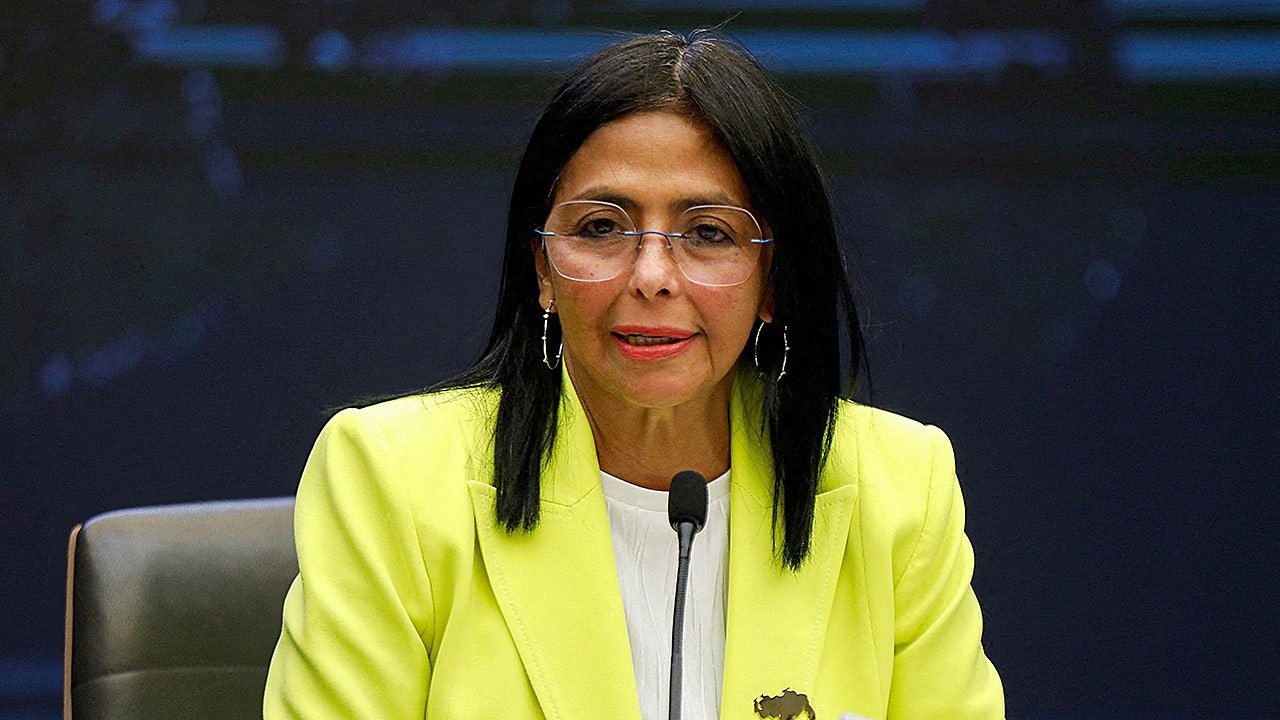
Venezuela’s Vice President Delcy Rodriguez addresses the media in Caracas, Venezuela, on March 10, 2025. (Leonardo Fernandez Viloria/Reuters)
«Really, Delcy has evolved from a mediocre lawyer, and now she’s the president of one of the richest nations in Latin America,» the source said.
«She has probably been in every post, because they rotate the same persons as they don’t have anybody else that they trust.
‘Delcy is a very close and trustworthy person for Maduro and was also the same for Chávez.’»
President Donald Trump said Saturday that Rodríguez, 56, stood «willing to do what we think is necessary to make Venezuela great again.»
Rodríguez, who has served as foreign minister, president of the Constituent Assembly, vice president, and oil minister, was sworn in by her brother, Jorge Rodríguez, the head of the National Assembly.
Born in Caracas, Rodríguez is the daughter of Marxist guerrilla leader Jorge Antonio Rodríguez, a co-founder of the Socialist League.
He was arrested in connection with the 1976 kidnapping of American businessman William F. Niehous and later died in police custody, according to the New York Times.
«That ordeal is the foundation and the origin of Delcy’s hatred of the West and of democracy,» the source said, before claiming, «her whole background was Marxist.»
IRAN AND MADURO TIES SUFFER MAJOR BLOW FOLLOWING US OPERATION AND CAPTURE OF VENEZUELAN DICTATOR
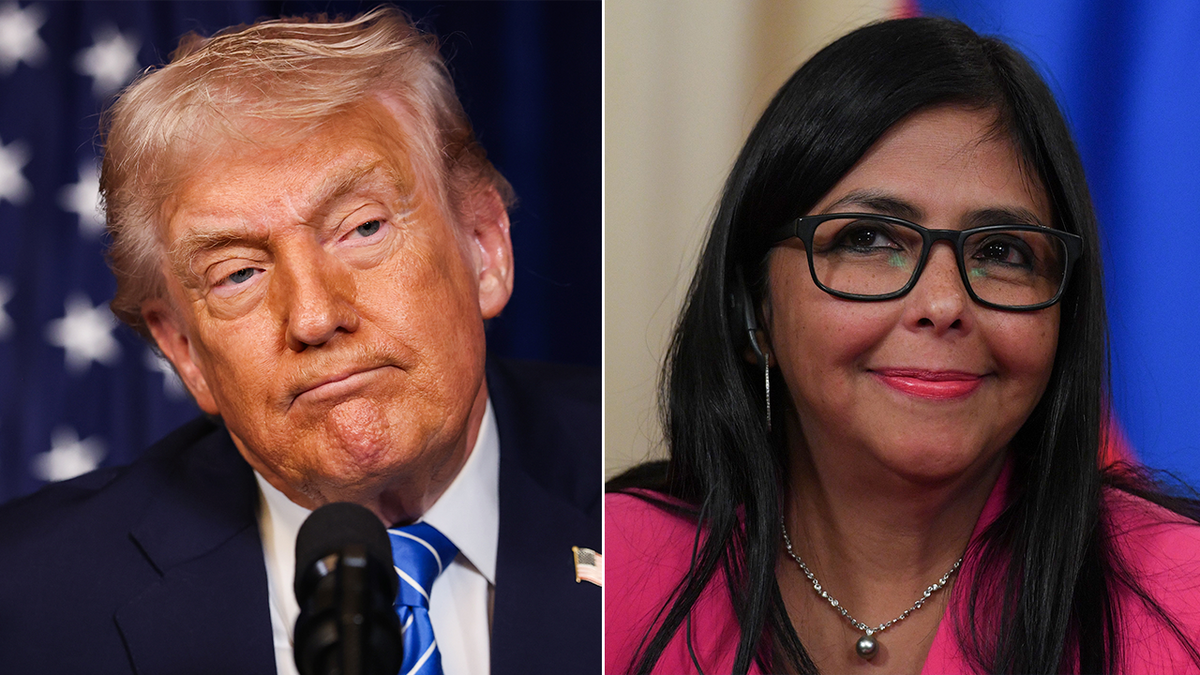
A side-by-side photo of President Donald Trump and Venezuelan Vice President Delcy Rodriguez. (Joe Raedle/Kirill Kudryavtsev/AFP/Getty Images)
«The guerrilla Marxist element kidnapped an American executive in 1976, and he was held for three years until authorities located the group hiding in the Amazon jungle,» the source claimed.
Rodríguez’s tenure as foreign minister was also marked by controversy, the source claimed, including allegations that Venezuelan passports, birth certificates, and nationalities were illegally sold abroad, according to reports.
At the 2016 United Nations General Assembly, Rodríguez said the allegations were untrue.
«There were some passports being sold in Iraq, and they were giving birth certificates to terrorists,» the source claimed.
In 2018, the U.S. Treasury Department’s Office of Foreign Assets Control sanctioned Rodríguez, citing her role as a senior official in the Maduro government. Those sanctions remain in place.
She was also said to have been implicated in the so-called «Delcygate» scandal in 2020 after allegedly making a secret stop in Spain despite sanctions on her, reported by Spanish media.
MADURO’S CAPTURE IS ‘BEGINNING OF THE END’ FOR CUBA’S REGIME, HOUSE INTELLIGENCE CHAIR SAYS
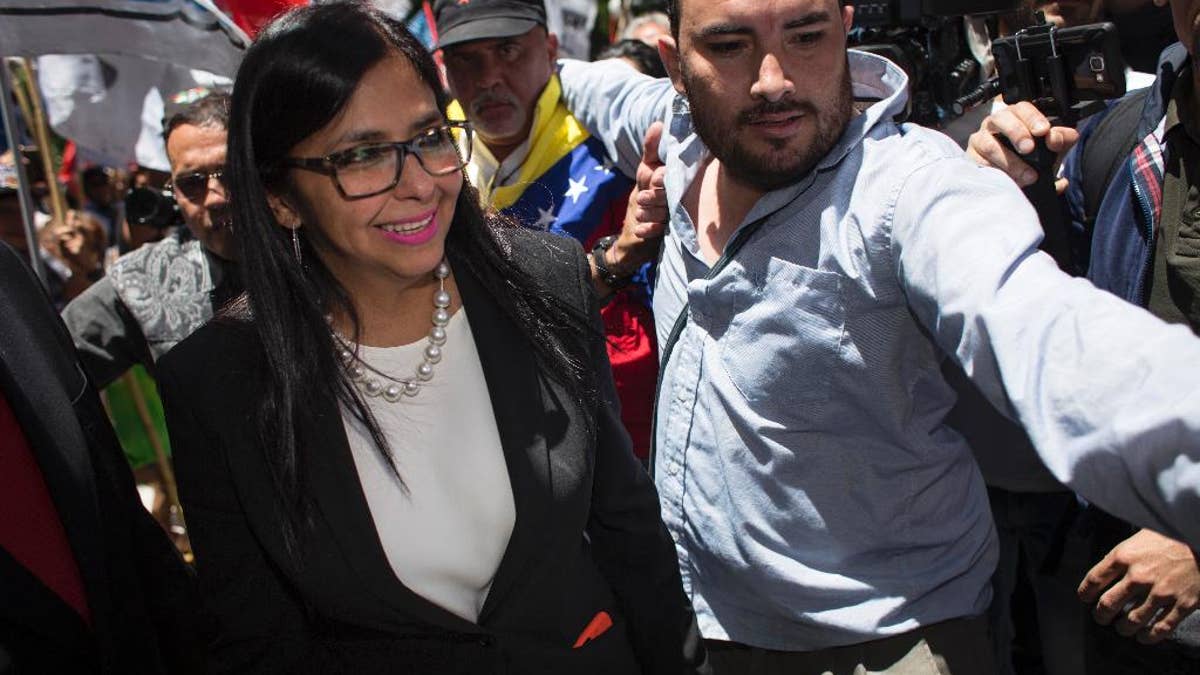
Venezuela’s Foreign Minister Delcy Rodriguez leaves Argentina’s Foreign Ministry in Buenos Aires, Argentina, Wednesday, Dec. 14, 2016. Mercosur Foreign Ministers from Paraguay, Brazil, Uruguay and Argentina met for a Mercosur Foreign Ministers summit in Buenos Aires Wednesday. (AP Photo) (The Associated Press)
Reports alleged she was transporting gold into Europe, a claim Rodríguez has denied.
«She had 40 bags full of gold in a private jet as vice president,» the source alleged. «They put the bags through the X-ray, and they found the gold,» the source claimed.
«Venezuela has become an occupied territory by Iran, China, Russia, and Cuba,» the source added, citing armed groups including FARC and ELN controlling large parts of the country.
«Delcy is the interim, but all of these groups are part of the cohort from Chávez that came from communist mindsets against the West that she came from.»
CLICK HERE TO DOWNLOAD THE FOX NEWS APP
«We now see the axis of evil in a geopolitical struggle three hours from Miami,» the source added.
«There are atrocity crimes committed by all of this group, plus there’s kleptocracy and grand corruption, which is all still in place,» the source said.
venezuelan political crisis,donald trump,crime world,sanctions,organized crime






INTERNACIONAL
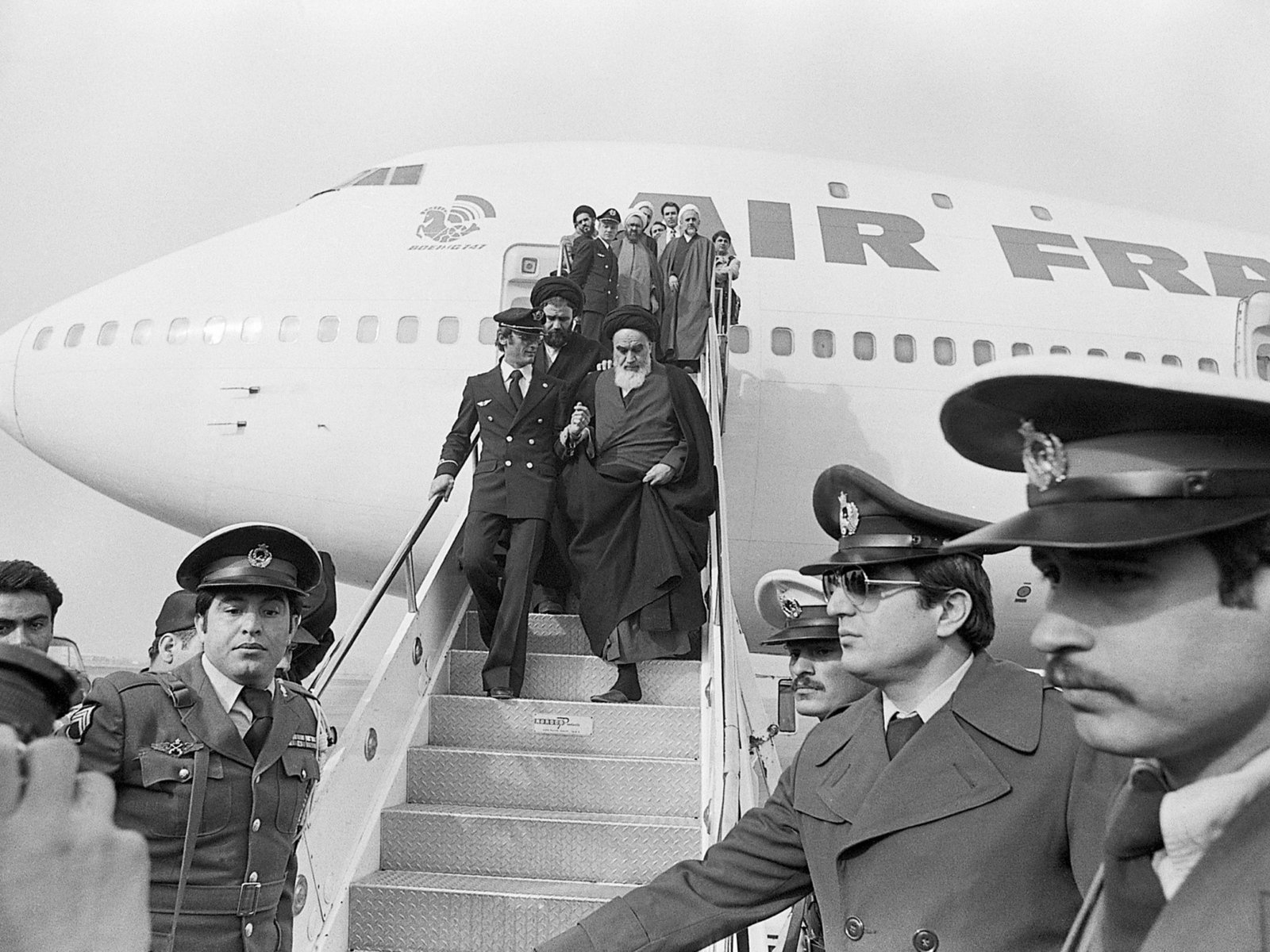
«La calle ardía de protestas y se escuchaban disparos», el enviado de Clarín en Irán hace 47 años en la caída del Sha


NEWYou can now listen to Fox News articles!
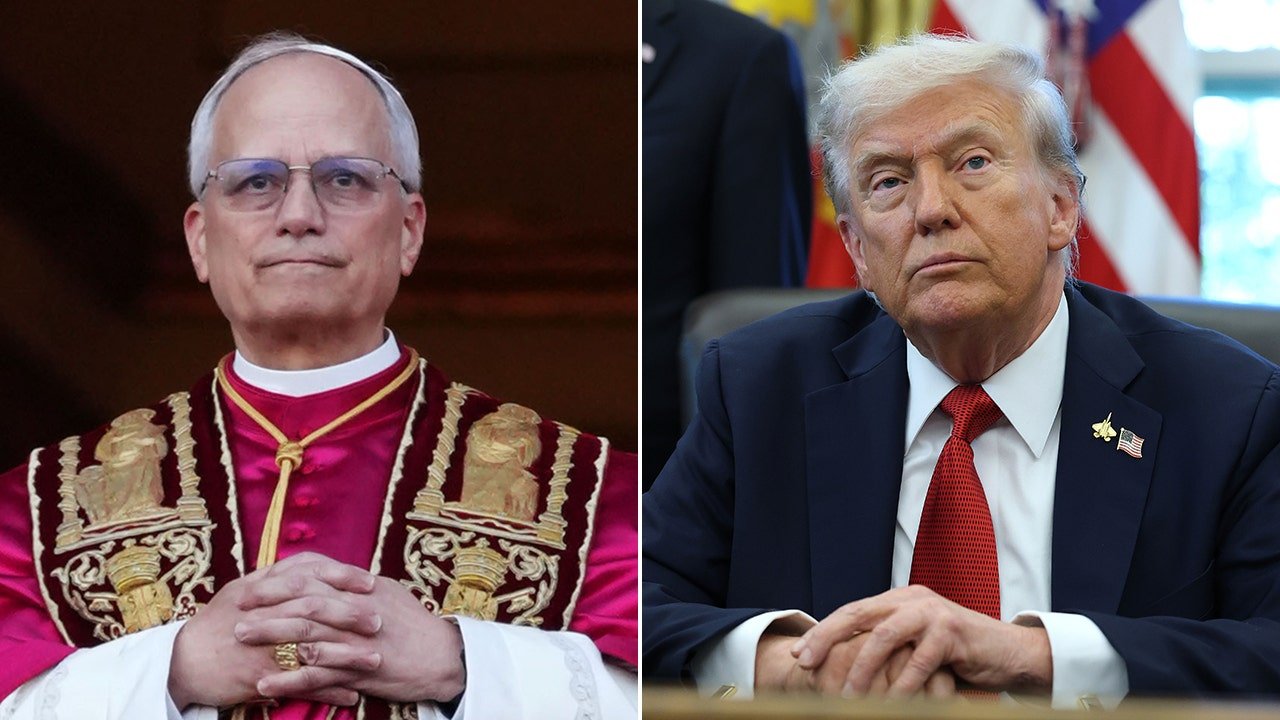
People Leo XIV on Saturday announced the appointment of the Vatican’s new ambassador, Apostolic Nuncio, to the U.S. to help manage strained relations with the Trump administration.
Italian Archbishop Gabriele Caccia, 68, a veteran Vatican diplomat who is currently ambassador to the United Nations, previously served as ambassador to the Philippines and Lebanon.
Caccia is replacing 80-year-old Cardinal Christophe Pierre, who is retiring.
«I receive this mission with both joy and a sense of trepidation,» Caccia said after the appointment, according to the Vatican News. He added that his mission was «at the service of communion and peace,» remembering that 2026 marks the 250th anniversary of the U.S.
People Leo XIV on Saturday announced the appointment of the Vatican’s new ambassador, Apostolic Nuncio, to the U.S. to help manage strained relations with the Trump administration. (Christopher Furlong/Getty Images; Anna Moneymaker/Getty Images)
The pope and President Donald Trump have been at odds over key issues for the White House, including immigration and the war in Iran.
Pierre’s ambassadorship was also at times at odds with the more conservative U.S. Conference of Catholic Bishops while representing Pope Francis’ more progressive priorities.
«Stability and peace are not built with mutual threats, nor with weapons, which sow destruction, pain, and death, but only through a reasonable, authentic, and responsible dialogue,» the American-born pope said on Sunday after the U.S. and Israel launched coordinated strikes on Iran, according to the outlet Chicago Catholic.
POPE LEO URGES DIALOGUE OVER MILITARY ACTION AFTER FAILED MADURO, TRUMP CALL
«Faced with the possibility of a tragedy of enormous proportions, I address to the parties involved a heartfelt appeal to assume the moral responsibility to stop the spiral of violence before it becomes an irreparable abyss,» he added.
In early January, Leo also delivered a major policy speech, mostly in English, that came on the heels of the U.S. military action in Venezuela.
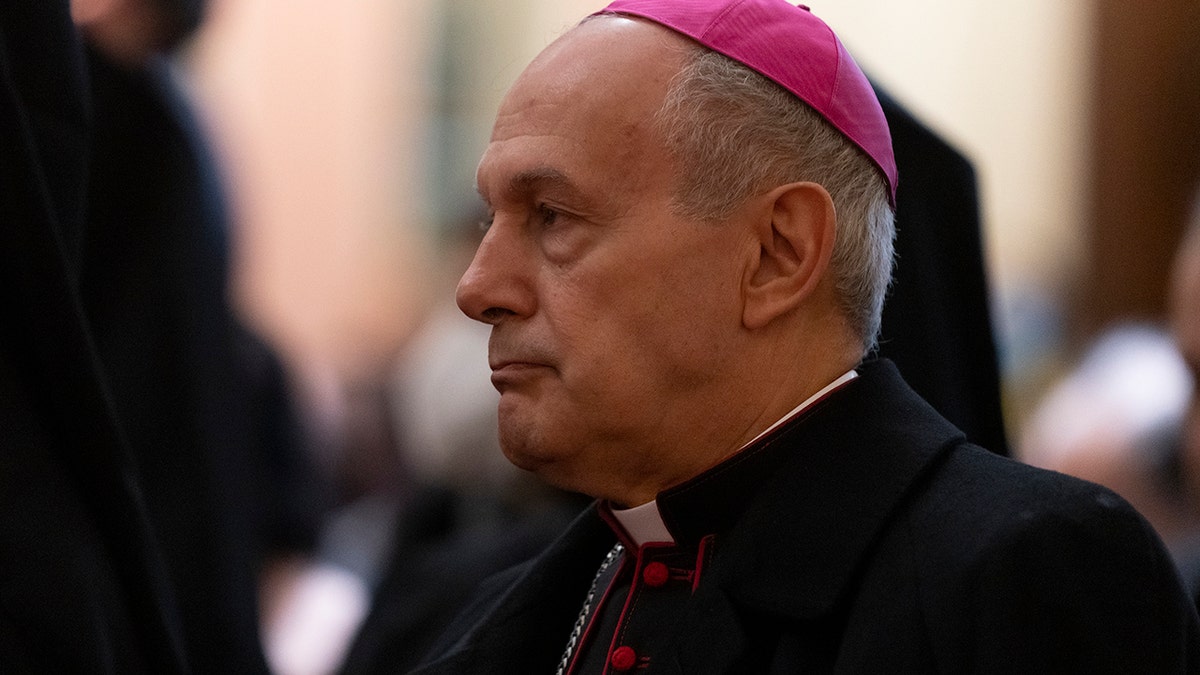
Archbishop Gabriele Caccia has been appointed by the pope as the new Vatican ambassador to the U.S. (Lev Radin/Pacific Press/LightRocket via Getty Images)
«War is back in vogue and a zeal for war is spreading,» the pope warned in the speech.
Trump called it a «great honor for our country» when Leo was elected pope last May after Pope Francis’ death, and when asked about Leo’s remarks earlier this year seemingly pressing him on policy, Trump told Politico he hadn’t seen the statements from the pontiff, but «I’m sure he’s a lovely man.»
He also said that he had met with the pope’s brother, who he called «serious MAGA.»
Last fall, the pope suggested that supporting the «inhuman treatment of immigrants in the United States» is not «pro-life,» leaving White House press secretary Karoline Leavitt to «reject there was inhumane treatment of illegal immigrants in the United States under this administration.»
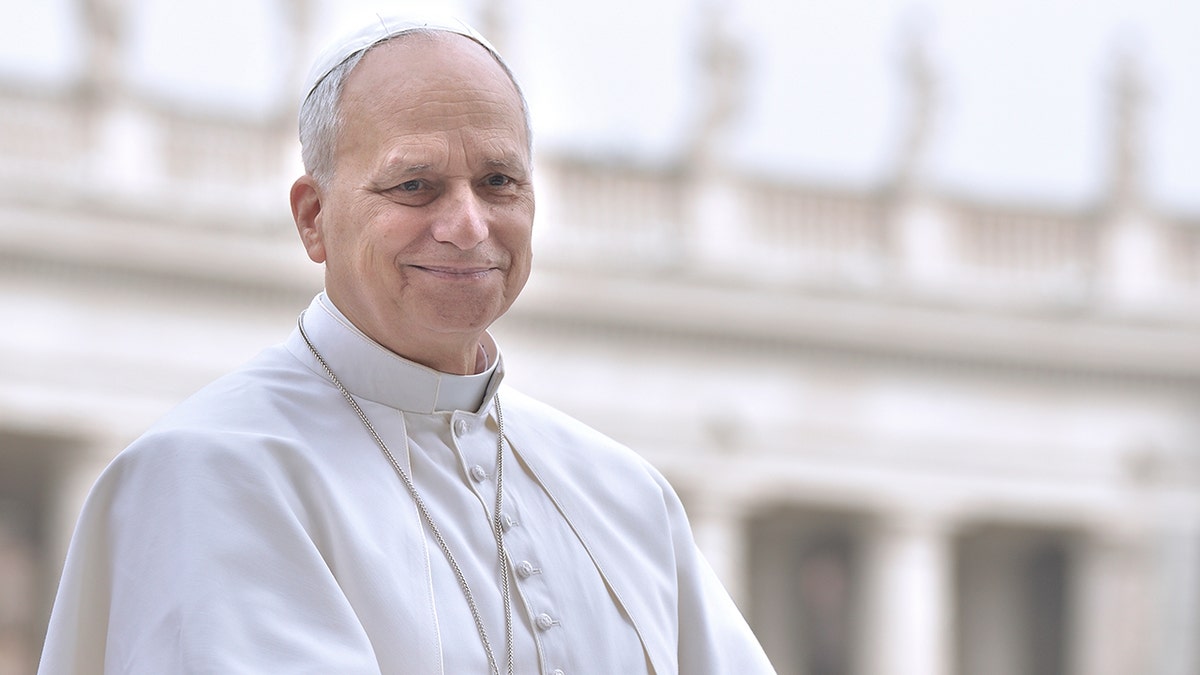
The pope and the Trump administration have been at odds over immigration and U.S. military actions. (Rocco Spaziani/Archivio Rocco Spaziani/Mondadori Portfolio via Getty Images)
Leavitt, who is Catholic, added that the administration always tries to be as humane as possible while enforcing laws.
CLICK HERE TO DOWNLOAD THE FOX NEWS APP
Archbishop Paul S. Coakley, current president of the U.S. conference, said after Caccia’s appointment: «On behalf of my brother bishops, I wish to extend our warmest welcome and our prayerful support to him as he carries out his responsibilities across the United States.»
Trump won 59% of the Catholic vote in the 2024 election, according to Politico.
The Associated Press contributed to this report.
Related Article
pope leo xiv,donald trump,world,roman catholic,geopolitics
NEWYou can now listen to Fox News articles!
During the Shield of the Americas summit in Florida on Saturday, outgoing Department of Homeland Security (DHS) Secretary Kristi Noem thanked President Donald Trump for appointing her to a newly created role after she was ousted from overseeing the agency.
Noem, who is moving to the newly created position of special envoy for the Shield of the Americas, showed no ill feelings toward the president and said she was proud of her work at DHS, arguing the department had secured the border and eliminated public safety threats.
«I do want to thank the president for creating this and for giving me the honor and the opportunity to serve as a special envoy to this region, to the Western Hemisphere,» Noem said during the summit at Trump National Doral outside Miami.
«This Shield of the Americas will be a powerful example to the rest of the world about what’s possible.»
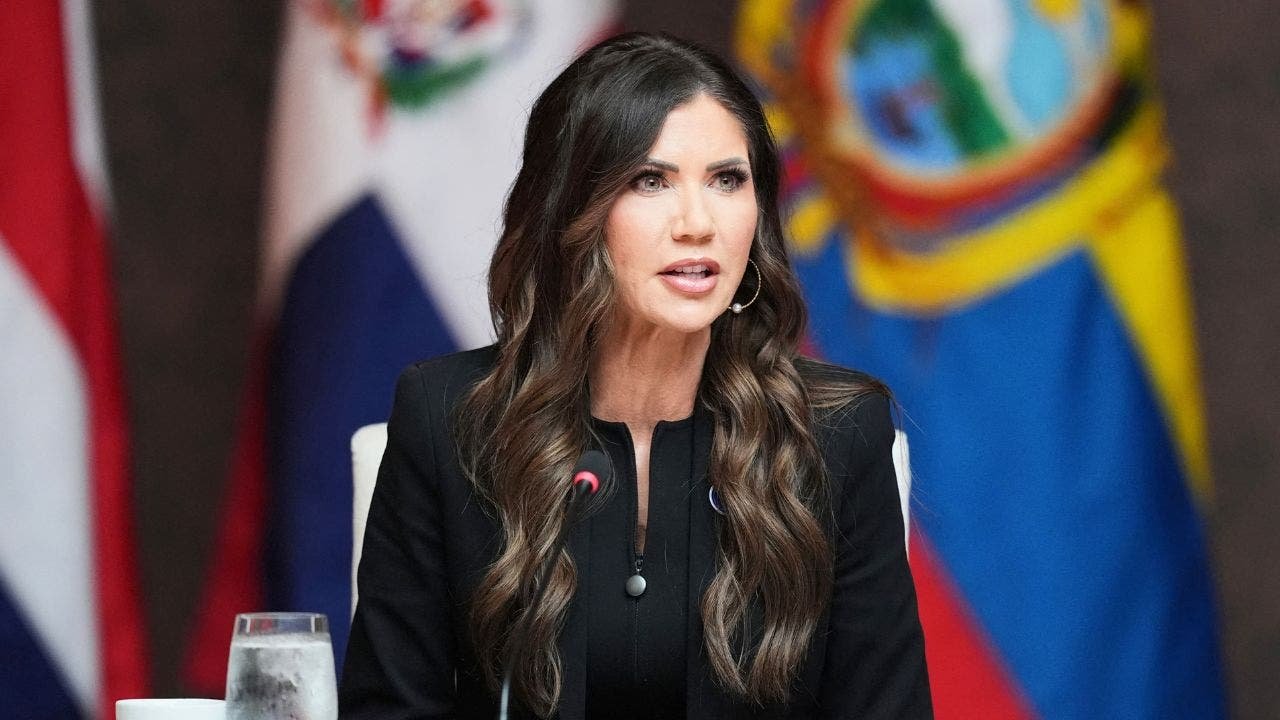
Homeland Security Secretary Kristi Noem delivers remarks during a working lunch at the Shield of the Americas summit, Saturday, at Trump National Doral near Miami. (Rebecca Blackwell / Pool / AFP via Getty Images)
Trump announced this week that Noem would shift into the new role after cutting short her tenure at DHS.
Noem was removed as the nation’s immigration chief after a turbulent stretch marked by internal clashes and two contentious congressional hearings where even some Republicans pressed her over leadership missteps, including the ad campaign, which she claimed the president had signed off on.
Noem framed the initiative as an effort to expand border security cooperation beyond the United States.
«The way that we cooperate on our shared ideals of freedom and of democracy and safety and security will be a shining light to all of those who wish to be more like all of us,» she said.
WHAT’S NEXT FOR KRISTI NOEM? 2026 SENATE CHATTER GROWS AFTER DHS EXIT
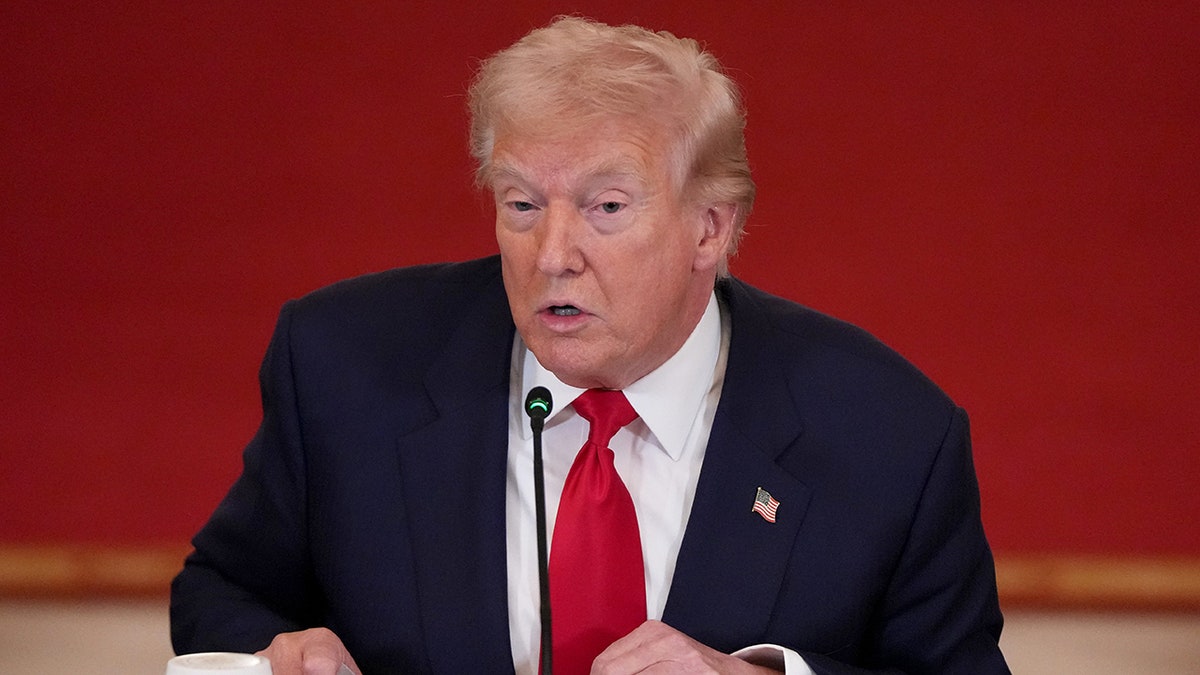
Trump removed Noem as the nation’s DHS chief this week after a turbulent stretch. (Julia Demaree Nikhinson/AP Photo)
Noem, who previously served in Congress and as South Dakota governor before leading DHS, defended her record overseeing immigration enforcement during the past year.
«In the last year, as secretary of Homeland Security, we have focused on securing our border,» she said. «We have transformed our country from one that was being invaded by enemies, millions of them that were coming in unvetted, that we didn’t know who was there and who wished to harm us.»
«We’ve secured that border,» she continued. «We’ve focused on removing public safety threats, and over 3 million people have been deported or removed from our country in the last year.»
Noem argued that stronger border enforcement has allowed the administration to pivot toward economic and diplomatic engagement with neighboring nations.
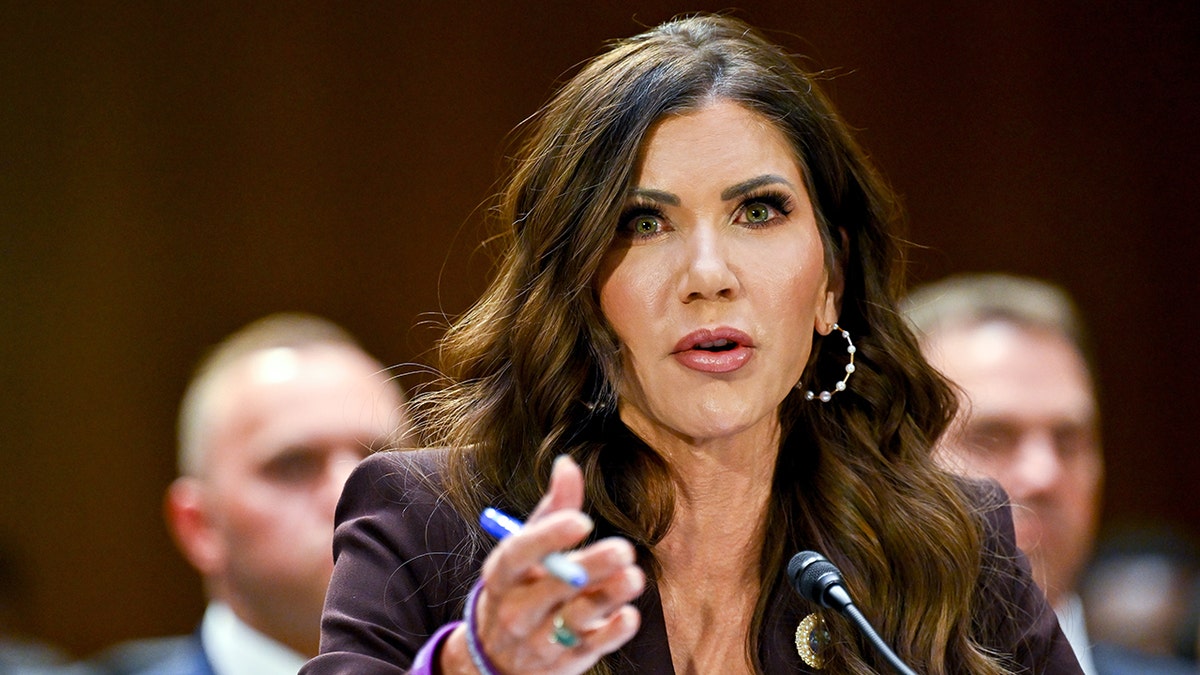
DHS Secretary Kristi Noem testifies before the Senate Judiciary Committee on Capitol Hill. (Graeme Sloan/Getty Images)
«Secure borders has changed everything for our country,» she said. «Now that America is secure and our borders are secure, we want to focus on our neighbors and to help our neighbors with their borders and challenges that they have so that they may have the security that we enjoy.»
Trump announced on Truth Social that Sen. Markwayne Mullin, R-Okla., will replace her effective March 31, while Noem shifts to the newly created envoy role.
Members of Trump’s Cabinet, including Secretary of State Marco Rubio, Secretary of War Pete Hegseth, Secretary of Commerce Howard Lutnick and United States Trade Representative Jamieson Greer attended Saturday’s summit.
CLICK HERE TO DOWNLOAD THE FOX NEWS APP
Leaders from other nations included Argentina’s Javier Milei, El Salvador’s Nayib Bukele Ortez, Bolivia’s Rodrigo Paz Pereira, Costa Rica’s Rodrigo Chaves Robles, Panama’s José Raúl Mulino Quintero, and Trinidad and Tobago’s Kamla Persad-Bissessar, Chile’s Jose Antonio Kast, the Dominican Republic’s Luis Rodolfo Abinader Corona, Ecuador’s Daniel Roy Gilchrist Noboa Azín, Guyana’s Mohamed Irfaan Ali, Honduras’ Nasry «Tito» Asfura and Paraguay’s Santiago Peña.
Notably missing were the leaders of Venezuela, Delcy Rodríguez, and Mexico, Claudia Sheinbaum Pardo.
Fox News Digital’s Alec Schemmel contributed to this report.
Related Article
kristi noem,donald trump,homeland security,politics,americas

Tras la cumbre regional con Trump en Miami, Milei llegó a Nueva York y se enfoca en la “Argentina Week”

“Esto era lo que decía sobre Messi en 2018″: Milei recordó su opinión sobre el capitán cuando era criticado

Canasta alimentaria tradicional vs. sin Tacc: cuánto aumenta el costo de una dieta especial

Atento Boca: Paulo Dybala fue operado por una lesión en la rodilla y estará varias semanas sin jugar

El miedo que transmite Milei en pleno frenesí libertario

Seis bloques de Diputados piden celeridad al Gobierno para repatriar a los argentinos varados en Medio Oriente

El hijo adoptivo de José María Muscari tomó una tajante decisión de vida a los 18 años

¡Interna total! Pablo Layus explotó y blanqueó quiénes son los que arruinan Intrusos: «Te matan»

Javier Milei habló de la crisis con la vicepresidenta: “No quiero la renuncia de Victoria Villarruel”

Mapa de la guerra en Medio Oriente: dos bandos y 13 países involucrados en un conflicto que jaquea al mundo

 POLITICA2 días ago
Javier Milei habló de la crisis con la vicepresidenta: “No quiero la renuncia de Victoria Villarruel”
- CHIMENTOS3 días ago
El desafortunado comentario de Yanina Zilli contra Daniela de Lucía, tras la muerte de su padre: “Jugamos con lo personal”
- CHIMENTOS2 días ago
Ian Lucas se hartó de las mentiras de Evangelina Anderson y confirmó que fueron novios: “Ella me da vergüenza”