INTERNACIONAL
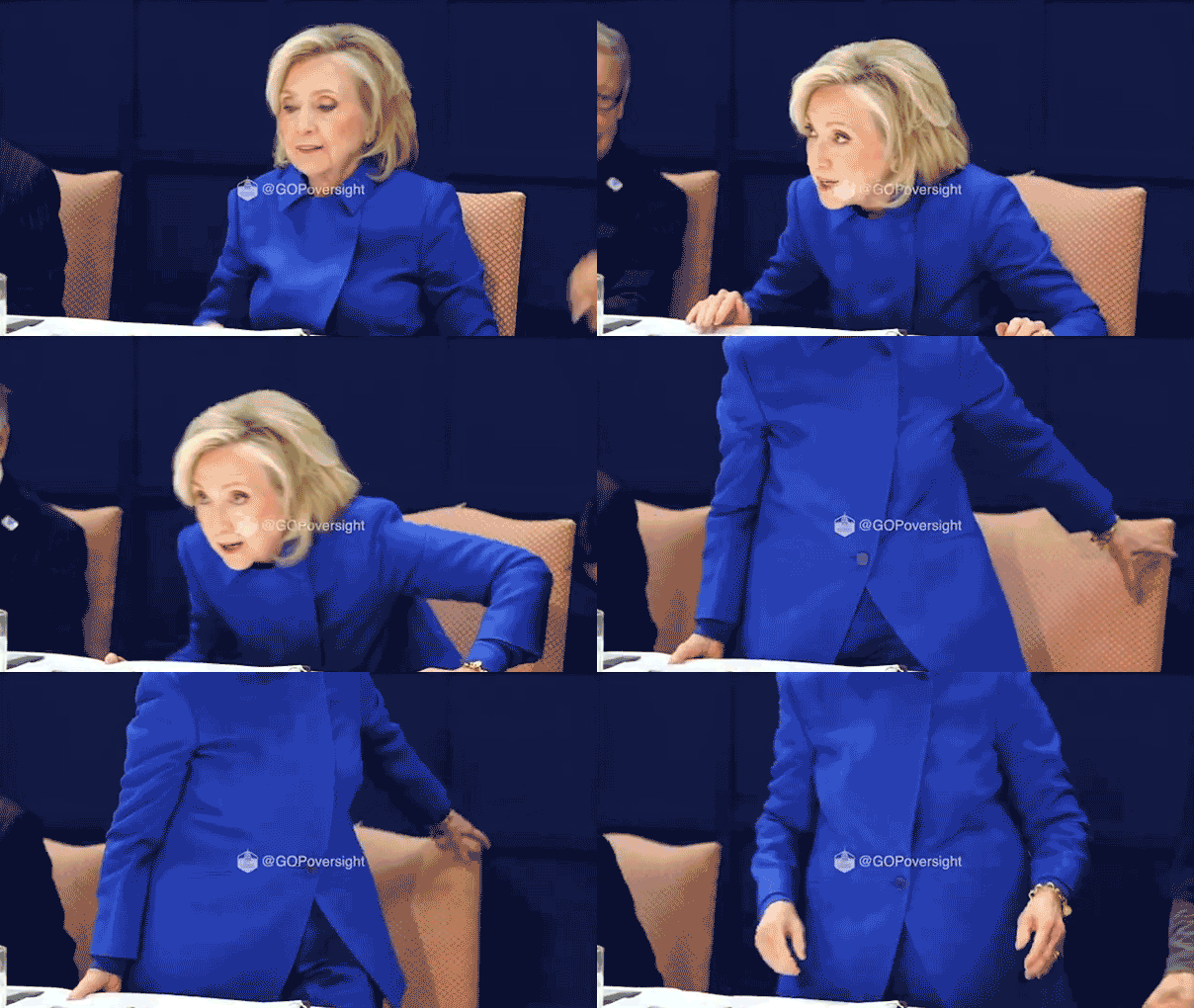
WATCH: Hillary Clinton storms out of Epstein deposition after House lawmaker leaks photo from inside

NEWYou can now listen to Fox News articles!
A newly released video shows former Secretary of State Hillary Clinton storming out of the room during her deposition for the House Oversight Committee’s Jeffrey Epstein probe last week, after exploding at Republican lawmakers for allowing a photo of her to leak.
«I’m done with this. If you guys are doing that, I am done,» Clinton said loudly after the leak was brought to her attention. «You can hold me in contempt from now until the cows come home. This is just typical behavior.»
The outburst came in response to a photo of Clinton from inside the deposition room that was posted by right-wing influencer Benny Johnson. Johnson said in his X post that Rep. Lauren Boebert, R-Colo., took the photo.
Someone off camera then said the deposition would go off the record, and Boebert can be heard in the background saying she did take a photo before the deposition began.
Former Secretary of State Hillary Clinton stormed out of her deposition before the House Oversight Committee at one point after it came to light that a House Republican leaked a photo of her inside the room. (Oversight Committee GOP)
«Oh for heaven’s sake,» Clinton cut in exasperated, thumping her fist on the table. «It doesn’t matter. We all are abiding by the same rules.»
Boebert can be heard saying she would take down the photo.
«Yeah, well,» Clinton responded aggressively as her lawyer asked to take a break.
«I’m done,» she said again, leaving the table.
The screen then promptly cut to black for a few seconds before the deposition appeared to resume moments later.
The stunning moment was part of nearly five hours of footage showing Clinton being deposed by lawmakers investigating the government’s handling of Jeffrey Epstein’s case.
Clinton stayed behind closed doors with both Republicans and Democrats from the 11 a.m. hour on Thursday, emerging to speak to reporters a little after 5:30 p.m. that evening.
The former first lady and Obama administration official told lawmakers she had no recollection of ever meeting Epstein and that she only knew his accomplice, Ghislaine Maxwell, as an acquaintance.
The deposition occurred a day before her husband, former President Bill Clinton, was similarly deposed behind closed doors for the committee’s Epstein probe.

Hillary Clinton, former U.S. Secretary of State, speaks to members of the media outside the Chappaqua Performing Arts Center in Chappaqua, N.Y., Feb. 26, 2026. (Adam Gray/Bloomberg via Getty Images)
When the testimony resumed, Clinton’s lawyer accused the Oversight majority of «violating its own rules» with the photo leak.
«I’d like to just say, for the record, we find it unacceptable, we find it unprofessional, and we find it unfair,» the lawyer said, noting the Clintons themselves pushed for a public hearing in the first place. «We are here in good faith, we are counting on good faith from all the members.»
Committee Chairman James Comer, R-Ky., can be heard responding, «I’ve advised my members that no photos or videos during the deposition can be released. I understand the posted photo was taken before the deposition started. That will not happen again. And we will look forward to continue with the deposition.»
MONICA LEWINSKY SAYS BILL CLINTON ‘ESCAPED A LOT MORE THAN I DID’ AFTER WHITE HOUSE SCANDAL
He also countered that the committee was «disappointed that the secretary’s opening statement was leaked to the press, before she even gave her opening statement.»
«It was not leaked to the press, it was provided, as with other witnesses,» Clinton’s lawyer responded. «What we don’t want is a secretary to be treated any differently than other witnesses.»
At another point, someone on the Democratic side could be heard asking Clinton about the photo leak.
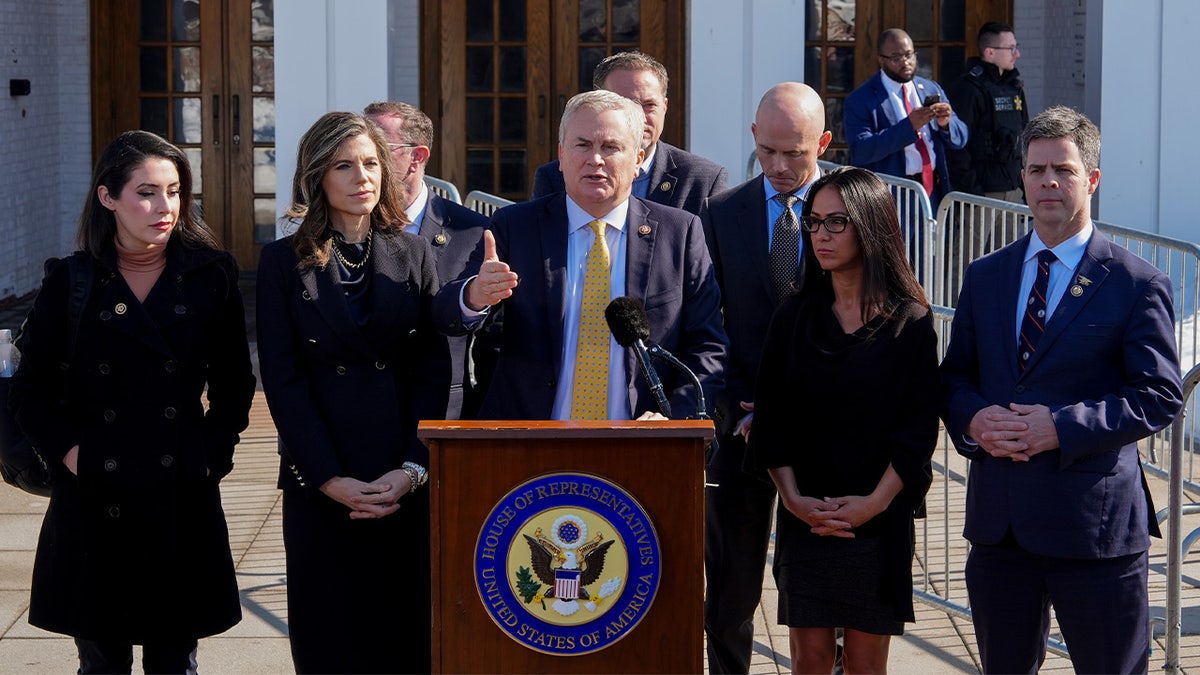
Rep. James Comer, a Republican from Kentucky and chairman of the House Oversight and Accountability Committee, center, joined by Republican members of the House Oversight Committee, speaks to members of the media while arriving for a closed-door deposition with former U.S. Secretary of State Hillary Clinton at the Chappaqua Performing Arts Center in Chappaqua, N.Y., Feb. 26, 2026. (Adam Gray/Bloomberg via Getty Images)
CLICK HERE TO DOWNLOAD THE FOX NEWS APP
«I will confess that I had some concerns about whether the majority on the committee would treat me fairly and would, you know, fairly convey what I say and what I did and how I looked and how I responded,» Clinton responded, again noting the decision to have a closed deposition rather than a public hearing.
«So it was disappointing, and I regret that it happened, and it violated your rules. But that’s not the real concern I have. The real concern is, get busy, focus on the people that have something to tell you that can tell you about intelligence, money, and crimes, and get them before you. And whenever possible, do it in public.»
She was then asked if President Donald Trump should be deposed in the probe, to which Clinton answered, «Absolutely.»
Clinton noted both in her opening statement and in comments to the press after the deposition that she had never met Epstein and only knew his accomplice Ghislaine Maxwell as an «acquaintance.»
Related Article
house of representatives politics,politics,jeffrey epstein,hillary clinton












INTERNACIONAL
Así se gestó la ofensiva de Estados Unidos e Israel en Irán: la Unidad 8.200 y cámaras hackeadas en Teherán
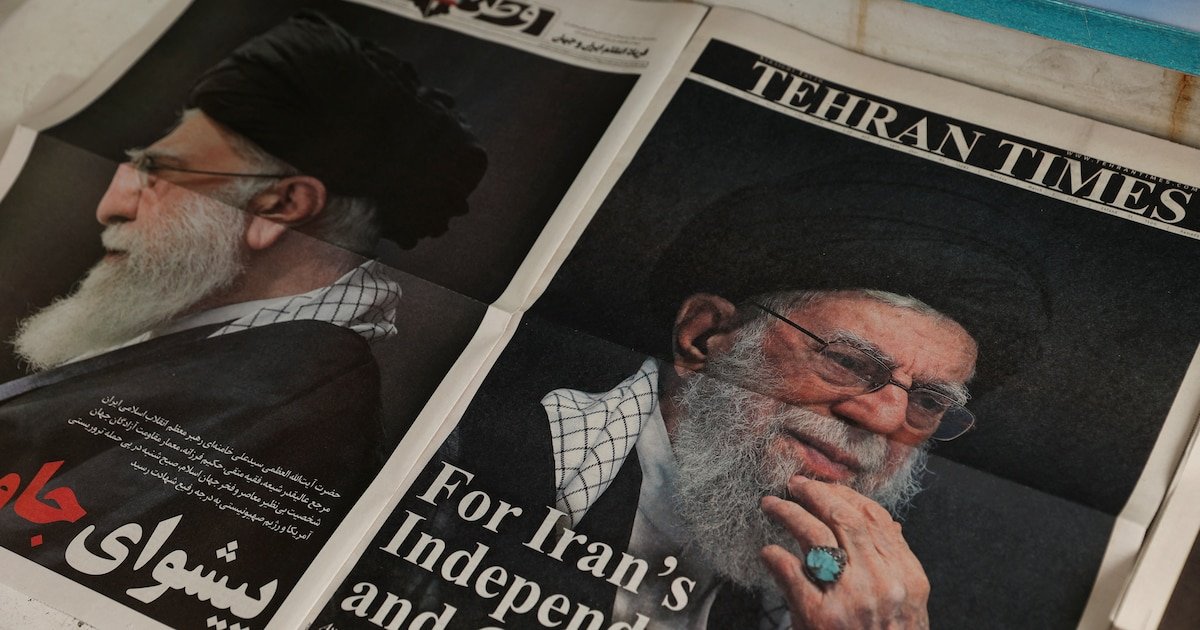
Las maniobras militares y el mensaje de Trump generaron un impacto regional que desafía la estabilidad y abre un debate sobre el futuro del régimen iraní
En los últimos años, Israel desplegó un sistema de vigilancia excepcional sobre Teherán, enfocando sus recursos en el entorno inmediato de Ali Khamenei, líder supremo iraní. La operación alcanzó su punto culminante el sábado, cuando Khamenei murió en un ataque aéreo israelí cerca de Pasteur Street, en la capital iraní.
Las cámaras de tráfico de la ciudad, ampliamente distribuidas en puntos estratégicos, habían sido vulneradas desde hacía años, informó Financial Times. Imágenes captadas en tiempo real se enviaban de manera cifrada a servidores en Tel Aviv y el sur de Israel, permitiendo observar los movimientos cotidianos de los guardaespaldas y conductores asignados a altos funcionarios iraníes.
Un ángulo de cámara se volvió particularmente valioso: facilitó identificar los lugares donde preferían estacionar sus vehículos personales y reveló detalles del funcionamiento interno en zonas habitualmente protegidas. Así, la vigilancia constante sobre el entorno del líder supremo ofreció a los servicios de inteligencia israelíes una visión sin precedentes sobre las rutinas y vulnerabilidades en el corazón del poder iraní.
Una cámara, en particular, proporcionó el ángulo exacto para identificar dónde estacionaban sus automóviles los integrantes del círculo de seguridad, abriendo una ventana a los hábitos y la rutina interna del recinto protegido.
Sobre esa base, se aplicaron algoritmos avanzados para construir expedientes sobre los miembros del equipo de seguridad. Estos expedientes incluían datos como direcciones, horarios de servicio, rutas habituales y, crucialmente, el perfil de las personas a las que custodiaban y transportaban. Este proceso permitió establecer lo que la inteligencia militar denomina un “patrón de vida”, una herramienta clave para anticipar movimientos y vulnerabilidades.
Además del hackeo de cámaras, la operación involucró la manipulación de torres de telefonía móvil en la zona de Pasteur Street. Israel logró interrumpir selectivamente componentes de una docena de torres, haciendo que los teléfonos parecieran ocupados y bloqueando la posibilidad de que la escolta de Khamenei recibiera alertas a tiempo.
Este conjunto de técnicas, basadas en la integración de datos en tiempo real y el análisis de comportamientos, resultó determinante para planificar el ataque con precisión y reducir el margen de error en la identificación del objetivo.

El desarrollo y ejecución de la operación para asesinar a Ali Khamenei dependió de la sincronización entre la Unidad 8.200 y el Mossad, dos de los pilares de la inteligencia israelí. La Unidad 8200, especializada en inteligencia de señales, fue responsable de recolectar y procesar enormes volúmenes de datos electrónicos. Su labor incluyó la interceptación de comunicaciones, el hackeo de cámaras urbanas y la manipulación de sistemas de telefonía móvil, aportando un flujo constante de información sobre los movimientos y hábitos del entorno de Khamenei.
Por su parte, el Mossad —la agencia de inteligencia exterior de Israel— tuvo a su cargo la gestión de activos humanos en territorio hostil. Gracias al reclutamiento de informantes y la obtención de datos sensibles a través de contactos en Irán, el Mossad pudo complementar la vigilancia tecnológica con información contextual de alto valor operativo.

La conjunción de ambas entidades permitió alimentar una cadena de inteligencia que procesaba diariamente montañas de datos para generar informes precisos y actualizados. Este método se apoyó en el uso de análisis matemático de redes sociales para identificar nodos de decisión y posibles blancos, afinando así la selección de objetivos.
La cultura operativa israelí, según exfuncionarios de inteligencia consultados por Financial Times, eleva la obtención de “inteligencia de targeting” (información precisa para eliminar un objetivo) al máximo nivel táctico. En el caso de Khamenei, los organismos trabajaron con el objetivo expreso de garantizar que, si la decisión política de eliminarlo llegaba, la información necesaria estuviera lista para ejecutar la orden con rapidez y exactitud.

La capacidad tecnológica de Israel ha sido un factor decisivo en la ejecución de operaciones encubiertas y ataques selectivos dentro de Irán. Esta superioridad se hizo evidente durante la guerra de 12 días en junio de 2025, cuando agentes israelíes eliminaron a más de una docena de científicos nucleares y altos mandos militares iraníes en cuestión de minutos, marcando un hito en la historia de la inteligencia regional.
En esa ofensiva, Israel logró inutilizar las defensas aéreas iraníes mediante una combinación de ciberataques, drones de corto alcance y municiones de precisión disparadas desde fuera de las fronteras iraníes. El daño incluyó la destrucción de radares de lanzadores de misiles de fabricación rusa, lo que dejó a Irán sin capacidad de respuesta inmediata.
La sofisticación tecnológica también se manifestó en la selección de armamento. Los pilotos israelíes emplearon misiles del tipo Sparrow, capaces de alcanzar blancos tan pequeños como una mesa de comedor desde distancias superiores a 1.000 kilómetros. Esta precisión permitió atacar objetivos estratégicos sin exponerse al alcance de los sistemas de defensa iraníes.

En palabras de un actual funcionario de inteligencia israelí citado por Financial Times, el éxito operativo radicó en “quitarles los ojos primero”, refiriéndose a la neutralización de las capacidades de vigilancia y defensa de Irán antes de lanzar los ataques principales. La misma lógica de supremacía tecnológica y de información se aplicó en la operación contra Ali Khamenei, maximizando el margen de sorpresa y minimizando los riesgos para las fuerzas israelíes.
La preparación del ataque contra Ali Khamenei implicó un exhaustivo proceso de verificación, en el que participaron distintas ramas de la inteligencia israelí y sus aliados. Para un objetivo de tan alto valor, la doctrina militar de Israel exige que dos oficiales superiores, trabajando de manera independiente, confirmen con alto grado de certeza la presencia del objetivo en el lugar señalado y la identidad de quienes lo acompañan.
En esta ocasión, los servicios israelíes contaban con información precisa procedente de inteligencia de señales, como la vigilancia de cámaras de tráfico intervenidas y la intercepción de redes de telefonía móvil. Esa vigilancia permitió verificar que la reunión en la oficina de Khamenei seguía en pie y que los altos funcionarios iraníes ya se dirigían al lugar pactado.
El componente estadounidense añadió un nivel adicional de certidumbre. Según fuentes familiarizadas con la operación, la CIA aportó un informante humano con acceso directo, lo que permitió corroborar la asistencia de Khamenei y su círculo al encuentro.
Con la confirmación multinivel, los pilotos israelíes —que ya se encontraban en vuelo para llegar a tiempo— lanzaron hasta 30 municiones de precisión, según dijo a Financial Times un ex alto mando de inteligencia israelí. El ataque se realizó en horario matutino, lo que brindó un elemento de sorpresa adicional pese a la elevada alerta iraní. El ejército israelí señaló que atacar de día, en vez de por la noche, permitió sorprender tácticamente por segunda vez, a pesar de la preparación defensiva de Irán.
El golpe israelí inaugura una etapa de escalada y sofisticación en la guerra de inteligencia entre Irán e Israel, con posibles efectos globales.
Middle East,Obituaries,Government / Politics,Military Conflicts


NEWYou can now listen to Fox News articles!
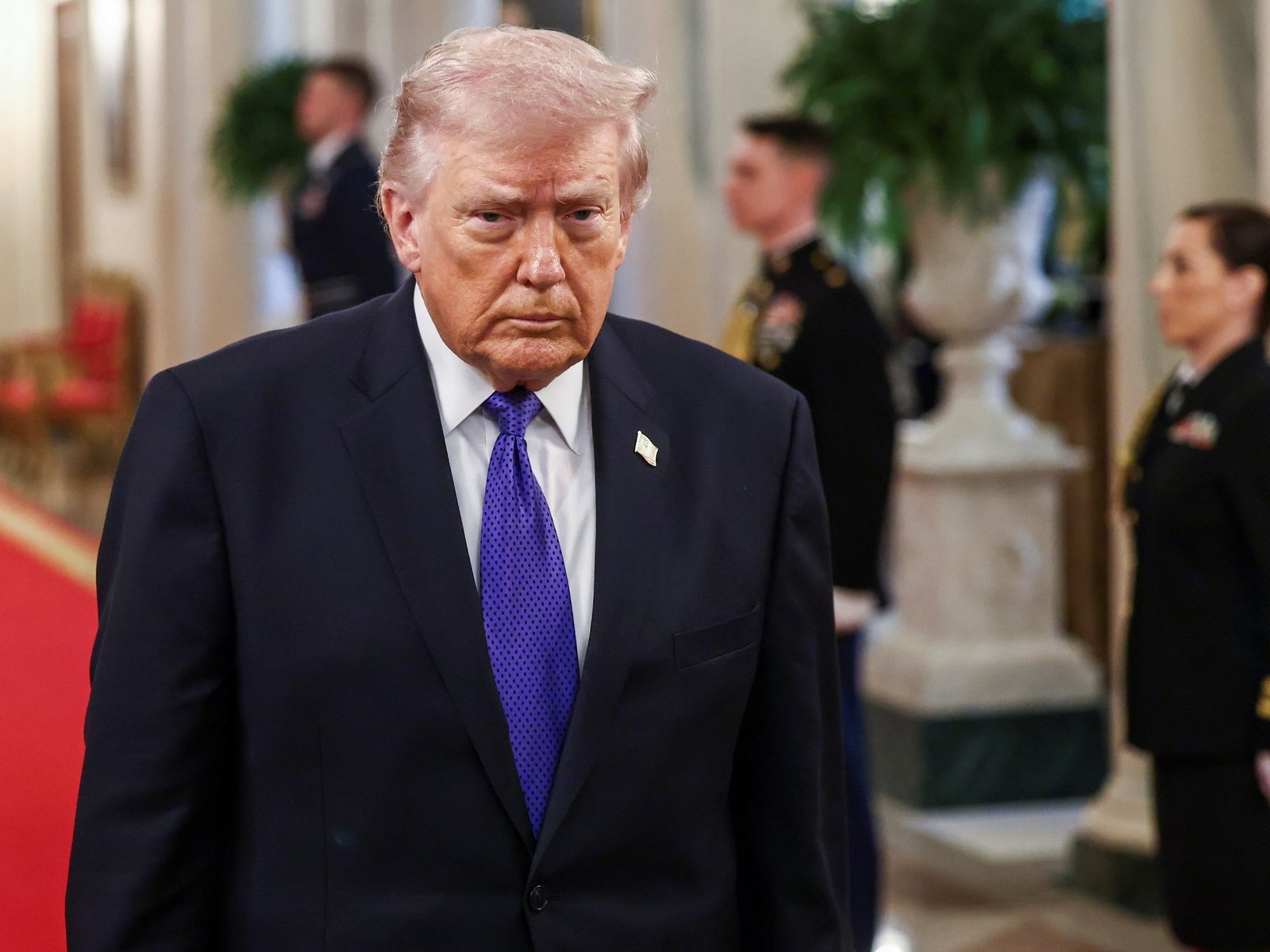
Secretary of War Pete Hegseth warned that some traditional U.S. allies are «hemming and hawing about the use of force» as Washington presses forward with its campaign against Iran, raising fresh questions about NATO cohesion at a moment of escalation.
Spain has refused U.S. permission to use certain bases for strikes on Iran, calling for de-escalation and adherence to international law. Turkey has criticized the operation and warned of broader regional destabilization, while President Recep Tayyip Erdoğan said he was «saddened» by Ayatollah Ali Khamenei’s death and denied that Turkish territory was used in the campaign.
In a statement released on Saturday, French President Emmanuel Macron said that, «The outbreak of war between the United States, Israel and Iran carries grave consequences for international peace and security.» He added, «The ongoing escalation is dangerous for all. It must stop.»
During Monday’s media briefing, Hegseth drew a sharp contrast between Israel and what he described as hesitant allies. «Israel has clear missions as well, for which we are grateful. Capable partners, as we’ve said since the beginning. Capable partners are good partners, unlike so many of our traditional allies, who wring their hands and clutch their pearls, hemming and hawing about the use of force.»
US President Donald Trump and US Secretary of Defense Pete Hegseth look on as Chairman of the Joint Chiefs of Staff General Dan Caine (out of frame) speaks to the press following US military actions in Venezuela, at Trump’s Mar-a-Lago residence in Palm Beach, Florida, on January 3, 2026. (Jim WATSON / AFP via Getty Images)
The criticism reflects growing frustration inside the administration that while some European capitals have issued statements of support, operational backing has not matched the rhetoric.
President Donald Trump also voiced dissatisfaction with allied hesitation. In an interview with The Daily Telegraph, Trump said he was «very disappointed» in British Prime Minister Keir Starmer for initially blocking U.S. use of British bases and that Starmer took «far too much time» to reverse course.
The United Kingdom later authorized U.S. use of key facilities, including Diego Garcia, after raising initial legal objections and following a drone strike on RAF Akrotiri in Cyprus.
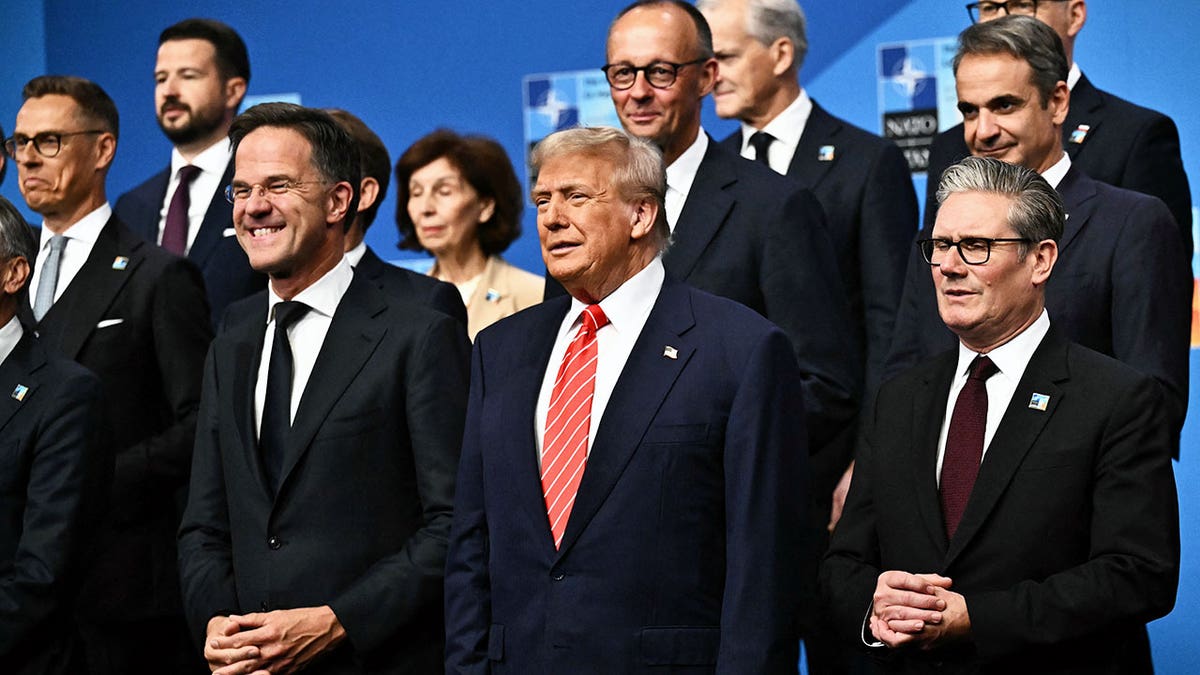
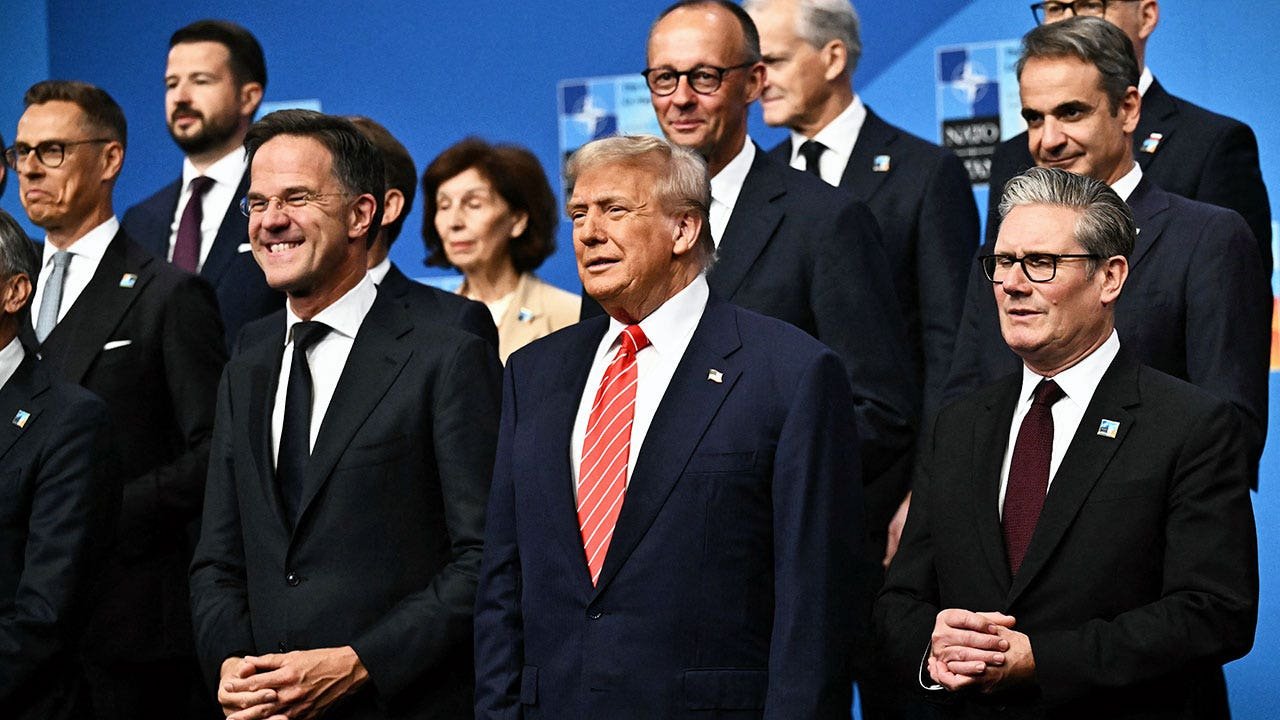
NATO Secretary General Mark Rutte, U.S. President Donald Trump and Britain’s Prime Minister Keir Starmer pose with NATO country leaders for a family photo during the North Atlantic Treaty Organization (NATO) Heads of State and Government summit in The Hague, Netherlands, June 25, 2025. (Ben Stansall/Pool via Reuters)
Justin Fulcher, former senior adviser to Hegseth, told Fox News Digital the moment represents «an absolutely critical inflection point where NATO should act in a unified way in support of what the United States is doing.»
He framed the issue as larger than the current campaign. «Symbolically, the U.S.-NATO alliance is critical when looking at actually restoring deterrence globally,» Fulcher said, arguing that visible unity would send a message not only to Tehran but to other geopolitical rivals watching how the alliance responds under pressure.
FROM MISSILES TO MINERALS: THE STRATEGIC MEANING BEHIND THE IRAN STRIKE
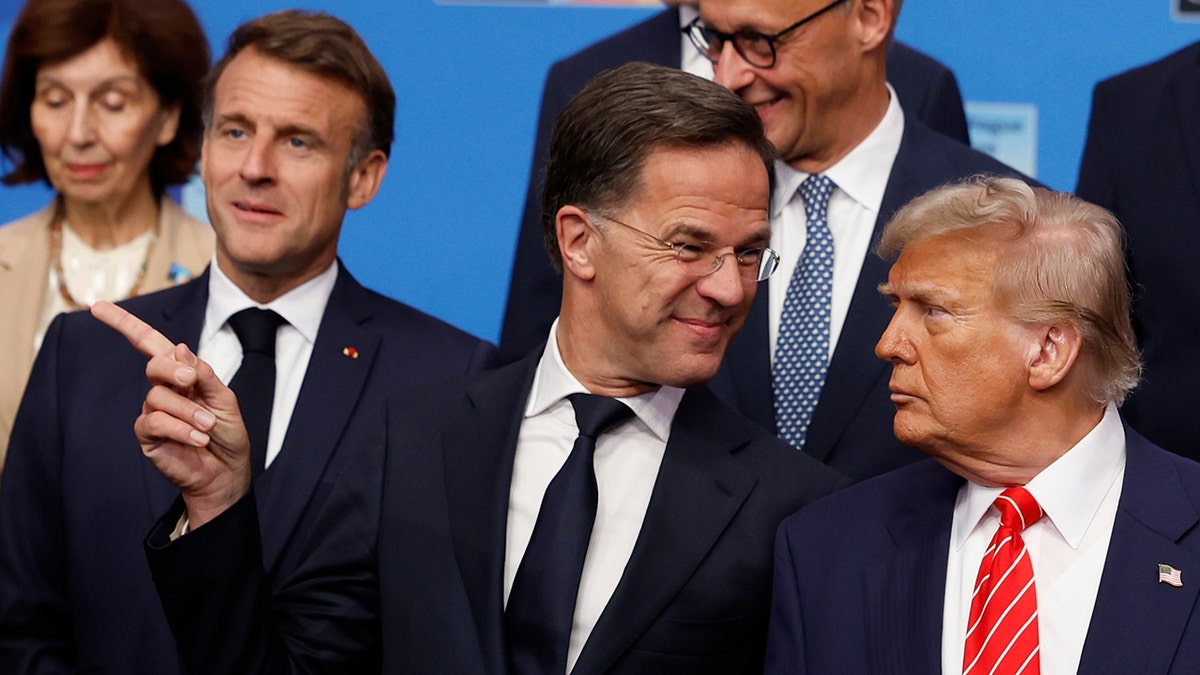
President Donald Trump, right, speaks with NATO Secretary General Mark Rutte during a group photo of NATO heads of state and government at the NATO summit in The Hague, Netherlands, Wednesday, June 25, 2025. (AP Photo/Geert Vanden Wijngaert)
NATO Secretary General Mark Rutte has sought to downplay suggestions of division.
«I spoke with all the key European leaders over the weekend,» Rutte said on Fox News. «There is widespread support for what the president is doing.»
He added, «Europe is stepping up, is doing what is necessary to make sure this operation can go ahead and deliver all the enablement necessary.»
Germany has struck a more cautious tone. Chancellor Friedrich Merz warned in Sunday that strikes risk an Iraq- or Afghanistan-style quagmire and that Europe would bear the consequences.
At the same time, he said Berlin would not «lecture» the U.S. «We recognize the dilemma,» he said, explaining that repeated attempts over past decades had not put Iran off trying to acquire nuclear weapons or oppressing its own people. «So we’re not going to be lecturing our partners on their military strikes against Iran.»
«Despite all the doubts, we share many of their aims,» he said.
ISRAELI MINISTER OUTLINES IRAN MISSION GOALS, SAYS IRANIAN PEOPLE NOW HAVE CHANCE TO ‘REGAIN THEIR FREEDOM’
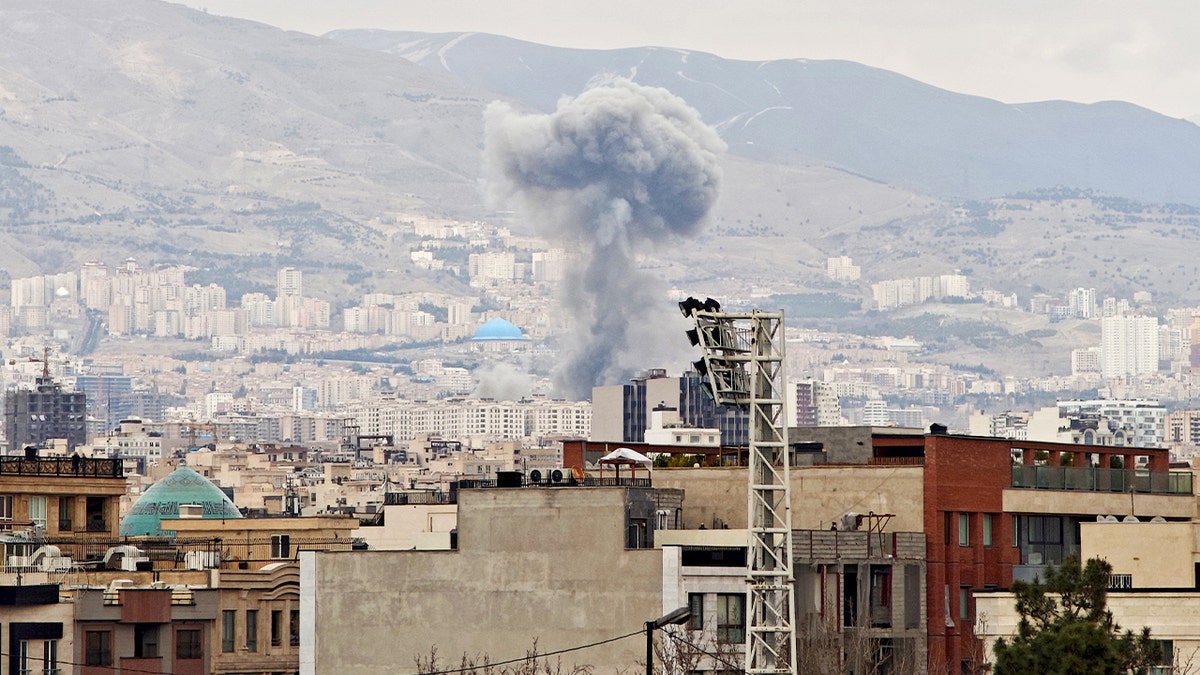
Smoke rises in Tehran following an explosion on March 2, 2026, amid ongoing U.S. and Israeli military strikes. (Majid Saeedi/Getty Images)
Fulcher contrasted the current hesitation with the strong reactions from some NATO capitals during past alliance disputes, including tensions surrounding Greenland.
«When you look at Greenland, that was obviously a very touchy subject for some countries in the Alliance,» Fulcher said. «Iran for decades has been a huge promoter and funder of terrorism all across the globe — attacks that have happened in Europe, in many NATO and European countries,» he said. «For me, it is quite shocking that we’re seeing a difficult time for many NATO members to fully unify and step up in support of the United States and what the U.S. and Israel is doing in Iran.»
He argued that Europe has a significant strategic incentive to see Iranian capabilities degraded.
«I think actually Europe and NATO have the most to gain from neutralizing the threat that emanates from Iran,» Fulcher said. «When you look at whether the ballistic missile threat or some of the state-sponsored terrorism threats, Europe has been on the receiving end of much more of these threats than the United States has in some cases.»
He stressed that support should extend beyond public endorsements.
CLICK HERE TO DOWNLOAD THE FOX NEWS APP
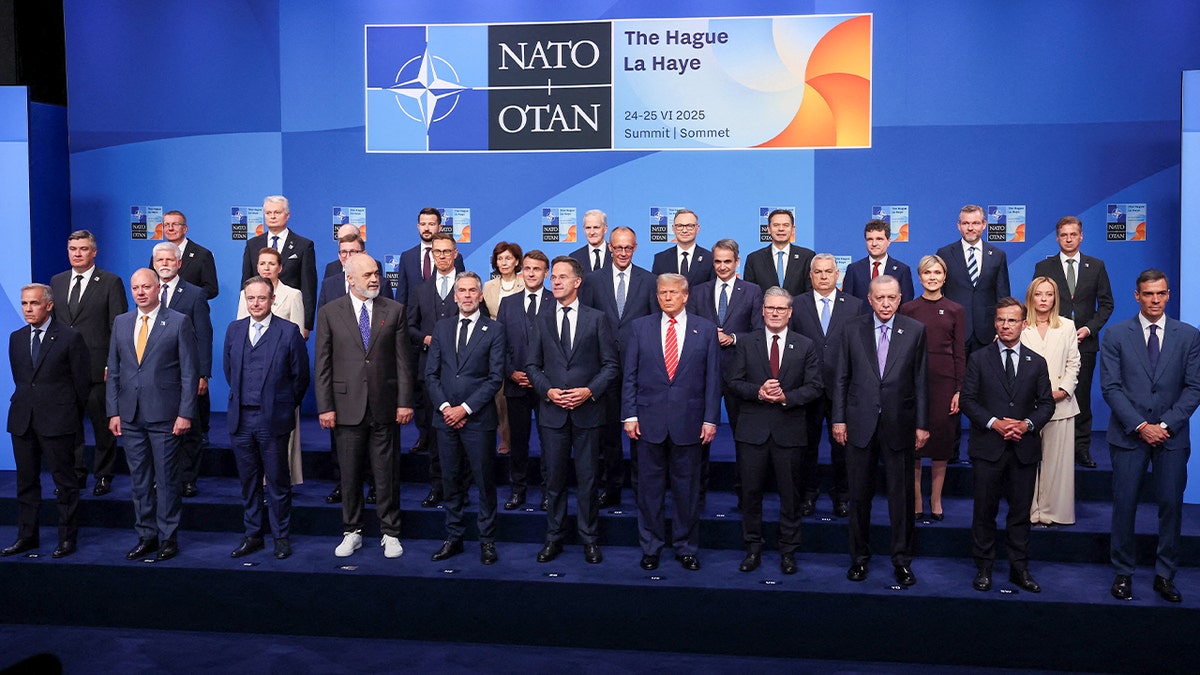
NATO leaders pose in this shot taken in June. Military leaders are meeting in Washington Tuesday evening to discuss securities options for Ukraine. (REUTERS/Claudia Greco)
«Some of our European allies can do a lot more to not just support with words, which should be the bare minimum here, but also support with actual tangible action,» Fulcher concluded.
Reuters contributed to this report.
Related Article

war with iran,nato,europe,israel,donald trump,pete hegseth

La esposa de Nahuel Gallo contó cómo está la salud del gendarme y dijo que desde la AFA nunca hablaron con ella

La esposa del gendarme argentino Nahuel Gallo contó detalles del encierro: «Recibía sol una sola hora al día»

Así se gestó la ofensiva de Estados Unidos e Israel en Irán: la Unidad 8.200 y cámaras hackeadas en Teherán

Jornada financiera: las acciones argentinas cayeron pero el riesgo país retrocedió pese a la volatilidad mundial

Franco Mastantuono, expulsado: el fuerte insulto del informe y cuántos partidos de sanción podría recibir

Griselda Siciliani habría comenzando un romance con Dante Spinetta: “Lo vieron ingresar al edificio de ella”

Evangelina Anderson contó qué pasará con sus hijos ante el próximo desafío de Martín Demichelis en España

¡Tensión en vivo! Aníbal Pachano y Nancy Pazos protagonizaron un cruce explosivo en la mesa de Mirtha Legrand

Destrozaron a Andrea del Boca por el terrible pecado que tuvo en Gran Hermano: “La quiero presa”, apuntaron contra la actriz por un detalle en la cocina

¡Titi revolucionó Gran Hermano! Cuáles son las 5 cosas que ya extraña: «Accesorios, pilates, bondiola, auriculares y bailar»

 CHIMENTOS2 días ago
¡Tensión en vivo! Aníbal Pachano y Nancy Pazos protagonizaron un cruce explosivo en la mesa de Mirtha Legrand
- CHIMENTOS1 día ago
Destrozaron a Andrea del Boca por el terrible pecado que tuvo en Gran Hermano: “La quiero presa”, apuntaron contra la actriz por un detalle en la cocina
- CHIMENTOS2 días ago
Las predicciones más importantes en la vida de cada signo del horóscopo en marzo, según Jimena La Torre: «Será un cambio rotundo»