INTERNACIONAL
Weekend Roundup: Convicted murderers, child sex abusers among illegal aliens nabbed by ICE across US

NEWYou can now listen to Fox News articles!
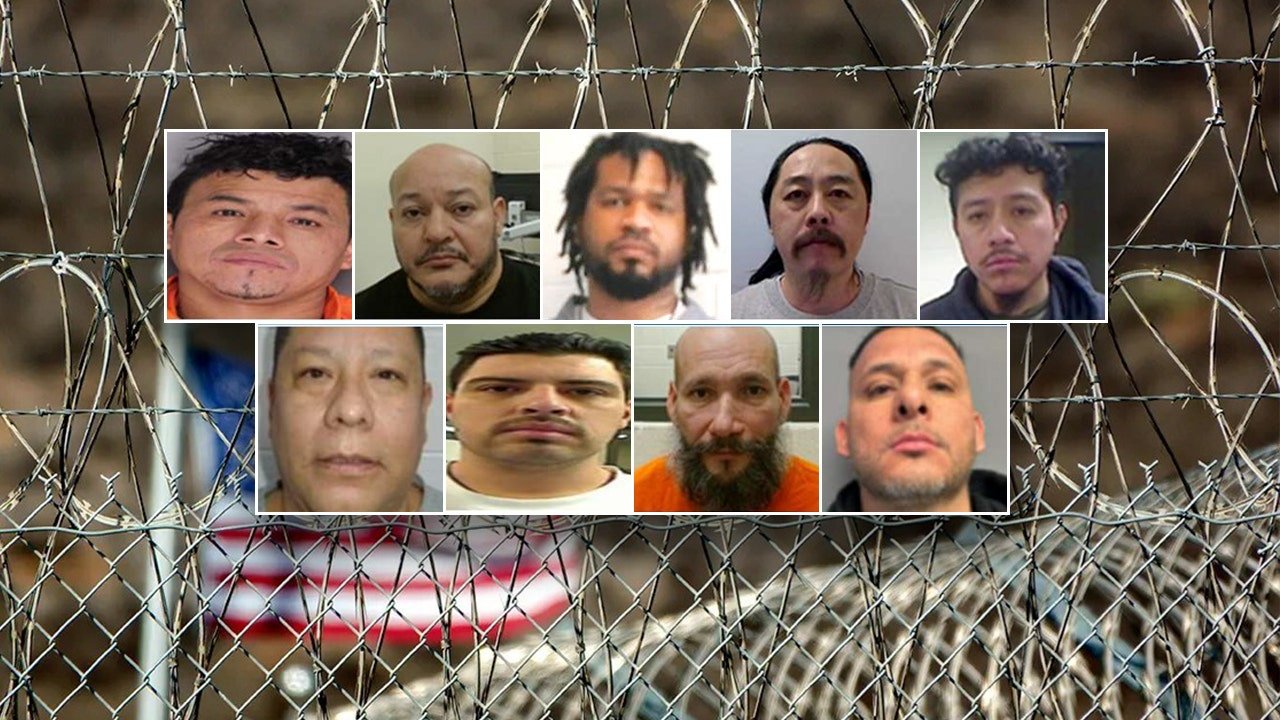
FIRST ON FOX: People convicted of murder, «deadly conduct,» sexual abuse of minors and the elderly were among the «worst of the worst» criminal illegal aliens nabbed by Immigration and Customs Enforcement (ICE) this weekend all across the country, according to the Department of Homeland Security (DHS) on Monday.
«Over the weekend, ICE law enforcement arrested pedophiles, murderers, and drug traffickers from American communities,» Assistant DHS Secretary Tricia McLaughlin said. «If you come to our country illegally, break our laws, we will find you, we will arrest you, and you will NEVER return.»
Numerous pedophiles were arrested over the weekend, including one man convicted of «continuous sexual abuse» of a child and another convicted of aggravated sexual assault on an elderly/disabled person. Martin Martinez-Gaspar, a criminal illegal alien from Mexico, was convicted in Los Angeles for the repeated abuse of a child, while Jose Ivan Trevino, also a criminal illegal alien from Mexico, was convicted of the aggravated sexual assault of an elderly/disabled person in Hidalgo County, TX.
DHS CALLS RAPE OF AUTISTIC TEEN ‘MOST HEINOUS WE’VE SEEN’ AS ICE DETAINER TESTS CALIFORNIA SANCTUARY LAWS
Jose Ivan Trevino (left) and Martin Martinez-Gaspar (right) were picked up this weekend by federal immigration officials in California and Texas after being convicted of sex crimes against minors and the elderly, respectively. (Department of Homeland Security)
Toua Lo, a criminal illegal alien from Laos, was also arrested this past weekend by ICE. Lo was convicted of lewd and lascivious acts with a child under 14 in Sacramento, California, according to Homeland Security. Meanwhile, Alejandro Saucedo, an illegal immigrant from Mexico residing in Whiteville, North Carolina, was picked up by ICE this weekend after being convicted of indecent liberties with a child. Dario Solis-Salvador, a criminal illegal alien from Guatemala, was picked up this weekend by ICE as well after being convicted of two counts of child endangerment in Ford County, Kansas.
In addition to sex crimes, federal agents picked up illegal aliens convicted of aggravated assault with a deadly weapon, fentanyl trafficking, «deadly conduct,» and creating «serious bodily injury,» according to DHS.
Among them was an illegal immigrant from the Dominican Republic, Julio Cesar Pimentel-German, convicted of trafficking the deadly drug fentanyl in Massachusetts, and an illegal immigrant from Mexico, Carlos Cortez-Aquino, convicted of aggravated assault with a deadly weapon in Fort Meyers, Florida.

Mugshots from the Department of Homeland Security’s (DHS) ‘worst of the worst’ criminal illegal aliens arrested by federal immigration officials during the last weekend in January 2026. (Department of Homeland Security (DHS))
TRUMP UNLOADS ON ‘RADICAL LEFT’ AS HE STANDS BY KRISTI NOEM AMID IMMIGRATION ENFORCEMENT UNREST
Isidro Velasquez-Rodas and Abel Hernandez-Espinal, both from Honduras but now living in Houston, Texas, were picked up after being convicted of committing «deadly conduct,» Homeland Security said.
Meanwhile, a man from Gettysburg, Pennsylvania, was arrested by ICE this weekend after being convicted of theft.
Other arrests included aliens convicted of possession of burglary tools and second-degree assault resulting in serious bodily injury. DHS also identified a second person convicted in California of assault with a deadly weapon, Fernando Sandoval-Cruz, who was arrested this past weekend.
«President Trump and Secretary Noem empowered ICE law enforcement to enforce the law and arrest and remove public safety threats from our country,» McLughlin continued in the Homeland Security news release about ICE’s weekend round-up of criminal illegal aliens.
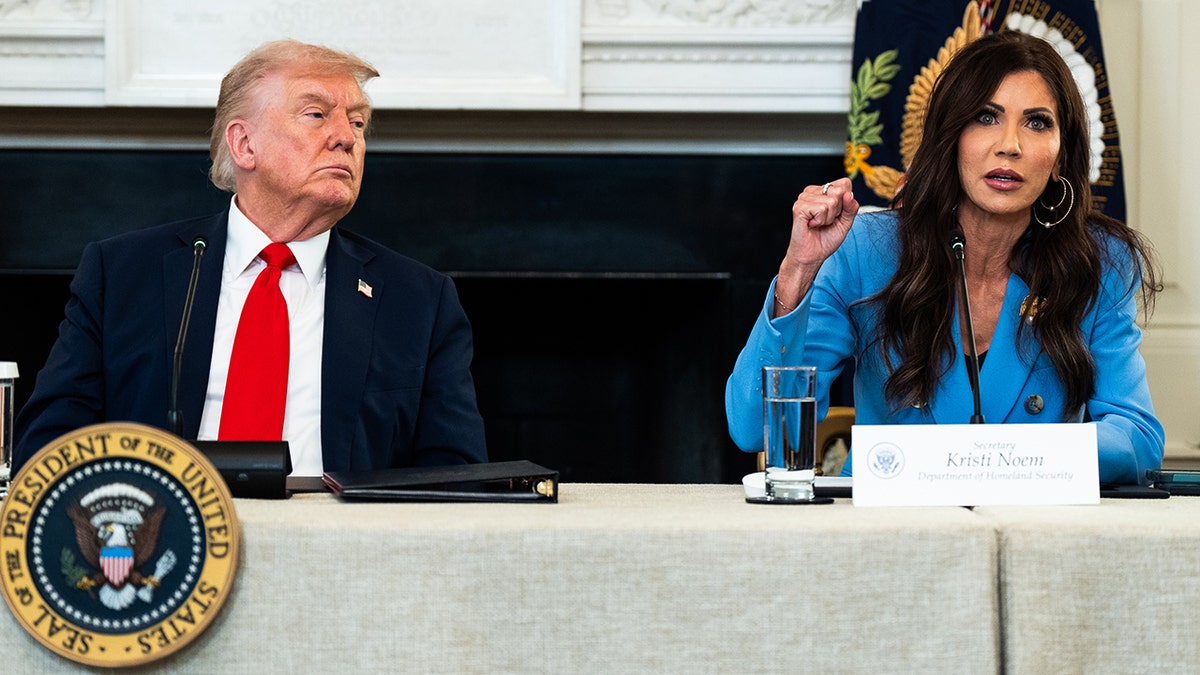
Homeland Security Secretary Kristi Noem speaks during a roundtable in the State Dining Room of the White House on Wednesday Oct. 8, 2025. A new report from economists that week indicated net negative migration for first time in decades amid the Trump administration’s ramped up enforcement measures. (Demetrius Freeman/The Washington Post via Getty Images)
CLICK HERE TO DOWNLOAD THE FOX NEWS APP
The release also included a link to a DHS website where U.S. residents across the country can search for criminal illegal immigrants who have been arrested in their communities.
«The biggest problem our Country has is that the Democrats are SOFT ON CRIME! They want to protect the Criminal, violent and vicious as they may be, at the expense of our great American Citizens and Patriots,» President Trump said on Truth Social Sunday. «That is not what America is about, and never will be!»
migrant crime,illegal immigrants,immigration,homeland security,kristi noem,deportation









NEWYou can now listen to Fox News articles!
President Donald Trump’s joint strikes with Israel against Iran have intensified a growing bipartisan push in Congress to rein in his war powers, with lawmakers in both parties demanding votes on resolutions aimed at limiting his authority to use military force in the region.
Members in both chambers had already planned to force votes before the first bombs fell Saturday. Now, they are doubling down on calls to restrict the president’s military authority.
Sen. Tim Kaine, D-Va., has repeatedly forced votes to curb Trump’s war powers abroad, and he was nearly successful in halting further military action in Venezuela until Republicans blocked the effort earlier this year.
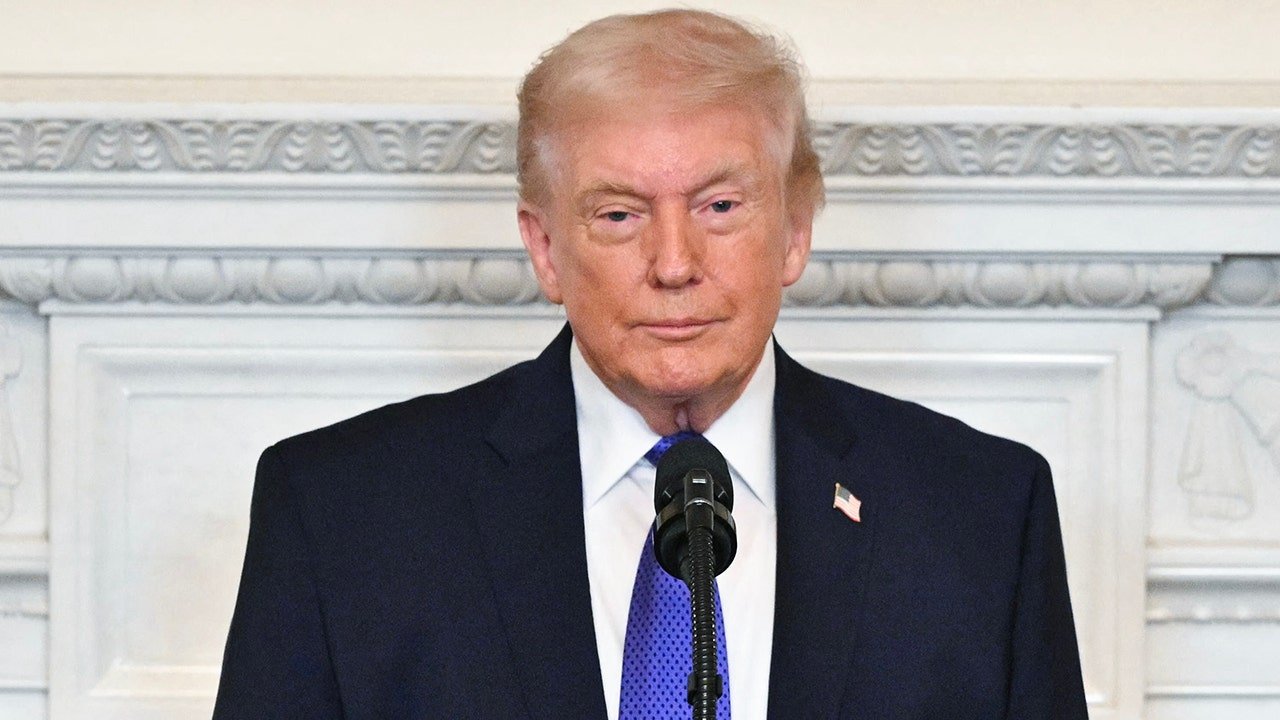
President Donald Trump speaks during a breakfast with governors at the White House in Washington Feb. 20, 2026. (Mandel Ngan/AFP via Getty Images)
Kaine had already prepped his latest resolution, co-sponsored by Sen. Rand Paul, R-Ky., for a vote in the Senate next week. He argued Saturday that the strikes, carried out without congressional approval, further underscore why a vote should be held immediately.
«These strikes are a colossal mistake, and I pray they do not cost our sons and daughters in uniform and at embassies throughout the region their lives,» Kaine said in a statement. «The Senate should immediately return to session and vote on my War Powers Resolution to block the use of U.S. forces in hostilities against Iran.»
In the House, Reps. Thomas Massie, R-Ky., and Ro Khanna, D-Calif., are preparing their own war powers resolution for a vote.
KENNEDY WARNS AYATOLLAH WANTS TO ‘DRINK OUR BLOOD OUT OF A BOOT’ AS IRAN TENSIONS ESCALATE
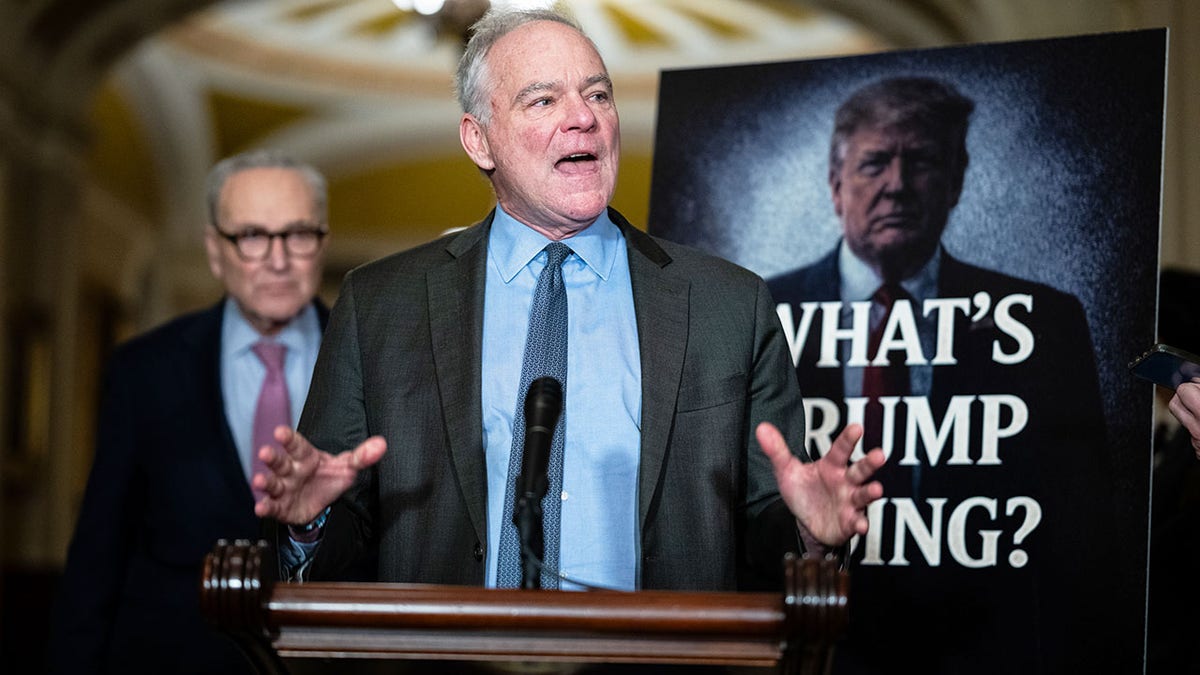
Sen. Tim Kaine, D-Va., plans to force a vote on his war powers resolution to rein in President Donald Trump’s military action in Iran. (Graeme Sloan/Bloomberg via Getty Images)
Massie said in a post on X that he opposed «this war. This is not ‘America First.’»
«When Congress reconvenes, I will work with [Khanna] to force a congressional vote on war with Iran,» Massie said. «The Constitution requires Congress to vote, and your representative needs to be on record as opposing or supporting this war.»
The effort has the backing of House Minority Leader Hakeem Jeffries, D-N.Y., who earlier in the week noted that the resolution would require «the president to come to Congress to make the case for using military force against Iran.»
RUBIO, RATCLIFFE TO DELIVER CLASSIFIED IRAN BRIEFING TO ‘GANG OF EIGHT’ AHEAD OF TRUMP’S STATE OF THE UNION
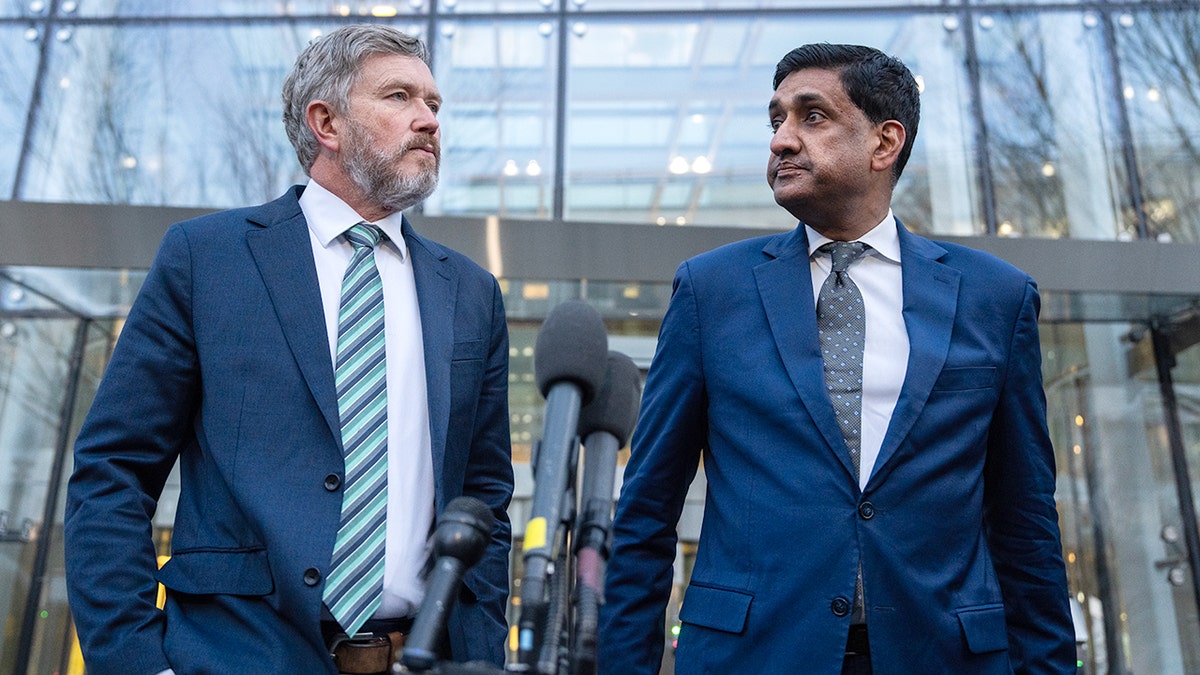
Reps. Thomas Massie, R-Ky., left, and Ro Khanna, D-Calif., conduct a news conference after reviewing unredacted portions of the Jeffrey Epstein files outside a Department of Justice office Feb. 9, 2026. (Tom Williams/CQ Roll Call, Inc. via Getty Images)
The resolution’s fate in the House remains uncertain, given that a handful of House Democrats have broken with their party and backed the administration’s strikes in Iran.
Massie and Khanna’s push may also have the support of at least one more Republican in the lower chamber.
Rep. Warren Davidson, R-Ohio, appeared ready to back their war powers resolution after news of the strikes Saturday. He reiterated a position he made earlier in the week in a post on X.
«I have asked for a classified briefing defining the mission in Iran,» Davidson said. «In the absence of new information, I will support the War Powers Resolution in the House next week.
«War requires congressional authorization,» he continued. «There are actions short of war, but no case has been made.»
Back in the Senate, the success of Kaine and Paul’s push will require Senate Republicans to cross the aisle.
CLICK HERE TO DOWNLOAD THE FOX NEWS APP
They found a short-lived bipartisan coalition earlier this year, when their resolution targeting military action in Venezuela survived a key procedural vote. The group included senators Josh Hawley, R-Mo.; Lisa Murkowski, R-Alaska; Susan Collins, R-Maine; and Todd Young, R-Ind.
Both Hawley and Young later flipped their positions after assurances from the administration that there would be no boots on the ground in Venezuela and that Trump would seek congressional approval for any future military action in the region.
Whether that same standard will apply to operations in Iran remained unclear Saturday. Murkowski and Young both said they hope to receive thorough briefings in the days ahead.
«Last summer, following Operation Midnight Hammer, I supported the administration’s targeted actions in Iran after receiving a comprehensive briefing from senior officials,» Murkowski said on X.
«Events are rapidly unfolding, and I expect Congress to receive the same level of engagement so we fully understand the scope, objectives and risks of any further military action.»
Related Article

politics,war with iran,senate,house of representatives politics
INTERNACIONAL
La extensa red de bases de inteligencia y operaciones espaciales del régimen chino en América Latina
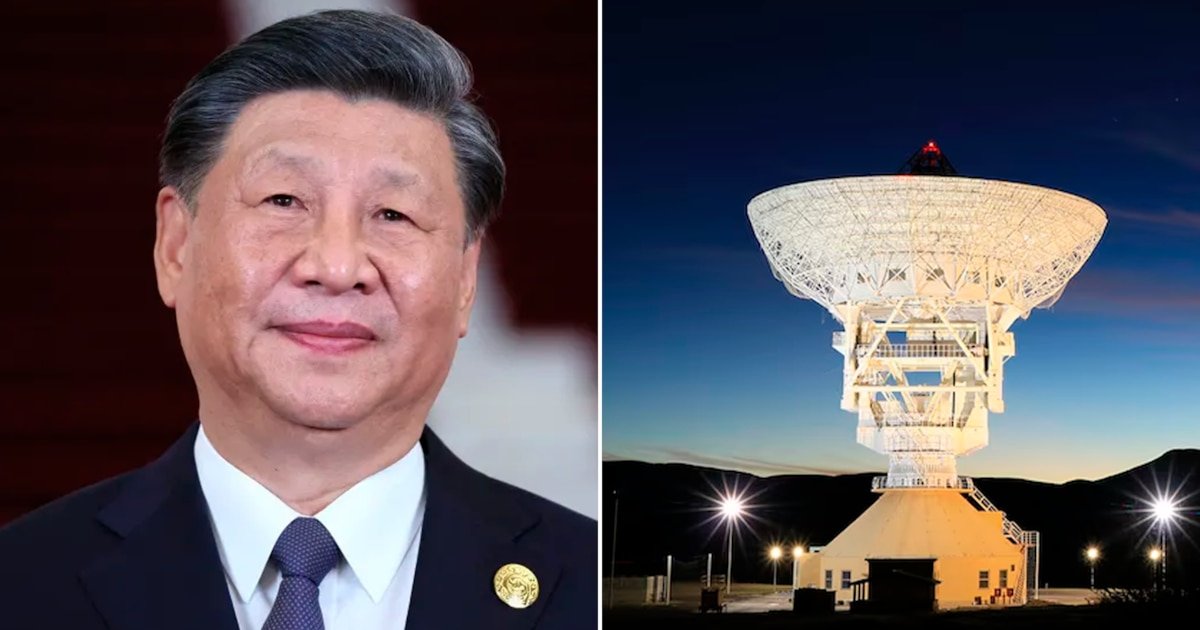
La cooperación espacial de China en América Latina ha pasado de ser una cuestión científica a una iniciativa con implicaciones estratégicas globales. A través de acuerdos bilaterales y multilaterales, el régimen de Xi Jinping ha implantado una red de infraestructura espacial que, aunque se presenta como civil, cumple una función vital en la vigilancia satelital y la recopilación de inteligencia para el Ejército Popular de Liberación. Este entramado abarca estaciones terrestres, radiotelescopios y centros de procesamiento de datos, integrados bajo la doctrina china de “guerra informatizada” para lograr superioridad en el espacio y elevar la capacidad militar global.
China ha situado el desarrollo espacial como eje prioritario de su estrategia nacional. La expansión de su “Corredor Espacial de la Franja y la Ruta” responde a directrices estatales orientadas a la autosuficiencia tecnológica y el control absoluto del dominio espacial, apoyadas por leyes internas y una fusión entre intereses civiles y militares. En este contexto, la Conciencia Situacional Espacial —la capacidad de identificar, clasificar y rastrear objetos en el espacio— se sostiene en la función estratégica de las infraestructuras terrestres. Así, el dominio del espacio ha dejado de ser un objetivo limitado a la exploración, para convertirse en factor clave para planificar operaciones militares y proteger intereses globales.
El Comité Selecto sobre China del Congreso de Estados Unidos publicó esta semana una nueva investigación que revela cómo el régimen de Beijing utiliza infraestructura en América Latina para avanzar sus capacidades espaciales y la recolección de inteligencia. El informe, titulado “Pulling Latin America into China’s Orbit” (Atrayendo a América Latina hacia la órbita de China), corresponde a la segunda entrega de los análisis del comité sobre la actividad de Beijing en el hemisferio.
“Gran parte de la vida cotidiana estadounidense depende de los satélites sobre nosotros. Por eso, las operaciones espaciales de China son motivo de seria preocupación. China solo invierte en operaciones espaciales en América Latina para avanzar su agenda y socavar a Estados Unidos en el espacio”, señaló John Moolenaar, presidente del Comité Selecto.

“El presidente Trump ha actuado de manera decisiva para enfrentar la influencia nociva de China en el hemisferio occidental, y nuestros aliados deben actuar con prontitud sobre las recomendaciones de este informe y frenar la expansión de la infraestructura espacial china”, agregó.
De hecho, el mandatario republicano convocó a una cumbre presidencial en el hotel Doral de Miami para articular un bloque regional que pueda desarmar la ofensiva de Beijing en América Latina. La cita será el 7 de marzo, y ya fueron invitados los presidentes Javier Milei (Argentina), Santiago Peña (Paraguay), Rodrigo Paz (Bolivia), Nayib Bukele (El Salvador), Daniel Noboa (Ecuador) y Tito Asfura (Honduras).
La investigación del comité reveló que China ha desarrollado una extensa red de estaciones terrestres espaciales y telescopios de uso dual en varios países latinoamericanos. Esta red se utiliza para recopilar inteligencia y reforzar la capacidad de combate del Ejército Popular de Liberación.
La posición de América Latina es esencial en la expansión espacial de China. A diferencia de los modelos occidentales sustentados en redes de socios globales, China carecía de infraestructuras espaciales fuera de sus fronteras, lo cual restringía su capacidad para vigilancia continua y recopilar inteligencia sobre satélites rivales, especialmente los estadounidenses. Para salvar esta desventaja, ha priorizado acuerdos con gobiernos regionales que permiten ampliar su presencia y asegurar el seguimiento en tiempo real de activos espaciales estratégicos. De este modo, la región se ha integrado en la cobertura global china y en la obtención de datos críticos durante la totalidad de la órbita de los satélites por el hemisferio occidental.
El compromiso chino con América Latina figura en sucesivos libros blancos y planes de acción conjunta. El informe del Comité recuerda que desde 2008, los convenios han avanzado de transferencias tecnológicas simples a una integración profunda orientada por plataformas multilaterales como CELAC y declaraciones conjuntas, incluyendo la Declaración de Wuhan 2024. Estos instrumentos proveen respaldo legal y diplomático y avalan la permanencia a largo plazo de infraestructura y personal chino en la región.
Las iniciativas se presentan formalmente como proyectos de cooperación civil: monitoreo ambiental, comunicaciones, navegación o educación científica. Sin embargo, la infraestructura resultante es de doble uso. La integración de científicos y técnicos locales, junto a la formación y la gestión compartida, justifica públicamente los “desarrollos conjuntos”, mientras que los acuerdos contemplan cláusulas que permiten a entidades como la China National Space Administration y la China Satellite Launch and Tracking Control General operar sistemas tecnológicamente avanzados supervisados, de manera directa o indirecta, por el Ejército Popular de Liberación.
Así, laboratorios universitarios y radiotelescopios con fines astronómicos refuerzan la red de recopilación de inteligencia militar. El multilateralismo proclamado en foros y la aceleración digital regional favorecen la dependencia tecnológica, difuminando la frontera entre la actividad científica y los intereses militares.


En este contexto, el régimen de Xi Jinping ha implantado al menos 11 infraestructuras vinculadas al Ejército chino repartidas entre Argentina, Venezuela, Bolivia, Chile y Brasil. En Argentina, la Estación Espacio Lejano (Neuquén), construida bajo un acuerdo de 50 años de exclusividad y financiada con más de 54.000.000 de dólares, cuenta con una antena de alta ganancia de 35 metros, capaz de interceptar señales de satélites extranjeros y garantizar una sincronización precisa para aplicaciones espaciales y militares. El Observatorio Felix Aguilar (San Juan) y la estación en desarrollo de Río Gallegos amplían el papel en la vigilancia y el análisis de datos. El proyecto CART, también en Argentina, fue cancelado en 2025 por presiones internacionales ante sospechas de uso militar.


En Venezuela, las estaciones de El Sombrero (Guárico) y Luepa (Bolívar) son gestionadas formalmente por agencias civiles, pero fueron construidas y operan con tecnología asociada a la defensa china, permitiendo el seguimiento de satélites nacionales y facilitando el acceso de Beijing a infraestructura crítica tras la incorporación venezolana al programa lunar chino.


En Bolivia, las estaciones de La Guardia (Santa Cruz) y Amachuma (La Paz) están dotadas de antenas parabólicas de hasta 13 metros y laboratorios de análisis de imágenes, gestionados por ingenieros bolivianos formados en China y técnicos chinos residentes. Los contratos vigentes hasta 2028 garantizan el aprovechamiento dual de los datos recabados, incluyendo funciones militares.


En Chile, la presencia china se refleja en el Centro de Datos Astronómicos de Santiago, donde se emplean supercomputadoras de Huawei y colaboran científicos con vínculos en la defensa china en sistemas de rastreo espacial. En 2025 se cancelaron proyectos en el Atacama por motivos de seguridad, pero la utilización de algoritmos empleados en laboratorios de procesamiento mantiene la exposición tecnológica. La estación satelital de Santiago utiliza tecnología de rastreo avanzado capaz de detallar la localización precisa de objetos espaciales y abre la puerta a futuros usos militares.


Brasil alberga la estación de Tucano y el Laboratorio conjunto en Serra do Urubu, iniciativa que asocia empresas nacionales, tecnológicas chinas y universidades locales. Protocolos de intercambio de datos permiten el seguimiento de satélites en órbita baja y geoestacionaria, reforzando tareas civiles y permitiendo usos militares directos. La cooperación con la Fuerza Aérea Brasileña para entrenamiento y simulación orbital solidifica el vínculo estratégico, mientras que el proyecto BINGO en Serra do Urubu introduce algoritmos capaces de interceptar y categorizar señales de interés militar.

China ha consolidado la capacidad de recolectar inteligencia, efectuar seguimiento satelital y apoyar operaciones de misiles de largo alcance desde bases en América Latina, alterando el equilibrio estratégico mundial. Estaciones terrestres, radiotelescopios y tecnologías de rango láser satelital dotan al Ejército Popular de Liberación de herramientas para localizar, identificar y, potencialmente, interferir o neutralizar activos espaciales rivales. Estas infraestructuras permiten alimentar los sistemas de comando militar chino con datos precisos para direccionar operaciones y actualizar objetivos en tiempo real.
Al operar en las mismas bandas de frecuencia que los sistemas militares estadounidenses y triangular posiciones de aviones y buques mediante análisis de señal, se eleva el riesgo de vigilancia indetectable y posible sabotaje a infraestructuras esenciales. La integración de operaciones científicas y militares fomenta la transmisión avanzada de datos para armamento como misiles balísticos intercontinentales y vehículos hipersónicos, completando el ciclo de comando y control desde el hemisferio sur. Plataformas móviles como la flota Yuanwang amplían la cobertura incluso fuera del alcance de las estaciones fijas.
La proliferación de infraestructura de doble uso genera inquietudes sobre soberanía, transparencia y dependencia tecnológica en los países anfitriones. Suspensiones de proyectos en Chile y Argentina han respondido a presiones internacionales y advertencias sobre el empleo de centros científicos como nodos de inteligencia militar. El debate se centra en la falta de mecanismos de control local y la opacidad de los acuerdos, aspectos que imposibilitan la supervisión independiente y el control sobre el destino final de los datos.
Actores estatales e internacionales recomiendan aumentar las garantías legales, realizar auditorías técnicas y fomentar iniciativas alternativas en cooperación espacial. Estados Unidos ha propuesto supeditar su propia cooperación científico-defensiva a que los países latinoamericanos restrinjan el acceso chino a instalaciones sensibles y apliquen controles estrictos para asegurar que la infraestructura controlada por China no ponga en riesgo intereses estratégicos regionales.
La expansión de la red espacial china en América Latina confirma que alianzas civiles pueden cimentar plataformas decisivas para acciones militares, permitiendo a Beijing vigilar y potencialmente neutralizar sistemas estratégicos de cualquier potencia sin limitaciones geográficas.

NEWYou can now listen to Fox News articles!
Iranians across the country could be seen and heard celebrating the death of Supreme Leader Ayatollah Ali Khamenei after coordinated Israeli strikes overnight.
In one video, Iranians near Karaj, Iran, outside the capital of Tehran, took to the streets, honked their horns and cheered.
In social media videos, Iranians in Tehran cheered from their apartments, playing loud music and setting off fireworks as the news spread.
In Fuladshahr, people packed the streets, waving their arms in the air, whistling, honking and cheering over the news.
In Borazjan, Iran, celebrants chanted and, in Mamasani, they waved flags and danced.
People celebrate in Madrid, Spain. (Carlos Lujan/Europa Press via Getty Images)
People also celebrated in the Iranian cities of Shiraz and Abadan, «where the people are out on the streets till the wee hours of the night in celebration of an Iran that is on the brink of finding its freedom after almost five decades,» according to Lisa Daftari, editor at The Foreign Desk.
IRAN FIRES MISSILES AT US BASES ACROSS MIDDLE EAST AFTER AMERICAN STRIKES ON NUCLEAR, IRGC SITES
Iranian people also cheered the news in other parts of the world, such as Madrid, London, Berlin, Armenia and the United States.

People celebrated the death of Khamenei on Saturday in Berlin. (Christophe Gateau/Picture Alliance via Getty Images)
«Iranian people all over the world, from Los Angeles to Tehran, are on the streets celebrating [in] sheer jubilation over the dawn of a new and free Iran,» Daftari told Fox News Digital.
«Iranians poured onto the streets cheering, clapping, waving the lion and sun flag, dancing openly and singing the old national anthem. It’s hard to imagine a people so starved for freedom, so desperate for justice, that they are cheering military strikes on their own soil as the price of liberation.»

A woman holds up an Iranian flag as people celebrate the death of Khamenei in Los Angeles. (Genaro Molina/Los Angeles Times via Getty Images)
In Los Angeles, home to the largest Iranian community in the U.S., hundreds came out to wave Iranian and American flags on Saturday.
Some people also held signs bearing expressions such as, «Make Iran Great Again.»
«I love America. I love everything about this country,» Iranian American journalist Masih Alinejad told Fox News Saturday.
«I grew up in a country where I was brainwashed to say, ‘Death to America,’ the same country — how ironic — the same country that saved my life three times and is now helping my people in Iran. They’re celebrating. They’re celebrating out of joy.

A family celebrates while watching Fox News in Vienna, Va. (Reuters/Nathan Howard)
«Thank you, President Trump, for taking decisive action. This is how true leadership looks like.»
CLICK HERE TO DOWNLOAD THE FOX NEWS APP
Los Angeles and other U.S. cities, like Boston; Washington, D.C.; and New York City held competing anti-war protests, as did cities in Europe.
Related Article

war with iran,iran,world,military,israel

Evolución de las exportaciones e impacto del acuerdo de libre comercio con la Unión Europea

Milei buscará revalidar las credenciales del cambio, acechado por una imagen en baja

Bajo la mirada de Demichelis, Mallorca perdió 1-0 ante la Real Sociedad

El horóscopo de hoy: domingo 1 de marzo

Pichetto visitó a Cristina Kirchner: los detalles del inesperado encuentro

Cuentas remuneradas en dólares: qué son, cómo funcionan y cuánto paga cada banco

Jorge Macri prepara su discurso para abrir el año legislativo: el deseo de reelección y el espejo en Bukele

Catherine Fulop contó el difícil momento que atraviesa su madre en Venezuela: “Está postrada”

Crisis en la industria: otra multinacional se achica y cierra una planta en la Argentina

Alarma por la salud de Divina Gloria tras salir de Gran Hermano: “La internaron directamente en terapia intensiva”

 CHIMENTOS2 días ago
Alarma por la salud de Divina Gloria tras salir de Gran Hermano: “La internaron directamente en terapia intensiva”
- CHIMENTOS2 días ago
Ginette Reynal dio una rotunda marcha atrás con una decisión que tomó hace dos meses: “No aguanto más”
- CHIMENTOS2 días ago
¡Titi revolucionó Gran Hermano! Cuáles son las 5 cosas que ya extraña: «Accesorios, pilates, bondiola, auriculares y bailar»