INTERNACIONAL
Whip watch: Dick Durbin gives tearful goodbye as Dem power play begins for No. 2 Senate spot

With the upcoming departure of longtime Sen. Dick Durbin, D-Ill., in 2026, a battle will soon commence for his coveted role as Senate minority whip, the second-highest leadership role in the caucus next to Senate Minority Leader Charles Schumer.
«There comes a point in your career when the torch must be passed, and I’ve reached that point,» Durbin said during a press conference in Springfield Thursday. «I will not be seeking re-election to this United States Senate seat.»
Several names have already been floated for the whip job, including some typically vocal senators and others whose quiet policy chops appear just as attractive.
One candidate mentioned has been Hawaii Sen. Brian Schatz.
ZELDIN GRILLED BY DEMOCRATS ON CLIMATE CHANGE, TRUMP’S STANCE ON CARBON EMISSIONS DURING EPA HEARING
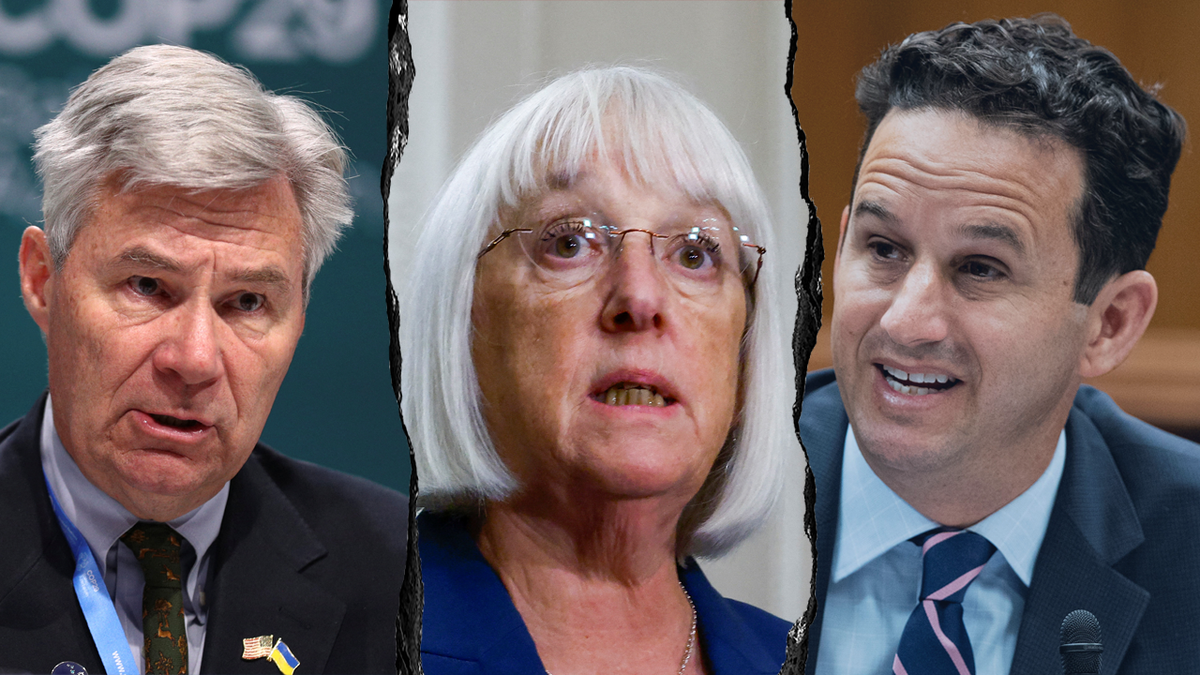
Senators Sheldon Whitehouse, Patty Murray and Brian Schatz are considered whip considerations. (Reuters)
Schatz, 52, is in his third term and is Durbin’s current chief deputy whip as well as deputy conference secretary, a job involving communication and strategy for Senate Democrats.
He is also the top Democrat on the Senate Indian Affairs Committee, given the Aloha State’s heavy native population.
Schatz has been active behind the scenes for liberals, placing holds on hundreds of Trump nominees for State Department positions in response to the president’s efforts to shutter USAID.
A former member of the Green Party in Hawaii, he is also considered a bridge between progressives and mainstream liberals.
A former top aide to previous Senate mainstays Harry Reid, D-Nev., and Edward Kennedy, D-Mass., told The Hill it’s hard to tell how leadership elections will go because they’re closed-door votes, but «as far as I can tell, Sen. Schatz seems to be in a pretty good position if he wants to take the leap.»
DICK DURBIN, NO 2 SENATE DEMOCRAT, WON’T SEEK RE-ELECTION
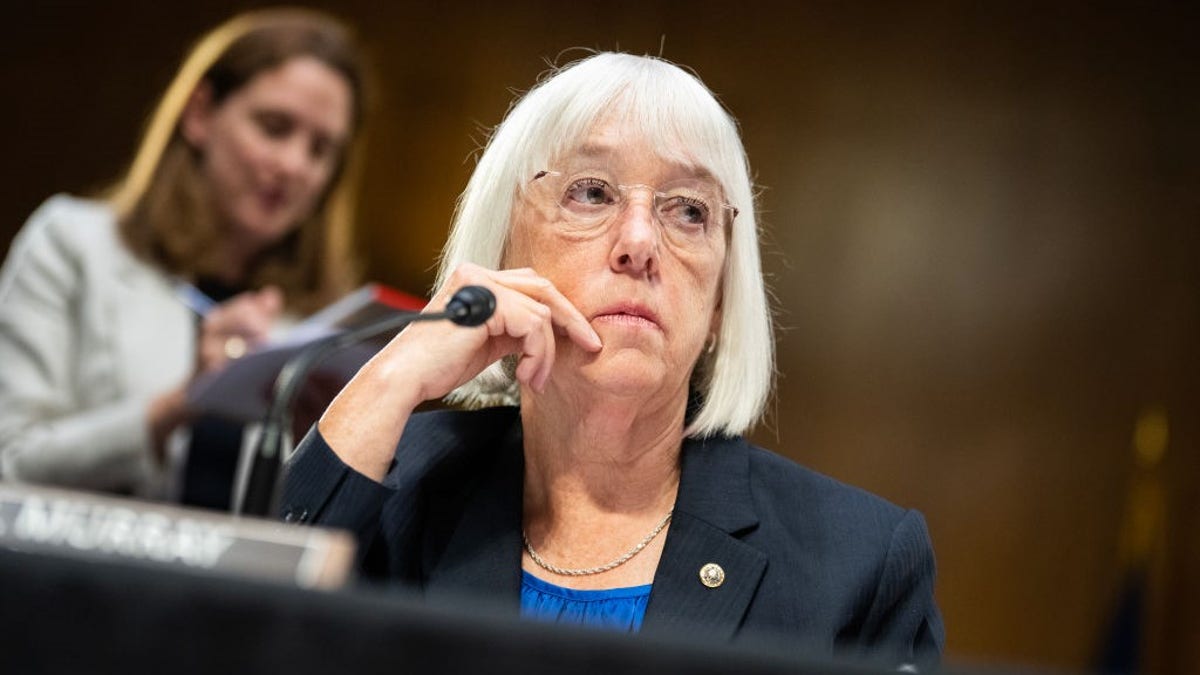
Sen. Patty Murray, D-Wash., sits in a hearing. (Getty Images)
Sen. Sheldon Whitehouse, D-R.I., is rumored to be a possible successor to Durbin as chairman of the Senate Judiciary Committee, according to Politico.
Whitehouse has raised his profile as another one of President Donald Trump’s loudest critics, regularly creating viral clips of combativeness with administration nominees in the various hearings he’s sat in on.
Another lawmaker mentioned is Washington Sen. Patty Murray, who had been third in line to the presidency until the GOP took back the Senate.
Sen. Charles Grassley, R-Iowa., now holds that role, which is typically held by the longest-serving senator of the majority party.
Murray is also the top Democrat on the influential Senate Appropriations Committee.
Frequently called the «mom in tennis shoes» who ran for the Senate in 1992 as a relative political newcomer, Murray once said she and others «got into the U.S. Senate because we were mad.»
She lobbied officials in Olympia to save an education program from budget cuts when she was told «you can’t make a difference,» according to a biography from the Washington Secretary of State’s office.
That populist history, along with Murray’s long tenure and closeness with leadership, could also make her a lock to succeed Durbin.
Fox News Digital reached out to Schatz, Whitehouse and Murray for comment but did not immediately hear back.
CLICK HERE TO GET THE FOX NEWS APP
Durbin spoke tearfully about his decision to retire during a press conference outside the same Springfield home where he announced his first Senate run nearly 30 years ago.
He hearkened back to his risky move to give up a «safe House seat.»
«So, for the last 29 years, I’ve been vindicated that that decision paid off,» said Durbin.
«I love this job. I think it’s a terrific job, but I also know reality.»
Politics,Senate Democrats,Illinois,Hawaii,Rhode Island,Elections

INTERNACIONAL
Conservatives accuse Jack Smith of improper ties with judges in Trump cases after new document dump
NEWYou can now listen to Fox News articles!
Conservative critics are accusing former special counsel Jack Smith of improperly coordinating with two federal judges after Sen. Chuck Grassley, R-Iowa, released documents Tuesday showing Smith’s team interacted with the pair during the Trump investigations.
«Democrat DC U.S. district judges illegally worked in secret with Biden Special Counsel Jack Smith to bring charges against President Trump,» Article III Project founder Mike Davis claimed on X as details of the documents emerged on Tuesday.
Smith’s investigations led to criminal charges against President Donald Trump over the 2020 election and alleged retention of classified documents. Trump called the investigations a «witch hunt,» while Republicans widely condemned the charges as an abuse of power designed to take out the then leading Republican presidential candidate.
The documents released by Grassley included notes about a briefing Smith’s team gave Attorney General Merrick Garland on Jan. 13, 2023, just after Garland appointed Smith as special counsel. The notes referenced meetings with Judges Beryl Howell and James Boasberg of Washington, D.C., both Obama appointees and Trump nemeses known for their high-profile adverse rulings against the president.
MIKE DAVIS: WHY DC’S TRUMP-HATING JUDGE BOASBERG MUST BE IMPEACHED
Sen. Chuck Grassley is seen in the U.S. Capitol during votes related to the government shutdown on Oct. 16, 2025. (Tom Williams/CQ-Roll Call, Inc via Getty Images)
«She liked our approach of pursuing the executive privilege litigation in an omnibus fashion,» Smith’s team wrote in reference to Howell, according to the documents. Omnibus motions allow for consolidated, rather than piecemeal, litigation and are typically used by lawyers to streamline court filings. Smith’s team frequently sought permission from the court to pierce executive privilege, a presumptive right that a president and his aides have that gives their communications a layer of legal privacy.
The briefing notes also referenced a forthcoming meeting with Boasberg on March 18, 2023, the day after he was set to become chief judge, succeeding Howell. The White House responded in a statement to Fox News Digital.
«We have long known that Judge Boasberg is a far-left judicial activist trying to undermine the President’s lawful authority, this is just further proof,» White House spokeswoman Abigail Jackson said. «President Trump has restored integrity to the Department of Justice that Joe Biden and his administration weaponized to target their political opponents – including President Trump himself.»
Sen. Ted Cruz’s office told Fox News Digital the Texas Republican thought the meetings with the judges were significant, a remark that came after Cruz led a Senate hearing on the Trump cases on Tuesday. Cruz in the hearing declared Smith’s work a «modern Watergate» scandal that was expansive and hyper-political, sweeping up personal information, such as phone records, belonging to hundreds of Republican entities and individuals.
A Republican congressional investigator told Fox News Digital the meetings with the judges merited further scrutiny.
JACK SMITH DEFENDS SUBPOENAING REPUBLICAN SENATORS’ PHONE RECORDS: ‘ENTIRELY PROPER’
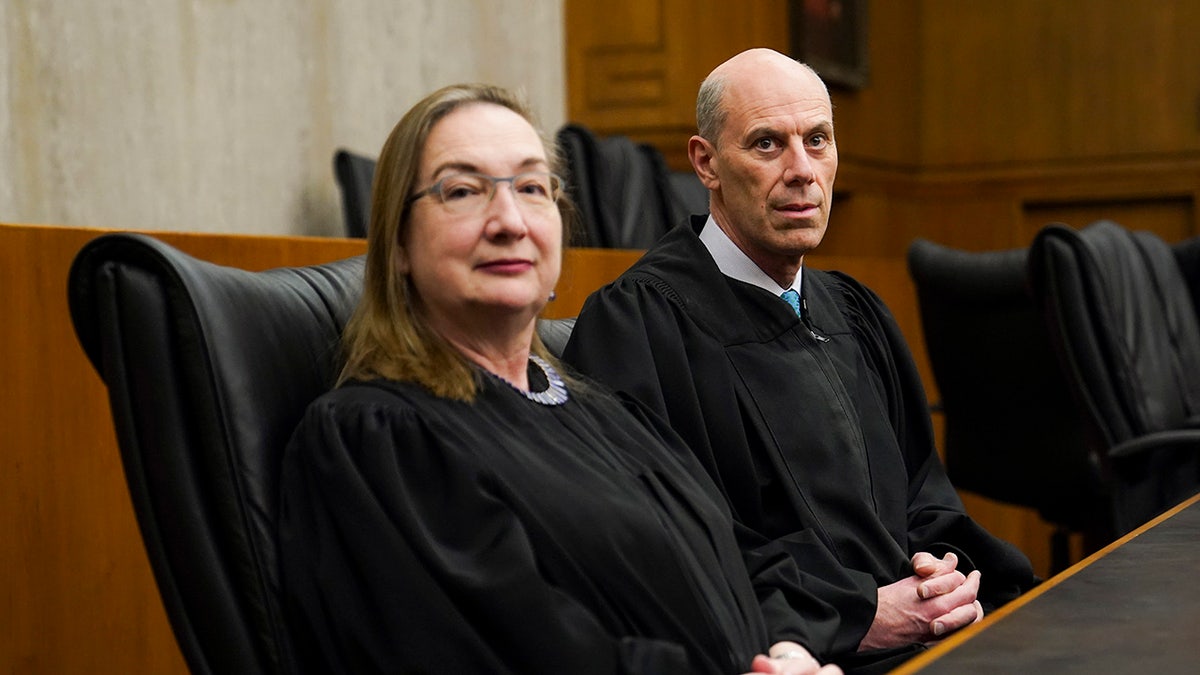
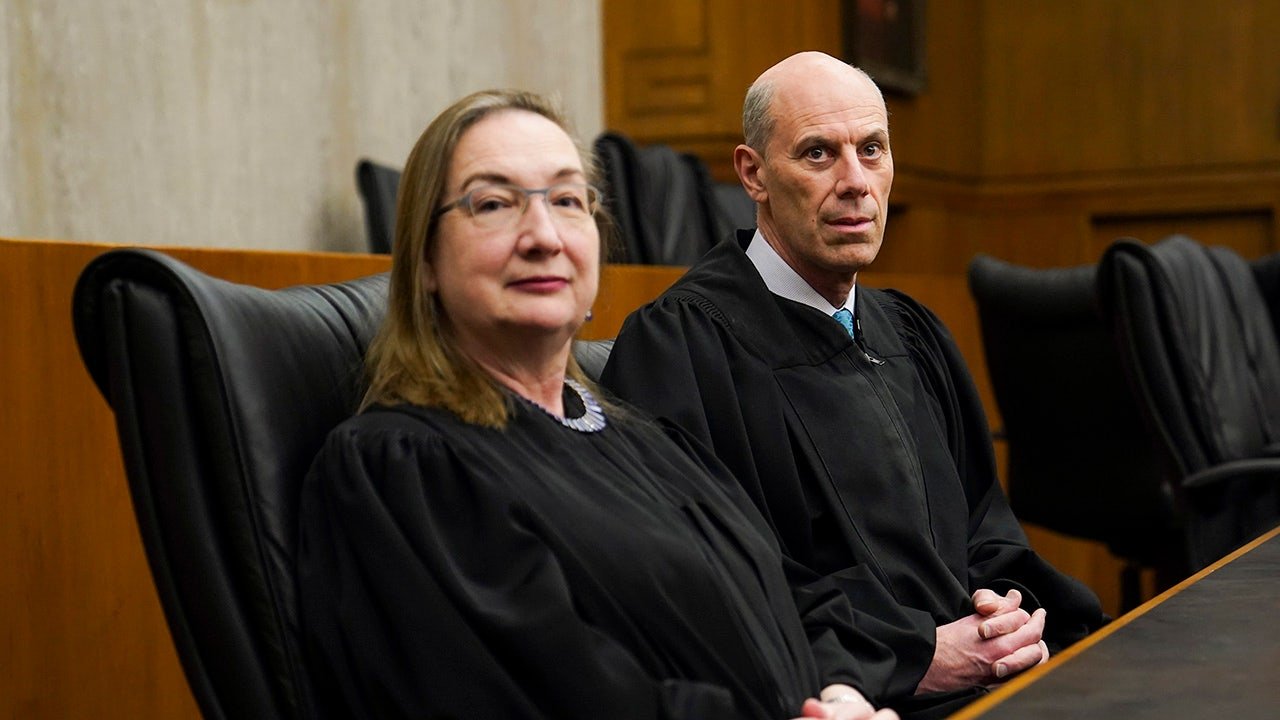
Beryl A. Howell and James E. Boasberg, who is taking over from Howell as chief judge of the Federal District Court in D.C., pose for a portrait and talk at E. Barrett Prettyman Federal Courthouse in Washington, D.C. on March 16, 2023. (Carolyn Van Houten/The Washington Post via Getty Images)
Smith’s team wrote in the briefing notes for Garland that Howell was aware that an omnibus executive privilege motion was coming «and loves the idea.» Smith’s team listed out nearly a dozen former Trump officials, such as Mark Meadows and Ken Cuccinelli, who would be included in the consolidated motion. The notes referenced five other, separate executive privilege motions that were already making their way through the court process, signaling that an omnibus motion would be a reduction in paperwork for the court.
The briefing notes also mentioned recent meetings between the special counsel’s team and top FBI officials. The FBI «has been very responsive,» Smith’s team wrote. The team mentioned «precedent-setting issues we face in areas of executive privilege [and] Speech or Debate,» a possible reference to Smith testing the separation of powers by seeking the potentially privileged material from those in Trump’s orbit.
Independent journalist Julie Kelly, an outspoken critic of the Biden DOJ, observed on X that Smith’s team interacted with the judges. Kelly suggested the judges were «in cahoots with Biden DOJ to rubber stamp, even advise, any strategy set forth by Jack Smith.»
Attorney Bill Shipley, a longtime federal prosecutor who represented dozens of Jan. 6 defendants, wrote on X that he did not find much about the memo «noteworthy,» saying it was «clearly» designed to bring Garland up to speed following the holidays and Smith’s new appointment. Shipley also noted how Howell and Boasberg were chief judges, meaning any grand jury matters were required to go through their offices.
Shipley noted, however, that he felt Howell notoriously ruled against the Trump administration and that her eager approval of an omnibus motion represented a desire for her to make decisions before her tenure as chief judge expired in March 2023.
«What troubles me in the text of the memo is the suggestion — which was borne out by events that followed — that Judge Howell desired to resolve all the issues involving witness privilege before she stepped down as Chief Judge,» Shipley wrote, though he noted that her decisions were appealable.
CRUZ DEMANDS IMPEACHMENT OF BOASBERG AND JUDGE WHO SENTENCED KAVANAUGH’S ATTEMPTED ASSASSIN
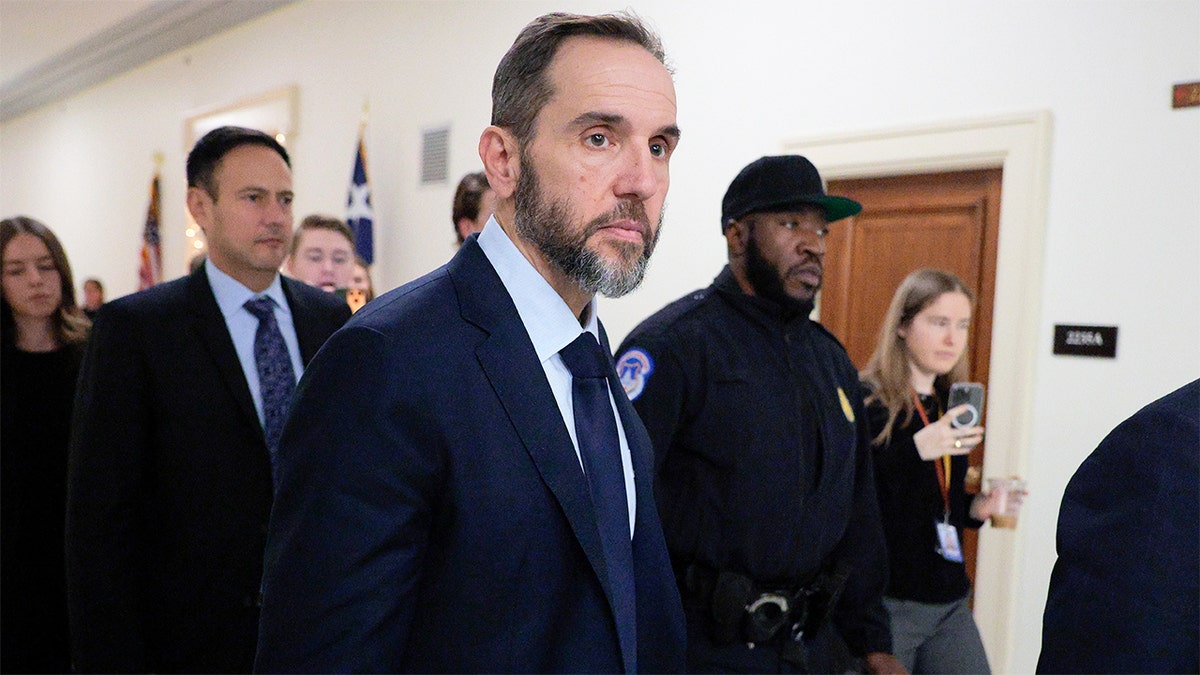
Jack Smith, former special counsel, arrives for a closed-door deposition before the House Judiciary Committee in Washington, D.C., on Wednesday, Dec. 17, 2025. (Getty Images)
Smith has repeatedly stood by his work, testifying to Congress that it was aligned with DOJ policies and nonpartisan.
CLICK HERE TO GET THE FOX NEWS APP
A Smith representative declined to comment on the latest document release.
Howell’s and Boasberg’s chambers did not respond to requests for comment.
justice department, senate, chuck grassley, donald trump, federal judges
INTERNACIONAL
Se dice que el príncipe saudita presiona a Trump para que continúe la guerra contra Irán

INTERNACIONAL
NATO scrambles jets as Russia fires nearly 400 drones toward Ukraine, signaling new spring offensive

NEWYou can now listen to Fox News articles!
Russia launched nearly 400 drones and dozens of missiles across Ukraine overnight Monday, triggering NATO to scramble fighter jets in neighboring countries, according to reports.
The massive aerial assault killed at least four people and injured more than two dozen, with strikes hitting multiple regions including Kyiv, Zaporizhzhia and Kharkiv, The Associated Press reported, citing Ukrainian officials.
Poland and Romania both scrambled fighter jets as Russian strikes approached NATO airspace, East2West reported, with Warsaw placing air defenses on the «highest state of readiness,» Poland’s operational command said.
«Due to the activity of long-range Russian air forces conducting strikes on Ukrainian territory, Polish and allied air forces have begun operating in our airspace,» Poland’s operational command said, according to East2West.
RUSSIA LAUNCHES RECORD MISSILE BARRAGE AGAINST UKRAINE ONE DAY BEFORE PEACE TALKS SET TO RESUME IN ABU DHABI
Rescue workers try to put out a fire at a residential building burning after a Russian drone attack in Poltava region, Ukraine, Tuesday, March 24, 2026. (East2west)
Hours earlier, two F-16 fighter jets were scrambled in fellow NATO state Romania as Russian drones attacked Ukraine near the River Danube, the outlet reported. The Danube forms part of the border between Ukraine and Romania.
Ukrainian military leaders said Russian forces have intensified attacks along the roughly 750-mile front line, with hundreds of assaults reported in recent days.
The Institute for the Study of War said the escalation suggests Moscow’s long-anticipated spring-summer offensive is now underway, according to The Associated Press.
RUSSIA KILLS 12 UKRAINIAN MINERS IN DEADLY BUS ATTACK HOURS AFTER PEACE TALKS POSTPONED

A residential high-rise burns after a Russian drone strike in Zaporizhzhia, Ukraine, as flames and smoke pour from multiple floors. (AP Photo/Kateryna Klochko)
Ukraine’s air force said Russia launched nearly 400 drones. Ukrainian officials later said most were intercepted or disrupted, although some were able to hit their targets, according to East2West.
Russia also launched 23 cruise missiles and seven ballistic missiles at Ukraine during the night, hitting at least 10 locations across the country, according to the Ukrainian air force.
Ukrainian civilians have endured relentless barrages since Russia launched a full-scale invasion of its neighbor more than four years ago. U.S.-brokered talks between Moscow and Kyiv over the past year have brought no respite, with Russia rejecting Ukraine’s ceasefire offer.
The latest strikes came after Ukraine hit Russia’s largest Baltic port, Primorsk, in a pinpoint attack a day earlier, leaving the key export hub in flames, East2West reported.
Meanwhile, Russian President Vladimir Putin’s ambassador to London, Andrey Kelin, threatened «dire» consequences over what he said was Ukraine’s use of Storm Shadow missiles, which this month hit and damaged a microelectronics plant in Russia’s Bryansk region.
CLICK HERE TO DOWNLOAD THE FOX NEWS APP
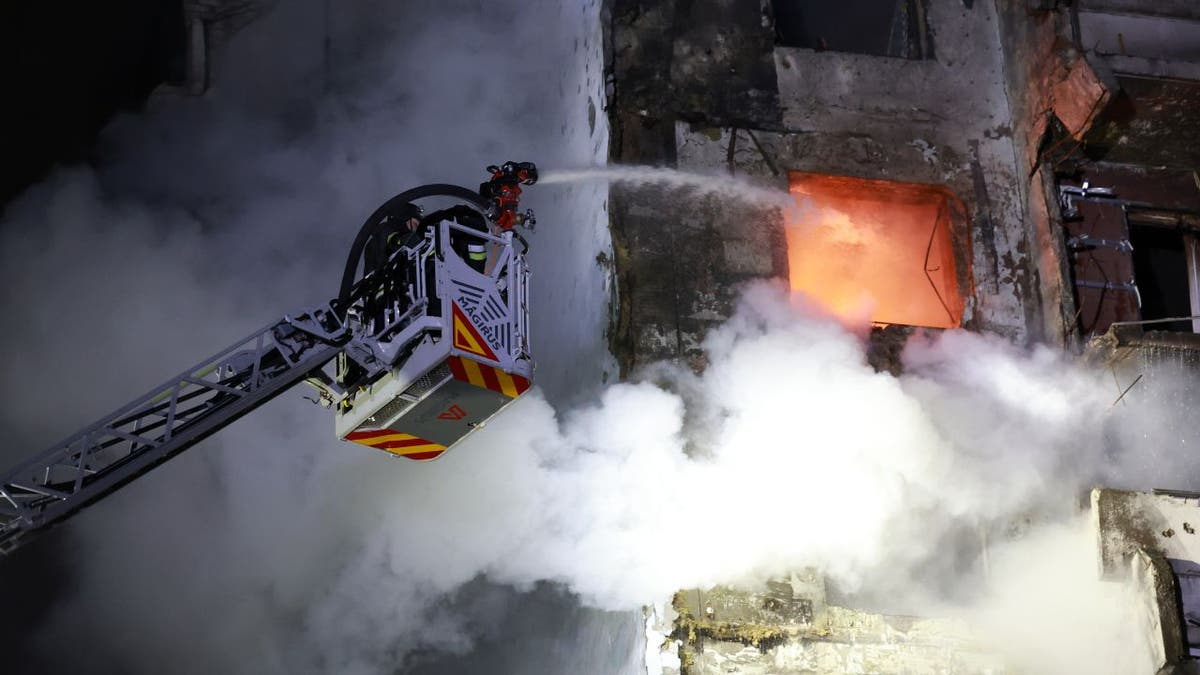
Rescue workers try to put out a fire at a residential building burning after a Russian drone attack in Zaporizhzhia, Ukraine, Tuesday, March 24, 2026. (AP Photo/Kateryna Klochko)
«The British, without whose participation the use of Storm Shadow missiles is simply impossible, decided to remind everyone of both Ukraine and themselves,» he said. «However, any action has consequences. And for everyone involved in the tragedy in Bryansk, the consequences will be dire.»
The Associated Press contributed to this report.
world, russia, ukraine, wars, vladimir putin, geopolitics

Milei dijo que el problema de la inflación no está terminado pero aseguró: “Vamos por el buen camino”

El titular de la SIDE se reunió con el director de la CIA, quien anunció que le otorgará un reconocimiento al organismo argentino

Conservatives accuse Jack Smith of improper ties with judges in Trump cases after new document dump

Con escapadas cortas y gastos medidos, más de un millón de turistas viajaron en el fin de semana largo

Canales para ver el Vélez Sarsfield vs. Lanús por el Torneo Apertura

$LIBRA: un documento dispuso la creación de un centro de blockchain dirigido por uno de los investigados en una universidad

»¡VAN A FUNDIR A MEDIO PAÍS!»: El lapidario diagnóstico de Roberto Cachanosky sobre el plan de Milei

Apareció otra factura y complica más a Adorni: el vuelo de vuelta también lo pagó su amigo Grandio

ALERTA FINANCIERA: 4 de cada 10 argentinos ya no pueden pagar sus deudas. ¡Caputo debe actuar ya!

El Gobierno apunta a una sindicalista por la filtración del video de Manuel Adorni en un vuelo privado

 POLITICA3 días ago
»¡VAN A FUNDIR A MEDIO PAÍS!»: El lapidario diagnóstico de Roberto Cachanosky sobre el plan de Milei
- ECONOMIA3 días ago
ALERTA FINANCIERA: 4 de cada 10 argentinos ya no pueden pagar sus deudas. ¡Caputo debe actuar ya!
- POLITICA1 día ago
El mensaje de Milei sobre la “traición” que llamó la atención en el Gobierno y también en la oposición