INTERNACIONAL
Why keeping lawmakers in DC during shutdown may have caused more harm than good

NEWYou can now listen to Fox News articles!
«I can’t believe they just left!»
«Why didn’t they just stay until they fixed it?»
«Why didn’t they make them stay?»
I must have fielded forty questions last week from colleagues, friends and acquaintances. Even reporters and editorial staff from other news organizations. And that’s to say nothing of a few Congressional aides.
Everyone had the same question. They were in disbelief that lawmakers just abandoned the Capitol a week ago Thursday and left the Department of Homeland Security without funding on Saturday at 12:00:01 am et.
COAST GUARD CAUGHT AS ‘COLLATERAL DAMAGE’ IN DEMOCRATS’ DHS SHUTDOWN AS CHINA, RUSSIA PRESS US WATERS
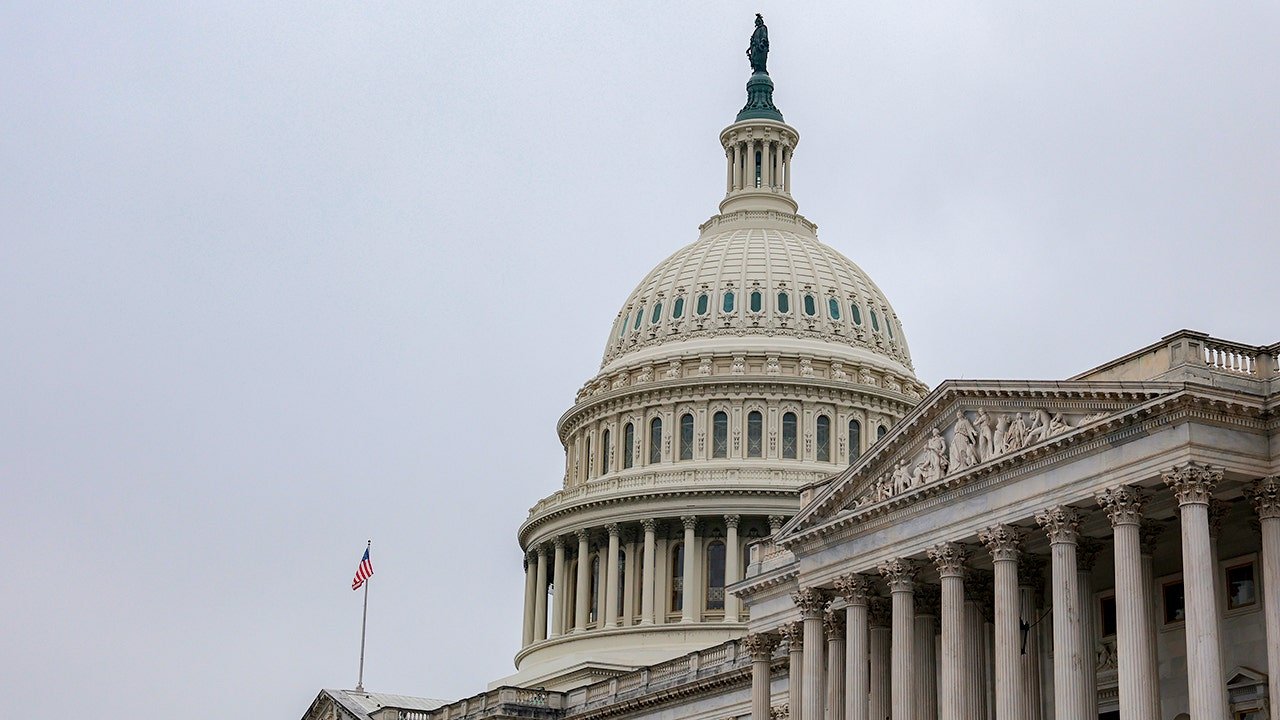
Senate Democrats blocked a short-term funding bill, stalling efforts to keep DHS and its agencies operating. (Photo by Heather Diehl/Getty Images)
The Senate tried twice to avert the partial government shutdown on Thursday. The Senate failed to break a filibuster on a placeholder, undetermined funding bill. And then Sen. Chris Murphy, D-Conn., objected to a request by Sen. Katie Britt, R-Ala., to approve a stopgap, two-week funding bill. Passage of the bill would require agreement of all 100 senators. But all it took was one objection. And Murphy, speaking for many Democrats on both sides of the Capitol, interceded to sidetrack Britt’s effort.
«I’m over it!» shouted an exasperated Britt on the Senate floor, as Congress pitched at least part of the federal government into its third shutdown since October 1.
Democrats are refusing to fund the Department of Homeland Security until there’s a specific agreement to reform U.S. Immigration and Customs Enforcement (ICE). And – few Democrats will say this out loud – but their base insists on Democrats shuttering DHS over ICE tactics after the killings of Renee Good and Alex Pretti in Minneapolis.
This is somewhat ironic. Republicans funded ICE through 2029 via last year’s One, Big, Beautiful Bill. So thanks to Democrats, TSA, the Coast Guard and FEMA – all under the DHS aegis – are without money right now. That means tens of thousands of employees are technically working without paychecks as they scan passengers at airports, patrol the seas and respond to natural disasters.
This brings us back to the basic question: Why didn’t they just stay until they figured it out?
As a reporter, I have covered dozens of shutdowns, partial shutdowns, near shutdowns, flirtations with shutdowns. That’s to say nothing of various permutations of interim spending bills – long and short – known as Continuing Resolutions or CRs. Those bills keep the funding flowing at the old spending level – until lawmakers all agree on something new. Sometimes one CR begets another CR. And even another one after that until everything’s resolved. The exercise can go on for months.
HOW ICE WENT FROM POST-9/11 COUNTERTERROR AGENCY TO CENTER OF THE IMMIGRATION FIGHT
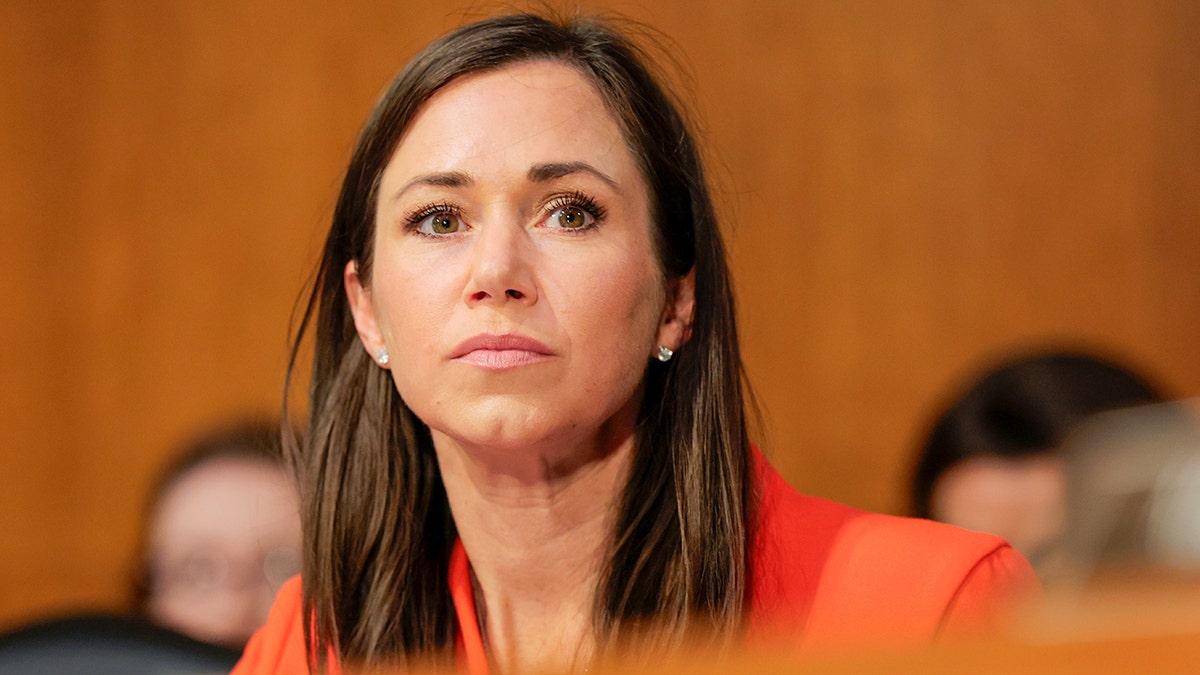
Sen. Katie Britt vented frustration on the Senate floor after her stopgap bill was blocked. (Photo by Anna Moneymaker/Getty Images)
But as it pertains to DHS, lawmakers weren’t going to solve the issues surrounding ICE right away. So both the House and Senate got out of Dodge last Thursday as the deadline loomed. Lawmakers were everywhere from the Middle East to Munich when the bell tolled midnight Saturday and DHS lumbered into a slow-speed funding crash.
Failure to fund the Department of Homeland Security may seem unreasonable from a policy standpoint – regardless of what you think of ICE. But it’s not unreasonable if you understand the politics and Congressional procedure to fund ICE.
Let’s say they were on the precipice of an agreement to fund DHS. That may involve some last-minute trading of paper between Senate and House leaders. Maybe a call or two from the President to reluctant Republicans. If lawmakers believed a deal was within range, it’s doubtful that leaders would have cut Members loose. They would have stayed if there was a viable path to nail something down last Friday, have the Senate expedite the process and vote on either Saturday or Sunday (albeit after the deadline) and then have the House vote on Monday. That’s all under the premise of a deal being close.
They were nowhere near that stage when lawmakers called it last Thursday. Democrats didn’t send over their offer for days after a brief shutdown of 78 percent of the government more than two weeks ago. Democrats then criticized Republicans and the White House for slowly volleying a counteroffer. Democrats then rejected the GOP plan – only sending back another plan late Monday.
Getting a deal which can pass both the House and Senate – and overcome a Senate filibuster – takes time. And there simply wasn’t a deal to be had yet.
This is where things get really interesting. With no agreement in sight, you simply don’t anchor lawmakers in Washington with nothing to do. There’s nothing to vote on. There are no committee meetings scheduled. All tethering lawmakers to DC does is stir up trouble.
There’s a line in the song «Trouble» in The Music Man by Meredith Willson: «The idle brain is the devil’s playground.» Who knows what kinds of mischief you would have, just making very cranky lawmakers hang around Washington for days – without anything to vote on. Keeping everyone here does not contribute to securing a deal. Yes, all 532 House and Senate Members (there are two House vacancies) must eventually be dialed-in to vote on a bill to fund DHS. But we aren’t there yet. A handful of Members in the House, Senate and people at the White House will be the ones to negotiate an agreement. Rank-and-file Members marooned in Washington with nothing to do but post outrageous things on social media and appear on cable TV is counterproductive.
Now, let’s look at the other scenario of being close to an agreement. House and Senate leaders may believe they are still a little short of votes. But if something is viable, leaders know they can nail down the votes with some arm-twisting, legislative and ego massaging and a few forceful phone calls. Yes, that process may require elbow grease. But in that instance, keeping everyone in Washington for a few extra days and blowing up a long-awaited Congressional recess actually helps the process.
DHS SHUTDOWN LEAVES LOCAL EMERGENCY RESPONDERS ON THEIR OWN AMID EXTREME WEATHER, EXPERT WARNS

TSA officers, Coast Guard members and FEMA staff are working without pay as the DHS funding lapse drags on. (Photo by Heather Diehl/Getty Images)
Why?
Think of the Stockholm Syndrome. You demand that everyone stay in Washington for an extra day or two and the «hostages» will start to come around to the viewpoints of their captors. Yes, everyone is frustrated and mad. But they feel the bill is something they can support and finally end this triumvirate of government shutdowns. In this case, the fustigation builds – but just a little. Everyone is happy to vote yes and rush off of Capitol Hill.
If they were close to nailing down an agreement on DHS funding, then Congressional leaders would have deployed a version of the Stockholm Syndrome to wrap up everything.
CLICK HERE TO DOWNLOAD THE FOX NEWS APP
But with no deal, leaders were more afraid of the mayhem they may trigger by keeping everyone in Washington. The devil would romp freely through the playground of idle brains.
So how will you know when there’s a deal?
When everyone’s present and accounted for.
government shutdown,budget senate,democrats senate,homeland security









INTERNACIONAL
Se dice que el príncipe saudita presiona a Trump para que continúe la guerra contra Irán

INTERNACIONAL
NATO scrambles jets as Russia fires nearly 400 drones toward Ukraine, signaling new spring offensive
NEWYou can now listen to Fox News articles!
Russia launched nearly 400 drones and dozens of missiles across Ukraine overnight Monday, triggering NATO to scramble fighter jets in neighboring countries, according to reports.
The massive aerial assault killed at least four people and injured more than two dozen, with strikes hitting multiple regions including Kyiv, Zaporizhzhia and Kharkiv, The Associated Press reported, citing Ukrainian officials.
Poland and Romania both scrambled fighter jets as Russian strikes approached NATO airspace, East2West reported, with Warsaw placing air defenses on the «highest state of readiness,» Poland’s operational command said.
«Due to the activity of long-range Russian air forces conducting strikes on Ukrainian territory, Polish and allied air forces have begun operating in our airspace,» Poland’s operational command said, according to East2West.
RUSSIA LAUNCHES RECORD MISSILE BARRAGE AGAINST UKRAINE ONE DAY BEFORE PEACE TALKS SET TO RESUME IN ABU DHABI
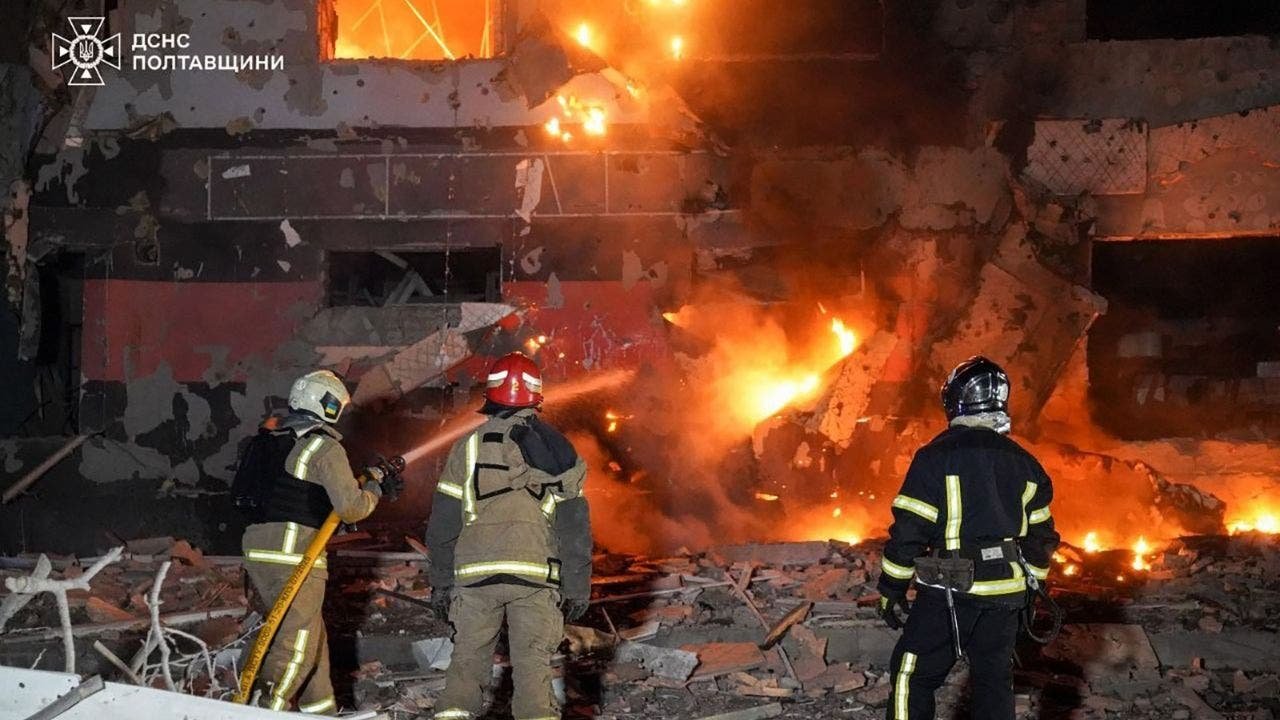
Rescue workers try to put out a fire at a residential building burning after a Russian drone attack in Poltava region, Ukraine, Tuesday, March 24, 2026. (East2west)
Hours earlier, two F-16 fighter jets were scrambled in fellow NATO state Romania as Russian drones attacked Ukraine near the River Danube, the outlet reported. The Danube forms part of the border between Ukraine and Romania.
Ukrainian military leaders said Russian forces have intensified attacks along the roughly 750-mile front line, with hundreds of assaults reported in recent days.
The Institute for the Study of War said the escalation suggests Moscow’s long-anticipated spring-summer offensive is now underway, according to The Associated Press.
RUSSIA KILLS 12 UKRAINIAN MINERS IN DEADLY BUS ATTACK HOURS AFTER PEACE TALKS POSTPONED

A residential high-rise burns after a Russian drone strike in Zaporizhzhia, Ukraine, as flames and smoke pour from multiple floors. (AP Photo/Kateryna Klochko)
Ukraine’s air force said Russia launched nearly 400 drones. Ukrainian officials later said most were intercepted or disrupted, although some were able to hit their targets, according to East2West.
Russia also launched 23 cruise missiles and seven ballistic missiles at Ukraine during the night, hitting at least 10 locations across the country, according to the Ukrainian air force.
Ukrainian civilians have endured relentless barrages since Russia launched a full-scale invasion of its neighbor more than four years ago. U.S.-brokered talks between Moscow and Kyiv over the past year have brought no respite, with Russia rejecting Ukraine’s ceasefire offer.
The latest strikes came after Ukraine hit Russia’s largest Baltic port, Primorsk, in a pinpoint attack a day earlier, leaving the key export hub in flames, East2West reported.
Meanwhile, Russian President Vladimir Putin’s ambassador to London, Andrey Kelin, threatened «dire» consequences over what he said was Ukraine’s use of Storm Shadow missiles, which this month hit and damaged a microelectronics plant in Russia’s Bryansk region.
CLICK HERE TO DOWNLOAD THE FOX NEWS APP
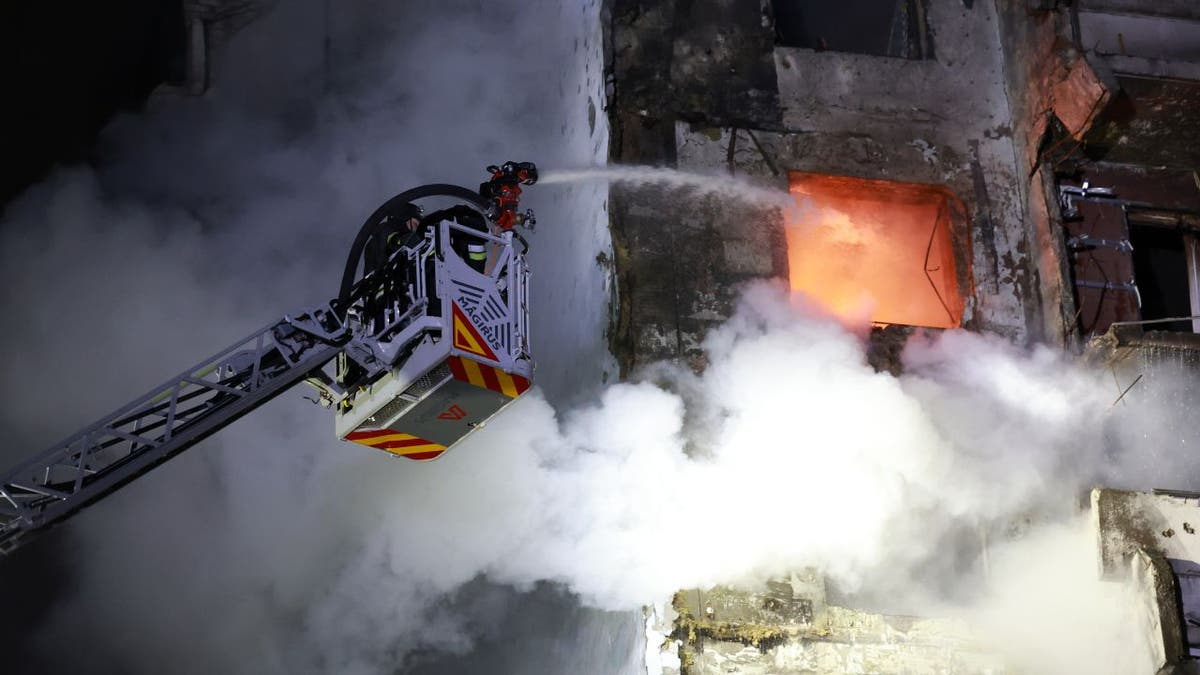
Rescue workers try to put out a fire at a residential building burning after a Russian drone attack in Zaporizhzhia, Ukraine, Tuesday, March 24, 2026. (AP Photo/Kateryna Klochko)
«The British, without whose participation the use of Storm Shadow missiles is simply impossible, decided to remind everyone of both Ukraine and themselves,» he said. «However, any action has consequences. And for everyone involved in the tragedy in Bryansk, the consequences will be dire.»
The Associated Press contributed to this report.
world, russia, ukraine, wars, vladimir putin, geopolitics
INTERNACIONAL
Pritzker’s glowing review of lakefront resurfaces after college student killed by illegal alien nearby
NEWYou can now listen to Fox News articles!
Illinois’ Democratic Governor JB Pritzker recently highlighted the calm of Chicago’s shore with Lake Michigan in a video he posted across his social media platforms — the same area where an illegal alien shot and killed a college student last week.
«Lots of runners coming by,» Pritzker said in a video he posted to Facebook last September.
«Lakefront path, Lakefront Trail — absolutely gorgeous. Just gorgeous. Look at that overpass. A great lakefront.»
The tone of the resurfaced clip clashes with the death of Sheridan Gorman, a 18-year-old Loyola University student who was shot to death near Tobey Prinz Beach Park, an area included in Chicago’s Police District 24.
CHICAGO LAWMAKER RIPPED OVER ‘DISGUSTING’ RESPONSE TO COLLEGE STUDENT KILLED BY ALLEGED ILLEGAL IMMIGRANT
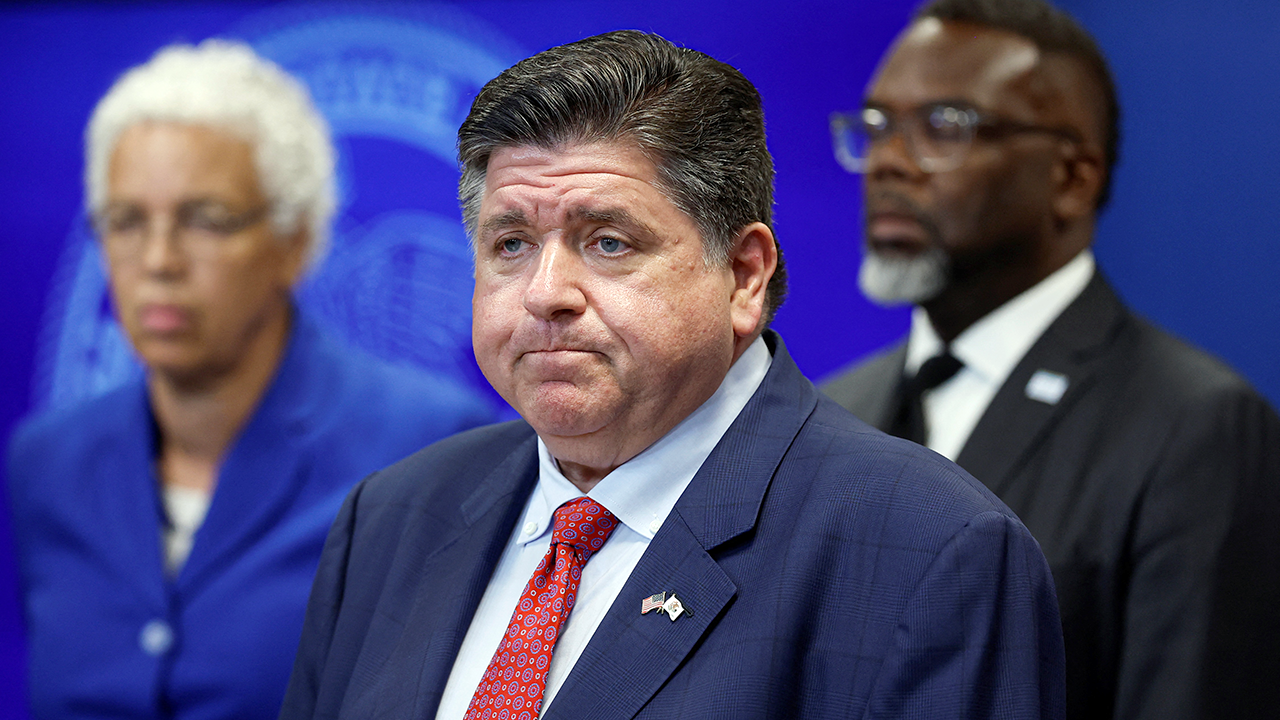
Illinois Gov. JB Pritzker, center, is flanked by Cook County Chairwoman Toni Preckwinkle, left, and Chicago Mayor Brandon Johnson, right. (Kamil Krzaczynski/Getty Images)
Pritzker’s walk went viral on social media when several viewers online criticized the governor for his characterization of the shoreside area.
«Illinois Gov. JB Pritzker & Chicago Mayor Brandon Johnson haven’t posted anything about the murder of Sheridan Gorman, allegedly at the hands of a Venezuelan illegal alien,» Fox News Congressional Correspondent Bill Melugin posted on X. «Last year, Pritzker made a video from the lakefront she was killed at, mocking claims that it wasn’t safe.»
«Governor JB Pritzker posted this video of the Chicago lakeside to brag about how safe it is. Sheridan Gorman was just killed there by a Venezuelan immigrant his state law PROTECTED,» End Wokeness, a popular conservative account, wrote in a X post.
«> crosses the border illegally > released into the country by Biden > arrested for shoplifting > released back onto the street > murders an innocent girl,» former Trump White House staffer Greg Price wrote.
«Pritzker posted this video bragging about how safe Chicago’s lakeside is — right where Sheridan Gorman was just killed by a Venezuelan illegal his state law protected. Unreal,» another account wrote.
MY DAUGHTER WAS KILLED, AND I WARNED SANCTUARY CITY POLICIES WOULD COST LIVES AGAIN
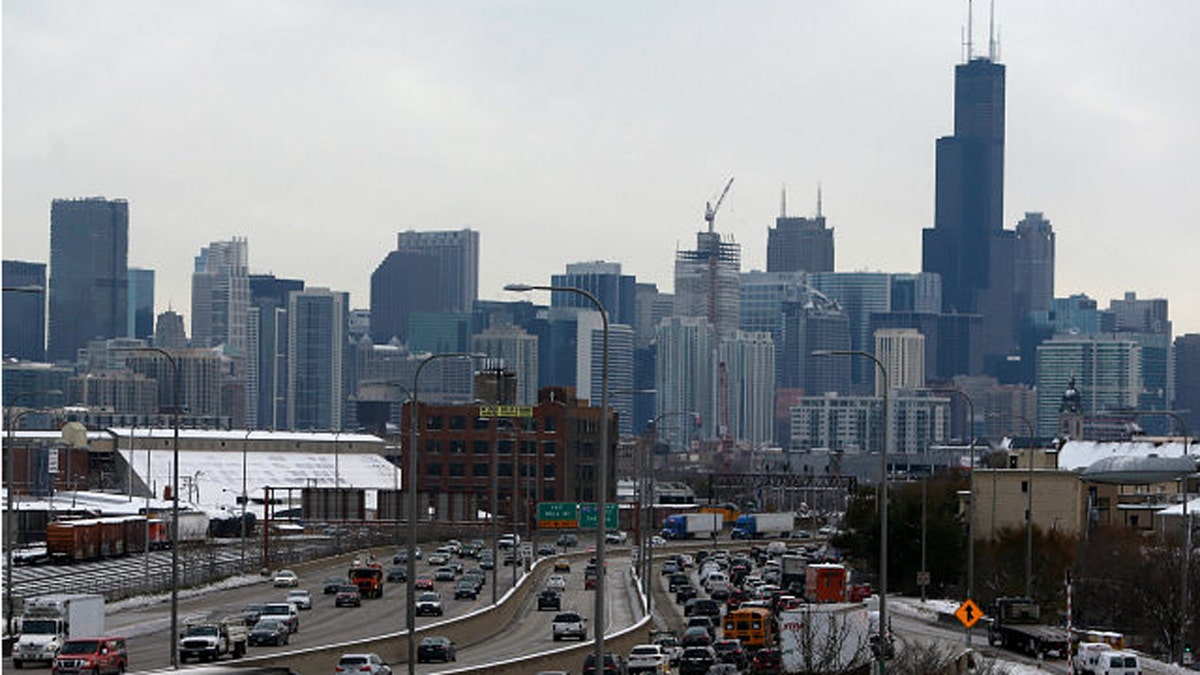
There were nine armed robberies in Chicago’s West Side in just over an hour last week, according to police. (AP Photo/Kiichiro Sato)
The area has improved in the categories of thefts, burglary and motor vehicle theft in recent years, according to recent police reports. However, reporting for murder, sexual assaults and aggravated battery have gone up, according to crime stats from March.
District 24 has reported three murder cases, 19 sexual assaults and 32 aggravated battery incidents so far in 2026.
The district has the second-most murders of any district of the six districts included in Chicago’s Area 3, which covers a significant chunk of the city’s northern side.
In Gorman’s case, authorities charged Jose Medina, a Venezuelan national, with her murder.
According to the Department of Homeland Security, Medina had already been apprehended for shoplifting in Chicago but had been released in June 2023.
Even before that, Medina had been apprehended by U.S. Border Patrol in May 2023. He was also allowed to walk free then.
«Sheridan Gorman had her whole life ahead of her before this cold-blooded killer decided to end her life. She was failed by open border policies and sanctuary politicians who RELEASED this illegal alien TWICE before he went on to commit this heinous murder,» Acting Assistant Secretary Lauren Bis said in a statement.

Illinois Gov. JB Pritzker signed the Medical Aid in Dying Act on Dec. 12, allowing eligible terminally ill adult patients to obtain life-ending medication after consultation with their doctors. (Jacek Boczarski/Anadolu via Getty Images)
CLICK HERE TO DOWNLOAD THE FOX NEWS APP
«We are calling on Governor J.B. Pritzker and Chicago’s sanctuary politicians to commit to not releasing this criminal illegal alien from jail back into American neighborhoods.»
The office of Governor Pritzker did not respond to a request for comment on the Chicago shoreside area and its crime rates.
illinois, chicago, immigration

El Ejército presentó una denuncia por pintadas por los desaparecidos en la XII Brigada de Posadas

Se dice que el príncipe saudita presiona a Trump para que continúe la guerra contra Irán

El momento del año para cambiar el colchón: descuentos de hasta 65% y 24 cuotas sin interés

Con la «banda argenta», Paraguay se prepara en Grecia para su primer amistoso

Escándalo en la AFA: se conoció un audio atribuido a un hombre cercano a Toviggino en el que explica cómo se desviaban fondos

Día de la Memoria: el documento completo de los organismos de derechos humanos con críticas a Javier Milei

»¡VAN A FUNDIR A MEDIO PAÍS!»: El lapidario diagnóstico de Roberto Cachanosky sobre el plan de Milei

Apareció otra factura y complica más a Adorni: el vuelo de vuelta también lo pagó su amigo Grandio

ALERTA FINANCIERA: 4 de cada 10 argentinos ya no pueden pagar sus deudas. ¡Caputo debe actuar ya!

El mensaje de Milei sobre la “traición” que llamó la atención en el Gobierno y también en la oposición

 POLITICA3 días ago
»¡VAN A FUNDIR A MEDIO PAÍS!»: El lapidario diagnóstico de Roberto Cachanosky sobre el plan de Milei
- ECONOMIA2 días ago
ALERTA FINANCIERA: 4 de cada 10 argentinos ya no pueden pagar sus deudas. ¡Caputo debe actuar ya!
- POLITICA1 día ago
El mensaje de Milei sobre la “traición” que llamó la atención en el Gobierno y también en la oposición