INTERNACIONAL
Why Syria plays a key role in Trump’s plans for Middle East peace

NEWYou can now listen to Fox News articles!
Earlier this week, President Donald Trump signed an executive order lifting most U.S. sanctions on Syria, in a move experts say reflects growing recognition inside the administration that Syria, long a battleground for Iranian influence and Islamist terror, may now offer the U.S. a rare opportunity to reclaim regional leverage, counter enemies, and support allies like Israel and Jordan.
At a White House press briefing Monday, press secretary Karoline Leavitt told reporters, «This is another promise made and promise kept by this president,» she said, referring to Trump’s recent meeting with Syria’s new transitional leader Ahmed al-Sharaa during a trip to Saudi Arabia. «He’s committed to supporting a Syria that is stable, unified, and at peace with itself and its neighbors.»
«The sanctions did their job,» David Schenker, former assistant secretary of state for Near Eastern Affairs and now a senior fellow at the Washington Institute, told Fox News Digital. «They were crippling by and large. There’s zero economic life in the country. But Trump is giving Syria a chance to succeed.»
TRUMP SIGNS ORDER LIFTING SANCTIONS ON SYRIA
President Donald Trump meets with members of the Juventus soccer club in the Oval Office of the White House, June 18, 2025. (AP Photo/Alex Brandon)
Javed Ali, former senior official at the National Security Council and professor at the University of Michigan, told Fox News Digital, «It’s a strategic calculation. A Syria that no longer hosts Iranian proxies, cooperates on counterterrorism, and integrates with Arab neighbors serves U.S. interests on every front.»
According to Schenker, Syria has taken steps the U.S. has long demanded: allowing inspections by the IAEA and the Organization for the Prohibition of Chemical Weapons, sharing intelligence on ISIS, and cooperating with American liaison officers on counterterrorism. «These groups have declared al-Sharaa an infidel. They themselves are being attacked by ISIS,» he noted.
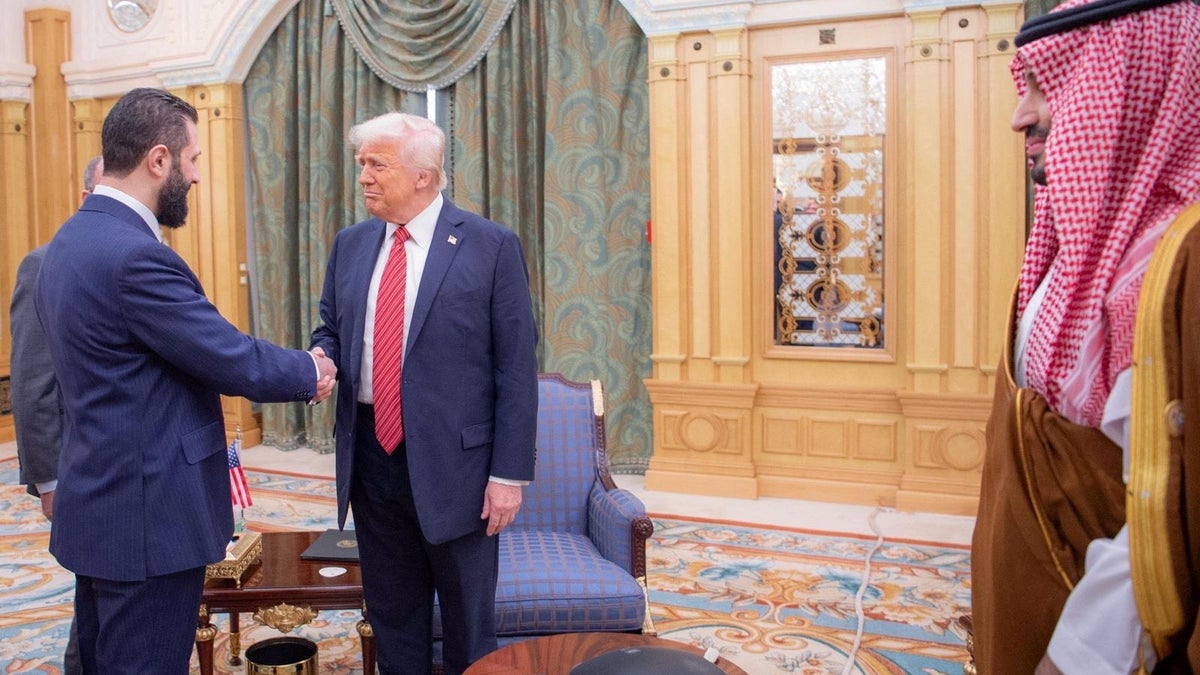
President Donald Trump meets with Syrian President Ahmed al-Sharaa in Riyadh, Saudi Arabia, in this photo released on May 14, 2025. (Saudi Press Agency/Handout via Reuters)
For the U.S., the stakes extend far beyond sanctions relief. Schenker said a stable Syria focused on education and social services, rather than military buildup, would be far less fertile ground for ISIS or Iranian influence.
Ali described the current moment as part of a broader Trump strategy: «Now with Assad gone, it’s another blow to the Islamic Republic of Iran. This creates an opportunity to coalesce the Sunni Arab states – either around the Abraham Accords or a growing anti-Iran coalition.»
The U.S. military still maintains a small but critical footprint in Syria – approximately 1,000 troops across three to four bases in the northeast – providing vital intelligence and rapid strike capability. «That footprint has been one of our most important counterterrorism outposts,» Ali said. «We’ve seen multiple targeted operations this year alone.»
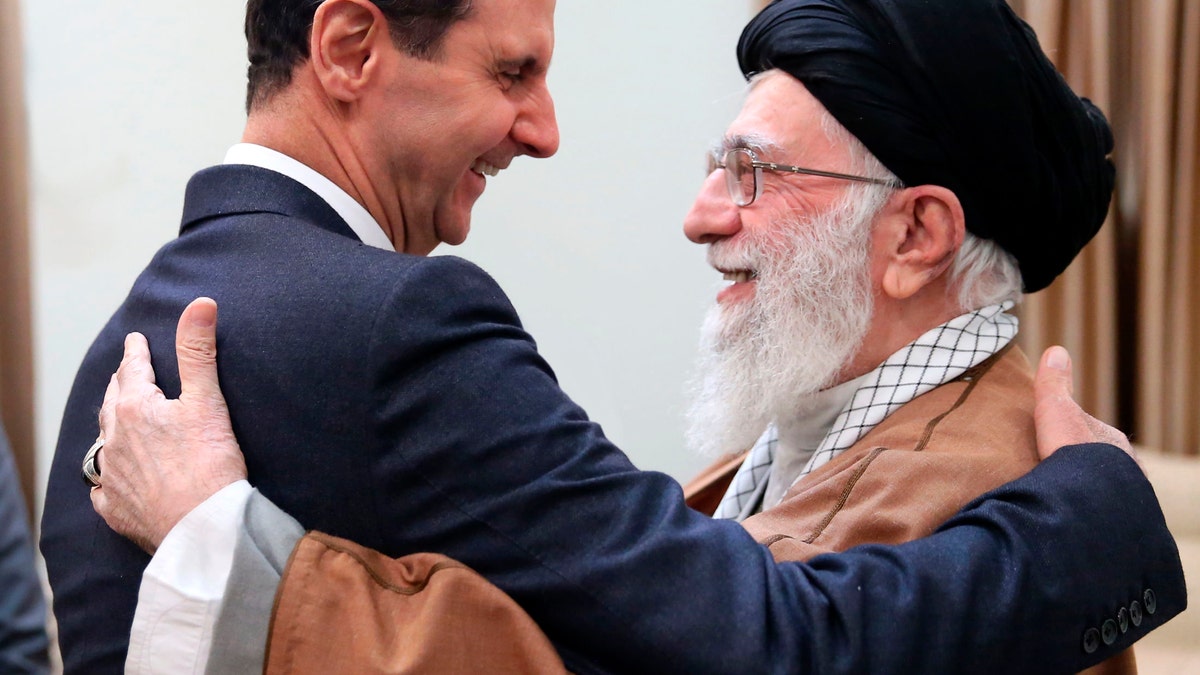
Ayatollah Ali Khamenei greets Syrian President Bashar Assad in Tehran, Iran, on Feb. 25, 2019. (Office of the Iranian Supreme Leader via AP, File)
TRUMP ASKS SYRIA TO JOIN ABRAHAM ACCORDS, NORMALIZE TIES WITH ISRAEL IN RETURN FOR SANCTIONS RELIEF
He said, however, that deeper U.S.-Syrian cooperation could bring new complications. «There’s always a risk that as ties deepen, either the U.S. could reduce its presence – or al-Sharaa might ask us to scale back,» Ali said. «That could impact our ability to monitor jihadist activity or manage the tens of thousands of ISIS detainees still in camps guarded by SDF forces.»
Meanwhile, the diplomatic implications of Trump’s move are drawing global attention. Syria’s new leadership has publicly distanced itself from Iran, reportedly blocked Hezbollah weapon shipments, and dismantled multiple Iranian military posts across the country.
«The president is genuinely focused on expanding the Abraham Accords,» said Schenker. «He sees Syria as the next possible candidate.»
NSC spokesman Taylor Rogers told Fox News Digital. «President Trump is working towards lasting peace in the Middle East, which includes supporting a Syria that is stable, unified, and at peace with itself and its neighbors. The President is empowering Syria’s success by lifting sanctions on export controls while maintaining sanctions on terrorists and all other potential threats to the United States. The President made a promise to give Syria a chance to rebuild and thrive by lifting sanctions, and this President keeps his promises.»
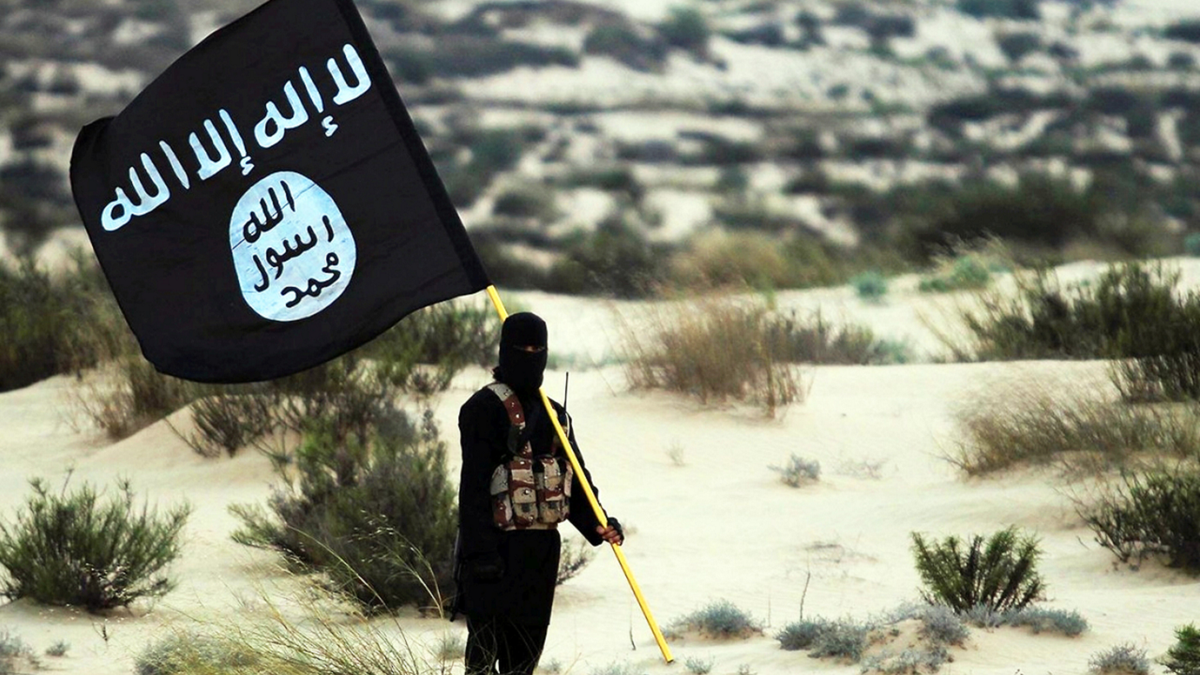
A masked Islamic State terrorist holds the ISIS flag in 2015. (Pictures from History/Universal Images Group via Getty Images)
Still, normalization with Israel remains politically fraught. Syria remains officially at war with the Jewish state, and while Sharaa has hinted at accepting the pre-1974 ceasefire lines, jihadist factions and Islamist groups within Syria remain staunchly opposed. «There have already been reported assassination attempts on Sharaa,» Schenker said. «It’s going to get harder if he moves from non-belligerency to full normalization.»
Charles Lister, director of the Syria program at the Middle East Institute, told Fox News Digital, «Syria has always been an open wound in the center of the region – an engine of instability… But if it stabilizes now, it unlocks a path for broader regional integration. It connects Israel and Jordan to a more secure arc and reduces the need for heavy U.S. military involvement.»
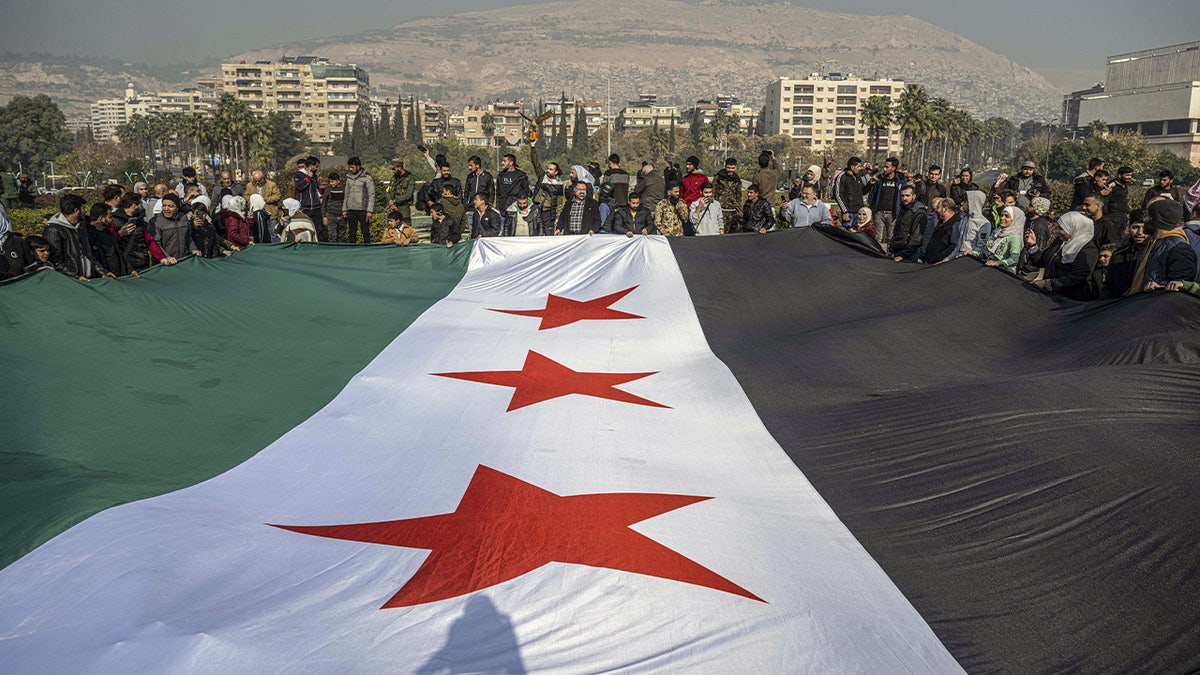
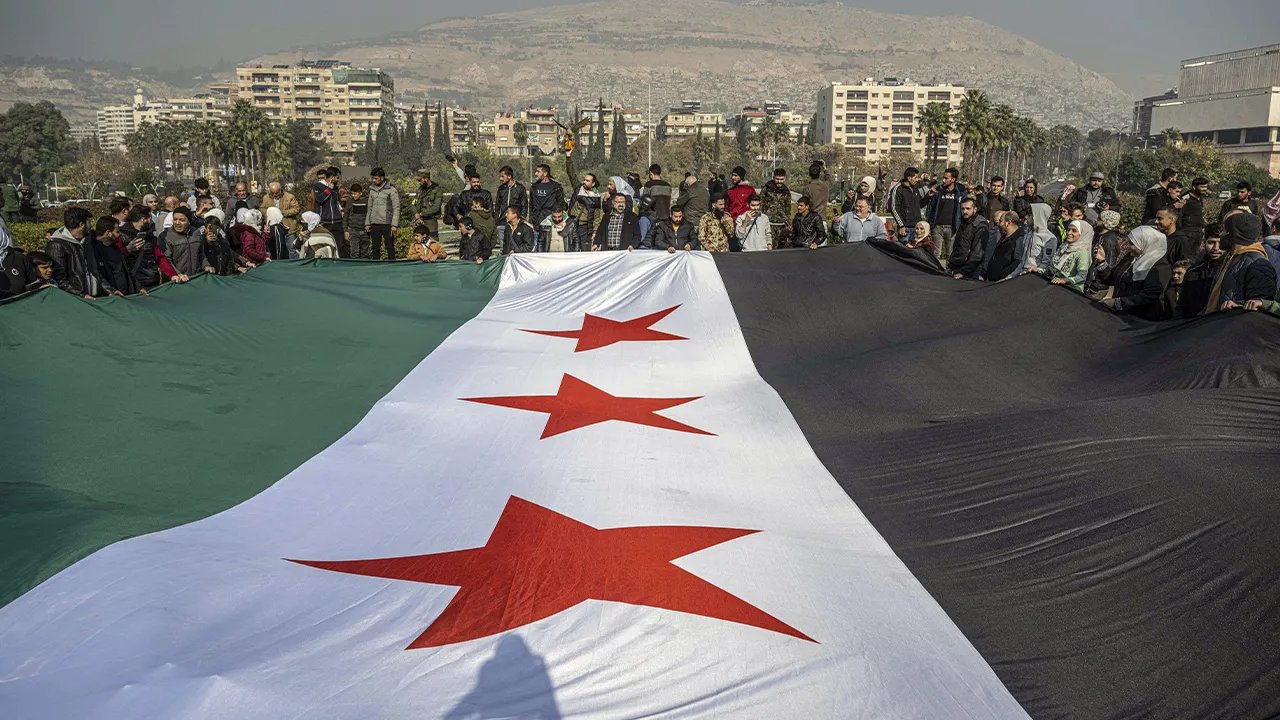
Syrians gather at Umayyad Square to celebrate the collapse of 61 years of Baath Party rule in Damascus on Dec. 9, 2024. (Murat Sengul/Anadolu via Getty Images)
CLICK HERE TO GET THE FOX NEWS APP
Despite encouraging signs on the diplomatic track – such as reported back-channel talks and reduced rhetoric – Israeli airstrikes on Syrian territory have continued, with hundreds launched this year alone. Syria’s new leadership has not responded militarily, but tensions remain high.
«The facts on the ground don’t yet reflect the progress being made behind closed doors,» Lister said. «We just have to hope that those two dynamics meet in the middle, and things calm down on the ground as well.»


NEWYou can now listen to Fox News articles!
Senate Republicans gained a key ally in their quest to enshrine voter ID into law, but the lawmaker’s support comes with a condition.
A trio of lawmakers, led by Sen. Mike Lee, R-Utah, have undertaken a campaign to convince their colleagues to support the Safeguarding American Voter Eligibility (SAVE) America Act, working social media and closed-door meetings to secure the votes.
The campaign has proven successful, with the cohort gaining a crucial vote from Sen. Susan Collins, R-Maine, who announced that she would back the SAVE America Act, which recently passed the House. With Collins, Senate Republicans have at least a slim majority backing the act.
HARDLINE CONSERVATIVES DOUBLE DOWN TO SAVE THE SAVE ACT
Sen. Susan Collins, R-Maine, announced her support for the SAVE America Act, but won’t go as far as to nuke the Senate filibuster. (Tom Williams/CQ-Roll Call, Inc via Getty Images)
«I support the version of the SAVE America Act that recently passed the House,» Collins said in a statement first reported by the Maine Wire. «The law is clear that in this country only American citizens are eligible to vote in federal elections.»
«In addition, having people provide an ID at the polls, just as they have to do before boarding an airplane, checking into a hotel, or buying an alcoholic beverage, is a simple reform that will improve the security of our federal elections and will help give people more confidence in the results,» she continued.
Collins noted that she did not support the previous version of the bill, known simply as the SAVE Act, because it «would have required people to prove their citizenship every single time they cast a ballot.»
ONLY ONE HOUSE DEM VOTED IN FAVOR OF VOTER ID, PROOF OF CITIZENSHIP IN US ELECTIONS

Sen. Mike Lee, R-Utah, is leading the push in the Senate to pass voter ID legislation, and pitching multiple paths that Republicans could take to do it. (Bill Clark/CQ-Roll Call, Inc via Getty Images)
Her decision gives Lee and Senate Republicans the votes needed to clear a key procedural hurdle in the Senate.
«We now have enough votes to pass a motion to proceed to the House-passed bill — even without any additional votes — with Vice President JD Vance breaking the tie,» Lee said in a post on X.
That tie-breaking scenario would only present itself if Republicans turn to the standing, or talking, filibuster. It’s a move that Lee has been pushing his colleagues to make, and one that would require actual, physical debate over the bill.
It’s the precursor to the current version of the filibuster, where the only hill lawmakers have to climb is acquiring 60 votes. Lee and other conservatives believe that if they turn to the standing filibuster, rather than the «zombie filibuster,» they can barrel through Democratic resistance.
But some fear that turning to that tool could paralyze the Senate floor for weeks or even months, depending on Senate Democrats’ resolve.
And Collins’ support is not enough to smash through the 60-vote Senate filibuster.
MURKOWSKI BREAKS WITH GOP ON VOTER ID, SAYS PUSH ‘IS NOT HOW WE BUILD TRUST’
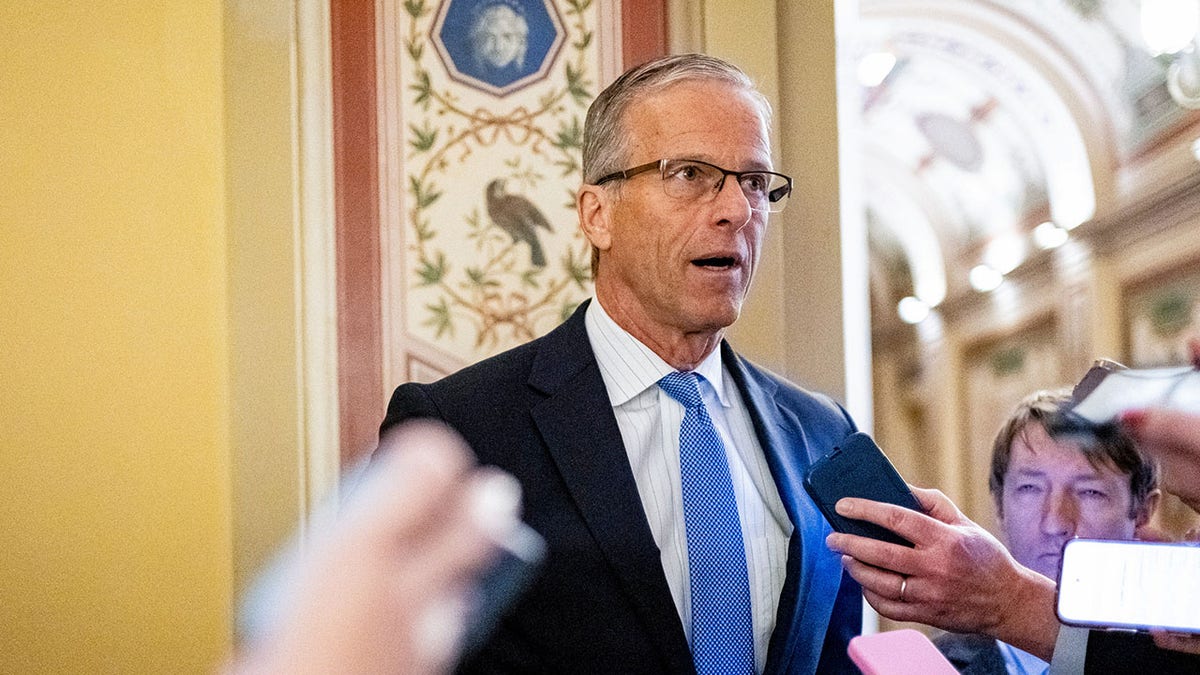
Senate Majority Leader John Thune, R-S.D., supports voter ID laws, but acknowledged that there aren’t the votes in the Senate to nuke the filibuster to pass it. (Graeme Sloan/Bloomberg via Getty Images)
Complicating matters, Collins made clear that she does not support doing away with the filibuster, as do several other Senate Republicans, including Senate Majority Leader John Thune, R-S.D., who reiterated earlier this week that the GOP doesn’t have the votes to eliminate the legislative tool.
«I oppose eliminating the legislative filibuster,» Collins said. «The filibuster is an important protection for the rights of the minority party that requires Senators to work together in the best interest of the country.»
CLICK HERE TO DOWNLOAD THE FOX NEWS APP
«Removing that protection would, for example, allow a future Congress controlled by Democrats to pass provisions on anything they want — D.C. statehood, open borders, or packing the Supreme Court — with just a simple majority of Senators,» she continued.
GOP senators Mitch McConnell of Kentucky, and Lisa Murkowski, of Alaska, remain the only Republicans who have not pledged support for the SAVE Act.
politics,senate,elections,donald trump

NEWYou can now listen to Fox News articles!
Alexei Navalny was murdered by Russia with a type of frog poison, the governments of the United Kingdom, Sweden, France, Germany and The Netherlands have concluded.
In a joint statement on Saturday, the NATO countries said they were «confident» the Russian dissident had been poisoned by the Russian government with a «lethal toxin» known as epibatidine, which is found in South American poison dart frogs. The frogs aren’t native to Russia.
«Russia claimed that Navalny died of natural causes. But given the toxicity of epibatidine and reported symptoms, poisoning was highly likely the cause of his death,» the countries wrote. «Navalny died while held in prison, meaning Russia had the means, motive and opportunity to administer this poison to him.»
ALEXEI NAVALNY’S DEATH REPRESENTS MAJOR BLOW TO POLITICAL DISSENT IN RUSSIA
Alexei Navalny was murdered by Russia with a type of frog poison, the governments of the United Kingdom, Sweden, France, Germany and The Netherlands have concluded. (Sefa Karacan/Anadolu Agency/Getty Images)
The conclusion was made based on samples taken from Navalny’s body.
Navalny, one of Russian President Vladimir Putin’s most powerful opponents, died in a Russian prison in Siberia in 2024 after he decided to go back to his home country in 2021.
Navalny was immediately detained upon his return to his home country on charges that included fraud and contempt of court that were widely considered to be politically motivated.
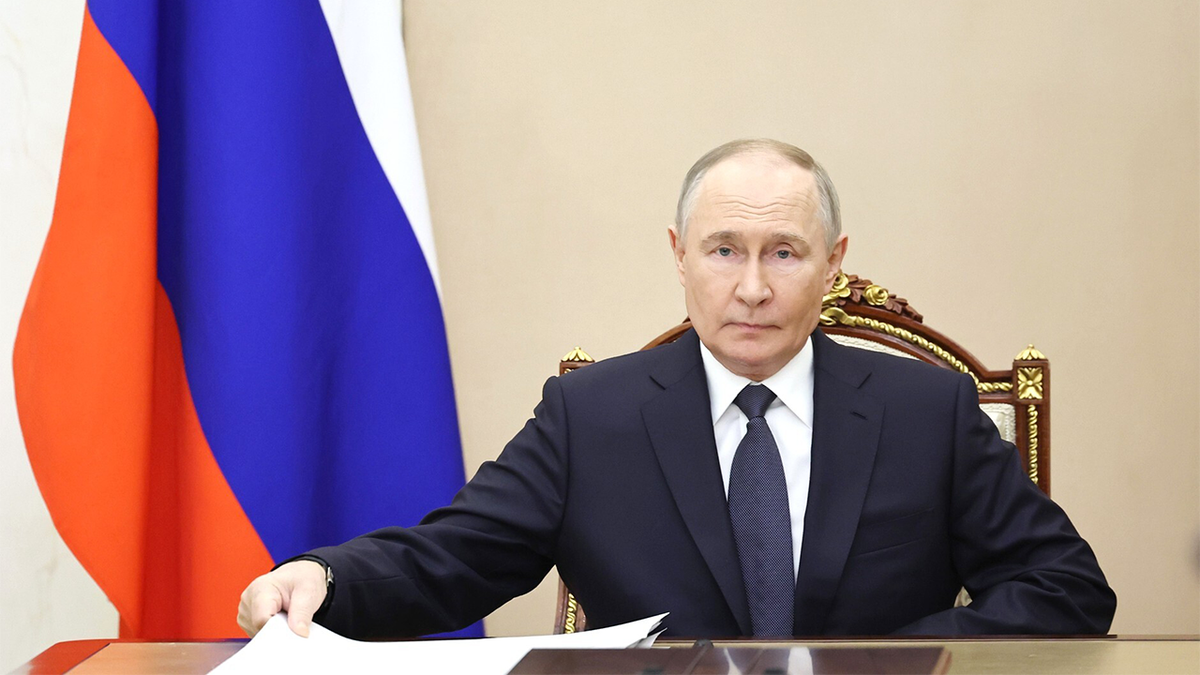
Russia has been accused by several European countries of poisoning Alexei Navalny to death. (Kremlin Press Office / Handout/Anadolu via Getty Images)
The activist was famously brought to a German hospital in 2020 to recover after Western powers, including the U.S., accused Russia of poisoning him with a nerve agent known as novichok that was developed by the Soviet Union.
RUSSIA AGREES TO ABIDE BY EXPIRED NEW START NUCLEAR ARMS LIMITS – AS LONG AS US DOES THE SAME

Alexei Navalny after an arrest in Russia in 2017. (Kirill Kudryavtsev/ AFP via Getty Images)
«Russia’s repeated disregard for international law and the Chemical Weapons Convention is clear,» the statement said, adding that Russia was also widely believed to have used novichok in England in 2018, leading to the death of a British woman named Dawn Sturgess.
CLICK HERE TO DOWNLOAD THE FOX NEWS APP
«These latest findings once again underline the need to hold Russia accountable for its repeated violations of the Chemical Weapons Convention and, in this instance, the Biological and Toxin Weapons Convention,» the statement said.
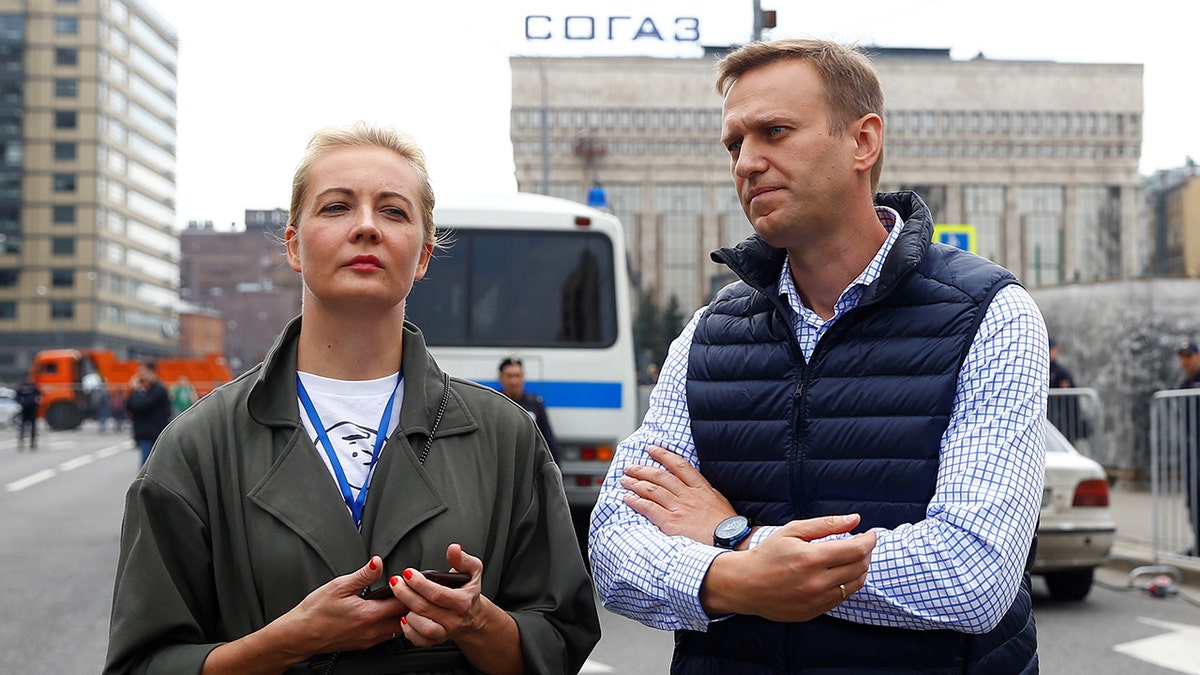
Alexei Navalny with his wife Yulia in 2018. (Sefa Karacan/Anadolu Agency/Getty Images)
The countries added that they had written to the director general of the Organisation for the Prohibition of Chemical Weapons to «inform him of this Russian breach of the Chemical Weapons Convention.»
world,russia,crime,vladimir putin
INTERNACIONAL
Siguen avanzando las obras de ampliación y pavimentación de la carretera Litoral en El Salvador
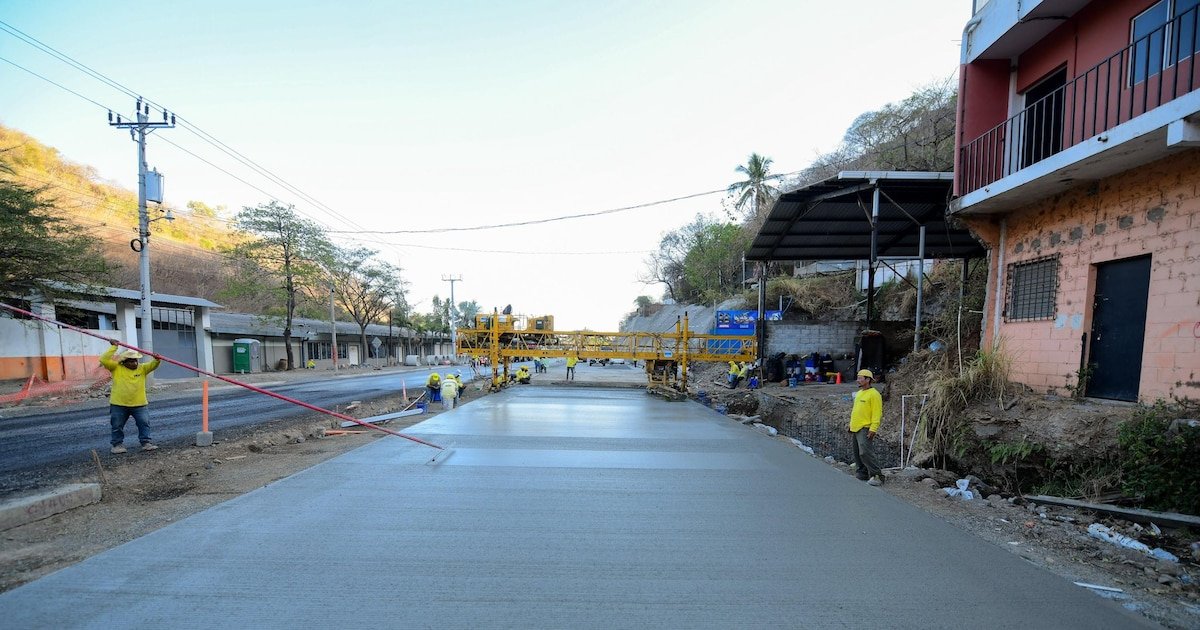
La ampliación y modernización de la carretera Litoral, uno de los principales ejes viales de El Salvador, continúa su marcha con un avance significativo en el tramo que conecta la playa El Obispo con El Zonte, en el departamento de La Libertad. Este proyecto, impulsado por el gobierno a través del Ministerio de Obras Públicas (MOP), representa una de las inversiones más relevantes en infraestructura vial de los últimos años, con el objetivo de mejorar la conectividad, agilizar el tránsito y potenciar el desarrollo turístico de la zona costera.
El MOP ya ha confirmado que los trabajos de ampliación del tramo de 23 kilómetros entre playa El Obispo y playa El Zonte iniciaron en febrero de 2024. La intervención contempla el ensanchamiento de la vía de dos a cuatro carriles y diferentes plantas de tratamiento de aguas residuales, en coordinación con la Administración Nacional de Acueductos y Alcantarillados (ANDA). Estas obras buscan no solo mejorar la circulación y la seguridad vial, sino también reducir la contaminación de los ríos que desembocan en las playas, fortaleciendo así la oferta turística de La Libertad.
El proyecto tendrá un impacto directo en más de 40,000 conductores que utilizan a diario este corredor, además de mejorar la calidad de vida de los habitantes de la zona. La obra se ejecuta en tres fases: la primera cubre el tramo desde El Obispo hasta el redondel Conchalío; las siguientes etapas avanzan hasta El Zonte.

Además, el plan integral incluye la instalación de cableado subterráneo en la ciudad de La Libertad, la habilitación de espacios públicos y la construcción de miradores a lo largo de la carretera, elementos que forman parte de la estrategia Surf City Fase 2, orientada a consolidar la franja costera como un destino turístico de referencia internacional.
Las tareas más recientes, divulgadas esta semana por el MOP en sus cuentas oficiales, muestran cuadrillas de trabajadores desplegadas a lo largo de distintos segmentos del tramo El Obispo-El Zonte, realizando labores de pavimentación con concreto hidráulico. Las imágenes publicadas ilustran el vertido y extendido del concreto, la utilización de maquinaria especializada y la presencia de operarios con indumentaria de seguridad sobre la vía.
También se observan obras de drenaje y adecuaciones en los márgenes de la carretera, así como la circulación de vehículos pesados y la convivencia con el tránsito local, lo que evidencia la magnitud y complejidad logísticas del proyecto.

Según el ministro Romeo Rodríguez, este tipo de intervenciones no solo buscan aliviar la congestión vehicular en temporadas de alta afluencia hacia las playas, sino también garantizar la durabilidad y resistencia de la infraestructura ante condiciones climáticas adversas.
La elección del concreto hidráulico responde a criterios de sostenibilidad y menor mantenimiento a largo plazo. “Con estos trabajos se busca reducir la contaminación de los ríos que desembocan en las playas y potenciar el desarrollo turístico”, declaró Rodríguez en una reciente entrevista.
El gobierno prevé que la finalización de la ampliación de la carretera Litoral y las obras complementarias generen un efecto multiplicador en la economía local. El mejoramiento de la vía facilitará el acceso a las playas, reducirá los tiempos de traslado y fortalecerá la seguridad vial para residentes, turistas y transportistas. De este modo, el corredor costero se consolida como un motor clave para el desarrollo de El Salvador, alineado con la visión de modernización y competitividad internacional impulsada por la administración actual.

De forma paralela, el MOP continúa avanzando en otras obras estratégicas, como la construcción del viaducto Francisco Morazán y la ampliación en la carretera Panamericana, en el tramo Los Chorros, y proyectos que suman una inversión total de más de $372 millones y que forman parte de la agenda nacional de infraestructura. El propio Rodríguez resaltó que “la mayor parte de la ampliación de la autopista será visible este año”, proyectando que los trabajos principales finalizarán en 2026.
corresponsal:Desde San Salvador, El Salvador

¿Dólar planchado o salto? Las tres señales que pueden cambiar el escenario en semanas

El Real Madrid goleó a la Real Sociedad y le sacó la cima de LaLiga al Barcelona

A un año del caso $LIBRA: los avances y puntos muertos de un expediente que se mueve a dos velocidades

Collins boosts Republican voter ID effort, but won’t scrap filibuster

La CGT se reunirá este lunes para evaluar un paro general durante el debate de la reforma laboral en Diputados

Russia murdered Alexei Navalny with deadly frog poison, European countries conclude

A quién afecta la Reforma laboral: estos son los puntos clave del proyecto de Milei

El emotivo homenaje a Luis Brandoni que hizo romper en llanto al espectáculo argentino

Jornada financiera: el dólar cayó a un mínimo en casi tres meses y subieron las acciones argentinas en Wall Street

Reforma laboral: la modificación sobre accidentes o enfermedades ajenas al trabajo

 POLITICA2 días ago
A quién afecta la Reforma laboral: estos son los puntos clave del proyecto de Milei
- POLITICA2 días ago
Reforma laboral: la modificación sobre accidentes o enfermedades ajenas al trabajo
- ECONOMIA2 días ago
Cayeron 20% las ventas de automóviles en China y el régimen impone medidas para regular el mercado