INTERNACIONAL
Xi Jinping’s surprise no-show at BRICS Summit fuels speculation about China’s global standing

NEWYou can now listen to Fox News articles!
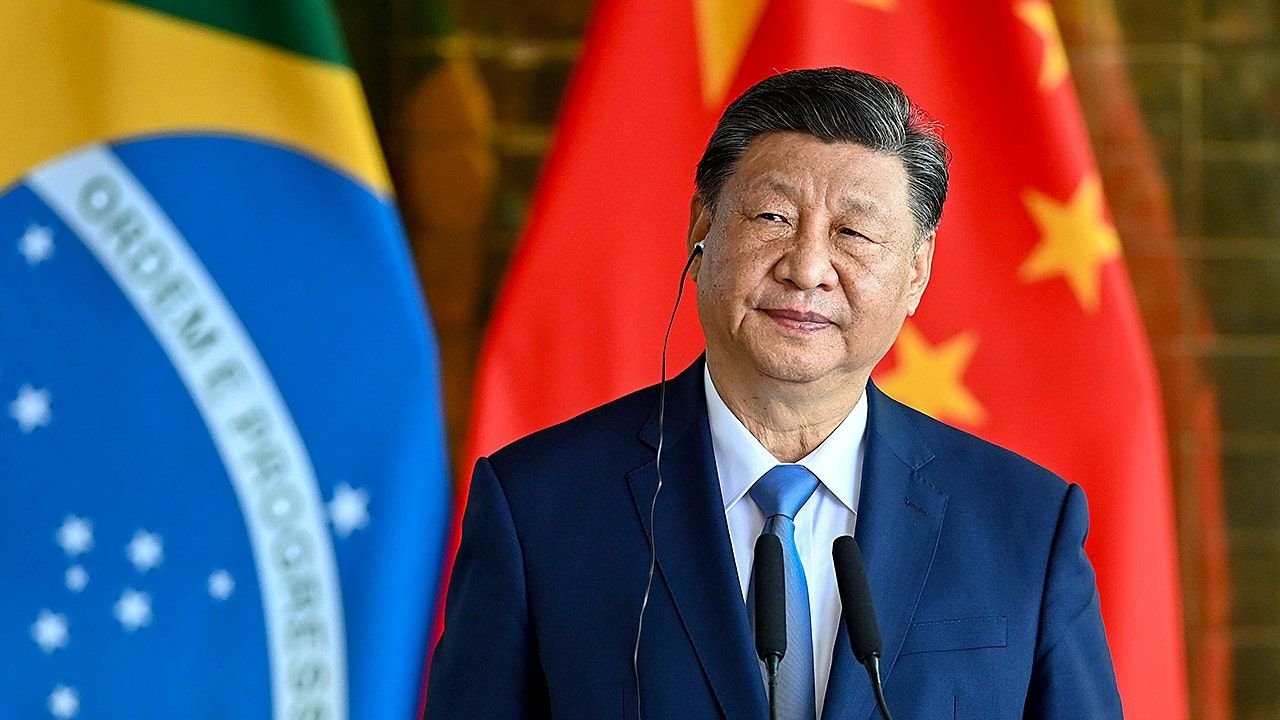
Chinese President Xi Jinping will not attend this week’s BRICS Summit in Brazil, marking the first time the Chinese leader has missed the gathering of major emerging economies. The abrupt decision has triggered widespread speculation about internal political dynamics within China and the fraying cohesion of BRICS itself.
China’s official explanation — a «scheduling conflict» and the fact that Xi already met with Brazilian President Luiz Inácio Lula da Silva earlier this year, according to the South China Morning Post — has been met with skepticism. Premier Li Qiang will attend the summit in Xi’s place, continuing a recent trend of Xi scaling back his appearances on the global stage.
«That doesn’t make sense,» said Gordon Chang, an expert on U.S.-China relations. «There are many other countries at the BRICS summit, not just Brazil. To me, it’s extremely significant that Xi Jinping is not going. It suggests turbulence at home — there are signs he’s lost control of the military and that civilian rivals are reasserting power. This is a symptom of that.»
RUSSIA’S PUTIN HOSTS CHINA’S XI AT MASSIVE MOSCOW MILITARY PARADE ON RED SQUARE
Chinese President Xi Jinping listens as Vietnamese Prime Minister Pham Minh Chinh, not pictured, speaks during their meeting at the Office of the Party Central Committee in Hanoi, Vietnam, on Monday, Apr. 14. (AP/Minh Hoang)
Bryan Burack of the Heritage Foundation agrees that Xi’s absence underscores deeper issues: «It’s another indication that BRICS is not going to be China’s vassalization of the Global South.» He noted that countries like Brazil and Indonesia have recently imposed tariffs on China over industrial overcapacity and dumping, moves that suggest widening rifts within the group.
«China is actively harming all those countries for the most part, maybe with some exceptions, through its malign trade policies and dumping and overcapacity.»
Tensions with India and global trade pressure may also be factors
Some analysts point to rising China-India friction as a contributing factor in Xi’s decision to skip the summit.
«China has been at war with India for decades, essentially,» Burack said. «These are fundamentally opposing interests. It’s difficult to see China changing its behavior in the near term, and that will keep tensions high.»
India’s Prime Minister Narendra Modi is expected to take a leading role at the gathering, potentially another deterrent for Xi’s attendance.
Another key leader — Russian President Vladimir Putin — is only expected to address the group by video.
AFTER TRUMP’S DEPARTURE, G7 LEADERS FAIL TO REACH AGREEMENTS ON KEY ISSUES
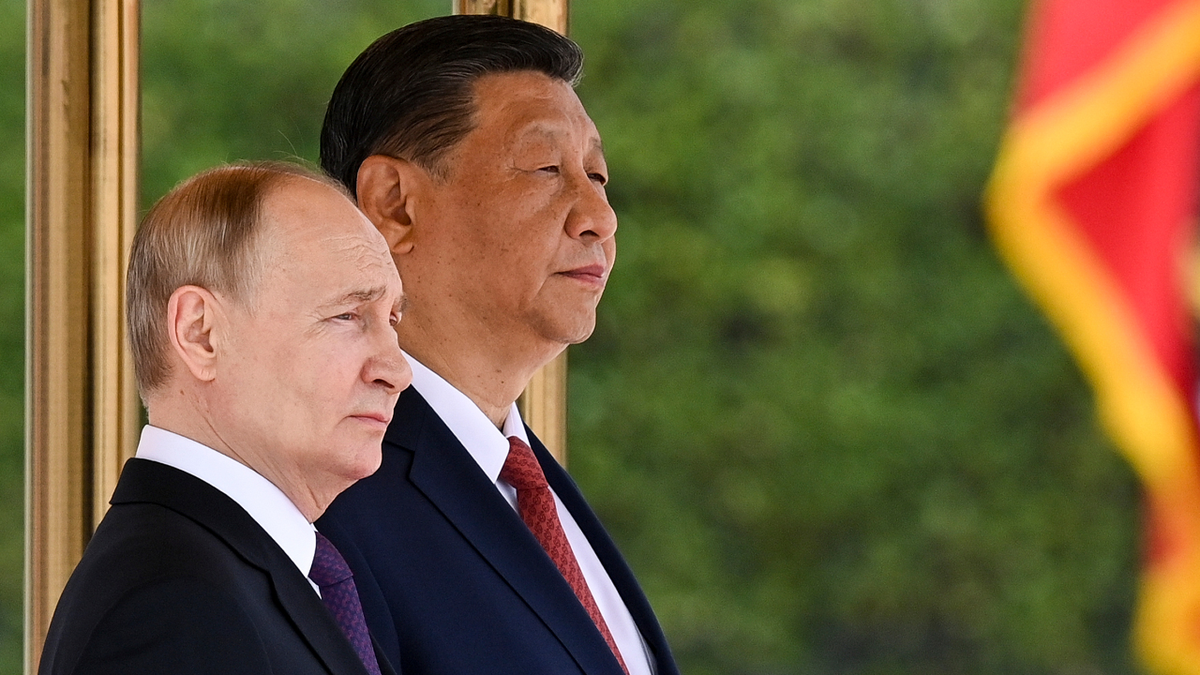
Chinese President Xi Jinping, right, and Russian President Vladimir Putin, left, are two key leaders of the BRICS alliance. (Sergei Bobylev, Sputnik, Kremlin Pool Photo via AP)
BRICS: United in name, divided in decades-long tensions
Formed by Brazil, Russia, India and China and later joined by South Africa, BRICS was envisioned as a non-Western counterweight to G7 dominance. It has expanded to include Egypt, Ethiopia, Iran, the UAE and, most recently, Indonesia, strengthening its economic footprint.
Economist Christian Briggs highlighted BRICS’s massive scale: «BRICS now comprises 12 full members and up to 23 when counting partners. Collectively, they account for over 60% of the world’s GDP and around 75% of the global population. They control vast natural resources and a growing share of global trade flows.»
Yet despite its scale, the bloc remains ideologically and strategically fragmented. «It’s a group of countries that hate each other,» Burack said bluntly. «China is harming many of them through unfair trade practices. There’s not a lot of incentive for real unity.»
Currency ambitions and strategic divergences
The alliance’s aspirations to challenge the U.S. dollar through alternative payment systems and a potential BRICS currency have gained media traction — but experts caution against overestimating this threat.
«There’s been a lot of fearmongering about a BRICS currency,» said Burack. «But the interests of these countries are completely divergent. There’s more smoke than fire when it comes to a currency challenge to the dollar.»
Chang echoed this skepticism: «The only country that can challenge the dollar is the United States. Weakness in the dollar is due to what we are doing domestically, not what the BRICS are doing.»
Still, Briggs offered a counterpoint, arguing that BRICS members are already reshaping global currency flows.
«They’re moving away from the dollar into digital yuan, rupees, rubles. China has launched a SWIFT alternative already adopted by the Caribbean banking sector — trillions of dollars are shifting.»
MACRON CHIDES TRUMP, CHINA OVER TRADE, UKRAINE, GAZA: POLICIES ‘WILL KILL GLOBAL ORDER’
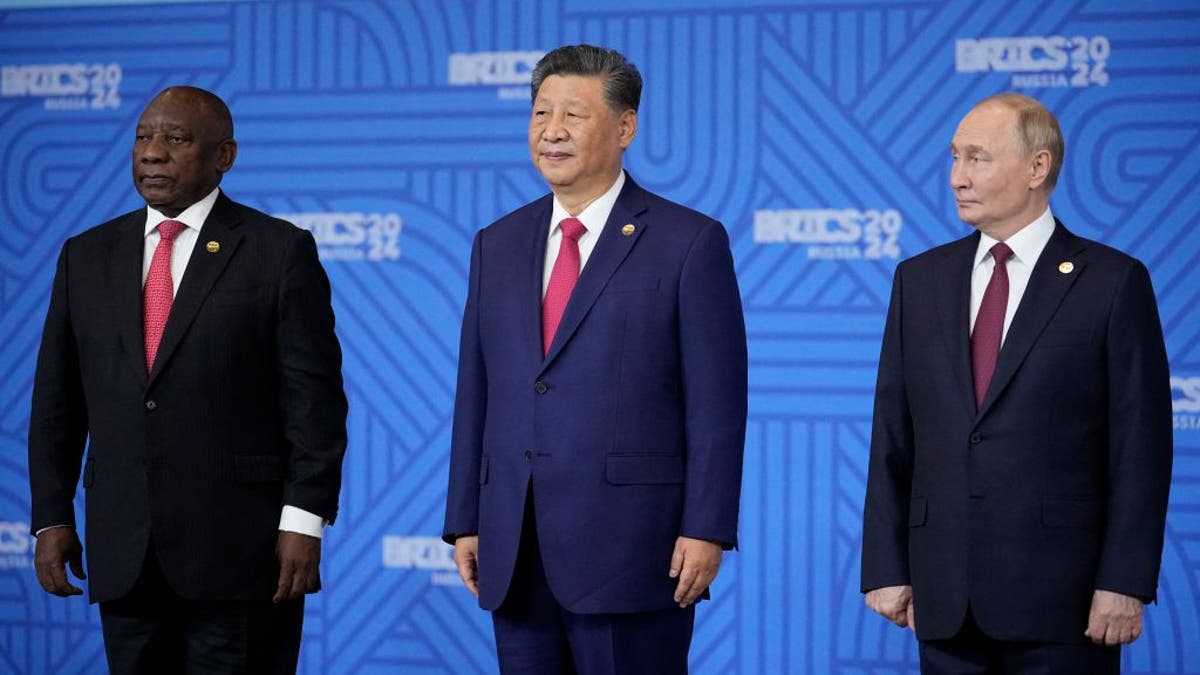
South African President Cyril Ramaphosa, Chinese President Xi Jinping and Russian President Vladimir Putin pose for a family photo during the BRICS summit in Kazan on October 23, 2024. (Alexander ZemlianichenkoPool/AFP via Getty Images)
Is BRICS still a threat to U.S. influence?
While its cohesion remains questionable, BRICS poses a long-term challenge to U.S. influence — particularly in regions where Washington has retreated diplomatically and economically.
«China filled the void left by the U.S. in places like Africa,» said Briggs. «Now it controls about 38% of the world’s minerals. Meanwhile, Russia’s economy has doubled despite sanctions, because they preemptively reduced reliance on the dollar.»
Yet Chang sees India as a brake on any aggressive anti-Western tilt. «BRICS has an ‘I’ in it—and that’s India. Modi doesn’t want to be part of an anti-Western bloc. As long as India’s in BRICS, the rest of the world is safe.»
CLICK HERE TO GET THE FOX NEWS APP

India’s Prime Minister Narendra Modi is expected to take a leading role at the summit, potentially another deterrent for Xi’s attendance. (Sipa USA via AP)
A missed opportunity — or a calculated power move?
To some, Xi’s no-show signals instability in Beijing. To others, the opposite: it demonstrates confidence in China’s dominance over the other BRICS members.
«He doesn’t have to be there,» Briggs contended. «Xi’s power allows him to delegate. China is trading with nearly 80% of the world now. He’s moving the agenda forward even in absentia.»
What’s clear is that BRICS continues to evolve — its internal contradictions as visible as its geopolitical ambitions. Whether Xi’s absence marks a retreat or a recalibration remains one of the key questions hovering over the summit in Brazil.

INTERNACIONAL
Elecciones regionales en Bolivia: siete de las nueve regiones del país se encaminan a una segunda vuelta

Siete de las nueve regiones de Bolivia se encaminan a una segunda vuelta en la elección de gobernadores, mientras solo dos departamentos presentan resultados preliminares que permitirían definir autoridades, a la espera del cómputo oficial.
El presidente del Tribunal Supremo Electoral (TSE), Gustavo Ávila, indicó que los datos difundidos por el Sistema de Resultados Electorales Preliminares (Sirepre) constituyen una referencia inicial y remarcó que los resultados finales dependerán del escrutinio oficial. “Es un parámetro”, sostuvo, y señaló que se debe aguardar la conclusión del conteo para proclamar a los ganadores.
El sistema electoral boliviano establece que un candidato a gobernador gana en primera vuelta si obtiene más del 50 % de los votos válidos, o al menos el 40 % con una diferencia de diez puntos porcentuales sobre el segundo. Bajo estos criterios, los datos preliminares muestran que solo dos departamentos cumplen esas condiciones.
Según el Sirepre, Potosí y Pando presentan candidatos con ventajas suficientes para evitar el balotaje. En Potosí, René Joaquino, de la Alianza Social, alcanza el 42,14 % de los votos, con más de veinte puntos de diferencia sobre su inmediato perseguidor. En Pando, Gabriela de Paiva, de la alianza Libre, logra el 45,82 %, también con una amplia ventaja que supera los veinte puntos.
En el resto del país, los resultados anticipan una segunda vuelta. En cinco departamentos —La Paz, Oruro, Tarija, Chuquisaca y Beni— los candidatos de la coalición Unidos por la Patria, vinculada al presidente Rodrigo Paz, se posicionan para disputar el balotaje.

En La Paz, uno de los principales distritos electorales, el exalcalde Luis Revilla encabeza la votación con el 20,2 %. La definición de su rival depende del cómputo final, con Antonio Riveros, de Innovación Humana, con el 8,81 %, y el exgobernador Félix Patzi, del Movimiento Tercer Sistema, con el 8,65 %, como principales contendientes según el avance del 95,15 % del Sirepre.
En Santa Cruz, la región más poblada del país, el escenario también conduce a una segunda vuelta. El excandidato vicepresidencial de Libre, Juan Pablo Velasco, se ubica en primer lugar con el 28,3 %, seguido por el abogado Otto Ritter, de Santa Cruz para Todos, con el 26,71 %. El actual gobernador, Luis Fernando Camacho, queda en tercer lugar con el 21,93 %, en uno de los resultados más destacados de la jornada.
Cochabamba, el tercer departamento más poblado, presenta otro escenario de balotaje. Con el 97,08 % de los votos contabilizados en el Sirepre, el ex senador Leonardo Loza, afín al expresidente Evo Morales, alcanza el 39,77 %, mientras que Sergio Rodríguez, de APB Súmate, obtiene el 23,66 %. Ninguno cumple los requisitos para evitar la segunda vuelta.
Más de 7,4 millones de ciudadanos estuvieron habilitados para votar en estos comicios regionales, en los que también se eligieron asambleístas departamentales, alcaldes y concejales municipales para un mandato de cinco años.
A diferencia de las gobernaciones, las alcaldías se definen por mayoría simple. En este nivel, el Sirepre muestra que la coalición oficialista obtiene la victoria en una sola de las diez principales ciudades, en Trinidad, capital del Beni. Entre los resultados más destacados figura el 70,89 % alcanzado por el concejal Manuel Saavedra en la ciudad de Santa Cruz.

En Cochabamba, Manfred Reyes Villa logra la reelección como alcalde, mientras que en La Paz se impone César Dockweiler, exfuncionario del Gobierno de Evo Morales.
El Tribunal Supremo Electoral prevé finalizar el cómputo oficial el miércoles, tras lo cual se confirmarán los resultados definitivos. La segunda vuelta para las gobernaciones se encuentra programada para el 19 de abril.
(Con información de EFE)
elecciones
El accidente del avión Hércules C-130 de la Fuerza Aérea Colombiana (FAC) de este lunes, que llevaba 125 personas a bordo, en su mayoría militares, de las cuales al menos 83 sobrevivieron con heridas, es uno de los más importantes desde 2019 en el ámbito militar entre las tragedias aéreas ocurridas en América Latina.
En lo que va de siglo, en Latinoamérica se han producido accidentes de aviones, tanto comerciales como militares, que han dejado decenas de fallecidos.
Hace poco menos de un mes, el 28 de febrero, murieron 22 personas en un accidente de un avión militar de carga que transportaba dinero destinado al Banco Central de Bolivia. El avión se salió de la pista tras aterrizar y varias personas accedieron para recoger los billetes dispersos. Hay 51 detenidos y abiertas tres investigaciones.
Esta la cronología de los mayores accidentes de avión en Latinoamérica este siglo:
11 enero 2003.- Un avión Fokker F28 de la compañía peruana Tans, con 46 ocupantes (entre ellos una española), y que cubría la ruta entre Chiclayo y la ciudad amazónica de Chachapoyas (Perú), se estrella contra el cerro Coloque a 3.300 metros de altitud. No hubo supervivientes.
16 agosto 2005.- Mueren los 161 ocupantes de un avión de la compañía colombiana West Caribbean, la gran mayoría franceses de Martinica, al caer a tierra en la sierra venezolana de Perijá cuando volaba entre Panamá y esa isla francesa del Caribe.
29 septiembre 2006.- Un Boeing de la línea brasileña GOL desaparece con 154 personas a bordo, que fallecieron, tras colisionar con un avión Legacy que se dirigía a Estados Unidos, en la frontera entre los estados amazónicos de Pará y Mato Grosso. El Legacy consiguió aterrizar de emergencia.
17 julio 2007.- Un Airbus A320 de la aerolínea brasileña TAM se sale de la pista al aterrizar en el aeropuerto de Congonhas, en Sao Paulo (Brasil) y choca contra un edificio causando 199 muertos (187 ocupantes del avión y 12 alcanzados en tierra).
21 febrero 2008.- Un avión ATR 42300 de fabricación franco-italiana, con 43 pasajeros y tres tripulantes, de la aerolínea Santa Bárbara, desaparece cuando volaba entre Mérida y Caracas (Venezuela).
1 junio 2009.- Un Airbus A-330 de Air France se precipita en aguas del Atlántico cuando volaba de Río de Janeiro (Brasil) a París. Mueren las 228 personas que viajaban a bordo, la mayoría brasileños y franceses. Según el análisis de las cajas negras, el accidente se debió a un error de los pilotos, lo que exculpa al fabricante, Airbus.
5 noviembre 2010.- Fallecen los 68 ocupantes de un avión comercial -un ATR-72 de dos motores turbohélice para viajes regionales- de la aerolínea cubana Aerocaribean, al estrellarse en la región de Guasimal en la provincia de Sancti Spiritus, Cuba.
28 noviembre 2016.- Mueren 71 de los 77 ocupantes de un avión Avro RJ 85 de la compañía boliviana Lamia que se estrelló cerca del aeropuerto de Medellín (Colombia).
18 mayo 2018.- Fallecen 112 de los 113 ocupantes de un Boeing 737 de Cubana de Aviación, alquilado a la mexicana Global Air, que cubría la ruta entre La Habana y Holguín. El avión se estrelló instantes después de despegar a 1 kilómetro del aeropuerto de La Habana.
9 diciembre 2019.- Desaparece un avión C-130 Hércules de la Fuerza Aérea de Chile, con 38 personas a bordo, a los que se dio por muertos, cuando se dirigía a la base antártica chilena Presidente Eduardo Frei Montalva desde la Base Aérea Chabunco de Punta Arenas.
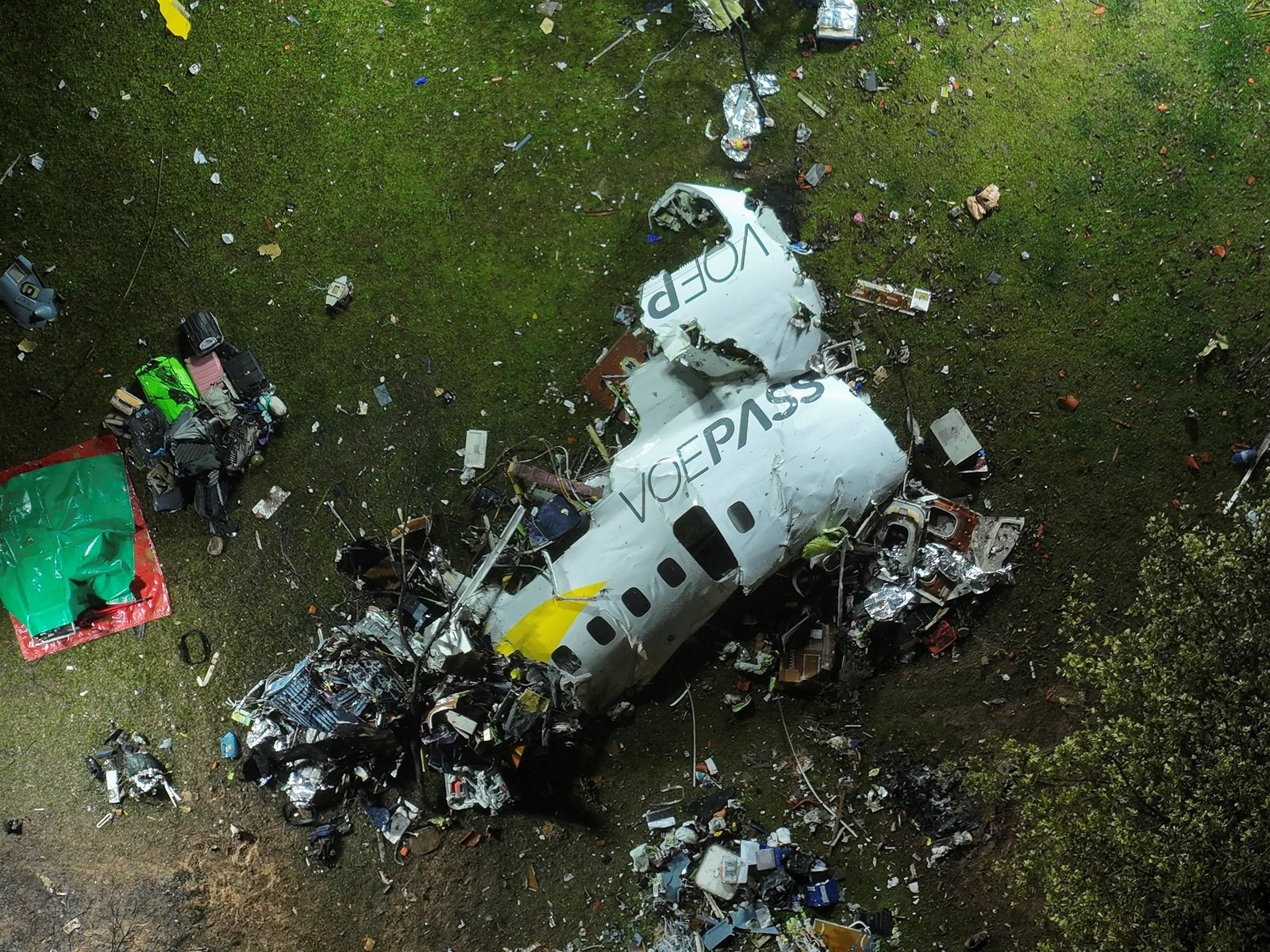
9 agosto 2024.- Un avión con 61 personas a bordo se estrella en una zona residencial en el municipio brasileño de Vinhedo, en el estado de Sao Paulo, Brasil. El aparato era un avión bimotor modelo ATR-72-500 de la aerolínea Voepass y que viajaba desde la ciudad de Cascavel hasta Sao Paulo.
28 de febrero de 2026.- Un avión militar de carga de la Fuerza Aérea Boliviana (FAB), un Hércules C-130 que transportaba dinero del Banco Central de Bolivia, se estrelló al intentar aterrizar en el aeropuerto internacional de El Alto, la segunda ciudad más poblada del país, provocando la muerte de 22 de sus tripulantes
23 marzo 2026.- Un avión Hércules C-130 de la Fuerza Aérea Colombiana (FAC) se accidenta al despegar de la localidad amazónica de Puerto Leguízamo, en el departamento del Putumayo (Colombia). Iban 125 personas a bordo, en su mayoría militares, de las cuales al menos 48 sobrevivieron con heridas.

NEWYou can now listen to Fox News articles!
A phalanx of reporters and photographers trailed House Budget Committee Chairman Jodey Arrington, R-Texas, out of the Capitol and across the Capitol grounds last Thursday morning.
The Trump administration planned to ask Congress for an additional $200 billion to cover the cost of the war in Iran. Passing such a plan might be dicey. Especially vaulting the 60 vote barricade in the Senate. But House Speaker Mike Johnson, R-La., and Arrington were already touting a «reconciliation» bill for this year to approve some of the GOP’s domestic policy priorities ahead of the midterms. Reconciliation is inoculated from a Senate filibuster. And other Republicans may be on board with the extra $200 billion if it’s tucked into a reconciliation package which tackles other subjects.
«I think reconciliation is probably going to be the only vehicle that we put anything in because the Democrats aren’t going to support it,» said Arrington, briskly traversing a set of congressional steps near the plaza, bound for Independence Avenue. «I don’t think they’ll support the supplemental for the operating needs for our military while they’re in conflict.»
«The Senate seems kind of suspect of trying to do this,» yours truly followed up as the gaggle of reporters and photographers trekked the Capitol grounds toward the street.
PENTAGON SEEKS AT LEAST $200B FROM CONGRESS FOR IRAN WAR
Regular traffic signals shift on a regular basis. Political signals don’t necessarily do the same. (Aaron Schwartz/AFP via Getty Images)
«The Senate is going to be suspect and slow to be motivated. Which is why the House is the little engine that can. And when the little engine that can, does, then the Senate and other people follow. The House has to lead,» replied Arrington. «We led in the first reconciliation bill. It wouldn’t have been as big or beautiful if we didn’t do our job on the tax cuts. On the spending cuts. On the energy reforms. On the generational welfare reforms.»
The scrum edged closer to Independence Avenue in the shadow of the Longworth House Office Building.
«I’ve got to walk across here. I’m late for a meeting. Y’all can follow me,» instructed Arrington, to the press, pivoting into the crosswalk just as the traffic light changed to green.
THE HITCHHIKER’S GUIDE TO CONGRESS’ OPTIONS ON HAMSTRINGING TRUMP’S WAR POWERS IN IRAN
Three journalists followed the Texas Republican into the street. However, your trusty journalist (and Wayne Elementary School Safety Town participant) remained on the corner.
Two cars and a bus accelerated.
«Wait! Careful! Careful! Careful! Careful! Careful! Careful!» I hollered.
Arrington and the others scurried back to the curb.
«See, you lead. They follow. But they may die,» observed Arrington.
«Are you going to lead the Senate right into a crosswalk with traffic?» I inquired.
Arrington pivoted – both back to the curb and to policy – as cars and scooters whizzed by.

Rep. Jodey Arrington, R-Texas, says he thinks «reconciliation is probably going to be the only vehicle that we put anything in.» (Anna Moneymaker/Getty Images)
«I think my counterpart, (Senate Budget Committee Chairman) Lindsey Graham, R-S.C., understands that the only train leaving the station for the bigger vision for our military will be a reconciliation bill,» said Arrington.
It’s unclear whether Arrington switching to railroads and locomotives was the best rhetorical shift considering the close call on the street. But Arrington may be right. It will be challenging to pass anything substantial for the rest of this Congress. And perhaps zippering the $200 billion for the war into a reconciliation measure with other policy sweeteners could be the most palatable option to Republicans.
«We have to continue to look at offsetting,» said Rep. Tony Wied, R-Wis.
«I think it should be offset,» said Rep. Tim Burchett, R-Tenn.
«It is expensive,» conceded House Veterans’ Affairs Committee Chairman Mike Bost, R-Ill., about the spending request.
REPORTER’S NOTEBOOK: GOP PUSHES ELECTION SECURITY BILL DESPITE SLIM ODDS, AS TRUMP PRESSURE LOOMS
But offsets come from cuts. And lawmakers don’t like to slash programs important to their jurisdiction, state or district.
«A lot of the VA stuff, that’s like the third rail in politics. You don’t cut that,» said Bost.
What could contribute to an offset? Arrington suggested Republicans should turn to the time-tested Washington law firm of «Waste, Fraud and Abuse» to mitigate the cost of the war.
Rep. Alexandria Ocasio-Cortez, D-N.Y., replied «no» when asked about the supplemental spending request.
«It is skyrocketing prices of everything across the board, and Congress didn’t even approve. And so to have the audacity to come to Congress to fund a war that we have not even voted for it – not only is it illegal, it is insulting,» said Ocasio-Cortez.
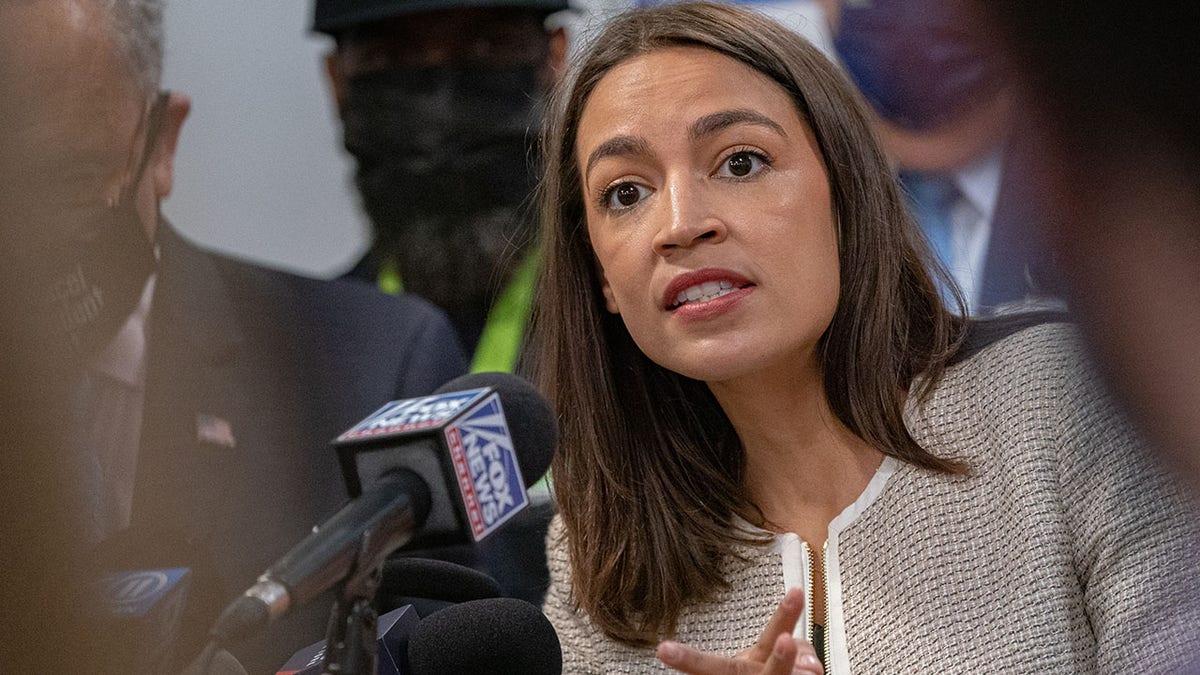
Rep. Alexandria Ocasio-Cortez, D-N.Y., is a firm «no» on the supplemental spending request, saying «we cannot enable this kind of reckless and illegal behavior.» (Jeenah Moon/Bloomberg via Getty Images)
I asked about whether it was dangerous for lawmakers to leave American troops in the lurch when they’re exposed to hostilities abroad.
«They should have thought about that before they entered a conflict without Congress,» said Ocasio-Cortez. «They told everybody that it was just a quick in and out strike and now they have found themselves in a disaster. And we cannot enable this kind of reckless and illegal behavior.»
Ocasio-Cortez is hinting at the ultimate Congressional authority: power of the purse. Lawmakers are charged with approving 12 spending bills to run the government each year. A supplemental spending package – say for war, terrorism, recovery from natural disasters or economic stimulus – is a «13th» spending bill. It’s plopped on top of the customary 12. Lawmakers could really hamstring the war in Iran if they decide to pull the funding.
The White House scored about $1 trillion from Congress in Fiscal Year 2026 for the military. President Trump’s request for the Pentagon for Fiscal Year 2027 – still unapproved – is $1.5 trillion. That’s a 50 percent increase. That particular ask of Congress came before the $200 billion ask for the war in Iran.
DEMS’ POTENTIAL 2028 HOPEFULS COME OUT AGAINST US STRIKES ON IRAN
The president has sent mixed signals as to whether the war is «ending.» A reporter asked President Trump if he still needed the $200 billion.
«It’s always nice to have. It’s a very inflamed world. And the Democrats inflame it,» replied the president.
But it’s generally believed that the Pentagon needs the money because it’s burned through so many munitions in Iran.
So this supplemental spending request must navigate the Congressional traffic.
Regular traffic and pedestrian signals switch on a regular basis. But not necessarily political signals. There’s no way right now for lawmakers to greenlight an extra $200 billion for the war. That’s because the «don’t walk» light is flashing.
CLICK HERE TO DOWNLOAD THE FOX NEWS APP
The question now is how long it takes for the light to change. Or, if it will ever cycle through. Otherwise, Congressional leaders could put the bill on the floor – and get mowed down by a political bus.
congress, house of representatives politics, senate, war with iran

Elecciones regionales en Bolivia: siete de las nueve regiones del país se encaminan a una segunda vuelta

La llamativa fortuna del cura y diputado K Juan Carlos Molina: tiene USD 1 millón y cuatro propiedades

Jorge Barreiro, el galán que pasó de no poder salir a la calle por el acoso de sus fanáticas a la tristeza del olvido

Cómo pedir a ANSES la ayuda económica para personas sin empleo y qué requisitos se necesitan

Las 12 horas de tensión con los militares para que el TC lograra un cambio histórico durante la última dictadura: “La pasaron mal”

Un famoso amigo de Evangelina Anderson reveló los peores secretos: “Es mala gente y una…”

¿FIN DE CICLO? Escándalo por la mansión no declarada y viajes de lujo empujan a Manuel Adorni fuera del Gobierno: Su salida sería inminente

“Tiro al facho”: la repudiable “intervención” en Facultad de Medicina en la que había que tirarle dardos a Javier Milei

»¡VAN A FUNDIR A MEDIO PAÍS!»: El lapidario diagnóstico de Roberto Cachanosky sobre el plan de Milei

Apareció otra factura y complica más a Adorni: el vuelo de vuelta también lo pagó su amigo Grandio

 POLITICA2 días ago
»¡VAN A FUNDIR A MEDIO PAÍS!»: El lapidario diagnóstico de Roberto Cachanosky sobre el plan de Milei
- POLITICA3 días ago
Apareció otra factura y complica más a Adorni: el vuelo de vuelta también lo pagó su amigo Grandio
- ECONOMIA2 días ago
ALERTA FINANCIERA: 4 de cada 10 argentinos ya no pueden pagar sus deudas. ¡Caputo debe actuar ya!