INTERNACIONAL
Poll: Michigan voters split between El-Sayed and Rogers

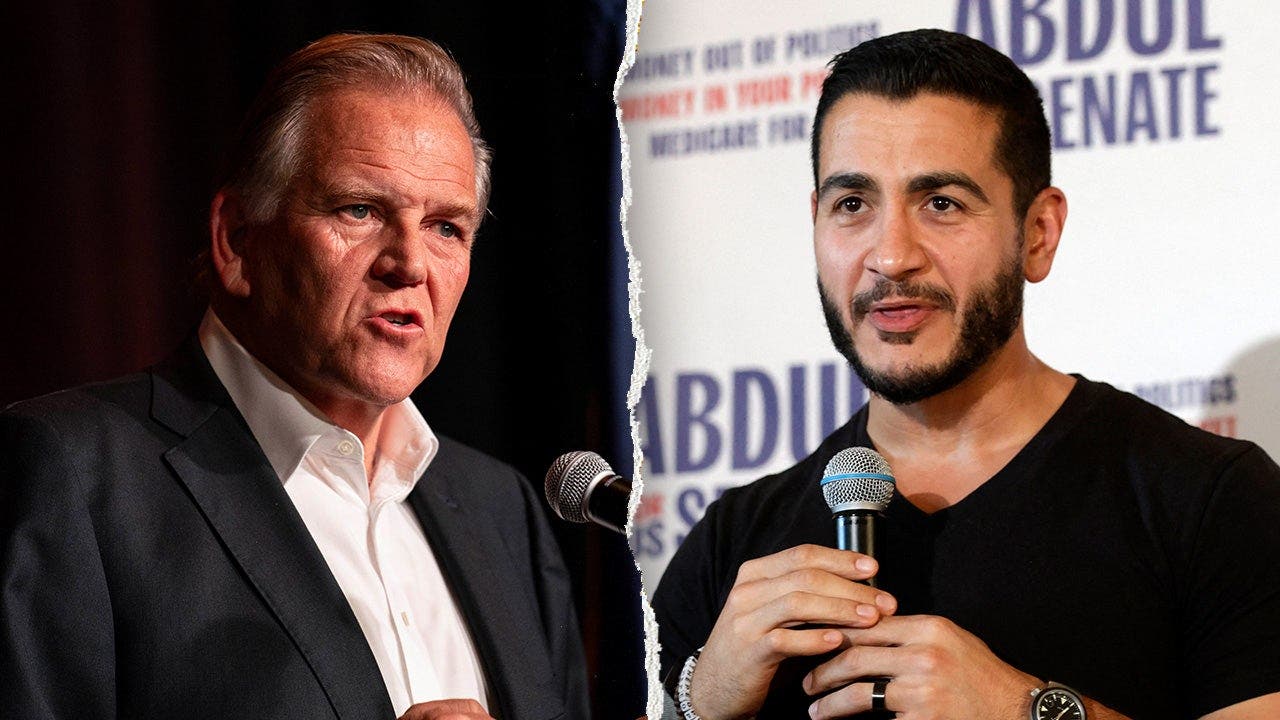
Michigan voters have concerns about both candidates in the U.S. Senate race and that leads to a tight contest, according to a new poll.
Democrat Abdul El-Sayed has a slim 1-point edge against Republican Mike Rogers, 50-49%, among Michigan likely voters. The survey, released on Wednesday, is the first Poll this season among likely voters, so a direct comparison can’t be made to previous polls.
Yet among registered voters, the preference is almost identical, 51% El-Sayed vs. 48% Rogers. That’s a reversal since August, when Rogers was ahead by 4 points among registered voters, 51% to El-Sayed’s 47%.
POLL: VOTERS QUESTION WHETHER AI’S PROMISE OUTWEIGHS ITS RISKS
The analysis below is among likely voters, unless otherwise noted.
More of El-Sayed’s backers feel certain of their choice (87%) than Rogers’ (80%). Overall, 15% say they could switch their pick before voting, including 18% of Rogers’ supporters and 12% of El-Sayed’s.
POLL: SQUEEZED BY COSTS, FRUSTRATED VOTERS TURN TO THE DEMOCRATS
Here’s why the race is tight.
Roughly equal numbers of Michiganders say they are extremely concerned Rogers is too close to President Donald Trump (39%) as say El-Sayed’s views are too liberal (36%).
And their favorable ratings are also close: 47% view El-Sayed positively compared to 44% for Rogers. Among registered voters, positive views of El-Sayed increased by 5 points since August while Rogers’ declined by four points.
El-Sayed’s best groups include those who traditionally go Democratic: women, Black voters and those with a college degree. He’s also ahead with voters under age 45 and the small subgroup of union households.
The groups giving Rogers some of his strongest support include men, rural voters, White evangelical Christians, married voters and Whites without a college degree.
Both candidates receive near-universal backing from their party. Rogers receives 95% among Republicans, while it’s 93% for El-Sayed among Democrats. In addition, Rogers gets 99% of MAGA Republicans and 88% of non-MAGA Republicans, while El-Sayed garners 98% of DSA Democrats and 90% of non-DSA Democrats. The small number of independents narrowly favor El-Sayed.
This year’s political landscape favors El-Sayed. The Democrats hold a 5-point advantage when voters are asked which party they want to control the Senate, 52% to 47%. But to capitalize on that, he’ll need to consolidate Democratic support after a contentious primary because 11% of likely voters who backed his primary opponent Haley Stevens say they plan to vote for Rogers.
CLICK HERE FOR CROSSTABS AND TOPLINE
«The Michigan Senate race is unique in that short-term political forces favoring the Democrats are somewhat offset by concerns about the Democratic candidate,» says Republican pollster Daron Shaw, who conducts the Poll with Democrat Chris Anderson.
«The bad news for Rogers is El-Sayed has made progress shoring up Democratic support and has room to grow given voter concerns about the economy.»
Four in ten Michiganders say they are falling behind financially, and they back El-Sayed by 25 points. But the largest share, nearly half, describe their family as holding steady, and they favor Rogers by 13 points, while the small number who are getting ahead prefer Rogers by 36 points.
Still, for 7 in 10 voters, the cost of living will be extremely important to their Senate vote, and they back El-Sayed by 13 points. He also has advantages among the 4 in 10 focused on U.S. policy toward Israel (+8 points) and AI technology (+17 points). Conversely, Rogers is favored by 26 points among the 44% focused on immigration.
Half of Michigan voters consider Trump extremely important to their Senate vote, and they favor El-Sayed by 22 points.
In 2024, Trump won Michigan by less than two percentage points, while Rogers lost to Democrat Elissa Slotkin by less than half a point.
Voter frustration with the administration is a drag on Rogers, as nearly 6 in 10 disapprove of the president’s performance. While 40% approve, not all support Rogers (93%). He remains competitive with support from 19% of Trump disapprovers overall, even as 28% who only «somewhat» disapprove of Trump prefer El-Sayed.
In the gubernatorial race to replace term-limited Democratic Gov. Gretchen Whitmer, Democrat Jocelyn Benson leads Republican John James 54% to 45% among likely voters.
Twelve percent of those backing Rogers in the Senate race cross-party lines to favor Benson.
Conducted September 24-28, 2026, under the joint direction of Beacon Research (D) and Shaw & Company Research (R), this Poll includes interviews with a sample of 1,203 Michigan registered voters randomly selected from a statewide voter file. Respondents spoke with live interviewers on landlines (114) and cellphones (794) or completed the survey online after receiving a text message (295). Results based on the registered voter sample have a margin of sampling error of ±2.5 percentage points and for the subsample of 1,028 likely voters it is ±3 percentage points.
Sampling error for results among subgroups is higher. In addition to sampling error, question wording and order can influence results. Sources for developing weight targets include the most recent American Community Survey, Voter Analysis and voter file data. Weights are generally applied to age, race, education and area variables to ensure the demographics of respondents are representative of the registered voter population. Likely voters are based on a probabilistic statistical model that relies on past vote history, interest in the current election, intention to vote, age, education, race, ethnicity and marital status. Results among subgroups are only shown when the sample size is at least N=100.
Fox News’ Victoria Balara contributed to this report.
fox news poll, senate, michigan, midterm elections, voting, politics













INTERNACIONAL
Índice Pokémon: la insólita inversión que está a punto de superar a NVDA como la de mejor rendimiento desde antes de la pandemia

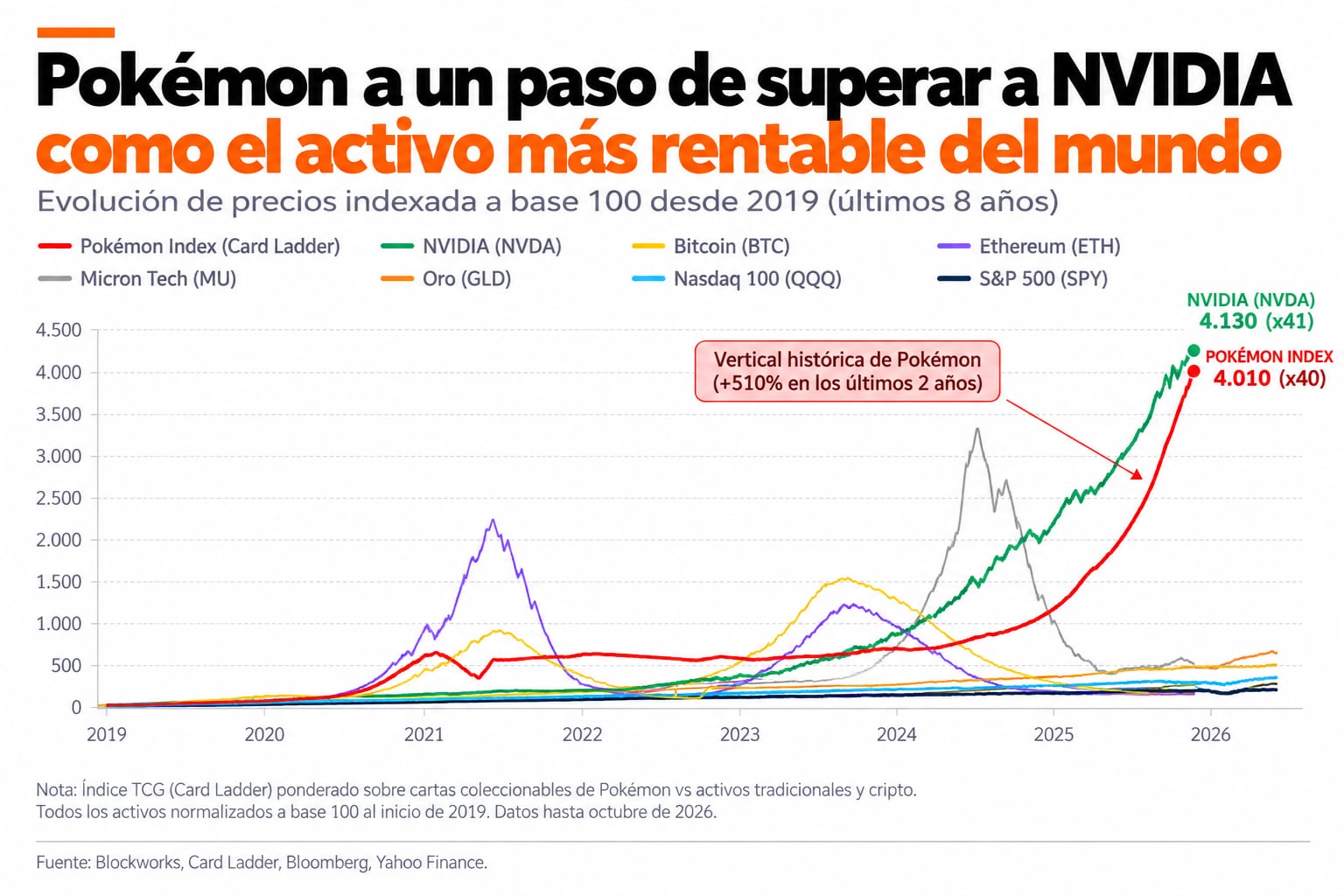
El mercado de cartas coleccionables de Pokémon quedó cerca de igualar el rendimiento de NVIDIA desde 2019, de acuerdo con una comparación que toma como referencia una base inicial de 100 puntos. La medición ubicó a NVDA en 4.130 puntos, equivalente a una multiplicación por 41 de su valor inicial, mientras que el índice de Pokémon llegó a 4.010 puntos, o unas 40 veces respecto del comienzo de la serie. La distancia entre ambos activos se redujo a 120 puntos.
La comparación parte de una base de 100 puntos en 2019
El registro no expresa los precios en dólares de una acción, una criptomoneda o una carta individual. Todas las referencias comenzaron en 100 en 2019 para permitir una comparación proporcional entre mercados de características distintas. Bajo esa metodología, el valor final muestra cuántas veces se multiplicó cada activo desde el inicio del período. Así, una marca de 4.010 indica una suba cercana a 40 veces frente al punto de partida.
La línea correspondiente a Pokémon mostró una primera escalada entre 2020 y 2021. Después atravesó una caída y una etapa de menor movimiento que se extendió hasta 2024. El cambio se produjo desde 2025, cuando la curva retomó una trayectoria ascendente y se acercó a la de NVIDIA. La variación señalada para las cartas fue de 510% en los últimos dos años.
La medición incluyó también a Bitcoin, Ethereum, oro, Nasdaq 100, S&P 500 y Micron. Cada activo registró comportamientos diferentes durante el período. Bitcoin y Ethereum exhibieron picos elevados entre 2021 y 2024, seguidos por una moderación de sus curvas. El oro, el S&P 500, el Nasdaq 100 y Micron permanecieron en valores inferiores dentro de la comparación, con recorridos menos pronunciados.
El índice reúne precios de cartas seleccionadas
El Pokémon Index es un indicador que sigue el desempeño agregado de una selección de cartas coleccionables. En este caso, la referencia corresponde a una metodología asociada con plataformas de análisis del sector como Card Ladder, que reúne operaciones de compra y venta para elaborar una serie de precios. El índice no representa a una compañía vinculada con la franquicia ni refleja la facturación de videojuegos, productos o licencias.
Su mecanismo busca ofrecer una referencia sobre el comportamiento general del mercado de cartas Pokémon. Para eso, incorpora ejemplares representativos, entre ellos cartas de alto valor, piezas secretas, ediciones como Base Set 1st Edition y unidades graduadas por empresas de certificación como PSA o BGS. La composición permite seguir la evolución de un conjunto de activos, en lugar de tomar el precio de una sola carta.
El modelo se asemeja al de un índice bursátil, aunque sus componentes y condiciones de negociación son diferentes. El S&P 500, por ejemplo, mide el comportamiento de un grupo de grandes empresas de Estados Unidos. El índice de Pokémon sigue una canasta de cartas seleccionadas y pondera sus cotizaciones de compra y venta. Por ese motivo, una suba del indicador no implica que todas las cartas de la franquicia registren la misma variación.
La conservación y la escasez inciden en las cotizaciones
El valor de cada carta depende de factores concretos. La escasez, el estado de conservación, la edición, la certificación y la demanda por determinados personajes o lanzamientos influyen sobre los precios. Una misma carta puede registrar cotizaciones diferentes según presente marcas, desgaste o defectos, y según obtenga una determinada calificación de empresas especializadas.
Las piezas graduadas concentran parte de la atención de este mercado porque la certificación establece una referencia sobre el estado físico del ejemplar. Las cartas de alta calificación, las ediciones limitadas y algunas piezas secretas integran el segmento que suele atraer operaciones de mayor valor. Esa dinámica forma parte de los criterios que explican por qué un índice de coleccionables puede diferir del recorrido de cartas de circulación más amplia.
El auge de las cartas de Pokémon combinó la nostalgia de quienes conocieron la franquicia desde su expansión inicial con la demanda global por productos coleccionables. A ese interés se sumó la compra de piezas como activos alternativos de inversión, una categoría que reúne bienes cuyo precio no depende de manera directa de los mercados financieros tradicionales. La demanda especulativa también incidió sobre las cotizaciones de cartas con oferta limitada.
La comparación con acciones, metales y criptomonedas permite observar la magnitud del avance registrado por el conjunto de cartas incluido en la medición. NVDA conservó el primer lugar con 4.130 puntos, mientras el índice Pokémon llegó a 4.010. El resto de los activos incluidos quedó por debajo de ambos en la escala utilizada para el período iniciado en 2019.
Pokémon,NVIDIA,Card Ladder,mercado financiero,cartas coleccionables
INTERNACIONAL
Democrats furious after pollster boosting far-left candidates admits fabricating surveys: ‘Absolute scumbags’

Democrats are up in arms after a so-called polling firm that projected far-left candidates as strong contenders in several primaries admitted that it had fabricated its polling data.
Wedgewood Polling, which billed itself as an election survey company, released a statement Tuesday night admitting it used «fabricated numbers» for an «experimental project to demonstrate the vulnerabilities, lack of oversight, and overall low barrier to entry in the modern political polling industry.»
The group’s polls were cited by Abdul El-Sayed’s campaign amid a high-profile primary race against Michigan state Sen. Mallory McMorrow and U.S. Rep. Haley Stevens, D-Mich. The nonpartisan polling aggregator Political Polls also cited Wedgewood in the Wisconsin gubernatorial race, showing socialist Francesca Hong having an edge over Republican candidate Rep. Tom Tiffany, R-Wis.
McMorrow said Wedgewood’s numbers led to her donations drying up and reporters having «hounded» her with calls to drop out of the race.
JONATHAN TURLEY: FAKE POLLSTER’S STUNT WAS A RECKLESS GAME WITH REAL RACES
«Sure, a point was proven. Polling is broken. But tens of thousands of people poured their hearts, time, energy, hard-earned money into something they believed in – for a year-and-a-half, and it was treated like a game,» she said in a statement on X. «Trust is already at an all-time low. We don’t get out of this mess without rebuilding trust. And media – who loves to ride the drama of a pollercoaster – needs to take a hard look at what’s legitimate and what’s not.»
Unlike El-Sayed, who advanced from Michigan’s Democratic Senate primary, Hong lost Wisconsin’s Democratic gubernatorial primary to the establishment-backed candidate. El-Sayed, a former Michigan public health official, is currently locked in a tight race against former U.S. Rep. Mike Rogers, R-Mich., for Michigan’s open Senate seat.
Democrat strategist Jennifer Holdsworth said she ran a super PAC that raised money for McMorrow and that «this poll was used by several donors to pull back funding at a time we were being outspent by $80 million.»
MORNING GLORY: THE POLLS GOT MICHIGAN BADLY WRONG. NOW DEMOCRATS MAY FACE A BIGGER RECKONING
Wedgewood’s numbers were cited by high-profile outlets like The New York Times and Decision Desk HQ, which both said they have since removed them from their projections.
The Times said it removed 15 polls released by Wedgewood between June and October after it admitted to fabricating data. The outlet said Wedgewood had «answered a series of questions regarding the identities of the pollsters; the methods they were using to draw their sample, contact respondents and weight their polls; and the source of their funding» during its vetting process.
Decision Desk HQ said it removed 17 Wedgewood polls from its projections but that it «has not changed the projected seat totals or chamber control probabilities in the Senate or House.»
Wedgewood Polling’s statement said it «was never intended to sway an election» but rather was aimed as a «wake-up call» about data integrity and vetting standards.
MYSTERIOUS POLLING FIRM BEHIND FAKE ELECTION SURVEYS CLOSES AFTER ADMITTING ‘SOCIAL EXPERIMENT’
«These people are absolute scumbags,» veteran Democratic strategist and former Kamala Harris advisor Mike Nellis told Digital. «They can try to claim that they have some moral high ground here, but they lied about their polling data, got caught, and are freaking out because they’ve committed fraud.»
«The people responsible for this should be run out of American politics, and if they can be, they should be prosecuted to the full extent of the law,» Nellis said. He added that both Democrats and Republicans, as well as the media, should reflect on how polling is verified «because there’s likely other people that are doing things like this.»
TOP ELECTION SCHEMES ROILING KEY MIDTERM RACES AS BOTH PARTIES ACCUSE RIVALS OF TRICKERY
Independent outlet FiftyPlusOne said it was investigating Wedgewood when it had released its statement. Co-founder G. Elliott Morris wrote on X, «We were investigating Wedgewood for faking their data and emailed them for comment this morning, ahead of publishing the findings tomorrow. They are trying to cover up their fraud with the ‘we were doing a social experiment’ excuse.»
Former Obama staffer Tommy Vietor said on X that Wedgewood’s actions amounted to «lying and fraud.»
A group called «Wedgewood Polls» had also previously created a GoFundMe to raise money for polling in Nebraska’s gubernatorial and Senate races. It raised $500 of its intended $5,000.
«I know they crowdfunded, I believe, a good chunk of their polls,» Nellis told Digital. «Are they going to return that money? And if not, are they going to be prosecuted?»
POLL: IT’S A LONE STAR SENATE SHOWDOWN BETWEEN TALARICO AND PAXTON
Other Wedgewood surveys showed Democrats with significant edges over Republicans in states like Texas, where a July Wedgewood poll showed James Talarico leading state Attorney General Ken Paxton among Hispanics by 64% to 30%.
Republicans, including President Donald Trump, have long heaped doubt on the veracity of polls.
Polls notably showed former Secretary of State Hillary Clinton with an edge over Trump in 2016 — far from the actual result.
And with the fight for control of Congress coming to a head in November, every data point is being scrutinized as political tea leaves.
Digital reached out to McMorrow’s state Senate office, Stevens’ campaign and strategist Lis Smith for further comment.
politics, polls, elections disputes, controversies state and local, state and local primaries, midterm elections
INTERNACIONAL
Trump delivers $1 billion to Marines to relieve decades-long suffering of American heroes and their families

The Trump administration is closing in on $1 billion in payments to American veterans, families and civilian employees who were exposed to toxic drinking water at Marine Corps Camp Lejeune in North Carolina between 1953 and 1987.
For many, the payouts would finally rectify a decades-long battle for justice.
According to the Department of Justice (DOJ), claimants have received more than $919.7 million since President Donald Trump began his second term in office in January 2025. The administration has paid out about 3,300 people who made claims under the 2022 law. From that year to the beginning of 2025, before Trump retook office, only 459 settlements had been paid, totaling $59.6 million.
Payments under the program range from $100,000 to $550,000, depending on the illness.
«Tonight I’m pleased to announce my administration has delivered $1 billion in cash settlements to these veterans and their families, in addition to 3.1 billion for the VA and ordering the DOJ to settle all remaining legitimate claims as soon as possible,» Trump said at a rally in North Carolina on Tuesday night. «We don’t want to give any to the trial lawyers, we want it all to go to the families.»
The claims are due to be paid out under a 2022 law, the Sergeant First Class Heath Robinson Honoring our Promise to Address Comprehensive Toxics Act, which includes the Camp Lejeune Justice Act. Under the law, victims who developed cancer or other illnesses from the drinking water on the base are entitled to relief.
MILITARY FAMILIES WANT DOJ TO DISTRIBUTE NEARLY $800M FROM FRENCH CEMENT COMPANY FOUND GUILTY OF BRIBING ISIS
The Trump administration in March announced that it was making settlements a priority, and made a concerted effort to accelerate the pace of the payouts.
Ed Bell is a South Carolina-based attorney who spearheaded the charge to pass the law. He’s been an attorney for 44 years, and for half of that time has been fighting for justice for the Camp Lejeune victims. He’s the lead counsel on the case, helping victims to get the payouts they’re owed.
«A lot of these people have been waiting a long time, and quite frankly, I think a lot of them are relieved,» Bell told Digital. «A lot of them feel like the government has finally said, ‘we’re sorry,’ by helping with the settlements, so I think it’s very positive.»
Bell estimates that about 300,000 claims will eventually be paid out, acknowledging that there’s a long way to go to completely remedy the wrong that was done.
But he was complimentary of the team of people in the Trump administration dedicated to justice.
«I have to say, I’m very bullish on what the Department of Justice has been doing,» he said, noting that he works closely with Associate Attorney General Stanley Woodward, who he says is «working his tail off» on the settlements.
RARE CANCER CASES STRIKE IN CALIFORNIA COMMUNITY AS FAMILIES DEMAND ANSWERS
«[Woodward] is excellent, but you have to remember, this case and any resolution involves hundreds and hundreds of details, and it is a laborious process,» Bell said. «I am pleased to work with [the DOJ], and I think that eventually we’ll get this resolved. I think that’s the intent of the Department of Justice.»
MILITARY FAMILIES DEMAND DOJ DISTRIBUTE NEARLY $800M FROM FRENCH CEMENT COMPANY FOUND GUILTY OF BRIBING ISIS
Bell, who took his first case on the Camp Lejeune drinking water contamination in 2007, explained that each settlement is based on the level of harm caused to the victim. So, he explained, someone diagnosed with stage one cancer would ultimately be paid out less than someone who had stage four cancer.
«It’s a fair system,» Bell said.
Between 1953 and 1987, three of the base’s eight water systems contained contaminated water.
Bell said that even after the government found out the water was toxic, it did nothing, allowing troops to continue drinking the hazardous mix. Pregnant women drank the water, leading to the death of their babies. The contamination was found to cause four incurable diseases, according to Bell.
The Justice Department and the Department of the Navy launched the «Elective Option» settlement program in 2023.
That program is designed as an alternative to litigation and offers quicker payouts to people with qualifying illnesses.
politics, veterans, justice department, us marines, white house

Gils Carbó fue indagada en el juicio por la compra del edificio de la Procuración

Encargados de edificios: los salarios de noviembre y los adicionales que reciben

Cómo es el negocio de los ladrones de celulares en los recitales

La fiscalía pidió indagar a los dueños de la droguería Suizo Argentina en la causa por presunta corrupción en la ANDIS

Video: el golazo de Nico Paz para el Como ante el Manchester United por la Champions League

“Ganemos plata”: los casos clave del esquema de cartelización y sobreprecios en la Andis, según los fiscales

El Gobierno pone en marcha un nuevo plan de retiros voluntarios y busca que haya 20.000 empleados menos en el Estado

Alerta roja en Sudamérica por el Súper Niño: cambio climático, inundaciones extremas y el hallazgo de microplásticos y metales en el granizo

“Feliz día a la mejor mamá del mundo”: el doble gesto del Chato Prada con Lourdes Sánchez y la reacción de ella

De cara al debate por el endeudamiento familiar, el Gobierno sostiene un discurso duro y considera que funciona para la imagen de Milei

 POLITICA2 días ago
El Gobierno pone en marcha un nuevo plan de retiros voluntarios y busca que haya 20.000 empleados menos en el Estado
- CLIMA2 días ago
Alerta roja en Sudamérica por el Súper Niño: cambio climático, inundaciones extremas y el hallazgo de microplásticos y metales en el granizo
- DEPORTE3 días ago
¿Dónde ver EN VIVO y ONLINE el Ferro vs Racing de Córdoba?