INTERNACIONAL
¿Qué dice la balanza de pagos sobre la economía panameña? Servicios crecen y exportaciones retroceden

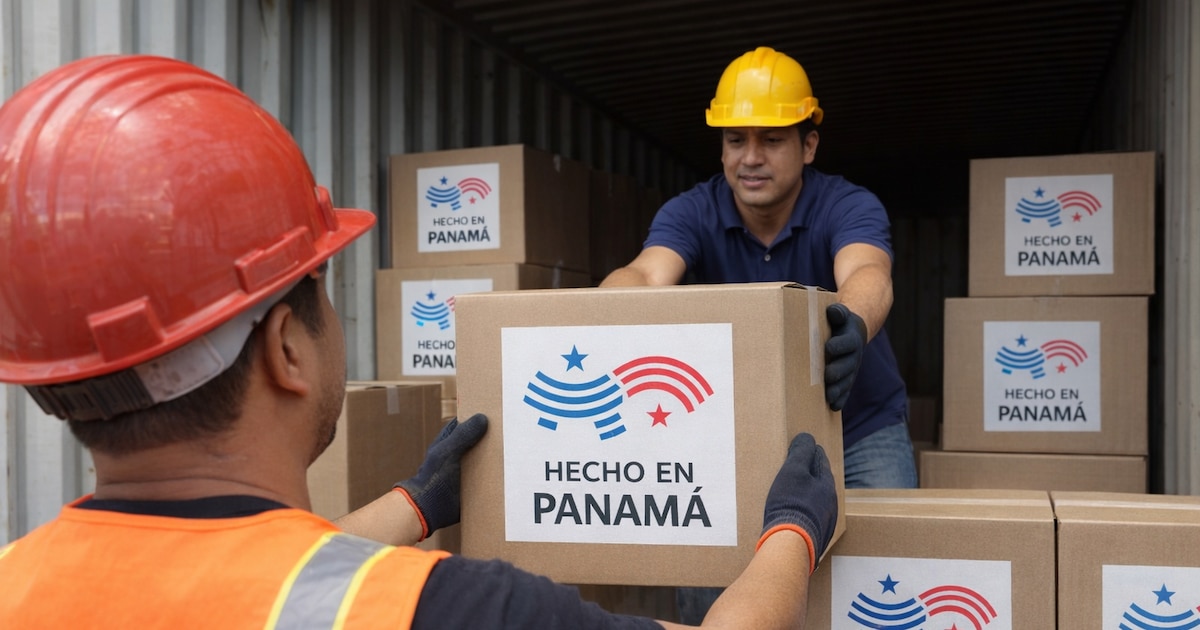
La balanza de pagos de Panamá cerró el primer semestre de 2026 con un superávit de $2,210.1 millones en su cuenta corriente, un cambio significativo frente al déficit de $263.6 millones registrado en igual período de 2025.
El resultado estuvo sostenido principalmente por la fortaleza de los servicios, que generaron $9,355.9 millones y compensaron los números negativos observados en bienes, renta y transferencias corrientes.
La balanza de pagos es el registro estadístico de las transacciones económicas realizadas entre los residentes de un país y el resto del mundo durante un período determinado. Permite observar cuánto dinero entra y sale por comercio, servicios, inversiones, rentas y transferencias, y ofrece una radiografía de la relación económica del país con el exterior.
Su importancia radica en que permite identificar de dónde provienen los recursos externos, cómo se financia la economía y cuáles son sus principales desequilibrios.

No se limita a exportaciones e importaciones: incorpora turismo, transporte, inversión extranjera, movimientos financieros, remesas y rentas, entre otros componentes, permitiendo detectar fortalezas y vulnerabilidades en las relaciones económicas internacionales.
La estructura se divide fundamentalmente entre la cuenta corriente y la cuenta de capital y financiera. La primera reúne las operaciones habituales de la economía con el exterior, mientras la segunda permite observar los movimientos de capital e inversión, entre ellos inversión extranjera directa, inversión de cartera y otras operaciones financieras.
La cuenta corriente es una de las principales partes de la balanza de pagos y permite conocer si, en las operaciones habituales con el exterior, al país le ingresan más recursos de los que salen. Incluye el comercio de bienes y servicios, las rentas y las transferencias corrientes, por lo que un superávit indica que los ingresos externos de esos componentes superaron los egresos durante el período analizado.
En el caso panameño, este indicador pasó de un déficit de $263 millones en el primer semestre de 2025 a un superávit de $2,210 millones en 2026. En igual período de 2024 había registrado $485.3 millones positivos. El cambio evidencia el peso de los servicios para contrarrestar el déficit generado por el intercambio de mercancías.

Los bienes registraron un saldo negativo de $5,469 millones, mientras los servicios aportaron $9,355 millones positivos. A esto se sumaron déficits de $1,648 millones en renta y $28.2 millones en transferencias corrientes, pero el aporte del sector servicios permitió mantener el resultado de la cuenta corriente en terreno positivo.
Panamá compra mucho más de lo que vende
Una mirada específica al comercio nacional muestra que la balanza comercial de bienes registró un déficit de $6,552.8 millones, 18.8% mayor al observado durante el primer semestre de 2025. La explicación está en una combinación desfavorable: las importaciones aumentaron mientras las exportaciones disminuyeron, ampliando la diferencia entre las compras y ventas panameñas al exterior.
Las exportaciones nacionales FOB alcanzaron $534.6 millones entre enero y junio, una caída de 22.1% interanual, afectadas principalmente por los productos no agrícolas, que retrocedieron 26.3%. El informe destaca que en 2025 todavía se registraron exportaciones de minerales de cobre y sus concentrados, mientras en igual período de 2026 no hubo ventas de este producto.
También disminuyeron 26.5% las exportaciones de pescado y filetes de pescado, mientras la harina y el aceite de pescado retrocedieron 49.3%. Hubo productos con resultados positivos: la carne bovina aumentó 84.6%, otros productos del mar 83.5% y la madera 44.5%. Entre los agrícolas, el melón creció 198.6%, la sandía 48% y la piña 36%.
En sentido contrario, Panamá importó bienes FOB por $7,087.4 millones, 14.3% más que un año antes. Los bienes de consumo aumentaron 17.6%, los intermedios 16.3% y los de capital 6.6%. Entre las mayores variaciones estuvieron los combustibles y lubricantes, con un crecimiento de 43.7%, y los materiales de construcción, con 31.5%.

La Zona Libre de Colón también mostró dinamismo durante el semestre. Sus importaciones alcanzaron $5,862.3 millones, con un incremento interanual de 3.4%, mientras las reexportaciones llegaron a $6,785.6 millones. Estas últimas aumentaron 24.9%, mostrando un crecimiento considerablemente mayor que el registrado por las mercancías que ingresaron a la zona franca.
Los servicios sostienen las cuentas externas
El contrapeso está en la economía de servicios. Esta partida alcanzó $9,355.9 millones, un crecimiento de 14.9% respecto al primer semestre de 2025, impulsada principalmente por transporte y viajes. El resultado muestra el peso que estas actividades tienen en la generación de ingresos externos de Panamá, especialmente por su plataforma logística y el movimiento internacional de personas.
Entre enero y junio ingresaron al país 5.95 millones de viajeros internacionales, 13.9% más que un año antes. De ellos, 1.75 millones fueron visitantes, incluidos 1.35 millones de turistas. El gasto de los viajeros alcanzó $3,793.7 millones, un incremento de 14.7%, frente a los $3,307.2 millones del primer semestre de 2025.
Las transferencias también permiten observar los movimientos de dinero de los hogares. Panamá recibió $303.3 millones en remesas, 8% más que en 2025, principalmente desde Estados Unidos, Venezuela, Reino Unido, Colombia y España. Al mismo tiempo, salieron $306.9 millones, dirigidos principalmente hacia Colombia, Venezuela, Nicaragua, Estados Unidos y República Dominicana
Inversión y movimientos financieros
La cuenta de capital y financiera cerró con un saldo positivo de $1,685.1 millones, una mejora absoluta de $1,534.4 millones frente al mismo período de 2025. Dentro de este componente, la inversión extranjera directa alcanzó $792.4 millones, impulsada principalmente por $578.5 millones correspondientes a utilidades reinvertidas.
La inversión de cartera registró, en cambio, un flujo negativo de $2,842.1 millones, mientras el componente denominado otra inversión presentó un saldo positivo de $3,183.8 millones. En este último, los pasivos alcanzaron $7,252.9 millones, asociados a moneda, depósitos y préstamos, mostrando la magnitud de los movimientos financieros que también vinculan a Panamá con el exterior.
Otro indicador relevante es la deuda externa total, que llegó a $162,382.8 millones al cierre del segundo trimestre de 2026, un crecimiento de 7.9% frente al mismo período del año anterior. La cifra no corresponde únicamente al Gobierno: incluye compromisos del Gobierno general, autoridades monetarias, bancos y otros sectores de la economía panameña.
En conjunto, los datos reflejan dos comportamientos distintos dentro de las relaciones económicas de Panamá con el mundo: un amplio déficit en mercancías y una elevada generación de recursos mediante servicios. Durante el primer semestre, el crecimiento de transporte y viajes resultó determinante para compensar la brecha comercial y llevar la cuenta corriente a un superávit de $2,210.1 millones.
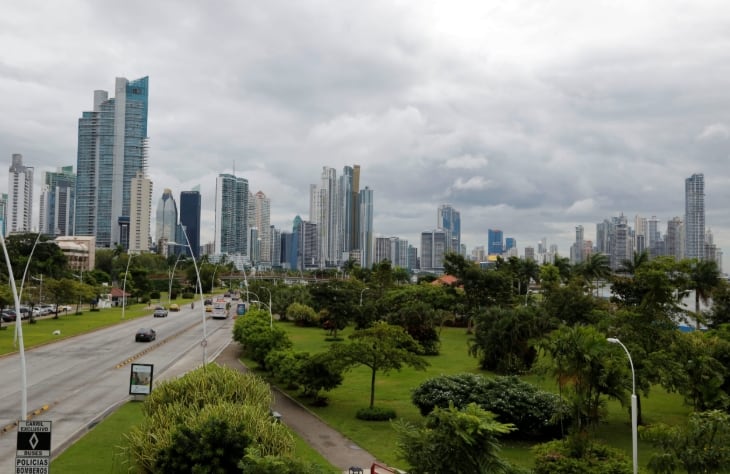
Panamá,Ciudad de Panamá,Bahía de Panamá,rascacielos,negocios,ejecutivo,atardecer,vista,paisaje urbano,arquitectura












INTERNACIONAL
Trump meets key Iran war mediator as UAE reveals major oil export surge despite conflict
NEWYou can now listen to Fox News articles!
ABU DHABI, United Arab Emirates — President Donald Trump met Qatar’s prime minister, Sheikh Mohammed bin Abdulrahman Al-Thani, on Monday at the White House as diplomatic efforts to end the war with Iran continue, even as Secretary of State Marco Rubio warns that negotiations remain far from a breakthrough and Tehran signals a willingness to negotiate without yielding to pressure.
The competing messages come as the Strait of Hormuz remains a major source of global economic disruption and regional governments push for a diplomatic solution to a conflict that has subjected Gulf countries to thousands of Iranian missile and drone attacks.
Speaking to reporters Sunday before departing for a G7 foreign ministers meeting in Paris, Rubio said there had been little progress in negotiations and rejected the terms put forward by Tehran.
«I wouldn’t say we’re on the verge of a breakthrough,» Rubio said.
RUBIO DEFENDS TRUMP’S IRAN WAR AS NOT ‘NECESSARILY POPULAR, BUT NECESSARY’
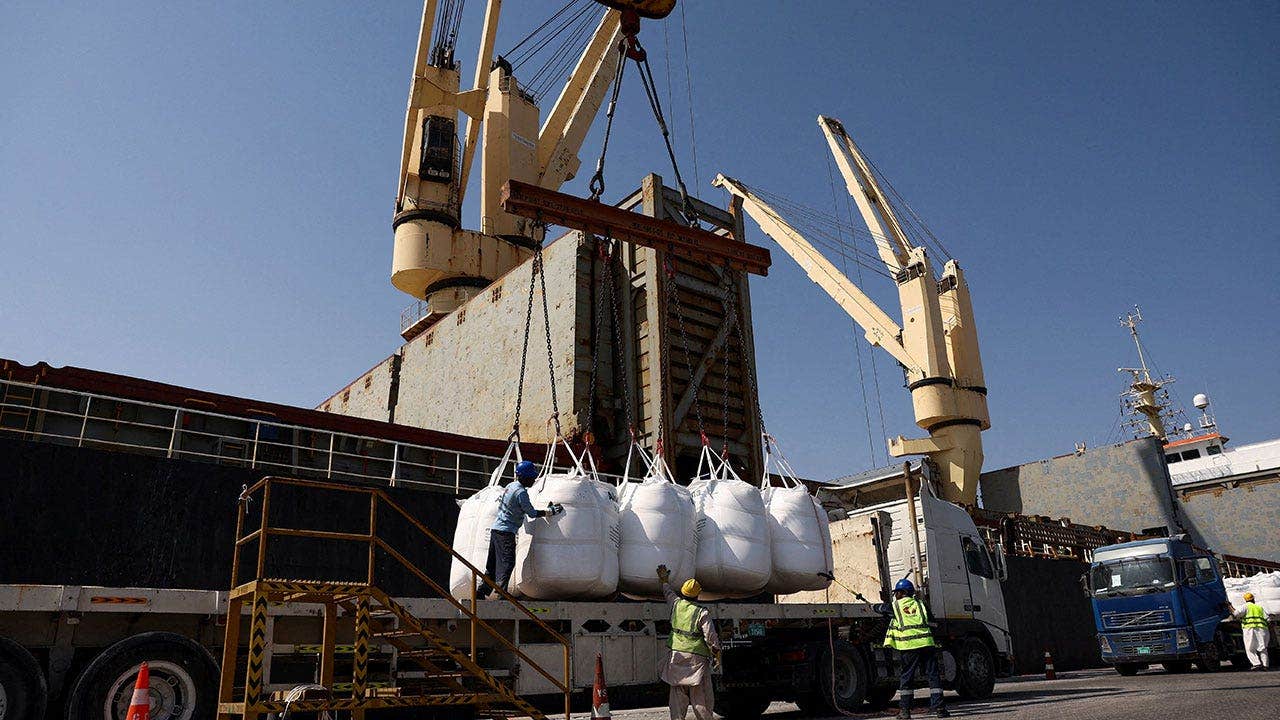
Cargo is loaded at the Port of Fujairah, as the U.S.-Israel conflict with Iran limits marine traffic in the Strait of Hormuz, in Fujairah, United Arab Emirates, May 6, 2026. (Amr Alfiky/Reuters)
He emphasized that Trump prefers a diplomatic settlement but described Iran’s demands as unrealistic.
Iranian President Masoud Pezeshkian said Monday that Tehran was prepared to negotiate an end to what he described as a prolonged state of neither war nor peace.
«We can negotiate with dignity and resolve the issue with dignity. We favor dialogue and negotiations,» Pezeshkian said, according to Anadolu Agency on November 9, citing an Iranian presidential statement.
He said Supreme Leader Mojtaba Khamenei had instructed officials to end the uncertainty but insisted that Iran would not surrender to coercion.
Trump, meanwhile, signaled Sunday that he was not seeking another escalation. In an interview with CBS’ «60 Minutes,» the president said he saw no reason to intensify the war with Iran while maintaining that the Strait of Hormuz was open.
Mediators have been discussing a two-day proposal under which the United States would lift its naval blockade and release some frozen Iranian funds. Tehran would then take steps toward renewed nuclear inspections and reopen the Strait of Hormuz before broader negotiations resumed, according to Axios on November 9.
The proposal has not been accepted by Washington, and significant differences remain over the terms of any agreement.
‘VAST MAJORITY’ OF IRAN’S ATTEMPTED ATTACKS ON STRAIT OF HORMUZ ARE UNSUCCESSFUL, CENTCOM SPOKESMAN SAYS
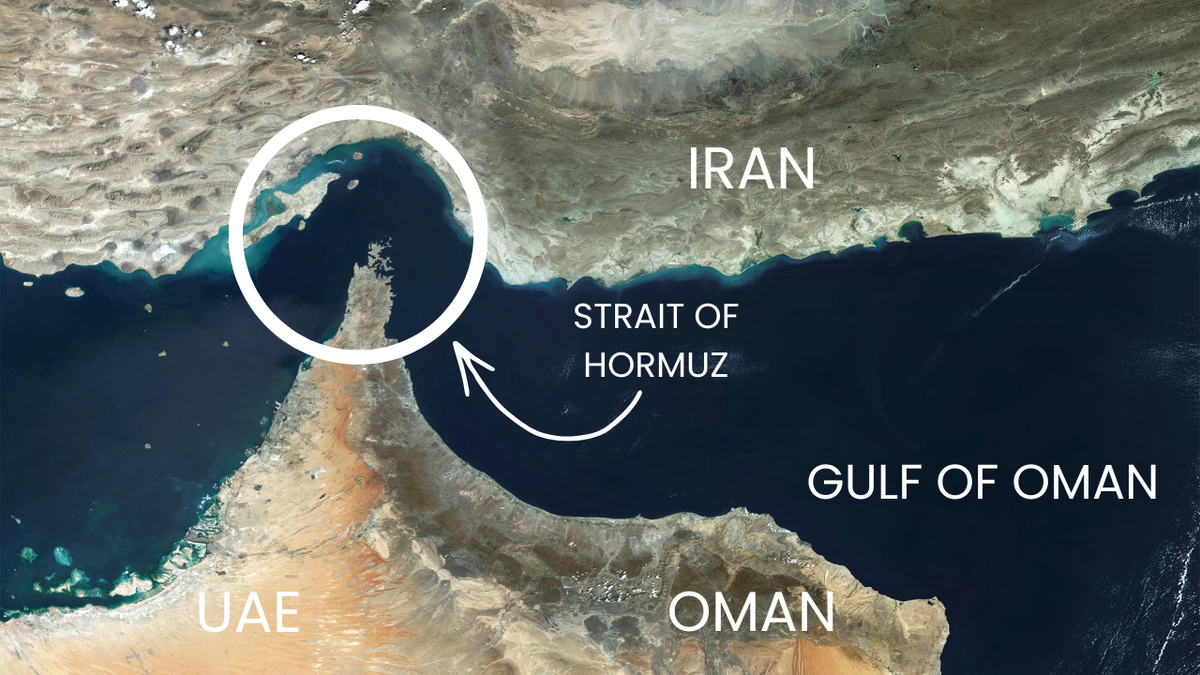
A satellite image shows the Strait of Hormuz, a key maritime passage connecting the Persian Gulf to the Gulf of Oman, vital for global energy supply. (Amanda Macias/Fox News Digital)
Hormuz: Open for shipping, but at what cost?
Nowhere are the consequences of the diplomatic stalemate clearer than in the Strait of Hormuz, the narrow shipping corridor connecting the Persian Gulf to the Gulf of Oman.
Before the war, the equivalent of roughly one-fifth of global petroleum liquids consumption and more than one-fifth of global liquefied natural gas trade passed through the waterway, according to the U.S. Energy Information Administration, making it one of the world’s most strategically important maritime routes.
Since the conflict began, Iranian attacks, shipping restrictions and U.S. military operations have severely disrupted commercial traffic.
Despite the American naval presence, attacks on commercial vessels have continued.
Reuters reported Monday that tanker attacks in the Gulf and Strait of Hormuz had accelerated sharply in October and continued into November. Iranian authorities also claimed that a tanker had struck a mine east of the strait on Sunday.
In an interview with Fox News Digital at the ADIPEC energy conference in Abu Dhabi, Amos Hochstein, a former senior adviser to President Joe Biden and now managing partner at TWG Global, challenged claims that the strait had effectively reopened.
HORMUZ CRISIS HIDES A DEEPER OIL THREAT THAT COULD OUTLAST THE WAR

A view of the Port of Fujairah as U.S.-Israel conflict with Iran limits marine traffic in the Strait of Hormuz, in Fujairah, United Arab Emirates, on May 6, 2026. (REUTERS)
«There has been a hot conflict in the Strait of Hormuz on almost a nightly basis. Tankers are getting fired on, tankers are getting hit,» Hochstein said.
«If you need a heavy U.S. military presence just to let an oil tanker go through, to me that’s the definition of not open,» he told Fox News Digital.
Hochstein argued that the extraordinary security measures required to protect commercial vessels demonstrate that normal navigation has not been restored.
Higher insurance premiums, the danger of additional attacks and restrictions on maritime traffic have continued to burden the global economy.
His assessment contrasts with the more optimistic picture offered by U.S. Central Command. In late October, Adm. Brad Cooper, commander of CENTCOM, said American forces had cleared primary shipping routes of Iranian mines and assisted thousands of commercial vessels transiting the waterway.
According to a CENTCOM statement reported October 25, more than 3,000 commercial vessels had successfully transited Hormuz with American military support over the preceding six months.
But for Hochstein, the ability of military forces to escort ships does not mean the commercial risks have disappeared.
He suggested that negotiations could proceed on separate tracks, with Washington concentrating on Iran’s nuclear program while Gulf governments take a greater role in discussions over freedom of navigation and maritime security.
«Maybe the Gulf allies themselves should be the ones that are managing that part of the negotiation on the [strait] while the United States would manage the negotiations … on the nuclear front,» Hochstein told Fox News Digital.
Dr. Angela Wilkinson, CEO of the World Energy Council, said the disruption of the Strait of Hormuz has exposed the need to rethink global energy markets, which have traditionally prioritized efficiency over resilience.
«Efficiency is not enough. We have to have resilience,» Wilkinson told Fox News Digital at ADIPEC.
«What we at the World Energy Council recommend is that we rebalance energy,» she said, advocating solutions that address energy security, affordability and sustainability simultaneously.
«We have escalating logistics costs, but we’ve got new vulnerabilities of interdependency. And that’s what we’re navigating our way through.»
TOP GULF OFFICIAL OFFERS GLIMMER OF HOPE ON TRUMP-IRAN NUCLEAR TALKS AS THREAT OF WAR HANGS OVER REGION

Dr. Ali Rashid Al Nuaimi, chairman of the UAE Federal National Council’s Defense, Interior and Foreign Affairs Committee, speaks to Fox News Digital in Abu Dhabi about the Iranian threat, regional security and prospects for diplomacy. (Efrat Lachter/Fox News Digital)
UAE says oil exports have risen despite the conflict
For the UAE, the disruption has accelerated efforts to reduce dependence on the Strait of Hormuz.
The Emirates has invested in alternative routes, particularly its pipeline to Fujairah on the Gulf of Oman, outside the strait, allowing some oil exports to bypass the contested shipping corridor.
Al Nuaimi said the country had substantially increased its oil exports since the war began.
«We want the Strait of Hormuz to be open, to be respected according to international law, but we don’t wait and make our country and our people hostages to others. … Before the war started on February 28th, we used to export 3.1, 3.2 million barrels a day. Now we are exporting almost 4.4.»
UAE Energy Minister Suhail Al Mazrouei also said at ADIPEC on November 2 that the country’s exports had, at times, exceeded prewar levels.
The country is also investing in new export routes, overseas storage capacity and shipping infrastructure to strengthen its ability to withstand future disruptions.
Hochstein praised the UAE and Saudi Arabia for anticipating the risks associated with dependence on a single maritime route.
«You can create alternative pathways and infrastructure, but those are redundancies,» he said.
IS THIS TRUMP’S LAST ‘LAST CHANCE?’ CEASELESS STRING OF BROKEN CEASEFIRES FUELS DOUBT OVER IRAN DEAL

Attendees gather at ADIPEC 2026, one of the world’s largest energy conferences, held in Abu Dhabi, United Arab Emirates, Nov. 2–5, 2026, as industry leaders discuss global energy security, technological innovation and the growing role of artificial intelligence. (Efrat Lachter/Fox News Digital)
His point was that alternative infrastructure can reduce the economic impact of disruptions in the Strait of Hormuz but cannot entirely replace the waterway.
The wider consequences have been felt across international energy markets, with increased shipping costs and supply disruptions affecting consumers far beyond the Middle East.
In a separate exclusive interview with Fox News Digital, Mohammed Baharoon, director general of the Emirati research center B’huth, argued that the confrontation over the Strait of Hormuz amounts to a separate economic war with consequences far beyond the region.
«The third war was Iran’s war on global economy by blocking the Strait of Hormuz,» Baharoon said. «And they’ve affected people in the Philippines, in India, in Brazil that has nothing to do with this conflict.»
He argued that the disruption has exposed the vulnerability of countries dependent on a single shipping corridor, reinforcing the need for alternative pipelines, transportation networks and supply chains.
«And part of resilience is that you will not have only one outlet,» he said.
Baharoon stressed that those investments were not simply emergency responses to the war but part of a longer-term effort to strengthen regional connectivity.
«The war might have accelerated the plans, but the plans have always been there,» he said.
Even if Hormuz fully reopens, he argued, the region will still need more routes for international trade.
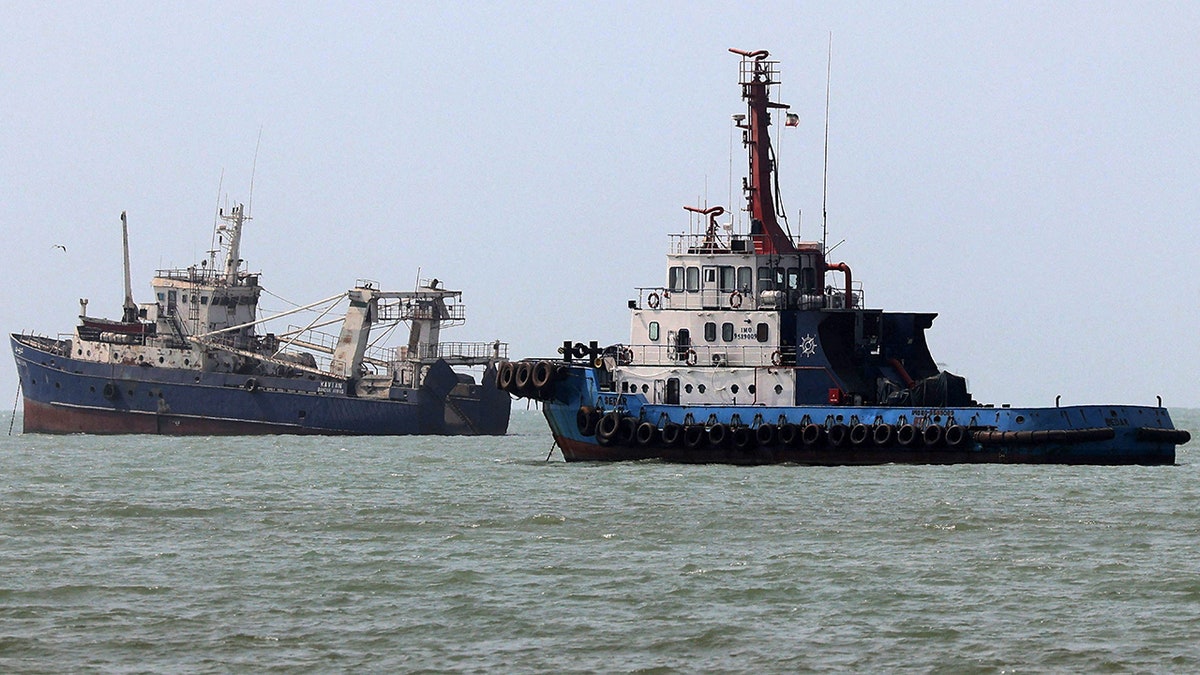
Vessels transit the Strait of Hormuz off Bandar Abbas in southern Iran on Aug. 10, 2026. (Atta Kenare/AFP via Getty Images)
«We need more access, we’ll need more supply chains. And we need them to be not only durable, resilient, but also redundant.»
Fox News Digital reached out to the White House for comment but did not receive a response before publication.
war with iran, middle east, foreign affairs, world, iran
INTERNACIONAL
Newly elected Dem’s blistering GOP attacks emerge after she courted Republican voters: ‘Lit on fire’

South Carolina’s Democratic senator-elect has a history of trashing Republicans and advocating passionately for transgender rights on social media, with many of those posts reemerging after her victory earlier this month.
«The T in LGBTQ+ stands for TRANSGENDER,» Annie Andrews, who is set to represent a state President Donald Trump won by roughly 18%, posted in 2023. «If you don’t support trans people, keep your cute pride post in your draft tweets, be better, and try again next year.»
«Periodic reminder that I support trans kids because I am not an a–hole,» she posted around the same time.
The posts stand in stark contrast to the more moderate image Andrews presented during her successful campaign against Republican Sen. Darline Graham, when she courted Republicans and independents in the deep-red state and distanced herself from some of her earlier positions on transgender issues.
MASSIVE UPSET: ANDREWS DOWNS TRUMP-BACKED GRAHAM IN RUBY-RED SOUTH CAROLINA
Beyond transgender issues, where she later distanced herself from certain positions in a campaign ad, Andrews also made her disdain clear for the Republican Party before running for Senate — statements that clashed with the emphasis she placed on bipartisanship while on the campaign trail.
In August 2024, Andrews stated that the Republican Party «needs to be lit on fire & thrown in the dumpster & plunged into the deepest depths of the ocean never to be seen again,» after some individuals on social media mocked Minnesota Gov. Tim Walz’s son.
SC DEM SENATE CANDIDATE CLAIMS SHE WILL STAND UP TO HER PARTY AS GRAHAM TIES HER TO ‘SOCIALIST DEMOCRATS’
«Herpes is forever,» she said in another post. «JD Vance doesn’t have to be.»
«Wow they let you out of the kitchen. Congrats,» Andrews wrote in a post reacting to GOP Sen. Katie Britt talking about a White House visit, making a jab at Britt with a reference to women being confined to traditional homemaking roles.
While Andrews had strong words for Republicans before launching her Senate bid, she worked to appease them in the lead-up to Election Day.
At an October town hall billed as «Republicans and Independents for Annie,» for instance, she said the campaign was for people more concerned about bills, rural hospitals and government integrity than party labels. She repeatedly stated that she intended to work across the aisle if elected and that her campaign was «not just for Democrats.»
DEMOCRATS ARE CHANGING THEIR TRANSGENDER MESSAGE. REPUBLICANS SAY THEY’RE JUST FLIP-FLOPPING
Andrews made scores of other posts expressing support for abortion access, drag queen story hours and increased restrictions on firearm ownership, among other issues. She reposted one post calling semi-automatic rifles «weapons of war,» for instance.
«Republicans spent all their money trying to defeat Abdul and hired zero opposition researchers on Annie,» independent journalist Zaid Jilani wrote on X, responding to one of Andrews’ pro-transgender resurfaced posts.
WHERE TOP DEMOCRAT SENATE CANDIDATES AND THEIR GOP OPPONENTS STAND ON TRANS ATHLETES IN WOMEN’S SPORTS
While some have criticized Republicans for not capitalizing on Andrews’ posts while on the campaign trail, the GOP did dredge old statements in an attempt to dissuade voters from backing her.
«Annie Andrews launched her political career fighting for her trans agenda … dozens of comments and tweets advocating for dudes in girls’ sports, procedures on minors, and more,» National Republican Senatorial Committee advisor Nathan Brand posted in October, responding to an ad released by Andrews disavowing biological men in women’s sports. «Now she is walking it ALL back.»
Republicans leaned heavily into transgender issues, particularly banning sex change procedures for children and biological men from competing in women’s sports, during the 2026 electoral cycle. While the focus on such issues did not prevent the GOP from losing what are usually safe seats, a number of ballot measures rolling back transgender rights passed in liberal states.
The Andrews campaign did not respond to a request for comment when reached by Digital on Monday.
politics, south carolina, senate, midterm elections, democrats elections
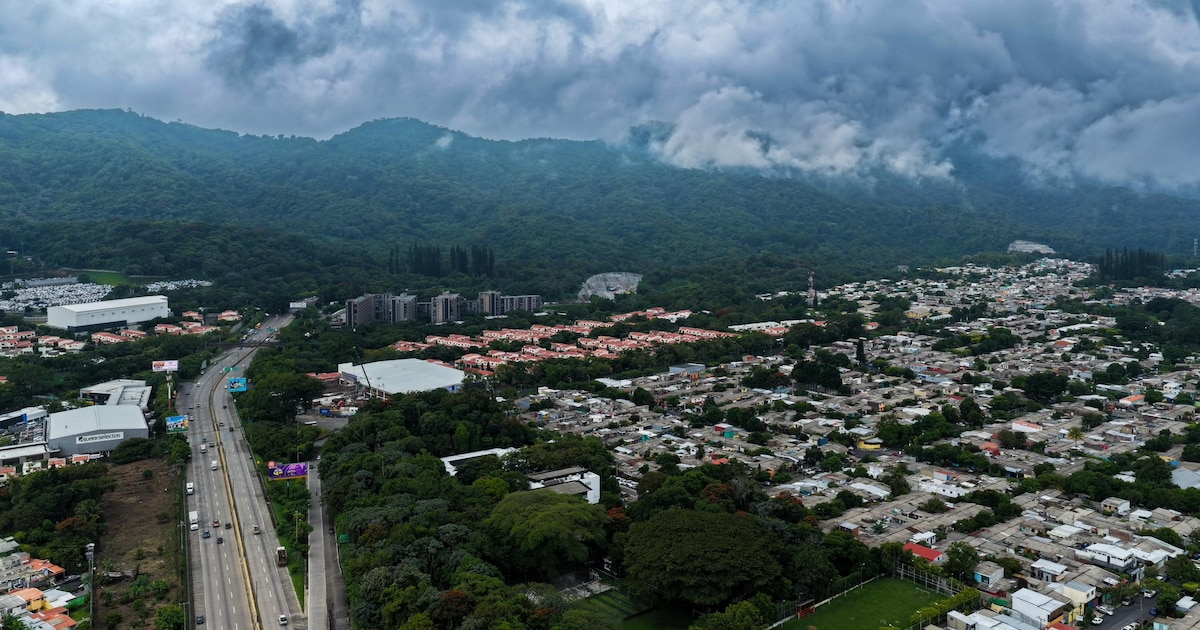
Las lluvias de los últimos días dejaron anegamientos en algunas viviendas de Zacatecoluca, tras el desborde de un río. El director de Protección Civil, Luis Alonso Amaya, explicó en YSKL que la situación estuvo vinculada con las precipitaciones y con un taponamiento en el cauce.
Amaya señaló que el bloqueo se formó por biomasa, como troncos, hojas y otros restos de árboles. Según relató, la tala o poda de un árbol y el depósito de esos materiales en el río habrían contribuido al problema.
“El punto menos indicado o el lugar menos indicado donde deberían hacerlo es tirarlo a un río”, dijo al referirse a la disposición de residuos de madera y árboles en ríos o quebradas.
El funcionario sostuvo que estos materiales pueden causar taponamientos y favorecer desbordamientos. Añadió que las personas afectadas por los anegamientos recibieron atención.
Amaya también mencionó inundaciones en la isla La Colorada y la isla El Cordoncillo, en el estero de Jaltepeque. En esos casos, indicó, la afectación estuvo relacionada con el oleaje.
El director señaló que los desechos sólidos suelen encontrarse con mayor frecuencia en áreas urbanas. En zonas rurales, según dijo, los taponamientos pueden asociarse con otros materiales, como restos vegetales.
La transición puede mantener lluvias en El Salvador
Amaya explicó que El Salvador se encuentra en la transición del período lluvioso al período seco. Según indicó, esa fase no supone que las lluvias terminen de manera inmediata.
El funcionario señaló que todavía pueden producirse tormentas convectivas. Describió que se forman rápidamente por el intercambio de temperaturas y pueden dejar acumulados de lluvia.
“Nada exime la posibilidad que tengamos algunas tormentas muy importantes”, expresó. Añadió que este tipo de eventos ya se ha presentado durante los últimos días.
Amaya indicó que la salida del período lluvioso parece haberse retrasado. A su juicio, esa variación se ha observado desde hace entre 10 y 15 años.
El director sostuvo que esta situación no depende solamente del fenómeno de El Niño. También mencionó efectos del cambio climático sobre la dinámica hidrometeorológica.
Según explicó, las precipitaciones deberían disminuir gradualmente conforme avancen los frentes fríos desde el norte. Estos sistemas pueden estar acompañados de vientos.
Amaya también habló de la zona de convergencia intertropical. Señaló que su ubicación incide en la humedad y en las lluvias que se registran en la región durante el año.
El funcionario explicó que, en esta época, las altas presiones desplazan esa zona hacia Costa Rica, Panamá y Colombia. Según su planteamiento, ese movimiento puede reducir gradualmente la probabilidad de lluvias en El Salvador.
Los frentes fríos pueden traer vientos y otros riesgos
Amaya señaló que la llegada de frentes fríos puede generar vientos nortes. Indicó que su incidencia suele sentirse con mayor fuerza en la cadena montañosa, aunque también puede afectar el Área Metropolitana de San Salvador.
Hasta el momento de la entrevista, dijo, no se habían registrado vientos con velocidades que provocaran caída de árboles o levantamiento de techos. Sin embargo, pidió a la población seguir los avisos oficiales.
El primer riesgo que mencionó fue la caída de ramas y árboles. Explicó que las lluvias recientes pueden reducir la capacidad del suelo para sostenerlos con firmeza.
El segundo riesgo, según detalló, incluye la caída de vallas publicitarias y daños en techos. El director recordó que estas situaciones se han presentado en otros años.
También mencionó los incendios como una preocupación durante la transición. Señaló que, cuando el suelo pierde humedad y la maleza se seca, aumentan las condiciones que pueden favorecer este tipo de emergencias.
La emergencia por sequía sigue vigente, según Amaya
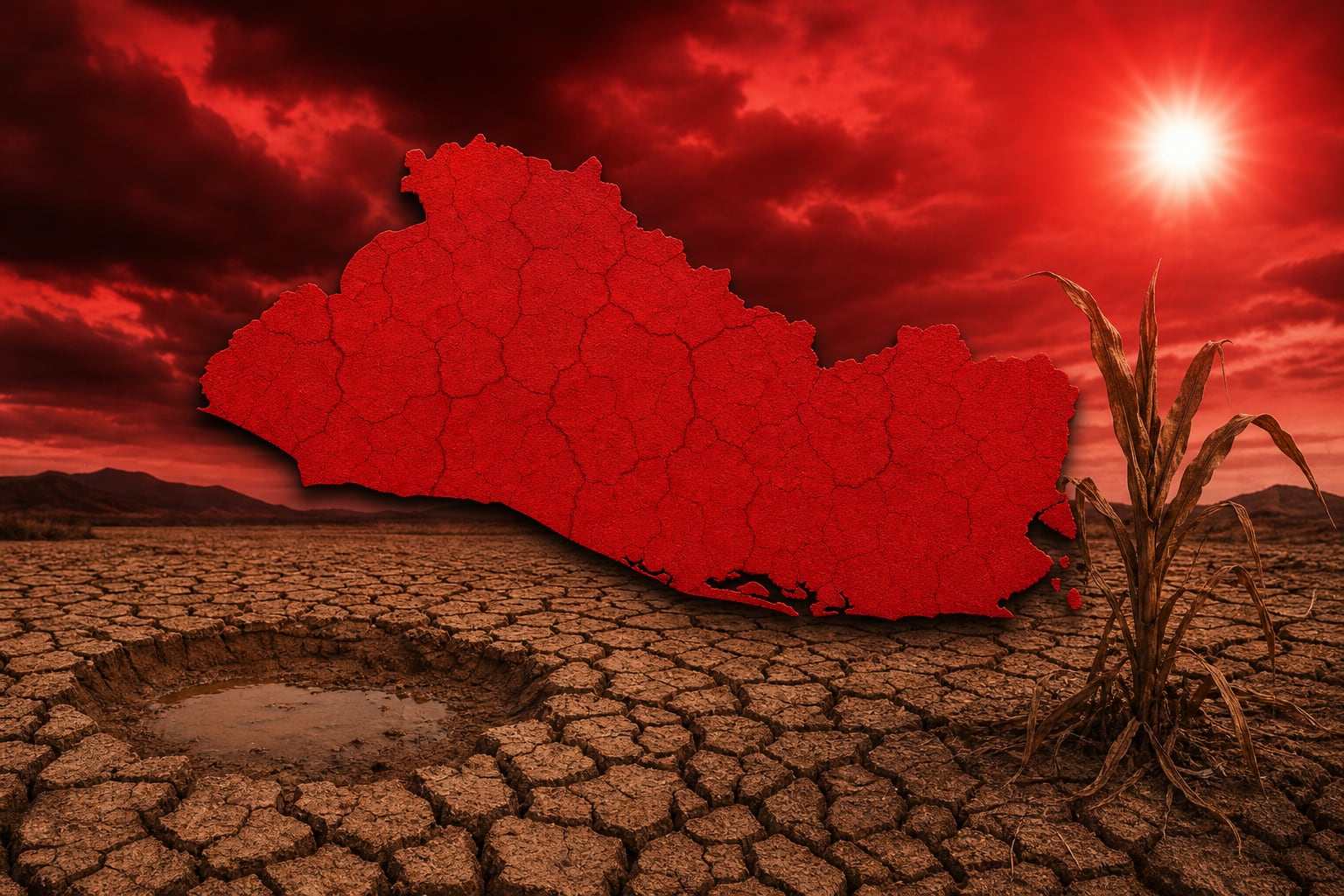
Amaya sostuvo que las lluvias de las últimas semanas no compensan por completo los efectos de la sequía meteorológica sobre el sector agrícola. “La alerta o el decreto de emergencia nacional sigue su curso”, afirmó.
El funcionario pidió no asumir que las precipitaciones de las últimas cuatro o cinco semanas representan una recuperación total de las condiciones para los cultivos.
Según explicó, la primera cosecha debía desarrollarse durante el período de sequía. Bajo condiciones relativamente normales, indicó, los agricultores pueden obtener dos cosechas.
La primera producción suele salir entre mediados y finales de agosto, o durante la primera semana de septiembre. Luego llega la cosecha postrera, llamada tunalmil en algunas zonas.
Amaya señaló que la sequía coincidió con el desarrollo de la primera cosecha. “La primer cosecha debió haberse desarrollado bien y no pasó eso”, expresó.
También dijo que existe una expectativa favorable para la segunda cosecha en algunas zonas del país. Aclaró que esa condición no se observa de la misma manera en todo el territorio.
El director añadió que las lluvias contribuyeron a disminuir las olas de calor. Recordó que, en algunos momentos del año, se registraron sensaciones térmicas de hasta 42 ℃ (107,6 ℉).
Protección Civil reporta aumentos en incendios
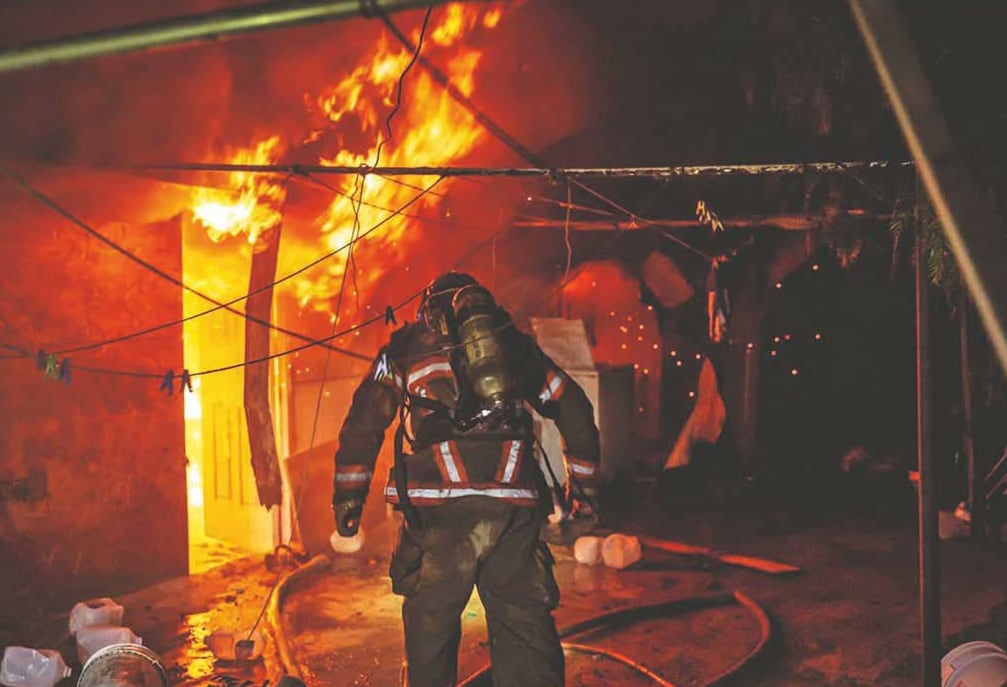
Amaya vinculó parte del aumento de incendios con las olas de calor y la sequía meteorológica. Precisó que la tendencia se ha registrado desde el 1 de enero.
En incendios de maleza, informó que se contabilizaban 2,810 casos, frente a los 1,852 registrados durante el año anterior. Según sus cálculos, el incremento supera el 50 %.
Los incendios forestales pasaron de 87 a 178, de acuerdo con las cifras expuestas por el director. Amaya indicó que ese cambio equivale a un aumento de 105 %.
En los incendios estructurales, la cifra pasó de 583 a 758. Además, informó que se contabilizaron 446 incendios de vehículos, frente a los 405 del año anterior.
El funcionario mencionó que los aumentos se concentran en incendios de maleza, forestales y estructurales. También destacó las inspecciones y acciones preventivas del Cuerpo de Bomberos en lugares de concentración masiva.
Amaya sostuvo que los incendios forestales están vinculados con acciones humanas. El director cuestionó las quemas para preparar terrenos agrícolas y señaló que algunos productores han realizado inversiones para aplicar métodos vinculados con una zafra verde.
El Salvador,sequía,alerta roja

Del picnic de Yanina Latorre y Analía Franchín a la sombrilla de Valeria Mazza: las perlitas de los famosos en la misa del papa León XIV

Trump meets key Iran war mediator as UAE reveals major oil export surge despite conflict

Tensión en la Provincia: los intendentes presionan por las reelecciones indefinidas, mientras Kicillof negocia su presupuesto

Newly elected Dem’s blistering GOP attacks emerge after she courted Republican voters: ‘Lit on fire’

Mazazo para Xavi en Países Bajos: su capitán, baja para la próxima ventana FIFA

Estiman que habrá solo dos nuevos empleos por cada millón de dólares de RIGI

Así fue el saludo entre Javier Milei y el papa León XIV en Aeroparque tras la llegada a la Argentina

Artemis IV: los detalles de cómo será la misión de la NASA que busca llevar astronautas a la superficie lunar en 2028

Casi un cuarto de millón de dólares costarían nueve altares navideños en Nicaragua

Pedro Sánchez le respondió a Milei: “El insulto no forma parte de mi forma de entender la política. Ahí lo dejo”

 POLITICA22 horas ago
Así fue el saludo entre Javier Milei y el papa León XIV en Aeroparque tras la llegada a la Argentina
- DEPORTE3 días ago
Canales para ver el Tigre vs. Sarmiento por el Torneo Clausura
- DEPORTE2 días ago
Gimnasia de Mendoza vs Independiente Rivadavia: formaciones, hora y dónde ver por tv